Introducing Emerson in the Library

Author Sterling North published the book
Rascal in 1963. It’s an autobiographical story
about industrial and economic changes,
wilderness being lost to industry, and a young
boy raising a baby raccoon. The antics of the
animal help alleviate the boy’s fear for his
brother who is a soldier at war.

I remember reading Rascal and desperately wanting a raccoon as my best friend. A lot of people did. We read it and watched the Disney movie based on the book. For most, the later parts of the story, where the growing animal
became destructive in captivity, just didn’t sink in. When an orphaned raccoon did come into my life, my dad was there to intervene.

The wild animal did not become a pet. There was a creek nearby with crayfish. We taught him to catch and eat them. He built strength by climbing trees. He grew a warm coat. As the days passed, we saw him less frequently. One day in December, I saw him along the creek, as I did most days. He hesitated on the path, then turned slowly away, huffing. It was like a switch turned and he was one of the wild things again.

There are more rural residents now, and fewer opportunities to slowly release a rehabilitated animal into the wild. Unless you are trained and licensed to do so, it’s against the law to contain a wild animal. Not only is it illegal, it’s unhealthy for humans and wildlife. Raccoons are especially tricky. They imprint on people very, very easily. There are licensed wildlife rehabilitators who work only with raccoons because these animals take so much time, resources, and territory to “rewild.” And there are certain parts of Ohio where it isn’t legal at all to rehabilitate a raccoon.

The Quarry Farm does not rehabilitate wildlife. When people call here, saying that they have a) a baby bird/rabbit/raccoon/squirrel or b) an injured wild animal, we a) tell them to put it back and/or b) provide contact info for someone else. We do possess educational permits from the State of Ohio for a few non- releasable wild animals that serve as ambassadors for their kind. We have the training to care for them—six years of it before we were allowed to house a Virginia Opossum. That is how Emerson the Raccoon came to live here.
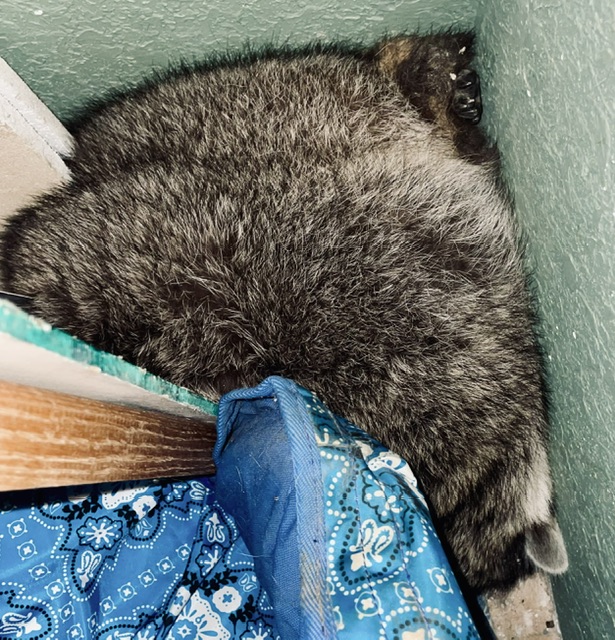
Last spring, we were asked if we were in a position to care for an 8-year-old male raccoon named Elvis. He had quite a backstory. Long-story-short, the raccoon came here in a cage. His mother was shot and killed before she could teach him how to be wild and free. He grew up in a house, and indoors is what he has always known. While a long-ago head injury and neutering tempered the more destructive nature of his kind, he still had a full set of teeth and was absolutely terrified. His diet had to be altered as well, from a reliance on people-food to fruits, veggies, protein bites and absolutely no more potato chips. It took several weeks of coaxing and a name change before Elvis became Emerson, king of the tallest bookcase, keeper of squeaky toys (unless Quinn the Fox steals them), and puller of earlobes. Thankfully, he was litterbox-trained when he arrived and never misses.
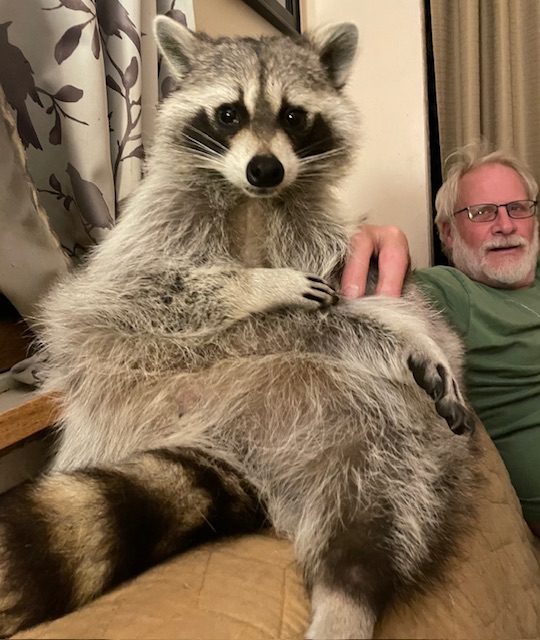
Emerson dips his sensitive hands* in his water bowl,“seeing” the grapes and carrots that we drop in. It’s thought that water contact increases a raccoon’s tactile ability. His wild counterparts do the same in streams and ponds. The only other thing that he has in common with wild raccoons is his appearance. Emerson has always lived his life completely contained and will continue to do so. At least he will help us teach people more about how to co-exist with these intelligent, curious animals.

*For more information: https://northernwoodlands.org/outside_story/article/ raccoons-hands
Giving thanks trailside

20181117_105626

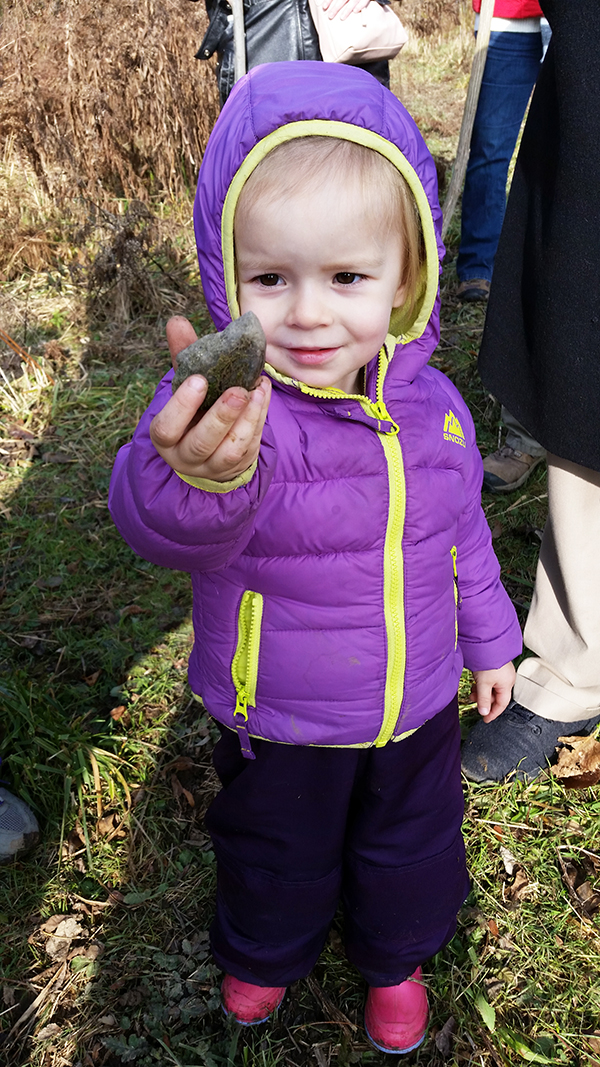
A mossy find

Qarie Marshall offered a sunny weather radio forecast for Thursday—“Turkey Day.” I’m counting on Aunt Paula’s cheesecake and Mom’s mashed red potatoes, with the ruby skins liberally integrated.

Every day is Turkey Day here. Max the Bronze is the current guardian of the farm animal sanctuary flock. Visitors have frequently lost the contents of their pockets to bronze Buttercup. Their wild relatives sway in summer night breeze, perched high in tree tops like giant fruit. They chortle and murmur in the daytime, hidden from predatory eyes in the thickest thickets. A stray feather occasionally makes its way into the Putnam County Master Gardeners’ pollinator patch.

20181117_110124

20181117_110354

Cool hat…missing boots

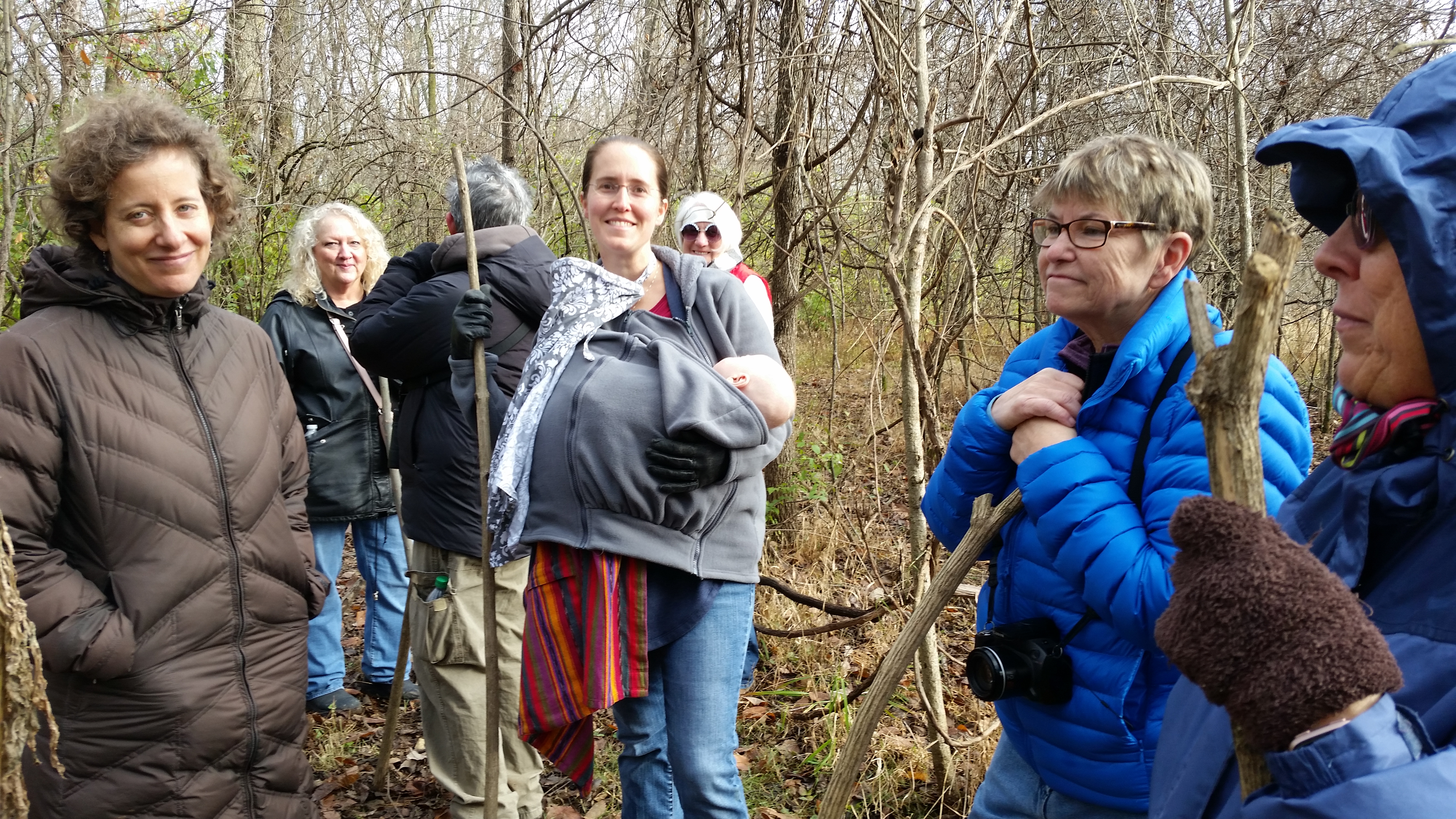
Saturday, we stretched our legs in thanks for a late morning hike. Elisha broke in a new pair of Trespass boots shipped from the UK. His mom Esther shared her lovely Irish accent and details about the clothing line, including the fact that Trespass makes water-resistant onesies.

Type ‘Ohio’ into the company website’s ‘Find a Store’ widget and you get Galway (eh…only 3,426.94 miles away.) Still, the “No Child Left Inside” movement would benefit from a line of puddle-jumping ware.

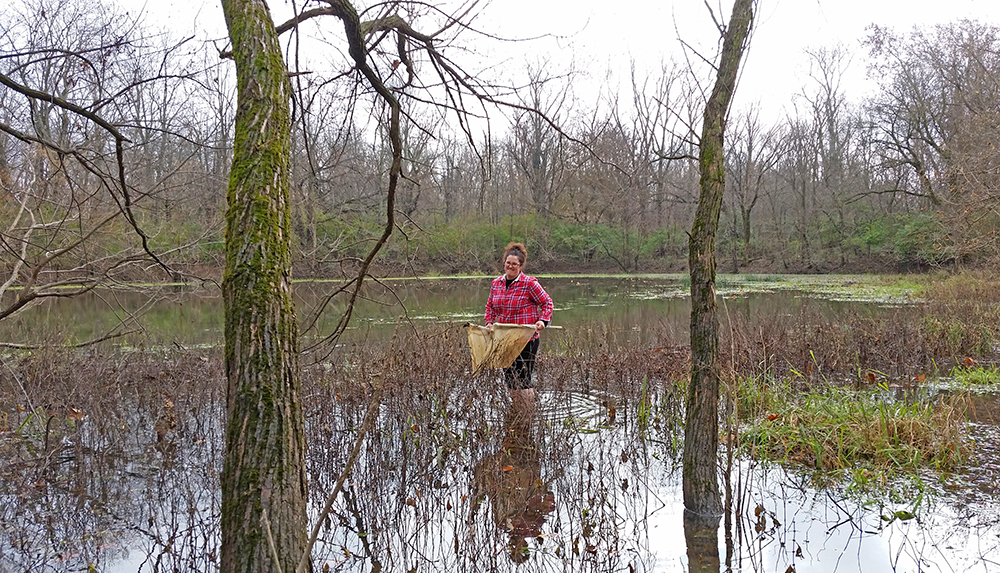
So, apparently, would my child. Home on holiday, she took off her rubber knee boots (“They’ll get wet, Mom”) to wade in the chilly quarry wetland with a seine in hand. She caught a sample of snails, a beetle and a fingernail clam for us to see. The clam was the size of the second smallest hiker’s pinkie finger. 20181117_112005

The smallest hiker of all slept through the walk, swaddled in his mother’s walking fleece.20181117_105059

20181117_110744

Fungi suspended over autumn leaves

The sun brought out the color in what leaves still hung on the trees. We used honeysuckle walking sticks to traverse downed leaf matter. We gathered a few Osage oranges before the ghosts of mammoths could lay claim to them. I thought I saw a shrike in the back 10 acres. Maybe we’ll see his/her larder—voles impaled on hawthorn spikes—during the 2019 Great Backyard Bird Count.

We saw tracks. They crossed our path in wallows and licks and fur clinging to branches. There were hoof marks, short and long bird toe prints and thin drag lines. The turkeys left the latter two for us to find, surely watching us from a distance that would keep them whole beyond Thursday’s feast.

In the Storm

IMG_5770[1]Things here at the Quarry Farm are as they are everywhere else it seems. We’re cold, we’re trying to keep warm, and we’re trying to keep everyone else warm. The drifts at the start of the drive are at least four feet deep and the wind persists in howling. The auxiliary heat in the house has kicked up and we humans, when not caring for the animals, are glued to our books and Netflix, covered in layers of dogs and cats and they in turn are covered in blankets and pillows.

Outside, the turkeys are in with Johnny and Andy (Canada goose and duck), the chickens reside in their henhouse, the pygmy goats are staying in their shed, and Buddy and the goats are huddled together beneath their own roof.  So far, we have kept everyone alive.

This cold is dangerous, as the weathermen and sheriff departments keep telling us.  The pigs almost flat-out refuse to go outside—bellowing and pushing backward until we’re able to shove them out the door. Lolly, our bulldog mix, has so little fur to cover her skin, and so it makes the cold that much worse for her. On her first outing she ran out and right back in, but on her second go, she went around to the side of the house, became too cold, and huddled crying beneath the hutch off the side deck. She had to be carried back in the house.

IMG_5780[1]It is Buddy, however, that has made us worry.  He made it through the night, which we worried about, but he is still here. However, as you can see, he is sporting a new look. Quite fetching, I believe.

Our neighbors across the road just plowed out our drive. We saw them start to, but were on a mission to look after another house with animals, so a quick thank you by waving was all that was conveyed. I shouted a thank you across the road when we returned home, but they had already retreated to the warmth. So we shall have to thank them properly later. When it is warmer.

To all:  I hope your days in the snow storm have been at least slightly comfortable. Good luck for the rest of the duration!