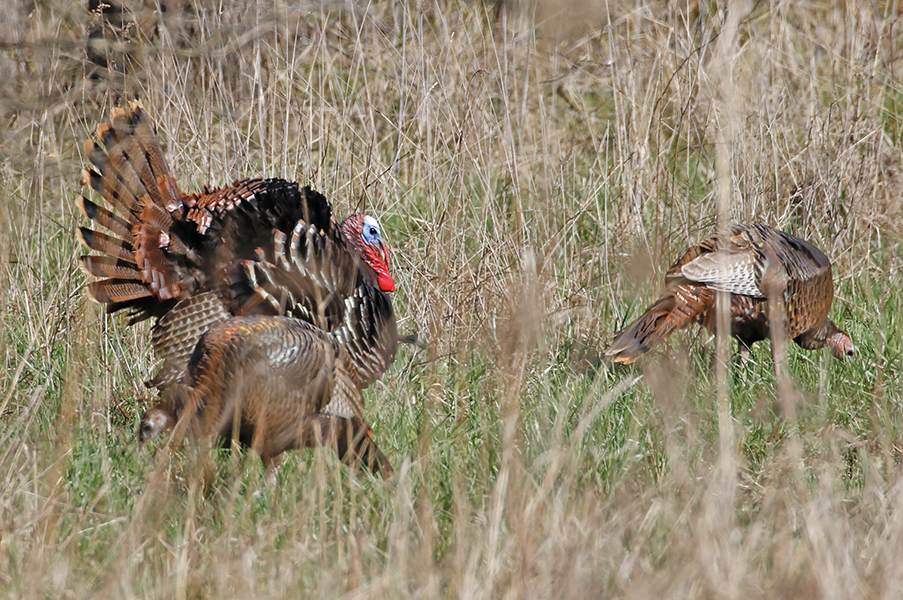
Habitats on The Quarry Farm: The Prairie

The space that is our developing prairie habitat used to be called simply “the back field.” A trail heading downhill from Red Fox Cabin, across Cranberry Run, around the quarry, up a hill, and through the woods leads to eleven acres that were tilled until 1985. The tractor path to the field skirted Cranberry Run for a stretch, where it narrowed to inaccessibility due to erosion. Farming the field had to be abandoned. A new direction for The Quarry Farm took shape: to establish a nature preserve with several distinct habitats, including a prairie in the back field.

As seeds and rootstock in the soil sprang up and spread, the field began to look a bit like a grassy prairie. There were some food sources and cover for rabbits and small animals like field mice and voles. They in turn fed predators like great horned owls, red-tailed hawks, and foxes. Seed-eating and insect-loving birds could feed and nest. In early spring, a visitor might be lucky enough to witness a mating American woodcock rise explosively into the dusk.

That early resemblance to a prairie was deceiving though. Too much of the vegetation was non-native (teasel, for example), offering too little support for native birds, insects, and small animals. In no time, the field began to fill up with honey locust, hawthorn, and black walnut seedlings (native, but unwelcome outside the adjacent woods). Multiflora rose and Asian bush honeysuckle invaded. Clearly, if The Quarry Farm was to have the prairie habitat we envisioned, management would be necessary.
Recent years have been a learning process. We’ve tried to find the most efficient, least harmful ways to squelch invasives and non-natives so that we can eventually claim a true prairie habitat with a balanced ecosystem. Consultants have shared their expertise. Wonderful volunteers and skilled hirees have hacked, dug, and bulldozed trees; cleared ground and spread seeds of native prairie plants; and mowed spent growth to encourage the spread of native grasses and wildflowers. The search for best management practices goes on.

We know the work of developing and maintaining a distinct prairie habitat may never be done, but we’ll have the joy of providing the creatures that find a home there the best chance to thrive. And we can share it with visitors like you.
Annuals That Pollinators Love

Conservation biologist Douglas Tallamy [Nature’s Best Hope, 2019] urges us to use our gardens to help fight looming threats to life on Planet Earth, two being shrinking agricultural land and loss of habitat for our vital pollinators. How can we use our little plots to impact such huge issues while also beautifying our landscapes? Dr. Tallamy assures us that our combined efforts can go a long way toward correcting both problems. So, this winter as we pore over gardening catalogs, we who have enlisted in the cause of supporting pollinators should pay extra attention to seed and plant descriptions, looking for evidence of plentiful pollen and nectar supplies for bees, butterflies, hummingbirds, etc.

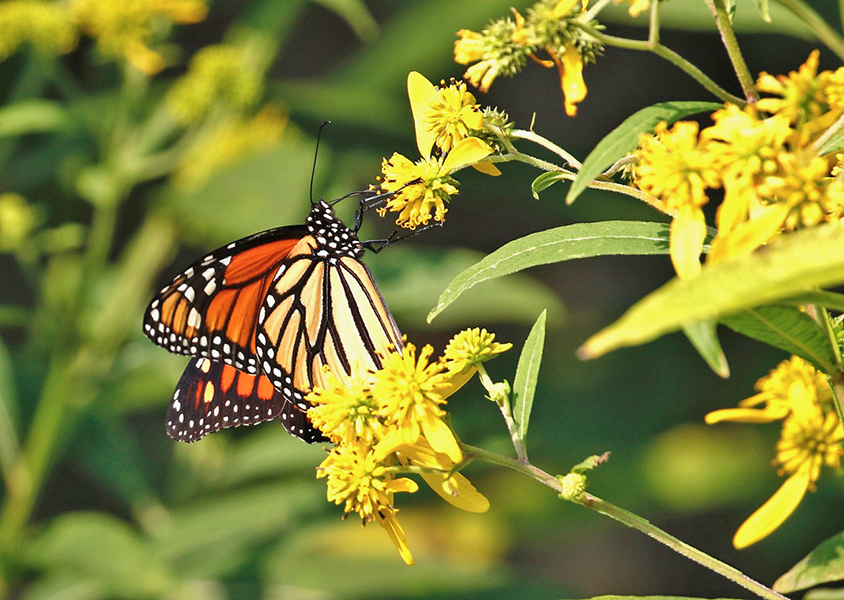
One small way to focus is by looking for colorful, pollinator-friendly annuals to incorporate among the perennials, herbs, vegetables, native wildflowers, etc., in our garden plans. Annuals that are both ornamental and beneficial include easy-to-grow cosmos, marigolds, sunflowers, coreopsis, salvias, and zinnias. Some can be obtained as nursery starts, while all can be seeded directly into the soil. With proper care, especially deadheading, they can provide color and pollinator food for a season. Their flattish, daisy-like flower heads make rich pollen and nectar supplies easily accessible to bees (the most important pollinators), butterflies such as Monarchs and Swallowtails, and certain flies. [On zinnias, for example, pollen and nectar sources make up a yellow center, easy for pollinators to spot, except perhaps for showy fully double varieties that tend to bury the food supply.]

Plant breeders tempt us every year with exotic cultivars and hybrids of familiar annuals. These promise color and interest, but many fail to feed pollinators. The features that supply rich pollen and nectar may have been weakened or bred out. For example, pollen-free sunflowers touted for cut flower arrangements may be colorful but are useless to pollinators. Cultivars bred from flowers that are normally flat and daisy-like instead may have dense pom-poms that look quirky and cute but make pollen and nectar too difficult for bees and butterflies to reach. Unless a new variety promises great benefits, tried and true standards may be the best bets for pollinators.

A four-year research project by University of Minnesota Extension (2015-2018) studied more than 30 annual varieties and identified the following nine as the most popular with pollinators… (click on the newsletter cover for the full article)