
Author Sterling North published the book
Rascal in 1963. It’s an autobiographical story
about industrial and economic changes,
wilderness being lost to industry, and a young
boy raising a baby raccoon. The antics of the
animal help alleviate the boy’s fear for his
brother who is a soldier at war.
I remember reading Rascal and desperately wanting a raccoon as my best friend. A lot of people did. We read it and watched the Disney movie based on the book. For most, the later parts of the story, where the growing animal
became destructive in captivity, just didn’t sink in. When an orphaned raccoon did come into my life, my dad was there to intervene.
The wild animal did not become a pet. There was a creek nearby with crayfish. We taught him to catch and eat them. He built strength by climbing trees. He grew a warm coat. As the days passed, we saw him less frequently. One day in December, I saw him along the creek, as I did most days. He hesitated on the path, then turned slowly away, huffing. It was like a switch turned and he was one of the wild things again.
There are more rural residents now, and fewer opportunities to slowly release a rehabilitated animal into the wild. Unless you are trained and licensed to do so, it’s against the law to contain a wild animal. Not only is it illegal, it’s unhealthy for humans and wildlife. Raccoons are especially tricky. They imprint on people very, very easily. There are licensed wildlife rehabilitators who work only with raccoons because these animals take so much time, resources, and territory to “rewild.” And there are certain parts of Ohio where it isn’t legal at all to rehabilitate a raccoon.
The Quarry Farm does not rehabilitate wildlife. When people call here, saying that they have a) a baby bird/rabbit/raccoon/squirrel or b) an injured wild animal, we a) tell them to put it back and/or b) provide contact info for someone else. We do possess educational permits from the State of Ohio for a few non- releasable wild animals that serve as ambassadors for their kind. We have the training to care for them—six years of it before we were allowed to house a Virginia Opossum. That is how Emerson the Raccoon came to live here.
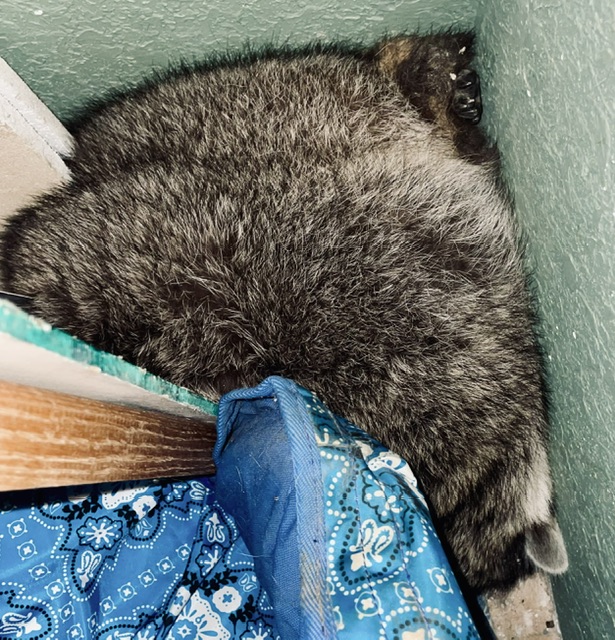
Last spring, we were asked if we were in a position to care for an 8-year-old male raccoon named Elvis. He had quite a backstory. Long-story-short, the raccoon came here in a cage. His mother was shot and killed before she could teach him how to be wild and free. He grew up in a house, and indoors is what he has always known. While a long-ago head injury and neutering tempered the more destructive nature of his kind, he still had a full set of teeth and was absolutely terrified. His diet had to be altered as well, from a reliance on people-food to fruits, veggies, protein bites and absolutely no more potato chips. It took several weeks of coaxing and a name change before Elvis became Emerson, king of the tallest bookcase, keeper of squeaky toys (unless Quinn the Fox steals them), and puller of earlobes. Thankfully, he was litterbox-trained when he arrived and never misses.
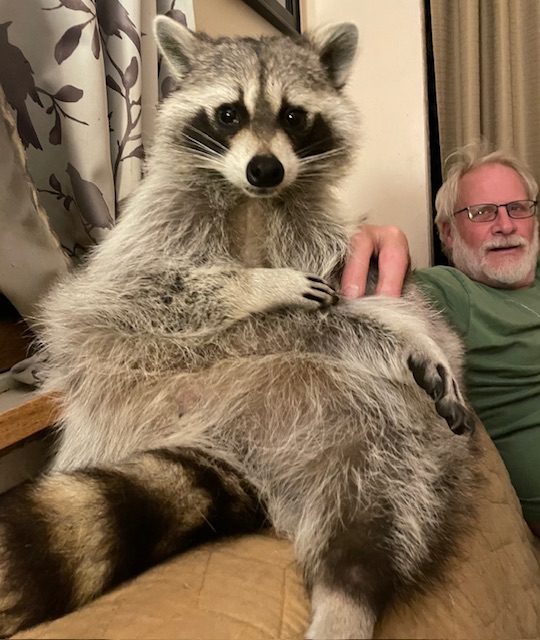
Emerson dips his sensitive hands* in his water bowl,“seeing” the grapes and carrots that we drop in. It’s thought that water contact increases a raccoon’s tactile ability. His wild counterparts do the same in streams and ponds. The only other thing that he has in common with wild raccoons is his appearance. Emerson has always lived his life completely contained and will continue to do so. At least he will help us teach people more about how to co-exist with these intelligent, curious animals.
*For more information: https://northernwoodlands.org/outside_story/article/ raccoons-hands

