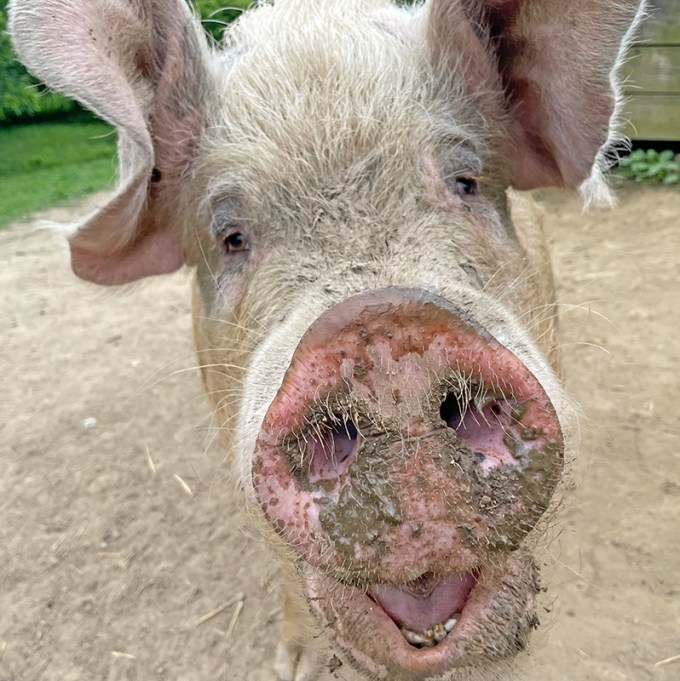
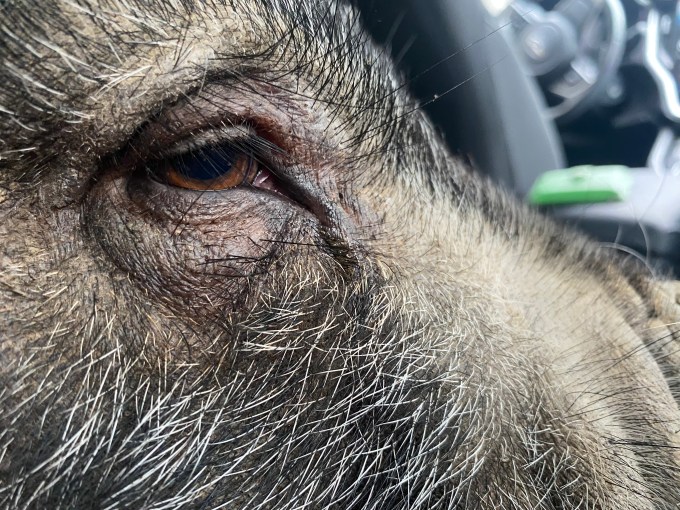
One tiny pinkish piglet came to The Quarry Farm after a fierce tumble from a transport truck on I-270 Columbus. We named the little one Nemo, not for the Pixar clownfish but with the Latin word meaning “No One.” She fell from a semi, just one of many piglets that meant nothing on their way to “finishing.” She was found and given shelter by a kind person who drove her to where no one would hurt her ever again.
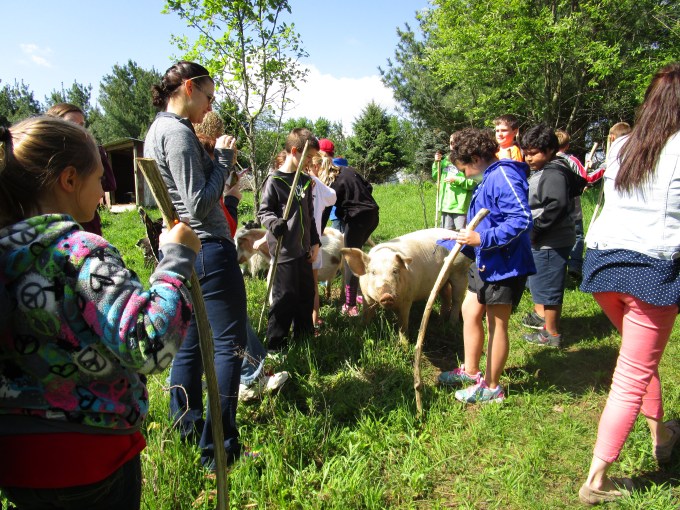
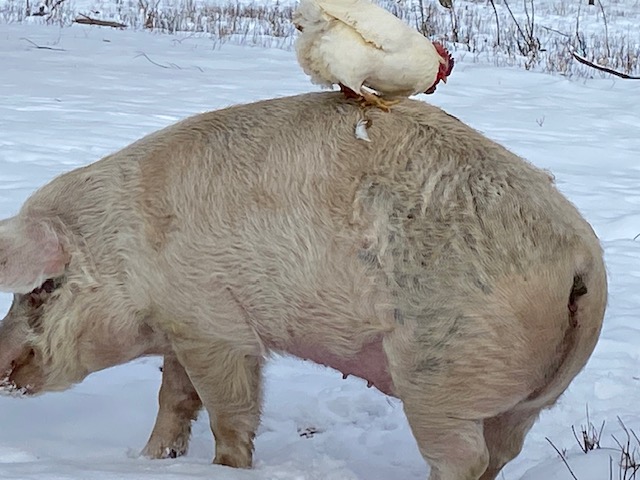
With a North Carolina tattoo in her ear, road rash, and a healing leg break, Nemo snuggled into our lives until she found her footing. She housebroke easily, following the lead of the dogs. She raced from room to room, confounding the cats until she grew too large to run indoors. She stretched her 700 lb. self outside on the sunny deck and in the shade of trees, often in the company of her potbellied friend Carlton. In winter, she wore chickens on her warm arched back (or they wore her long pale hair on their scaled feet) as she rooted for snowbound roots. In summer, she strained the fence in her quest for wild raspberries and cherries. In spring and fall, she won over visiting school groups and families with her enthusiasm for juicy apples and roasted peanuts.
In the last couple of years, Nemo was less inclined to greet newcomers at the gate. The old leg break slowed her gait from a full-on gallop to a cautious walk. Rather than snuffle-chomping offered treats, she preferred belly rubs that made her breathe big rumbling sighs. She slept in her barn bed more than she grazed, burying her snout in straw and stretching her arthritic bad leg behind her. When she decided not to stand last month, we fed her pans of warm oatmeal, bananas, and feed to combat the bitter cold. Today, she died in that bed under warmed towels. We knew she was going because Buddy the Donkey stood just outside her door, joined by the hens and turkey. They always know and stand watch. They tell us when to come and be present.
Living with a 700 lb. toddler is a challenge, for that is what a grown pig is. They are whip smart beings with the intelligence and emotions of three-year-old humans. Nemo was capable of opening an unchained gate. Fortunately, alarmed strangers confused and frightened her so that she ran home when she heard her name called. For she had a name, unlike her siblings, and every bit as much soul.
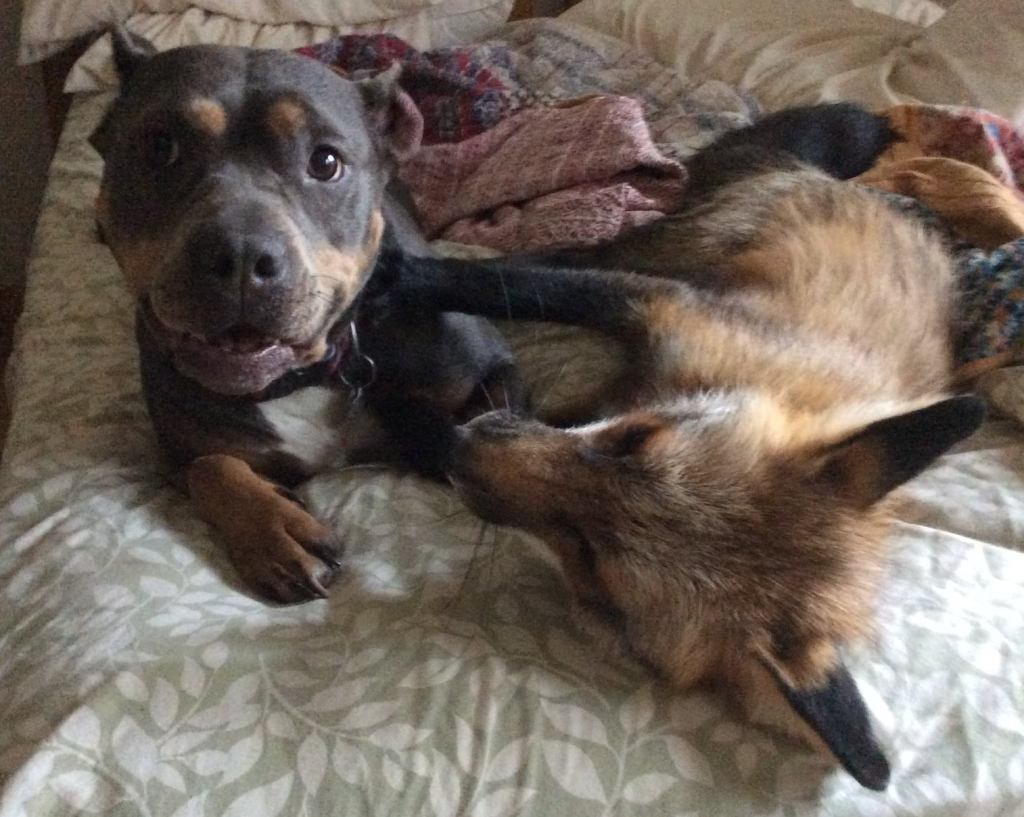
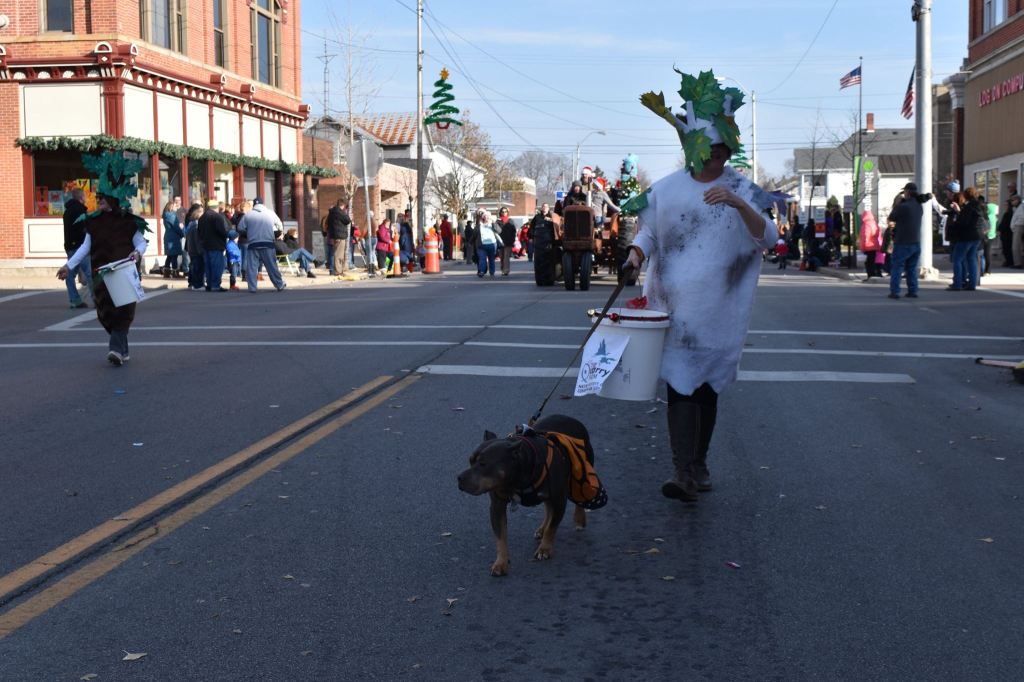
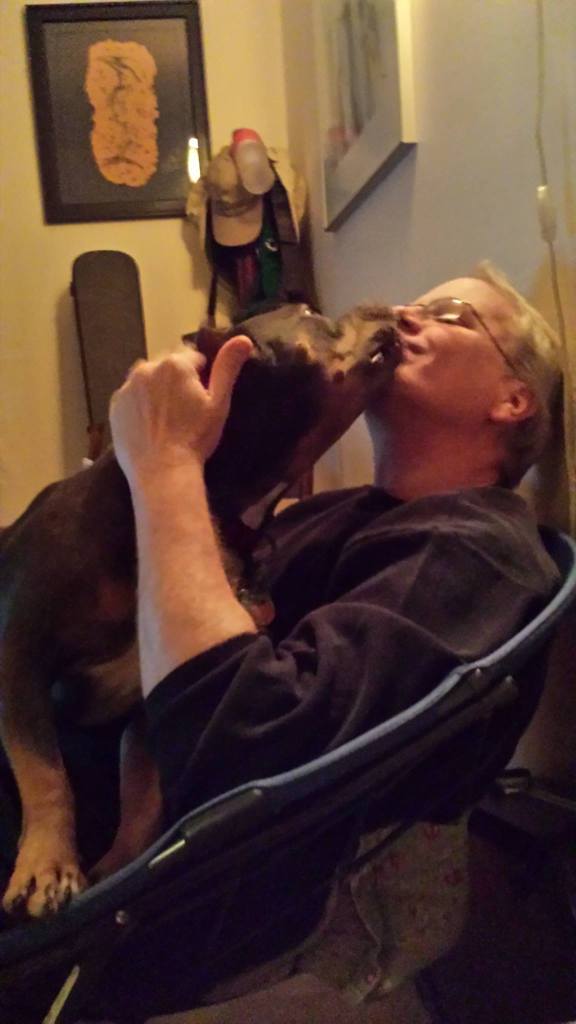
Over decade ago Cady joined our family. She had been found in an apartment, a bred to pieces and abandoned, her ears cropped close to her head and her beautiful “blue” coat stretched tight over her ribs. My Steven brought her home from the shelter to bond with all of us, most especially Lolly. Both walked in the Welcome Santa parade, left paw prints on the trails and impressions on the couch. Cady smiled and loved every face with kisses.
The worst part of loving Cady came today. But as Steven said, without that we wouldn’t have had all the good. We will miss her and remember.
Beatrice took her last ride in a car today. She arrived here as a little pig, scared and confused. She joined Gertie in the kitchen: a duo of potbellies who watched Steve’s every epicurean move. She sashayed through the garden to join schoolchildren as they laughed and lunched on brown-bagged deliciousness. She rooted and ran, lounged in sunny patches of grass, and accepted treats whenever they were available—including as much of a box of Christmas Whitman’s Sampler as she could get before she was found out. A box of Little Debbie Strawberry Crème Cake Rolls made this morning’s journey a little less stressful and her arthritic hooves bearable. The veterinarian and students at Ohio State University Farm Animal Services in Marysville were kind, compassionate, and mercifully quick.
She was Little Pig. She was Christmas Piggy. She was the Queen. Her body is buried between the garden rows. A double rainbow this evening assures that She is Bea.
Download your copy of The Quarry Farm Newsletter/Summer 2025. Our first event onsite is an herb kokedama workshop. There are four herb kokedama growing on the porch of Steve’s kitchen–they are a fresh, cool, environmentally-friendly cultural experience. And registration is now open for The Quarry Farm 2025 5K, which we have moved up to September 13. This is a major fundraiser for us. With traditional funding—grants, corporate sponsorships—fewer and farther between with ongoing unrest, we need your support more than ever. Thank you.
And because an 11″ x 17″, two-sided newsletter will only allow for a small selection of the photos that are captured on The Quarry Farm from season to season, here are a few Spring snapshots that didn’t fit on the pages.
Two Canada geese named Johnny and Stella introduced us to the richness of a life shared with wildlife educational ambassadors. I would say the introduction was a gentle one, and it was, until we found Stella’s body floating in their water tank. No one could tell us why. She looked fine externally. Wild animals naturally fight tooth, nail, beak, bill, and claw to stay away from humans, probably because humans are at the top of the food chain and every other species knows to keep their distance. If wild things allow humans to approach, there is something not quite right internally, in their nature or nurture. Their most natural state of being has made them vulnerable to our opposable thumbs, our intelligence, or lack thereof. A lifetime of living with other species makes me certain of the latter, especially as I write this there are military maneuvers going on in the sky outside my window.
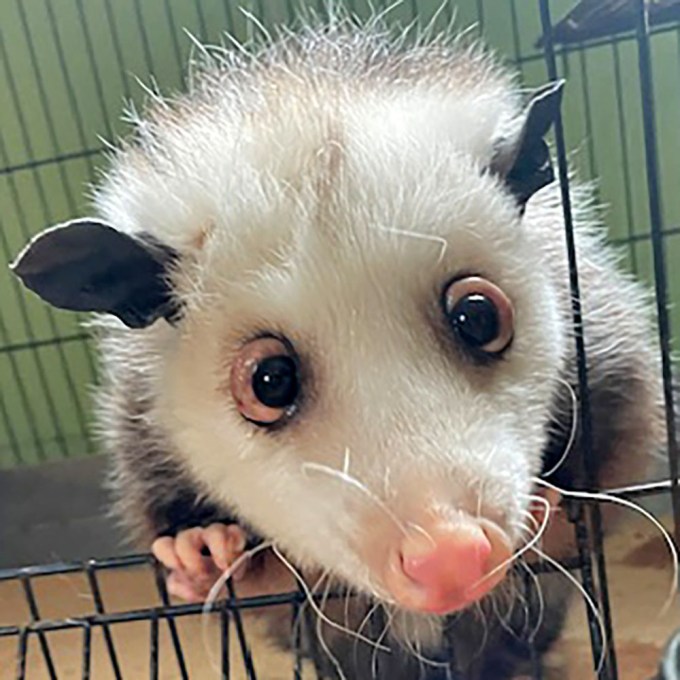
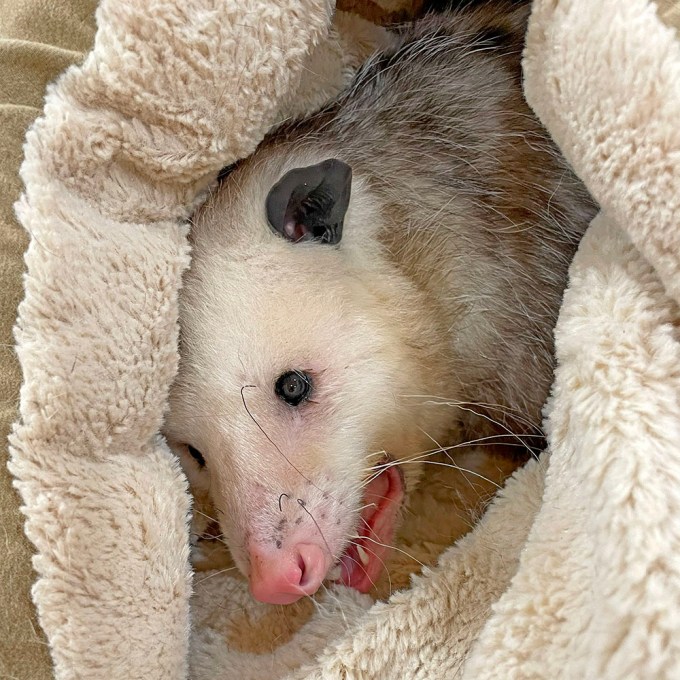
Estella
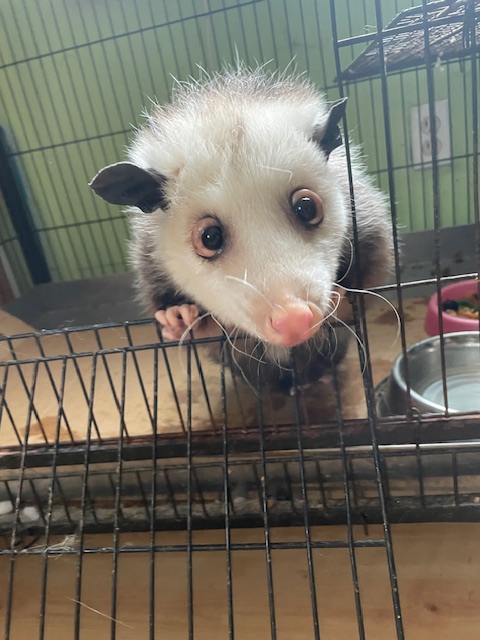
Although it is tragic thing when a wild animal can’t live safely in wildness, it is a gift to spend some part of one’s human lifetime in their company. Some live for a few years. Others for a decade or more. Right now, we often tearfully refer to the farm animal sanctuary as the geriatric home. It’s been 14 years since Johnny and Stella moved in. Many mammals and birds have lived what remained of their lives here. The last 12 months have been hard on our hearts as several friends have, as we say, “gone over the fence.” This month, as we planned for an all-day offsite event about living side-by-side with wild creatures, we intended to feature Estella the Virginia Opossum. Estella was almost 4 years old, pretty ancient for this marsupial. She died in her sleep on Sunday.
Winston
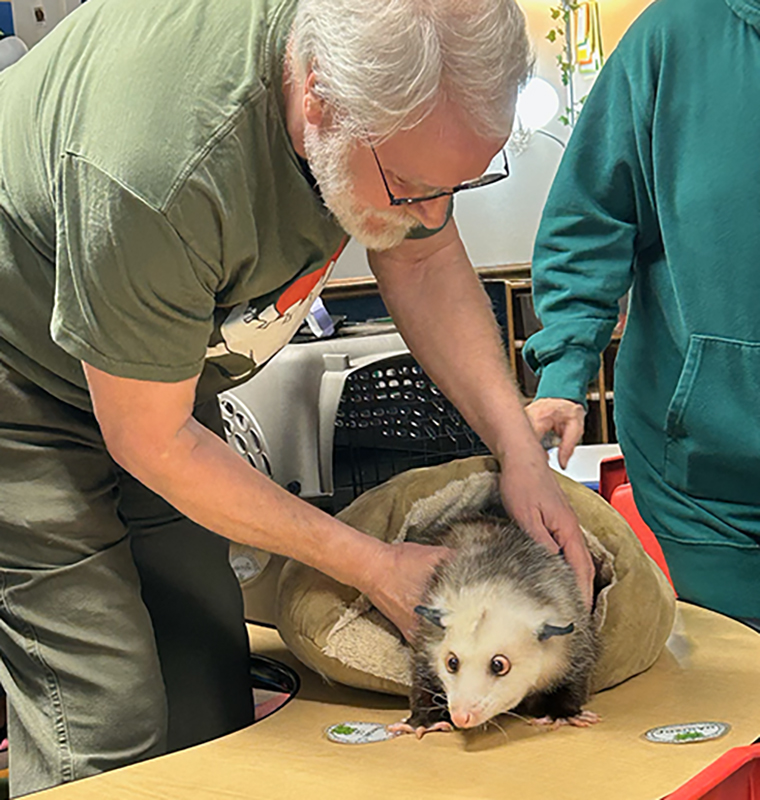
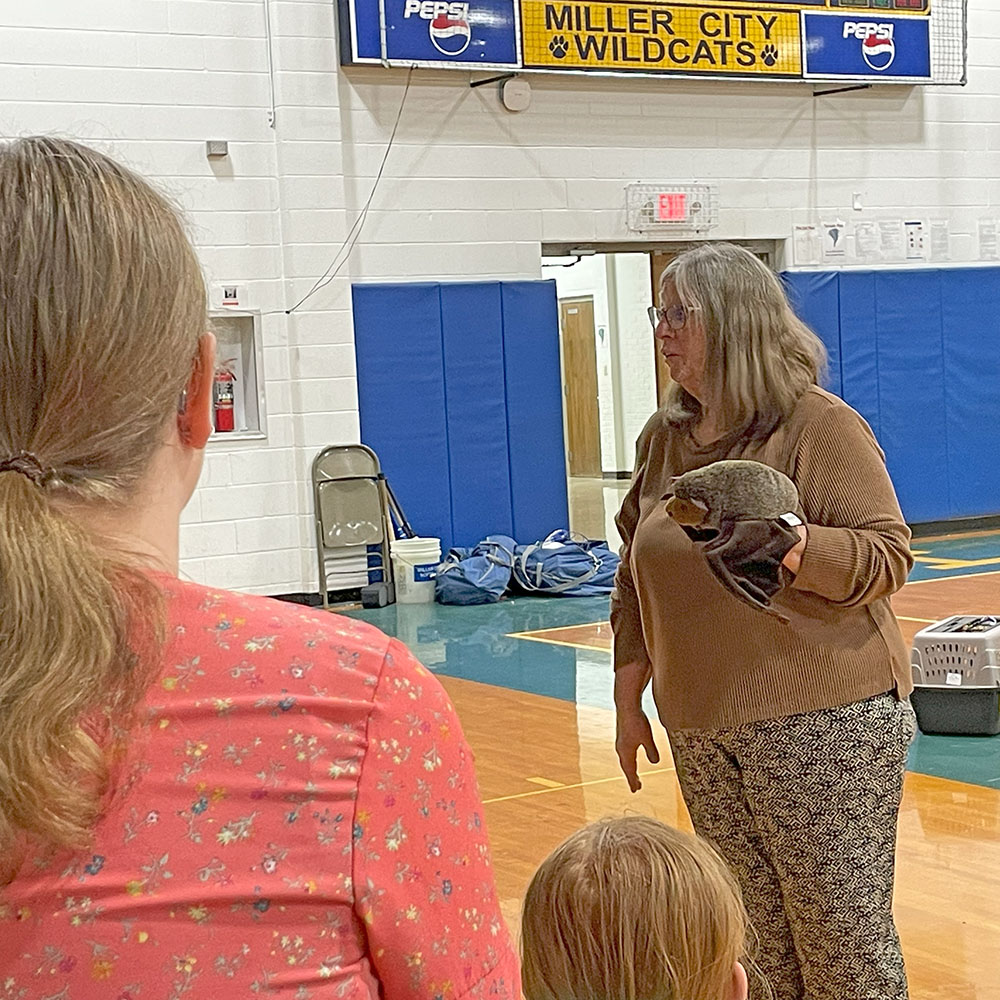
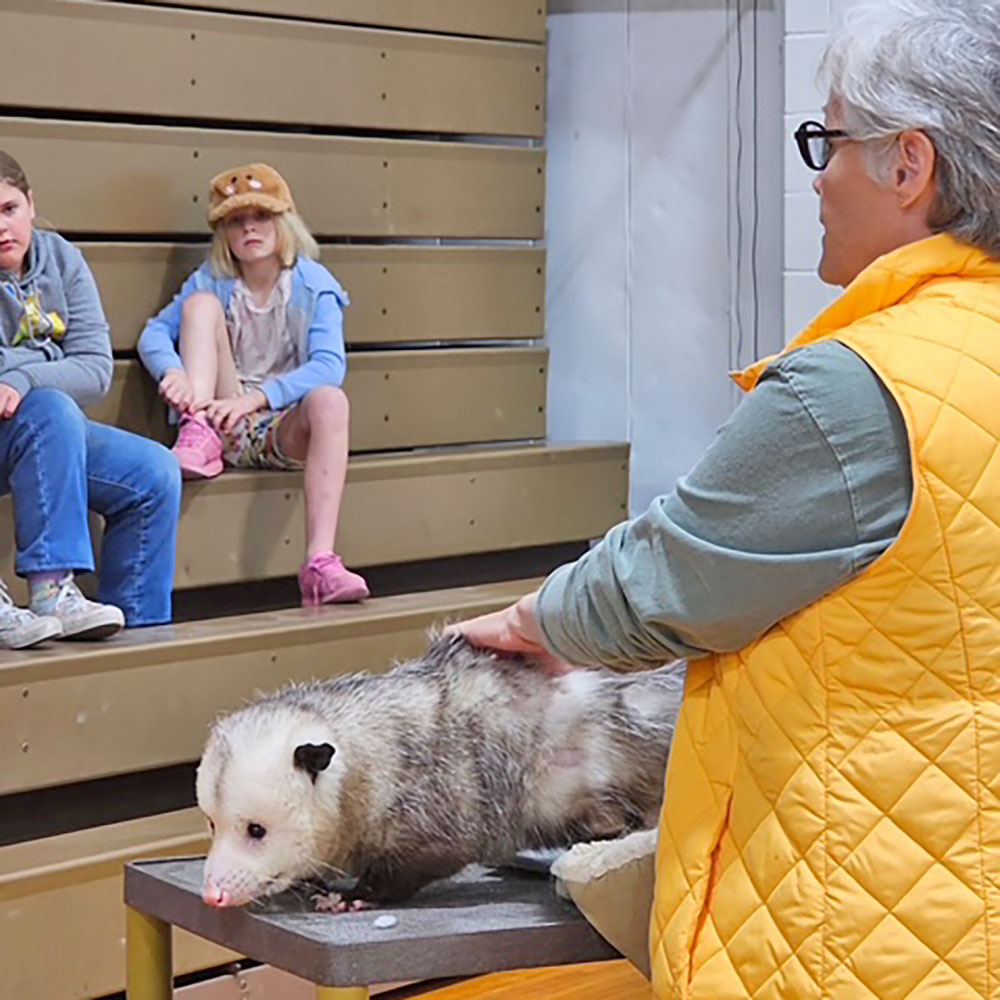
In February, while I was in Columbus for a conference, my phone pinged with a text regarding an adult male, caught-by-dog Virginia Opossum. A Proctorville wildlife rehabilitator rescued him in the Fall. Angie named him Winston, and healed his severe wounds and fought infection. He weathered several veterinary appointments and possible pneumonia. But Angie got him through. Because Winston has mobility issues and hairless scarring on his hindquarters due to his injuries, it was decided that he could have a good future as an educational ambassador. Three weeks ago, I met Angie and Winston in Columbus for adoption.
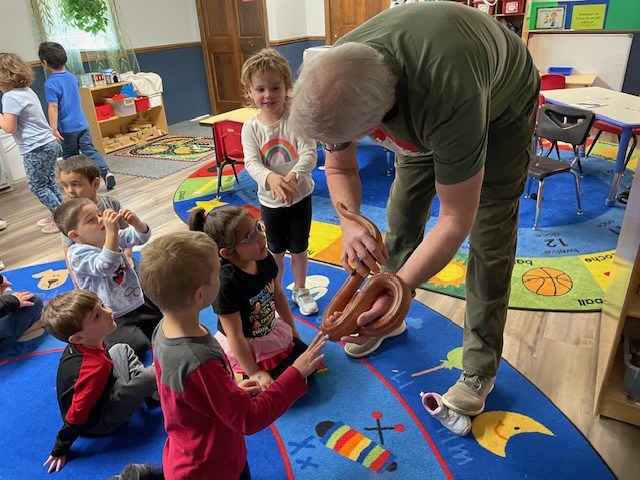
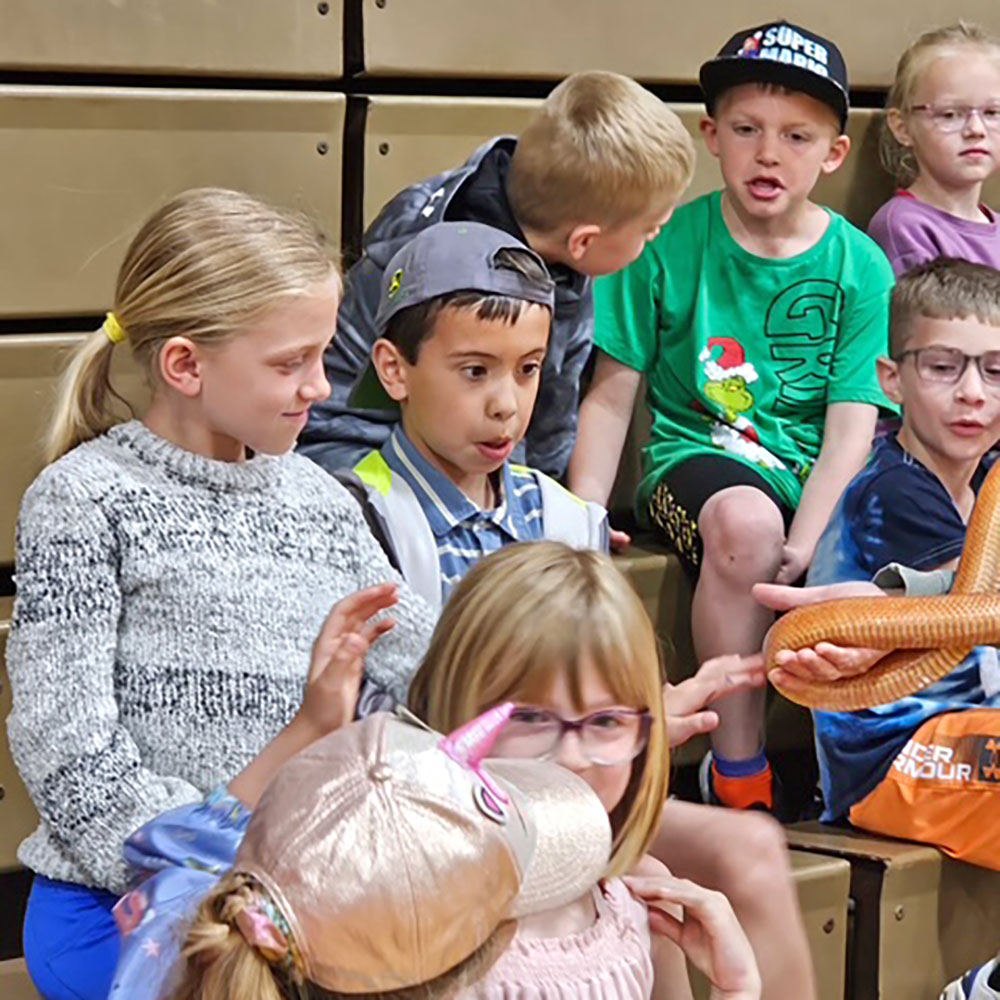
On Tuesday, May 13, Winston represented his amazing, vital species at Miller City-New Cleveland Elementary School’s “School is Cool” event. Board Member Rita used owl and bat puppets to demonstrate the horrors and harm of using traps and poisons to control wildlife. Tyree the cornsnake, all shiny coral from a recent shed, represented the benefits of encouraging snake residents on a farm and in your garden. Winston growled a bit at first, but his scars are itchy. With ongoing scritches, he settled into his ambassadorship. No one knows exactly how old Winston is, but he will be comfortable and at peace at The Quarry Farm for as long as he will give.
At this point in time, the farm animal sanctuary is primarily a senior living facility. The three donkeys are well into their 20s. At five, Clive is the youngest of the five pot-bellied pigs. The others, as well as Nemo the big pig, are at least 10. Brownie the Rouen Duck is at least five (I just read that they can live to be five!) As with humans, supplements joint health and anti-inflammatories are part of daily food prep. The residents came here to live out their lives in as much peace and freedom as possible. It’s tough to admit when The Quarry Farm may not be the best place for them to do so.
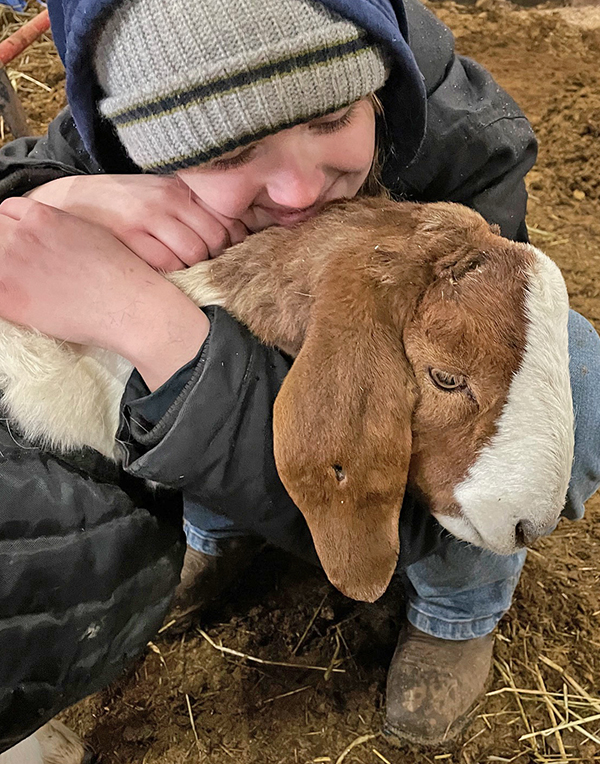
Tommy the Boehr Goat was bottle-raised by a gentle boy who cared for him. He was initially named “Tongue-ey” because the little goat was unable to keep his tongue in his mouth. When Tongue-ey came here, we hoped that he would become part of the herd. Unfortunately, the other goats kept him at a distance. We found out why when we found him non-responsive on a January morning. We drove him to Ohio State University Farm Animal Services where he spent a week.
The prognosis was probable failure to thrive. His little body was unable to regulate its temperature and he was unable to fight off parasites as healthy goats do with regular treatment. Our friend Tim Jasinki at Lake Erie Nature & Science Center put us in touch with Whispering Acres Farm Animal Sanctuary near Medina. This facility is home to a number of animals with special needs, and many of these animals are ambassadors for hospice therapy and veterans with PTSD. Tiny Tongue-ey—now Tommy—was immediately surrounded by equally tiny goats. Janine Smalley, the director of the sanctuary, sent photos of him at work, providing comfort to someone in need.
…and Sometimes the Best Place is Here
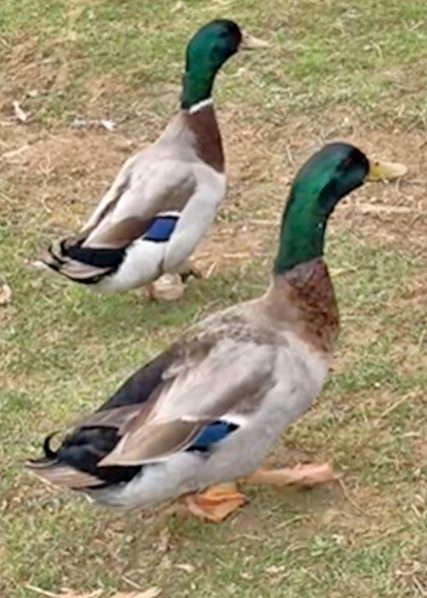
While making arrangements to transfer Tommy to Whispering Acres, Janine asked if The Quarry Farm would be able to accept any ducks. Someone had just surrendered two Rouen drakes. In addition to Brownie, there are two more Rouen ducks here. Brownie and the Brownettes could certainly hold their own. Although it is Spring and the two brilliantly-plumed males are rather obnoxious with the season, Brownie leads them around by their bills.
In one county to the east, toads and spring peepers sing in wetlands, warmed in the urban heat island. They are quiet here on The Quarry Farm. There is no hint of green as you look over the lowland treetops. Spring wildflowers have better sense than Golden-crowned Kinglet that conceal themselves as much as possible in bare treetops, calling their thin, high-pitched call to anyone that arrived a tad too early.
Tracking preying mantis cases
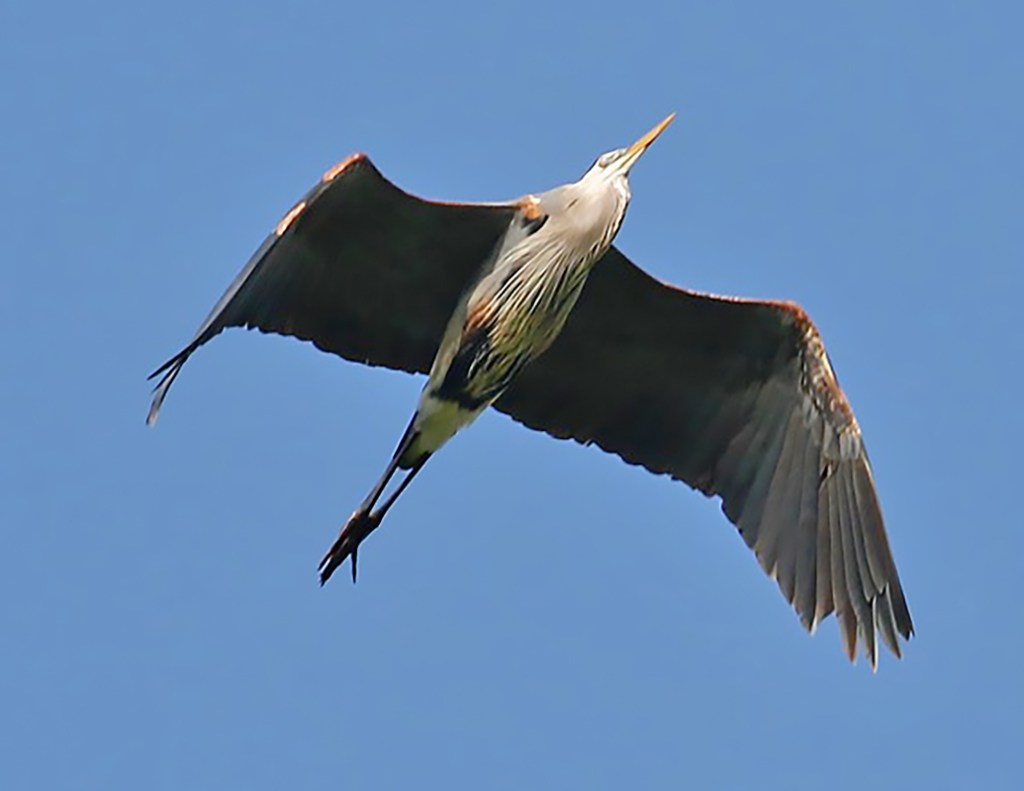
It was chilly enough for coats for the March 2 hike. We followed White-tailed Deer, Eastern Fox and Gray Squirrel and Wild Turkey tracks in the nature preserve. A Great Blue Heron left a nearly complete fish skeleton for us to find on the south bank of the quarry wetland. The birds were quiet, for the most part. Two days later, I counted 16 avian species in the short walk between the farm animal sanctuary and the pavilion. The temperature hit 74 degrees F. This weather is crazy. Today, the toads, salamanders and spring peepers remain burrowed deep under the quarry and oxbow water and forest floor leaf matter in anticipation of a weekend of rain and wet snow.
As the weather changes its mind, the wild and domestic animals here do not change theirs. Two weeks ago, our beloved, elderly Sophie, the best porcine educational ambassador ever, died. As always, the animals gathered around the grave until the ground was smoothed over. Donkeys Lucy and Silky had to be whispered to and hugged. Everyone slowly wandered away. Two weeks later, everyone is love-struck and besotted; infatuated and obsessed. Spring will be here officially on March 21. Spring twitterpation is now. The fostered re-wilding Canada Geese call to the wild ones on Cranberry Run. The goats bark and huff, bumping foreheads across the paddock. Patches, Pockets, Gerald, Mr. Fabulous, Caramel, Sydney and Chicken Ricky crow their rooster hearts out when American Woodcocks hurtle through the evening sky. Tom turkeys Edgar and Bernard strut their impressive stuff while turkey hen Souix does her best to avoid them. There is whole lot of “Get off my lawn!” happening this season.
Chicken Ricky and Nemo
During Winter’s coldest, the chickens warm their feet by riding around on the donkeys, pigs, and goats. I’m sure the feathered spot of warmth is soothing on the mammals’ backs. In the midst of Spring chest-thumping and display, two individuals share a daily lesson of tolerance and respect. Tom Turkey Bruce has always been unsteady on his feet. he came here a few years ago after being dumped in a park. He was found spinning in circles, unable to walk more than a few steps due to probable fattening in close confinement. Canada Goose “K” (named for the tag around his left ankle) prefers the company of Bruce to the rest of the Canada geese. K keeps an eye on Bruce, making sure the two are never far apart. In the evening, K will match steps with Bruce as he makes he slow way into the barn. On Monday, Steve watched the two approach the door. Bruce waivered when he got to the steps. As he turned away from the enclosure, K reached out and gently prodded Bruce into the building before hopping in behind him.
Three weeks from now, 31.6 percent of the global human population will celebrate a man who made the ultimate sacrifice for all. We observe the time leading up to the observance by meditating on written word, coloring eggs and eating fish on Fridays, all the while arguing—warring—about who should be even our most distant neighbor. What if we share the fish, and not just on Fridays?
Lavender was one of several victims of a chain farm store’s new retail chick display system. Rather than an open-air enclosure system, this new system took up less retail floor space by stacking the live products in an enclosed space. The stack was a high-rise; a chick skyscraper with no open windows to vent the ammonia produced by heated chick feces. We saw one little chick beating its beak on the upper layer’s window. All the other chicks on that level were dead. The chicks on lower levels were dead or slowly dying. We were given permission to help clear the dead and purchase the living for $1. The farm store reverted to the one air system at all of their locations, at least in Northwest Ohio.
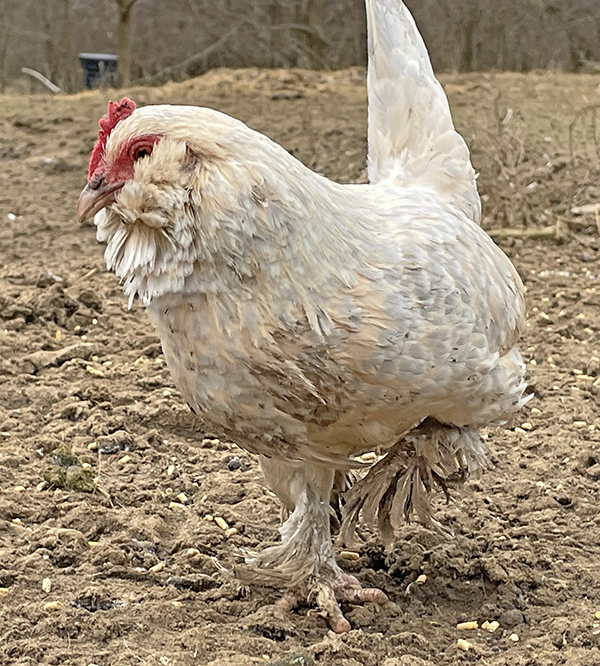
Three of the chicks that came to the farm animal sanctuary survived. Sidney, a Silkie Rooster, and Speckles, a calico Bantam hen, are tight buddies. Lavender, so-named for her muted violet-and-pearl plumage, keeps her own counsel. She is what is referred to as a “fancy”, with swirls of feathers booting her little feet. She flits in and out of the standard flock of hens and roosters, dodging under their feet for breakfast. This system works well for her in summer and fall. In wet spring and soupy winter mud and slush, her feathered boots cake and weight her down. Breeders are not known for their practicality.
Last year, her fancy footwear became so clogged that we had to soak them in warm water, trim her foot feathers and keep her indoors to allow her to eat and sleep in dry warmth. Once she recovered, we reintroduced her to the flock and she wanted nothing to do with humans beyond feeding time. Last week, Steve saw her hiding from one of the younger roosters. Lavender hopped up to Steve and chattered. She allowed herself to be picked up. Steve saw that her foot feathers were boggy. He took her inside, soaked her feet, trimmed and dried her feathers and set her outside. She hopped away to rejoin the flock and is not currently seeking human interaction other than at mealtime.
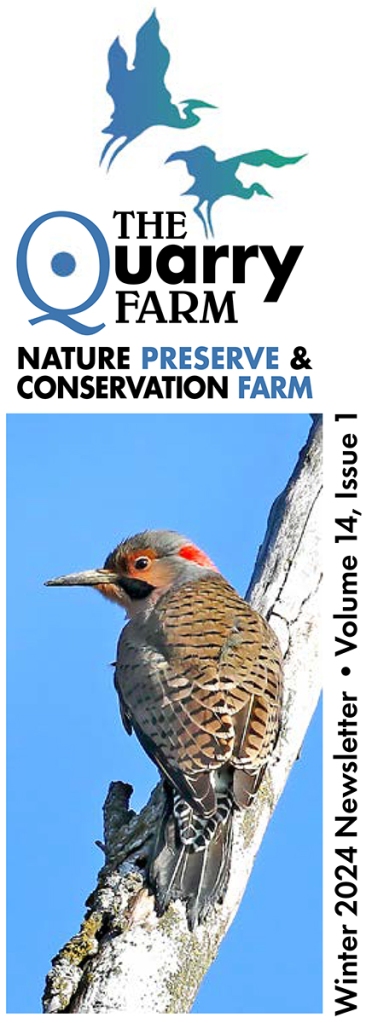
Click on the cover above to download your copy of The Quarry Farm Winter 2024 newsletter.
Four Nigerian Dwarf goats joined the farm animal sanctuary herd a few years ago, bringing the group to six sweet, spirited individuals. Three were more equipped to back their head-bumps with full sets of curved horns.
Horns protect the herd from predators by allowing goats to butt predators and knock them off their game. This isn’t so much an issue here in the sanctuary. More often, it’s the goaty way to establish a pecking order. Horns also have blood vessels within them that help regulate body temperature. Here they have water and shade in summer and quilted waterproof goat coats for winter’s coldest.
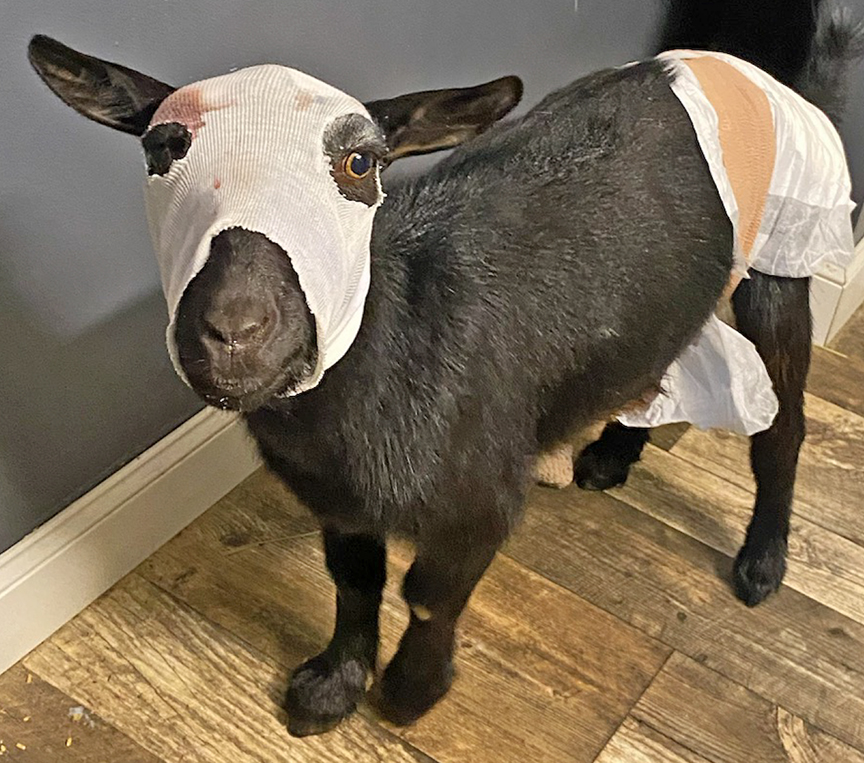
Unfortunately for one of the three with their own personal cornucopia, his curving horns grew into the side of his face. On August 8, it was determined that Pluto’s horns should be surgically removed by a veterinarian. This resulted in great pits in his skull, exposing his sinus cavities. A few days afterward, we had to make an emergency run to Ohio State Veterinary Hospital in Marysville to prevent spread of infection. His cranium must be cleaned, disinfected and bandaged twice a week, well into the holiday season. If you would like to help fund his recovery, all donations to The Quarry Farm Nature Preserve & Conservation Farm are tax-deductible.
For more about the other, more joyous things that happened here in this summer, as well as upcoming events, click on and download the Fall 2023 newsletter cover. Buddy will be happy to see you.
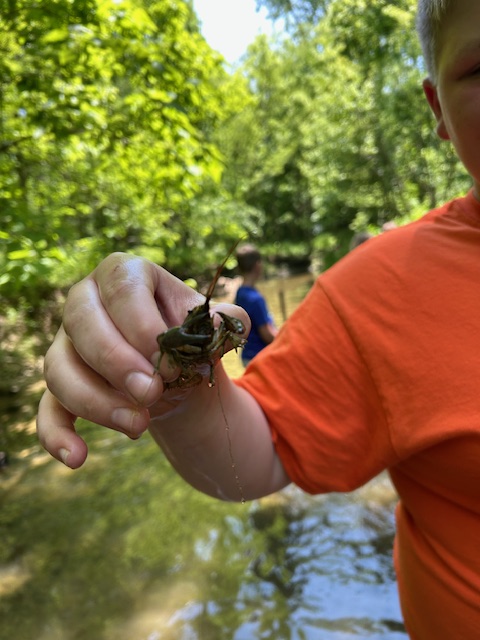
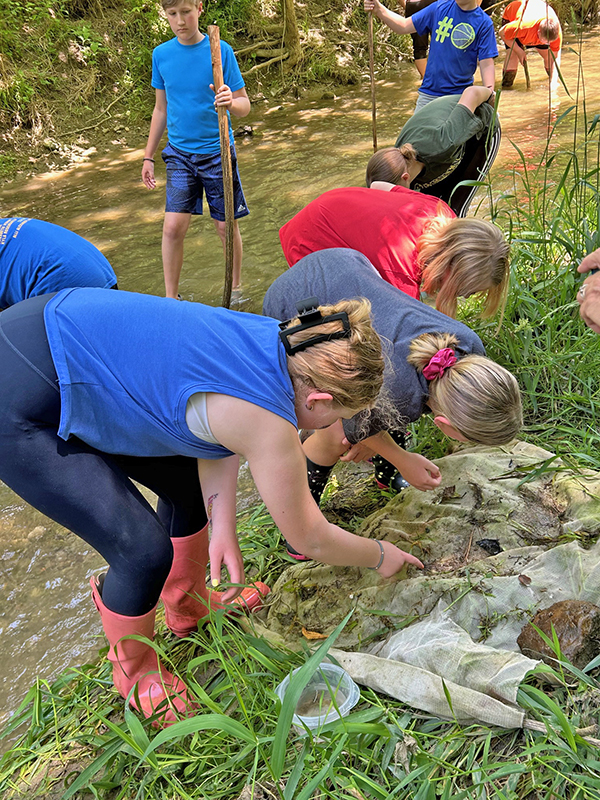
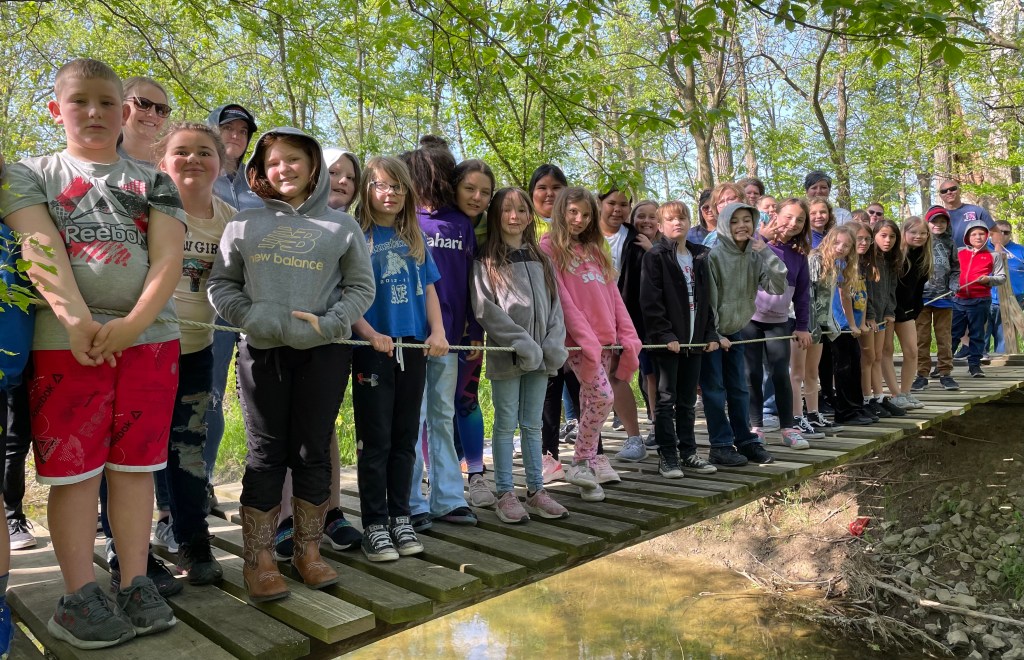
A wood duck zig-zagged through the understory yesterday morning en route to the southeast bank of the quarry wetland. Nearly 50 third-graders, teachers and chaperones paused between Cranberry Run and the southwest bank of the quarry. Several children chatted about the possibility of crayfish in the stream and turtles sunning on snags. Others were looking to the northeast at just the right time to see the bird land briefly in an overhanging tree before it spotted humans and took off again.
The Continental Elementary School students were here on a field trip, most for the first time. They traveled by yellow bus across Putnam County at the urging of Charlene Finch. Charlene and her Continental Junior Gardeners were some of our first visitors after The Quarry Farm became official. They made the trip several times until their leader was no longer able to coordinate the group’s adventures.
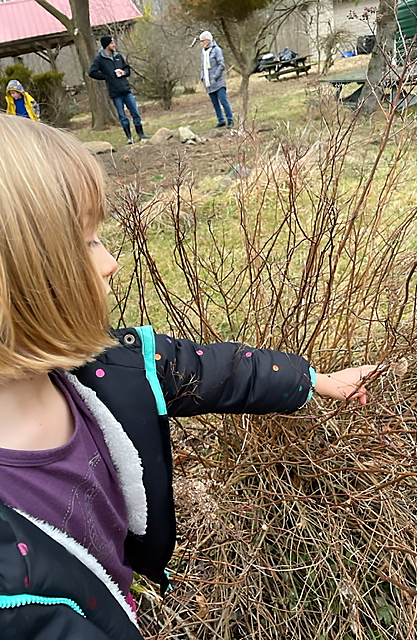
Two days before we took The Quarry Farm on the road, or at least a snapshot thereof. Miller City-New Cleveland School is rounding out the elementary program year with the theme “School is Wild” and Grades K-5 are getting wild by virtually traveling to other parts of the world. A few months ago we were asked if we could work with that. “What would you think of our talking about how some plants and animals are here that shouldn’t be, like invasive bush honeysuckle and zebra mussels, and how they affect local wildlife?” I asked, and our spot on the agenda was a ‘go’.
North America’s prickly pear cactus is spreading around the Old World, while Eurasian plants like Lonicera maackii, the Amur honeysuckle are going on a joy ride here. One Miller City New Clevelander student exclaimed, “Like a Hydra!” when Rowan explained that, when you cut that honeysuckle down, 20 more grow in its place. So yes, you fine young man, the Amur honeysuckle is exactly like the mythological beast that grows back twice as many heads each time Hercules or another Greek god cuts of one head, unless someone carefully treats the stump or yanks each root hair from the ground.
We ran with the Hydra reference all day and carried it over to yesterday’s field trip. I expect that it’s here to stay.
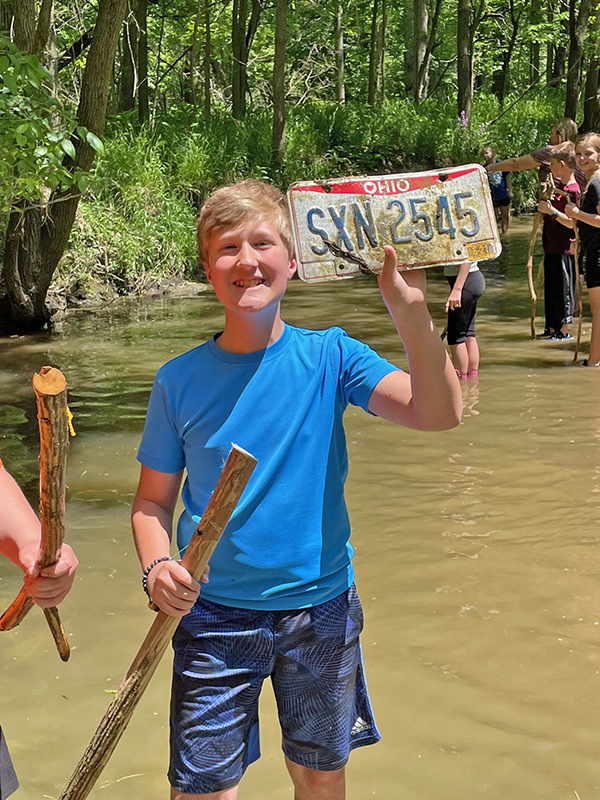
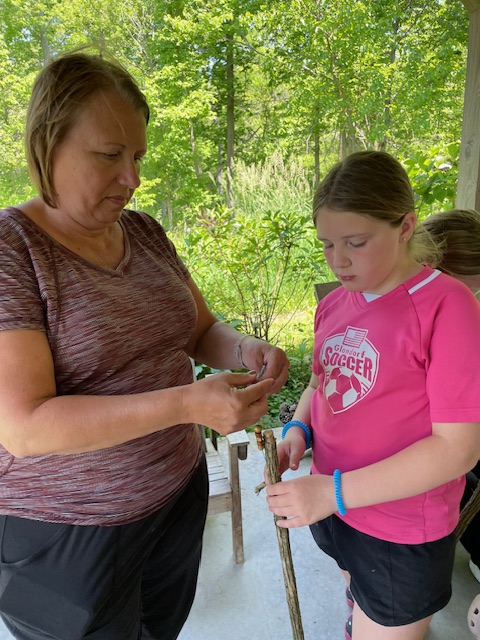
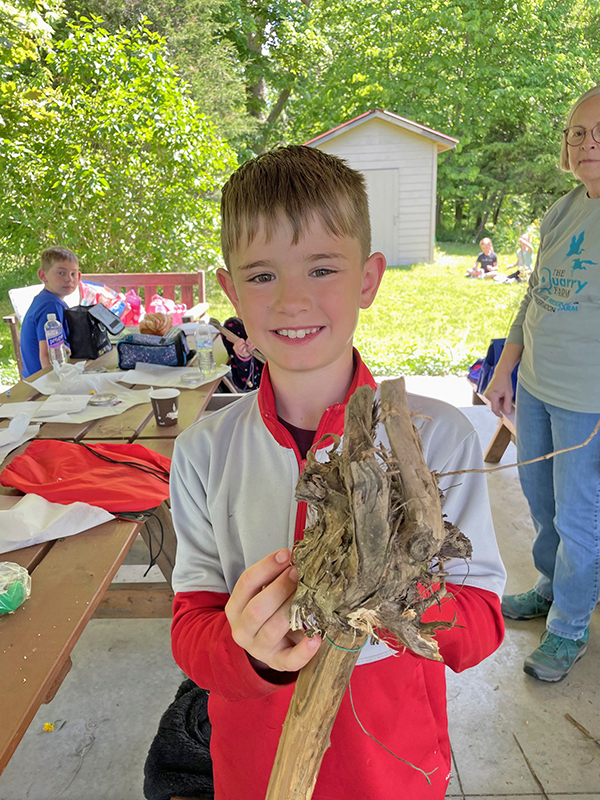
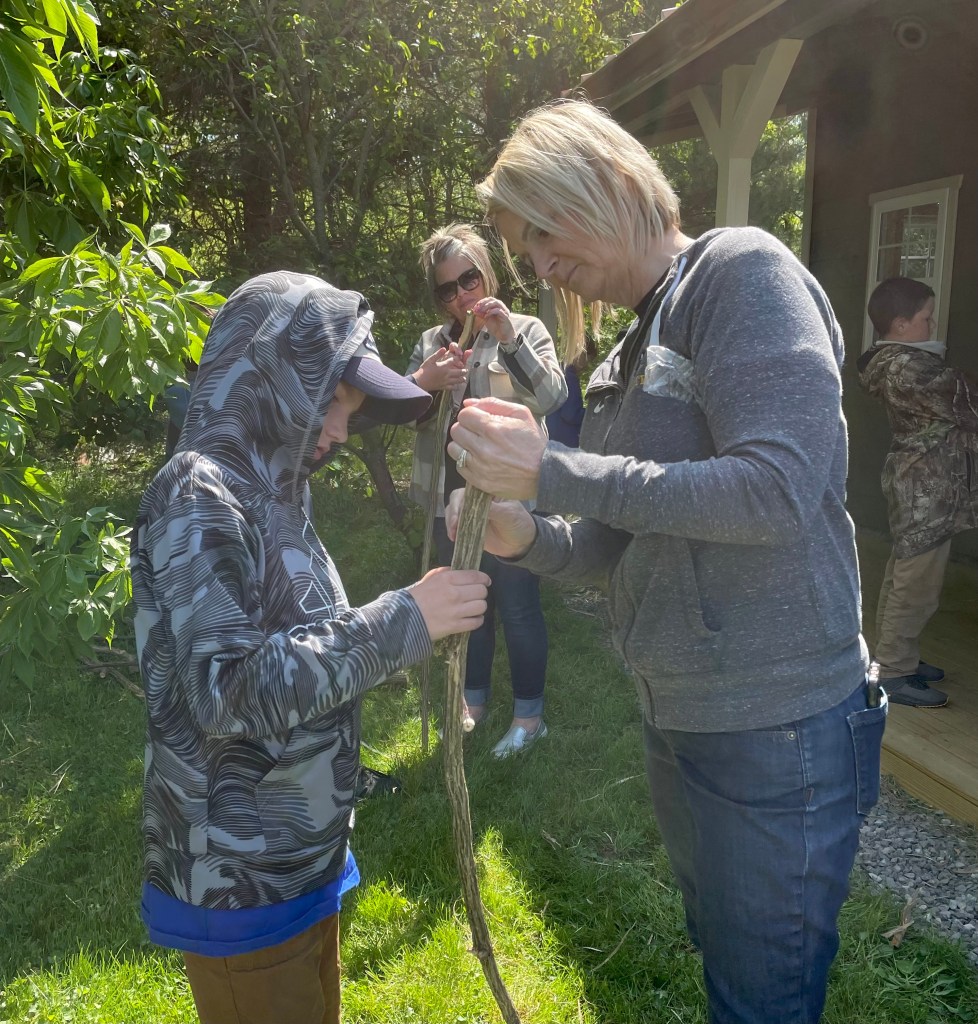
Birder-extraordinaire Deb Weston crafts gorgeous hiking sticks from Amur honeysuckle. She collected suitable honeysuckle trunks from the nature preserve and finished one for each of the school’s K-5 teachers. Virginia Opossum, Virginia Estella represented native species in Central America and the USA, although the Virginia opossum is considered an exotic (non-native) species in British Columbia. Not much is known about its impact on the province’s native species. Maybe North America’s only marsupials are making a dent in tick populations as they wander.
Getting back to yesterday, the Continental schoolchildren made lasting leaf t-shirts from leaves collected on the hike. There were visits with the farm animal sanctuary residents.
SIDEBAR
K, like the other tagged Canada geese T, U and X that are current residents of the farm animal sanctuary, were placed here by a wildlife rehabilitation center with the hope that the proximity to wild Canada geese will light that spark within them tell them that they are wild birds. K, like T, seem to realize that Steve, who just had significant knee surgery, is an injured member of their flock who must be protected from potential predators. T has been Steve’s protector since the bird first saw Steve walk with a cane. We found out yesterday that shy K, who has only been here for a few weeks, will come out of his timid shell to keep Steve safe. After one field tripper had to high-step over a K intent on keeping the predator/student away from Steve, K was escorted into the inner paddock where he spent the remainder of the visit. And that is just one of the reasons why wild babies should left in the wild.
They began their own hiking sticks by threading cord loops through pre-drilled honeysuckle—40+ hiking sticks from just four “Hydra” shrubs. The day was dry, so some bark was peeled. Students were encourage to keep peeling to reveal the lovely woodgrains and insect trails beneath. Teacher Sharon Siebeneck invited the students to each bring something from home, a threadable something that is of value in their young lives, to thread on their cord loop. There were buttons, medallions, charms and beads. All have stories. One little girl shared hers while she arranged her leaf shirt with Rita.
“She kept showing me the bead. I could tell she wanted to tell me something but was kind of shy.” They chatted a little more. Eventually, the girl told a story that made all of us cry, with the anger and sorrow of it, and the honor that child bestowed upon The Quarry Farm by selecting that piece to for her hiking stick. The little girl once had a cat that she loved. One day the cat went outside with the dog. The dog came back but not the cat, not for a long time. When the cat did come home, it curled up on her bed. “We went to church,” she told Rita. “When we came home, the cat wasn’t acting right. My grandma looked her over and someone had shot her.” The cat died from this cruelty and the ashes are stored in that bead.