Winter news

2014 Winter NewslettercoverS'moreWith temperatures above 0°F and sun overhead, the visuals are breathtaking on the banks of Cranberry Run today.

Turkey track

Goat-tracked corridors criss-cross the upland sanctuary. Wild turkeys are on the move on the paths as these elusive birds forage in the floodplain and on the cover of the 2014 winter newsletter. Click of the cover to the left to read more.

Hope to see you under the stars later this month. Don’t forget to RSVP.

The Quarry Farm Fall 2013 Newsletter

2013 Fall Newsletter-2Although predictions cast doubt on fall color in the Midwest, The Quarry Farm summer was brilliant. Fall is pretty fantastic, too. Check out the latest newsletter by clicking on the cover imaged here.

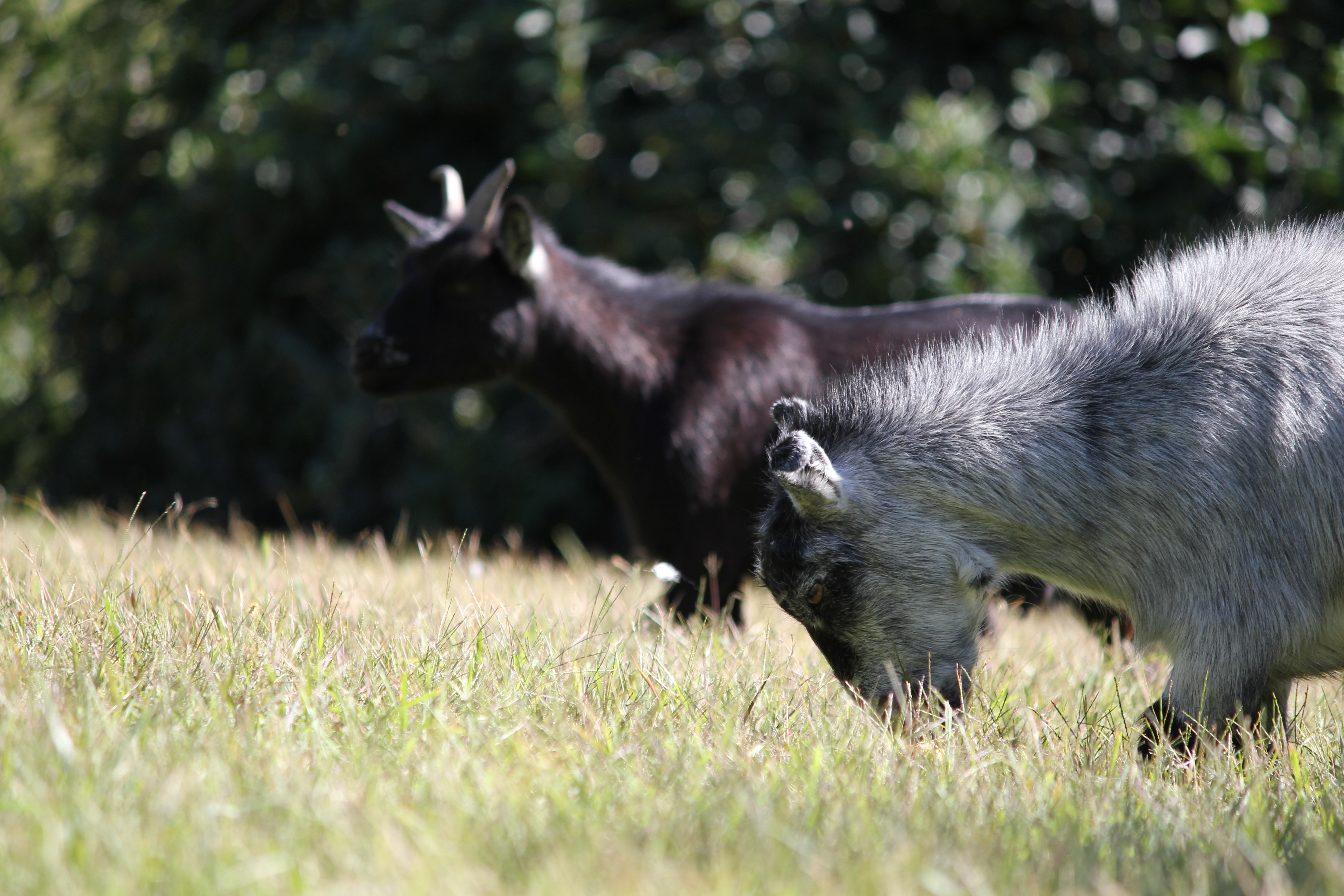
043It’s been nearly eight days since the Autumnal Equinox rolled around and in those intervening eight days, a lot has happened. On Thursday past, some 70 home-schooled1275330_10202302158898800_378213994_o children and their parents/grandparents/guardians visited the Farm. As with other groups that have come and gone, they made herb bundles, learned about the waterways around Ohio, got a peek at what lives down under the rocks and the mud in the creek that runs through the Quarry Farm on its way to the Riley and they met many of our two- and four-legged friends and fellows who live here with us. Beatrice has already worked out how to circumvent the fence, so she spent the morning visiting with the groups over by the cabin. Buddy and the goats stayed closer to home and were treated like royalty, which is as it should be.

047On Saturday, we held what we hope was the first of many acoustic nights. Friends and family met in Seitz Pavilion to listen to friends and family play and sing (and, yes, that’s a lot of friends and family). Thanks particularly to Erin Coburn (and Bruce and Beth, of course), Mark Gallimore, Brian Erchenbrecher and Doug and Merilee of 12-String Relief.

If you missed it, we’re truly sorry for your loss.037

“Best field trip ever”

racg041193 031

One young boy shouted this as he was on his way back from the farm animal sanctuary this morning. How could it not be the headline today?

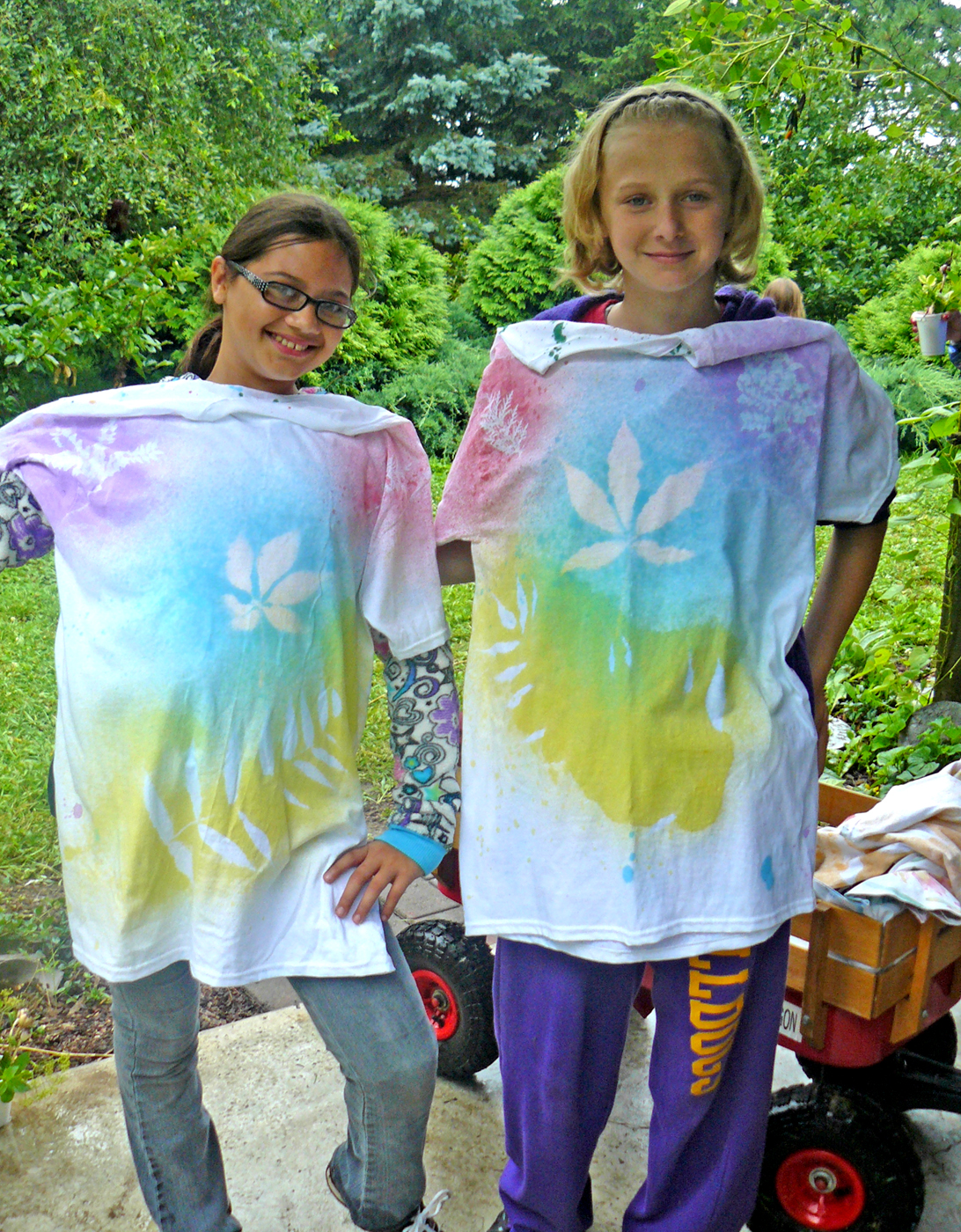
Modeling leaf resist t-shirts

Modeling leaf resist t-shirts

That young man was here with Charlene Finch and her Junior Gardeners from Continental. This was the second year that the group visited the Quarry Farm. They are one of best bunch of people we’ve ever met. Enthusiastic about everything, which is good since their day started here with rain. But since the shelter house went up last summer, the roof was ready and overhead. The new tent curtains were draw to the west and south, so the rain was hampered enough that kids and parents could make leaf shirts and select herbs for culinary, scent and healing bundles.

Charlene and her gardeners make herb bundles

Charlene and her gardeners make herb bundles

Charlene Finch started the Junior Gardeners group four years ago as part of her Defiance County Master Gardeners project. She liked it and the participants so much that she kept at it. Her own pocket paid for materials and seeds at

Costmary, an herb

Costmary, an herb

first. Now the group receives donations, holds 50/50 raffles and sells food at the Continental fall festival to fund summer gardening projects.

During the 2012 visit, Beatrice was just a piglet, a very shy one. Her encounter with Continental Junior Gardener Brandon was a positive turning point for us and Little Pig. Prior to the first trip, she wouldn’t let anyone close. But she liked Brandon. This morning as we all walked up the path to see the animals, Beatrice came at a trot, full grown and not a bit shy. Buddy and the goats were especially happy to see the 50-pound bag of peanuts that the group donated today.

Setting Up The Quarry Farm at Toledo Botanical Garden

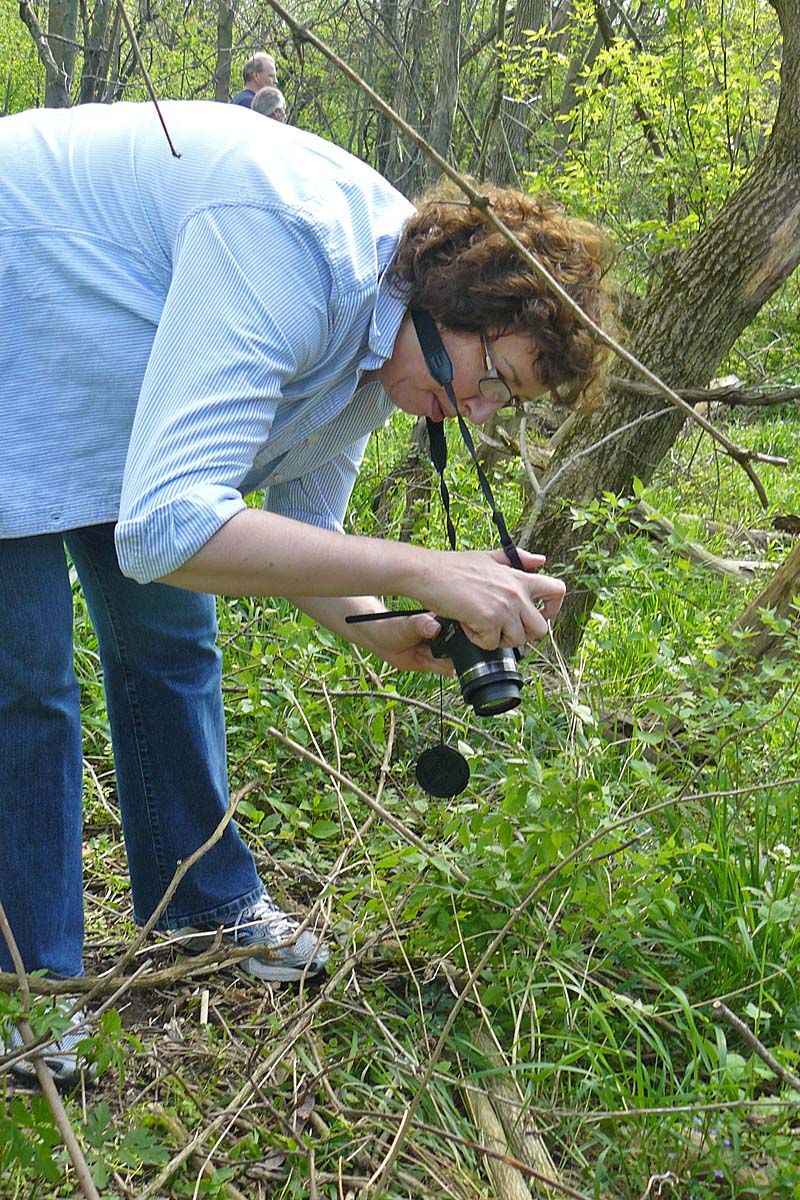
Photographing a nymph

Photographing a nymph

One of the programs offered through The Quarry Farm is something we call Small Streams. The program gives us the opportunity to talk about aquatic insects and other macroinvertebrates and their importance to all living things, water quality and what each of us can do to help keep Ohio’s waterways healthy. Small Streams can be as complex as setting up a freshwater stream

First look at a crayfish

First look at a crayfish

microhabitat in a classroom, or as simple as a plastic bucket half-filled with water and teeming with clams, snails, crayfish and the larva of dragonflies, damselflies, mayflies and a host of other insects with larval forms that start their life cycle in the water. This past Saturday, June 15th, we had the opportunity to take our show on the road to Toledo Botanical Garden as part of Nature’s Nursery’s Walk for Wildlife.

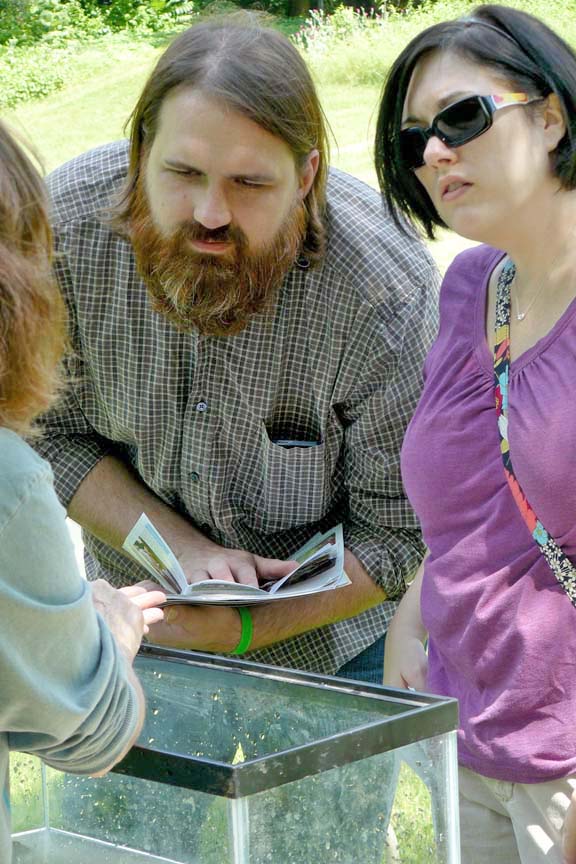
coupleTo be honest, this is the kind of presentation we like best. While a classroom setting provides the chance to really get in depth about some very important issues, it frequently lacks spontaneity. That’s never a problem when we set up in public and have people from all walks of life wander up and ask us what we’re doing there. And while we love the kids, the adults who have never seen a dragonfly nymph, never held a hellgrammite…well, they’re our favorites. Most people never completely lose their childhood curiosity and when it’s piqued, the child they were comes instantly to the fore. We were lucky enough to witness several such transformations as parents found themselves just as fascinated as their children.

nymphThe only down-side to an event such as Saturday’s is the inevitable loss of at least one of the insects in our charge. Typically, when we’re standing at a folding table with a couple of buckets, there is no electricity available. No electricity means no bubble stone. No bubble stone means that the only oxygenation the water these insects are trapped in is what’s provided when we stir the bucket. So, as is typical at one of these events, we lost two of the dragonfly nymphs we took along. But, since our primary goal is education, we took that calamity and turned it into a teaching opportunity.

See, there’s this thing about dragonfly nymphs…Have you ever seen any of the Alien movies? The monster in these films has a unique feature. It has this mouth within its mouth that shoots out and chomps the unsuspecting. Well, that’s not entirely true; it chomps the suspecting, as well. While not exactly like that, dragonfly nymphs have a similar set up. Their lower jaw are hinged and fold up under their heads.

Lower mandible of dragonfly nymph, extended

Lower mandible of dragonfly nymph, extended

When something tasty wanders by, the nymph is able to extend its jaw well out and away from its body, snatch up its soon-to-be dinner and pull it back in. Getting a live nymph to cooperate, to actually extend its lower mandible out to its fullest, is pretty much impossible. The dead, however, know no fear. So, with a couple of dozen people looking on, we were able to pull that jaw out and show people just exactly what we were talking about. That’s when the Alien and Predator conversations started, culminating in the question, presented by a man of roughly my own generation, “I know this sounds strange, but how do Predators kiss?” (For those of you with more highbrow tastes, who are confused by the nature of the question, try this: http://www.alexvisani.com/monstergallery/predator.jpg

Chris and the crayfish

Chris and the crayfish

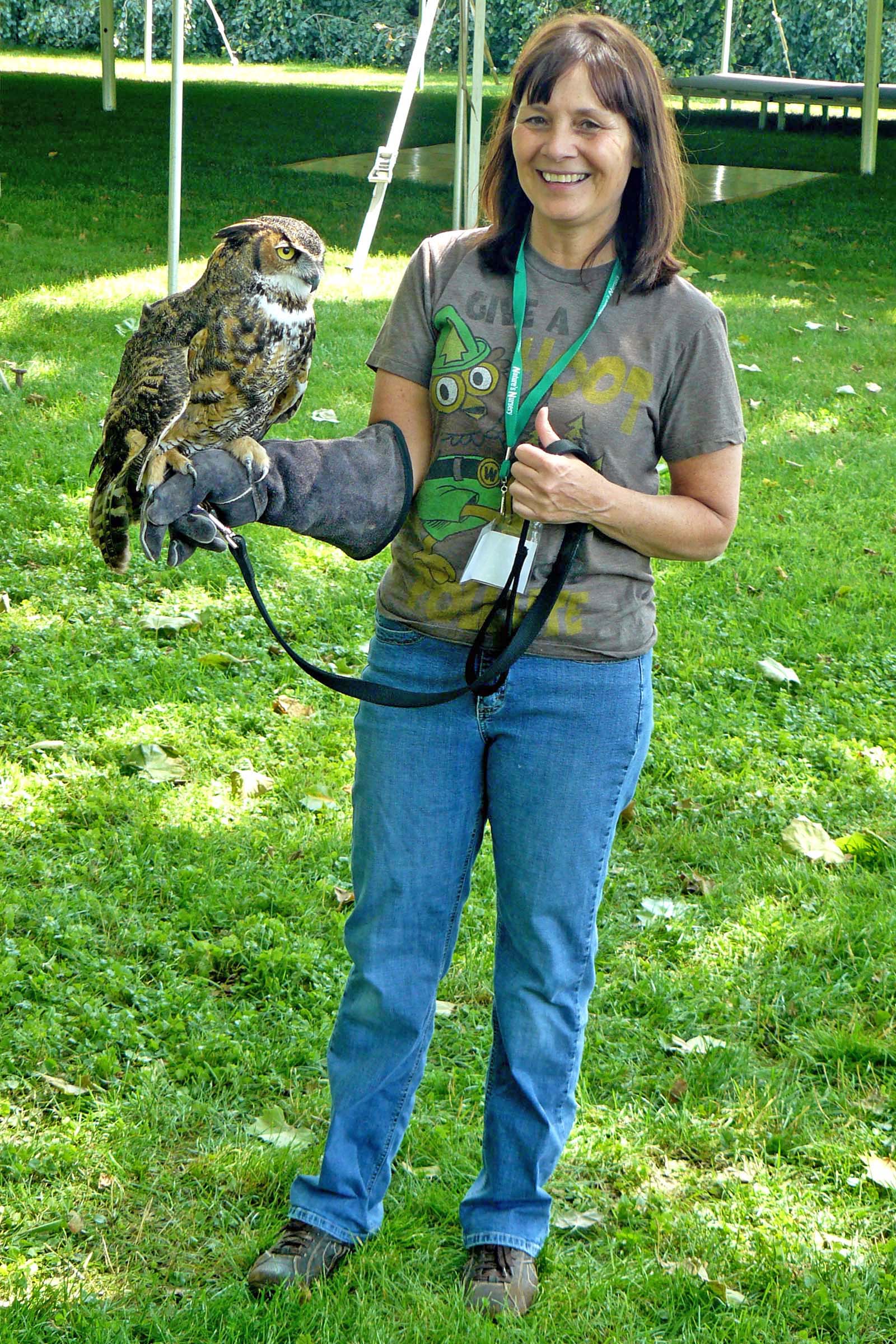
Nature's Nursery's  Linda and Icarus

Nature’s Nursery’s
Linda and Icarus

We’d like to extend a special thanks to Chris,a Natural Resources student in the Toledo Public Schools system, for all of his help. We’d also like to thank Nature’s Nursery for inviting us to participate in the event.

You don’t have to be a star (but it’s really fun)

The new greenhouse north of Red Fox Cabin was of interest to the Owens class as they are considering one of this size for a butterfly house.

The new greenhouse north of Red Fox Cabin was of interest to the Owens class as they are considering one of this size for a butterfly house.

Been awhile, but with good cause. Seems as though weekly (or biweekly) posts may be the new norm of spring at the Quarry Farm.

On May 29, seven people from Owens Community College, Toledo Campus, drove down I-75 and made their way here, despite the Road 7L sign being missing from the turn off State Route 12. Jeannie Wiley Wolf, Findlay Courier reporter, almost didn’t find us to do an interview for an article that appeared in that newspaper on May 28. Steve says the sign mysteriously disappeared some time ago. Anyway, Owens’ Associate Professor Joanne Roehrs got the van here.

Owens2The students are working to obtain the Urban Agriculture and Sustainability Certificate, a new offering at Owens. All of them have sweat-equity in the urban community gardens in Toledo, especially in the Robert J. Anderson Agriculture Training Center and greenhouses (900 Oneida Street; Toledo, OH 43608) which are projects of Toledo GROWs, the community gardening outreach program of Toledo Botanical Garden. The Anderson Center is used as an educational forum for Owens Community College students who are studying urban agriculture. The Center is also an open-air classroom where under-privileged youth are educated on growing sustainable nourishment.

While on the Quarry, Roehrs and her Livestock Animal Husbandry students focused on the organic gardening projects, the wild bee boxes and the farm animal sanctuary. They study beekeeping through the hives at the Anderson Center. We were able to tell them what not to do with bees, from firsthand experience, and of plans for new bees in 2014. Beatrice of the whirligig tail was our model sanctuary adoption success story as she greeted all with charming, intelligent porcine loveliness.

If you are, or know of someone who is looking at new, relevant career option investment, this is a program to explore: http://catalog.owens.edu/preview_program.php?catoid=3&poid=634&returnto=158

From that point until 11:59 a.m. on June 6, preparations were made for the arrival and tour of 90 individuals, mostly K-8 graders, from Columbus Grove Local Schools’ after-school summer program. For coverage of that Quarry Farm landmark event, I’ll let the press do the talking. Diane Myer of Black Swamp Raptor Rehabilitation Center, Stacey Cook of Hometown Station WLIO, Nancy Kline of the Voice and Alex Woodring of the Putnam County Sentinel, volunteers Cathy, Shannon, Jonelle, Brendon, Cherie and Dakota, you all wear superhero capes. As long as the links hold, here’s the news from June 6:

Putnam County Sentinel: http://putnamsentinel.com/main.asp?SectionID=1&SubSectionID=1&ArticleID=15695

The Lima News/Putnam Voice: http://www.limaohio.com/news/putnam_county/article_8053fd5a-cf9d-11e2-807c-0019bb30f31a.html
plus photo gallery: http://limanews.mycapture.com/mycapture/enlarge.asp?image=47607266&event=1665851&CategoryID=65761

Couldn’t ask for more. Maybe sleep. But that’s OK, more than OK. As WLIO’s anchor Jeff Fitzgerald noted, “They say it should  be shared.” And we do.

That, Sir, is How One Uses PowerPoint

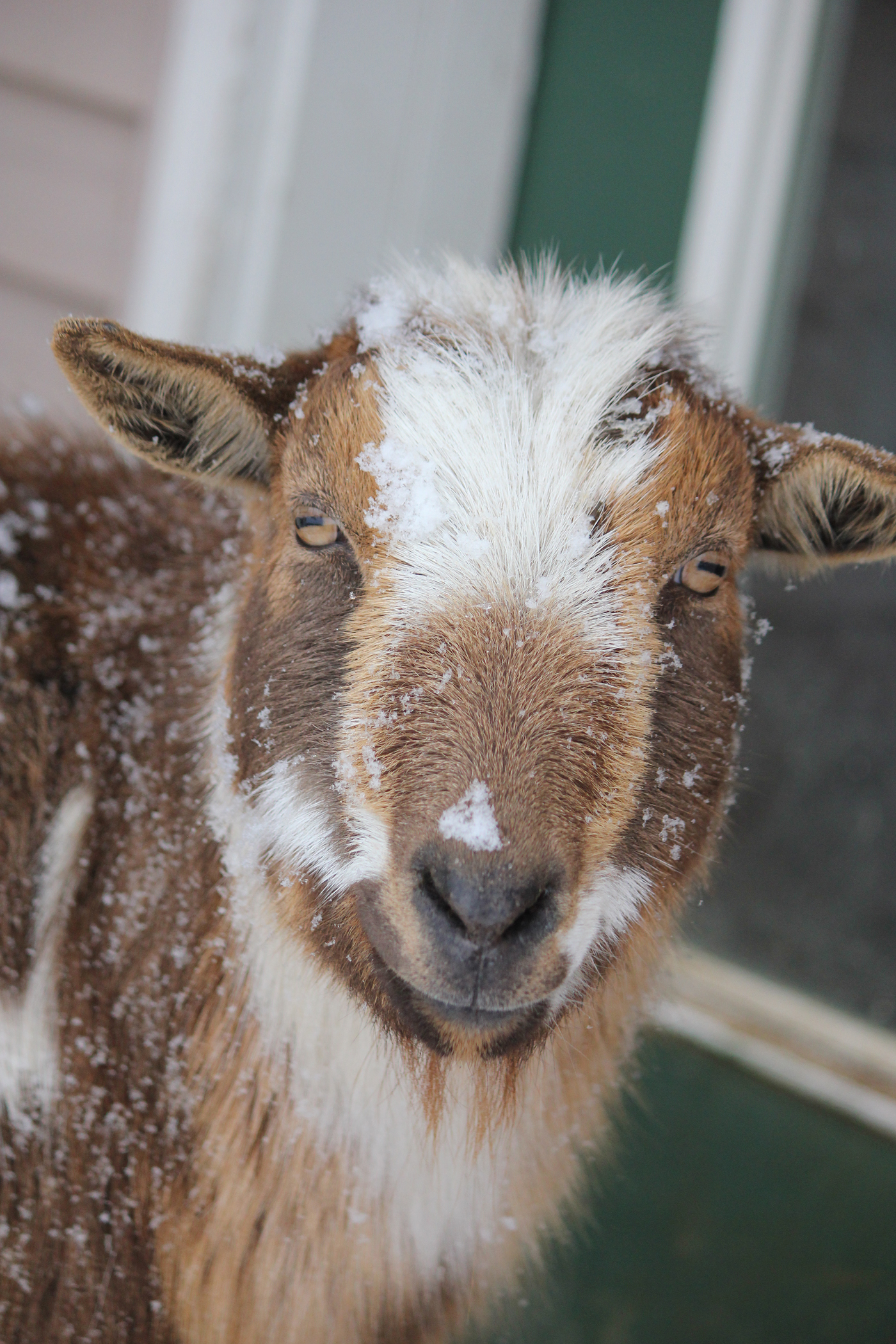
There is a goat at the door. As I write this post, I am watched by that goat, another goat, a turkey, a goose, and a little red hen. They are all looking through the glassed front door. If I sit very still and shield my typing fingers with the laptop, maybe they’ll cut me enough slack to finish this post.

I’ll keep it short. Mostly because Jonelle is going to do the talking for the Quarry Farm this time. Marvelous Quarry Farm Volunteer Jonelle did a presentation for one of her high school classes this week. The topic was “Volunteering with Animals.” Not only has Jonelle given a year of her time to the animal ambassadors here, but this inspiring woman has logged over 350 hours as a Toledo Zoo Teen. She most likely has every volunteer-oriented scholarship in the bag, and she’s only a high school junior. One day when she is observing and recording ground-breaking discoveries about pinnipeds, we can say we knew her when.

Here’s a clip from her class presentation. I have a door to answer.

Walk on the Wildflower Side

  • Mom and RowanOh, yes I did.

I titled this post what I did a) to get an eye-roll from you and b) because that is just what several of us did last Saturday. Cameras were slung over shoulders as intrepid amateur botanists crossed Cranberry Run to record spring wildlflowers on the Quarry Farm.

The “first really good time walking through the woods taking photos of pretty things” Spring Wildflower Photo Shoot and Sketch Walk resulted in a good list of the showiest wildflowers that Northwest Ohio has to offer in May. At least those that we could identify. 

RMcKeeA late blooming season resulted in here-and-gone bloodroot blossoms and trout lilies, but we did see the distinctive foliage. The same cool conditions did mean that ramps were still green and a few Dutchman’s breeches were starched white and puffed. There is a new trail cleared for visitation around the old oxbow, a site rich with engraved brackets, soft moss and woodduck calls. An expanding forest of mayapples lines the ridge of this young path.

Here’s the list, common names only, and a few photos of flowers and other wild things seen that day. The gauntlet is down, Becky. Let’s see what you’ve got on your box.

  • Bloodroot (foliage)
  • Toadshade
  • Wood Violet
  • Cinquefoil (Common?)
  • Jack-in-the-Pulpit
  • Dutchman’s Breeches
  • Mayapple
  • Wild Ginger
  • False Solomon’s Seal
  • Spring Beauty
  • Cutleaf Toothwort
  • Dandelions
  • Creeping Jenny
  • Wild Geranium
  • Trout Lily
  • Ramps (stems and leaves)

This slideshow requires JavaScript.

This One’s for the Dogs (and the Opossum)

Rowan and OpossumIt’s been a bit longer than we like between posts. But since spring is finally here (knock on wood) you will forgive us since you, like us, are probably running around in today’s sunshine before tonight’s predicted rain.

Silence on the web does not mean it’s been quiet for The Quarry Farm. The new chicks are growing, as is the grass for Buddy and the goats. Fezzik and Inigo are displaying for every female fowl that could conceivably give them the time of day. Inconceivable? Not so for the little red hen that follows Fezzik around. The wild turkey hens on the nature preserve could care less, however.

Eventwise, The Quarry Farm has been on the road for the last couple of weekends. Saturday, April 20 took us up I-75 into Michigan for the Monroe Conservation District Tree Sale. Tim Kwiatkowski, good friend and conservationist for Michigan Agriculture Environmental Assurance Program (MAEAP), invited us, and an assortment of aquatic macroinvertebrates from Cranberry Run as well as an opossum that matured overwinter here, to be part of the Monroe County Earth Day celebration that was held alongside the tree sale pickup.

It was cold and the wind blew. Despite the weather thousands of trees were sold and the buyers learned a little about biological indicators and that Virginia opossums are fantastic garbage collectors. Some even decided the little guy was cute.

He was cute. And we assume he still is, wherever his nomadic opossum ways take him. Once the evenings warmed toward the middle of the week he finally ventured out of his open hutch and into the wild.

Cassie

Cassie poses

Today, we had a short drive to the 6th Annual Mutt Strut and Craft Market sponsored by Putnam Pet Pals to benefit the homeless and neglected dogs of Putnam County and Northwest Ohio. They do good work and put on a great, loud show every year at the Putnam County Fairgrounds. Last year we set up a table at the Strut; it turned out to be one of the best offsite events that The Quarry Farm has ever been part of as we handed out packs of newsletters, talked to some amazing, compassionate people, and produced more canine caricatures than we could track. Although this year’s weather was sunny and warm, a day for breeding garage sales and other such competitions for public attention, the fairground was still hopping.

Better make that barking.

Good times.

And the Tally Is…

BirdingOver the course of a lifetime, we count any number of things: the number of cars we’ve owned, the dates we’ve had, the hours or minutes left before the end of the work day, the children in a school group we’re chaperoning and on and on and on. This past weekend, we counted birds. And it wasn’t just us, the folks who showed up at The Quarry Farm for this latest event. It was people all across North America and around the world participating in this year’s Great Backyard Bird Count.

Cooper's hawk

Cooper’s hawk

Sponsored by the Audubon Society, the Cornell Lab of Ornithology and Bird Studies Canada, this four-day annual event provides data about bird populations and migration to these giants in ornithological research. For us, the event has provided the opportunity to specifically record some of the birds that live here. The birds spotted and identified included: house sparrows, white-crowned sparrows, gold finches, white-breasted nuthatches, American crows, turkeys, great-horned owls, eastern screech owls, red-tailed hawks, Cooper’s hawks, juncos, American robins, Downy woodpeckers, red-bellied woodpeckers, hairy woodpeckers, northern cardinals, blue jays, horned larks, starlings, mourning doves, rock doves, brown creepers, Canada geese, mallards, great blue herons, black-capped chicadees, tufted titmice, song sparrows, dark-eyed juncos and one bird species that, a little over a year ago, perplexed more than a few of us.
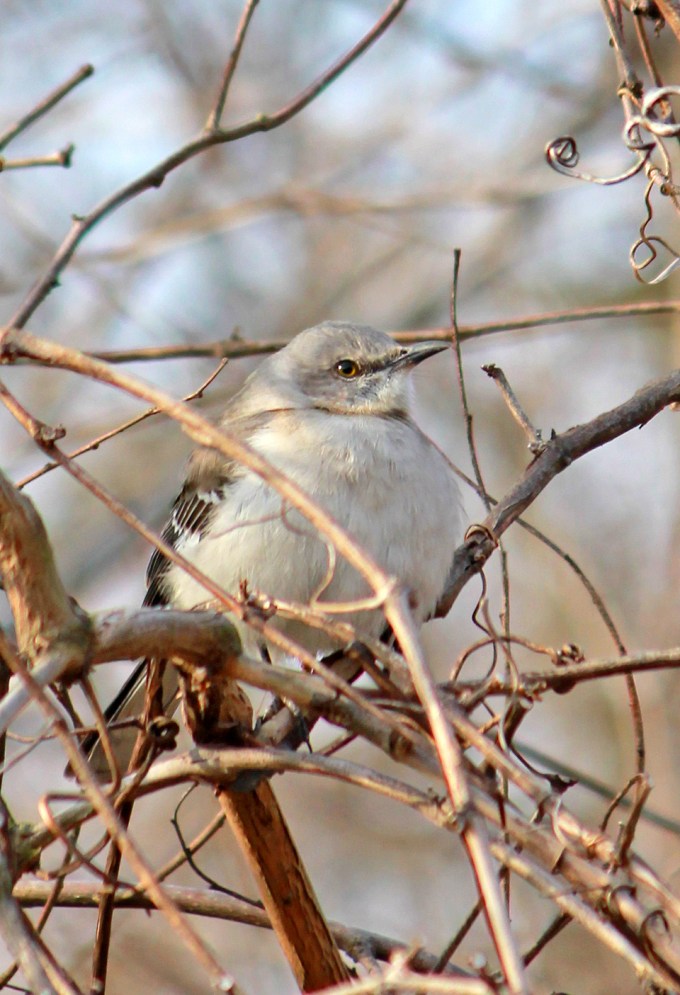
Northern shrike

Northern mockingbird

Last year, on our annual Winter Walk, we discovered a vole skewered on a thorn in a hawthorn tree. At the time, none of us were sure how the vole came to be there, though we threw a lot of guesses around and came to the mistaken conclusion that a passing raptor had dropped its dinner and it was inadvertently pinned in the tree. Three seasons later, on yet another walk, a naturalist and amateur ornithologist told us that it was likely the result of a Loggerhead shrike pinioning the vole for later. Well, he was close. One of the birds we discovered on our walk was not the Loggerhead shrike, but the Northern shrike, a close cousin to the Loggerhead.
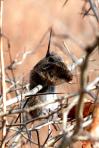
vole 1Although classified as a songbird, all shrikes share a behavior commonly associated with raptors: that is, they prey on small mammals, lizards and amphibians. Not only do they prey on these small animals, they store them away for later feasting by skewering their prey on thorns. So the cause of our earlier conundrum came clearly into view and was the highlight of our count this year.

It was a good weekend and a stellar bird count. In total, we identified nearly thirty different species of birds. That, and we definitively put to rest the bizarre and somewhat gruesome puzzle of the impaled vole.

This slideshow requires JavaScript.