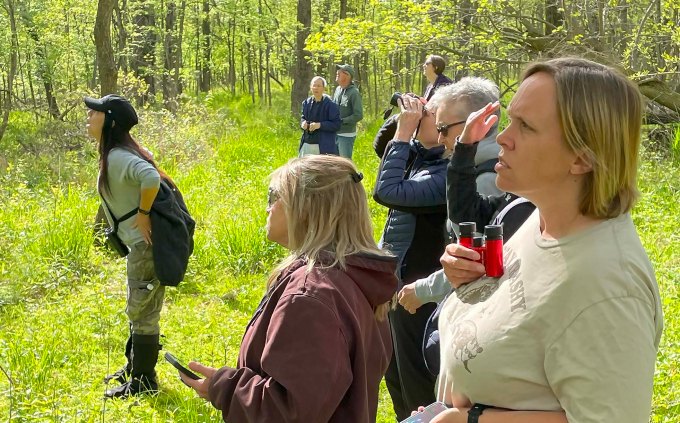
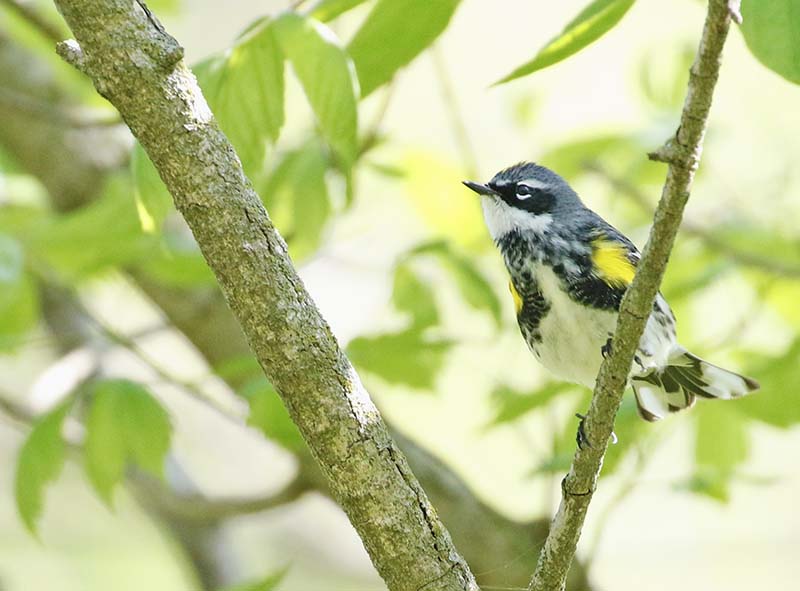
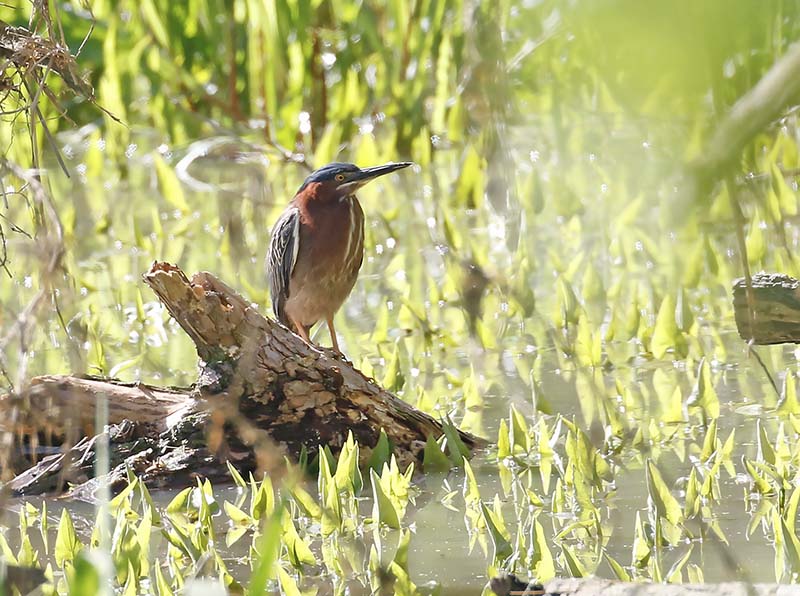
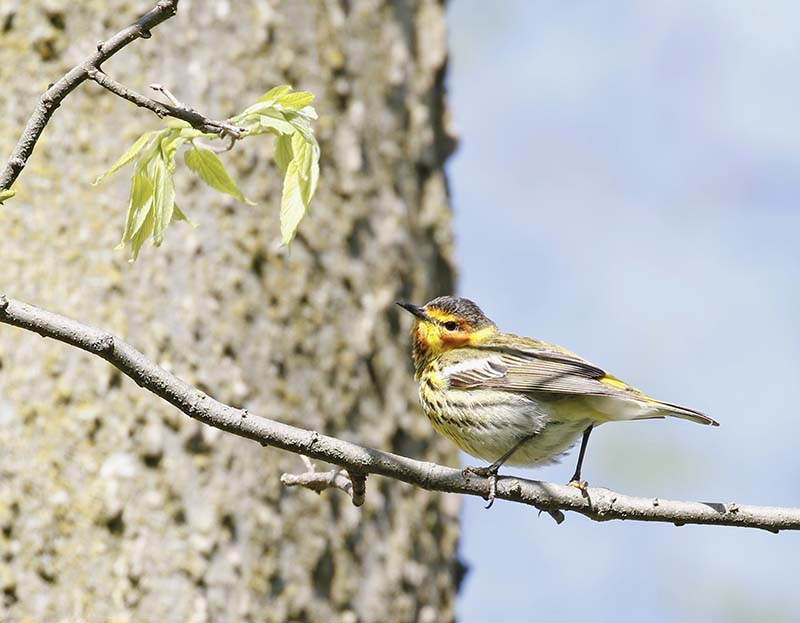
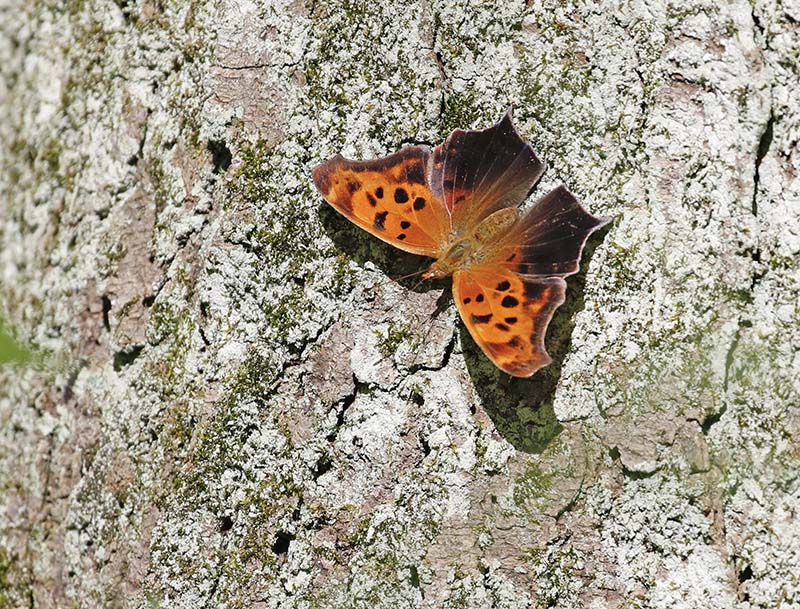
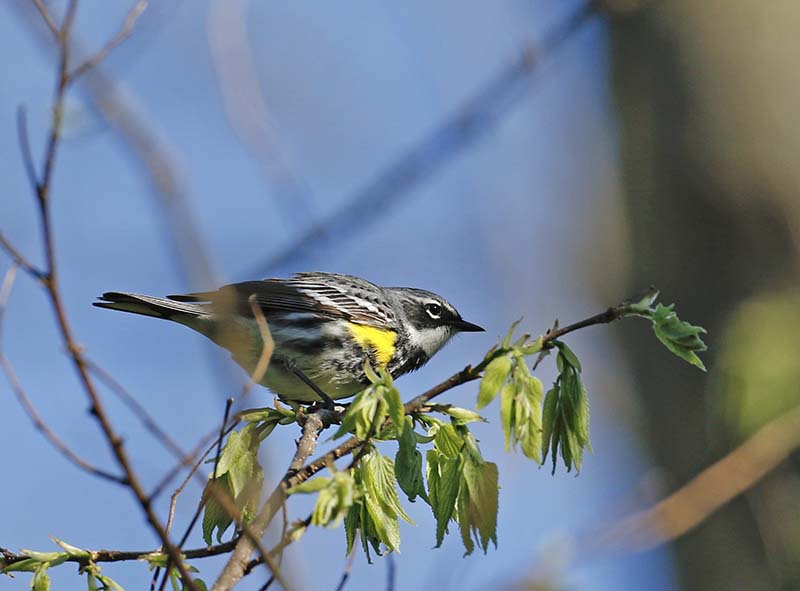
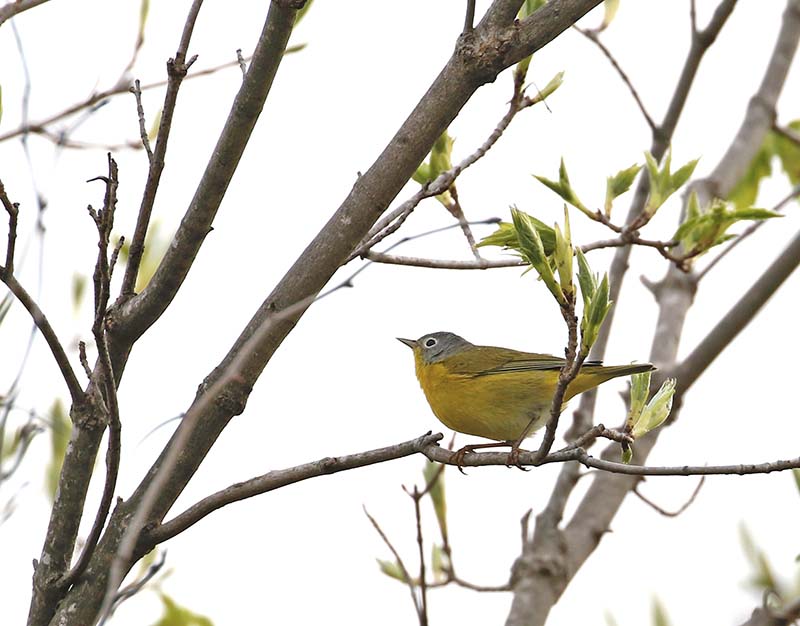
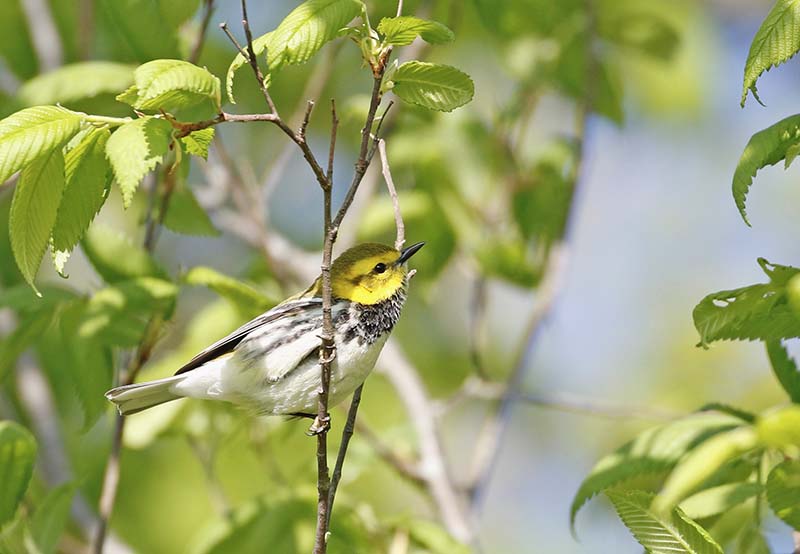
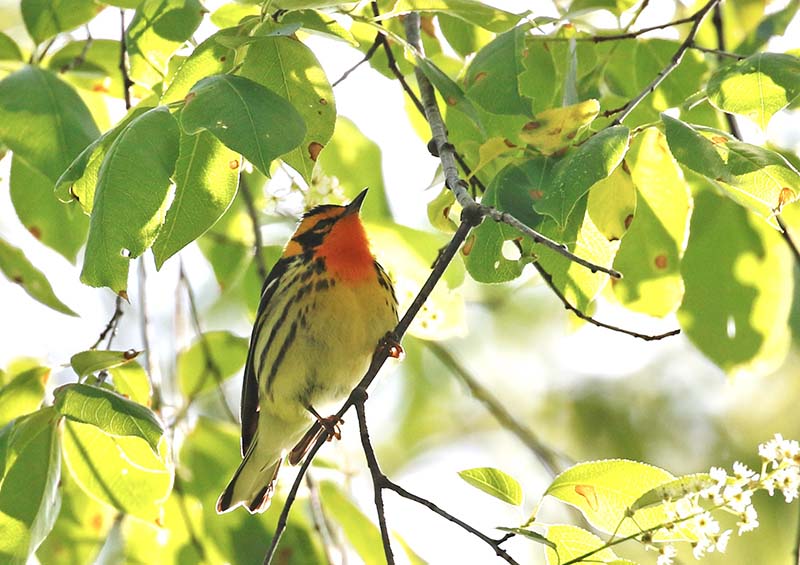
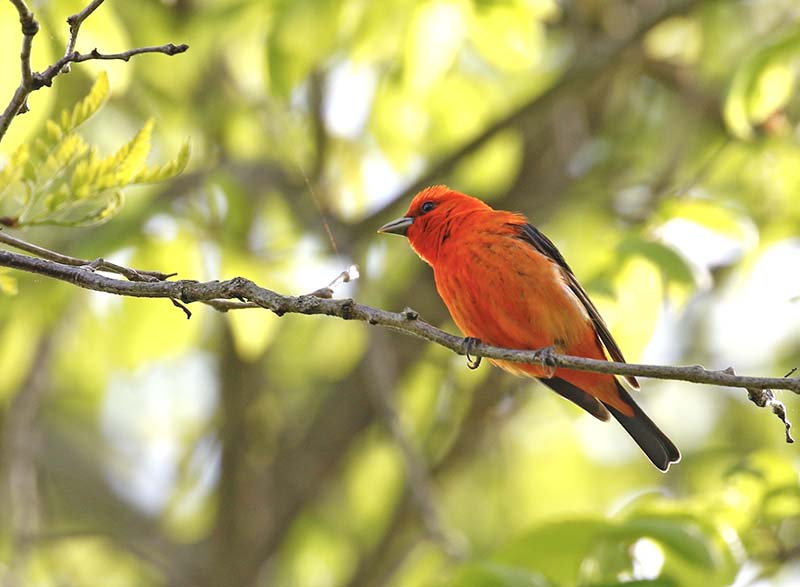
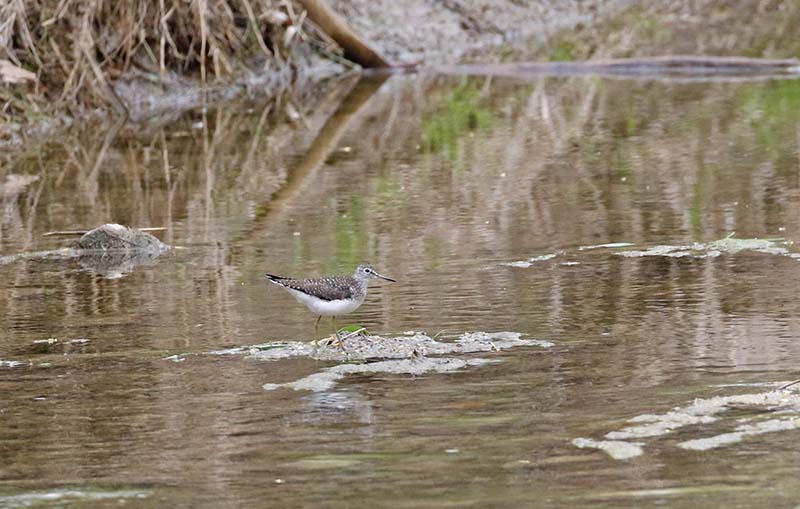
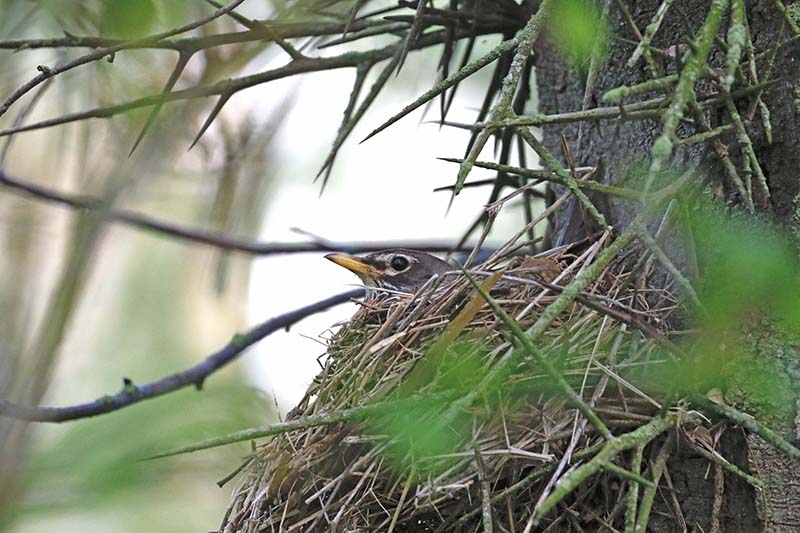
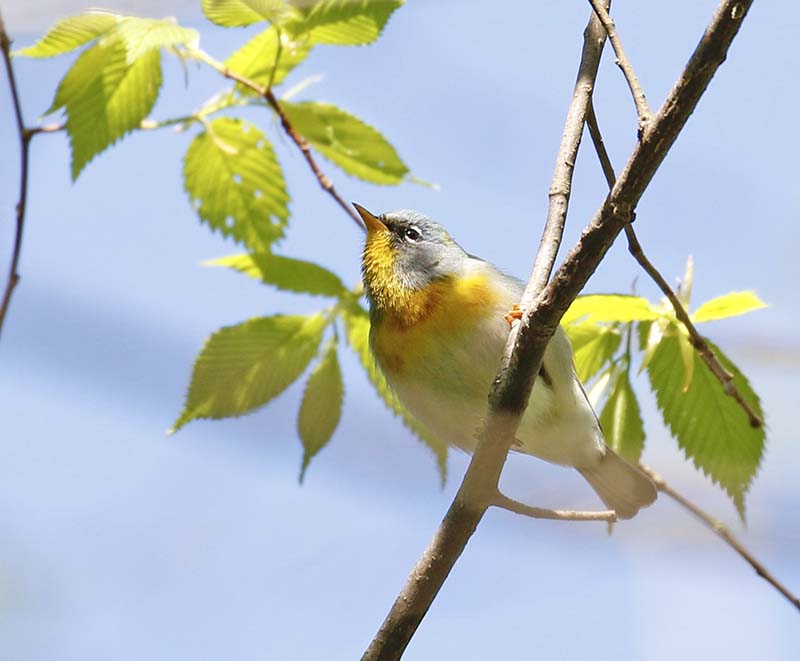
According to Birdcast, 14,526,300 birds crossed Ohio from 8:40 p.m. on May 11, 2025 through 6:40 a.m. on May 12. From 9 to 11 a.m. that Monday, participants in the annual Spring Bird Migration Hike followed the pointing fingers of Deb Weston and David Smith to catch a glimpse of brilliant spring plumage. That morning, the group documented 46 bird species in the wetlands, pollinator gardens, and upland forest of The Quarry Farm nature preserve. An enormous Question Mark Butterfly warmed its wings long enough for a good view as well.
It seems that migration peaks earlier each year as the planet tries to right itself, and Deb and David try to schedule a hike date that happens before all of the migrators pass us by or settle in to nest under dense canopy. To get a good idea of what might pass through for a crowd, Deb walked the trails for days leading up to May 12 hike. She took notes…and brilliant photos.
April 30: 47 species today. A juvie Bald Eagle flew over the prairie, Yellow-rumped Warblers all over the place. One Yellow-breasted Chat, 3 Orchard Oriole, Tennessee Warbler, Nashville Warbler, Yellow Warbler, Palm Warbler and Black-throated Green Warbler. Rose-breasted Grosbeak, Great Crested Flycatcher, Warbling Vireo and 13 Double-crested Cormorants flying over in a perfect V.
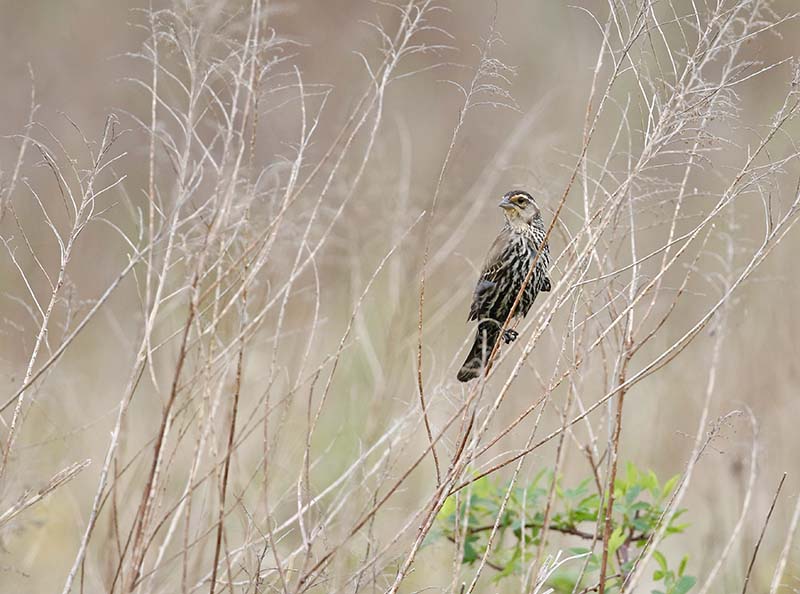
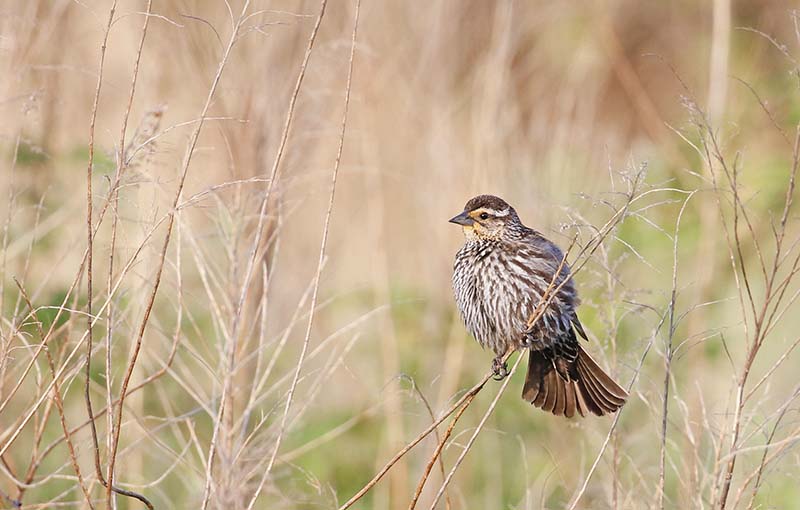
May 1: 52 species today. There was a Gray-cheeked Thrush in the garden area. Don’t see them often and it escaped photo day. Female Red-winged Blackbird, Nashville Warbler and Solitary Sandpiper were not so shy.
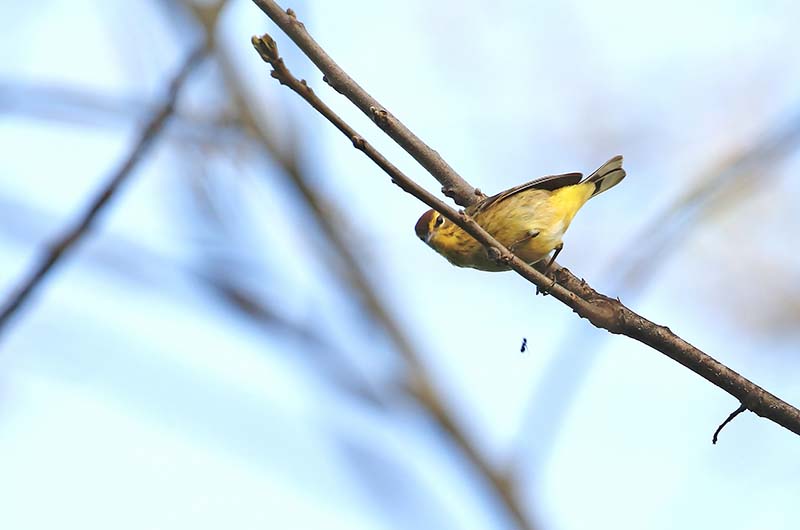
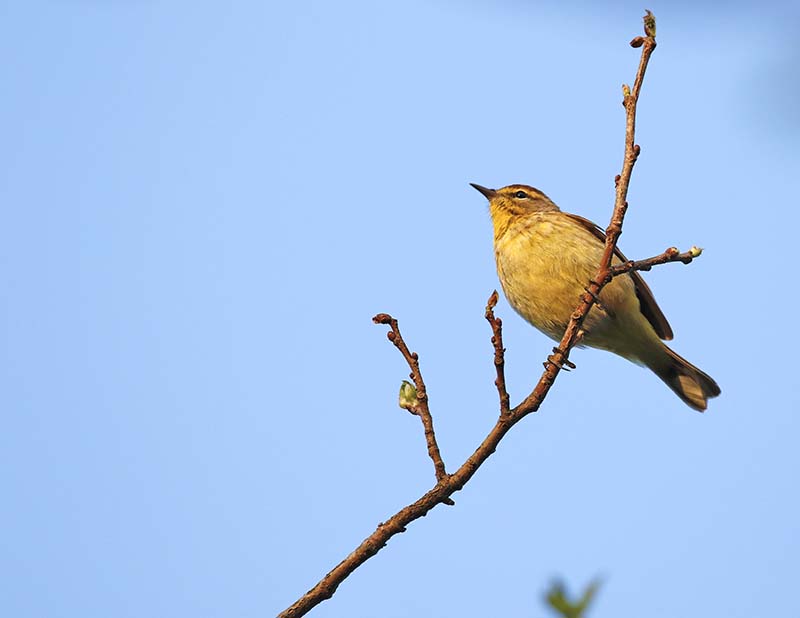
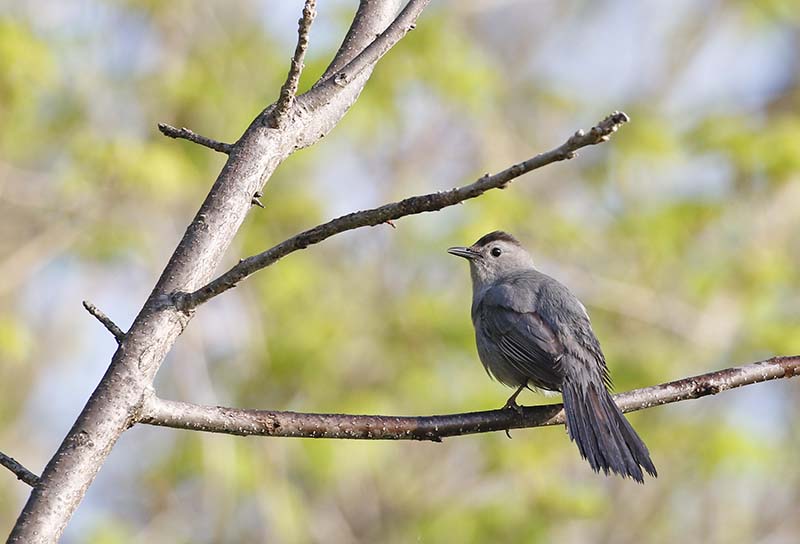
May 2: 50 species today. An American Robin on her nest every day. 2 pics of a Palm Warbler; the first one dropped its food when it saw me. Another female Red-winged Blackbird because they’re so pretty and a Gray Catbird. 3 Wild Turkey, 2 in different sections of the prairie flushed when I walked by even though they were out in the middle. Sounded like helicopter blades. Not sure if they were sitting on nests, but baby turkeys would be cute. 1 Ruby-throated Hummingbird and the biggest surprise was an Osprey sitting in a tree at the lookout point. It took off before I could get my camera up, but was excited to see it. Last sighting was in 2021. Warblers: Orange-crowned, Nashville, Common Yellowthroat, Northern Parula, Yellow, Palm and Yellow-rumped.
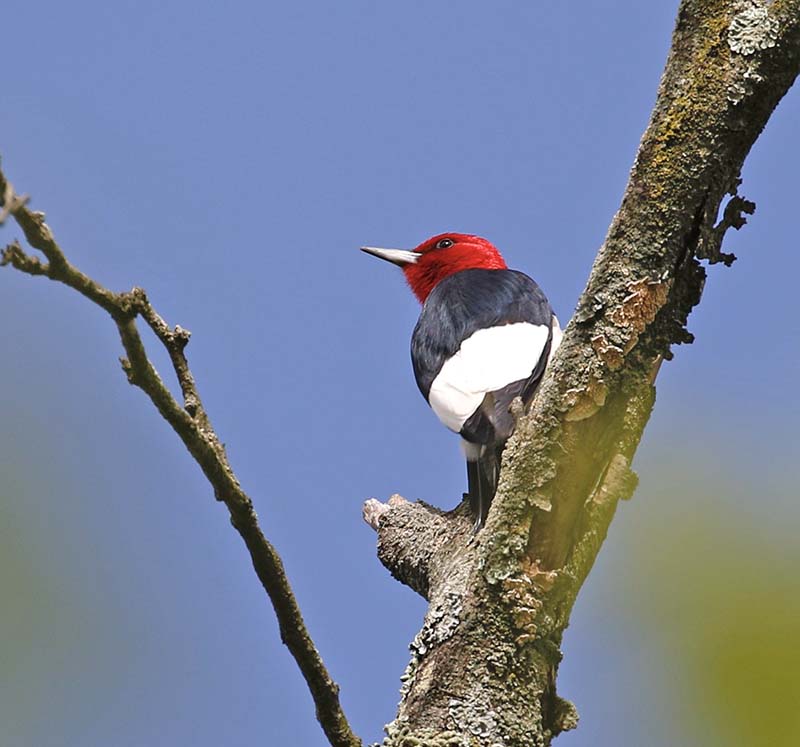
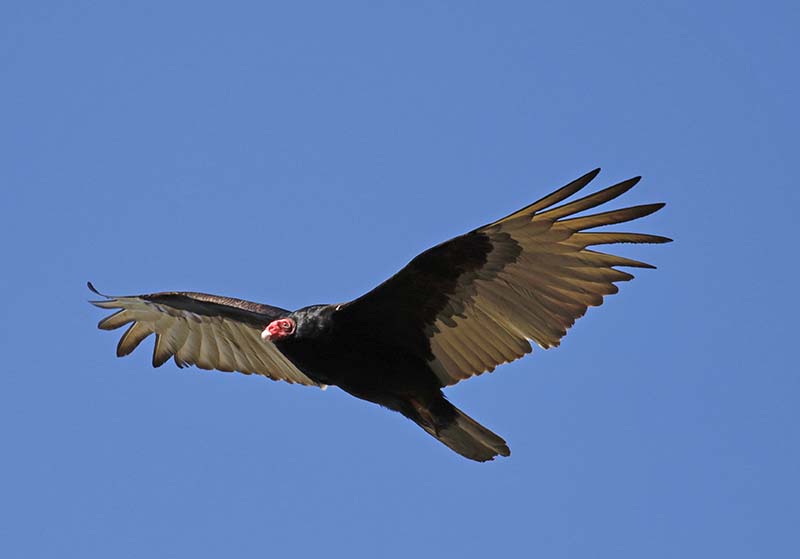
May 9: 53 species today (14 warblers) Canada Goose, Wood Duck, Mourning Dove, Green Heron, Turkey Vulture, Red-headed Woodpecker, Red-bellied Woodpecker, Downy Woodpecker, Northern Flicker, Least Flycatcher, Yellow-throated Vireo, Blue-headed Vireo, American Crow (YAY—they’re back!), Carolina Chickadee, Tufted Titmouse, White-breasted Nuthatch, Northern House Wren, Carolina Wren, Gray Catbird, Eastern Bluebird, Wood Thrush, American Robin, House Sparrow, American Goldfinch, Chipping Sparrow, Field Sparrow, Savannah Sparrow, Song Sparrow, Lincoln’s Sparrow, Swamp Sparrow, Eastern Towhee, Orchard Oriole, Baltimore Oriole, Red-winged Blackbird, Brown-headed Cowbird, Common Grackle, Ovenbird, Nashville Warbler, Common Yellowthroat, American Redstart, Cape May Warbler, Northern Parula, Magnolia Warbler, Blackburnian Warbler, Yellow Warbler, Black-throated Blue Warbler, Palm Warbler, Yellow-rumped Warbler, Black-throated Green Warbler, Wilson’s Warbler, Northern Cardinal, Rose-breasted Grosbeak, Indigo Bunting.
Birdcast noted that 24,564,200 bird species flew over Ohio last night. We will be listening for new song as they make their way north to Magee Marsh Wildlife Area where Deb will be watching with her camera and 89,999 other people.
About 20 years ago, I planted a ground cover that was all the rage at the time. I decided that glossy, dark-green euonymus fortunei, a native of Asia, would be ideal to fill in prettily around shrubs and to block weeds. As years went by, a patch in Red Fox Garden succumbed to scale, and the euonymus at my house had a rude habit of climbing up the garage siding and suckering in until pulled down. However, its dense cover did block weeds, and I liked the look of it.
Download the Fall 2021 Newsletter
So, I was not prepared when Cousin David, who has spent years clearing invasive shrubs and vines from the Quarry Farm nature preserve, reported an unfamiliar branching vine climbing in a cluster of trees deep in the woods, well beyond my house and garden. It was neither poison ivy nor wild grape vine, and its leaves looked a little like myrtle, only larger. I made a discomfiting discovery: The invader was euonymus fortunei, my pretty ground cover gone rogue. Looking it up on the internet, I was shocked to learn that euonymus is now generally considered an invasive species, a landscaping no-no.
Horticultural websites discuss the aggressive nature of euonymus fortunei. One example is this from North Carolina State University Extension: “Some cultivars may be more of a vine and others more of a small shrub, but the vining cultivars and some shrubs can both be invasive… Climbing euonymus readily escapes into native forests and has no trouble dominating medium-sized trees. [It] is listed as invasive in North Carolina and in other states of the southeast and northeast. When used as ground cover for the showy leaves, it tends to climb if given support. . . .When this vine climbs trees it produces aerial rootlets along its branches. [Its small white berries] are eaten by some birds which is how the plant is spread and often how it becomes more invasive.” This is surely how euonymus flew from my garden into the woods of the preserve.
My experience with euonymus fortunei has been another hard lesson learned about plant selection over the years. When perusing catalogs and nurseries, I should try harder to temper my feverish impulses with some cautionary reminders: Choose natives to the area, more likely to settle companionably into the landscape. Don’t make impulsive purchases based solely on glowing descriptions, especially if a plant is an introduction, sometimes even a “new, improved” cultivar. Know soil (sand, loam, and/or clay), moisture and light preferences. Know how a plant propagates and spreads, so it can be contained if it sends out runners or produces thousands of seeds per plant. In general, know how it interacts with other plants and wildlife.
Better knowledge about such issues might have prevented invasions of bush honeysuckle and multiflora rose, and too many others, which were thought decades ago to have beneficial uses as wildlife food and cover and as living fencing, but became scourges to field and forest, including The Quarry Farm.