A winter newsletter gathers moss

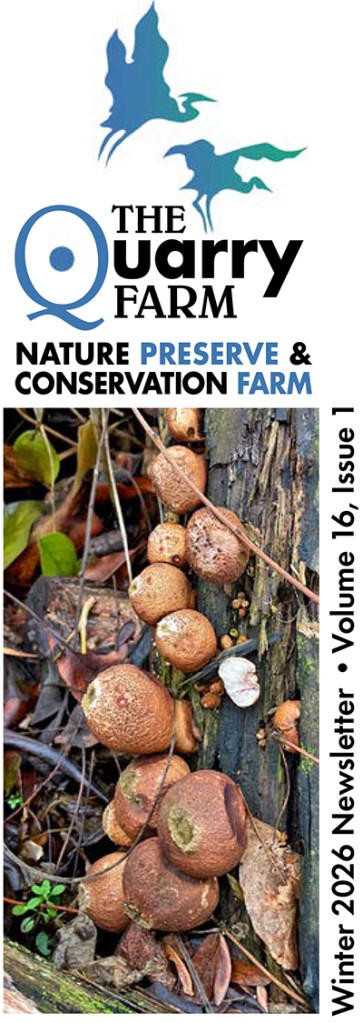
Truthfully, this Winter 2026 newsletter doesn’t include any moss. Click on the cover to download to the left to see what we did have room to include. The beauty of a blog is that there is room to add those photos and finds that don’t fit on a 2-sided, 11 x 17 piece of paper.

There is finally water in Cranberry Run after a drier-than-dry summer and fall. On a walk to treasure the leaf-tannin-rich flow, we saw a lovely quarry boulder sporting a moss that we hadn’t seen before. I turned to Bill Schumacher, former neighbor-over-the-creek and current mosses, lichens, and liverwort expert. Although Bill is busy with a water quality project in Bangladesh, he responded generously to my “What is this?”
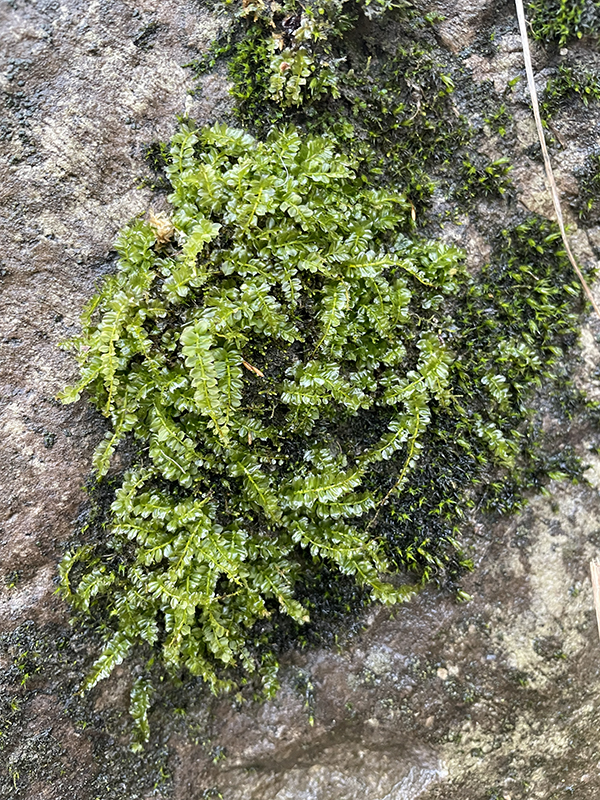
Plagiomnium cuspidatum

“To confirm definitely would need to look at myself. But this one it looks to me like Plagiomnium cuspidatum (woodsy thyme moss or baby-toothed moss). Note the oval shape of the individual leaves. It has a costa (midrib) that goes to the top with a pointy end outside the leaf.  Also, the leaf should be toothed in the upper half but not in the bottom half. Plagiomnium cupidatum is a common moss that is in the woods and by the creek.  I saw quite a bit of it when we did the moss survey on The Quarry Farm.  Although common, it is one of my favorite mosses.  Think it is very beautiful, and greatly accentuates the forest system.”
Sometimes the Best Place is Someplace Else…

Click to download Spring 2025 Newsletter

At this point in time, the farm animal sanctuary is primarily a senior living facility. The three donkeys are well into their 20s. At five, Clive is the youngest of the five pot-bellied pigs. The others, as well as Nemo the big pig, are at least 10. Brownie the Rouen Duck is at least five (I just read that they can live to be five!) As with humans, supplements joint health and anti-inflammatories are part of daily food prep. The residents came here to live out their lives in as much peace and freedom as possible. It’s tough to admit when The Quarry Farm may not be the best place for them to do so.

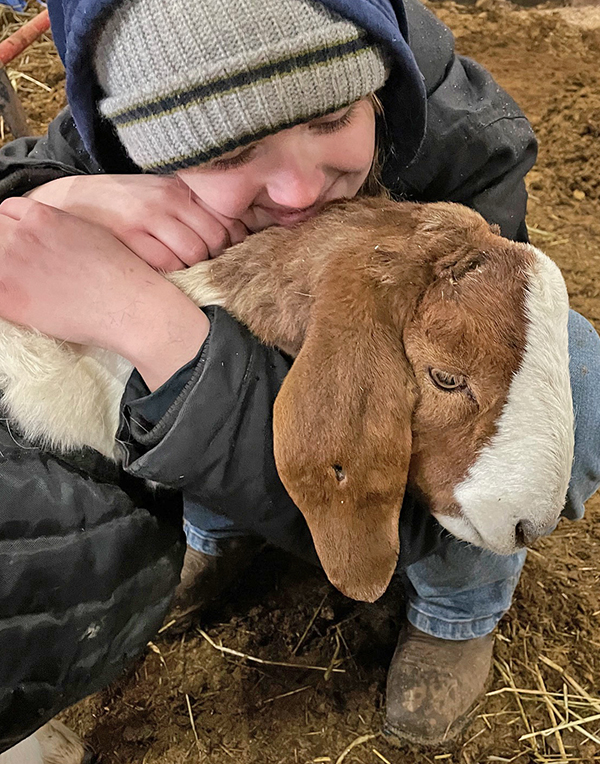
Tommy the Boehr Goat was bottle-raised by a gentle boy who cared for him. He was initially named “Tongue-ey” because the little goat was unable to keep his tongue in his mouth. When Tongue-ey came here, we hoped that he would become part of the herd. Unfortunately, the other goats kept him at a distance. We found out why when we found him non-responsive on a January morning. We drove him to Ohio State University Farm Animal Services where he spent a week.

The prognosis was probable failure to thrive. His little body was unable to regulate its temperature and he was unable to fight off parasites as healthy goats do with regular treatment. Our friend Tim Jasinki at Lake Erie Nature & Science Center put us in touch with Whispering Acres Farm Animal Sanctuary near Medina. This facility is home to a number of animals with special needs, and many of these animals are ambassadors for hospice therapy and veterans with PTSD. Tiny Tongue-ey—now Tommy—was immediately surrounded by equally tiny goats. Janine Smalley, the director of the sanctuary, sent photos of him at work, providing comfort to someone in need.

…and Sometimes the Best Place is Here

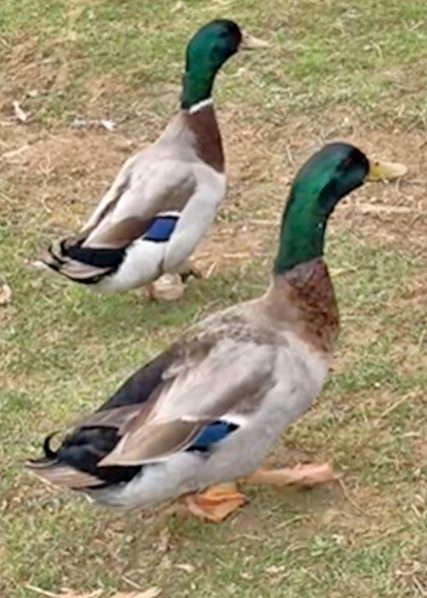
While making arrangements to transfer Tommy to Whispering Acres, Janine asked if The Quarry Farm would be able to accept any ducks. Someone had just surrendered two Rouen drakes. In addition to Brownie, there are two more Rouen ducks here. Brownie and the Brownettes could certainly hold their own. Although it is Spring and the two brilliantly-plumed males are rather obnoxious with the season, Brownie leads them around by their bills.