
Truthfully, this Winter 2026 newsletter doesn’t include any moss. Click on the cover to download to the left to see what we did have room to include. The beauty of a blog is that there is room to add those photos and finds that don’t fit on a 2-sided, 11 x 17 piece of paper.
There is finally water in Cranberry Run after a drier-than-dry summer and fall. On a walk to treasure the leaf-tannin-rich flow, we saw a lovely quarry boulder sporting a moss that we hadn’t seen before. I turned to Bill Schumacher, former neighbor-over-the-creek and current mosses, lichens, and liverwort expert. Although Bill is busy with a water quality project in Bangladesh, he responded generously to my “What is this?”
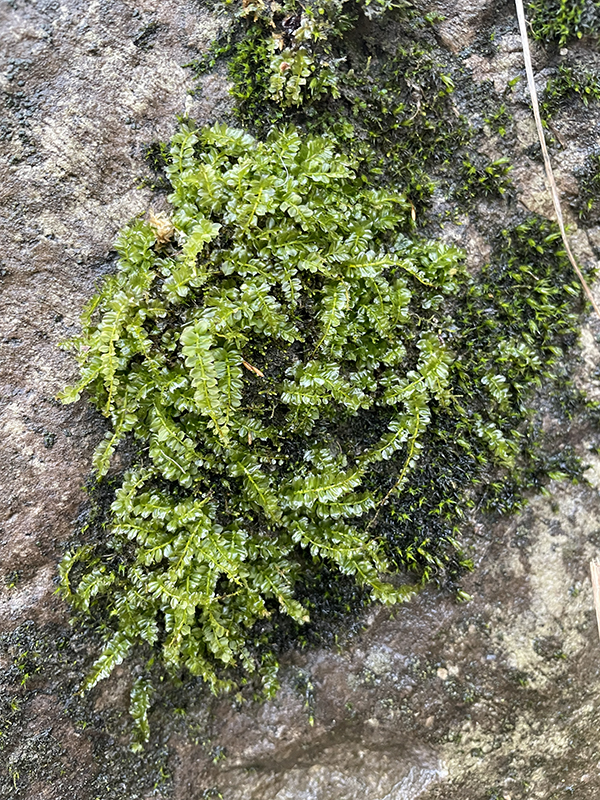
“To confirm definitely would need to look at myself. But this one it looks to me like Plagiomnium cuspidatum (woodsy thyme moss or baby-toothed moss). Note the oval shape of the individual leaves. It has a costa (midrib) that goes to the top with a pointy end outside the leaf. Also, the leaf should be toothed in the upper half but not in the bottom half. Plagiomnium cupidatum is a common moss that is in the woods and by the creek. I saw quite a bit of it when we did the moss survey on The Quarry Farm. Although common, it is one of my favorite mosses. Think it is very beautiful, and greatly accentuates the forest system.”
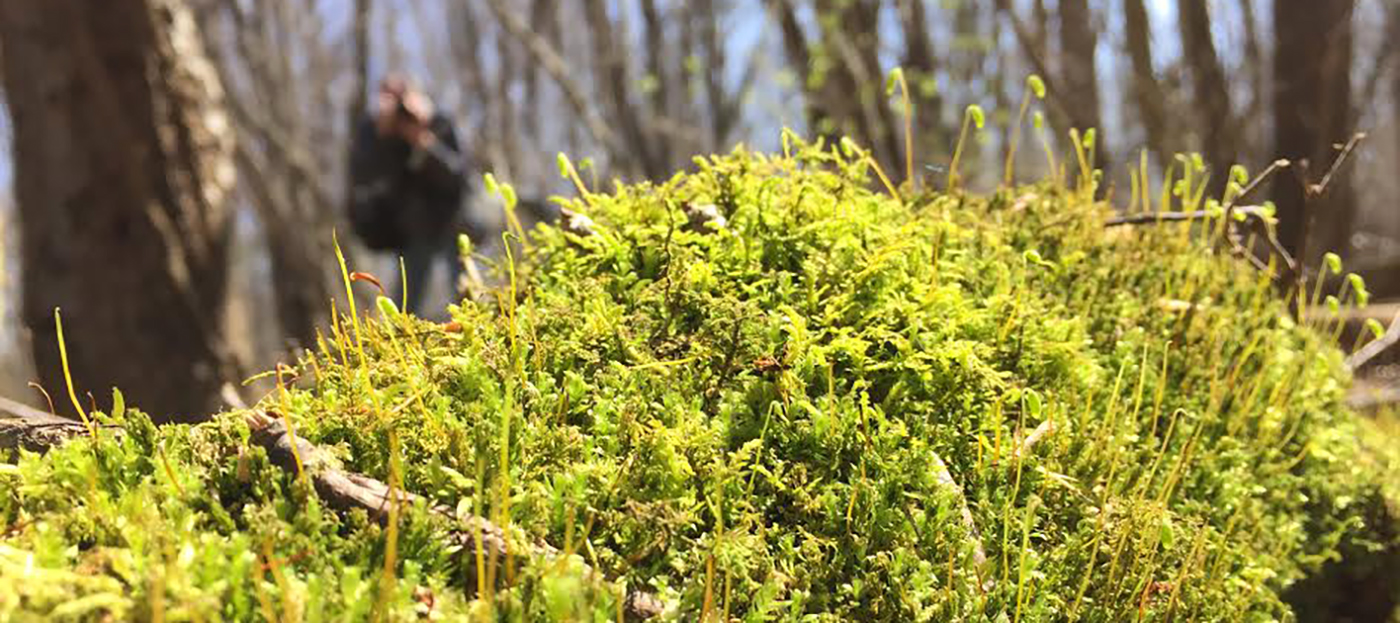 On Saturday, my old frayed running shoes picked up another layer of camouflage.
 On the quarry, wood duck and mallard couples made come-hither eyes at each other until we spoiled the fun. Wood ducks skittered over the east bank and a mallard duck “wank, wank, wanked” toward Riley Creek, her emerald-headed, testosterone-addled suitor in pursuit.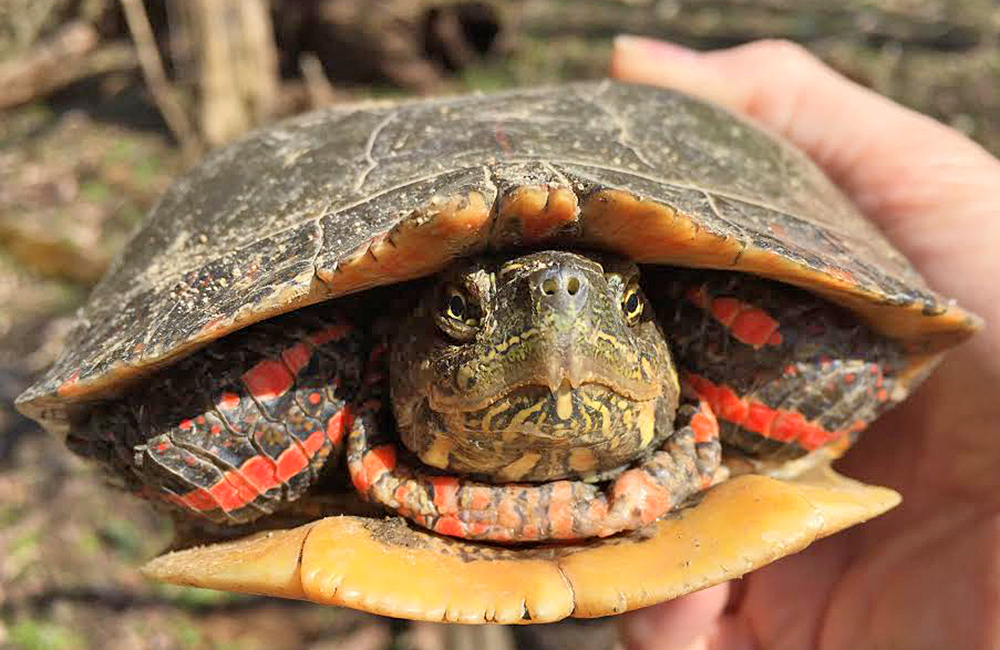
 We saw bloodroot leaves uncurling from the ground. Native Americans used the red extract from this wildflower’s roots as a natural dye, most notably for basket weaving. Above ground and growing wild in the sunlit clearing around the old homesteads well north of the tallgrass meadow, the bloodroot flowers bloom.
 A few spring beauties and ramps dot the southeast ridge as it rises east of the cut-off. In the warmer air and spongy soil in the U of the oxbow, three toadshade trilliums fan over moss
  and decaying stumps crawling with industrious crustaceans.
