
How do you identify a tree, especially when it is at the height of winter’s dormancy? Evergreen trees are a simpler test of identification skill since they are piney green all year round. But there aren’t a lot of native evergreen trees in Northwest Ohio. Eastern Red Cedar is tolerant of Putnam County’s clay soils. They used to only be found in ditches and swales, a bane to landscaping. Now you can find them in farm agency sales and greenhouses as they are recognized for their hardiness and value to wildlife. Delicate, soft-voiced Cedar Waxwings feed on berries in their shelter, camouflaging these masked mobsters who can take down a Blue Jay in seconds.
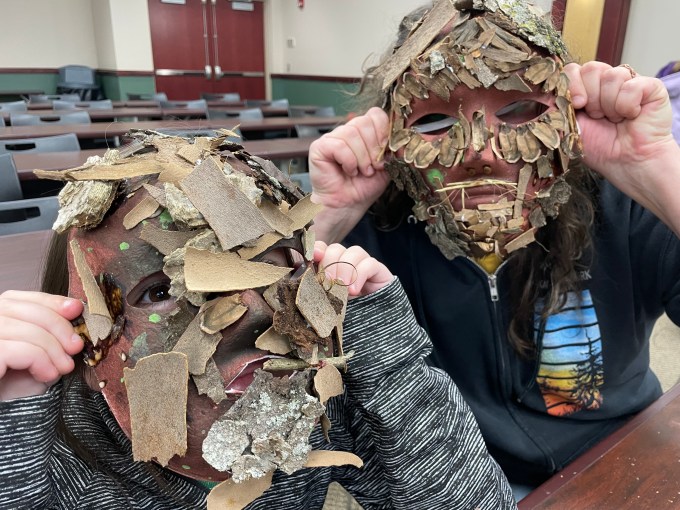
So we know what evergreen conifers, and invasive, pervasive Amur Honeysuckle look like in winter. But do we recognize native deciduous trees during the cold, leafless months? On Monday, February 16, we invited people to consider the different textures, colors, and patterns of Putnam County’s native hardwoods at the Putnam County Educational Service Center. Through funding from the Ohio Arts Council and with a small forest of boxes filled with shed* Hickory, Ash, Black Cherry, Boxelder, Sycamore, and other woody coats, registrants created bark masks on President’s Day.
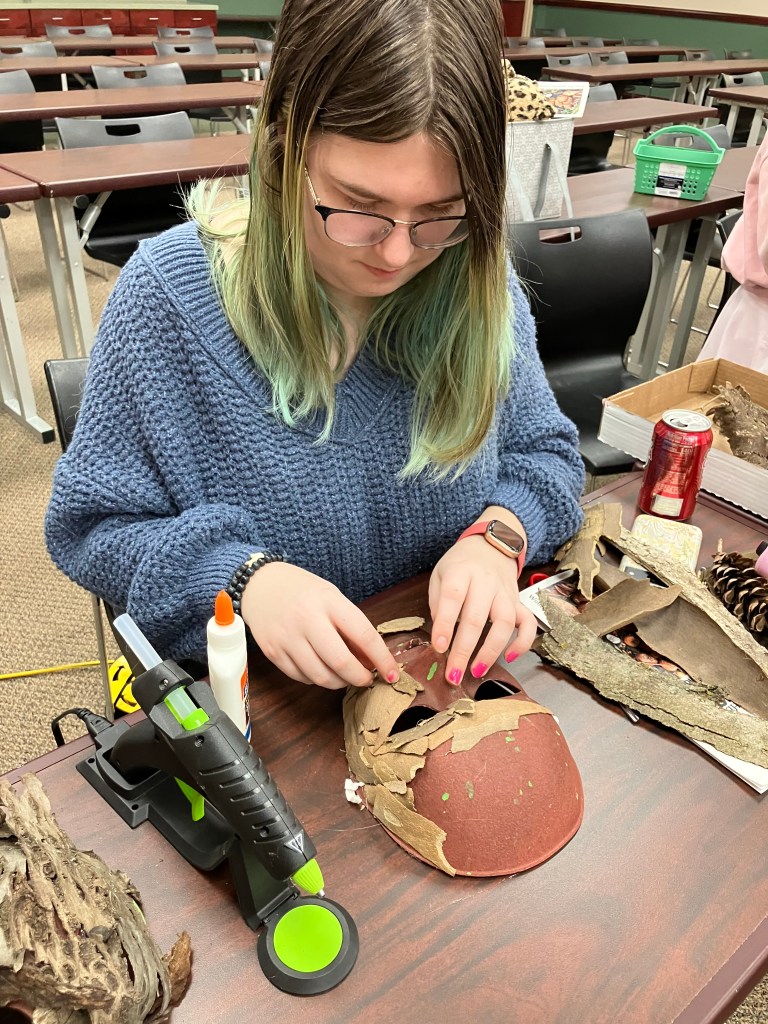
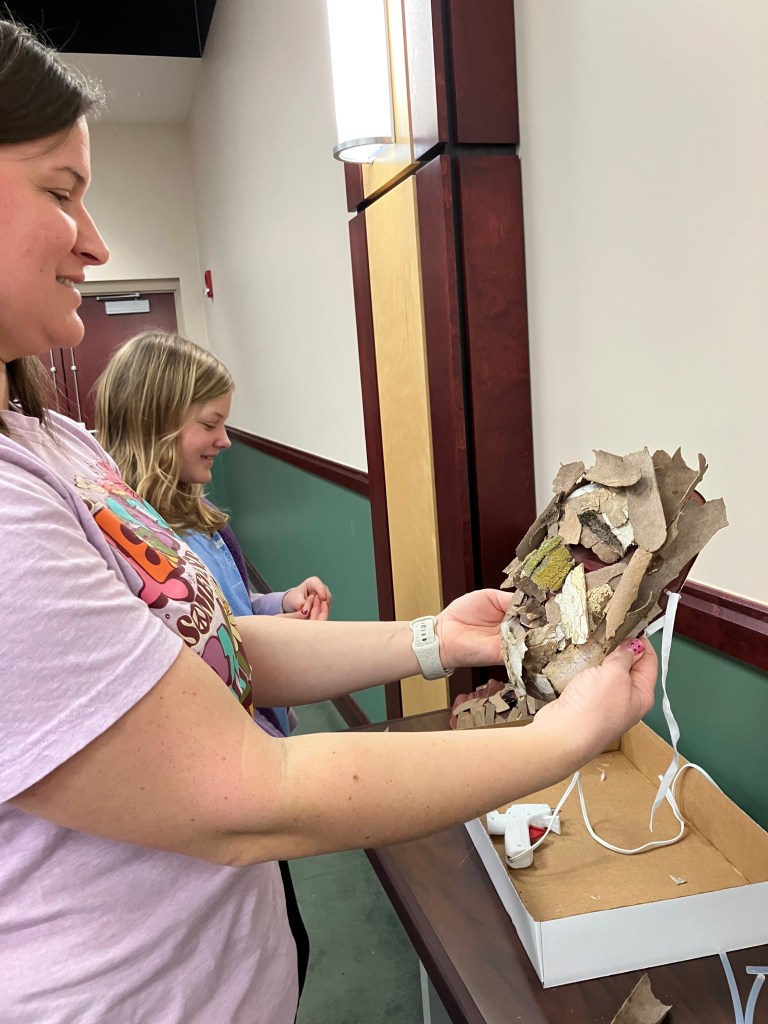
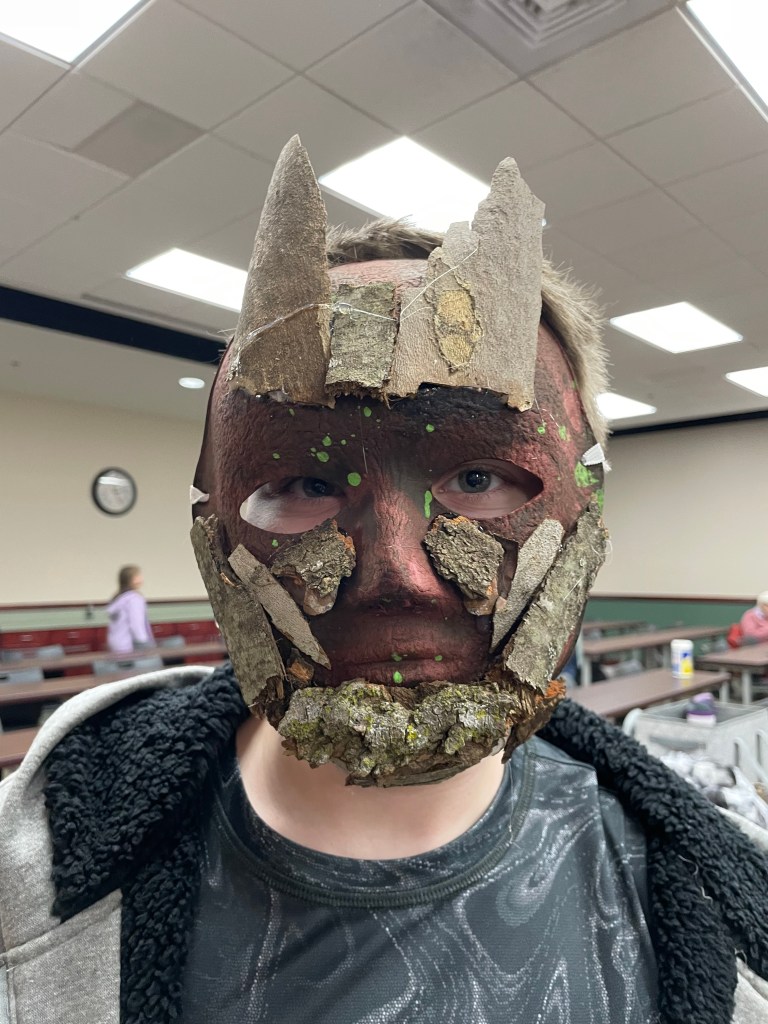
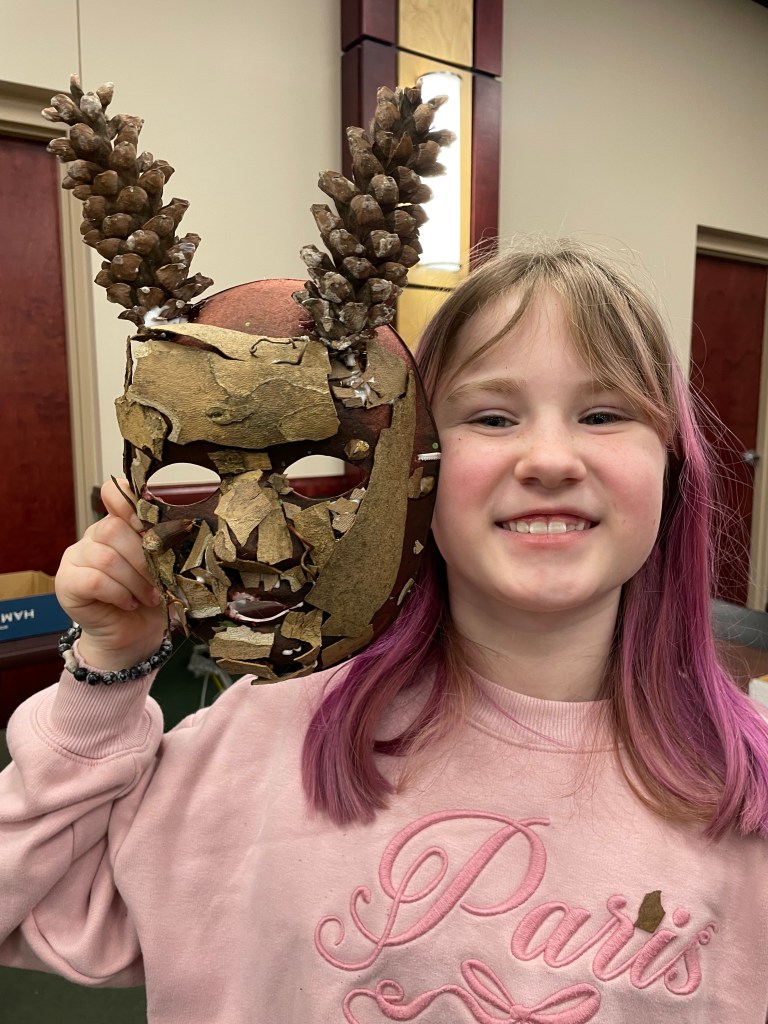
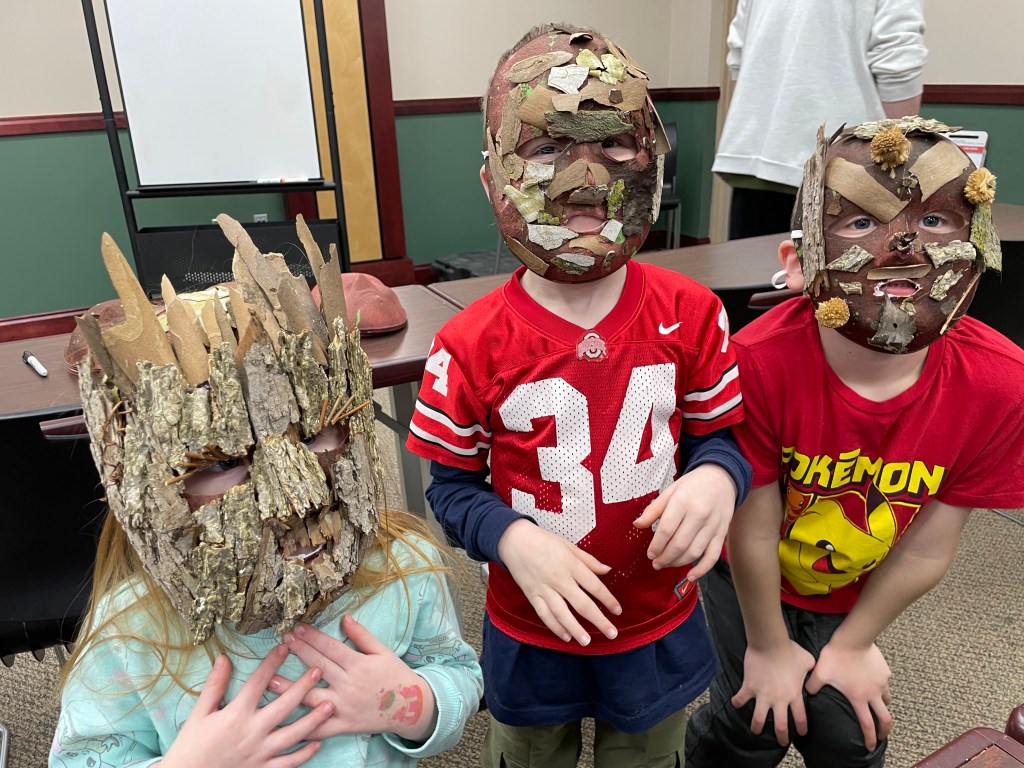
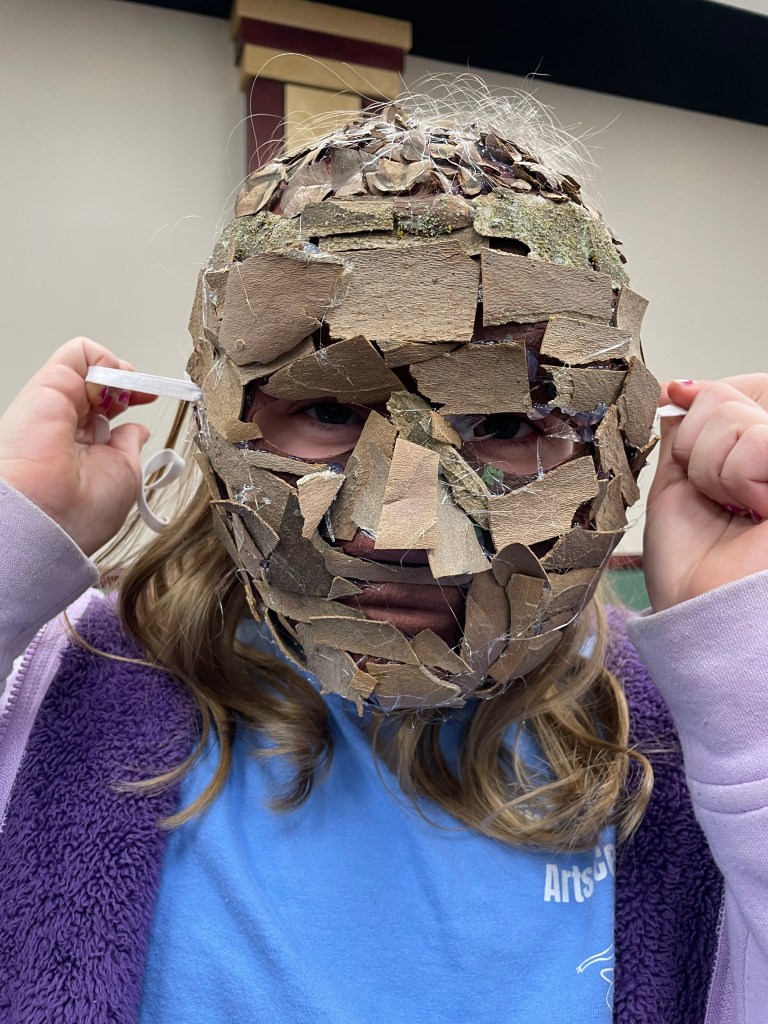
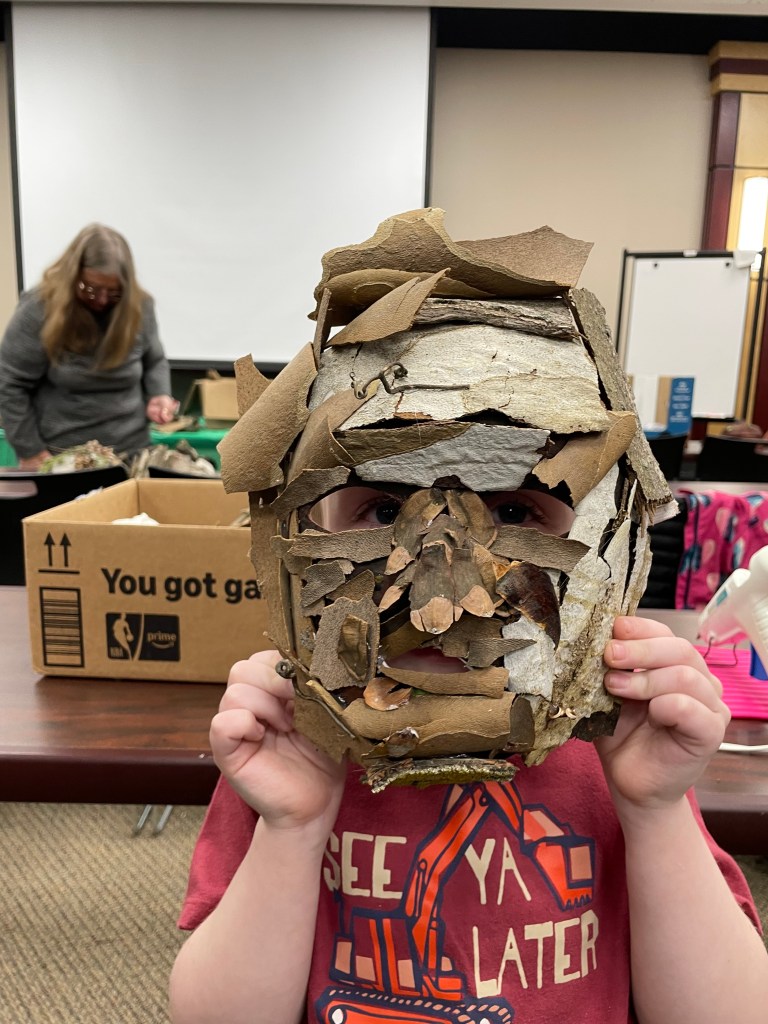
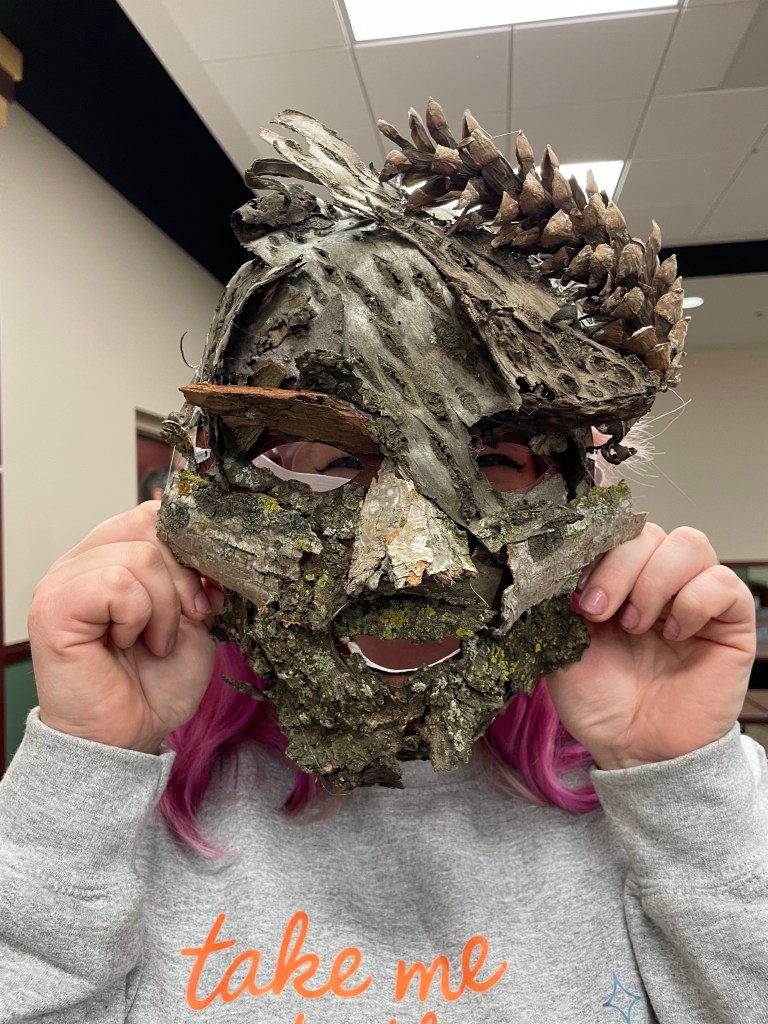
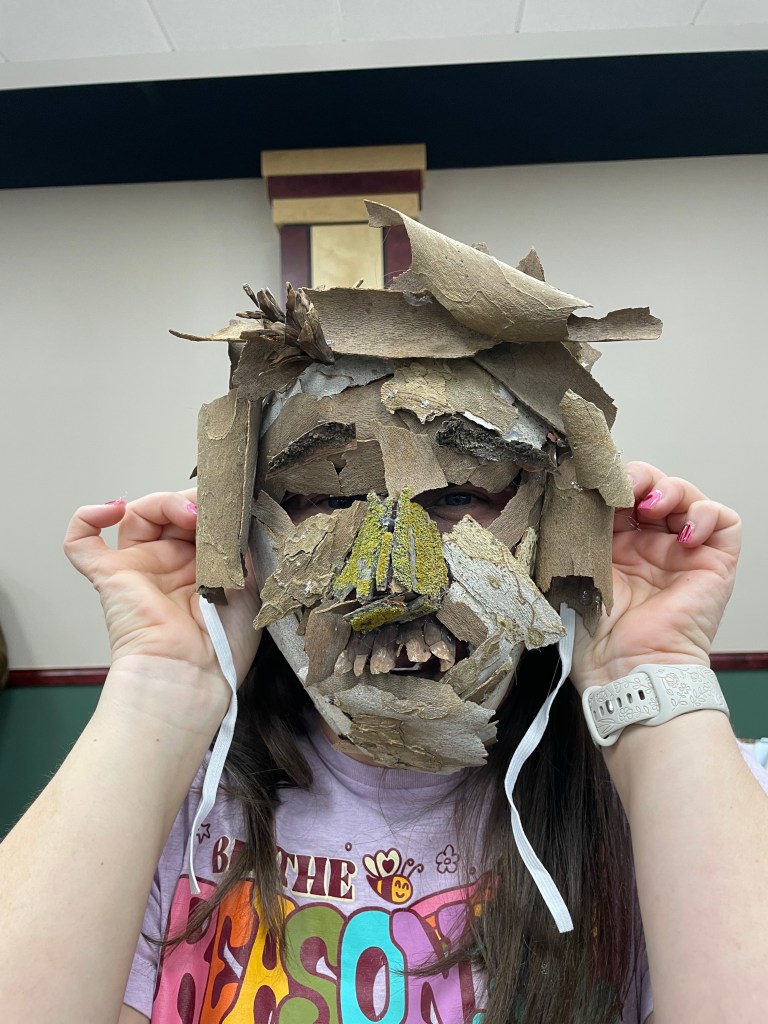
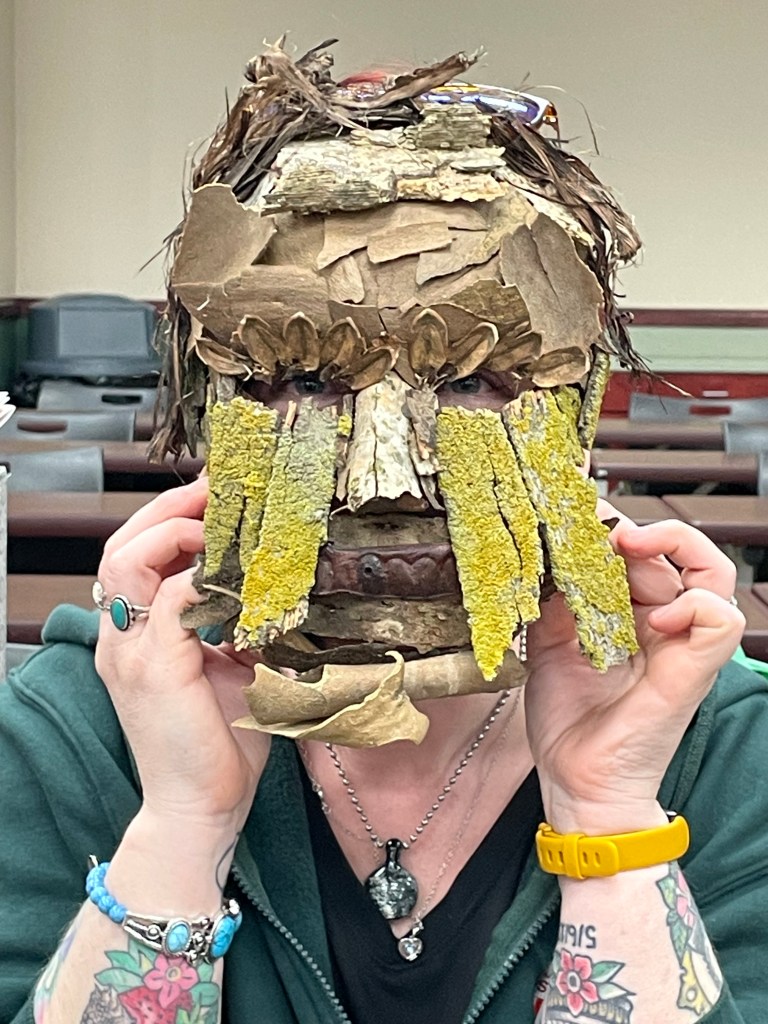
*When collecting tree bark, do not pull bark from a live tree. You’ll hurt the tree itself. And when you lift bark that a tree has shed, look closely to make sure that you aren’t disturbing something that is trying to survive winter in its shelter.

