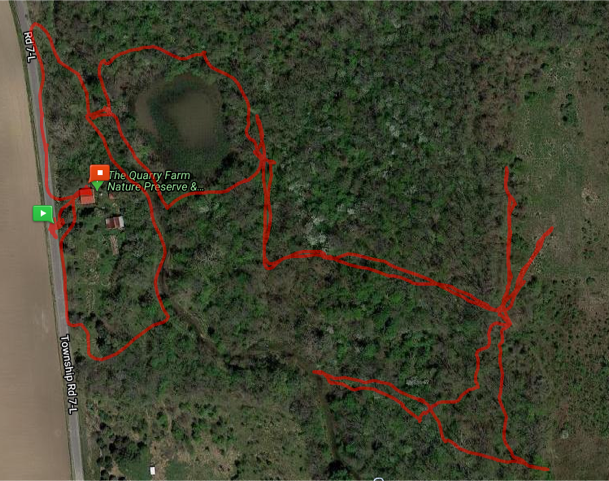
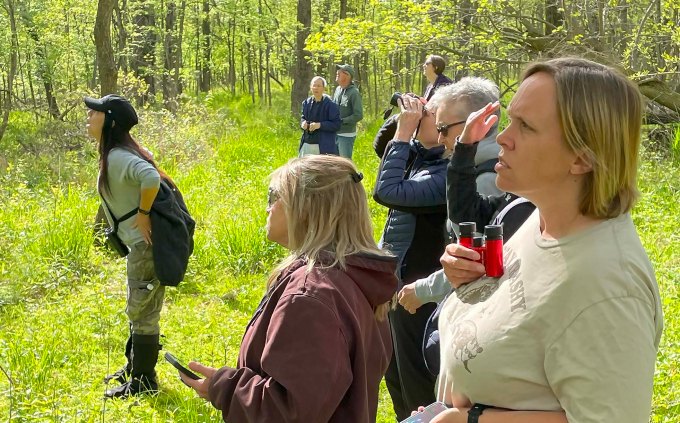
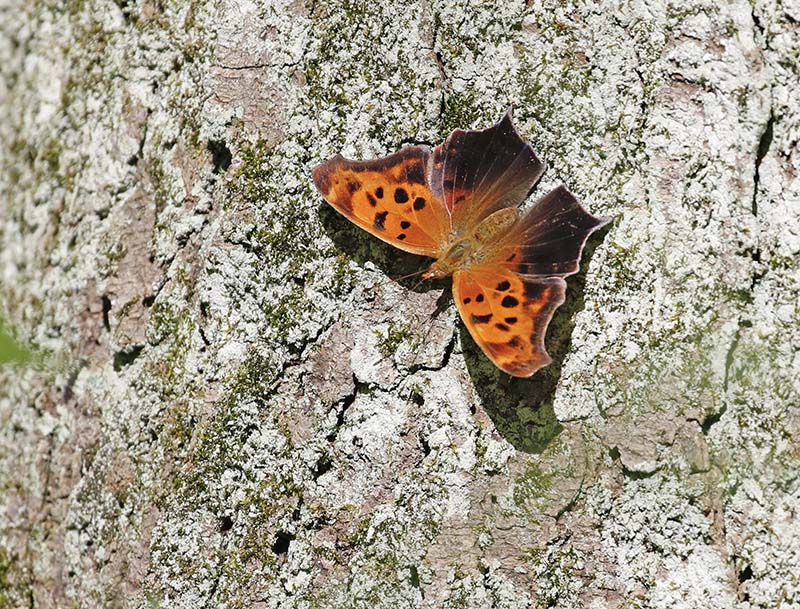
According to Birdcast, 14,526,300 birds crossed Ohio from 8:40 p.m. on May 11, 2025 through 6:40 a.m. on May 12. From 9 to 11 a.m. that Monday, participants in the annual Spring Bird Migration Hike followed the pointing fingers of Deb Weston and David Smith to catch a glimpse of brilliant spring plumage. That morning, the group documented 46 bird species in the wetlands, pollinator gardens, and upland forest of The Quarry Farm nature preserve. An enormous Question Mark Butterfly warmed its wings long enough for a good view as well.
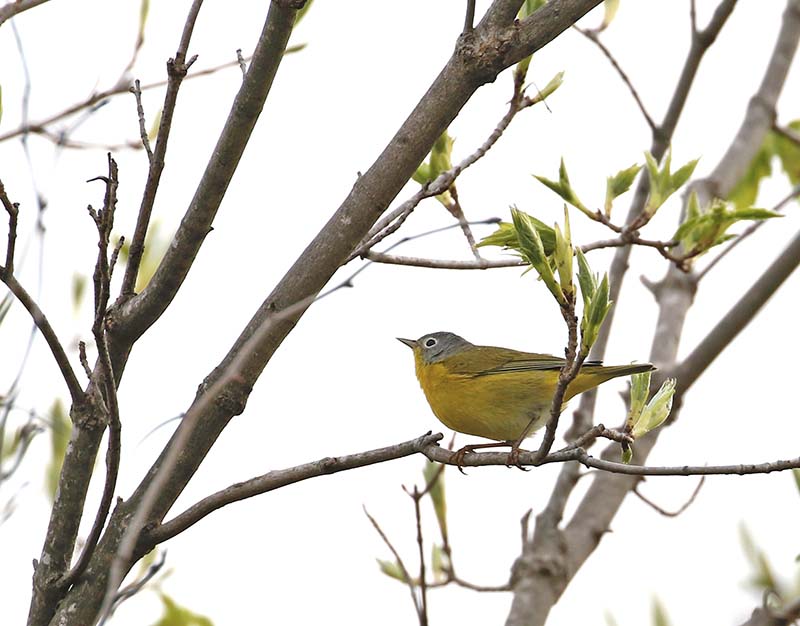
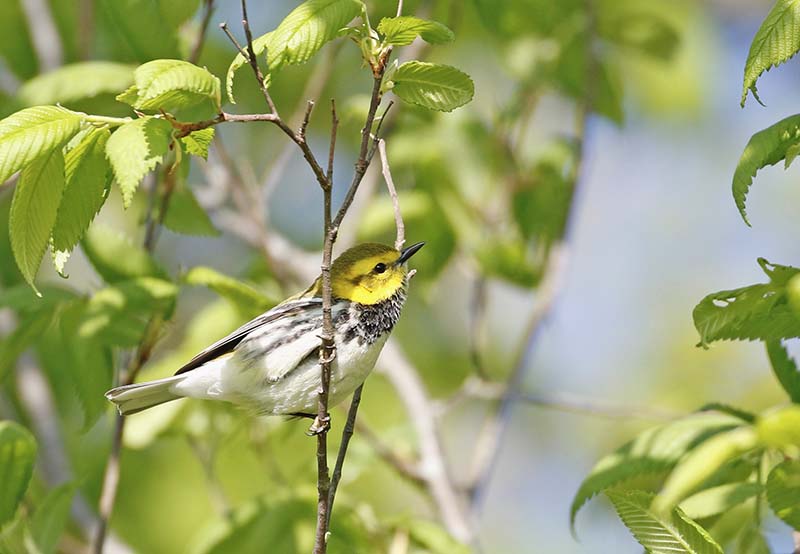
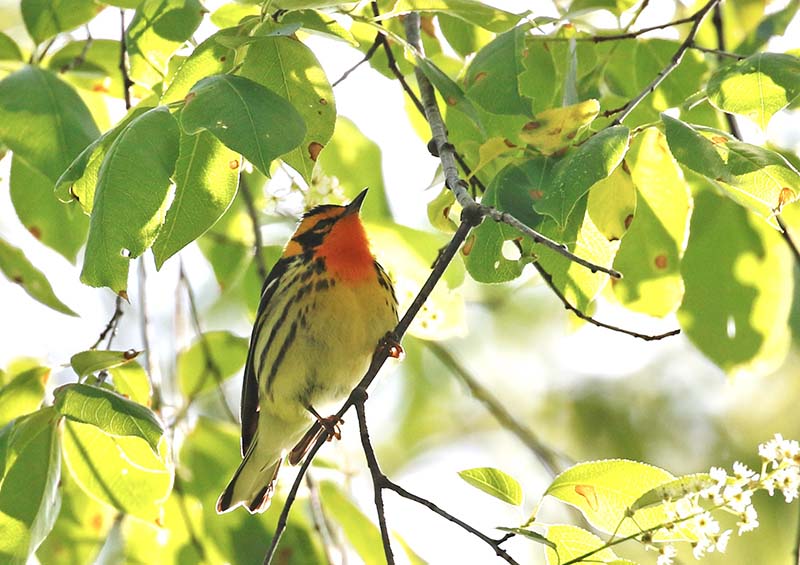
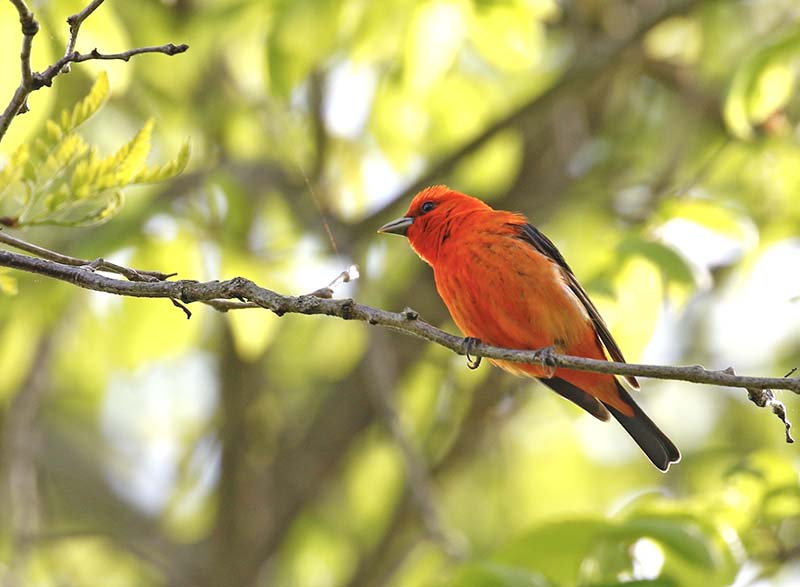
It seems that migration peaks earlier each year as the planet tries to right itself, and Deb and David try to schedule a hike date that happens before all of the migrators pass us by or settle in to nest under dense canopy. To get a good idea of what might pass through for a crowd, Deb walked the trails for days leading up to May 12 hike. She took notes…and brilliant photos.
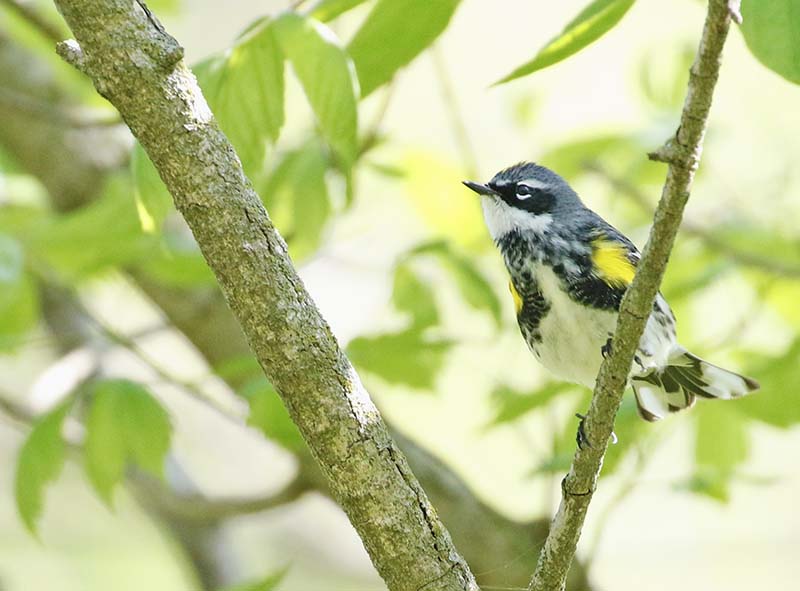
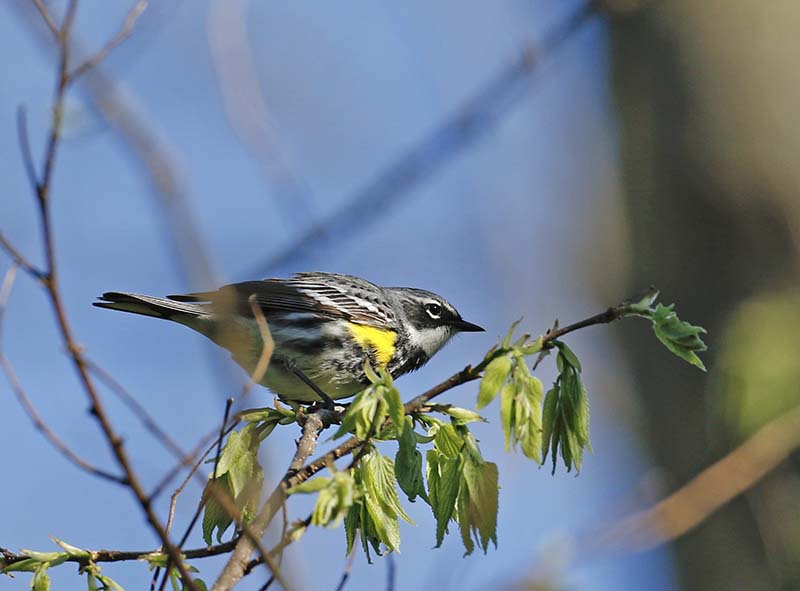
April 30: 47 species today. A juvie Bald Eagle flew over the prairie, Yellow-rumped Warblers all over the place. One Yellow-breasted Chat, 3 Orchard Oriole, Tennessee Warbler, Nashville Warbler, Yellow Warbler, Palm Warbler and Black-throated Green Warbler. Rose-breasted Grosbeak, Great Crested Flycatcher, Warbling Vireo and 13 Double-crested Cormorants flying over in a perfect V.
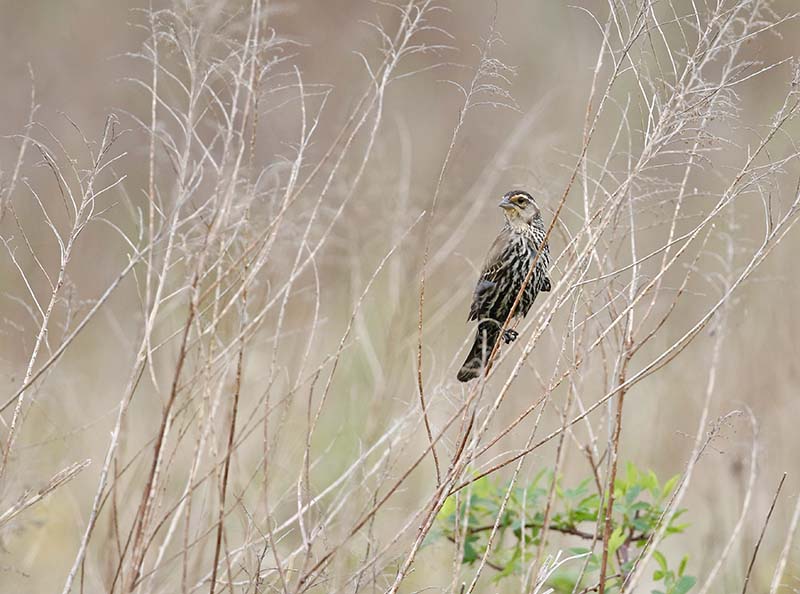
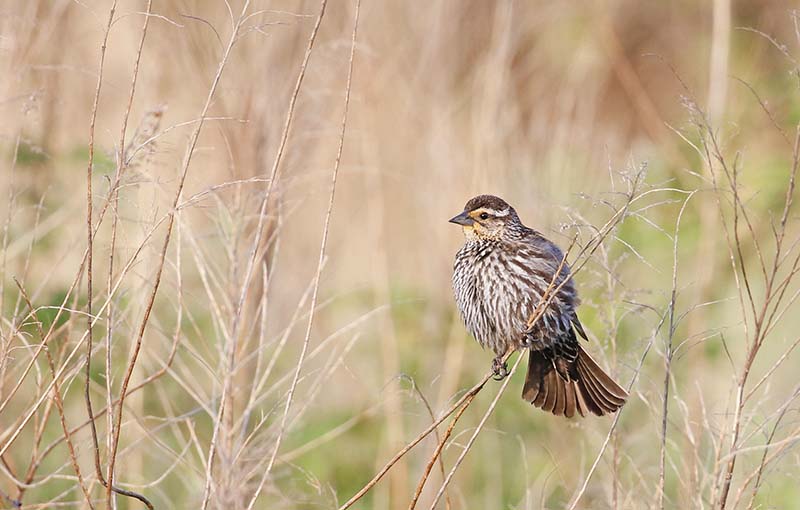
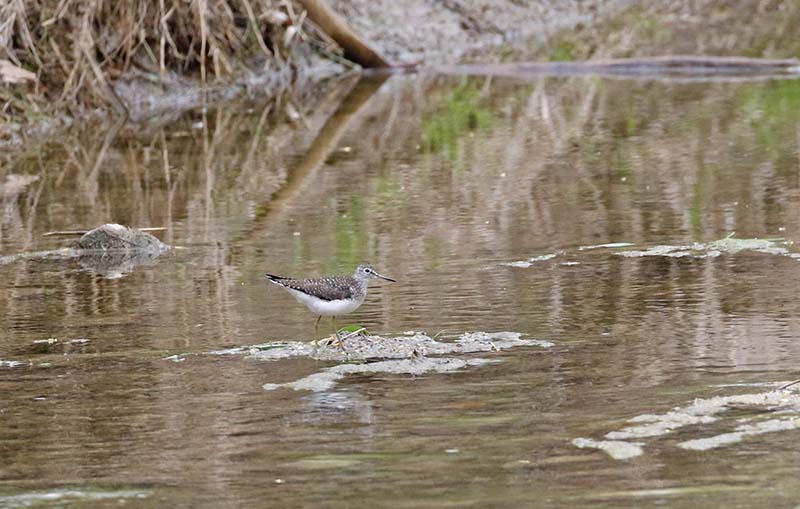
May 1: 52 species today. There was a Gray-cheeked Thrush in the garden area. Don’t see them often and it escaped photo day. Female Red-winged Blackbird, Nashville Warbler and Solitary Sandpiper were not so shy.
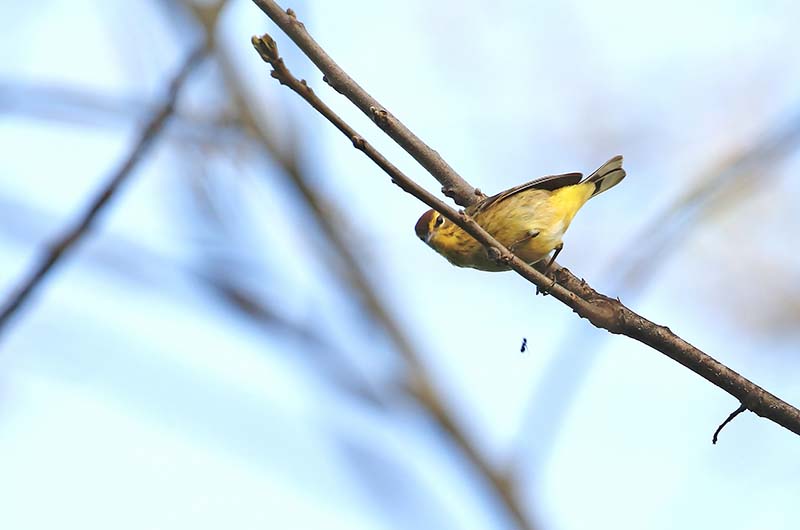
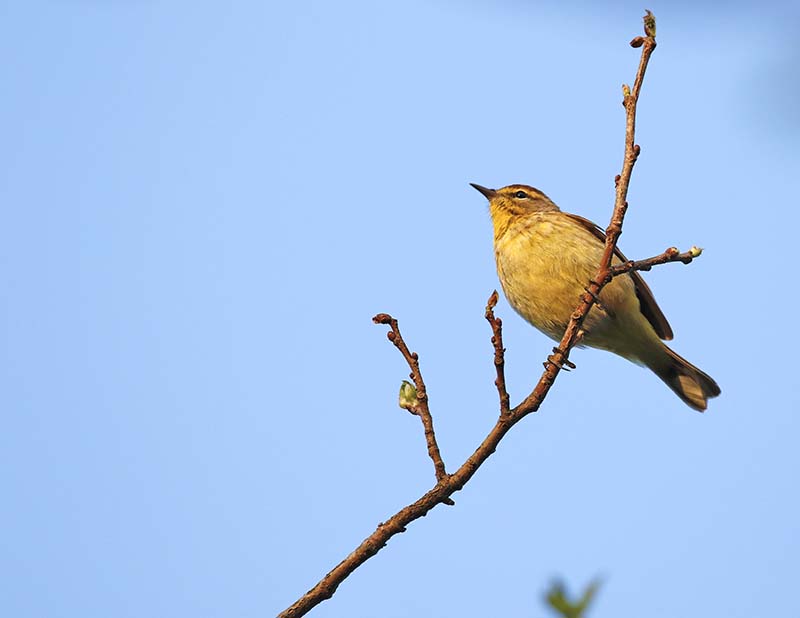
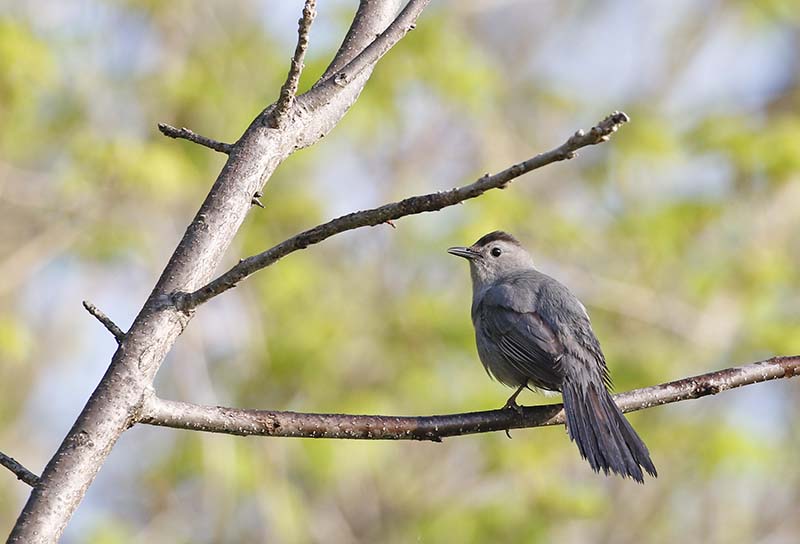
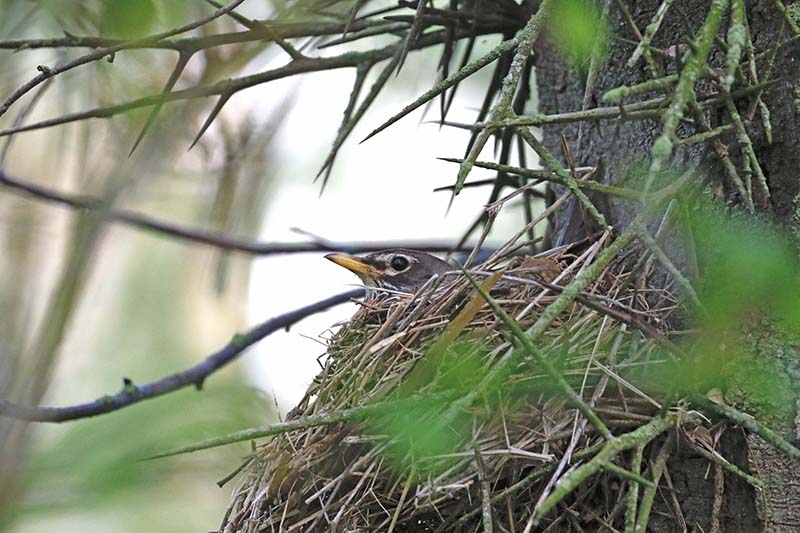
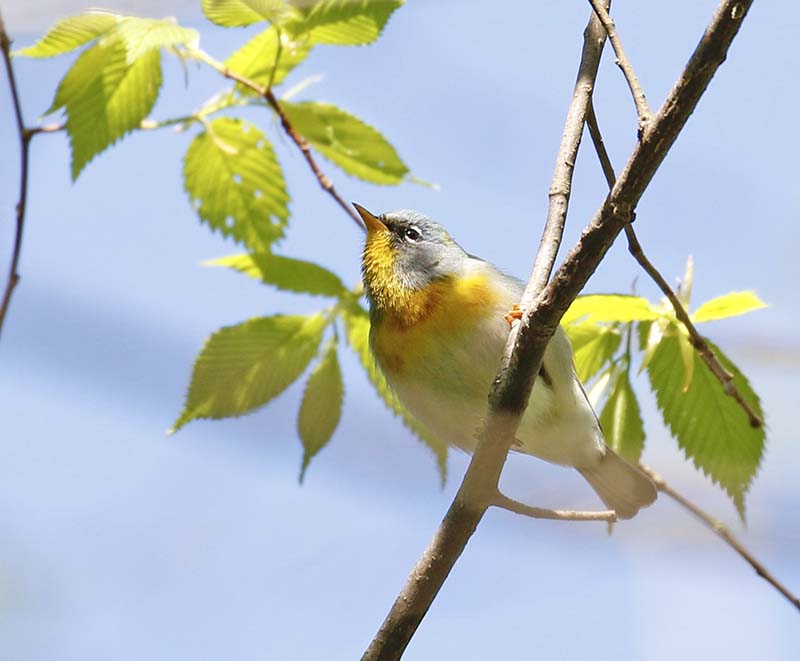
May 2: 50 species today. An American Robin on her nest every day. 2 pics of a Palm Warbler; the first one dropped its food when it saw me. Another female Red-winged Blackbird because they’re so pretty and a Gray Catbird. 3 Wild Turkey, 2 in different sections of the prairie flushed when I walked by even though they were out in the middle. Sounded like helicopter blades. Not sure if they were sitting on nests, but baby turkeys would be cute. 1 Ruby-throated Hummingbird and the biggest surprise was an Osprey sitting in a tree at the lookout point. It took off before I could get my camera up, but was excited to see it. Last sighting was in 2021. Warblers: Orange-crowned, Nashville, Common Yellowthroat, Northern Parula, Yellow, Palm and Yellow-rumped.
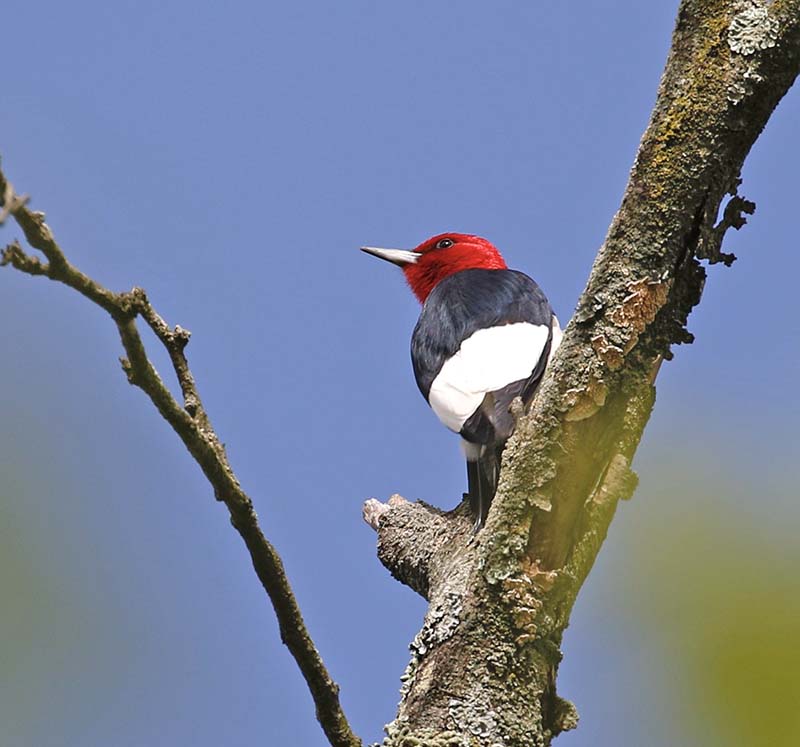
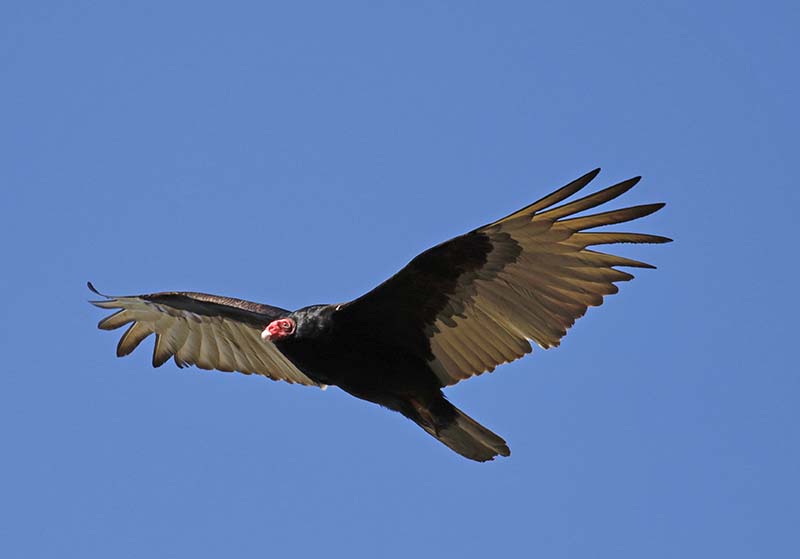
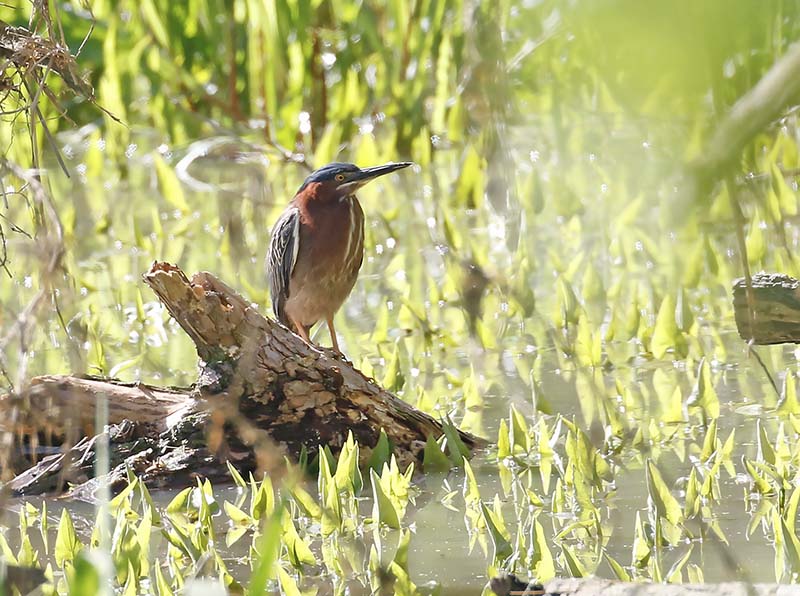
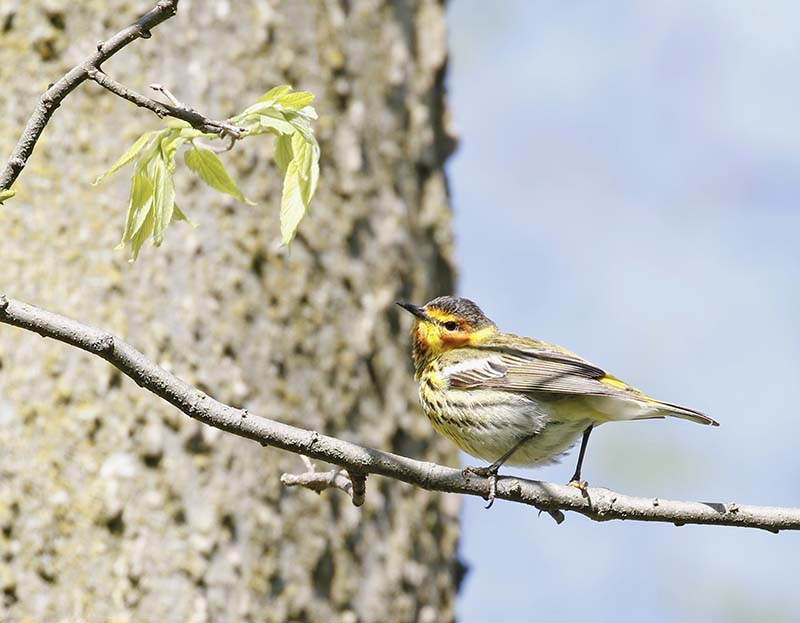
May 9: 53 species today (14 warblers) Canada Goose, Wood Duck, Mourning Dove, Green Heron, Turkey Vulture, Red-headed Woodpecker, Red-bellied Woodpecker, Downy Woodpecker, Northern Flicker, Least Flycatcher, Yellow-throated Vireo, Blue-headed Vireo, American Crow (YAY—they’re back!), Carolina Chickadee, Tufted Titmouse, White-breasted Nuthatch, Northern House Wren, Carolina Wren, Gray Catbird, Eastern Bluebird, Wood Thrush, American Robin, House Sparrow, American Goldfinch, Chipping Sparrow, Field Sparrow, Savannah Sparrow, Song Sparrow, Lincoln’s Sparrow, Swamp Sparrow, Eastern Towhee, Orchard Oriole, Baltimore Oriole, Red-winged Blackbird, Brown-headed Cowbird, Common Grackle, Ovenbird, Nashville Warbler, Common Yellowthroat, American Redstart, Cape May Warbler, Northern Parula, Magnolia Warbler, Blackburnian Warbler, Yellow Warbler, Black-throated Blue Warbler, Palm Warbler, Yellow-rumped Warbler, Black-throated Green Warbler, Wilson’s Warbler, Northern Cardinal, Rose-breasted Grosbeak, Indigo Bunting.
Birdcast noted that 24,564,200 bird species flew over Ohio last night. We will be listening for new song as they make their way north to Magee Marsh Wildlife Area where Deb will be watching with her camera and 89,999 other people.
There are no two ways about it. Saturday’s Great Backyard Bird Count installment on The Quarry Farm was cold; 0 degrees F cold. Beautiful, with thick frost and snow and blue sky for the walk, but the cold filtered through Thinsulate, wool and whatever else each of us could layer over our pasty winter skins. To quote Jean Shepherd’s Randy, I couldn’t move my arms. But I could move my fingers well enough to record the different species of birds that chattered at us as we hiked the main nature preserve trails.
Our first sighting as a group was of a Downy Woodpecker in the great oak south of Red Fox Cabin. It’s feathers were so fluffed that I was sure it was a Hairy Woodpecker, a larger Downy look-alike that forages along trunks and main branches of large trees. Our frequent-flyer birders Deb Weston and Linda Houshower corrected me. Since I had made the first official recording of the morning–a group of European Starlings who shelter each February and March in the vent above our bathroom shower, I licked my frozen ego and left further identification to the experts. After all, that is one of the things we do here: invite people to share their own areas of expertise with everyone who wants to learn more about the natural world from different perspectives.
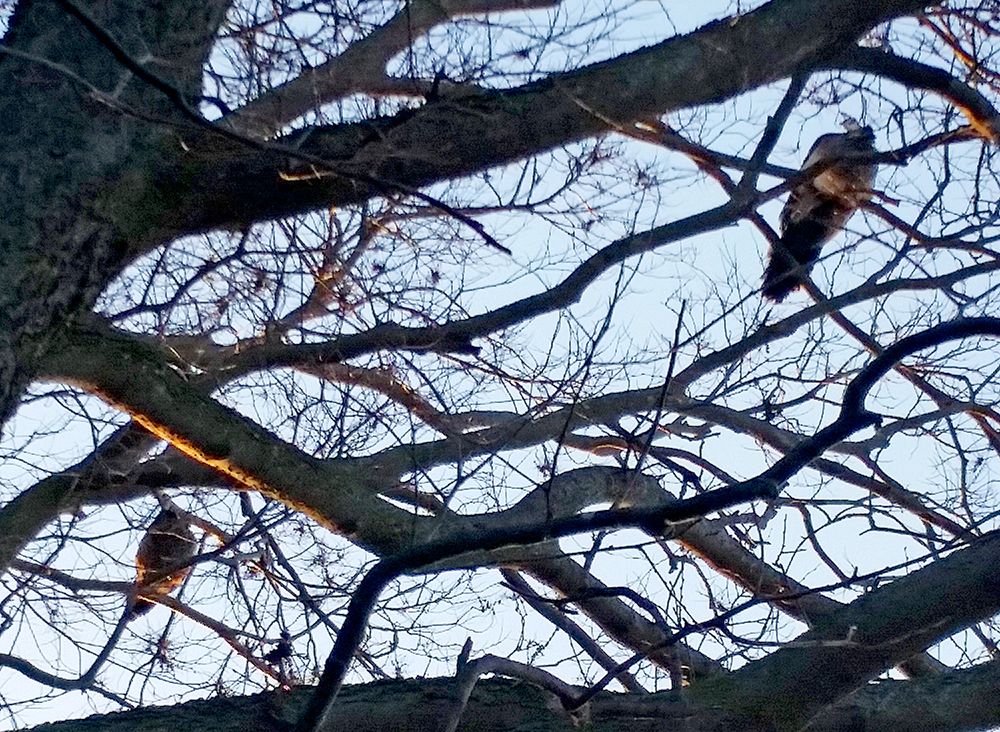
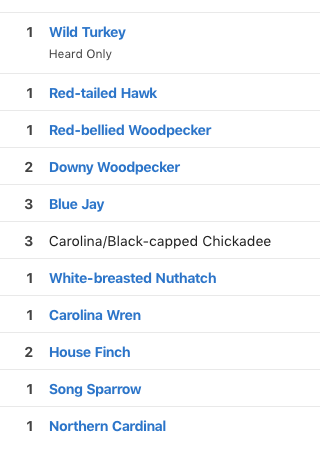
Down in the floodplain along Cranberry Run, Brown Creepers and White-breasted Nuthatches circled tree trunks and bobbed in and out of habitat piles created by David Seitz’s ongoing bush honeysuckle and grapevine removal. Bright, berry-red Cardinals chirped and sang. Wild Turkey foot and wing drags crossed the upland path. Woodpeckers left freshly-drilled holes in dead trees for us to find. A Red-bellied Woodpecker who flew above the canopy was one possible culprit. I thought I heard the Red-tailed Hawk that Steve had seen earlier that morning. Instead, it was a sassy Blue Jay mimicking that raptor and everything else his or her big bird brain has mastered.
This morning was a balmy 18 degrees F. The exotic peahens who arrived here recently sat high in a hackberry as the slightly less exotic chickens, donkeys, pigs, goats, geese, ducks, and a llama murmured, snuffled and scuttled from food pellet to seed and hay. The two big birds stared down at me as I left food at the base of their tree, not so much waiting for a chance to eat, but for the frost to melt from the window that they preen in front of as the wilder creatures go about their march to spring.

 There are no two ways about it. Saturday’s Great Backyard Bird Count installment on The Quarry Farm was cold; 0 degrees F cold. Beautiful, with thick frost and snow and blue sky for the walk, but the cold filtered through Thinsulate, wool and whatever else each of us could layer over our pasty winter skins. To quote Jean Shepherd’s Randy, I couldn’t move my arms. But I could move my fingers well enough to record the different species of birds that chattered at us as we hiked the main nature preserve trails.
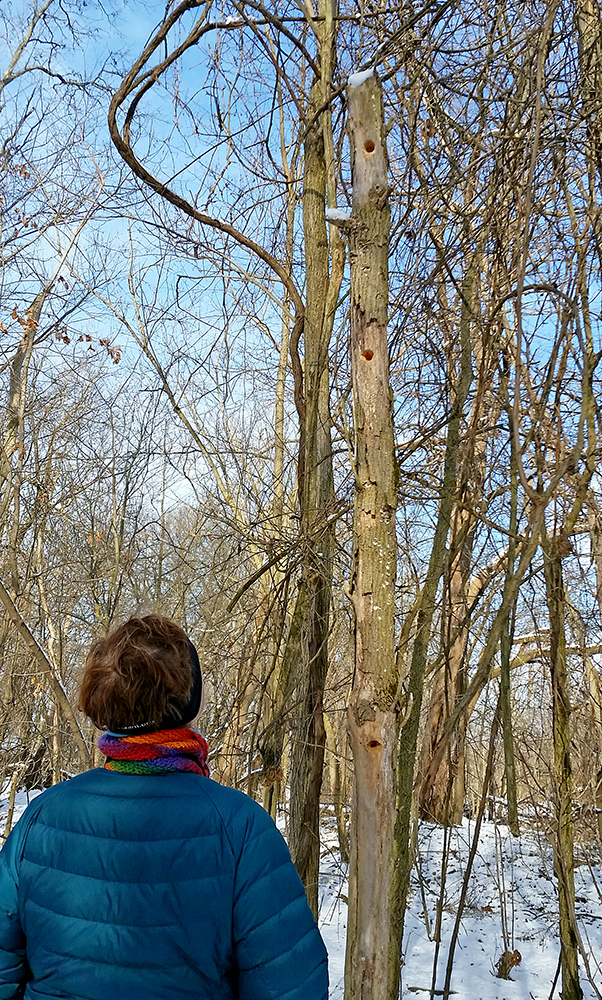 Down in the floodplain along Cranberry Run, Brown Creepers and White-breasted Nuthatches circled tree trunks and bobbed in and out of habitat piles created by David Seitz’s ongoing bush honeysuckle and grapevine removal. Bright, berry-red Cardinals chirped and sang. Wild Turkey foot and wing drags crossed the upland path. Woodpeckers left freshly-drilled holes in dead trees for us to find. A Red-bellied Woodpecker who flew above the canopy was one possible culprit. I thought I heard the Red-tailed Hawk that Steve had seen earlier that morning. Instead, it was a sassy Blue Jay mimicking that raptor and everything else his or her big bird brain has mastered.