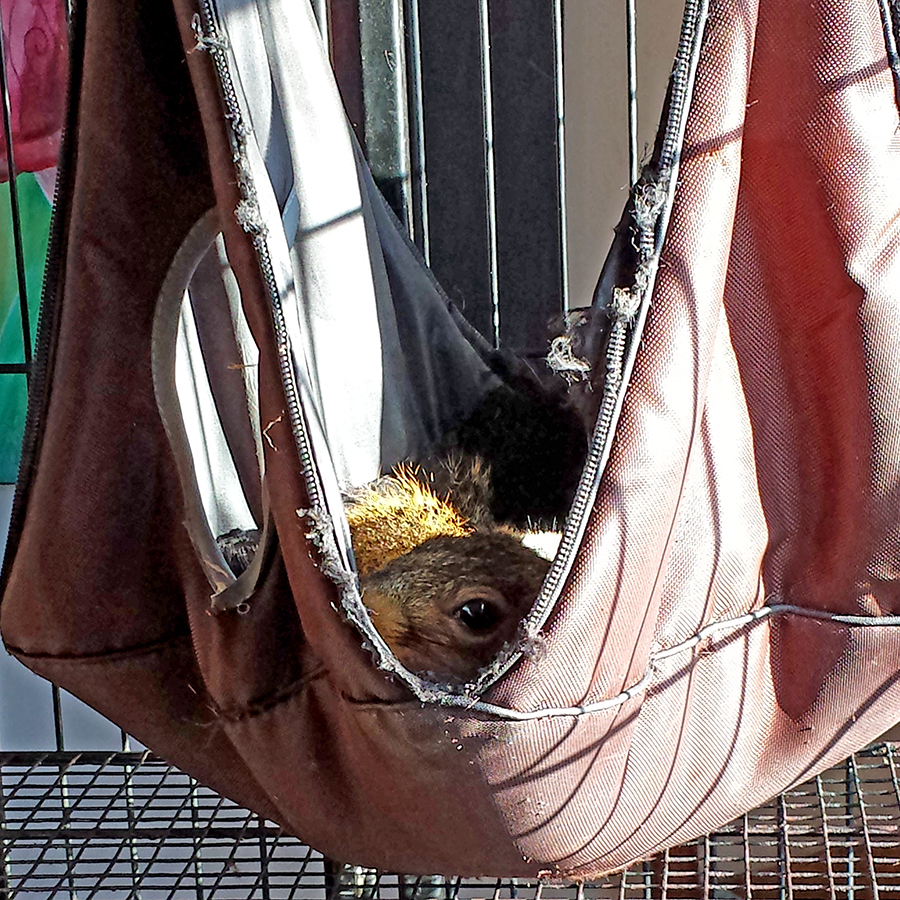
This Great Backyard Bird Count weekend is unusual in more ways than one. To begin with, this is the first in which I wore shorts outside.
 Today is Day 3 in the 19th year that the Cornell Lab of Ornithology and National Audubon Society have coordinated this international weekend of documenting birds. It’s a four-day snapshot of what birds are where. Some years, a few days after the count is over, I see a bird that wasn’t on our checklist and think, “I wish that had been here last week.” But that’s the point; as long as the species made someone’s checklist somewhere, all is well for now.
A breeze was promising to build Saturday morning, so I started out at 8 a.m. with binoculars. Cardinals, house sparrows, juncos, wild turkey, red-winged blackbirds, gold finches and this flock of mallards made themselves known visually.
Since I am not an audio birder, I recorded sounds at various locations in the nature preserve with the hope of blog-reader assistance. Anyone care to share your identifications? Click on each photo to listen:

NW corner of the back field
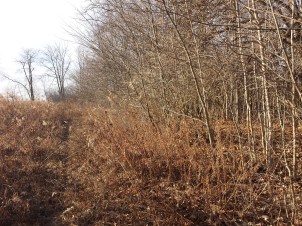
SW field tree line, above oxbow

Base of catalpa tree, south central back field
By 10 a.m., the wind was high. Birds took shelter, skittering into and through the woods. Eight people joined me the scheduled Quarry Farm 2017 Bird Count. All had binoculars and good hiking shoes.
Our party of nine walked the floodplain trail, past the quarry, up the main path to cross the back field. We looped back through the oldest tree groves, past the oxbow.
Fortunately, our party included a father and son who drove all the way from Jenera in the county to the east. They knew their birds by sight, sound and movement, honing their birding skills by challenging each other to car ride bird identification games.
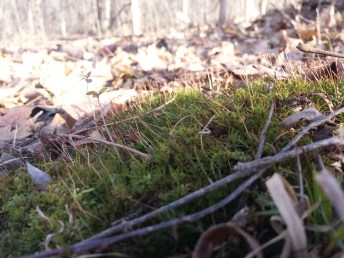
Springing moss at the oxbow
We documented 26 species and two other taxa. You can view this checklist at: http://ebird.org/ebird/gbbc/view/checklist/S34534270
Check out all documented species from “The Quarry Farm Nature Preserve & Conservation Farm, Putnam County, Ohio, US” at http://gbbc.birdcount.org including the entire number that we will file for February 17-20, 2017, and explore the worldwide count.
It’s now Sunday evening and there is an American Woodcock buzzing outside the window. That wish I mentioned before? One just came true.