The rain rain rain falls down down down

Today is rainy, cold and a hot cuppa sits in front of me. The floor has been mopped and mopped and mopped again to keep the muddy footprints at bay. Steven just suggested that we build a raised walkway so travelers can leap from stone to stone to make their way to the house in the event of such soup as surrounds us now.

I toyed with the idea of taking a photo of the preserve tree line, but the light is so dim that I’ll just tell you the trees are quiet and dripping grays and browns. The donkeys and goats are hunkered down in the paddock building in nests of straw, while the chickens do the same in their coop. The geese, however, are bubbling happy murmurs in the puddles that are fast joining into one big sea of waterlogged mud and winter grass.702974_10208387964407583_1535727157_n

Potbellies Carlton and Beatrice are trying very hard to be small, their legs crossed just in case the humans might get it in their heads that the pigs probably need to go outside to relieve themselves. Nemo was in her crate for a stretch, having thrown a large piglet tantrum because we couldn’t stop the downpour during her favorite hour of rooting. Now she is out and sprawled across her increasingly small dog bed.

David Seitz has worked steadily in the last month to ready the back grassland for wildflower seeds. The seeds were supplied by the Pollinator Partnership, as part of its U.S. Bee Buffer Project. The nature preserve was selected as a bee buffer research site as it borders neighboring farm fields at the south east corner. David and his daughter Ily spent much of Christmas Eve here working on the three acres that will be devoted to the effort. I hoped to take photos of the spot today.

Instead, I’ll keep my feet warm under a pink pig and plan on another walk on a dry day–maybe New Year’s Day–at least until it’s time to tuck the birds in for the night.


Buddy meets a girl

Lucy

Lucy

The oaks, the last trees to lose their leaves in fall, were down to just a few spots of brittle color when we first learned of Lucy.

A family in southwest Indiana sent out a distress signal that life had thrown them a curve, making it necessary for them to rehome a small flock of sheep and their guardian donkey. Bot flies and shearing wool appealed to neither our time nor talents, but the thought of opening our gate to another donkey seemed the ticket for our little Buddy. Six months and a bitter winter later, Lucy and her person made the four-hour journey to Riley Township.

My Steven and I were on the south boundary Saturday replacing old fencing, much to the dismay of two sassy goats whose nimble limbs and twitching noses were turned by the grass on the other side. The job also gave us an excuse to watch for a truck-pulling-trailer with Indiana plates.

I think Buddy knew. As I leaned over to stretch the bottom of the fence, he walked up and laid his head across my shoulder. They always know something’s up, whether it’s a storm or a class trip full of adoring little persons with apple slices and peanuts in their pockets.

Lucy’s wheels rolled up around 1 p.m. The welcoming committee lined up along the fence to meet the driver, except for Buddy. He pressed himself against the fence and stared in the window of the horse trailer. When Lucy was led through the gate and let off the lead, Buddy did an-honest-to-goodness happy dance.

For her part, Lucy was a little stand-offish. Her person Brandi Ireland told us that they lost a donkey to the winter of 2013-14, leaving a sad Lucy to mind the sheep. For the first hour on Ohio soil, she put on a good show of preferring grass and hay over some boy, but she never let that boy get more than a few strides away.

For the rest of the afternoon into evening, Buddy showed Lucy around her new digs, placing himself dutifully between her and the goats. I’m not sure if that was for her safety, theirs, or just Buddy making a statement of ownership.

Through human eyes and sensibilities, it seems that Buddy’s warm brown eyes are brighter and five years lifted from his gait in a few hours’ time. The goats are watching them both to see which donkey will figure out how to open the hay barn doors now that the salad bar next door is off the menu.

That’s not anthropomorphizing; that’s a day in the life with a Buddy boy and his goats, plus one. Better than a Sudoku puzzle to keep any two-legger on their toes.

welcoming Spring

IMG_9128

It’s Monday and snow is falling outside the window. The temperature is low enough that the white stuff of winter is sticking in clumps on trees and on what new grass there is. Two days ago it wasn’t much warmer, but it was still the first full day of spring. And even though the morning blew in on a cold northwest wind, Spring is great cause for celebration after a polar cold winter that began prematurely with snow on October 31.

IMG_9108We planned a March 21 ‘Welcome Spring’ Family Day three months ago by placing the event announcement in our winter newsletter. It was an optimistic move, one which dreamed big of turning over logs to find salamanders and the first bloodroot leaves curling up from the ground around the old homestead well north of the 10-acre grassland.

The forecast looked promising for Saturday, with sun and predicted temps in the high 50s. As noted two paragraphs ago, what we got was cold wind and gray. Laura switched the refreshment menu from cookies and lemonade to doughnut holes, cookies and a selection of hot beverages which we thought would consumed by those of us who live close by.

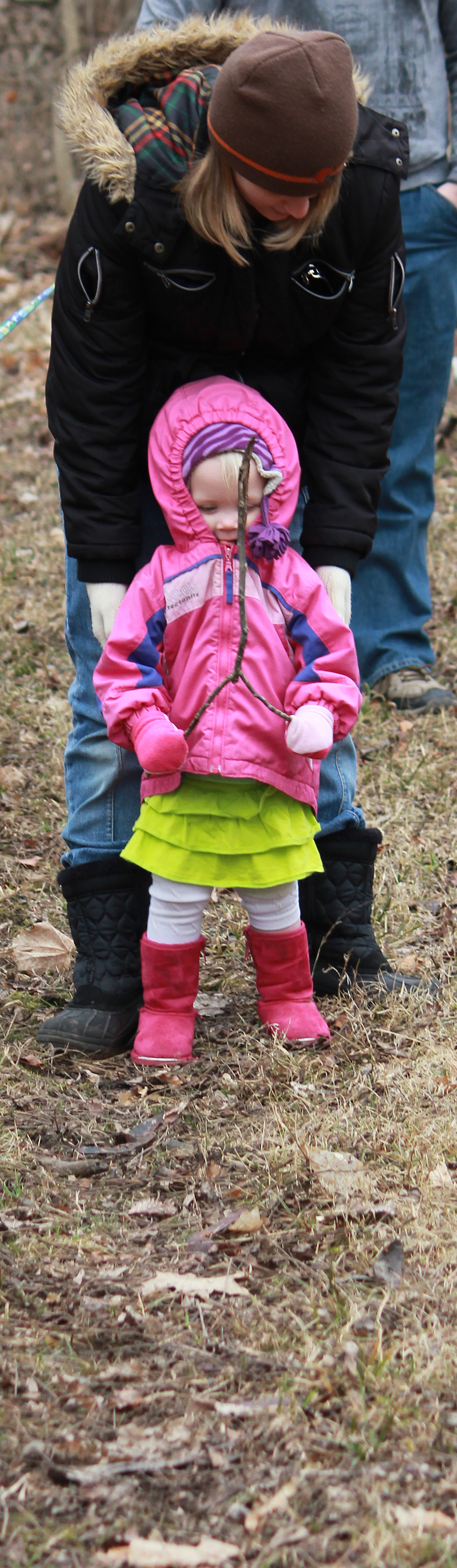
Instead, we were joined by three families, all hat-and-coated and ready to hit the trails. Most were return visitors, so they knew that the wind chill would drop once we entered the nature preserve with its tree lines of defense.

Two Canada geese stayed put on the melted quarry surface, at least long enough for us to watch them lift off. We saw plenty of signs of movement, from a variety of tracks to wild turkey feathers. And since this walk was one to greet Spring, this group inaugurated the vernal pool trail for all future guests.

Steve gathered two water samples from the largest pool, an oxbow that was once part of Cranberry Run prior to a brutal 1950s attempt to ditch the natural, wild creek. The oxbow is home to frogs, dragonflies, woods ducks and a variety of turtles. Saturday, most burrowed deep and our enthusiasm sent anything with wings away, but the net did yield scuds, a tiny crustacean akin to shrimp.

We pondered scat in the upland grassland, talked about the sharp hawthorn that sometimes stores a shrike’s lunch and made maple leaf angels on the main hardwoods trail.

Up and out again, and several donuts and hot chocolate cups later, the south Cranberry Run trail led us to the farm animal sanctuary where Buddy, Beatrice, Johnny, Marsh and Mister Bill led the pack in a high-five. Turkeys Inigo and Humperdink paraded their splendid selves about, puffing and drumming as their heads mottled from pink to blue to purple and back again.

IMG_9146It was the first visit with guests for Mister Bill, a very, very, very large Boer goat, and he was tolerant until he’d had enough and wandered away to chew on a spruce. We took the hint at high noon, the scheduled departure time anyway, and were escorted to the gate by turkeys, goats, Buddy and Beatrice.

A warmer spring walk, one fit for wildflowers and light sweaters, is in the works for April.

Stay tuned.

a different shade of white

woods

In 1911, Franz Boas, an anthropologist who spent years living among the Inuit, published The Mind of Primitive Man. Through it, Boas not only revolutionized anthropology, but sparked a debate that has lasted over a century. Boas famously suggested that the Inuit have dozens, if not hundreds, of different names for snow. Linguists argue back and forth the merits of the claim, some saying that added suffixes to root words are simply individual flourishes while others assert that, yes, each new permutation is, indeed, a separate and distinct word.

Which leads me to my question and my subject…Would the Inuit consider a heavy frost snow?

There was fog in the early morning hours on Wednesday; fog and a whole lot of cold. Combined, the two create what I’ve always considered hoar frost, a consideration that is at least mostly accurate.

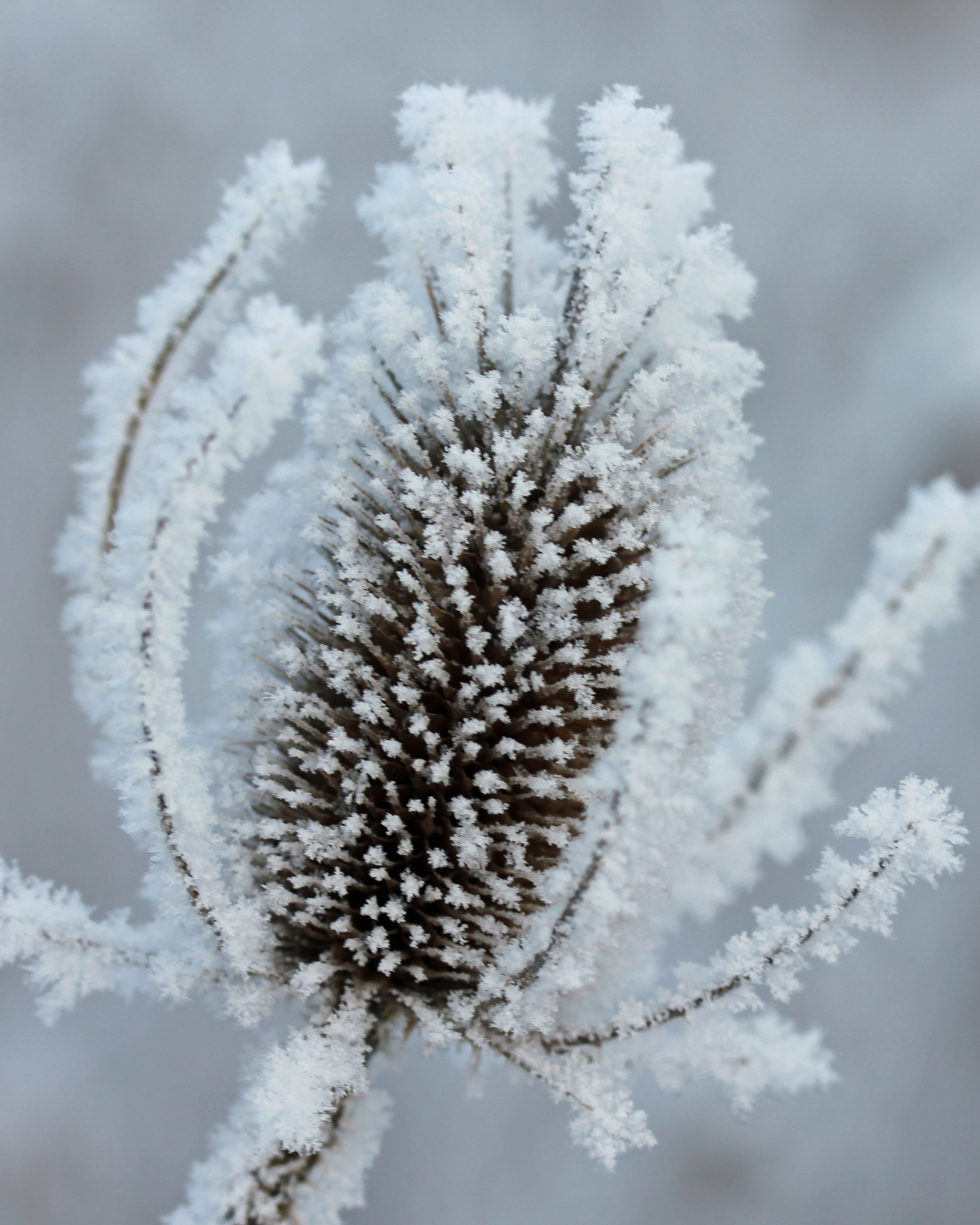
frosted wild teasel

frosted wild teasel

As it turns out, there are six different recognized types of frost – two of which, rime and black, are subject to debate – one of which is hoar. Well, sort of “one of which”. See, there are actually four different types of hoar frost: air, surface, crevasse and depth. Air hoar is the type of frost we experienced today. Tangentially, hoar is a word of Old English derivation, an adjective meaning “showing signs of old age”; in this case, conceivably, it is the fringe of white that conveys senility.

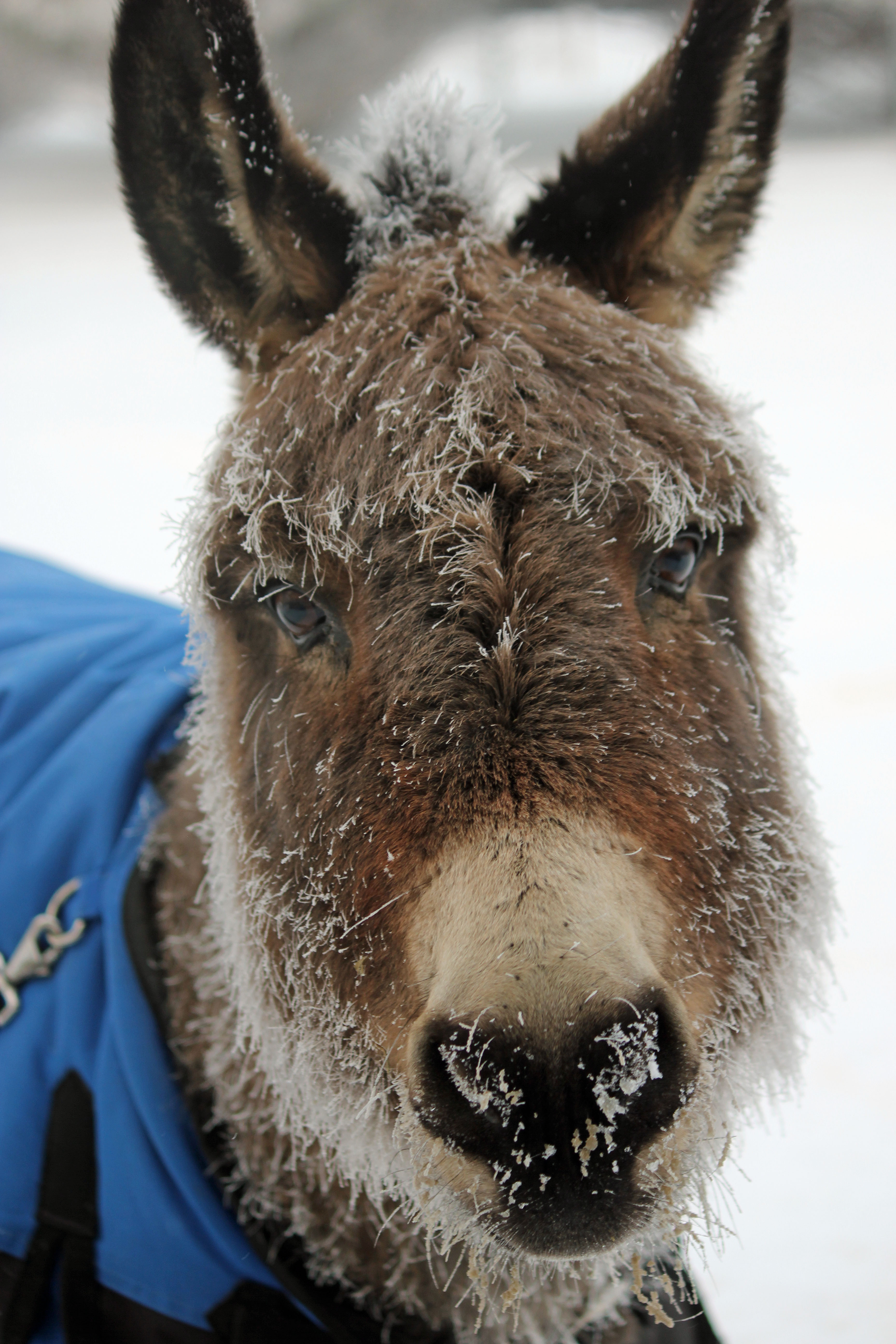
The world seems to froth with it, this thick confection of frozen air. It shrouds tree limbs, coats fences, cars and outbuildings and accumulates on the individual hairs and feathers of the animals that spend a good deal of their time out of shelter.

In the bottom land below our house, the plants and grasses were still, bowed under their burden of frost. The wild teasel (Dipsacus fullonum), an invasive from North Africa and Eurasia that has been here so long that it seems native, carried its coat with grace.

Later, though it never truly grew warm even for this time of year, the rising sun brushed so much frost from tree limbs that, under the canopy, it fell as thick as snow.

So, can anyone tell me? Does anyone know? Make it official…does frost translate to snow?

Buddy

Fall 2014 newsletter

Fall 2014 TQF Newsletter-1


The temperature may be dropping, but the beat goes on here on The Quarry Farm. Click on the newsletter cover over to the left and keep up with what’s happening in the pavilion, the sanctuary, the Red Fox and on the trails.

And speaking of trails, hope to see you on them this autumn.

They call me Mister Bill…

Bill

“He’s a big goat,” Sandy explained to Anne over the phone and via email. “People don’t understand how big he really is.”

Sandy was talking about Bill, a Boer goat that she and her husband, Doug, had raised from when he was smaller than a pygmy. And, trust me; she wasn’t kidding (no pun intended). Bill’s bigger than Buddy, the miniature donkey that guards The Quarry Farm: taller, anyway, and he’s the newest member of The Quarry Farm family.

Sandy and Doug drove him up from the Cincinnati area, from the farm that the couple is in the process of leaving. They were successful in placing the other animals that lived on their farm, but because of his size, Bill proved a special case. They’d raised him as a pet and they didn’t want him to go just anywhere, were anxious to see that he went someplace safe. After reviewing their options, they chose here and we’re grateful for that. Bill’s every bit as sweet as he is big.It took him a few days to work out just where he belonged in the loose-knit community of goats that already reside here, all of whom are less than half his size, but he did and the pygmies and Nigerian dwarfs are finding his arrival a real boon.

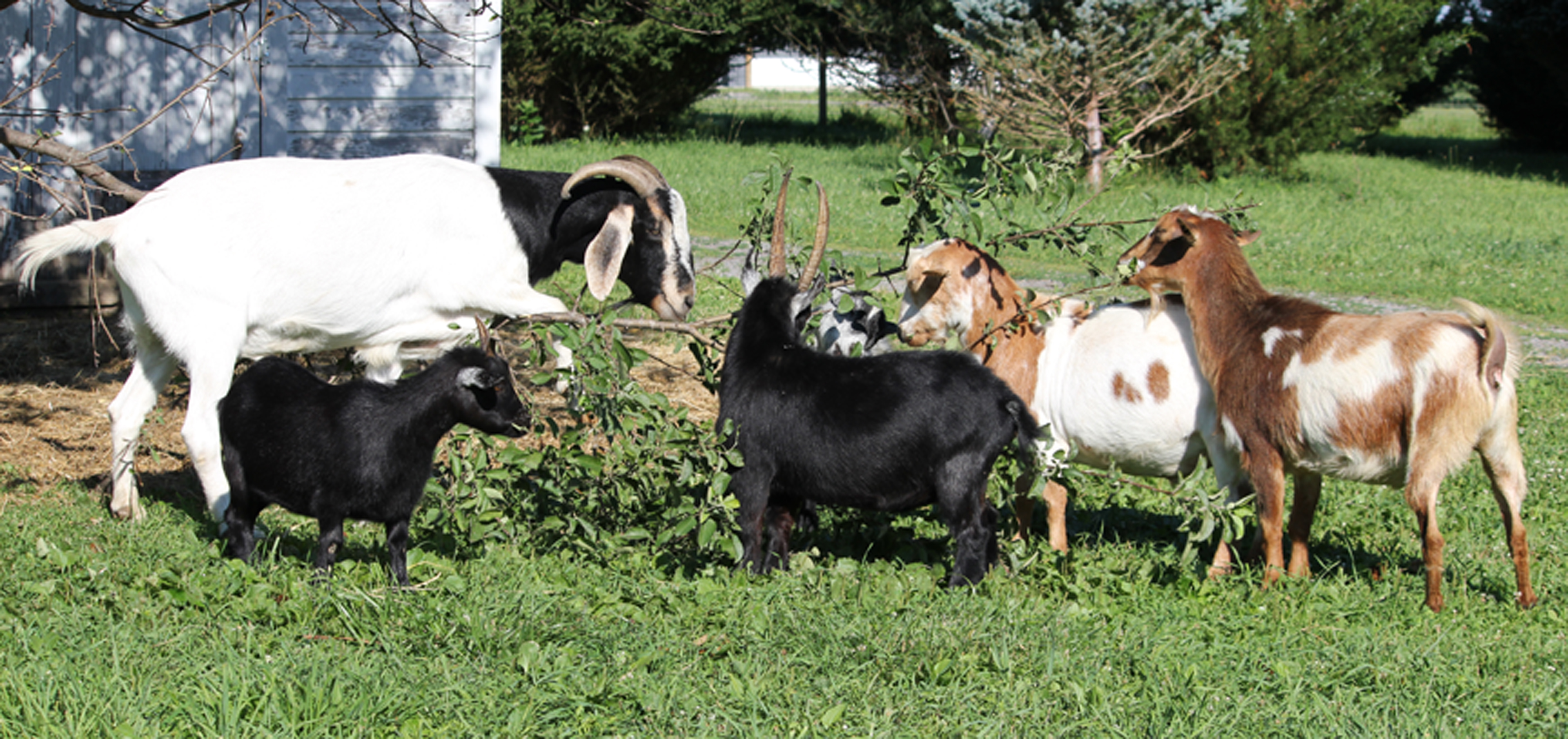
apple picki BillForget the fact that he scrapes out dust wallows for all his smaller cousins before digging up his own. Never mind that, in a pinch, the pygmies can take shelter from the sun in his shadow (and, yes, they do). What’s really important, what all the goats truly appreciate him for (and the pigs, if we’re being honest), is his reach. Standing on his back legs with his forelegs braced against the trunk of a tree and stretching for all he’s worth, Bill can pretty easily top seven feet. And when the trunk he’s braced against is that of an apple tree, well, let’s just say that Sir Isaac Newton would have received more than one lesson on the effects of gravity. Another way of putting it is to say that, rather than a windfall, the animals here are benefiting from a Billfall. Seriously…who needs a cherry picker with Bill around? Not the wee beasties of The Quarry Farm.

So, welcome home, Bill. Well come, indeed.

The gang of goats