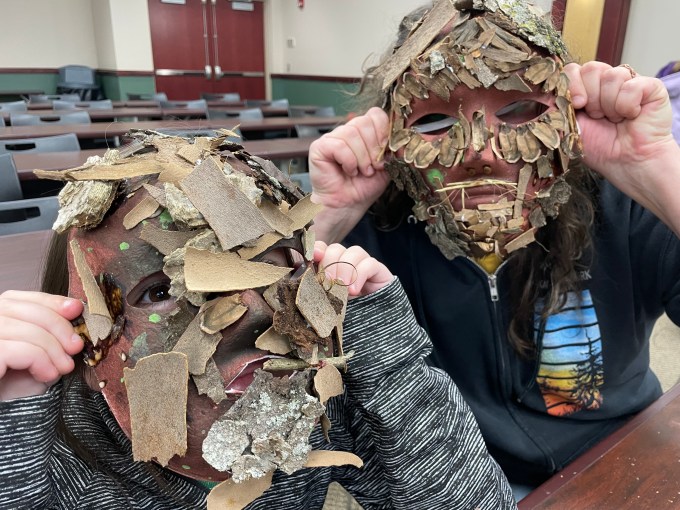
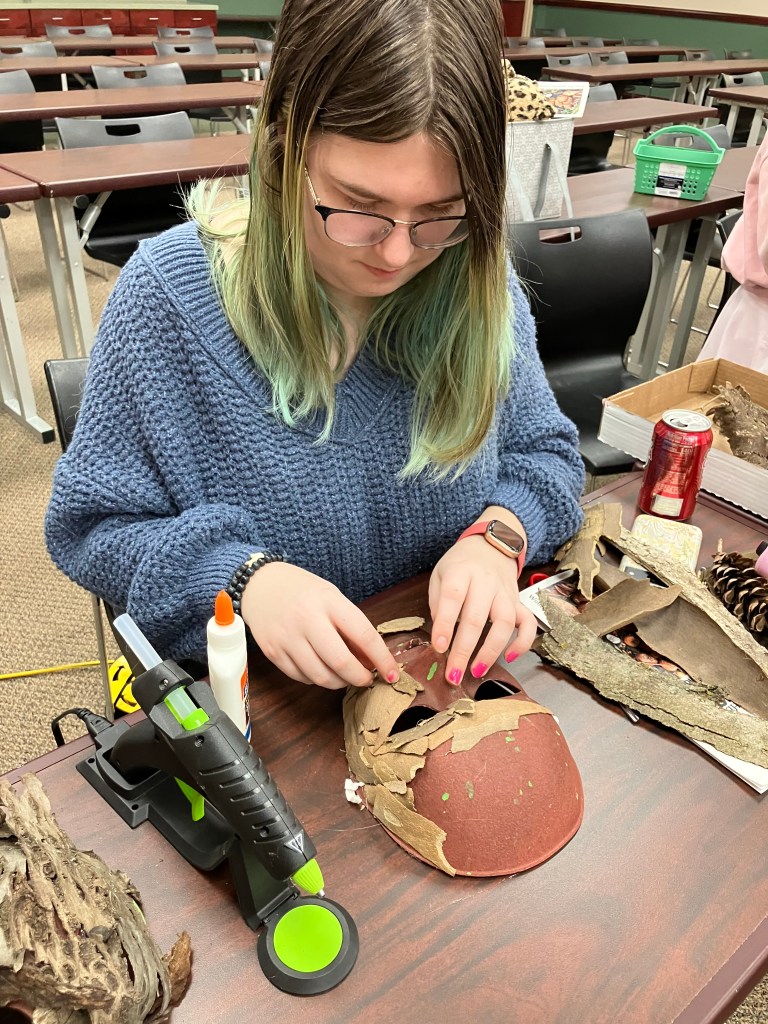
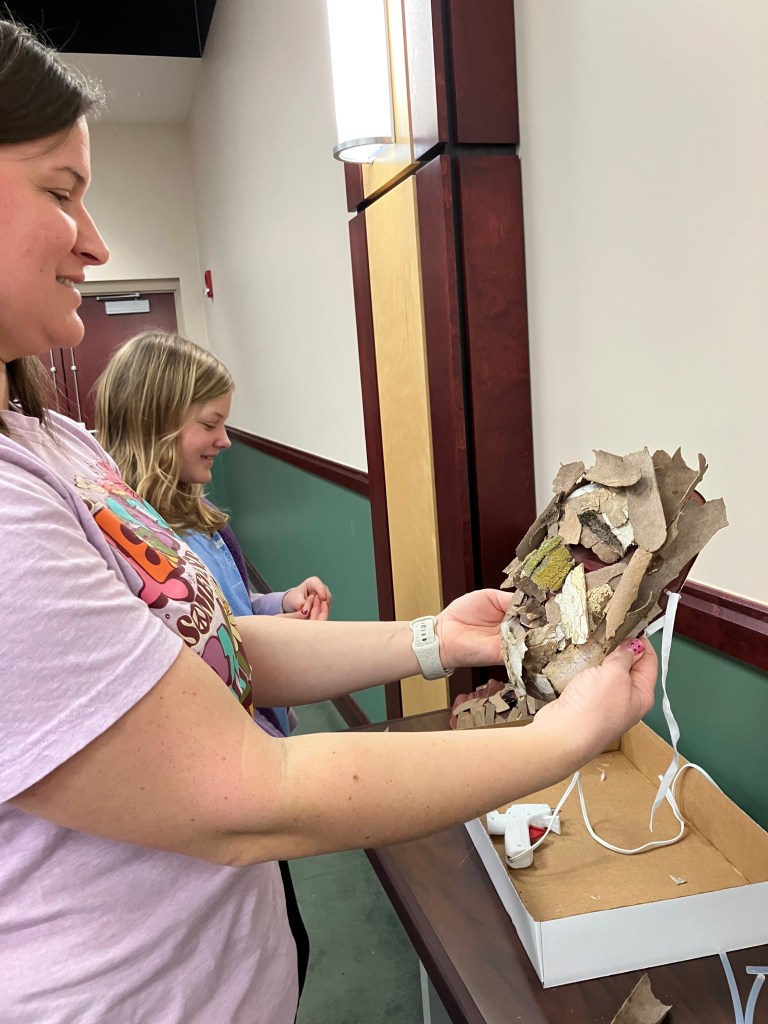
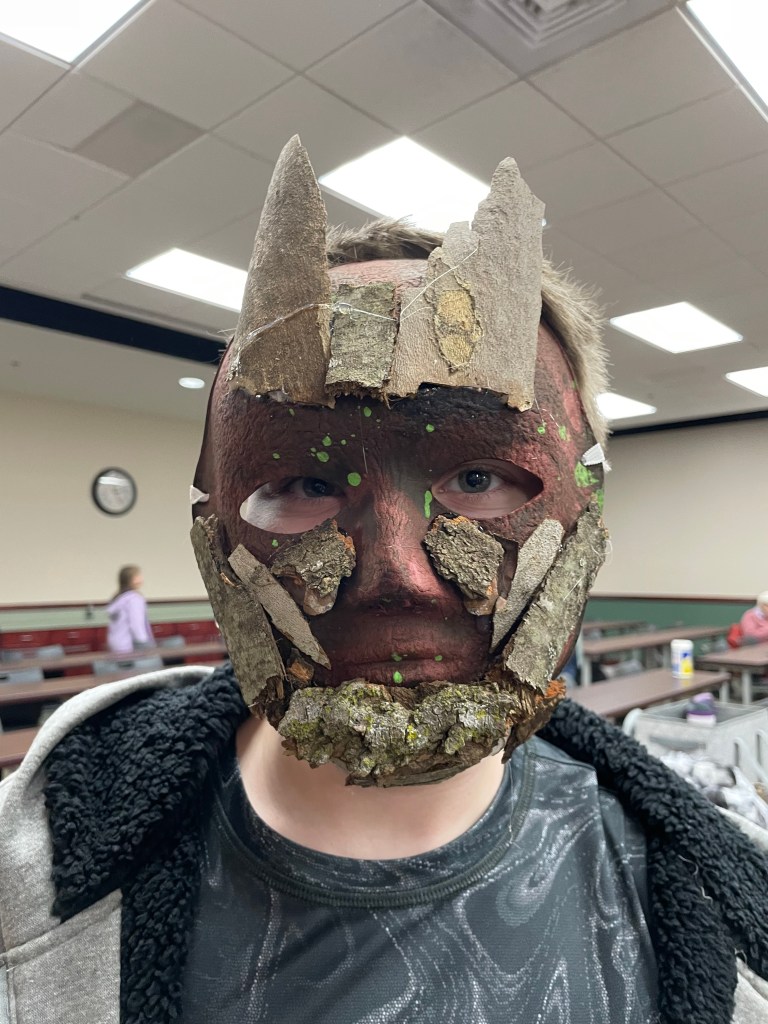
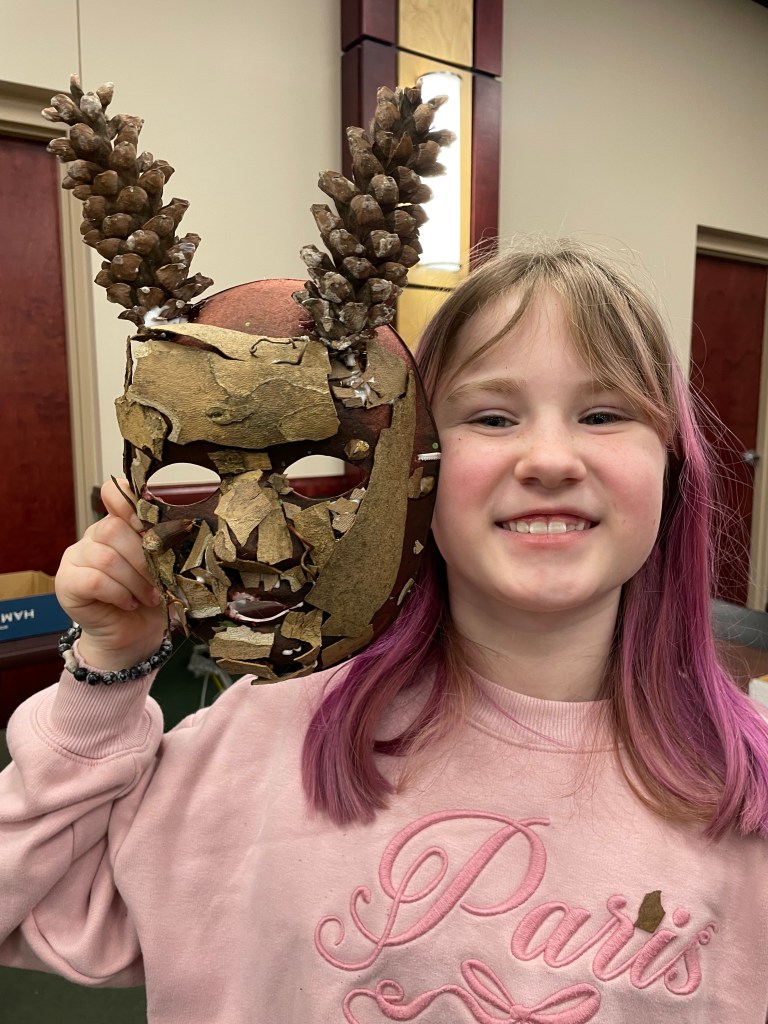
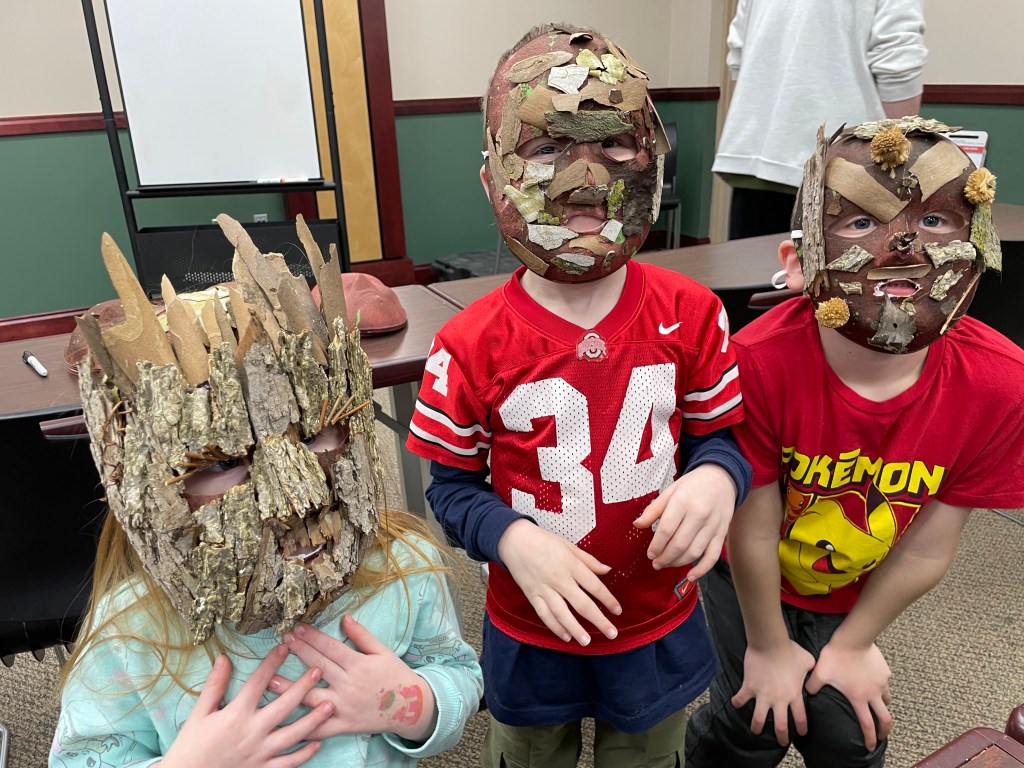
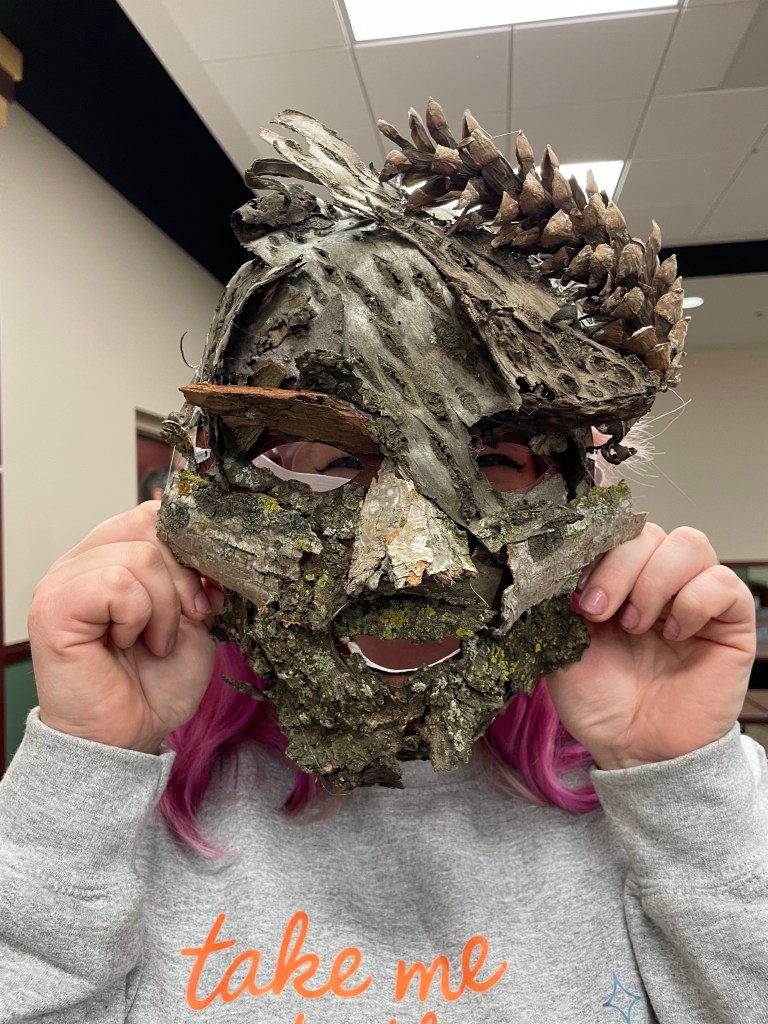
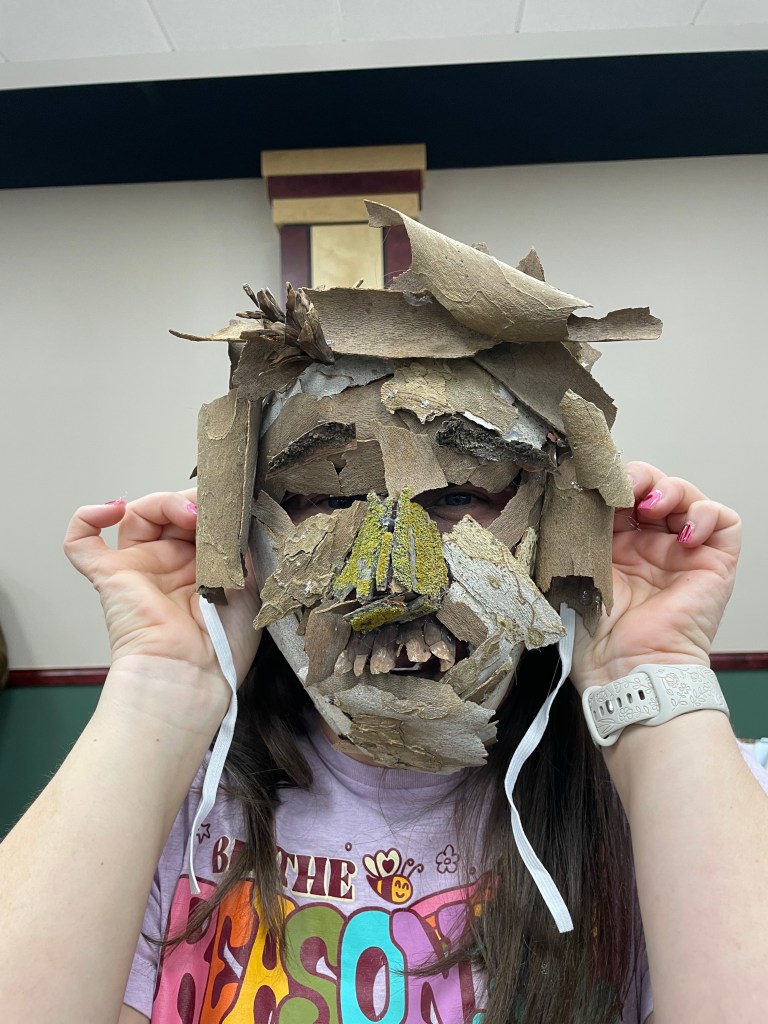
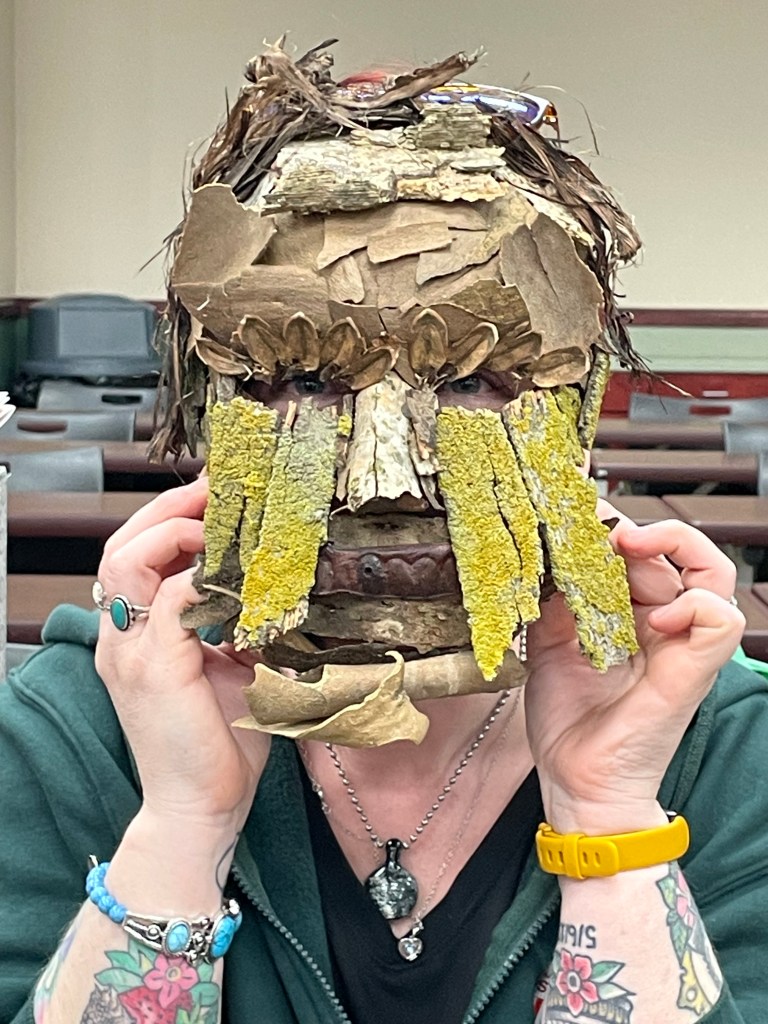
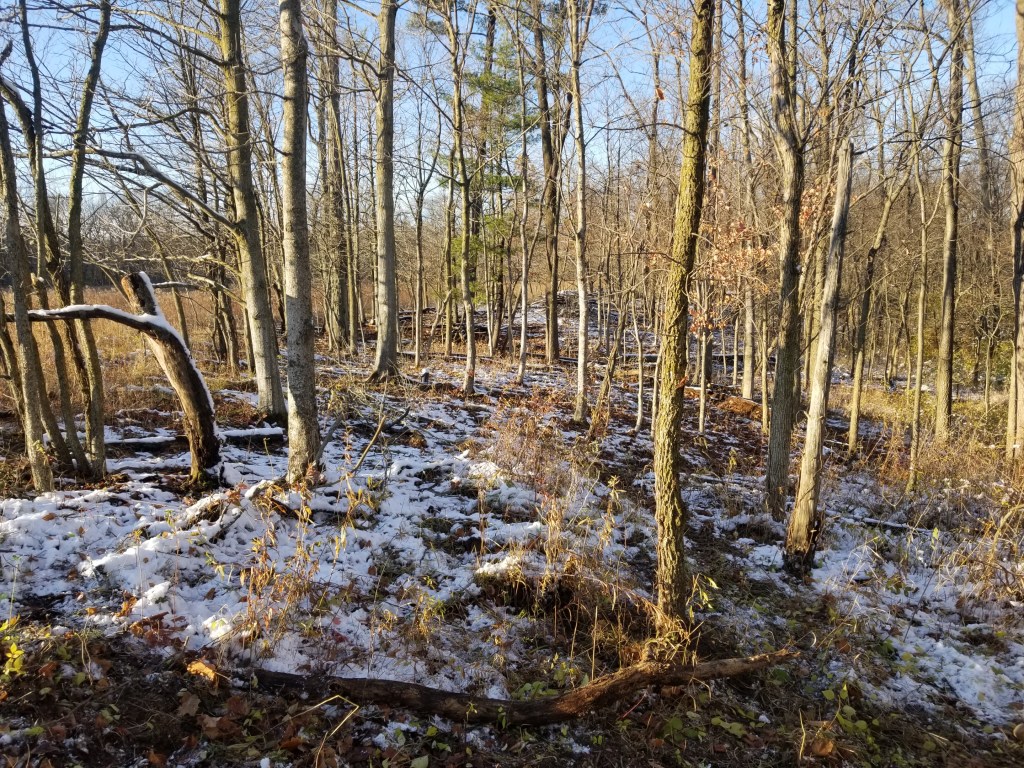
How do you identify a tree, especially when it is at the height of winter’s dormancy? Evergreen trees are a simpler test of identification skill since they are piney green all year round. But there aren’t a lot of native evergreen trees in Northwest Ohio. Eastern Red Cedar is tolerant of Putnam County’s clay soils. They used to only be found in ditches and swales, a bane to landscaping. Now you can find them in farm agency sales and greenhouses as they are recognized for their hardiness and value to wildlife. Delicate, soft-voiced Cedar Waxwings feed on berries in their shelter, camouflaging these masked mobsters who can take down a Blue Jay in seconds.
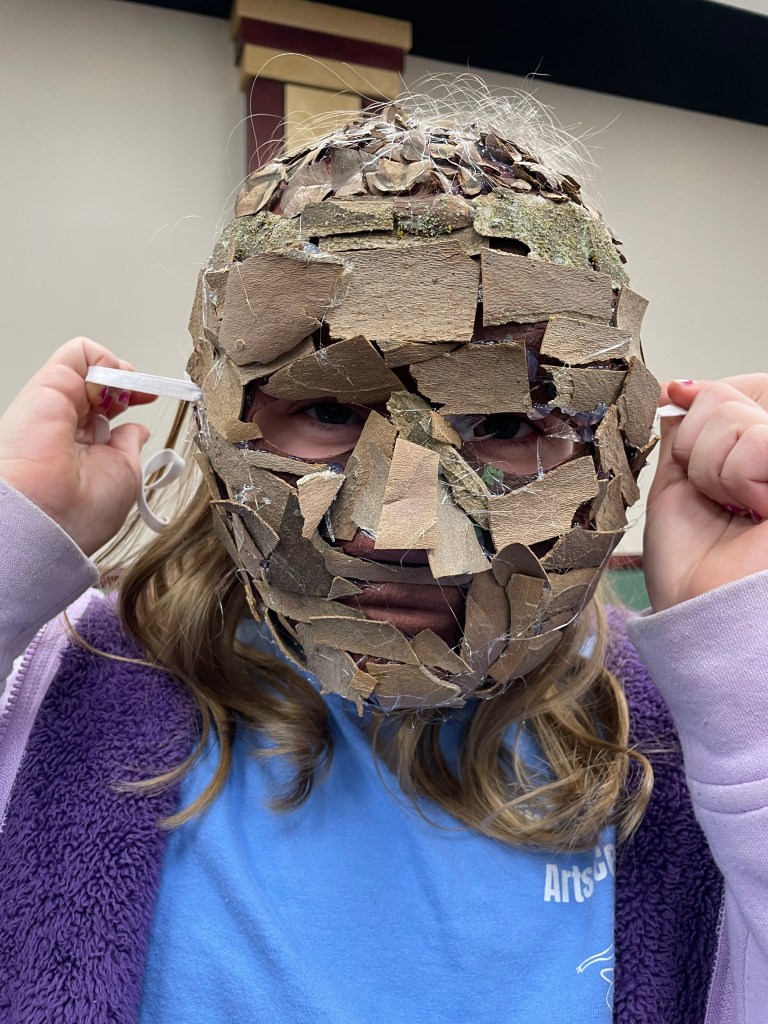
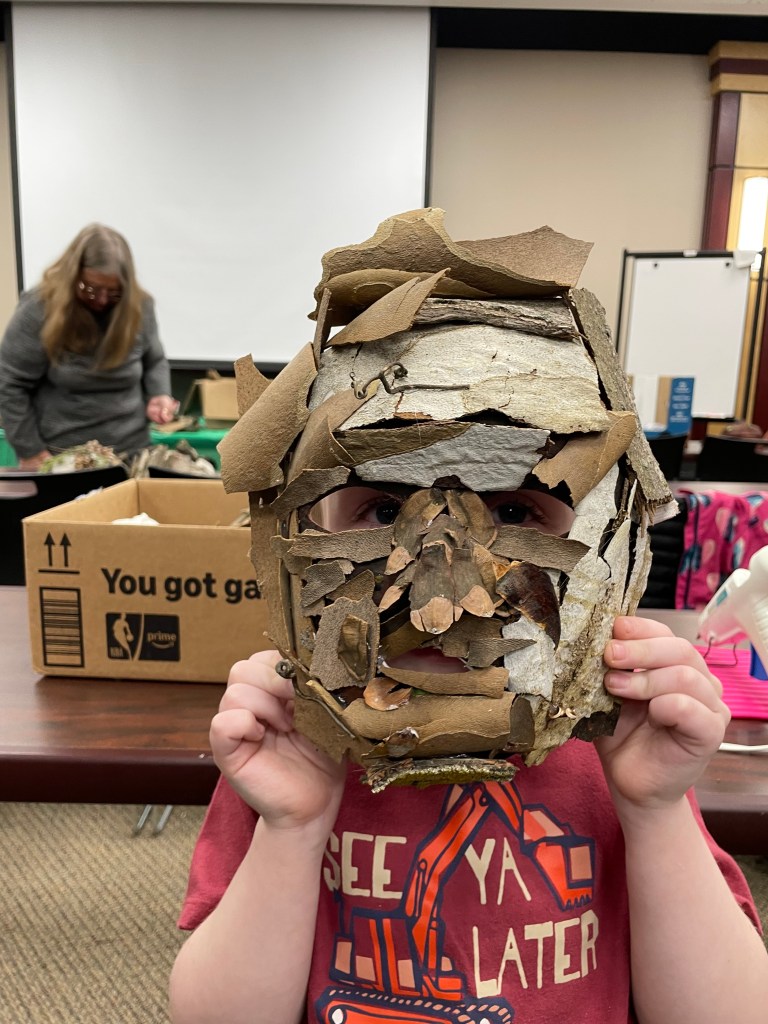
*When collecting tree bark, do not pull bark from a live tree. You’ll hurt the tree itself. And when you lift bark that a tree has shed, look closely to make sure that you aren’t disturbing something that is trying to survive winter in its shelter.
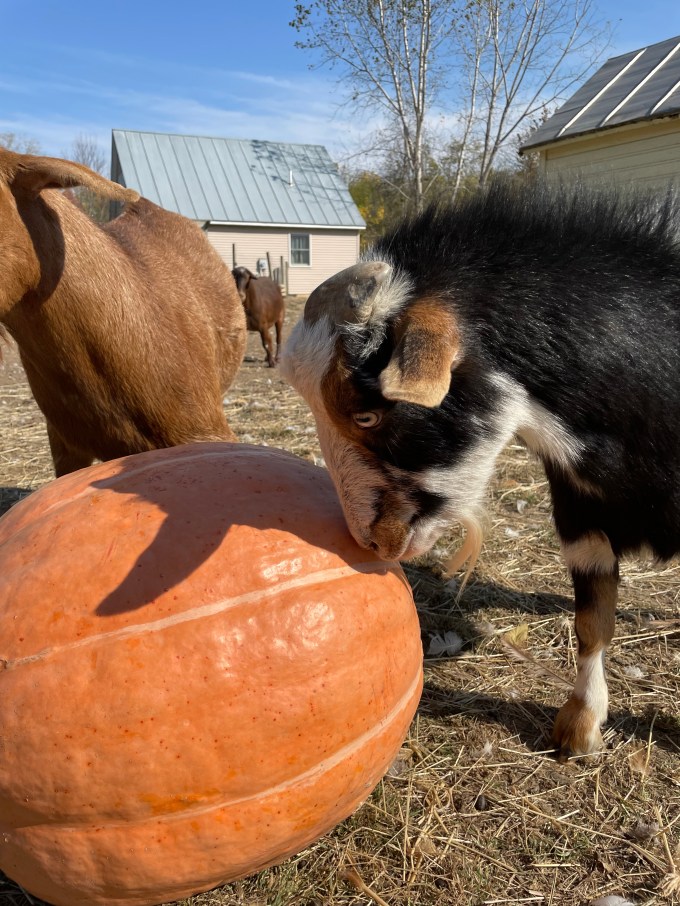
The water pans and buckets could still be filled by the outdoor hose two weeks ago. Yesterday, we woke to an inch of snow and a wagon full of frozen Hilty Farm pumpkins. Dave and Jane brought their juicy orange produce last week to rave donkey and pig reviews.
Today, snowmelt is pooling in the dry Cranberry Run bed and David Seitz is still removing invasive evergreen Amur honeysuckle from the southeast property line.
The wind is cold and blowing from the southwest open field across road 7L. In the forest, birds and squirrels scold in the calm of the trees. The wind won’t settle but temperatures are to rise. By Saturday’s “National Hiking Day Hike at Night”, temperatures will be in the 50s Fahrenheit as is fairly normal for November in Ohio. Put on good walking shoes, weather-appropriate clothes and join us on the nature preserve trails to enjoy the mental and physical health benefits of hiking.
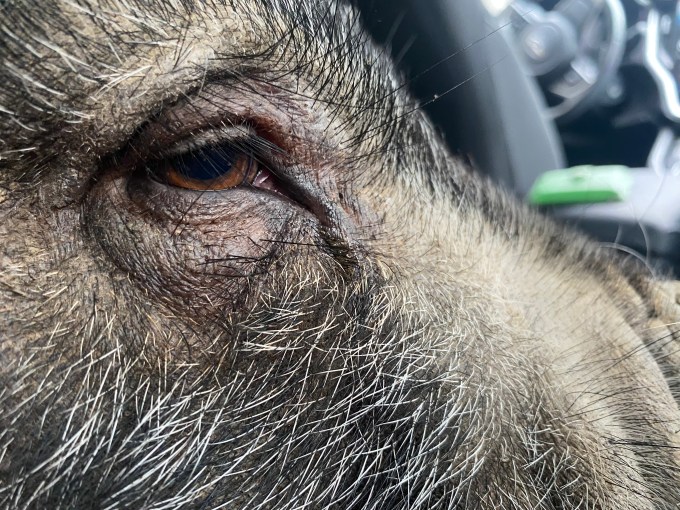
Beatrice took her last ride in a car today. She arrived here as a little pig, scared and confused. She joined Gertie in the kitchen: a duo of potbellies who watched Steve’s every epicurean move. She sashayed through the garden to join schoolchildren as they laughed and lunched on brown-bagged deliciousness. She rooted and ran, lounged in sunny patches of grass, and accepted treats whenever they were available—including as much of a box of Christmas Whitman’s Sampler as she could get before she was found out. A box of Little Debbie Strawberry Crème Cake Rolls made this morning’s journey a little less stressful and her arthritic hooves bearable. The veterinarian and students at Ohio State University Farm Animal Services in Marysville were kind, compassionate, and mercifully quick.
She was Little Pig. She was Christmas Piggy. She was the Queen. Her body is buried between the garden rows. A double rainbow this evening assures that She is Bea.
No, you didn’t miss an event at The Quarry Farm. There was no official activity today to commemorate avian acrobats. There was, however, a walkabout in the nature preserve to see who is flitting about in the lead up to the October 9 Fall Bird Migration Hike. Birders Deb and David were on the trails bright and early to document birds that are either back “in town” for the cold months or who are passing through on their way further south. They identified 36 species.
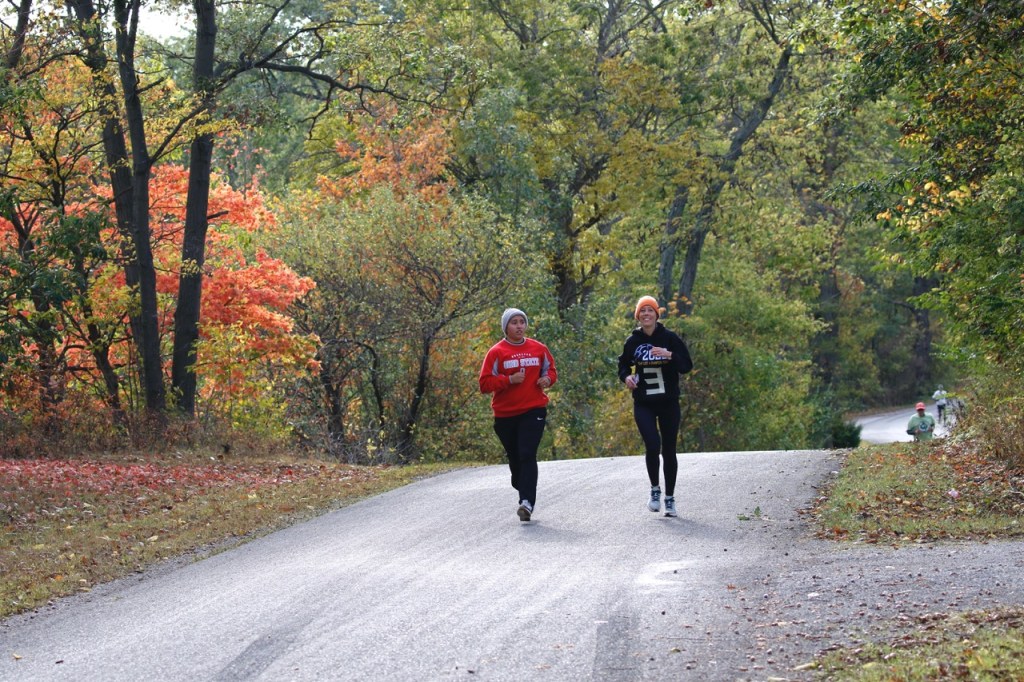
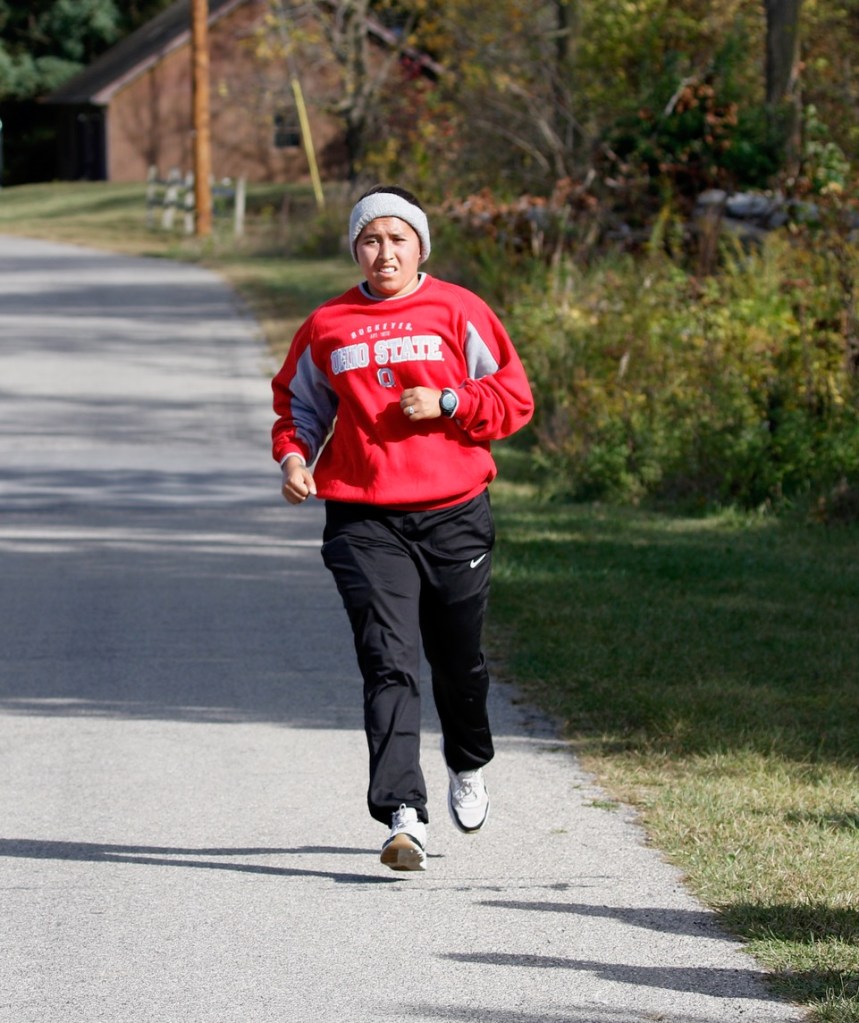
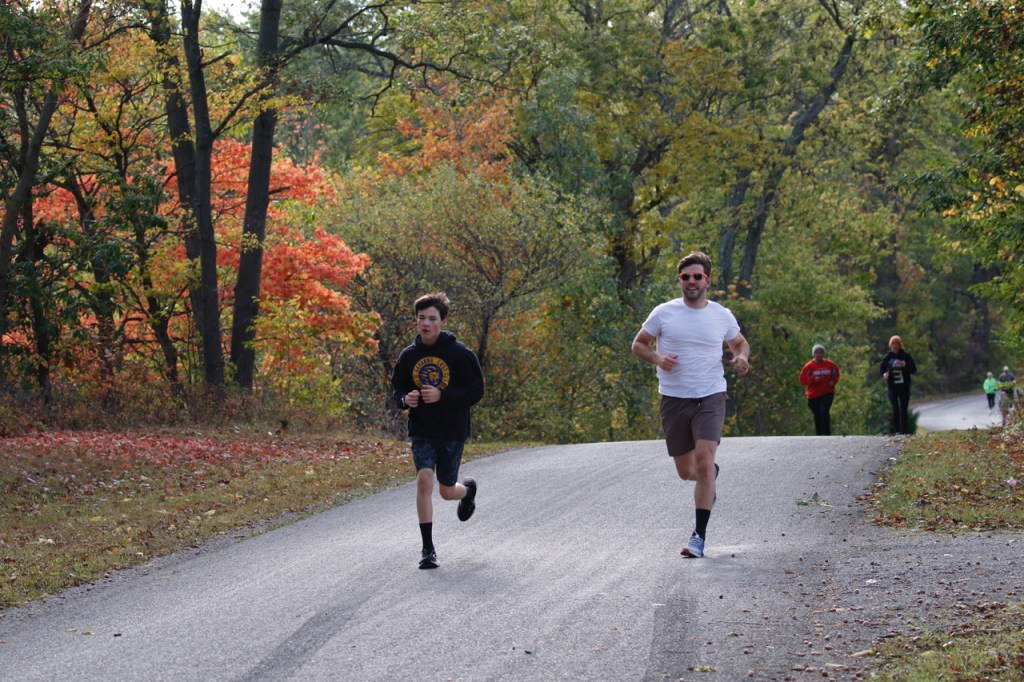
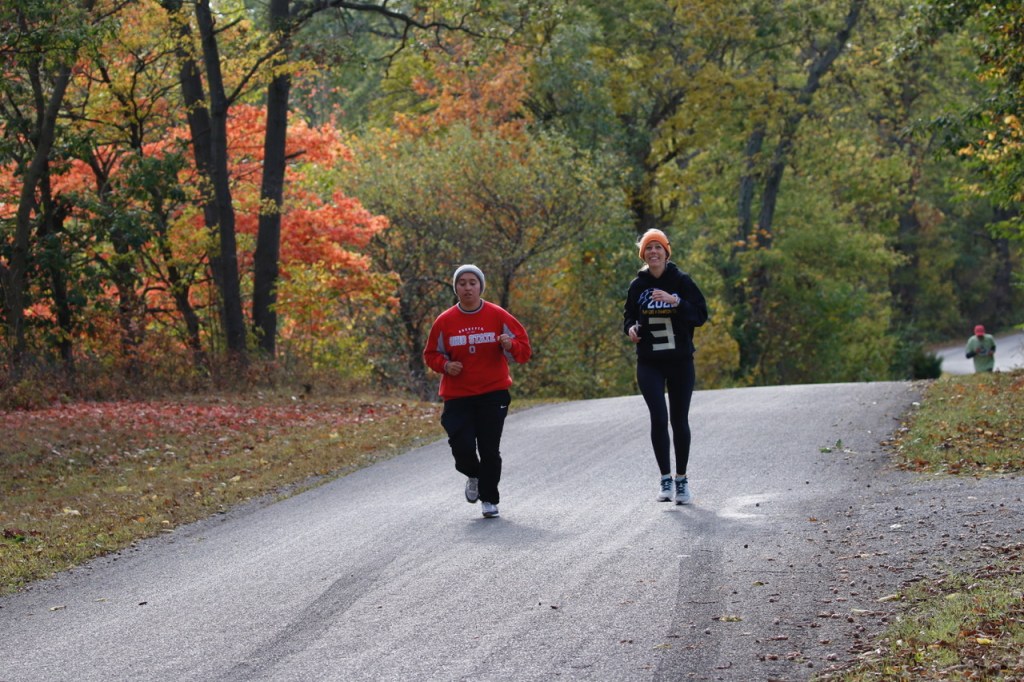
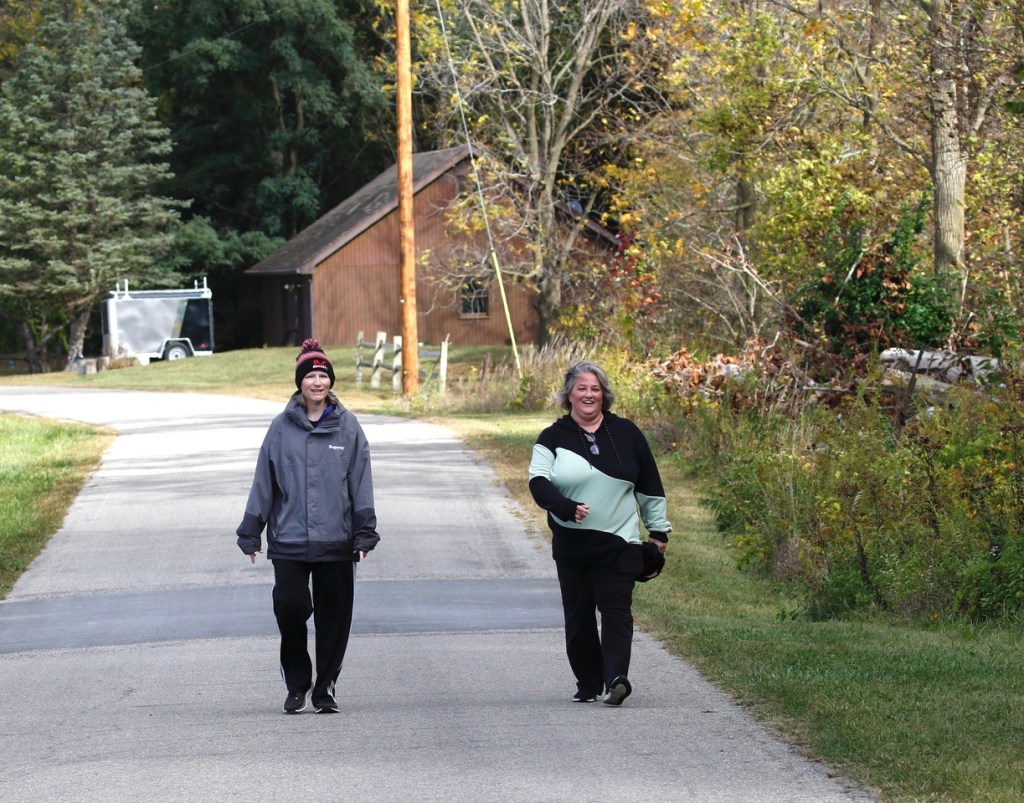
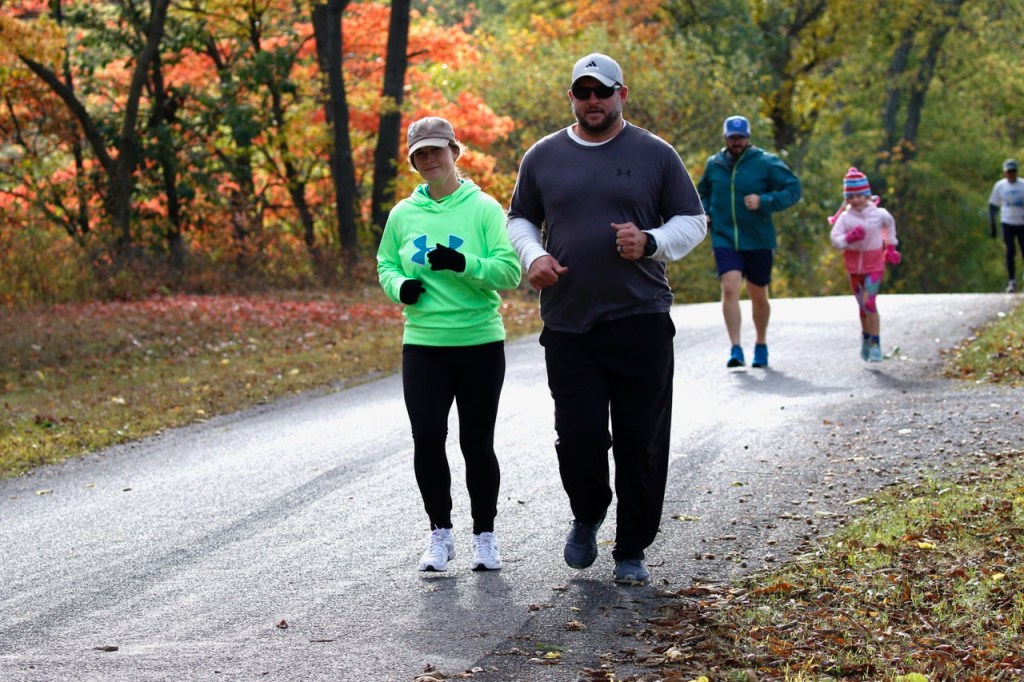
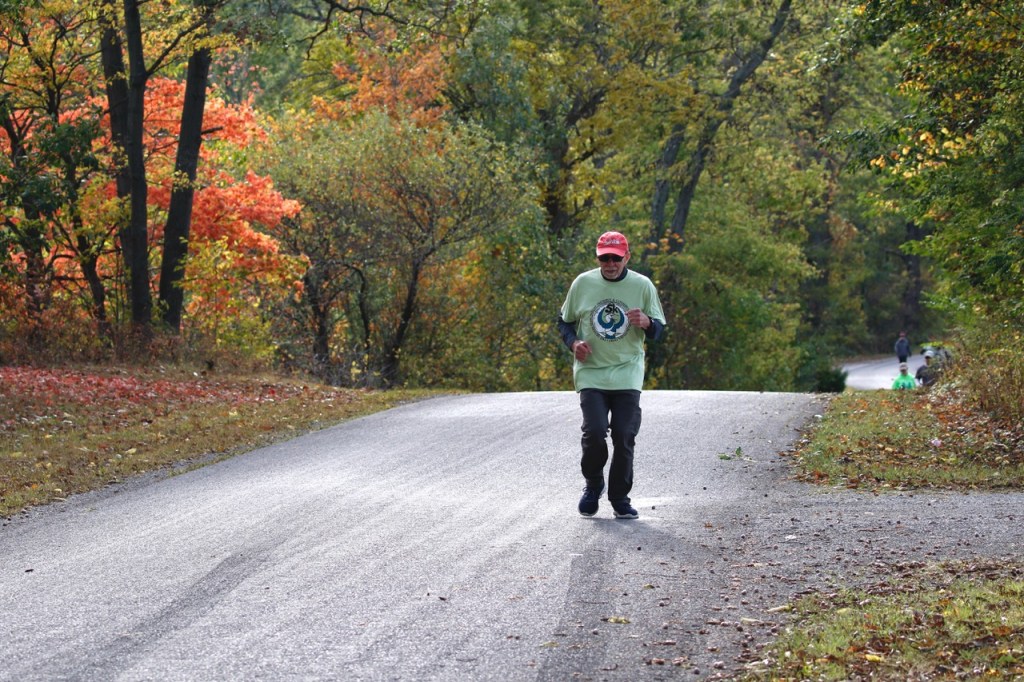
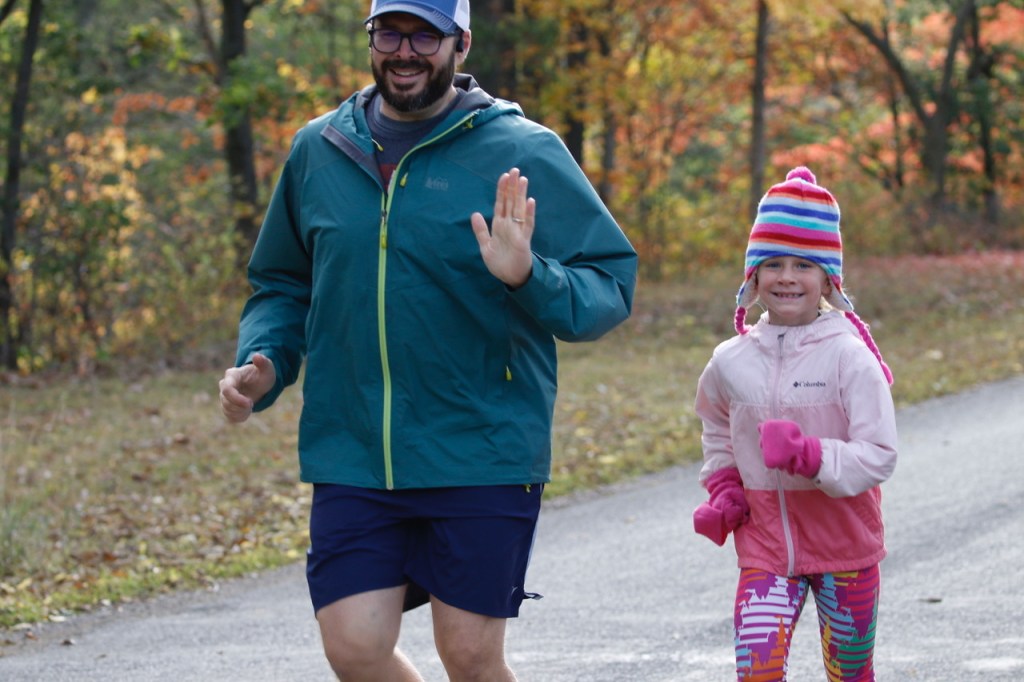
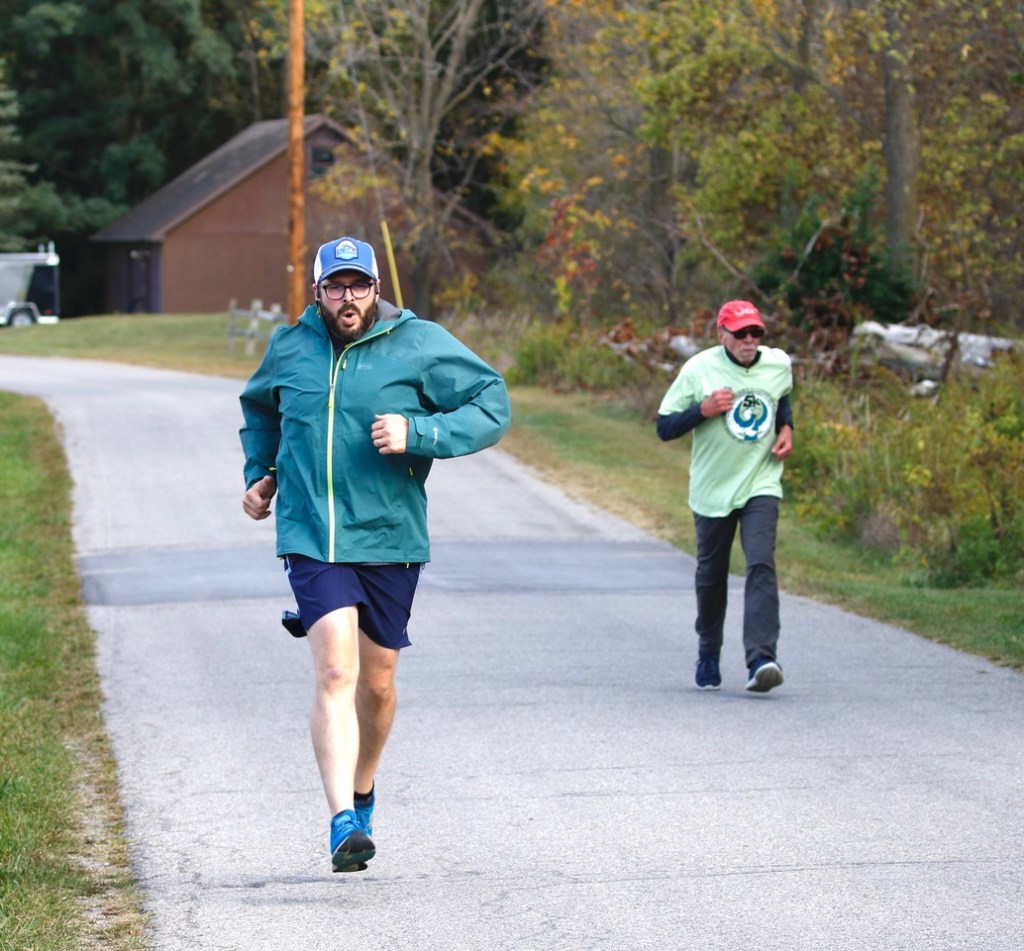
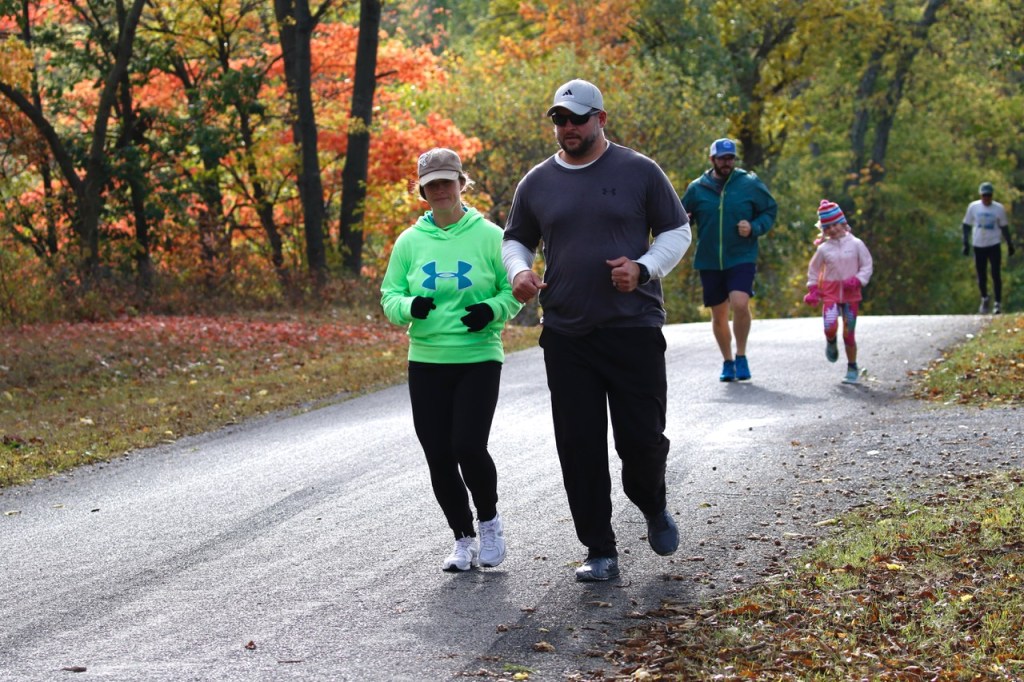
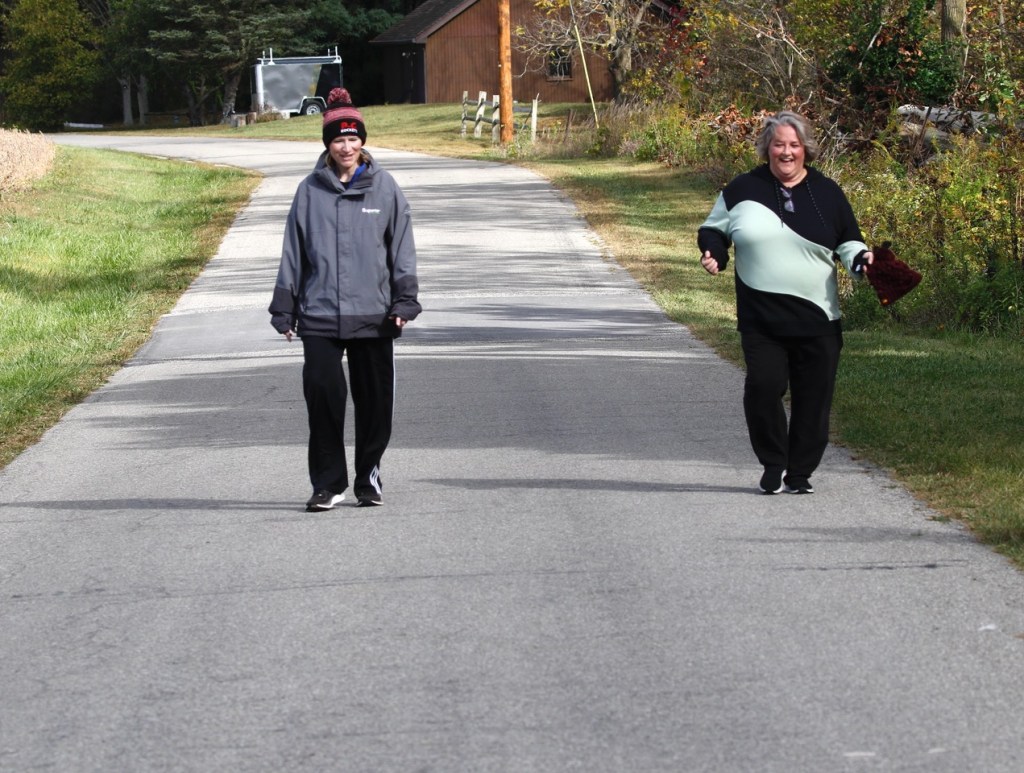
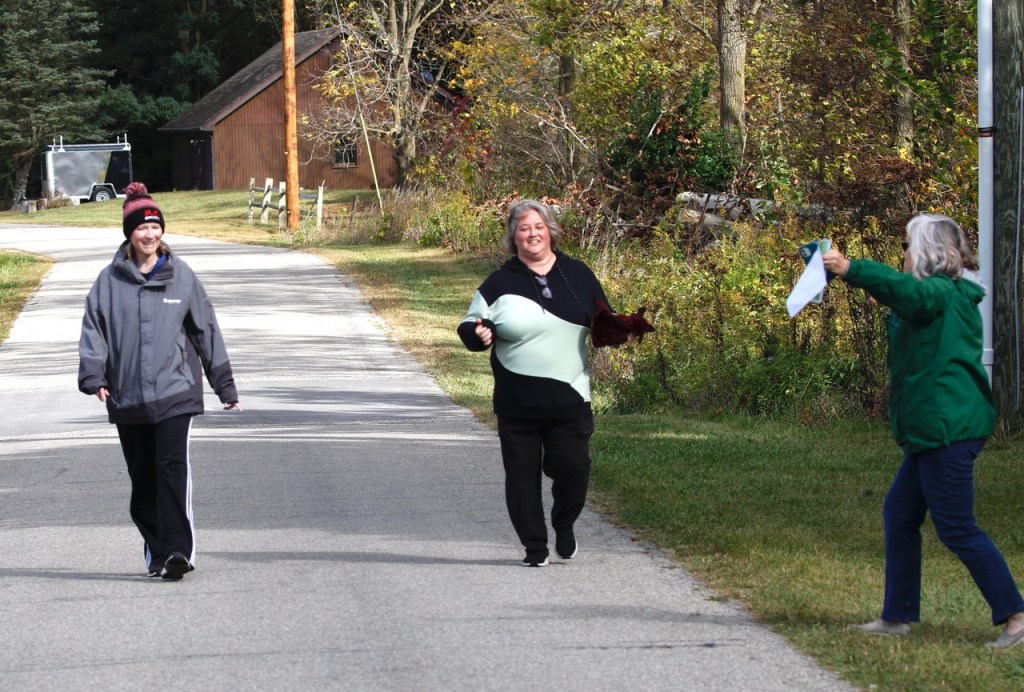
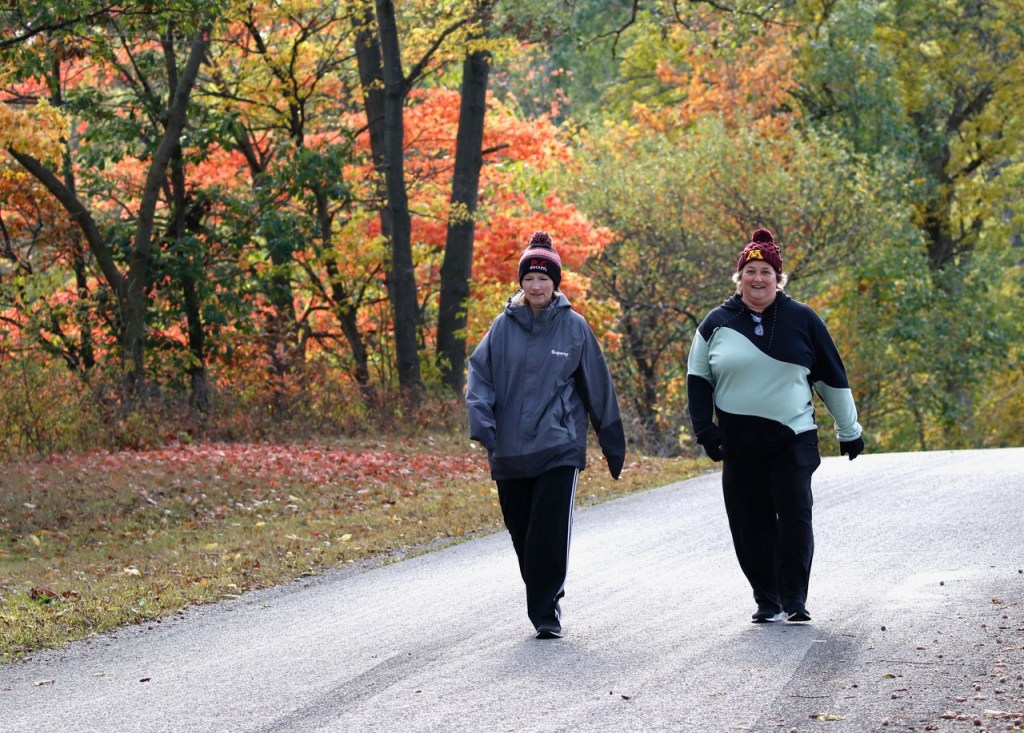
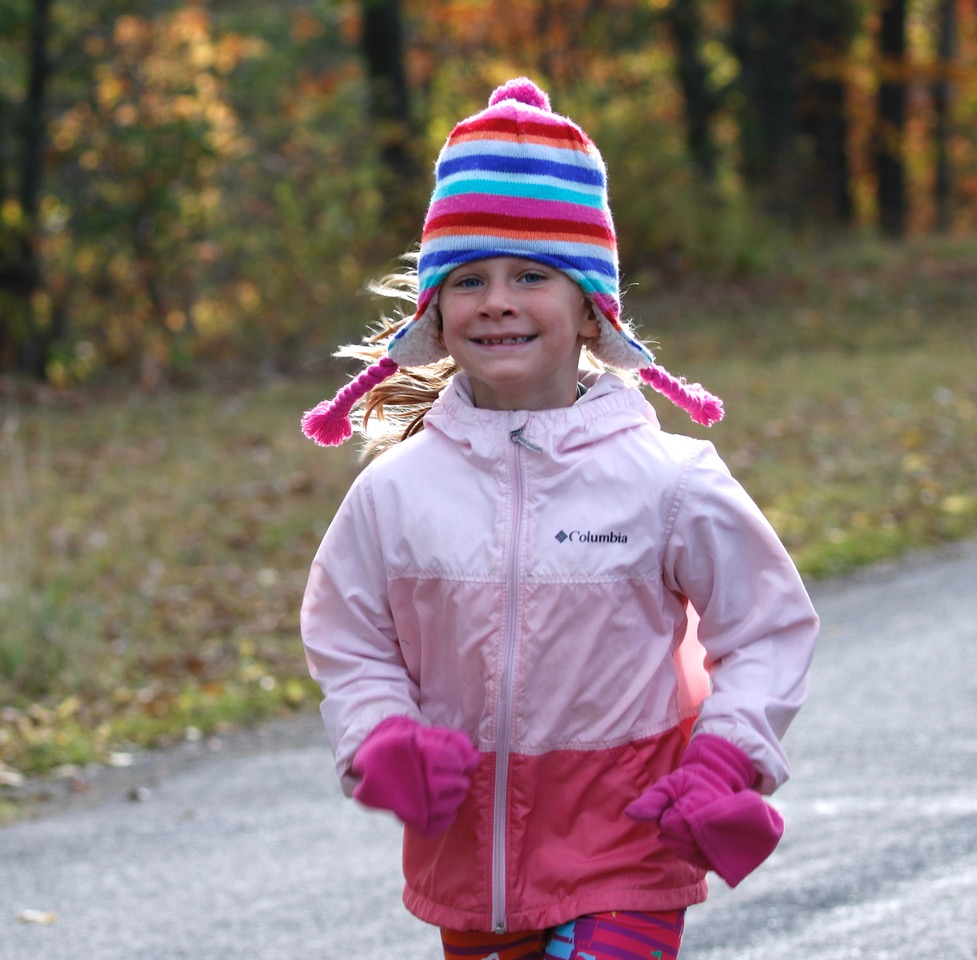
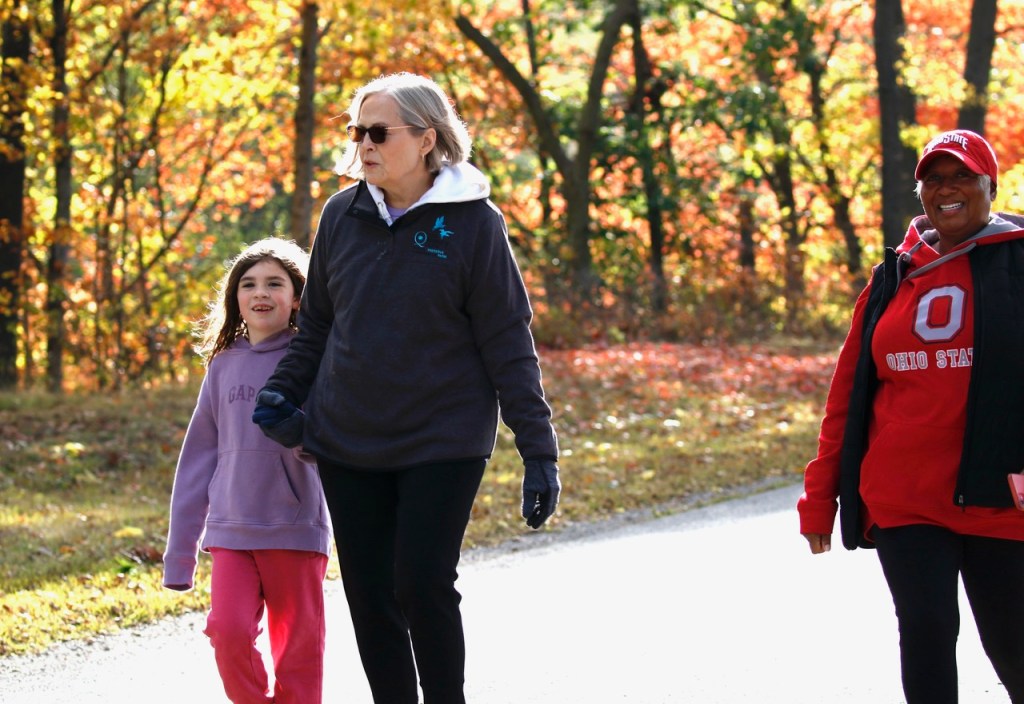
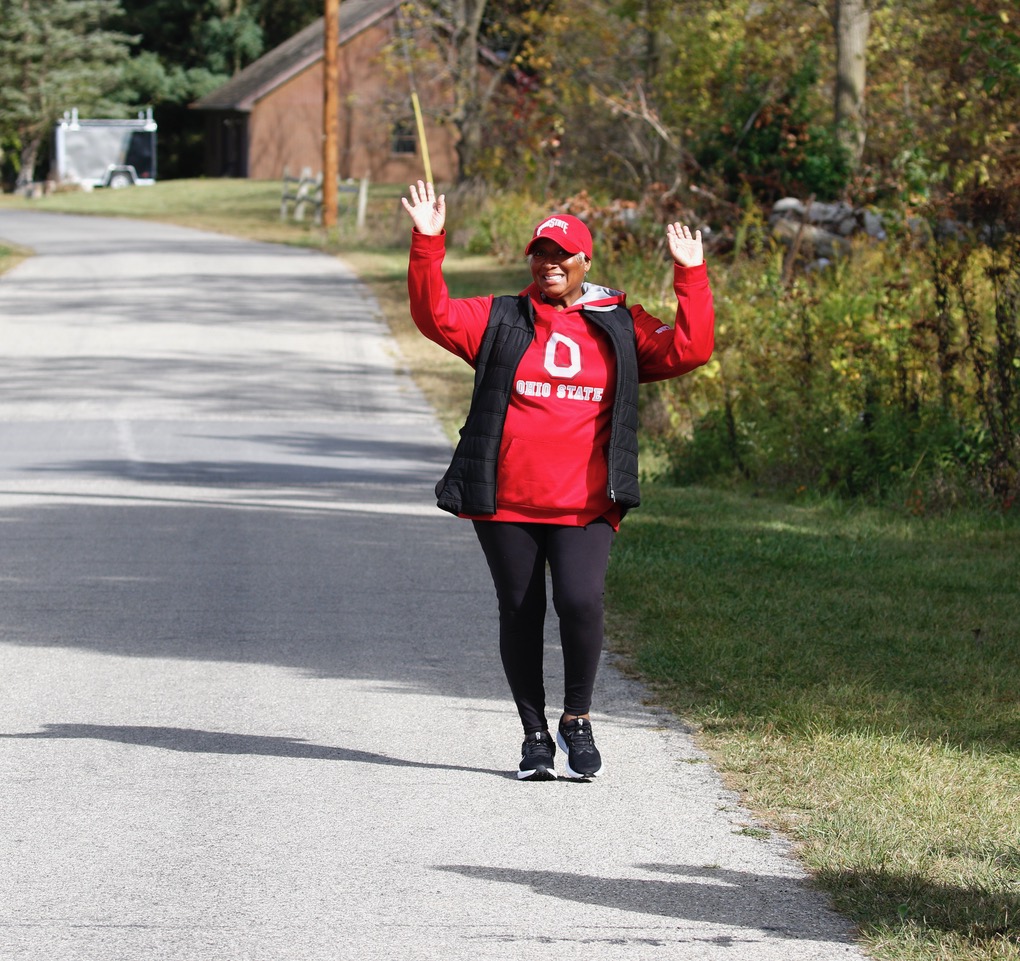
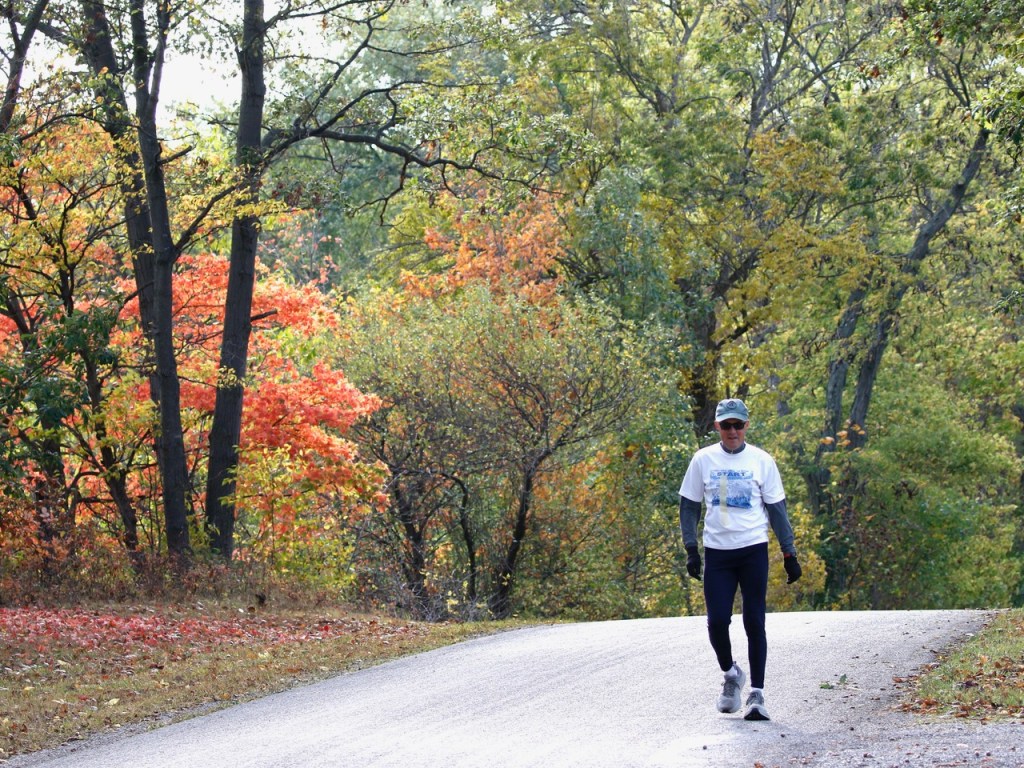
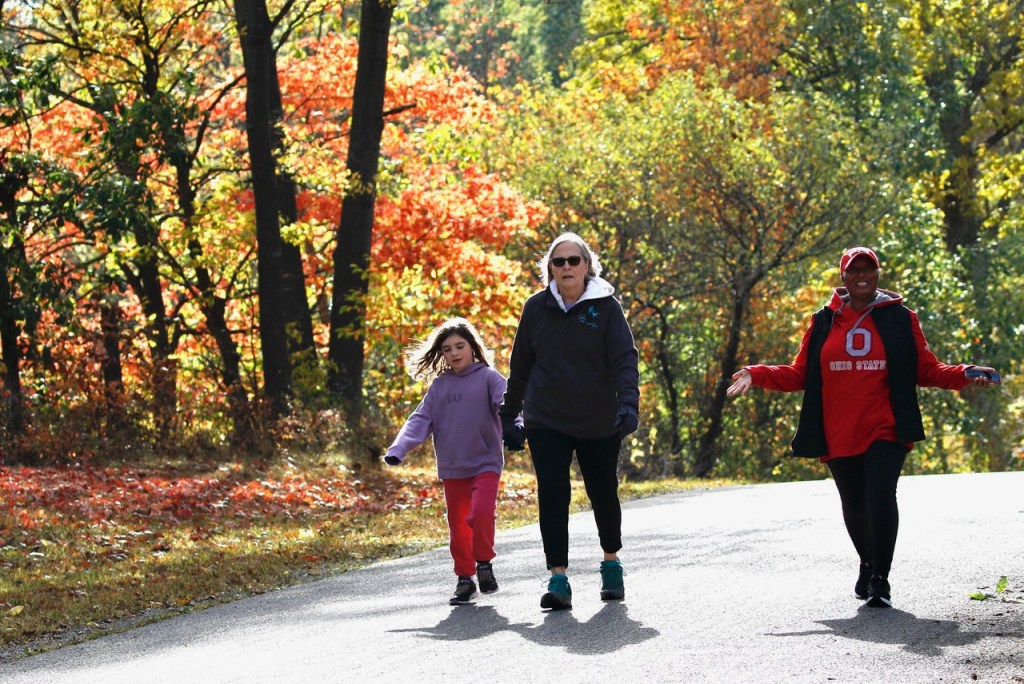
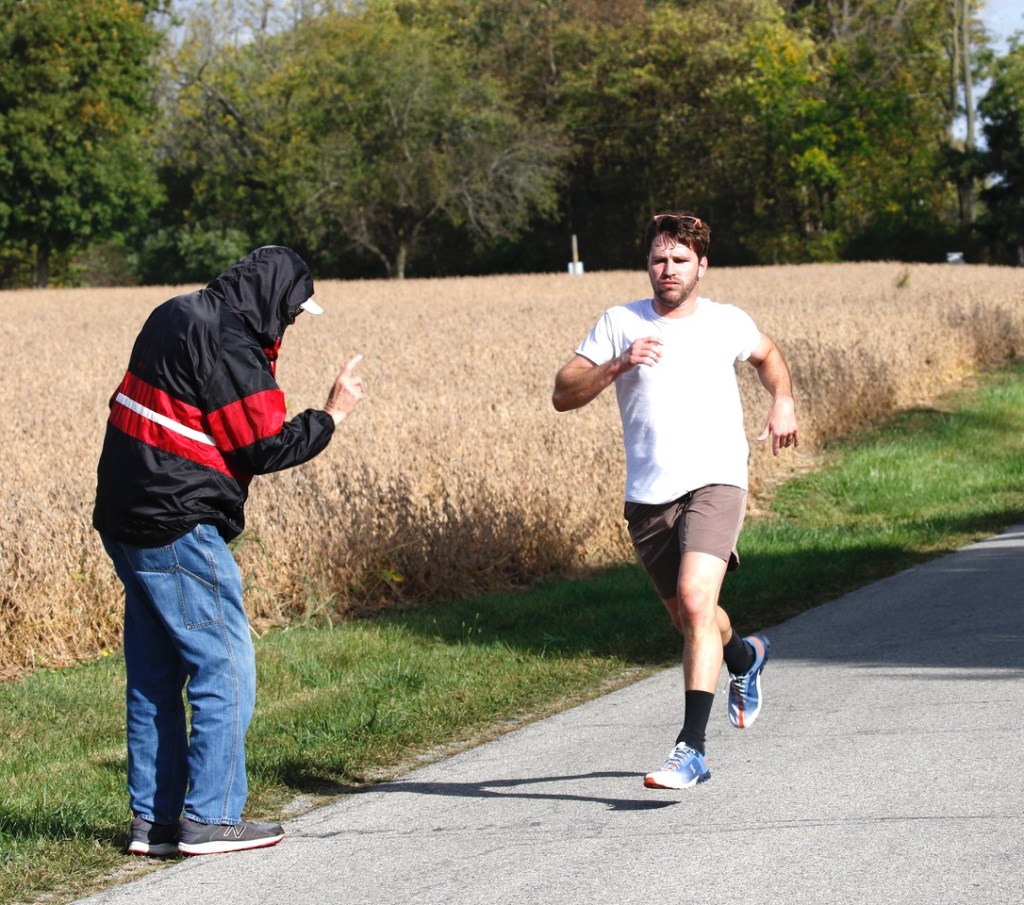
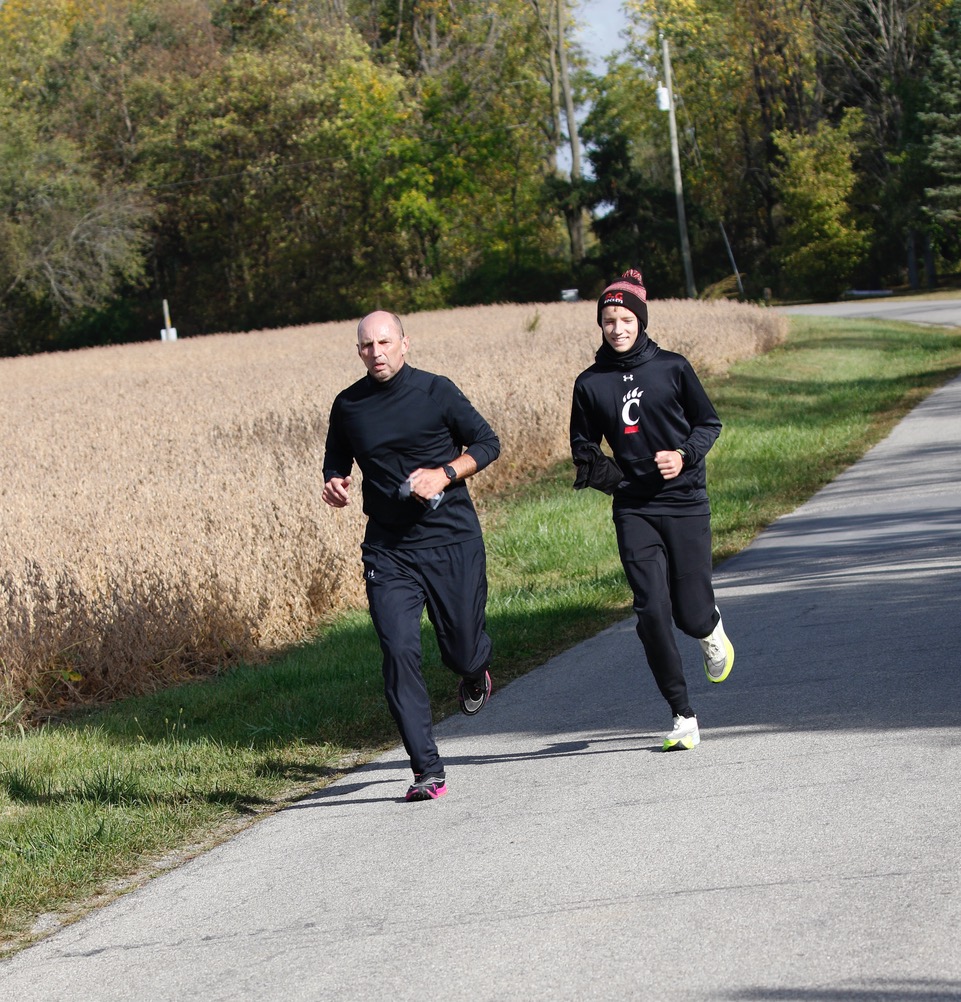
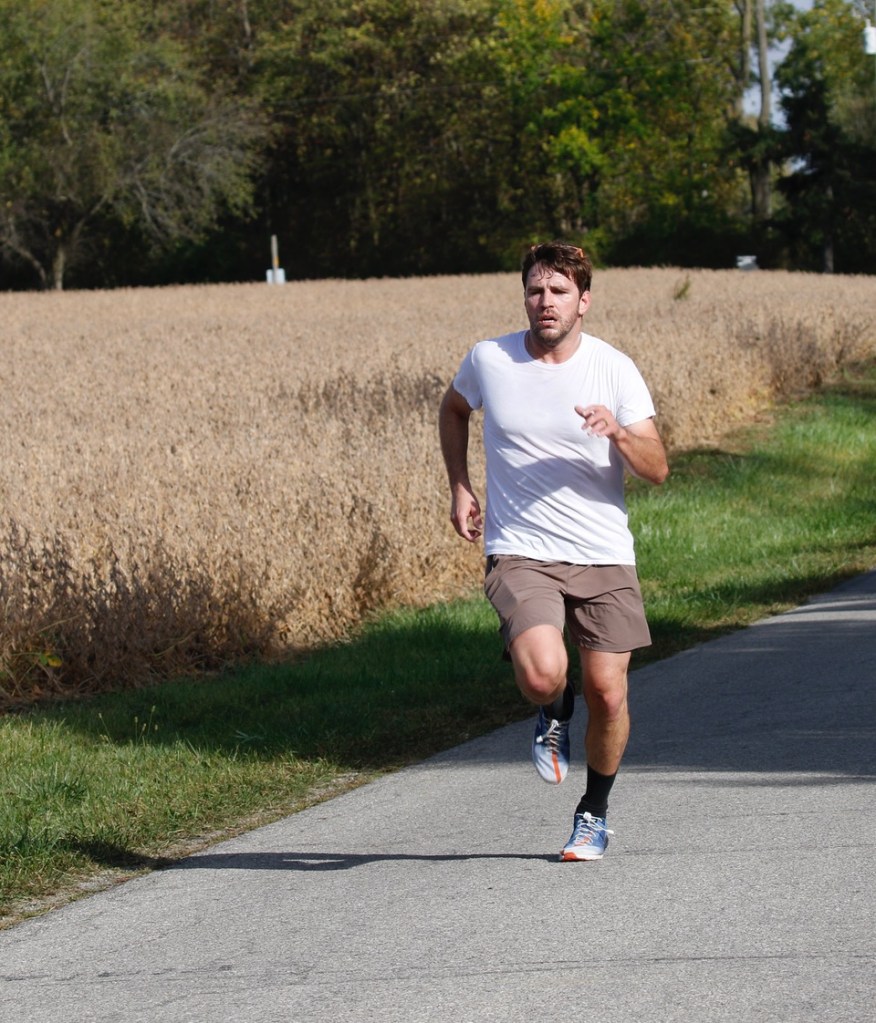
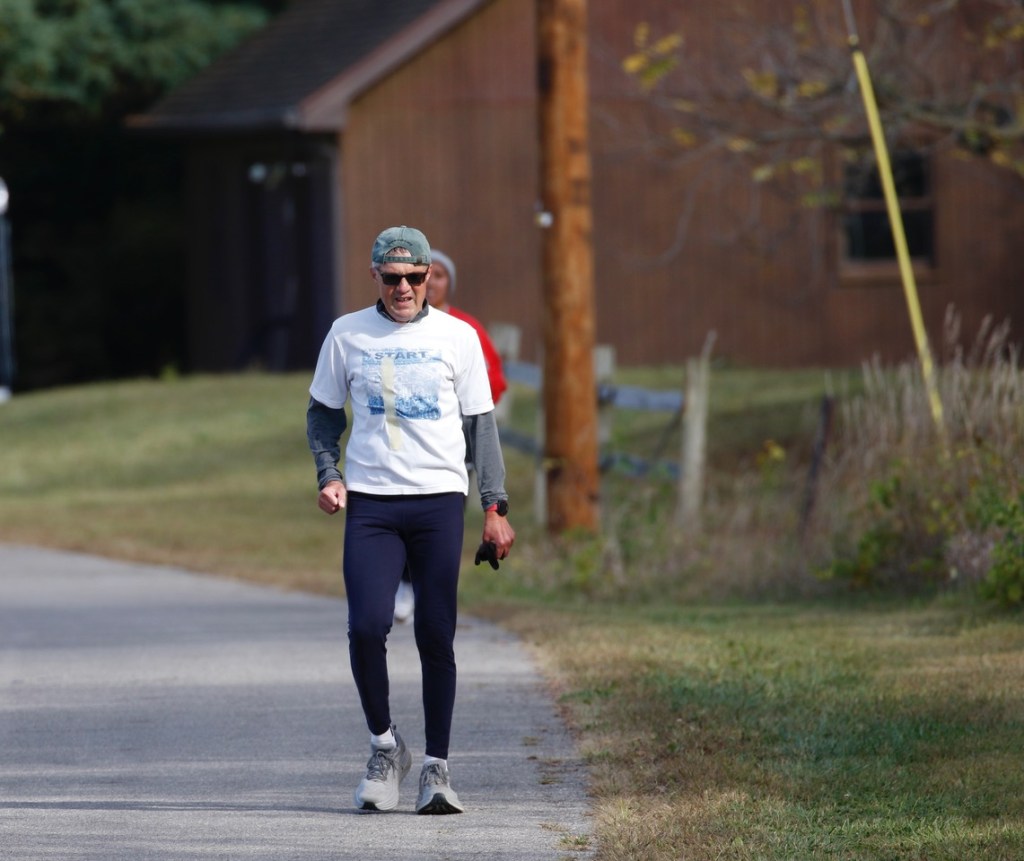
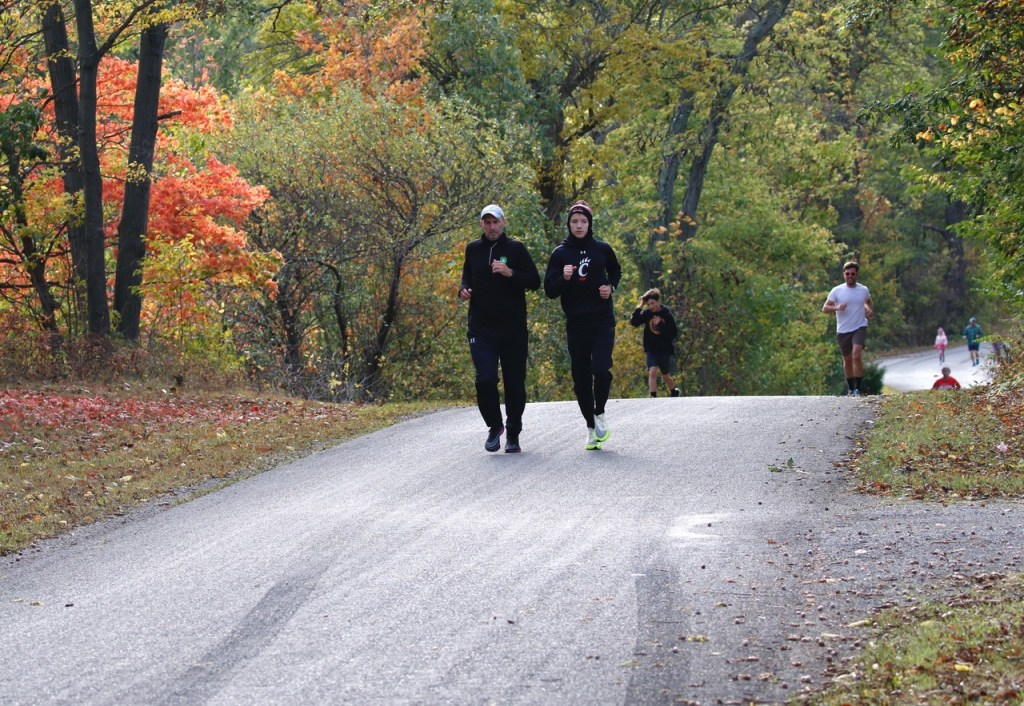
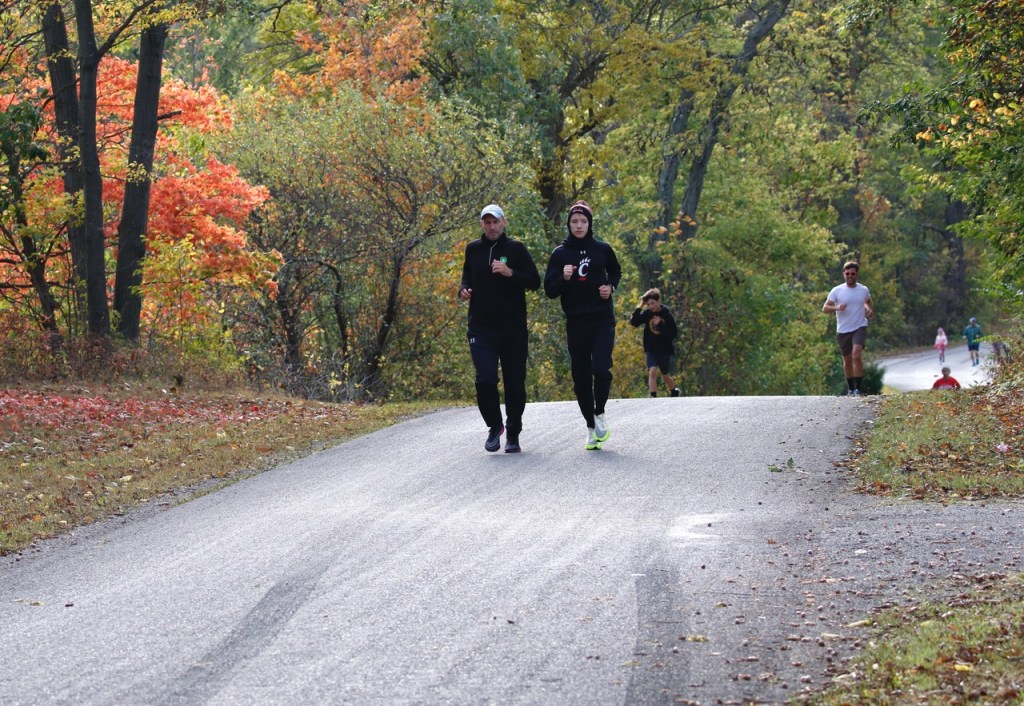
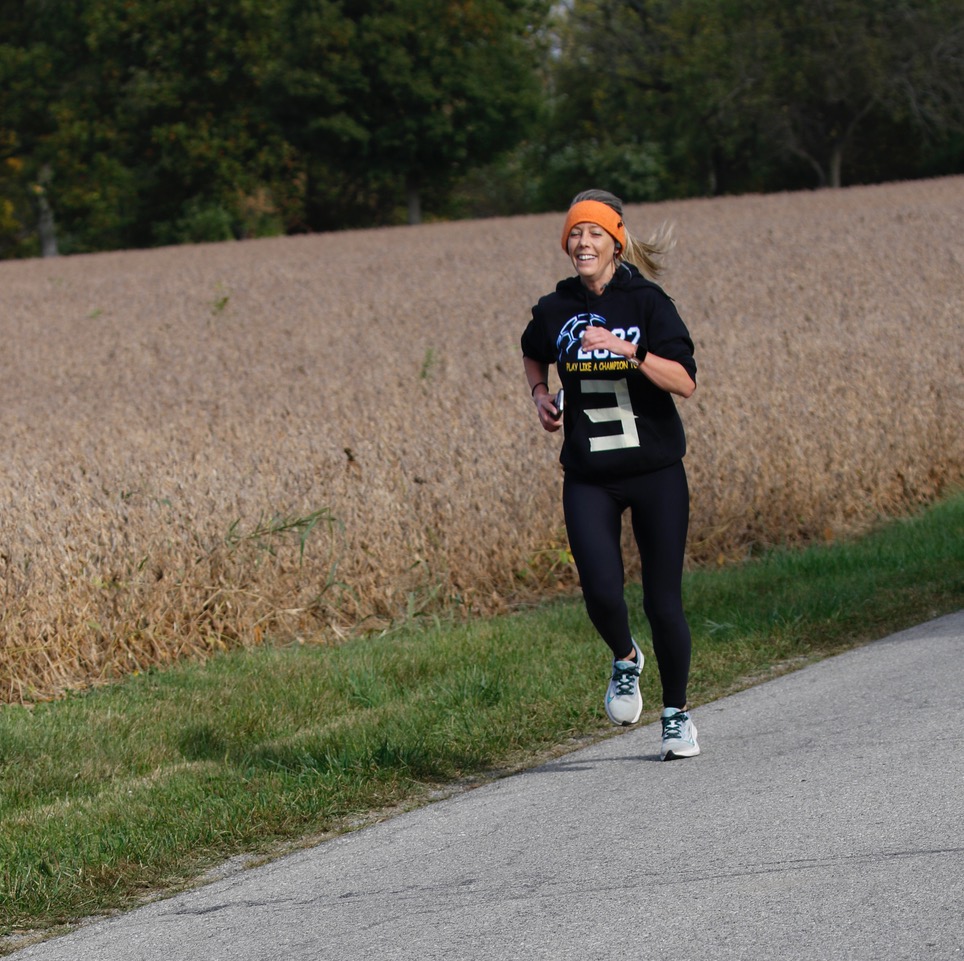
The 8th Annual Quarry Farm 5K crossed the starting line on the first truly chilly, windy day of autumn 2023. Two days ago it was hot and dry. Good running and walking weather blew in overnight, dropping temperatures at least 20 degrees and changing leaf color.
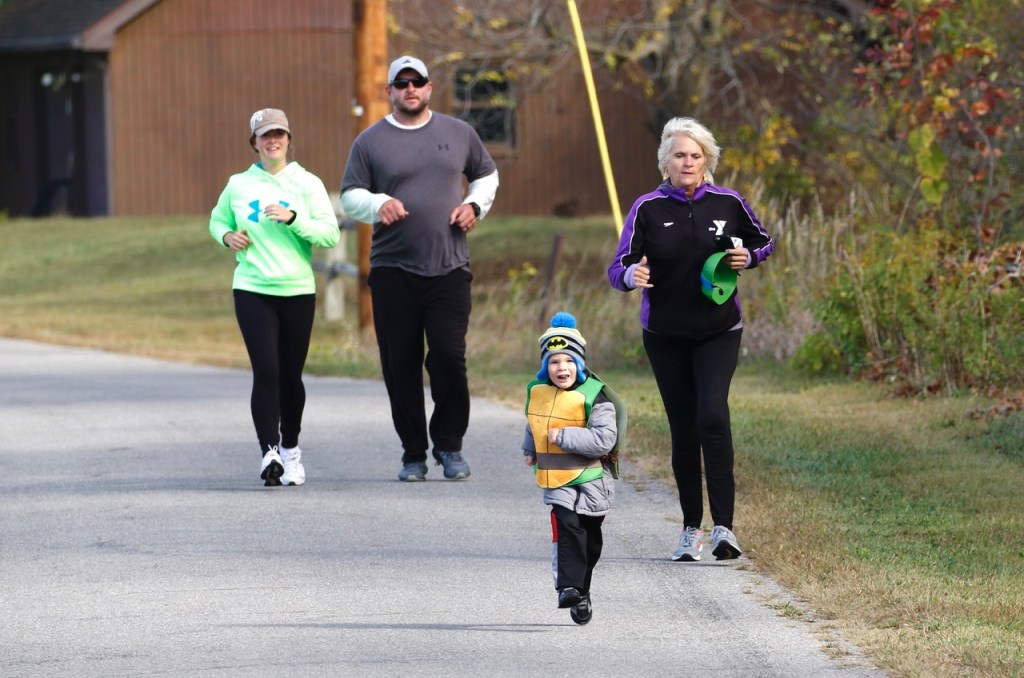
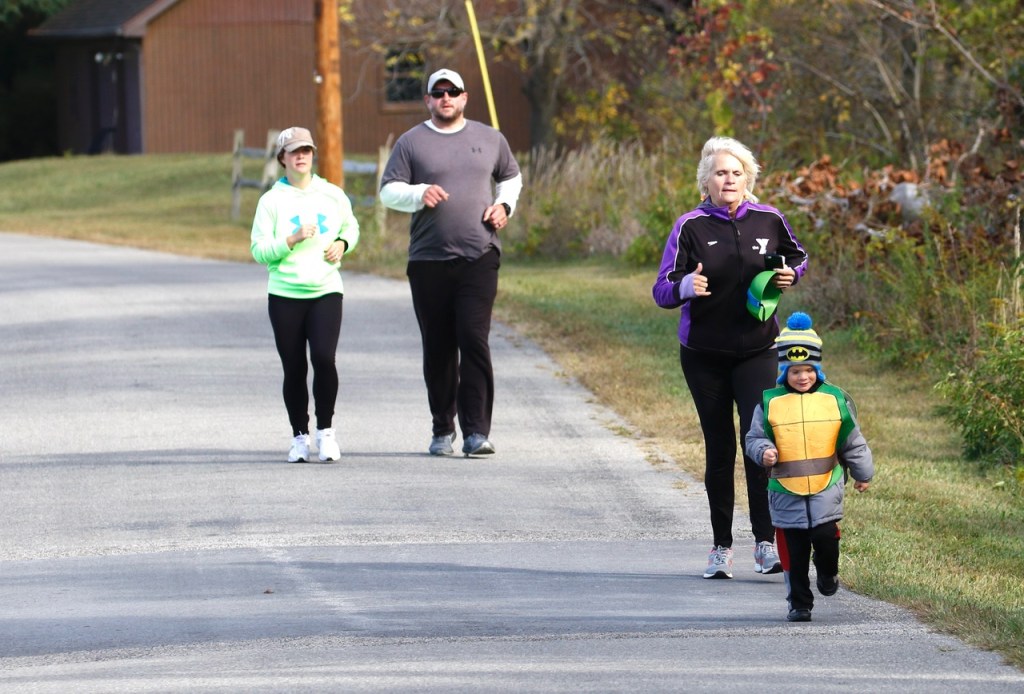
Runners and walkers headed into strong westerly gusts then unzipped their jackets and sweatshirts at the halfway point to float with the wind to the finish. Phil Buell came in first for men, with his son Adam on his heels. Susie Ricker was the first woman 5Ker. Casey Walker was the first walker. An anonymous mini Teenage Mutant Ninja Turtle won the children’s division.
Deb Weston and her camera captured the morning. Much-needed rain has settled in for the afternoon, making this a good time to curl up with hot tea, a blanket and a bunch of fall fundraiser photos.
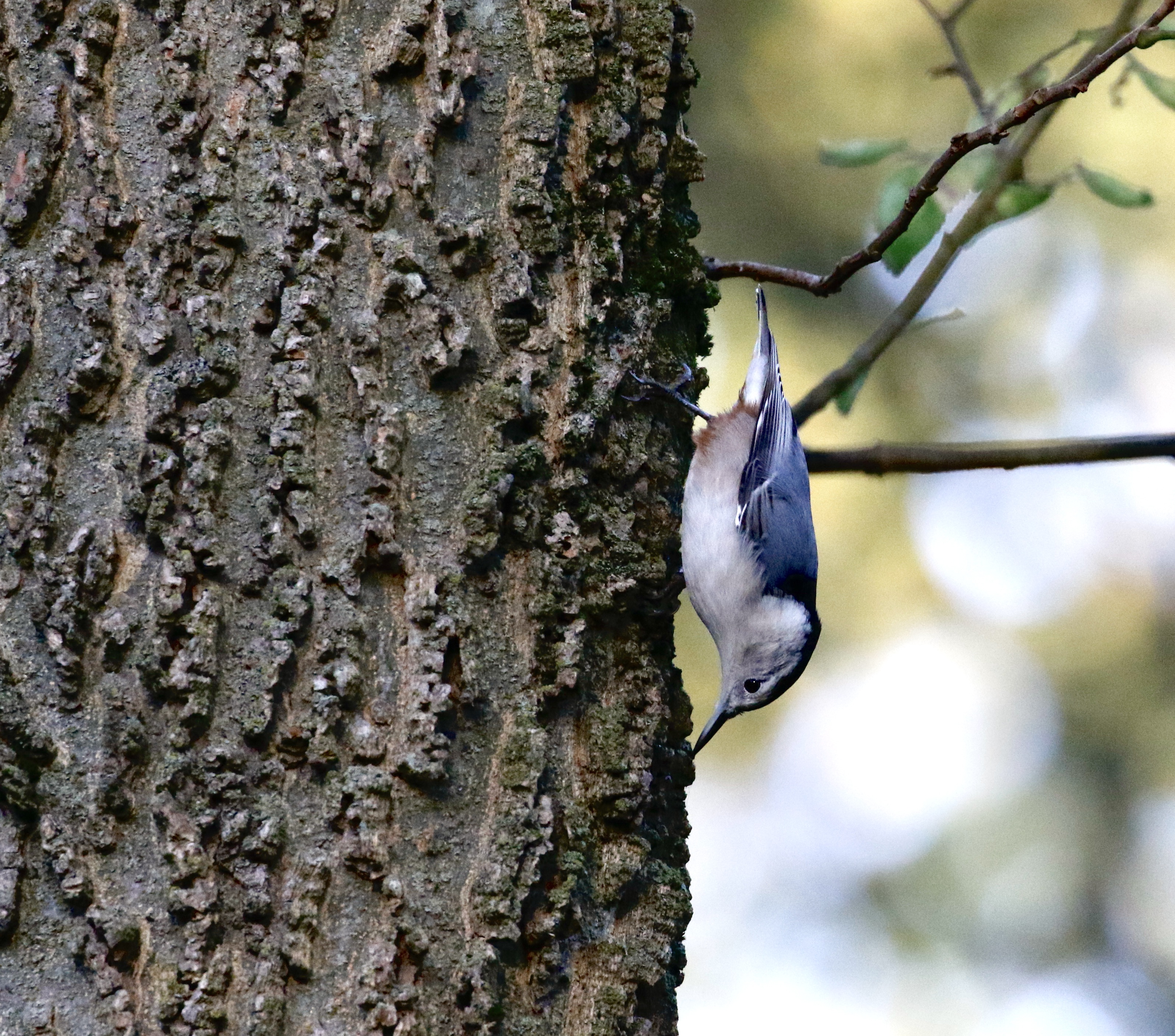
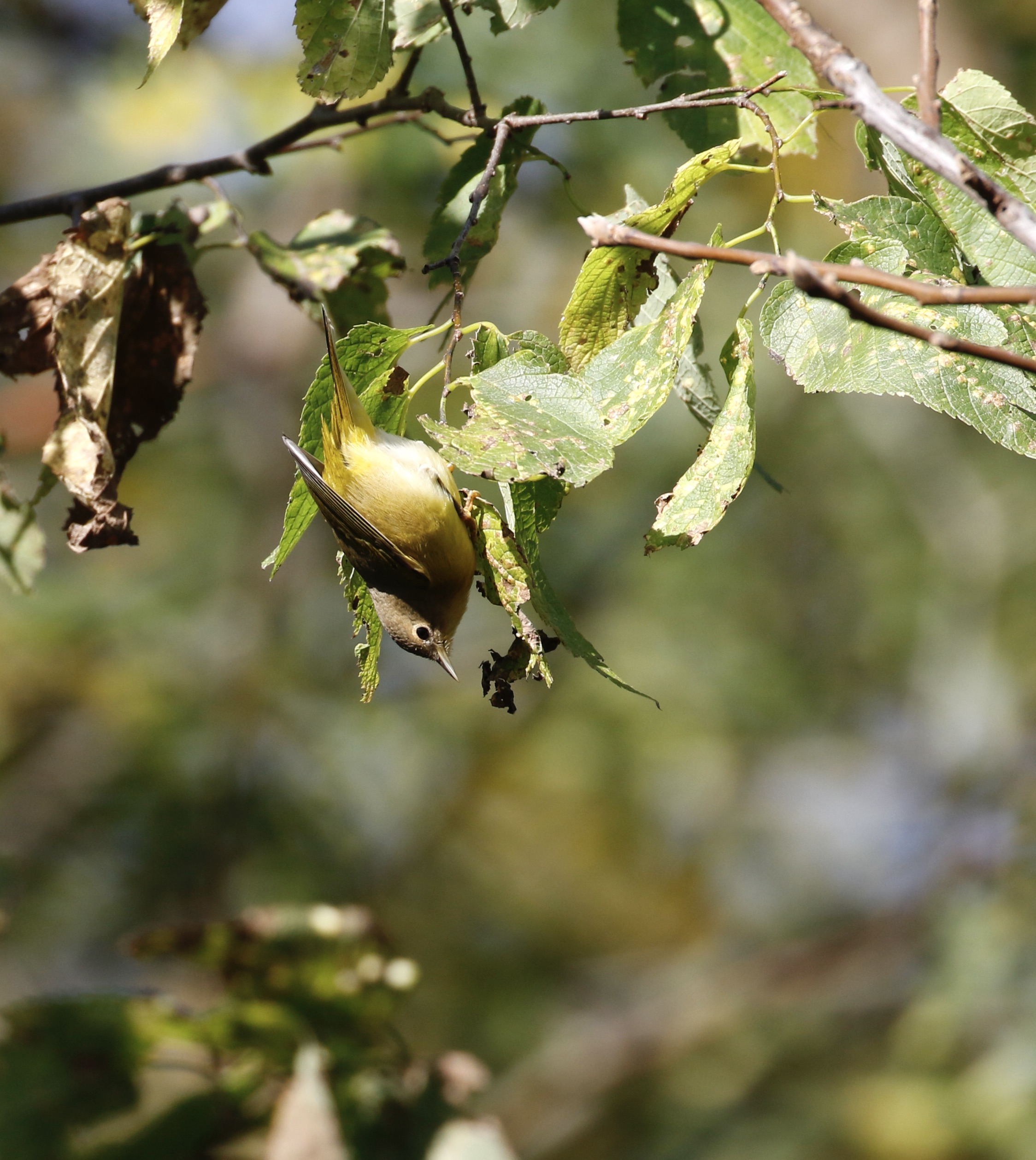
When someone refers to you as ‘bird-brained’, or you feel like laying the description on someone else, consider that Birder Deb discovered this excellent self-portrait while walking the nature preserve trails today. She and Birder David hiked this morning to see what birds are migrating through or settling in ahead of next Saturday, October 14 and the October Big Day event.
“We had 5 warbler species today, all around the perimeter of the prairie,” she shared. “Common Yellowthroat, Palm Warbler, Pine Warbler, Black-throated Green and at least 15 Yellow-rumped. Saw more sparrows today. White-crowned, White-throated, Swamp, Song, Lincoln’s and Field Sparrow. One Yellow-bellied Sapsucker followed us around the prairie.”
A total of 38 species—pretty good for October. Join us next Saturday at 9 a.m. with your best walking shoes.
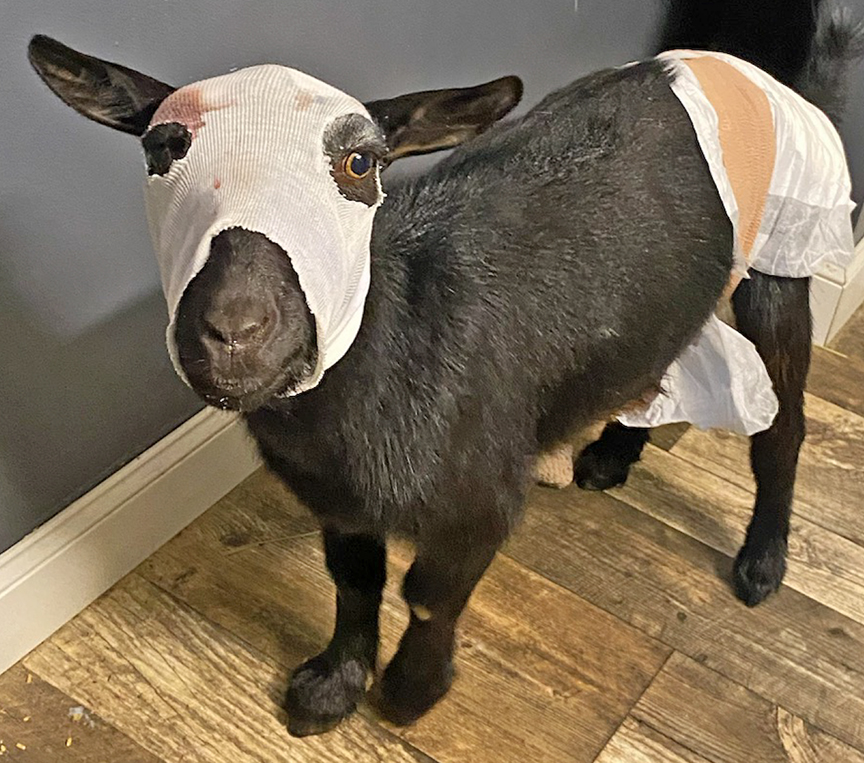
Four Nigerian Dwarf goats joined the farm animal sanctuary herd a few years ago, bringing the group to six sweet, spirited individuals. Three were more equipped to back their head-bumps with full sets of curved horns.
Horns protect the herd from predators by allowing goats to butt predators and knock them off their game. This isn’t so much an issue here in the sanctuary. More often, it’s the goaty way to establish a pecking order. Horns also have blood vessels within them that help regulate body temperature. Here they have water and shade in summer and quilted waterproof goat coats for winter’s coldest.
Unfortunately for one of the three with their own personal cornucopia, his curving horns grew into the side of his face. On August 8, it was determined that Pluto’s horns should be surgically removed by a veterinarian. This resulted in great pits in his skull, exposing his sinus cavities. A few days afterward, we had to make an emergency run to Ohio State Veterinary Hospital in Marysville to prevent spread of infection. His cranium must be cleaned, disinfected and bandaged twice a week, well into the holiday season. If you would like to help fund his recovery, all donations to The Quarry Farm Nature Preserve & Conservation Farm are tax-deductible.
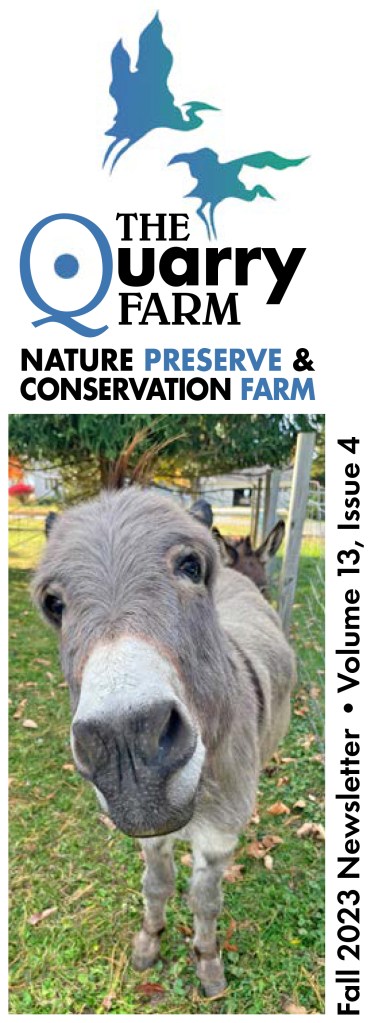
For more about the other, more joyous things that happened here in this summer, as well as upcoming events, click on and download the Fall 2023 newsletter cover. Buddy will be happy to see you.
“You’ve got to try Facebook,” they said. “It’s fun. Everyone shares pictures.” I did and lots of people did, too. Then we shared ideas. Then we shared opinions as well as other people’s opinions like they were our own. We made “friends” and we lost actual friends because it is so very easy to click without weighing the pros and cons of clicks. I did all of the above, forgetting that social media is a really handy tool and should not be a pastime, even on cold, windy, rainy days like we weathered this week. Yesterday, I found myself getting depressed over the negative back-and-forth in one private group that, over time, has devolved (in my opinion) into an airing of us vs. them and why anywhere is better than here.
I left the group yesterday and went outside to talk with the geese under the clearing sky.
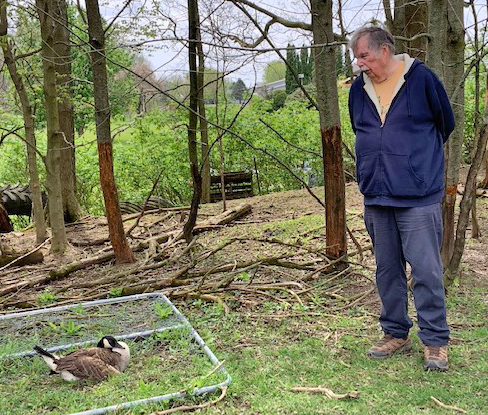
The geese are indeed talking. Nine wild Canada geese landed outside the fence yesterday. The eight geese on this side of the fence noticed. There was about 15 minutes of boisterous conversation. One goose from this side of the fence flew over to join the wild flock, which is exactly what we hope for. The Canada geese here are flighted and banded with identification so their movements can be studied once they become the wild birds that they are meant to be—IF they can shake loose the strong bonds of imprinting on people.
Buddies Tim and Scott
One Canada goose that will not be flying is Tim. He’s been spotlighted in The Quarry Farm newsletter. Last Saturday, he had visitors from his hometown of Parma, Ohio. Scott cared for Tim when the goose’s mate died. He made sure that his “Buddy” had feed and open water when the flock thinned in winter. According to another visitor to the Parma pond, Tim had been hit not once but twice by the same car. And survived. And thrived, thanks to Scott.
Scott and Margaret drove from Parma to say hello to Tim. Another banded Canada goose rode along, a very large bird that is fully flighted but very imprinted on people. Spring being what it is—a season of great twitterpation among all species—the new goose came out of his crate loaded for bear. He rushed Lucy the Donkey. The goose that keeps close to Lucy took umbrage. The new goose took off and visited the neighbors about 1/2-mile south for 24 hours before returning with his feathered tail between his legs. This goose, who is identified as “K”, is minding his Ps and Qs and treating “T”, “U”, “X” and the other geese (and Lucy) with more respect.
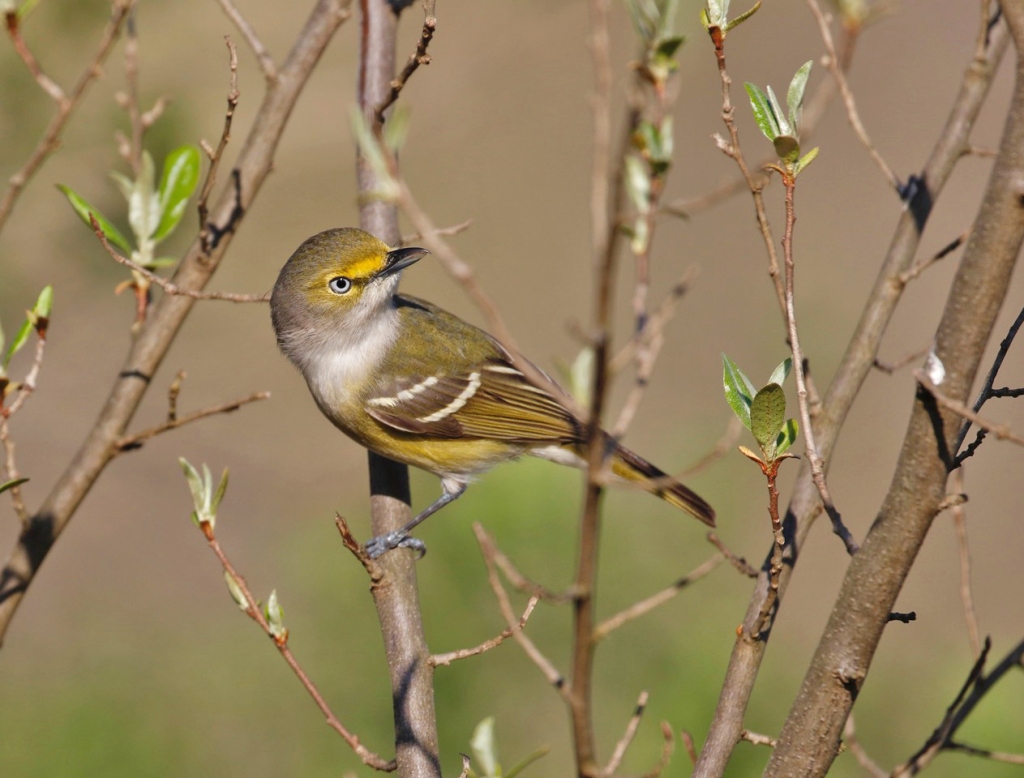
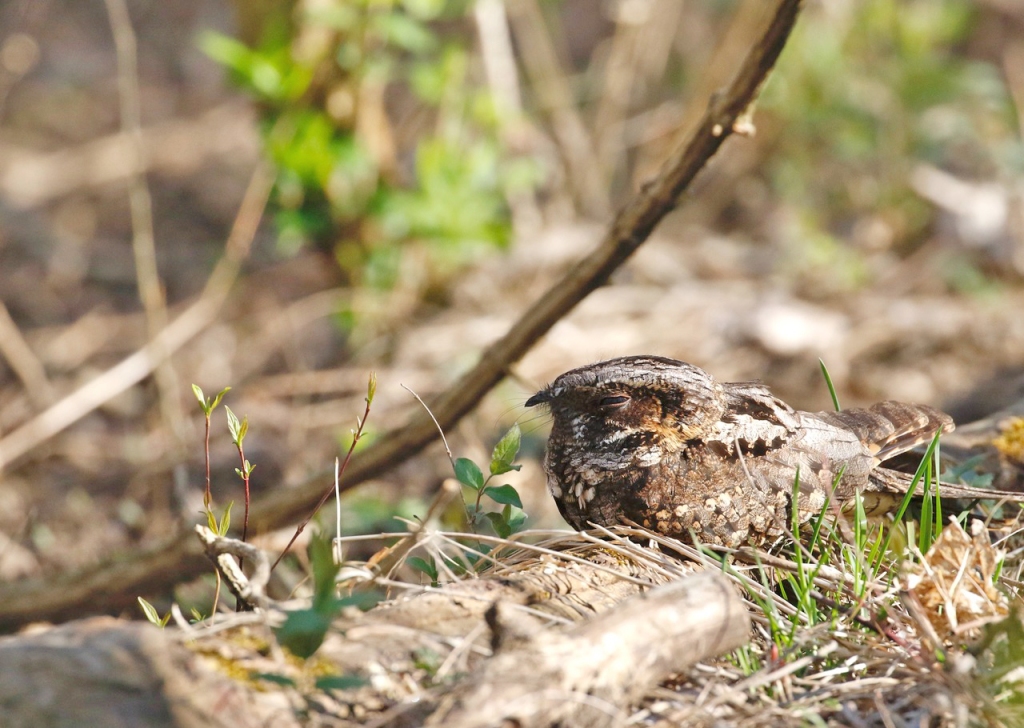
In addition to new tall goose tales, there are stories of new bird sightings this Spring. Deb Weston and David Smith have been monitoring migration. Deb added Eastern Whippoorwill to the Hotspot list of 140 avian species documented on these 50 acres. Last week she saw a Blue-headed Vireo and is trying to catch a photo of the cheeky bird. She did get a photo of a White-eyed Vireo (above).
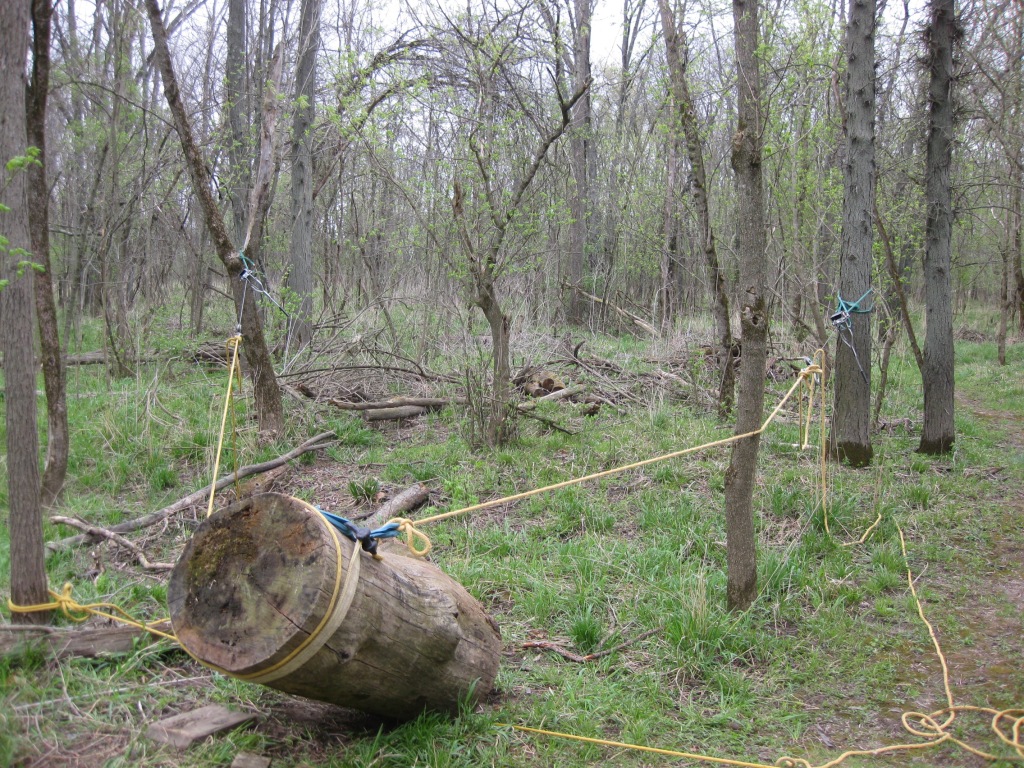
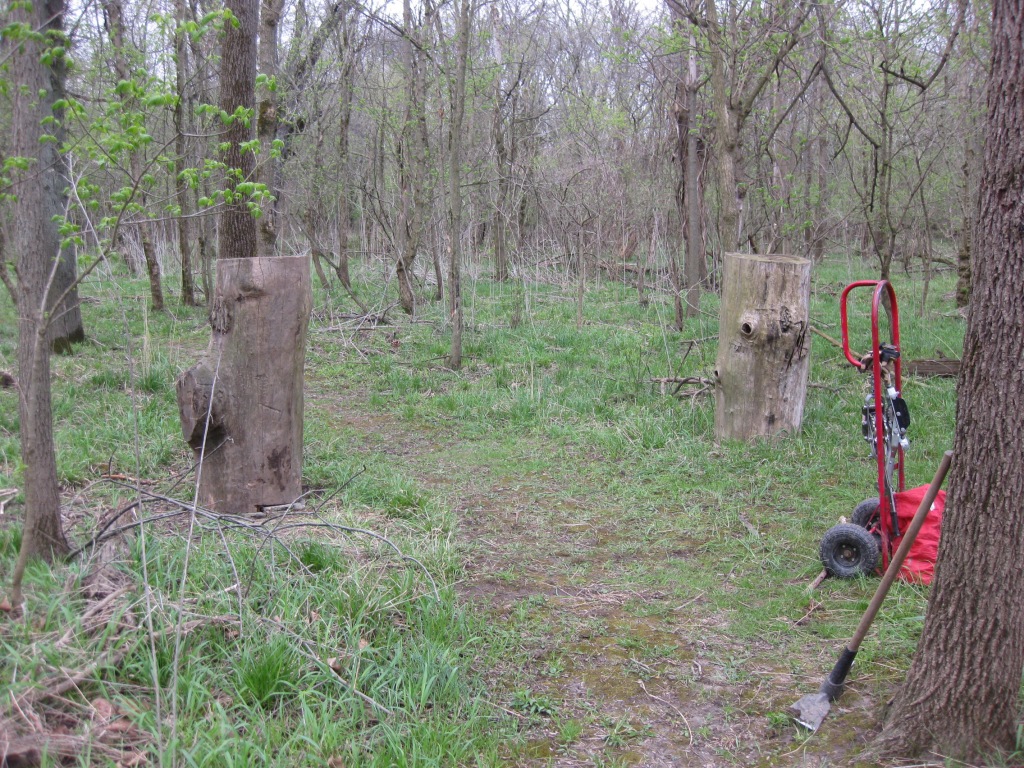
David Seitz continues to trek from Columbus 2-3 times per week to battle invasive shrubs, adding more bush honeysuckle limbs and trunks to the shelter piles. Last month’s flooding floated one of the pillars—two substantial tree trunks that mark the start of the floodplain trail—into the 19th-century quarrying overflow channel. David’s mind-boggling engineering engineered it back into place. By the way, that same mind engineered the whole, ancient and water-logged tree trunk from the bottom of the quarry a few years ago.
Paul and Joyce Bonifas constructed the Cadillac of composting systems in the Red Fox Cabin garden area. Paul designed it and all of the Putnam County Master Gardeners and other volunteers will add to the bins. So will whichever one of us cleans the henhouse next.
Glandorf Cub Scouts were the first group to walk the trails this season. They heard owls, spotted shrews that had been displaced during the flood and watched a bald eagle follow Riley Creek. May, June and July days are packed with school field trips, summer camps, the Summer Tea Tasting in the Gardens (June 17) and the Spring Migration Bird Hike (May 20).
Two weeks ago, a carload of loud music and shouting teens stopped along the Northwest perimeter. My hackles went up, expecting a can to go flying over the fence. Instead, someone shouted, “It’s just beautiful!” This place, the lives that depend on it, the volunteers who care for it and them and the people who want to know more about it and them are why here is a place to be.
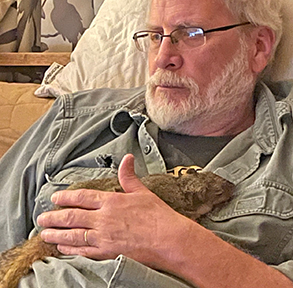
If Jimmy Toskr the Eastern Fox Squirrel (EFS) had been born almost 10 years ago with 20 toes, he would have spent his life running up and down trees, doing backflips over blowing leaves, growling and squealing at people and other predators under his tree and collecting tree nuts to stash in tree cavities and underground. He would have danced rapid spirals around tree branches with female squirrels in early spring, and on warm fall and winter days. He would have done the latter for the sheer joy of sunshine and freedom.
Instead, Jimmy Toskr lived his decade bound to the indoors. He was born in or around a Northwest Ohio golf course. According to Oregon State University’s National Pesticide Information Center, golf courses regularly use pesticides to maintain the health and appearance of the turf. Pesticides include herbicides, fungicides, insecticides and rodenticides, plus a few other applications that lead to golfers being advised to minimize their risk of exposure by:
Wearing golf shoes and socks that cover the ankles
Wearing pants or longer socks to cover the lower legs
Consider wearing gloves and/or be sure to wash hands after golfing, before eating or smoking
Consider calling ahead and scheduling tee time several hours later or the following day after a pesticide application has been made
Since wildlife, including Jimmy Toskr’s mother, can’t do any of those things, Jim was born with a stunted tail, no cartilage ‘cup’ around one ear and only eight toes. He was unable to climb to escape predators. He couldn’t grip tree trunks and branches or balance properly with a full, bushy tail. Although EFSs are mostly terrestrial, Jimmy was completely ground bound, and that ground was where he was found. He was accepted by Nature’s Nursery and placed in the care of volunteer Linda Madras Gorey. When it was clear that the young squirrel was nonreleasable, Linda allowed him to be put in the care of The Quarry Farm as an education ambassador. He lived with us until the early hours of Friday, December 2, 2022.
What we learned from Jimmy Toskr: • EFS are not very social, unless the squirrel is Jimmy Toskr and his friend is Steve. Jimmy allowed Steve to stroke his forehead and to coax him back into his cage after a run. • EFS are very intelligent. They know approximately where they have stashed tasty tree nuts, including in the ferret hammock that swings from the ceiling, and will strongly object to it being removed for any reason. • EFS recognize when they have the advantage of safety from a predator. Quinn the Red Fox and Chryssy the Cat are two predators that Jimmy taunted on a regular basis. He knew they couldn’t get through the cage doors and would throw things at them from high on the top level. Sometimes he would sprawl like a sunbather on the lowest level and twitch his tail, just out of reach. • EFS run, jump and roll just for the fun of it, like this:
Although an EFS may have a steady diet of tree nuts, greens and fruits, a cozy hammock to hide in and destroy a couple of times a year, fresh water and interaction with a variety of species—even when they have never really known otherwise—they recognize the absence of a life that is rightly theirs. Jimmy often sat on the upper level of his cage, watching the cottonwood and the world outside his east window. Nothing would break his concentration, not even new walnuts in the shell.
Three weeks ago, Jimmy exhibited signs of a stroke. Quinn sat outside his cage and cried. Jimmy seemed to regress; to allow and even want human contact no matter who that human was. He rode around on one’s out-stretched arm and munched apple during the ride. In the evening, he sprawled out on Steve’s chest and fell asleep. Jimmy rallied a week ago, walking on all fours to stash food under Steve’s t-shirt and licking Greek yogurt and almond butter from his favorite person’s finger. He fooled us into ordering another ferret hammock as it appeared he might actually need it for another six days, weeks or maybe months. Then he went away altogether.
In Norse mythology,Ratatoskr is a squirrel who runs up and down the world treeYggdrasil to carry messages between the eagles perched atop Yggdrasil and the serpent Níðhöggr who dwells beneath one of the three roots of the tree. Jimmy Toskr is now whole and is running up and down the Tree of Life. He is the Toskr, hurling commentary as he connects Heaven and Earth with the support of 20 strong toes.
By September and October, most of the white, blue, pink and purple wildflowers have faded from the landscape, but our byways glow into early autumn with the bright yellows and golds of what we might refer to simply as “pretty yellow flowers.” Let’s give a respectful nod to four of those cheery wildflowers—Goldenrod, False Sunflower, Jerusalem Artichoke, and Sneezeweed—and get to know them personally.
The four have much in common. All four are members of the huge family Asteraceae, also Compositae; their flower petals grow daisy-like in rays around a center. The centers are typically a cluster of many tiny florets. All four attract pollinators (bees, butterflies, and hummingbirds), so they are important economically and ecologically. Deer avoid them. All are perennial, and cultivars have become popular garden flowers. While they share family traits, their differences can help us distinguish them.
Goldenrod, a common name for Solidago, may be the easiest to identify. More than 100 species grow wild in moist soil in North America, but a few have become popular in gardens. The plant heights average three to five feet. The flower heads are fluffy plumes or fans densely covered by tiny florets. Because they produce almost no pollen, they can’t be blamed for allergies. They are not poisonous to humans; in fact, parts are edible and can have medicinal uses. Because they are native, they are not termed invasive, but they can spread aggressively by seeds and roots.
False Sunflower, one common name for heliopsis helianthoides, is a native that can be mistaken for a daisy. It prefers sun and can grow in a wide range of soil, preferably on roadsides, near wooded areas and in prairies. The plants reach three to six feet and bear flowers with yellow (the common color here) to orange rays that may droop slightly around a soft brown center, earning them the nickname Ox-Eye Daisy. They are neither invasive nor toxic.
Jerusalem Artichoke, or helianthus tuberosus, is not an artichoke but rather a species of sunflower native to central North America. The plants can grow from five to nine feet tall, bearing bright yellow, daisy-like flowers with sturdier petals than False Sunflower or Sneezeweed. Its elongated tubers (fleshy underground stems) vary in color from light brown to white, red or purple and have a nutty flavor. They are highly nutritious and can be eaten, either raw or cooked. In fact, tasty-looking recipes can be found online. The plant was once a widely cultivated root vegetable crop that is regaining popularity.
Sneezeweed, or helenium autumnale, is so called because its leaves were once dried and used to make snuff. The plants prefer moist soil and are at home along streams and wetlands. They grow from two to five feet tall and bear pale yellow to orange flowers with fan-shaped drooping rays. It is sometimes called Wingstem because of the gill-like “wings” running the length of the stems. Although attractive to pollinators, it is poisonous (in large amounts) to humans and livestock.
One final note: all four of these “pretty yellow flowers” look lovely in floral arrangements.