This side of the fence

Two Canada geese named Johnny and Stella introduced us to the richness of a life shared with wildlife educational ambassadors. I would say the introduction was a gentle one, and it was, until we found Stella’s body floating in their water tank. No one could tell us why. She looked fine externally. Wild animals naturally fight tooth, nail, beak, bill, and claw to stay away from humans, probably because humans are at the top of the food chain and every other species knows to keep their distance. If wild things allow humans to approach, there is something not quite right internally, in their nature or nurture. Their most natural state of being has made them vulnerable to our opposable thumbs, our intelligence, or lack thereof. A lifetime of living with other species makes me certain of the latter, especially as I write this there are military maneuvers going on in the sky outside my window.
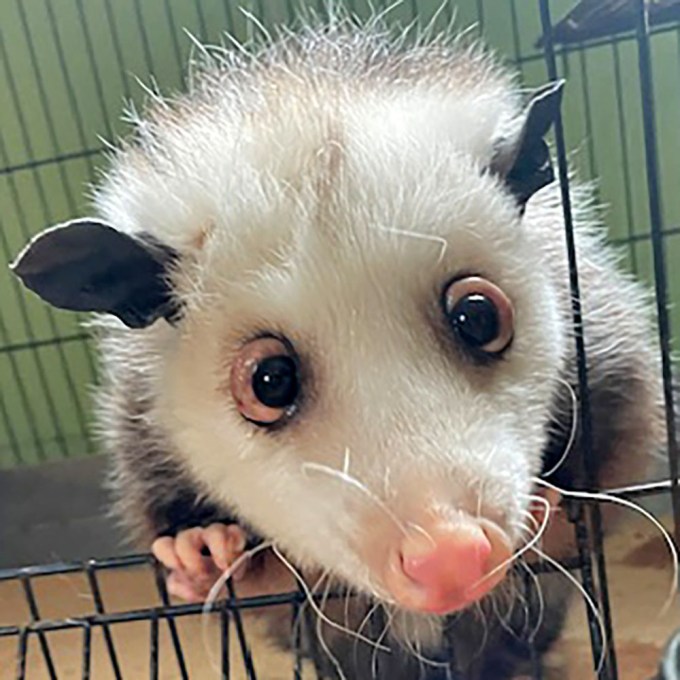
Estella

Although it is tragic thing when a wild animal can’t live safely in wildness, it is a gift to spend some part of one’s human lifetime in their company. Some live for a few years. Others for a decade or more. Right now, we often tearfully refer to the farm animal sanctuary as the geriatric home. It’s been 14 years since Johnny and Stella moved in. Many mammals and birds have lived what remained of their lives here. The last 12 months have been hard on our hearts as several friends have, as we say, “gone over the fence.” This month, as we planned for an all-day offsite event about living side-by-side with wild creatures, we intended to feature Estella the Virginia Opossum. Estella was almost 4 years old, pretty ancient for this marsupial. She died in her sleep on Sunday.
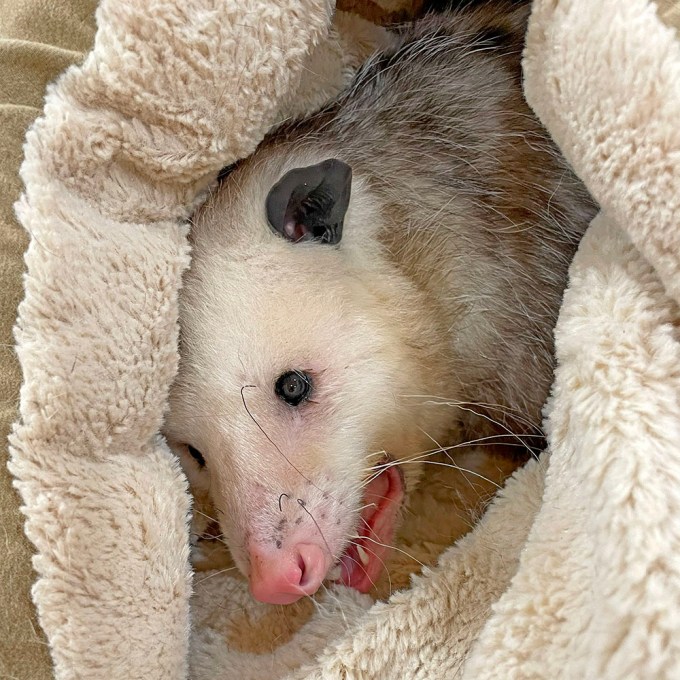
Winston

In February, while I was in Columbus for a conference, my phone pinged with a text regarding an adult male, caught-by-dog Virginia Opossum. A Proctorville wildlife rehabilitator rescued him in the Fall. Angie named him Winston, and healed his severe wounds and fought infection. He weathered several veterinary appointments and possible pneumonia. But Angie got him through. Because Winston has mobility issues and hairless scarring on his hindquarters due to his injuries, it was decided that he could have a good future as an educational ambassador. Three weeks ago, I met Angie and Winston in Columbus for adoption.

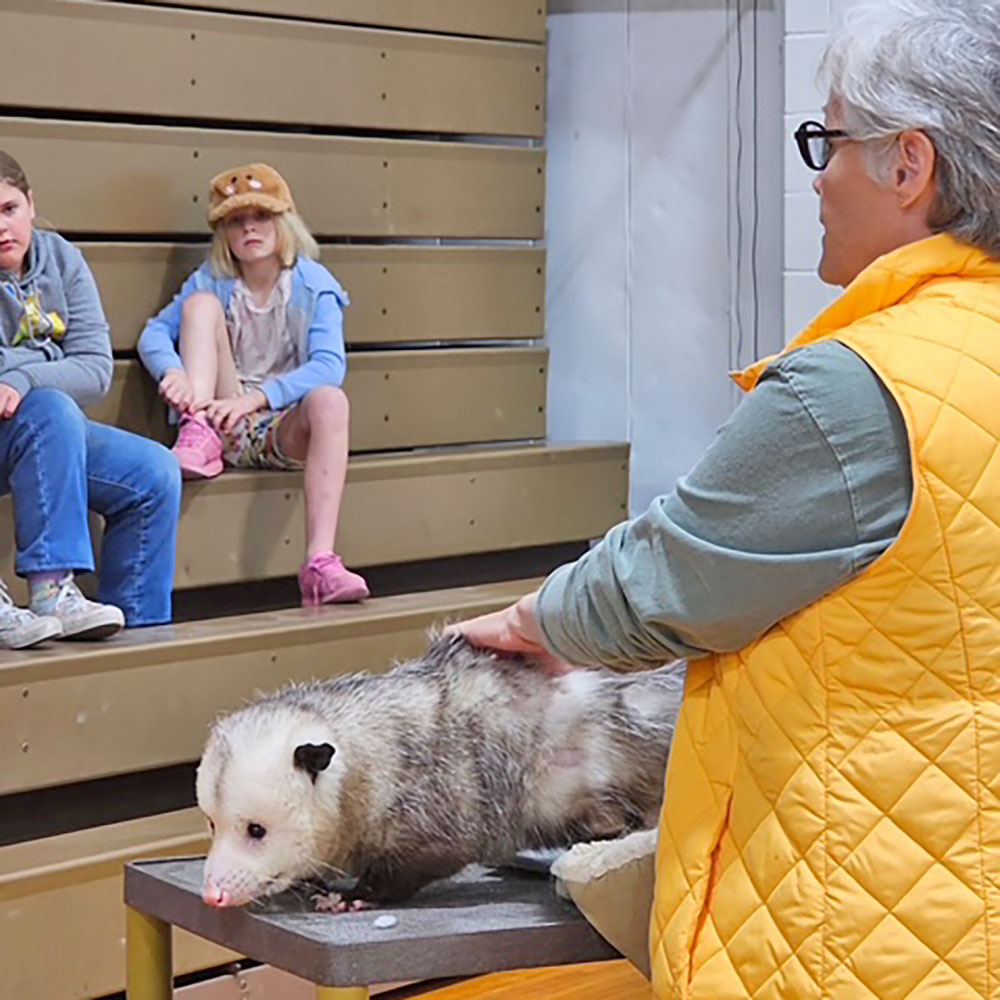
On Tuesday, May 13, Winston represented his amazing, vital species at Miller City-New Cleveland Elementary School’s “School is Cool” event. Board Member Rita used owl and bat puppets to demonstrate the horrors and harm of using traps and poisons to control wildlife. Tyree the cornsnake, all shiny coral from a recent shed, represented the benefits of encouraging snake residents on a farm and in your garden. Winston growled a bit at first, but his scars are itchy. With ongoing scritches, he settled into his ambassadorship. No one knows exactly how old Winston is, but he will be comfortable and at peace at The Quarry Farm for as long as he will give.
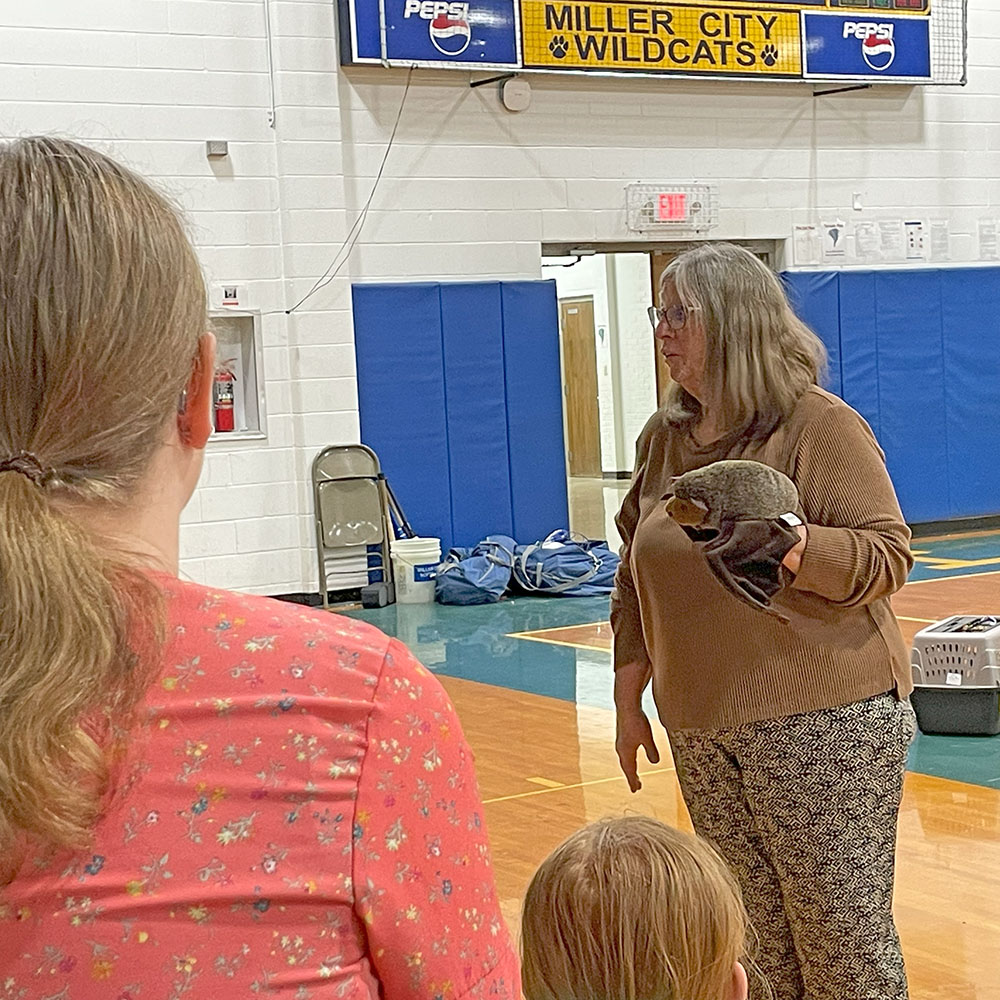
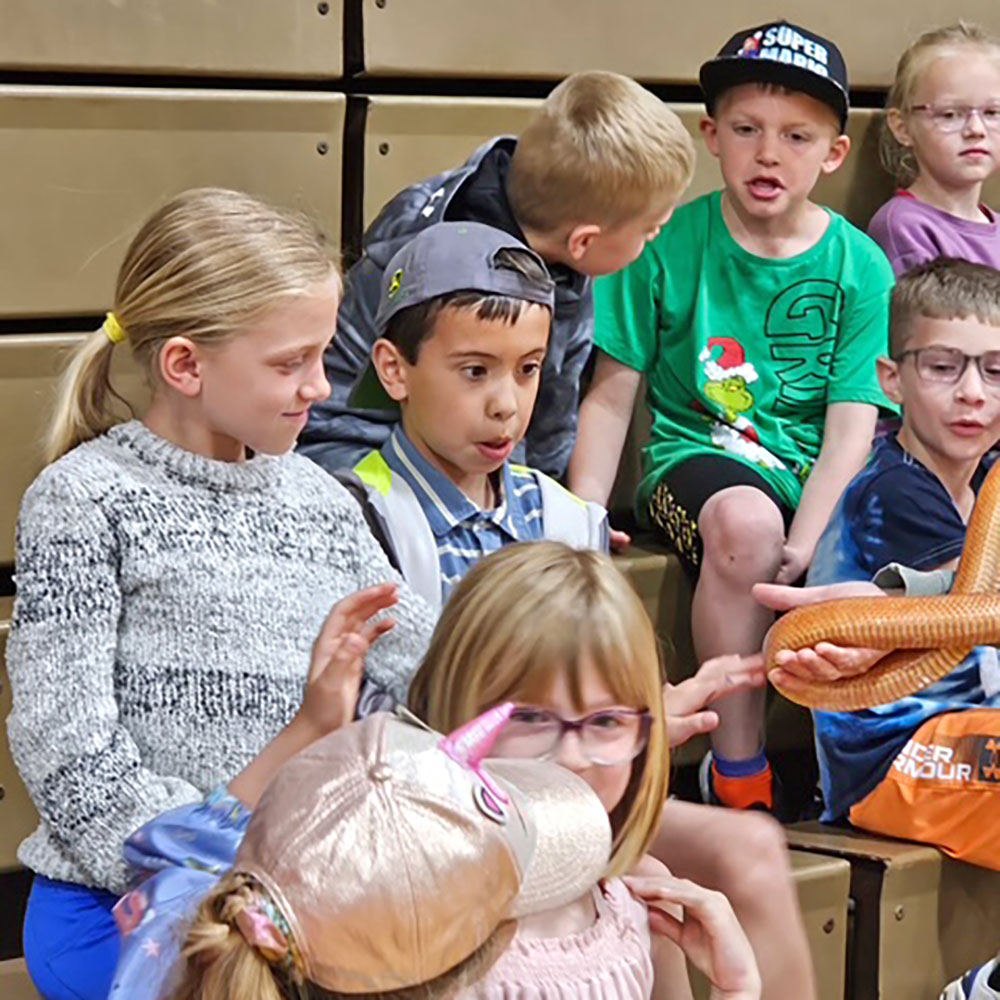
Opossum and Snake Go to School

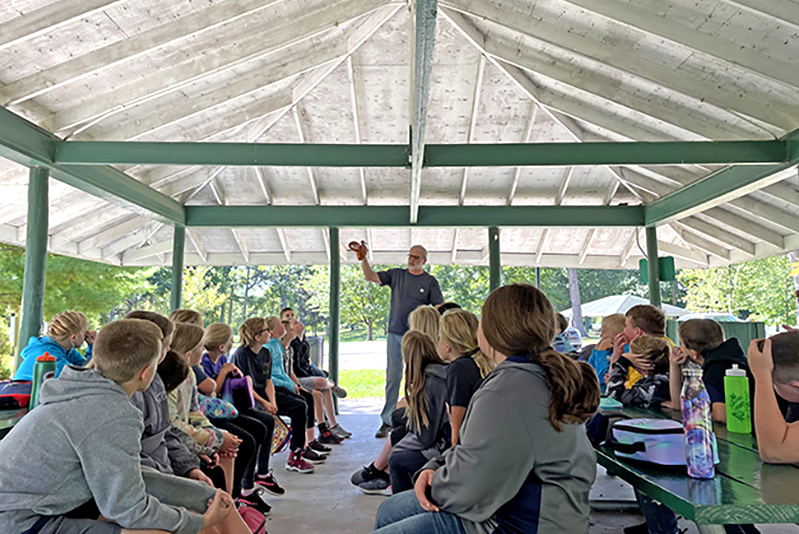
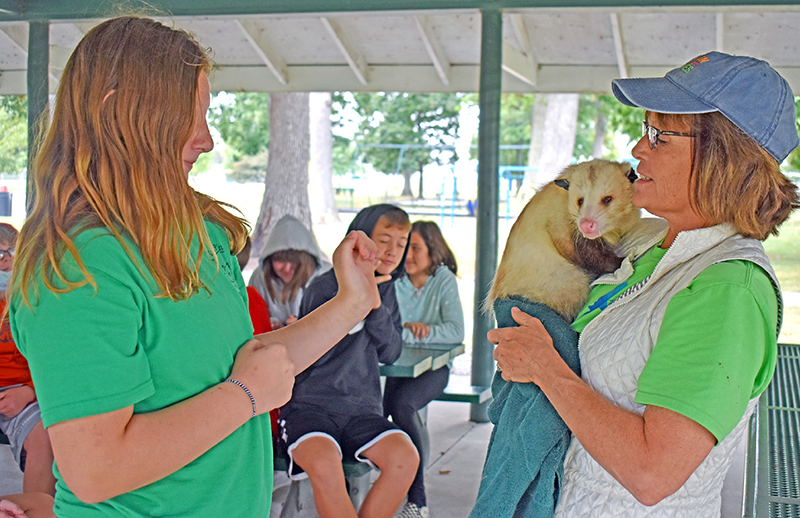
Tyree the Red Rat Snake (also called Corn Snake) and Sean the Virginia Opossum starred at the Wildlife station at the 49th Annual 5th Grade Conservation Tour in September.

Every now and then someone tells us about the Virginia Opossum that has lived under
their porch for years. If there is one thing that we learned while volunteering with
Nature’s Nursery Center for Wildlife Rehabilitation and during the years following is that
these individuals are probably not the same Virginia Opossum. While getting to know
educational ambassadors for this fascinating species, we have discovered that they are
nomadic creatures, moving from place to place to eat whatever they find in their path and
sleeping in the most convenient dry spot when they need to. Combined with the fact that
Virginia Opossums only live for two or (maybe, if we’re lucky) three years, the animal that
people see around their porch from year to year is actually a parade of several of North
America’s only member of the marsupial class of mammals.

Did you notice that I said “if we’re lucky”? There are a lot of reasons that it’s a great thing
to have Virginia Opossums around. These free-ranging omnivores consume a varied diet
that includes plant material, grasses and leaves, grains, fruits, carrion, snails, slugs, worms,
insects, rats, mice, snakes, amphibians, eggs, crayfish, and fish. They are nature’s garbage
collectors. We would be up to our eyeballs in offal without these animals coming and
going. We would also be dealing with more biting, disease-transmitting ticks. Research on
captive Virginia Opossums at Illinois’ Eureka College estimates that they eat, on average,
5,500 larval ticks per week. That’s nearly 95% of ticks that cross their path.

The biggest and best reason that we are lucky to have Virginia Opossums is that we just are…lucky,
that is. They have been around for a very long time—at least 70 million years—as one of
Earth’s oldest surviving mammals. Because they eat almost everything, they are disease-resistant. In fact, they will do just about anything to avoid direct contact. To appear
threatening, a Virginia Opossum will first bare its 50 teeth, snap its jaw, hiss, drool, poo
and stand its fur on end to look bigger. If this does not work, the Virginia opossum is
noted for feigning death (passing out) in response to extreme fear.

Here on The Quarry Farm, we are so lucky to have known a few non-releasable Virginia
Opossums. Sean is the current onsite educational ambassador of his kind. Sean was born
without eyes so can’t properly protect himself from predators. He is also agreeable to
human contact, which is why we have a State of Ohio education permit that allows us
to house him and introduce him to people who want to know more about him and the
world around all of us.

Quarry Farm Friday with Tyree the Corn Snake

This morning, a very wiggly Tyree the Corn Snake (also known as a Rat Snake) represented his beautiful reptilian kind during the “Quarry Farm Fridays with the Bluffton Public Library”. As Steve notes in the video, Tyree was bred in captivity and was placed here by someone who wished to find him a new home. Tyree does not look like a corn snake that you might find in the wild as he is what is called a “morph“, but he does eat small rodents just as his wild relatives do, making his kind popular with farmers who want to keep mice and rats out of corn cribs.

Read more about snakes and the wonderful role they play in a healthy environment by contacting the Bluffton Public Library and requesting a Quarry Farm Fridays/Summer Reading book bundle.