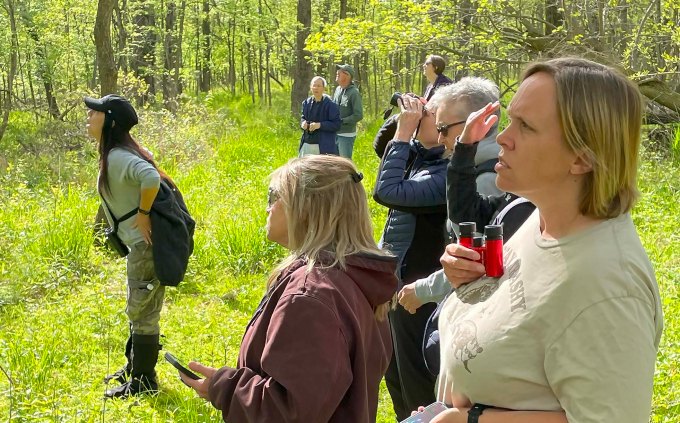
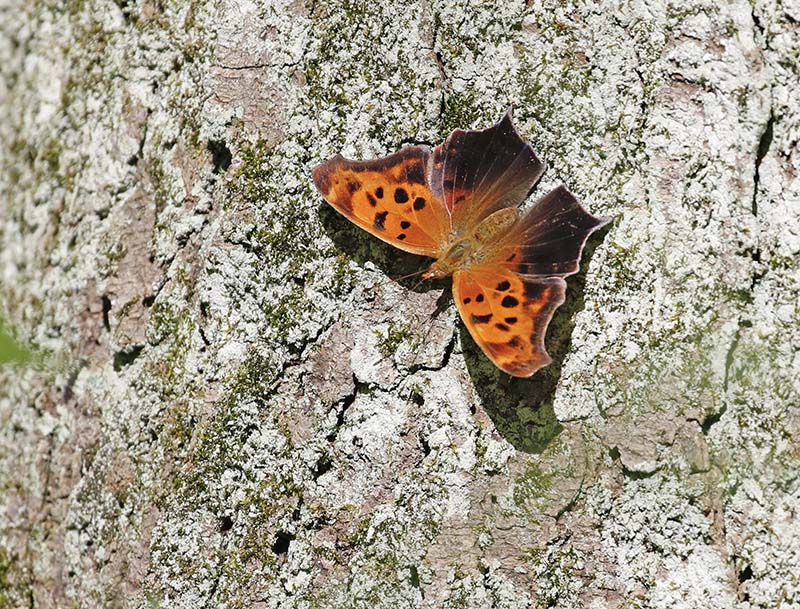
According to Birdcast, 14,526,300 birds crossed Ohio from 8:40 p.m. on May 11, 2025 through 6:40 a.m. on May 12. From 9 to 11 a.m. that Monday, participants in the annual Spring Bird Migration Hike followed the pointing fingers of Deb Weston and David Smith to catch a glimpse of brilliant spring plumage. That morning, the group documented 46 bird species in the wetlands, pollinator gardens, and upland forest of The Quarry Farm nature preserve. An enormous Question Mark Butterfly warmed its wings long enough for a good view as well.
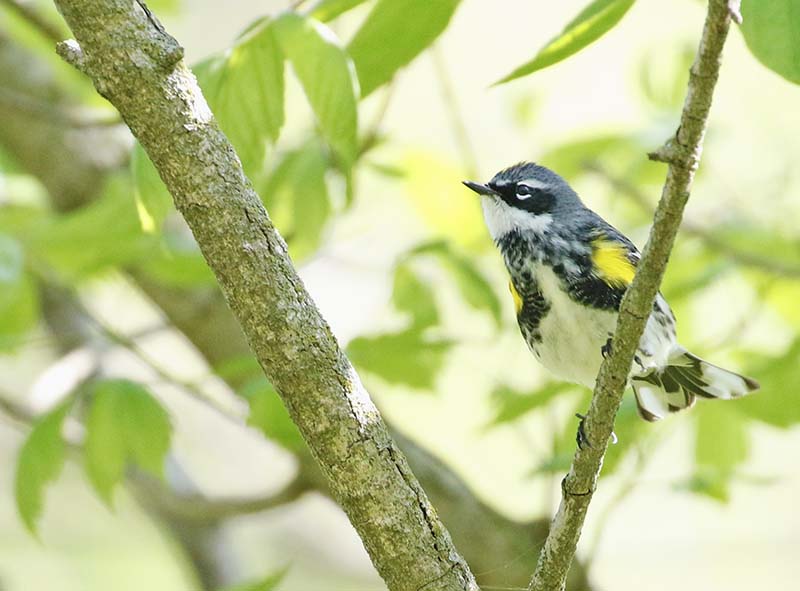
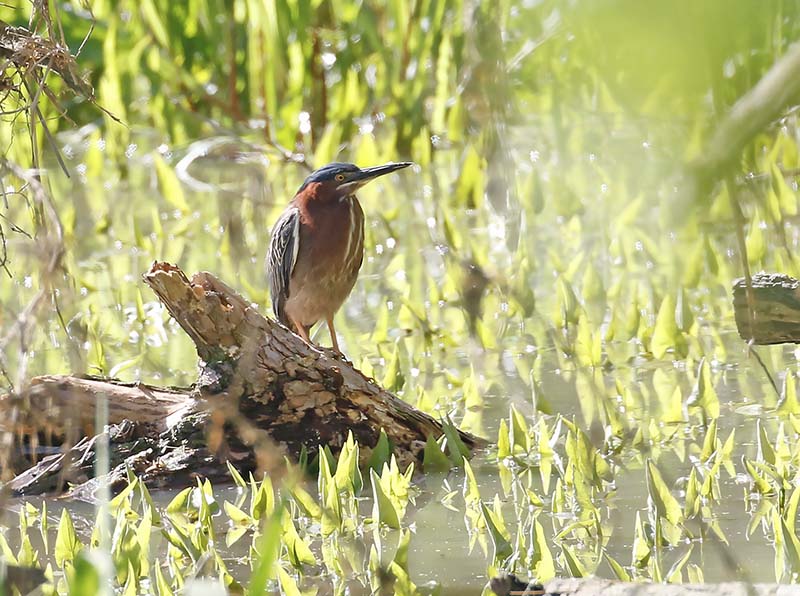
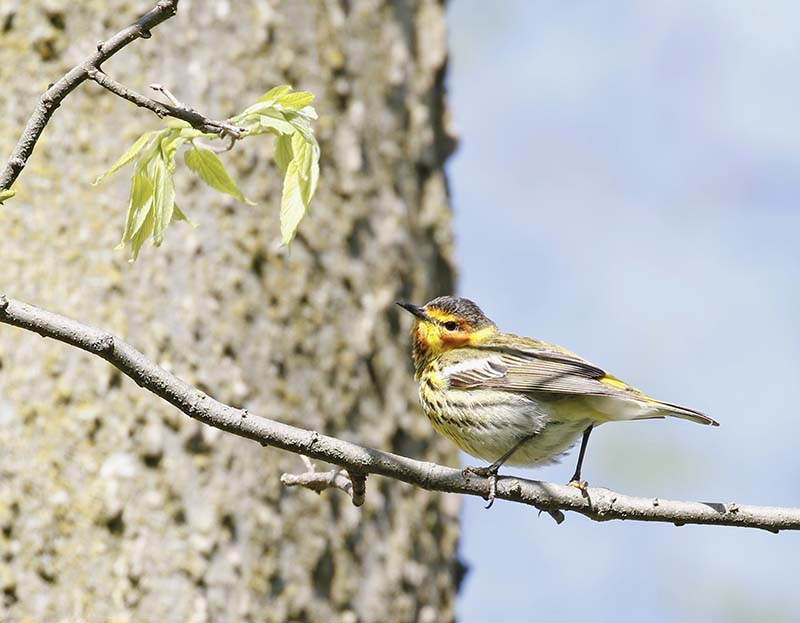
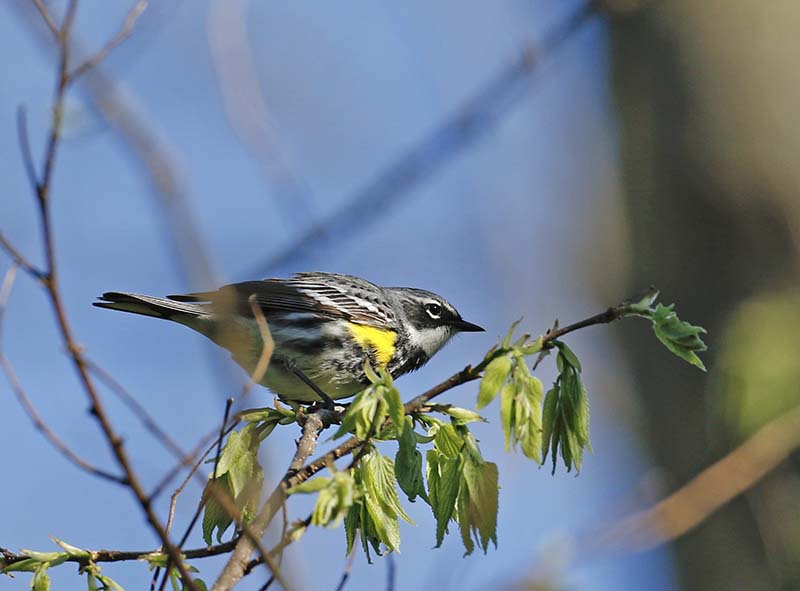
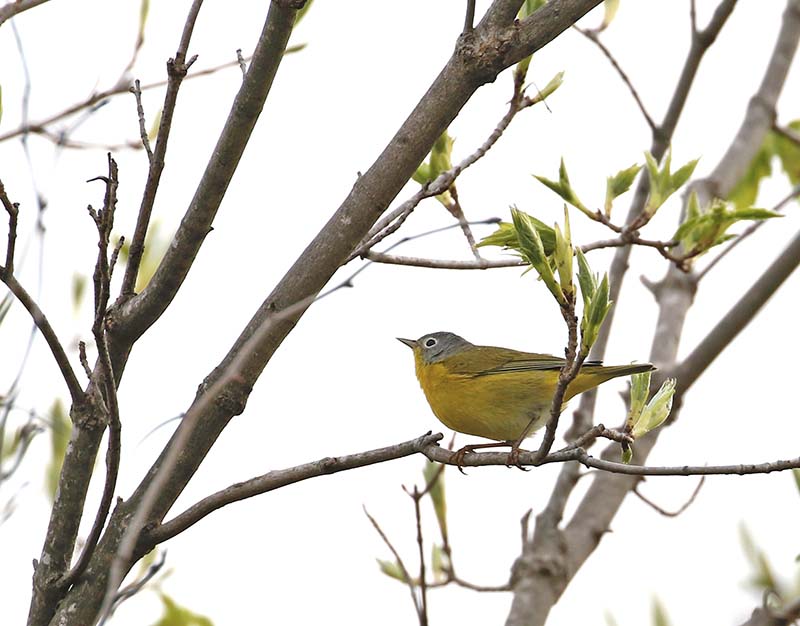
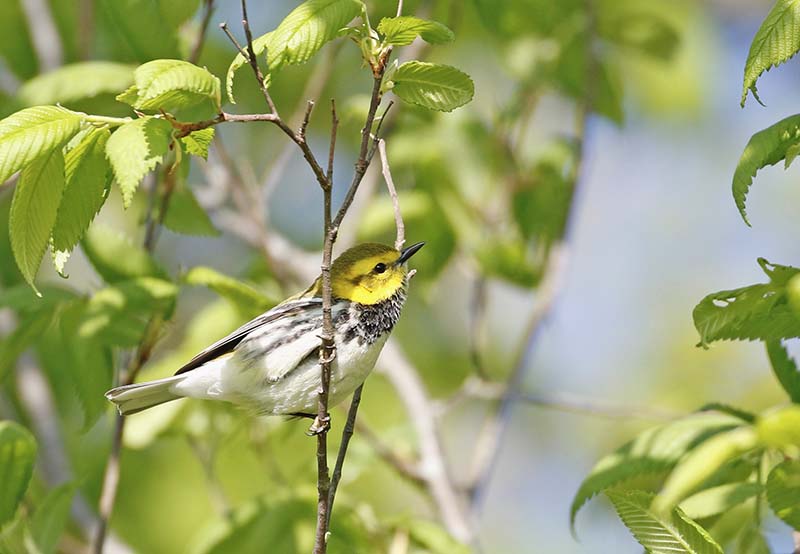
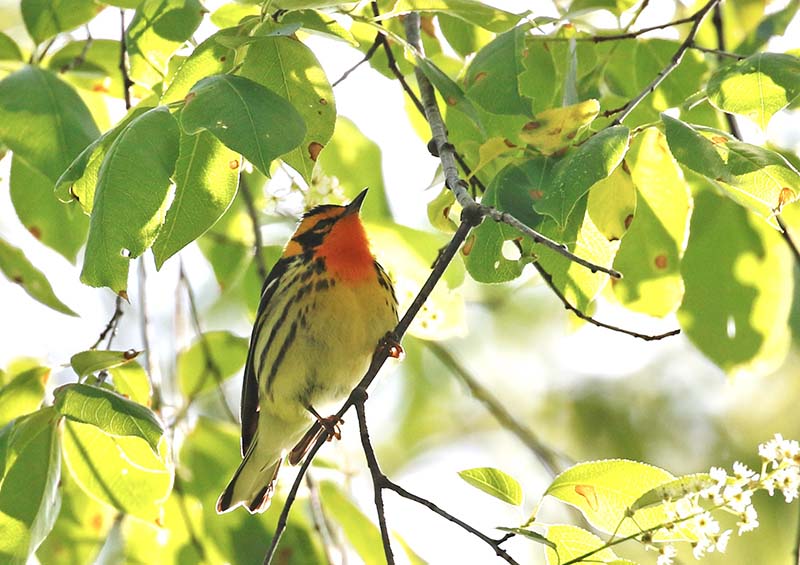
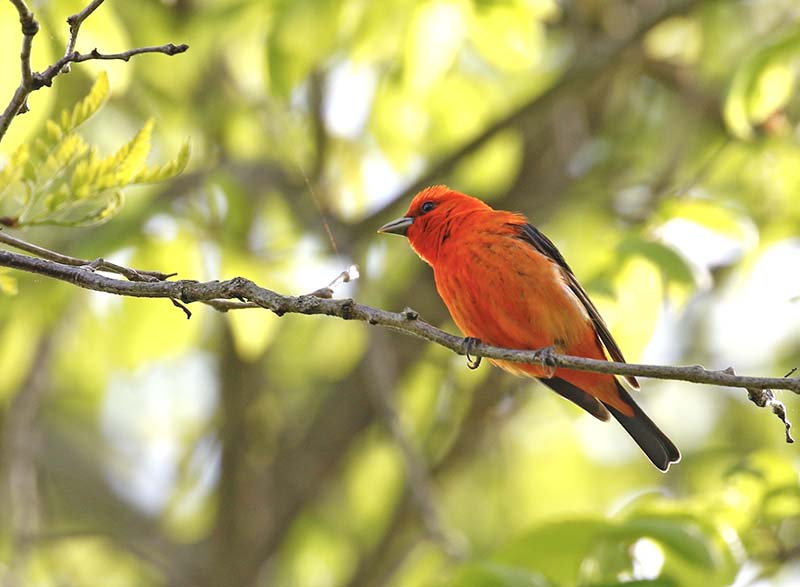
It seems that migration peaks earlier each year as the planet tries to right itself, and Deb and David try to schedule a hike date that happens before all of the migrators pass us by or settle in to nest under dense canopy. To get a good idea of what might pass through for a crowd, Deb walked the trails for days leading up to May 12 hike. She took notes…and brilliant photos.
April 30: 47 species today. A juvie Bald Eagle flew over the prairie, Yellow-rumped Warblers all over the place. One Yellow-breasted Chat, 3 Orchard Oriole, Tennessee Warbler, Nashville Warbler, Yellow Warbler, Palm Warbler and Black-throated Green Warbler. Rose-breasted Grosbeak, Great Crested Flycatcher, Warbling Vireo and 13 Double-crested Cormorants flying over in a perfect V.
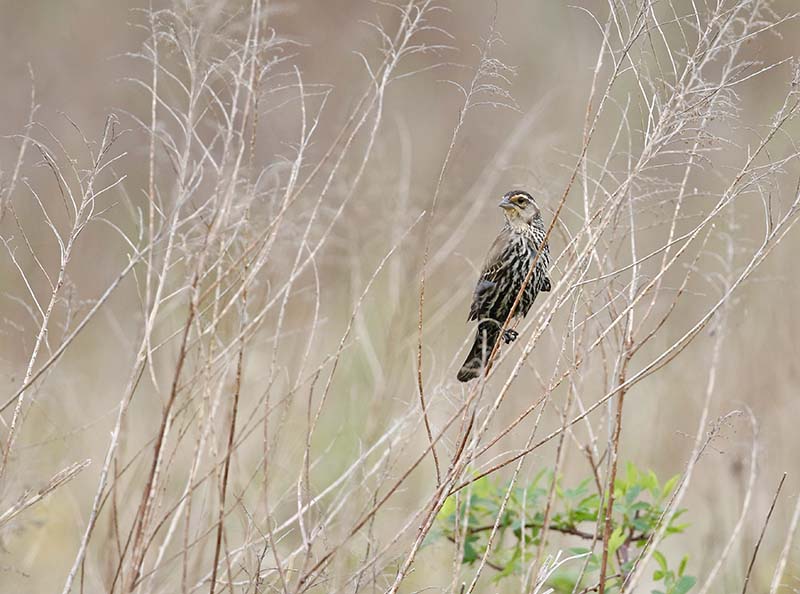
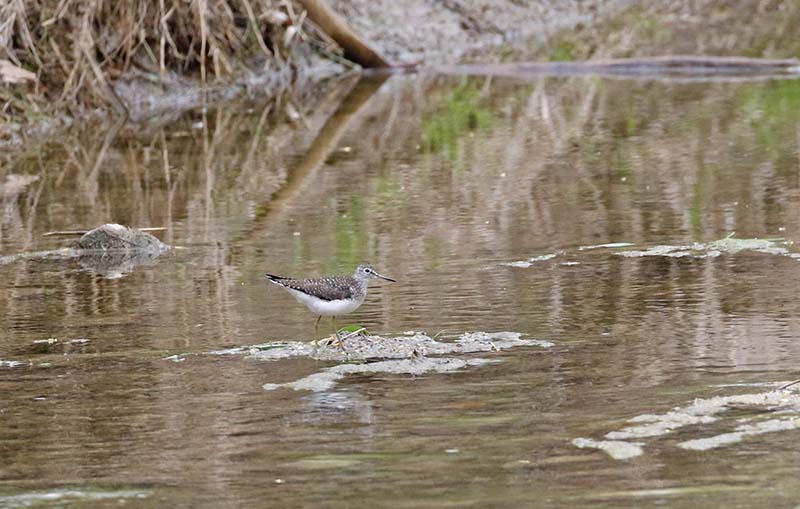
May 1: 52 species today. There was a Gray-cheeked Thrush in the garden area. Don’t see them often and it escaped photo day. Female Red-winged Blackbird, Nashville Warbler and Solitary Sandpiper were not so shy.
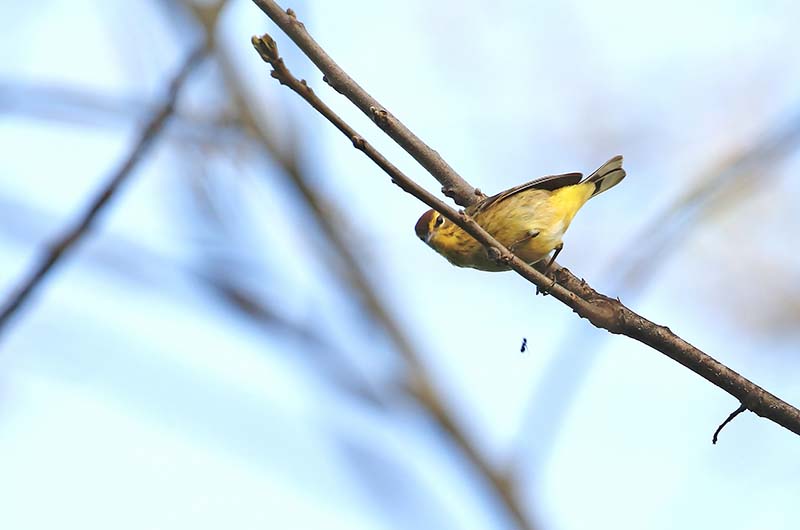
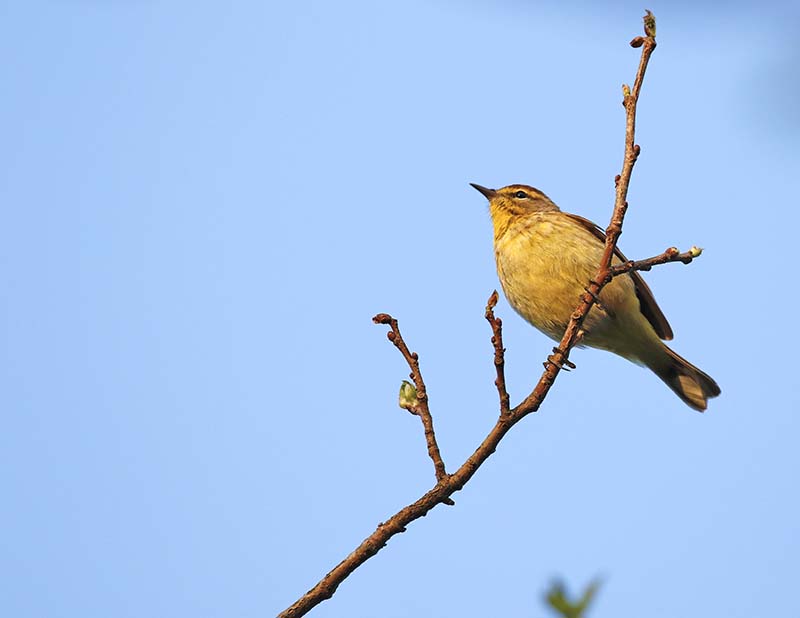
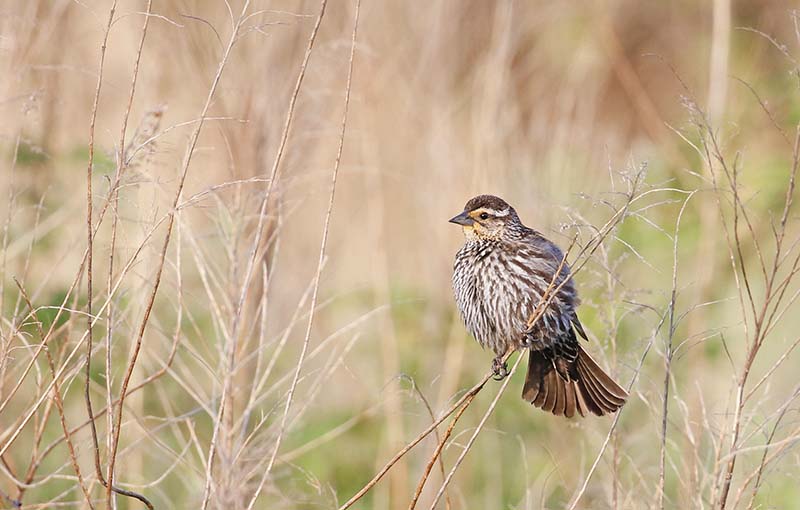
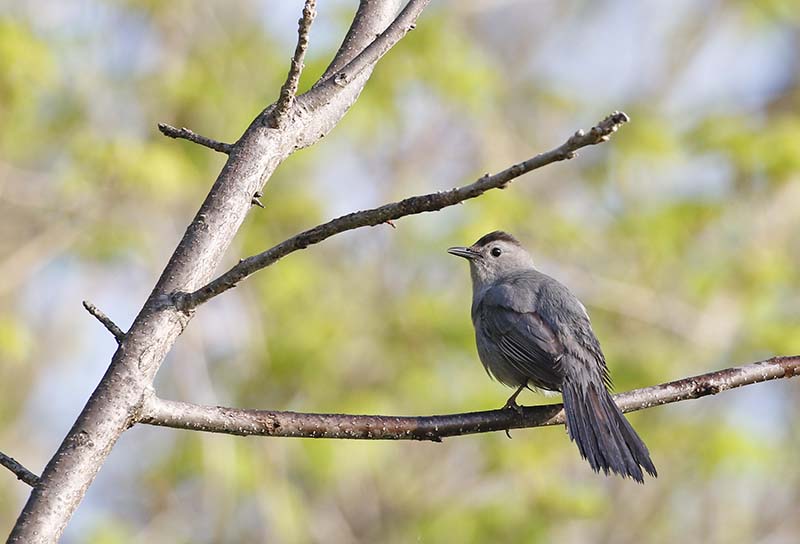
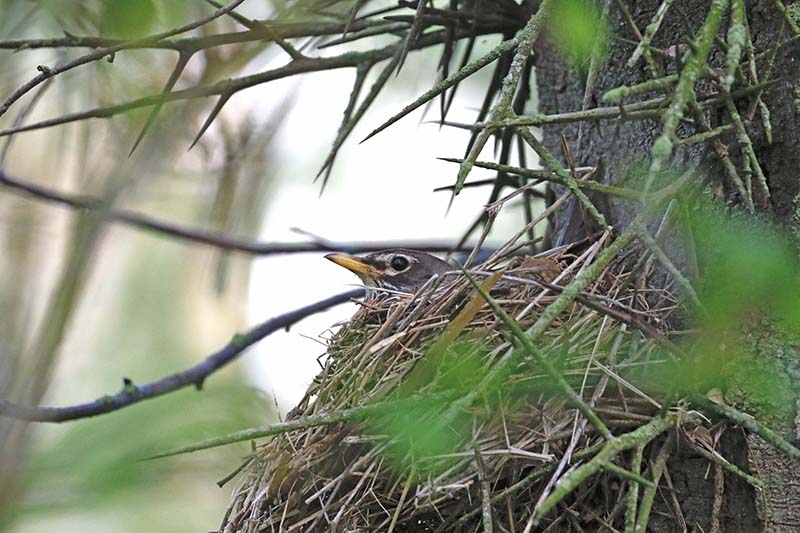
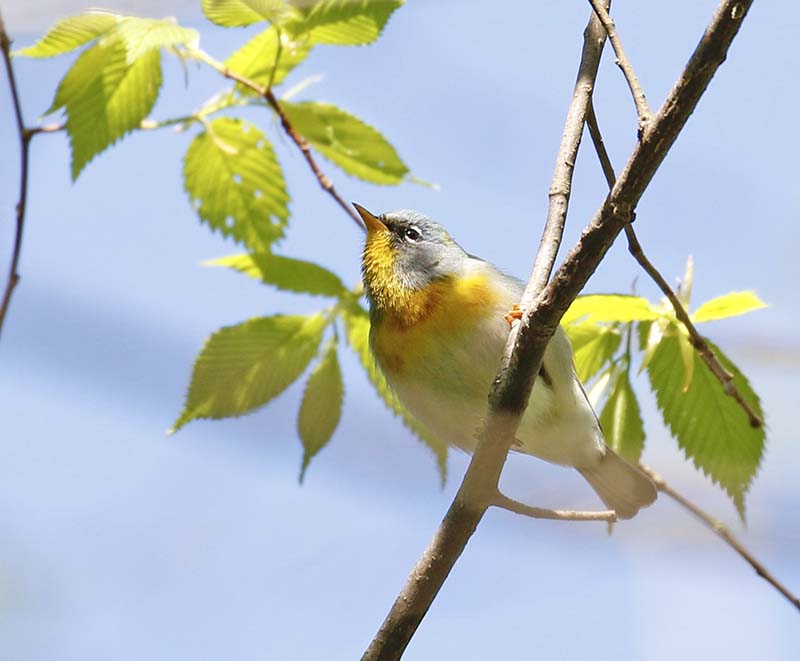
May 2: 50 species today. An American Robin on her nest every day. 2 pics of a Palm Warbler; the first one dropped its food when it saw me. Another female Red-winged Blackbird because they’re so pretty and a Gray Catbird. 3 Wild Turkey, 2 in different sections of the prairie flushed when I walked by even though they were out in the middle. Sounded like helicopter blades. Not sure if they were sitting on nests, but baby turkeys would be cute. 1 Ruby-throated Hummingbird and the biggest surprise was an Osprey sitting in a tree at the lookout point. It took off before I could get my camera up, but was excited to see it. Last sighting was in 2021. Warblers: Orange-crowned, Nashville, Common Yellowthroat, Northern Parula, Yellow, Palm and Yellow-rumped.
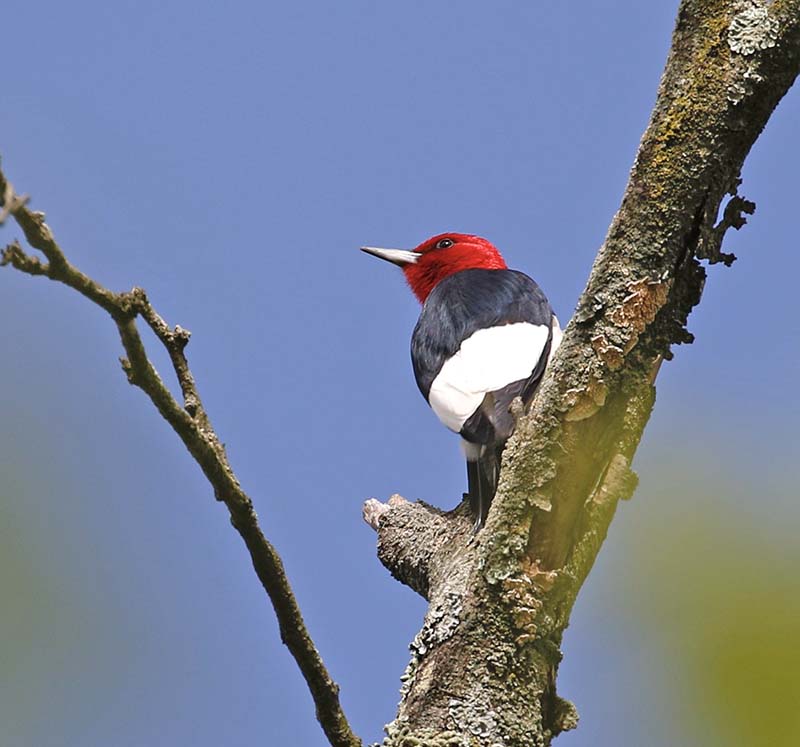
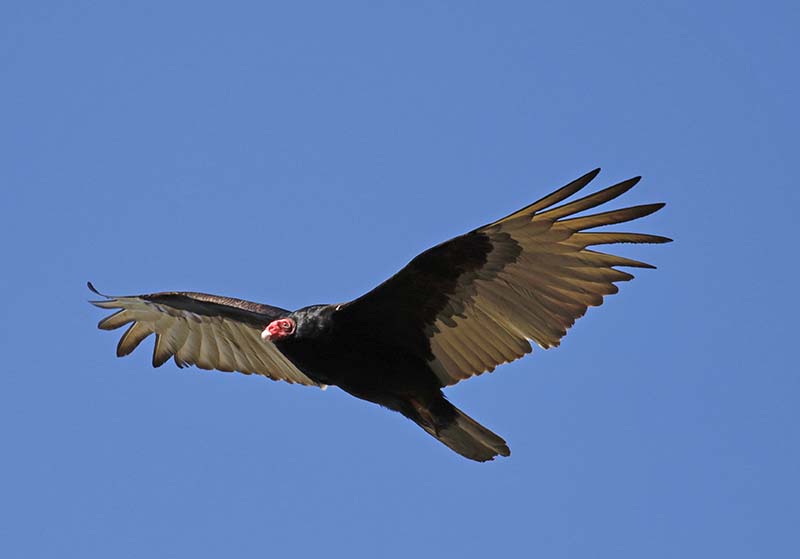
May 9: 53 species today (14 warblers) Canada Goose, Wood Duck, Mourning Dove, Green Heron, Turkey Vulture, Red-headed Woodpecker, Red-bellied Woodpecker, Downy Woodpecker, Northern Flicker, Least Flycatcher, Yellow-throated Vireo, Blue-headed Vireo, American Crow (YAY—they’re back!), Carolina Chickadee, Tufted Titmouse, White-breasted Nuthatch, Northern House Wren, Carolina Wren, Gray Catbird, Eastern Bluebird, Wood Thrush, American Robin, House Sparrow, American Goldfinch, Chipping Sparrow, Field Sparrow, Savannah Sparrow, Song Sparrow, Lincoln’s Sparrow, Swamp Sparrow, Eastern Towhee, Orchard Oriole, Baltimore Oriole, Red-winged Blackbird, Brown-headed Cowbird, Common Grackle, Ovenbird, Nashville Warbler, Common Yellowthroat, American Redstart, Cape May Warbler, Northern Parula, Magnolia Warbler, Blackburnian Warbler, Yellow Warbler, Black-throated Blue Warbler, Palm Warbler, Yellow-rumped Warbler, Black-throated Green Warbler, Wilson’s Warbler, Northern Cardinal, Rose-breasted Grosbeak, Indigo Bunting.
Birdcast noted that 24,564,200 bird species flew over Ohio last night. We will be listening for new song as they make their way north to Magee Marsh Wildlife Area where Deb will be watching with her camera and 89,999 other people.
The headline of this post is a slogan from some years ago. The toymaker Gund used it to promote sales of their plush animals. It’s borrowed to encourage Easter bunnies to place toy rabbits, chicks and ducklings in baskets this Spring and to discourage everyone from giving live animals as gifts.
Brownie is our resident spotlight in the Spring 2020 Quarry Farm Newsletter which you may download by clicking on the cover to the right. Brownie rules a small flock of Rouen ducks in The Quarry Farm farm animal sanctuary. This expressive lady even took under her gentle (but firm) wing a young Canada Goose placed here for release by Nature’s Nursery. The gosling, creatively known here as “Baby Goose,” is so enamored of Brownie that she sleeps with her in the hen house at night, even though Baby Goose is now fully-feathered and can fly.
Brownie was surrendered to us by someone who acquired her as a duckling. Although Rouens look very much like large Mallards, Rouens are a heavyweight breed of domesticated duck that originated in France sometime before the 19th century. While Mallards are wild, lightweight flyers, Rouens weigh between 9 and 10 pounds and can only fly short distances. Brownie prefers to waddle-march around the sanctuary, sliding nimbly under the paddock gates to attend to whatever piques her considerable interest.
We spotlight Brownie here not only for her charming personality but as a reminder to refrain from purchasing live rabbits, chicks and ducklings as Easter gifts in April. Each year, Easter pets die cruelly from neglect or mistreatment or are surrendered to animal shelters that receive a surge of unwanteds. These animals are given up after owners lose interest or become unable to care for them. Others that are not taken to shelters are “set free” into the wild where they have no knowledge or experience at foraging or evading predators. Death is inevitable. Those that may survive become part of feral colonies of domestic and hybrid birds that cause problems for native wildlife.
Statistics indicate that within the first weeks after the holiday, 30 percent of all Easter pets die, and another 60 percent to 70 percent are abandoned or turned in to shelters. Instead of a Brownie, fill your Easter basket with a fuzzy toy and gelatin-free jelly beans.
Earlier this month, friend Kathy Doty taught me how to spot the difference between male and female Monarch butterflies. Visually, it’s really not that different than humans. I kept hearing that little girl who was a YouTube sensation several years back, her sing-song show-and-tell voice explaining to her classmates, “Boys have theses, see.” I’ve sat through a lot of PowerPoint presentations about Monarchs. I know the right way to hold them as you apply a tracking tag prior to release. But no one has every told me who has what. Kathy also displayed a young Praying Mantis and a viable Swallowtail chrysalis, anchored in place by one tiny gossamer lasso of swallowtail thread. She spotted both eggs and caterpillars in the Red Fox Cabin gardens. The sightings never cease to thrill.
Several days later, a steady stream of visitors to Summer 2019 Family Day watched monarchs, bumblebees and more dragonflies than I have seen since the June 2012 floor wax discharge decimated the variety of dragonfly nymphs one could sample in Riley Creek. It was hot, hot, hot in the sun. Steady breeze and ice water kept those of us anchored to the ground cool enough to take pleasure in flighted creatures who have the wherewithal to catch thermals.
With double-digit degrees less outside, Deb Weston walked the trails with her Debbie and a camera on Thursday. They spotted an Ebony Jewelwing damselfly, a female Baltimore Oriole, a Painted Lady butterfly, a Monarch, and two Rose-breasted Grosbeaks, birds I haven’t seen since I picked wild raspberries along the cut-off oxbow to sell at Andy’s IGA in Pandora.
I could wax on. How about I share Deb’s photos instead?

 The headline of this post is a slogan from some years ago. The toymaker Gund used it to promote sales of their plush animals. It’s borrowed to encourage Easter bunnies to place toy rabbits, chicks and ducklings in baskets this Spring and to discourage everyone from giving live animals as gifts.
 Brownie is our resident spotlight in the Spring 2020 Quarry Farm Newsletter which you may download by clicking on the cover to the right. Brownie rules a small flock of Rouen ducks in The Quarry Farm farm animal sanctuary. This expressive lady even took under her gentle (but firm) wing a young Canada Goose placed here for release by Nature’s Nursery. The gosling, creatively known here as “Baby Goose,” is so enamored of Brownie that she sleeps with her in the hen house at night, even though Baby Goose is now fully-feathered and can fly.
 Earlier this month, friend Kathy Doty taught me how to spot the difference between male and female Monarch butterflies. Visually, it’s really not that different than humans. I kept hearing that little girl who was a YouTube sensation several years back, her sing-song show-and-tell voice explaining to her classmates, “Boys have theses, see.” I’ve sat through a lot of PowerPoint presentations about Monarchs. I know the right way to hold them as you apply a tracking tag prior to release. But no one has every told me who has what. Kathy also displayed a young Praying Mantis and a viable Swallowtail chrysalis, anchored in place by one tiny gossamer lasso of swallowtail thread. She spotted both eggs and caterpillars in the Red Fox Cabin gardens. The sightings never cease to thrill.