Steamed heat

IMG_0600

If you look very closely, in the middle and toward the top of this photo, you’ll see a Canada goose cutting a ‘v’ through a temperate rainforest river. That’s our Johnny, and her river cruise was the second in one month that she and the other three Quarry Farm geese took before the river receded into the banks of Cranberry Run, beyond the fence.

Late June and July heat baked the slick coating of flood silt to the ironweed, wild roses, sedges, and other floodplain plants. Now the hens and geese chase insects born from the ooze, at least until the latest downpour fills the lowland again. Probably will happen this evening.

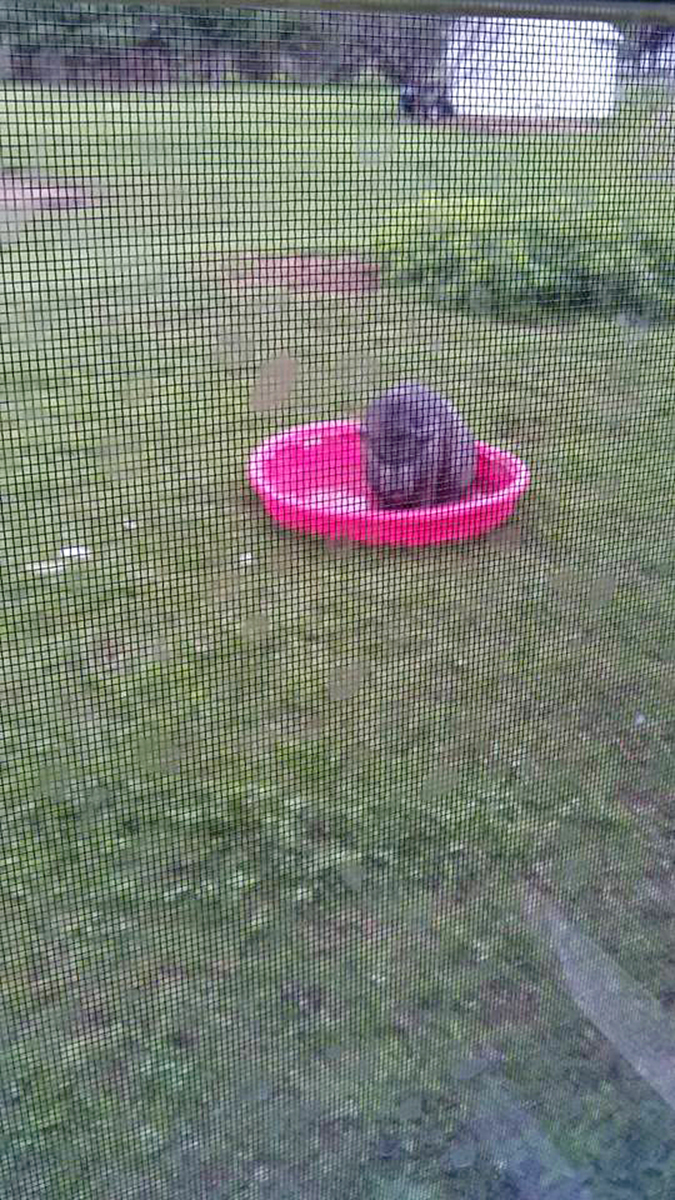
Until then, here’s Carlton, cooling his jets.

11249478_10207216280756224_2643805049709668732_n

And speaking of cooling off, I had one of those conversations yesterday. A colleague has a theory that canals will solve the nitrate problems which, combined with phosphate-loaded runoff, are contributing to harmful algal bloom in Ohio waterways, the Great Lakes, and pretty much everywhere else within driving distance.

“You know, the canal systems that Ohio had? That was some of the greatest engineering, and it was only just getting started when they fell into disrepair. A good series of canals could just carry those nitrates on out to the deep sea where the phytoplankton could eat them.”

Me: What?

“Yes, they drained the swamps because you couldn’t get through and those canals took the erosion away [or something like that] and canals take nitrates away. When the canals were abandoned, we started having all those nitrate issues.”

Me: (sputtering) Do you know what else used to be here, before they were cut down to make canals? Trees. Ohio was covered with trees.

“There were not. This was swamp. Trees don’t grow in that kind of soil.”

Me: I want you to read this book called The Trees by Conrad Richter. It’s part of a trilogy. The next book is called The Fields, after they cut the trees down. Then there’s The Town, which is what we have now. It’s fiction — you’ll like it.

Then there are these:

Click to access rmap_nrs4.pdf

http://forestry.ohiodnr.gov/history

11665775_10207215345292838_2227007993138597814_nThe scary part is that this person has a college degree.

Deep breath.

Here’s Beatrice. She makes sense.


Pause here for P-G

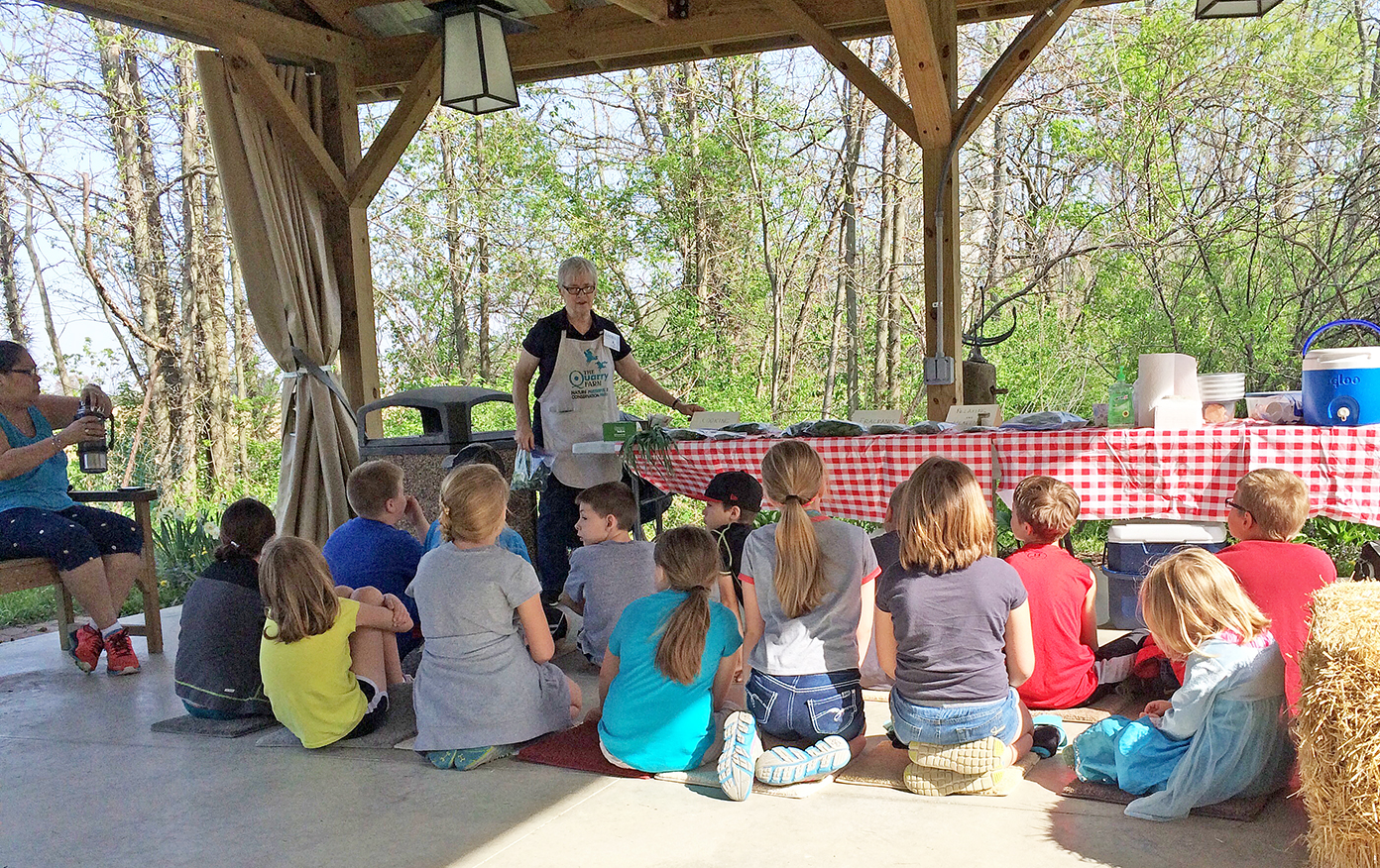
P-G Third Grade 2015Before we continue along the trail in a search of wildflowers and wild mushrooms, let’s take a moment to highlight a Friday adventure that we shared with the third grade class from Pandora-Gilboa Elementary School.

Although the school is just around a few corners from The Quarry Farm, this is the first time a class has been able to pay us visit in a while. This morning, the sun rose in a clear blue sky, the tortuous winds that we’ve had of late held their breath for the most part, and 41 students descending the bus steps to join us for the morning.

At three different stations, these curious kids learned about herbs alongside the butterfly garden, beneficial insects that spend much of their life in and along Cranberry Run and Riley Creek, and met some of the animals of the sanctuary.Herbs

At Station 1, Laura talked about past and present uses for herbs, and the pollinators that live amongst them in the Red Fox Cabin gardens. The students chose snipped samples of their favorites from a selection of culinary and/or fragrant herbs, zip-lock bagged the cuttings and labeled the bags for the journey home.

Steve brought on the dragonfly nymphs, or at least a bucket of them, at Station 2. He talked about the life cycles and habits of these predators, Macrosas well as others like damselflies and water scorpions. He pulled the old arm-covered-with-leeches trick, asking, “How long will it be before these leeches suck all the blood from my arm?” The answer? Never. The leeches he displayed were fish leeches.

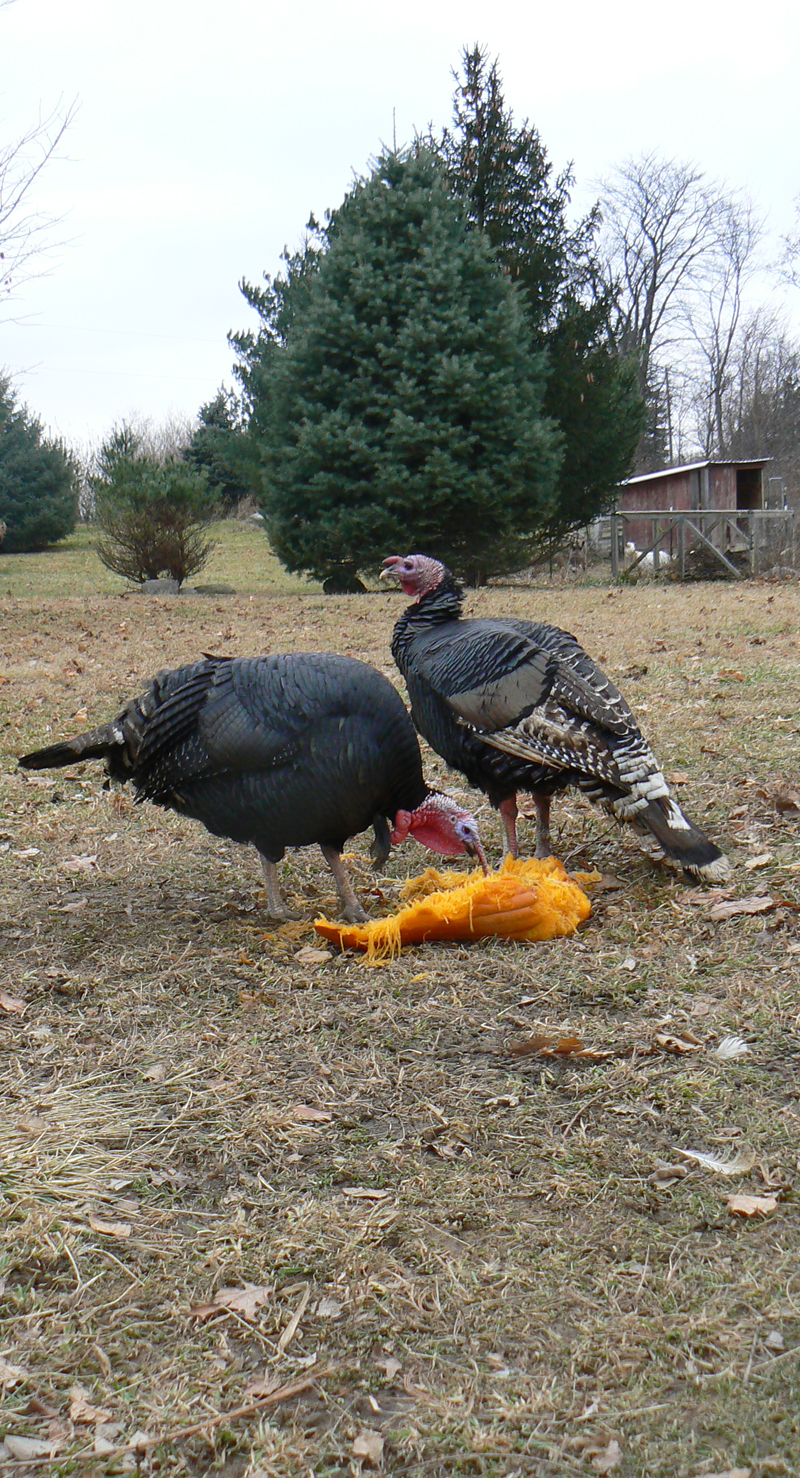
Bronze turkeys Humperdink, Inigo, and Miracle Max were the greeting party at Station 3, the farm animal sanctuary. Johnny the Canada goose joined in, too. Most of the residents were lying low — in outbuildings and under trees — due to warm, sweaty temperatures, but Buddy the donkey came out. Potbelly Carlton and Lucy the donkey made their large group debut as well. Carlton rolled over for a belly scratch and Lucy leaned in for ear whispers.Lucy

Captain John Smith the Virginia opossum was the special guest “speaker” during the lunch hour. Half of the class met the Captain at Christmas time during a classroom reading of Jan Brett’s The Mitten. We thought it only fair he should meet the whole class on his own turf.

Here are a few more images from the day. Thank you to Nikki Beckman for sharing photos, Jessica Arthur and Jill Henry for sharing your class time, and top Paulding Putnam Electric Cooperative and First National Bank of Pandora for supporting this educational program. If anymore photos arrive in the email box, we’ll add them to the show.

This slideshow requires JavaScript.

Buddy meets a girl

Lucy

Lucy

The oaks, the last trees to lose their leaves in fall, were down to just a few spots of brittle color when we first learned of Lucy.

A family in southwest Indiana sent out a distress signal that life had thrown them a curve, making it necessary for them to rehome a small flock of sheep and their guardian donkey. Bot flies and shearing wool appealed to neither our time nor talents, but the thought of opening our gate to another donkey seemed the ticket for our little Buddy. Six months and a bitter winter later, Lucy and her person made the four-hour journey to Riley Township.

My Steven and I were on the south boundary Saturday replacing old fencing, much to the dismay of two sassy goats whose nimble limbs and twitching noses were turned by the grass on the other side. The job also gave us an excuse to watch for a truck-pulling-trailer with Indiana plates.

I think Buddy knew. As I leaned over to stretch the bottom of the fence, he walked up and laid his head across my shoulder. They always know something’s up, whether it’s a storm or a class trip full of adoring little persons with apple slices and peanuts in their pockets.

Lucy’s wheels rolled up around 1 p.m. The welcoming committee lined up along the fence to meet the driver, except for Buddy. He pressed himself against the fence and stared in the window of the horse trailer. When Lucy was led through the gate and let off the lead, Buddy did an-honest-to-goodness happy dance.

For her part, Lucy was a little stand-offish. Her person Brandi Ireland told us that they lost a donkey to the winter of 2013-14, leaving a sad Lucy to mind the sheep. For the first hour on Ohio soil, she put on a good show of preferring grass and hay over some boy, but she never let that boy get more than a few strides away.

For the rest of the afternoon into evening, Buddy showed Lucy around her new digs, placing himself dutifully between her and the goats. I’m not sure if that was for her safety, theirs, or just Buddy making a statement of ownership.

Through human eyes and sensibilities, it seems that Buddy’s warm brown eyes are brighter and five years lifted from his gait in a few hours’ time. The goats are watching them both to see which donkey will figure out how to open the hay barn doors now that the salad bar next door is off the menu.

That’s not anthropomorphizing; that’s a day in the life with a Buddy boy and his goats, plus one. Better than a Sudoku puzzle to keep any two-legger on their toes.

Small Triumph

Sandhill Cranes, 2014 Garden, Pipevine Swallowtail Larva 023

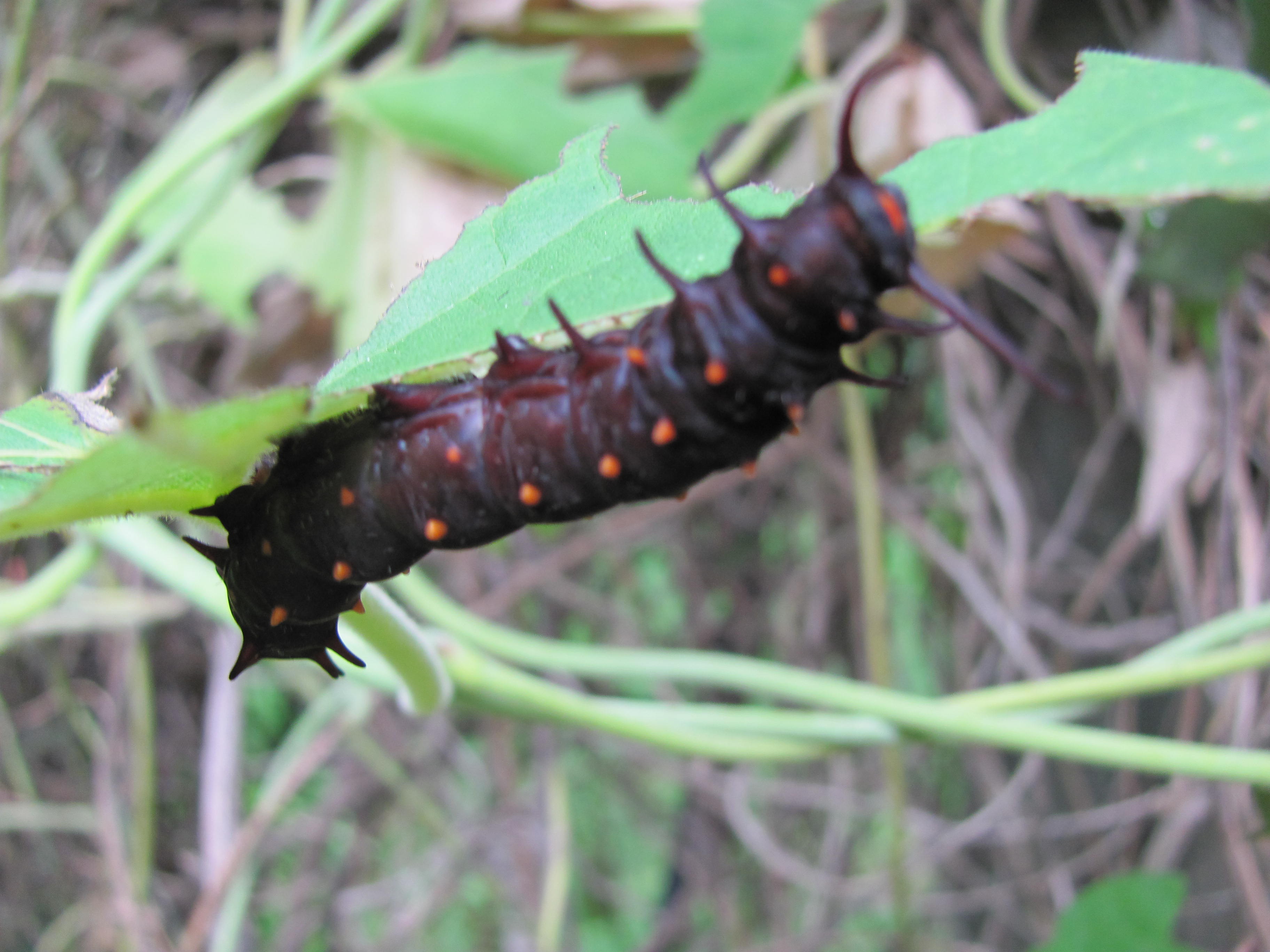
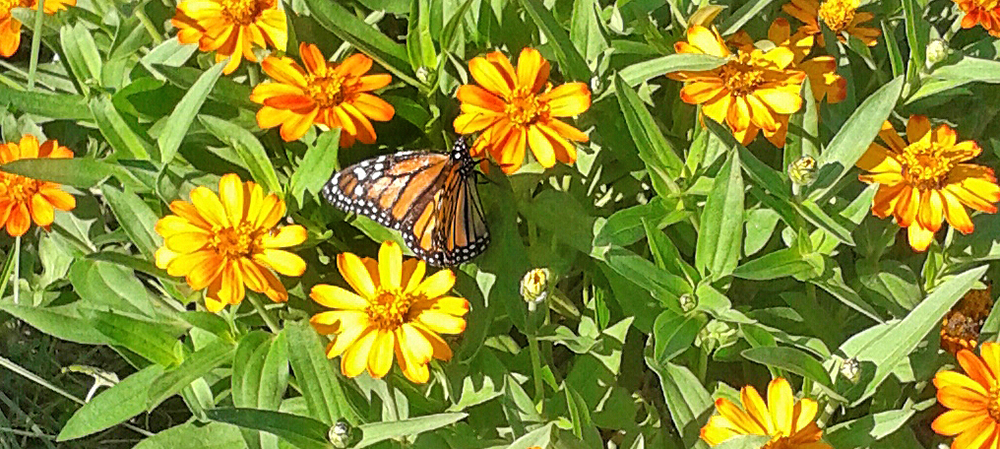
Why would a gardener be happy, overjoyed even, to discover an army of fat, black, spikey-looking caterpillars with red polka dots pillaging a prized ornamental vine?  Answer:  When the marauders are Pipevine Swallowtail butterfly larva and the vine is Dutchman’s Pipe (aristolochia macrophylla), one of their host plants.

For the ten summers and more since husband Gerald planted two pipe vines in the garden at Red Fox Cabin, we have kept watch on them.* We’ve admired the cute little Dutchman’s pipes they bear and checked the foliage for ragged holes that would give away the presence of larva. We’ve peered at black with blue swallowtails, hoping to spot the distinctive coloration of the Pipevine, inky black forewing and iridescent blue hindwing.  However, sightings have been extremely rare and none have chosen to lay eggs on the beautiful Dutchman’s Pipe. Until this July.

Sandhill Cranes, 2014 Garden, Pipevine Swallowtail Larva 016Last Saturday evening as I was walking my Jack Russel, Lefty, or rather as he was leading me where he wanted to go, he tugged me toward the rear of the log cabin, where one of the pipe vines grows luxuriantly on a porch pillar.  Lefty was intent on the rabbit or cat or whatever that he scented underneath the porch, but I was halted in my tracks by the sight of that vine, no longer luxuriant, but ragged, nearly defoliated, and crawling with the aforementioned fat black caterpillars–at least twenty.  Thrilled by the sight and the realization that our vine had finally been discovered by a passing Pipevine Swallowtail, I rushed home with a disappointed Lefty to grab my camera and my Peterson’s field guide to caterpillars, for confirmation.

Sandhill Cranes, 2014 Garden, Pipevine Swallowtail Larva 012According to the guide, predators avoid Pipevine Swallowtail caterpillars because the vine that feeds them is toxic and makes them unpalatable.  Also, when they are ready to pupate they tend to crawl away from their host plant and find other places to attach a greenish chrysalis with a silken thread.  So, the total disappearance of the caterpillars two days later was not as alarming as it might have been.  Photos and a ravaged vine prove they were there.  Quite likely, somewhere on the Quarry Farm later this summer, a Pipevine Swallowtail, or maybe twenty, will emerge from its chrysalis and sail into the butterfly garden to dine, and with luck someone will be there with a camera.  A photo of the shimmering beauty will be a fitting tribute to Gerald, who inspired us with his love of butterflies and planted the Dutchman’s Pipe so many years ago.

*[Pipe vines are native  in some parts of the Northeast but not in Putnam Co., Ohio; ornamental pipe vines were common in Victorian gardens but are less so today. Pipevine Swallowtails can complete their life cycle only if they happen to find a host pipe vine or a Virginia Snakeroot growing wild or deliberately planted.  Adults might stop to nectar in a flower garden but will move on if a host plant is not available.]

Beatrice gets a hoof trim

There are two pot-bellied pigs that live with us here on The Quarry Farm Nature Preserve and Conservation Farm. Neither began their lives here, but this is where they will stay. Soon Beatrice and Gertie will be joined by Alphonse, Bob Barker, Grits and Greta, four pot-bellies that found themselves without a home after a cruelty and neglect seizure by a nearby humane organization.

While this video may make you laugh a little, we hope it also makes you think long and hard about the care that smart, inquisitive, stubborn and vocal pot-bellied pigs require in order to live in harmony. Indeed, keep that in mind whenever you adopt. Anything.

On the other hand, piggies are a joy when you are prepared to welcome them into your life.

The first run of the season

Today was the first day of the plunge into the season of animal rehabilitation calls. An hour or so after arriving at home, a call came in about a Canada goose that was reported to have a broken wing, and spent three or so days frozen to the ground amidst field stubble out on Old 224. I met up with Mum so that we had a better chance at catching the creature.

We drove out toward the area where we were told we would find the goose. We parked in a driveway that once belonged, presumably, to a house along Old 224, approximately one hundred and fifty yards up the road from where we had spotted our target. The two of us laughed helplessly, looking out at the goose, which sat across one of the many impromptu lakes created by the melting of the snow. In fact, it was more like an impromptu creek, being connected to the Blanchard River at its head and base, roiling at both.

The snow made the drop down into the field look gradual, but my first step toward the bottom proved that assumption to be false. My right leg plunged down into the snow, burying itself up to just above my knees. Chuckling, the both of us tread more carefully down into the field.

Upon approaching the spontaneous creek, the Canada goose stood up, displaying a slightly off-looking wing, and took a few hesitant steps away. It had had no need to, as unless we were going to miraculously acquire a boat or full-body waders, there was no way we were going to reach the other side of the waters.

We stood on our side, looking right and left for a break we could cross, when the goose took off, running and throwing open its wings. It caught a bit of wind and rose higher and higher, gliding west through the river corridor. Turning, we strode back up to the road and back to the car, shivering in our sweatshirts. Two vehicles stopped and inquired as to whether we needed help (thank you!) and chuckled when we informed them that we were returning from a literal wild goose chase.

And so, for us, the year begins. Hopefully, this first call foreshadows the course of this year, with concerned fellows and the positive turn of events.

One pumpkin to go

Inigo and FezzikHours before predicted temperature drops, 25 m.p.h. wind gusts, rain, snow and sleet (sneet), Inigo and Fezzik are finishing off the last of a frost-softened pumpkin. Marsh (upper right) worked his way through the dregs of another inside the paddock. Beatrice is just out of the frame, strings of orange squash trailing from either side of her jaws.

NOAA tells us that this latest roller coaster ride in the weather is due sometime this evening. For now, the air is mild enough for the hens, geese and goats to forage, and for Jo to caw at them from her window.

They do know something is coming, though, without Internet access. The animals are connected to everything in a way that humans lost long ago. So we watch them dance across the browned grass as they snatch seeds and midges that hatched in the warmth of last night. This is one clue that cold and wet is on its way. Another is the very fact that Marsh is in the paddock and not lazing with the other goats under the pines. He is keeping close to the shelter of a warm donkey and an east-facing outer wall.

One pumpkin is in storage, so to speak, under the roof of the pavilion beside Red Fox Cabin. That will be a treat to put out when the weather breaks on Sunday. That’s what the National Weather Service predicts, anyway. We’ll watch the animals on Saturday and let them make the final call.

The Quarry Farm Fall 2013 Newsletter

2013 Fall Newsletter-2Although predictions cast doubt on fall color in the Midwest, The Quarry Farm summer was brilliant. Fall is pretty fantastic, too. Check out the latest newsletter by clicking on the cover imaged here.

“Best field trip ever”

racg041193 031

One young boy shouted this as he was on his way back from the farm animal sanctuary this morning. How could it not be the headline today?

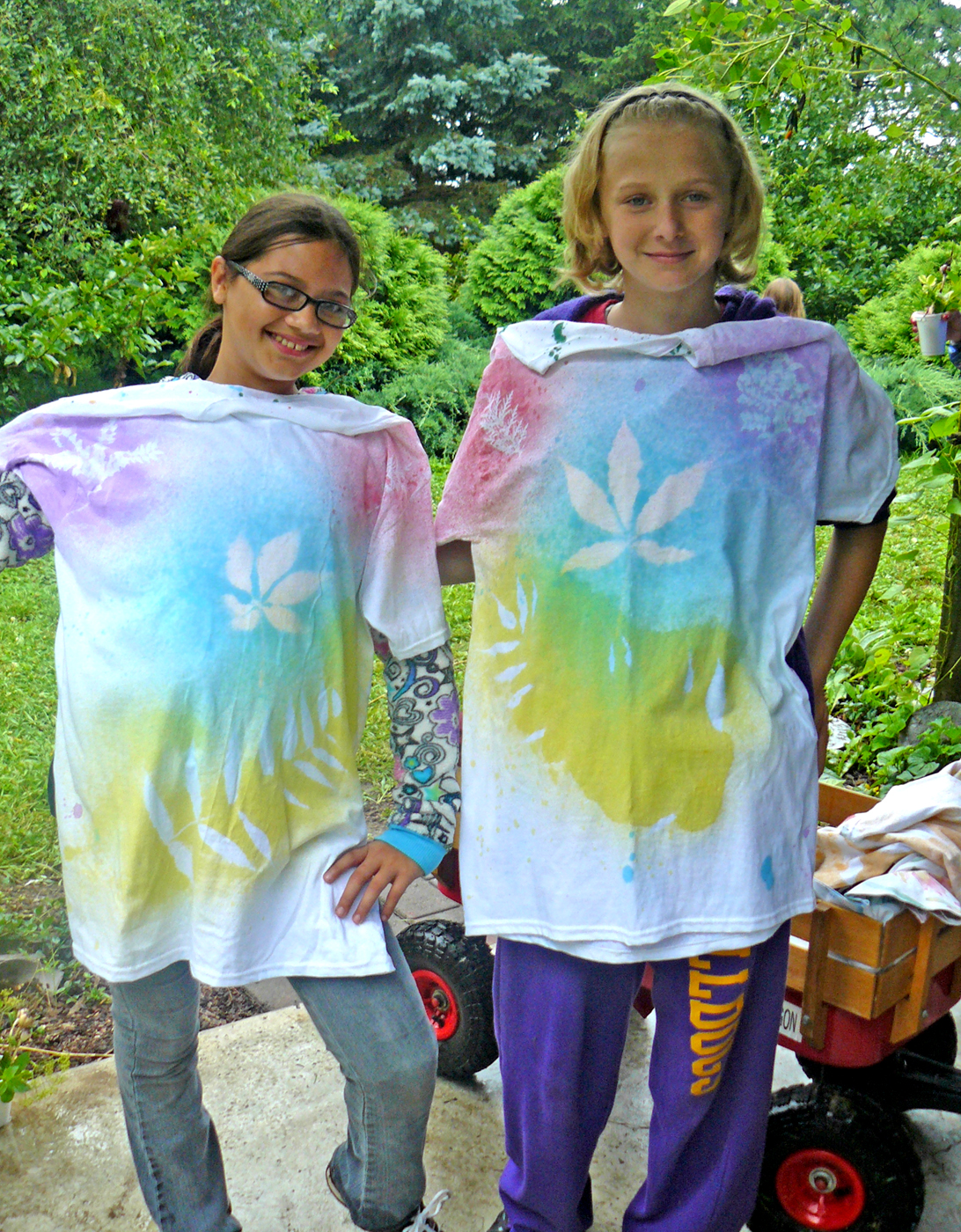
Modeling leaf resist t-shirts

Modeling leaf resist t-shirts

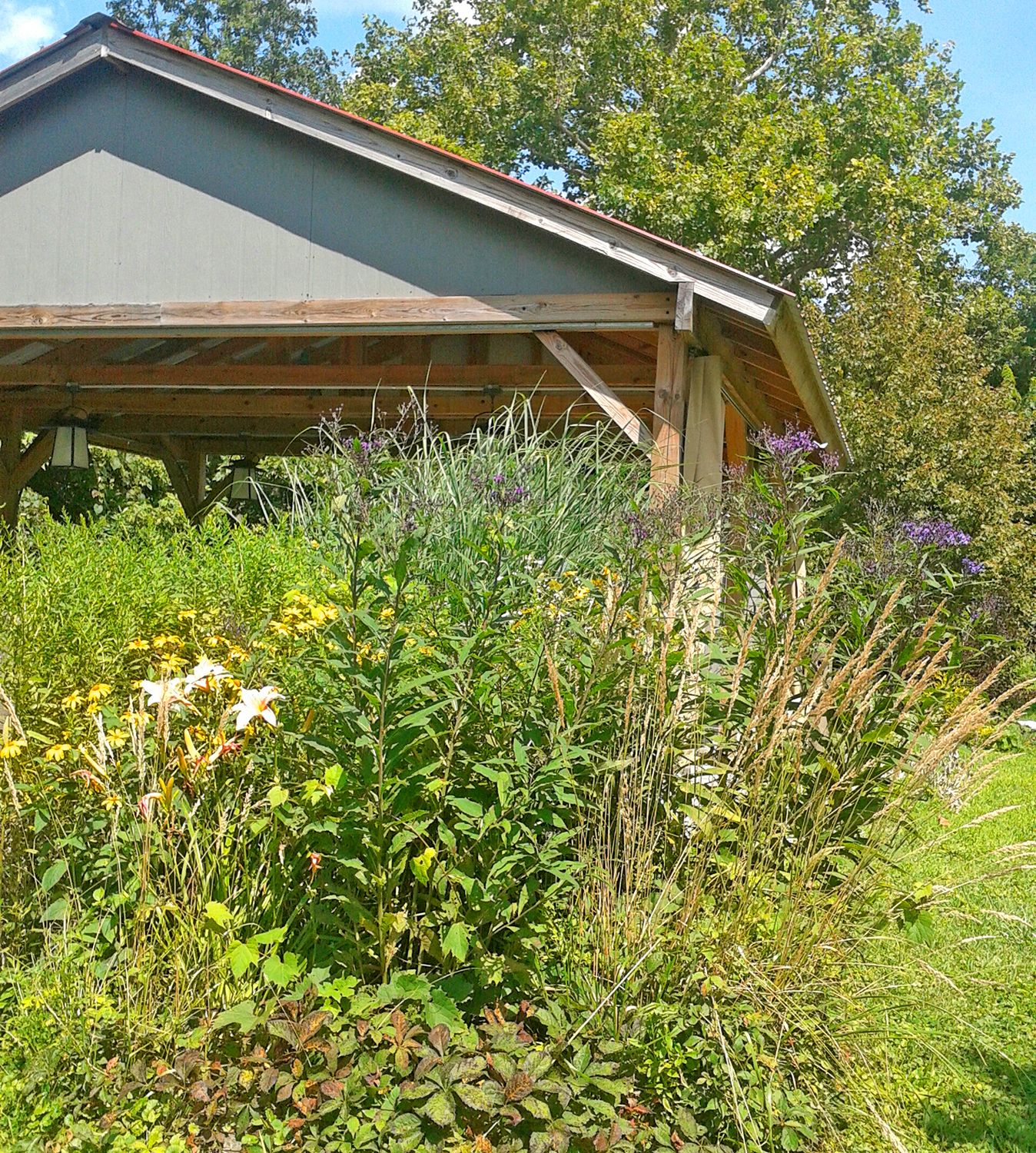
That young man was here with Charlene Finch and her Junior Gardeners from Continental. This was the second year that the group visited the Quarry Farm. They are one of best bunch of people we’ve ever met. Enthusiastic about everything, which is good since their day started here with rain. But since the shelter house went up last summer, the roof was ready and overhead. The new tent curtains were draw to the west and south, so the rain was hampered enough that kids and parents could make leaf shirts and select herbs for culinary, scent and healing bundles.

Charlene and her gardeners make herb bundles

Charlene and her gardeners make herb bundles

Charlene Finch started the Junior Gardeners group four years ago as part of her Defiance County Master Gardeners project. She liked it and the participants so much that she kept at it. Her own pocket paid for materials and seeds at

Costmary, an herb

Costmary, an herb

first. Now the group receives donations, holds 50/50 raffles and sells food at the Continental fall festival to fund summer gardening projects.

During the 2012 visit, Beatrice was just a piglet, a very shy one. Her encounter with Continental Junior Gardener Brandon was a positive turning point for us and Little Pig. Prior to the first trip, she wouldn’t let anyone close. But she liked Brandon. This morning as we all walked up the path to see the animals, Beatrice came at a trot, full grown and not a bit shy. Buddy and the goats were especially happy to see the 50-pound bag of peanuts that the group donated today.

You’ve got mail

2013 Summer Newsletter.inddThe 2013 summer edition of The Quarry Farm Newsletter is done.

Click on the cover to the left and see for yourself what’s coming up.

There are three events planned, so get registered while the getting’s good. Not all require preregistration, but still. Take a look.