off the lake and (hopefully) out of the bush

A chalk board rendering on the Lake Erie food chain, discovered in a lab at OSU's Stone Lab

A chalk board rendering of the Lake Erie food chain, discovered in a lab at OSU’s Stone Lab

On approach to Stone Lab

On approach to Stone Lab

During what I recalled at the time as a third trip to Stone Laboratory on Lake Erie’s Gibraltar Island (although I think a fourth stop snuck in there somewhere), I was struck by several things:

-Although Lake Erie is the shallowest of the Great Lakes, it is a force to be reckoned with when the wind is high and the waves are rolling (in fact, I believe it’s one of those rare occasions when it is appropriate to use the word ‘awesome’ as a descriptor).

-Lake Erie water snakes are gorgeous creatures, especially when tangled up in a ball on a sunny dock’

Water snakes in the sun on an old Gibraltar Island dock

Water snakes in the sun on an old Gibraltar Island dock

-The bottom of your sleeping bag, with the top curled securely over your head, can pass as a safe place when you wake up in the middle of the night and realize you are on an island roughly the size of a football field without a boat and no way off until morning.

-Gulls perched on an outcrop at the bottom of a cliff overlooking Lake Erie at sunrise are ever so much more beautiful in real life than in a Pixar film.

-Bush honeysuckle invades even the small freshwater islands off Ohio’s shores.
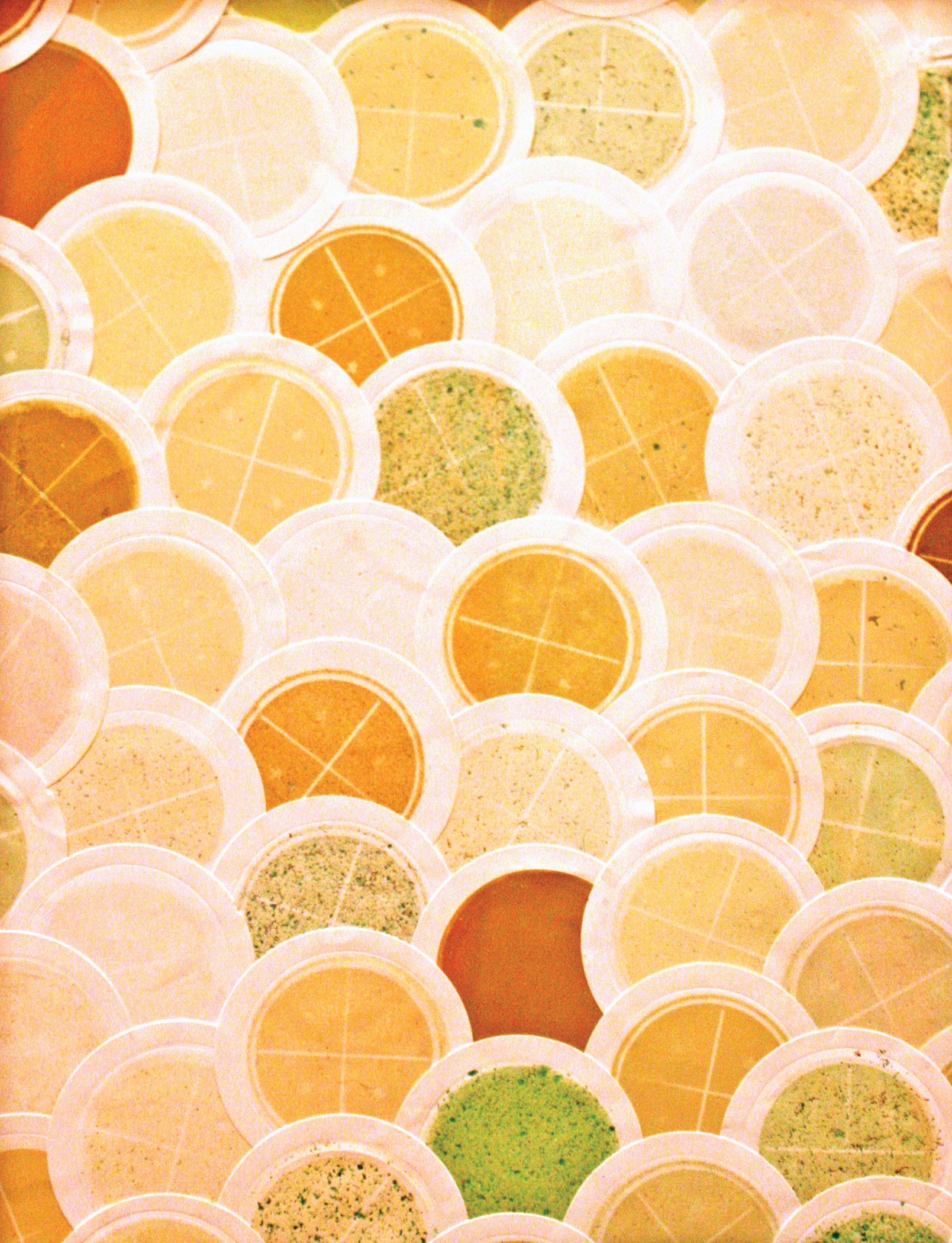
HAB art: algal samples of all types were collaged and framed in one of the labs on shore at South Bass Island

HAB art: algal samples of all types were collaged and framed in one of the labs on shore at South Bass Island

I was there to learn more about harmful algal bloom and the current state of what humans know about the how and why of the overabundance of cyanobacteria. I came away with 10 lectures and a research vessel outing’s worth of that, as well as a greater determination to help develop a plan to control bush honeysuckle on The Quarry Farm.

Why do we want to control bush honeysuckle? Yes, birds and small mammals eat the berries, but these red edibles are wildlife junk food: cardinal potato chips. The goats of the farm animal sanctuary have helped get a handle on Russian and autumn olives, multiflora rose and even garlic mustard, but bush honeysuckle wreaks havoc on their digestive systems so we must keep it out of their reach.

Silt plumes from a lake bottom sample off Put-in-Bay

Silt plumes from a lake bottom sample grabbed off Put-in-Bay

And the spreading shrub is a monoculture of sorts, growing quickly and shading out all native species as it spreads like wildfire. The 2012 derecho felled some of the preserve’s tallest trees and the invasive jumped right in to fill the void. Without intervention to control bush honeysuckle, which humans introduced to North America in the first place, there will be little left to hold the soil in place and out of waterways, and there will be few nutritional foods for native wildlife.

We are writing a grant proposal for Great Lakes Restoration Initiative funds to get a major push underway. Thanks to support from Jim Hoorman of Ohio State University Extension, Dr. Ken Krieger of Heidelberg University’s National Center for Water Quality Research , Tim Brugeman of the Blanchard River Watershed Partnership, Dr. Jan Osborn of the Putnam County Educational Resource Center and Brad Brooks of Tawa Tree Service, we’ve got some major stamps of approval for a project that we believe can be implemented well beyond the tree lines here.

Stay tuned.
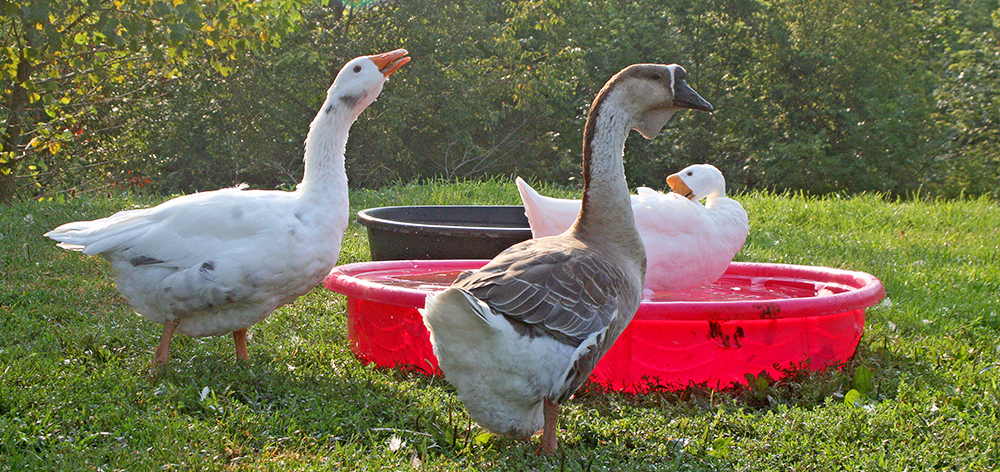
As another bus rolls by

3 GeeseThis is the week when, beyond the preserve perimeter and the latch of the gate, the yellow buses begin to roll with the new school year. In the heavy, humid morning air — doesn’t seem to matter if the temperature is high or low — there are 1/2 mile shouts of “Bus!” from siblings who are already out the front door to another sibling who is in the throes of mid-adolescent groom.

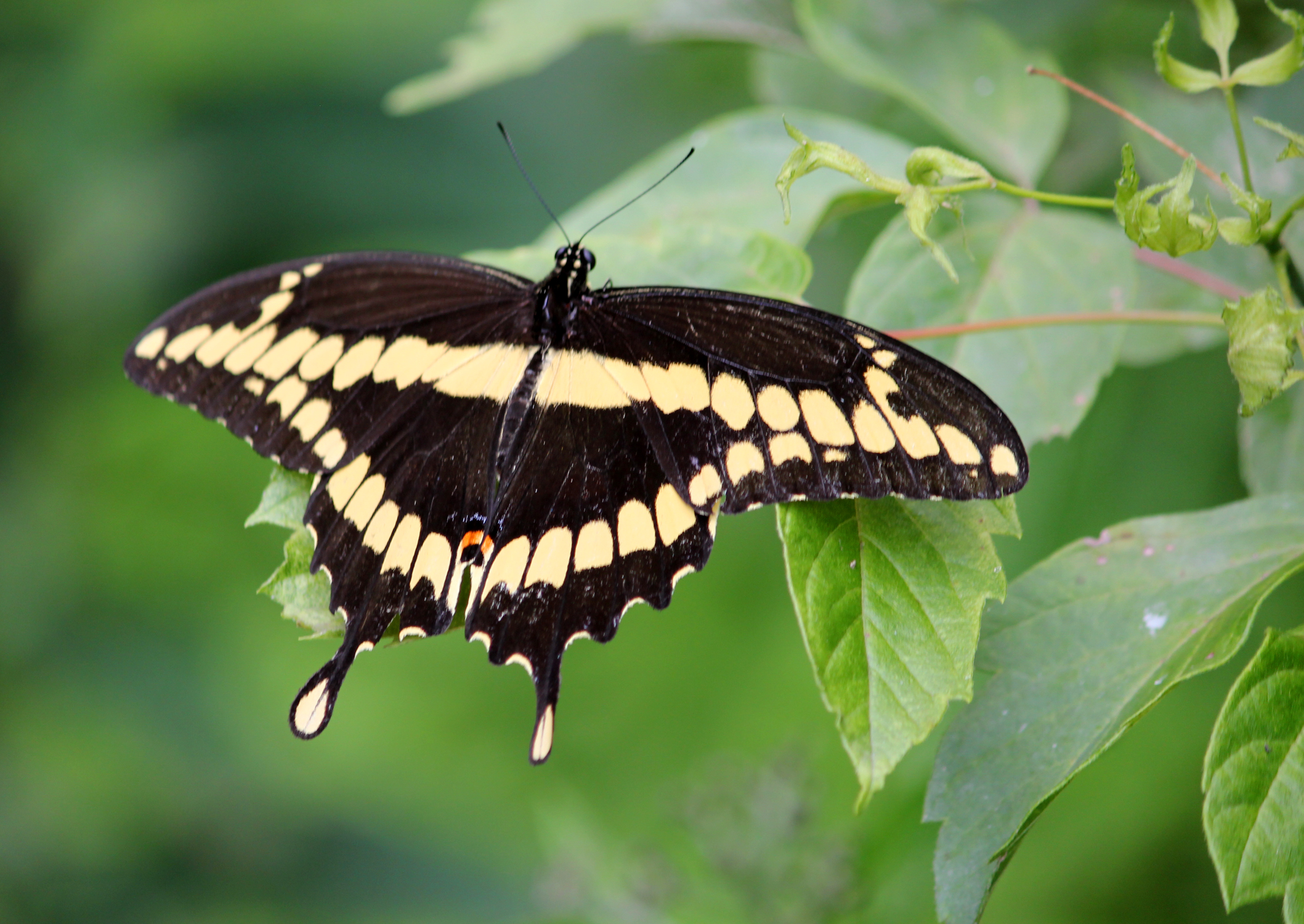
Giant SwallowtailThis week isn’t just an adjustment for school-age children and their families, or drivers who must adjust their drive to work because of reactivated bus traffic. The grasses and lone trees at roads side rustles this time of year with ground birds, pre-teen fox kits, raccoon, shrews, voles and heat-seeking butterflies who, up to Sunday night, had to contend with one schedule of human activity and now must adjust to another noise and traffic level as they ready for colder weather or a move to warmer climate.

What I’m trying to say is, it’s back-to-school for all creatures great and small.

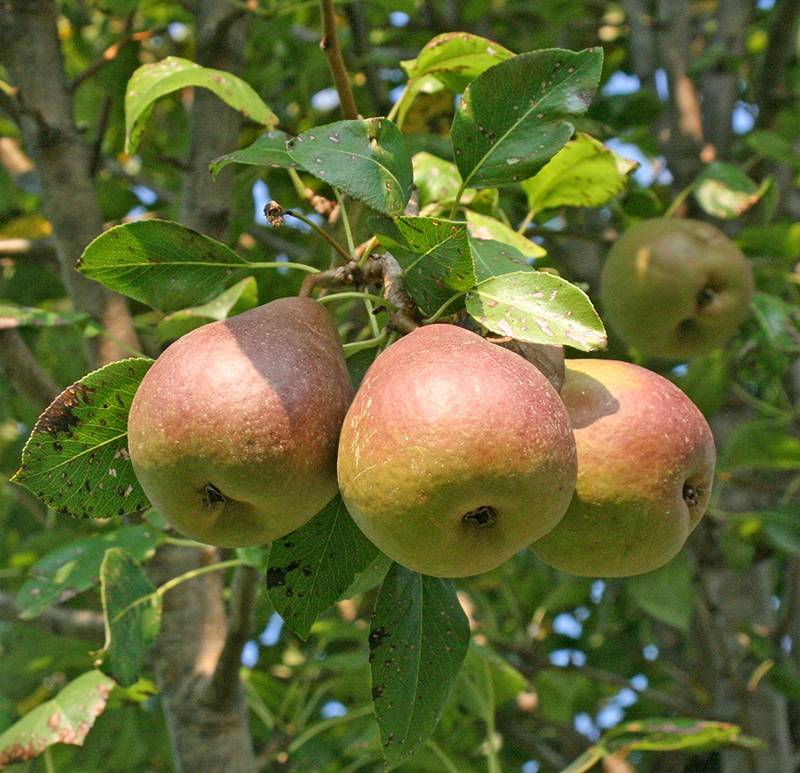
PearsIn the cool of the morning, all are active, seeking warm pools of breaking sun in the lee of open doors and east faces. Pears and volunteer apples glow amongst leaves made more green by contrast with the blue a.m. sky.Antonio

Inside the fence and tree line, new rooster Antonio and established cock-of-the-walk Freckles seem to have established a hierarchy, at least as far as the flock is concerned, although, based on past experience, they will always try to outcrow each other.

No one messes with the will of Bob, except for one white rabbit.

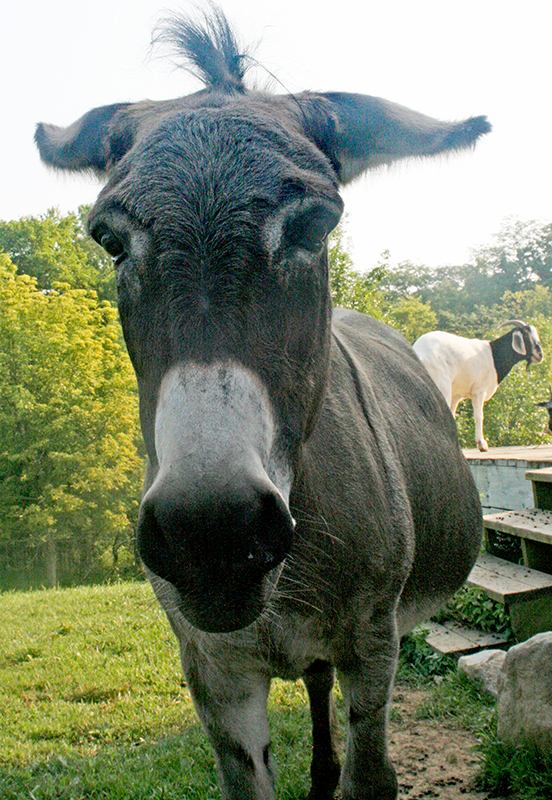
Waldo BobMardiganLucyAs the late summer days heat, the chickens bury themselves in dust bowls or sprawl on the decks with the goats. All the goats, that is except for Mister Bill, who digs deeper and deeper pits in the driveway gravel to escape the heat/cold/rain/wind/gnats, or just because.

Luckily, there’s field stone to fill and an active stone quarry two miles north, and pleasant company to make the effort all the more worthwhile.

Please, as you yield for the school bus, have a care for the the roadside as well.


2015 Summer Newsletter

2015 Summer Newsletter coverThere are three events scheduled for the next three months here on The Quarry Farm, two of which will motivate the creative side of your brain. The third will help get your sillies out while you help us clear an invasive plant to make way for native wildflowers, tree, and grasses

Click on the cover to the left for the full newsletter. And stay tuned to this site as well as “The Quarry Farm” on Facebook for more summer happenings. If the weather permits, there may be a star walk on the calendar.

Days of flowers and fungi, part 1

GroupTwo weeks ago we wore coats down and up the trails to the northeast homestead to find out if the bloodroot was in bloom. The answer was a frosty “no.”

If the bloodroot blooms did weather the April freezes, they were gone by May 2, when naturalist Tammy Spillis led a walk along greening Quarry Farm trails. Armed with field guides and mnemonic devices like “sedges have edges,” staff and registered attendees started down Red Fox hill in a search for wildflowers and fungi.Violets

Our first find beyond a carpet of wood violets was tall meadow rue. “Anything in the buttercup family is poisonous, but they’re good pollinators,” said Tammy.

A sap test on the next find was done on something in the lettuce family, a plant called lion’s foot. A painted turtle raised his head from Cranberry Run, perhaps at the mention of wild lettuce, then swam upstream and away.

One of the preserve’s many corded grapevines, thick as a bodybuilder’s bicep, hung over the creek. “I never cut grapevines down,” said Tammy. “The larger the root going into the ground, the greater the volume of water. What actually brings down a tree is not because the grapevine is a parasite, but because water is heavy.”

She explained that an upper offshoot of a grapevine such as this one, when tapped with a plastic bag secured over the cut, can yield up to a quart of sweet water in a half-hour’s time. “Always keep a grapevine in your woods, just in case your well goes bad,” our guide advised.

Black mustard grew, hot and spicy, near the vine. Kidney leaf buttercup was a few steps beyond. Way back when, certain plants were thought to be a tonic for the body parts they resembled. “As science advanced and they made explanations into the different folklore, they found many of the plants held true to that,” said Spillis. “But many did not. This is toxic. Don’t eat it.”Spring Beauties

She pointed out a native loosestrife, common name moneywort, good for pollinators, flanked by spring beauties. Spring beauties are related to purslane. So let it grow — purslane is high in Omega 3 oils. That means it’s good for you.

Eric, the brewer in our party, was interested in the wild ginger growing on the old quarry’s edge. We first noticed one or two Gingersplants and their burgundy pipe-like flower in that spot a couple of years ago. The warm green leaves have increased in number since then, and new beds are springing up elsewhere in the flood plain. Tammy told us that ants are making this happen.

“The wild ginger seeds have this oily sugar coating. The ants come back for the seeds and move them to their ant colony. They don’t eat the seeds themselves; all they want is the sugar coating. Wherever the colony is, you’ll get another colony of wild ginger. Isn’t that nice?”

It sure is. More good things to come, further up the hillside.

May 2 workshop now open for registration

SAVE THE DATE: On Saturday, May 2, 10 a.m. – 2 p.m., rain or shine, walk The Quarry Farm Nature Preserve with naturalist Tamara Spillis and learn more about native mushrooms and wild plants.

– Registration: Open to the first 20 applicants (age 16 and over). Call 419-384-7195 or 419-234-4620 or email thequarryfarm@gmail.com before April 30 to register.

– Workshop Fee: $15 (includes lunch)

(Optional) Bring a favorite field guide, notebook, pencil, cameras, trail snacks.

-7xo5oaRukMz_q5gaOTNMGByCtLGRcBuUldJ0QIJt0nSt_MM5KSOfXCSPv3XWc6I2T4DW0bPMhJ0DngL1ZgR_pF4bcvMNPaCTCeXwLY7-348F1BfNXFmjF6GWGnuRt4FxWlVY0gIGioYtoX65Us5yZganOVg2DRIuL_zbkOrlhF6GkSkPWkcQV0R4xDONsplaCorlfT0xgWxzf_Yigelk3KFEd3• If you are allergic to penicillin, you should not eat morel mushrooms, no matter how delectable. Morels contain a substance also found in penicillin that accumulates in body tissues and can eventually cause anaphylactic shock.

• Oil lamps containing mushroom wicks may have lighted the world for ancient peoples.

• Genghis Khan made gun powder out of charred shelf mushrooms.

These are a few of the fascinating mushroom facts shared by naturalist Tamara Spillis during a recent slide presentation to The Gathering Basket Herb Society.

On Saturday, May 2, Tamara will share her extensive knowledge with 20 lucky people as we walk The Quarry Farm nature trails and prairie.  We will have the opportunity to explore with Tammy as she identifies and talks about the mushrooms, flowers, and plants along the way, and if you have brought your camera, you can get some great photos.

Some wildflowers that we know about, like wood violets, blood root, and Jack-in-the-pulpit should be blooming on May 2, but the Quarry Farm staff are excited about the prospect of discovering other species that we haven’t yet identified.  When Tamara is finished surveying plant life here, we will have a great educational resource to share with visitors of all ages in the future.

Keep an eye on the weather forecast and come prepared for conditions.  No matter what, we will have a great day on the trail.

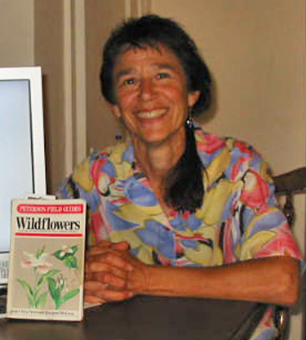
tammy spillis Harison Garden Club2-1About Tamara Spillis, Naturalist:

Tamara works part-time as Master Gardener Coordinator in Henry County (Ohio).  In addition, she is a small business owner who manages a naturalist service, working with private landowners and conservation entities to identify and document populations of wildflower and wildlife species.

She also teaches and lectures at museums and colleges on Native American bone and stone tool use.  An amateur mycologist, she has published articles on the use of mushrooms by diverse ancient and modern cultures for fire, warfare, and medicine.

Color photos that Tamara has taken in the field showed insects feeding on and pollinating wildflowers, plants in the various stages of their life cycles, easily confused plants with similar flowers — one edible and the other deadly, mutually supportive plant and insect relationships, common wild plants that are edible and others that are toxic, plants that we live alongside of but rarely see in our everyday lives, and many other insights into the natural world of the fields and woods around us.

welcoming Spring

IMG_9128

It’s Monday and snow is falling outside the window. The temperature is low enough that the white stuff of winter is sticking in clumps on trees and on what new grass there is. Two days ago it wasn’t much warmer, but it was still the first full day of spring. And even though the morning blew in on a cold northwest wind, Spring is great cause for celebration after a polar cold winter that began prematurely with snow on October 31.

IMG_9108We planned a March 21 ‘Welcome Spring’ Family Day three months ago by placing the event announcement in our winter newsletter. It was an optimistic move, one which dreamed big of turning over logs to find salamanders and the first bloodroot leaves curling up from the ground around the old homestead well north of the 10-acre grassland.

The forecast looked promising for Saturday, with sun and predicted temps in the high 50s. As noted two paragraphs ago, what we got was cold wind and gray. Laura switched the refreshment menu from cookies and lemonade to doughnut holes, cookies and a selection of hot beverages which we thought would consumed by those of us who live close by.

Instead, we were joined by three families, all hat-and-coated and ready to hit the trails. Most were return visitors, so they knew that the wind chill would drop once we entered the nature preserve with its tree lines of defense.

Two Canada geese stayed put on the melted quarry surface, at least long enough for us to watch them lift off. We saw plenty of signs of movement, from a variety of tracks to wild turkey feathers. And since this walk was one to greet Spring, this group inaugurated the vernal pool trail for all future guests.

Steve gathered two water samples from the largest pool, an oxbow that was once part of Cranberry Run prior to a brutal 1950s attempt to ditch the natural, wild creek. The oxbow is home to frogs, dragonflies, woods ducks and a variety of turtles. Saturday, most burrowed deep and our enthusiasm sent anything with wings away, but the net did yield scuds, a tiny crustacean akin to shrimp.

We pondered scat in the upland grassland, talked about the sharp hawthorn that sometimes stores a shrike’s lunch and made maple leaf angels on the main hardwoods trail.

Up and out again, and several donuts and hot chocolate cups later, the south Cranberry Run trail led us to the farm animal sanctuary where Buddy, Beatrice, Johnny, Marsh and Mister Bill led the pack in a high-five. Turkeys Inigo and Humperdink paraded their splendid selves about, puffing and drumming as their heads mottled from pink to blue to purple and back again.

IMG_9146It was the first visit with guests for Mister Bill, a very, very, very large Boer goat, and he was tolerant until he’d had enough and wandered away to chew on a spruce. We took the hint at high noon, the scheduled departure time anyway, and were escorted to the gate by turkeys, goats, Buddy and Beatrice.

A warmer spring walk, one fit for wildflowers and light sweaters, is in the works for April.

Stay tuned.
Winter 2015 Newsletter

2015 Winter Newsletter-2With heavy snow in the forecast for Sunday, we’re looking at pretty stellar photo opps on the trails. Since the roads leading to may be impassable, perhaps the upcoming events listed in the newsletter may be more accessible.

Click on the cover to the right and see if one or all fit into your winter schedule.

guess who came in for breakfast…

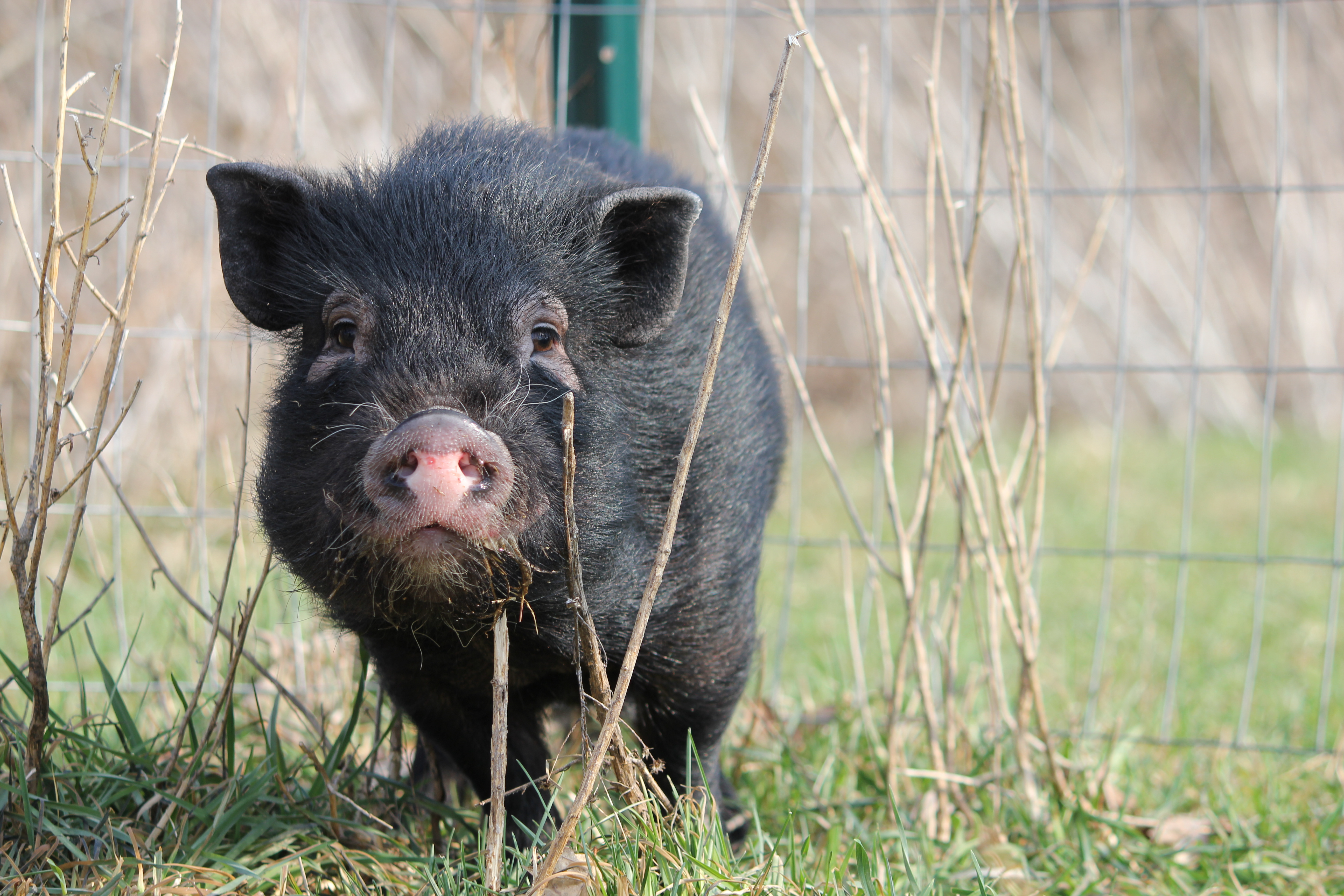
aphonse coming in This morning, after almost nine months on The Quarry Farm, one of the sanctuary’s potbellied pigs decided to expand his territory, see just what exactly makes the other side of the green door such a big deal. It took some coaxing, about an hour of Anne’s time, three apples, a banana and a handful or two of peanuts to get him all the way into the house, but, eventually, Alphonse took the plunge. Bob Barker, his father (at least, we’re pretty sure Bob’s his father; their similarities in appearance are uncanny), watched him slowly make his way in, while Beatrice (aka Little Pig) peered through the slats in her pen at all the goings-on.

Bob and Alphonse are two of the four pigs rescued from a horrific hoarding situation by representatives of the Humane Society of Allen County and the Allen County Sheriff’s office during the depths of last winter’s freeze. Their story isn’t groundbreaking news — we’ve talked about it repeatedly here — but their recovery is a source of joy for all acquainted with these two. Where Bob settled into a routine relatively quickly, Alphonse has retained near total independence, refusing most advances for even the simplest of interactions. And that’s reflective of what they found during his rescue. While none of the animals had adequate shelter, Alphonse, it seemed, had none at all. He was free of any pen, though the drifting snow had created some measure of confinement. He had worn deep alphonsetrenches in the snow and roamed the area within their confines. Following his rescue, he, Bob and Greta and Grits, the other two potbellies who now live on the top of a hill down in Kentucky, were sheltered at HSoAC. Even there, Alphonse was less interested in companionship than he was in regular meals. After all of the legal issues were dealt with and out of the way, Bob and Alphonse came here. After several months of living exclusively out-of-doors, Bob discovered the pleasures of clean floors, soft blankets and nearly constant access to treats. But Alphonse, not so much. He settled into the outbuilding we’d originally constructed for the turkeys and that’s where he stayed, quite content to keep his distance. Of all of us, Rowan had the best of luck with him, though maybe it’s better said that Alphonse has been much more tolerant of her than of any others. Routinely, she was the one permitted to touch him. So it was something of a shock when we noticed him standing on the front porch about three weeks ago, and this with Rowan off to college.

alphSince then, Anne has worked with him daily. Talking to him, coaxing him closer to the house, to the porch to the door. This morning, all that effort payed off and he stepped inside for the first time, possibly ever, anywhere. To prove to him that he was still autonomous, captain of his own ship, we let him back out almost immediately. After, that is, as many peanuts as he could eat in the space of three minutes. It wasn’t long before he was back at the door, asking to come in. And out again. And back in.

He’s back out, out and running wherever and doing whatever within the confines of the four acres that serve as sanctuary for him and the others…but now he knows.

Alphonse, shortly after arriving.

Alphonse, shortly after arriving.

The door is always open.

all roads lead to OH-235 and at the end of the drive…pigs

Yesterday, Anne, Laura and I took half the day and drove south to Yellow Springs. Rowan’s there, engaged in a major of Environmental Sciences at Antioch College. It’s a great place to visit, even a groovy place, Yellow Springs having never entirely given up on hippy culture.

On the way, we crossed OH-235 and Laura made the comment that, seemingly, no matter where you’re going, there’s OH-235. We’d been on it just a few days before, coming back from a funeral, and here, unexpectedly, it was again.

Anne and I arrived home to a message from Laura Zitzelberger, the face and mind behind Nature’s  Nursery Center for Wildlife Rehabilitation and Conservation Education. It seems that a potbellied pig had arrived uninvited at someone’s home and they’d called NN to see what could be done. Laura, in turn, called us and we closed the loop by calling June, the woman with the uninvited guest. She provided us with her address and we agreed to pick up the pig the next day (today, as I write this), Sunday.

In the morning, I input June’s address into mapquest. The recommended route sent me north on OH-235 for roughly an hour.

Go figure.

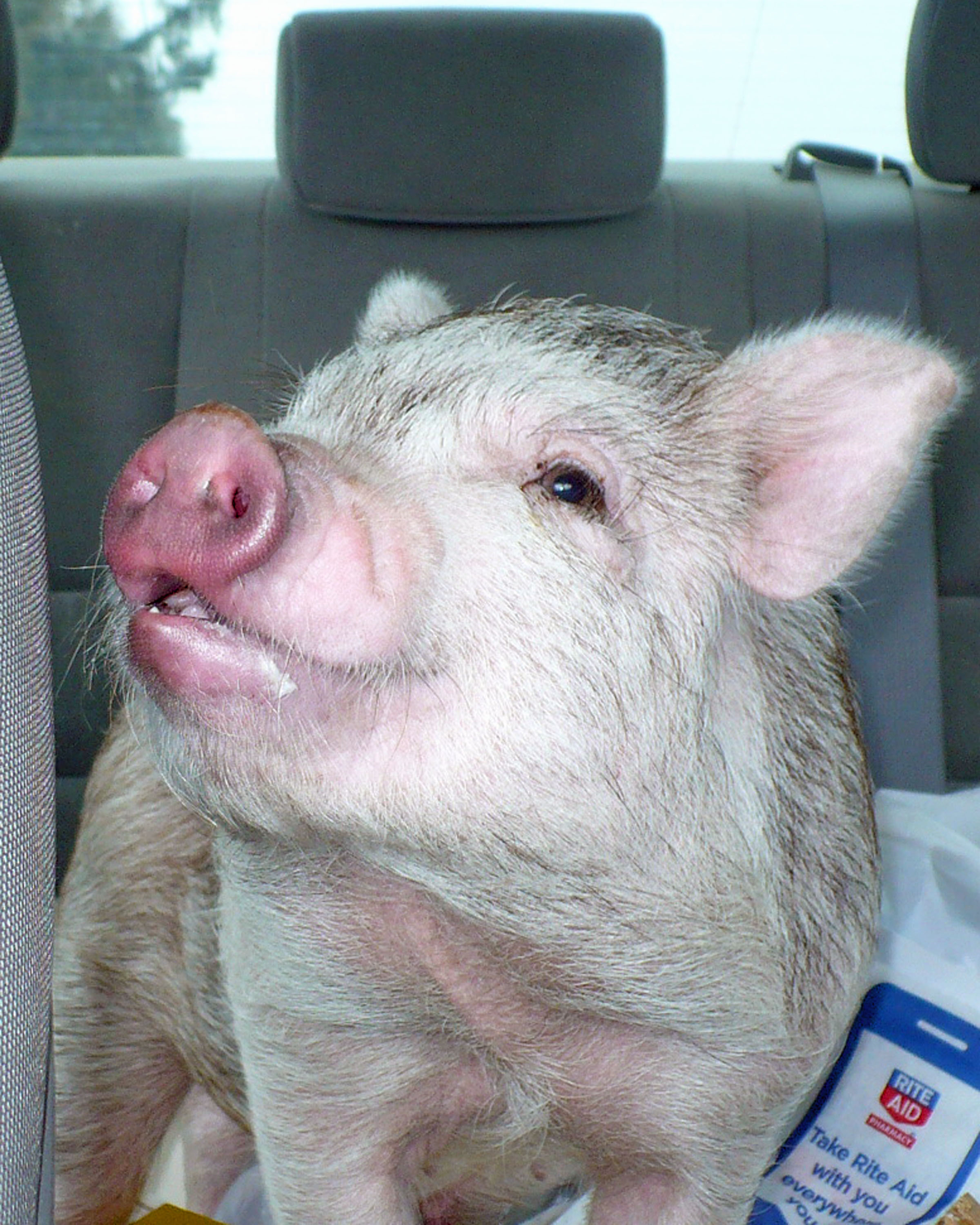
in the carStepping out of the car, I could hear him, the pig. He was quietly grunting, standing at the gate of a small outside kennel; behind him, a thick blanket that had served as his bed for the night. He trotted out, allowed me to scoop him up and we settled into the car for the drive back.

This is the second potbellied pig in less than one week to simply turn up, wandering without direction, without oversight and without hope. And while nowhere near one another – the first was discovered stumbling along State Route 65 in Columbus Grove and the second some 50 miles north – the trend is disturbing. It is, sadly, also not surprising. Visit any domestic animal rescue site and the sheer number of pigs up for adoption is staggering. RescueMe (what is, for us, the preeminent site for finding families and animals in need) is overburdened with people seeking new homes for pigs; not simply in Ohio, but all across the nation. And these are the people who are making an effort to re-home their companions.

Pigs are smart, strong, curious and obsessive. Left to their own devices, pigs will find a way; and, while cute and cuddly when little, most pigs don’t stay small. A low weight for a miniature potbellied pig is 60 pounds, but, while minis can maintain weights below 100 pounds, seeing pigs in excess of 100 pounds isn’t unusual. So, rather than the Chihuahua they were expecting, they wind up with an animal closer in size to a Labrador, or something even larger. All too often, these pigs that have grown bigger than anticipated are simply abandoned, turned out and left to fend for themselves. Within months, even the most docile and diminutive of pigs may revert to a feral state: growing tusks and thicker hair and becoming leaner and more muscular. Pigs returned to the wild, intentionally or not, within three generations will assume the physical attributes of their boar ancestry, no matter their ancestry. This is just as true of potbellied pigs as it is of Chinas and Polands.

But not this pig. He’s here for the long haul, or in another, similar environment.. He’s an intact adolescent male, but that condition won’t last long. Tomorrow, we’ll contact The Quarry Farm’s veterinarian and arrange for a bit of a snip. Tomorrow we’ll also contact the Wood County Humane Society and let them know he’s here.

Just in case someone’s interested.

getting to know you

a different shade of white

woods

In 1911, Franz Boas, an anthropologist who spent years living among the Inuit, published The Mind of Primitive Man. Through it, Boas not only revolutionized anthropology, but sparked a debate that has lasted over a century. Boas famously suggested that the Inuit have dozens, if not hundreds, of different names for snow. Linguists argue back and forth the merits of the claim, some saying that added suffixes to root words are simply individual flourishes while others assert that, yes, each new permutation is, indeed, a separate and distinct word.

Which leads me to my question and my subject…Would the Inuit consider a heavy frost snow?

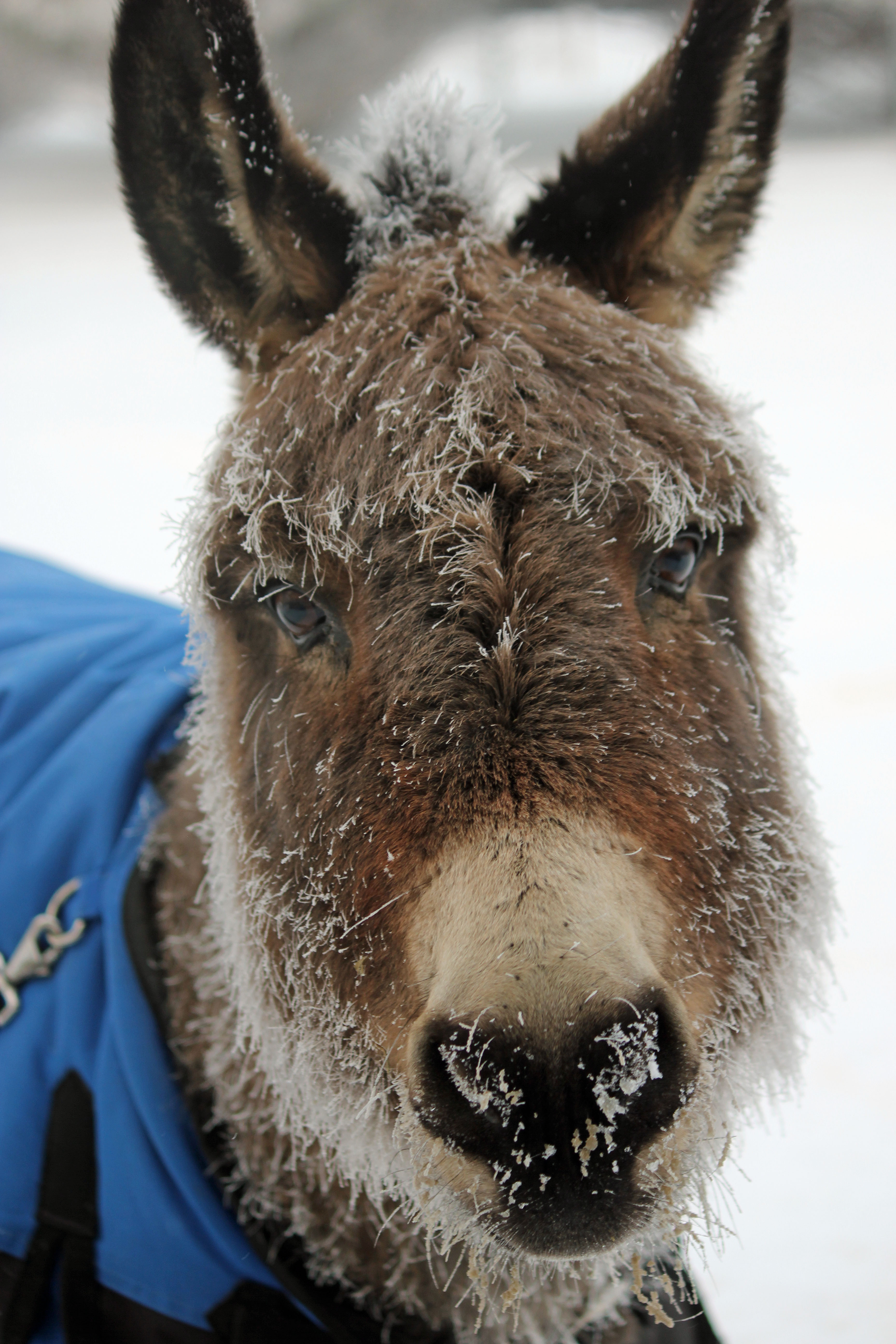
There was fog in the early morning hours on Wednesday; fog and a whole lot of cold. Combined, the two create what I’ve always considered hoar frost, a consideration that is at least mostly accurate.

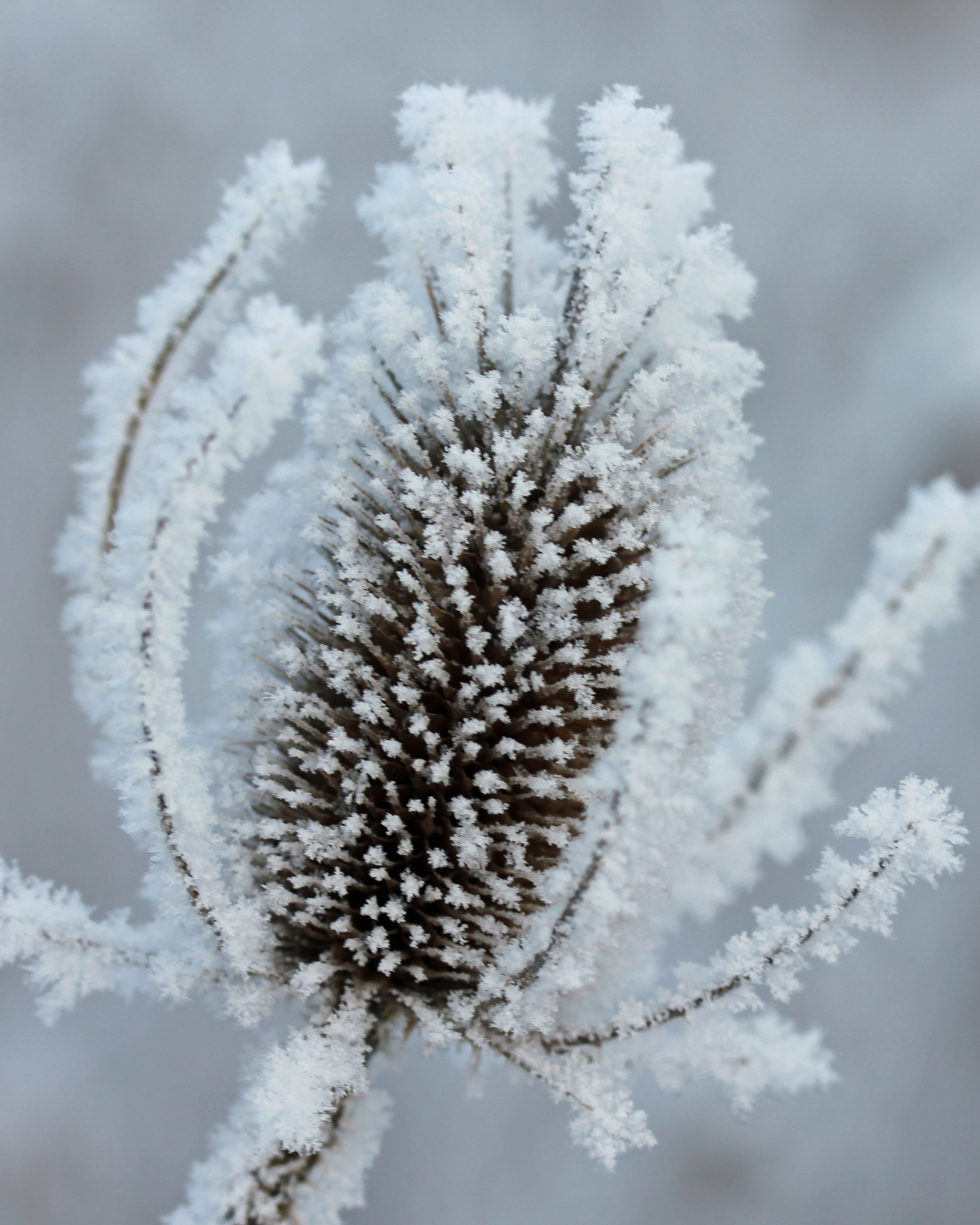
frosted wild teasel

frosted wild teasel

As it turns out, there are six different recognized types of frost – two of which, rime and black, are subject to debate – one of which is hoar. Well, sort of “one of which”. See, there are actually four different types of hoar frost: air, surface, crevasse and depth. Air hoar is the type of frost we experienced today. Tangentially, hoar is a word of Old English derivation, an adjective meaning “showing signs of old age”; in this case, conceivably, it is the fringe of white that conveys senility.

The world seems to froth with it, this thick confection of frozen air. It shrouds tree limbs, coats fences, cars and outbuildings and accumulates on the individual hairs and feathers of the animals that spend a good deal of their time out of shelter.

In the bottom land below our house, the plants and grasses were still, bowed under their burden of frost. The wild teasel (Dipsacus fullonum), an invasive from North Africa and Eurasia that has been here so long that it seems native, carried its coat with grace.

Later, though it never truly grew warm even for this time of year, the rising sun brushed so much frost from tree limbs that, under the canopy, it fell as thick as snow.

So, can anyone tell me? Does anyone know? Make it official…does frost translate to snow?

Buddy