Six years into The Quarry Farm’s 10-year goal of removing invasive plant species like Amur bush honeysuckle that crowd out native trees and wildflowers, David Seitz has cleared so much of these invasives that it is time to plant trees that will benefit native wildlife. This April, we are planting 850 trees, including species of oak, hickory, serviceberry, buckeye, plum, persimmon, and viburnum. We will supply gloves, tools, and refreshments.
Please email thequarryfarm@gmail.com or call 567-376-0705 if you, your friends, family, Scouts, classmates, would like to help be part of this exciting project. Let us know of any day April 12–May 3 that works for you.
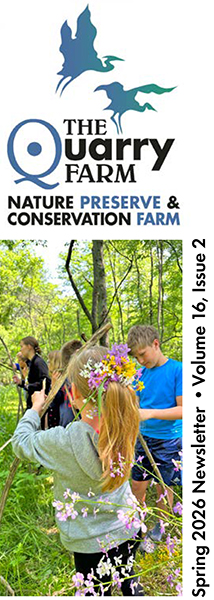
Our Spring 2026 newsletter is out now. Click on the cover here to read more about what has been and will soon be happening on The Quarry Farm
There is one lone cricket singing in the basement this week. The evenings are so cool now that the outdoor chorus have wrapped their bowstrings in scarves of dried grasses. Birds and butterflies are on the move, winging away early this year due to cooler temperatures. There will be no Fall Migration Bird Hike in the nature preserve this year because we missed the boat, or rather, the airship.
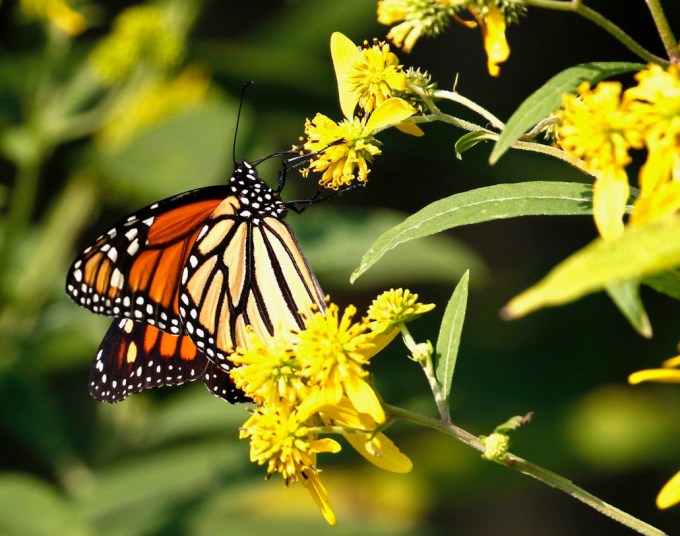
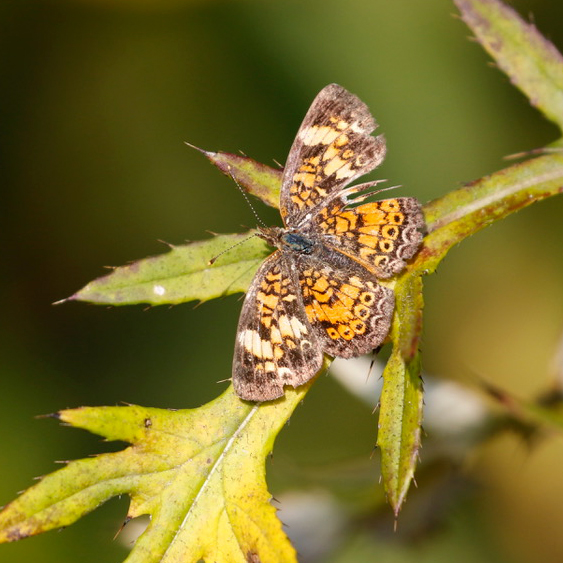
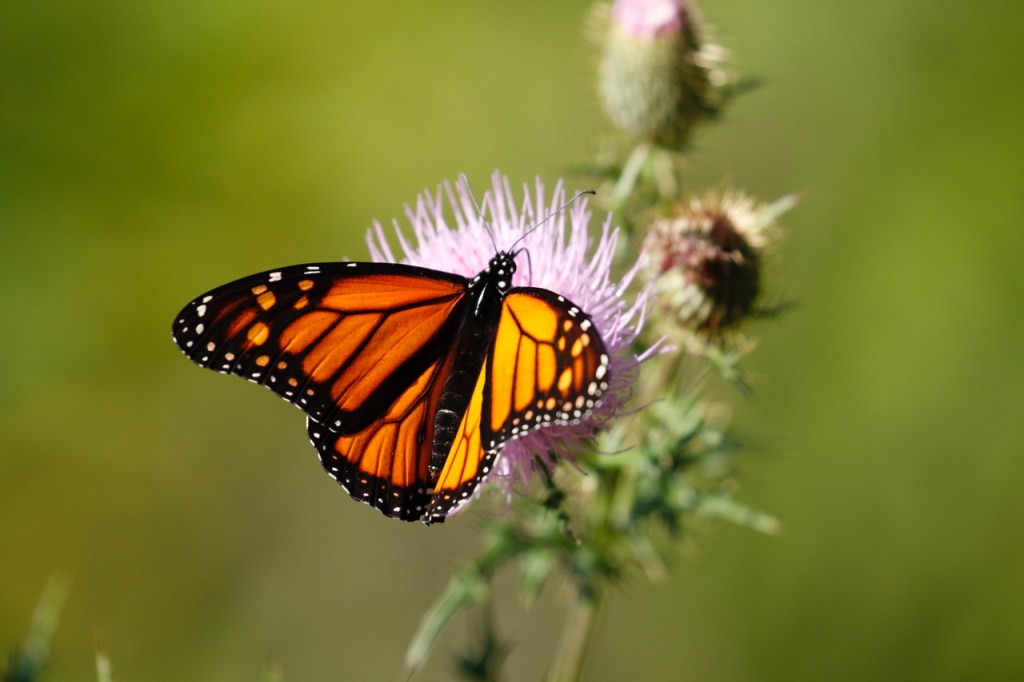
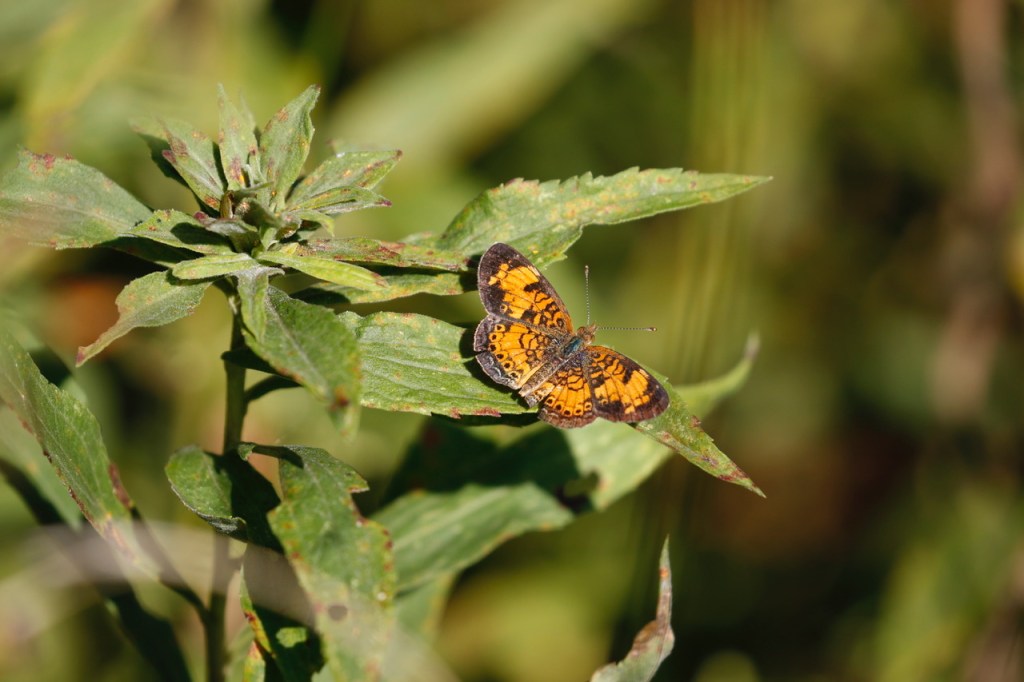
The good news is that Birders Deb Weston and David Smith grabbed their tickets in time to walk the trails and see who is passing through on their southern journey. What they found last week is that Monarch Butterflies (and one tired-looking Pearl Crescent Butterfly) were having a restorative back in the grassland prairie.
Pearl Crescent Butterfly
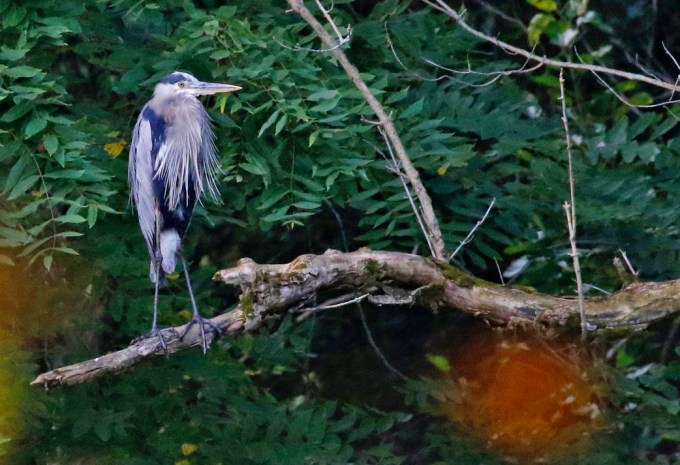
That same day, they documented 29 avian species, with David IDing all but a Great Blue Heron by their birdy vocalizations. Deb had her camera at the ready once David pointed them out.
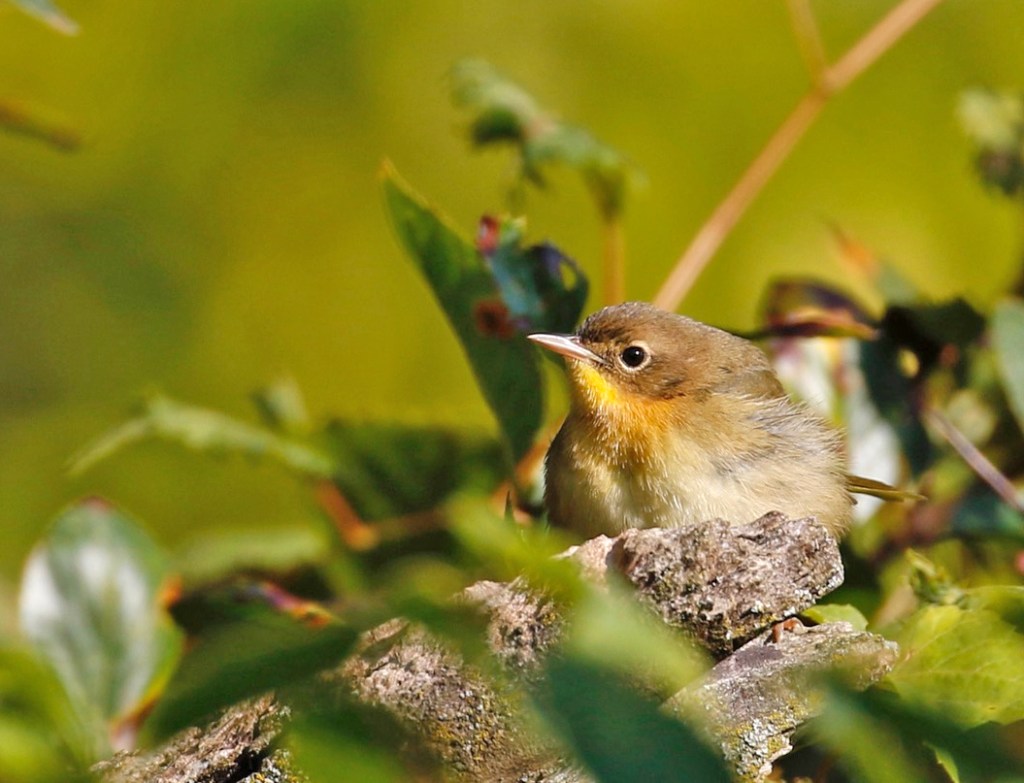
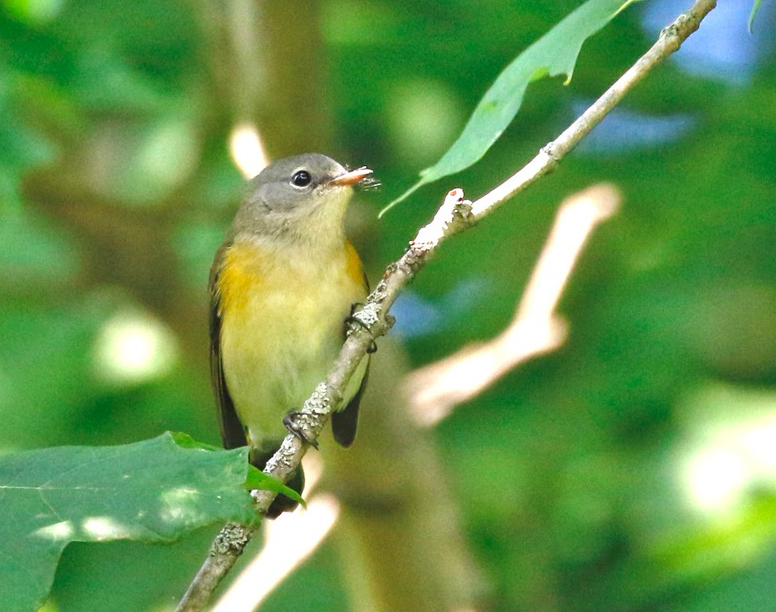
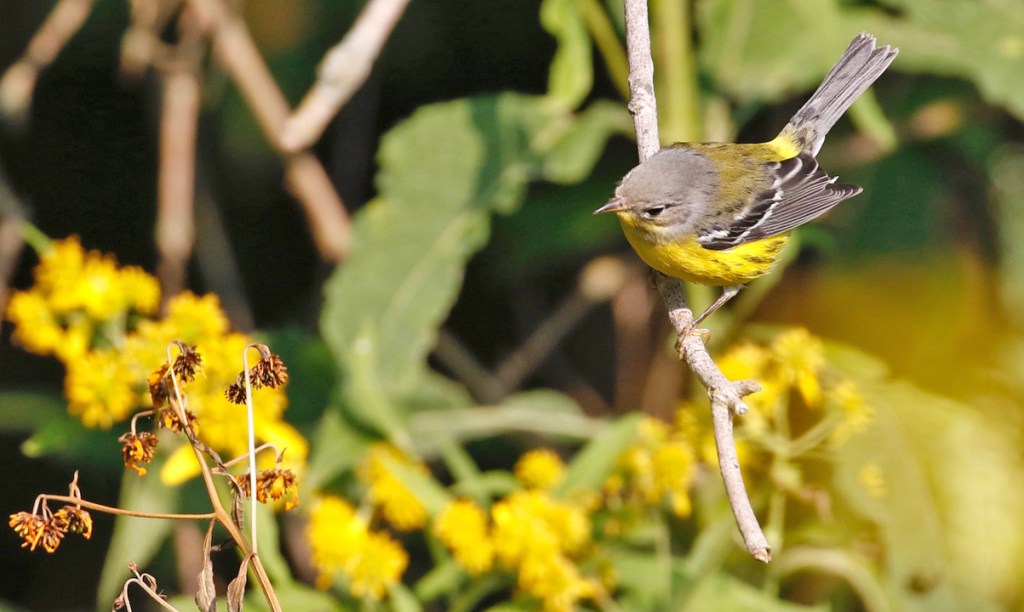
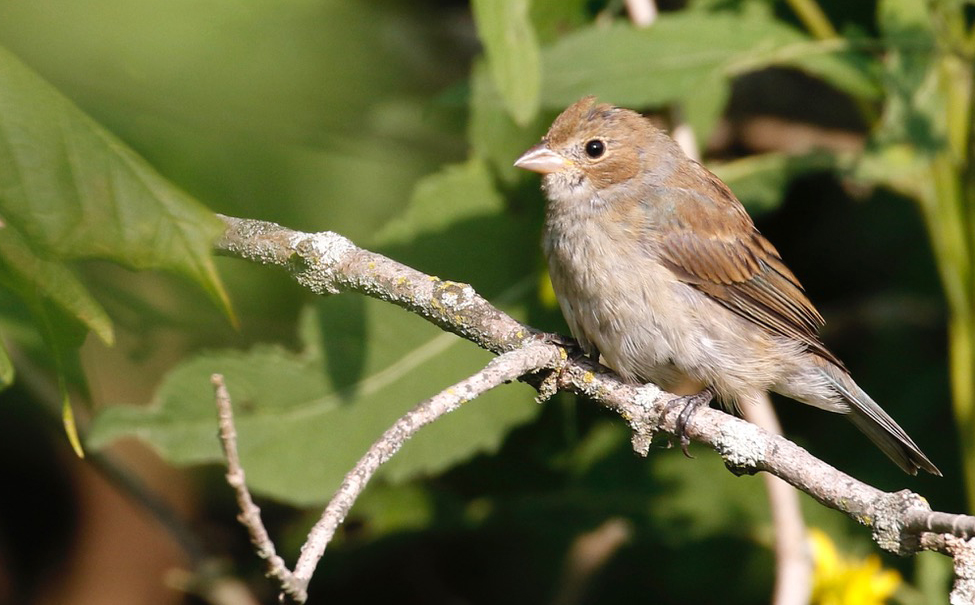
“Fall migration is completely different than spring. The birds aren’t singing and they don’t look the same,” she said. “For me, they’re in the “shakes head, beats me” category.” In order, juvenile Indigo Bunting, Magnolia Warbler and female American Redstart.
On Monday, the tally increased to 41 species, including short glimpses of 11 warblers. Deb is out there again today. The air is warm enough to remove a sweater now and the droughted grass crackles under foot. The Quarry Farm Birders are a stealthy bunch, though. Can’t wait to see what Deb and her camera found feeding in the goldenrod and ironweed.
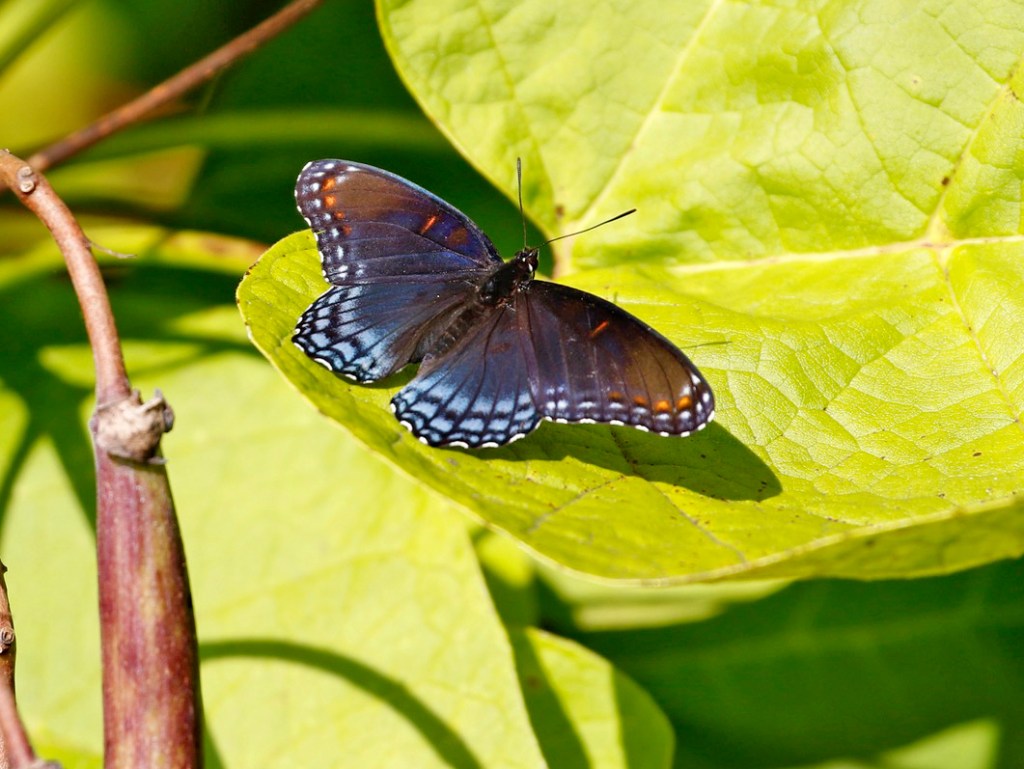
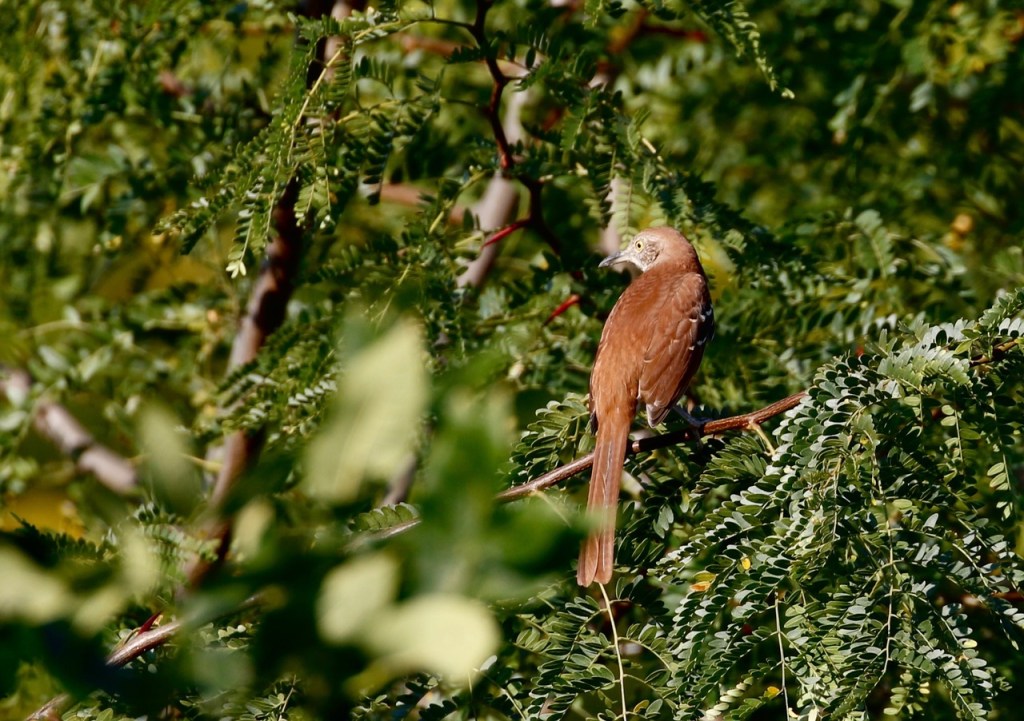
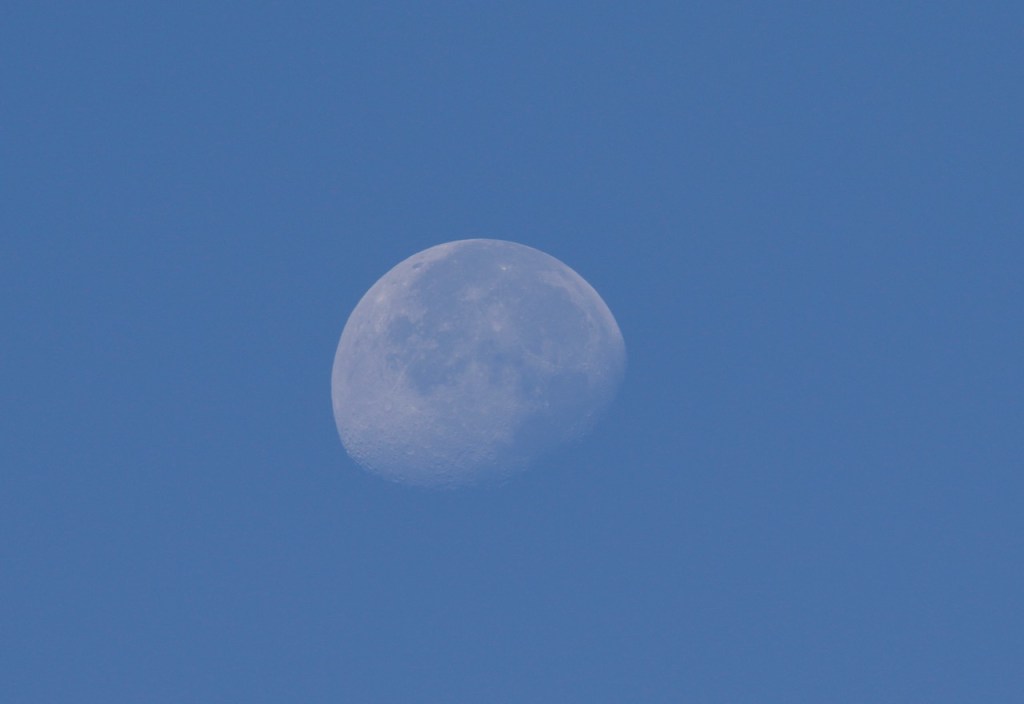
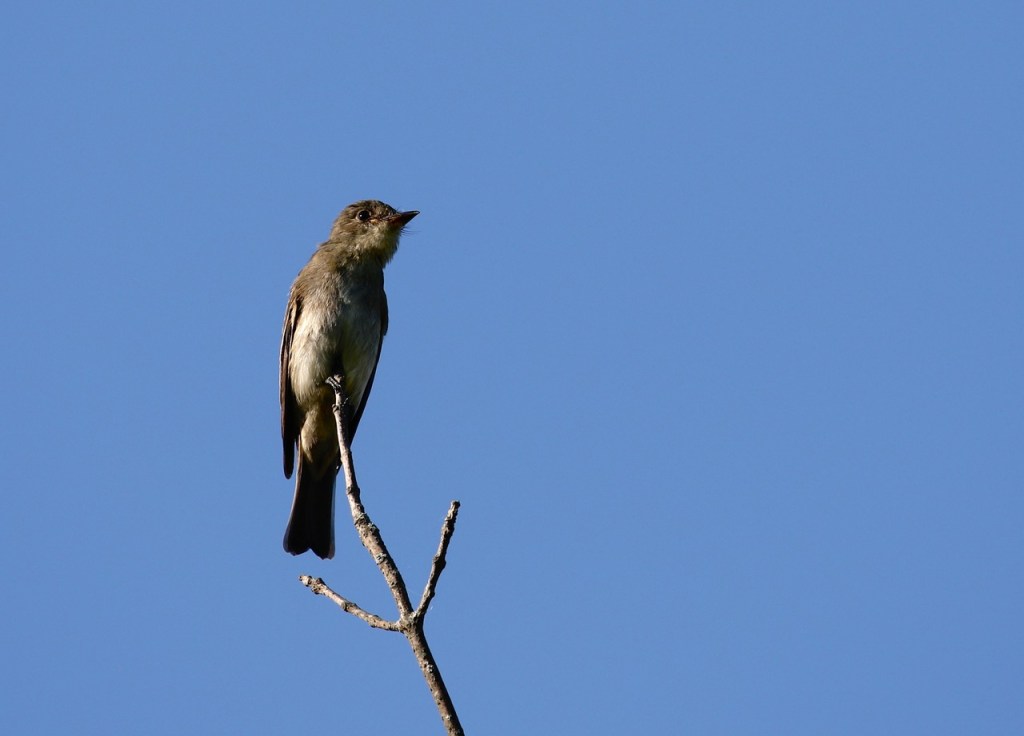
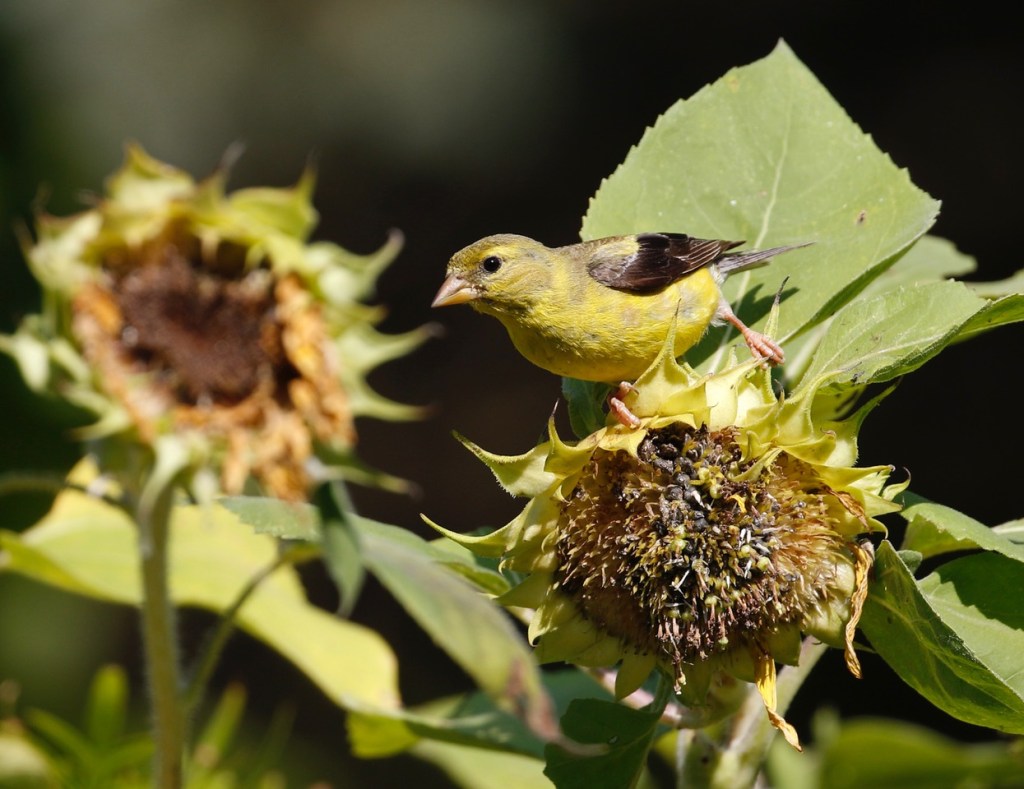
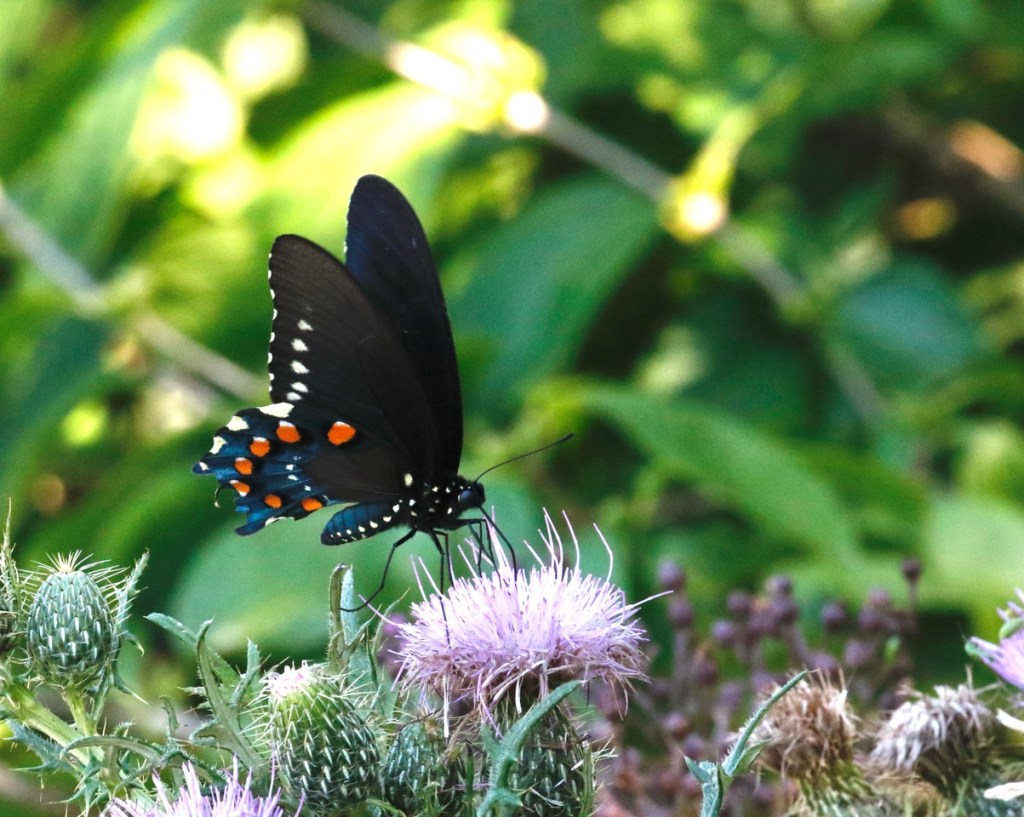
Common YellowthroatFemale American RedstartMagnolia WarblerJuvenile Indigo BuntingRed Spotted Purple ButterflyBrown ThrasherWaning Gibbous MoonEastern Wood Pee-weeAmerican Goldfinch
I learned this week that a blog post should always tell a story, beginning with, “Once upon a time.”
Once upon a time, there was a four-acre hillside that housed seven potbelly pigs, one potbelly pig, three donkeys, eight goats, two turkeys, nine geese, eight ducks, and an indeterminate number of chickens because that number seem to fluctuate every morning when new roosters appeared. Very mysterious. All of these animals were disgruntled. They didn’t get second breakfast.
No matter how sad they looked when a car passed their fence, when the house people that they just knew could hear them disgruntling didn’t give them their second breakfast, and the door to the hay mow didn’t open no matter how hard they banged on it, food did not appear.
November nights were sometimes warm and sometimes cold. The animals buried into the straw on cold nights and dream that the next day’s breakfast would multiply until suppertime.
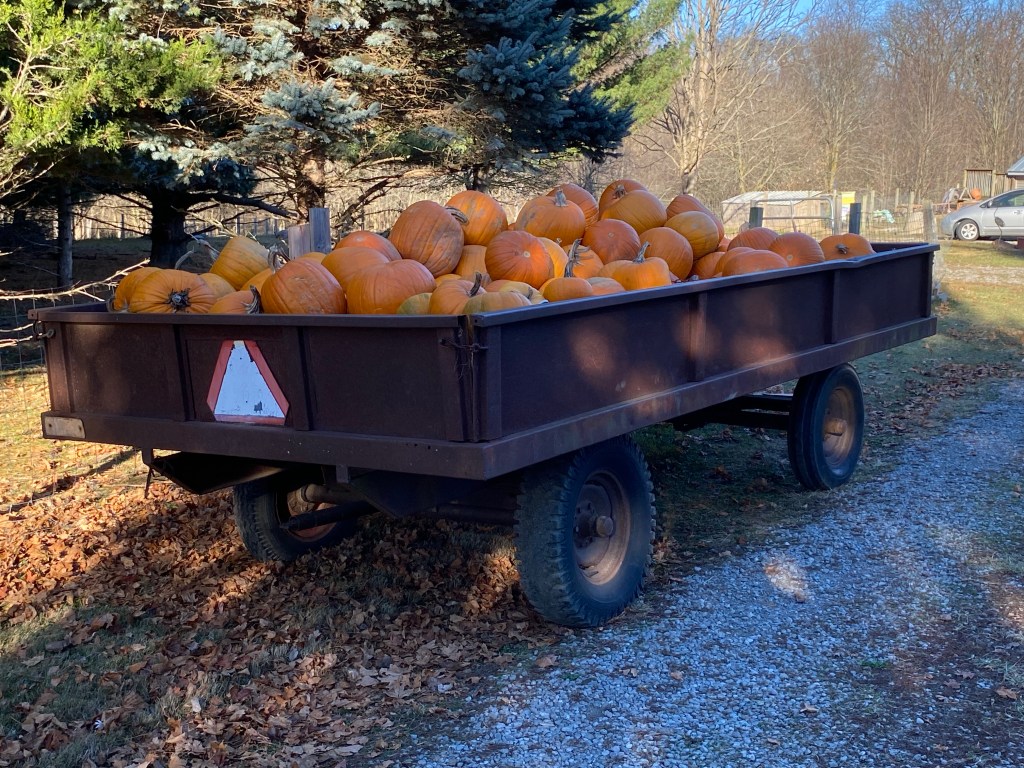
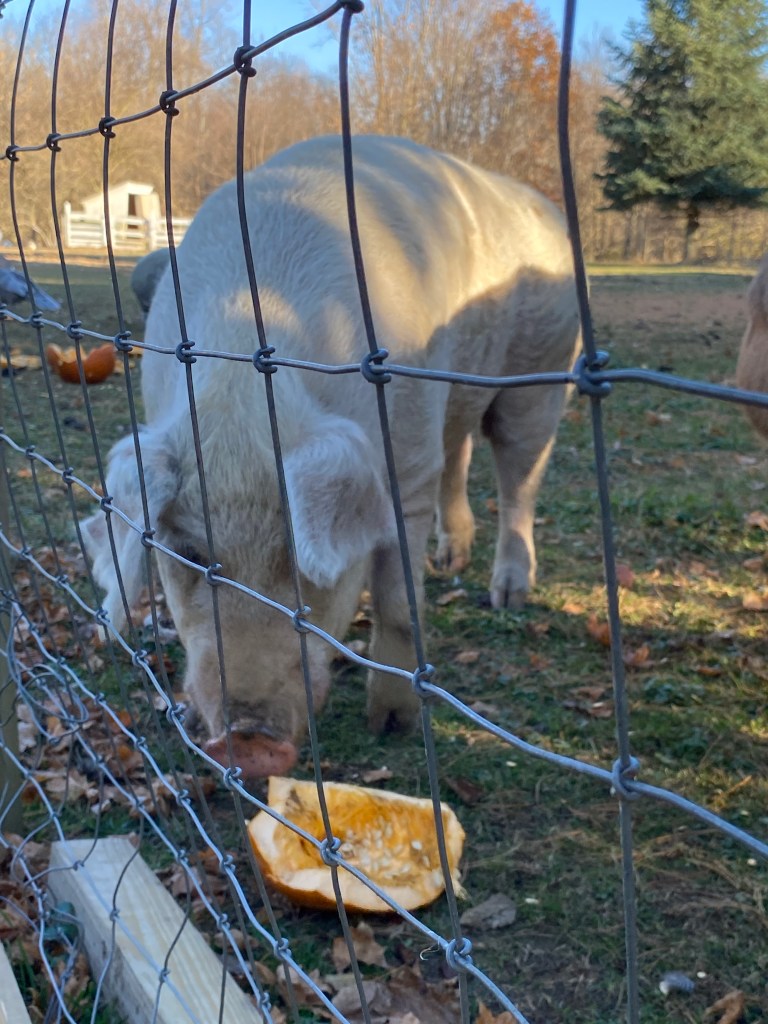
On November 7, a car did stop. Only it wasn’t a car. It was a truck. It was a truck pulling a wagon. The wagon was full of pumpkins: big round juicy seed-and-pulp-filled pumpkins. Magic Dave and Jane had arrived! Dave and Jane were the best people in the whole world. When these Great Pumpkins visited, squash rained from the sky. Orange fruits hit the ground and burst open with squashy orange goodness.
The animals ate until their bellies dragged on the ground. The sun warmed the chilly November ground and their full bellies. When evening came, they ate their supper and finished what juicy bits were on the ground for dessert. Donkeys kept watch over the wagon. Pigs snored, dreaming of lip-dripping squash threads. Fowl purred contentedly in their roosts. Goats burped (they always burp.) The people in the house sang songs of praise for peace, delivered by Great Pumpkins.
“You’ve got to try Facebook,” they said. “It’s fun. Everyone shares pictures.” I did and lots of people did, too. Then we shared ideas. Then we shared opinions as well as other people’s opinions like they were our own. We made “friends” and we lost actual friends because it is so very easy to click without weighing the pros and cons of clicks. I did all of the above, forgetting that social media is a really handy tool and should not be a pastime, even on cold, windy, rainy days like we weathered this week. Yesterday, I found myself getting depressed over the negative back-and-forth in one private group that, over time, has devolved (in my opinion) into an airing of us vs. them and why anywhere is better than here.
I left the group yesterday and went outside to talk with the geese under the clearing sky.
The geese are indeed talking. Nine wild Canada geese landed outside the fence yesterday. The eight geese on this side of the fence noticed. There was about 15 minutes of boisterous conversation. One goose from this side of the fence flew over to join the wild flock, which is exactly what we hope for. The Canada geese here are flighted and banded with identification so their movements can be studied once they become the wild birds that they are meant to be—IF they can shake loose the strong bonds of imprinting on people.
Buddies Tim and Scott
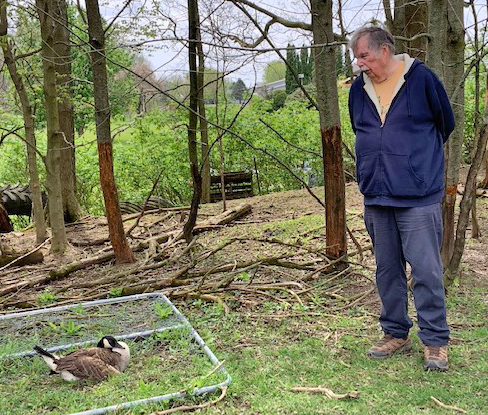
One Canada goose that will not be flying is Tim. He’s been spotlighted in The Quarry Farm newsletter. Last Saturday, he had visitors from his hometown of Parma, Ohio. Scott cared for Tim when the goose’s mate died. He made sure that his “Buddy” had feed and open water when the flock thinned in winter. According to another visitor to the Parma pond, Tim had been hit not once but twice by the same car. And survived. And thrived, thanks to Scott.
Scott and Margaret drove from Parma to say hello to Tim. Another banded Canada goose rode along, a very large bird that is fully flighted but very imprinted on people. Spring being what it is—a season of great twitterpation among all species—the new goose came out of his crate loaded for bear. He rushed Lucy the Donkey. The goose that keeps close to Lucy took umbrage. The new goose took off and visited the neighbors about 1/2-mile south for 24 hours before returning with his feathered tail between his legs. This goose, who is identified as “K”, is minding his Ps and Qs and treating “T”, “U”, “X” and the other geese (and Lucy) with more respect.
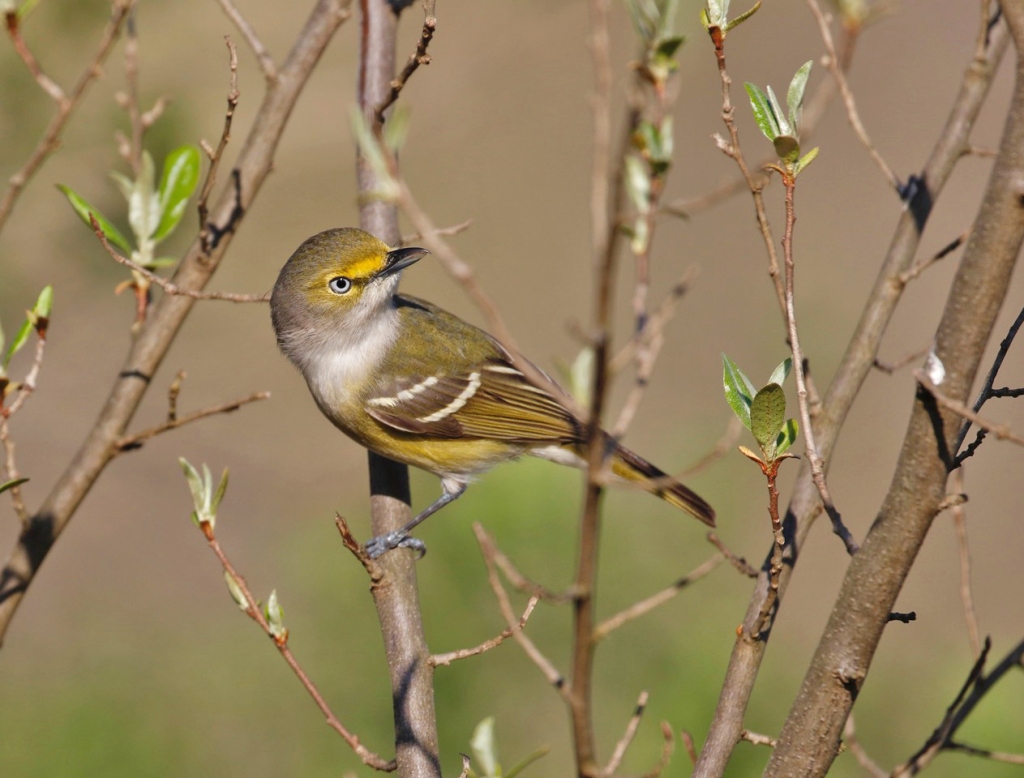
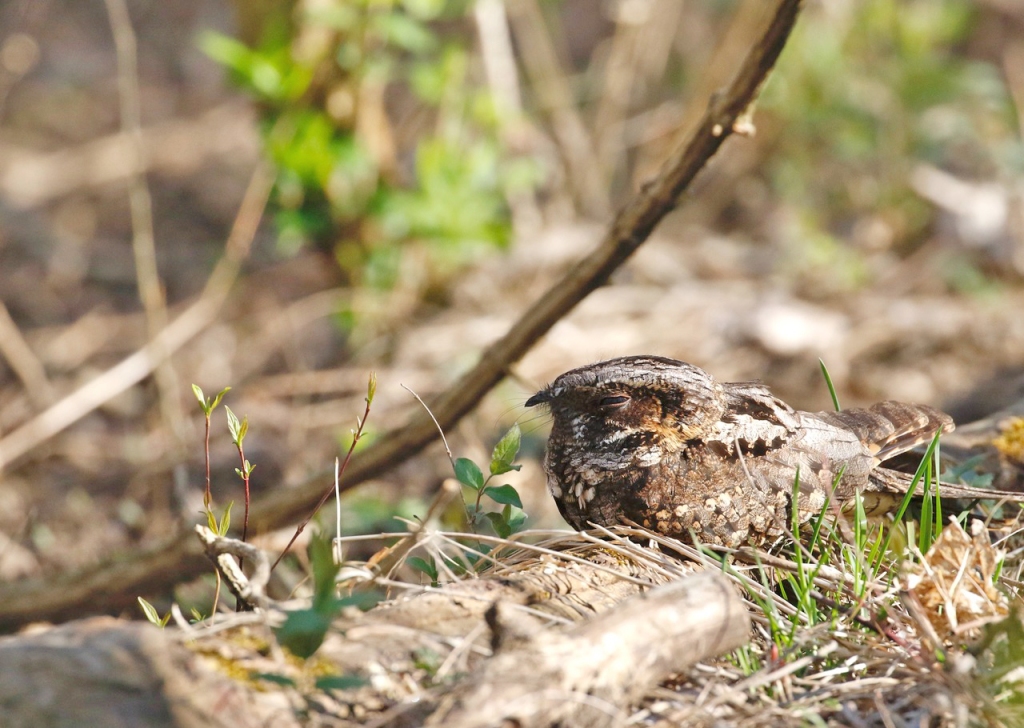
In addition to new tall goose tales, there are stories of new bird sightings this Spring. Deb Weston and David Smith have been monitoring migration. Deb added Eastern Whippoorwill to the Hotspot list of 140 avian species documented on these 50 acres. Last week she saw a Blue-headed Vireo and is trying to catch a photo of the cheeky bird. She did get a photo of a White-eyed Vireo (above).
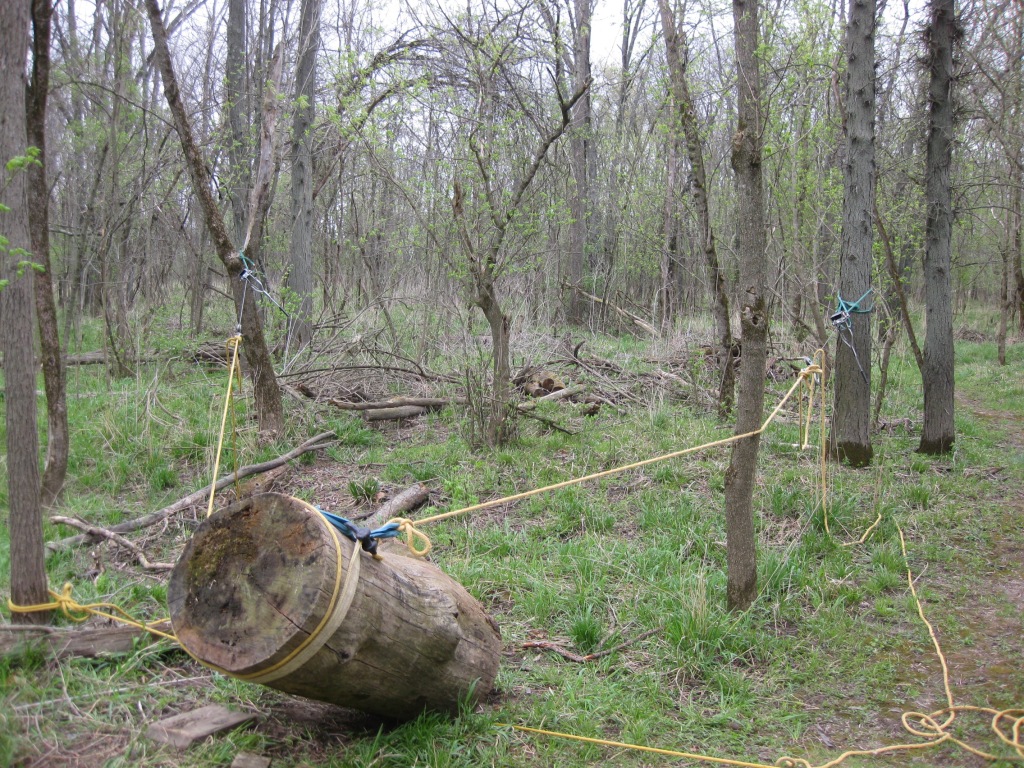
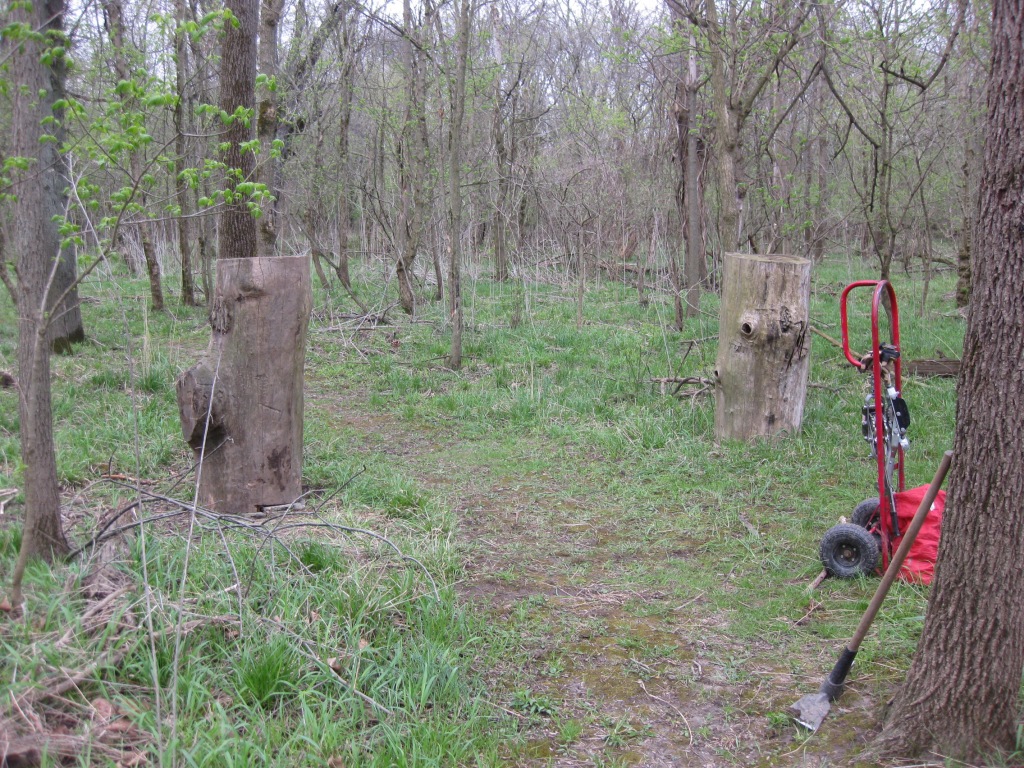
David Seitz continues to trek from Columbus 2-3 times per week to battle invasive shrubs, adding more bush honeysuckle limbs and trunks to the shelter piles. Last month’s flooding floated one of the pillars—two substantial tree trunks that mark the start of the floodplain trail—into the 19th-century quarrying overflow channel. David’s mind-boggling engineering engineered it back into place. By the way, that same mind engineered the whole, ancient and water-logged tree trunk from the bottom of the quarry a few years ago.
Paul and Joyce Bonifas constructed the Cadillac of composting systems in the Red Fox Cabin garden area. Paul designed it and all of the Putnam County Master Gardeners and other volunteers will add to the bins. So will whichever one of us cleans the henhouse next.
Glandorf Cub Scouts were the first group to walk the trails this season. They heard owls, spotted shrews that had been displaced during the flood and watched a bald eagle follow Riley Creek. May, June and July days are packed with school field trips, summer camps, the Summer Tea Tasting in the Gardens (June 17) and the Spring Migration Bird Hike (May 20).
Two weeks ago, a carload of loud music and shouting teens stopped along the Northwest perimeter. My hackles went up, expecting a can to go flying over the fence. Instead, someone shouted, “It’s just beautiful!” This place, the lives that depend on it, the volunteers who care for it and them and the people who want to know more about it and them are why here is a place to be.
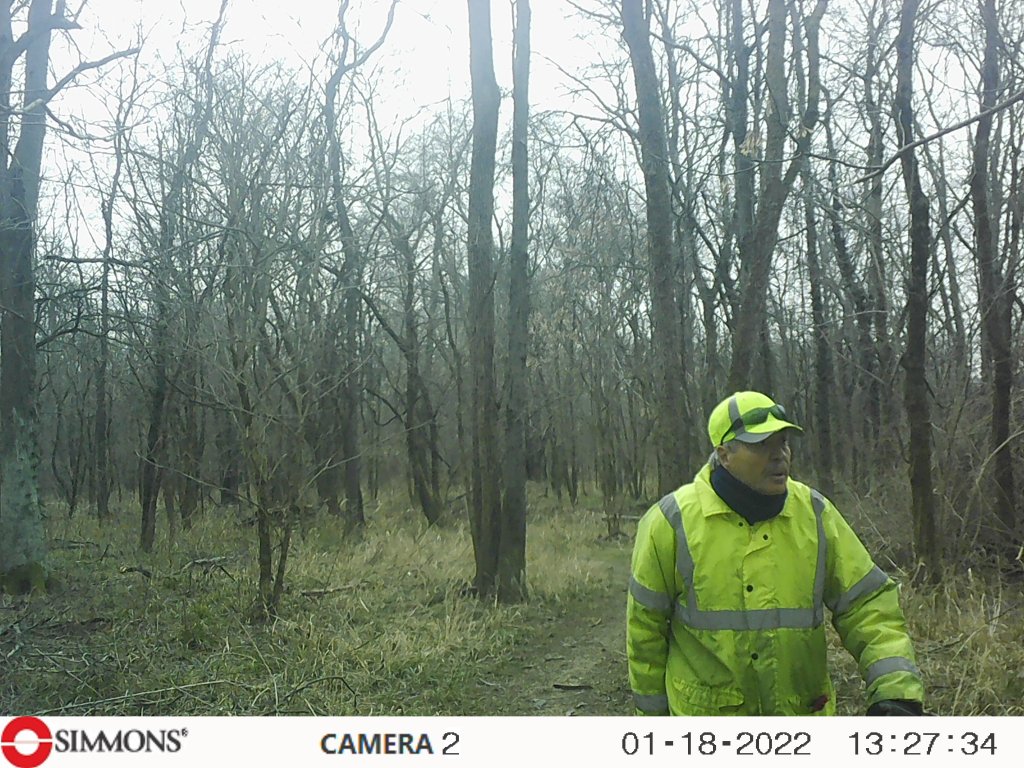
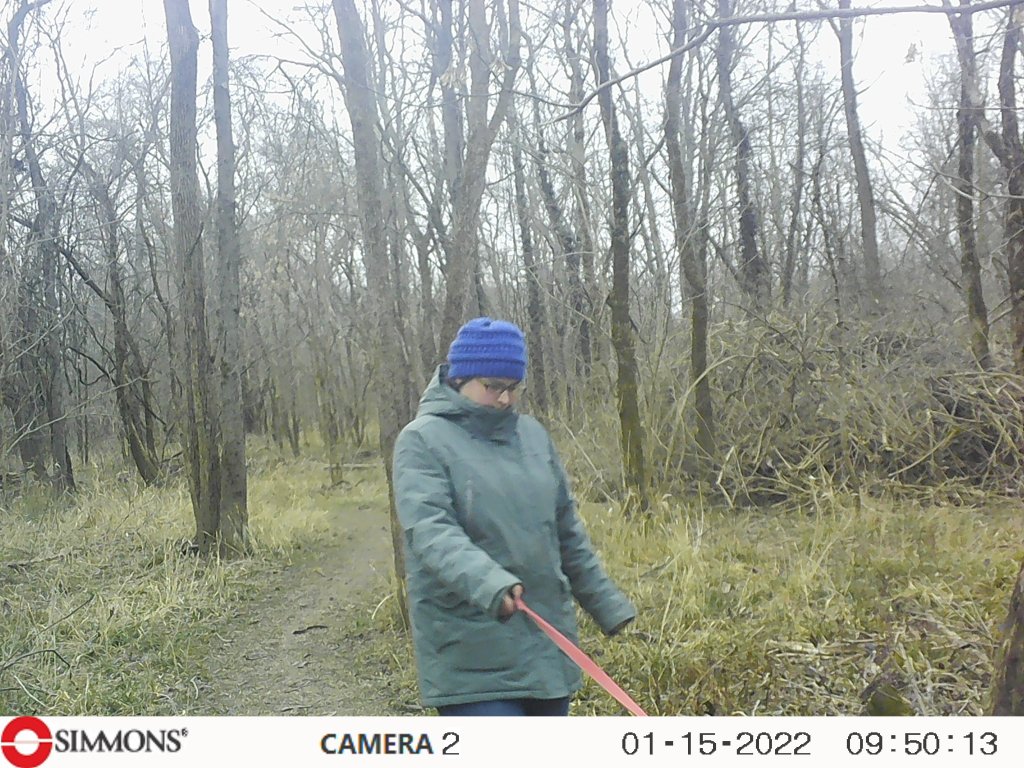
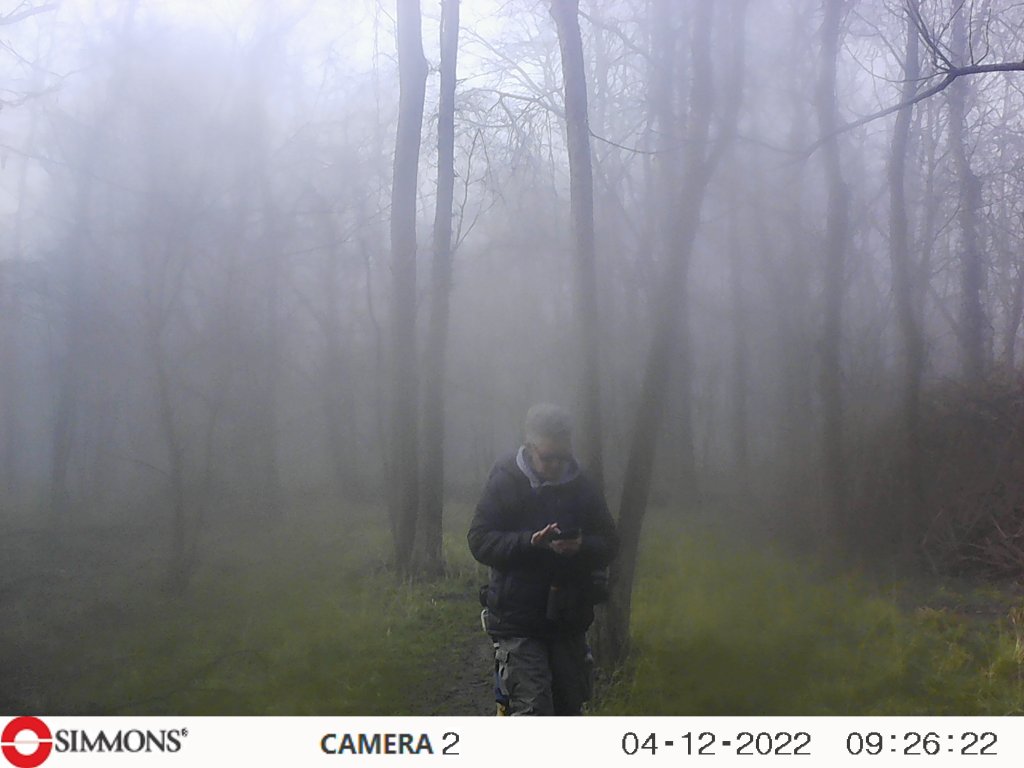
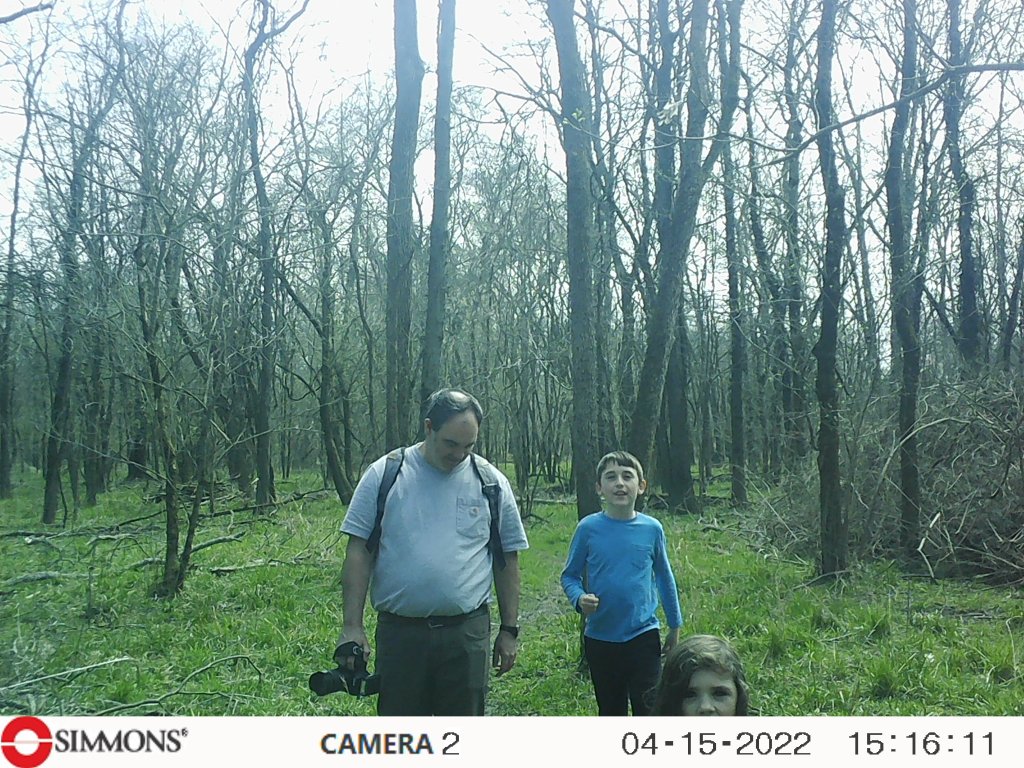
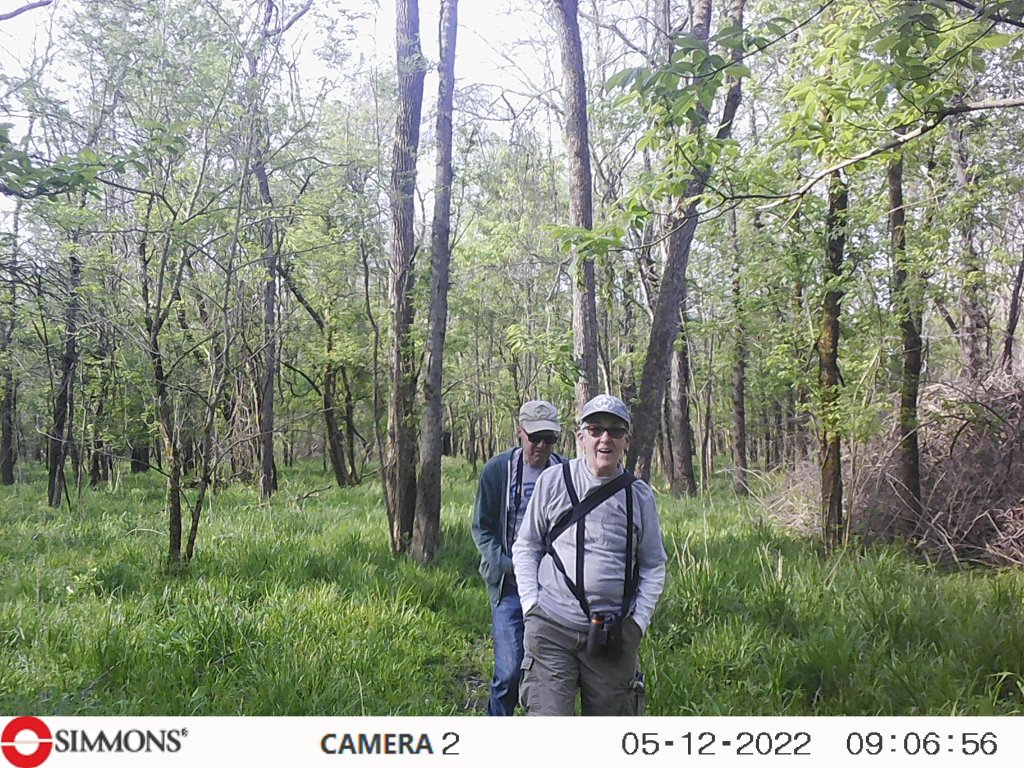
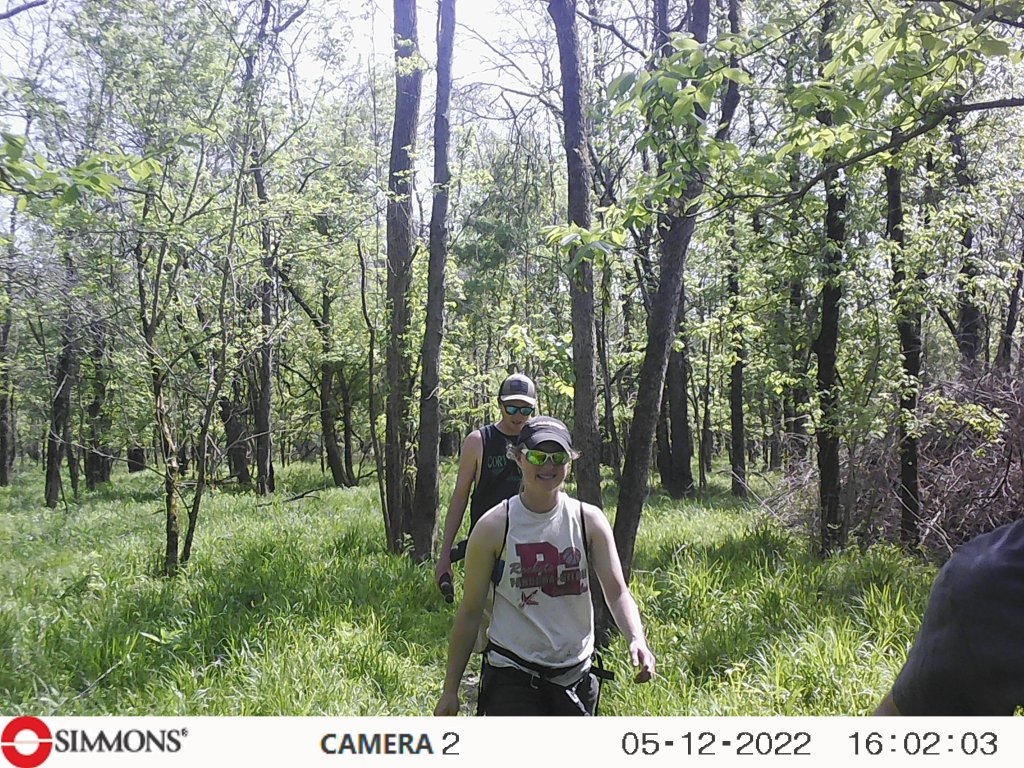
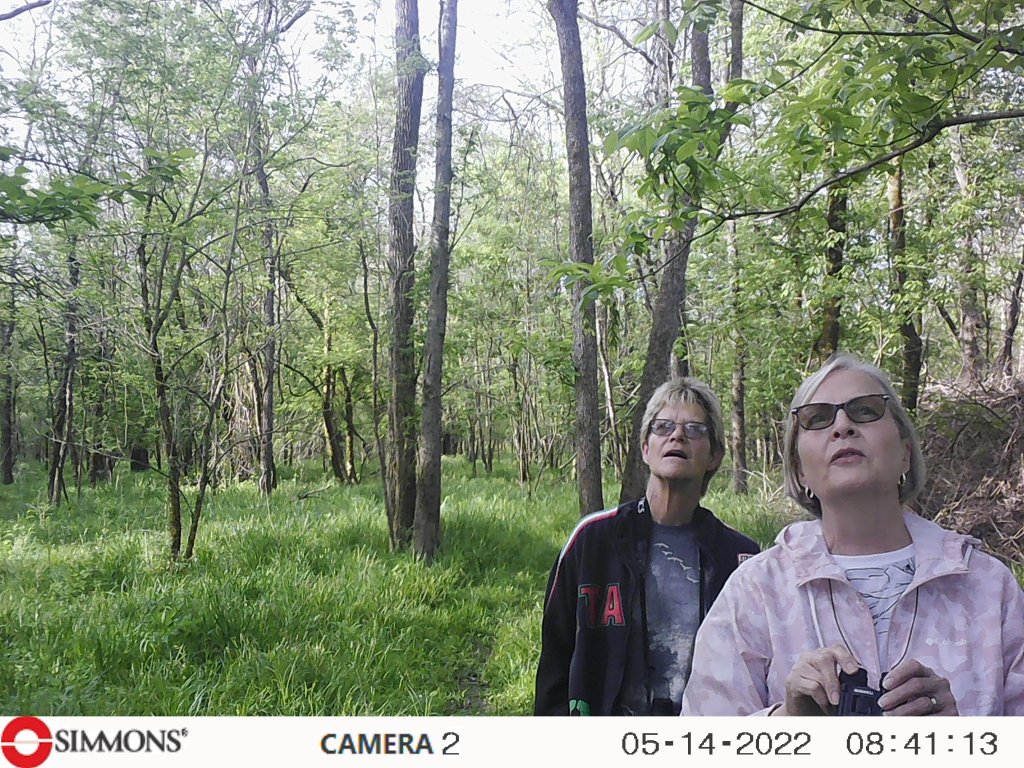
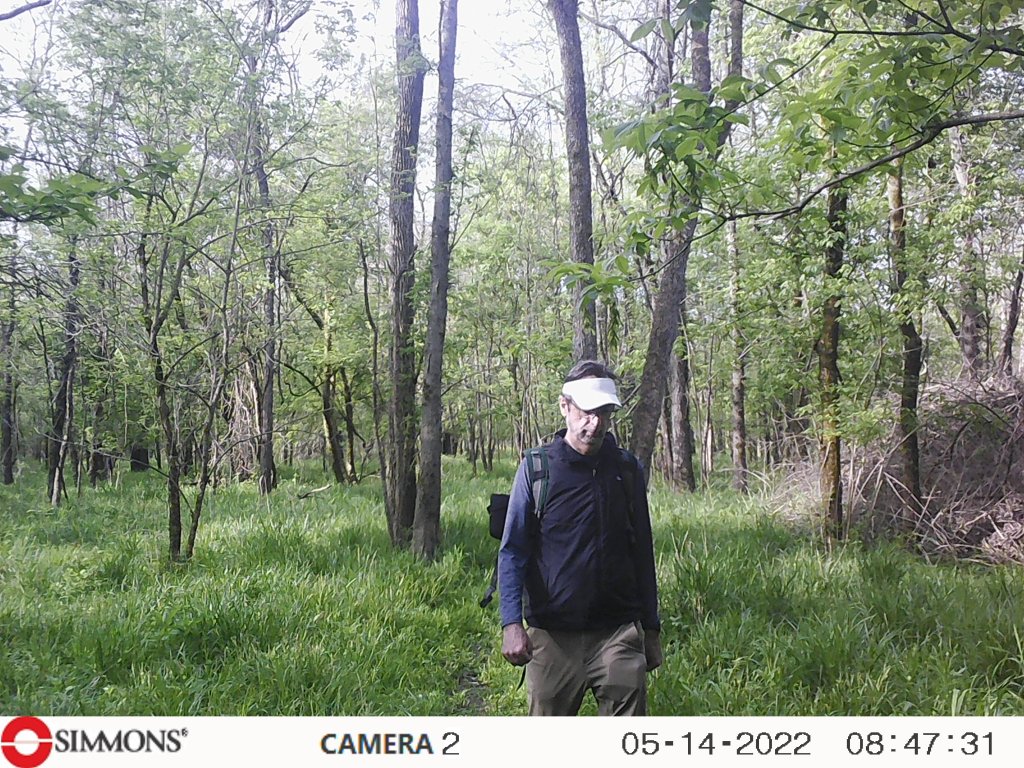
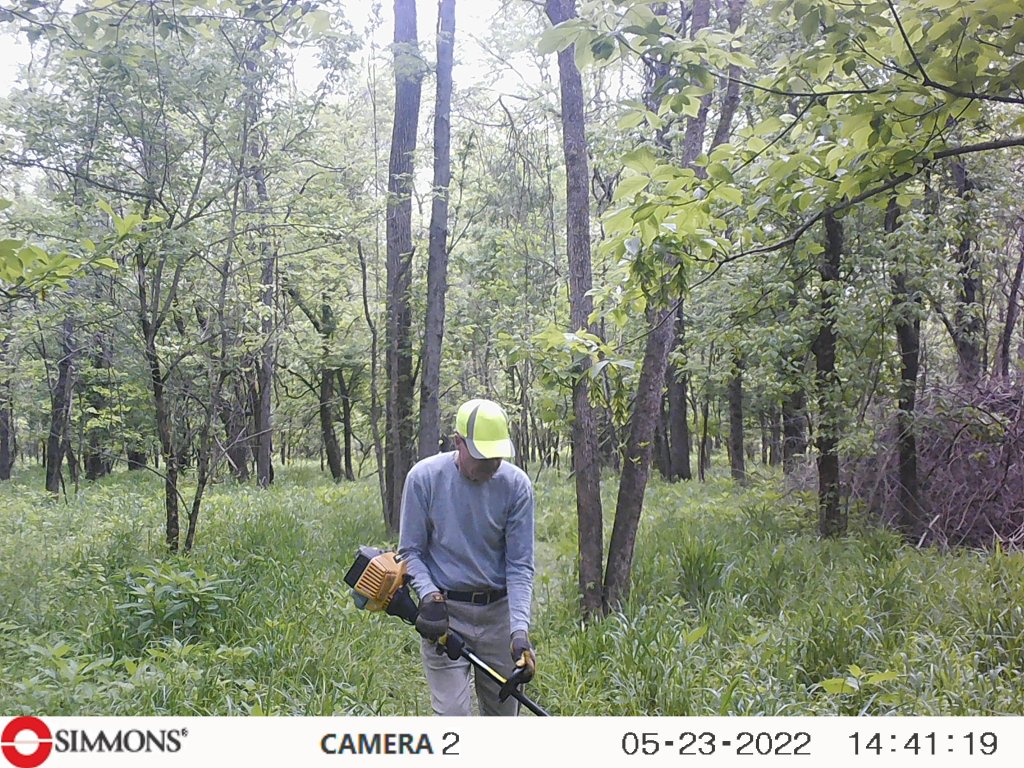
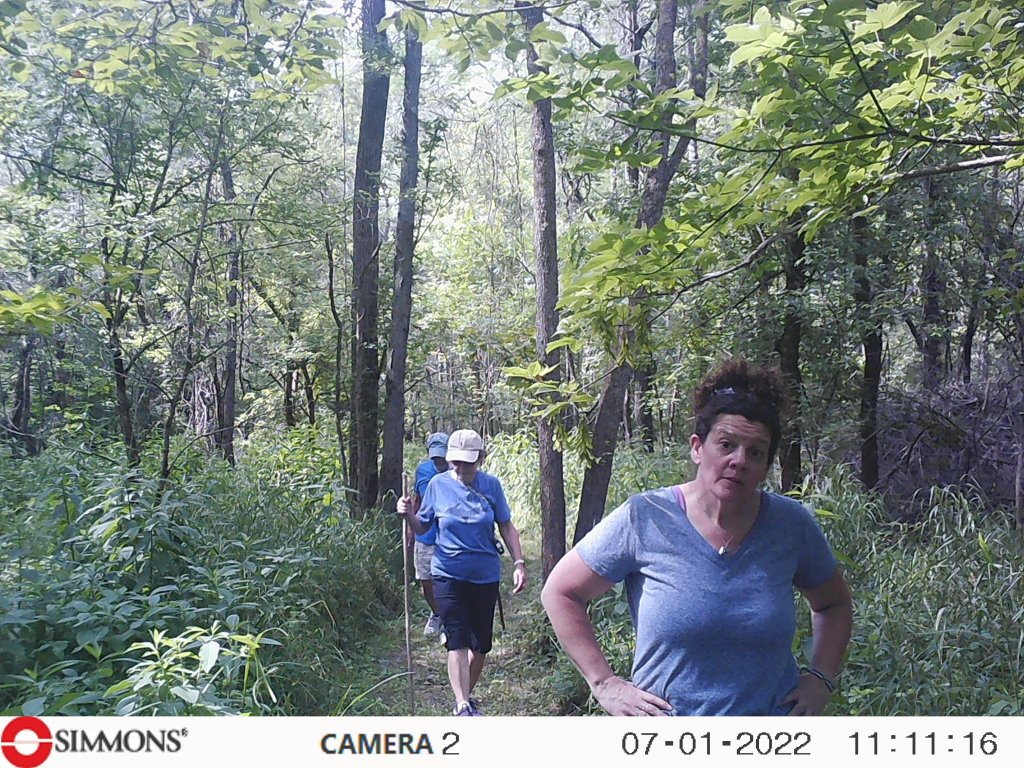
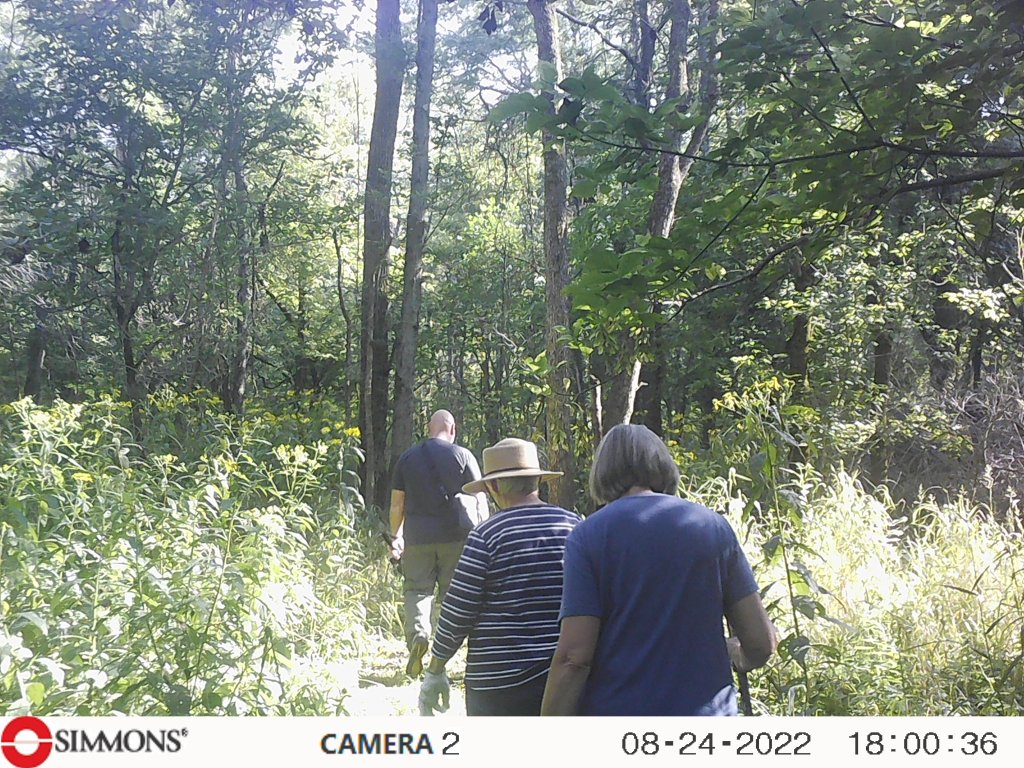
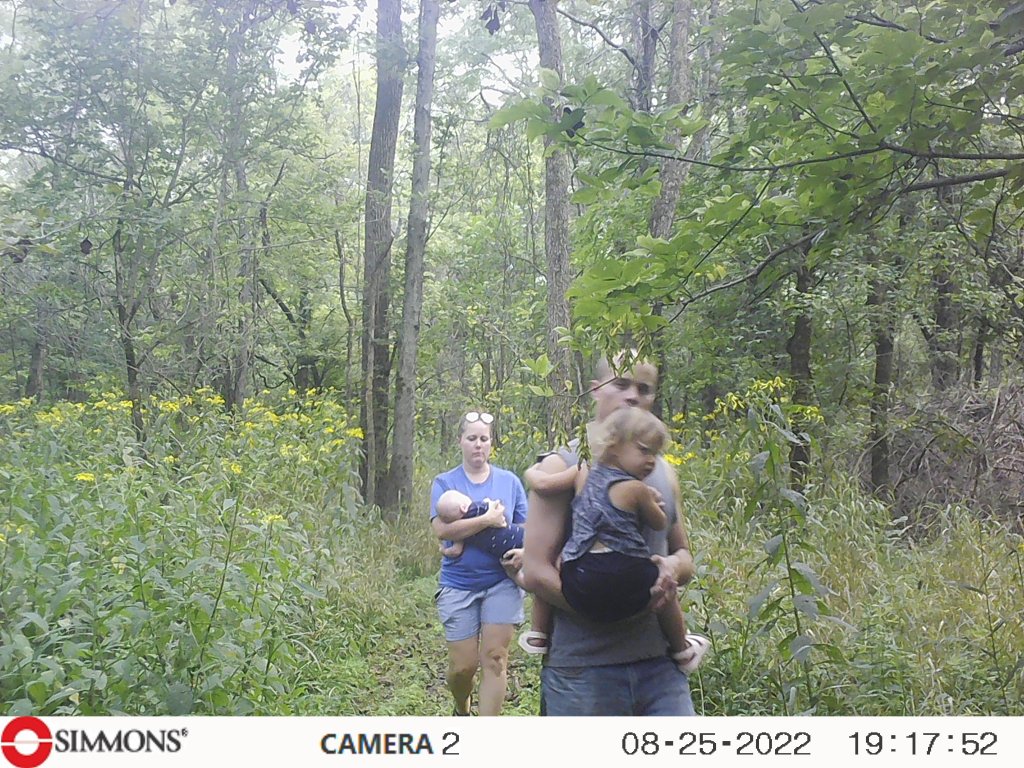
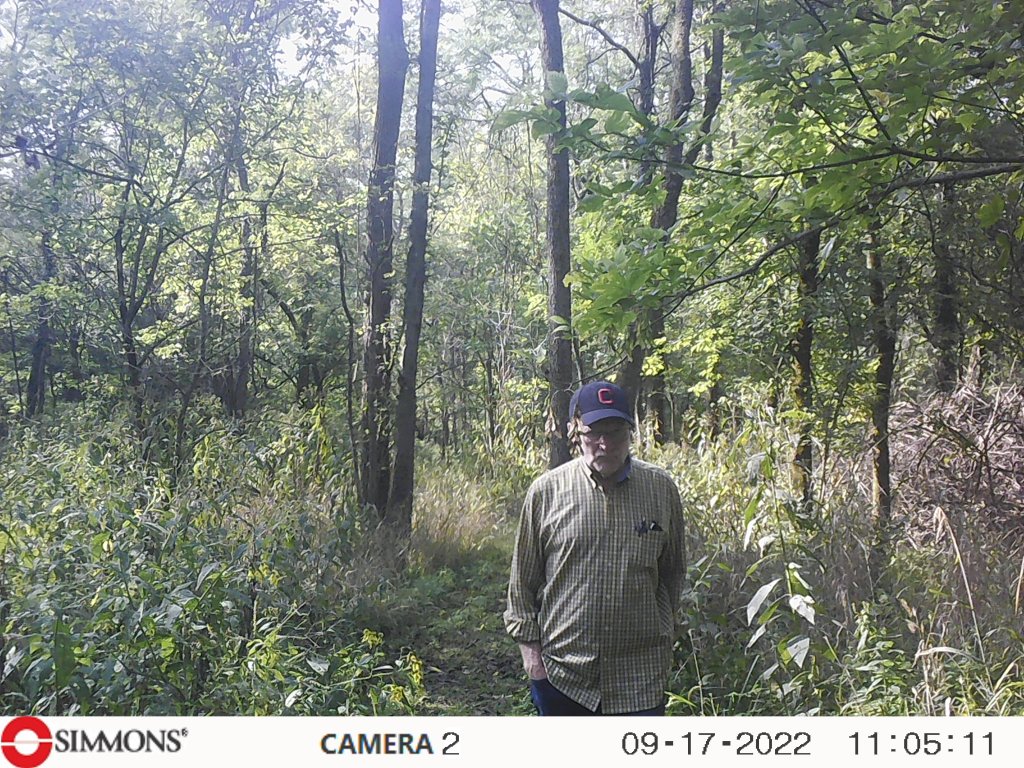
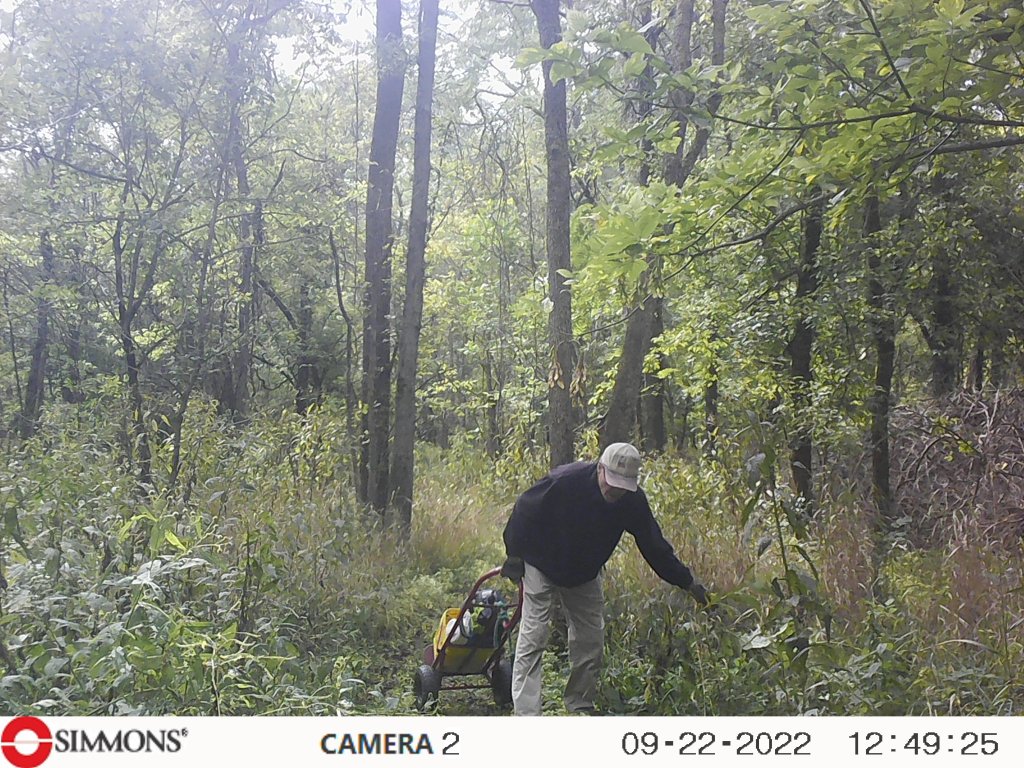
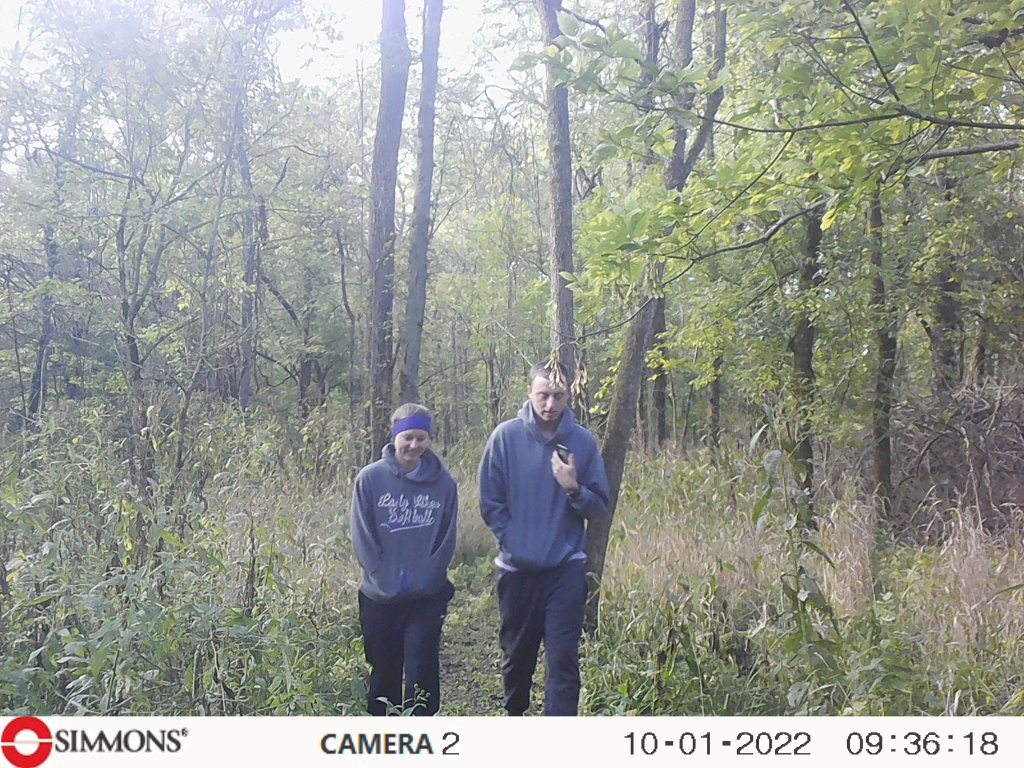
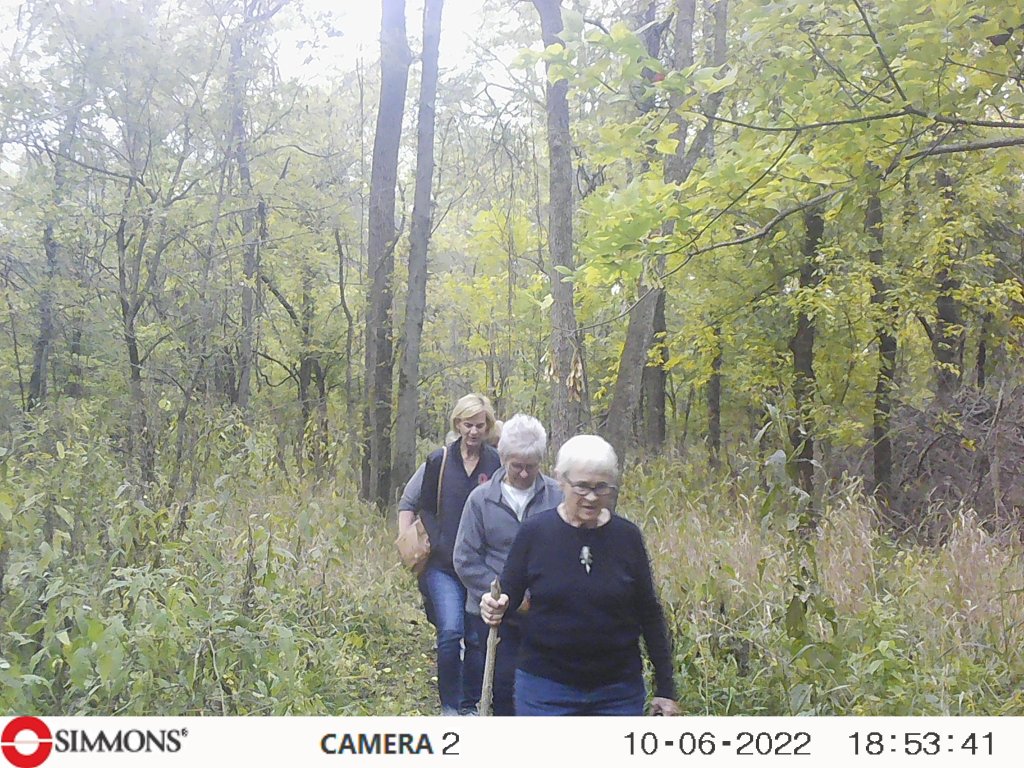
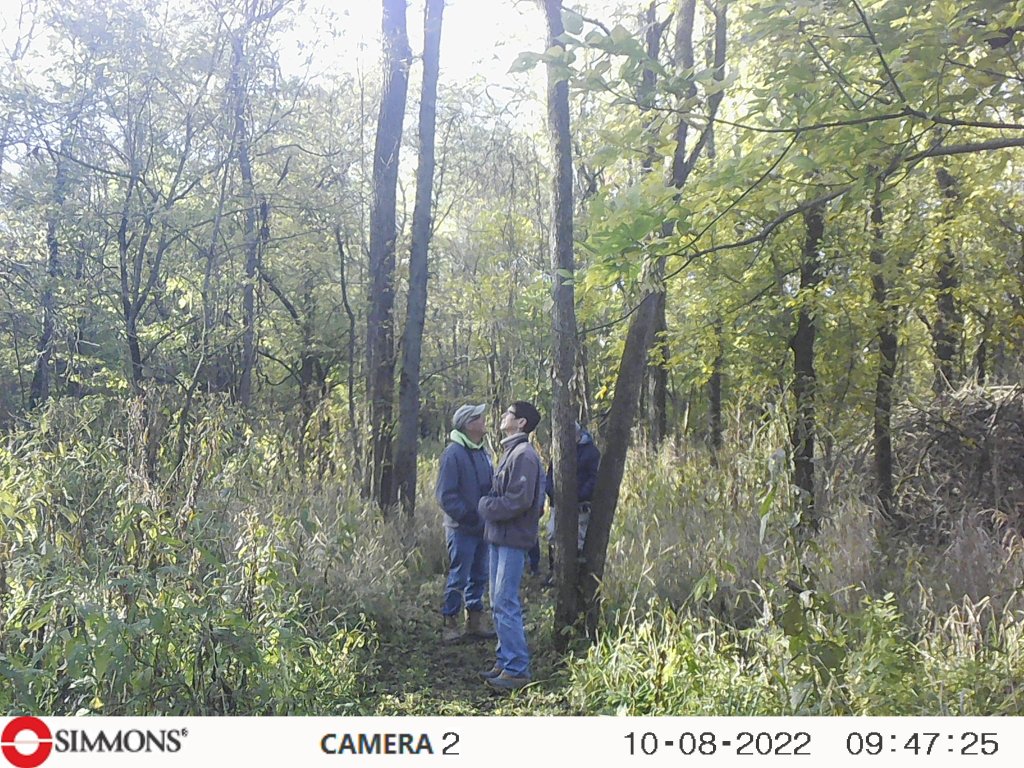
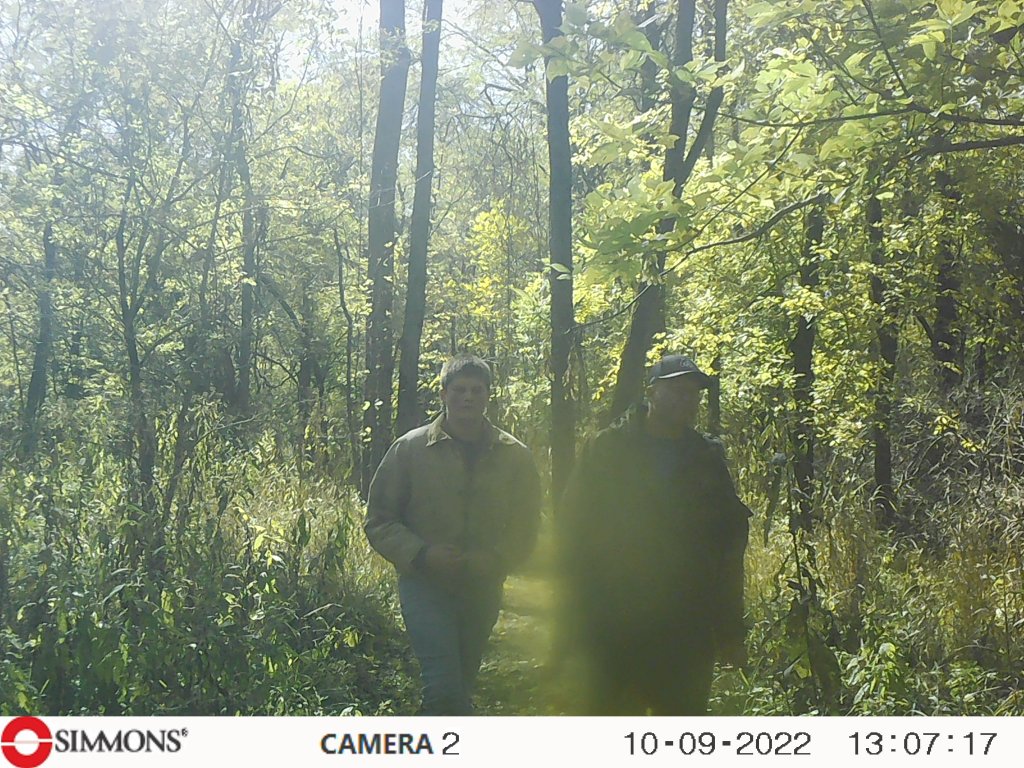
Each fall, the trail cams come down for maintenance and are rehung for the next four seasons. Paul installed the north trail through the floodplain several years ago, opening that area to bird watchers and hikers of all species. It’s a popular resting stop for migratory songbirds. Birder Deb captures beautiful photos there as they flit through.
Here are a few photos that feature the humans who passed the camera on that path. It begins with David, the master who keeps the trail cleared and curbs the further spread of invasive plants species.
The birding team of David Smith and Deb Weston are stepping up their Quarry Farm game again in anticipation of fall migration. As we watered and fed the farm animal sanctuary residents, Deb’s car passed the front gate sometime around 7 this morning. Shortly thereafter, a large heron-ish bird flew up from the nature preserve and overhead. To say that it flapped its great wings in its journey southwest just doesn’t sound like the correct adverb for such a graceful movement.
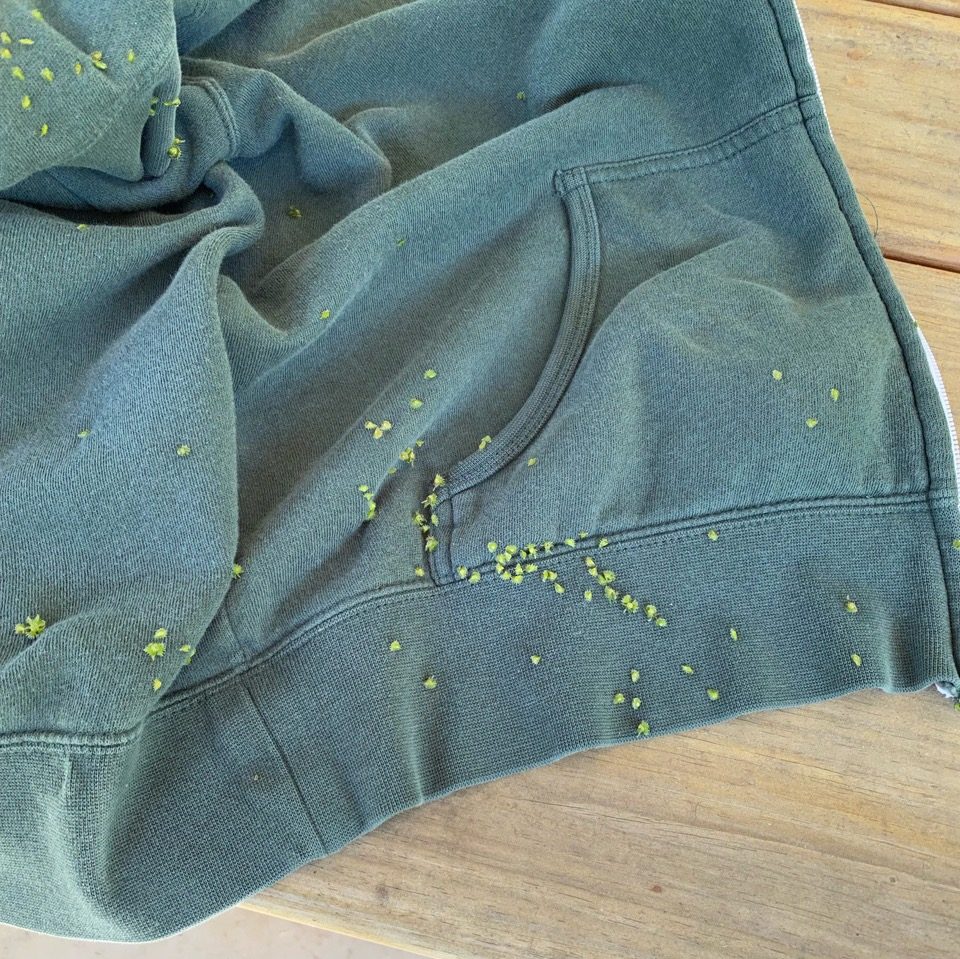
Stick-tights hitched a ride with Birder David.
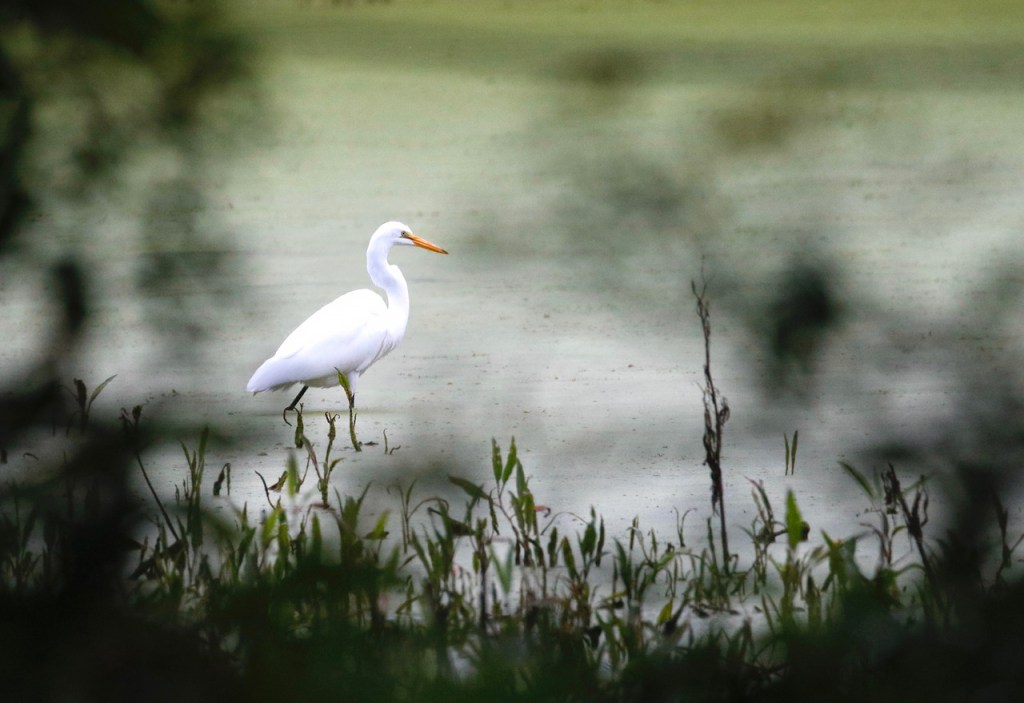
“So jazzed to see the Great Egret,” texted Deb from the trails. She said that David and his wife Julie have seen them in Putnam County. “But it was super cool to see it in the quarry actively hunting—until it saw us.”
There was a Great Blue Heron stalking the quarry wetland, not far from the egret, and one lone female Wood Duck. They heard but didn’t see the Red-breasted Nuthatch and were pretty certain that they saw an Ovenbird but neither of them felt confident enough to add it to today’s ebird list. Today’s list also included nine warblers: Black and White, Tennessee, Nashville, Common Yellowthroat, American Redstart, Northern Parula, Magnolia, Bay-breasted and Blackburnian.
“Our record for fall from last year is 42 and that’s what we got today,” Deb added.
The Quarry Farm tally on ebird is now at 138 species.
As Deb waits in the leafy shadows for landing birds, she trains her hefty camera on insects. Gerald O. Coburn would be thrilled. He photographed and documented most of the dragonfly and butterfly species noted here, as well as many birds. Deb told me last week that she would have really liked my dad. I told her that I think the admiration would be mutual. Dad would have seen her car pass by his own driveway, fired up his ATV and firmly directed her to grab her camera and hop on, wasting no time to see everything that sought warmth and breakfast with the sunrise.
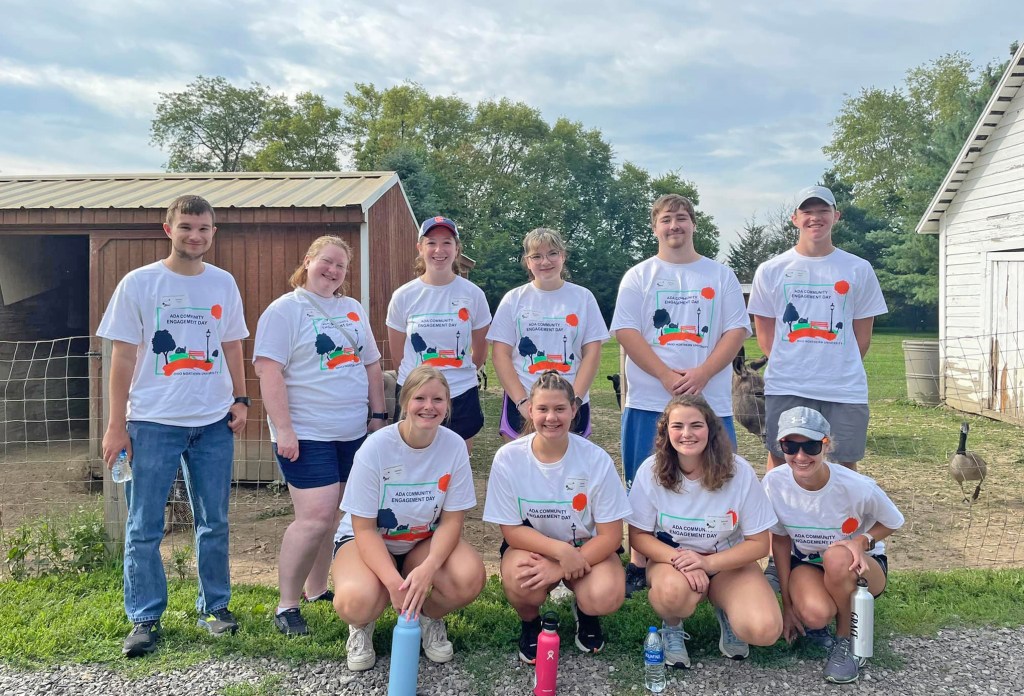
The last time students from Ohio Northern University (ONU) spent part of Ada Community Engagement Day, or ACE Day, at The Quarry Farm, COVID-19 wasn’t a household word. The word ‘pandemic’ prompted grainy images of people wearing masks and schools, theaters and businesses shuttered worldwide in 1918 because of Spanish flu.
A stunning Red-spotted Purple butterfly sipped in the nature preserve this week. (Photo by Deb Weston)
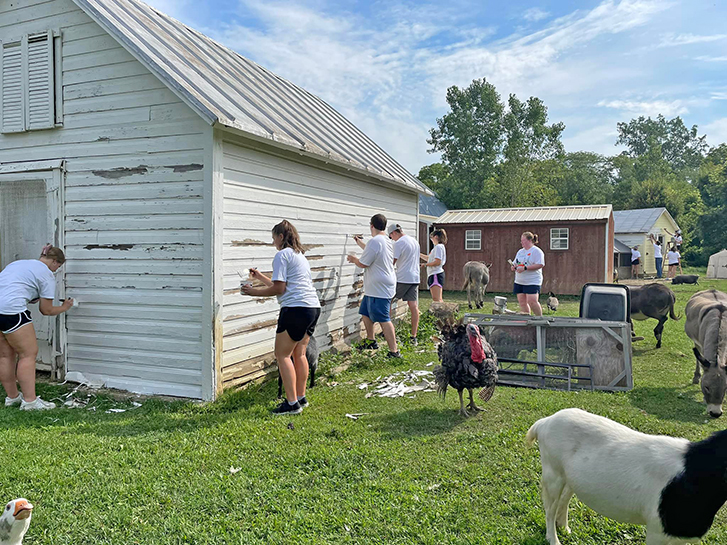
Super Dave Seitz hadn’t yet taken on invasive bush honeysuckle in the nature preserve. The first incoming ONU freshman who volunteered here as part of the ACE Day tradition lopped and hauled honeysuckle from the western bank of Cranberry Run. Then Dave began his frequent pilgrimages from Columbus and rocketed our invasive-clearing program 10 years ahead of schedule. So when the ONU ACE Day committee asked if we had any projects for participants of their 10th school year—one with a return-to-normal beginning—we jumped at the chance to host a building-painting crew.
Two of the farm animal sanctuary outbuildings are over 100 years old. They are solidly framed structures that were donated to us as long as we moved them from their original sites. In their current function for storage and henhouse, they are subject to lots of perching, head-and-tail scratches, snout rubs, and general body flopping (often with a fresh splash from a mud wallowing.) They both needed a good coat of best paint to prolong their structural integrity and general all-around sightliness.
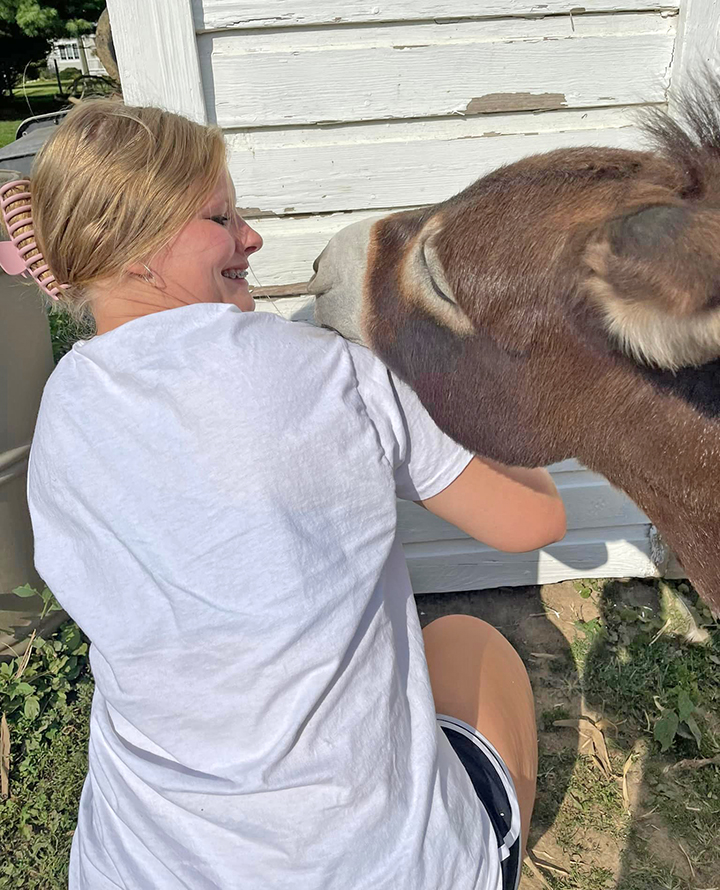
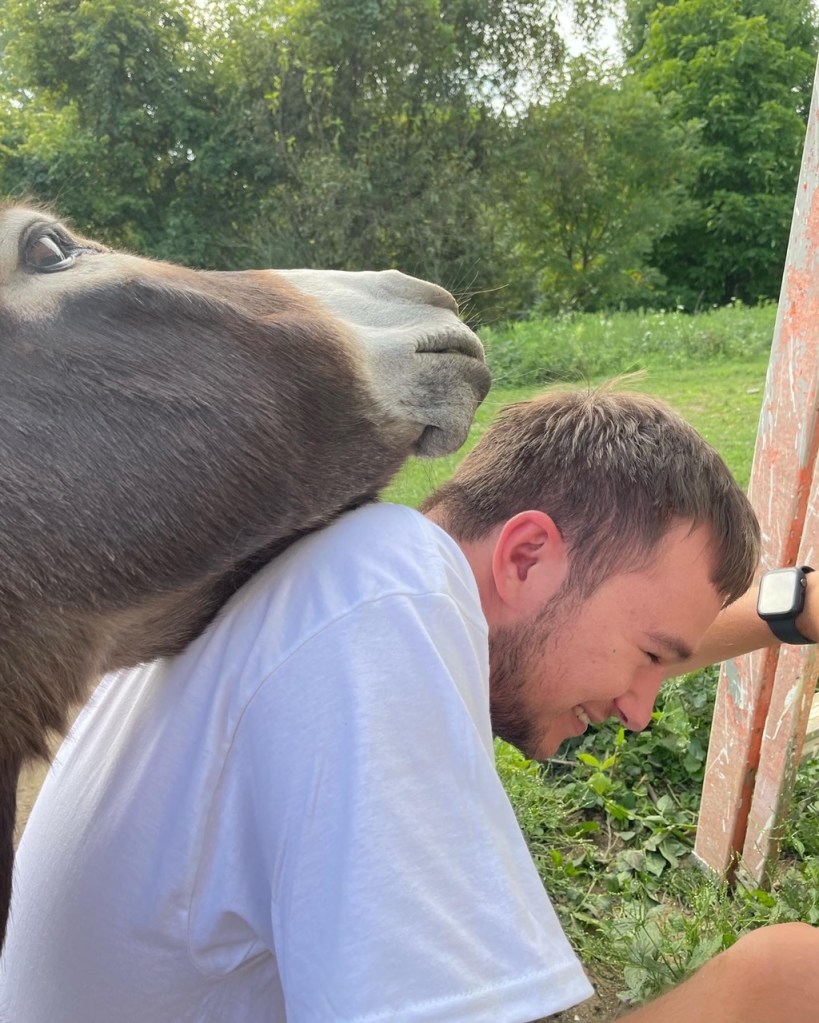
Ten people came and went to work. The morning was coolish and sunny so the animals were ever-present. Paint cans and brushes were lofted to keep curious bills, beaks and muzzles out. Silkie the Donkey insisted on being a third wheel—rather, a second head atop a shoulder—and had to be encouraged to move along. The Canada geese wrestled with paint can lids and drips. Bruce the Bronze Turkey kept one young man very close company by planting himself directly behind his knees.
“He’s like a shadow or a ghost,” said one person. I explained that Bruce had claimed a new human friend and was making sure that turkeys Edgar and Bernard knew it.
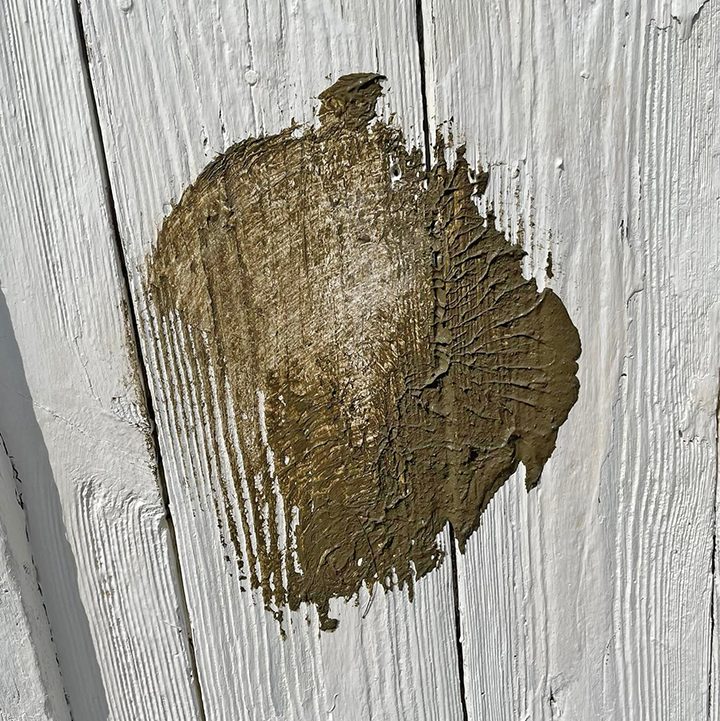
In just an hour and a half, both buildings were covered except for the highest peaks and one big pig-sized full-bodied mud rub and a snout print. One person was surprised that goats weren’t “more involved”. Other than a few shirt-sleeve nibbles, the bovids were interested but unaffected by the whole procedure.
“This was the best site,” commented the ONU faculty who worked alongside the Polar Bear undergrads. “After a long week, ‘Painting with Animals’ was very therapeutic.”
Storm clouds gathered and spilled an hour after the ONU van drove south down 7L. The rain was not quite strong enough to wash Nemo’s nose-and-thigh art from the buildings, but there’s a solid slather of paint beneath to seal the old hardwood for good long time.