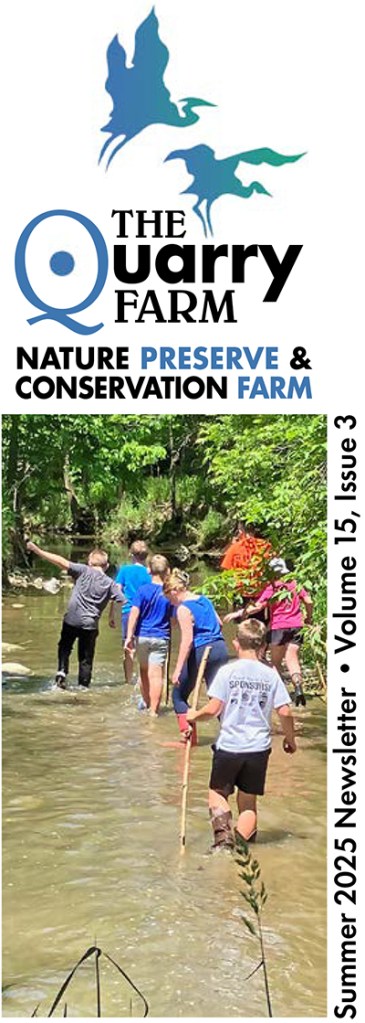
Download your copy of The Quarry Farm Newsletter/Summer 2025. Our first event onsite is an herb kokedama workshop. There are four herb kokedama growing on the porch of Steve’s kitchen–they are a fresh, cool, environmentally-friendly cultural experience. And registration is now open for The Quarry Farm 2025 5K, which we have moved up to September 13. This is a major fundraiser for us. With traditional funding—grants, corporate sponsorships—fewer and farther between with ongoing unrest, we need your support more than ever. Thank you.
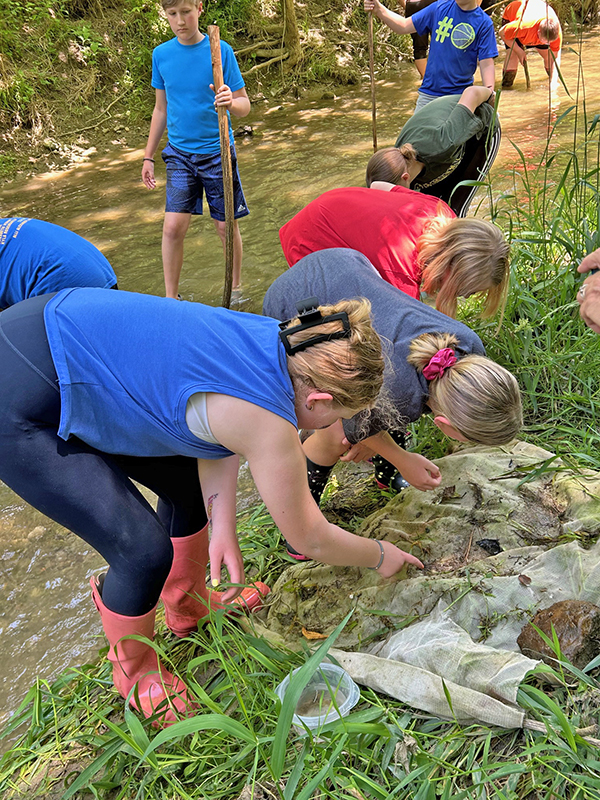
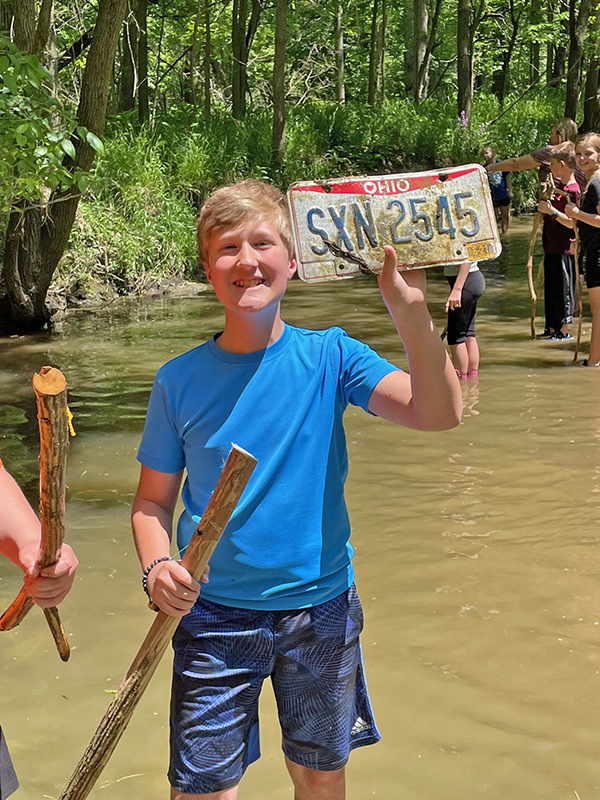
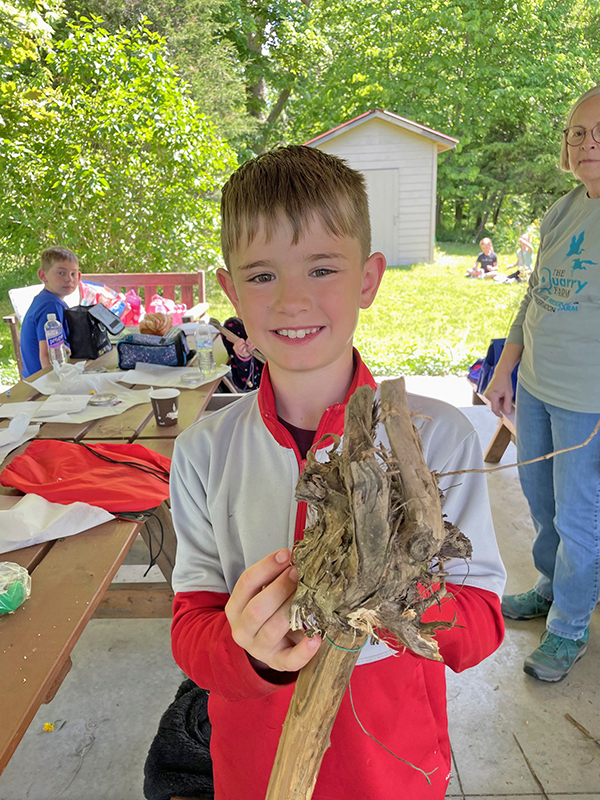
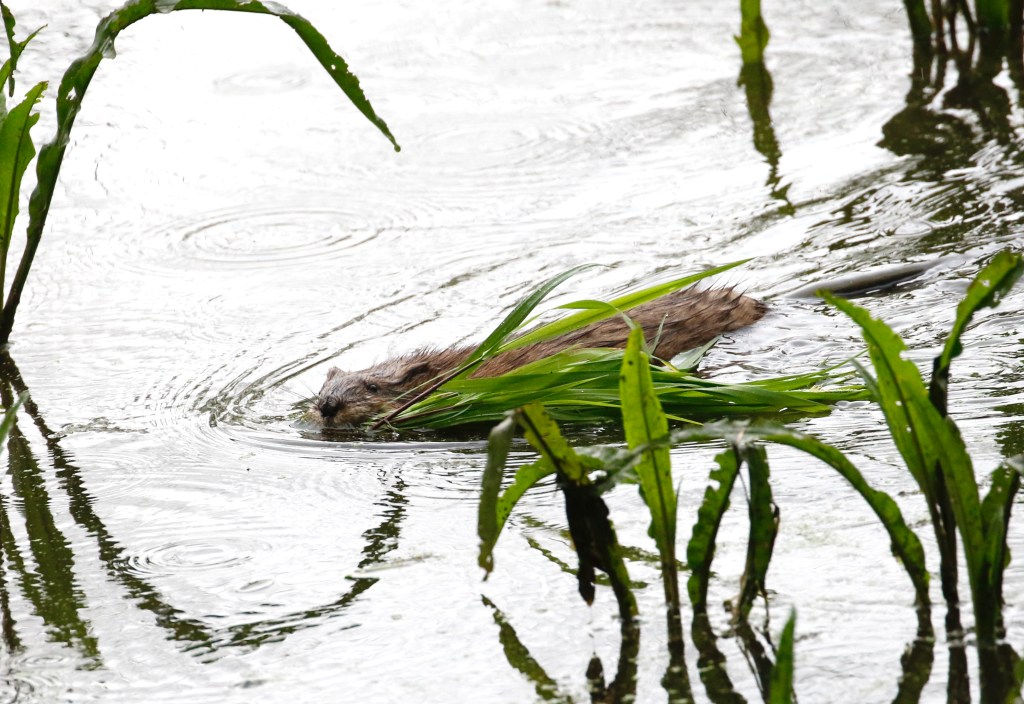
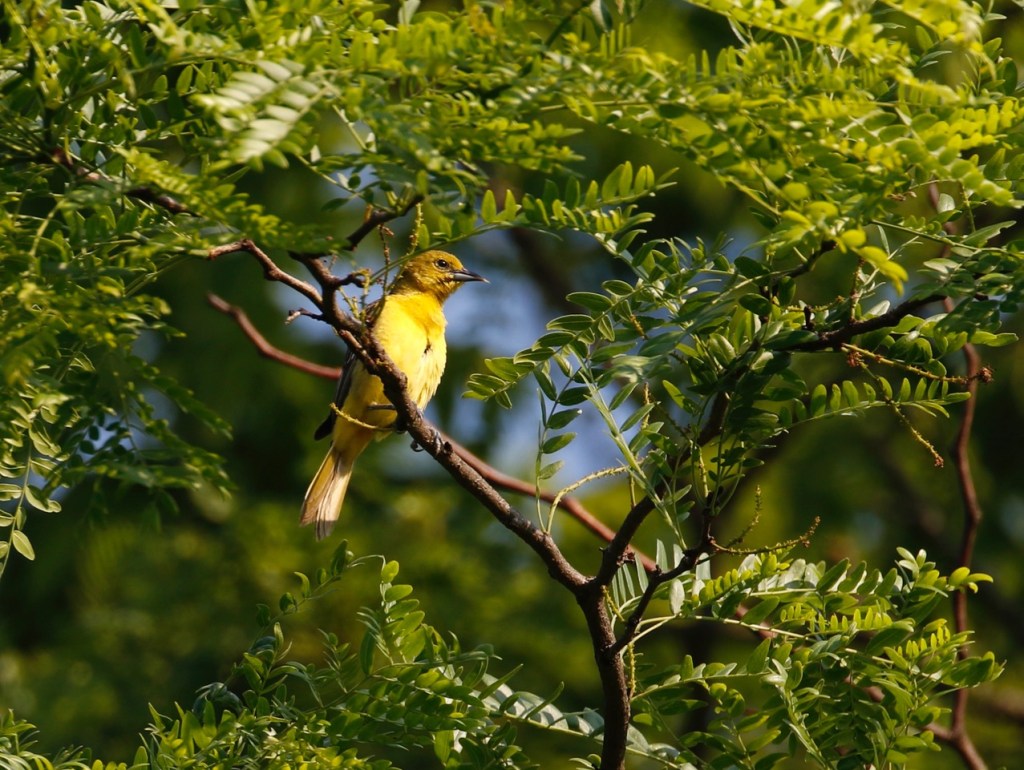
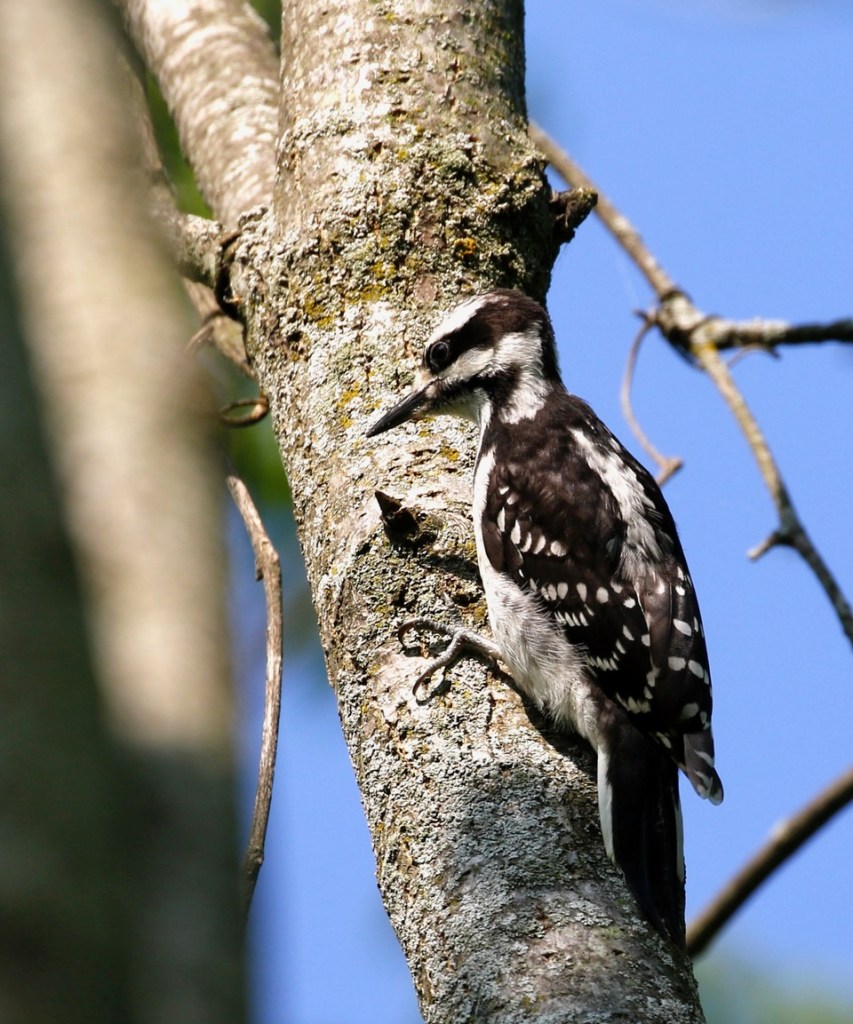
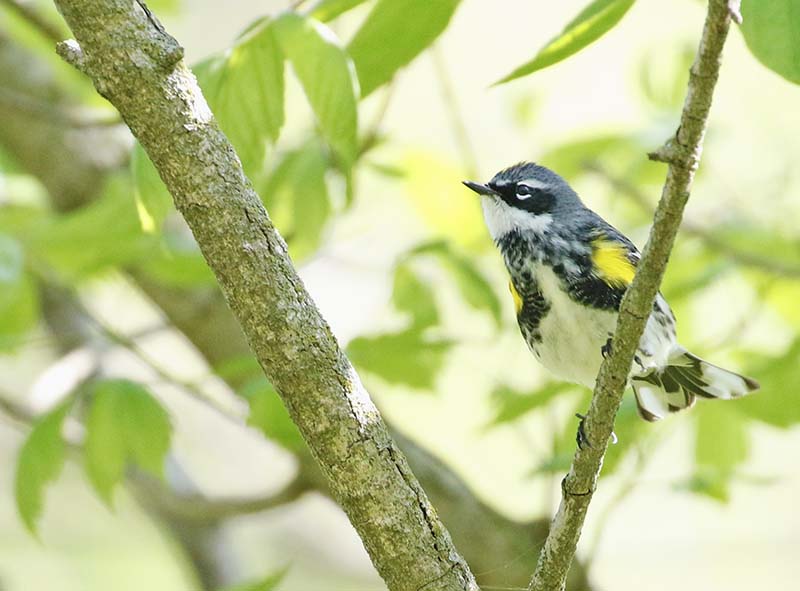
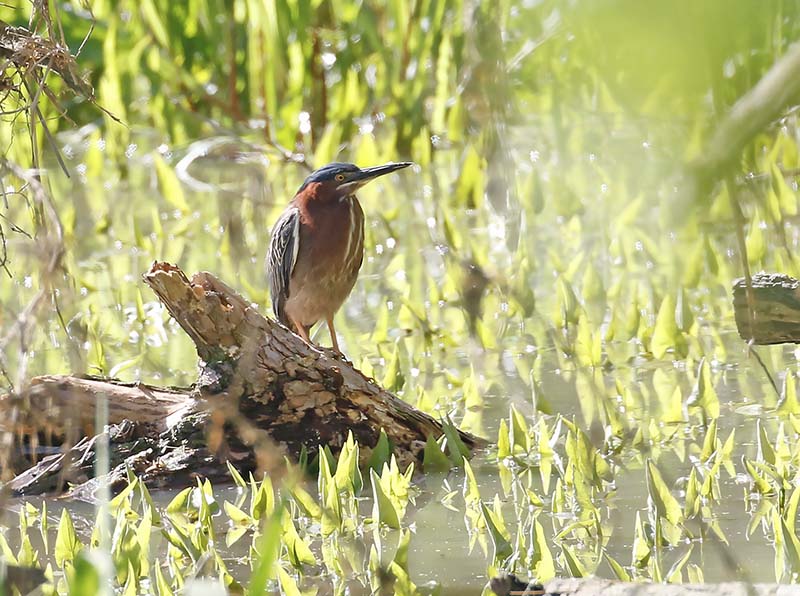
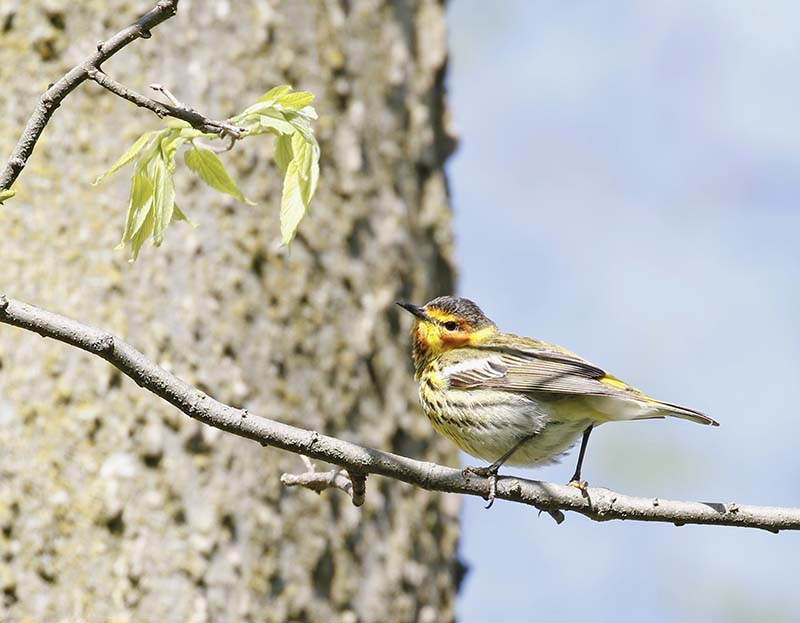
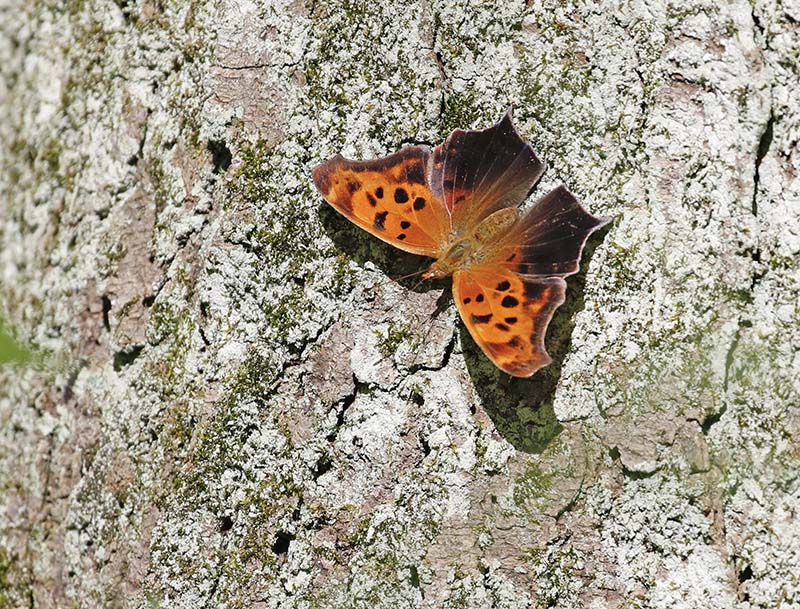
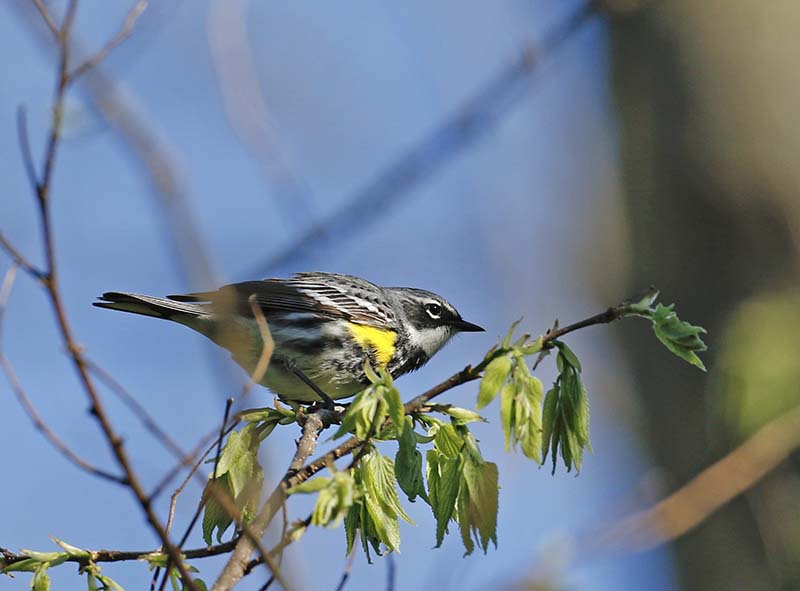
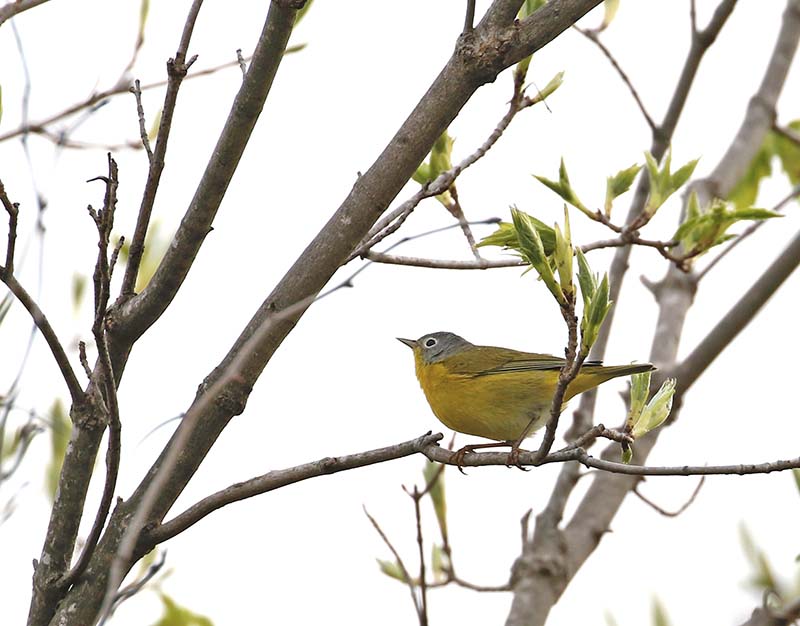
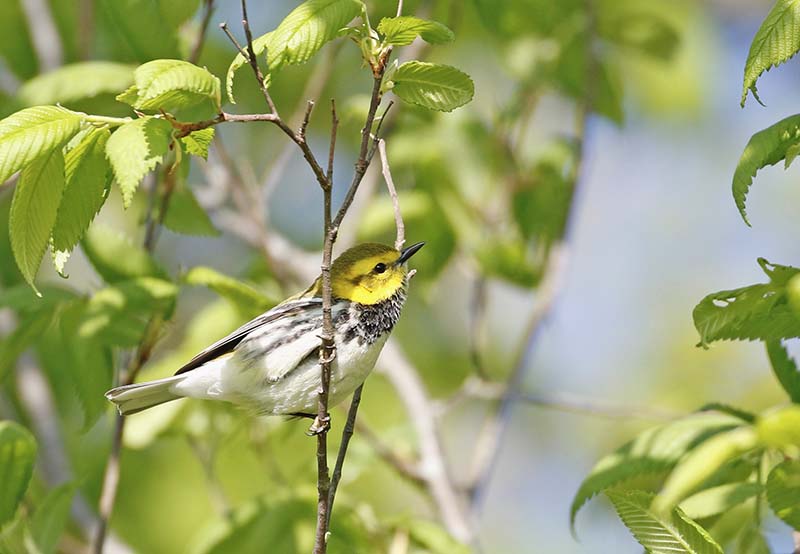
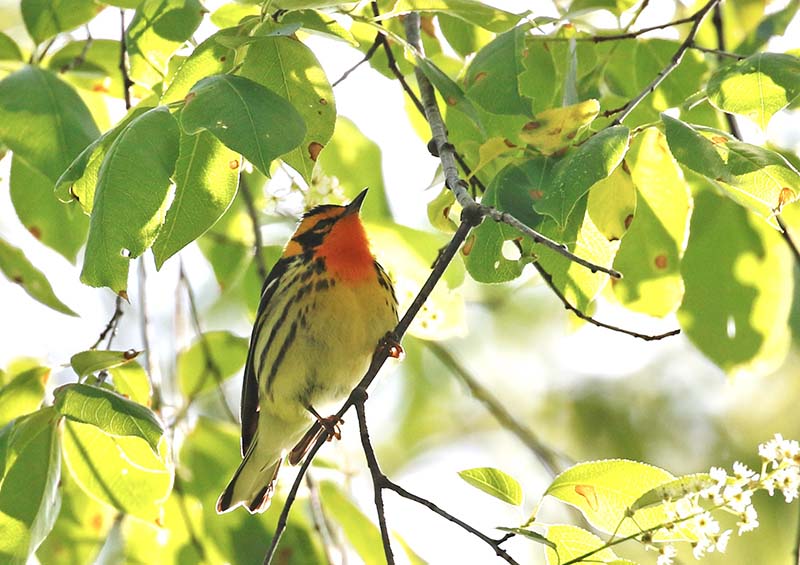
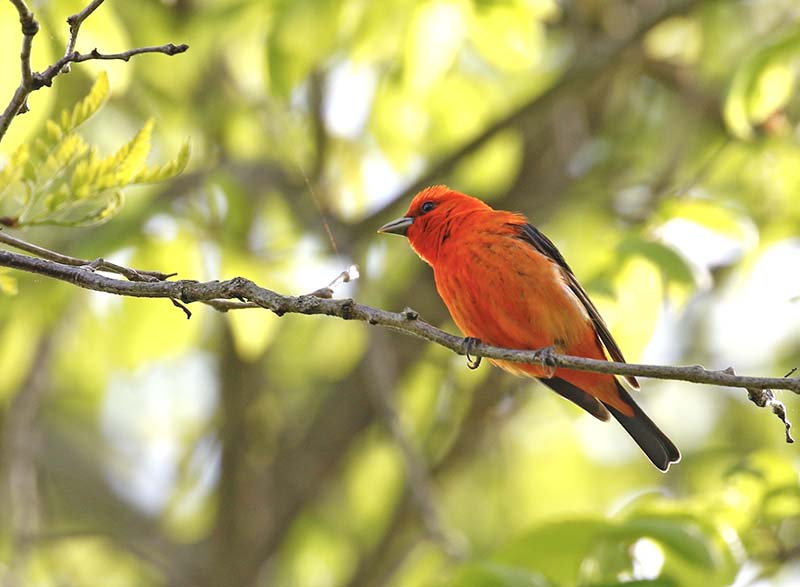
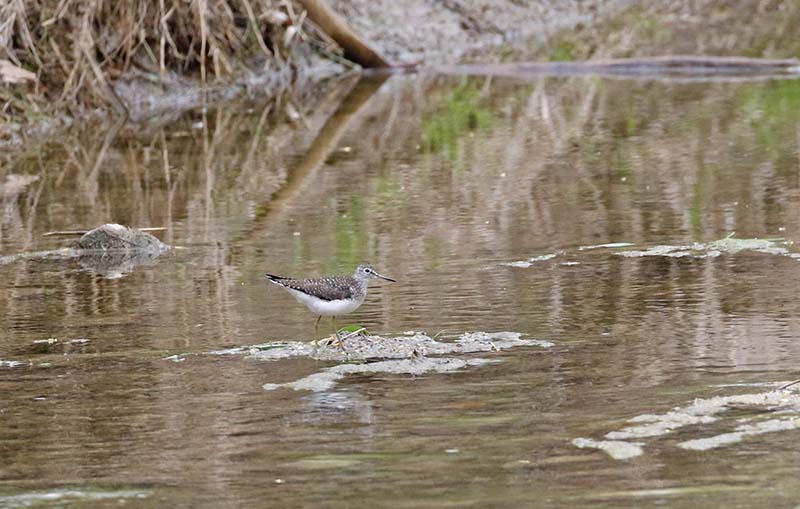
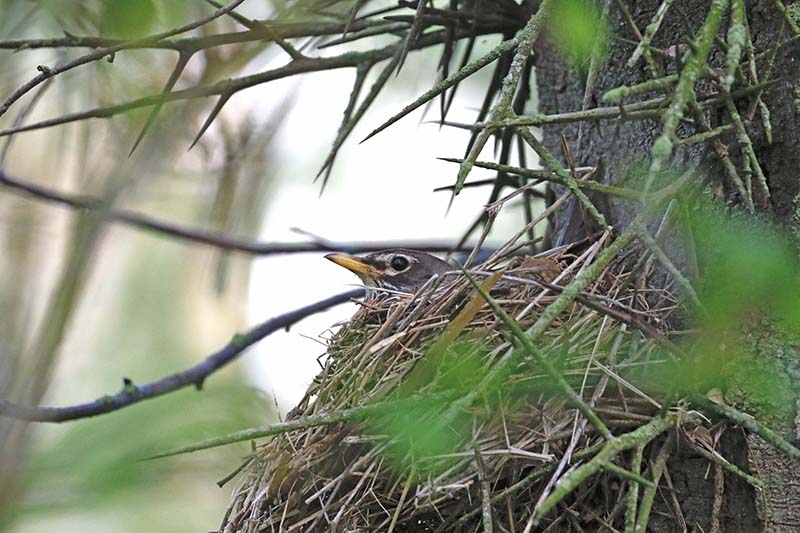
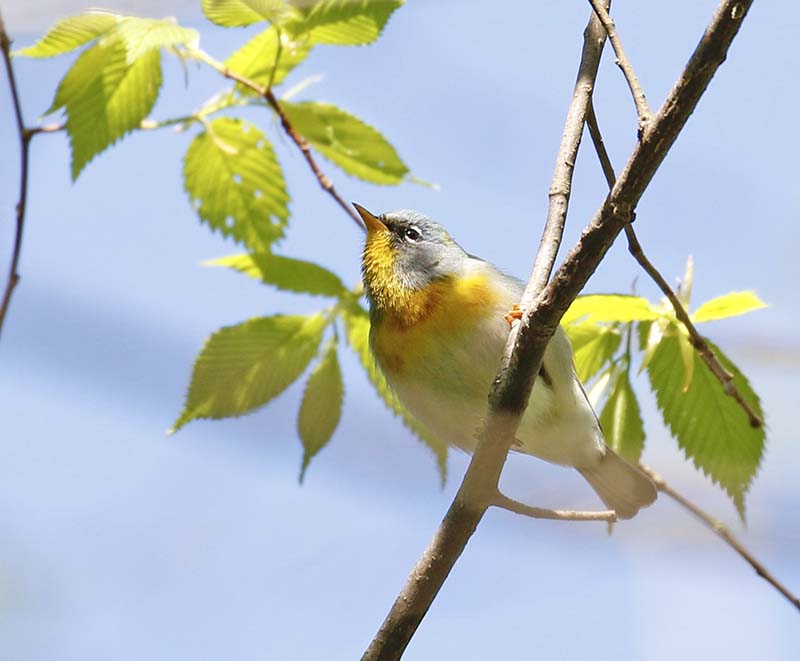
And because an 11″ x 17″, two-sided newsletter will only allow for a small selection of the photos that are captured on The Quarry Farm from season to season, here are a few Spring snapshots that didn’t fit on the pages.
Birder Deb had a first yesterday, for herself and The Quarry Farm. Among the 52 bird species that she reported on eBird, “I heard and saw a Connecticut Warbler on the trail before the creek overlook,” noted Deb. “I have a friend in California, Tim. He told me before we moved to try and see a Connecticut Warbler. They are tough. They sing, but rarely show themselves. A few years ago one was reported at the Bluffton Preserve. It was hotter than fish grease and I stood in the sun for an hour trying a catch a glimpse of it while it sang and sang. Zero, zilch, no luck on a visual. I won’t count a bird for the first time unless I see it. So today when I heard it, I couldn’t believe my ears.”
The app Merlin confirmed the Connecticut Warbler’s song as it sang over and over again. Deb scanned with her binoculars and finally the elusive bird popped up for 2 seconds and disappeared again. Deb stood with her camera ready for about 20 minutes, but it never came out again and eventually stopped singing.
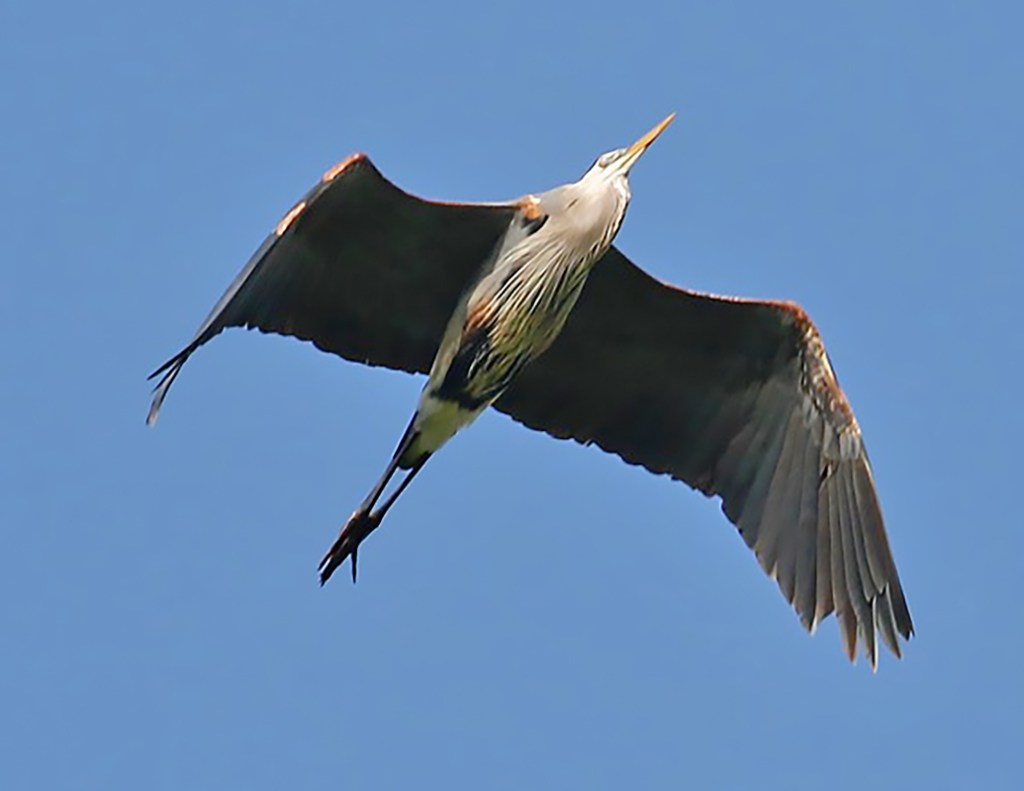
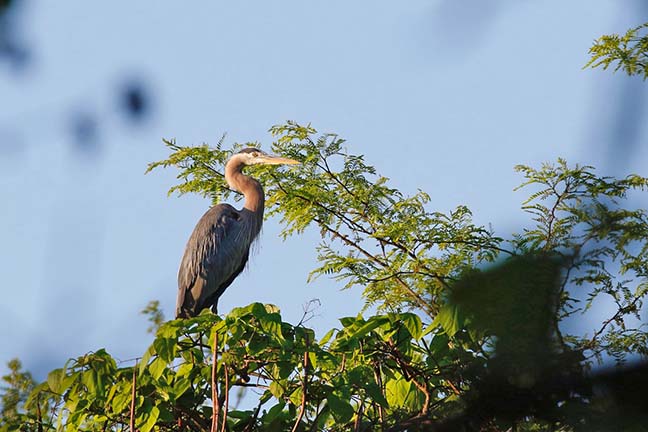
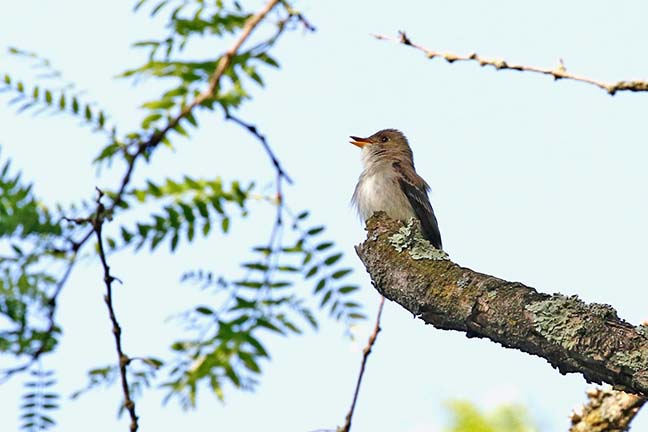
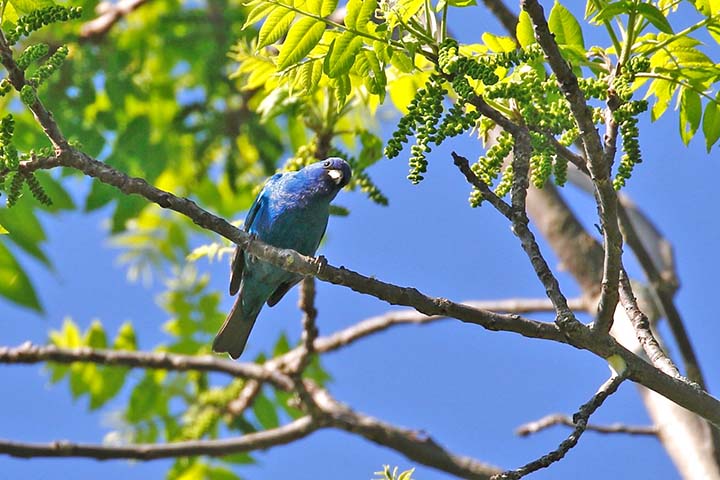
Deb and David Smith are in the nature preserve this morning. Maybe the Connecticut Warbler—TQF Bird #151 on eBird—will pose. According to Deb’s friend Tim, these $%$@ birds are hard to spot. Deb did capture some portraits of more cooperative avian species: Great Blue Heron in a tree on the far side of the quarry, an Eastern Wood-Pewee and an Indigo Bunting who seemed amazed to see a Deb below its tree.
Two Canada geese named Johnny and Stella introduced us to the richness of a life shared with wildlife educational ambassadors. I would say the introduction was a gentle one, and it was, until we found Stella’s body floating in their water tank. No one could tell us why. She looked fine externally. Wild animals naturally fight tooth, nail, beak, bill, and claw to stay away from humans, probably because humans are at the top of the food chain and every other species knows to keep their distance. If wild things allow humans to approach, there is something not quite right internally, in their nature or nurture. Their most natural state of being has made them vulnerable to our opposable thumbs, our intelligence, or lack thereof. A lifetime of living with other species makes me certain of the latter, especially as I write this there are military maneuvers going on in the sky outside my window.
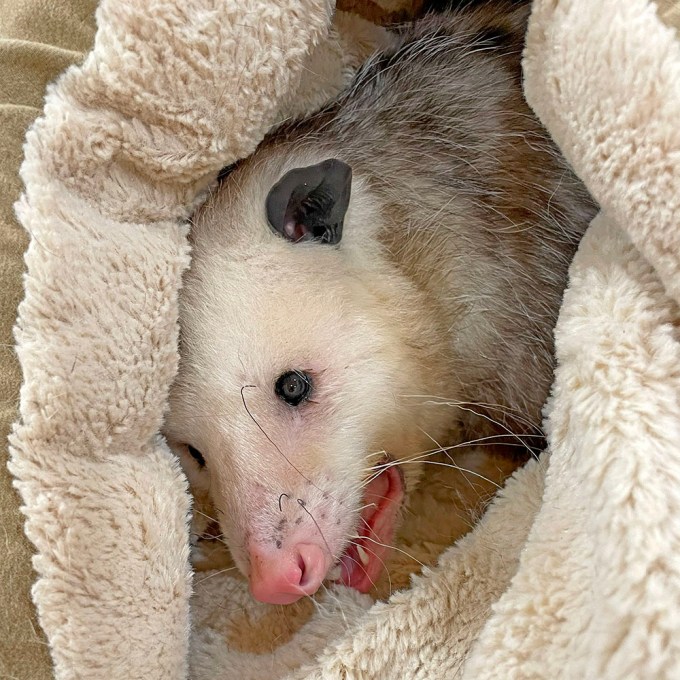
Estella
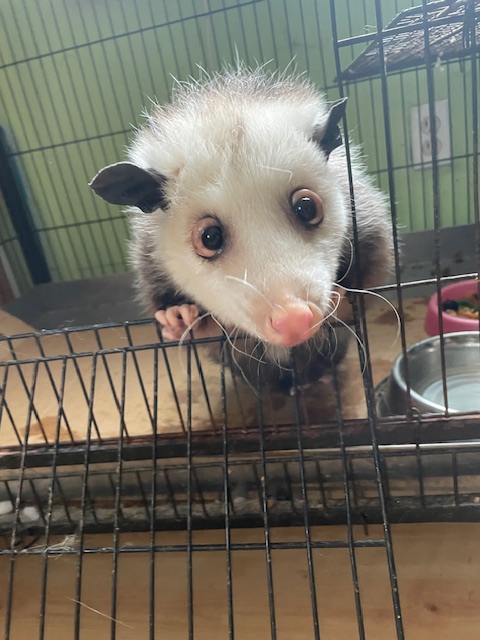
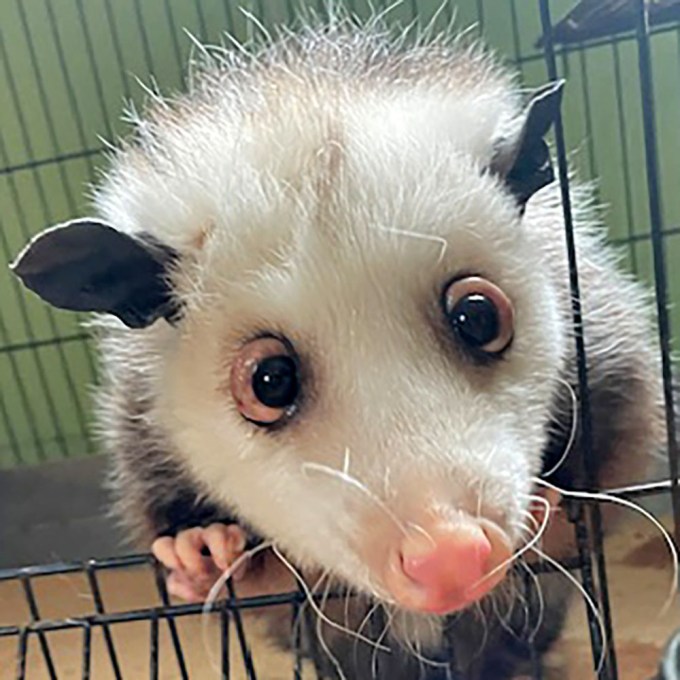
Although it is tragic thing when a wild animal can’t live safely in wildness, it is a gift to spend some part of one’s human lifetime in their company. Some live for a few years. Others for a decade or more. Right now, we often tearfully refer to the farm animal sanctuary as the geriatric home. It’s been 14 years since Johnny and Stella moved in. Many mammals and birds have lived what remained of their lives here. The last 12 months have been hard on our hearts as several friends have, as we say, “gone over the fence.” This month, as we planned for an all-day offsite event about living side-by-side with wild creatures, we intended to feature Estella the Virginia Opossum. Estella was almost 4 years old, pretty ancient for this marsupial. She died in her sleep on Sunday.
Winston
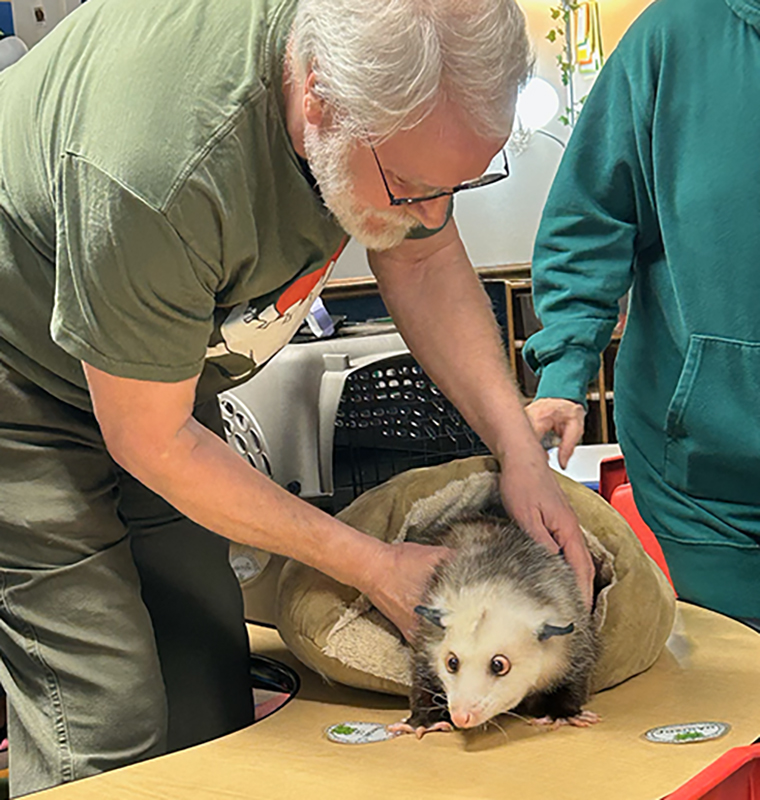
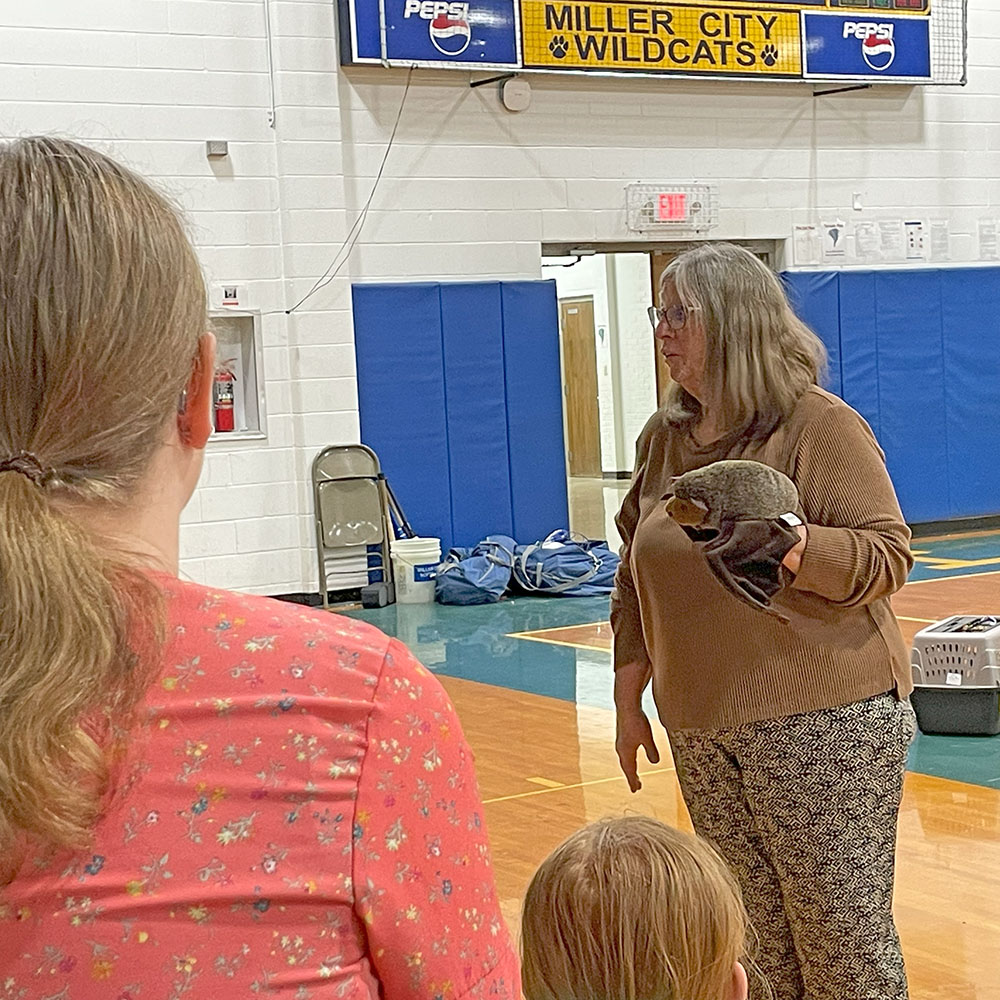
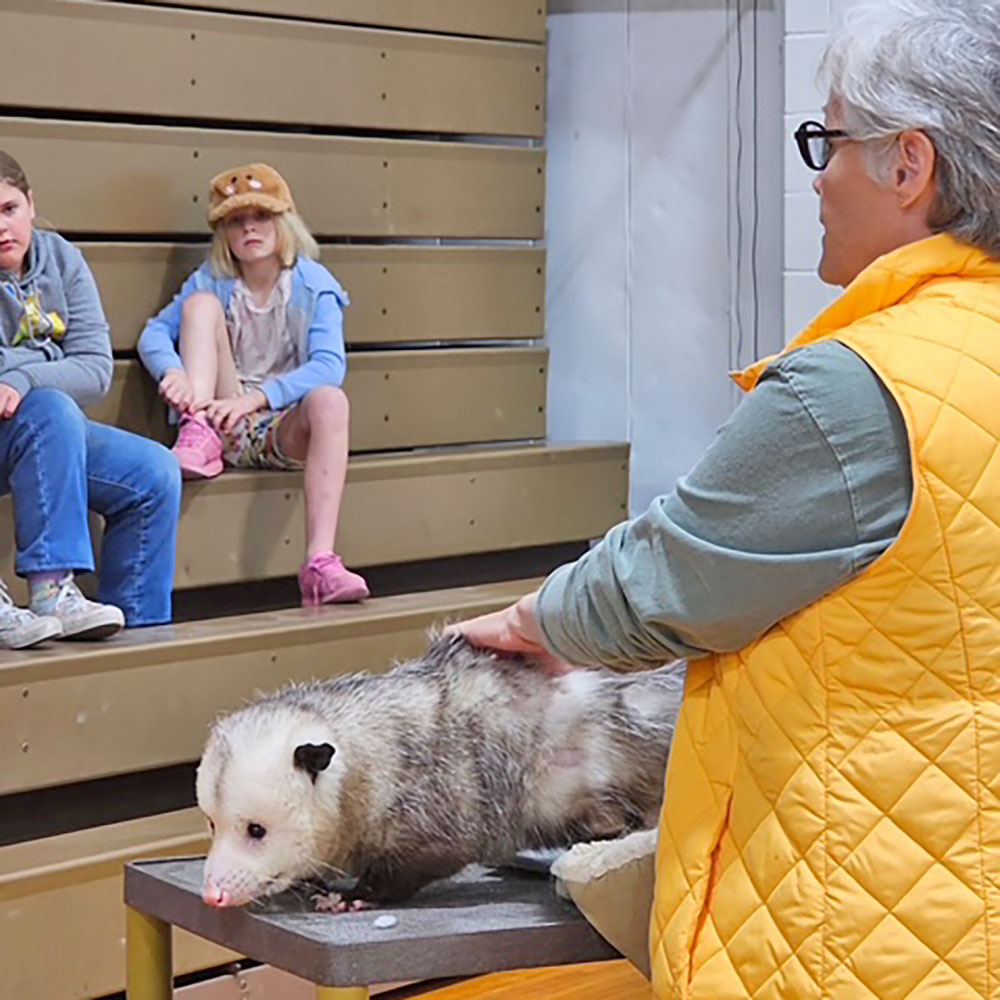
In February, while I was in Columbus for a conference, my phone pinged with a text regarding an adult male, caught-by-dog Virginia Opossum. A Proctorville wildlife rehabilitator rescued him in the Fall. Angie named him Winston, and healed his severe wounds and fought infection. He weathered several veterinary appointments and possible pneumonia. But Angie got him through. Because Winston has mobility issues and hairless scarring on his hindquarters due to his injuries, it was decided that he could have a good future as an educational ambassador. Three weeks ago, I met Angie and Winston in Columbus for adoption.
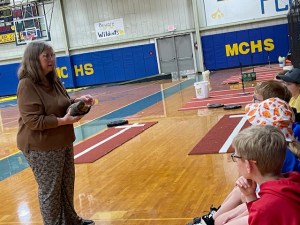
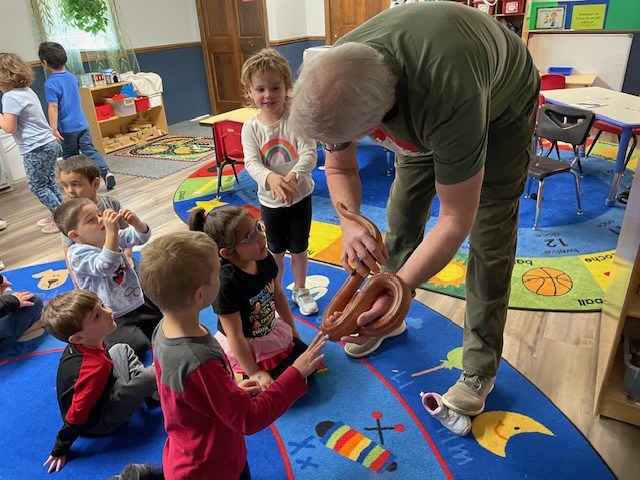
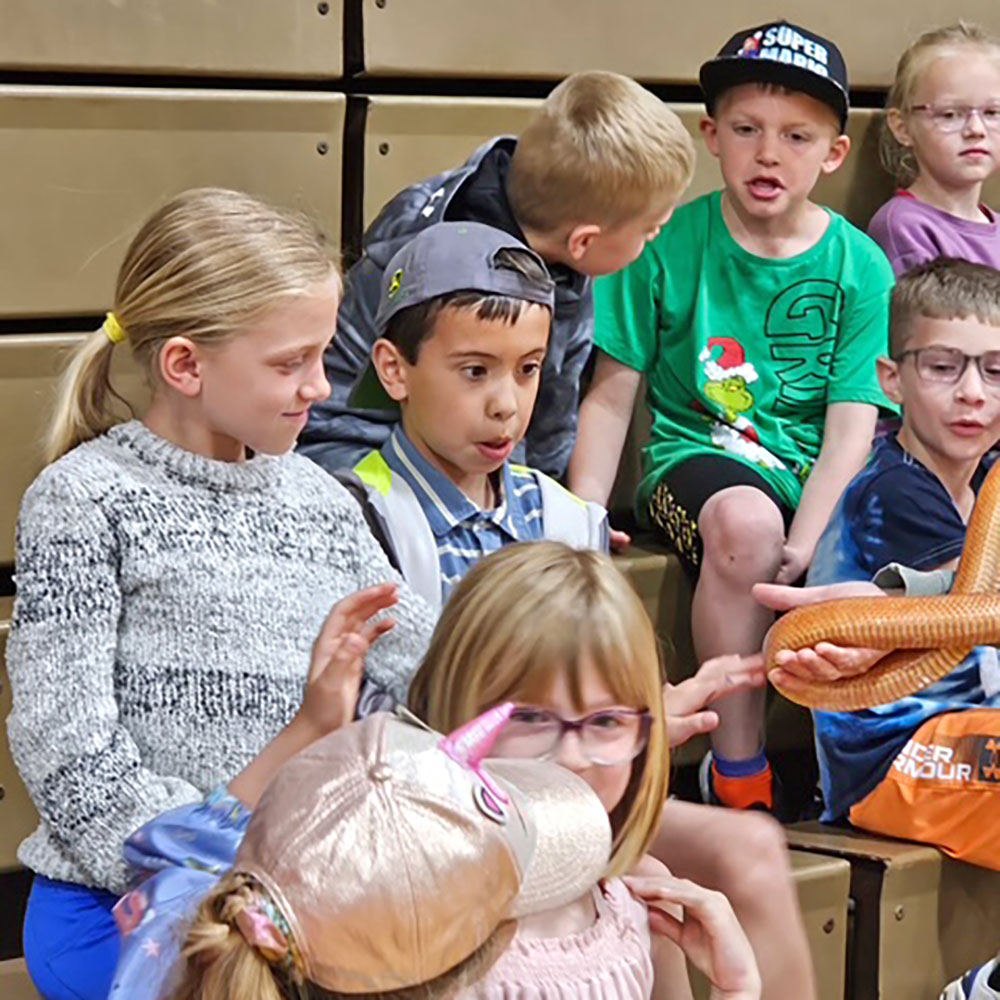
On Tuesday, May 13, Winston represented his amazing, vital species at Miller City-New Cleveland Elementary School’s “School is Cool” event. Board Member Rita used owl and bat puppets to demonstrate the horrors and harm of using traps and poisons to control wildlife. Tyree the cornsnake, all shiny coral from a recent shed, represented the benefits of encouraging snake residents on a farm and in your garden. Winston growled a bit at first, but his scars are itchy. With ongoing scritches, he settled into his ambassadorship. No one knows exactly how old Winston is, but he will be comfortable and at peace at The Quarry Farm for as long as he will give.
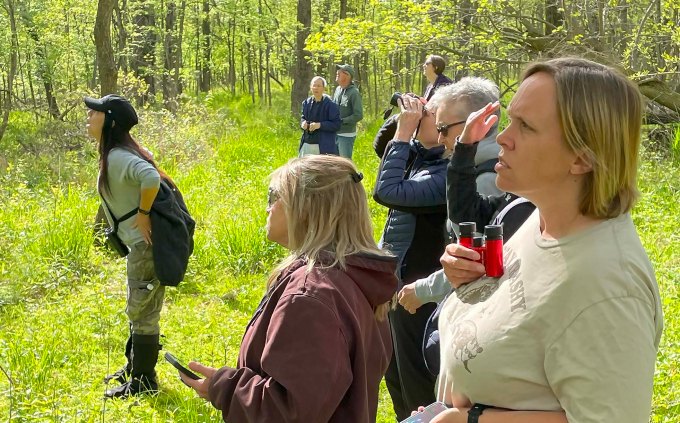
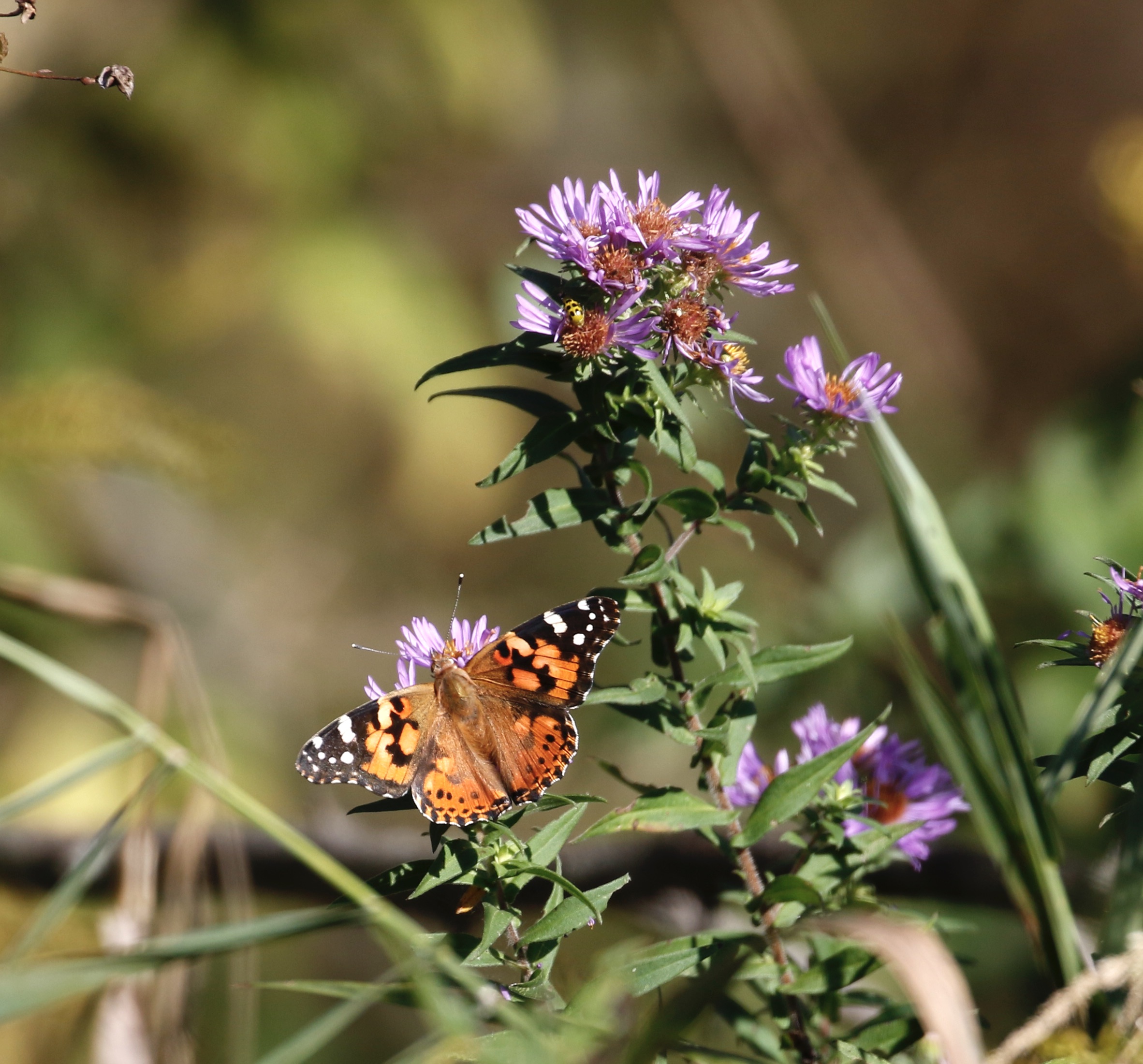
According to Birdcast, 14,526,300 birds crossed Ohio from 8:40 p.m. on May 11, 2025 through 6:40 a.m. on May 12. From 9 to 11 a.m. that Monday, participants in the annual Spring Bird Migration Hike followed the pointing fingers of Deb Weston and David Smith to catch a glimpse of brilliant spring plumage. That morning, the group documented 46 bird species in the wetlands, pollinator gardens, and upland forest of The Quarry Farm nature preserve. An enormous Question Mark Butterfly warmed its wings long enough for a good view as well.
It seems that migration peaks earlier each year as the planet tries to right itself, and Deb and David try to schedule a hike date that happens before all of the migrators pass us by or settle in to nest under dense canopy. To get a good idea of what might pass through for a crowd, Deb walked the trails for days leading up to May 12 hike. She took notes…and brilliant photos.
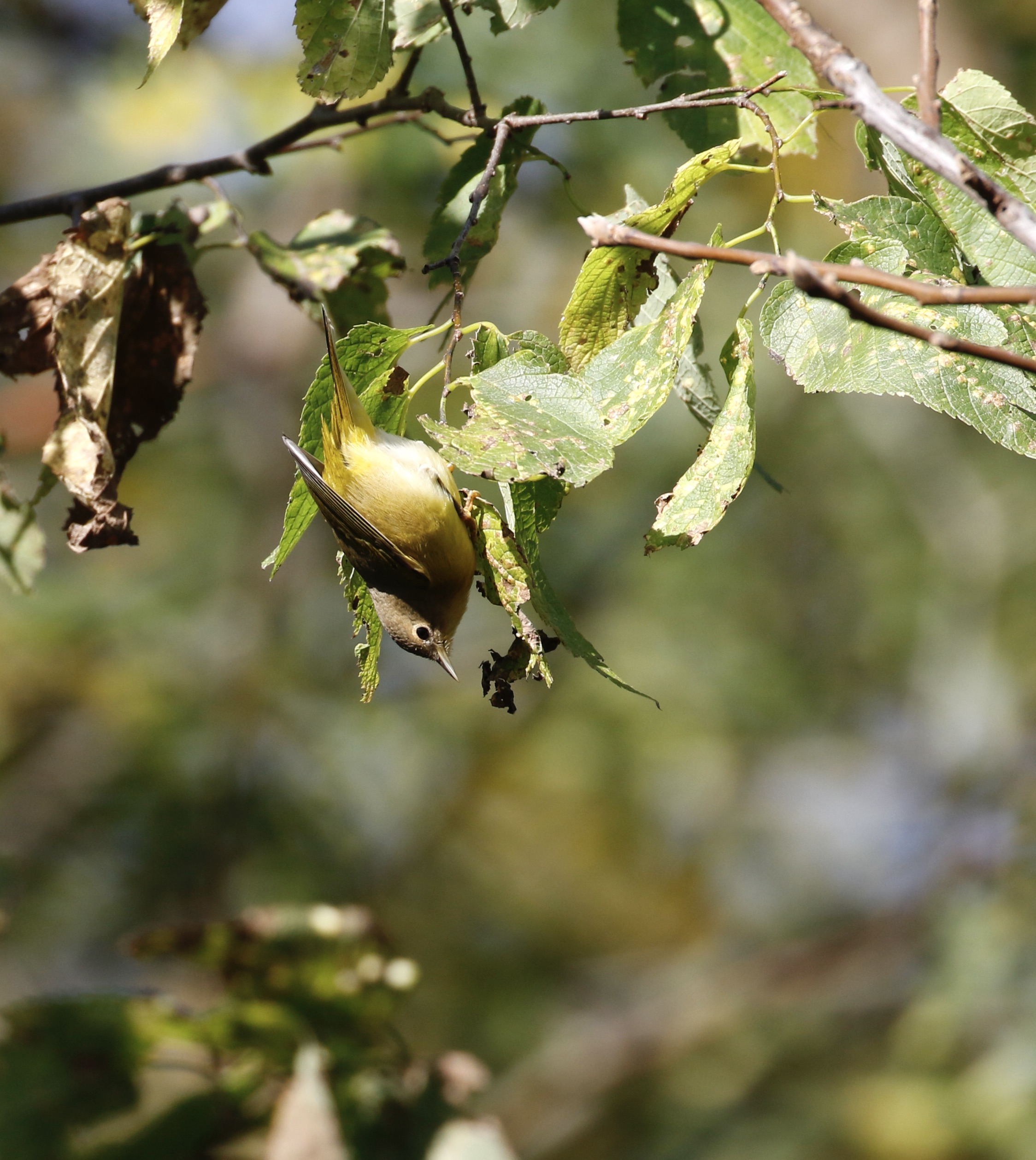
April 30: 47 species today. A juvie Bald Eagle flew over the prairie, Yellow-rumped Warblers all over the place. One Yellow-breasted Chat, 3 Orchard Oriole, Tennessee Warbler, Nashville Warbler, Yellow Warbler, Palm Warbler and Black-throated Green Warbler. Rose-breasted Grosbeak, Great Crested Flycatcher, Warbling Vireo and 13 Double-crested Cormorants flying over in a perfect V.
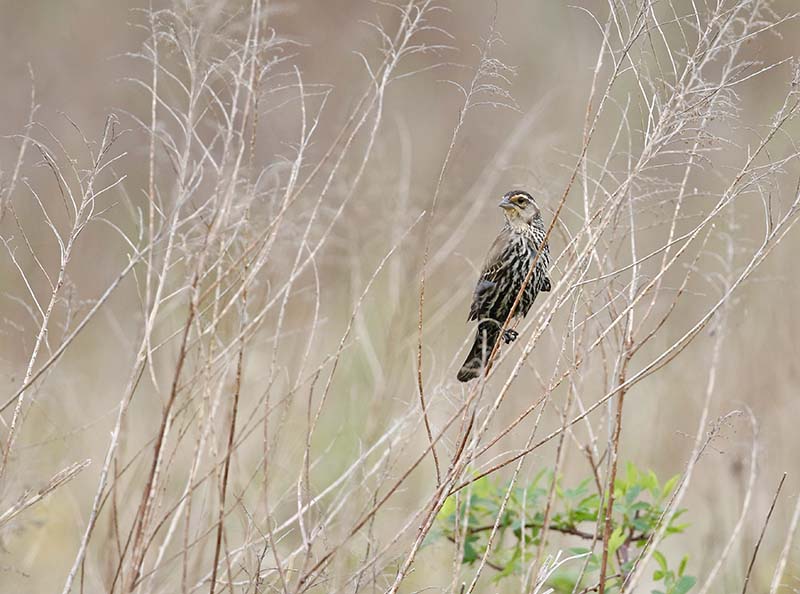
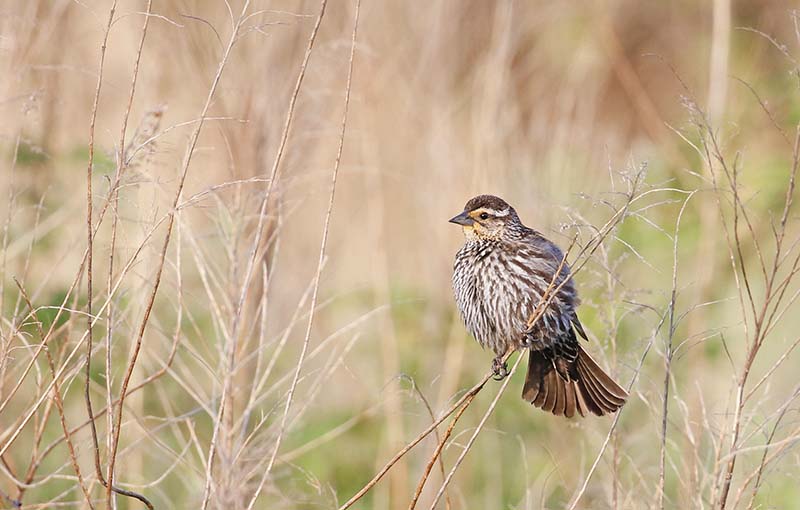
May 1: 52 species today. There was a Gray-cheeked Thrush in the garden area. Don’t see them often and it escaped photo day. Female Red-winged Blackbird, Nashville Warbler and Solitary Sandpiper were not so shy.
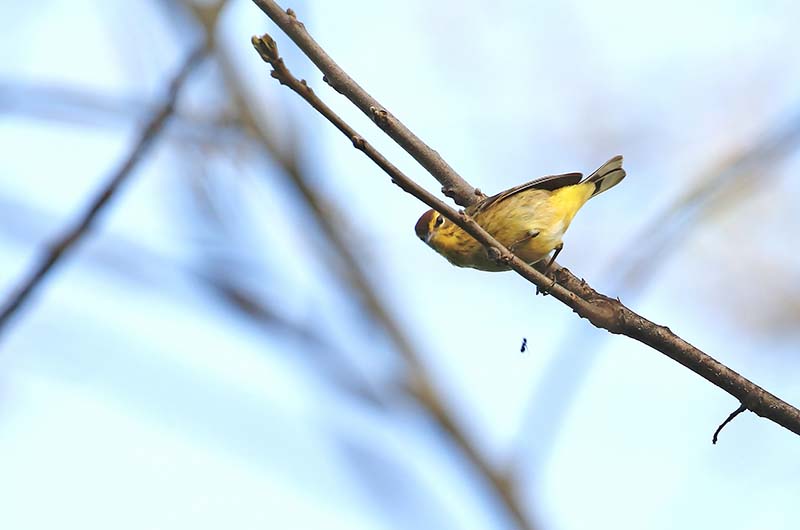
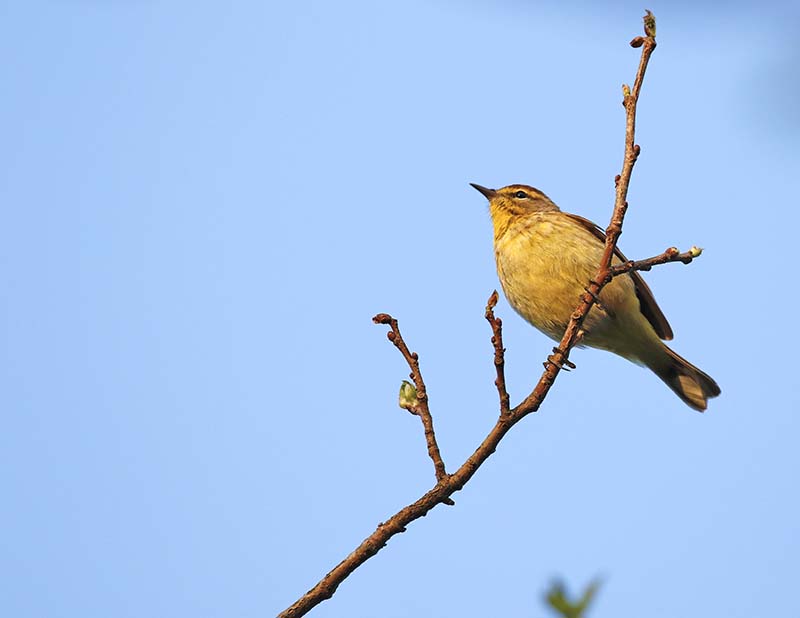
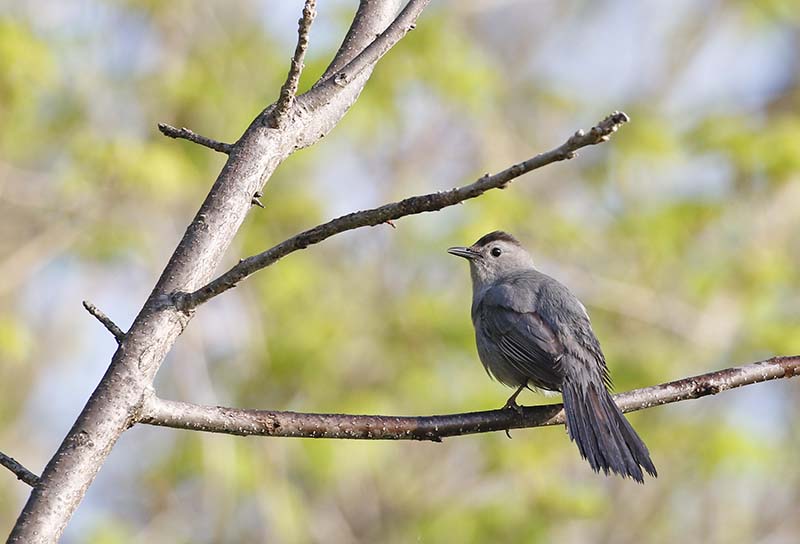
May 2: 50 species today. An American Robin on her nest every day. 2 pics of a Palm Warbler; the first one dropped its food when it saw me. Another female Red-winged Blackbird because they’re so pretty and a Gray Catbird. 3 Wild Turkey, 2 in different sections of the prairie flushed when I walked by even though they were out in the middle. Sounded like helicopter blades. Not sure if they were sitting on nests, but baby turkeys would be cute. 1 Ruby-throated Hummingbird and the biggest surprise was an Osprey sitting in a tree at the lookout point. It took off before I could get my camera up, but was excited to see it. Last sighting was in 2021. Warblers: Orange-crowned, Nashville, Common Yellowthroat, Northern Parula, Yellow, Palm and Yellow-rumped.
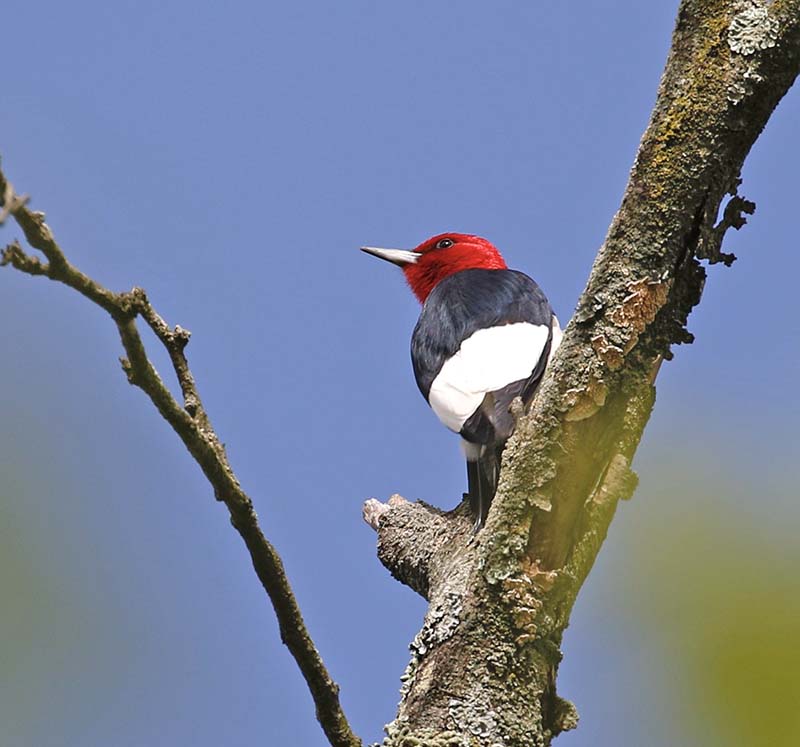
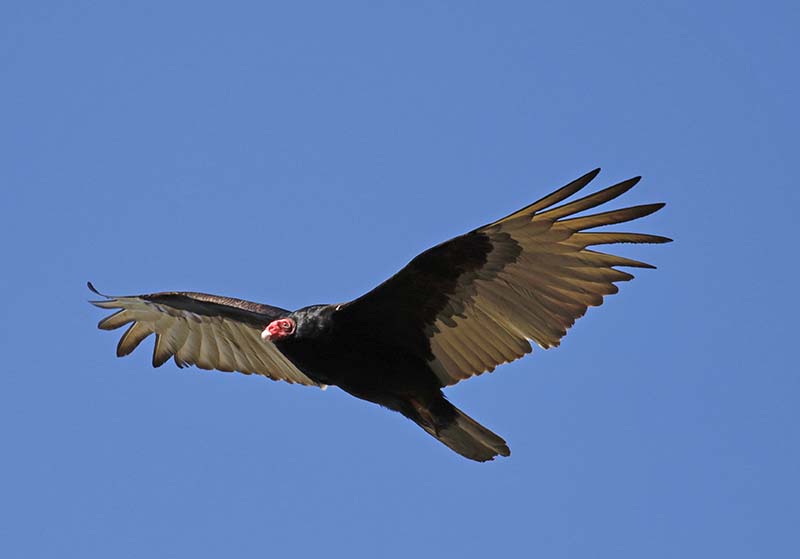
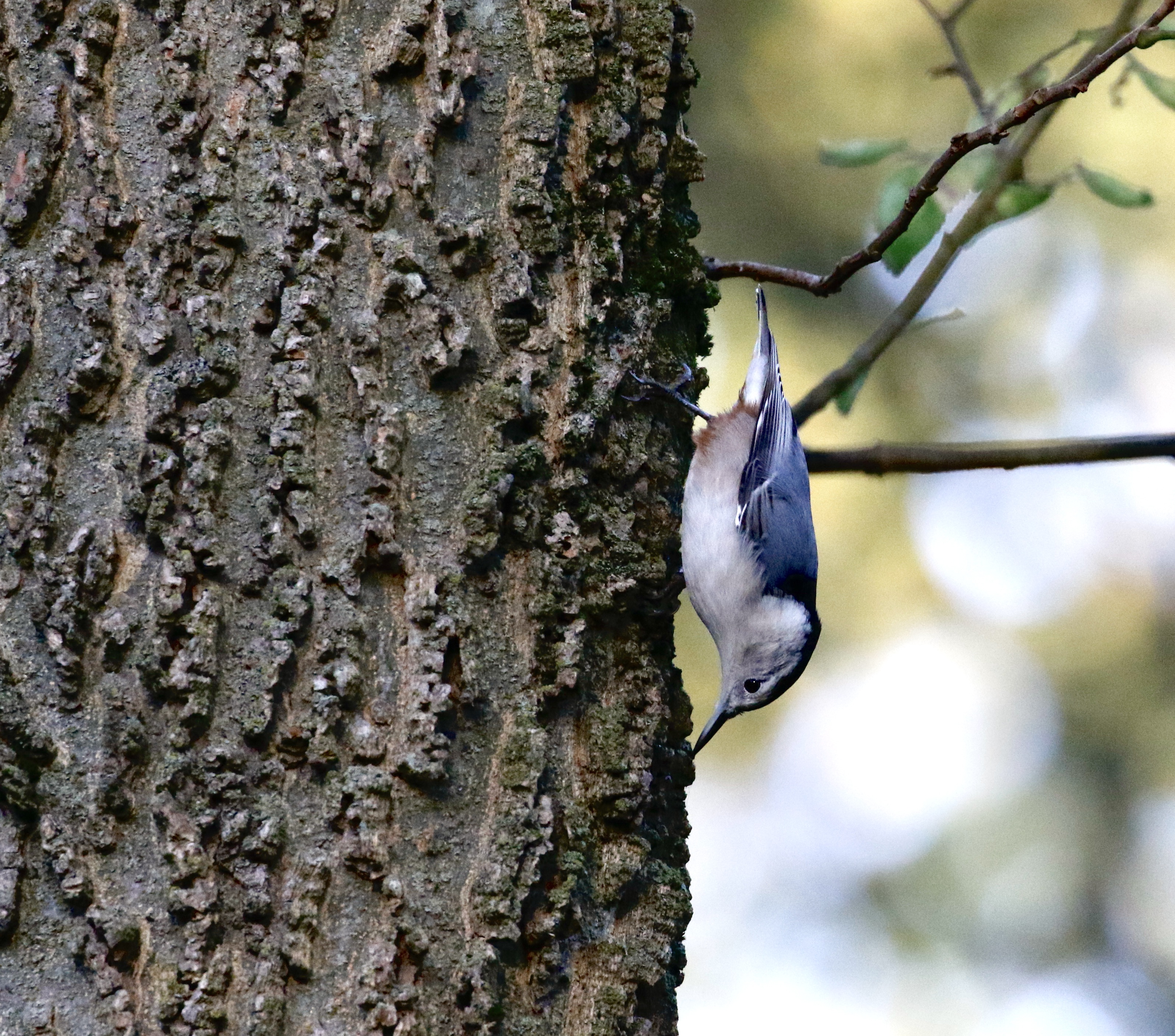
May 9: 53 species today (14 warblers) Canada Goose, Wood Duck, Mourning Dove, Green Heron, Turkey Vulture, Red-headed Woodpecker, Red-bellied Woodpecker, Downy Woodpecker, Northern Flicker, Least Flycatcher, Yellow-throated Vireo, Blue-headed Vireo, American Crow (YAY—they’re back!), Carolina Chickadee, Tufted Titmouse, White-breasted Nuthatch, Northern House Wren, Carolina Wren, Gray Catbird, Eastern Bluebird, Wood Thrush, American Robin, House Sparrow, American Goldfinch, Chipping Sparrow, Field Sparrow, Savannah Sparrow, Song Sparrow, Lincoln’s Sparrow, Swamp Sparrow, Eastern Towhee, Orchard Oriole, Baltimore Oriole, Red-winged Blackbird, Brown-headed Cowbird, Common Grackle, Ovenbird, Nashville Warbler, Common Yellowthroat, American Redstart, Cape May Warbler, Northern Parula, Magnolia Warbler, Blackburnian Warbler, Yellow Warbler, Black-throated Blue Warbler, Palm Warbler, Yellow-rumped Warbler, Black-throated Green Warbler, Wilson’s Warbler, Northern Cardinal, Rose-breasted Grosbeak, Indigo Bunting.
Birdcast noted that 24,564,200 bird species flew over Ohio last night. We will be listening for new song as they make their way north to Magee Marsh Wildlife Area where Deb will be watching with her camera and 89,999 other people.
At this point in time, the farm animal sanctuary is primarily a senior living facility. The three donkeys are well into their 20s. At five, Clive is the youngest of the five pot-bellied pigs. The others, as well as Nemo the big pig, are at least 10. Brownie the Rouen Duck is at least five (I just read that they can live to be five!) As with humans, supplements joint health and anti-inflammatories are part of daily food prep. The residents came here to live out their lives in as much peace and freedom as possible. It’s tough to admit when The Quarry Farm may not be the best place for them to do so.
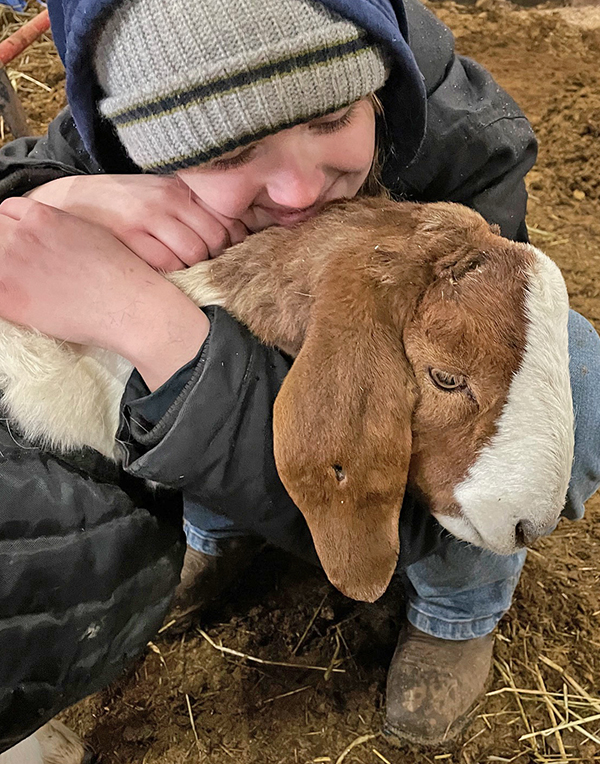
Tommy the Boehr Goat was bottle-raised by a gentle boy who cared for him. He was initially named “Tongue-ey” because the little goat was unable to keep his tongue in his mouth. When Tongue-ey came here, we hoped that he would become part of the herd. Unfortunately, the other goats kept him at a distance. We found out why when we found him non-responsive on a January morning. We drove him to Ohio State University Farm Animal Services where he spent a week.
The prognosis was probable failure to thrive. His little body was unable to regulate its temperature and he was unable to fight off parasites as healthy goats do with regular treatment. Our friend Tim Jasinki at Lake Erie Nature & Science Center put us in touch with Whispering Acres Farm Animal Sanctuary near Medina. This facility is home to a number of animals with special needs, and many of these animals are ambassadors for hospice therapy and veterans with PTSD. Tiny Tongue-ey—now Tommy—was immediately surrounded by equally tiny goats. Janine Smalley, the director of the sanctuary, sent photos of him at work, providing comfort to someone in need.
…and Sometimes the Best Place is Here
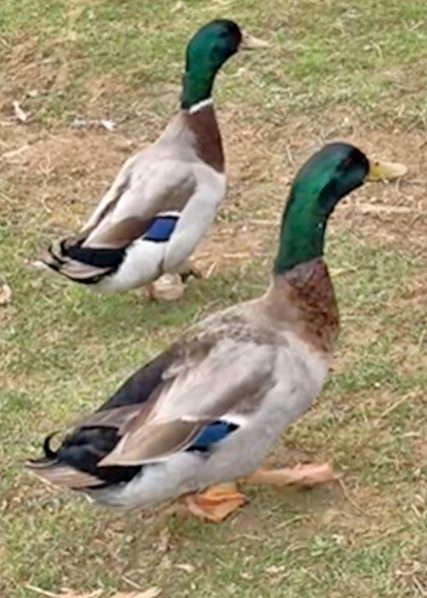
While making arrangements to transfer Tommy to Whispering Acres, Janine asked if The Quarry Farm would be able to accept any ducks. Someone had just surrendered two Rouen drakes. In addition to Brownie, there are two more Rouen ducks here. Brownie and the Brownettes could certainly hold their own. Although it is Spring and the two brilliantly-plumed males are rather obnoxious with the season, Brownie leads them around by their bills.
Conservation biologist Douglas Tallamy [Nature’s Best Hope, 2019] urges us to use our gardens to help fight looming threats to life on Planet Earth, two being shrinking agricultural land and loss of habitat for our vital pollinators. How can we use our little plots to impact such huge issues while also beautifying our landscapes? Dr. Tallamy assures us that our combined efforts can go a long way toward correcting both problems. So, this winter as we pore over gardening catalogs, we who have enlisted in the cause of supporting pollinators should pay extra attention to seed and plant descriptions, looking for evidence of plentiful pollen and nectar supplies for bees, butterflies, hummingbirds, etc.
One small way to focus is by looking for colorful, pollinator-friendly annuals to incorporate among the perennials, herbs, vegetables, native wildflowers, etc., in our garden plans. Annuals that are both ornamental and beneficial include easy-to-grow cosmos, marigolds, sunflowers, coreopsis, salvias, and zinnias. Some can be obtained as nursery starts, while all can be seeded directly into the soil. With proper care, especially deadheading, they can provide color and pollinator food for a season. Their flattish, daisy-like flower heads make rich pollen and nectar supplies easily accessible to bees (the most important pollinators), butterflies such as Monarchs and Swallowtails, and certain flies. [On zinnias, for example, pollen and nectar sources make up a yellow center, easy for pollinators to spot, except perhaps for showy fully double varieties that tend to bury the food supply.]
Plant breeders tempt us every year with exotic cultivars and hybrids of familiar annuals. These promise color and interest, but many fail to feed pollinators. The features that supply rich pollen and nectar may have been weakened or bred out. For example, pollen-free sunflowers touted for cut flower arrangements may be colorful but are useless to pollinators. Cultivars bred from flowers that are normally flat and daisy-like instead may have dense pom-poms that look quirky and cute but make pollen and nectar too difficult for bees and butterflies to reach. Unless a new variety promises great benefits, tried and true standards may be the best bets for pollinators.
A four-year research project by University of Minnesota Extension (2015-2018) studied more than 30 annual varieties and identified the following nine as the most popular with pollinators… (click on the newsletter cover for the full article)
I learned this week that a blog post should always tell a story, beginning with, “Once upon a time.”
Once upon a time, there was a four-acre hillside that housed seven potbelly pigs, one potbelly pig, three donkeys, eight goats, two turkeys, nine geese, eight ducks, and an indeterminate number of chickens because that number seem to fluctuate every morning when new roosters appeared. Very mysterious. All of these animals were disgruntled. They didn’t get second breakfast.
No matter how sad they looked when a car passed their fence, when the house people that they just knew could hear them disgruntling didn’t give them their second breakfast, and the door to the hay mow didn’t open no matter how hard they banged on it, food did not appear.
November nights were sometimes warm and sometimes cold. The animals buried into the straw on cold nights and dream that the next day’s breakfast would multiply until suppertime.
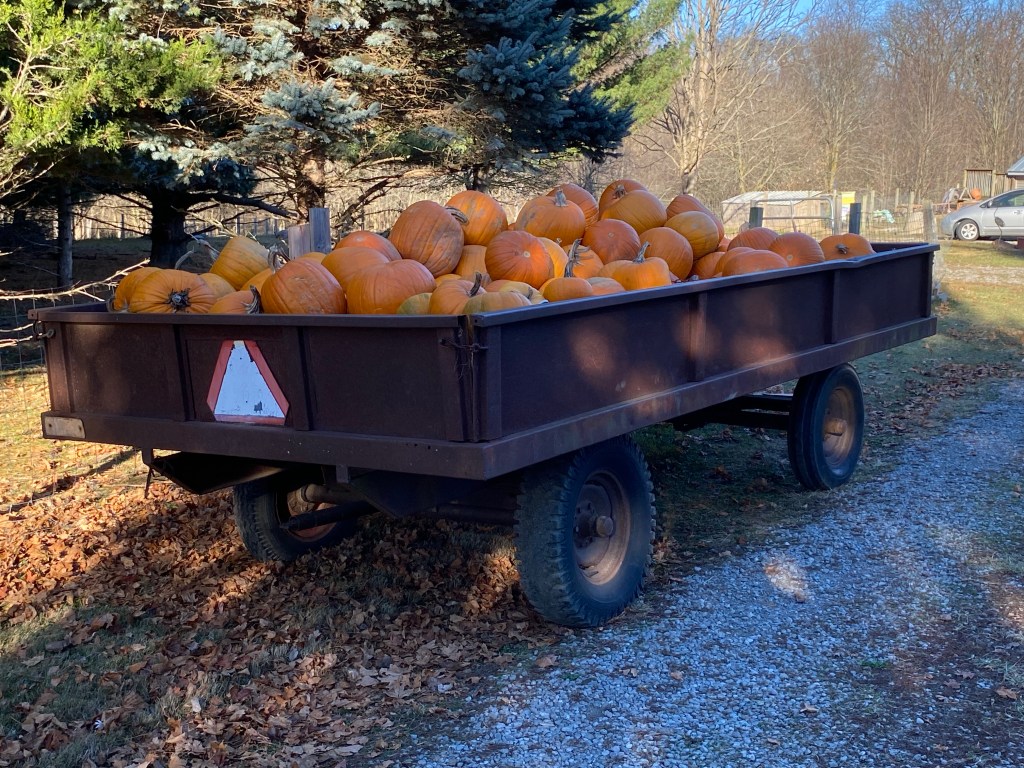
On November 7, a car did stop. Only it wasn’t a car. It was a truck. It was a truck pulling a wagon. The wagon was full of pumpkins: big round juicy seed-and-pulp-filled pumpkins. Magic Dave and Jane had arrived! Dave and Jane were the best people in the whole world. When these Great Pumpkins visited, squash rained from the sky. Orange fruits hit the ground and burst open with squashy orange goodness.
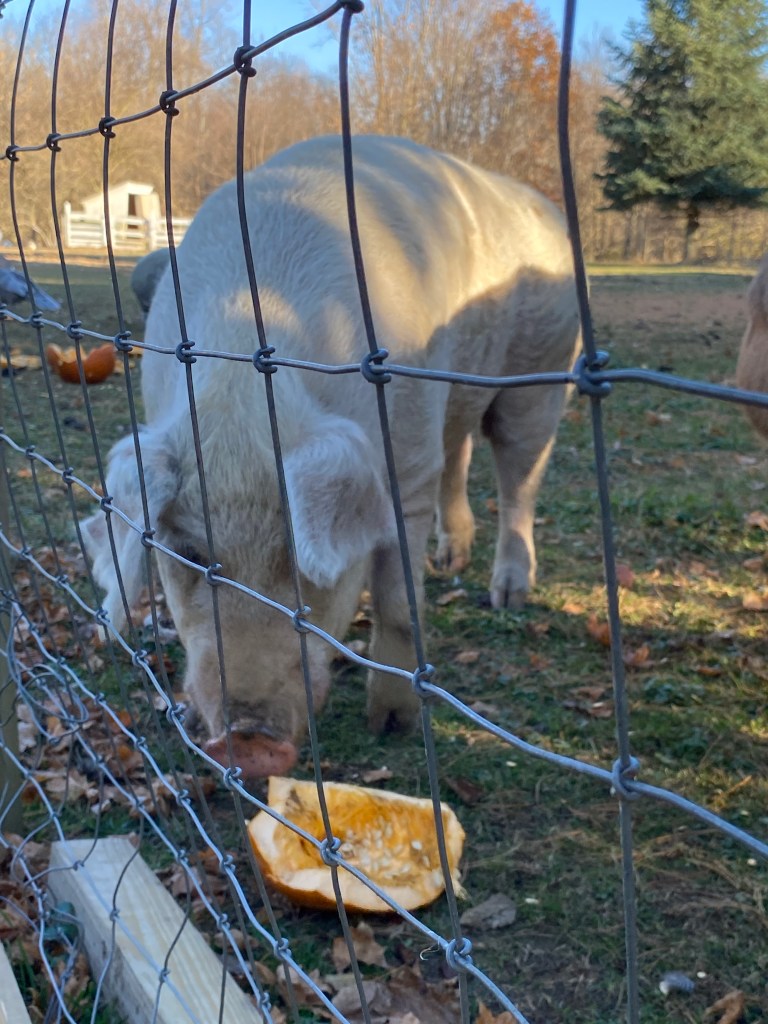
The animals ate until their bellies dragged on the ground. The sun warmed the chilly November ground and their full bellies. When evening came, they ate their supper and finished what juicy bits were on the ground for dessert. Donkeys kept watch over the wagon. Pigs snored, dreaming of lip-dripping squash threads. Fowl purred contentedly in their roosts. Goats burped (they always burp.) The people in the house sang songs of praise for peace, delivered by Great Pumpkins.
Author Sterling North published the book Rascal in 1963. It’s an autobiographical story about industrial and economic changes, wilderness being lost to industry, and a young boy raising a baby raccoon. The antics of the animal help alleviate the boy’s fear for his brother who is a soldier at war.
I remember reading Rascal and desperately wanting a raccoon as my best friend. A lot of people did. We read it and watched the Disney movie based on the book. For most, the later parts of the story, where the growing animal became destructive in captivity, just didn’t sink in. When an orphaned raccoon did come into my life, my dad was there to intervene.
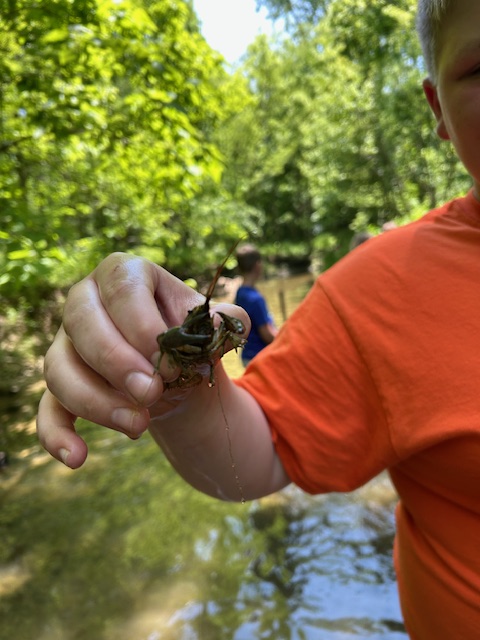
The wild animal did not become a pet. There was a creek nearby with crayfish. We taught him to catch and eat them. He built strength by climbing trees. He grew a warm coat. As the days passed, we saw him less frequently. One day in December, I saw him along the creek, as I did most days. He hesitated on the path, then turned slowly away, huffing. It was like a switch turned and he was one of the wild things again.
There are more rural residents now, and fewer opportunities to slowly release a rehabilitated animal into the wild. Unless you are trained and licensed to do so, it’s against the law to contain a wild animal. Not only is it illegal, it’s unhealthy for humans and wildlife. Raccoons are especially tricky. They imprint on people very, very easily. There are licensed wildlife rehabilitators who work only with raccoons because these animals take so much time, resources, and territory to “rewild.” And there are certain parts of Ohio where it isn’t legal at all to rehabilitate a raccoon.
The Quarry Farm does not rehabilitate wildlife. When people call here, saying that they have a) a baby bird/rabbit/raccoon/squirrel or b) an injured wild animal, we a) tell them to put it back and/or b) provide contact info for someone else. We do possess educational permits from the State of Ohio for a few non- releasable wild animals that serve as ambassadors for their kind. We have the training to care for them—six years of it before we were allowed to house a Virginia Opossum. That is how Emerson the Raccoon came to live here.
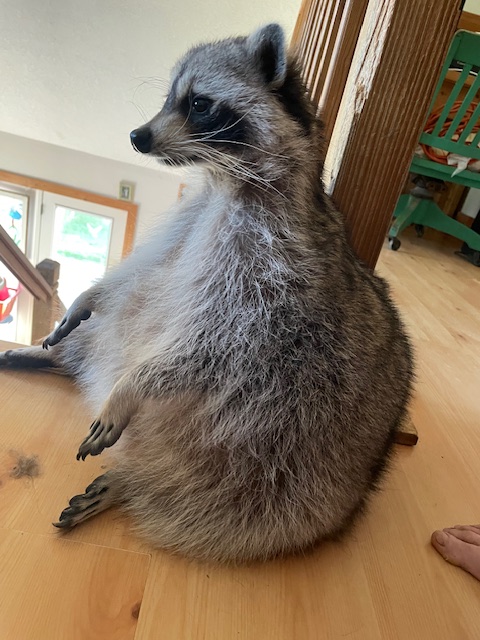
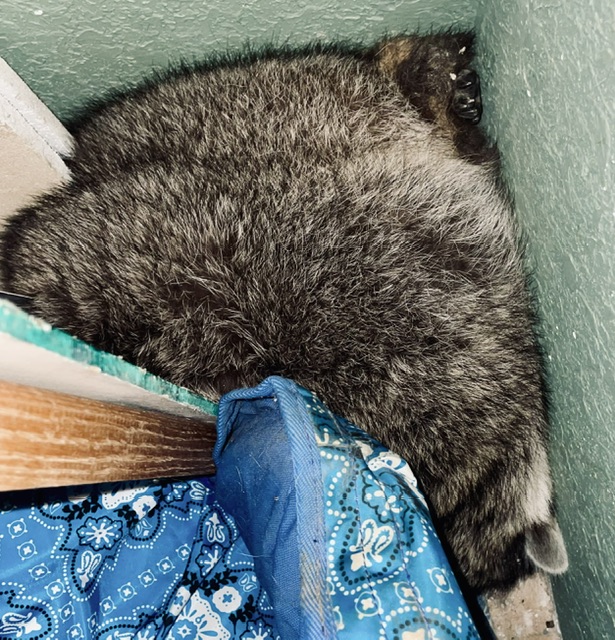
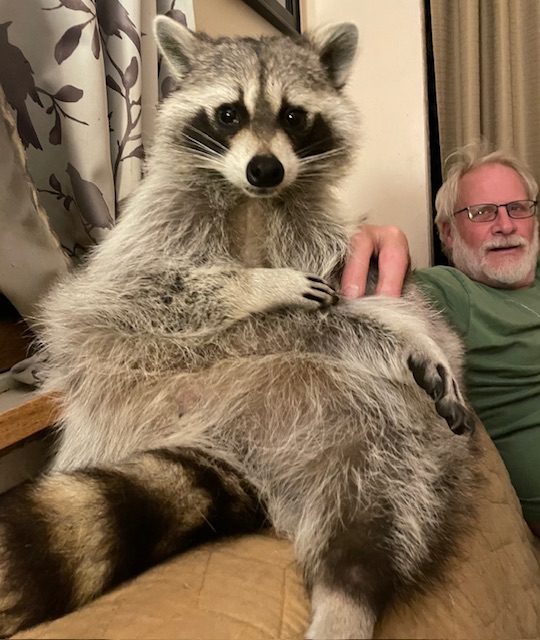
Last spring, we were asked if we were in a position to care for an 8-year-old male raccoon named Elvis. He had quite a backstory. Long-story-short, the raccoon came here in a cage. His mother was shot and killed before she could teach him how to be wild and free. He grew up in a house, and indoors is what he has always known. While a long-ago head injury and neutering tempered the more destructive nature of his kind, he still had a full set of teeth and was absolutely terrified. His diet had to be altered as well, from a reliance on people-food to fruits, veggies, protein bites and absolutely no more potato chips. It took several weeks of coaxing and a name change before Elvis became Emerson, king of the tallest bookcase, keeper of squeaky toys (unless Quinn the Fox steals them), and puller of earlobes. Thankfully, he was litterbox-trained when he arrived and never misses.
Emerson dips his sensitive hands* in his water bowl,“seeing” the grapes and carrots that we drop in. It’s thought that water contact increases a raccoon’s tactile ability. His wild counterparts do the same in streams and ponds. The only other thing that he has in common with wild raccoons is his appearance. Emerson has always lived his life completely contained and will continue to do so. At least he will help us teach people more about how to co-exist with these intelligent, curious animals.
No, you didn’t miss an event at The Quarry Farm. There was no official activity today to commemorate avian acrobats. There was, however, a walkabout in the nature preserve to see who is flitting about in the lead up to the October 9 Fall Bird Migration Hike. Birders Deb and David were on the trails bright and early to document birds that are either back “in town” for the cold months or who are passing through on their way further south. They identified 36 species.
Have you noticed, as we have on The Quarry Farm, an absence of Woolly Bear caterpillars this fall? Typically, the fuzzy black and brown creatures are a common sight in late summer/early fall, crawling on the warm pavement of our country road. Not so this year. Here’s a brief look at the life of our fuzzy, bristly friend, to know it better and attempt to understand why its scarcity matters.
Woolly Bears are the caterpillar form of several related moth species, including the orange-yellow Isabella Tiger Moth (Pyrrharctis Isabella), which ranges across the U.S, and Southern Canada. The moth typically produces two broods a year. It lives about two weeks, nectaring on a wide variety of flowers. It mates, lays eggs, and dies. The caterpillars we see in the fall are the second brood. They’ve grown fat on leaves such as violets, nettle, sunflower, maple, and elm, and green grasses, and they may have shed five or six times while growing. When the fall brood is ready to pupate, it finds protective winter cover under leaf litter or logs or rocks. During the winter it pupates in a cocoon made from its bristly hairs and emerges as an adult in the spring. The cycle repeats to produce a summer brood.
The second-generation caterpillars that we see in the fall (in a normal year) have eaten their fill, are preparing to hibernate, and are out and about because they’re looking for cover. They are not going to poison us if we pick them up (although they can feel prickly). And sadly, they can’t predict our winter weather—by coloration or by size of the brown band around their middle. Those features are influenced by stage of development, belonging to a particular tiger moth species, and diet. There is no special little weather sensor embedded under the fuzz.
So why are we seeing so few Woolly Bears? First and foremost, no doubt, is the serious decline of many moth species worldwide—for all the reasons that we know too well and are struggling to deal with: climate change, habitat loss, light pollution in populated areas, pesticide and herbicide use. Also, we could look around us recently at a bleached, drought-ridden landscape and see little food for Woolly Bears preparing to hibernate. Their absence matters because, as pollinators and a major food source for birds and other animals, moths are an important link in the food chain that sustains us.