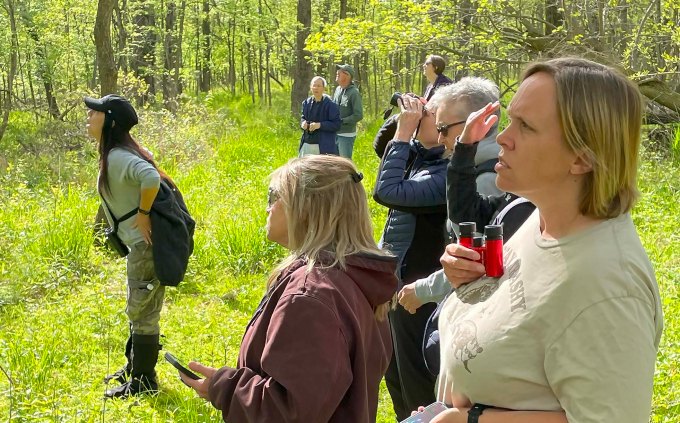
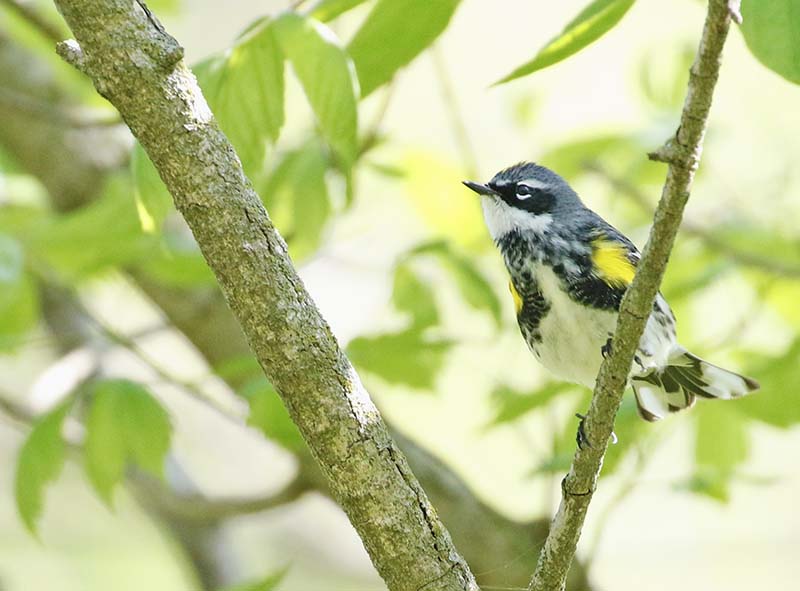
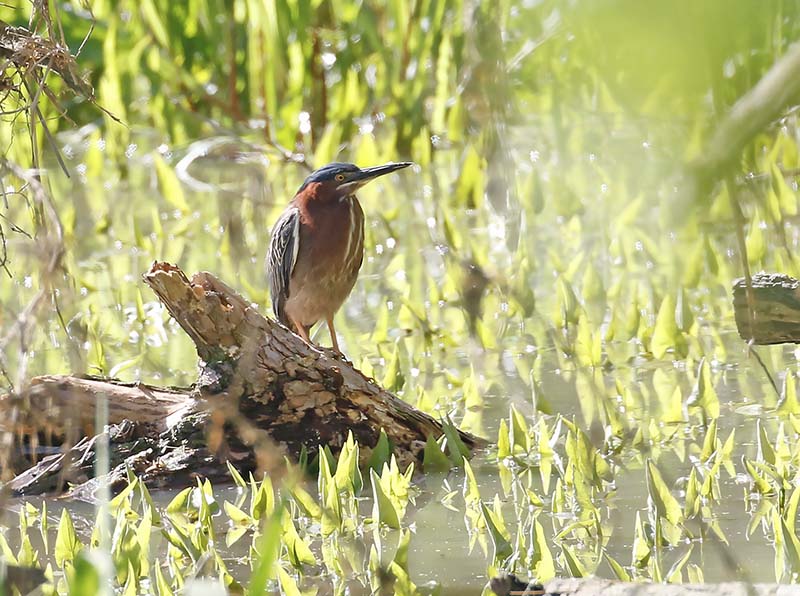
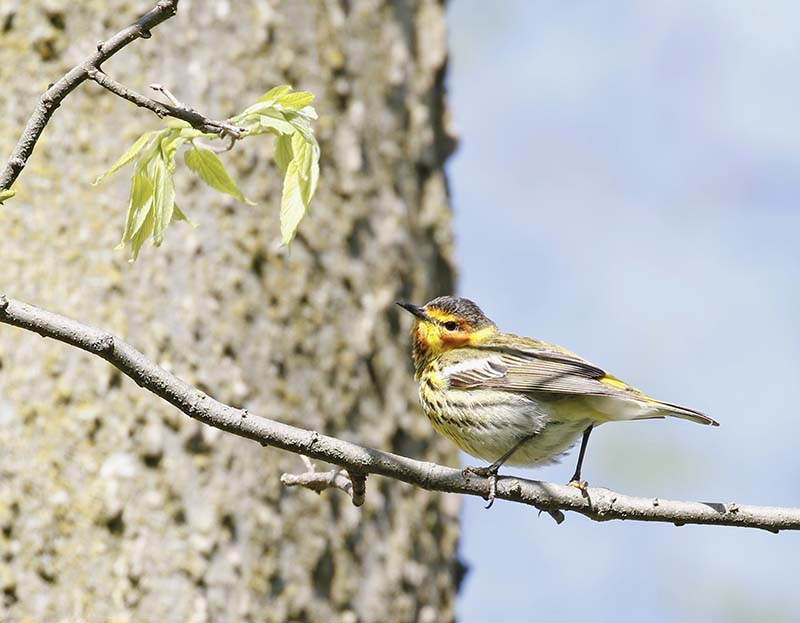
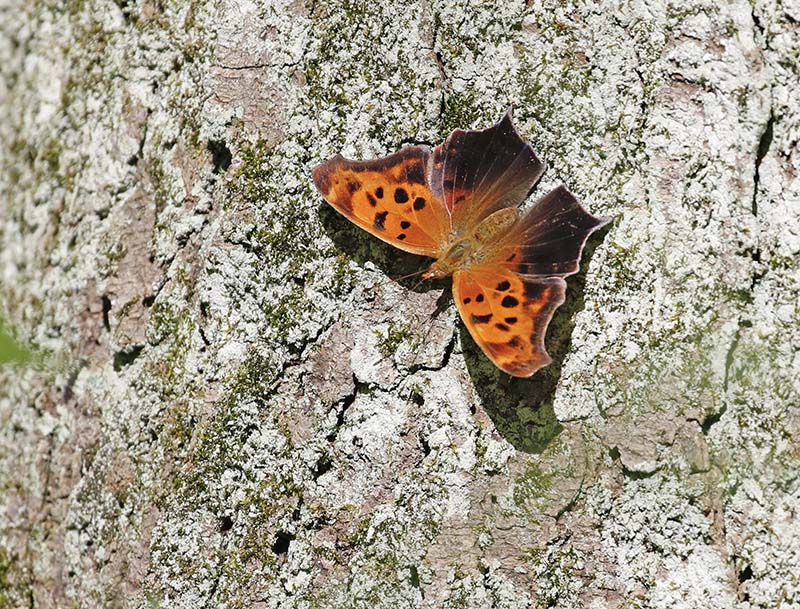
According to Birdcast, 14,526,300 birds crossed Ohio from 8:40 p.m. on May 11, 2025 through 6:40 a.m. on May 12. From 9 to 11 a.m. that Monday, participants in the annual Spring Bird Migration Hike followed the pointing fingers of Deb Weston and David Smith to catch a glimpse of brilliant spring plumage. That morning, the group documented 46 bird species in the wetlands, pollinator gardens, and upland forest of The Quarry Farm nature preserve. An enormous Question Mark Butterfly warmed its wings long enough for a good view as well.
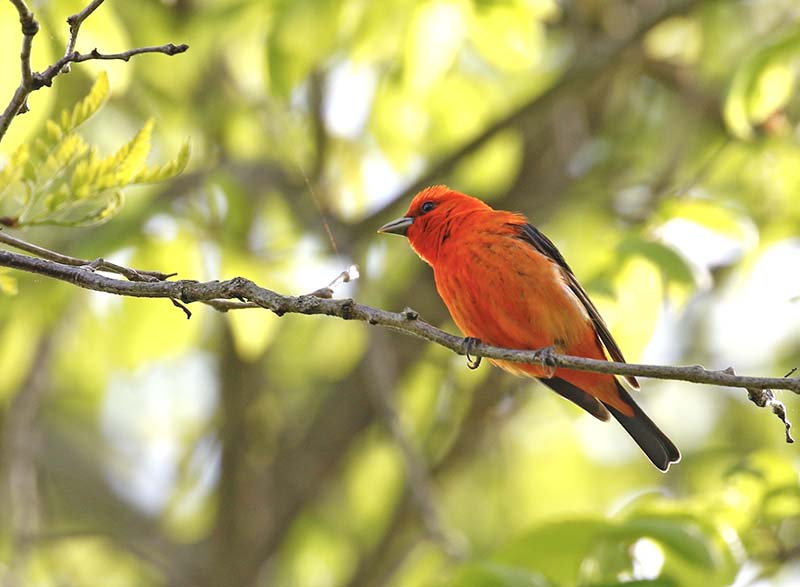
It seems that migration peaks earlier each year as the planet tries to right itself, and Deb and David try to schedule a hike date that happens before all of the migrators pass us by or settle in to nest under dense canopy. To get a good idea of what might pass through for a crowd, Deb walked the trails for days leading up to May 12 hike. She took notes…and brilliant photos.
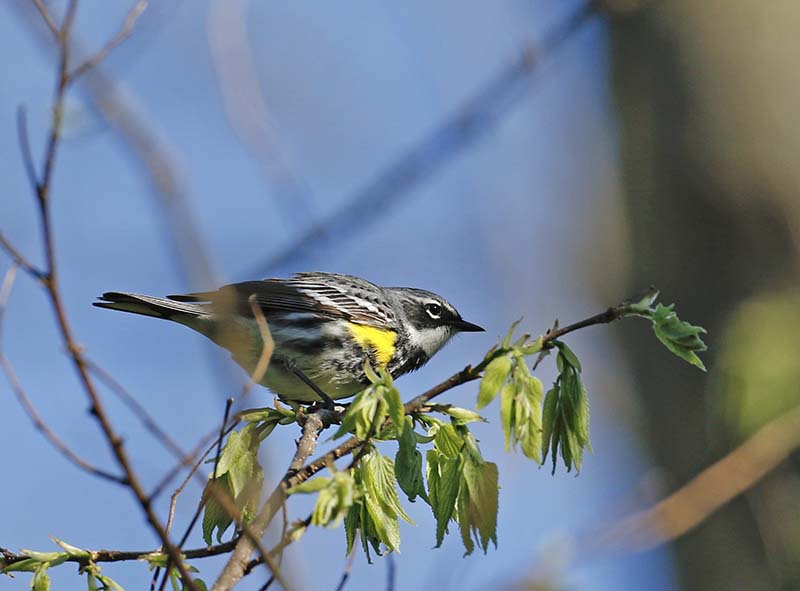
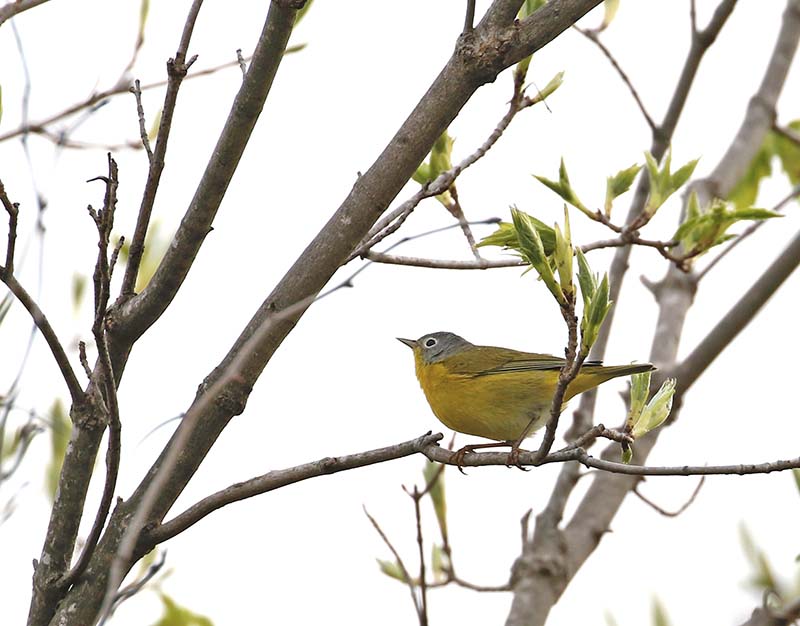
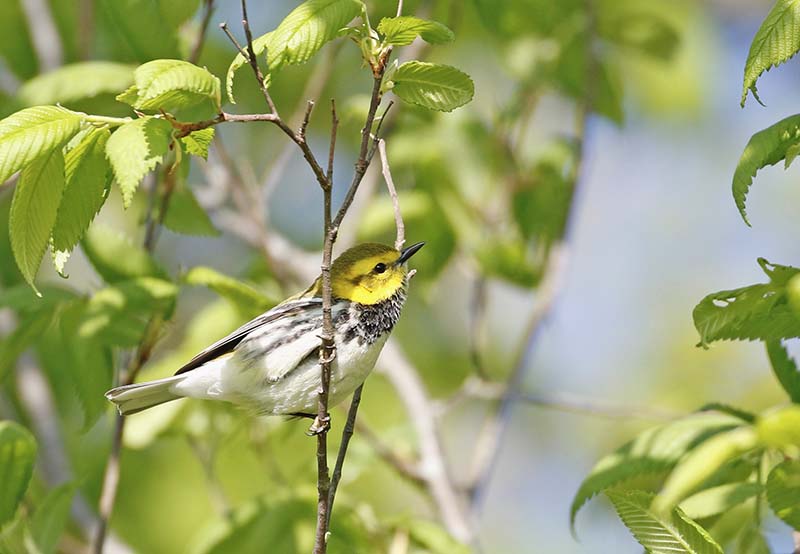
April 30: 47 species today. A juvie Bald Eagle flew over the prairie, Yellow-rumped Warblers all over the place. One Yellow-breasted Chat, 3 Orchard Oriole, Tennessee Warbler, Nashville Warbler, Yellow Warbler, Palm Warbler and Black-throated Green Warbler. Rose-breasted Grosbeak, Great Crested Flycatcher, Warbling Vireo and 13 Double-crested Cormorants flying over in a perfect V.
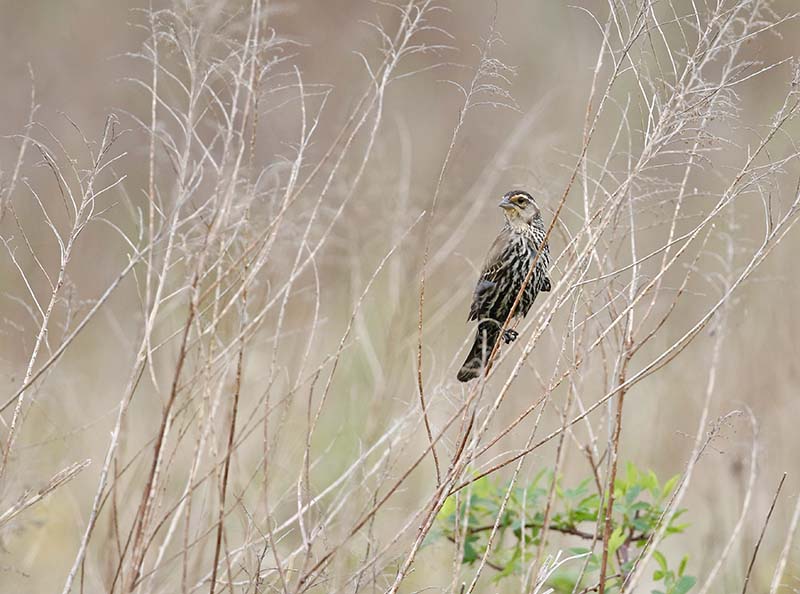
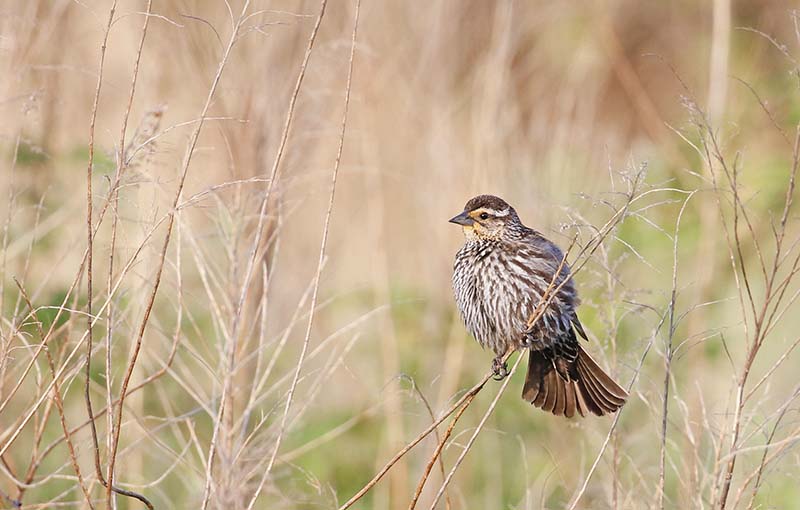
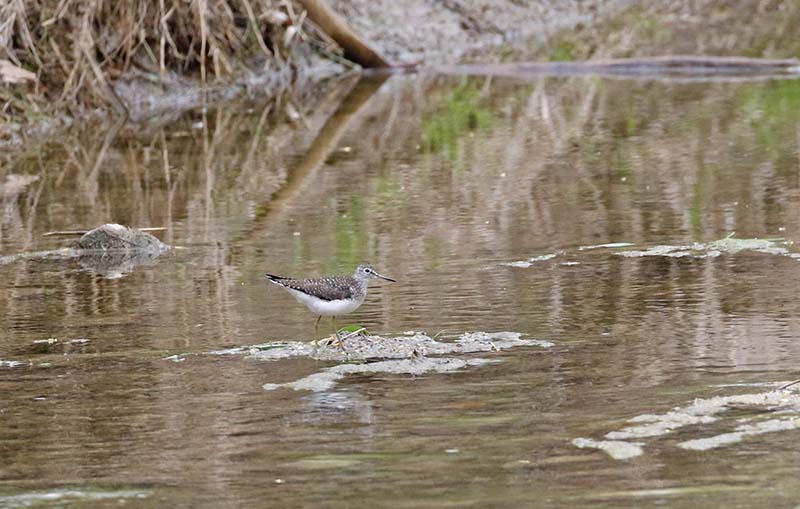
May 1: 52 species today. There was a Gray-cheeked Thrush in the garden area. Don’t see them often and it escaped photo day. Female Red-winged Blackbird, Nashville Warbler and Solitary Sandpiper were not so shy.
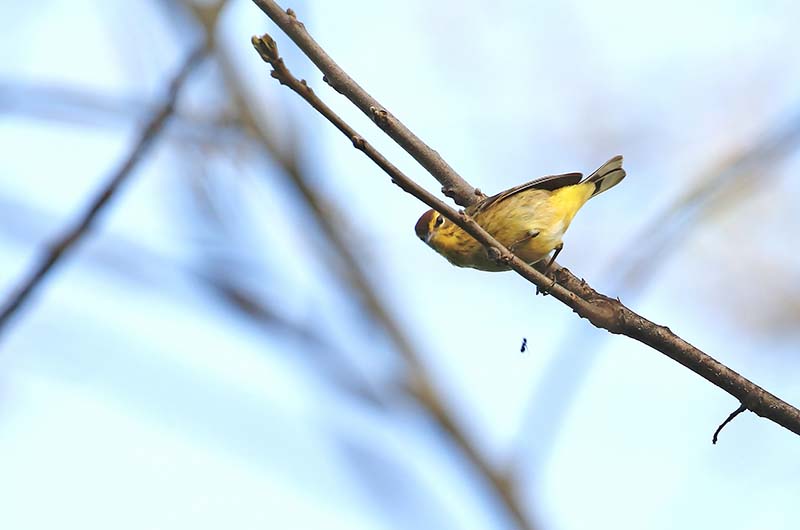
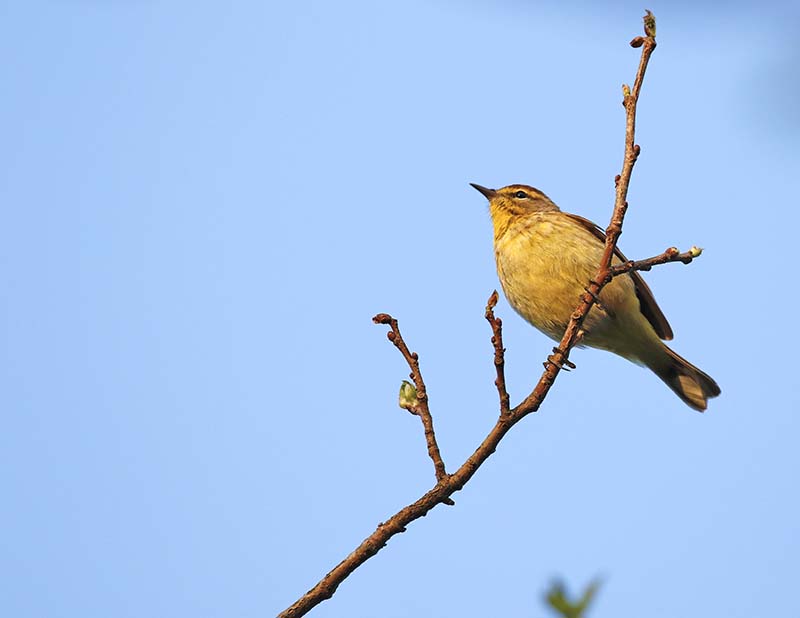
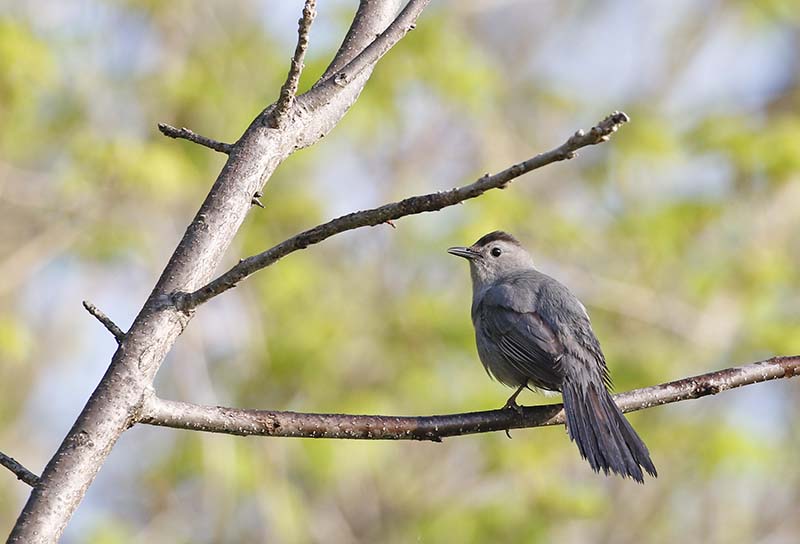
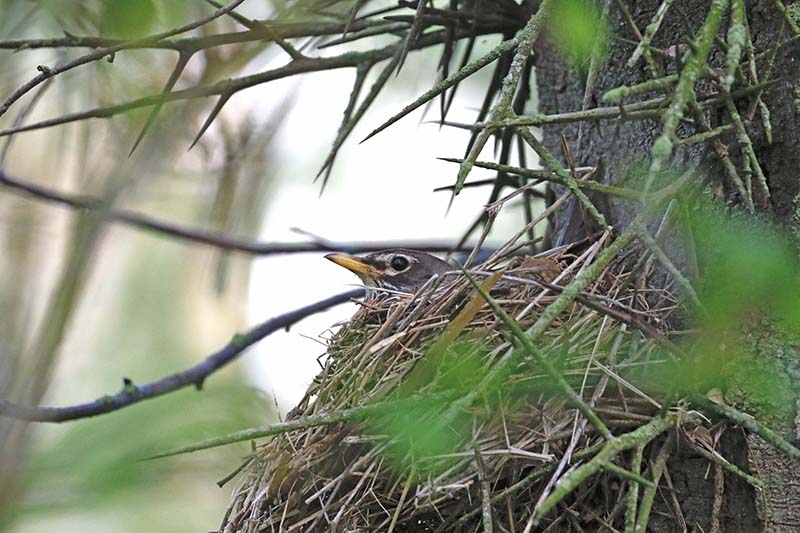
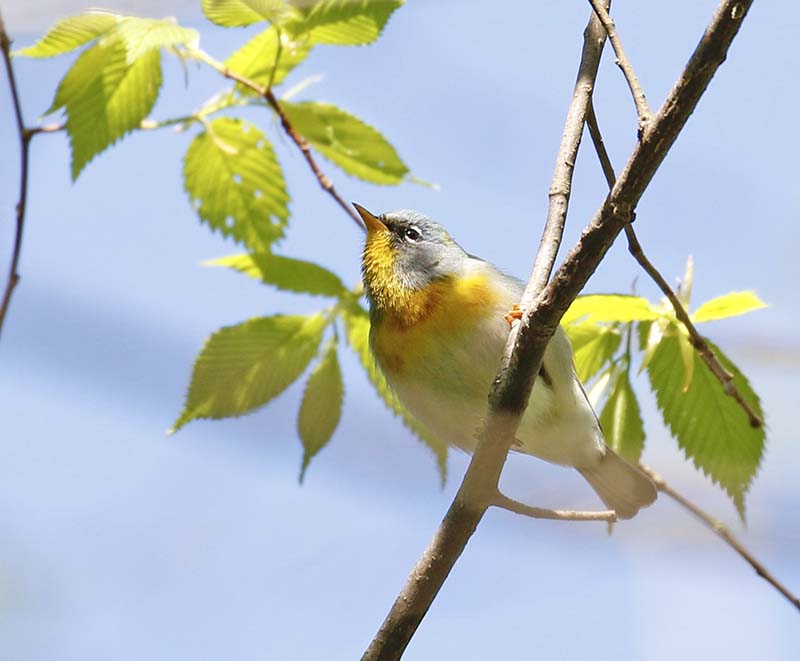
May 2: 50 species today. An American Robin on her nest every day. 2 pics of a Palm Warbler; the first one dropped its food when it saw me. Another female Red-winged Blackbird because they’re so pretty and a Gray Catbird. 3 Wild Turkey, 2 in different sections of the prairie flushed when I walked by even though they were out in the middle. Sounded like helicopter blades. Not sure if they were sitting on nests, but baby turkeys would be cute. 1 Ruby-throated Hummingbird and the biggest surprise was an Osprey sitting in a tree at the lookout point. It took off before I could get my camera up, but was excited to see it. Last sighting was in 2021. Warblers: Orange-crowned, Nashville, Common Yellowthroat, Northern Parula, Yellow, Palm and Yellow-rumped.
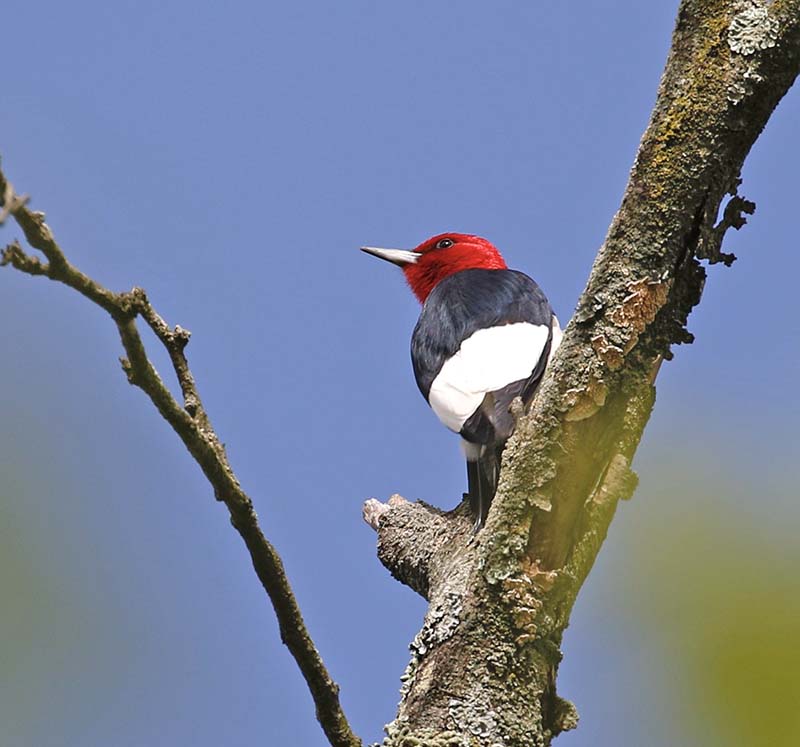
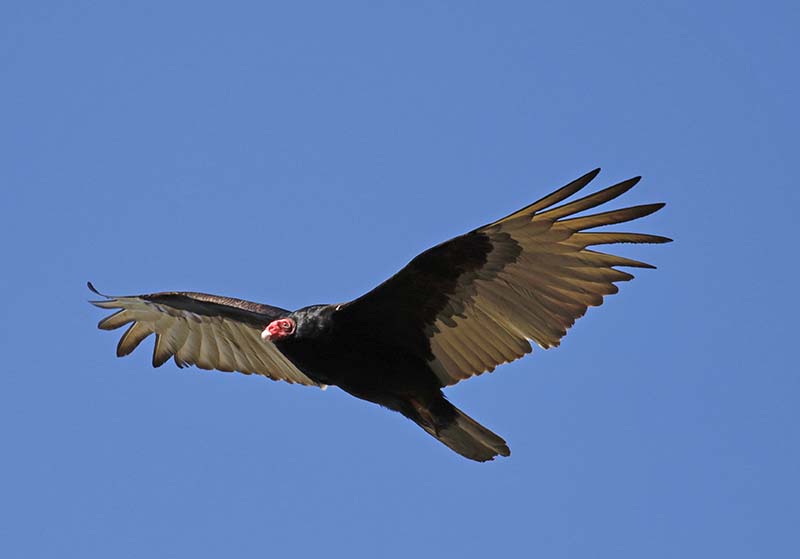
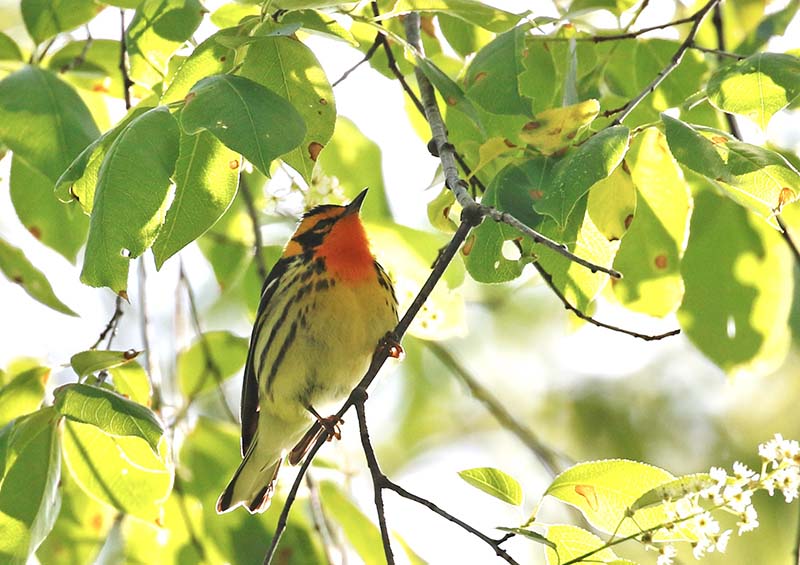
May 9: 53 species today (14 warblers) Canada Goose, Wood Duck, Mourning Dove, Green Heron, Turkey Vulture, Red-headed Woodpecker, Red-bellied Woodpecker, Downy Woodpecker, Northern Flicker, Least Flycatcher, Yellow-throated Vireo, Blue-headed Vireo, American Crow (YAY—they’re back!), Carolina Chickadee, Tufted Titmouse, White-breasted Nuthatch, Northern House Wren, Carolina Wren, Gray Catbird, Eastern Bluebird, Wood Thrush, American Robin, House Sparrow, American Goldfinch, Chipping Sparrow, Field Sparrow, Savannah Sparrow, Song Sparrow, Lincoln’s Sparrow, Swamp Sparrow, Eastern Towhee, Orchard Oriole, Baltimore Oriole, Red-winged Blackbird, Brown-headed Cowbird, Common Grackle, Ovenbird, Nashville Warbler, Common Yellowthroat, American Redstart, Cape May Warbler, Northern Parula, Magnolia Warbler, Blackburnian Warbler, Yellow Warbler, Black-throated Blue Warbler, Palm Warbler, Yellow-rumped Warbler, Black-throated Green Warbler, Wilson’s Warbler, Northern Cardinal, Rose-breasted Grosbeak, Indigo Bunting.
Birdcast noted that 24,564,200 bird species flew over Ohio last night. We will be listening for new song as they make their way north to Magee Marsh Wildlife Area where Deb will be watching with her camera and 89,999 other people.
Chris Brown’s 7th Grade Science students from Glandorf Elementary visited The Quarry Farm on March 15 to demonstrate how to safely view the April 8 total solar eclipse and to make a solar eclipse viewer from a cereal box, as well as one made out of a paper towel roll. Videos of the students are posted to The Quarry Farm YouTube Channel and Facebook page. The videos, recipes and posters were also designed by the students and those are shared on Facebook. The farm animal sanctuary residents provided video commentary.
Debbie Leiber, Deb Weston and David Seitz have been working hard to keep the trails clear, what with all of the high winds dropping branches from treetops. They have been harvesting bush honeysuckle trunks which are made into hiking sticks throughout the year. The Quarry Farm is part of Toledo’s Imagination Station Ambassador program. As such, we were provided with lesson plans, solar eclipse glasses and photo-sensitive beads that will change color during totality. Those beads will be available for registered participants to string on the handles of hiking sticks during our April 8 “Total Eclipse on the Prairie” program.
March 1 was a bit chilly starting out, but a good day to work in the woods, according to David Seitz. He posed here next to one of the mammoth, invasive bush honeysuckle shrubs that he has been removing from the nature preserve for five years and counting. He does a brushcutter sweep periodically to keep fast-growing seedlings from filling back in. This gives native wildflowers and trees a chance to grow in their place. Dave has also cut scores of wild grapevine and poison ivy that pull down and siphon energy from the native trees.
Today was the first day of the plunge into the season of animal rehabilitation calls. An hour or so after arriving at home, a call came in about a Canada goose that was reported to have a broken wing, and spent three or so days frozen to the ground amidst field stubble out on Old 224. I met up with Mum so that we had a better chance at catching the creature.
We drove out toward the area where we were told we would find the goose. We parked in a driveway that once belonged, presumably, to a house along Old 224, approximately one hundred and fifty yards up the road from where we had spotted our target. The two of us laughed helplessly, looking out at the goose, which sat across one of the many impromptu lakes created by the melting of the snow. In fact, it was more like an impromptu creek, being connected to the Blanchard River at its head and base, roiling at both.
The snow made the drop down into the field look gradual, but my first step toward the bottom proved that assumption to be false. My right leg plunged down into the snow, burying itself up to just above my knees. Chuckling, the both of us tread more carefully down into the field.
Upon approaching the spontaneous creek, the Canada goose stood up, displaying a slightly off-looking wing, and took a few hesitant steps away. It had had no need to, as unless we were going to miraculously acquire a boat or full-body waders, there was no way we were going to reach the other side of the waters.
We stood on our side, looking right and left for a break we could cross, when the goose took off, running and throwing open its wings. It caught a bit of wind and rose higher and higher, gliding west through the river corridor. Turning, we strode back up to the road and back to the car, shivering in our sweatshirts. Two vehicles stopped and inquired as to whether we needed help (thank you!) and chuckled when we informed them that we were returning from a literal wild goose chase.
And so, for us, the year begins. Hopefully, this first call foreshadows the course of this year, with concerned fellows and the positive turn of events.
Don’t let the turkeys get you down. Have you seen this thing? A simple drawing by Sandra Boynton of an elephant driven to its knees by six or seven of the aforementioned birds? It was everywhere for a while a long while ago (and apparently lives on as t-shirts, coffee mugs, posters and greeting cards; but, then, everything that ever was still is somewhere on the internet).
The message was simple: any troubles you have are analogous to turkeys and you shouldn’t let them get you down, those darn turkeys.
Yeah? Well, bunk. While I suppose that there are some turkeys out there that are a constant headache, that would do everything in their power to make a person’s life absolutely miserable, the turkeys with which I’ve interacted have been a pure joy. Case in point, the two newest residents at The Quarry Farm.
A couple of months ago, Laura Zitzelberger, operations director at Nature’s Nursery Center for Wildlife Rehabilitation and Conservation Education, contacted us about possibly taking in three bronze turkeys that had been seen wandering in a residential neighborhood in Toledo. And, while three were spotted, once volunteers from the center arrived on-scene, only two were found. Of the two, one was suffering from a variety of injuries (the consequence of getting on the wrong side of a dog). So, after rehabbing the bird and determining absolutely that these were indeed domestic and not wild turkeys (bronzes bear a remarkable resemblence to their undomesticated cousins), they contacted us late last week and made arrangements for us to pick them up.
We bundled them into the back of Rowan’s Subaru Forester and made the hour long trek back south to Putnam County where we set them up in the same run as Johnny, the Canada goose, and Andi, the Pekin duck. During the whole of the trip, despite being unceremoniously lifted from the home they had come to know and dragged into a whole new situation, not once did either bird make more than an idle and near-inaudible complaint.
So here they are now, these two birds we’ve dubbed Fezzik and Inigo. And glad we are that they’re here.
We’ve been busy here. You’ve been busy there, wherever your ‘there’ may be. So much going on that, like me, you are in danger of missing the gold-tinged greens and amethysts of ebbing August, at least as it is here on the Quarry Farm.
I did almost miss it. We have caught a smattering of the sunsets, the kind that include that frosted-animal-cookie pink. But any noticing has been as we walked past a window or distributed hay to Buddy, Marsh and S’more or put the hens to bed. Then one of us left a door unhinged enough that Beatrice opened the front door and let the cat out.
Although we do have several cats, it was White Cat that slipped out. White Cat is deaf as are many white male cats. While there are plenty of dashing, flying and sparkly sorts of things in the outside to entertain a house cat, there are even more along Cranberry Run and in a 50-acre woods that will feast on feline. One that can’t hear a predator approach is especially vulnerable. So we looked high and low for White Cat. And as we did, we caught late summer.
Wild plums ripen
The wild plums are ripening on the nature preserve. Some hang at eye level beside the rich yellow Jerusalem artichokes and purple ironweed on the stream bank. Most plums are rose gold, but some are beginning to flush to mauve. For the first time, Steve will be able to make wild plum preserves to sell at the Quarry Farm table at the Farmer’s Market. (Warning: shameless plug for funding ahead.) Reserve your jar now through the Gift Shop!
Jewelweed, nature’s cure for the maddening itch imposed by poison ivy, is in bloom in the floodplain. The algae growth that plagues Cranberry Run, as well as most of Northwest Ohio’s waterways, is camouflaged by shimmers of sunlight that ignite the riffles. Higher up, the sun itself glows through the tired summer leaves, although the sunlight is cooling from the white hot of June and July. Better and better.
Bushel gourd on the vine
Down low, bushel gourds swell under huge vine leaves. Recent rains have brought on a good crop. The leaves have already been used this summer in a stepping stone workshop. More will be made before the vines wither in frost. The chickens and Johnny the Canada goose find this ground-level search fascinating, especially since disturbed vines yield fat, juicy crickets.
Wounded White Cat and Birdy nose
Even lower, under Buddy’s barn, White Cat is found. The roosters knew he was there; it just took the obtuse humans two days to figure it out. He has earned himself a gash under one eye and a limp, injuries probably inflicted by Buddy. Back in the house, White Cat is thoroughly sniffed before he settles himself in for a good grooming. Outside, the finches and field mice can peacefully ready themselves for the cold months. We will remember to notice.



 Don’t let the turkeys get you down. Have you seen this thing? A simple drawing by Sandra Boynton of an elephant driven to its knees by six or seven of the aforementioned birds? It was everywhere for a while a long while ago (and apparently lives on as t-shirts, coffee mugs, posters and greeting cards; but, then, everything that ever was still is somewhere on the internet).
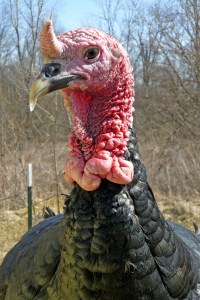 Yeah? Well, bunk. While I suppose that there are some turkeys out there that are a constant headache, that would do everything in their power to make a person’s life absolutely miserable, the turkeys with which I’ve interacted have been a pure joy. Case in point, the two newest residents at The Quarry Farm.
 rehabbing the bird and determining absolutely that these were indeed domestic and not wild turkeys (bronzes bear a remarkable resemblence to their undomesticated cousins), they contacted us late last week and made arrangements for us to pick them up.
 We’ve been busy here. You’ve been busy there, wherever your ‘there’ may be. So much going on that, like me, you are in danger of missing the gold-tinged greens and amethysts of ebbing August, at least as it is here on the Quarry Farm.
 I did almost miss it. We have caught a smattering of the sunsets, the kind that include that frosted-animal-cookie pink. But any noticing has been as we walked past a window or distributed hay to Buddy, Marsh and S’more or put the hens to bed. Then one of us left a door unhinged enough that Beatrice opened the front door and let the cat out.
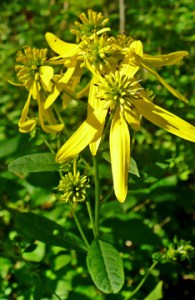 The wild plums are ripening on the nature preserve. Some hang at eye level beside the rich yellow Jerusalem artichokes and purple ironweed on the stream bank. Most plums are rose gold, but some are beginning to flush to mauve. For the first time, Steve will be able to make wild plum preserves to sell at the Quarry Farm table at the Farmer’s Market. (Warning: shameless plug for funding ahead.) Reserve your jar now through the Gift Shop!
 Jewelweed, nature’s cure for the maddening itch imposed by poison ivy, is in bloom in the floodplain. The algae growth that plagues Cranberry Run, as well as most of Northwest Ohio’s waterways, is camouflaged by shimmers of sunlight that ignite the riffles. Higher up, the sun itself glows through the tired summer leaves, although the sunlight is cooling from the white hot of June and July. Better and better.


