Rippling lines

Bob’s special breakfast: Hilty sweetcorn

There isn’t much opportunity to travel for us. Someone (someones, ideally) must be on hand who can carry 5-gallon buckets in winter when the water hose is detached and who can suggest to a 700-pound, heat-prostrated pig that she shouldn’t block the paddock gate but rather get up and plunk herself in the cool mud wallow. Someone(s) must know the various bird and mammal personalities well enough to convince them to go in at night and how to distribute breakfast the next morning so that everyone gets enough. It takes a small village, one that doesn’t have a whole lot of residents.

Occasionally, we are able to be away; two of us together. Just a few nights ‘away ‘abroad’ are enough to remind us why we choose to live here in the middle of braying, crowing, wallowing, and leaf whispers. It’s good to return to this place where the cricket frogs still sing in Spring and screech owls screech and make guttural whoops in Fall. They do that last thing, you know. It took us the longest time to figure out that the same little owl with the high-pitched warble also growls.
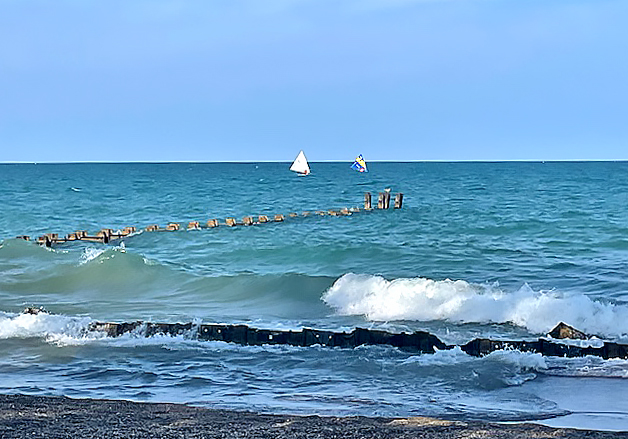
Lake Michigan at Millard Park

Last Friday, we piled stuff in the car and drove to visit family and an art festival in Chicago. Chicago seems a world away from our one-lane rural road, but it’s only slightly longer than a trip across the width of Ohio. Our route through Indiana featured 3 hours of very dry corn fields before Gary, IN brought us to the Skyway bridge to Illinois (complete with a troll on either side to pay.) The Democratic National Convention had ended the night before, but that traffic was joined by incoming patrons of 2 art festivals (including ours), a world music fest and a tattoo extravaganza. After two hours of Friday evening on I-94, we dipped our sweaty fingers and toes in cool, clear Lake Michigan at Millard Park.
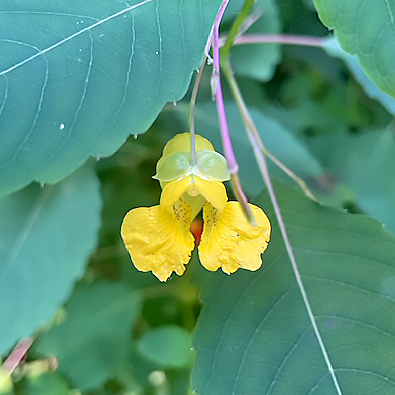
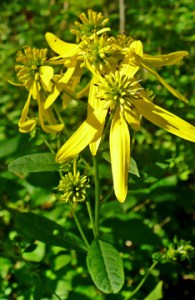
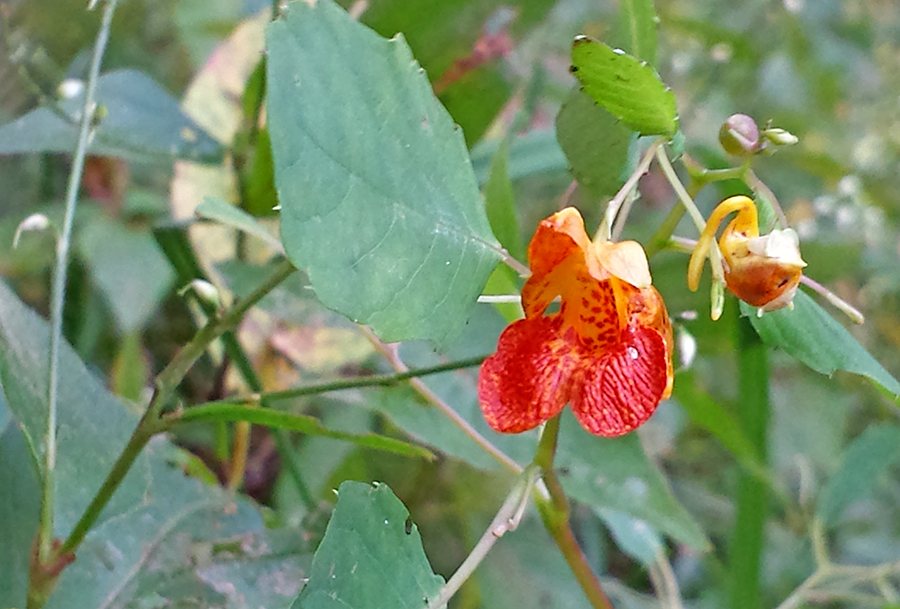
Yellow Jewelweed
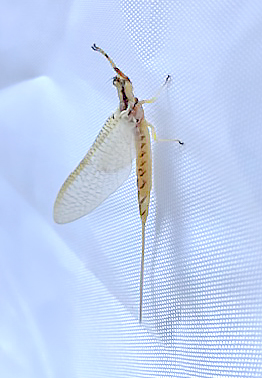
Mayfly

Millard Park, as well as other Chicago-area parks, bike paths, and train right-of-ways are undergoing habitat restoration. There are signs informing pedestrians that the Wingstem, Cup Plant, Joe Pye and Iron Weed planted along the paths are part of a concentrated effort to restore the natural balance of the region. The gardens surrounding mansions and bungalows are planted with riots of native purples, magentas and golds rather than specimen cultivars mulched to the stem as is commonly done in Northwest Ohio. The deep roots of those native plants are part of an effort to restore health to soil and to filter impurities from Lake Michigan’s watershed. The lake itself entertains, bathes, and quenches the people, animals, birds, and insects that live there. Deep in the ravine road to Millard Park, orange and yellow touch-me-not Jewelweed camouflages multimillion-dollar home drainage systems.

The same plants live on The Quarry Farm. Goldfinches burst from the riot of color planted along Chicago Transit Authority’s Purple Line just as they do next to Red Fox Cabin. Jewelweed pods pop from a dragonfly’s touch along Cranberry Run. The more Jewelweed the better. Its natural astringent powers stop the itch of poison ivy that it grows alongside.

Many of us Midwest/Easterners also experience the late summer emergence of cicadas. A couple of weeks ago, My Steven worried that he hadn’t heard them much recently. Two broods emerged in Illinois this year, including in Chicago. This is the first time these two specific broods have co-emerged since 1803. The first brood thrummed above the streets and sidewalks in June. They suffered from over-active libidos when Massospora cicadina—a puppeteer fungus that rivals the post-apocalyptic mushroom heads featured in “The Last of Us”—replaced about a third of each insect’s body, including the parts that fuel reproduction. Currently, the city is being serenaded by the second brood. On the ride home, I heard a news report about these cicadas’ eggs are being invaded by Oak Leaf Itch Mite populations. The mites are always around. They normally invade other insect eggs housed in the galls on oak leaves. But the mites are having Chicago field days this summer. They feast on the eggs of some trillion Brood XII and Brood XIX cicadas. The frenzied mites fall from the trees and keep munching. Tasty humans are advised to wear long sleeves rather than spray.
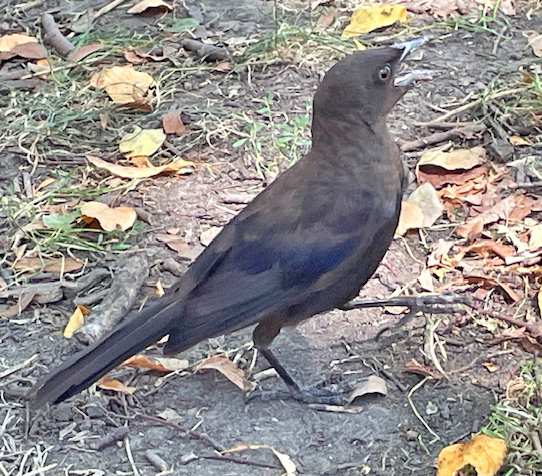
Juvenile Grackle hunts for cicadas
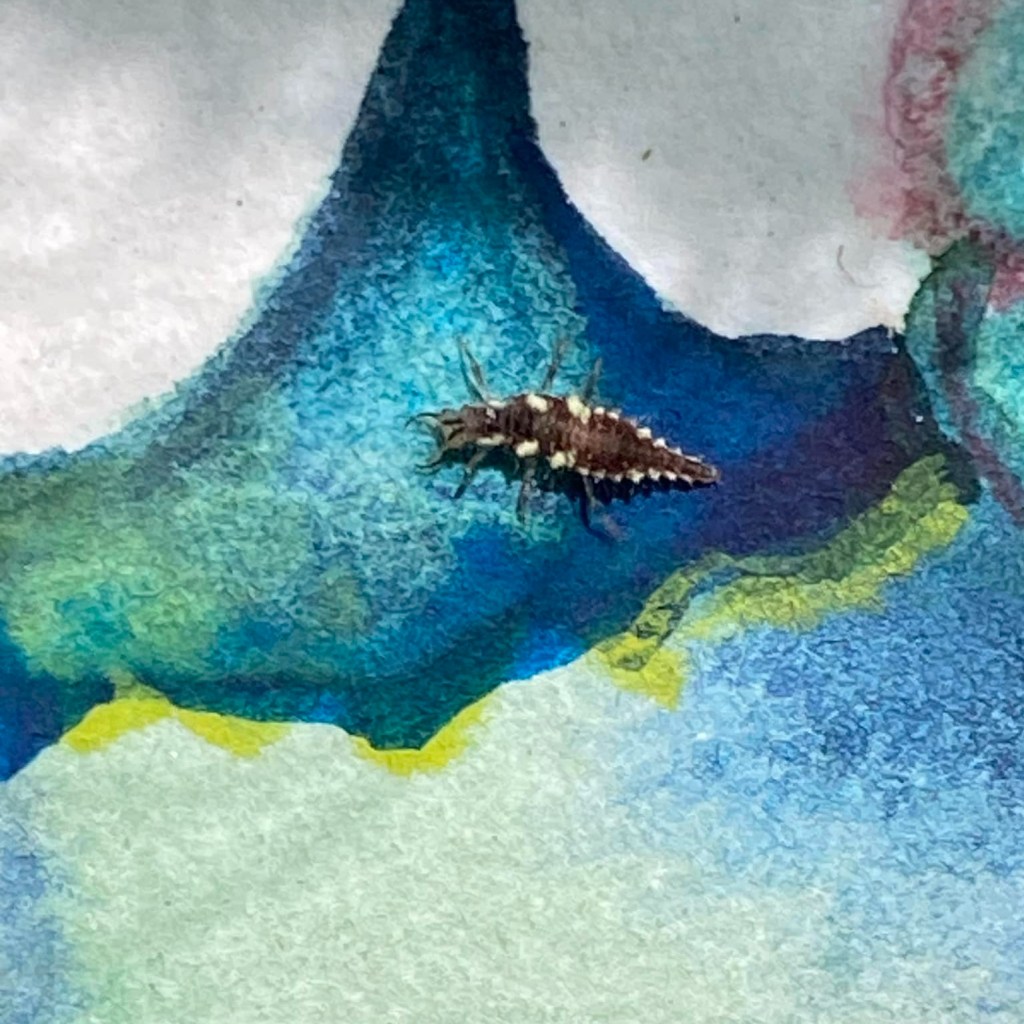
A beneficial, art-enthusiastic Red-lipped Green Lacewing (larva)

But spray they do. As we shaded under American Hackberry trees at the Bucktown Arts Fest, a citronella candle burned in the park oval. A juvenile Grackle hopped in and out of artists’ tents, dismembering and eating cicadas every few feet. He hopped over to the candle, tried to perch on the rim and, shrieking, scurried under an awning. He was chased back out. The chaser sprayed a stream of DEET up and down their thighs, complaining of insect bites. A dead Assassin Beetle larva—a beneficial insect—fell from the air onto my watercolor paper.
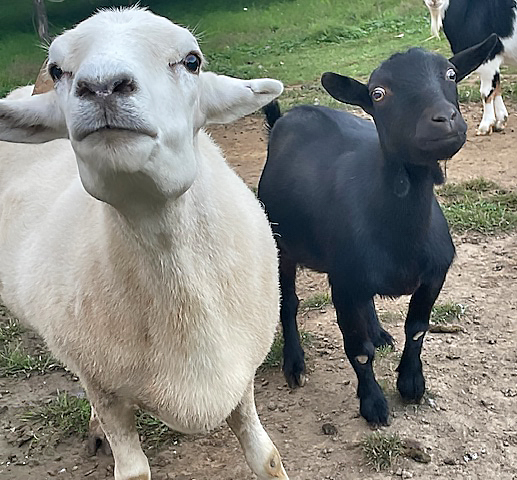
Willy and Pluto

We drove through our front gate on 7L on Monday evening. Our bellies were still full of deep-dish Chicago pizza and 7-layer halva. It was hot and sticky and cicadas were singing in the nature preserve. Quinn screamed and wagged her tail. Steve collected tufts of shed fox fur that she left in her wake and we remembered why it’s good to get away and come home again.
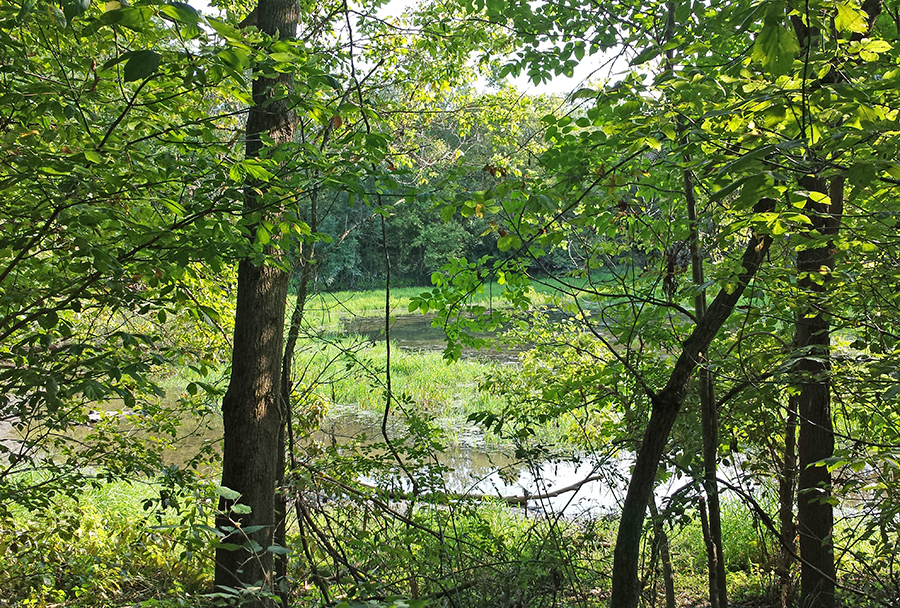
How Clear the Waters Run

I think it will always thrill me to overhear someone asking someone else if they have ever been to The Quarry Farm, for people to talk about the animals, birds, gardens and the clarity of the stream. Not everyone will turn over their yard to goats, roosters, and geriatric pigs, but gardens—the riotous kind filled with a variety of native flowering plants—and trees can make birds and clear water more common. This region’s native grasses and trees have long, branching root systems that hold the soil like a strong net. Have you ever pulled English Ivy? This non-native is tenacious and fast-growing but you can remove a large patch with one pull, so shallow-rooted and interwoven is this European transplant. In contrast, ever tried to pull a Common Milkweed in its entirety? Best of luck.


Old Man Sycamore in the north floodplain of the nature preserve has a hollow base that provides shelter to who knows how many creatures each night and during winter’s worst. As shallow-rooted landscapes topple across Northwest Ohio, he and the 300-year oaks withstand wicked flood currents and down-bursts. As the floodwaters recede, the forbs at his feet grasp run-off silt and soil. Within 36 hours, Cranberry Run is clear again.


You hear a lot about native plants these days. Big-box stores as well as local nurseries stock a variety of plants labeled as native. Keep in mind that native doesn’t always mean native to here. Also, ask your green-grower what kind of substrate your plants are potted in. Mass-marketed plants are often potted for long shelf lives, their roots sandwiched in neonicotinoid-laced soils that wreak havoc on bees and other beneficial insects.


Remember that part about riotous gardens? Variety is the spice of life. Some native plants can be invasive without other native plants to keep them in check. The Quarry Farm Gardener finds it necessary to parcel out starts of Coneflower every now any then, as well as Menarda (Bee Balm). Much is made of the benefits of keeping Common Milkweed for the Monarch butterflies. Without Ironweed, Coneflower, Asters, and Common Hackberry trees to watch over them all, who will feed and shelter Comma, Question Mark, swallowtails, and the Hackberry Emporer butterflies? And without Jewelweed and its orange orchid-like flowers nodding on the riverbanks and floodplains, how will I ever be rid of this confounded poison ivy rash?

falling sounds

20170910_165648The old stone quarry has changed a lot over 150 years, from not being there at all to a horse-drawn limestone operation, from spring-fed fishing hole to wetland. Black willows and other water-loving trees and plants grow there now. Wood ducks, wild turkeys, owls, squirrels, tree frogs and herons roost high above the banks. They see you before you even know they are there, falling silent or bursting from the branches in a great show of chatter or feathers.
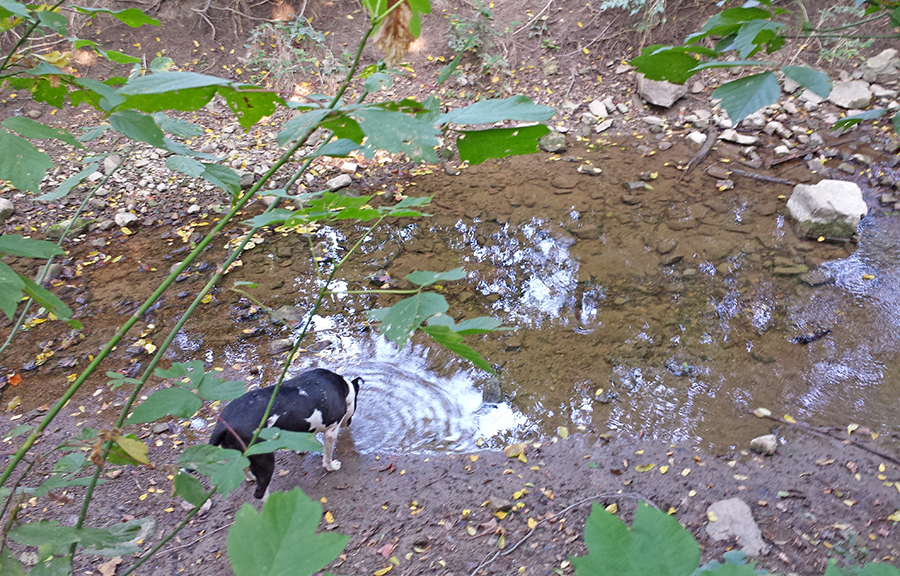
One tree leaned at the northwest shore for as long as I can remember. My Gran said she used to make a blanket nest for Uncle Keith in its roots while the family fished for bluegill. The tree lived its life, watching two- and four-leggers wear a path below.20170910_172736

20170910_170849 (1)Last weekend the dogs and I found the tree in pieces. The path is strangely open now. Stick-tights thrive in the open sunlight, laying waste to another pair of shorts and leaving the future of my t-shirt in doubt as well. Thankfully, jewelweed grows nearby to stop the burr itch. I wonder if the wild ginger will move to shade further along the bank.
The tree’s fall was a long time coming. Not long after the tree died over a decade ago, its bark weathered away. Dad parked his ATV next to the tree to take photographs of the butterflies, dragonflies and other insects that perched on the smooth trunk. Walking the path sent wildlife running in every direction. The putt-putt of the ATV didn’t. From the driver’s seat, Dad filmed an ichneumon wasp, its long ovipositor extended into a woodpecker’s drill work.

We still have the photos, as well as Dad’s drawings of the wasp. The sketch was one of several used on a poster about beneficial insects. The illustrations are a reminder how nature and art are linked. Here on these 50 acres and beyond invisible parcel lines, the native arts must be nurtured as much as the first grasses and plants that secure this watershed.

Click, look and listen.20170909_183949


Living from the dead

Four years and six days ago, we watched a wall of white march across the field, a roaring mass that stretched from north to south as it blew southeast. We weathered the June 29, 2012 derecho from a basement window, watched the trees bend and debris fly over their tops.IMG_1532

In the end, several hardwoods fell on the nature preserve. Only a few fell over trails, so the others remained where they fell to provide habitat and host. We lost more pines than anything, their shallow foundations not suited to the soil and winds here. Four years later, the Fourth of July weekend provided the right conditions for us to break up the dried pine and safely burn.IMG_1533IMG_1540

We moved the brush to cleared ground, shaking loose pill bugs, millipedes and a garter snake that is blind as it prepares to shed a worn skin. Old stumps were broken up to make way for school bus parking. A cluster of mottled gray fingers clutched the base of one; a toe pointed skyward against another. I’ve never seen fungi Dead Man’s Fingers in the flesh before today. Makes the delicate jewelweed blooming in the floodplain that much more brilliant in contrast–but what a thing to see.

Looking for White Cat

We’ve been busy here. You’ve been busy there, wherever your ‘there’ may be. So much going on that, like me, you are in danger of missing the gold-tinged greens and amethysts of ebbing August, at least as it is here on the Quarry Farm.

I did almost miss it. We have caught a smattering of the sunsets, the kind that include that frosted-animal-cookie pink. But any noticing has been as we walked past a window or distributed hay to Buddy, Marsh and S’more or put the hens to bed. Then one of us left a door unhinged enough that Beatrice opened the front door and let the cat out.

Although we do have several cats, it was White Cat that slipped out. White Cat is deaf as are many white male cats. While there are plenty of dashing, flying and sparkly sorts of things in the outside to entertain a house cat, there are even more along Cranberry Run and in a 50-acre woods that will feast on feline. One that can’t hear a predator approach is especially vulnerable. So we looked high and low for White Cat. And as we did, we caught late summer.

Wild plums ripen

The wild plums are ripening on the nature preserve. Some hang at eye level beside the rich yellow Jerusalem artichokes and purple ironweed on the stream bank. Most plums are rose gold, but some are beginning to flush to mauve. For the first time, Steve will be able to make wild plum preserves to sell at the Quarry Farm table at the Farmer’s Market. (Warning: shameless plug for funding ahead.) Reserve your jar now through the Gift Shop!

Jewelweed, nature’s cure for the maddening itch imposed by poison ivy, is in bloom in the floodplain. The algae growth that plagues Cranberry Run, as well as most of Northwest Ohio’s waterways, is camouflaged by shimmers of sunlight that ignite the riffles. Higher up, the sun itself glows through the tired summer leaves, although the sunlight is cooling from the white hot of June and July. Better and better.

Bushel gourd on the vine

Down low, bushel gourds swell under huge vine leaves. Recent rains have brought on a good crop. The leaves have already been used this summer in a stepping stone workshop. More will be made before the vines wither in frost. The chickens and Johnny the Canada goose find this ground-level search fascinating, especially since disturbed vines yield fat, juicy crickets.

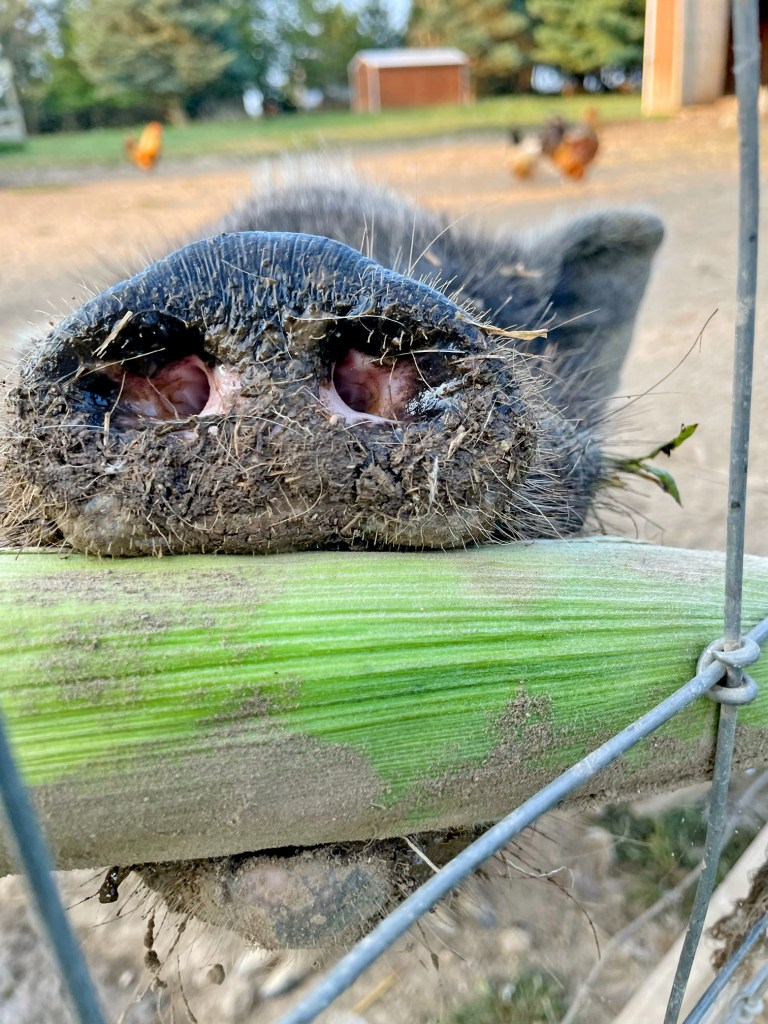
Wounded White Cat and Birdy nose

Even lower, under Buddy’s barn, White Cat is found. The roosters knew he was there; it just took the obtuse humans two days to figure it out. He has earned himself a gash under one eye and a limp, injuries probably inflicted by Buddy. Back in the house, White Cat is thoroughly sniffed before he settles himself in for a good grooming. Outside, the finches and field mice can peacefully ready themselves for the cold months. We will remember to notice.

Happy Trails

Carrying tussie mussies

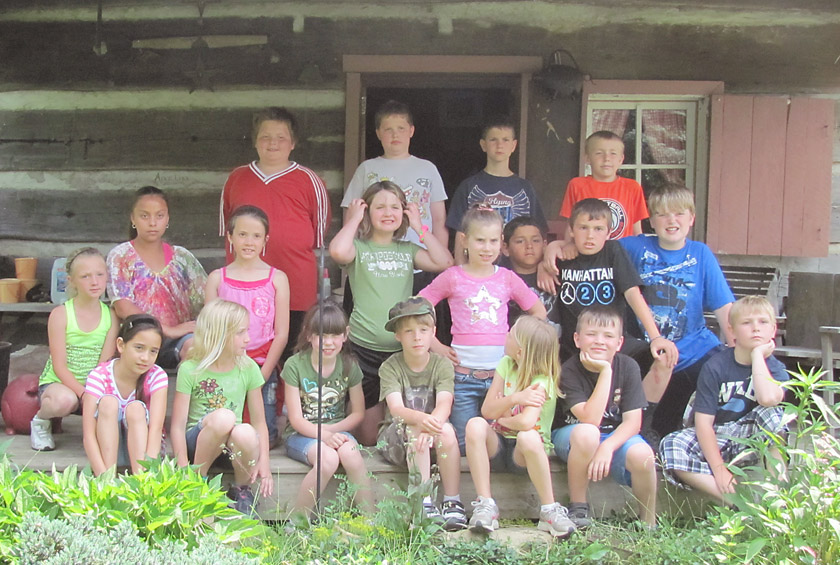
Although the air is hot and dry and the fields are gasping, this same daytime heat and cool nights kept the mosquitoes at bay long enough for Ottawa Elementary third grade to spend some time on The Quarry Farm before summer vacation begins. Teachers Kelly Nienberg and Vicki Otto blazed the trail for what we hope will be many field visits by local schools.

We only had this group for an hour and a half, but while they were here they made fresh, fragrant tussie mussies of mints, lavender, rose and oregano. Also called nosegays or posies, tussie mussies are small bunches of flowers or aromatic herbs that have been given as gifts since Medieval times. ‘Nosegay’ is probably the best label, because they likely gave the recipient something to bury their nose in to hide the fact that the giver (and themselves) didn’t bathe very often.

Posing on the porch of Red Fox Cabin

After tussie mussies were stored for the bus ride back to school, kids, teachers and chaperones walked down the hill and up the hill along floodplain streambank, meeting Nigerian dwarf goats Marsh and S’more and Buddy the donkey along the path as the trio worked their day jobs eating invasive plant species. They watched and heard bullfrogs, leopard frogs and Blanchard’s cricket frogs (unless the frogs saw them first) and sampled wild strawberries.

Mama Woodduck

Some caught a glimpse of a mother woodduck as she fled the scene. They saw the difference between poison ivy and Virginia creeper. They learned that nature provides a cure for many of its thorns, like sowing anti-itch, astringent jewelweed right next to poison ivy.

Cookies and lemonade cooled all hikers as they gathered off the porch of Red Fox Cabin. Some bundled fresh garlic from the cabin gardens to take home. Someone even snacked on a garlic bulb (we know because we found it, bite out and all.) Before boarding their bus, the students presented a donation to help support The Quarry Farm. We hope they come back and see what comes of their good works.