

Brenda Fawcett mixes papercrete
Despite the heat, only one paint mixer drill bit and mosquitos aside, three programs happened onsite this past week. Monday, Putnam County Master Gardener Brenda Fawcett led a make-and-take wherein participants created planters out of papercrete (a sort of papier mache combination of Portland cement and paper strips.) Tuesday saw the return of the Hardin County Herb Society.
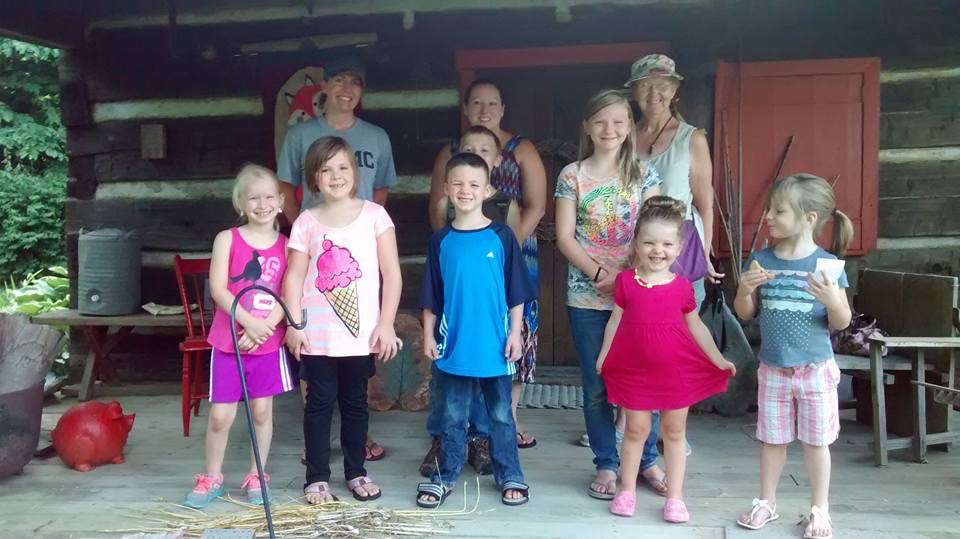
On Saturday, “the hottest day of the year” according to local weather forecasters, Charlene Finch and the 2016 Continental Jr. Gardeners made the group’s annual trek from the northwest corner of Putnam County. If you scroll back through this blog, you’ll see that Finch’s crew have been here just about this time every summer for several years. After partaking in a scavenger hunt for pollinators, the young green thumbs posed on the front porch of Red Fox Cabin for their annual portrait (thanks to Miranda for sharing this snap.) They also visited with the farm animal sanctuary residents, helping to cheer up S’more as he’s been pretty withdrawn due to the loss of his brother this week.
That pollinator search led to quite a list of creatures. The team of Nathan and his mom Lindsay won the scavenger hunt with a list of 21, as follows:
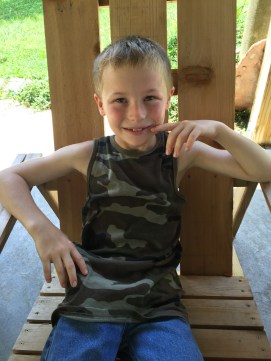
Nathan, Pollinator ID Champion
1. baby green grasshopper
2. people
3. wasps
4. cabbage moth
5. dragonfly
6. wood bee
7.big brown beetle
8. fly
9. bumblebee
10. flying ant
11. mosquito
12.ash bugs
13. sweat bee
14. black cricket
15. honey bee
16.black wasp
17. Japanese beetle
18. black beetle
19. big brown camo moth
20. gnat
21. red lightning bug with reddish brown black spots
Teams didn’t have to be specific with names as long as they could describe their finds. As a group, we corrected some names and identified others as described. For instance, #19 was a skipper butterfly.
You’ll also note that not all on the list are technically pollinators: hummingbirds, bats, bees, beetles, butterflies, and flies that carry pollen from one plant to another as they collect nectar. However, all of Saturday’s finds carry pollen, not to mention seeds and other insects, in their journey from place to place. That includes humans, whether we intend to or not.
You may also see that the notorious, voracious invader Japanese beetle made the list. They may spread pollen around as it clings to their scarab-like bodies, but they more than make up for this by decimating green goods. But there’s hope from the skies, control provided by a European transplant that’s been here so long that the New World is as much theirs as it is ours.
Eat up, European starlings. There’s ketchup in the shelterhouse.
This slideshow requires JavaScript.


 Steve is wrestling with Mister Bill in the cool of the evening. This has become the routine this week after the temperatures fell out of the upper 80s and into the 60s by dusk. Bill scampers up the ramp and down the steps to mock charge. Steve holds the giant goat’s horns–lightly so as not to challenge–and Bill tosses his head and off he goes again on his gangly giraffe legs.

 On Saturday, my old frayed running shoes picked up another layer of camouflage.
 On the quarry, wood duck and mallard couples made come-hither eyes at each other until we spoiled the fun. Wood ducks skittered over the east bank and a mallard duck “wank, wank, wanked” toward Riley Creek, her emerald-headed, testosterone-addled suitor in pursuit.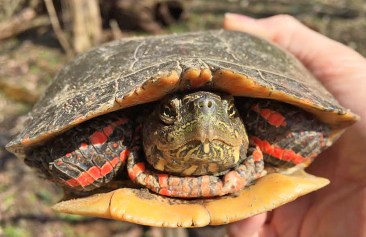
 We saw bloodroot leaves uncurling from the ground. Native Americans used the red extract from this wildflower’s roots as a natural dye, most notably for basket weaving. Above ground and growing wild in the sunlit clearing around the old homesteads well north of the tallgrass meadow, the bloodroot flowers bloom.
 A few spring beauties and ramps dot the southeast ridge as it rises east of the cut-off. In the warmer air and spongy soil in the U of the oxbow, three toadshade trilliums fan over moss
  and decaying stumps crawling with industrious crustaceans.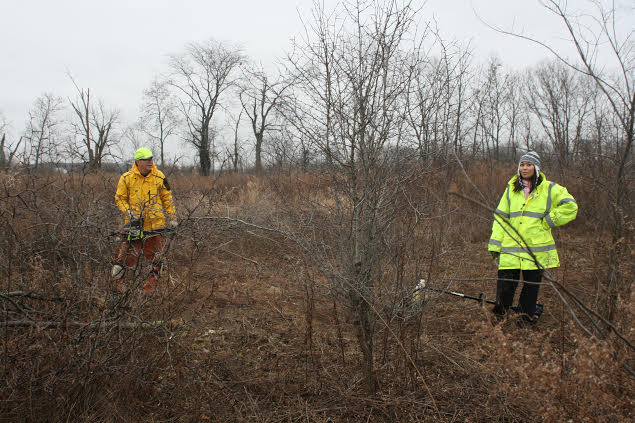


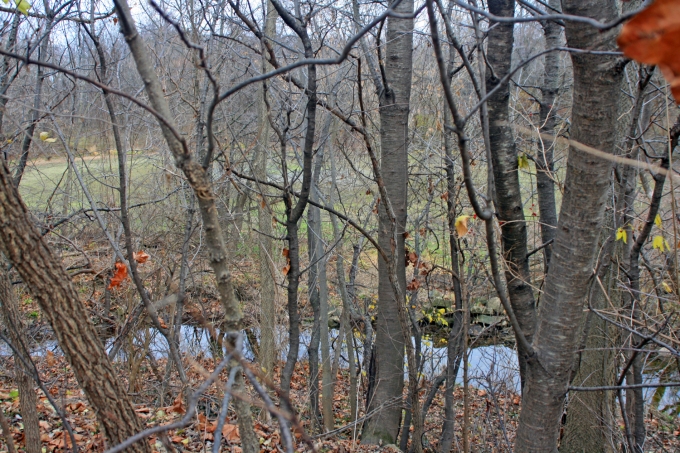 There’s a lot of history in and around The Quarry Farm, not to mention up the road.
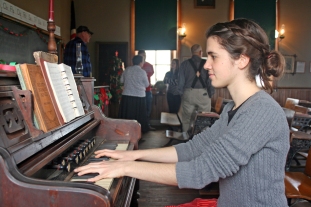 North on the same road and across Riley Creek is Bridenbaugh Schoolhouse. Imagine a one-room schoolhouse on every country mile and you will picture the education system as it once was in rural Ohio. In 1997, Dale Bridenbaugh restored the schoolhouse on his farm to what could have been its original 1889 glory.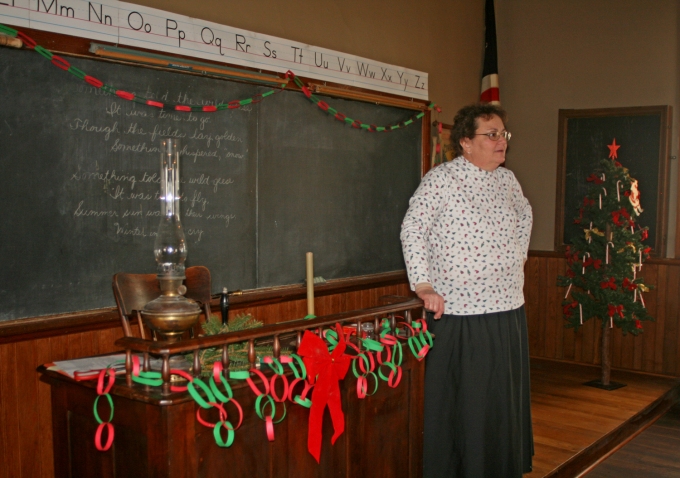
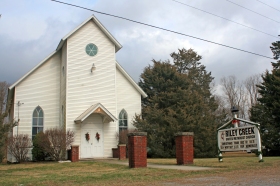 Cross the Riley on the c. 1876 M-6 bridge, itself listed in the Historic American Engineer Record as an example of “Morrison’s Patent Wrought Iron Arch Truss Bridge,” travel about a mile and a half north on 7L and sit in the stillness and peace of Riley Creek United Methodist Church. The church was founded in 1850 and is still active in one large, lofted room. Sun and moonlight filter through etched and stain-glass windows to pool on handmade wooden pews. The long upright-backed benches glow with the hand polish and years of congregational sitting, but the names of former youth break the smooth surfaces here and there.
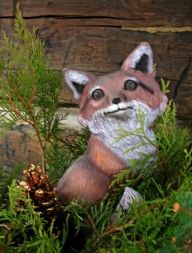
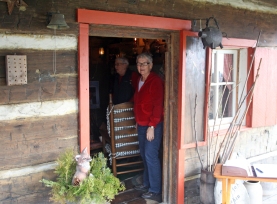 Saturday broke records for December warmth and, although we could use some rain or snow to soften the dry bed of the quarry, the weather was perfect for the first Old Time Riley Creek Christmas Tour. All of the above were stops on the route. All were decorated for the holidays, most as they may have been long ago. Riley and Pleasant Township saw plenty of driving tourists as a result. One of the visitors was Pandora’s Dr. Darrell Garmon. He walked up the path through the Red Fox Cabin gardens and introduced himself as Dr. Garmon and as the person who poses as Sea Captain James Riley.
 Next door, Carlton, Beatrice and the other potbellies, a speckling of chickens and Johnny Goose gathered at the farm animal sanctuary fence corner closest to the hubbub. Lucy’s foghorn bray paused more than one conversation. Two tourists left the cabin and stopped at the gate where the turkeys were on full display. Buddy took issue with the attention the boys were getting, so he grabbed a mouthful of tail feathers, spit them out and smiled. True story – the couple took a photo and promised to share it with us.

