Habitats on The Quarry Farm: The Prairie

The space that is our developing prairie habitat used to be called simply “the back field.” A trail heading downhill from Red Fox Cabin, across Cranberry Run, around the quarry, up a hill, and through the woods leads to eleven acres that were tilled until 1985. The tractor path to the field skirted Cranberry Run for a stretch, where it narrowed to inaccessibility due to erosion. Farming the field had to be abandoned. A new direction for The Quarry Farm took shape: to establish a nature preserve with several distinct habitats, including a prairie in the back field.

As seeds and rootstock in the soil sprang up and spread, the field began to look a bit like a grassy prairie. There were some food sources and cover for rabbits and small animals like field mice and voles. They in turn fed predators like great horned owls, red-tailed hawks, and foxes. Seed-eating and insect-loving birds could feed and nest. In early spring, a visitor might be lucky enough to witness a mating American woodcock rise explosively into the dusk.

That early resemblance to a prairie was deceiving though. Too much of the vegetation was non-native (teasel, for example), offering too little support for native birds, insects, and small animals. In no time, the field began to fill up with honey locust, hawthorn, and black walnut seedlings (native, but unwelcome outside the adjacent woods). Multiflora rose and Asian bush honeysuckle invaded. Clearly, if The Quarry Farm was to have the prairie habitat we envisioned, management would be necessary.

Recent years have been a learning process. We’ve tried to find the most efficient, least harmful ways to squelch invasives and non-natives so that we can eventually claim a true prairie habitat with a balanced ecosystem. Consultants have shared their expertise. Wonderful volunteers and skilled hirees have hacked, dug, and bulldozed trees; cleared ground and spread seeds of native prairie plants; and mowed spent growth to encourage the spread of native grasses and wildflowers. The search for best management practices goes on.

We know the work of developing and maintaining a distinct prairie habitat may never be done, but we’ll have the joy of providing the creatures that find a home there the best chance to thrive. And we can share it with visitors like you.

This side of the fence

Two Canada geese named Johnny and Stella introduced us to the richness of a life shared with wildlife educational ambassadors. I would say the introduction was a gentle one, and it was, until we found Stella’s body floating in their water tank. No one could tell us why. She looked fine externally. Wild animals naturally fight tooth, nail, beak, bill, and claw to stay away from humans, probably because humans are at the top of the food chain and every other species knows to keep their distance. If wild things allow humans to approach, there is something not quite right internally, in their nature or nurture. Their most natural state of being has made them vulnerable to our opposable thumbs, our intelligence, or lack thereof. A lifetime of living with other species makes me certain of the latter, especially as I write this there are military maneuvers going on in the sky outside my window.

Estella

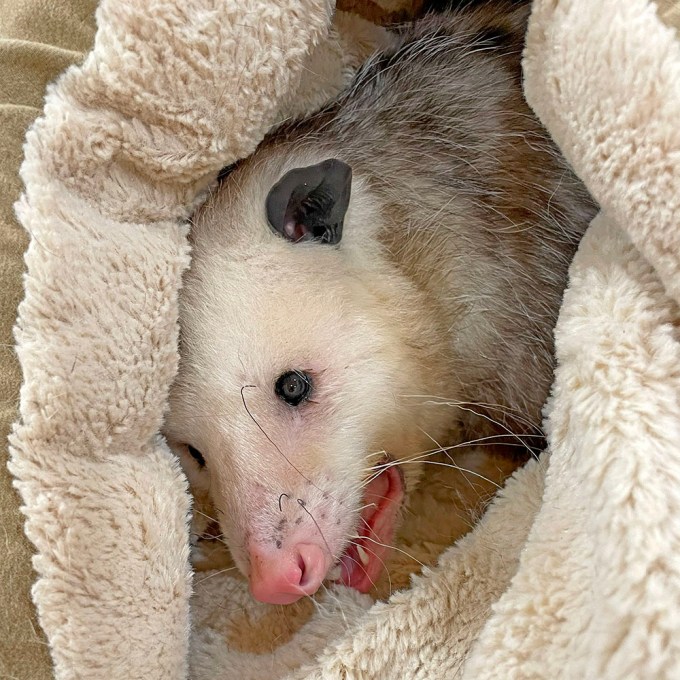
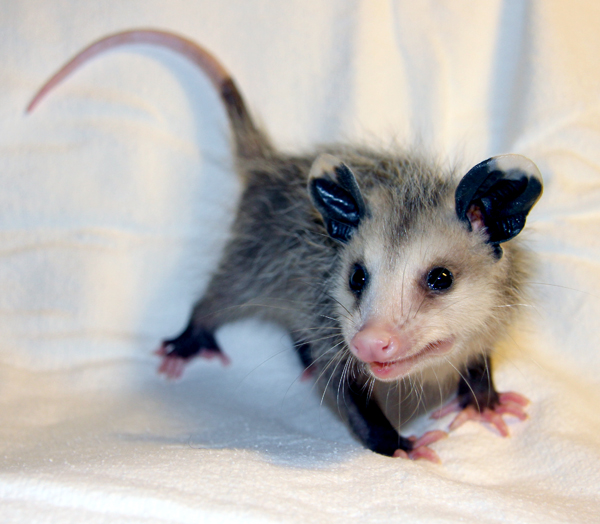
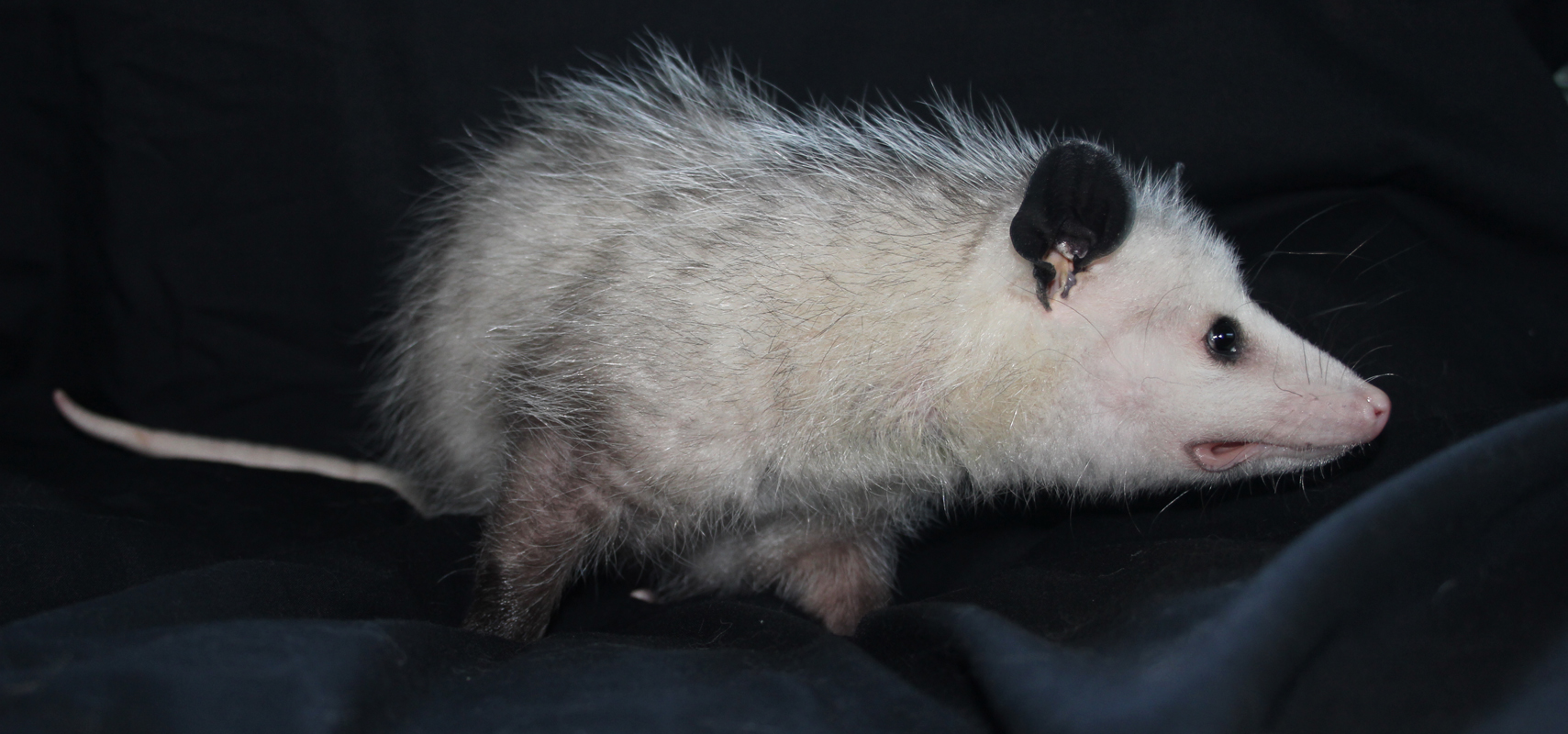
Although it is tragic thing when a wild animal can’t live safely in wildness, it is a gift to spend some part of one’s human lifetime in their company. Some live for a few years. Others for a decade or more. Right now, we often tearfully refer to the farm animal sanctuary as the geriatric home. It’s been 14 years since Johnny and Stella moved in. Many mammals and birds have lived what remained of their lives here. The last 12 months have been hard on our hearts as several friends have, as we say, “gone over the fence.” This month, as we planned for an all-day offsite event about living side-by-side with wild creatures, we intended to feature Estella the Virginia Opossum. Estella was almost 4 years old, pretty ancient for this marsupial. She died in her sleep on Sunday.

Winston

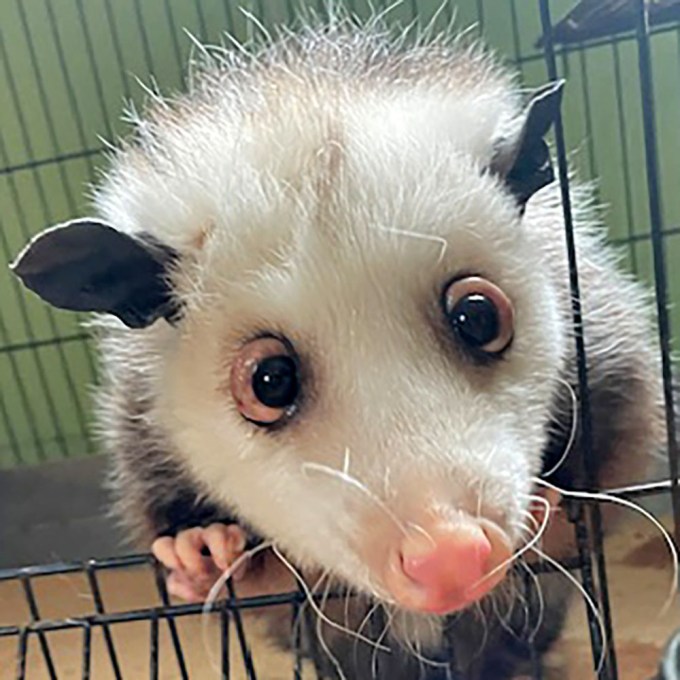
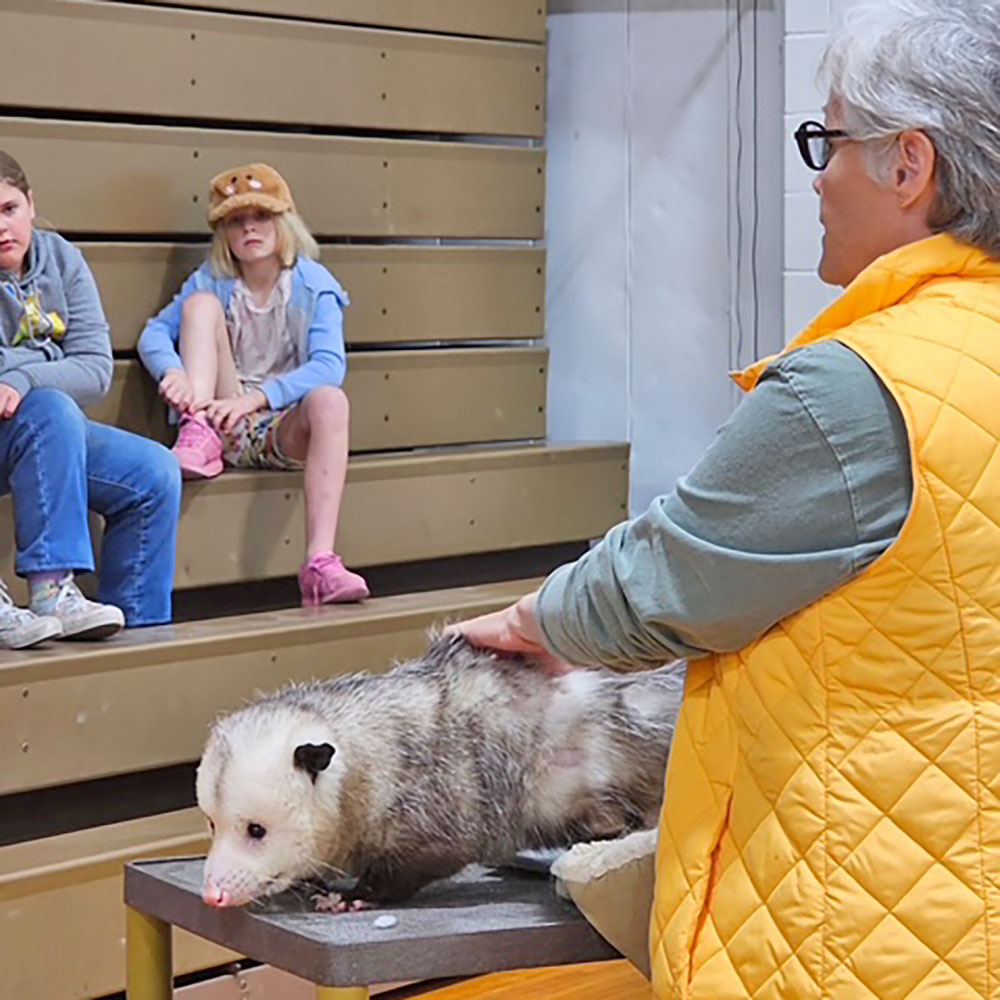
In February, while I was in Columbus for a conference, my phone pinged with a text regarding an adult male, caught-by-dog Virginia Opossum. A Proctorville wildlife rehabilitator rescued him in the Fall. Angie named him Winston, and healed his severe wounds and fought infection. He weathered several veterinary appointments and possible pneumonia. But Angie got him through. Because Winston has mobility issues and hairless scarring on his hindquarters due to his injuries, it was decided that he could have a good future as an educational ambassador. Three weeks ago, I met Angie and Winston in Columbus for adoption.

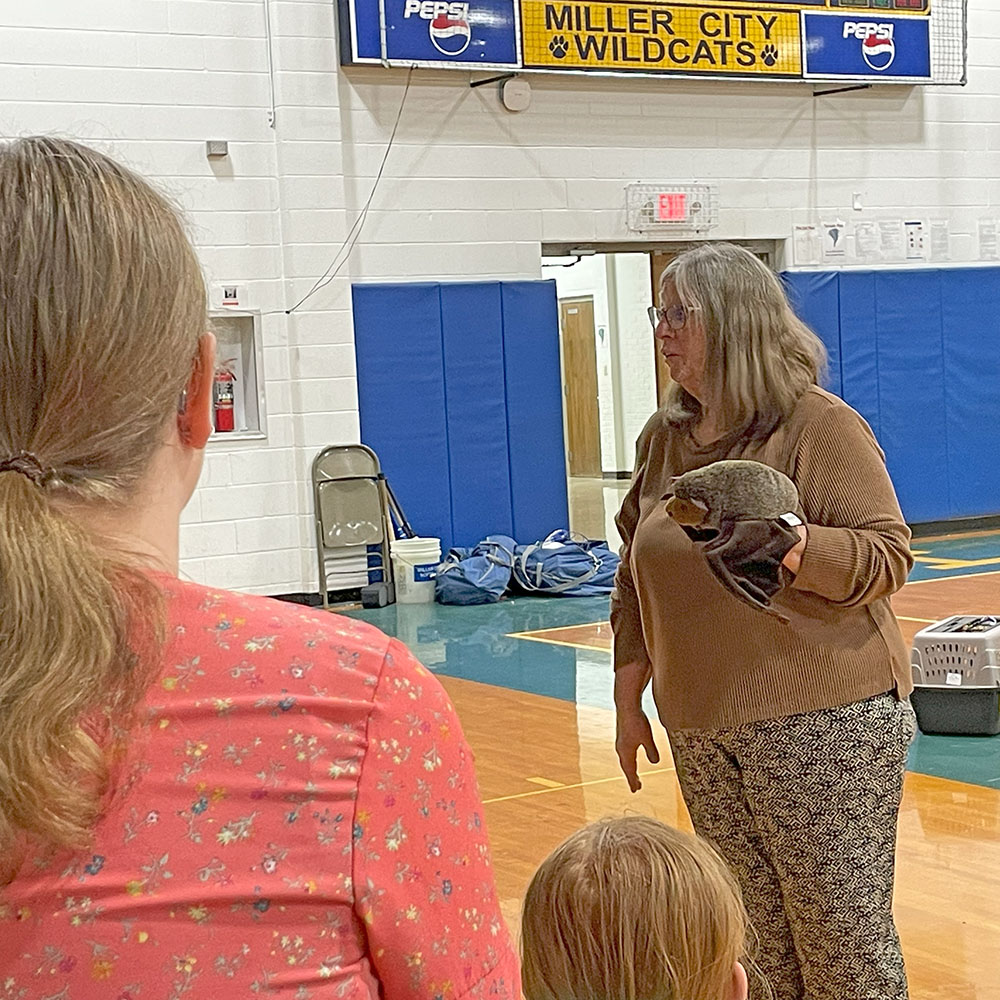
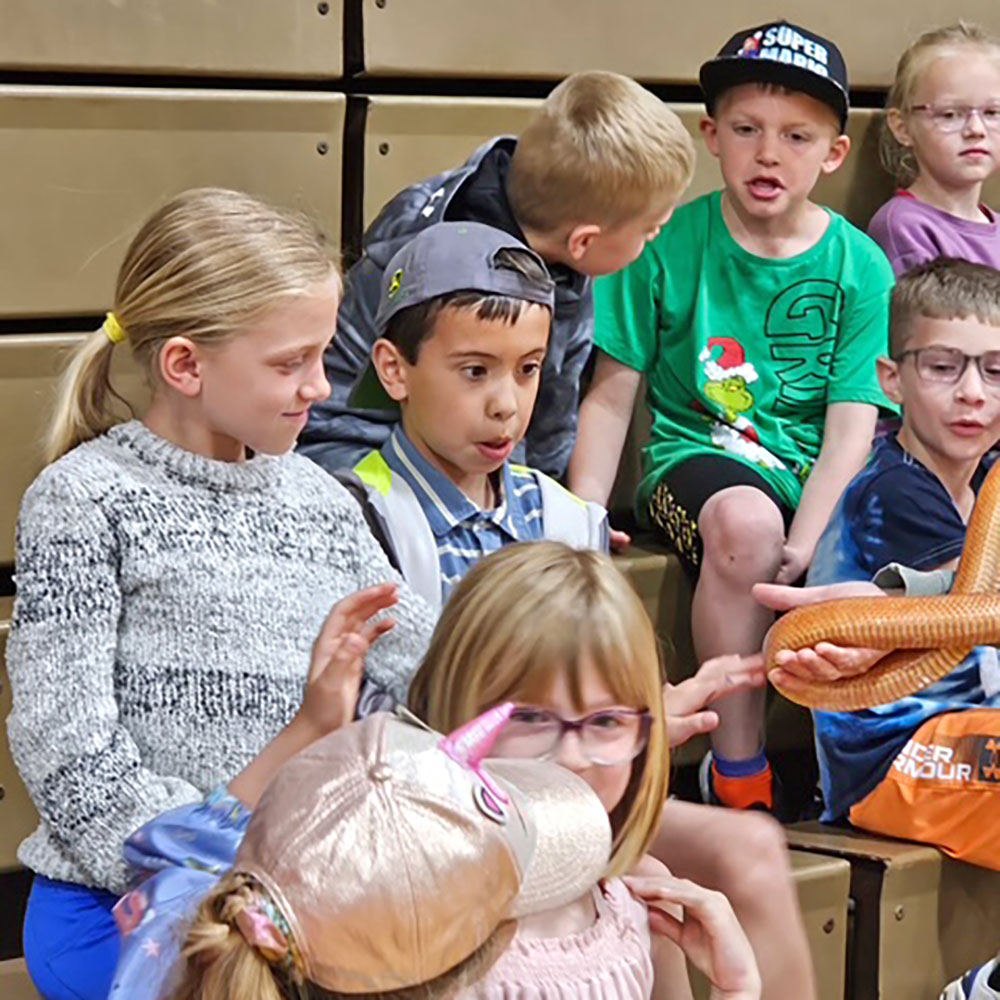
On Tuesday, May 13, Winston represented his amazing, vital species at Miller City-New Cleveland Elementary School’s “School is Cool” event. Board Member Rita used owl and bat puppets to demonstrate the horrors and harm of using traps and poisons to control wildlife. Tyree the cornsnake, all shiny coral from a recent shed, represented the benefits of encouraging snake residents on a farm and in your garden. Winston growled a bit at first, but his scars are itchy. With ongoing scritches, he settled into his ambassadorship. No one knows exactly how old Winston is, but he will be comfortable and at peace at The Quarry Farm for as long as he will give.

Spring Migration 2025

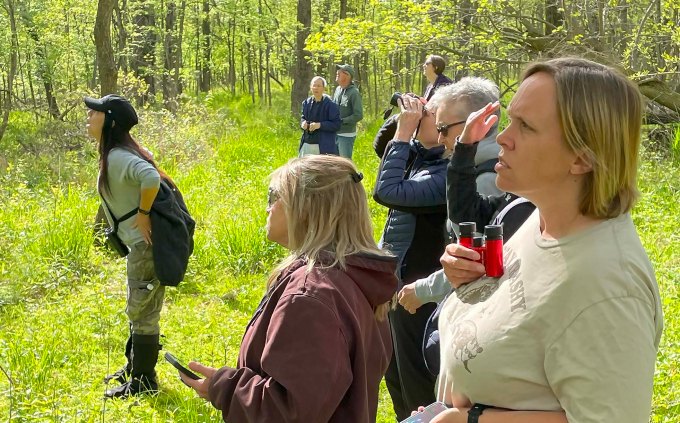
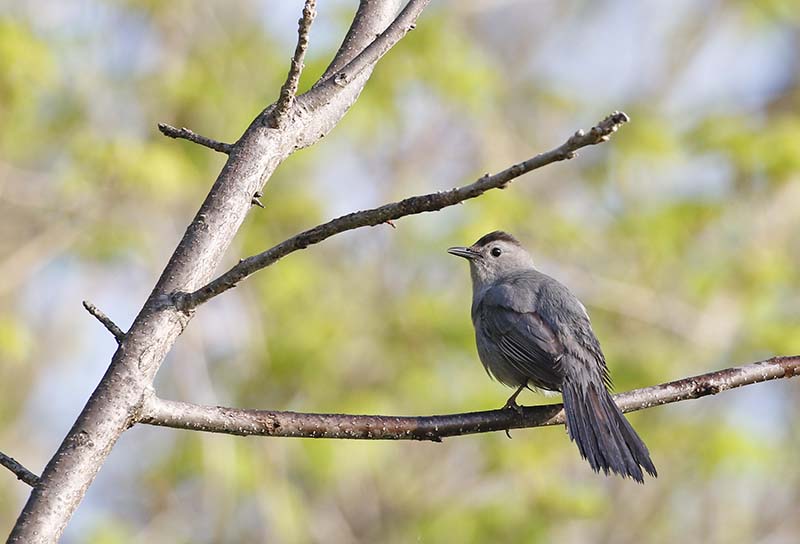
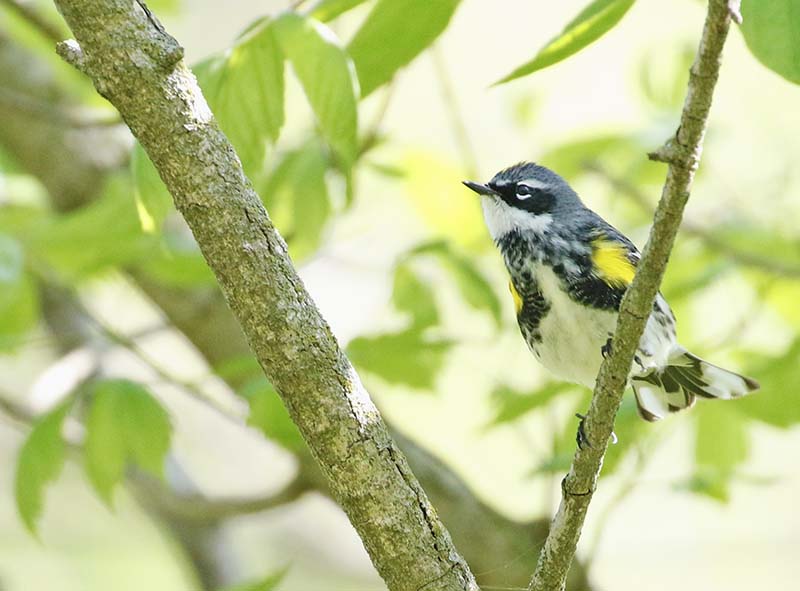
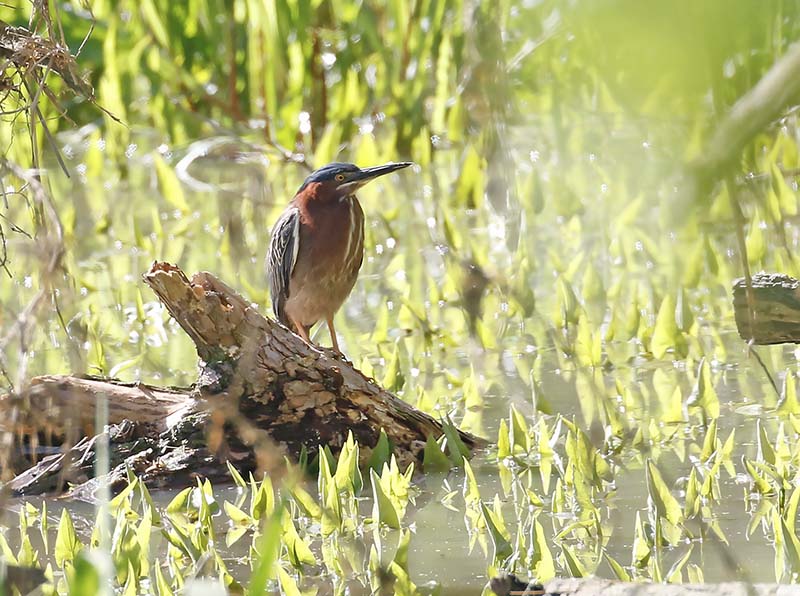
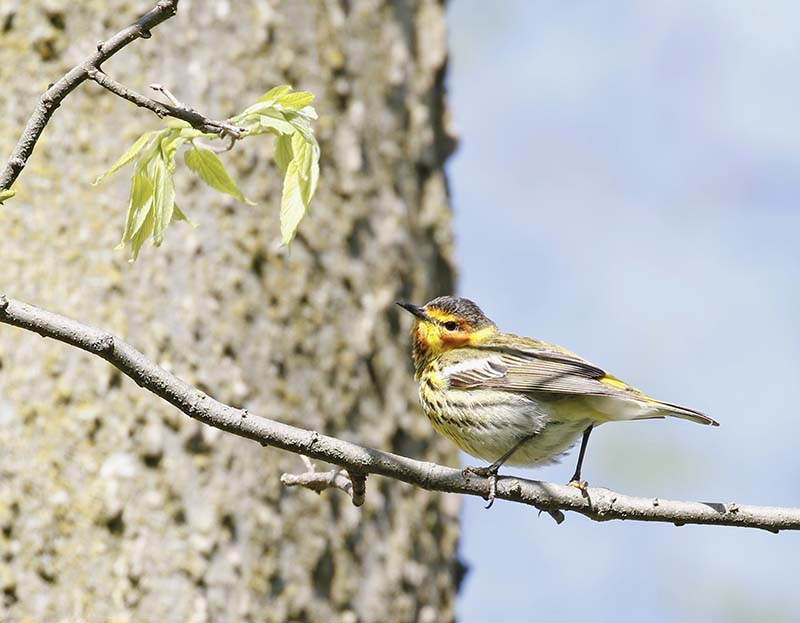
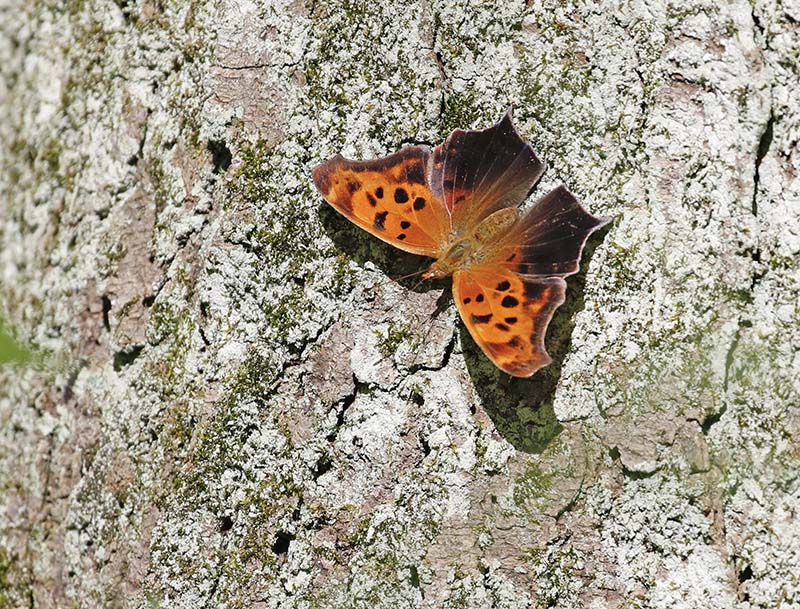
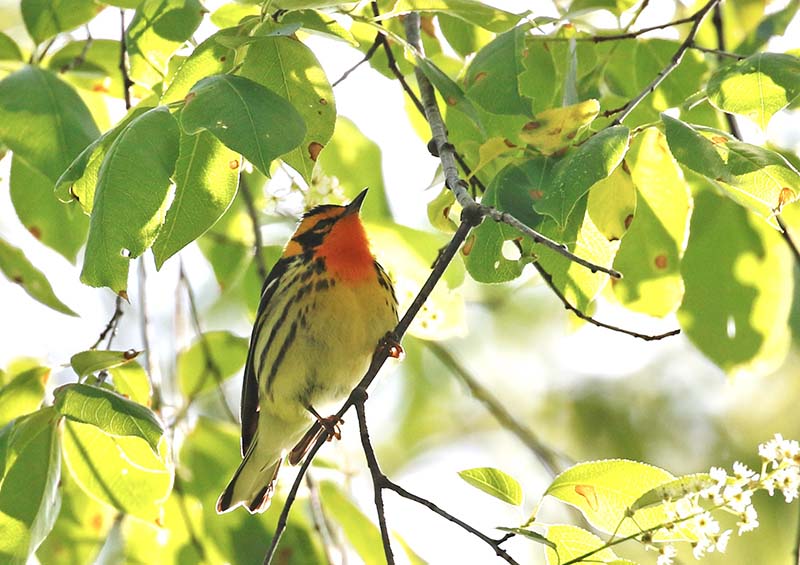
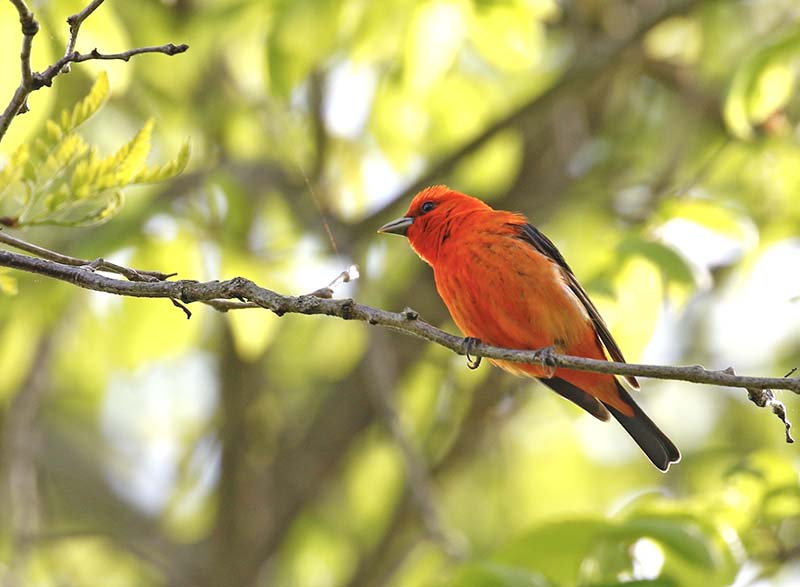
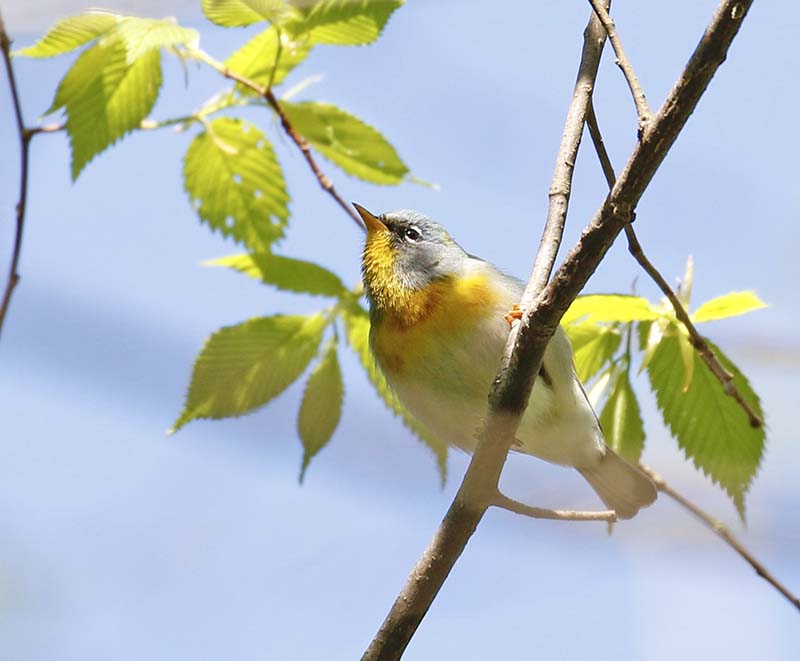
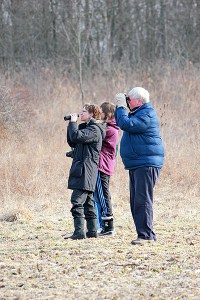
According to Birdcast, 14,526,300 birds crossed Ohio from 8:40 p.m. on May 11, 2025 through 6:40 a.m. on May 12. From 9 to 11 a.m. that Monday, participants in the annual Spring Bird Migration Hike followed the pointing fingers of Deb Weston and David Smith to catch a glimpse of brilliant spring plumage. That morning, the group documented 46 bird species in the wetlands, pollinator gardens, and upland forest of The Quarry Farm nature preserve. An enormous Question Mark Butterfly warmed its wings long enough for a good view as well.

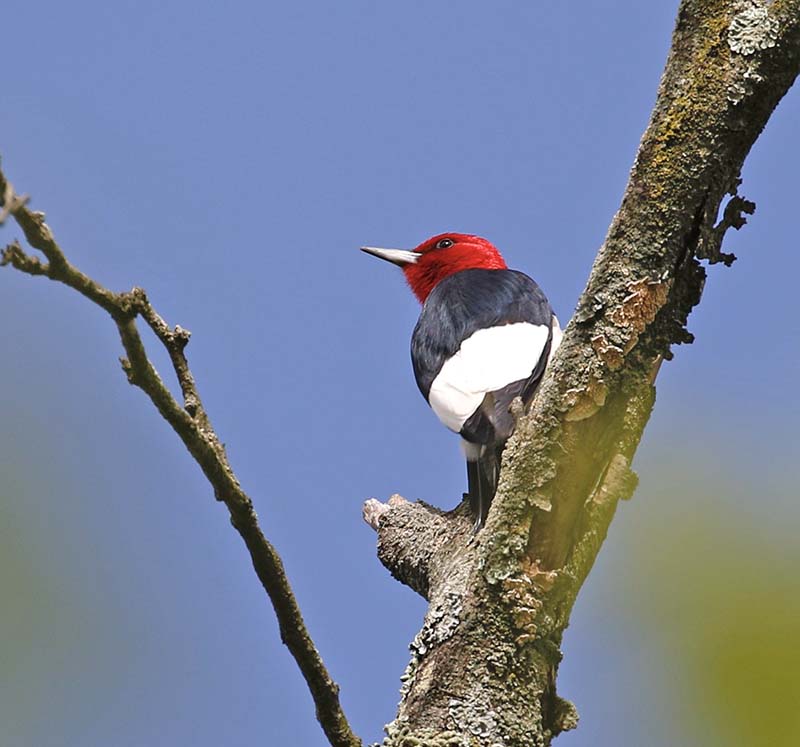
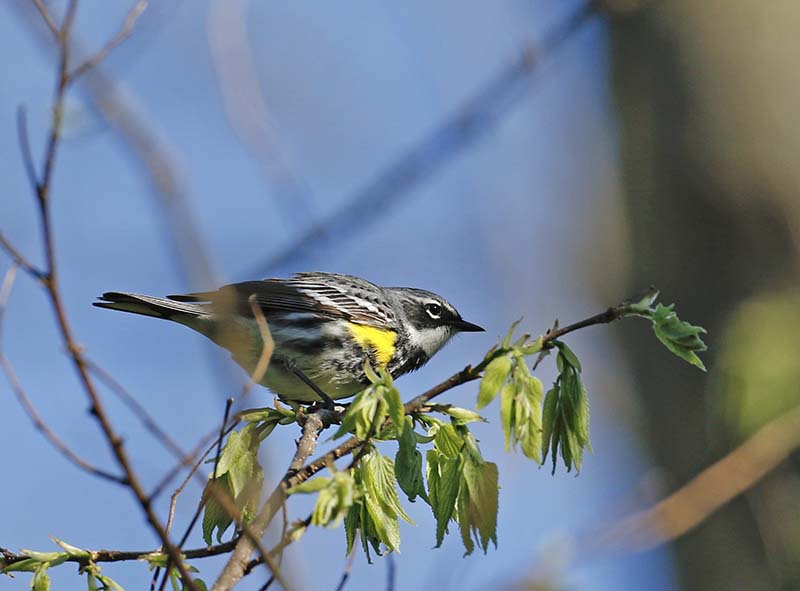
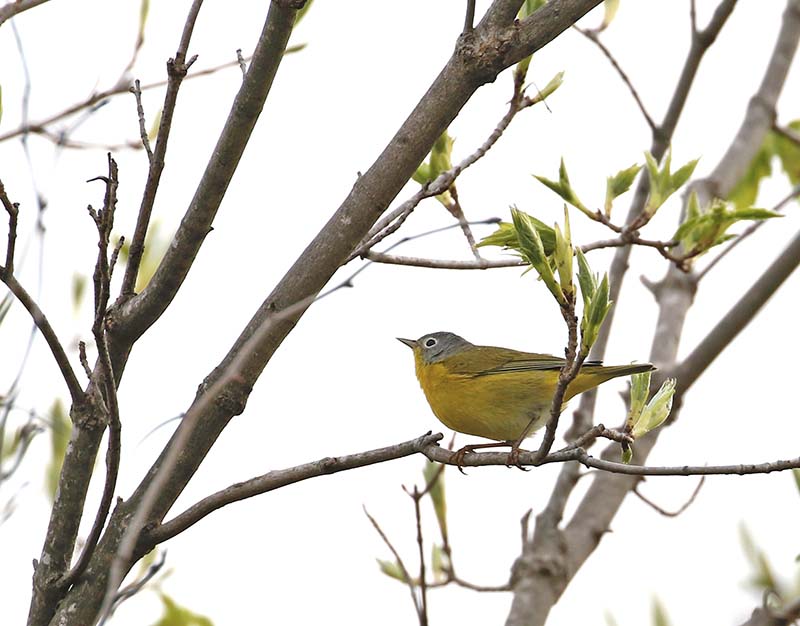
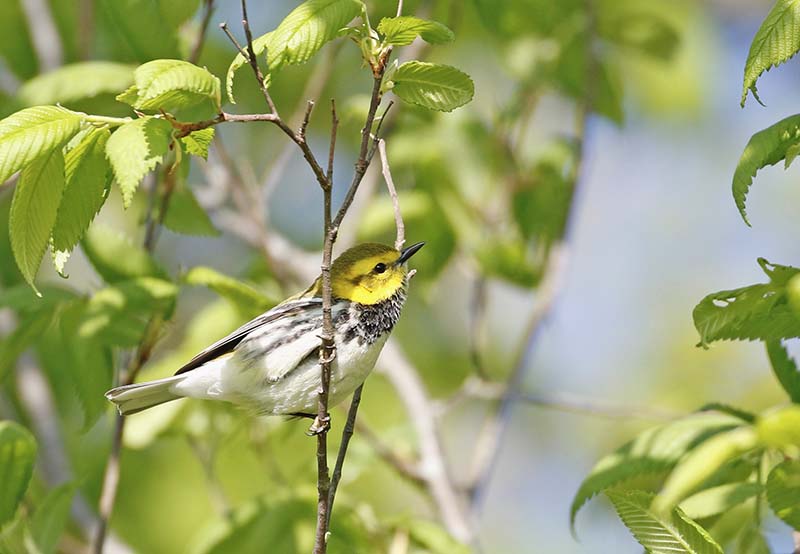
It seems that migration peaks earlier each year as the planet tries to right itself, and Deb and David try to schedule a hike date that happens before all of the migrators pass us by or settle in to nest under dense canopy. To get a good idea of what might pass through for a crowd, Deb walked the trails for days leading up to May 12 hike. She took notes…and brilliant photos.

April 30: 47 species today. A juvie Bald Eagle flew over the prairie, Yellow-rumped Warblers all over the place. One Yellow-breasted Chat, 3 Orchard Oriole, Tennessee Warbler, Nashville Warbler, Yellow Warbler, Palm Warbler and Black-throated Green Warbler. Rose-breasted Grosbeak, Great Crested Flycatcher, Warbling Vireo and 13 Double-crested Cormorants flying over in a perfect V.

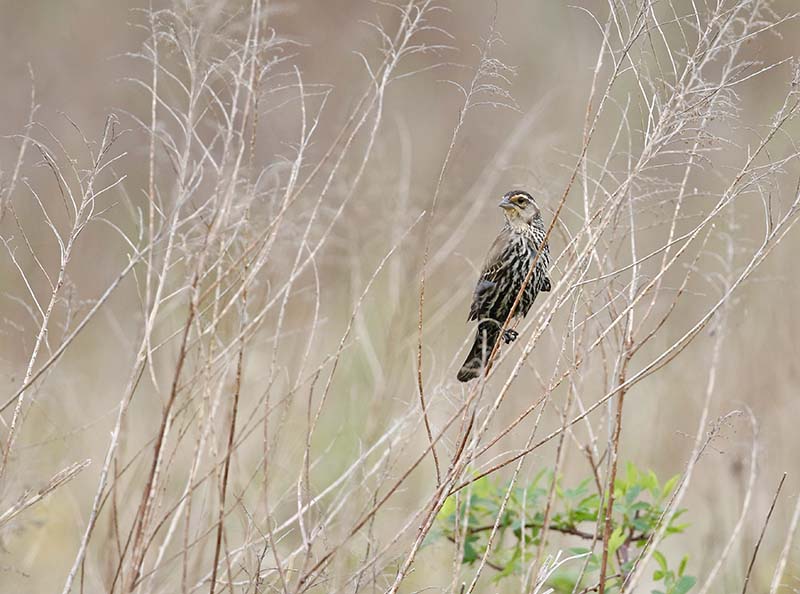
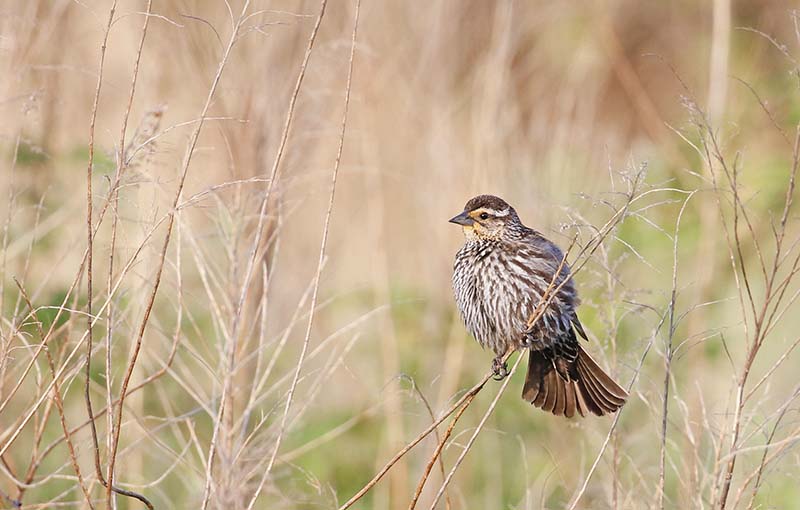
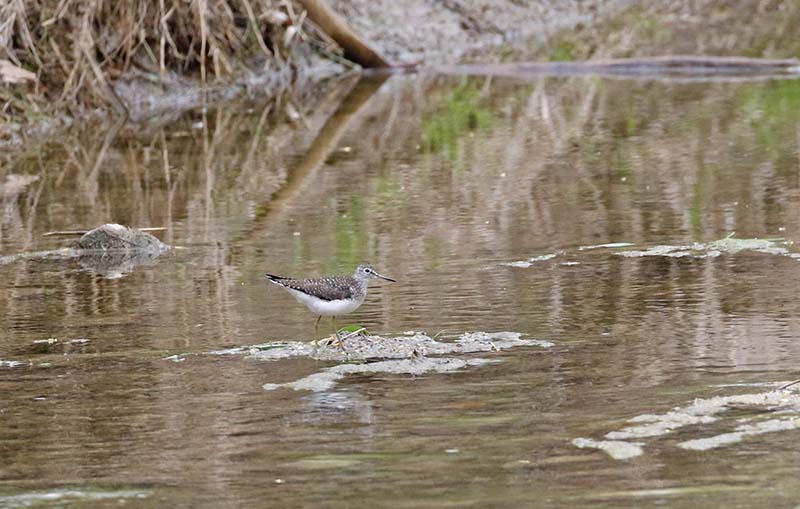
May 1: 52 species today. There was a Gray-cheeked Thrush in the garden area.  Don’t see them often and it escaped photo day.  Female Red-winged Blackbird, Nashville Warbler and Solitary Sandpiper were not so shy. 

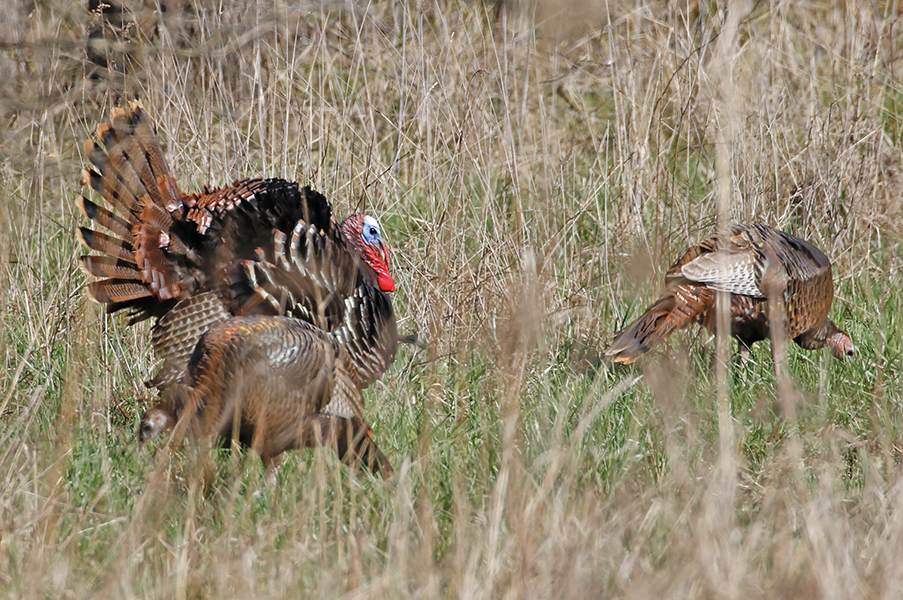
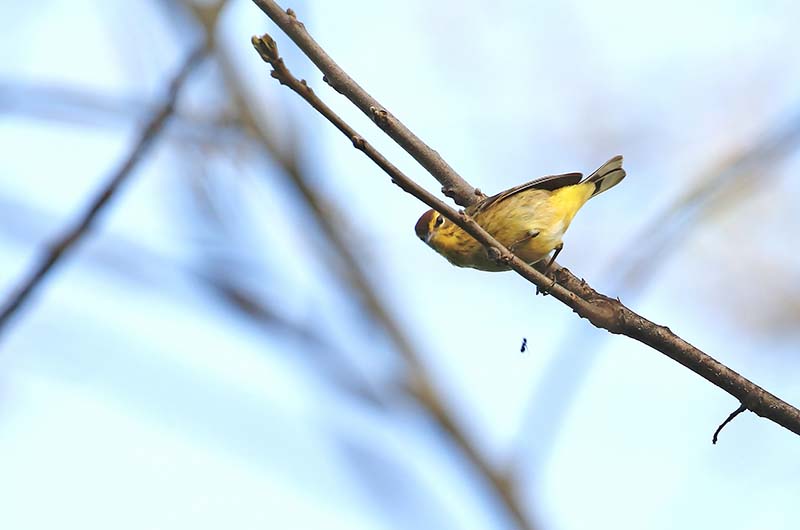
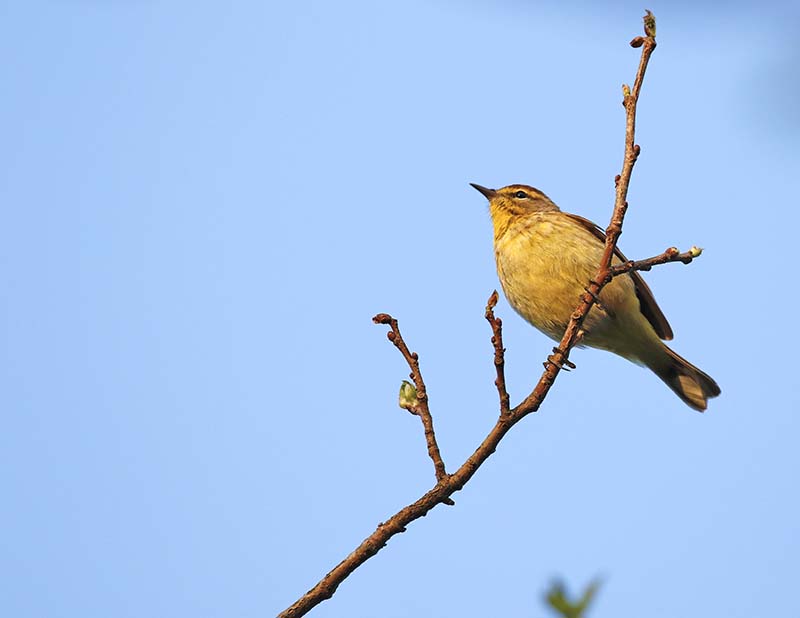
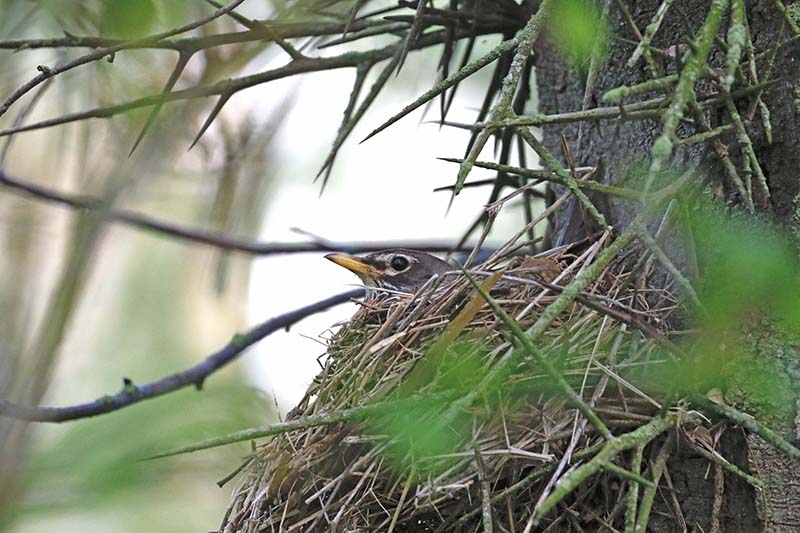
May 2: 50 species today. An American Robin on her nest every day.  2 pics of a Palm Warbler; the first one dropped its food when it saw me. Another female Red-winged Blackbird because they’re so pretty and a Gray Catbird. 3 Wild Turkey, 2 in different sections of the prairie flushed when I walked by even though they were out in the middle. Sounded like helicopter blades. Not sure if they were sitting on nests, but baby turkeys would be cute. 1 Ruby-throated Hummingbird and the biggest surprise was an Osprey sitting in a tree at the lookout point.  It took off before I could get my camera up, but was excited to see it.  Last sighting was in 2021. Warblers: Orange-crowned, Nashville, Common Yellowthroat, Northern Parula, Yellow, Palm and Yellow-rumped.

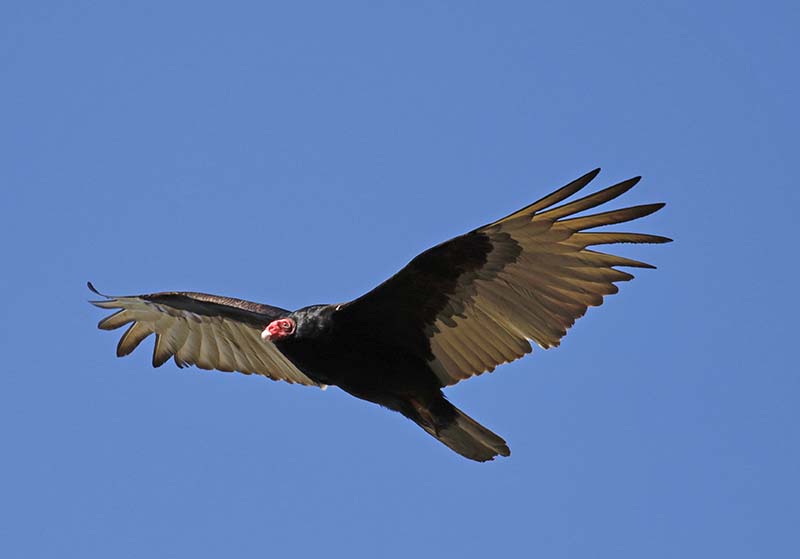
May 9: 53 species today (14 warblers) Canada Goose, Wood Duck, Mourning Dove, Green Heron, Turkey Vulture, Red-headed Woodpecker, Red-bellied Woodpecker, Downy Woodpecker, Northern Flicker, Least Flycatcher, Yellow-throated Vireo, Blue-headed Vireo, American Crow (YAY—they’re back!), Carolina Chickadee, Tufted Titmouse, White-breasted Nuthatch, Northern House Wren, Carolina Wren, Gray Catbird, Eastern Bluebird, Wood Thrush, American Robin, House Sparrow, American Goldfinch, Chipping Sparrow, Field Sparrow, Savannah Sparrow, Song Sparrow, Lincoln’s Sparrow, Swamp Sparrow, Eastern Towhee, Orchard Oriole, Baltimore Oriole, Red-winged Blackbird, Brown-headed Cowbird, Common Grackle, Ovenbird, Nashville Warbler, Common Yellowthroat, American Redstart, Cape May Warbler, Northern Parula, Magnolia Warbler, Blackburnian Warbler, Yellow Warbler, Black-throated Blue Warbler, Palm Warbler, Yellow-rumped Warbler, Black-throated Green Warbler, Wilson’s Warbler, Northern Cardinal, Rose-breasted Grosbeak, Indigo Bunting.

Birdcast noted that 24,564,200 bird species flew over Ohio last night. We will be listening for new song as they make their way north to Magee Marsh Wildlife Area where Deb will be watching with her camera and 89,999 other people.

Introducing Emerson in the Library

Author Sterling North published the book
Rascal in 1963. It’s an autobiographical story
about industrial and economic changes,
wilderness being lost to industry, and a young
boy raising a baby raccoon. The antics of the
animal help alleviate the boy’s fear for his
brother who is a soldier at war.

I remember reading Rascal and desperately wanting a raccoon as my best friend. A lot of people did. We read it and watched the Disney movie based on the book. For most, the later parts of the story, where the growing animal
became destructive in captivity, just didn’t sink in. When an orphaned raccoon did come into my life, my dad was there to intervene.

The wild animal did not become a pet. There was a creek nearby with crayfish. We taught him to catch and eat them. He built strength by climbing trees. He grew a warm coat. As the days passed, we saw him less frequently. One day in December, I saw him along the creek, as I did most days. He hesitated on the path, then turned slowly away, huffing. It was like a switch turned and he was one of the wild things again.

There are more rural residents now, and fewer opportunities to slowly release a rehabilitated animal into the wild. Unless you are trained and licensed to do so, it’s against the law to contain a wild animal. Not only is it illegal, it’s unhealthy for humans and wildlife. Raccoons are especially tricky. They imprint on people very, very easily. There are licensed wildlife rehabilitators who work only with raccoons because these animals take so much time, resources, and territory to “rewild.” And there are certain parts of Ohio where it isn’t legal at all to rehabilitate a raccoon.

The Quarry Farm does not rehabilitate wildlife. When people call here, saying that they have a) a baby bird/rabbit/raccoon/squirrel or b) an injured wild animal, we a) tell them to put it back and/or b) provide contact info for someone else. We do possess educational permits from the State of Ohio for a few non- releasable wild animals that serve as ambassadors for their kind. We have the training to care for them—six years of it before we were allowed to house a Virginia Opossum. That is how Emerson the Raccoon came to live here.

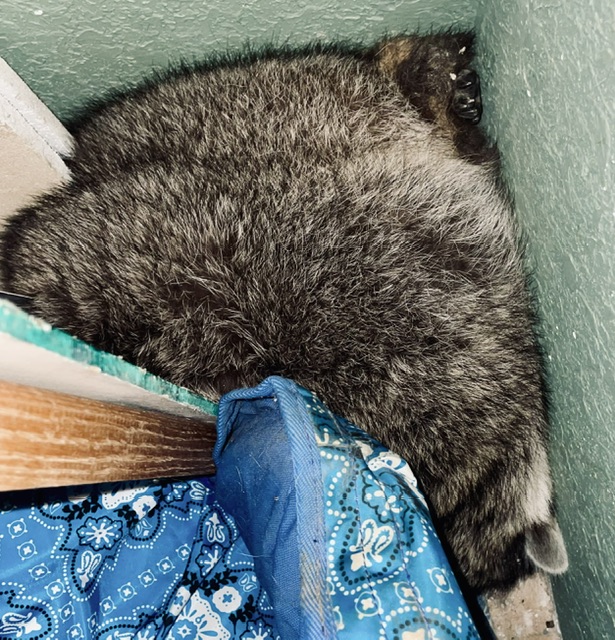
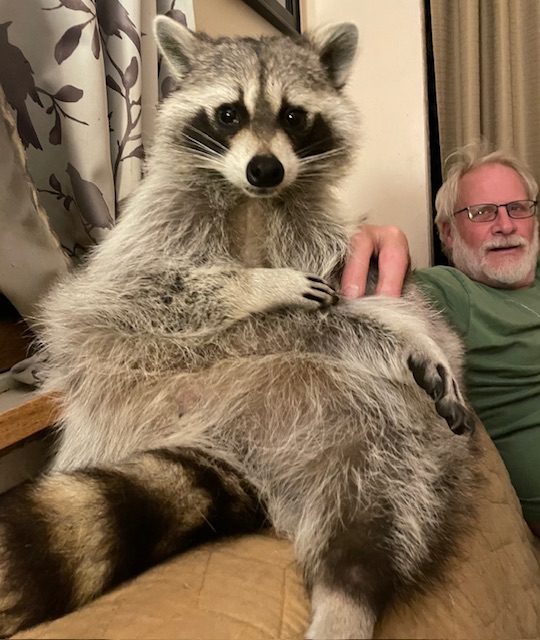
Last spring, we were asked if we were in a position to care for an 8-year-old male raccoon named Elvis. He had quite a backstory. Long-story-short, the raccoon came here in a cage. His mother was shot and killed before she could teach him how to be wild and free. He grew up in a house, and indoors is what he has always known. While a long-ago head injury and neutering tempered the more destructive nature of his kind, he still had a full set of teeth and was absolutely terrified. His diet had to be altered as well, from a reliance on people-food to fruits, veggies, protein bites and absolutely no more potato chips. It took several weeks of coaxing and a name change before Elvis became Emerson, king of the tallest bookcase, keeper of squeaky toys (unless Quinn the Fox steals them), and puller of earlobes. Thankfully, he was litterbox-trained when he arrived and never misses.

Emerson dips his sensitive hands* in his water bowl,“seeing” the grapes and carrots that we drop in. It’s thought that water contact increases a raccoon’s tactile ability. His wild counterparts do the same in streams and ponds. The only other thing that he has in common with wild raccoons is his appearance. Emerson has always lived his life completely contained and will continue to do so. At least he will help us teach people more about how to co-exist with these intelligent, curious animals.

*For more information: https://northernwoodlands.org/outside_story/article/ raccoons-hands

a different perspective

For the moment, let’s say you’re driving down a two-lane highway at night when, off to the side, your headlights pick up a misshapen bundle. You slow down to get a better look at whatever’s laying there, something that’s almost certainly dead, when, suddenly, part of the bundle shakes itself loose and skitters away into the dark…

Or it could be that there’s this cat that’s been hanging around and it’s pretty obvious that it’s had it more than a little rough. So, because you feel sorry for the poor wee thing, you’ve started leaving food out in a little dish by the back kitchen door. You hear it rustling around and turn on the light to give it a once over, see if there’s any improvement in its condition, only it’s not a cat, nothing like a cat, crunching down kibble. Nothing like a cat at all…

Or maybe it’s the night before garbage pick-up and you’re hauling the last bag out to the curb where you’ve already placed your recyclables and one half-full can. You reach for the lid, but it’s not in place. It’s lying, top-down, in the grass next to the can, and that’s odd because you’re more than kind of certain that you actually did put it in place before heading back to the house for that one last sack of trash. And that’s when you see it, furtive and menacing all at the same time, perched in the ripped-open Hefty bag at the bottom of the garbage can…

Whatever the scenario, what happens next is almost universal: you see those black eyes and all those sharp, glinting teeth in that gaping maw and your flight reflex kicks in. Before you’re even aware of turning, you’re burning rubber down the road, racing up the stairs, or dead-panic, brainless sprinting back to the house. And if your ears weren’t already full of the THUD, THUD, THUD of your own pounding heart, you know – I mean, you just know – that you’d hear it scrabbling along behind you, hissing and growling and keening for blood…
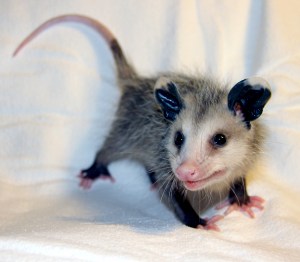
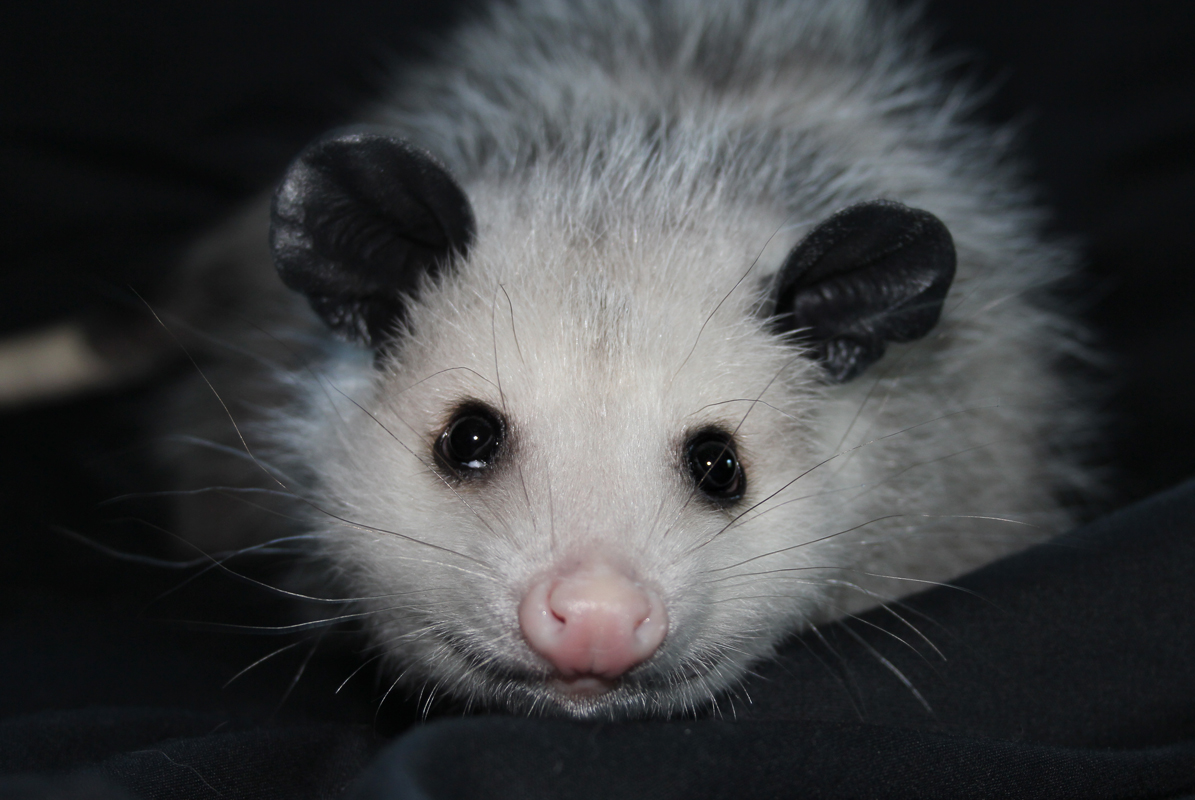
Virginia opossumExcept we’re not talking about some Jurassic Park raptor here, nor a great white shark or a freakshow hybrid of a government experiment gone awry, either. Nope. It’s an opossum – a Virginia opossum, to be precise – and it poses about as much threat to you as the neighbor’s Pomeranian. (You know, the one that they spritz with stink-pretty every other week after it’s been to the salon? The one that wears the pink Hello Kitty sweater as soon as the temperature drops below 40 degrees Fahrenheit? Yeah. That one.) So instead of chasing you down, that opossum’s busy either trying to put as much distance between the two of you as it possibly can, or making itself as small as possible, hoping against hope that you just won’t notice it.

Understand, I’m not saying that opossums can’t seem scary. They have more teeth than any other North American mammal and when their jaws are gaping wide in abject terror (yeah, mate, they’re positively terrified of you) it can be a little intimidating. But here’s the rub. Opossums aren’t predators. They’re scavengers, eaters of the dead and the overripe. See, they’re not interested in taking a bite out of you, unless, of course, you’re dead; in which case you have considerably bigger things to worry about than the chance that a wandering opossum just might stop in for a nibble.
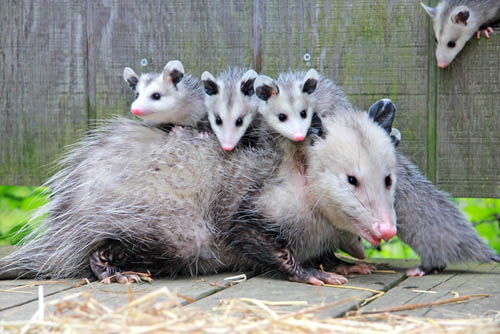
mother and babies

So, no, opossums aren’t predatory, but they are seriously cool. They’re nomadic marsupials, have opposable thumbs on their back feet and they have prehensile tails. They’re the most primitive mammal in North America and, when threatened, “play possum.” The word “play,” though, is more than a bit misleading. It’s not a conscious act, not something that they choose to do. Nope, it’s something that happens to them when they get overexcited. Their hard drives crash and there’s absolutely nothing playful about a crashed hard drive.

Keep all this in mind the next time you scare up an opossum, because “scare,” my friends, is truly a matter of perspective.

Give Us a Hand and We’ll Give You a Shirt

If you’ve been following us for any time at all, you’ll know that, while we focus on assisting domestic animals, we also work with the occasional wild, but native, animal, as well. Most are just passing through, either on their way back to the wild or off to a rehab center. Sometimes, however, as with the two American crows and the Canada goose that live here, this is where they’ll stay from here on out. These native animals aren’t eligible for release, either because they have some physical defect that will prevent them from a successful return, or because they’ve developed a certain affinity for their most significant predator, humans. Such is the case with an opossum that recently came to us from Nature’s Nursery Center for Wildlife Rehabilitation and Conservation Education.
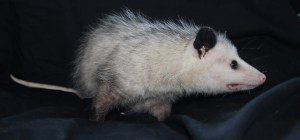
No Name OpossumThey told us right up front that he seemed a bit on the friendly side, and he was. Even so, we treated him with the same distance as we treat all such animals we’re tasked with fostering. Several days ago, after nearly six weeks here at The Quarry Farm, we decided it was time to give him the opportunity to go it on his own. Sadly, rather than march off into the woods or even just into the tall grass near the banks of Cranberry Run, he decided to follow us back to the house.

After discussing the situation with the powers that be at Nature’s Nursery, it was decided that responsibility for him should be transferred to The Quarry Farm, where he will live out his days and serve as an ambassador of his kind to the folks who visit us here, on-site, and to those whom we visit in their classrooms.

But, Houston, we have a problem. We can’t seem to come up with a suitable name for him. We’ve labeled him a host of different monikers, but none of them have stuck. So we’re throwing it open and asking for help. The person who comes up with an appropriate name (and, yes, we’re the ones who decide what’s appropriate) will get a Quarry Farm T-shirt.

So, have at it, boys and girls, men and women.

And thanks. Here’s another quick study of the little guy, should that prove inspirational.
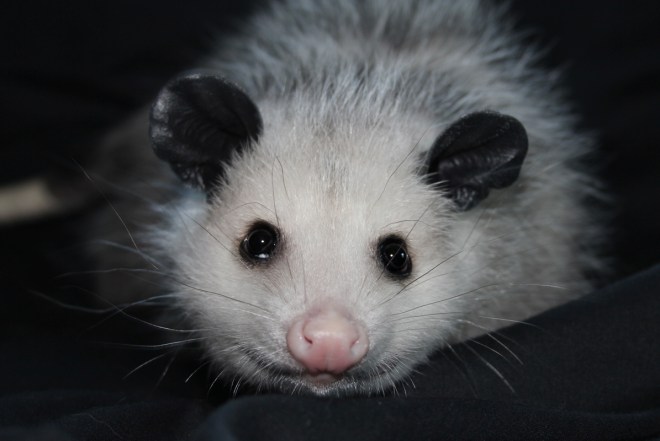
No Name Opossum

And the Tally Is…

BirdingOver the course of a lifetime, we count any number of things: the number of cars we’ve owned, the dates we’ve had, the hours or minutes left before the end of the work day, the children in a school group we’re chaperoning and on and on and on. This past weekend, we counted birds. And it wasn’t just us, the folks who showed up at The Quarry Farm for this latest event. It was people all across North America and around the world participating in this year’s Great Backyard Bird Count.
Cooper's hawk

Cooper’s hawk

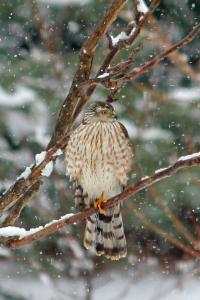
Sponsored by the Audubon Society, the Cornell Lab of Ornithology and Bird Studies Canada, this four-day annual event provides data about bird populations and migration to these giants in ornithological research. For us, the event has provided the opportunity to specifically record some of the birds that live here. The birds spotted and identified included: house sparrows, white-crowned sparrows, gold finches, white-breasted nuthatches, American crows, turkeys, great-horned owls, eastern screech owls, red-tailed hawks, Cooper’s hawks, juncos, American robins, Downy woodpeckers, red-bellied woodpeckers, hairy woodpeckers, northern cardinals, blue jays, horned larks, starlings, mourning doves, rock doves, brown creepers, Canada geese, mallards, great blue herons, black-capped chicadees, tufted titmice, song sparrows, dark-eyed juncos and one bird species that, a little over a year ago, perplexed more than a few of us.

Northern shrike

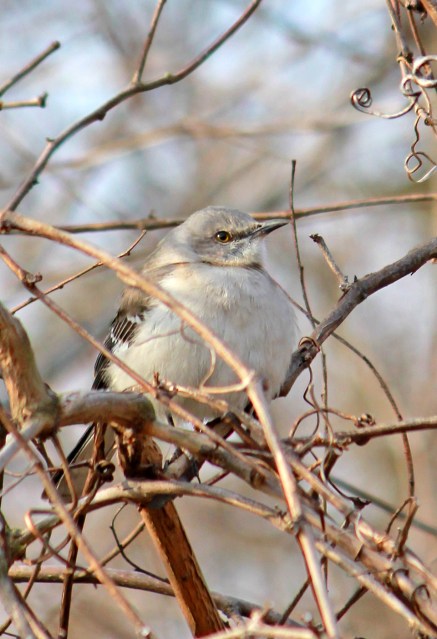
Northern mockingbird

Last year, on our annual Winter Walk, we discovered a vole skewered on a thorn in a hawthorn tree. At the time, none of us were sure how the vole came to be there, though we threw a lot of guesses around and came to the mistaken conclusion that a passing raptor had dropped its dinner and it was inadvertently pinned in the tree. Three seasons later, on yet another walk, a naturalist and amateur ornithologist told us that it was likely the result of a Loggerhead shrike pinioning the vole for later. Well, he was close. One of the birds we discovered on our walk was not the Loggerhead shrike, but the Northern shrike, a close cousin to the Loggerhead.

vole 1Although classified as a songbird, all shrikes share a behavior commonly associated with raptors: that is, they prey on small mammals, lizards and amphibians. Not only do they prey on these small animals, they store them away for later feasting by skewering their prey on thorns. So the cause of our earlier conundrum came clearly into view and was the highlight of our count this year.

It was a good weekend and a stellar bird count. In total, we identified nearly thirty different species of birds. That, and we definitively put to rest the bizarre and somewhat gruesome puzzle of the impaled vole.

This slideshow requires JavaScript.

A Swift Release

Sunset from The Quarry Farm.

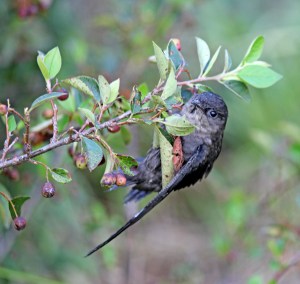
This has been a strange year, a difficult year, in some respects. An overabundance of spring rain gave way to summer drought and a flurry of fierce storms. The storms, in particular, have proven hard on the living and arguably hardest on the birds. Strong winds shredded trees and the nests to which they offered insufficient protection. For many wildlife rehabbers in the area, the storms brought a rain of orphaned and abandoned birds. This past weekend, Natalie Miller, education and rehabilitation specialist with Nature’s Nursery, brought two of these foundlings to The Quarry Farm. The birds were chimney swifts and they are a welcome addition to the fauna here.

One of two chimney swifts brought to Red Fox Cabin for release.

Chimney swifts (http://www.chimneyswifts.org/) are insectivores. Incredibly fast flyers, hence their name, they wheel about as sunset approaches, snatching meals of flying insects. And, again as their name suggests, they nest in chimneys, such as the one at Red Fox Cabin. Finding established populations of chimney swifts is becoming increasingly difficult. Abandoned or rarely used chimneys, the kinds of places where swifts can set up house unmolested, are rare. So it was worth the hour-long trip south to release these birds here, where others of their kind can help them learn the skills they’ll need to survive.

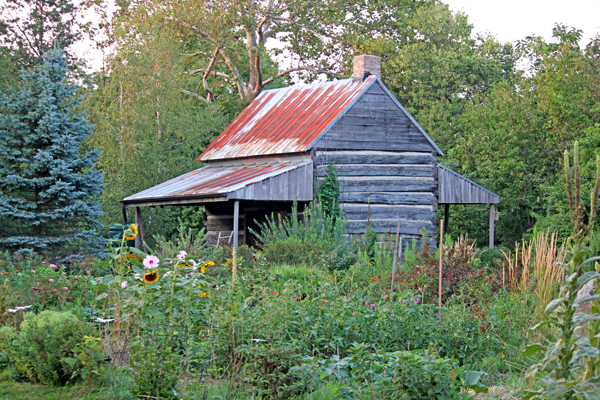
Red Fox Cabin

We took both birds out to the cabin just about mid-evening. Although there was no immediate sign of the resident swifts, they’re a common sight here. As it turns out, we only released one of the birds (the video of that release accompanies this post; don’t blink or you’ll miss it). As the released bird swept up and over the tree line along the road, five of the Red Fox Cabin swifts flew in from over the quarry and herded the newest member of their flock away from the soy bean field and back to The Quarry Farm. As for the second swift, it still needs a little more care, a bit more time to grow, before it’s ready for release. For now, it’s in the capable hands of Rita Seitz, and probably will be for at least another week. When the time comes for it to join the others, we’ll be sure to let you know.

Raptor Rehabilitation and Release

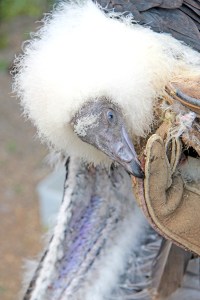
One of two pre-fledgling turkey vultures surrendered to Black Swamp Raptor Rehab.

This past weekend, we were offered the opportunity to do something a little bit different. As part of our function at The Quarry Farm, we often serve as transporters for several area wildlife rehabilitation centers. Laura Zitzelberger, director of operations at Nature’s Nursery Center for Wildlife Rehabilitation and Conservation Education, contacted us and asked if we’d serve as courier and chaperone for two pre-fledgling turkey vultures. The barn the two birds were nesting in was destroyed by the storm that tore this area apart in late June. Since then, the birds had been under the care of Diane Myers at Black Swamp Raptor Rehab. Nature’s Nursery had taken in a nestling turkey vulture and were excited at the chance to properly socialize their charge by introducing it to the two birds from Black Swamp.

Despite some rather unsavory habits, turkey vultures are social, intelligent animals (http://www.allaboutbirds.org/guide/turkey_vulture/id).

The nestling turkey vulture surrendered to Nature’s Nursery.

Sadly, these positive attributes create a challenge for rehabilitators. Imprinting becomes an even more serious concern as their social nature makes them more prone to identifying with their caregivers. This can prove disastrous for any animal and can even prevent their successful release back into the wild. In an effort to offset their natural inclination to bond with their caregivers, the three birds were brought together in the hope that they would bond with each other. Although they can’t be housed together because of a significant difference in age and size, the three birds will be kept adjacent to each other and share a common wall; two on one side, one on the other. It’s hoped that all three birds will benefit from this situation, improving their chances for a successful release.

And speaking of releases, not only did we transport two raptors up, but we also brought one back with us.

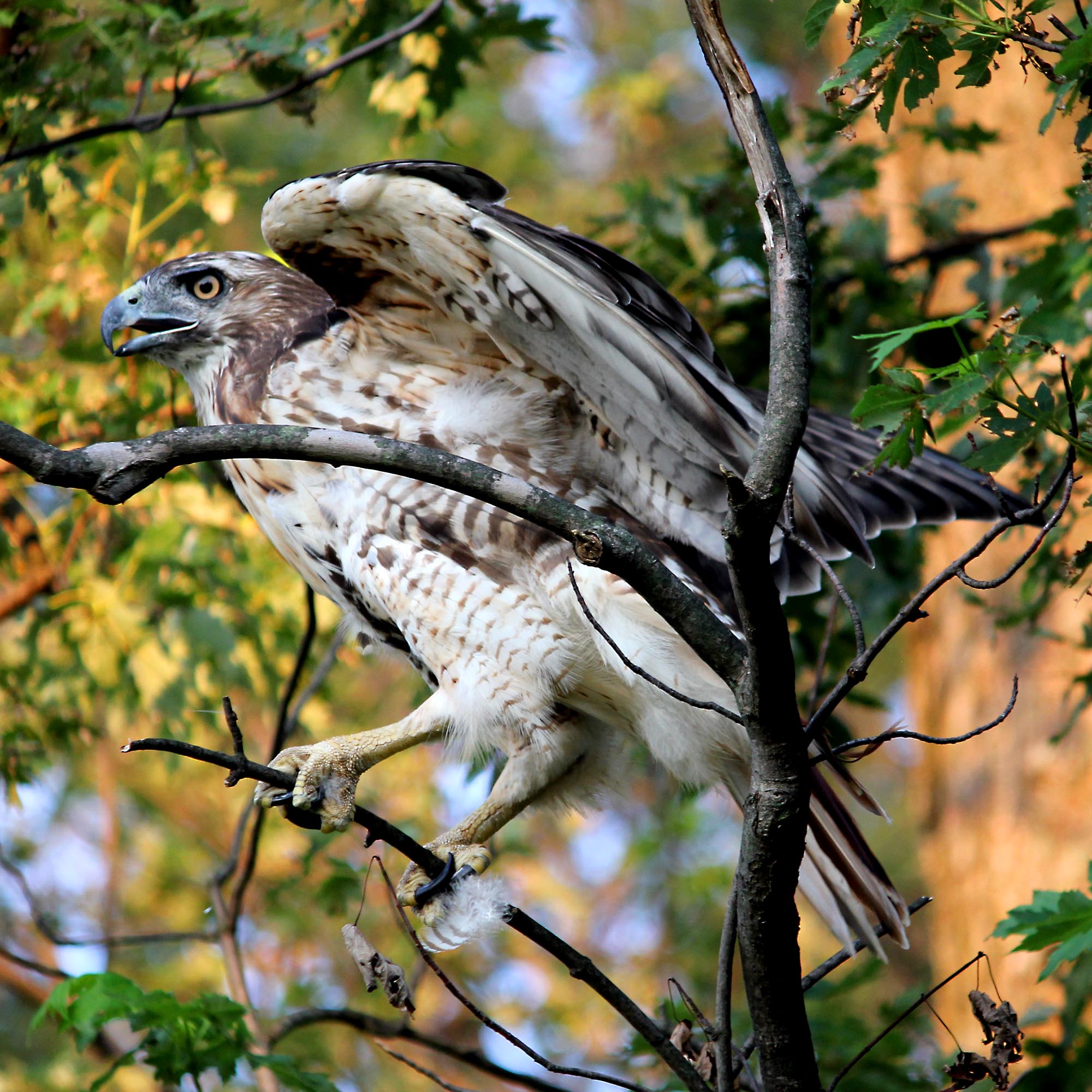
Early last autumn, we were called on to pick up a red-tailed hawk in nearby Miller City, Ohio. The bird had been on the ground for a couple of days and the homeowner in whose yard the hawk was sitting had called Nature’s Nursery. We’re not entirely sure what was wrong with the bird, but it was in sorry shape when we arrived. Emaciated and dehydrated, the hawk had no energy to defend itself and we simply walked up to it, wrapped it in a blanket, put it in a carrier and transported it north. After months of exceptional care, the bird’s appearance and attitude had changed drastically and the rehabbers at Nature’s Nursery asked if we’d return her to the county of her birth.

The red-tailed hawk perches shortly after release.

The hawk was slow to realize its situation and initially only flew far enough to perch in the nearest tree. But after a bit and the pestering of several camera-wielding humans, it finally took to wing and flew away and out of sight. I won’t say it was a picture-perfect release, but it certainly was a success.

We hope for the same results for the turkey vultures. When it happens, you’ll be the first to know.