

The article below (how appropriate, considering the subject, don’t you think?) appears in the latest issue of The Quarry Farm Newsletter. Download your copy by clicking on the cover to the right.
Not long ago after autumn rains had softened the baked lawn around Red Fox Cabin, little volcano-shaped mounds erupted here and there, heralding the arrival of moles. Moles don’t alarm me because their burrowing hasn’t seemed to cause lasting damage in the garden. However, convinced that the humans on a nature preserve should be knowledgeable about their fellow inhabitants, I went online to learn more about moles.
Members of the family Talpidae, moles are found in most parts of North America, Europe and Asia. Seven species live in the U.S., the Eastern Mole being common in our region. They are 5 to 7 inches long, larger than shrews and voles. Males are called boars; females are sows; and the young are pups. A group is a labor (perhaps because they are so industrious?). They are carnivores, not herbivores. Their diet is primarily earthworms, grubs, and the occasional mouse, but not our garden plants. Once they have eaten the food in one area, they move on.
Moles are amazingly adapted to a subterranean life. They can distinguish light from dark but not colors. Although their eyesight is dim, their hearing and sense of smell are so acute that they can detect prey through many inches of soil. They have large, powerful, outward-pointing front legs and claws for pushing dirt aside as they “swim” through soft, moist earth. They are able to disappear from rare ventures to the surface in 10 seconds flat, to tunnel 1 foot in 3 minutes and to run through established tunnels at about 80 feet per minute. Their short, velvety fur is non-directional, causing little resistance as they move rapidly through tunnels. (Their soft, dense pelts once supported a thriving moleskin industry.) Moles can survive in their low-oxygen environment underground because they can tolerate the high carbon dioxide levels in the exhaled air they reuse. Their saliva paralyzes prey, which they store, still alive, in underground “larders” for future consumption. Moles can detect, capture, and eat their prey faster than the human eye can follow.
Moles make 2 types of tunnels: feeding runways close to the surface where the molehills pop up and permanent tunnels about a foot or more underground, leading to a nest about 2 feet deep. What might look like the work of many moles can be the product of one busy tunneler.
Moles are solitary and highly territorial, coming together only to mate. Breeding season runs from February to May. From 2 to 5 pups are born after a 1-month gestation, and leave the nest 30 to 45 days later in search of their own territories. Although tunnels may overlap, moles avoid each other and will attack and even fight to the death when they meet.
Many online gardening experts write about moles in terms of their being destructive pests that must be eradicated. They suggest many methods of doing so: poisons; traps that choke, spear, slice or confine for removal; buried repellants like broken glass, razor blades, or thorny branches; or natural, more humane repellants like plantings that smell bad to moles (daffodils, alliums, marigolds, castor beans, etc.), castor oil drenches; and reducing lawn watering that could force moles close to the surface.
However, I lean toward a smaller set of gardening experts represented online who believe that moles are more beneficial than destructive. Rather than taking offense at molehills, they point out that moles improve soil by loosening, aerating and fertilizing, and the cones subside quickly. Any soil that has been lifted off roots can be pressed down again with a foot. Moles receive the blame for plant damage caused by chipmunks, mice and voles, and generally receive little credit for destroying lawn grubs. I myself would rather let moles eat pesky soil-dwelling larvae than chase moles out by spreading harmful poisons to kill the grubs. In the view of one expert, Roger Mercer, “Moles aren’t all bad. In fact they’re 99% good.” As a 15th century saying goes: “Do not make a mountain out of a mole hill.”
—The Gardener at The Quarry Farm
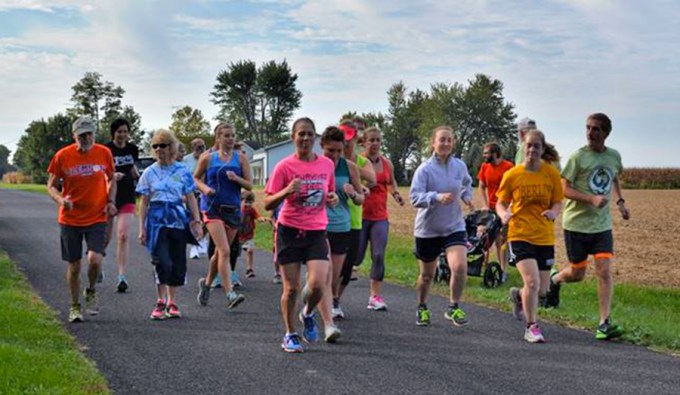 The sun comes late now in Northwest Oho. On October days like today, heavy wet clouds mute sunshine even more. The youngest roosters crow at the very inkling of sunrise, causing more than a little discussion in the henhouse. Last Saturday began gray and sleepy, too, but it didn’t stay that way. Thanks be for that, because the 7th was the second time we held a Quarry Farm 5K walk/run on Roads 7L and M7.
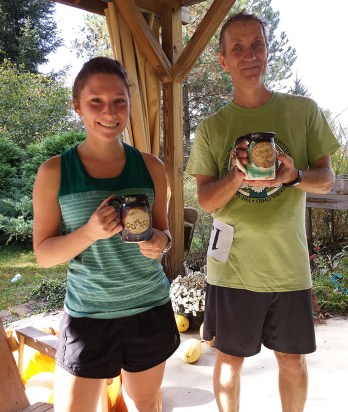 There was water for all, thanks to Ted’s Market, and to Paula Harper for making sure it was distributed at the turnaround and to Phyllis Seitz for passing more bottles out at the finish. Bananas and homemade cookies (oatmeal chocolate chip, cranberry white chocolate, molasses, granola—glutened and without) further refreshed as the event winners received their
 The old stone quarry has changed a lot over 150 years, from not being there at all to a horse-drawn limestone operation, from spring-fed fishing hole to wetland. Black willows and other water-loving trees and plants grow there now. Wood ducks, wild turkeys, owls, squirrels, tree frogs and herons roost high above the banks. They see you before you even know they are there, falling silent or bursting from the branches in a great show of chatter or feathers.
 Last weekend the dogs and I found the tree in pieces. The path is strangely open now. Stick-tights thrive in the open sunlight, laying waste to another pair of shorts and leaving the future of my t-shirt in doubt as well. Thankfully, jewelweed grows nearby to stop the burr itch. I wonder if the wild ginger will move to shade further along the bank.


 You know that tingling excitement you get when you try something on for the first time, especially when it fits and what looks back at you in the mirror looks pretty good? Yeah, you know. That’s kind of what last week felt like.
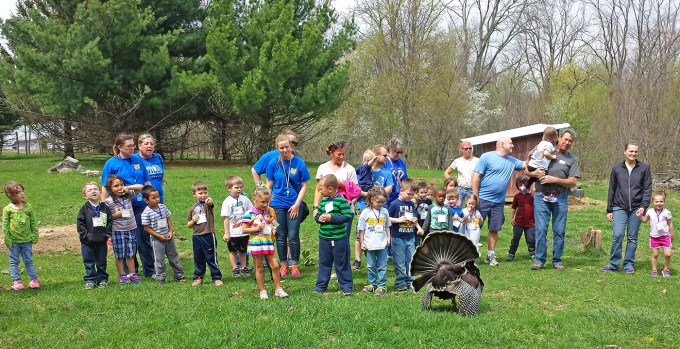
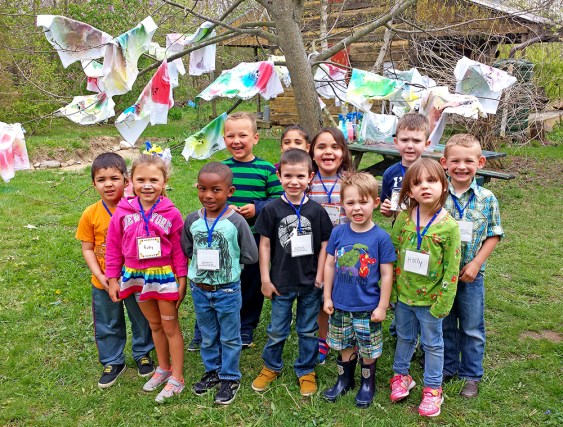 On Sunday, we fortified ourselves with chocolate and other Easter basket contents. From Monday to Thursday, 218 Findlay preschool students, their teachers, parents and bus drivers made lasting-leaf t-shirts and followed the Cranberry Run Trail to meet the farm animal sanctuary residents before making the bus ride back to Hancock County. The mornings were cool and afternoons exceedingly warm, but Miracle Max the Bronze Turkey was always the gate greeter for every group even if the other animals dove for cover.

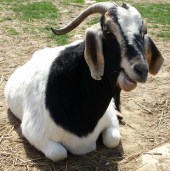 Today we rest. So does Mister Bill. Looking in the mirror, or at the photos and videos on our cells, and through the perspectives captured by others who shared the stage of the day, we’ll still keep raising our hands.
 This Great Backyard Bird Count weekend is unusual in more ways than one. To begin with, this is the first in which I wore shorts outside.
 Today is Day 3 in the 19th year that the Cornell Lab of Ornithology and National Audubon Society have coordinated this international weekend of documenting birds. It’s a four-day snapshot of what birds are where. Some years, a few days after the count is over, I see a bird that wasn’t on our checklist and think, “I wish that had been here last week.” But that’s the point; as long as the species made someone’s checklist somewhere, all is well for now.
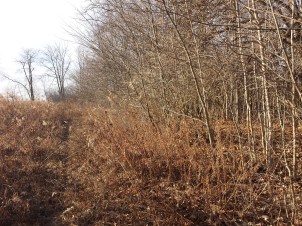

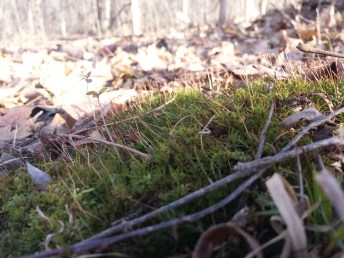


 This time last year, Erin Seitz, newly Erin Fitch, bounced the idea of organizing a fundraising 5K run/walk on behalf of The Quarry Farm.
