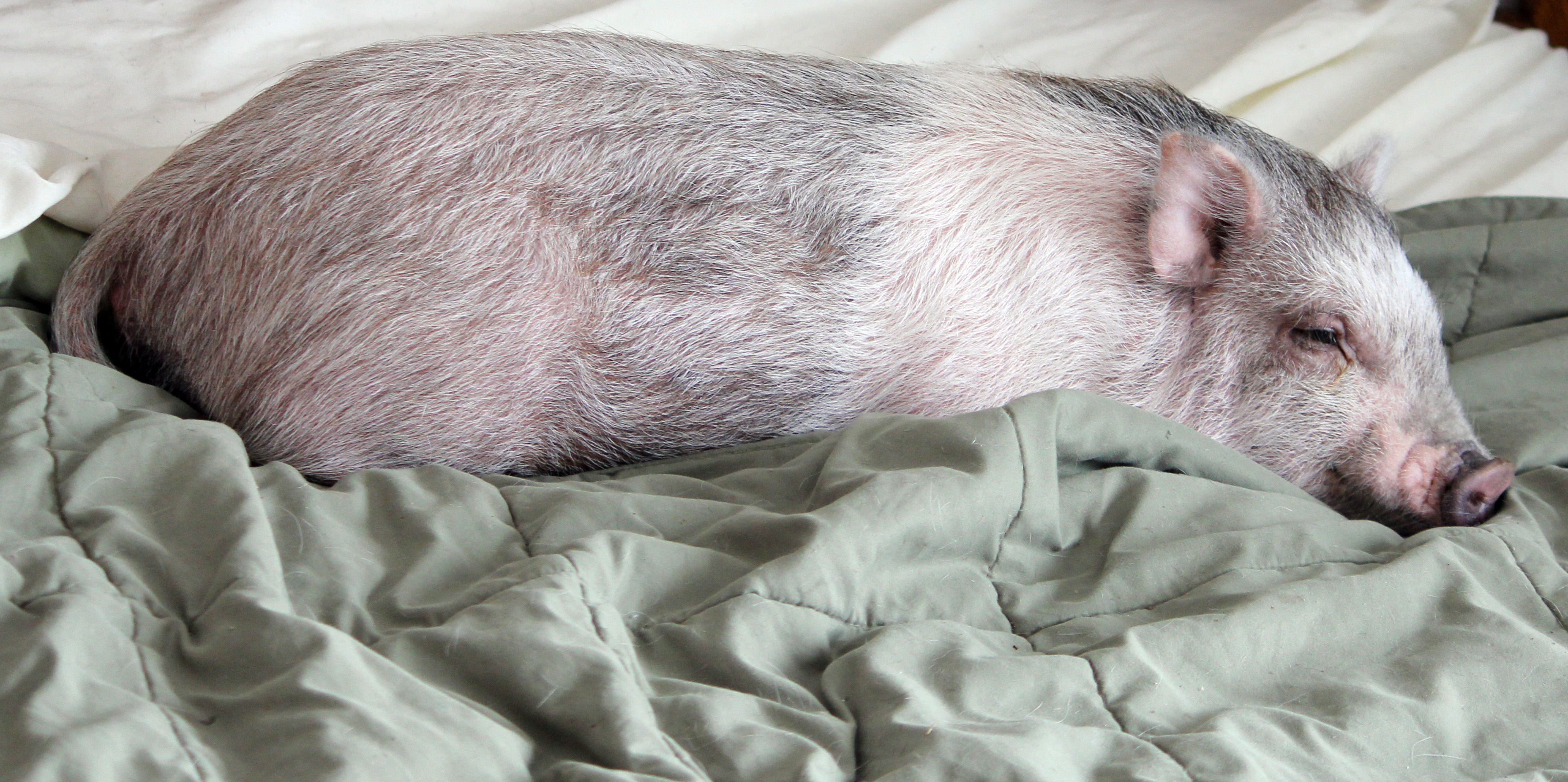
holes

It took seventy-four minutes to dig a hole this morning; just over an hour, with shovel and pick, to create a nothing four feet by three feet by four feet deep. I had thought it would take longer, prove harder, given the heat and the dry. But, no. Just seventy-four minutes. Time enough to come to terms with the harsh reality of the past thirty-six hours.

In early July of 2010, Marshmallow and S’more, two Nigerian dwarf goats, wethers both and brothers by all accounts (though the two couldn’t be any more different), were delivered to The Quarry Farm by Anne and Rowan, who brought them north from Cincinnati in Anne’s little Scion xA. Their arrival fortified a growing vision of The Quarry Farm as a safe haven, a home and sanctuary for the unwanted and the unloved, the abused and the forgotten.

Which is not to say that all of the animals now living here were unwanted or abused. Buddy and Lucy and Bill and Beatrice all came from loving families who, through circumstances undesired, were simply unable to keep them any longer or believed them better served on The Quarry Farm. And so, too, it was with the brothers (if not by blood, then certainly in spirit). The family that raised them to that point loved them, and dearly. Sadly, the two large dogs that also lived with the family loved them as well, though in an entirely different and specifically threatening way. Thus the trip north.

Marsh and S’more (The Boys as we came to affectionately call them), when they arrived, joined the Priscillas, sixteen Hubbard Golden Comet hens, and Johnny and Stella, two non-releasable Canada geese; the sum and total of The Quarry Farm’s inhabitants (not including the three dogs and eleven cats). S’more, was, and still is, slim and athletic, given to spontaneous bursts of energy that found him bounding sideways and pronging through the yard. It was clear from the beginning, though, that Marsh had issues. While he’d chase after his brother, bash heads and sport about to the best of his ability, he was prone to a constant mild bloating that, despite our best efforts, made it difficult to keep up. On more than one occasion, a visitor would ask if “she” was pregnant. What he lacked in athleticism, though, he more than made up in personality. Frequently the first to greet guests, Marsh was sweet and gentle, curious and approachable and children thronged to him. He’d greet them, and us, with his head tilted up, encouraging any and everyone to stand nose-to-nose with him.

But while willing and even desirous of the attentions of others, particularly when they offered bits of fruit or carrots or peanuts, Marsh was clearly bound to S’More.

Inseparable from the first, the brothers would play together, eat together sleep together and wander the property together, often pressed up hard against one another, shoulder to shoulder, moving about in a coordinated tandem. Now, I ache for the one without the other.

A little less than three years ago, we found Marsh standing in the yard, straining to urinate, but unable to do so. We called Dr. Ron Baldridge, a local veterinarian, who, over the phone, diagnosed bladder stones. Unlike kidney stones in humans, bladder stones in goats, due to their unique and convoluted physiology, will, untreated, prove fatal. Explaining that goats were outside his purview, Ron recommended contacting Ohio State University’s Veterinary Hospital. There, they surgically removed the stones and, after a week, Marsh returned home. Here, we worked to acidify his diet, providing ammonium chloride in periodic drenches and pouring gallons of apple cider vinegar into water troughs. Even so, ten months later, they reoccurred, necessitating another trip to Columbus and a second surgery. And again eight months later.

Wednesday evening, we found him once more, his belly distended. On Thursday, we drove him to the OSU veterinary facility in Marysville. That evening they called with disastrous news. Early Friday, I brought what was left of him home.

It took seventy-four minutes to dig a hole this morning, and even less time to fill it in. But there are holes and there are holes, absences that no amount of effort can ever fill.

So, then, because there is nothing else to do or say, goodbye, Marshmallow. Goodnight and sweet dreams.

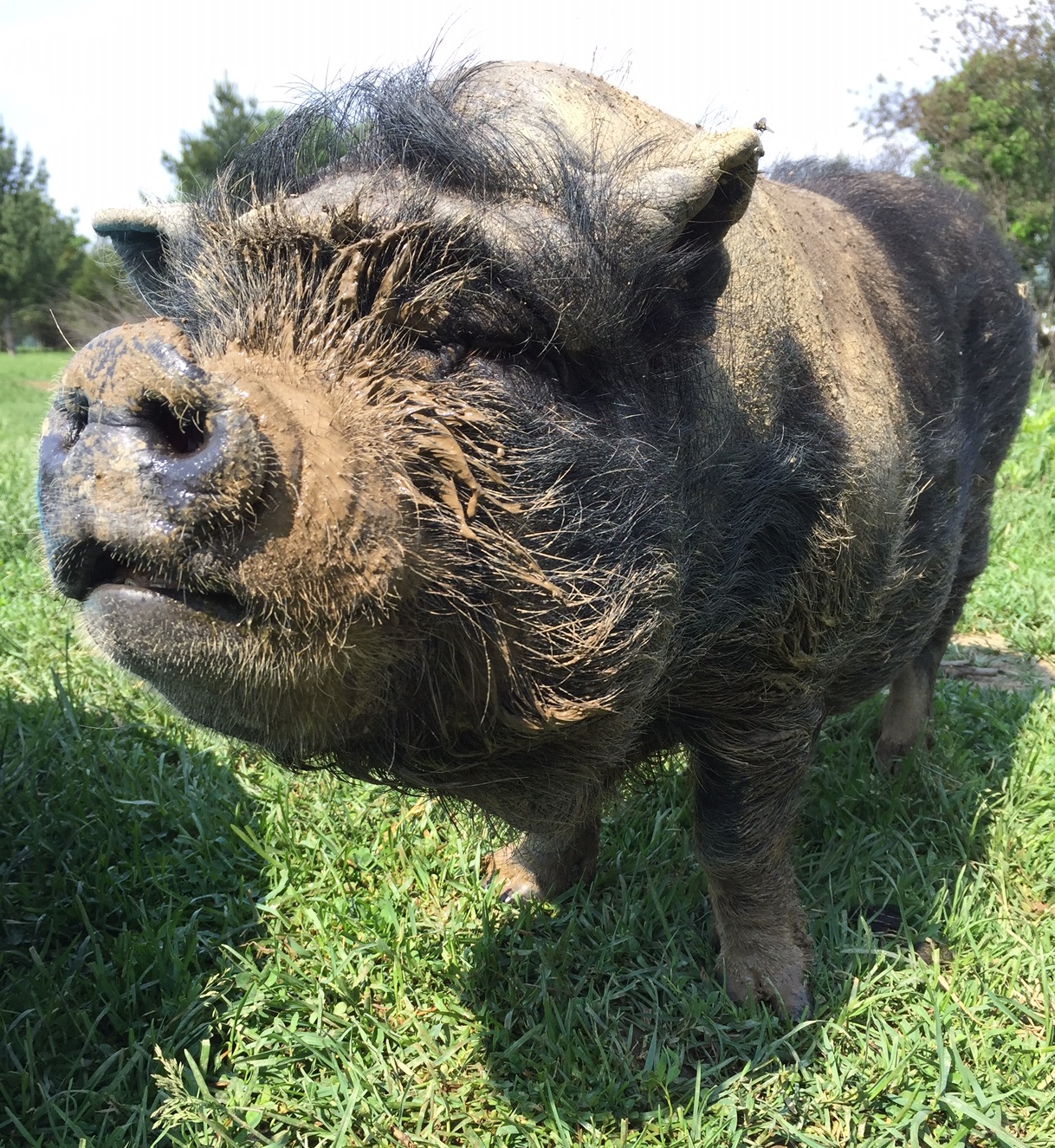
IMG_5733


Blowing bubbles, No One style

This isn’t a fine example of camera work. The ‘film’ is still a treat: seven-month-old Nemo blowing bubbles in her wading pool.

She started doing this two days ago when we filled the pool for the first time. I kept trying to catch her in video, but she was too interested in what I was doing. This morning, I found that if I stick my hand in the water and swish it around, she joins in by ducking her snout under the surface and bubbling.

I’m melting, and it’s not because of the heat.


Sweet heat relief

Two weeks ago, cold wind and rain sent us shivering for hot chocolate.IMG_1244

Today, temperatures hit the upper 80s. Since Nemo is too long for the little pink wading pool that kept Beatrice and Carlton cool last summer, we purchased the next size up yesterday, one with little sharks on the sides (but no slide; that wouldn’t be pretty.)

There’s plenty of room for two, although the molded plastic walls are too high for Sophie. Cold wet, mud will have to do.

Couldn’t catch on the moments when Nemo blew bubbles through her nose in the water. Since it’ll be plenty warm for the rest of the Memorial Day weekend, there may be other opportunities.

Sophie’s choice

IMG_1033 (1)

Sophie meets Jamie Napolski, Assistant Curator of Education & Special Events for Sauder Village.

Yeah, yeah, yeah…I did go there with the title of this post.

But it’s true; Sophie the pot-bellied pig had her first road trip as an educational ambassador for The Quarry Farm, and this happened as a result of a choice she made on Friday.

As testified by the previous post, “Sticky toes and hiking sticks”, an entire third grade class joined us onsite for a Friday filed trip alongside Road 7L. The students and their teachers and chaperones rotated through stations, including a visit to the farm animal sanctuary. As we always tell visitors, once inside the gate, humans will have the opportunity to meet the sanctuary residents, but only those residents who choose to walk down the path for a face-to-face encounter. While it’s almost a guarantee that the bronze turkeys will show up, as well as at least one of the donkeys and a goat, the pigs are a little more unpredictable.

For instance, if the sun is shining and the temperature moderate, Carlton may mosey on down the hill for a belly flop and scratch. Queen Beatrice may sashay through the floodplain. If she could do the royal wristwave, I have no doubt she would, stopping only long enough for a brief pat before moving on for a nap in a warm pool of light.

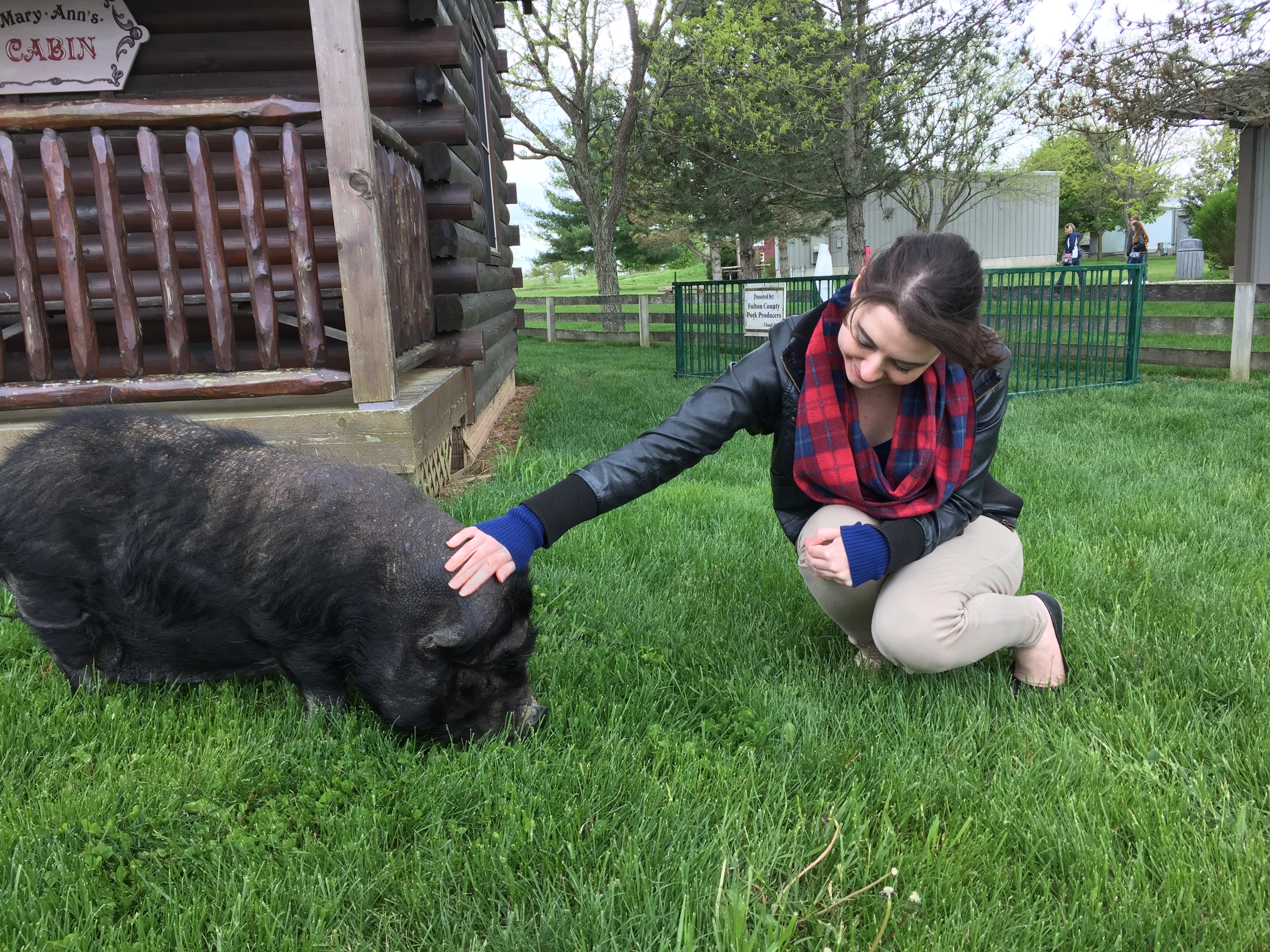
As for the others, their early years were so harsh at the hands of neglectful humanity that visitors only get a distant glimpse. In Sophie’s case, beatings, poor diet and exposure left scars that have left her much older than what we think are her actual years. So it was a wonderful surprise when she chose to join the second group of students to rotate through. She even stayed close, allowing the third rotation to pet her softly on the forehead.

Because of Sophie’s decision to trust in the kindness of strangers, we took her on an hour-long car ride north for a program at Sauder Village in Archbold. While 19th-century reenactors read “If You Give a Pig a Pancake”, Sophie charmed young visitors and their families outside a log cabin in the Little Pioneer Village. Marshmallow the Nigerian Dwarf goat went along for the ride, too, but he’s an old hand at programs and conducted himself in his usual sweetly-mellow manner.

By the way, don’t give a pig a pancake.

Corvid appeal

There were once crows in this place. They would caw across the hollow, scolding at outdoor cats and other predators. Their young would burr in the tallest, most remote hardwoods, then become silent if anyone or anything other than their parent came close.

A decade or so ago, so many raptors disappeared, victims of West Nile virus. The corvids–jays and crows in these parts–died, too. We saw only one dead during that time. It wasn’t inspected by anyone, but we assumed the bird’s death was due to the mosquito-spread plague.

Not much was said then in mainstream media about the effect of West Nile on anyone but humans. While the disease caused harm to people–I’m not denying that–the kestrels, and red-tail hawks that had previously perched from telephone pole to fence post were missing for years. We are only just beginning to see them again.

But the crows never did come back. Last spring, we heard two calling in Coburn’s Bottom, the area of the floodplain north of the old quarry. We were so excited, calling everyone we knew and fairly shouting, “The crows are back!” whether the listener was interested or not. Unfortunately, the pair didn’t stay.

We began to suspect that there is more to the absence of crows hereabouts than West Nile taking its toll. As I said, the bluejays are back, as are the hawks and even bald eagles. But research and observation of crows has determined that crows tell each other stories. Before a flock of crows enter a new area, they send a sentinel in to scope things out. If the report is favorable, the rest will move forward. If something disasterous happens while they are there–for instance, if one or more are poisoned or shot–the crows leave at the first opportunity. And they don’t forget.

That said, there’s strong suspiscion that it was inhumane human behavior that left a big red mark along the Riley and Cranberry Run for crows. Sad, as these birds are thought to be one of the most intelligent creatures that share this planet with people. Crows aren’t a bellwether species, but they are brilliant, secretive, organized and to be allowed to share space with them is an honor.

We’ve had the pleasure of spending time with two crows. Blackie and Jo, however, are here only because they have physical and developmental issues that mean neither can be free to make that choice for themselves.

Crows backlitStained glass artist Martha Erchenbrecher created the gorgeous work of art pictured above. The piece is stained glass mosaic or glass-on-glass mosaic. After trying for a few months, we were able to take a decent photo of it today with the winter afternoon sun shining through. We’ve hung it here for farm animal sanctuary visitors to see. One day, we hope to display it in a nature center here.

Maybe a scouting crow will see it and tell the others that they are welcome, anytime.

So like ours

I had another post in mind today; two, actually. Today had other plans.

With the press bill planted on my head, I followed the scanner to a semi overturn on Ohio State Route 12. The word was one slight injury, no heavy rescue required.

This was the scene on approach from the west.


Truck


The driver seated in the ambulance to the left was shaken, with a bloodied forearm, but his fingers were mobile. His boss in Defiance was on speed dial. Pig truck

This was the view from the east, but the screaming gave them away before I rounded the corner.Pigs 7


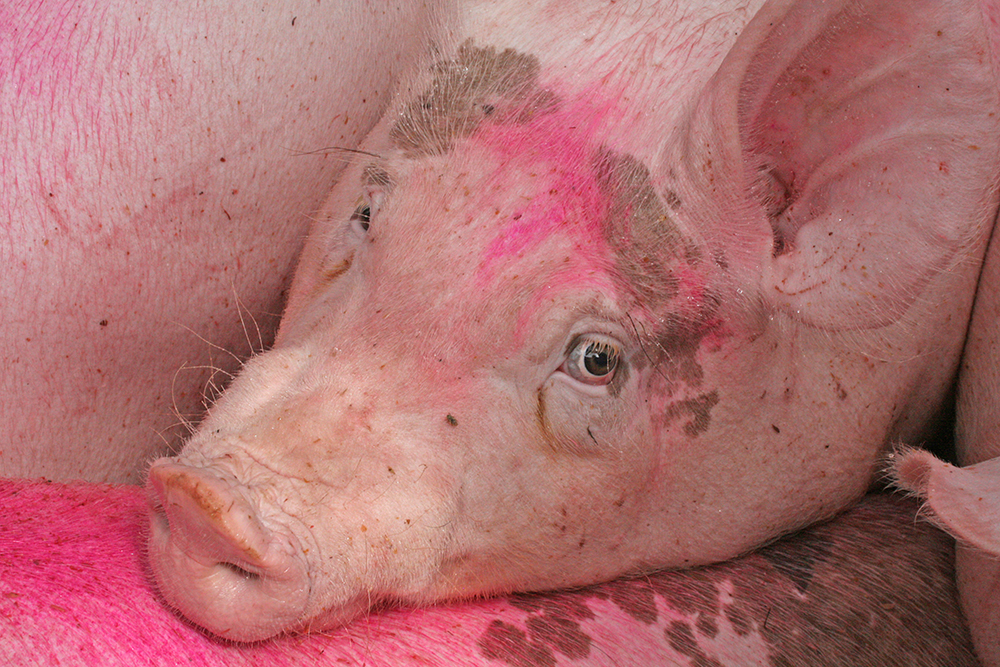
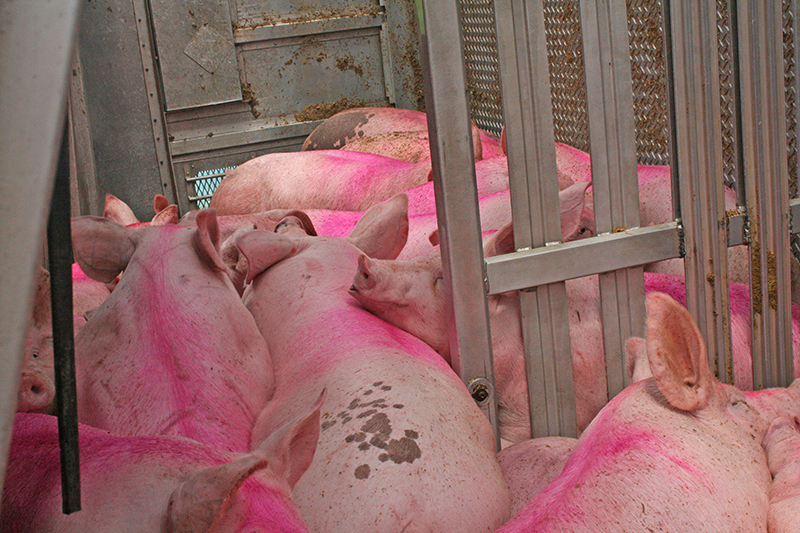
There were 179 gilts (a female who hasn’t born a litter) on the truck. They were less than five months old.

Pigs 4While I don’t have an exact count, I believe that there were fewer than 15 killed outright (I saw seven outside the trailer and know that there were more in the nose that had yet to be removed). Four severely injured animals were dragged from the truck with chains and a fifth, with a dangling right front hoof, was goaded and prodded and slapped out and into a waiting trailer before instructions were given to cease that kind of activity. The two remaining “downed” pigs were left in the shade of the truck and kept cool Pigs 8with water before they were euthanized on the scene. Respondents from the Columbus Grove Volunteer Fire Department climbed on top of the truck and helped to keep them all cool by spraying them with water. This same horror happened earlier this week in Xenia.

I don’t have to explain the pink-paint markings, really.

Pigs 10In fact, I’ll not say anything more.


and then there were four…

A little less than a month ago, we made a relatively short drive north to pick up a potbellied pig that, lost or abandoned (though most likely abandoned), had wandered into our friend June’s yard. Not knowing about us at the time, June called Laura Zitzelberger at Nature’s Nursery, who, in turn, called us.

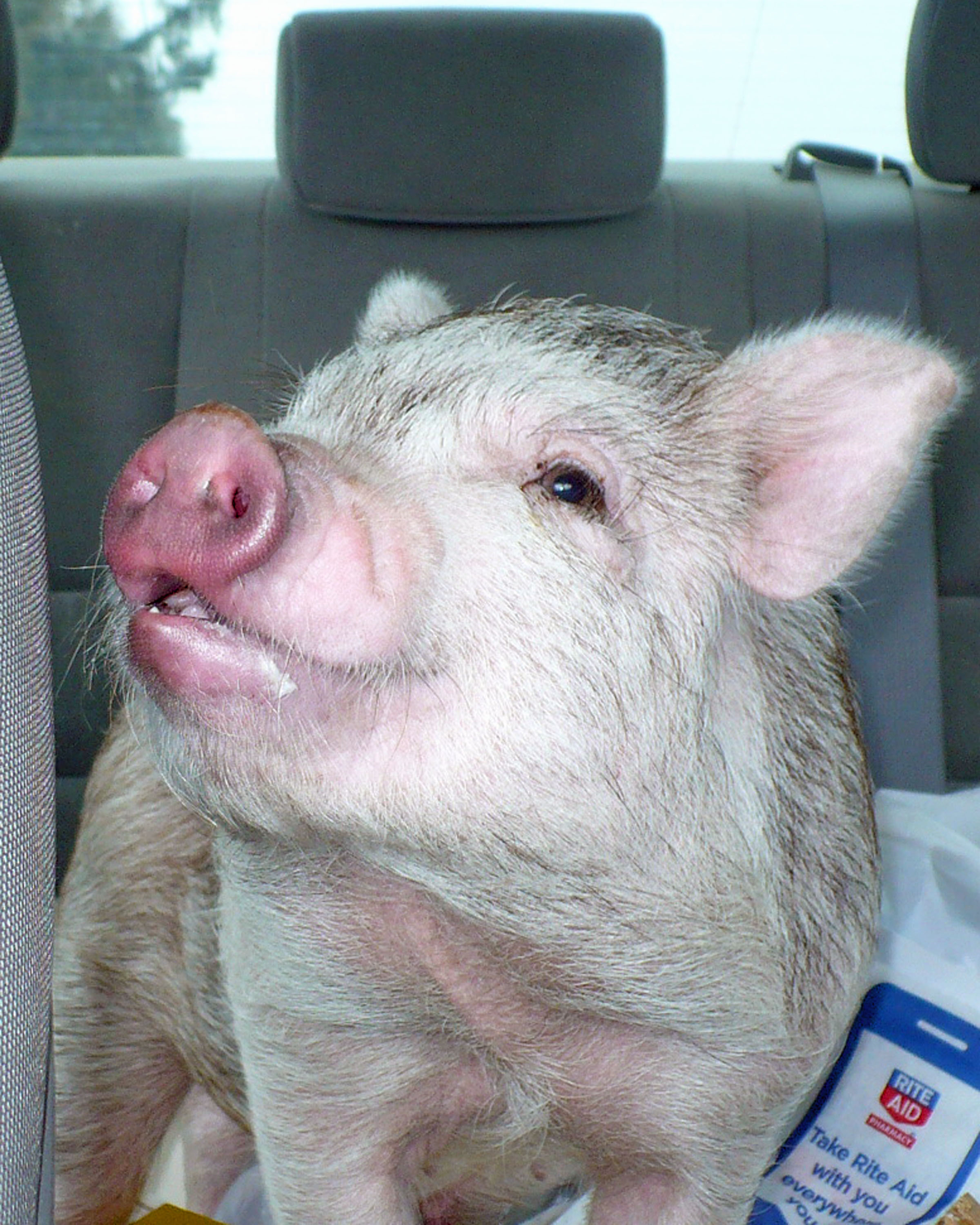
in the carThe hour-long ride back was interesting; interesting in the sense of the ancient Chinese curse, “May you live in interesting times.” Given to reckless behavior, I had decided to pick him up sans crate, so the little pig — and he is indeed little, weighing in at just a smidge over 30 pounds — was loose in the car. He spent nearly as much time on my shoulders doing his best to climb up on top of my head as he did on the seat. Eventually, though, he did settle in and down, sprawling in the back and resting his head in the palm of my right hand.

getting to know youOn arriving home, his behavior in the house was little different from his initial behavior in the car, that is to say, “hell bent.” He chomped and rooted, prodded and postured, picking fights with any and all comers, even with those more inclined to run away, myself included.

I grumbled. I growled. I cursed.

Anne smiled.

“He’ll be fine,” she said. “Don’t you remember Bob?”

Bob is a dear friend of ours, one of four pigs rescued last winter and one of two of the four who now live on The Quarry full time, along with Beatrice, aka Little Pig. At first, his behavior left something to be desired. Now, however, he’s nearly the perfect gentlepig. Despite Anne’s assurances, I had my doubts. And so did Lolly, who maintained a discreet distance.

lolly

As he was still intact, the first order of business was arranging for a quick snip. Though she’d never performed this operation on a pig, our veterinarian, Dr. Jackie Santoro, did the requisite research and the procedure came off — pun intended — without a hitch.

On returning him to The Quarry, there wasn’t any significant change in behavior. He had this truly annoying habit of, when he wanted something, anything, of furiously rooting at any available ankle. With 30 pounds of pig behind it, that nearly vulcanized snout left bruises.

I threatened. I snarled. I swore.

Anne smiled.

CarltonHe hadn’t been back much more than a day, certainly no more than two, when, coming in from outside or up from the basement I heard Anne chirp, “Yes!”

She was standing in the kitchen with the little pig at her feet. In her hands was some manner of treat: grapes or carrots or banana or some such. She would hold out a morsel and watch the pig. When he took a step back, she’d bend at the waist, deliver the treat and exclaim the encouraging, “Yes!” In a single 15-minute session, she permanently broke his annoying, destructive rooting behavior.

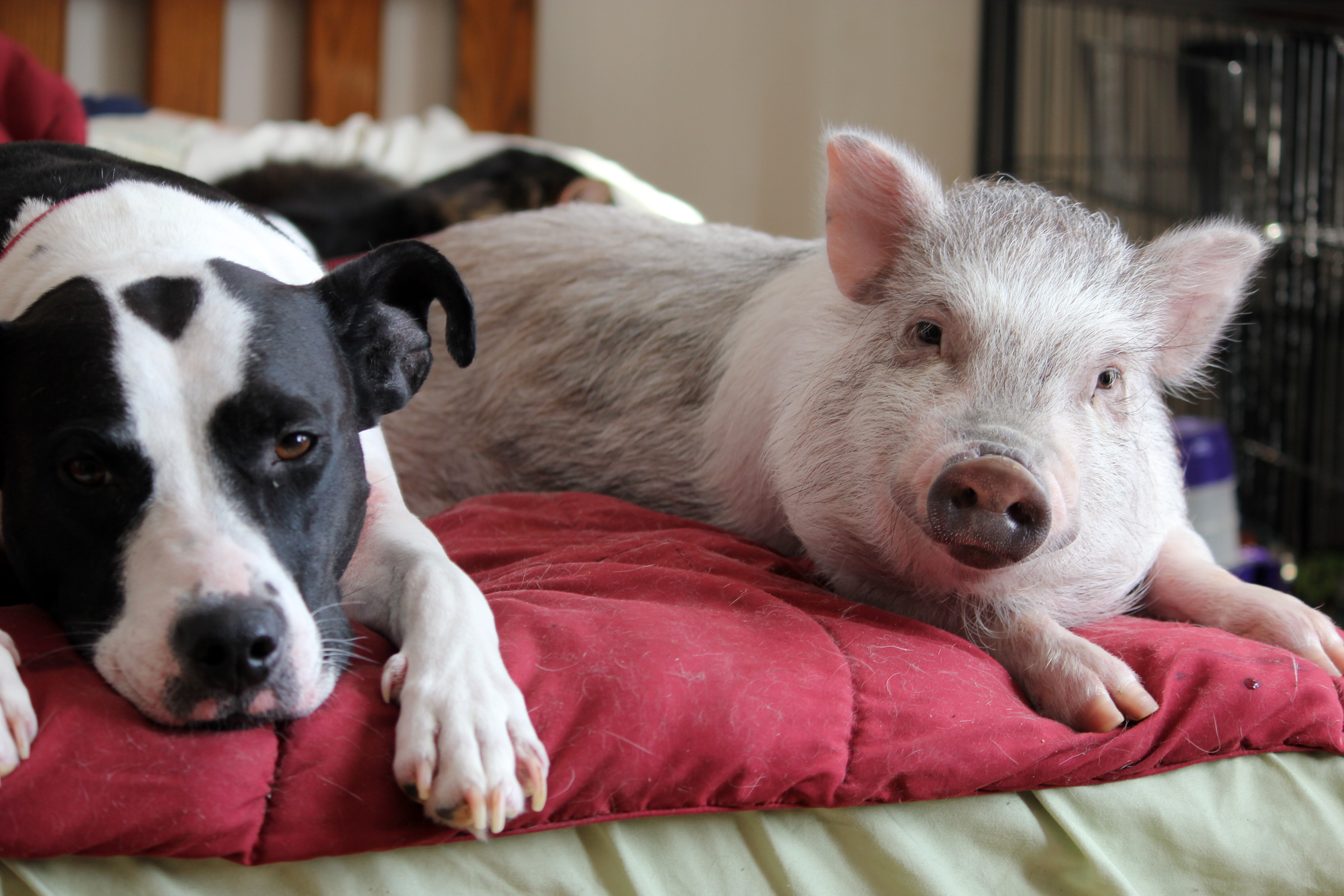
Even Lolly was impressed.

Lolly and Carlton

annerNow, he spends his time making his way around the house. I’m not saying that there aren’t still problems. He has a habit of poking his nose into places it doesn’t belong and he and Bob will likely never be fast friends, but we all have our faults, our own clashes of personality. The bottom line is this: he’s a smart, gentle, comforting being and it shows in any number of ways.

So, he’s here to stay. This is home.

We call him Carlton.

c2

Beatrice gets a hoof trim

There are two pot-bellied pigs that live with us here on The Quarry Farm Nature Preserve and Conservation Farm. Neither began their lives here, but this is where they will stay. Soon Beatrice and Gertie will be joined by Alphonse, Bob Barker, Grits and Greta, four pot-bellies that found themselves without a home after a cruelty and neglect seizure by a nearby humane organization.

While this video may make you laugh a little, we hope it also makes you think long and hard about the care that smart, inquisitive, stubborn and vocal pot-bellied pigs require in order to live in harmony. Indeed, keep that in mind whenever you adopt. Anything.

On the other hand, piggies are a joy when you are prepared to welcome them into your life.