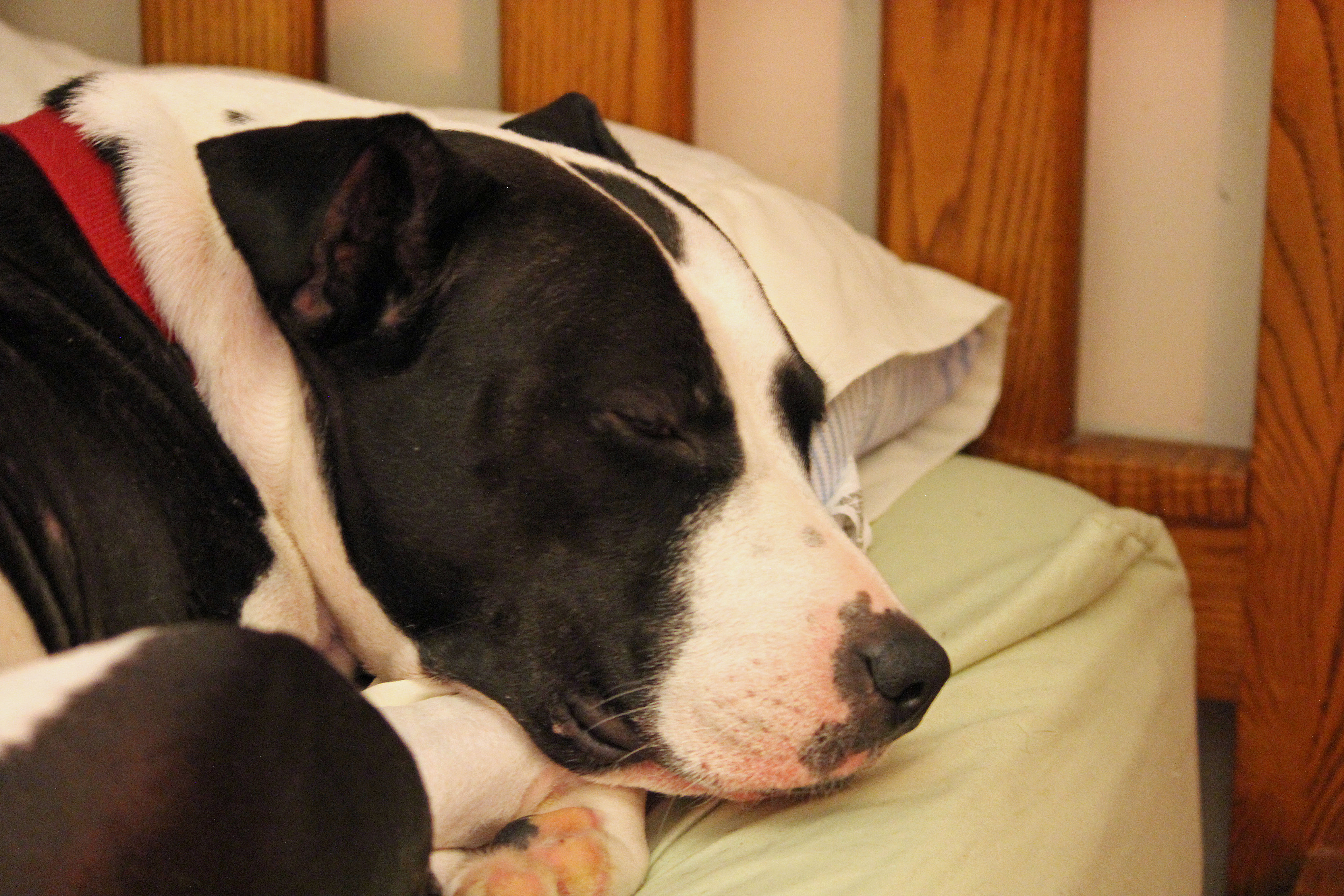
Turkeys woke us up Monday morning, woke us up to at least a couple of inches of new snow.
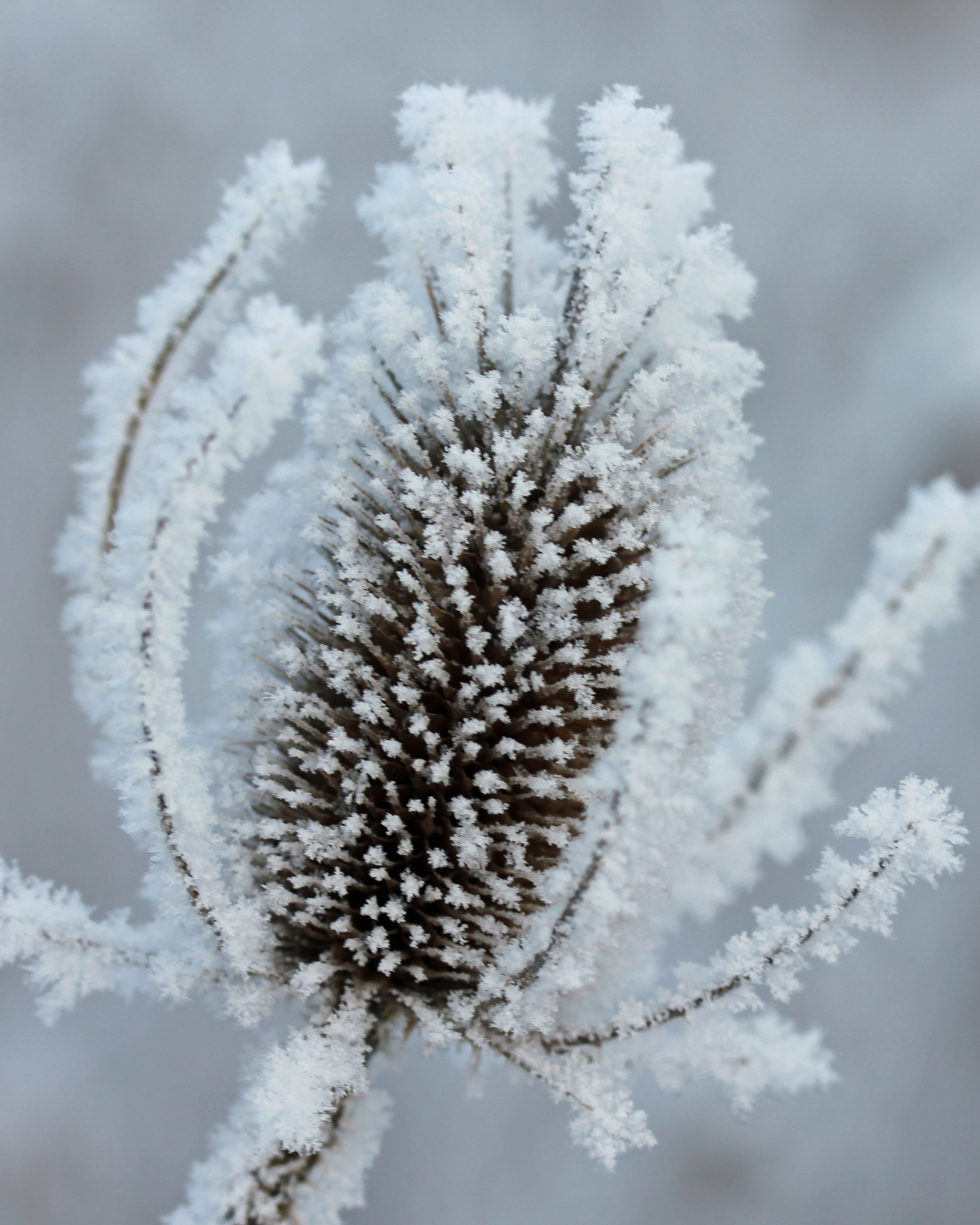
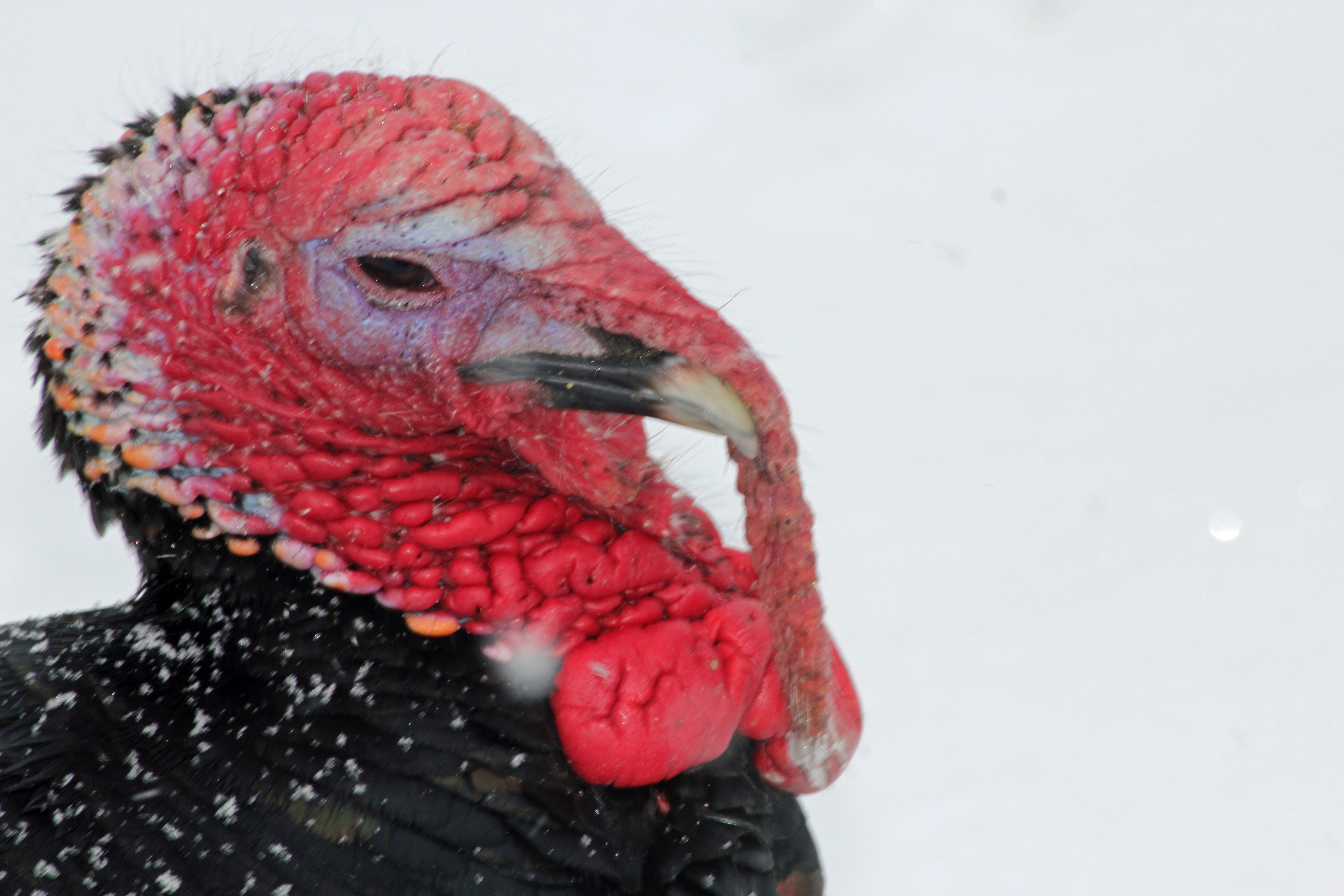
 Not this turkey. This is Inigo, one of the domestic bronze turkeys who live here in the residential neighborhood of The Quarry Farm. And not the turkeys pictured first. Well, probably not them, at any rate. It could be, I suppose; they’re representative of the wild turkeys that live here, but probably not, as that photograph’s at least two years old, possibly four. While turkeys in the wild are known to live to the ripe old age of 14 years, the average lifespan is only three. So, possible, but not probable.
 More likely, it was this one, though it’s a poor likeness. Him and his friends, no doubt. He made himself known late this evening, pacing back and forth along the fence line that separates the sanctuary from the preserve, the domestic from the wild, chortling to himself or to a hen on the other side of the fence. I crept out with the idea of getting a good photograph. He’d have none of that, though, and took to wing.
But back to yesterday morning.

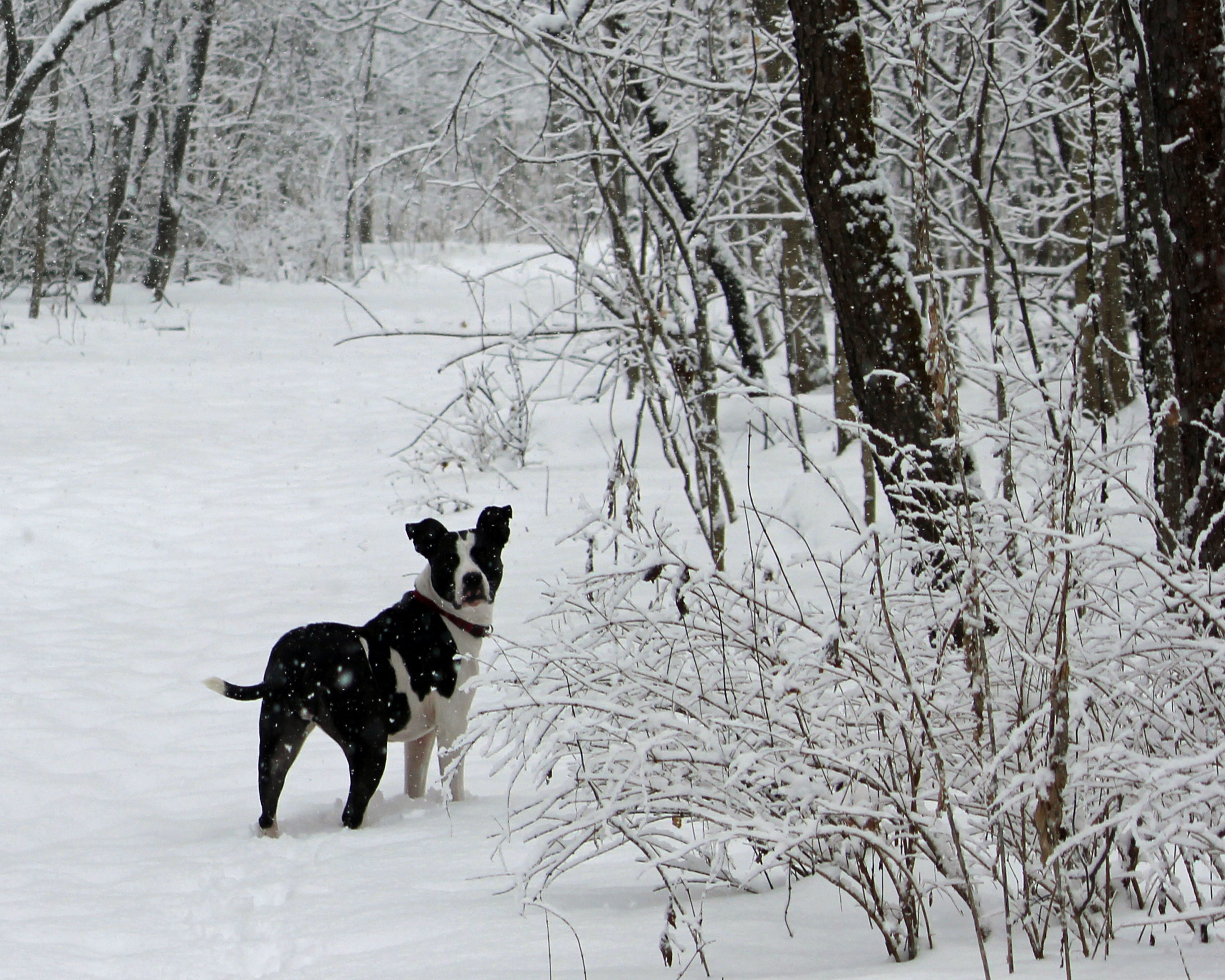
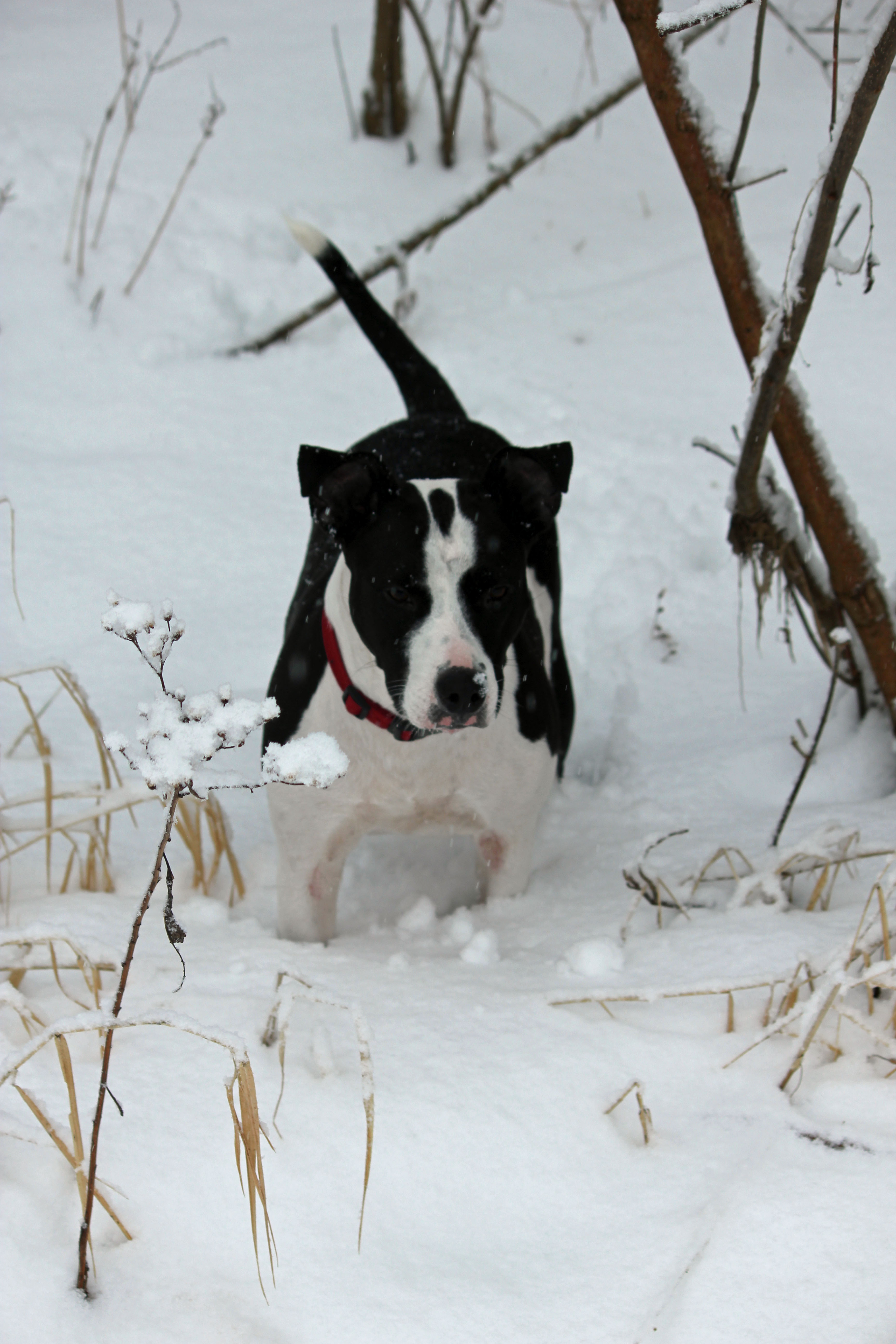
Outside the house, through the doors and windows, there was a whole lot of white. All that new snow made Lolly twitchy. For her, it was like a clean canvas to a painter, an empty page to a writer; she just had to go out and make her mark.
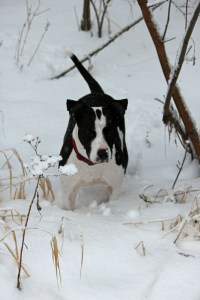 Monday morning’s walk was very much like Sunday’s, though there weren’t as many tracks readily visible as the day before. The new snow had covered the old and there weren’t nearly enough intrepid explorers out and about before Lolly and I got there. We did see some eastern cottontail rabbit tracks and what we assume are fox tracks; at least, that is how they appear to us. Lolly almost first thing scared up an eastern fox squirrel; scared it right up a series of consecutively larger trees, in fact, until it settled in a big, old sycamore that sits just up and off the path. Lolly must carry herself with a certain amount of menace, because that squirrel left the better part of its hedge-apple breakfast behind. If that squirrel only knew, it would have blown a raspberry and kept right on breaking its fast. Off we went, then, along the path some more and across the bridge and skirting the edge of the quarry, covered in a blanket of white with hardly a mark on it. Just the tracks of that rabbit I mentioned earlier. We could hear the occasional bird, but they were keeping their heads down; down and tucked under a wing, most likely, out of the snow.

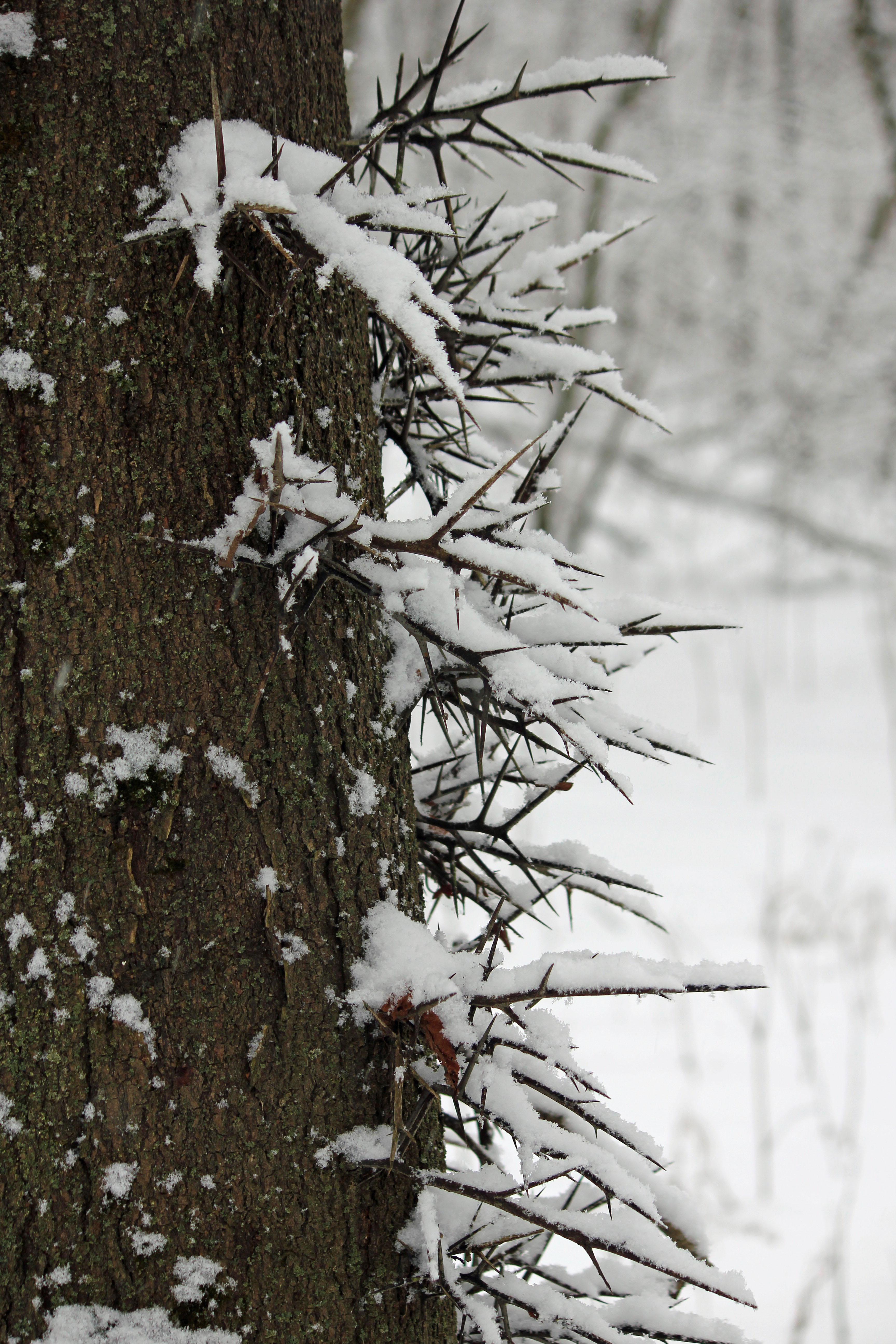
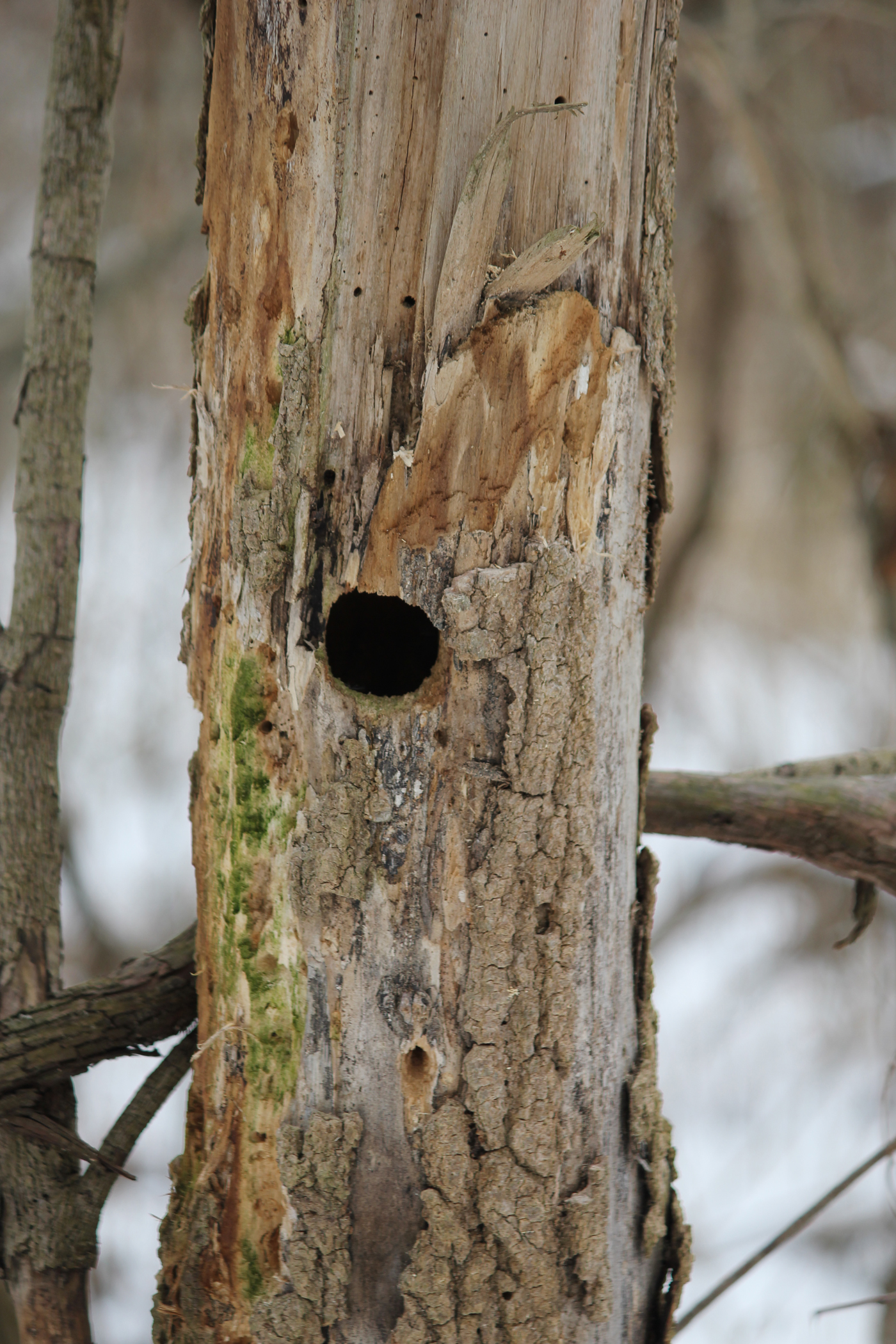
 The big back field was as quiet as the quarry and we passed through without seeing much of anything. Rounding back, we took to the path that leads down into what some locals refer to as Coburn’s Bottom. We saw a downy woodpecker or two and signs of them in some still-standing dead trees. The thorns on the honey locust trees (Gleditsia triacanthos) were softened with snow, though you’d sooner want to kiss a porcupine than hug a honey locust; the wild ones, anyway.
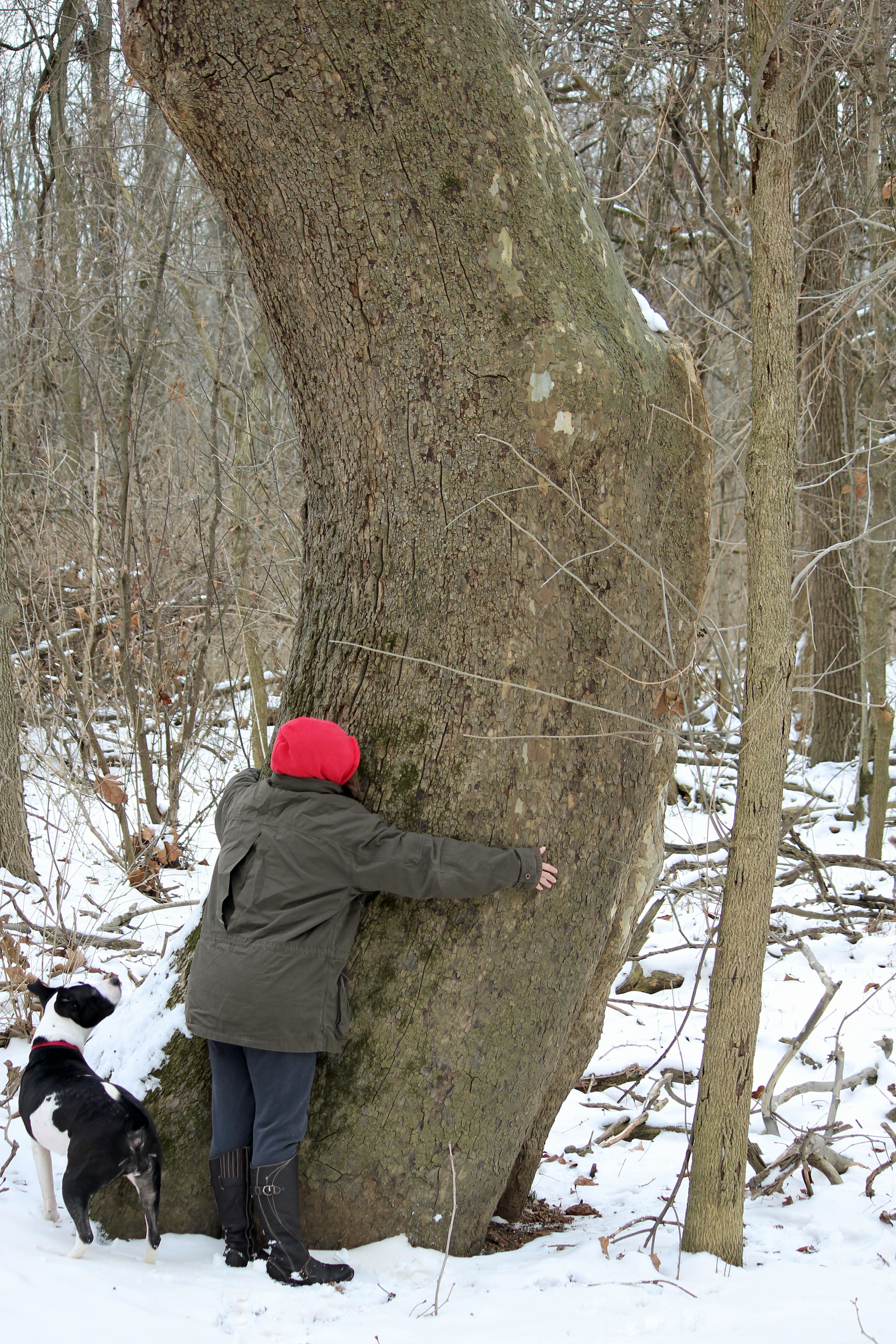
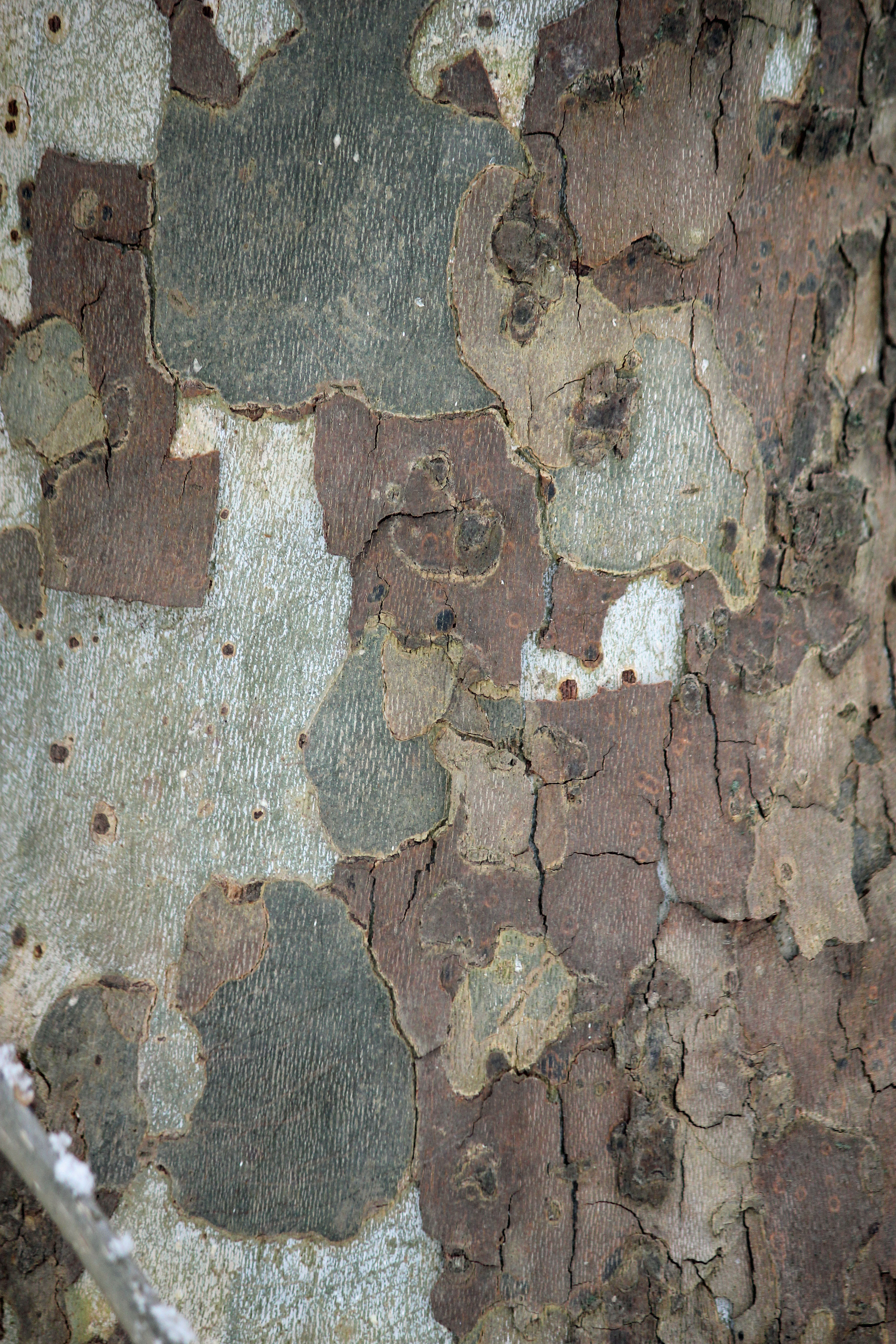
 A little farther on and we came to a magnificent old gentleman of a tree; a huge and stately American sycamore that Anne calls by the name of Old Man Sycamore. There are any number of American sycamores (Platanas occidentalis) growing within the riparian areas of The Quarry, and we’re pleased to have them. The trunk and branches are of a mottled color, with reddish brown, pale gray, light green and olive shades of bark setting side by side in irregular patches. This is because the bark of the sycamore isn’t as rigid as the bark of other trees and sloughs off in patches, leaving a pattern created by different layers of bark. A hardwood, sycamores have been used for furniture, siding and even the creation of musical instruments. Because they’re so hardy, they do well in urban and suburban settings, and they do grow quite large; four foot in diameter is common and 70 to 100 feet tall isn’t unusual. Their canopies are welcome on hot summer days and even their stripped branches in winter offer a good deal of shelter from the elements.

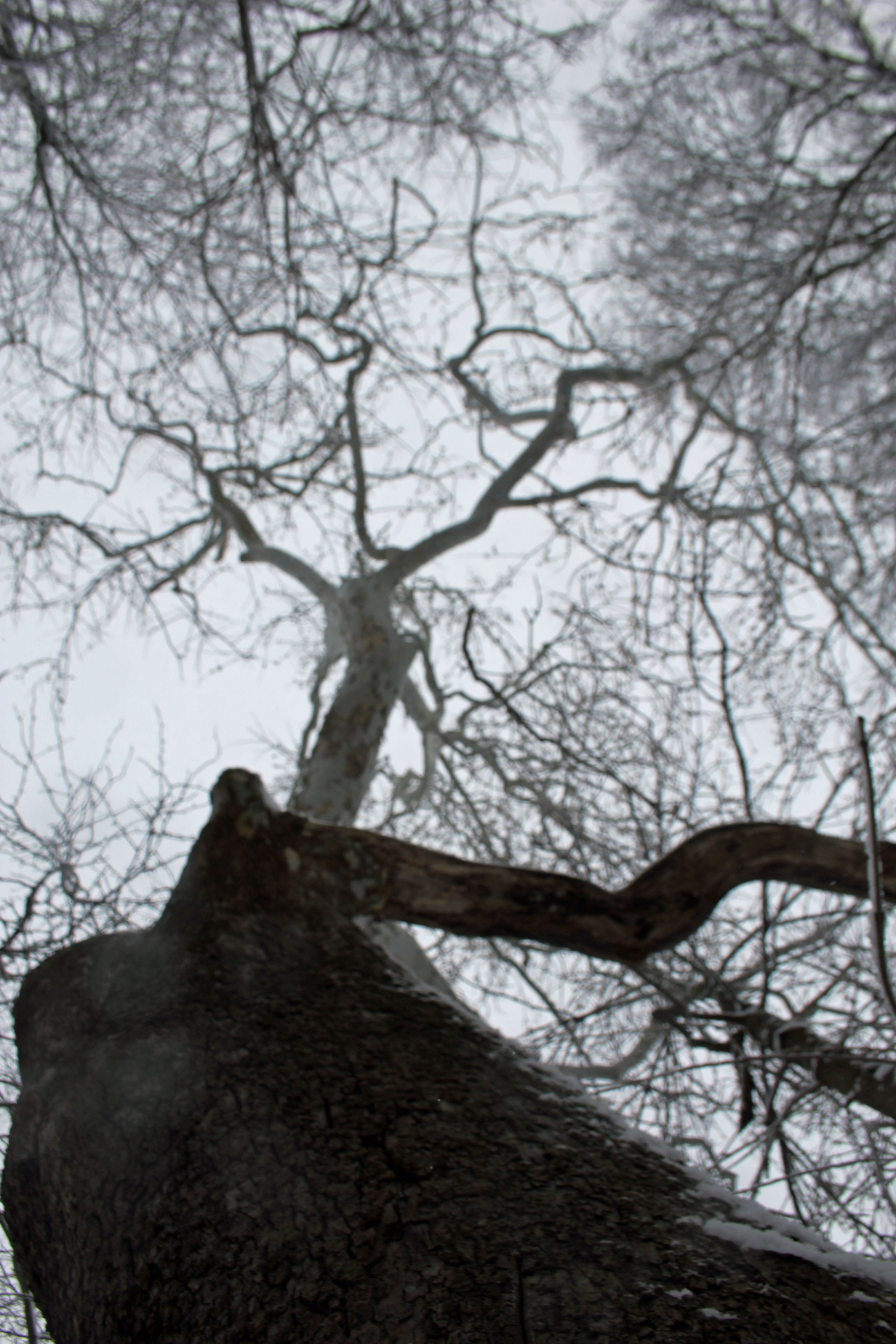
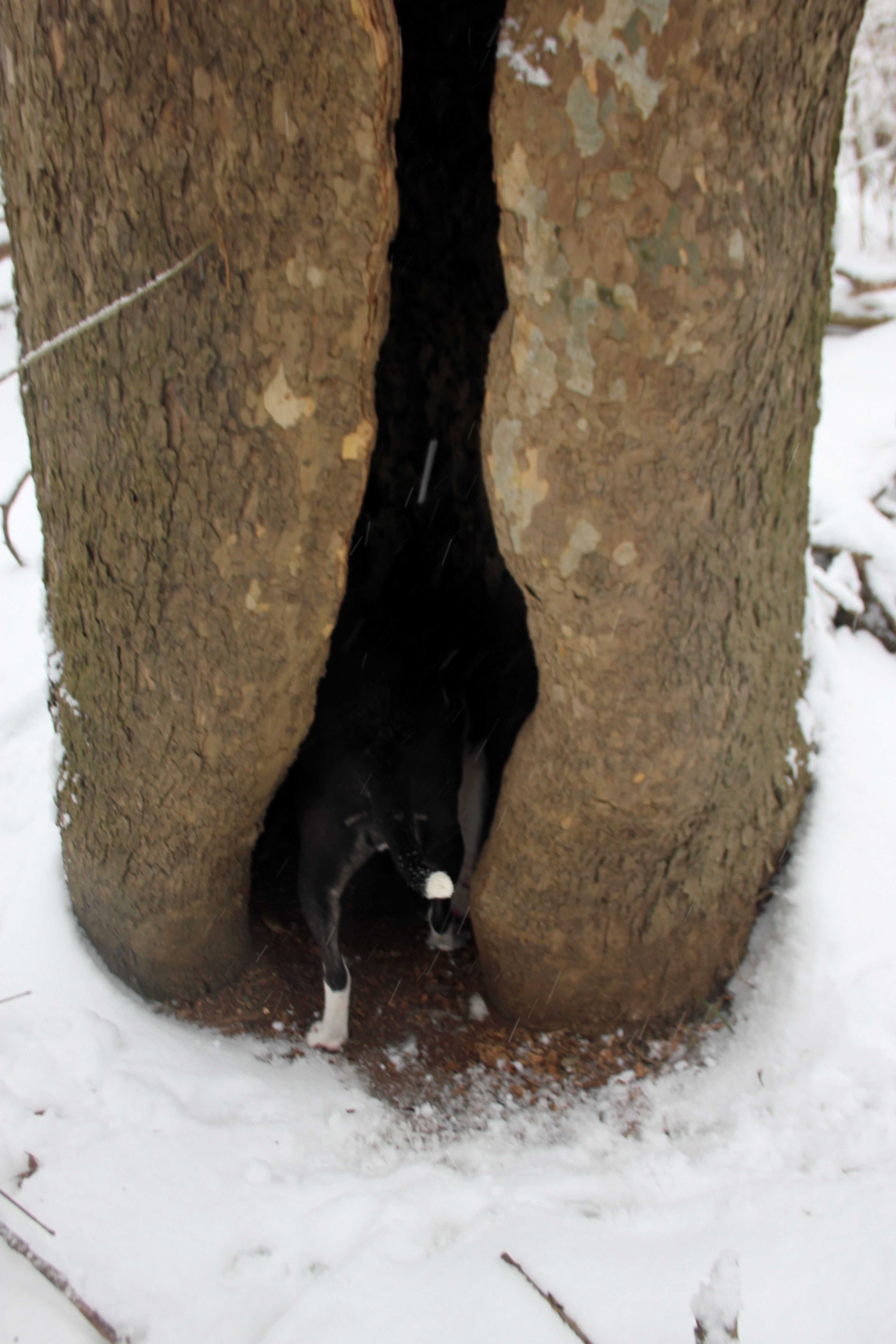
 As for Old Man Sycamore, he’s a good four and a half feet in diameter and fifty feet high. That he’s had to work to get to sunlight is apparent. His trunk has a great bit of a bow to it where he worked his way past a rock, another tree that has long since passed or some other unknown obstacle, and his trunk bears a wide rent in the southern side that opens out into a wide cavity. Lolly just couldn’t keep her nose out of it…then her shoulders. Finally, all but her tail was snug inside.
There’s a nice swale near the Old Man that’s formed by the run-off from the vernal pools down into Cranberry Run and we took advantage of it to walk out onto the stream. Lolly and I followed the Little Cranberry for quite a ways, though every time the ice cracked or popped, Lolly hopped and scurried forward and away. Eventually, though, we made it back to the ford without much incident and out and back up to the house.
And so ended a nice morning walk in the woods, with Lolly curled up on our bed, licking the warmth back into her feet and me easing back with a hot cup of Earl Grey.




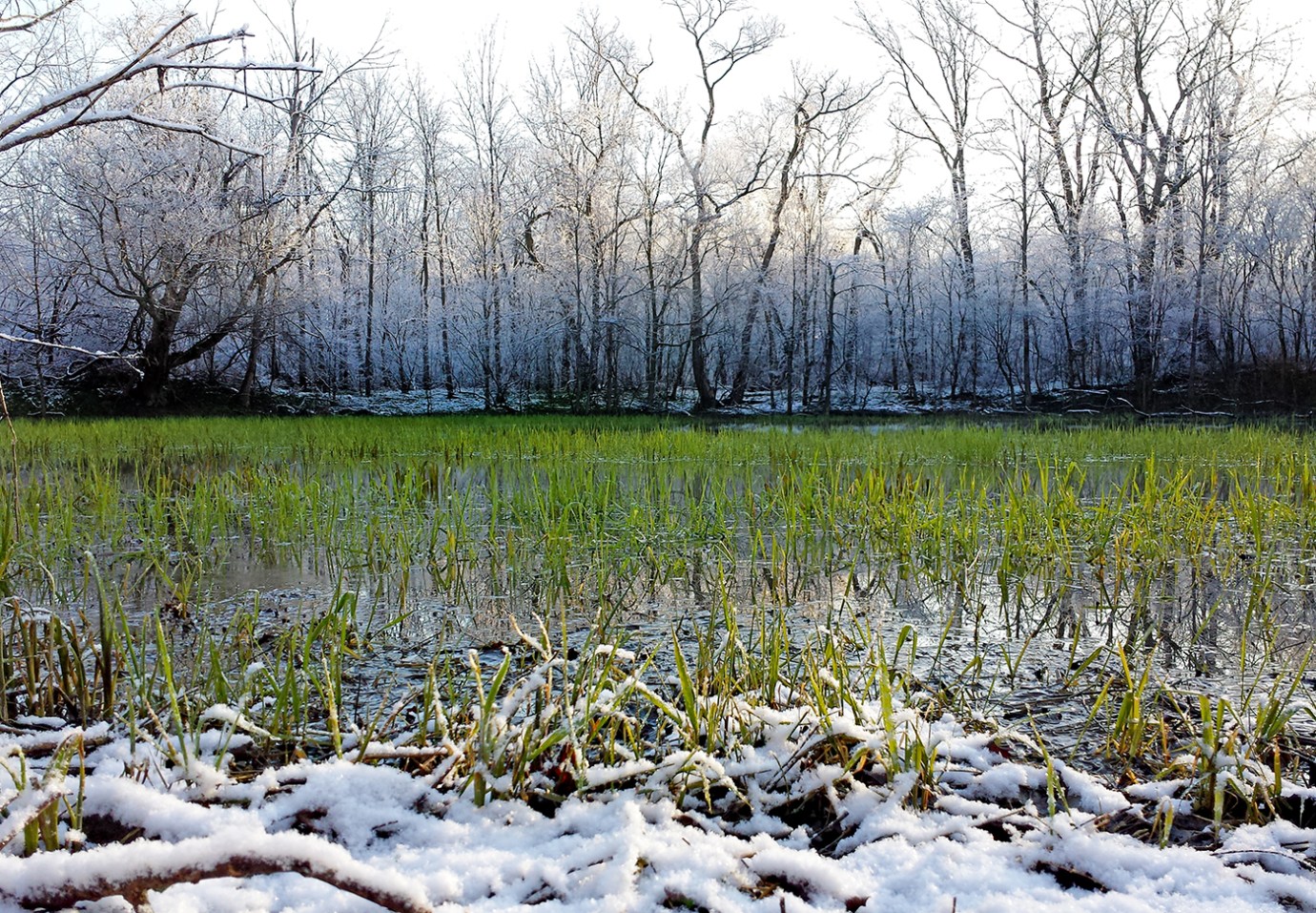

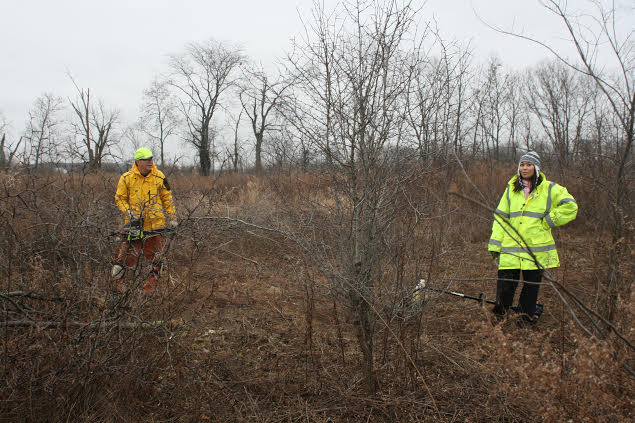
 In the cold shadows of the nature preserve, the colors are still blue, gray and purple. I cross the footbridge, going where a raccoon has recently come. Blue flag shoots and water grasses rise from wetlands, brilliant green contrasts to the white that coats the trees on the high bank and the land bridge between the old stone quarry and Cranberry Run. Thanks to Paul Nusbaum, the land bridge is clear of bush honeysuckle. This will provide a living lab for school groups to discover the differences between wetlands and running streams.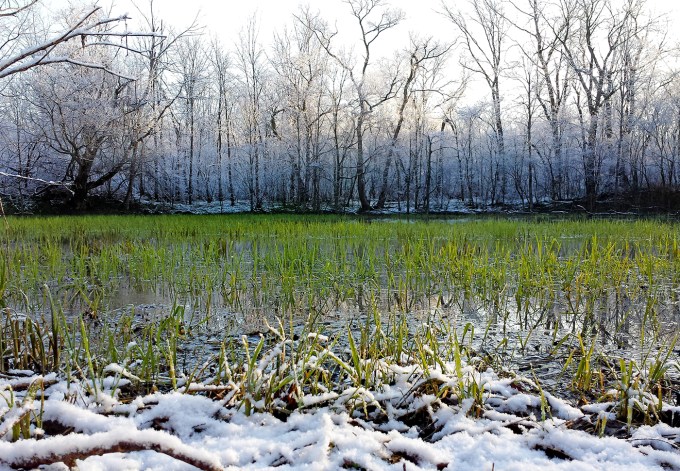


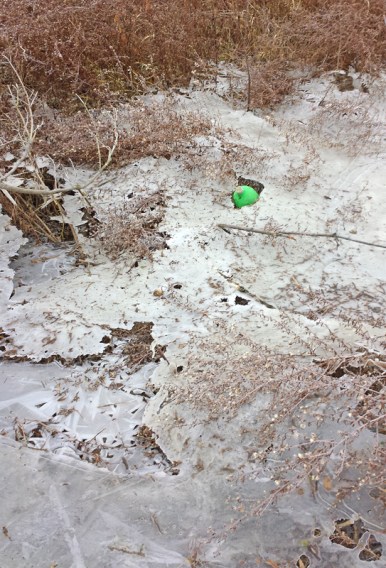

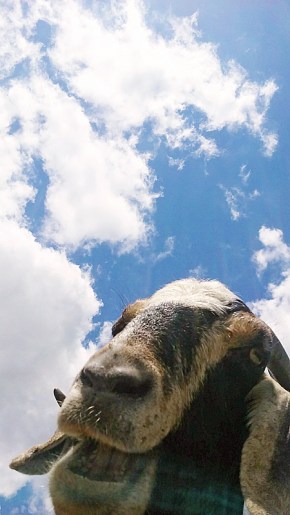 Steve is wrestling with Mister Bill in the cool of the evening. This has become the routine this week after the temperatures fell out of the upper 80s and into the 60s by dusk. Bill scampers up the ramp and down the steps to mock charge. Steve holds the giant goat’s horns–lightly so as not to challenge–and Bill tosses his head and off he goes again on his gangly giraffe legs.

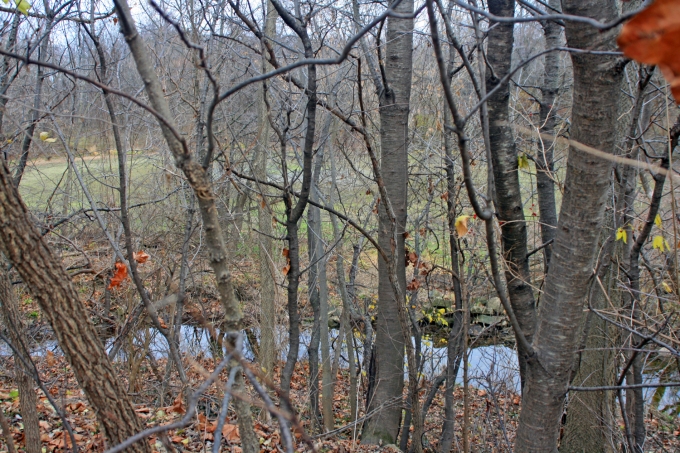 There’s a lot of history in and around The Quarry Farm, not to mention up the road.
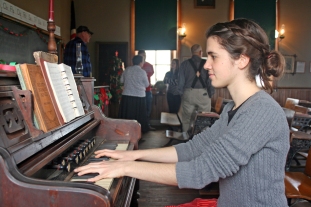 North on the same road and across Riley Creek is Bridenbaugh Schoolhouse. Imagine a one-room schoolhouse on every country mile and you will picture the education system as it once was in rural Ohio. In 1997, Dale Bridenbaugh restored the schoolhouse on his farm to what could have been its original 1889 glory.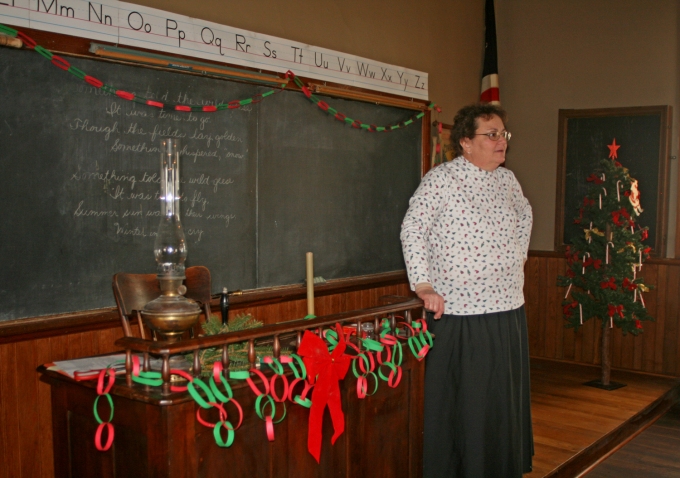
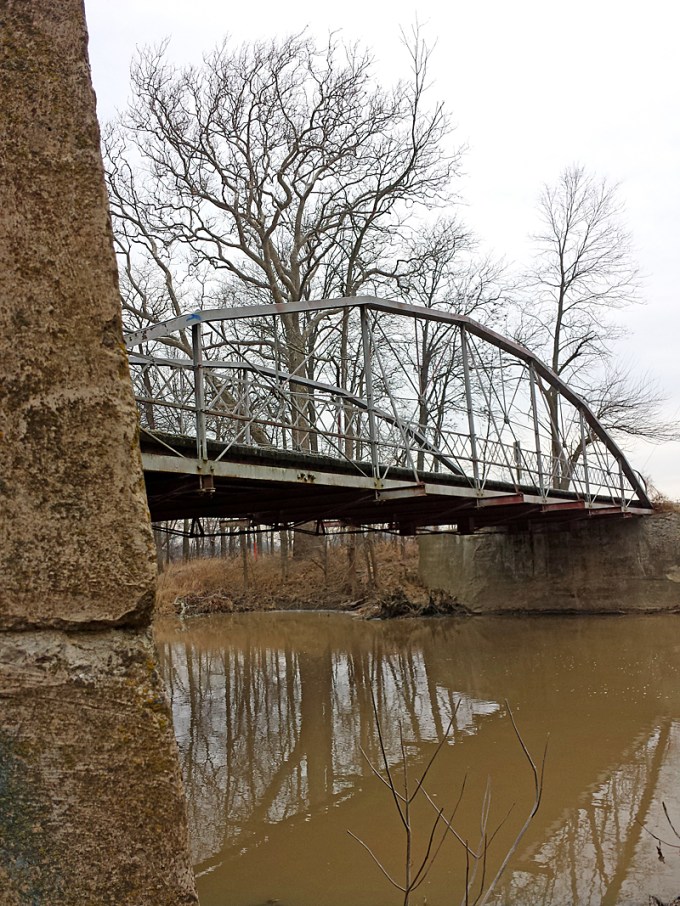
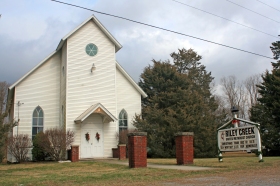 Cross the Riley on the c. 1876 M-6 bridge, itself listed in the Historic American Engineer Record as an example of “Morrison’s Patent Wrought Iron Arch Truss Bridge,” travel about a mile and a half north on 7L and sit in the stillness and peace of Riley Creek United Methodist Church. The church was founded in 1850 and is still active in one large, lofted room. Sun and moonlight filter through etched and stain-glass windows to pool on handmade wooden pews. The long upright-backed benches glow with the hand polish and years of congregational sitting, but the names of former youth break the smooth surfaces here and there.
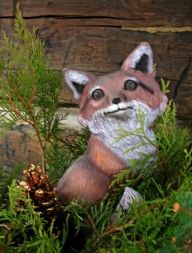
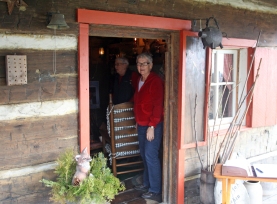 Saturday broke records for December warmth and, although we could use some rain or snow to soften the dry bed of the quarry, the weather was perfect for the first Old Time Riley Creek Christmas Tour. All of the above were stops on the route. All were decorated for the holidays, most as they may have been long ago. Riley and Pleasant Township saw plenty of driving tourists as a result. One of the visitors was Pandora’s Dr. Darrell Garmon. He walked up the path through the Red Fox Cabin gardens and introduced himself as Dr. Garmon and as the person who poses as Sea Captain James Riley.
 Next door, Carlton, Beatrice and the other potbellies, a speckling of chickens and Johnny Goose gathered at the farm animal sanctuary fence corner closest to the hubbub. Lucy’s foghorn bray paused more than one conversation. Two tourists left the cabin and stopped at the gate where the turkeys were on full display. Buddy took issue with the attention the boys were getting, so he grabbed a mouthful of tail feathers, spit them out and smiled. True story – the couple took a photo and promised to share it with us.