
The article below (how appropriate, considering the subject, don’t you think?) appears in the latest issue of The Quarry Farm Newsletter. Download your copy by clicking on the cover to the right.
Not long ago after autumn rains had softened the baked lawn around Red Fox Cabin, little volcano-shaped mounds erupted here and there, heralding the arrival of moles. Moles don’t alarm me because their burrowing hasn’t seemed to cause lasting damage in the garden. However, convinced that the humans on a nature preserve should be knowledgeable about their fellow inhabitants, I went online to learn more about moles.
Members of the family Talpidae, moles are found in most parts of North America, Europe and Asia. Seven species live in the U.S., the Eastern Mole being common in our region. They are 5 to 7 inches long, larger than shrews and voles. Males are called boars; females are sows; and the young are pups. A group is a labor (perhaps because they are so industrious?). They are carnivores, not herbivores. Their diet is primarily earthworms, grubs, and the occasional mouse, but not our garden plants. Once they have eaten the food in one area, they move on.
Moles are amazingly adapted to a subterranean life. They can distinguish light from dark but not colors. Although their eyesight is dim, their hearing and sense of smell are so acute that they can detect prey through many inches of soil. They have large, powerful, outward-pointing front legs and claws for pushing dirt aside as they “swim” through soft, moist earth. They are able to disappear from rare ventures to the surface in 10 seconds flat, to tunnel 1 foot in 3 minutes and to run through established tunnels at about 80 feet per minute. Their short, velvety fur is non-directional, causing little resistance as they move rapidly through tunnels. (Their soft, dense pelts once supported a thriving moleskin industry.) Moles can survive in their low-oxygen environment underground because they can tolerate the high carbon dioxide levels in the exhaled air they reuse. Their saliva paralyzes prey, which they store, still alive, in underground “larders” for future consumption. Moles can detect, capture, and eat their prey faster than the human eye can follow.
Moles make 2 types of tunnels: feeding runways close to the surface where the molehills pop up and permanent tunnels about a foot or more underground, leading to a nest about 2 feet deep. What might look like the work of many moles can be the product of one busy tunneler.
Moles are solitary and highly territorial, coming together only to mate. Breeding season runs from February to May. From 2 to 5 pups are born after a 1-month gestation, and leave the nest 30 to 45 days later in search of their own territories. Although tunnels may overlap, moles avoid each other and will attack and even fight to the death when they meet.
Many online gardening experts write about moles in terms of their being destructive pests that must be eradicated. They suggest many methods of doing so: poisons; traps that choke, spear, slice or confine for removal; buried repellants like broken glass, razor blades, or thorny branches; or natural, more humane repellants like plantings that smell bad to moles (daffodils, alliums, marigolds, castor beans, etc.), castor oil drenches; and reducing lawn watering that could force moles close to the surface.
However, I lean toward a smaller set of gardening experts represented online who believe that moles are more beneficial than destructive. Rather than taking offense at molehills, they point out that moles improve soil by loosening, aerating and fertilizing, and the cones subside quickly. Any soil that has been lifted off roots can be pressed down again with a foot. Moles receive the blame for plant damage caused by chipmunks, mice and voles, and generally receive little credit for destroying lawn grubs. I myself would rather let moles eat pesky soil-dwelling larvae than chase moles out by spreading harmful poisons to kill the grubs. In the view of one expert, Roger Mercer, “Moles aren’t all bad. In fact they’re 99% good.” As a 15th century saying goes: “Do not make a mountain out of a mole hill.”
—The Gardener at The Quarry Farm

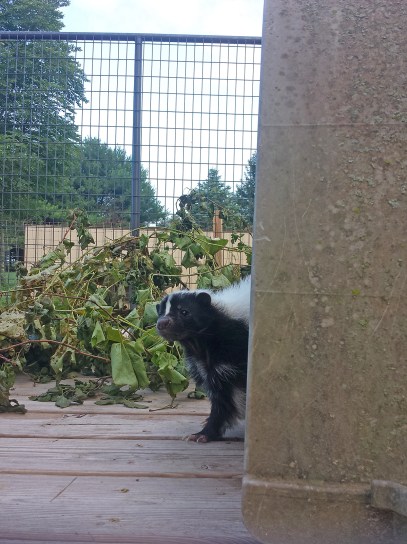 With great sadness, we report the death of Sebastian from a probable stroke in mid-August. No one knows just how old this miniature skunk was, as he was found in a tiny cage in a basement in Northeast Ohio during a home intervention. Estimates are anywhere from four to six years of age.
 Saturday, October 6 at 10 AM – 12 PM
 Thanks to Blanchard River Watershed Partnership for coordination support and to Ted’s Market for supplying water and snacks!
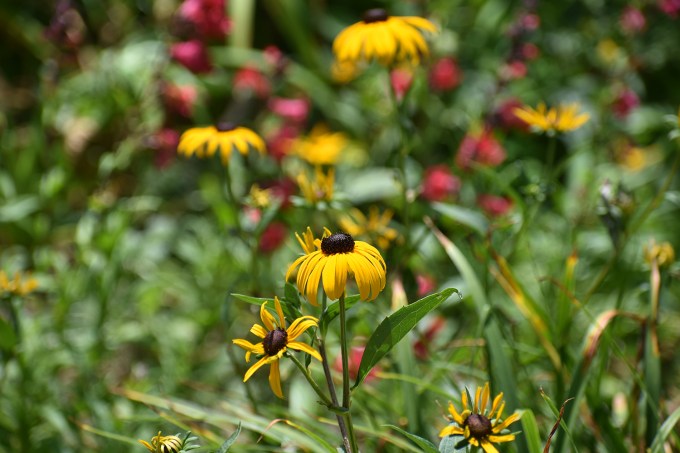 This is a year of dragons. Saddlebags, skimmers, twelve-spots and white tales dive-bomb the farm animal sanctuary yard, plucking mosquitoes before they latch onto exposed skin. It has been stupid-hot of late, enough to keep the dragonflies under cover at mid-day. But in the evening, their wings shimmer position for hovering and steep dives.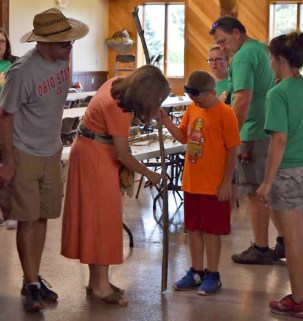

 My ears popped as we climbed out of the Mississippi River Valley and rolled through greening hills and fjords toward Rice County, Minnesota.
 This land that we two-leggers call The Quarry Farm has been in family hands for a long time. I remember walking up the trail toward what we still call ‘The Cut-Off.’ My Uncle Carl led the way. He was a teenager and I was pretty sure he would get us home. This wetland, an oxbow severed by 1950s-era engineers from the free-flow of Cranberry Run, was the outer reaches for me. I had faith that teenage Carl, a grown-up to grade-school me, would know the way back.
 Around the time that Carl and I took that walk, I decided that my mission was to preserve this 50-acre island. I know how lucky I am to have this memory. After adult years of looking for my purpose in life, I realized that my small self was right. I came to my senses in time for my child to create her own memories among the native flowers, trees and cricket frogs that sing of wild spring here. Luckily, My Steven agreed.
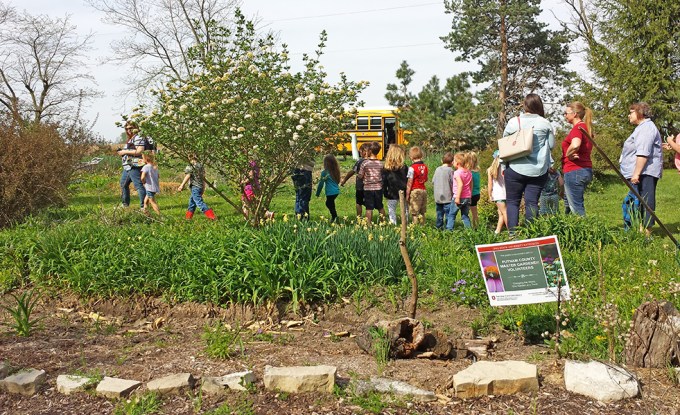
 Last week, we introduced The Quarry Farm to children, teachers and parents from Patrick Henry Preschool. On May 9 and 10, they made lasting leaf shirts from the foliage of blooming buckeye trees. They took a “Smelling Hike” of Red Fox Cabin gardens to enjoy the scents of mint, costmary, and viburnum. They saw the inhabitants of Cranberry Run and were greeted at the farm animal sanctuary gate by pigs Nemo, Carlton and Beatrice.
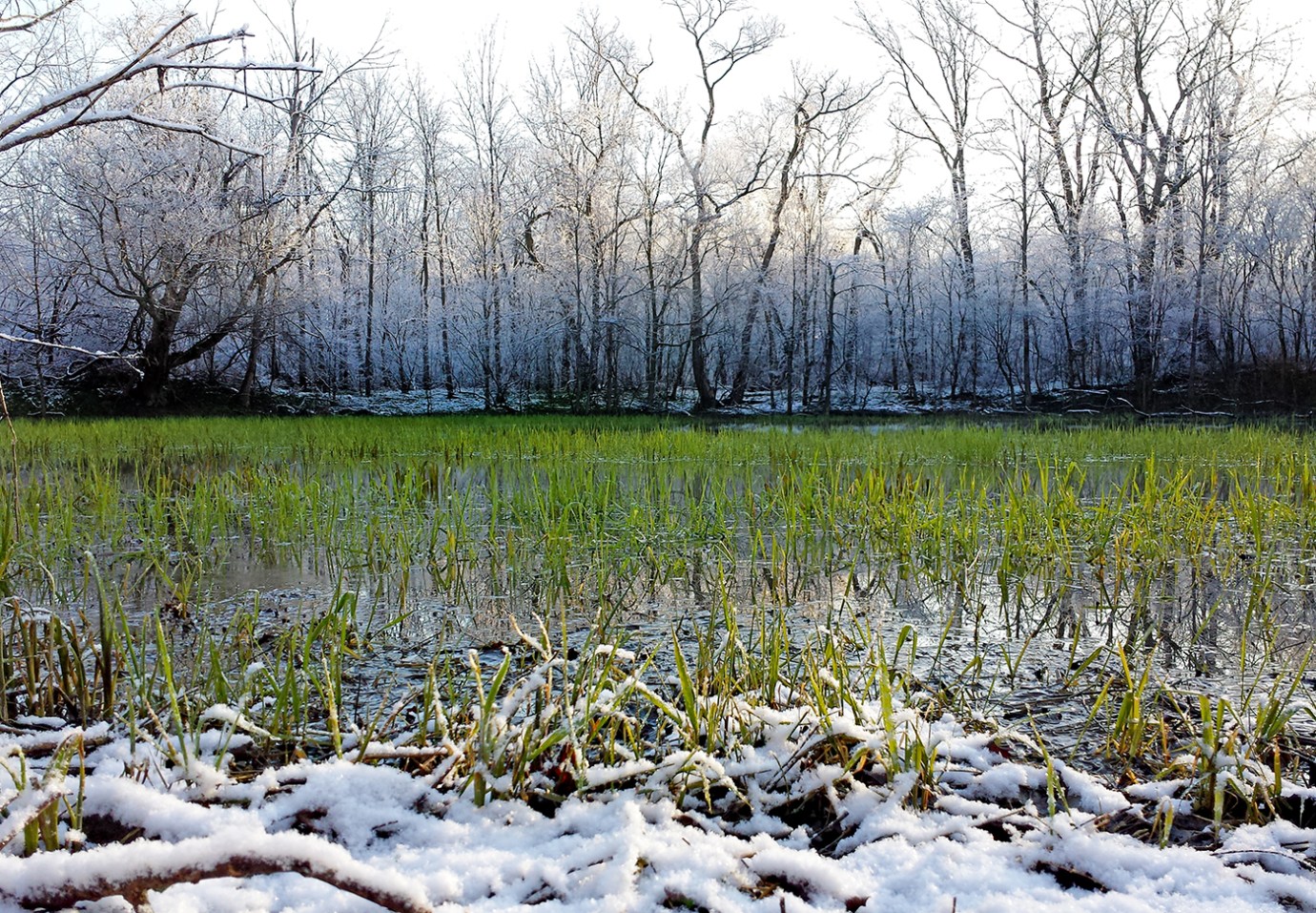

 In the cold shadows of the nature preserve, the colors are still blue, gray and purple. I cross the footbridge, going where a raccoon has recently come. Blue flag shoots and water grasses rise from wetlands, brilliant green contrasts to the white that coats the trees on the high bank and the land bridge between the old stone quarry and Cranberry Run. Thanks to Paul Nusbaum, the land bridge is clear of bush honeysuckle. This will provide a living lab for school groups to discover the differences between wetlands and running streams.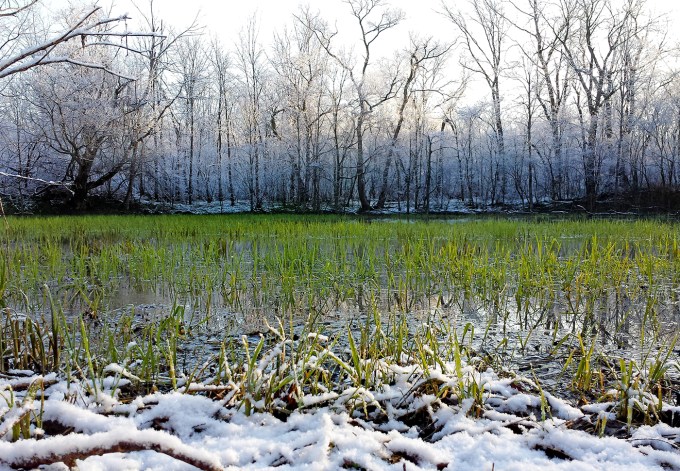
 The Boy Scouts that hiked the trails from 8 to 10 a.m. on February 17 used their ears and eyes to see a variety of woodpeckers. Audio recordings helped us identify other birds back at the shelter house. Overall, the birds we documented this year were different than those listed on past walks. We did see some of the same species but not in the quantities of years past.
 Thrill-seekers here in the Midwest are riding a roller coaster of weather this year. We keep a varied wardrobe at the ready. Some days require five layers across the body to keep fresh water available for chickens, geese, turkeys, pigs, goats and donkeys. Those days require a third arm to cart chopped potatoes, apples, peanuts, and oranges to the wee beasties along with water-filled buckets.
 Up the hill, Wendy spotted a small herd of whitetailed deer, wondering what they ate. She asked if we
  Naturalist Natalie shared her track ID expertise. She led us in a scat spot challenge, too, up the hill in the back field. The wind reached us there in the open grasslands. We looped back down the hill, around the quarry, and back to hot cocoa, chocolate-cherry and sugar cookies.


