
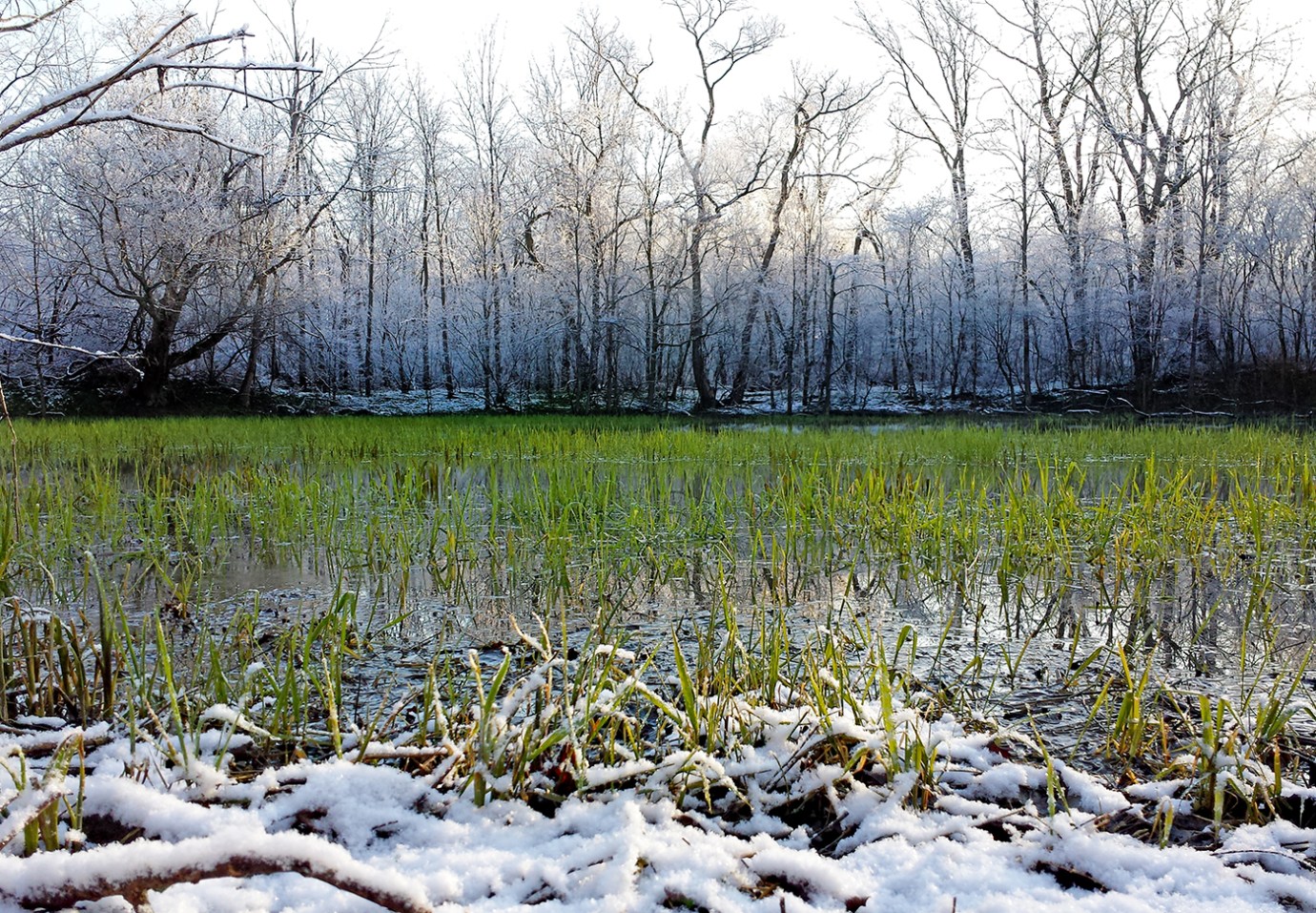
This week’s April morning snow reminded me that the mucks will likely occupy a place on the door mat beside the sandals, probably for a double-digit number of days. The garden hose thawed in 80°F last Friday. Resting water froze again on Saturday. There is a groundhog somewhere who predicts eight more weeks of hauling water buckets.
We grouse about layers of sweaters, vests and coats, socks and boots. We never know what to tell visitors to wear, so we just tell them, “Come prepared for the weather. There will be hot chocolate or lemonade.” Pigs Nemo and Carlton have done their winter worst, rooting three acres of soil so that the pastures resemble a mine field. If this didn’t happen every year, we would despair of the unsightly furrowed ground.
“We’ll never be able to fix this,” commented Steve on the first spring with multiple pigs in the farm animal sanctuary. We stood on the front porch and despaired over upturned soil, bare of green grass and treacherous for foot traffic. A month later, after the first mow, the grass was green and patches of Grandpa Seitz’s bird’s-foot trefoil bloomed on the hillside. The garden was remarkably free of Japanese beetles. We realized that the pigs had feasted on more grubs than shoots. Now we grin and bear the brown ruts, knowing that there will be more than enough thick grass to cut when shorts-and-T weather settles in.
So…this snow. The sky is clear and the forecast predicts a high of 55°F. The barn and shed roofs are beginning to drip. The chickens and turkeys dodge the drops as they breakfast and the geese revel in widening puddles.

 In the cold shadows of the nature preserve, the colors are still blue, gray and purple. I cross the footbridge, going where a raccoon has recently come. Blue flag shoots and water grasses rise from wetlands, brilliant green contrasts to the white that coats the trees on the high bank and the land bridge between the old stone quarry and Cranberry Run. Thanks to Paul Nusbaum, the land bridge is clear of bush honeysuckle. This will provide a living lab for school groups to discover the differences between wetlands and running streams.
Here comes the sun. I’m off to work, away…and it’s alright.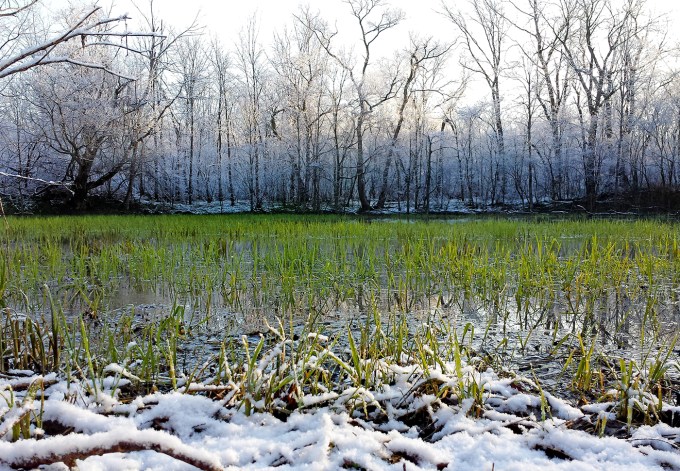
 The Boy Scouts that hiked the trails from 8 to 10 a.m. on February 17 used their ears and eyes to see a variety of woodpeckers. Audio recordings helped us identify other birds back at the shelter house. Overall, the birds we documented this year were different than those listed on past walks. We did see some of the same species but not in the quantities of years past.
 Thrill-seekers here in the Midwest are riding a roller coaster of weather this year. We keep a varied wardrobe at the ready. Some days require five layers across the body to keep fresh water available for chickens, geese, turkeys, pigs, goats and donkeys. Those days require a third arm to cart chopped potatoes, apples, peanuts, and oranges to the wee beasties along with water-filled buckets.
 Up the hill, Wendy spotted a small herd of whitetailed deer, wondering what they ate. She asked if we
  Naturalist Natalie shared her track ID expertise. She led us in a scat spot challenge, too, up the hill in the back field. The wind reached us there in the open grasslands. We looped back down the hill, around the quarry, and back to hot cocoa, chocolate-cherry and sugar cookies.


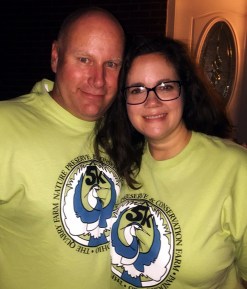
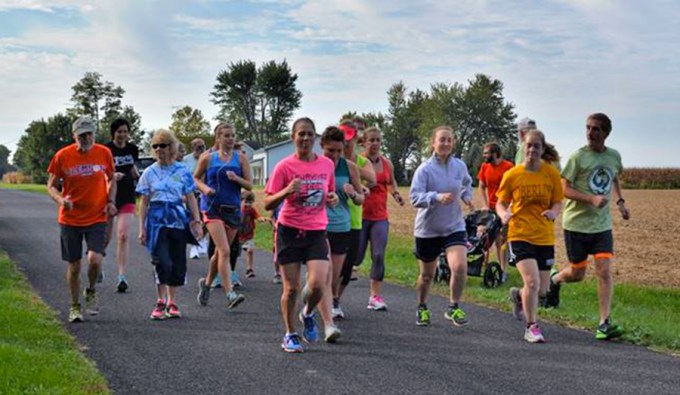 The sun comes late now in Northwest Oho. On October days like today, heavy wet clouds mute sunshine even more. The youngest roosters crow at the very inkling of sunrise, causing more than a little discussion in the henhouse. Last Saturday began gray and sleepy, too, but it didn’t stay that way. Thanks be for that, because the 7th was the second time we held a Quarry Farm 5K walk/run on Roads 7L and M7.
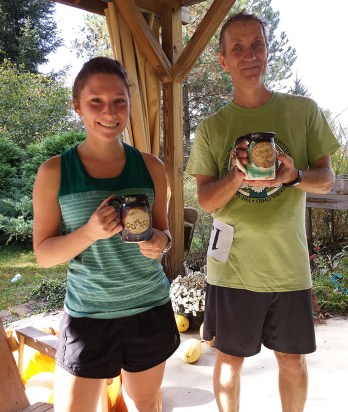 There was water for all, thanks to Ted’s Market, and to Paula Harper for making sure it was distributed at the turnaround and to Phyllis Seitz for passing more bottles out at the finish. Bananas and homemade cookies (oatmeal chocolate chip, cranberry white chocolate, molasses, granola—glutened and without) further refreshed as the event winners received their
 The old stone quarry has changed a lot over 150 years, from not being there at all to a horse-drawn limestone operation, from spring-fed fishing hole to wetland. Black willows and other water-loving trees and plants grow there now. Wood ducks, wild turkeys, owls, squirrels, tree frogs and herons roost high above the banks. They see you before you even know they are there, falling silent or bursting from the branches in a great show of chatter or feathers.
 Last weekend the dogs and I found the tree in pieces. The path is strangely open now. Stick-tights thrive in the open sunlight, laying waste to another pair of shorts and leaving the future of my t-shirt in doubt as well. Thankfully, jewelweed grows nearby to stop the burr itch. I wonder if the wild ginger will move to shade further along the bank.
 A mile northwest of here as the crow flies, family and friends gathered on the Seitz homestead to remember
 During a trip home from university, one of my uncles looked out the kitchen window in time to see Gran hand-feeding a skunk. Two weeks ago, I took Sebastian the Skunk to visit her. Gran would have celebrated 101 years in November, but she was sharp as a tack and delighted in ‘Bastian as well as what we do here.


