 Today is promising to be a hot one, with temperatures in the 90s and a heat index climbing higher. A hawk just flew over with a blackbird in hot pursuit of the raptor’s red tail. Even the birds are feeling it.
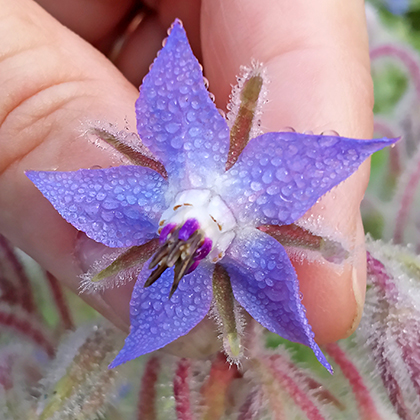
Dewy Borage
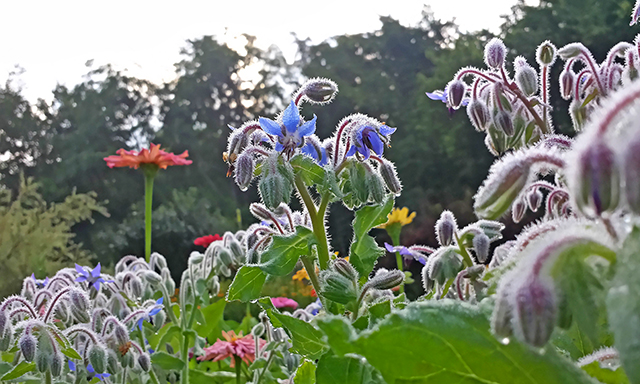
The plants, however, are loving the warmth and light after the heavy rain of last week. They’re positively dripping with joy. Humid fog sits over the soybeans to the west of The Quarry Farm, but the nature preserve is rich, deep, rainforest green, with dabs of brilliance. Seems the best kind of morning to inspect those colors more closely.
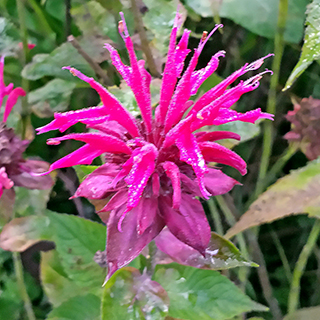
The gardens at Red Fox Cabin are blooming. The whites, pale yellows, pinks, and violets of spring are gone, replaced by a full spectrum in every shape and size. Bumblebees navigate the lavender and bee balm, hovering just long enough that I think I can get a picture. When I bring up the photo, I see they’ve led me on.
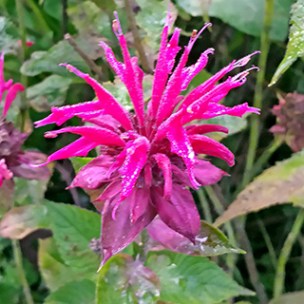
Bee Balm
The pollinators are back this year. Populations are smaller, but they are here. The big fuzzy bumblers share space with other wild bees, wasps, flies, butterflies, and moths.
And the dragonflies are glorious.
It’s a little too early in the day for them to be up and about, but Steve is seeing species that he’s not familiar with. The books and apps are out and he is getting to know new odonata in 2017. Storms are in the forecast for later this week. He will be on the front porch watching the dragonflies surge before the storm, hunting for insects ahead of the rain.
The two pipevine trellises are heavy with green. Two days ago, The Quarry Farm Gardener noticed tiny black crawlies on the southwest tower. They grew, expanding with the humidity and tasty leaves, as pipevine swallowtail caterpillars do. We missed them during the past two years. The cropduster that flies low of late is a concern. The news is that gypsy moth treatments are underway.
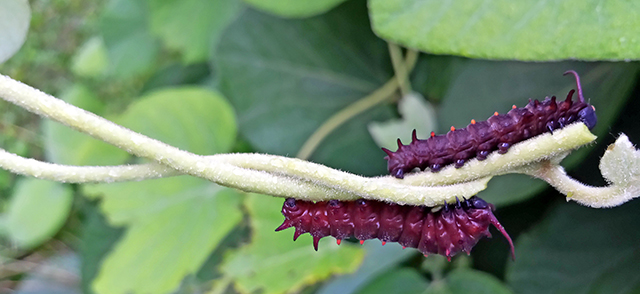
Pipevine Swallowtail Caterpillars
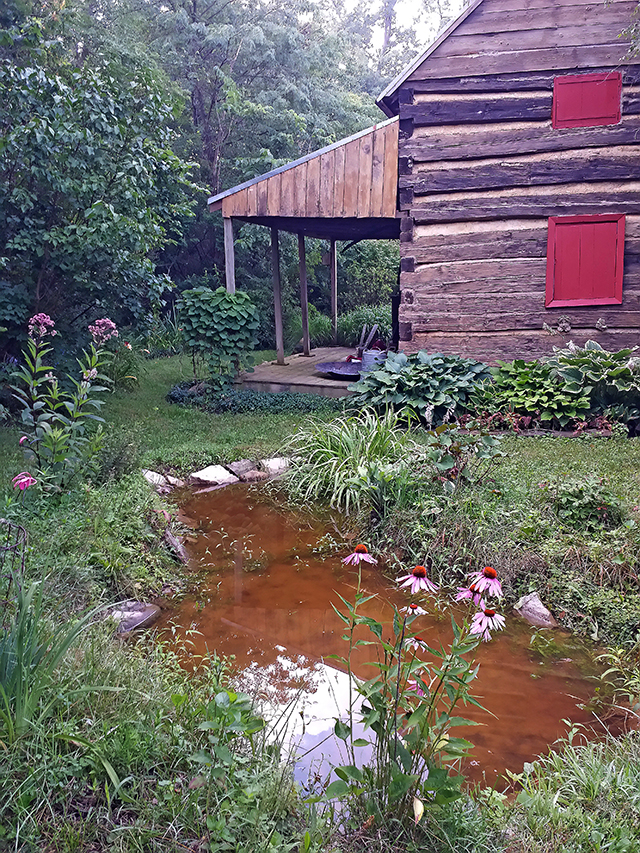
The raingarden is doing a fine job drawing water away from the cabin and housing leopard frogs. A wheelbarrow supports its own garden, spilling a fragrant shower that doesn’t quite make landfall.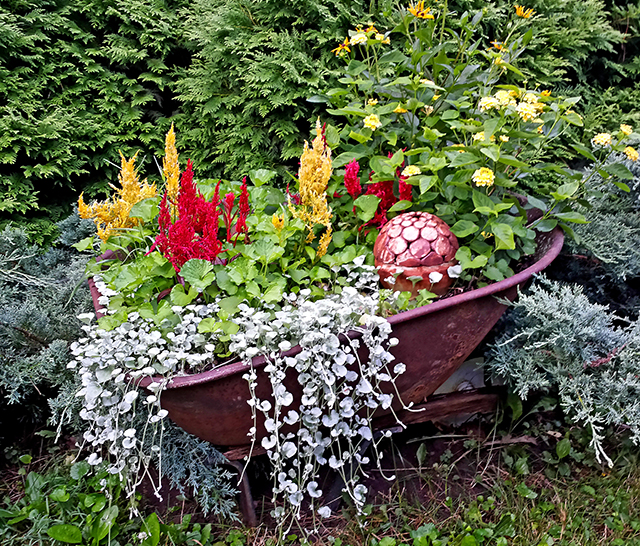

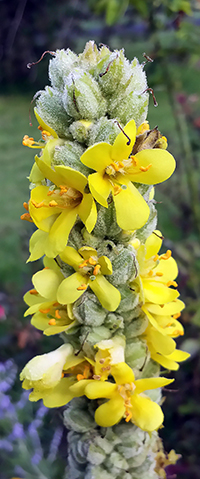
Common Mullein
 Mullein reaches for the sky here and there. The flannel leaves of common mullein were used as lamp wicks–since the time of the Romans for torches–as well as toilet paper. The leaves were once placed inside of shoes to provided both warmth and softness. Mullein isn’t native to North America, but local insects are attracted by the flower’s honey-like scent.
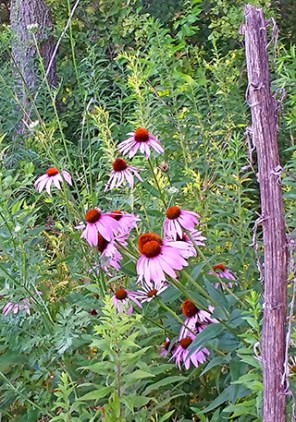
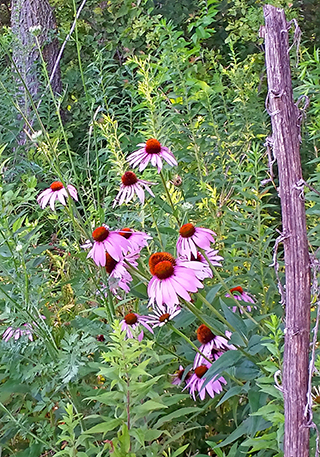
I’ve looped back to my car; my ride to pay the piper. If you balance a coffee in one hand, it’s possible to snap a photo. This last mid-week catch: coneflowers above the nature preserve, leaning toward the place I want to be.



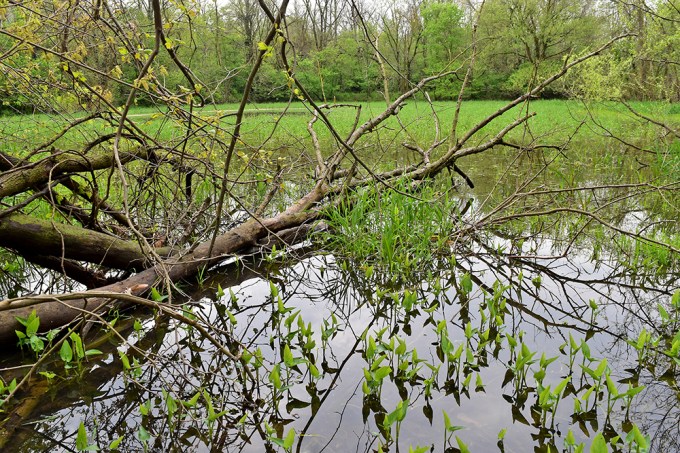
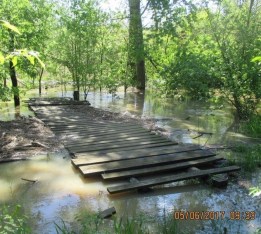 Two weeks ago, heavy rain flooded the quarry. Kayakers paddled through the preserve, weaving through trees well above the Run’s banks. The footbridge floated, held fast by heavy chains, thanks to
  absent
  The week before that, Steve came back to the house with a bucket of fairy shrimp in quarry water. I love to watch these tool in healthy circles, especially since their presence tells me that the wetlands are doing such fine work sponging sediment and impurities in the floodplain. The pools did such a great job that the bucket also contained a salamander larva with waving spaniel-ear-gills, and a predaceous diving beetle nymph.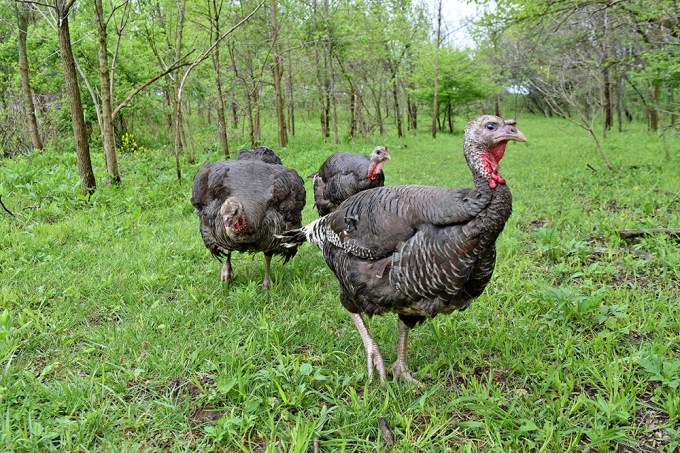
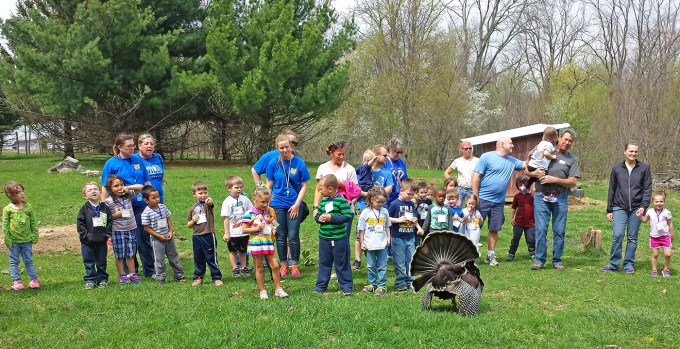 You know that tingling excitement you get when you try something on for the first time, especially when it fits and what looks back at you in the mirror looks pretty good? Yeah, you know. That’s kind of what last week felt like.
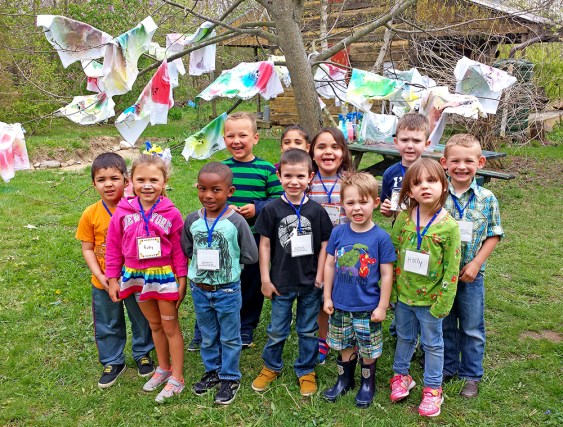 On Sunday, we fortified ourselves with chocolate and other Easter basket contents. From Monday to Thursday, 218 Findlay preschool students, their teachers, parents and bus drivers made lasting-leaf t-shirts and followed the Cranberry Run Trail to meet the farm animal sanctuary residents before making the bus ride back to Hancock County. The mornings were cool and afternoons exceedingly warm, but Miracle Max the Bronze Turkey was always the gate greeter for every group even if the other animals dove for cover.

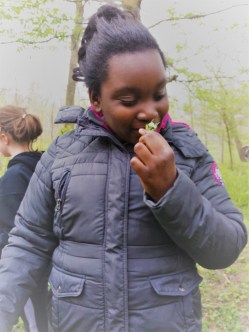
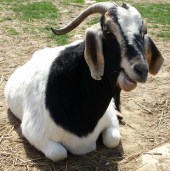 Today we rest. So does Mister Bill. Looking in the mirror, or at the photos and videos on our cells, and through the perspectives captured by others who shared the stage of the day, we’ll still keep raising our hands.


 This Great Backyard Bird Count weekend is unusual in more ways than one. To begin with, this is the first in which I wore shorts outside.
 Today is Day 3 in the 19th year that the Cornell Lab of Ornithology and National Audubon Society have coordinated this international weekend of documenting birds. It’s a four-day snapshot of what birds are where. Some years, a few days after the count is over, I see a bird that wasn’t on our checklist and think, “I wish that had been here last week.” But that’s the point; as long as the species made someone’s checklist somewhere, all is well for now.