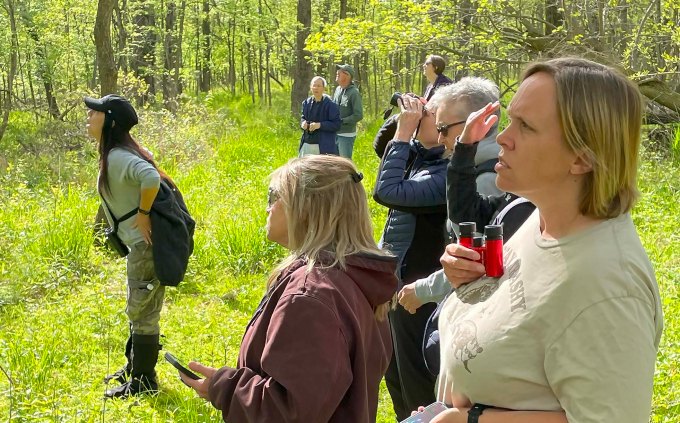
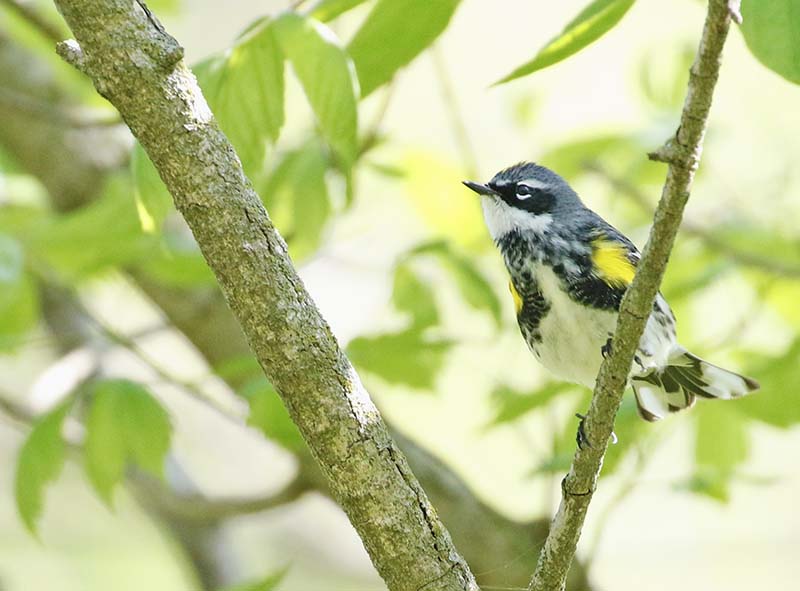
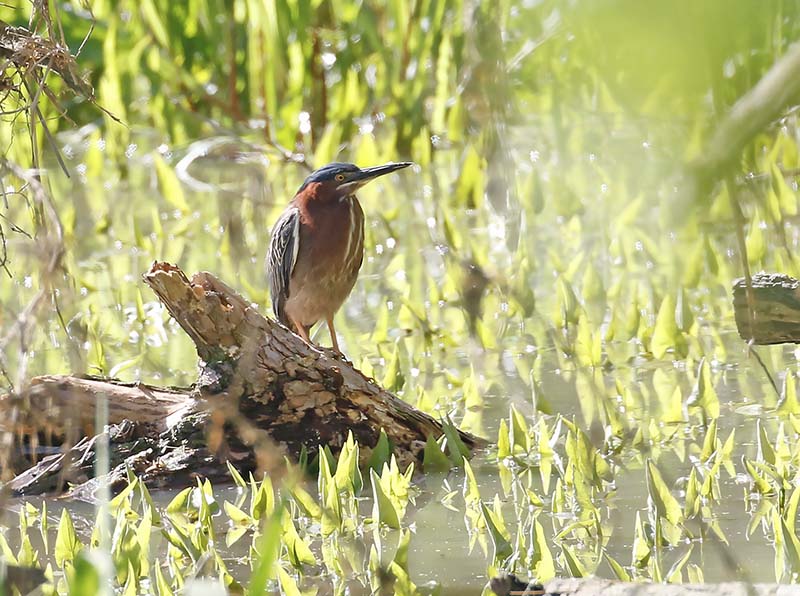
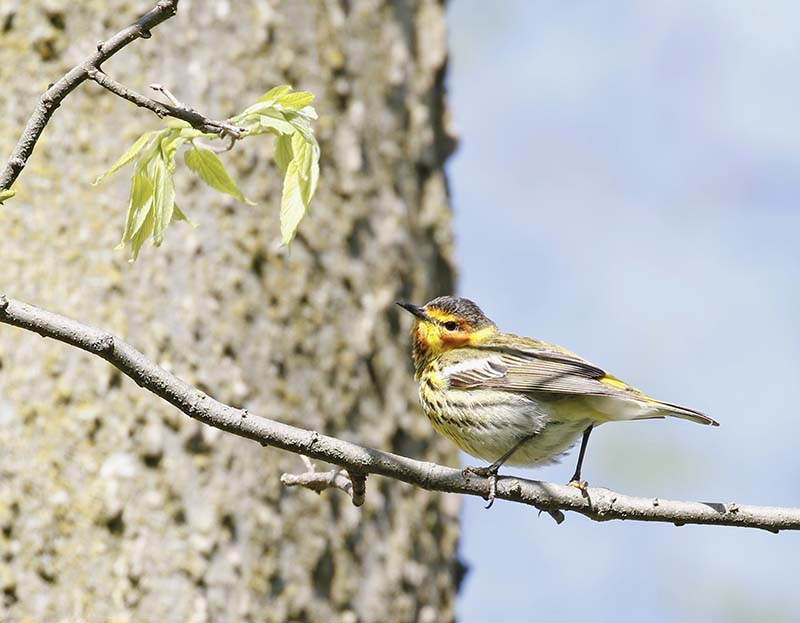
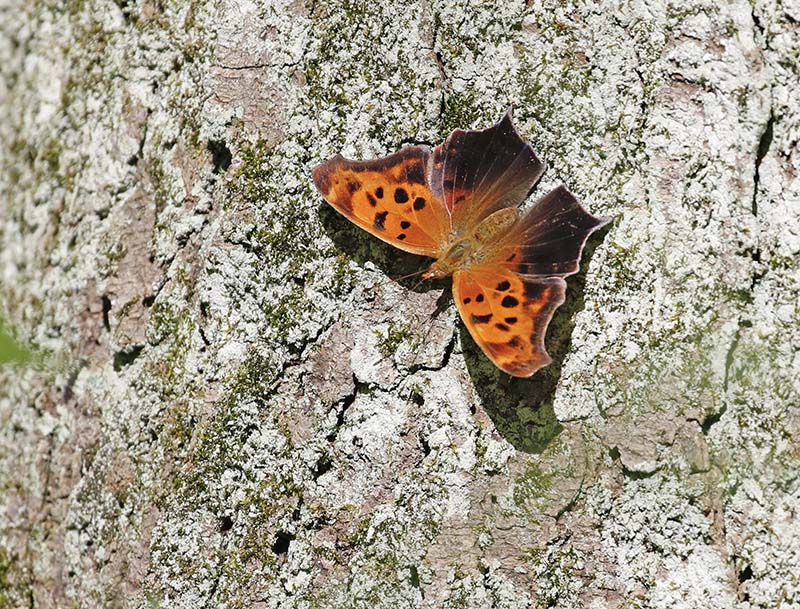
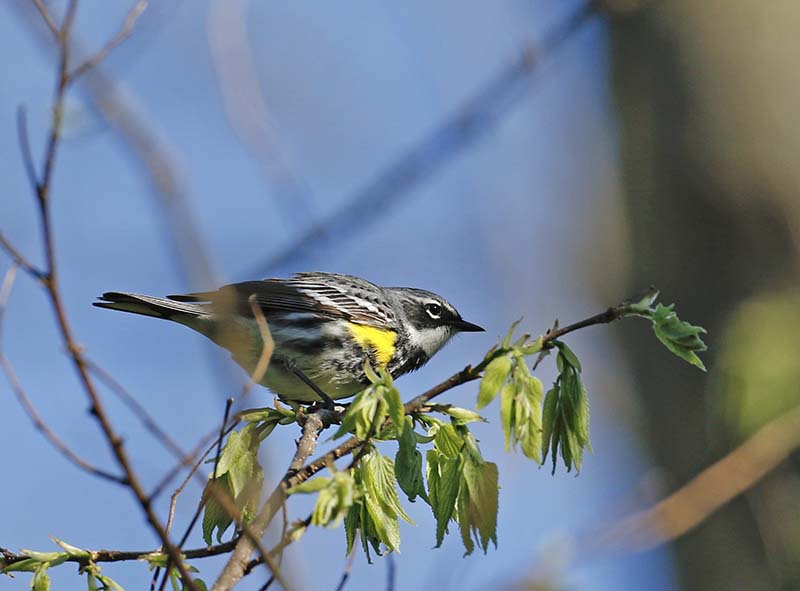
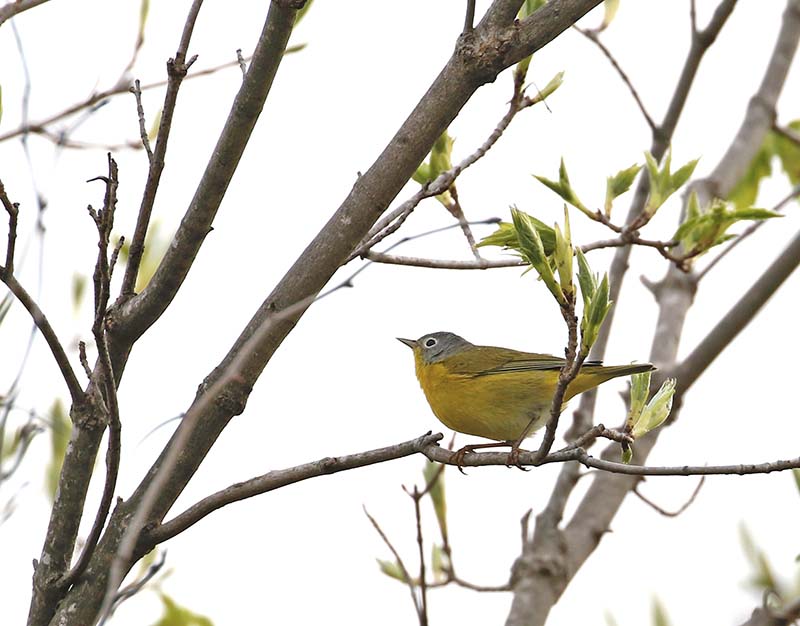
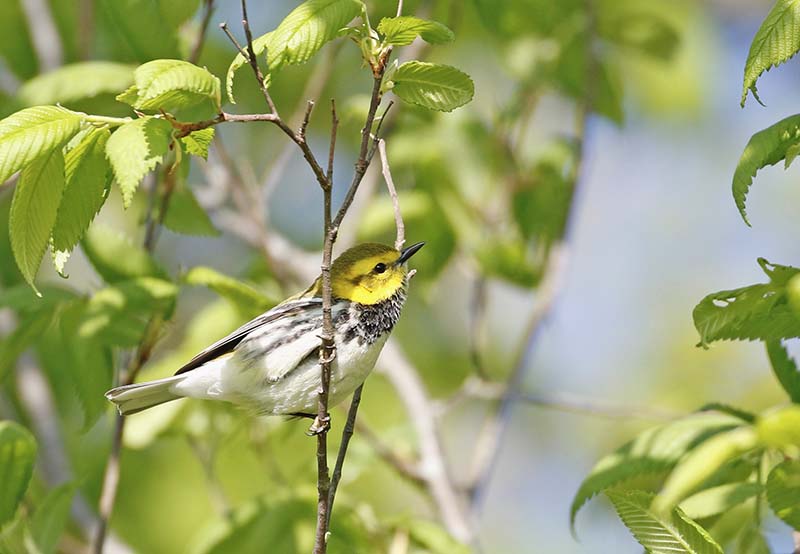
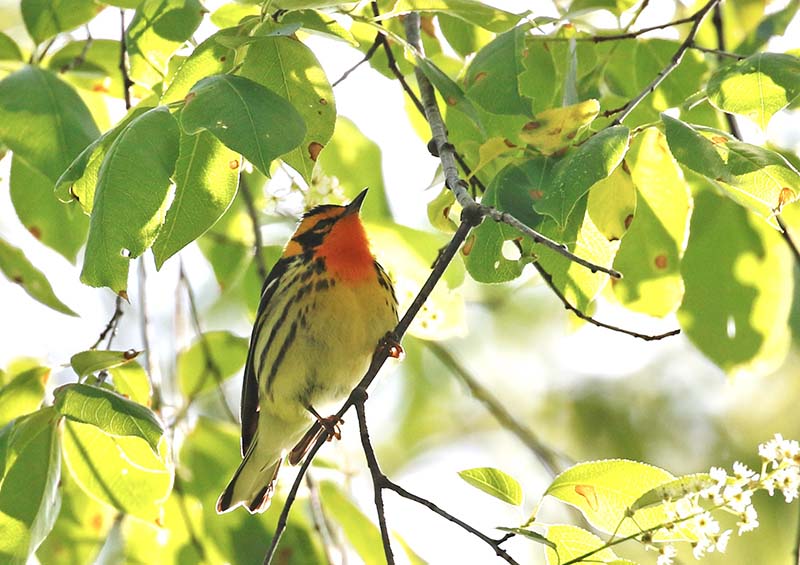
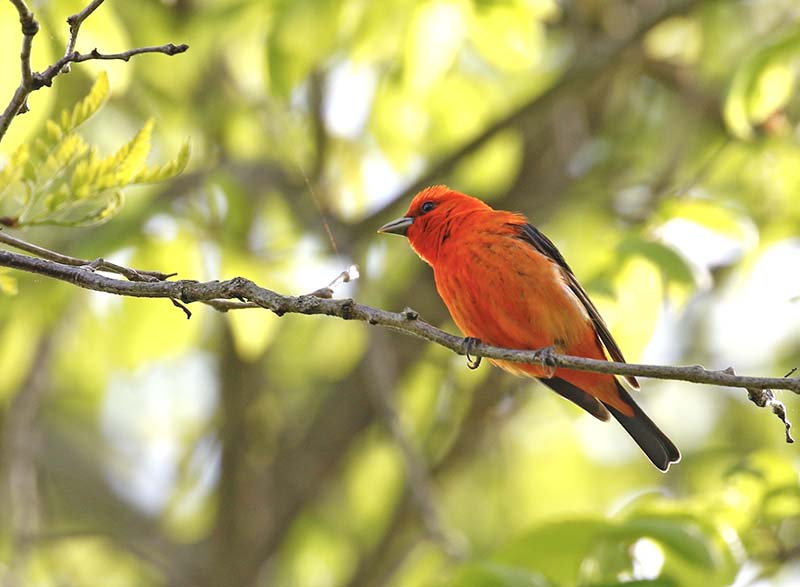
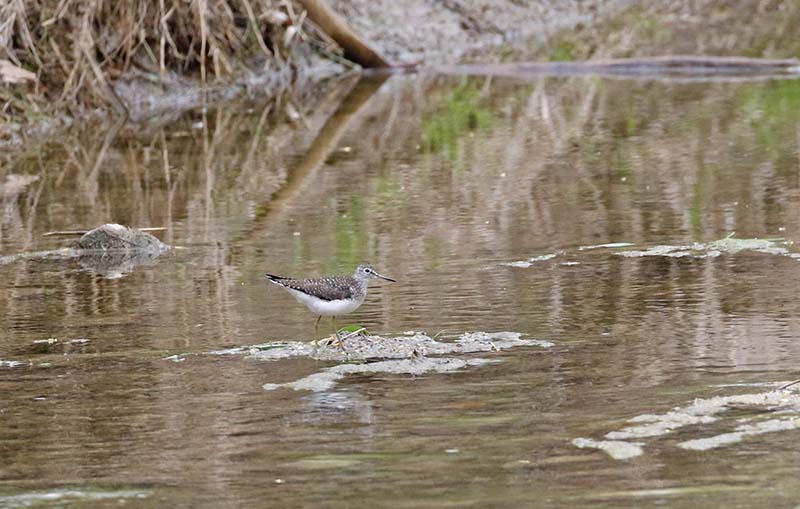
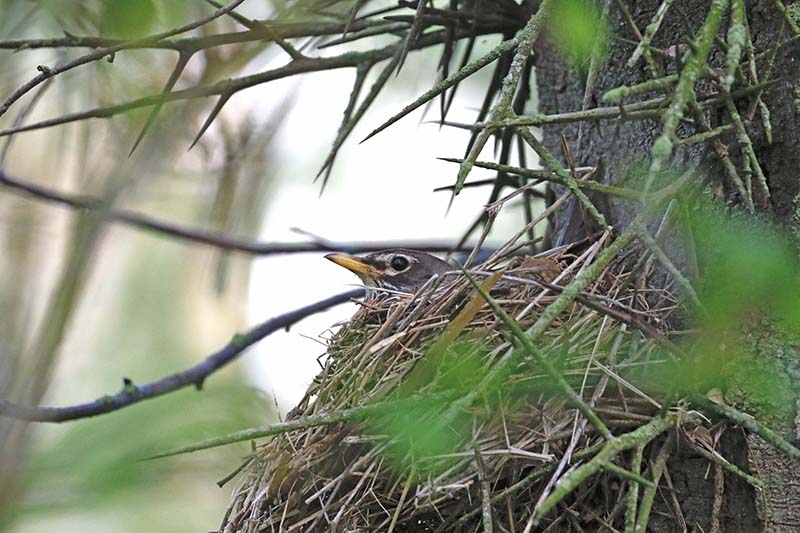
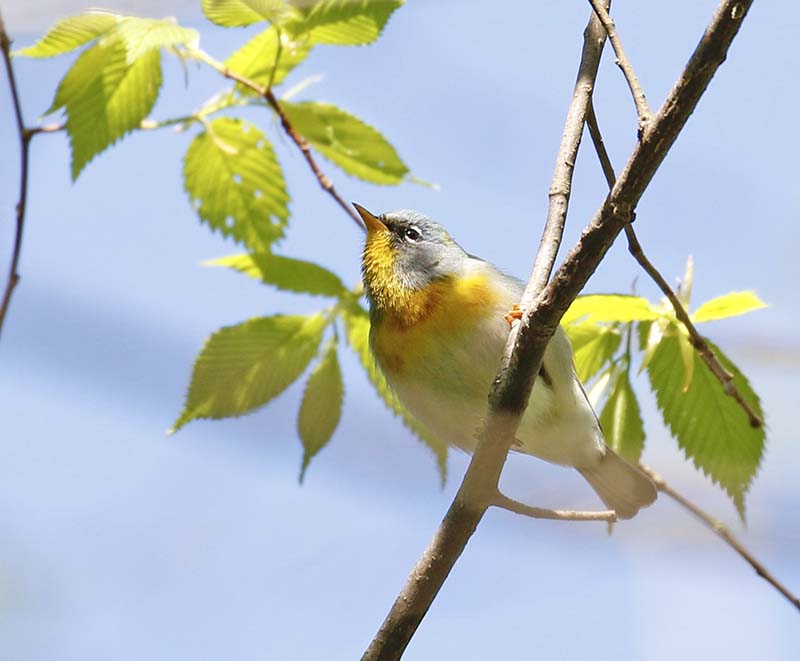
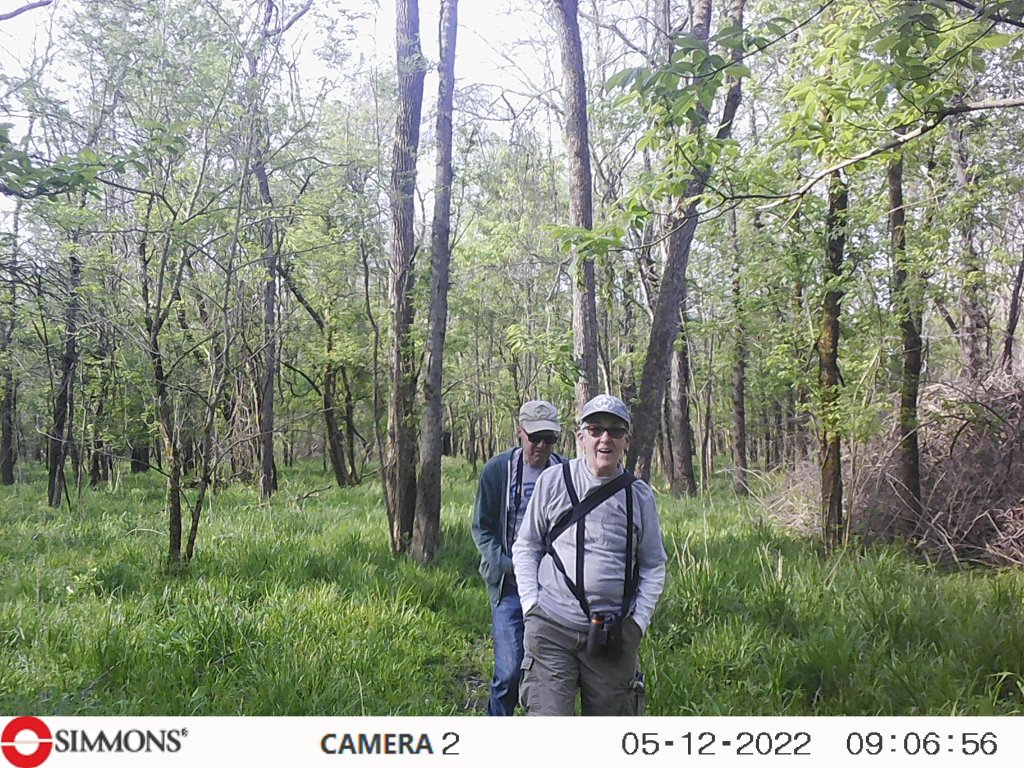
According to Birdcast, 14,526,300 birds crossed Ohio from 8:40 p.m. on May 11, 2025 through 6:40 a.m. on May 12. From 9 to 11 a.m. that Monday, participants in the annual Spring Bird Migration Hike followed the pointing fingers of Deb Weston and David Smith to catch a glimpse of brilliant spring plumage. That morning, the group documented 46 bird species in the wetlands, pollinator gardens, and upland forest of The Quarry Farm nature preserve. An enormous Question Mark Butterfly warmed its wings long enough for a good view as well.
It seems that migration peaks earlier each year as the planet tries to right itself, and Deb and David try to schedule a hike date that happens before all of the migrators pass us by or settle in to nest under dense canopy. To get a good idea of what might pass through for a crowd, Deb walked the trails for days leading up to May 12 hike. She took notes…and brilliant photos.
April 30: 47 species today. A juvie Bald Eagle flew over the prairie, Yellow-rumped Warblers all over the place. One Yellow-breasted Chat, 3 Orchard Oriole, Tennessee Warbler, Nashville Warbler, Yellow Warbler, Palm Warbler and Black-throated Green Warbler. Rose-breasted Grosbeak, Great Crested Flycatcher, Warbling Vireo and 13 Double-crested Cormorants flying over in a perfect V.
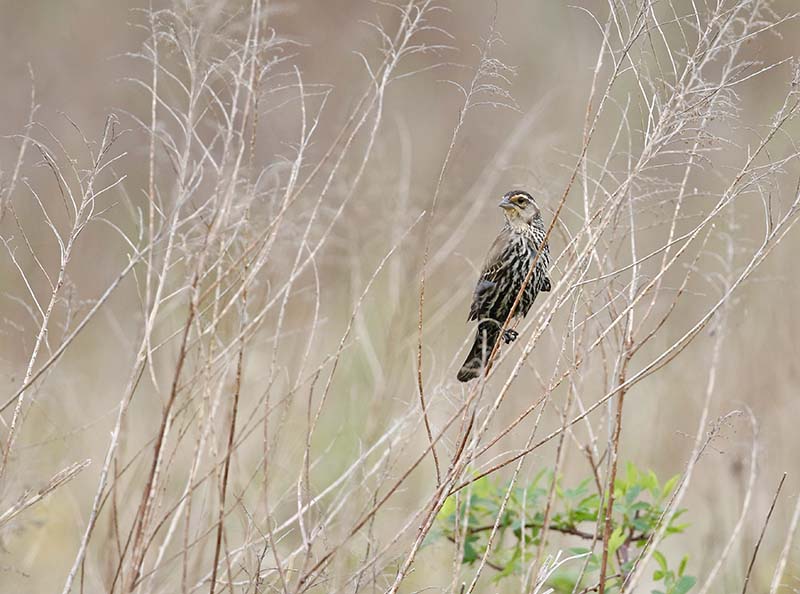
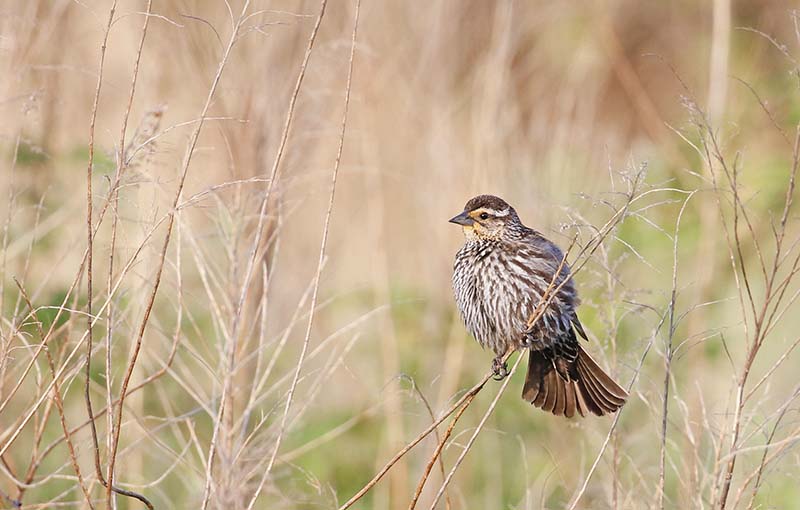
May 1: 52 species today. There was a Gray-cheeked Thrush in the garden area. Don’t see them often and it escaped photo day. Female Red-winged Blackbird, Nashville Warbler and Solitary Sandpiper were not so shy.
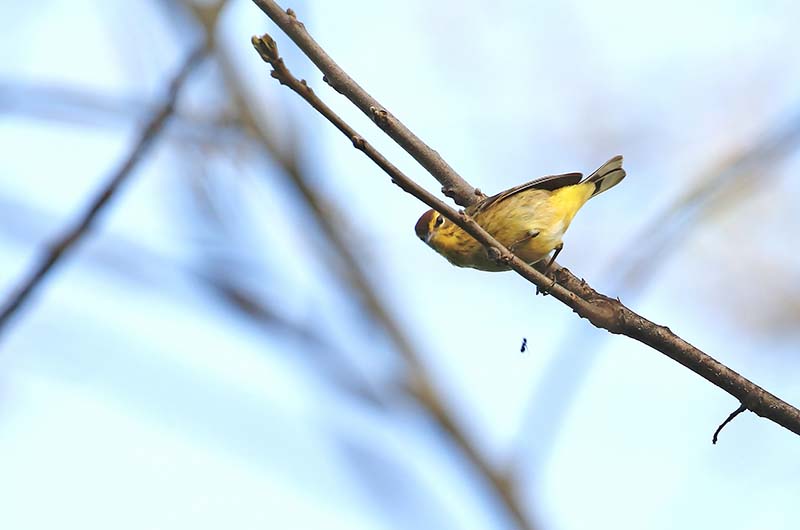
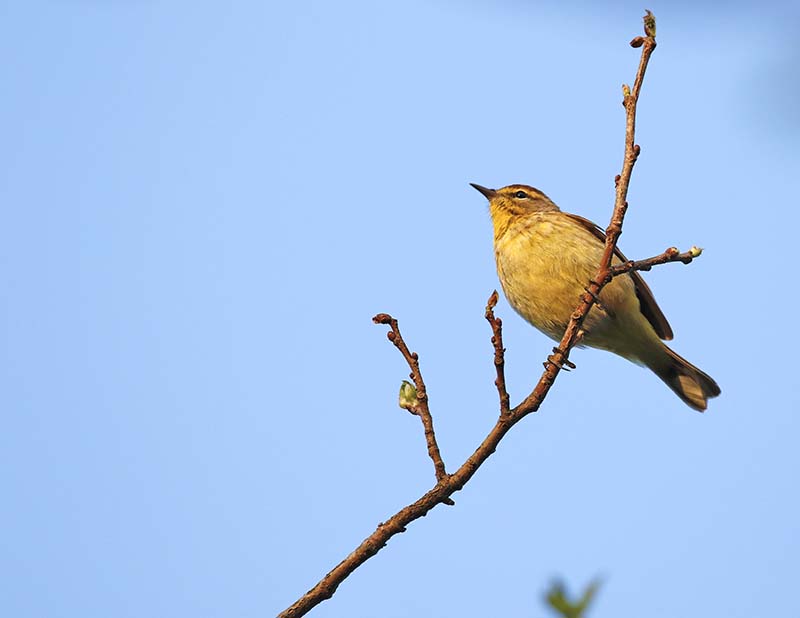
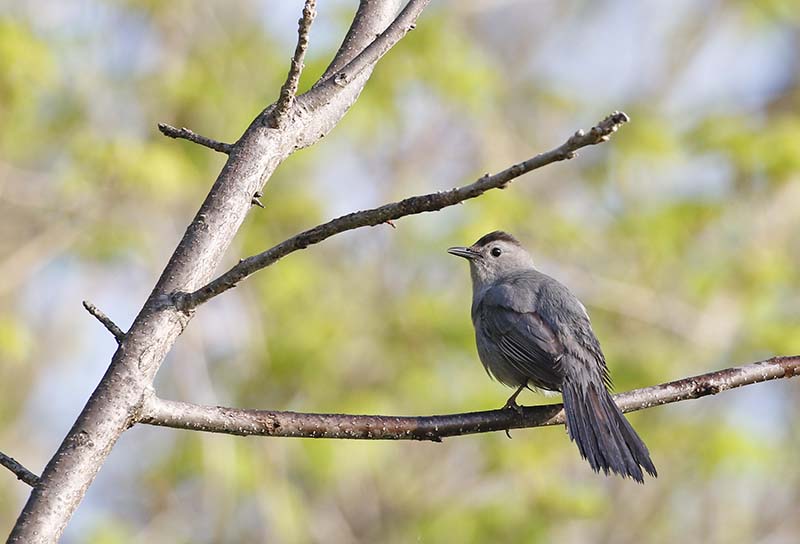
May 2: 50 species today. An American Robin on her nest every day. 2 pics of a Palm Warbler; the first one dropped its food when it saw me. Another female Red-winged Blackbird because they’re so pretty and a Gray Catbird. 3 Wild Turkey, 2 in different sections of the prairie flushed when I walked by even though they were out in the middle. Sounded like helicopter blades. Not sure if they were sitting on nests, but baby turkeys would be cute. 1 Ruby-throated Hummingbird and the biggest surprise was an Osprey sitting in a tree at the lookout point. It took off before I could get my camera up, but was excited to see it. Last sighting was in 2021. Warblers: Orange-crowned, Nashville, Common Yellowthroat, Northern Parula, Yellow, Palm and Yellow-rumped.
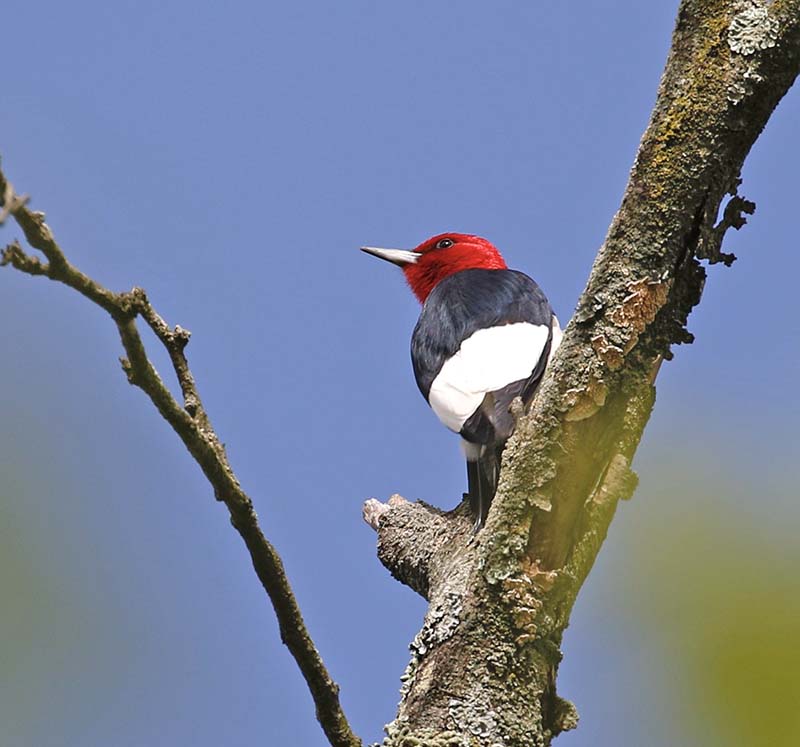
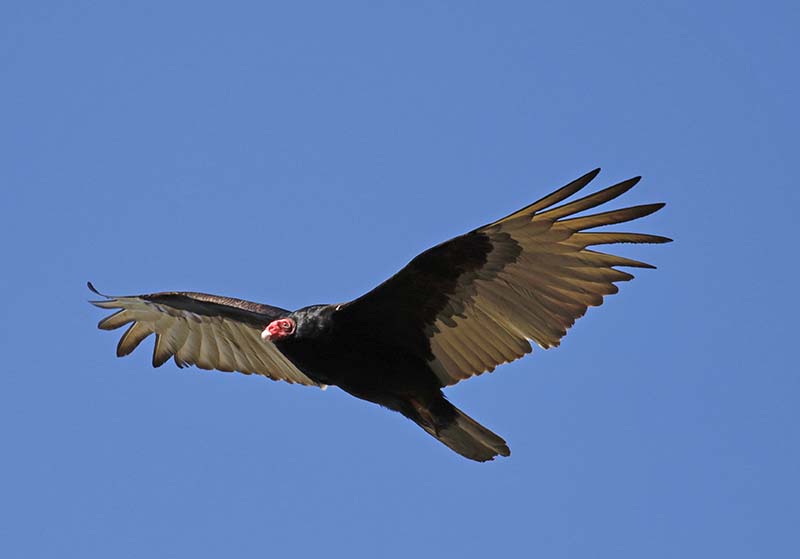
May 9: 53 species today (14 warblers) Canada Goose, Wood Duck, Mourning Dove, Green Heron, Turkey Vulture, Red-headed Woodpecker, Red-bellied Woodpecker, Downy Woodpecker, Northern Flicker, Least Flycatcher, Yellow-throated Vireo, Blue-headed Vireo, American Crow (YAY—they’re back!), Carolina Chickadee, Tufted Titmouse, White-breasted Nuthatch, Northern House Wren, Carolina Wren, Gray Catbird, Eastern Bluebird, Wood Thrush, American Robin, House Sparrow, American Goldfinch, Chipping Sparrow, Field Sparrow, Savannah Sparrow, Song Sparrow, Lincoln’s Sparrow, Swamp Sparrow, Eastern Towhee, Orchard Oriole, Baltimore Oriole, Red-winged Blackbird, Brown-headed Cowbird, Common Grackle, Ovenbird, Nashville Warbler, Common Yellowthroat, American Redstart, Cape May Warbler, Northern Parula, Magnolia Warbler, Blackburnian Warbler, Yellow Warbler, Black-throated Blue Warbler, Palm Warbler, Yellow-rumped Warbler, Black-throated Green Warbler, Wilson’s Warbler, Northern Cardinal, Rose-breasted Grosbeak, Indigo Bunting.
Birdcast noted that 24,564,200 bird species flew over Ohio last night. We will be listening for new song as they make their way north to Magee Marsh Wildlife Area where Deb will be watching with her camera and 89,999 other people.
“Eclipse” was the headline online and in print before and after April 8, 2024. The total solar eclipse that occurs when the dark silhouette of the Moon completely obscures the bright light of the Sun was going to be either A) the end of the world as we know it, with hoards of outsiders streaming across Ohio to rob us all of our lives and livelihood. Or B) this natural phenomenon that occurs every 18 months or so somewhere in the world was going to be a great big ol’ treat, right here.
Download for newsletter
The actual title is offered in gratitude for something that brought a whole bunch of people together—in peace—for four awe-inspiring minutes. The total solar eclipse of 2024 brought people from across the United States to the gardens, creek bank and pasture of The Quarry Farm on April 8. People from Ohio, New Hampshire, Michigan, Indiana, North and South Carolina, and Virginia chose to view the phenomenon from the comfort of camp chairs, alongside the farm animal sanctuary residents, or hiking in the nature preserve.
One gentleman arrived after totality. He had driven here from Eugene, Oregon but heavy traffic held him at a Maumee River crossing. He pulled over to watch then drove south to Road 7L where he walked the trails and sampled eclipse baked goods in the summer kitchen bakery. I didn’t speak with him but others did. I wonder if he will make the trek down under for the next totality.
Board member Martha Erchenbrecher observed the behavior of Bruce the Turkey and K the Canada Goose during the eclipse. K took notice, bobbing his head in surprise. Bruce stayed still. Her observations were shared with the Solar Eclipse Safari Team of North Carolina State University and Arizona State University. We all noticed that both wild and domestic animals fell silent during totality. The farm animals headed for the barns but went back for more visitor attention at the fenceline.
As for me, I didn’t decide ahead of time where I would watch. A couple of hours before, I listened to an interview with a retired astrophysicist known as “Mr. Eclipse”. He has traveled far and wide to see the sun eclipsed completely and partially. He advised that, when the day and time of an eclipse arrives, one shouldn’t think too much about who you ought to be with or how you should view (other than to be safe about it.) One should just be in the moment. So as the moon began to block the sun from view, I found a pair of eclipse glasses that one of the hikers had dropped on the path to the prairie. I parked myself on a quarried boulder beside the quarry wetland. I could hear cheering from up in the gardens and Red Fox Cabin. The sound didn’t budge two turtles that were perched on a log, but the smaller of the two dove under when the astronomical curtain fell.
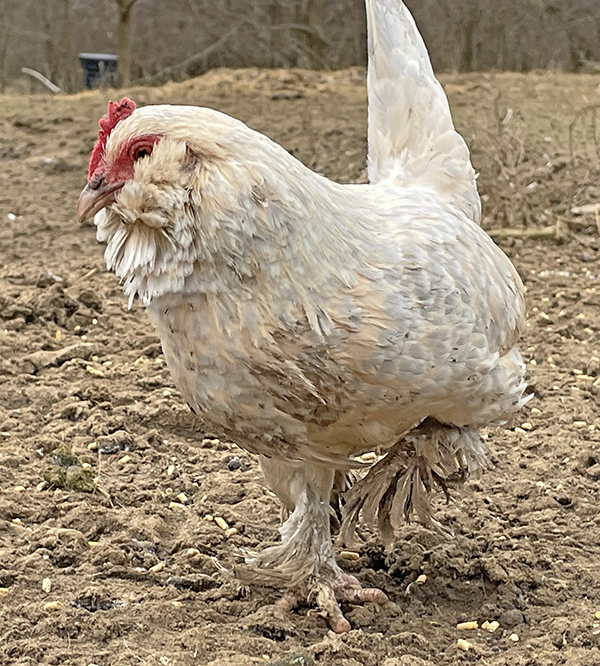
Lavender was one of several victims of a chain farm store’s new retail chick display system. Rather than an open-air enclosure system, this new system took up less retail floor space by stacking the live products in an enclosed space. The stack was a high-rise; a chick skyscraper with no open windows to vent the ammonia produced by heated chick feces. We saw one little chick beating its beak on the upper layer’s window. All the other chicks on that level were dead. The chicks on lower levels were dead or slowly dying. We were given permission to help clear the dead and purchase the living for $1. The farm store reverted to the one air system at all of their locations, at least in Northwest Ohio.
Three of the chicks that came to the farm animal sanctuary survived. Sidney, a Silkie Rooster, and Speckles, a calico Bantam hen, are tight buddies. Lavender, so-named for her muted violet-and-pearl plumage, keeps her own counsel. She is what is referred to as a “fancy”, with swirls of feathers booting her little feet. She flits in and out of the standard flock of hens and roosters, dodging under their feet for breakfast. This system works well for her in summer and fall. In wet spring and soupy winter mud and slush, her feathered boots cake and weight her down. Breeders are not known for their practicality.
Last year, her fancy footwear became so clogged that we had to soak them in warm water, trim her foot feathers and keep her indoors to allow her to eat and sleep in dry warmth. Once she recovered, we reintroduced her to the flock and she wanted nothing to do with humans beyond feeding time. Last week, Steve saw her hiding from one of the younger roosters. Lavender hopped up to Steve and chattered. She allowed herself to be picked up. Steve saw that her foot feathers were boggy. He took her inside, soaked her feet, trimmed and dried her feathers and set her outside. She hopped away to rejoin the flock and is not currently seeking human interaction other than at mealtime.
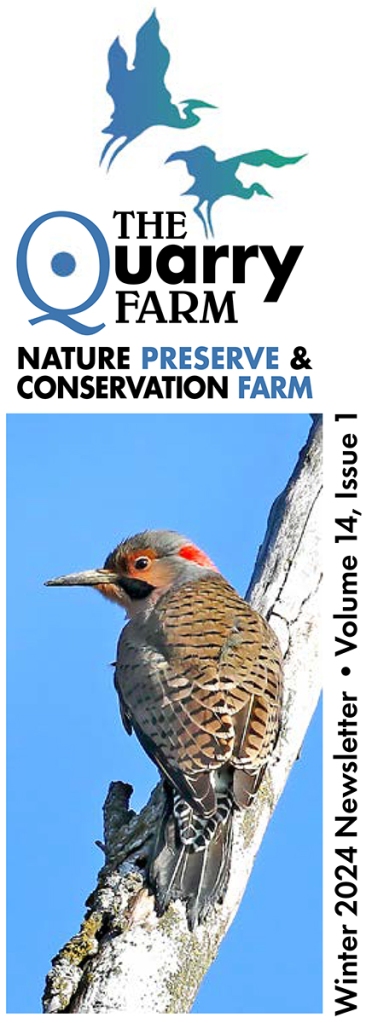
Click on the cover above to download your copy of The Quarry Farm Winter 2024 newsletter.
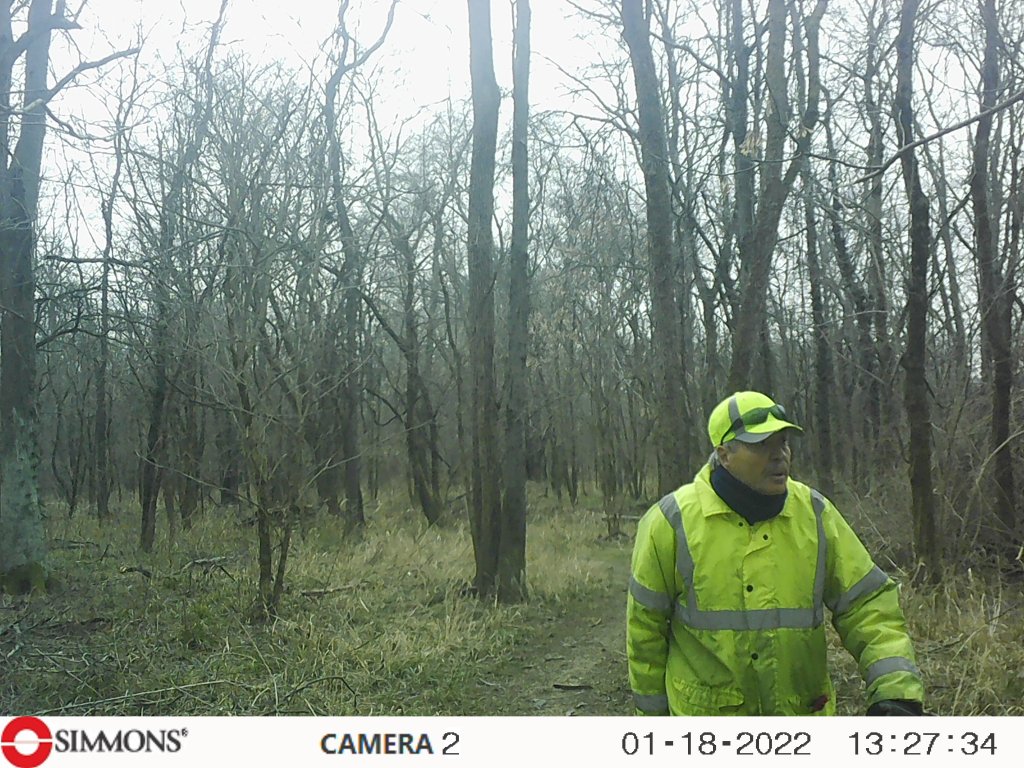
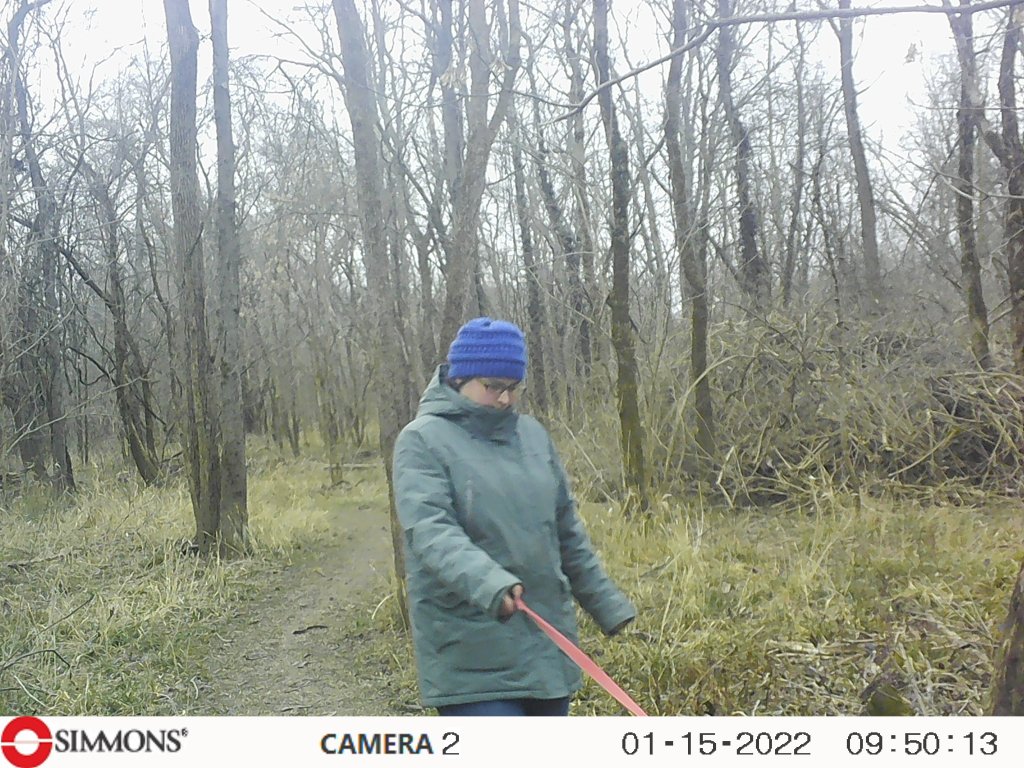
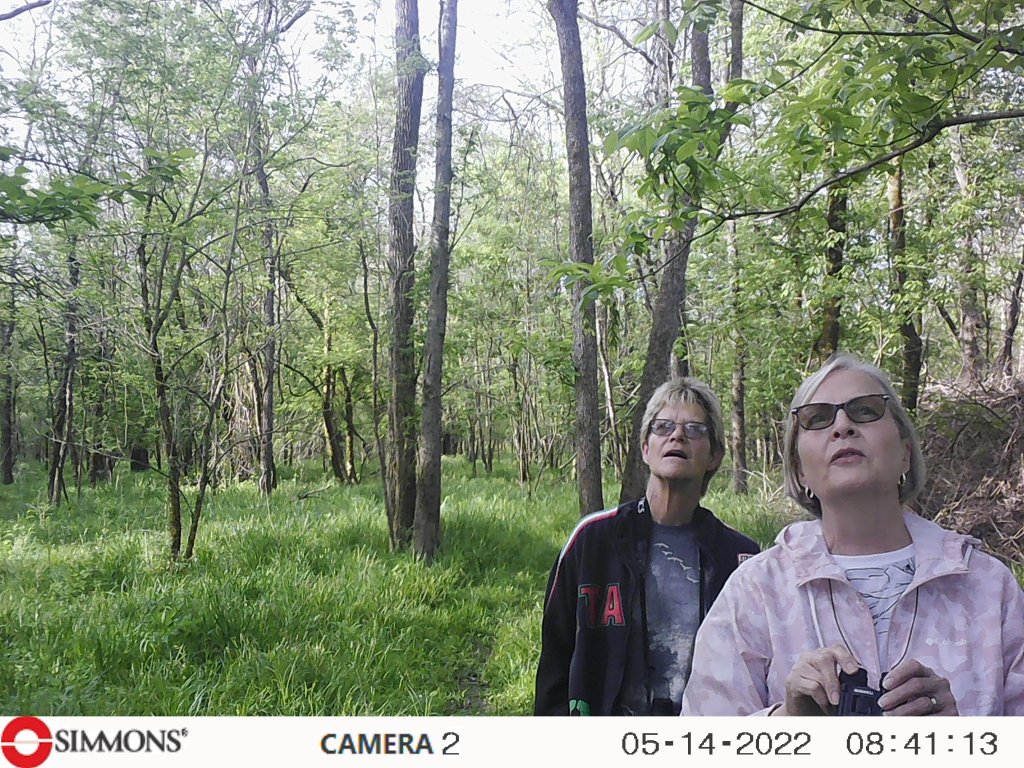
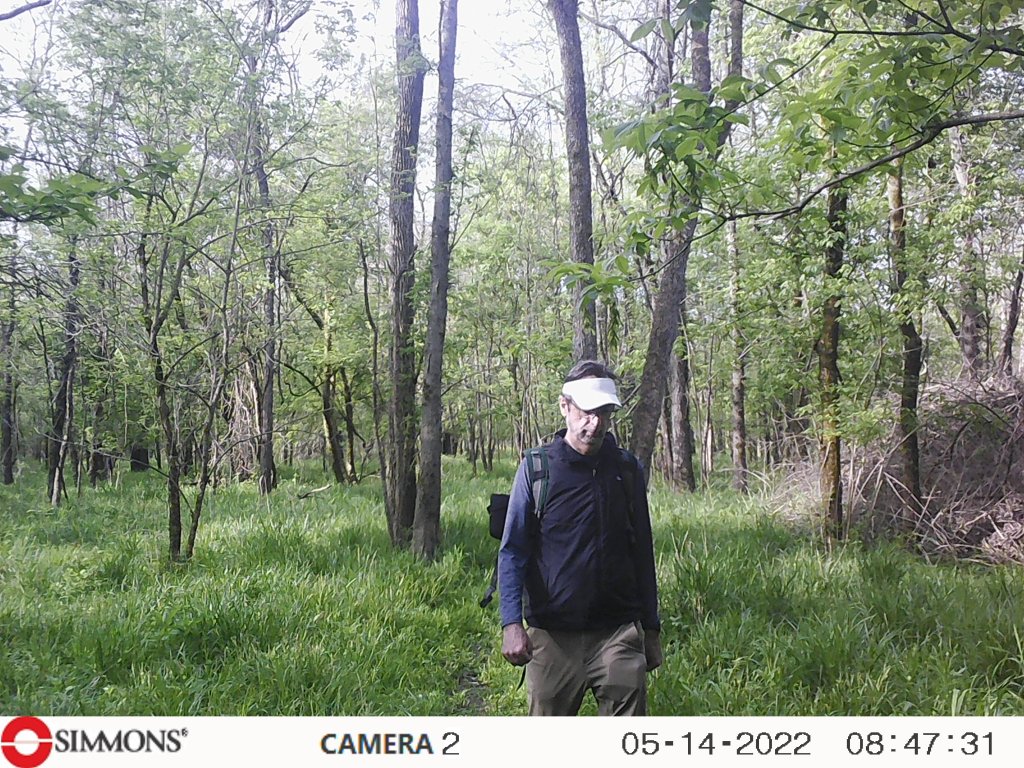
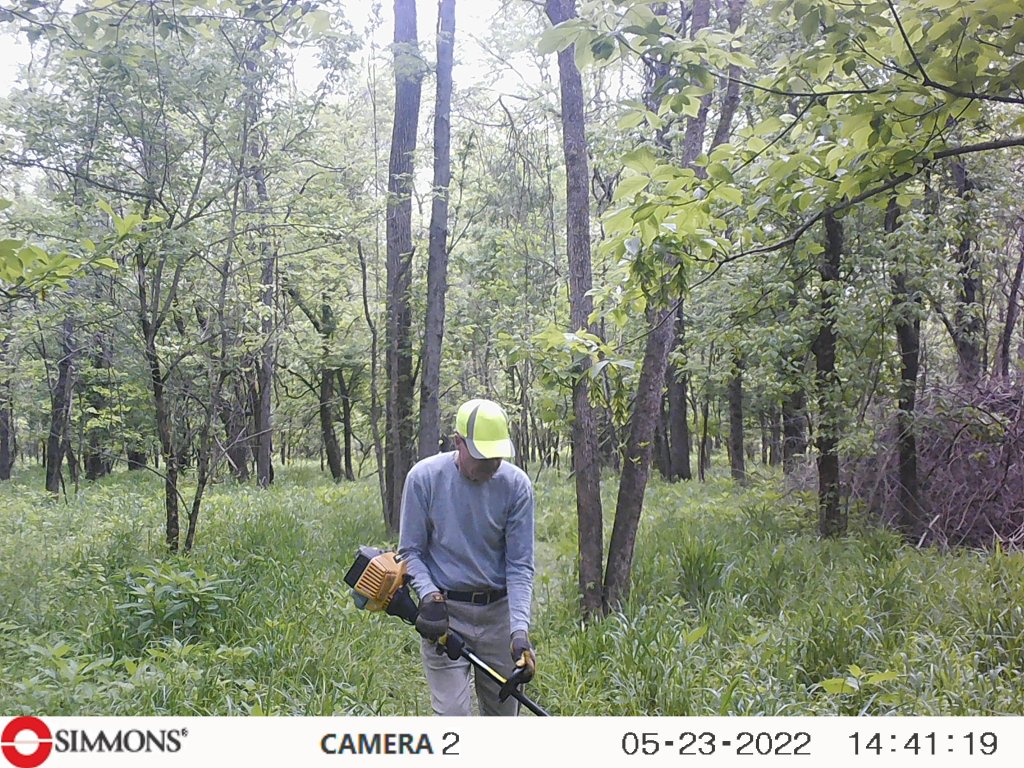
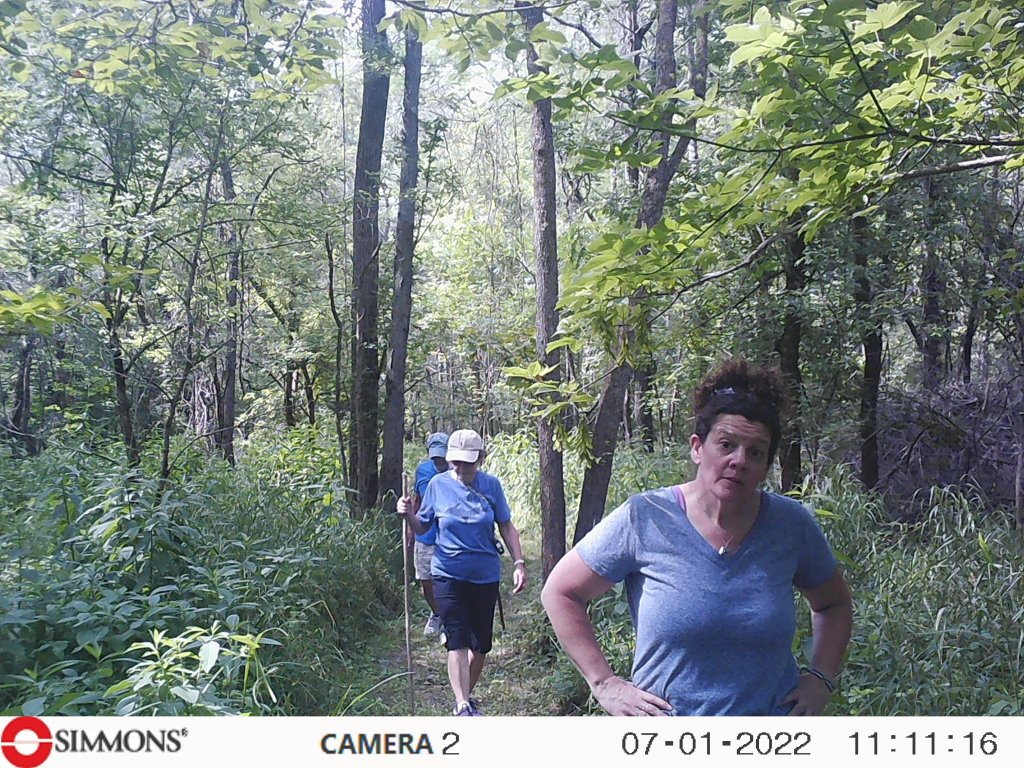
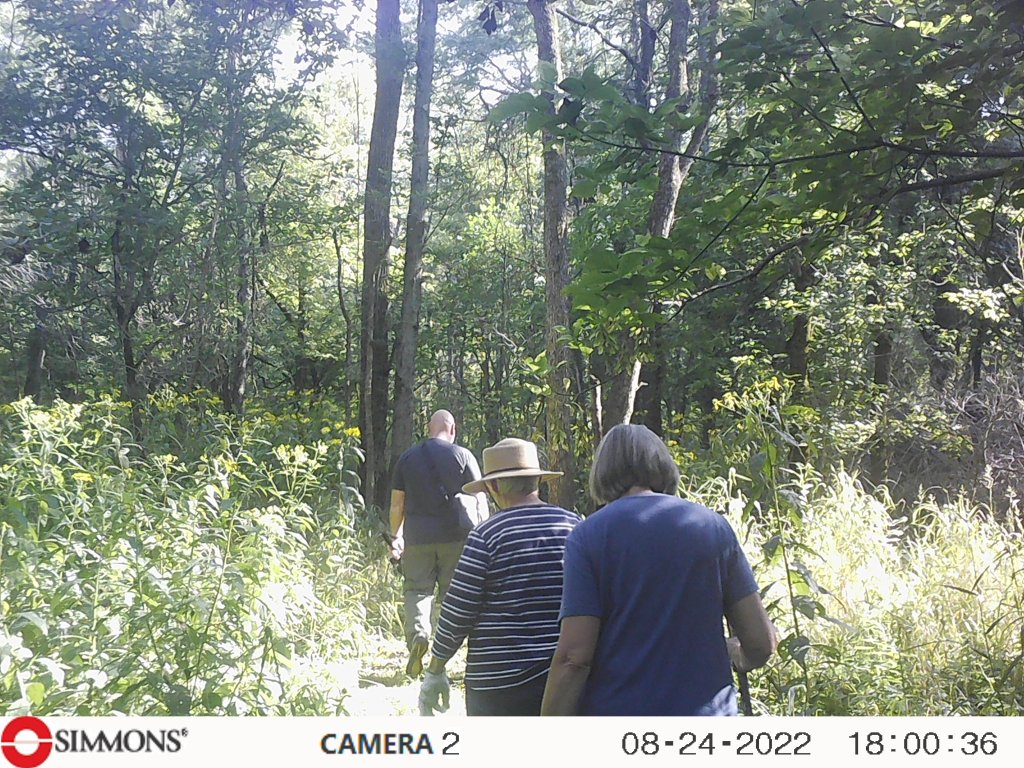
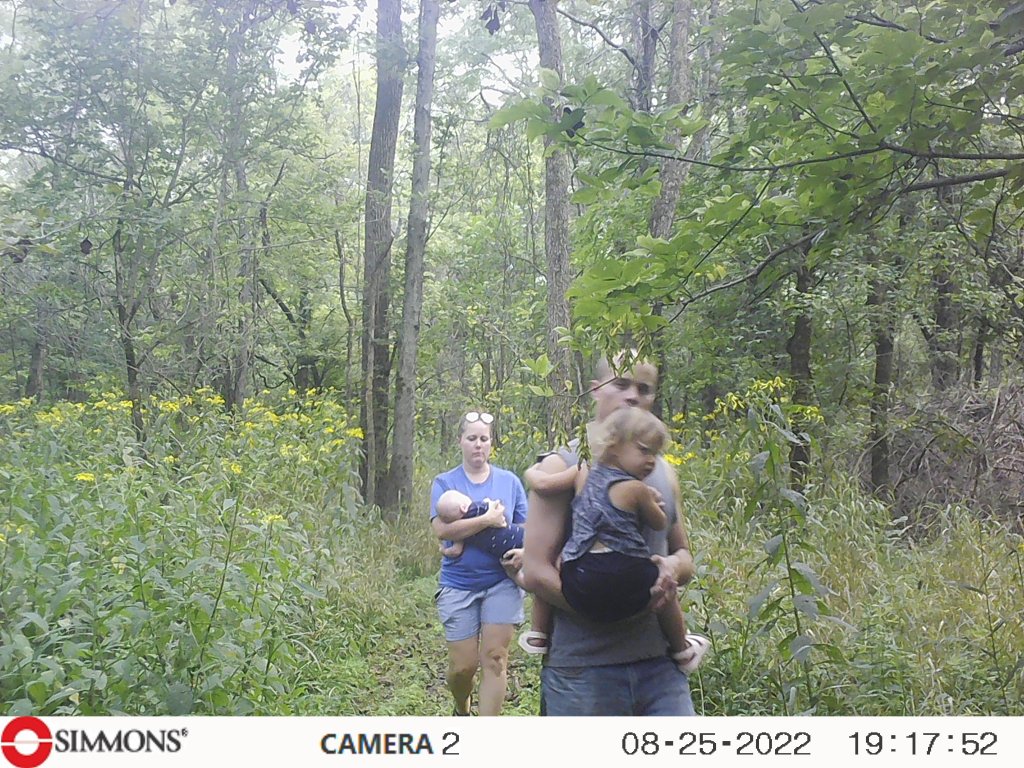
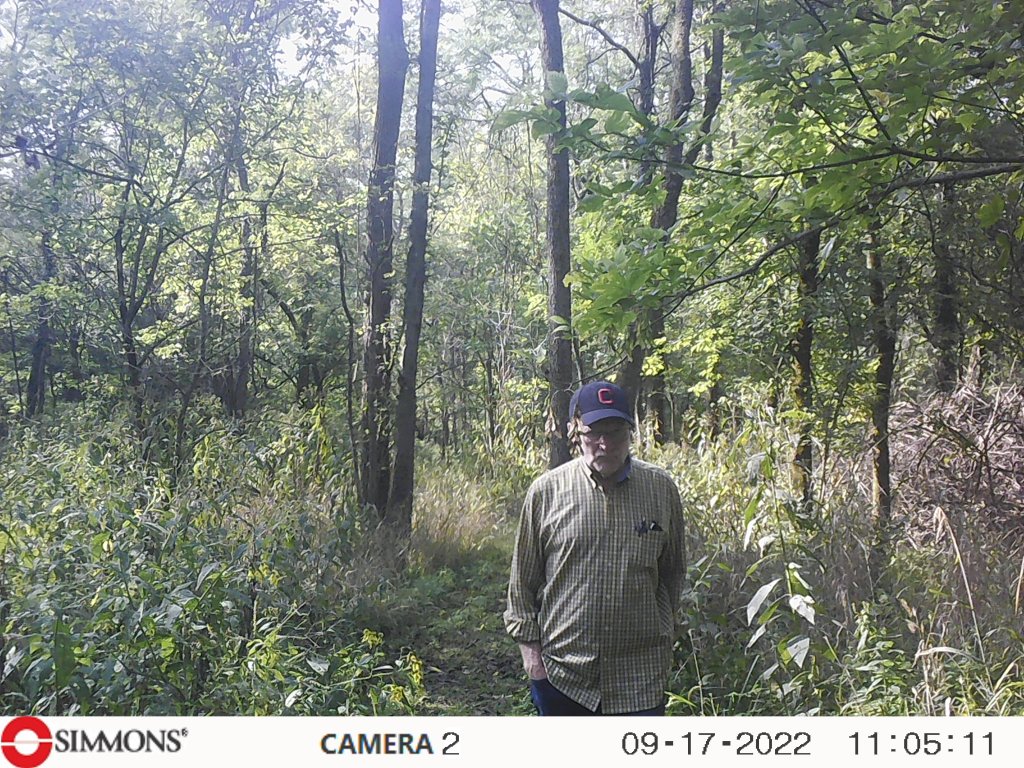
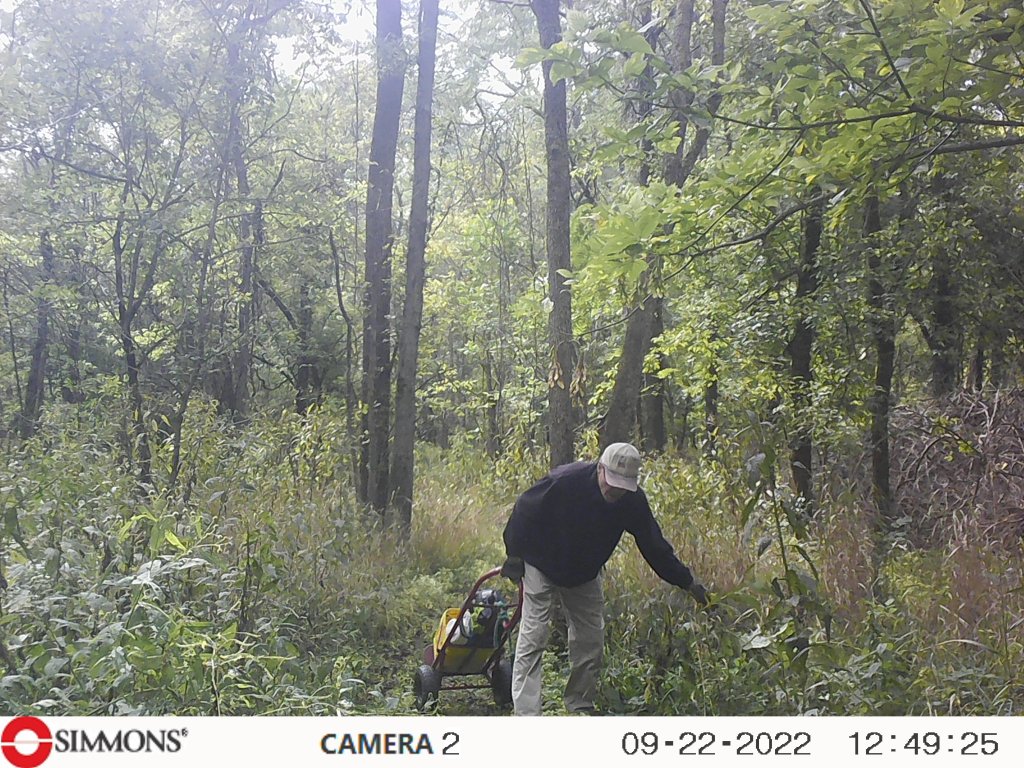
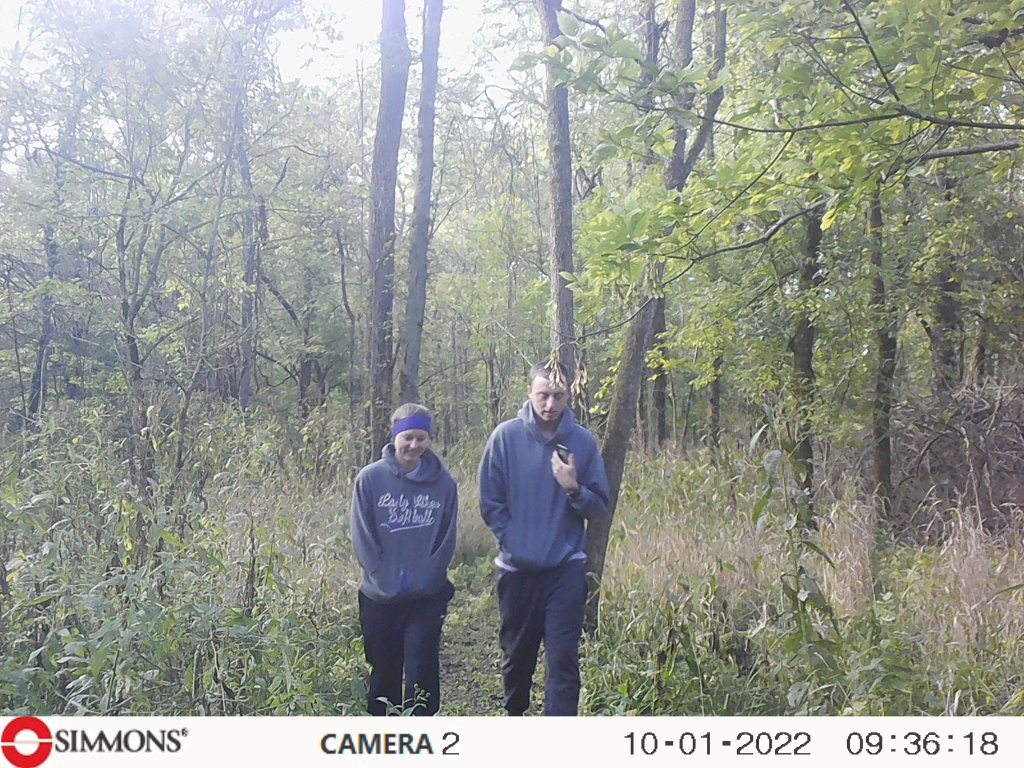
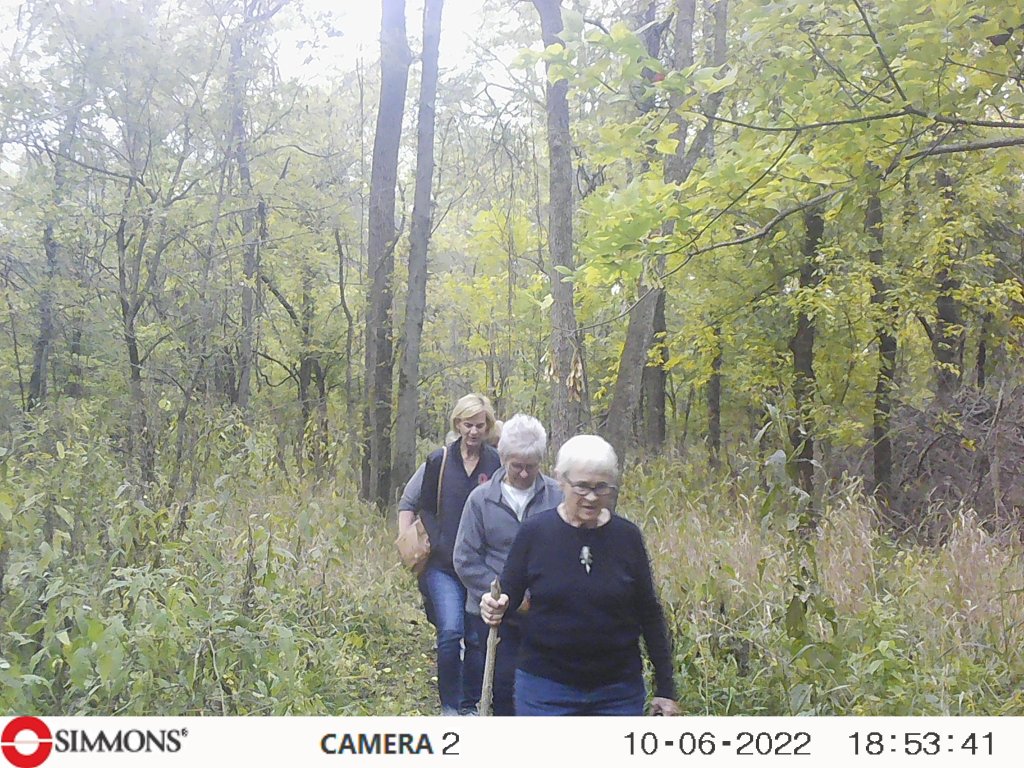
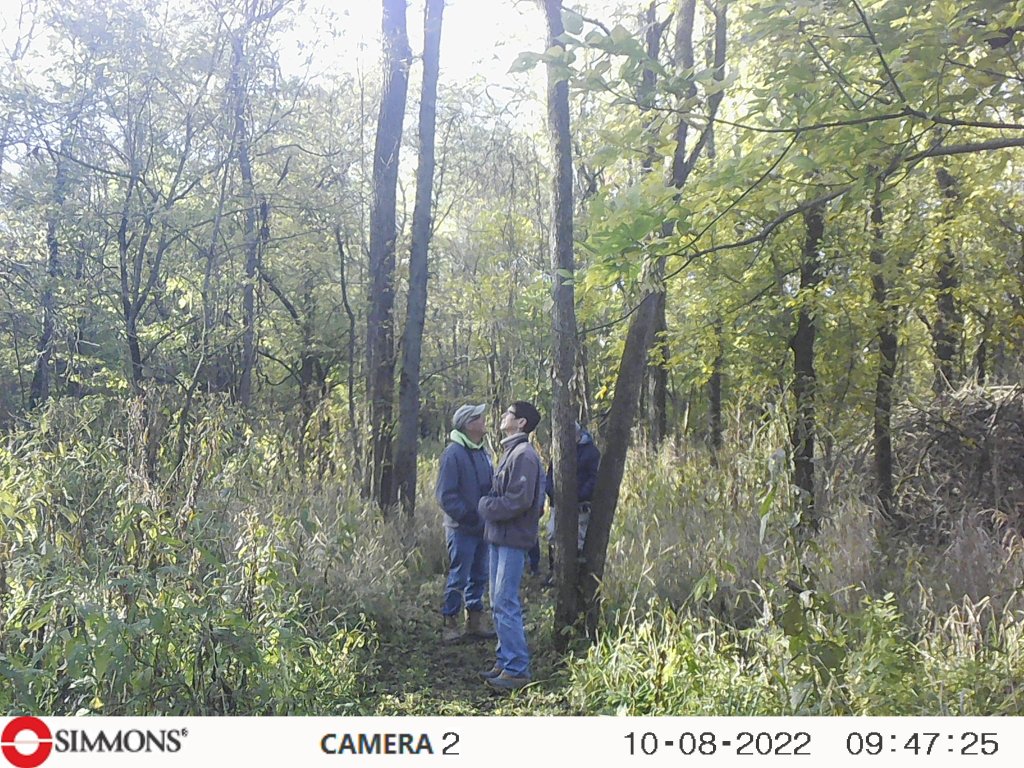
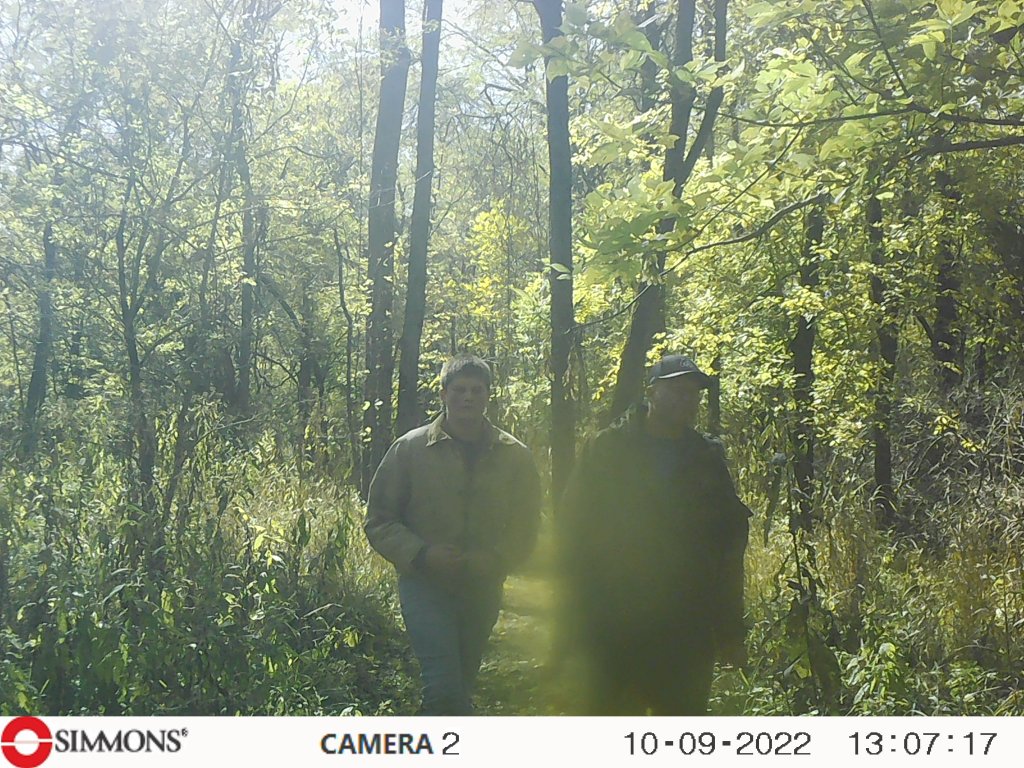
Each fall, the trail cams come down for maintenance and are rehung for the next four seasons. Paul installed the north trail through the floodplain several years ago, opening that area to bird watchers and hikers of all species. It’s a popular resting stop for migratory songbirds. Birder Deb captures beautiful photos there as they flit through.
Here are a few photos that feature the humans who passed the camera on that path. It begins with David, the master who keeps the trail cleared and curbs the further spread of invasive plants species.
By September and October, most of the white, blue, pink and purple wildflowers have faded from the landscape, but our byways glow into early autumn with the bright yellows and golds of what we might refer to simply as “pretty yellow flowers.” Let’s give a respectful nod to four of those cheery wildflowers—Goldenrod, False Sunflower, Jerusalem Artichoke, and Sneezeweed—and get to know them personally.
The four have much in common. All four are members of the huge family Asteraceae, also Compositae; their flower petals grow daisy-like in rays around a center. The centers are typically a cluster of many tiny florets. All four attract pollinators (bees, butterflies, and hummingbirds), so they are important economically and ecologically. Deer avoid them. All are perennial, and cultivars have become popular garden flowers. While they share family traits, their differences can help us distinguish them.
Goldenrod, a common name for Solidago, may be the easiest to identify. More than 100 species grow wild in moist soil in North America, but a few have become popular in gardens. The plant heights average three to five feet. The flower heads are fluffy plumes or fans densely covered by tiny florets. Because they produce almost no pollen, they can’t be blamed for allergies. They are not poisonous to humans; in fact, parts are edible and can have medicinal uses. Because they are native, they are not termed invasive, but they can spread aggressively by seeds and roots.
False Sunflower, one common name for heliopsis helianthoides, is a native that can be mistaken for a daisy. It prefers sun and can grow in a wide range of soil, preferably on roadsides, near wooded areas and in prairies. The plants reach three to six feet and bear flowers with yellow (the common color here) to orange rays that may droop slightly around a soft brown center, earning them the nickname Ox-Eye Daisy. They are neither invasive nor toxic.
Jerusalem Artichoke, or helianthus tuberosus, is not an artichoke but rather a species of sunflower native to central North America. The plants can grow from five to nine feet tall, bearing bright yellow, daisy-like flowers with sturdier petals than False Sunflower or Sneezeweed. Its elongated tubers (fleshy underground stems) vary in color from light brown to white, red or purple and have a nutty flavor. They are highly nutritious and can be eaten, either raw or cooked. In fact, tasty-looking recipes can be found online. The plant was once a widely cultivated root vegetable crop that is regaining popularity.
Sneezeweed, or helenium autumnale, is so called because its leaves were once dried and used to make snuff. The plants prefer moist soil and are at home along streams and wetlands. They grow from two to five feet tall and bear pale yellow to orange flowers with fan-shaped drooping rays. It is sometimes called Wingstem because of the gill-like “wings” running the length of the stems. Although attractive to pollinators, it is poisonous (in large amounts) to humans and livestock.
One final note: all four of these “pretty yellow flowers” look lovely in floral arrangements.
About 20 years ago, I planted a ground cover that was all the rage at the time. I decided that glossy, dark-green euonymus fortunei, a native of Asia, would be ideal to fill in prettily around shrubs and to block weeds. As years went by, a patch in Red Fox Garden succumbed to scale, and the euonymus at my house had a rude habit of climbing up the garage siding and suckering in until pulled down. However, its dense cover did block weeds, and I liked the look of it.
Download the Fall 2021 Newsletter
So, I was not prepared when Cousin David, who has spent years clearing invasive shrubs and vines from the Quarry Farm nature preserve, reported an unfamiliar branching vine climbing in a cluster of trees deep in the woods, well beyond my house and garden. It was neither poison ivy nor wild grape vine, and its leaves looked a little like myrtle, only larger. I made a discomfiting discovery: The invader was euonymus fortunei, my pretty ground cover gone rogue. Looking it up on the internet, I was shocked to learn that euonymus is now generally considered an invasive species, a landscaping no-no.
Horticultural websites discuss the aggressive nature of euonymus fortunei. One example is this from North Carolina State University Extension: “Some cultivars may be more of a vine and others more of a small shrub, but the vining cultivars and some shrubs can both be invasive… Climbing euonymus readily escapes into native forests and has no trouble dominating medium-sized trees. [It] is listed as invasive in North Carolina and in other states of the southeast and northeast. When used as ground cover for the showy leaves, it tends to climb if given support. . . .When this vine climbs trees it produces aerial rootlets along its branches. [Its small white berries] are eaten by some birds which is how the plant is spread and often how it becomes more invasive.” This is surely how euonymus flew from my garden into the woods of the preserve.
My experience with euonymus fortunei has been another hard lesson learned about plant selection over the years. When perusing catalogs and nurseries, I should try harder to temper my feverish impulses with some cautionary reminders: Choose natives to the area, more likely to settle companionably into the landscape. Don’t make impulsive purchases based solely on glowing descriptions, especially if a plant is an introduction, sometimes even a “new, improved” cultivar. Know soil (sand, loam, and/or clay), moisture and light preferences. Know how a plant propagates and spreads, so it can be contained if it sends out runners or produces thousands of seeds per plant. In general, know how it interacts with other plants and wildlife.
Better knowledge about such issues might have prevented invasions of bush honeysuckle and multiflora rose, and too many others, which were thought decades ago to have beneficial uses as wildlife food and cover and as living fencing, but became scourges to field and forest, including The Quarry Farm.
I think it will always thrill me to overhear someone asking someone else if they have ever been to The Quarry Farm, for people to talk about the animals, birds, gardens and the clarity of the stream. Not everyone will turn over their yard to goats, roosters, and geriatric pigs, but gardens—the riotous kind filled with a variety of native flowering plants—and trees can make birds and clear water more common. This region’s native grasses and trees have long, branching root systems that hold the soil like a strong net. Have you ever pulled English Ivy? This non-native is tenacious and fast-growing but you can remove a large patch with one pull, so shallow-rooted and interwoven is this European transplant. In contrast, ever tried to pull a Common Milkweed in its entirety? Best of luck.
Old Man Sycamore in the north floodplain of the nature preserve has a hollow base that provides shelter to who knows how many creatures each night and during winter’s worst. As shallow-rooted landscapes topple across Northwest Ohio, he and the 300-year oaks withstand wicked flood currents and down-bursts. As the floodwaters recede, the forbs at his feet grasp run-off silt and soil. Within 36 hours, Cranberry Run is clear again.
You hear a lot about native plants these days. Big-box stores as well as local nurseries stock a variety of plants labeled as native. Keep in mind that native doesn’t always mean native to here. Also, ask your green-grower what kind of substrate your plants are potted in. Mass-marketed plants are often potted for long shelf lives, their roots sandwiched in neonicotinoid-laced soils that wreak havoc on bees and other beneficial insects.
Remember that part about riotous gardens? Variety is the spice of life. Some native plants can be invasive without other native plants to keep them in check. The Quarry Farm Gardener finds it necessary to parcel out starts of Coneflower every now any then, as well as Menarda (Bee Balm). Much is made of the benefits of keeping Common Milkweed for the Monarch butterflies. Without Ironweed, Coneflower, Asters, and Common Hackberry trees to watch over them all, who will feed and shelter Comma, Question Mark, swallowtails, and the Hackberry Emporer butterflies? And without Jewelweed and its orange orchid-like flowers nodding on the riverbanks and floodplains, how will I ever be rid of this confounded poison ivy rash?
May 9 is the biggest day in birding this year. As it’s just 9:30 p.m., it still “is” even though the wind tonight is wild and wooly and no self-respecting owl is going to land in the bowed cottonwood outside the window before midnight.
Female cardinal
I don’t know birds. Rather, I have met a few and we got along well. I could pick them out in a crowd. But I don’t recognize many wild birds by call or even by sight unless they are posing neatly at eye level. For the blessed luck and good of all, Deb Weston is a frequent Quarry Farm flyer who helps us see beyond the cardinals, chickadees and house finches at the bird feeders and into the high canopy for warblers, kinglets and other birds who are presently passing through these parts.
Black-throated blue warbler
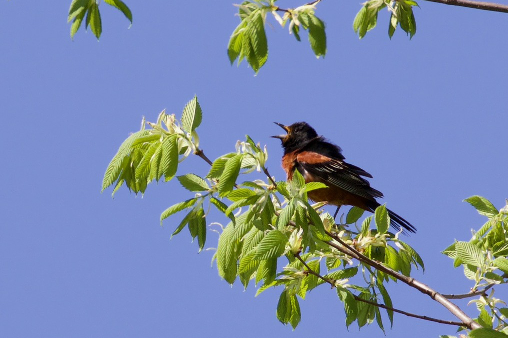
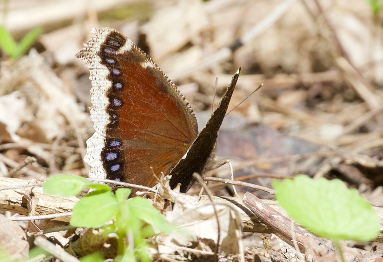
Not that there is anything less than splendid about the birds we are most familiar with. Deb shared a stunning shot of a fluorescent-beaked female cardinal gathering nesting material from a clutch of honey locust thorns. On the same day, however, she photographed a black-throated blue warbler perched on a rope of grapevine. Along the way, she digitized an orchard oriole singing it’s heart out and a mourning cloak butterfly. Because butterflies are seemingly as confused by climate change as humans are, they are arriving here or emerging from their winter quarters with no food in sight. When Deb shared the butterfly photo, it was a sight for sore eyes.
Mourning cloak butterfly
Just as nature around the world is reveling in the cleaner air and water that’s a result of human lockdown, wild things are going about their business unimpeded here in the Back 40. On Friday night a small group of Girl Scouts spread out along the trails to earn their trailblazing badges. As they climbed out of the Riley Creek floodplain toward the grass prairie, two large fluffy feathered great horned owl fledglings bobbed in a black walnut at eye level. Their parent murmured a short distance away, waiting for us to move along our earthbound way.