Truthfully, this Winter 2026 newsletter doesn’t include any moss. Click on the cover to download to the left to see what we did have room to include. The beauty of a blog is that there is room to add those photos and finds that don’t fit on a 2-sided, 11 x 17 piece of paper.
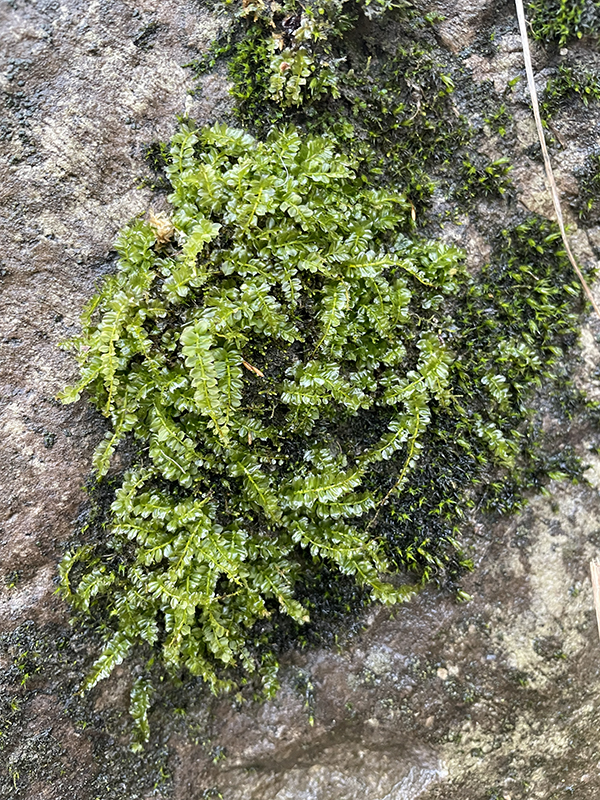
There is finally water in Cranberry Run after a drier-than-dry summer and fall. On a walk to treasure the leaf-tannin-rich flow, we saw a lovely quarry boulder sporting a moss that we hadn’t seen before. I turned to Bill Schumacher, former neighbor-over-the-creek and current mosses, lichens, and liverwort expert. Although Bill is busy with a water quality project in Bangladesh, he responded generously to my “What is this?”
Plagiomnium cuspidatum
“To confirm definitely would need to look at myself. But this one it looks to me like Plagiomnium cuspidatum (woodsy thyme moss or baby-toothed moss). Note the oval shape of the individual leaves. It has a costa (midrib) that goes to the top with a pointy end outside the leaf. Also, the leaf should be toothed in the upper half but not in the bottom half. Plagiomnium cupidatum is a common moss that is in the woods and by the creek. I saw quite a bit of it when we did the moss survey on The Quarry Farm. Although common, it is one of my favorite mosses. Think it is very beautiful, and greatly accentuates the forest system.”
There is one lone cricket singing in the basement this week. The evenings are so cool now that the outdoor chorus have wrapped their bowstrings in scarves of dried grasses. Birds and butterflies are on the move, winging away early this year due to cooler temperatures. There will be no Fall Migration Bird Hike in the nature preserve this year because we missed the boat, or rather, the airship.
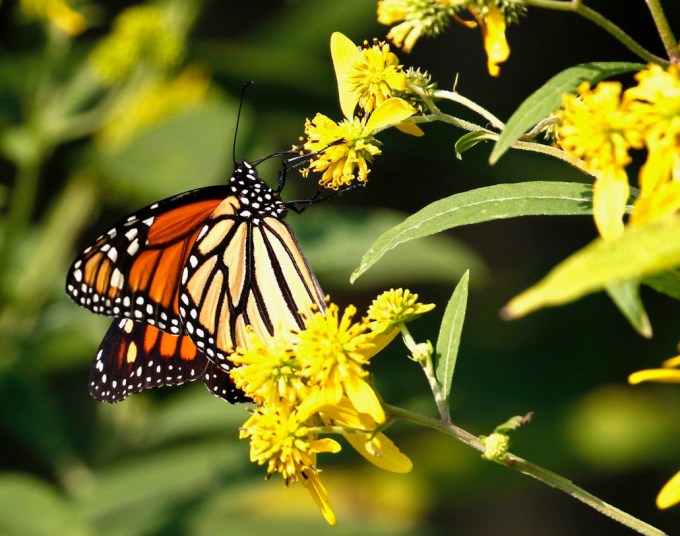
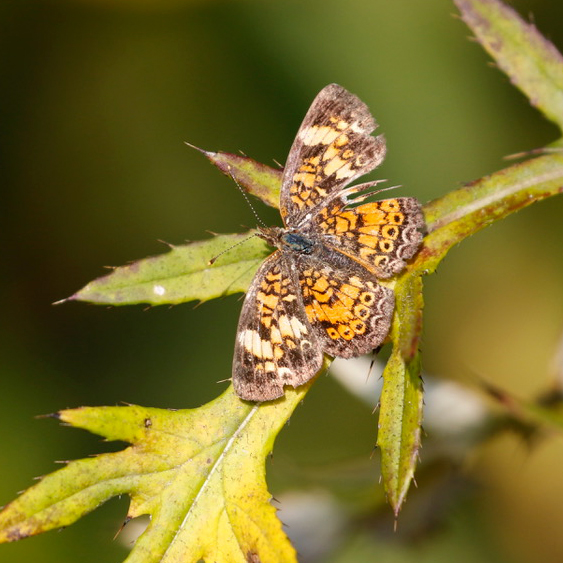
The good news is that Birders Deb Weston and David Smith grabbed their tickets in time to walk the trails and see who is passing through on their southern journey. What they found last week is that Monarch Butterflies (and one tired-looking Pearl Crescent Butterfly) were having a restorative back in the grassland prairie.
Pearl Crescent Butterfly
That same day, they documented 29 avian species, with David IDing all but a Great Blue Heron by their birdy vocalizations. Deb had her camera at the ready once David pointed them out.
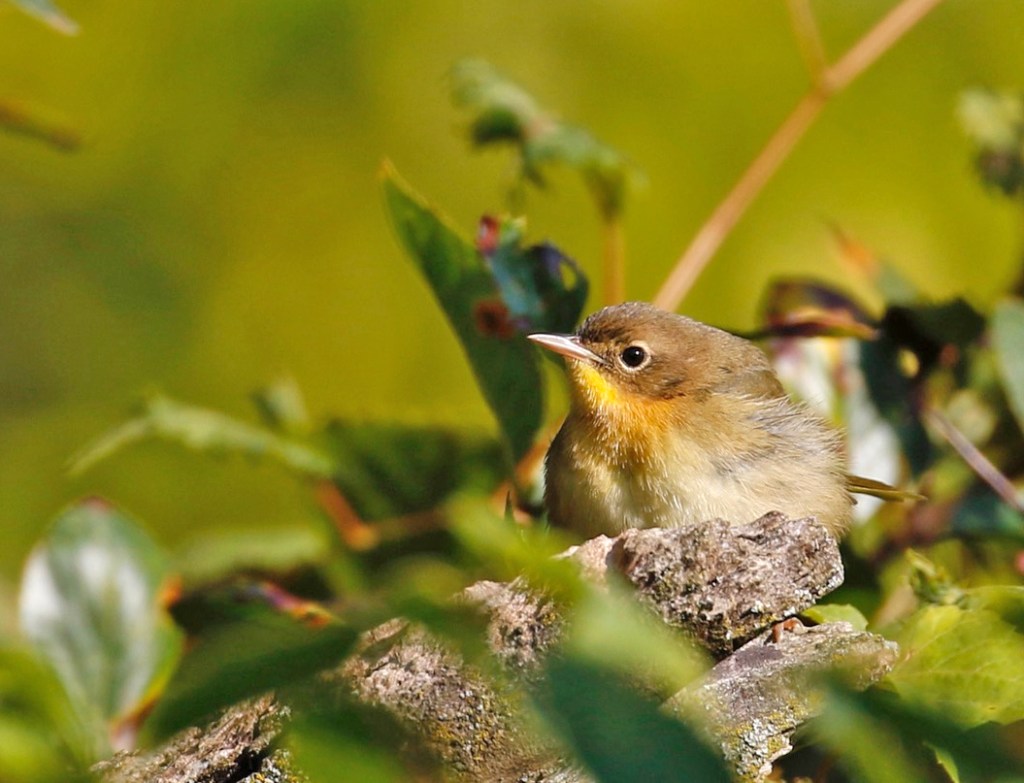
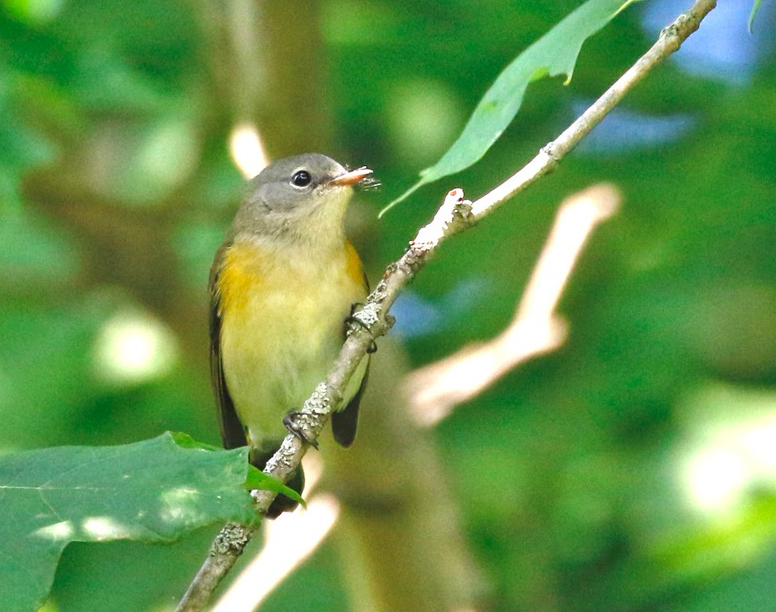
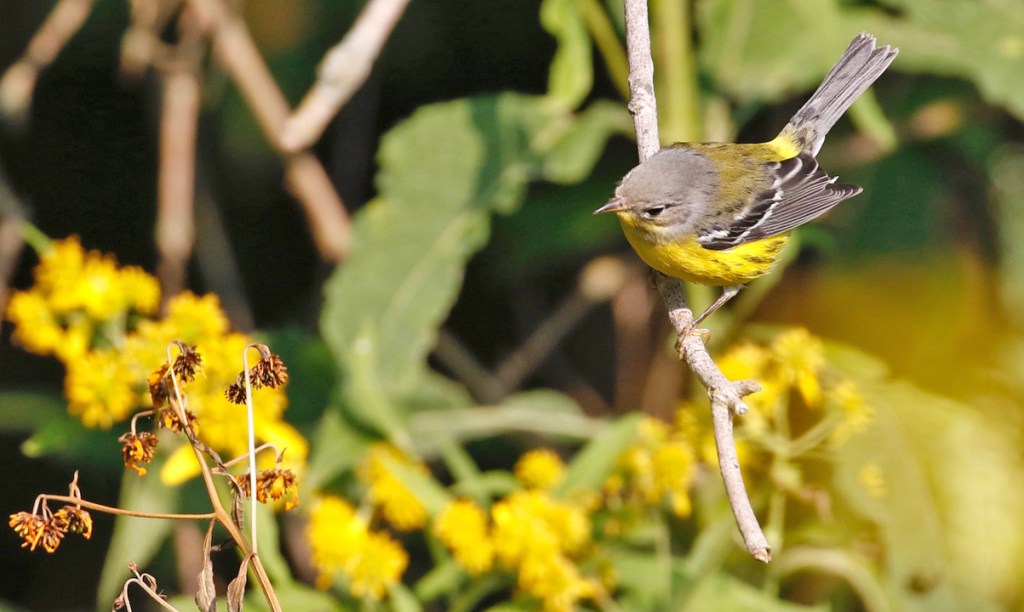
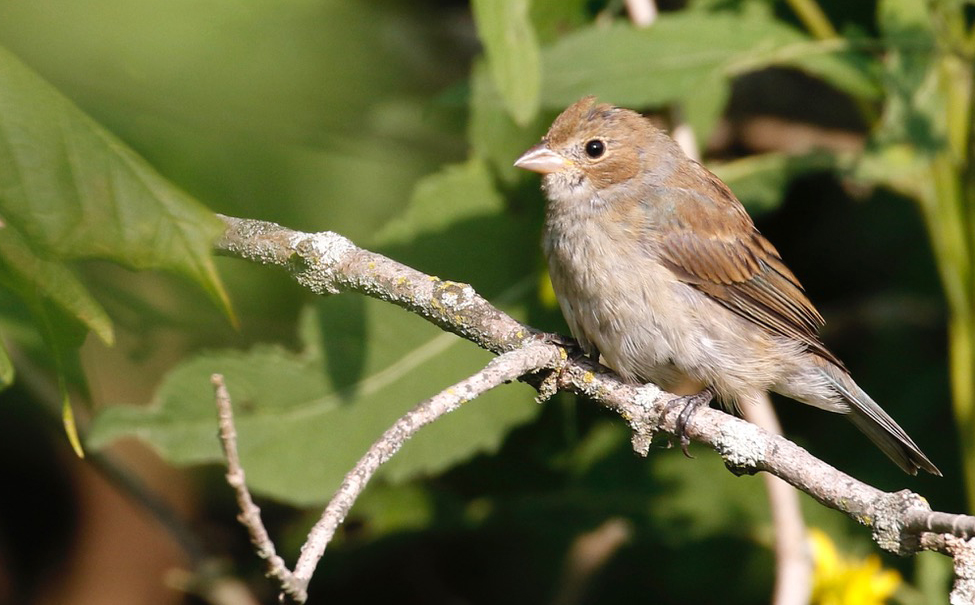
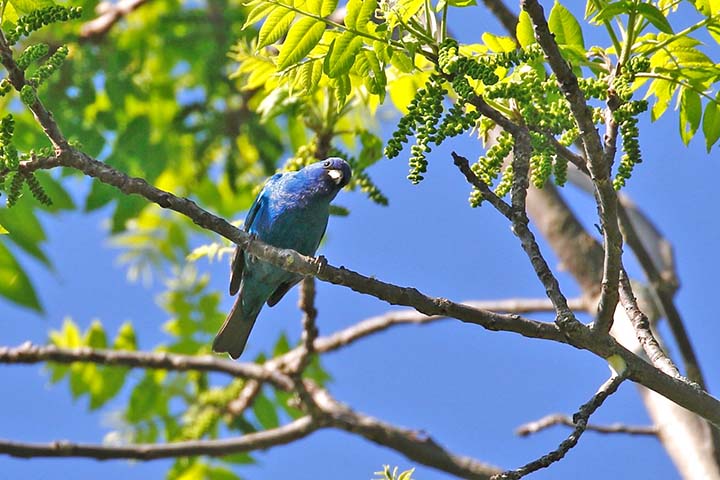
“Fall migration is completely different than spring. The birds aren’t singing and they don’t look the same,” she said. “For me, they’re in the “shakes head, beats me” category.” In order, juvenile Indigo Bunting, Magnolia Warbler and female American Redstart.
On Monday, the tally increased to 41 species, including short glimpses of 11 warblers. Deb is out there again today. The air is warm enough to remove a sweater now and the droughted grass crackles under foot. The Quarry Farm Birders are a stealthy bunch, though. Can’t wait to see what Deb and her camera found feeding in the goldenrod and ironweed.
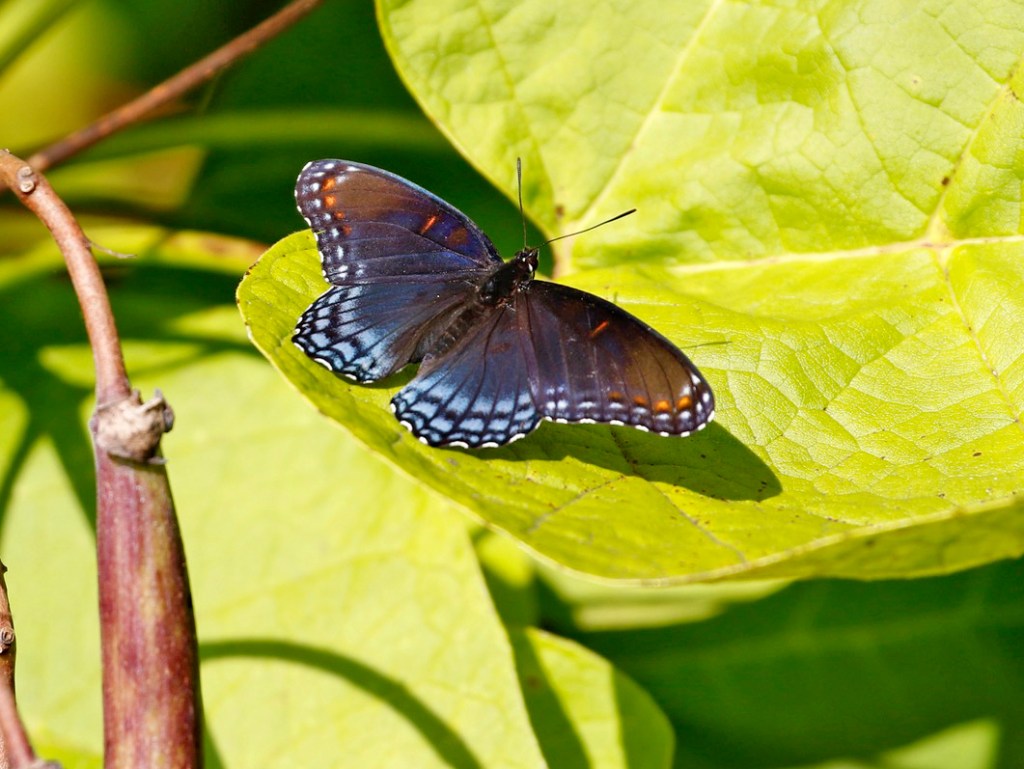
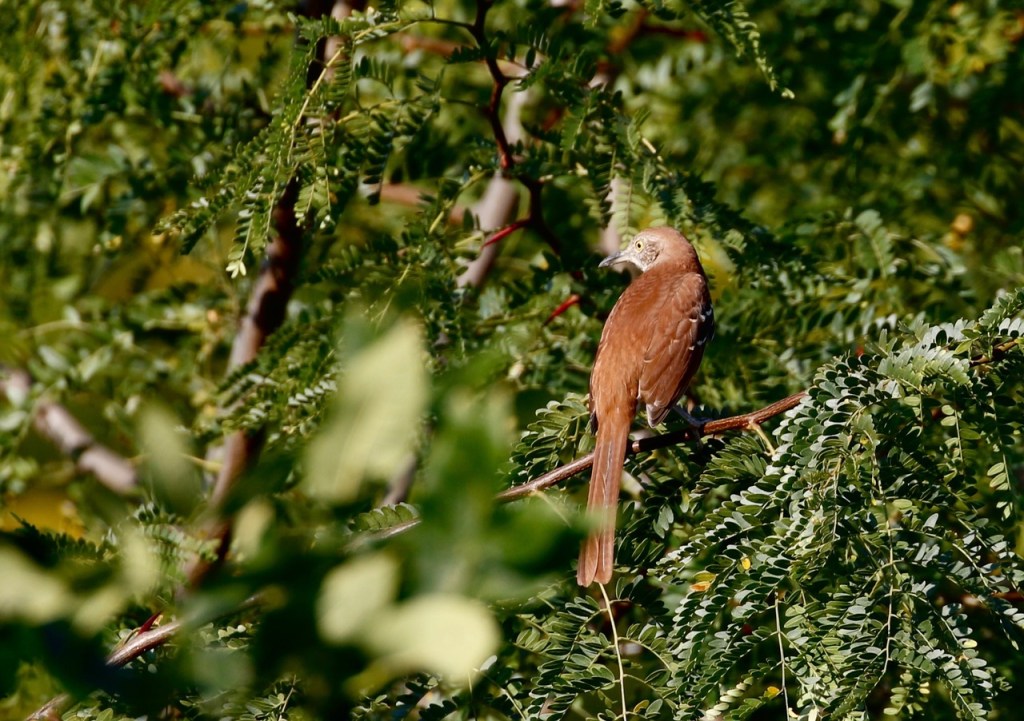
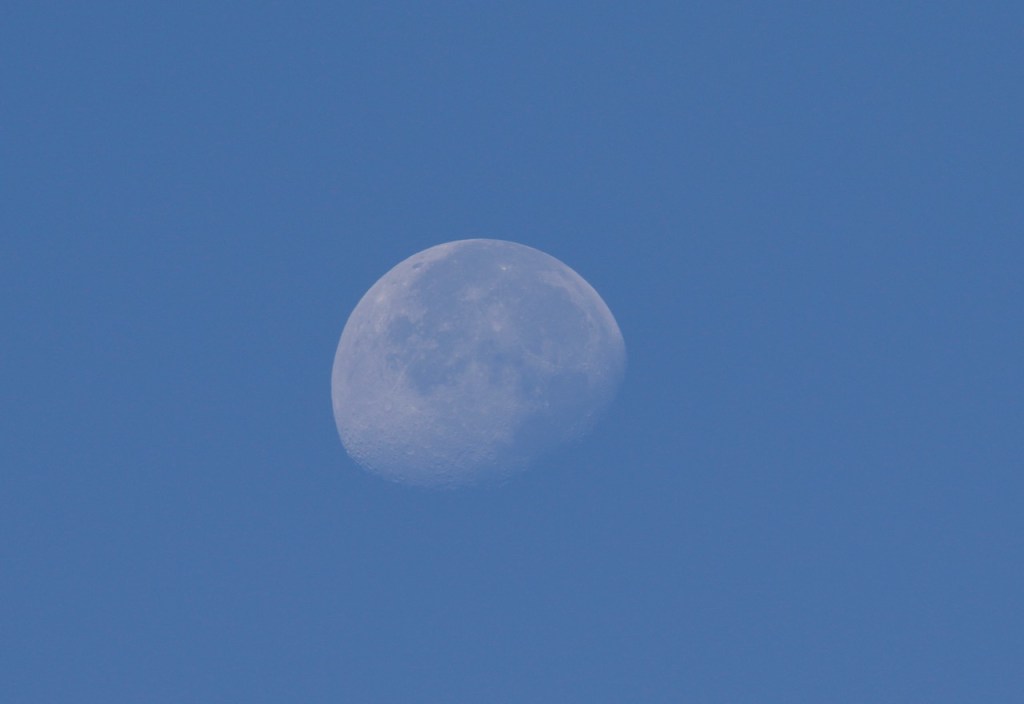
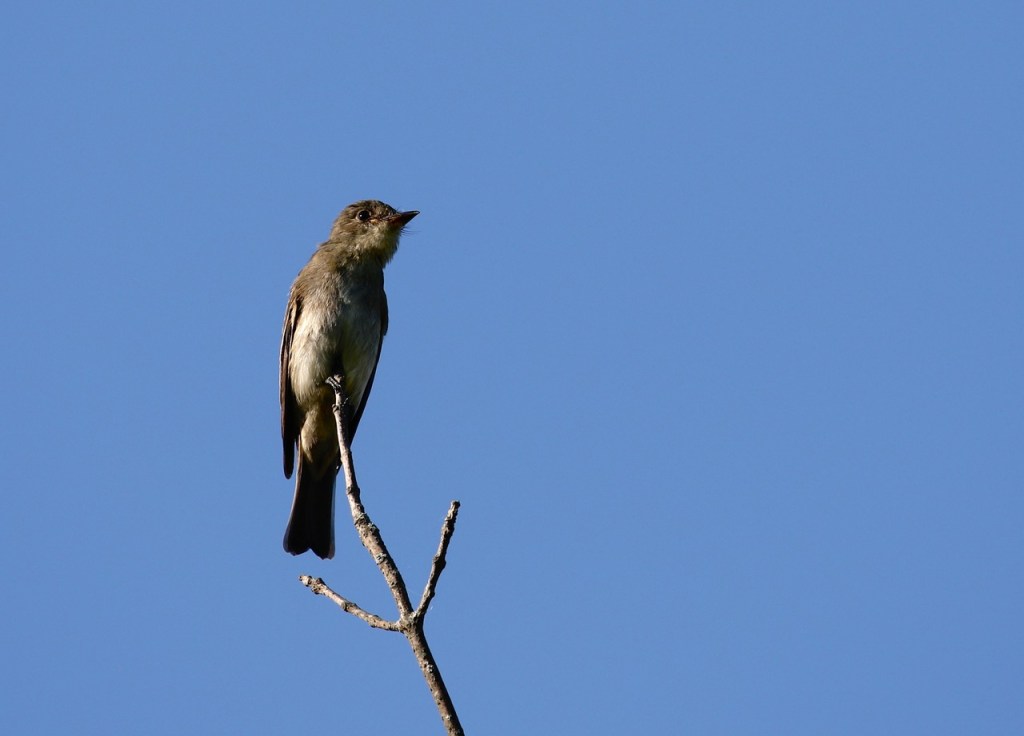
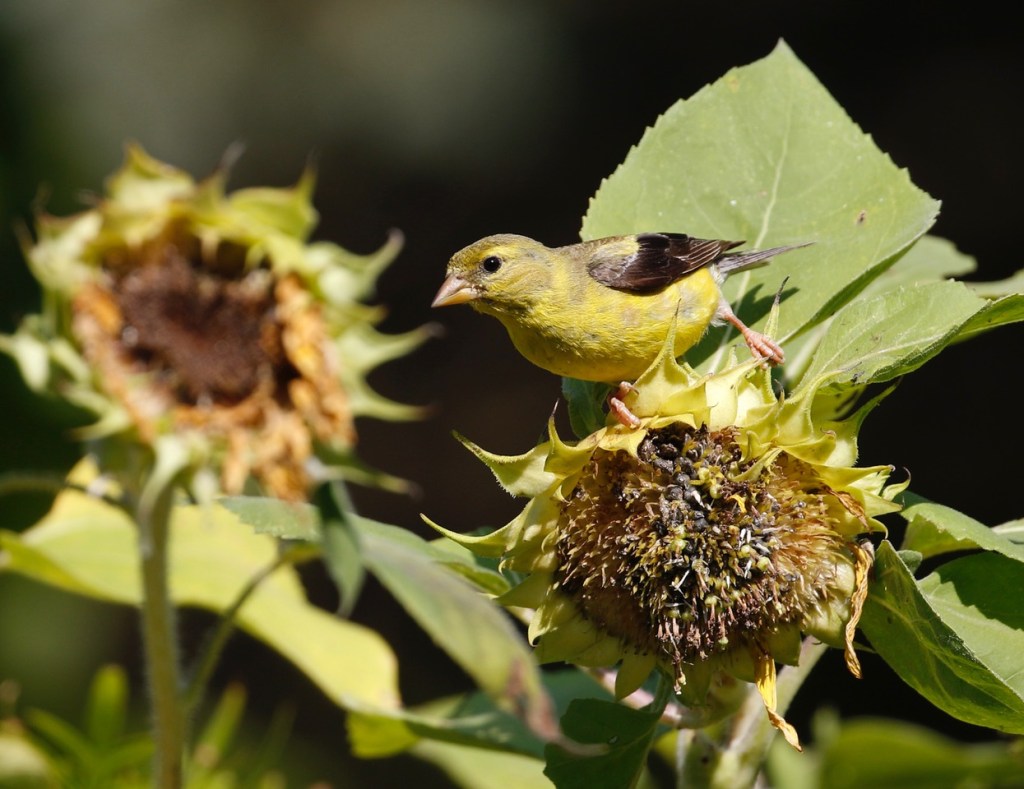
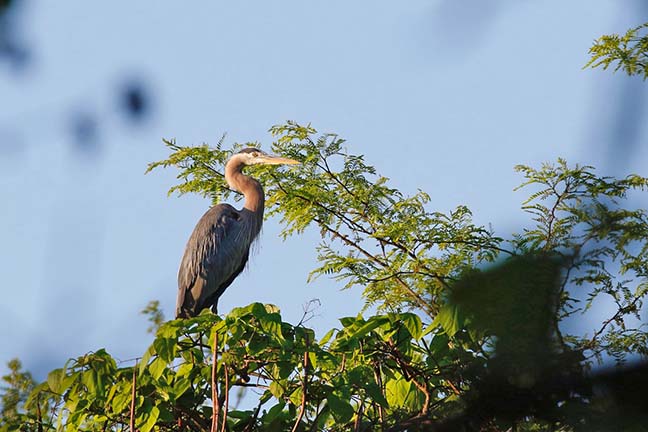
Common YellowthroatFemale American RedstartMagnolia WarblerJuvenile Indigo BuntingRed Spotted Purple ButterflyBrown ThrasherWaning Gibbous MoonEastern Wood Pee-weeAmerican Goldfinch
Birder Deb had a first yesterday, for herself and The Quarry Farm. Among the 52 bird species that she reported on eBird, “I heard and saw a Connecticut Warbler on the trail before the creek overlook,” noted Deb. “I have a friend in California, Tim. He told me before we moved to try and see a Connecticut Warbler. They are tough. They sing, but rarely show themselves. A few years ago one was reported at the Bluffton Preserve. It was hotter than fish grease and I stood in the sun for an hour trying a catch a glimpse of it while it sang and sang. Zero, zilch, no luck on a visual. I won’t count a bird for the first time unless I see it. So today when I heard it, I couldn’t believe my ears.”
The app Merlin confirmed the Connecticut Warbler’s song as it sang over and over again. Deb scanned with her binoculars and finally the elusive bird popped up for 2 seconds and disappeared again. Deb stood with her camera ready for about 20 minutes, but it never came out again and eventually stopped singing.
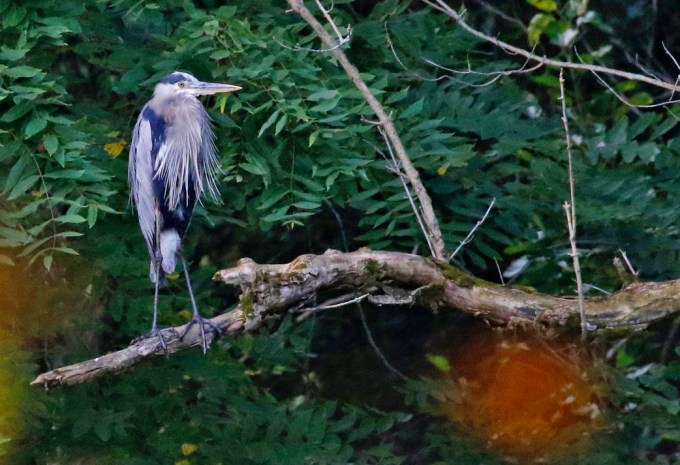
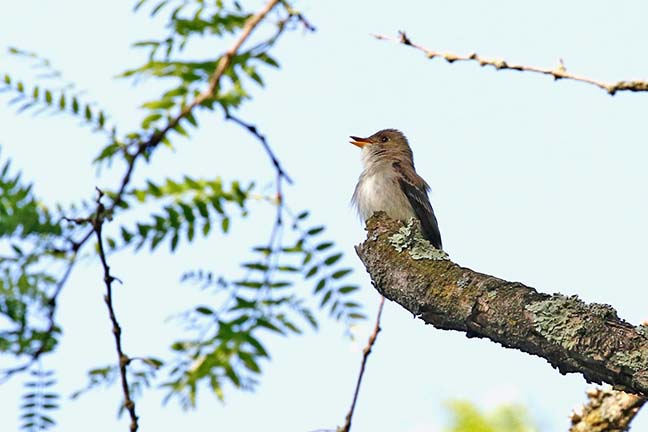
Deb and David Smith are in the nature preserve this morning. Maybe the Connecticut Warbler—TQF Bird #151 on eBird—will pose. According to Deb’s friend Tim, these $%$@ birds are hard to spot. Deb did capture some portraits of more cooperative avian species: Great Blue Heron in a tree on the far side of the quarry, an Eastern Wood-Pewee and an Indigo Bunting who seemed amazed to see a Deb below its tree.
At this point in time, the farm animal sanctuary is primarily a senior living facility. The three donkeys are well into their 20s. At five, Clive is the youngest of the five pot-bellied pigs. The others, as well as Nemo the big pig, are at least 10. Brownie the Rouen Duck is at least five (I just read that they can live to be five!) As with humans, supplements joint health and anti-inflammatories are part of daily food prep. The residents came here to live out their lives in as much peace and freedom as possible. It’s tough to admit when The Quarry Farm may not be the best place for them to do so.
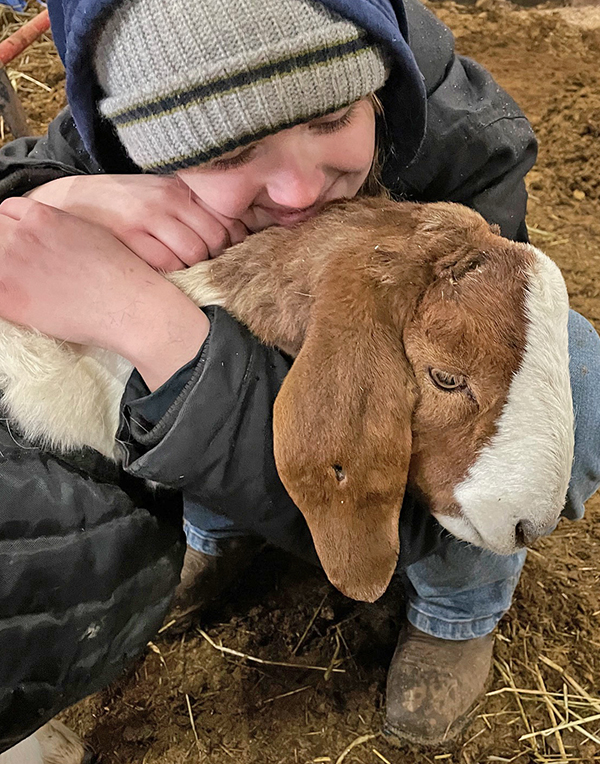
Tommy the Boehr Goat was bottle-raised by a gentle boy who cared for him. He was initially named “Tongue-ey” because the little goat was unable to keep his tongue in his mouth. When Tongue-ey came here, we hoped that he would become part of the herd. Unfortunately, the other goats kept him at a distance. We found out why when we found him non-responsive on a January morning. We drove him to Ohio State University Farm Animal Services where he spent a week.
The prognosis was probable failure to thrive. His little body was unable to regulate its temperature and he was unable to fight off parasites as healthy goats do with regular treatment. Our friend Tim Jasinki at Lake Erie Nature & Science Center put us in touch with Whispering Acres Farm Animal Sanctuary near Medina. This facility is home to a number of animals with special needs, and many of these animals are ambassadors for hospice therapy and veterans with PTSD. Tiny Tongue-ey—now Tommy—was immediately surrounded by equally tiny goats. Janine Smalley, the director of the sanctuary, sent photos of him at work, providing comfort to someone in need.
…and Sometimes the Best Place is Here
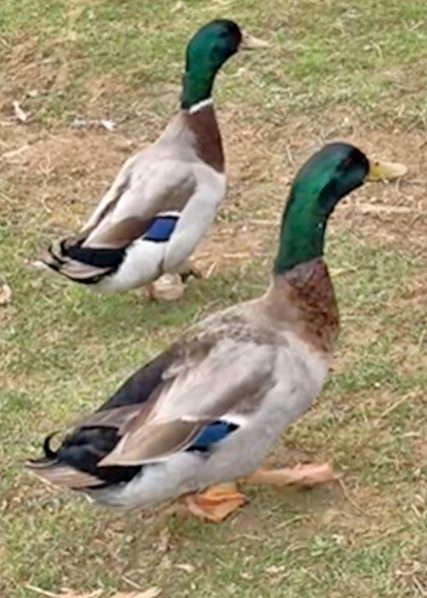
While making arrangements to transfer Tommy to Whispering Acres, Janine asked if The Quarry Farm would be able to accept any ducks. Someone had just surrendered two Rouen drakes. In addition to Brownie, there are two more Rouen ducks here. Brownie and the Brownettes could certainly hold their own. Although it is Spring and the two brilliantly-plumed males are rather obnoxious with the season, Brownie leads them around by their bills.
Have you noticed, as we have on The Quarry Farm, an absence of Woolly Bear caterpillars this fall? Typically, the fuzzy black and brown creatures are a common sight in late summer/early fall, crawling on the warm pavement of our country road. Not so this year. Here’s a brief look at the life of our fuzzy, bristly friend, to know it better and attempt to understand why its scarcity matters.
Woolly Bears are the caterpillar form of several related moth species, including the orange-yellow Isabella Tiger Moth (Pyrrharctis Isabella), which ranges across the U.S, and Southern Canada. The moth typically produces two broods a year. It lives about two weeks, nectaring on a wide variety of flowers. It mates, lays eggs, and dies. The caterpillars we see in the fall are the second brood. They’ve grown fat on leaves such as violets, nettle, sunflower, maple, and elm, and green grasses, and they may have shed five or six times while growing. When the fall brood is ready to pupate, it finds protective winter cover under leaf litter or logs or rocks. During the winter it pupates in a cocoon made from its bristly hairs and emerges as an adult in the spring. The cycle repeats to produce a summer brood.
The second-generation caterpillars that we see in the fall (in a normal year) have eaten their fill, are preparing to hibernate, and are out and about because they’re looking for cover. They are not going to poison us if we pick them up (although they can feel prickly). And sadly, they can’t predict our winter weather—by coloration or by size of the brown band around their middle. Those features are influenced by stage of development, belonging to a particular tiger moth species, and diet. There is no special little weather sensor embedded under the fuzz.
So why are we seeing so few Woolly Bears? First and foremost, no doubt, is the serious decline of many moth species worldwide—for all the reasons that we know too well and are struggling to deal with: climate change, habitat loss, light pollution in populated areas, pesticide and herbicide use. Also, we could look around us recently at a bleached, drought-ridden landscape and see little food for Woolly Bears preparing to hibernate. Their absence matters because, as pollinators and a major food source for birds and other animals, moths are an important link in the food chain that sustains us.
“Eclipse” was the headline online and in print before and after April 8, 2024. The total solar eclipse that occurs when the dark silhouette of the Moon completely obscures the bright light of the Sun was going to be either A) the end of the world as we know it, with hoards of outsiders streaming across Ohio to rob us all of our lives and livelihood. Or B) this natural phenomenon that occurs every 18 months or so somewhere in the world was going to be a great big ol’ treat, right here.
Download for newsletter
The actual title is offered in gratitude for something that brought a whole bunch of people together—in peace—for four awe-inspiring minutes. The total solar eclipse of 2024 brought people from across the United States to the gardens, creek bank and pasture of The Quarry Farm on April 8. People from Ohio, New Hampshire, Michigan, Indiana, North and South Carolina, and Virginia chose to view the phenomenon from the comfort of camp chairs, alongside the farm animal sanctuary residents, or hiking in the nature preserve.
One gentleman arrived after totality. He had driven here from Eugene, Oregon but heavy traffic held him at a Maumee River crossing. He pulled over to watch then drove south to Road 7L where he walked the trails and sampled eclipse baked goods in the summer kitchen bakery. I didn’t speak with him but others did. I wonder if he will make the trek down under for the next totality.
Board member Martha Erchenbrecher observed the behavior of Bruce the Turkey and K the Canada Goose during the eclipse. K took notice, bobbing his head in surprise. Bruce stayed still. Her observations were shared with the Solar Eclipse Safari Team of North Carolina State University and Arizona State University. We all noticed that both wild and domestic animals fell silent during totality. The farm animals headed for the barns but went back for more visitor attention at the fenceline.
As for me, I didn’t decide ahead of time where I would watch. A couple of hours before, I listened to an interview with a retired astrophysicist known as “Mr. Eclipse”. He has traveled far and wide to see the sun eclipsed completely and partially. He advised that, when the day and time of an eclipse arrives, one shouldn’t think too much about who you ought to be with or how you should view (other than to be safe about it.) One should just be in the moment. So as the moon began to block the sun from view, I found a pair of eclipse glasses that one of the hikers had dropped on the path to the prairie. I parked myself on a quarried boulder beside the quarry wetland. I could hear cheering from up in the gardens and Red Fox Cabin. The sound didn’t budge two turtles that were perched on a log, but the smaller of the two dove under when the astronomical curtain fell.
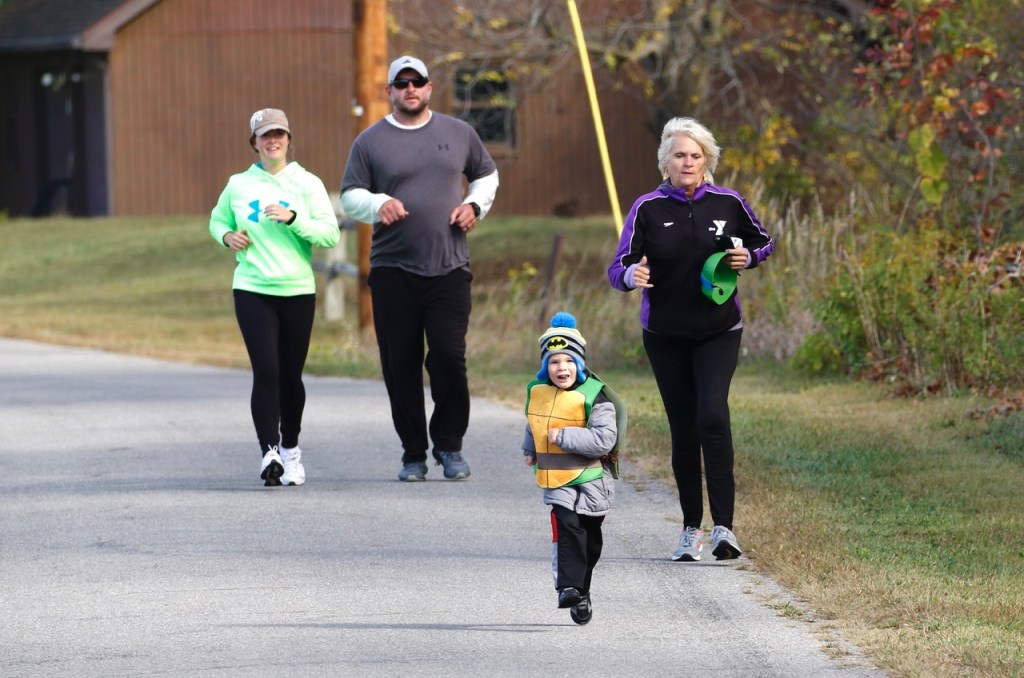
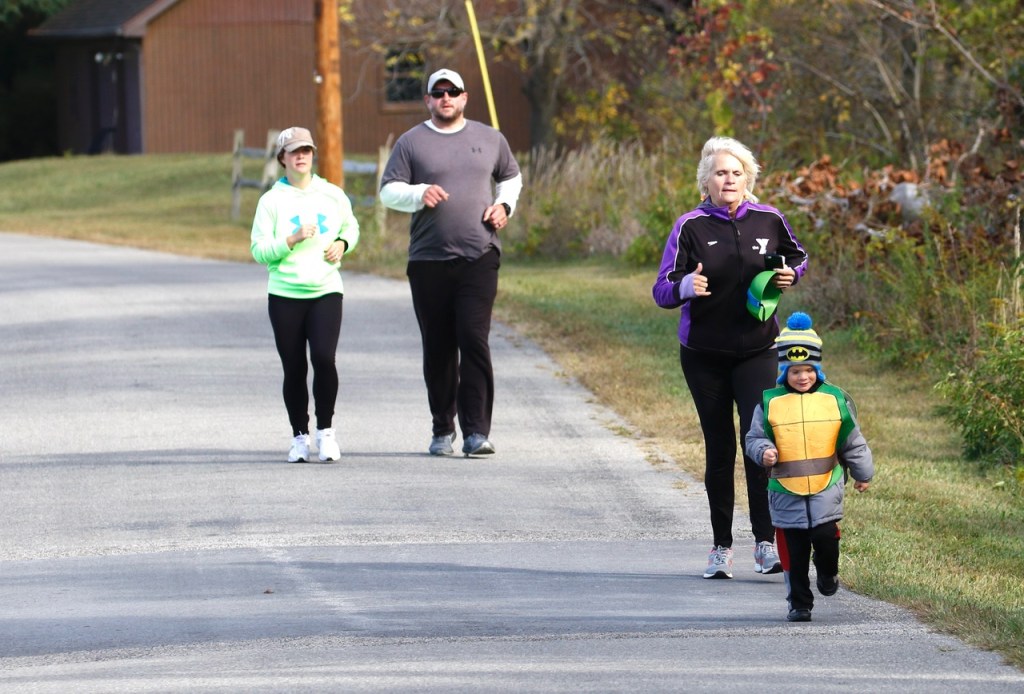
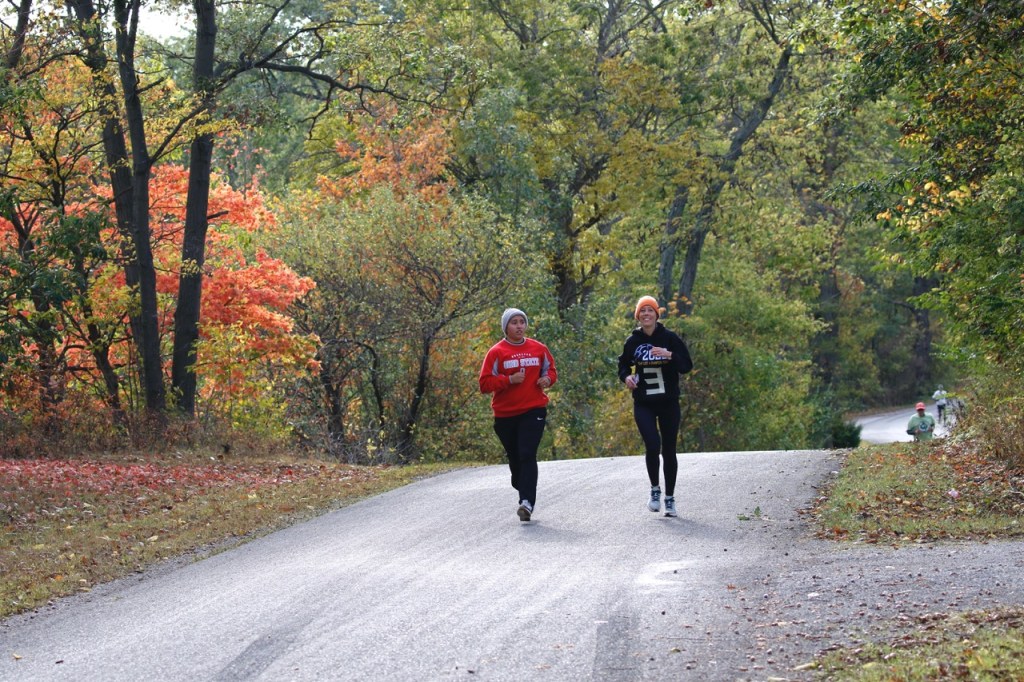
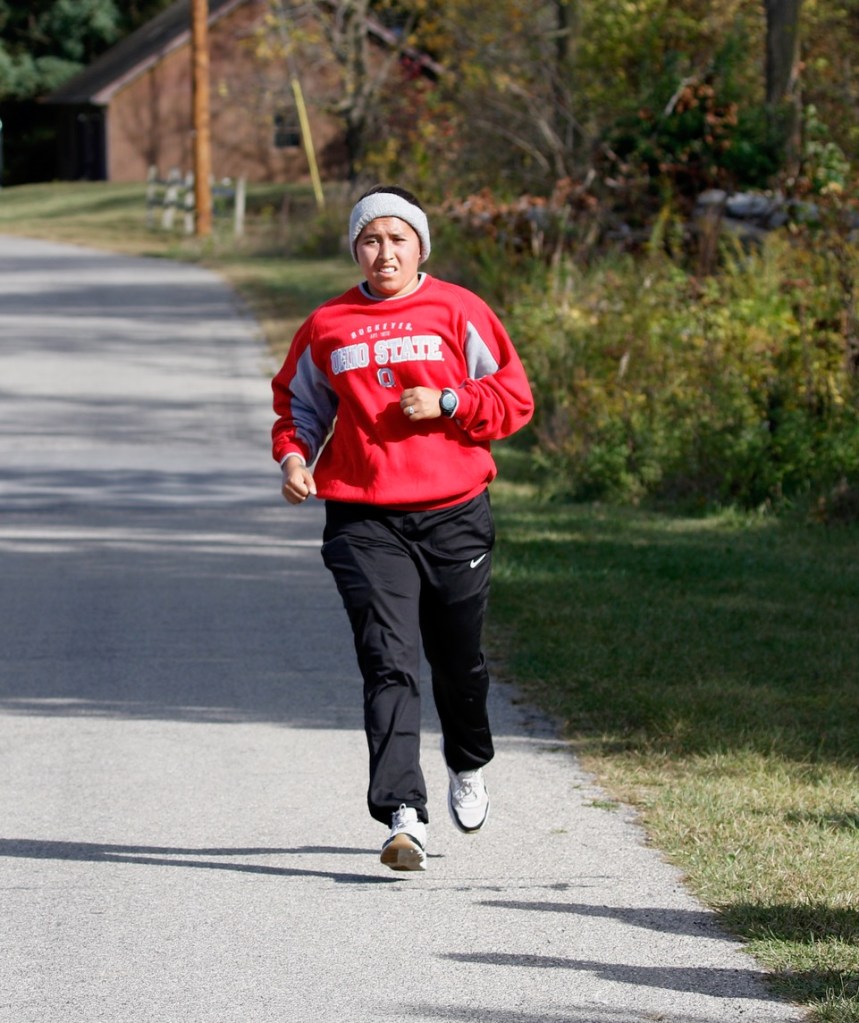
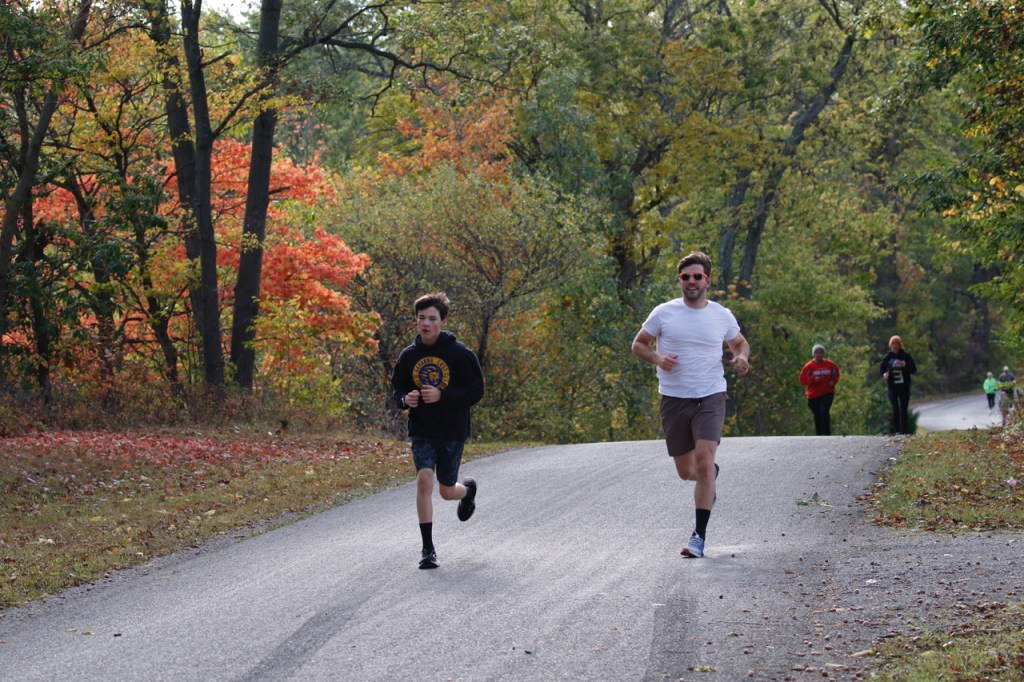
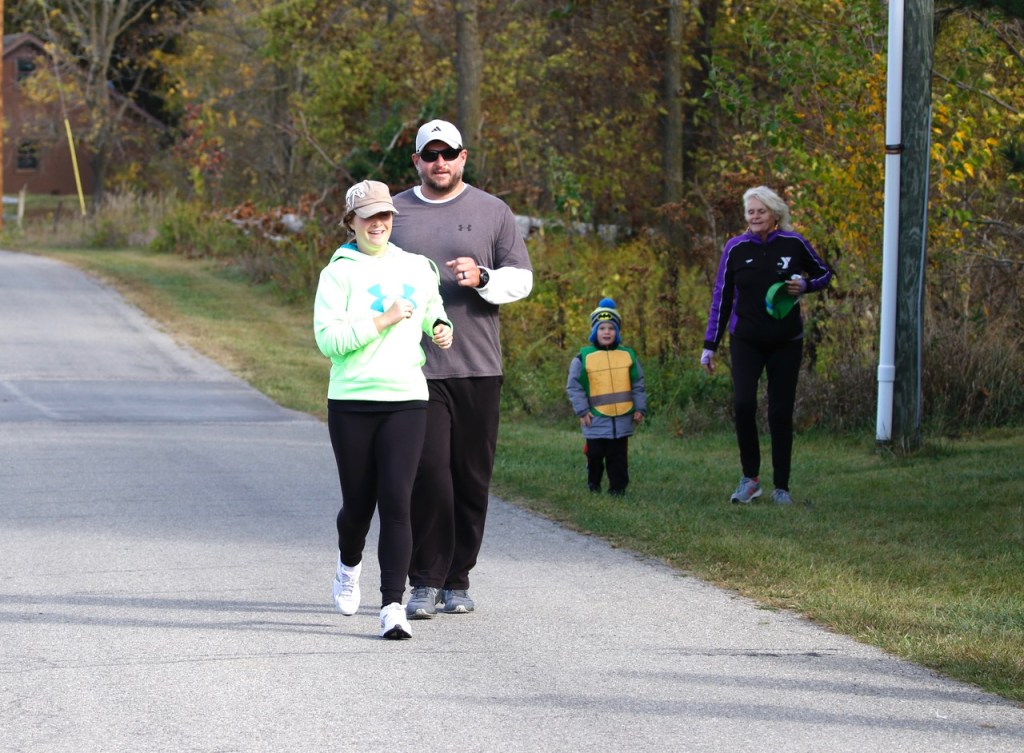
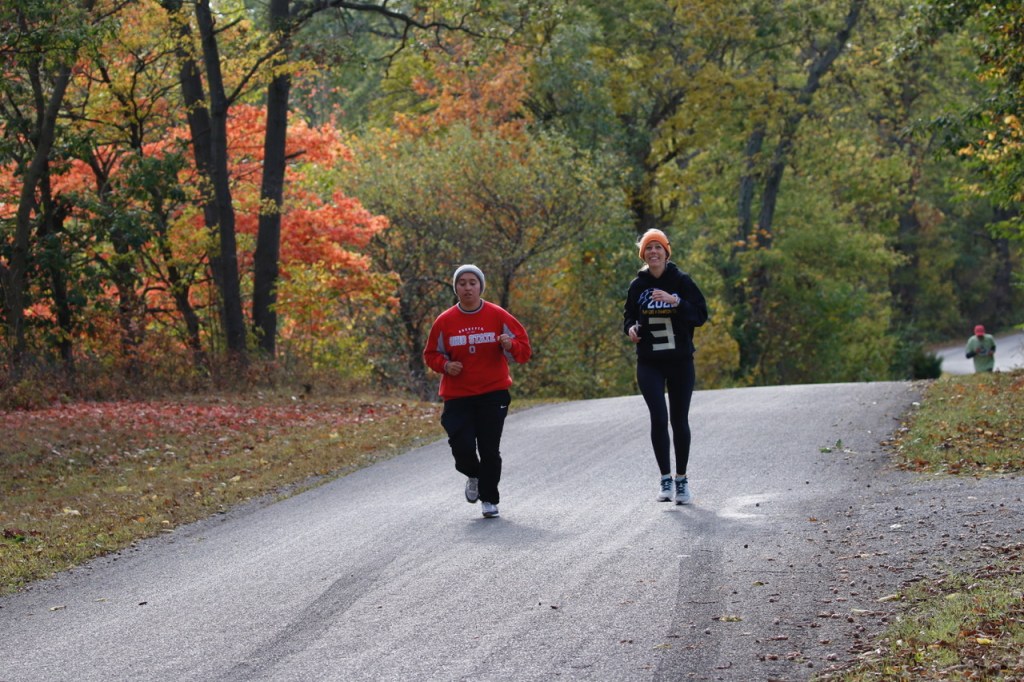
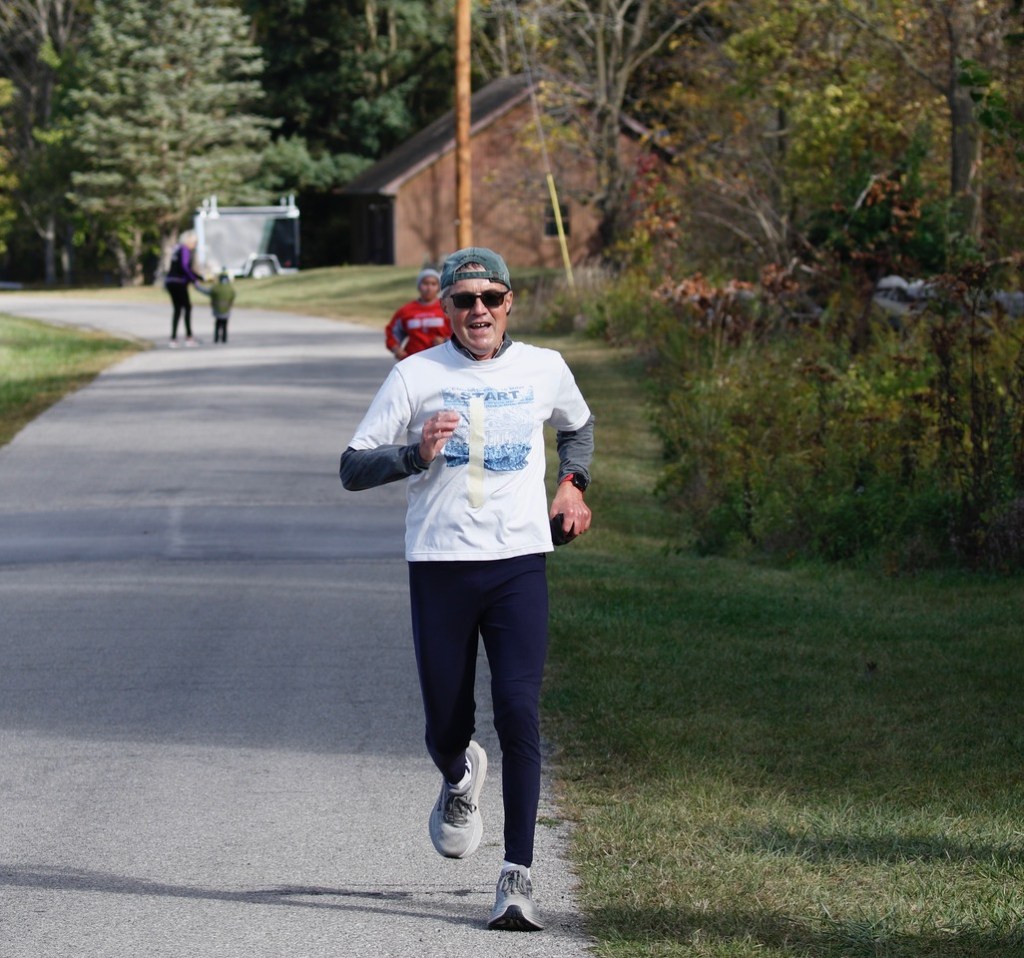
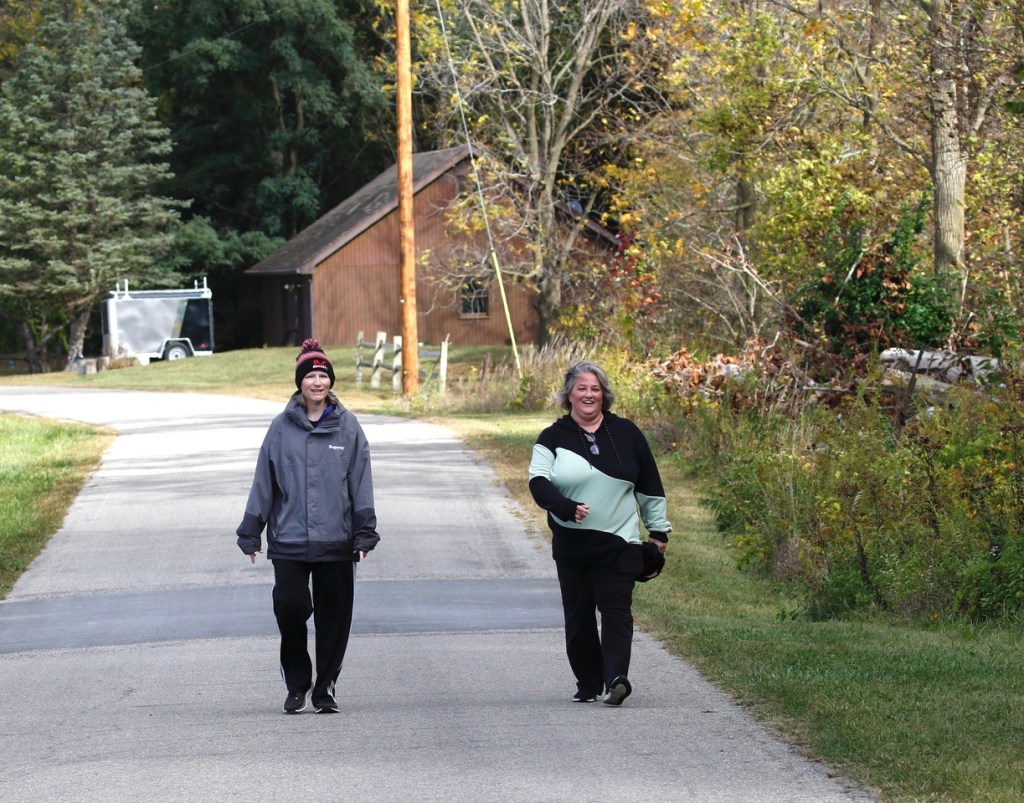
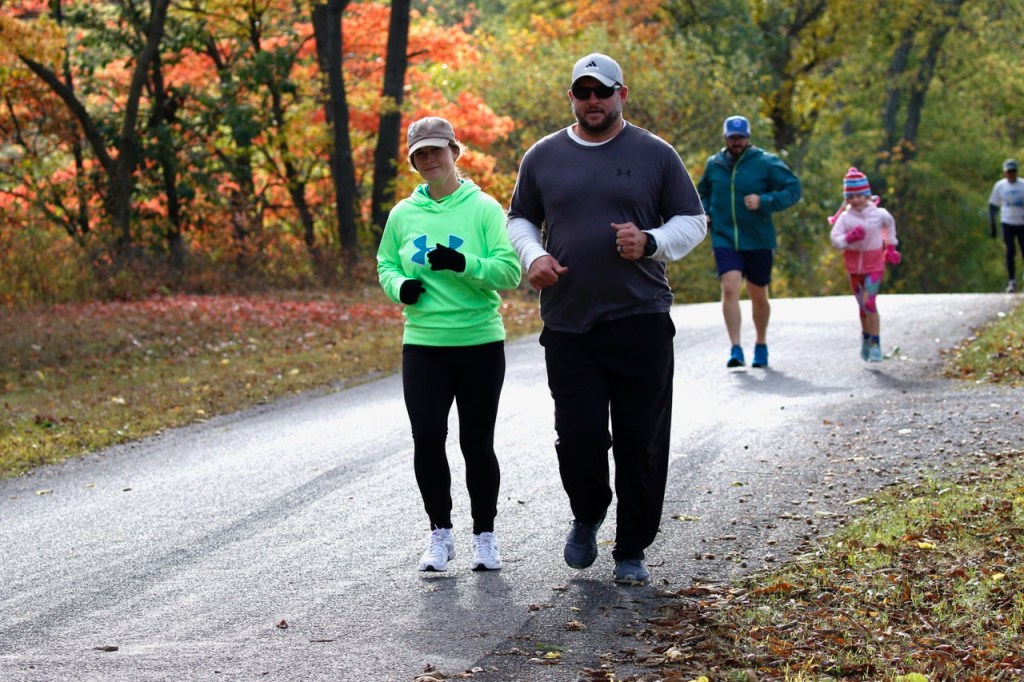
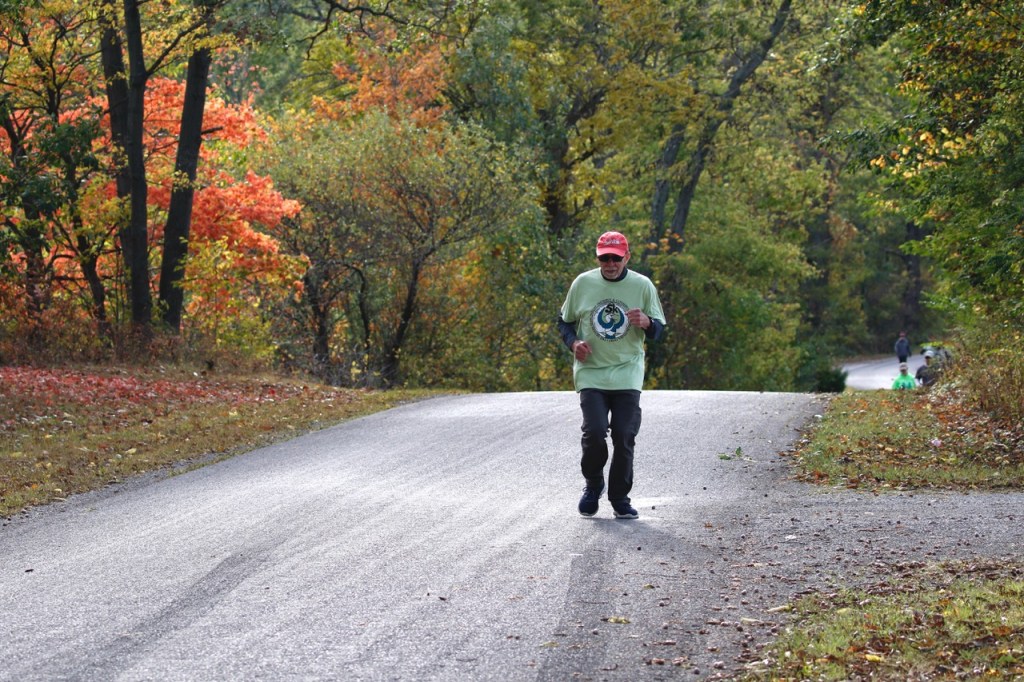
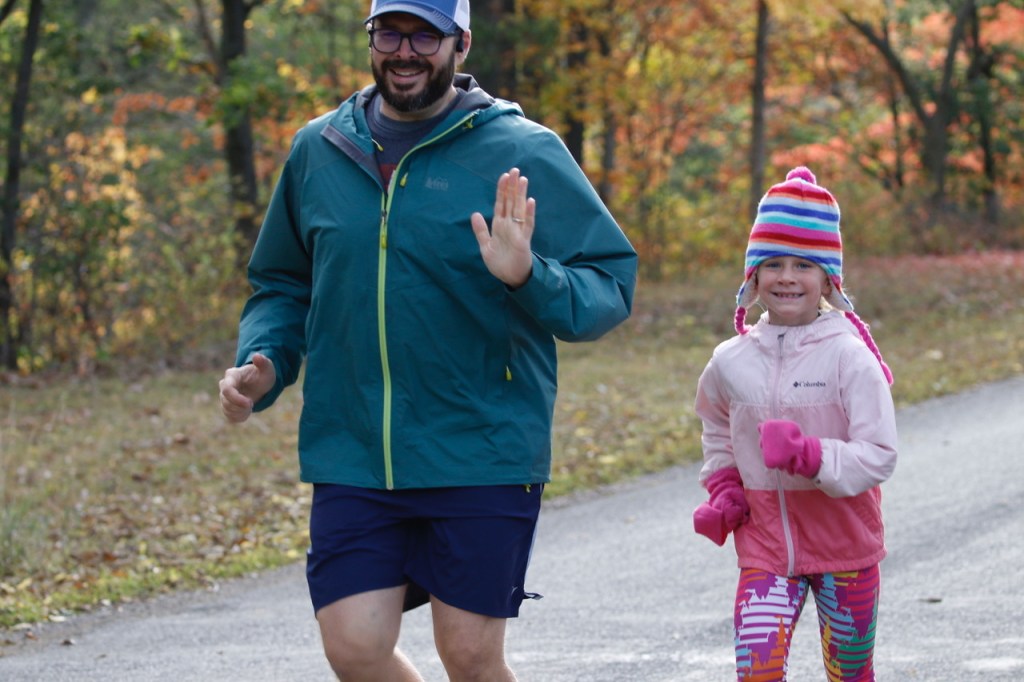
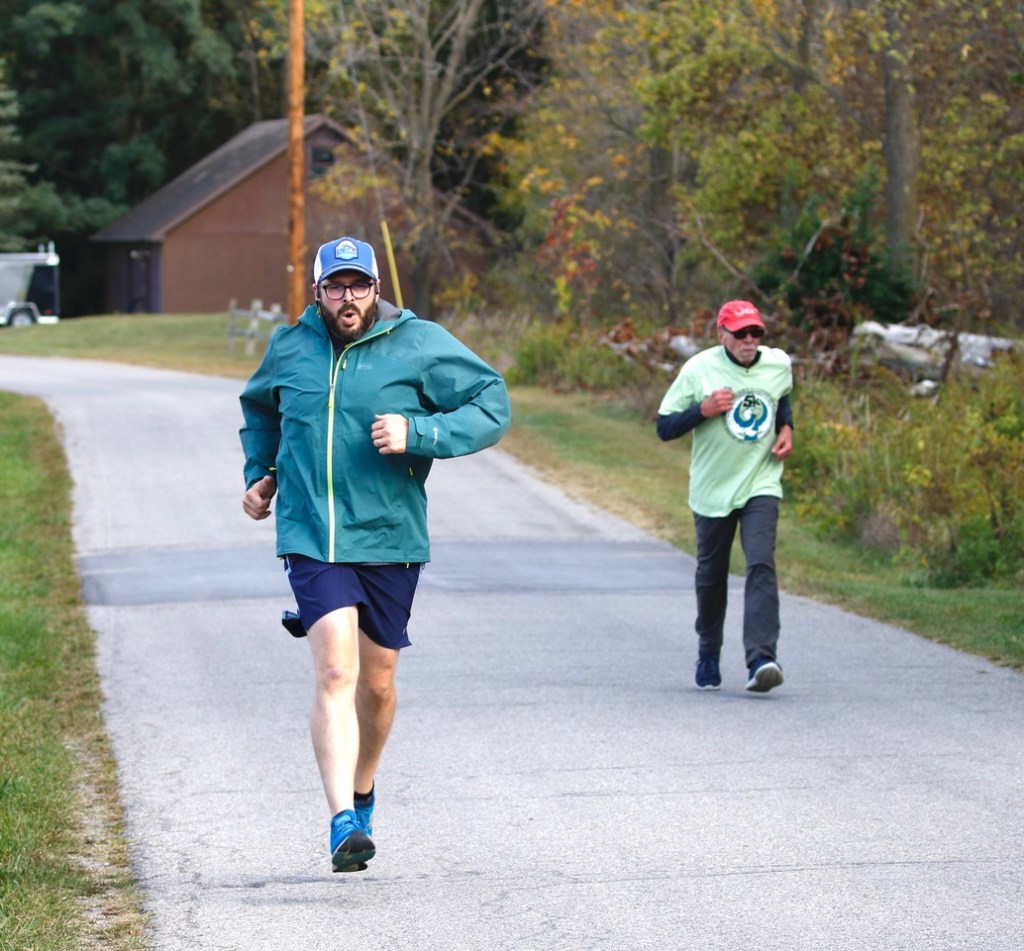
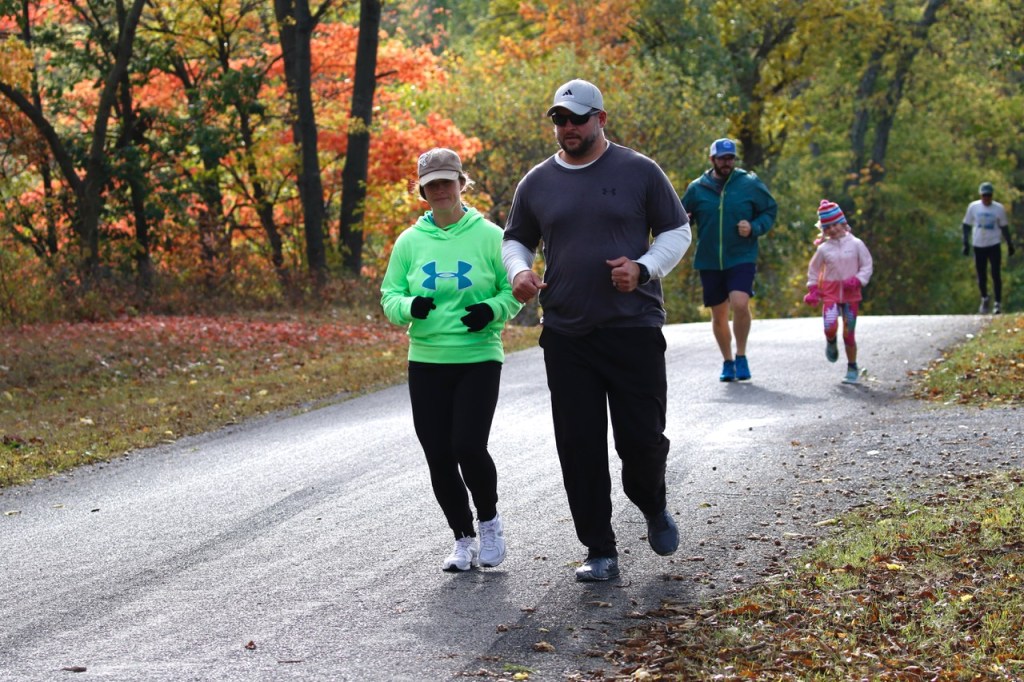
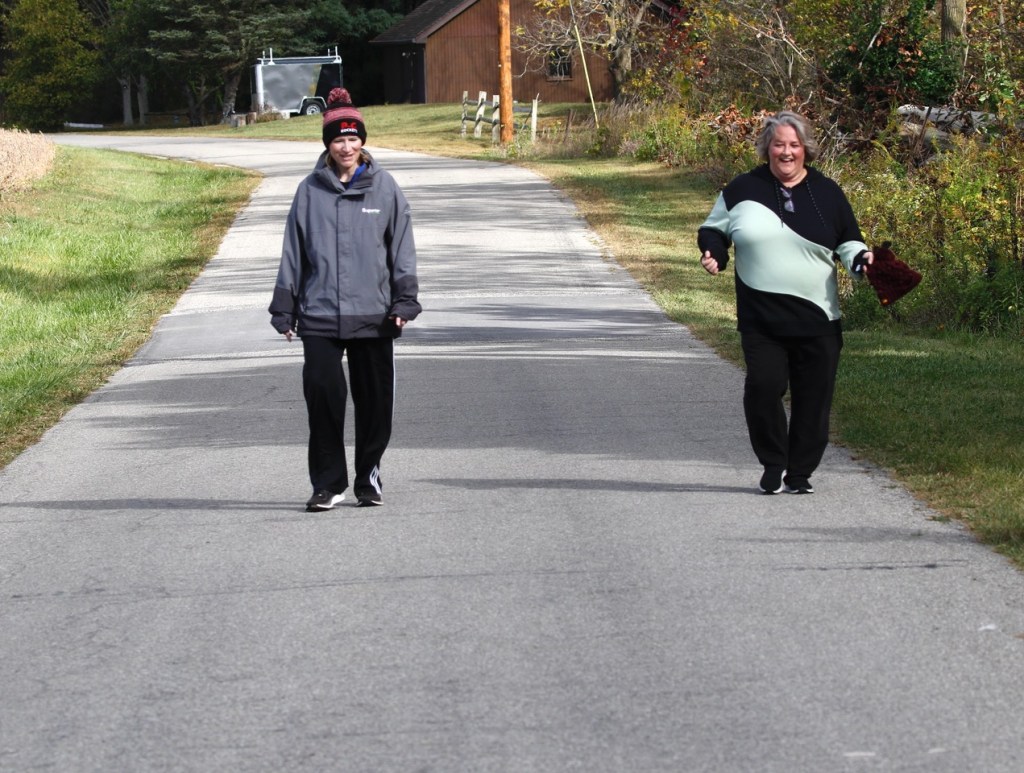
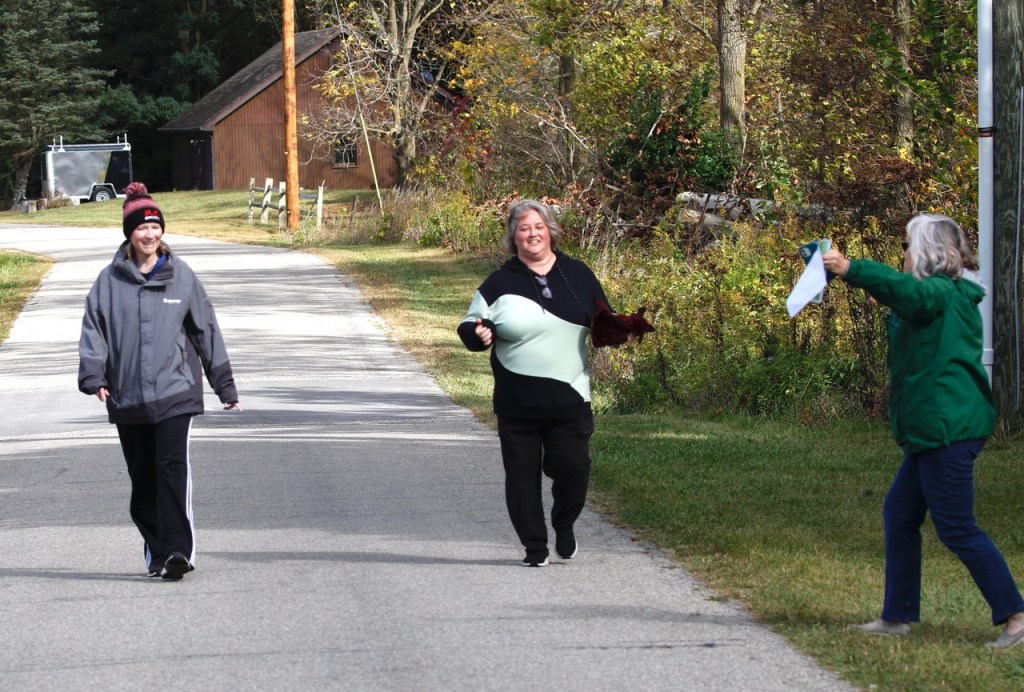
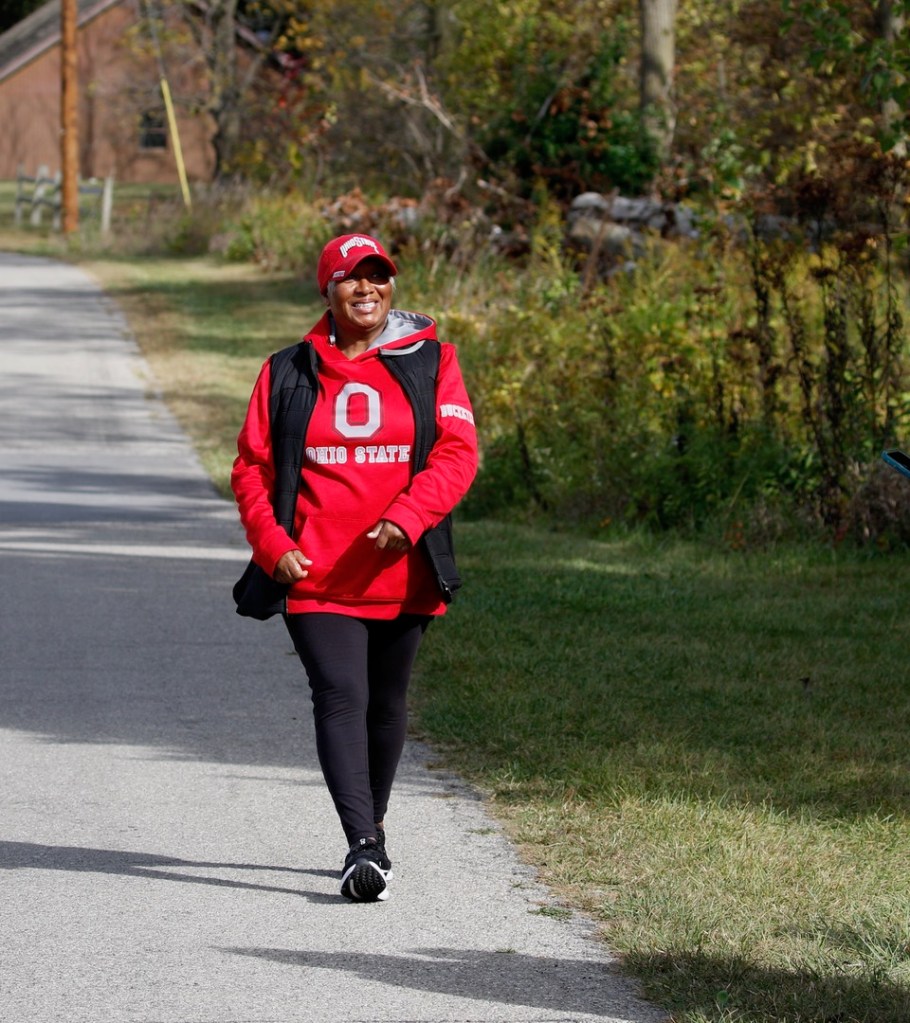
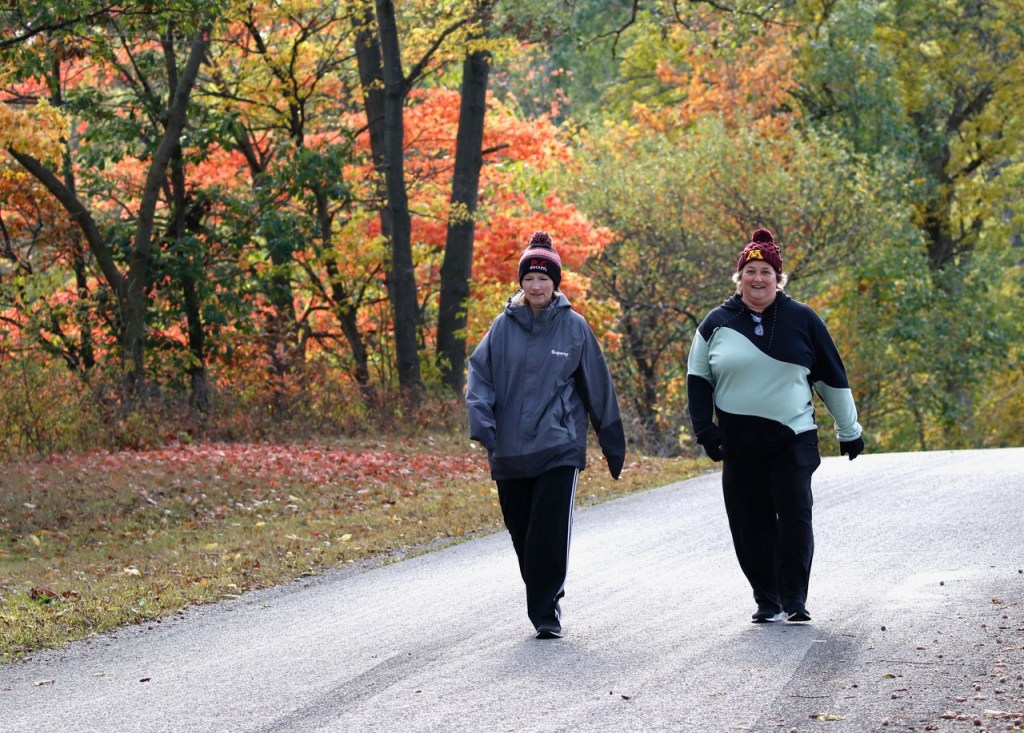
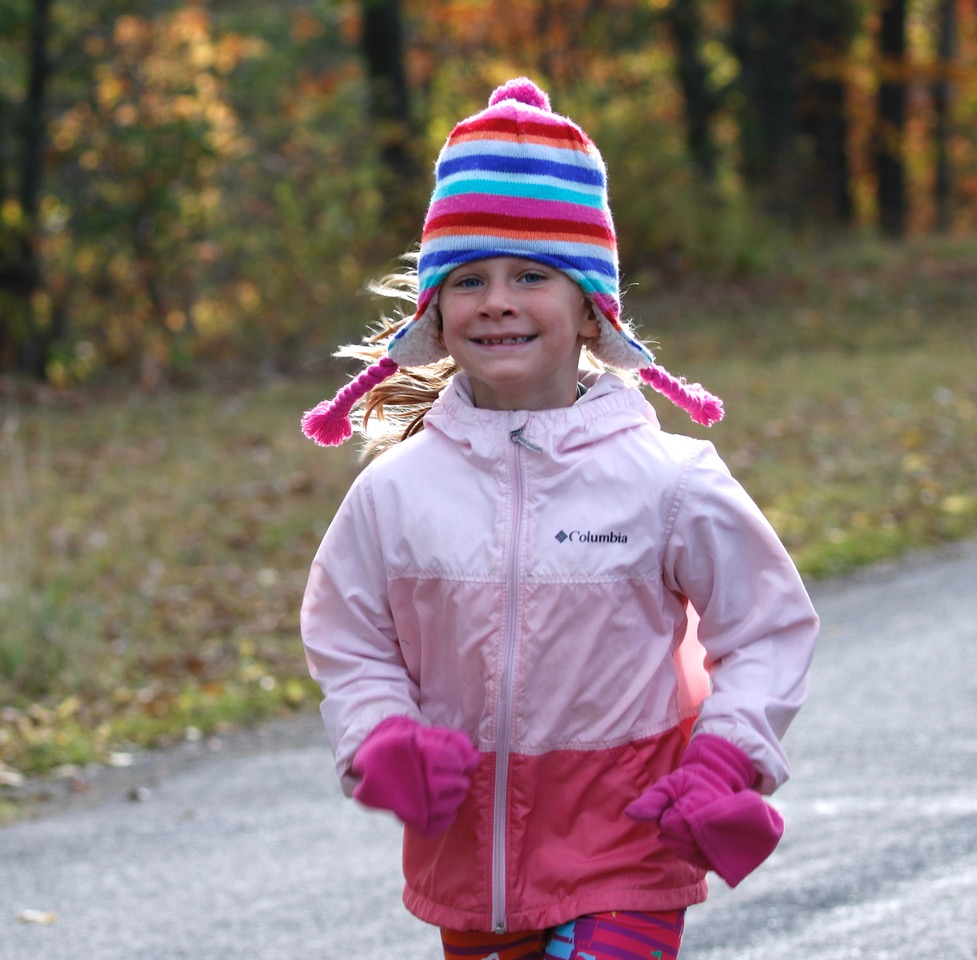
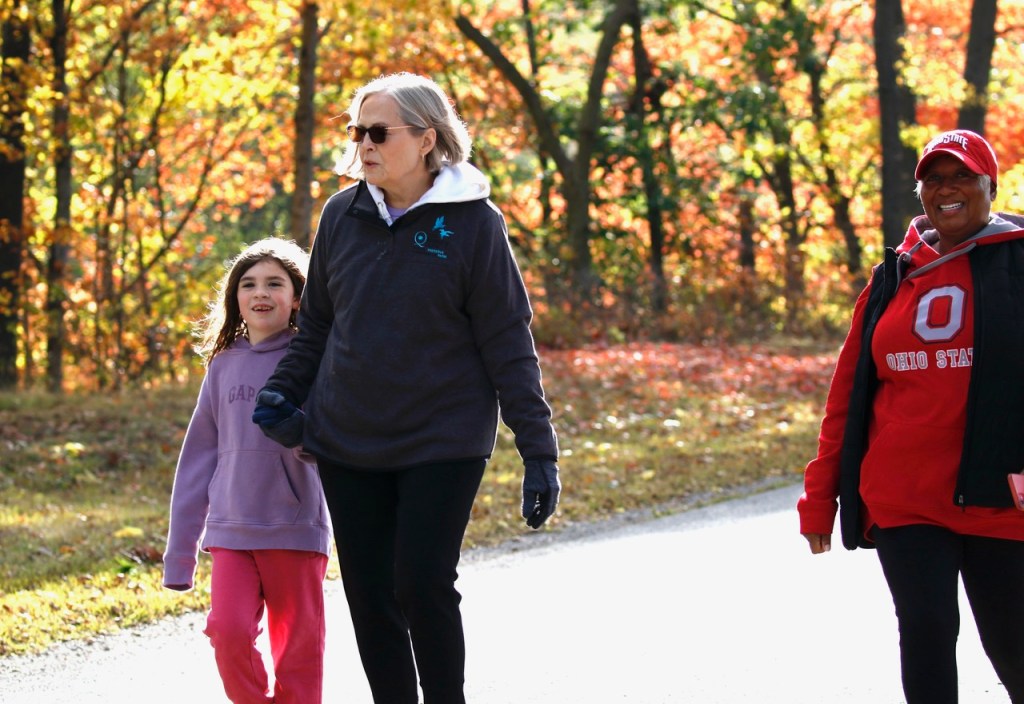
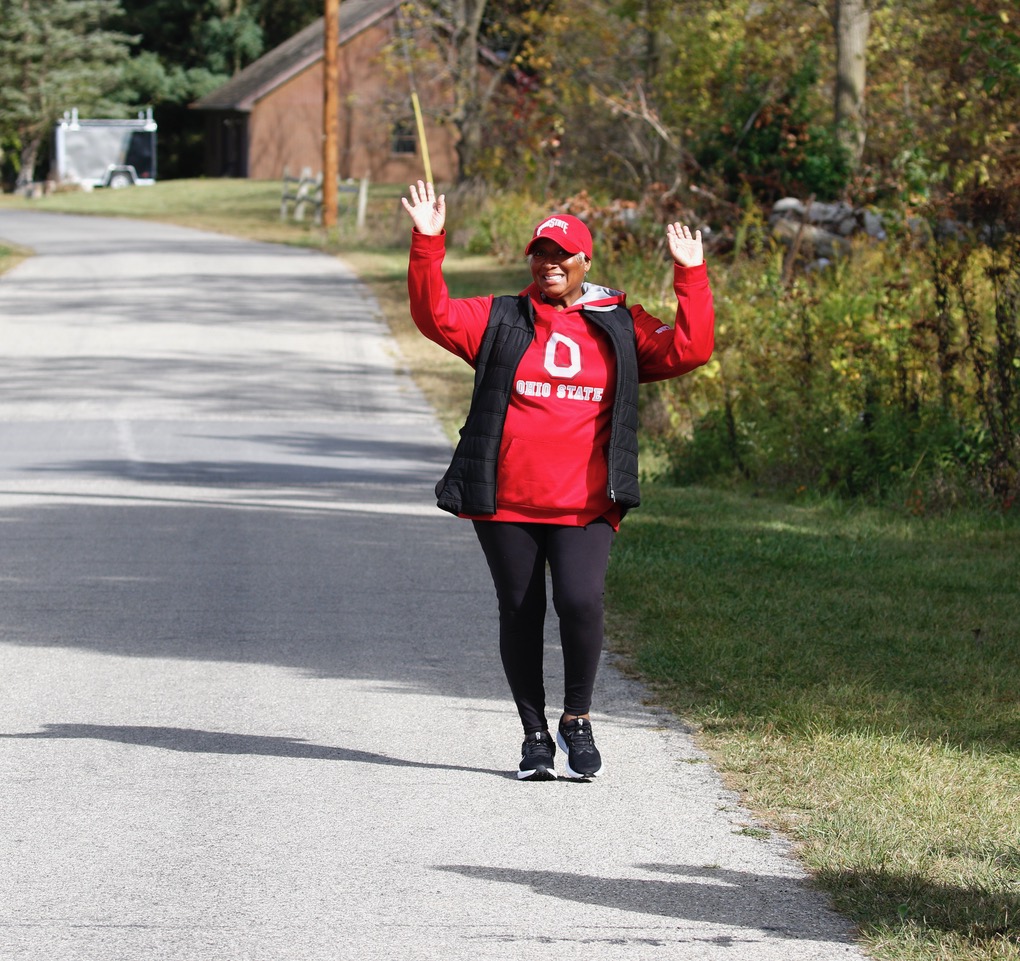
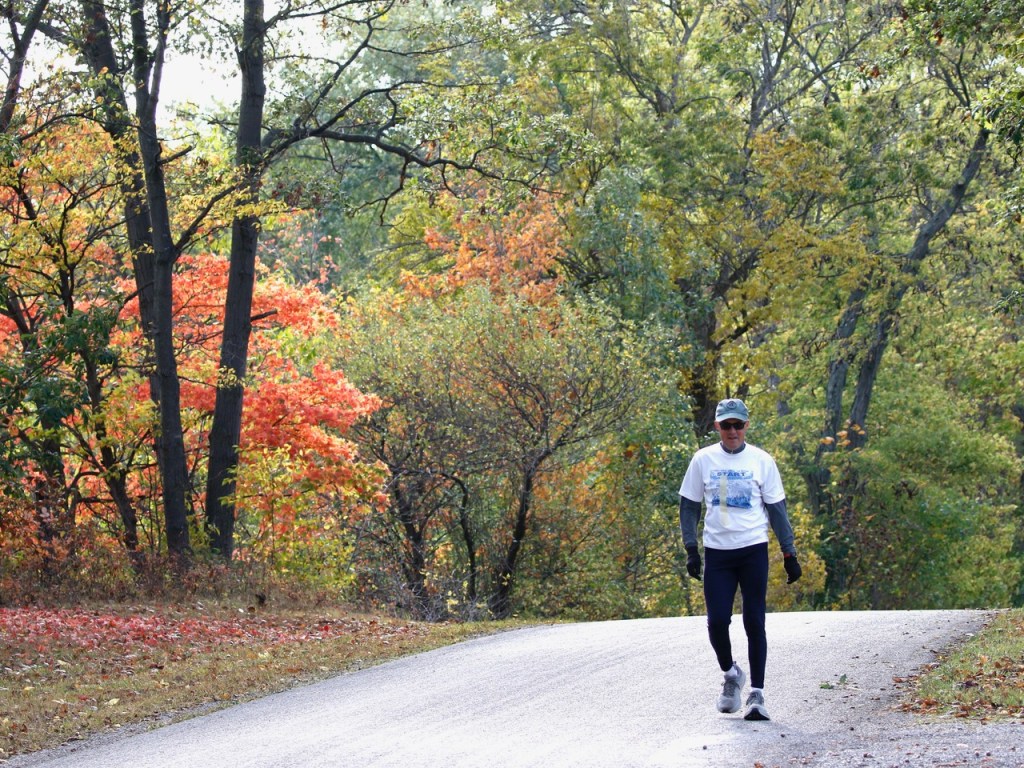
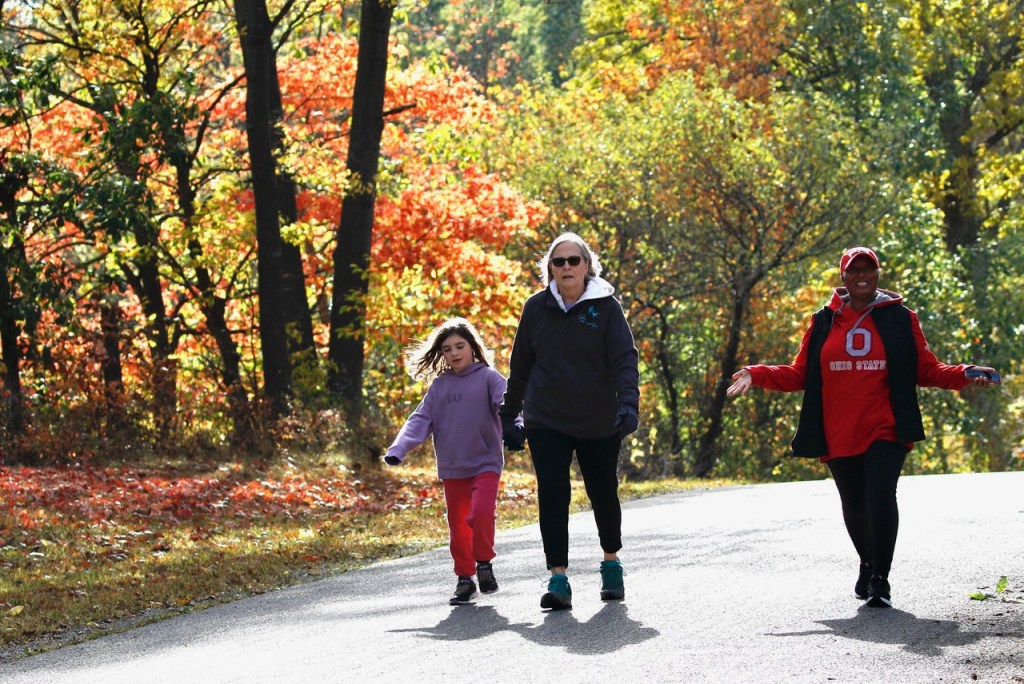
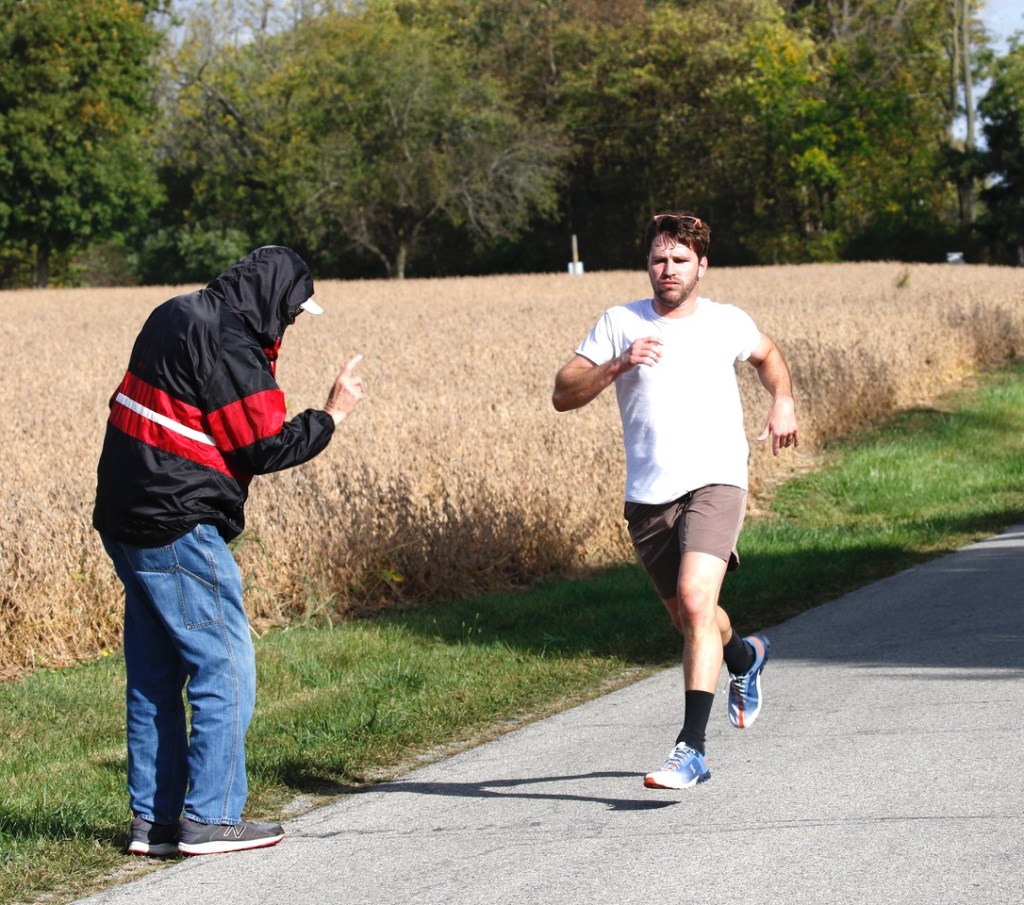
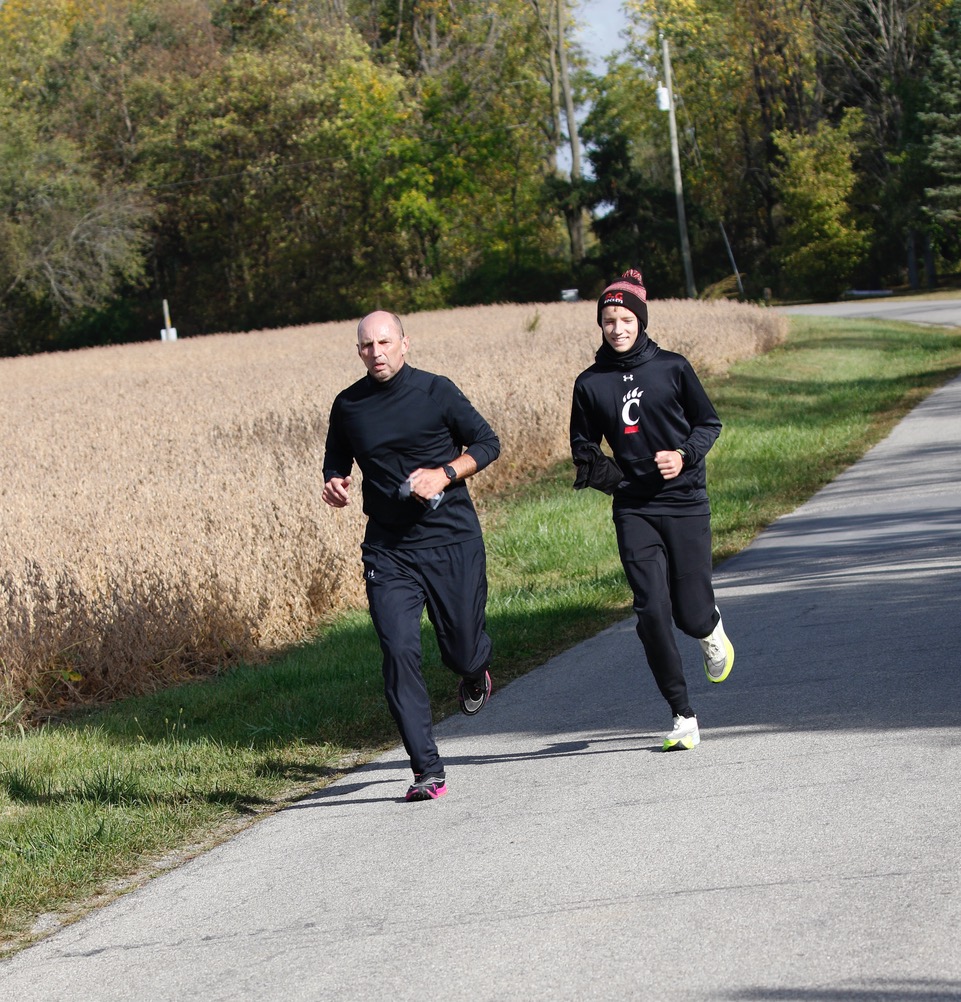
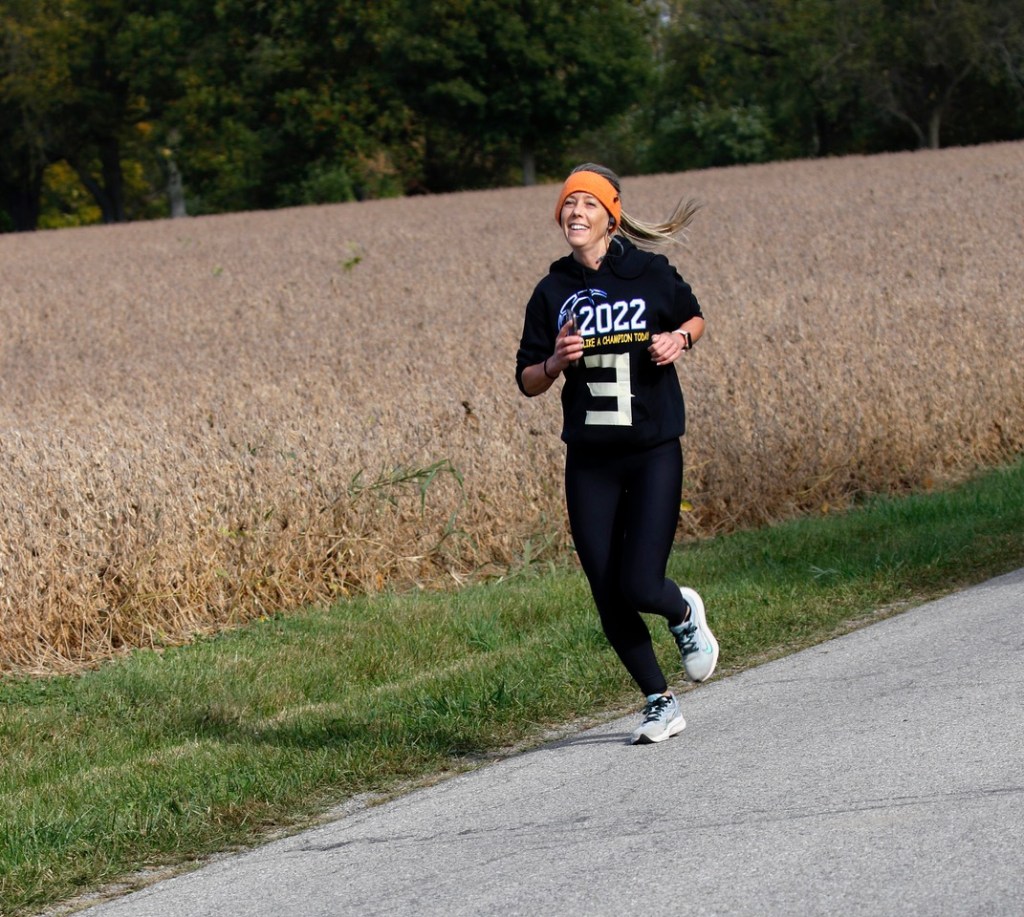
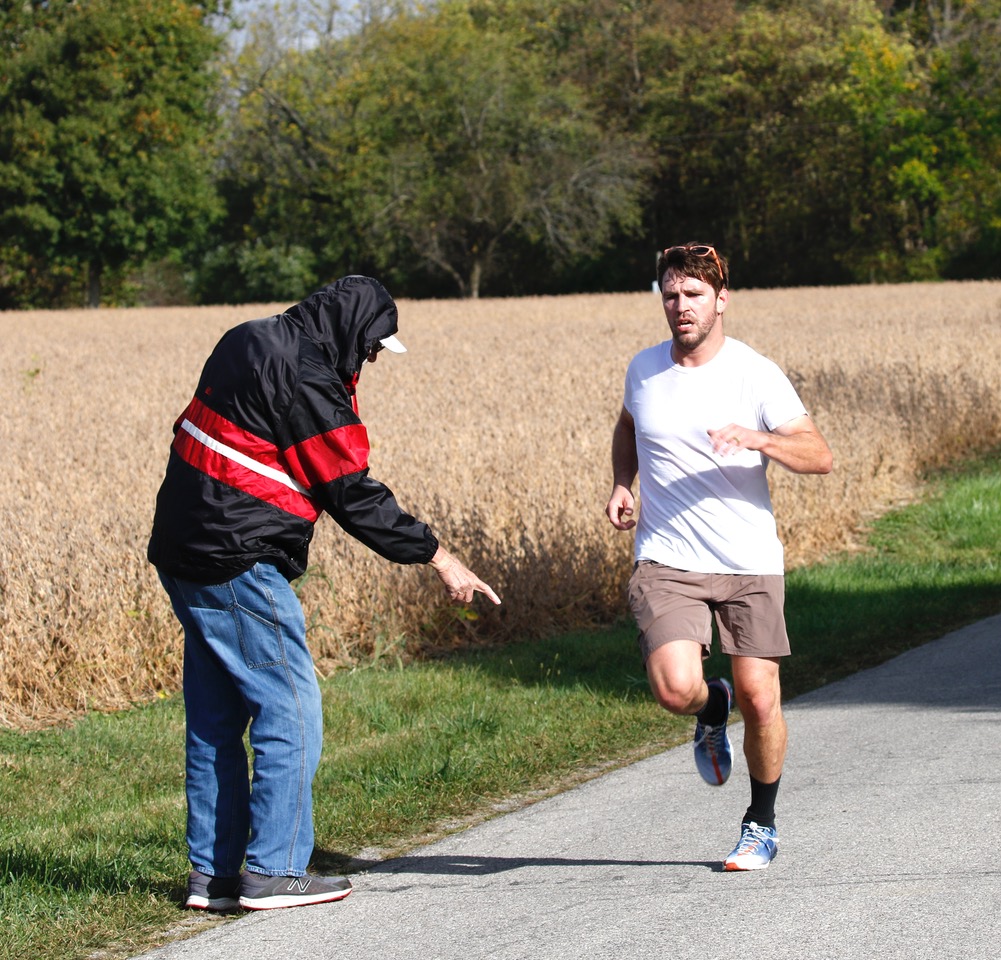
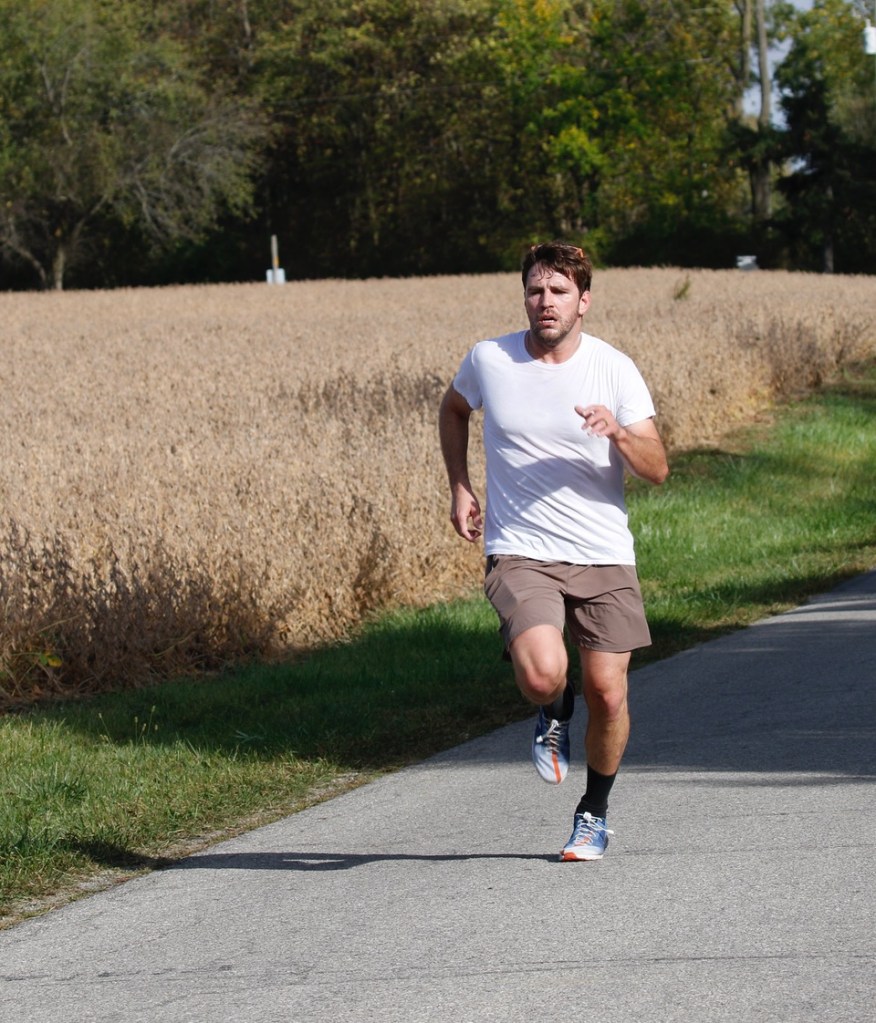
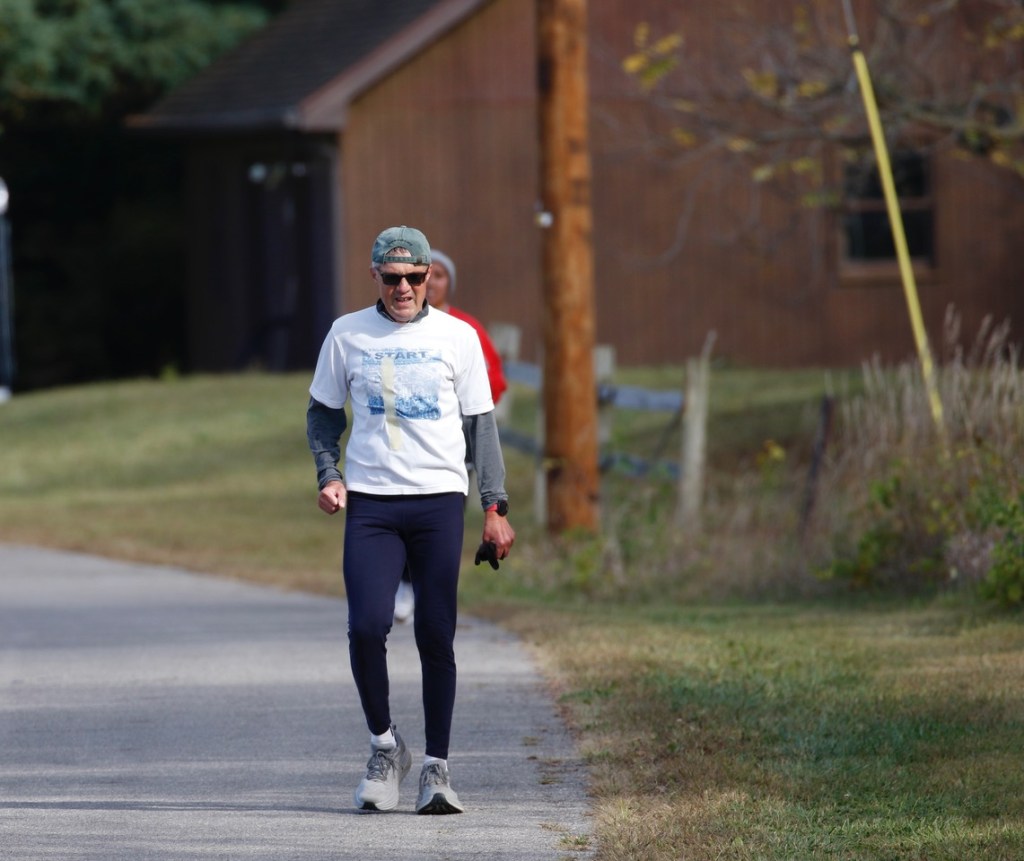
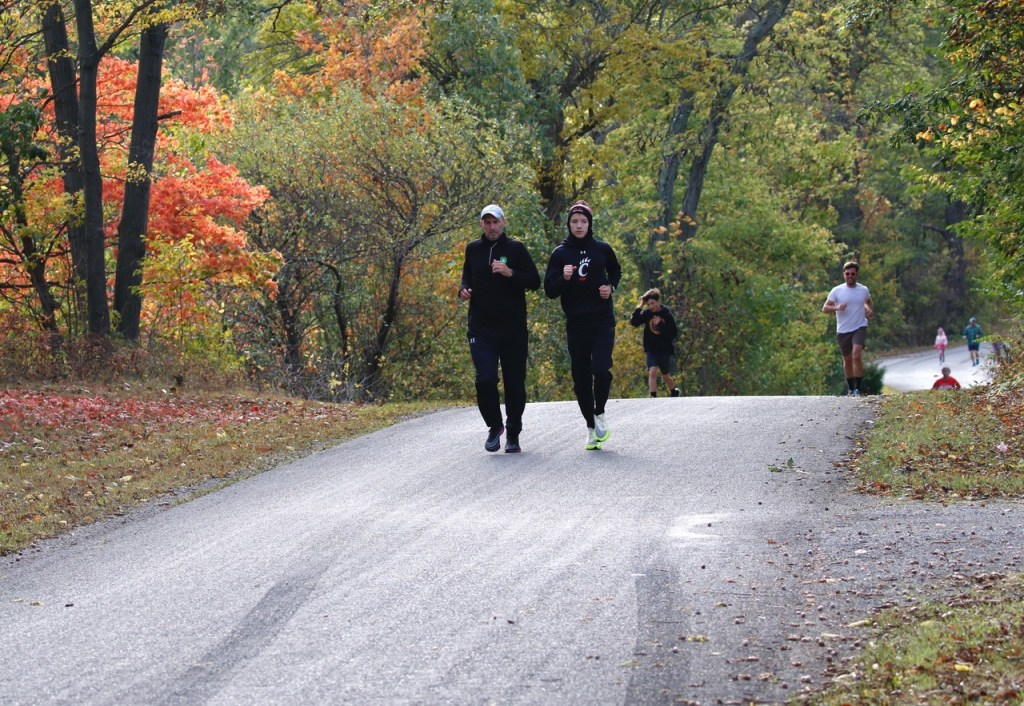
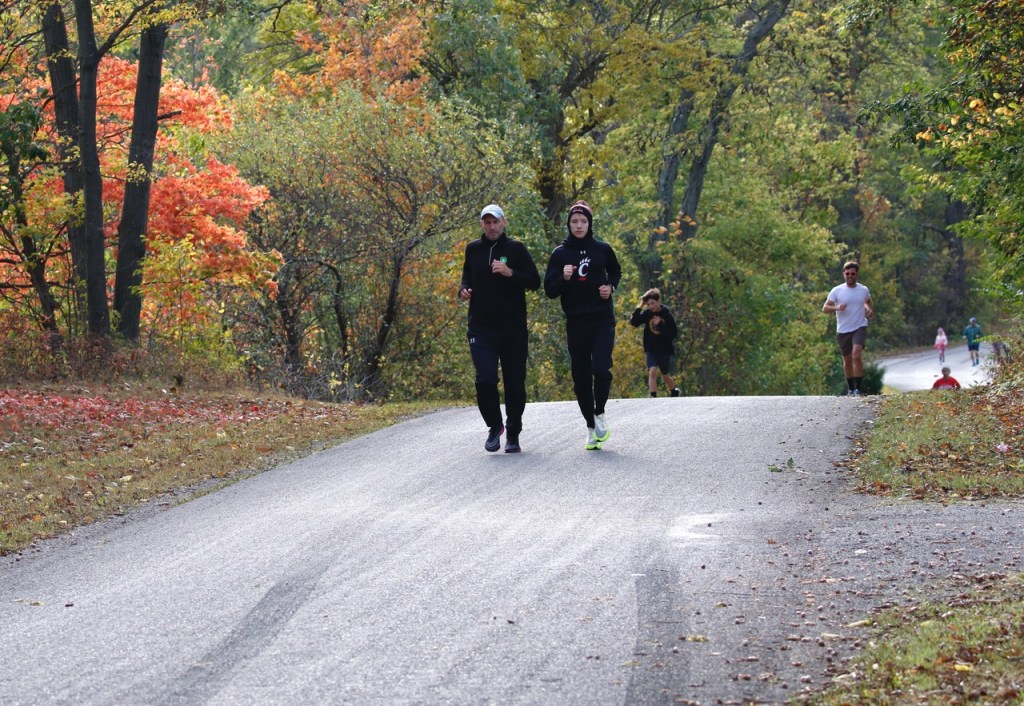
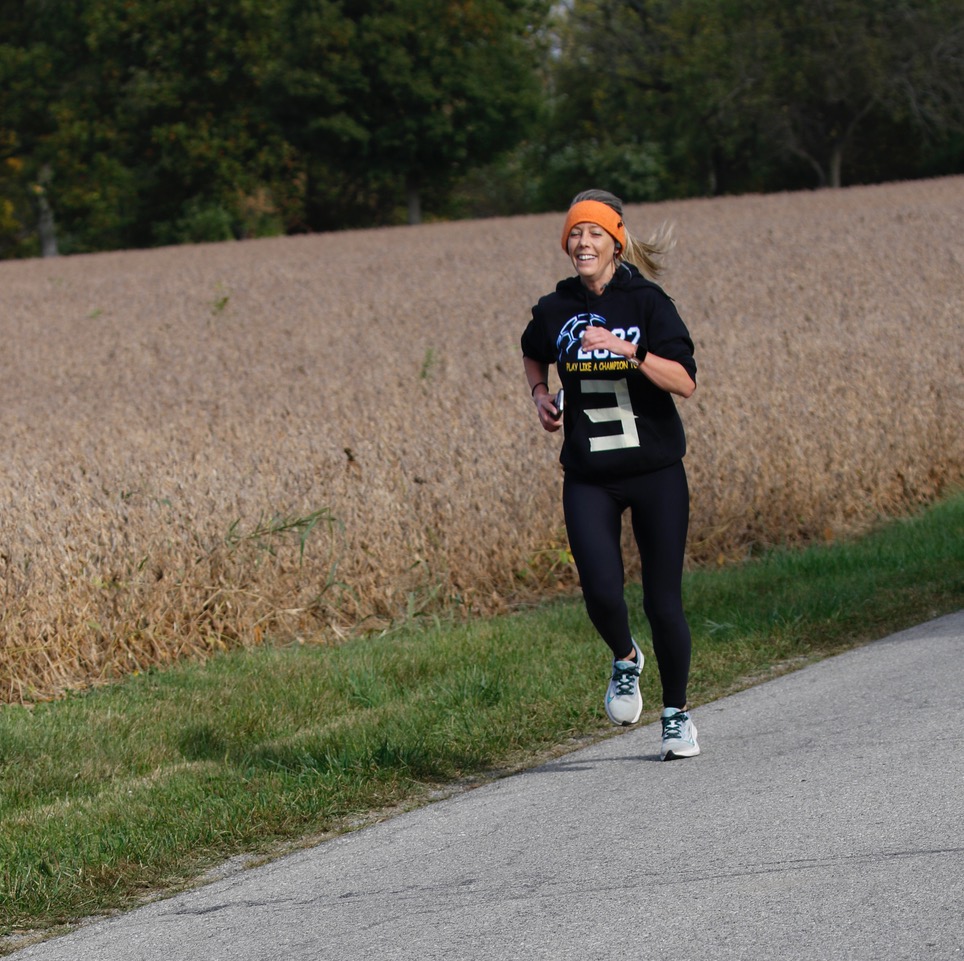
The 8th Annual Quarry Farm 5K crossed the starting line on the first truly chilly, windy day of autumn 2023. Two days ago it was hot and dry. Good running and walking weather blew in overnight, dropping temperatures at least 20 degrees and changing leaf color.
Runners and walkers headed into strong westerly gusts then unzipped their jackets and sweatshirts at the halfway point to float with the wind to the finish. Phil Buell came in first for men, with his son Adam on his heels. Susie Ricker was the first woman 5Ker. Casey Walker was the first walker. An anonymous mini Teenage Mutant Ninja Turtle won the children’s division.
Deb Weston and her camera captured the morning. Much-needed rain has settled in for the afternoon, making this a good time to curl up with hot tea, a blanket and a bunch of fall fundraiser photos.
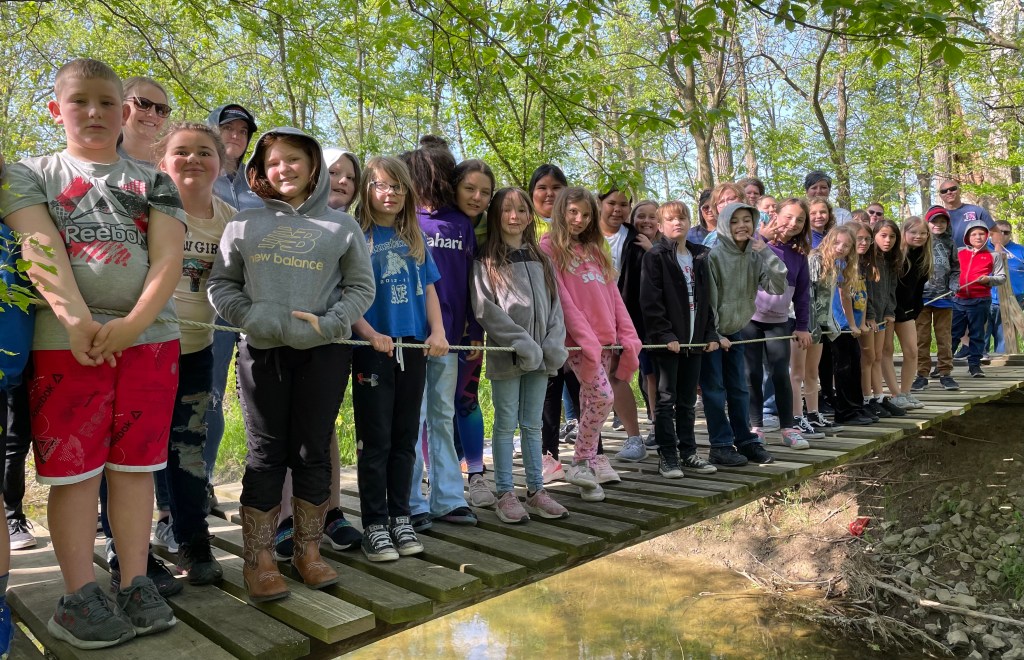
A wood duck zig-zagged through the understory yesterday morning en route to the southeast bank of the quarry wetland. Nearly 50 third-graders, teachers and chaperones paused between Cranberry Run and the southwest bank of the quarry. Several children chatted about the possibility of crayfish in the stream and turtles sunning on snags. Others were looking to the northeast at just the right time to see the bird land briefly in an overhanging tree before it spotted humans and took off again.
The Continental Elementary School students were here on a field trip, most for the first time. They traveled by yellow bus across Putnam County at the urging of Charlene Finch. Charlene and her Continental Junior Gardeners were some of our first visitors after The Quarry Farm became official. They made the trip several times until their leader was no longer able to coordinate the group’s adventures.
Two days before we took The Quarry Farm on the road, or at least a snapshot thereof. Miller City-New Cleveland School is rounding out the elementary program year with the theme “School is Wild” and Grades K-5 are getting wild by virtually traveling to other parts of the world. A few months ago we were asked if we could work with that. “What would you think of our talking about how some plants and animals are here that shouldn’t be, like invasive bush honeysuckle and zebra mussels, and how they affect local wildlife?” I asked, and our spot on the agenda was a ‘go’.
North America’s prickly pear cactus is spreading around the Old World, while Eurasian plants like Lonicera maackii, the Amur honeysuckle are going on a joy ride here. One Miller City New Clevelander student exclaimed, “Like a Hydra!” when Rowan explained that, when you cut that honeysuckle down, 20 more grow in its place. So yes, you fine young man, the Amur honeysuckle is exactly like the mythological beast that grows back twice as many heads each time Hercules or another Greek god cuts of one head, unless someone carefully treats the stump or yanks each root hair from the ground.
We ran with the Hydra reference all day and carried it over to yesterday’s field trip. I expect that it’s here to stay.
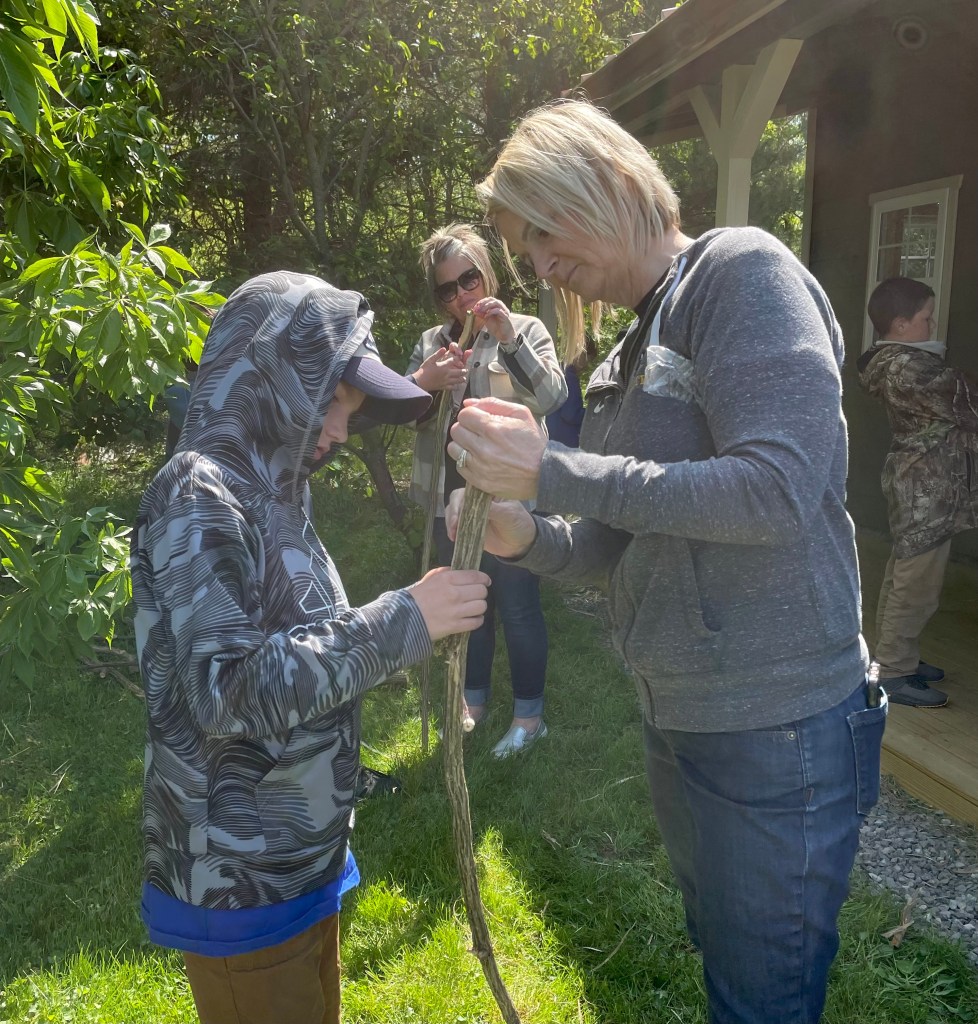
Birder-extraordinaire Deb Weston crafts gorgeous hiking sticks from Amur honeysuckle. She collected suitable honeysuckle trunks from the nature preserve and finished one for each of the school’s K-5 teachers. Virginia Opossum, Virginia Estella represented native species in Central America and the USA, although the Virginia opossum is considered an exotic (non-native) species in British Columbia. Not much is known about its impact on the province’s native species. Maybe North America’s only marsupials are making a dent in tick populations as they wander.
Getting back to yesterday, the Continental schoolchildren made lasting leaf t-shirts from leaves collected on the hike. There were visits with the farm animal sanctuary residents.
SIDEBAR
K, like the other tagged Canada geese T, U and X that are current residents of the farm animal sanctuary, were placed here by a wildlife rehabilitation center with the hope that the proximity to wild Canada geese will light that spark within them tell them that they are wild birds. K, like T, seem to realize that Steve, who just had significant knee surgery, is an injured member of their flock who must be protected from potential predators. T has been Steve’s protector since the bird first saw Steve walk with a cane. We found out yesterday that shy K, who has only been here for a few weeks, will come out of his timid shell to keep Steve safe. After one field tripper had to high-step over a K intent on keeping the predator/student away from Steve, K was escorted into the inner paddock where he spent the remainder of the visit. And that is just one of the reasons why wild babies should left in the wild.
They began their own hiking sticks by threading cord loops through pre-drilled honeysuckle—40+ hiking sticks from just four “Hydra” shrubs. The day was dry, so some bark was peeled. Students were encourage to keep peeling to reveal the lovely woodgrains and insect trails beneath. Teacher Sharon Siebeneck invited the students to each bring something from home, a threadable something that is of value in their young lives, to thread on their cord loop. There were buttons, medallions, charms and beads. All have stories. One little girl shared hers while she arranged her leaf shirt with Rita.
“She kept showing me the bead. I could tell she wanted to tell me something but was kind of shy.” They chatted a little more. Eventually, the girl told a story that made all of us cry, with the anger and sorrow of it, and the honor that child bestowed upon The Quarry Farm by selecting that piece to for her hiking stick. The little girl once had a cat that she loved. One day the cat went outside with the dog. The dog came back but not the cat, not for a long time. When the cat did come home, it curled up on her bed. “We went to church,” she told Rita. “When we came home, the cat wasn’t acting right. My grandma looked her over and someone had shot her.” The cat died from this cruelty and the ashes are stored in that bead.
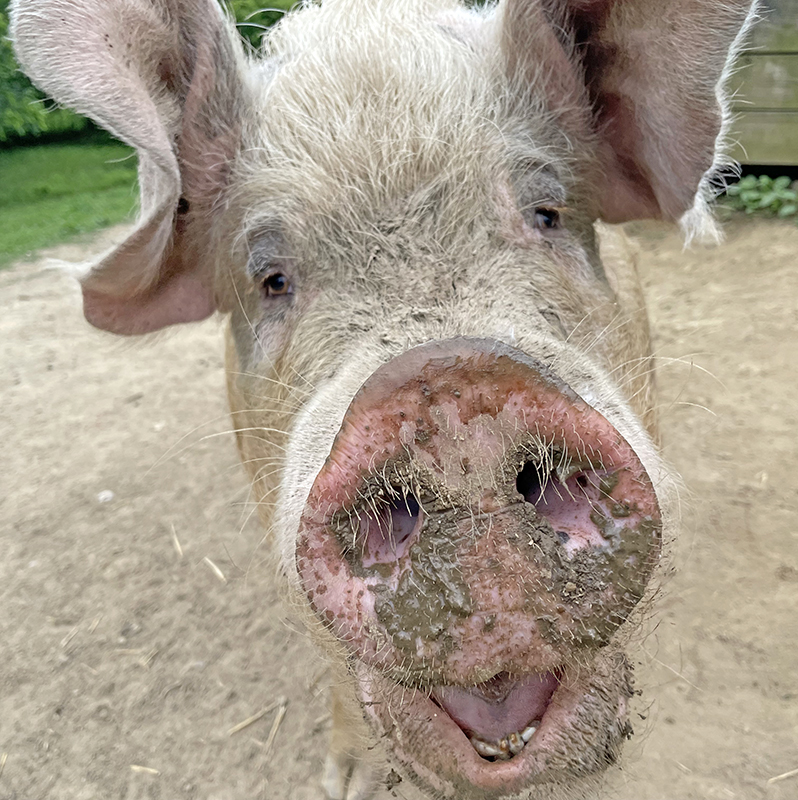
Nemo the Pig has been featured in this space before. She came to us in 2015 as a tiny shoat. She was scraped, bruised and broken from a fall onto I-270 from a transport truck in Columbus. A kind, determined person rescued her, nursed the piglet’s wounds and brought her to us. For a couple of weeks, we socialized little Nemo by carrying her around to programs in a baby sling. She housebroke easily, although she outgrew the house and was unable to turn around in hallways. At six months of age, the age that young pigs are typically “finished” and loaded into a crowded transport to be “processed,” Nemo was spayed at Ohio State University. For the first few years of her life, she was one of the first farm animal sanctuary residents to greet visitors.
Click to download your copy
“I’ve never seen a pig that big,” everyone still says when they see her for the first time. There’s a reason that they haven’t.
Nemo excavated a mud wallow that is so deep and wide that the geese and ducks swim in it when rainwater fills it to the brim. She made friends with Carlton the Pot-bellied Pig, a buddy system that continues to this day. They allow the other pot-bellied pigs, the geese, ducks and the occasional chicken to use their mud wallow.
Seven years on, visitors don’t often see Nemo, especially when the sun is high and the air is hot. Children love to see her, but she doesn’t often run to greet them, even when we mention the word “apple.” I did coax her out to see third-grade students from Ottawa Elementary in May. She walked out of her favorite building, stared across the pasture at the kids waving at the fence, then turned and walked away to her muddy spa. “Not today,” she seemed to say. I explained to the students that, while they could shed their coats and put on sunscreen, Nemo can only protect her fair skin and floppy ears with sparse, fair pig bristles, cool mud and shade.
For those lucky enough to visit on a cool day, Nemo allows a soft jowl rub. She sighs the deep, rumbling sigh that one would expect to emanate from a body such as hers, closes her blonde lashes and rolls over for a belly pat.
May 9 is the biggest day in birding this year. As it’s just 9:30 p.m., it still “is” even though the wind tonight is wild and wooly and no self-respecting owl is going to land in the bowed cottonwood outside the window before midnight.
Female cardinal
I don’t know birds. Rather, I have met a few and we got along well. I could pick them out in a crowd. But I don’t recognize many wild birds by call or even by sight unless they are posing neatly at eye level. For the blessed luck and good of all, Deb Weston is a frequent Quarry Farm flyer who helps us see beyond the cardinals, chickadees and house finches at the bird feeders and into the high canopy for warblers, kinglets and other birds who are presently passing through these parts.
Black-throated blue warbler
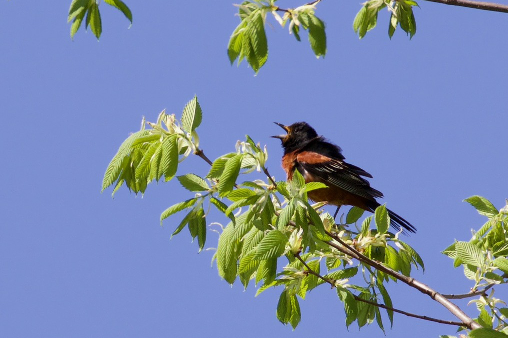
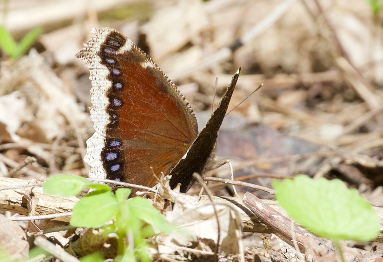
Not that there is anything less than splendid about the birds we are most familiar with. Deb shared a stunning shot of a fluorescent-beaked female cardinal gathering nesting material from a clutch of honey locust thorns. On the same day, however, she photographed a black-throated blue warbler perched on a rope of grapevine. Along the way, she digitized an orchard oriole singing it’s heart out and a mourning cloak butterfly. Because butterflies are seemingly as confused by climate change as humans are, they are arriving here or emerging from their winter quarters with no food in sight. When Deb shared the butterfly photo, it was a sight for sore eyes.
Mourning cloak butterfly
Just as nature around the world is reveling in the cleaner air and water that’s a result of human lockdown, wild things are going about their business unimpeded here in the Back 40. On Friday night a small group of Girl Scouts spread out along the trails to earn their trailblazing badges. As they climbed out of the Riley Creek floodplain toward the grass prairie, two large fluffy feathered great horned owl fledglings bobbed in a black walnut at eye level. Their parent murmured a short distance away, waiting for us to move along our earthbound way.