Butterflies beyond the heat islands

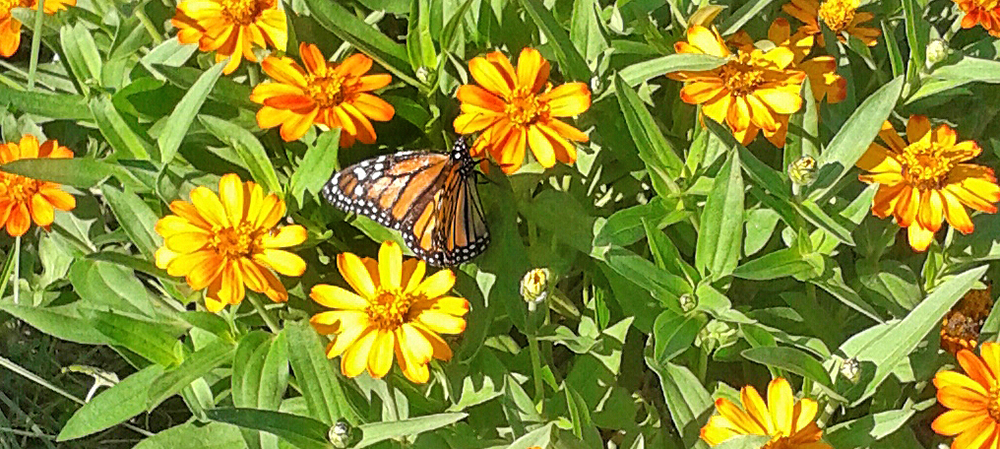
20150806_181856-120150805_151615-1There is no better cure for a bad case of the Mondays than a brisk walk in the open air. If your feet take you beyond the water cooler and out of doors to a concrete sidewalk, perhaps this virtual walk in The Quarry Farm butterfly gardens will transport you beyond your August Ohio heat island.

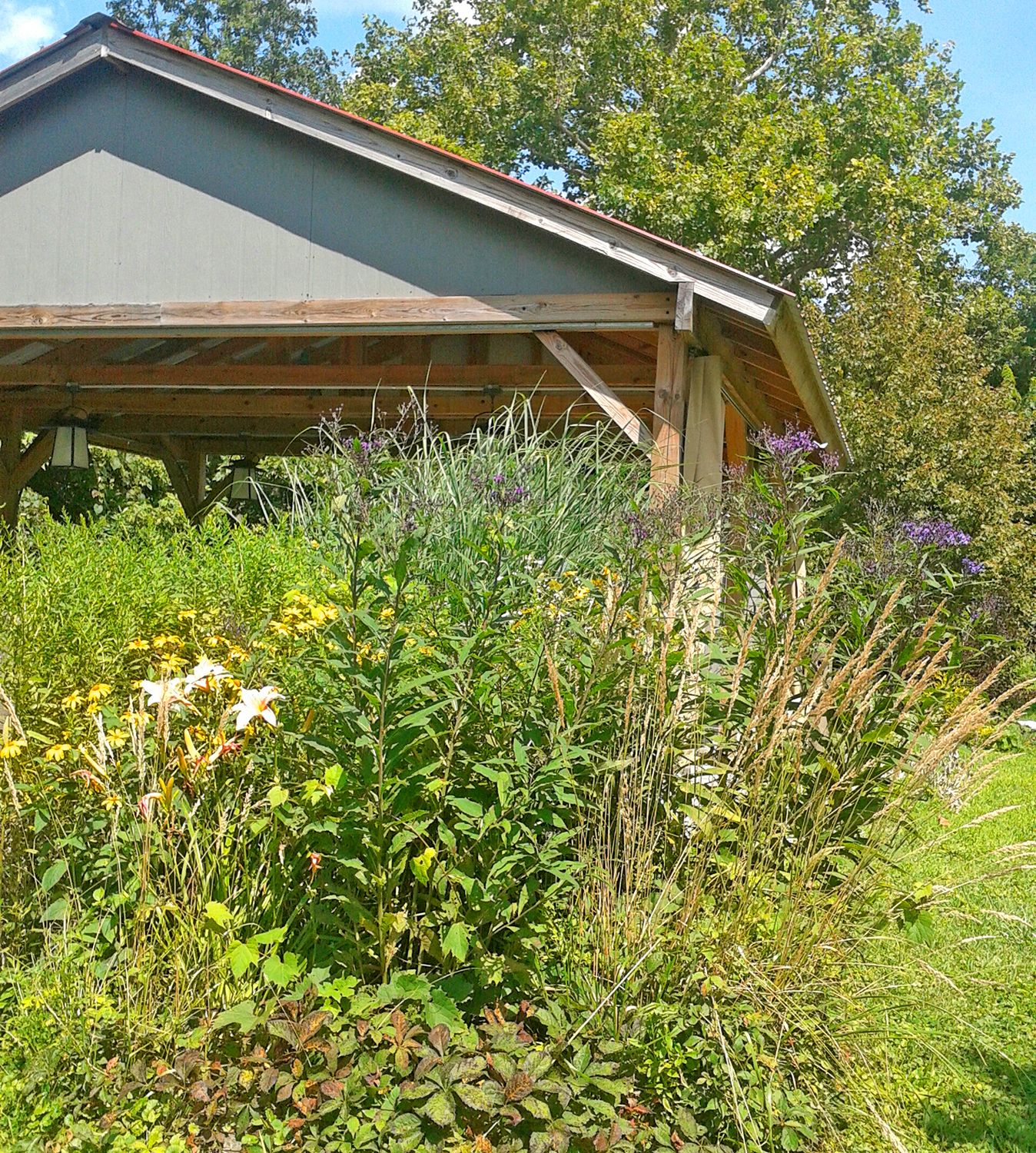
Late summer in Northwest Ohio means sweat that never dries, elephant-eye-high corn, even this year after months of heavy June and July rain, and the golden greens of mature plant leaves, the rich amethysts of ironweed and Joe Pye and the hot reds, oranges and burgundies of lilies, cosmos, Susans, zinnia and echinacea. The Gardener would likely list many more flora, but since she’s otherwise occupied in the gardens themselves, you are stuck with those plants that I can identify around the Seitz Family Pavilion.

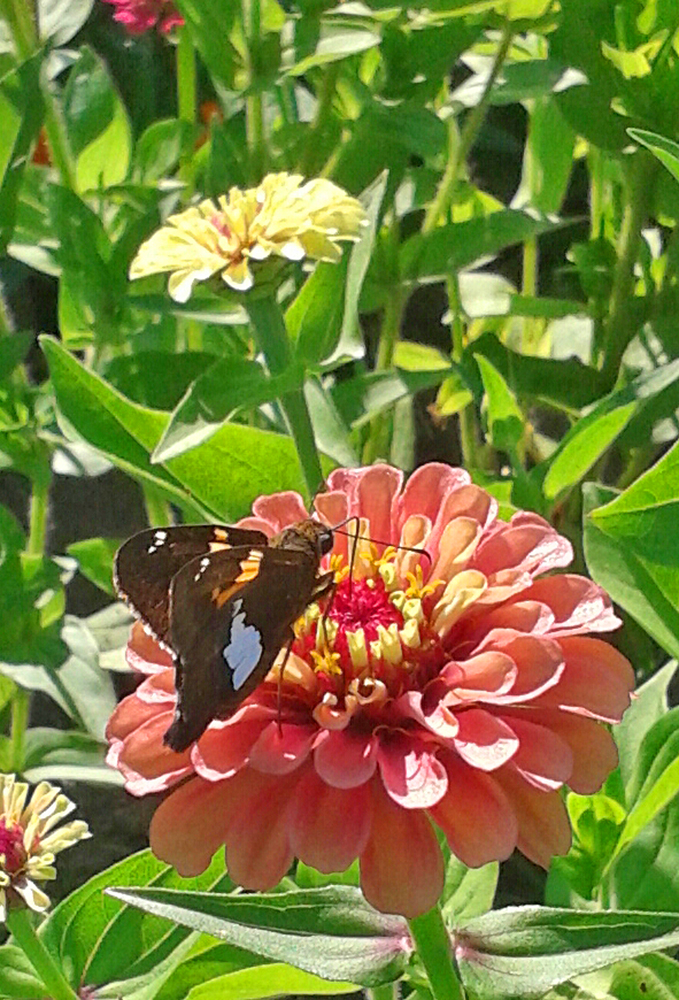
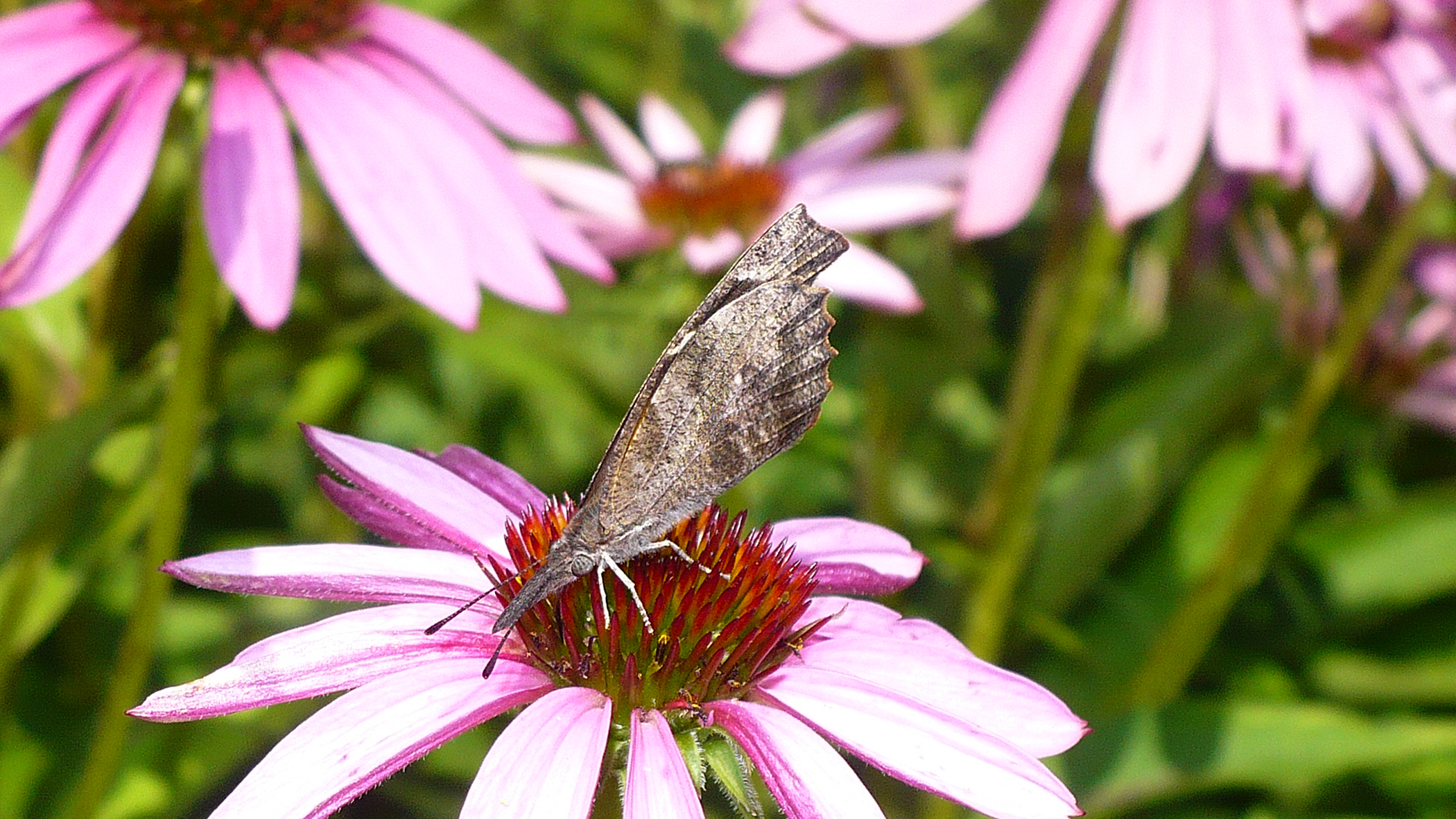
Skipper

Silver-spotted skipper butterfly

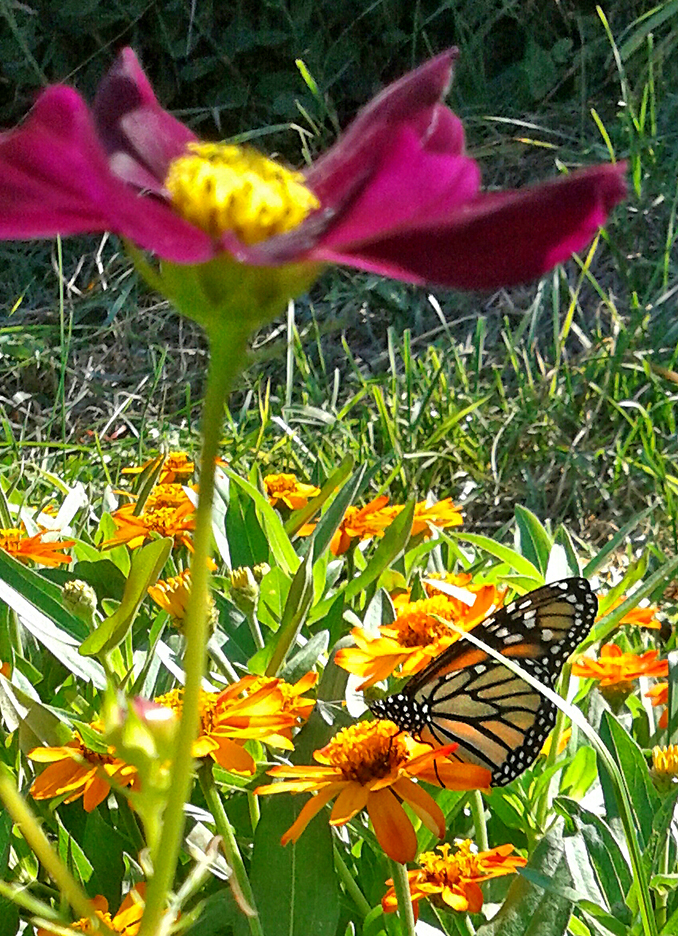
Monarch under cover

Monarch under cover

Lucky for all of us, she always carries her phone. And because she does, she took photographs of the better-late-than-never butterflies that are moving from flower to flower.

Better still, she took video. So, find a park bench or an open window and take a virtual butterfly walk in the warm August sunshine. There is breeze today to keep the virtual mosquitoes at bay.


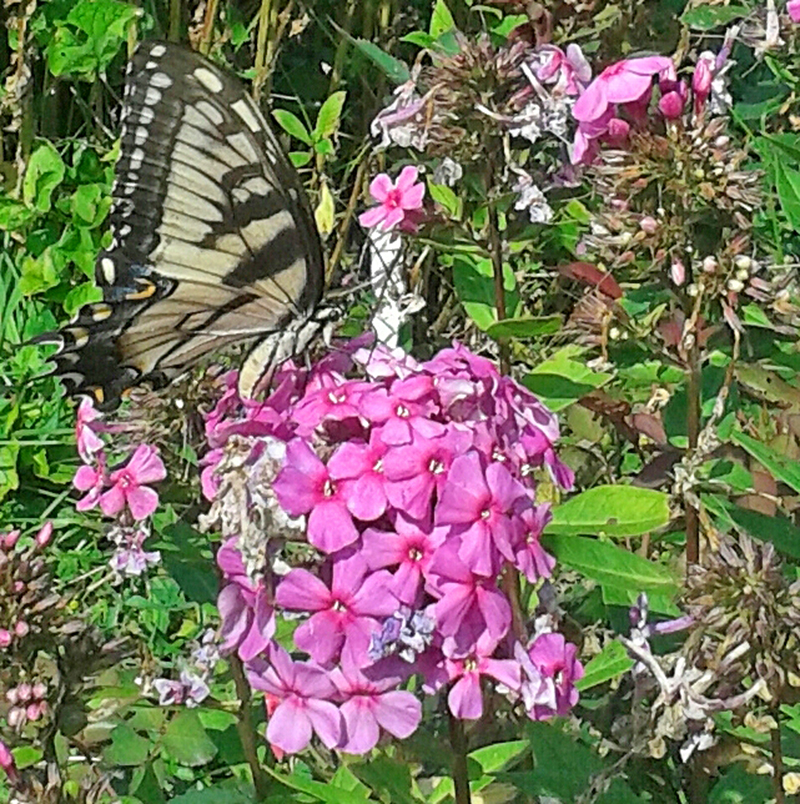
Our first number is, “The Dance of the Tiger Swallowtails.”


Tiger swalltowtail

Tiger swalltowtail

And what better image to leave you with, for today, than a giant swallowtail doing its level Lepidopteran best to pollinate every plant in the north bed?

Now go back to work, full in the knowledge that there are still butterflies in the world.

Carlton goes to college and other colorful stories

P1080221 We’re six days and counting with no rain. The morass is drying and the butterflies and other pollinators have landed, flitted, and flown in greater numbers than we have seen in these parts yet this year. Before summer’s end, I may need all 10 fingers to count monarch butterflies. The milkweed keeps sending out its rich fragrance. We can hope.

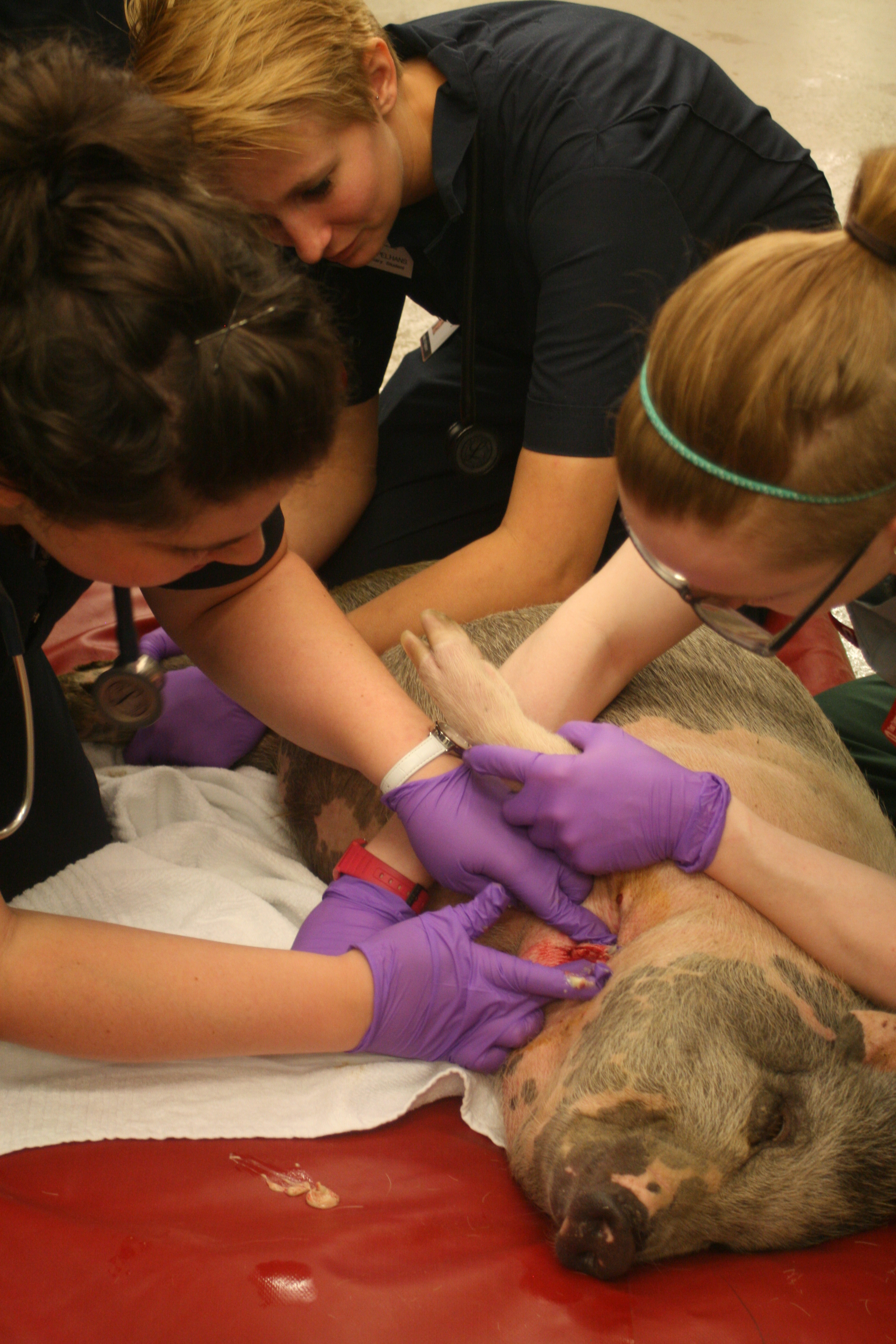
In between butterfly counts, we loaded a crated Carlton into the car and took him down to the Veterinary Medical Center at Ohio State University. What started out as a solid mass that wrapped under his right foreleg had settled into three abscesses. Fearing a pernicious parasite, we made the trip that IMG_4674we’ve made twice now with Marsh the Nigerian dwarf goat.

I love that place — if not the reason for going, but for the experience. The veterinary students and faculty and are curious, kind and thorough. On Thursday, with a dozen or so students gathered around, Erin “won” the opportunity to lance the most problematic abscess. It was truly spectacular, so productive as to elicit a burst of, “Ah-ohhhhs!” and applause. Dr. MacKay announced, “I don’t trust anyone who doesn’t appreciate a good abscess.” That right there is a bumper sticker in the making.

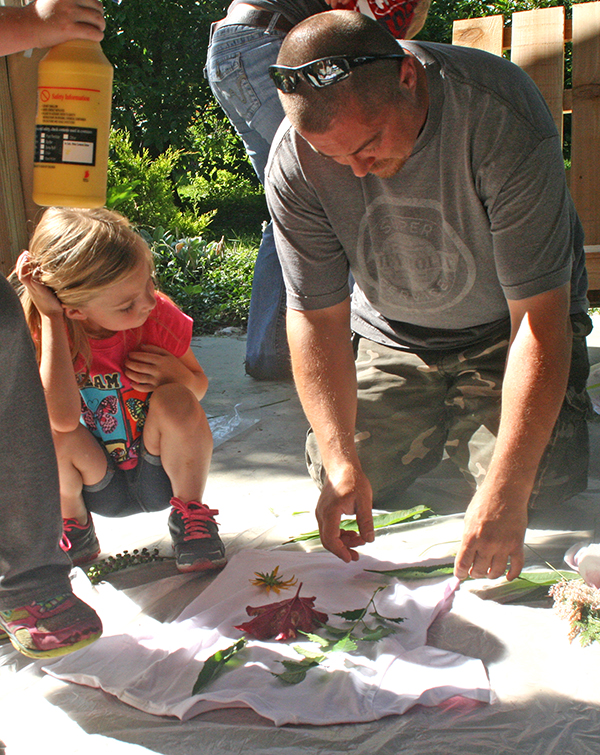
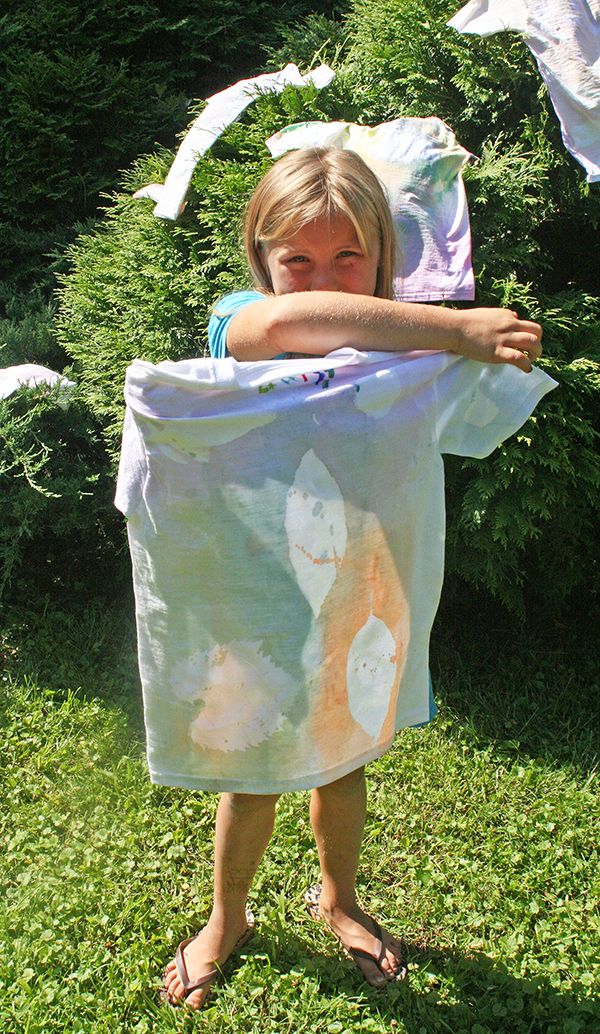
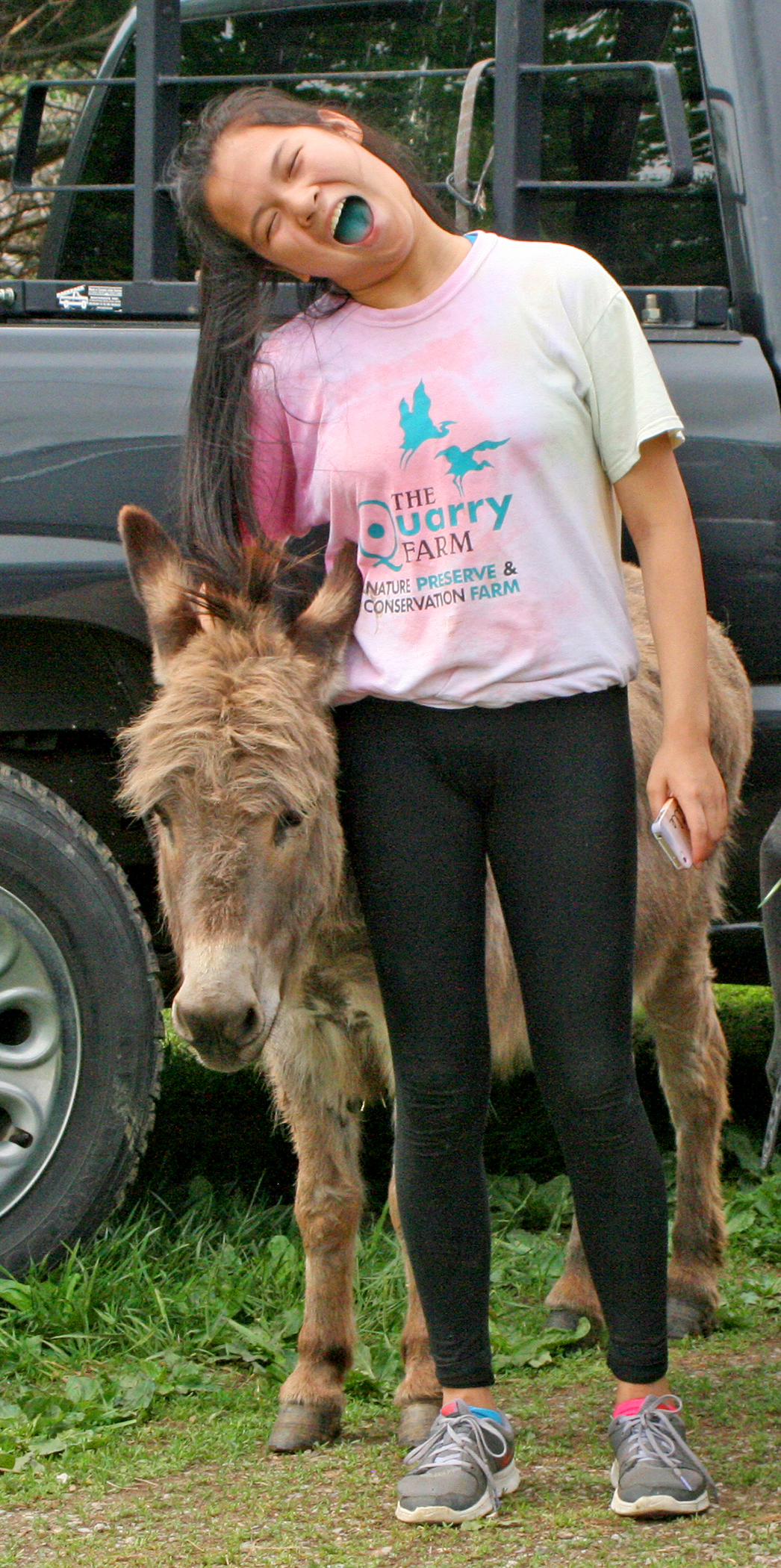
Continental 3On Friday, more color, of a very different kind, arrived here on The Quarry Farm. The Continental Junior Gardeners visited for the fourth year. There were many new faces this year, although some came into focus as we realized they were the siblings of children who visited in the past. They gathered leaves and arranged them on white t-shirts, then sprayed diluted acrylic paints on the shirts to create one-of-a-kind designs. Leader Charlene Finch said they will wear them in the Continental Fall Festival parade in September. Continental 2

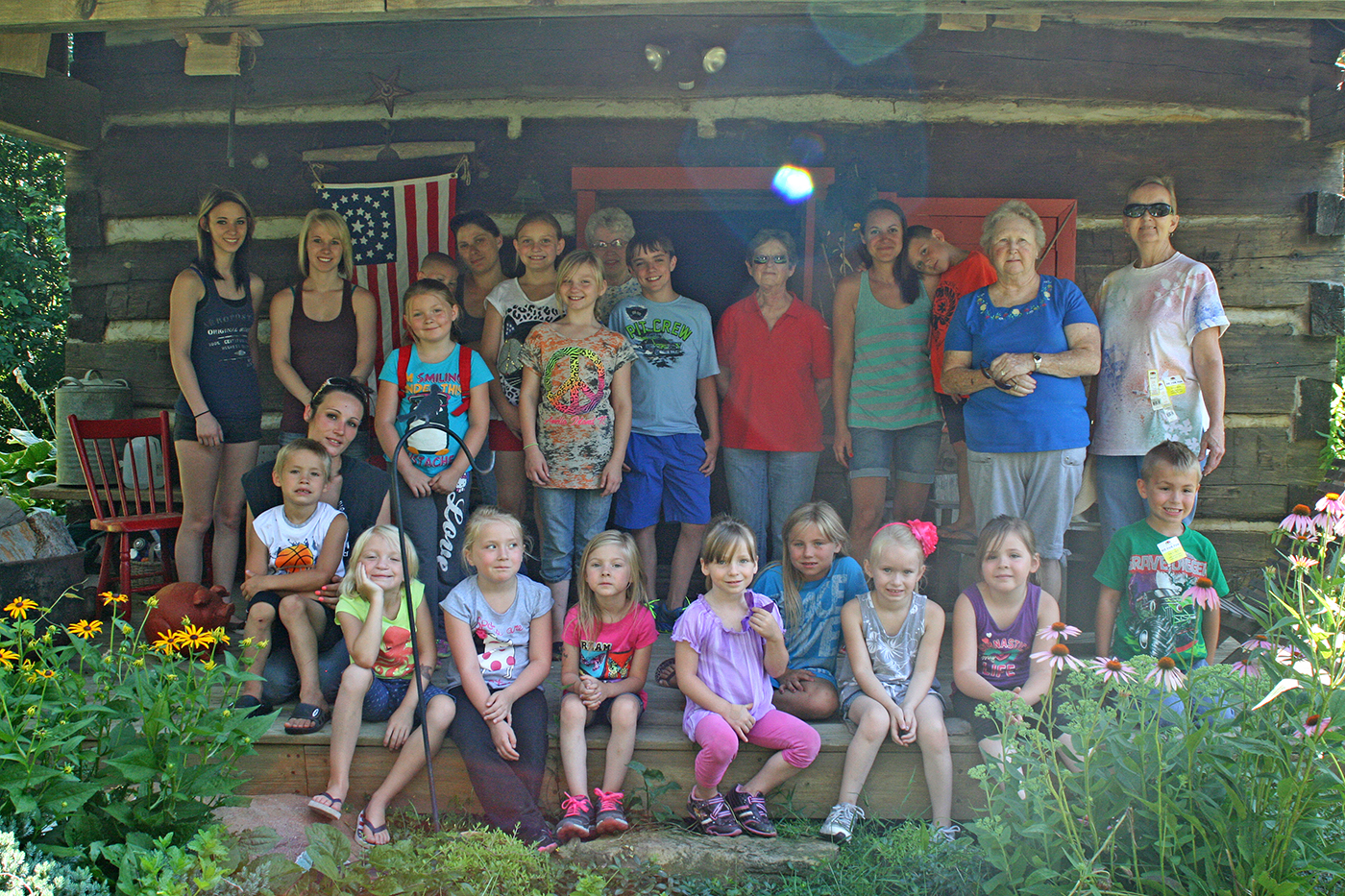
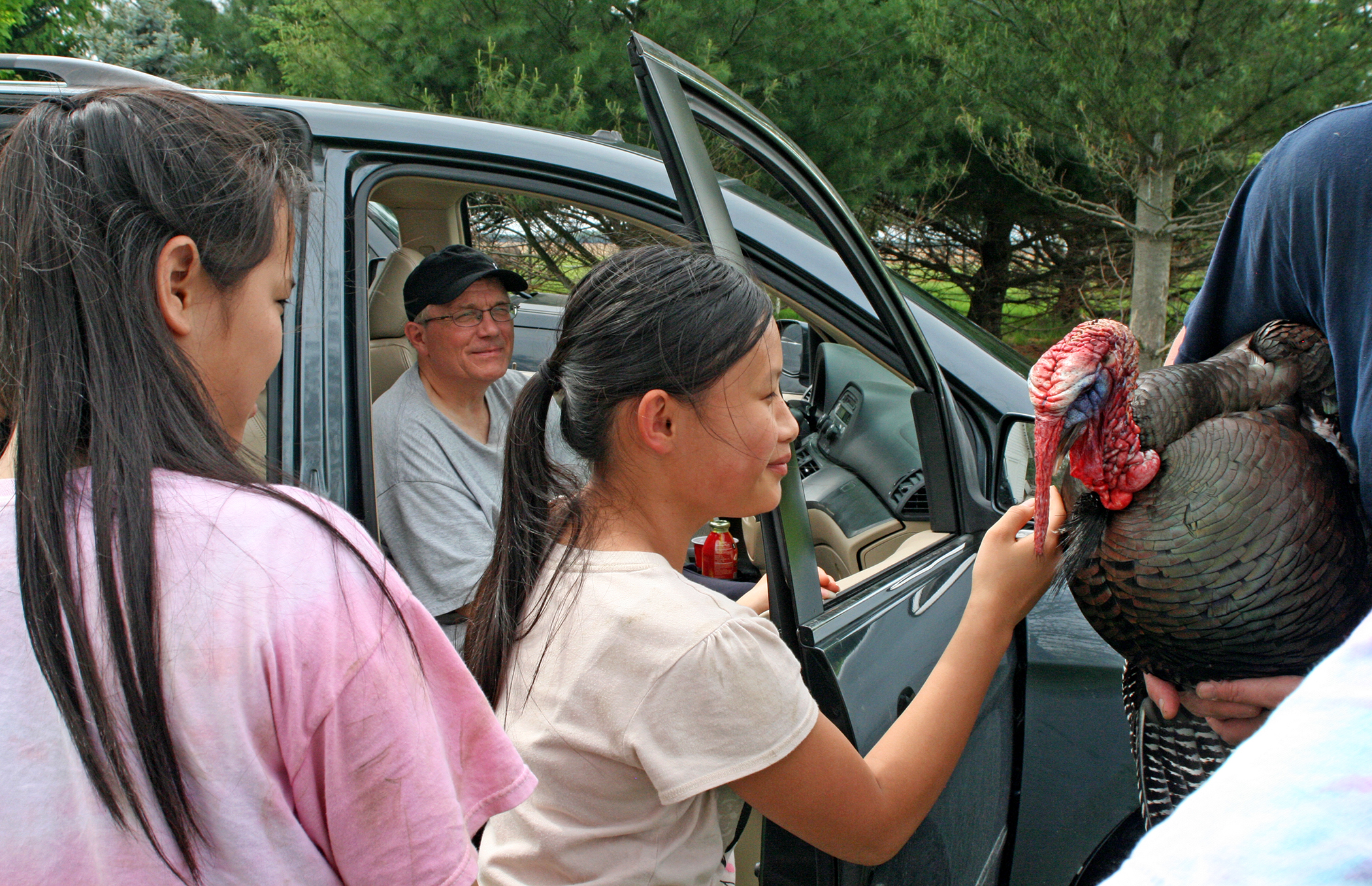
After lemonade and cookies, they walked through the butterfly gardens and visited the farm animal sanctuary. The turkeys claimed the group as their own and gentle giant goat Mr. Bill smiled for several cameras. Before they left us for another year, all but one camera-shy dad posed on the red Fox Cabin front porch for their annual portrait.

ContinentalThe sun continues to shine today. Damselflies and dragonflies are on the move, lessening the hum of mosquitoes bred in the recent floods. With paint left in the spray bottles, I think a few more t-shirts will be made this afternoon. Pick up a t-shirt of your own and come on by around 3 p.m.

Can’t promise there will be any cookies left, but there are butterflies and a much happier pig next door.


Horseless carriages pony up to Red Fox

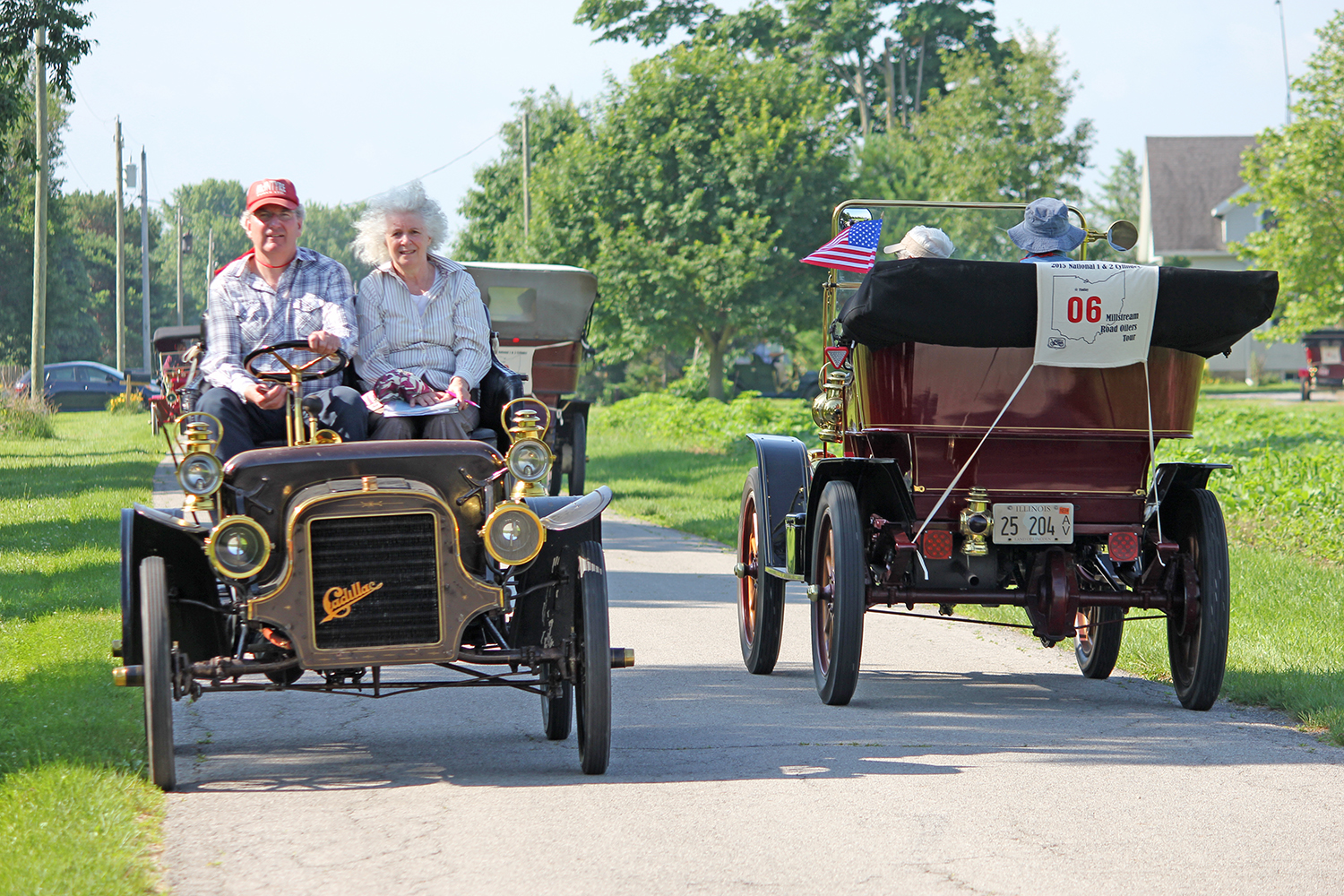
Bristch car coupleWe knew they were coming. But at 9:30 a.m. when the Model Ts, Plymouths and at least one Wolseley rolled south on 7L, it was still an unexpected, thrilling sight.

Laura directing trafficNot one of the historic automobiles that were part of the 2015 National 1 & 2 Cylinder Millstream Road Oilers tour came off assembly after 1913, we were told. The 28 horseless carriages and their drivers stopped first at Diane Myers’ Black Swamp Raptor Rehab Center several miles east of here before making their way west to see Red Fox Cabin, the butterfly gardens and the residents of the farm animal sanctuary on their way to Kalida.Walker's Driveway

Because they came from the north instead of south, the drivers had to loop through the neighboring Walker family’s driveway. It was a surprise photo op for the neighbors and for us.

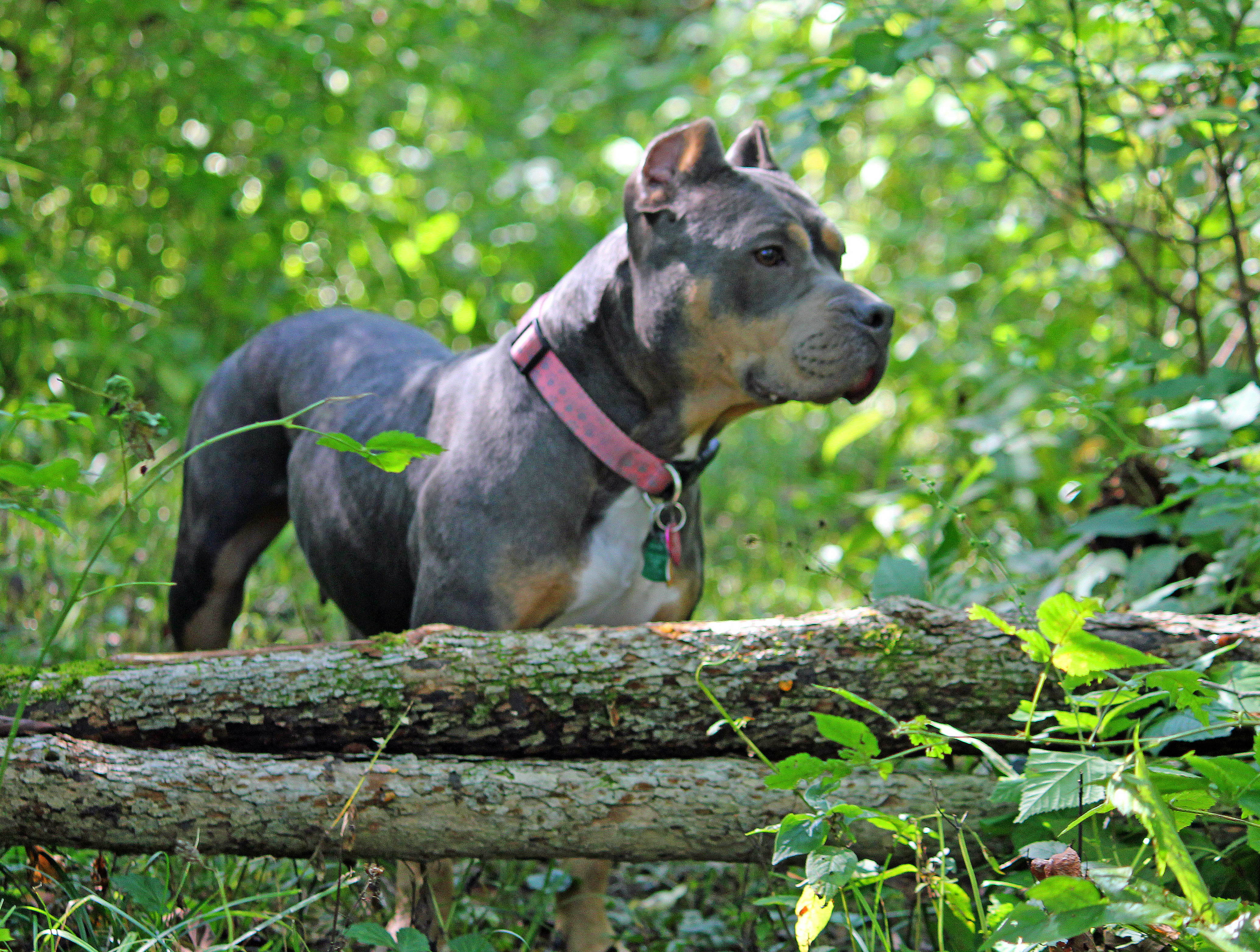
Because the summer is upon us, hot and heavy, Carlton and Beatrice gave a brief ‘hello’ before wagging into the undergrowth for wild raspberries and shade. But Lucy was the gracious hostess for the morning.Red AdmiralLucy and KCS

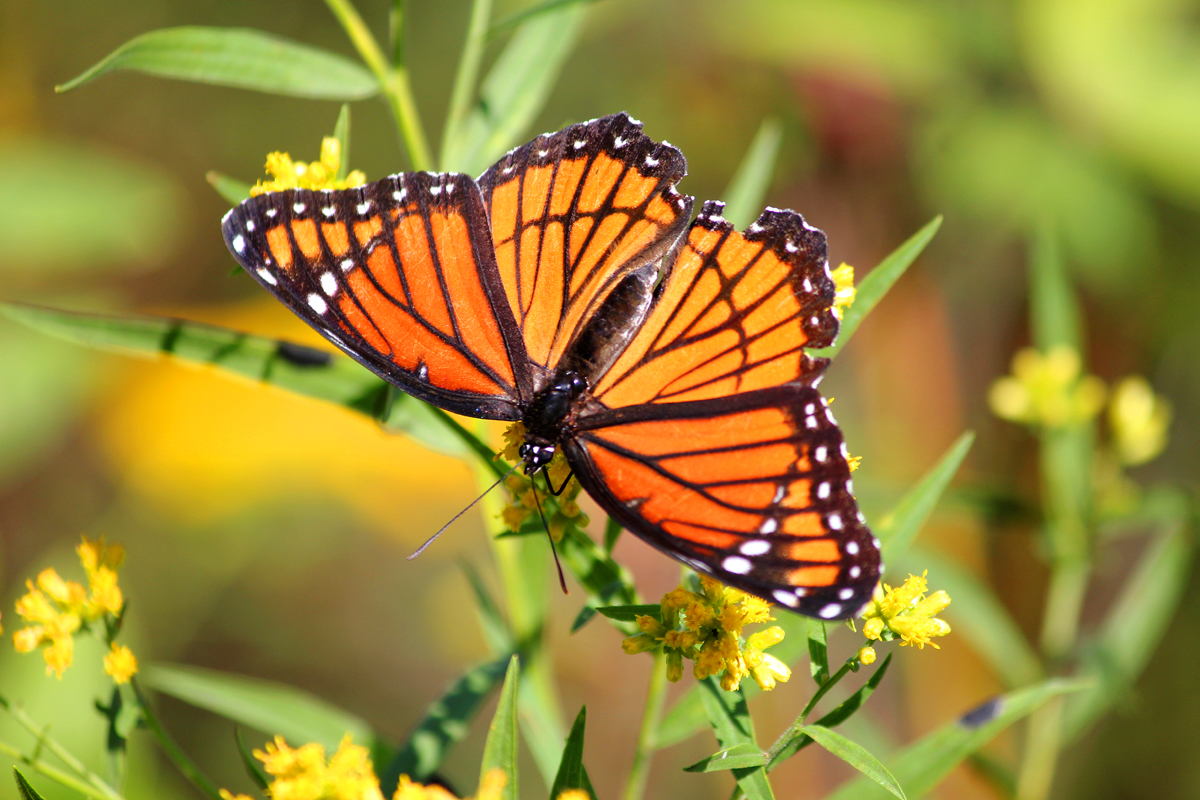
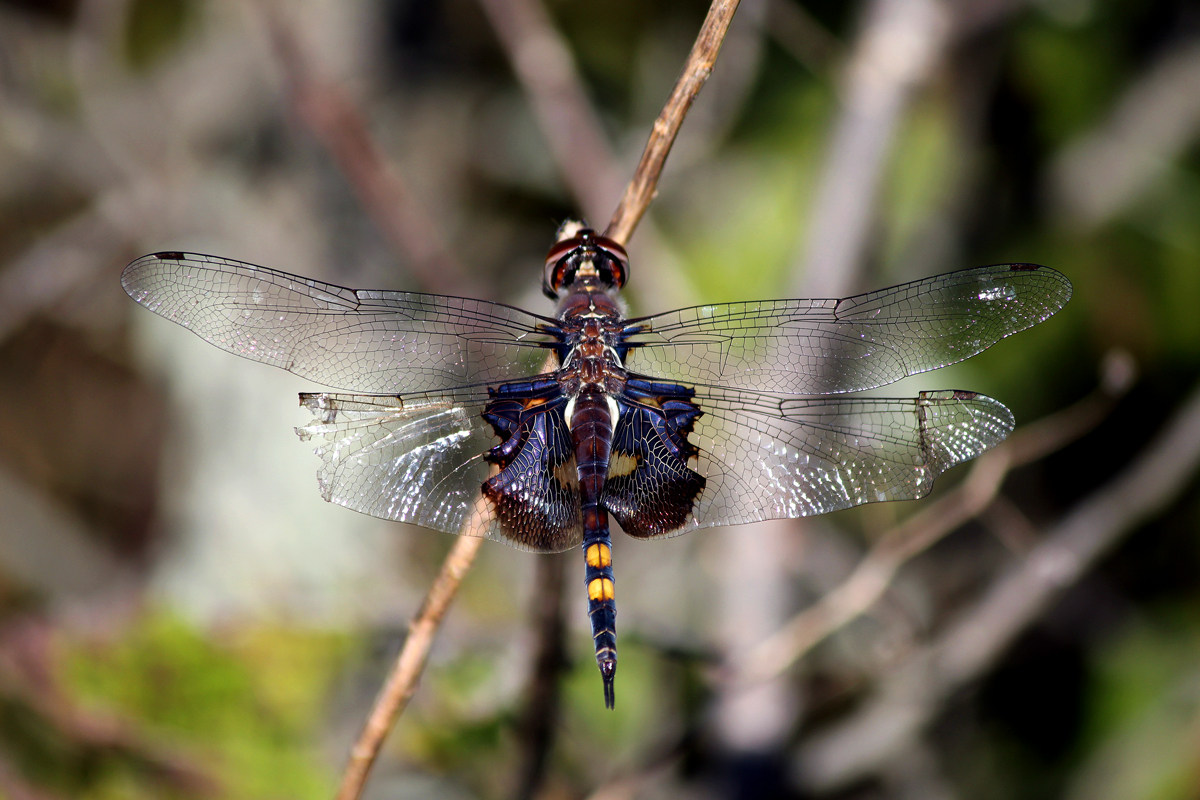
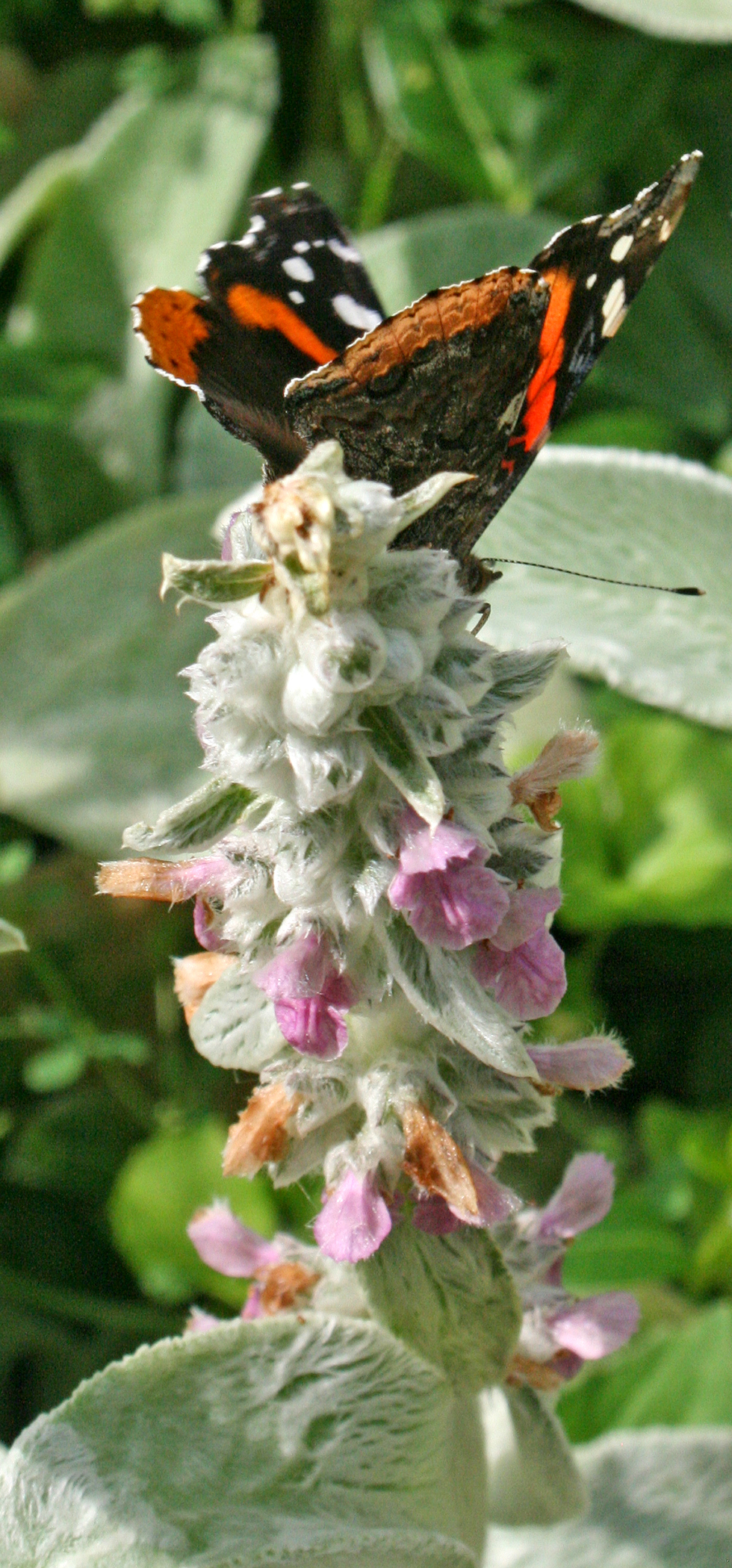
Because high winds aren’t due for another few hours, a zebra swallowtail, a red-spotted purple, a red admiral butterfly, two saddlebag dragonflies and a flock of pondhawks flitted and zipped through the gardens.

Safe travels, and thank you for the generous donation to help us on our way.Cars

Superheroes swoop in on Saturday (no capes!)

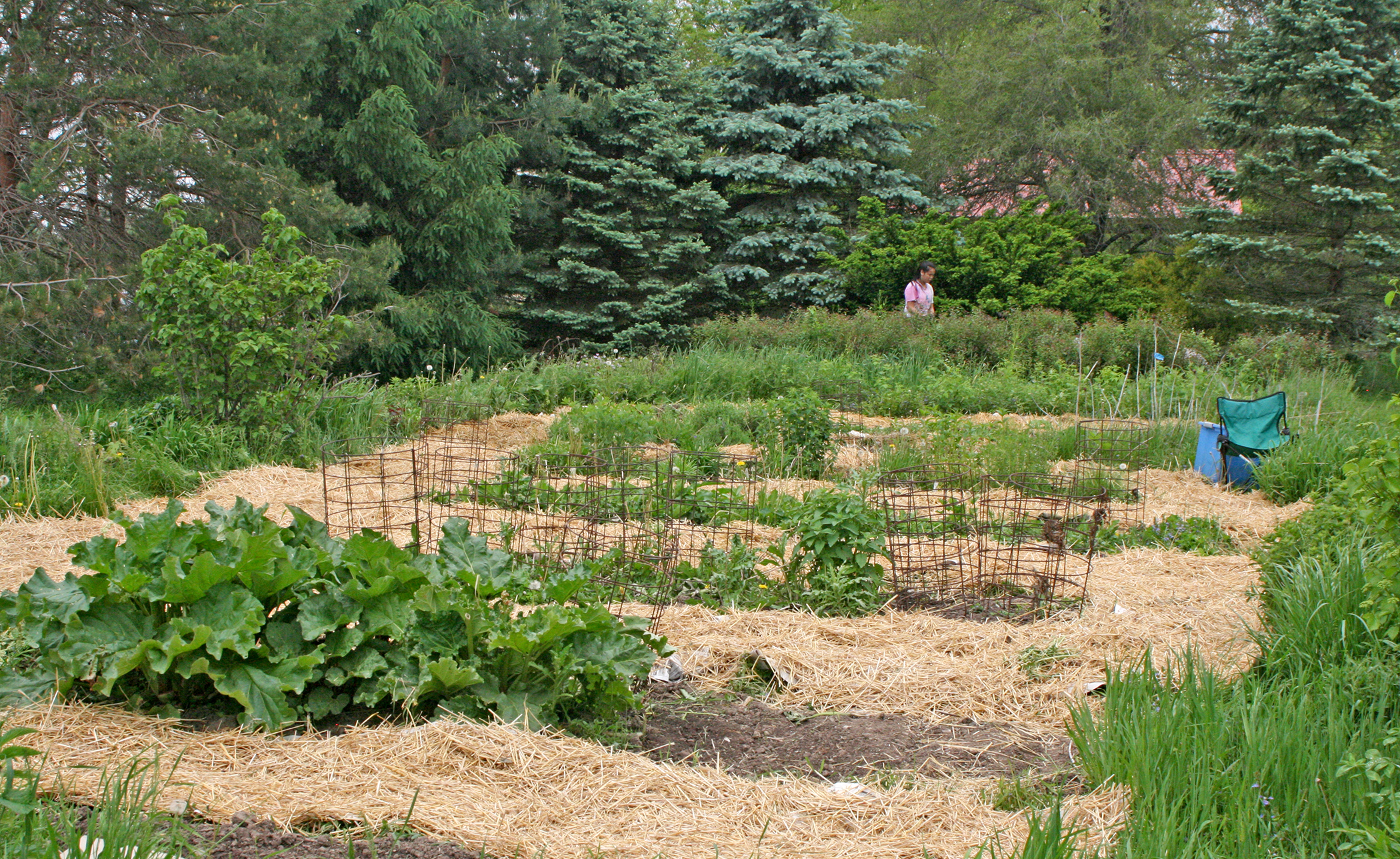
GardenEveryone has stuff to do. Some of us are list makers, like Quarry Farm Board President Laura. Others have swirls of snippets of chatter spinning through their brain, like yours truly. Or little notes jotted on the backs of envelopes stuffed in the glove compartment, drawers and/or stacked on the kitchen table (again, fingers pointing right back.) Betty and BuddyHere on The Quarry Farm, there is always so much to do. Water tubs and buckets to clean and refill, food to prep and food bowls to juggle, hungry potbellies to restrain, hinnying donkeys to brush, and buildings to clean, rinse and repeat. This year, we have buildings to paint. And that’s just in the farm animal sanctuary. In the gardens of Red Fox Cabin, the long wait for nature to prevail over invasives is one which has yet to be won. But Nature is making headway, with a little help from her friends. After years of solarizing beds and hand-picking beetles rather than spraying and dusting, has allowed natural insect predators to get a foothold. The gigantic rainbarrel that collects droplets from the roof of Red Fox Cabin is almost always full for the watering. BillBut those of us who currently ‘mind the store’ rarely have the opportunity to check everything off our wish list. Last Saturday — that golden day — we got to pen a whole host of checkmarks. About a month ago, I received an email from William Schumacher. I first met Bill when an Ohio Department of Natural Resources co-worker suggested that the man, an Ohio Environmental Protection Agency employee, might be willing to lend his expertise as a soil science presenter at a teacher workshop I was planning. It turns out that actually wasn’t the first time that I met Bill. He and his brothers Joe and Dan grew up along the opposite bank of Riley Creek. We rode the same school bus and developed the same love for nature while walking the creeks, pastures and woods. CarolGetting back to that email. Although Bill and his brothers no longer live nearby, they remember. They remember the fish that swam in Riley Creek and the pasture that their dad tended for years. And they’ve seen what happened to the creek when that floodplain pasture was plowed and subsequently eroded. They like the clear waters of Cranberry Run that flow through The Quarry Farm on their way to the Riley, so much so that Bill offered up his helping hand as well of those his wife Carol and their teenaged daughters and sons. Since his brother Joe was flying in from South Dakota and his brother Dan would also be up from the Dayton area, why, they could bring up their tools and pitch in to help us out, too. GardenBoy, did they ever. When Sophie the potbelly pig arrived here last month, she was so overweight that she couldn’t walk, much less be spayed. In less than eight hours, we had a new wooden fence in the quarantine area where Sophie is now dieting. DanThe butterfly gardens were weeded of quack grass, with straw down between the rows. Bill had dug and walled a kidney-shaped raingarden off the north gable of the cabin. Dan had led a crew along the south end of the Cranberry, clearing windfall from the path and cutting a big dent in bush honeysuckle along the way. Yatchi and HWords cannot sufficiently express our gratitude to the Schumachers. Instead, I’ll let the impressions of some of our youngest visitors say it for me. These drawings just arrived in the mail, sent to us by the third grade class from Pandora-Gilboa Elementary School following a day spent here on May 8. Those kids are one of the greatest reasons why we do what we do, so that these creeks, pastures and woods, as well as the nonhumans that share it, will mean as much to them as they did to much younger Bill, Joe, Dan and me. Still do.

Days of flowers and fungi, part 1

GroupTwo weeks ago we wore coats down and up the trails to the northeast homestead to find out if the bloodroot was in bloom. The answer was a frosty “no.”

If the bloodroot blooms did weather the April freezes, they were gone by May 2, when naturalist Tammy Spillis led a walk along greening Quarry Farm trails. Armed with field guides and mnemonic devices like “sedges have edges,” staff and registered attendees started down Red Fox hill in a search for wildflowers and fungi.Violets

Our first find beyond a carpet of wood violets was tall meadow rue. “Anything in the buttercup family is poisonous, but they’re good pollinators,” said Tammy.

A sap test on the next find was done on something in the lettuce family, a plant called lion’s foot. A painted turtle raised his head from Cranberry Run, perhaps at the mention of wild lettuce, then swam upstream and away.

One of the preserve’s many corded grapevines, thick as a bodybuilder’s bicep, hung over the creek. “I never cut grapevines down,” said Tammy. “The larger the root going into the ground, the greater the volume of water. What actually brings down a tree is not because the grapevine is a parasite, but because water is heavy.”

She explained that an upper offshoot of a grapevine such as this one, when tapped with a plastic bag secured over the cut, can yield up to a quart of sweet water in a half-hour’s time. “Always keep a grapevine in your woods, just in case your well goes bad,” our guide advised.

Black mustard grew, hot and spicy, near the vine. Kidney leaf buttercup was a few steps beyond. Way back when, certain plants were thought to be a tonic for the body parts they resembled. “As science advanced and they made explanations into the different folklore, they found many of the plants held true to that,” said Spillis. “But many did not. This is toxic. Don’t eat it.”Spring Beauties

She pointed out a native loosestrife, common name moneywort, good for pollinators, flanked by spring beauties. Spring beauties are related to purslane. So let it grow — purslane is high in Omega 3 oils. That means it’s good for you.

Eric, the brewer in our party, was interested in the wild ginger growing on the old quarry’s edge. We first noticed one or two Gingersplants and their burgundy pipe-like flower in that spot a couple of years ago. The warm green leaves have increased in number since then, and new beds are springing up elsewhere in the flood plain. Tammy told us that ants are making this happen.

“The wild ginger seeds have this oily sugar coating. The ants come back for the seeds and move them to their ant colony. They don’t eat the seeds themselves; all they want is the sugar coating. Wherever the colony is, you’ll get another colony of wild ginger. Isn’t that nice?”

It sure is. More good things to come, further up the hillside.

Spring 2015 newsletter

2015 Spring Newsletter coverThree workshops await you on the The Quarry Farm this season, including a May 2 workshop that should be of great interest to science teachers and gardeners.

Click on the newsletter cover to the right to read the highlights of what has happened recently on the nature preserve, gardens and farm animal sanctuary, as well as what is to come.

Hope to see you on the trails!

May 2 workshop now open for registration

SAVE THE DATE: On Saturday, May 2, 10 a.m. – 2 p.m., rain or shine, walk The Quarry Farm Nature Preserve with naturalist Tamara Spillis and learn more about native mushrooms and wild plants.

– Registration: Open to the first 20 applicants (age 16 and over). Call 419-384-7195 or 419-234-4620 or email thequarryfarm@gmail.com before April 30 to register.

– Workshop Fee: $15 (includes lunch)

(Optional) Bring a favorite field guide, notebook, pencil, cameras, trail snacks.

-7xo5oaRukMz_q5gaOTNMGByCtLGRcBuUldJ0QIJt0nSt_MM5KSOfXCSPv3XWc6I2T4DW0bPMhJ0DngL1ZgR_pF4bcvMNPaCTCeXwLY7-348F1BfNXFmjF6GWGnuRt4FxWlVY0gIGioYtoX65Us5yZganOVg2DRIuL_zbkOrlhF6GkSkPWkcQV0R4xDONsplaCorlfT0xgWxzf_Yigelk3KFEd3• If you are allergic to penicillin, you should not eat morel mushrooms, no matter how delectable. Morels contain a substance also found in penicillin that accumulates in body tissues and can eventually cause anaphylactic shock.

• Oil lamps containing mushroom wicks may have lighted the world for ancient peoples.

• Genghis Khan made gun powder out of charred shelf mushrooms.

These are a few of the fascinating mushroom facts shared by naturalist Tamara Spillis during a recent slide presentation to The Gathering Basket Herb Society.

On Saturday, May 2, Tamara will share her extensive knowledge with 20 lucky people as we walk The Quarry Farm nature trails and prairie.  We will have the opportunity to explore with Tammy as she identifies and talks about the mushrooms, flowers, and plants along the way, and if you have brought your camera, you can get some great photos.

Some wildflowers that we know about, like wood violets, blood root, and Jack-in-the-pulpit should be blooming on May 2, but the Quarry Farm staff are excited about the prospect of discovering other species that we haven’t yet identified.  When Tamara is finished surveying plant life here, we will have a great educational resource to share with visitors of all ages in the future.

Keep an eye on the weather forecast and come prepared for conditions.  No matter what, we will have a great day on the trail.

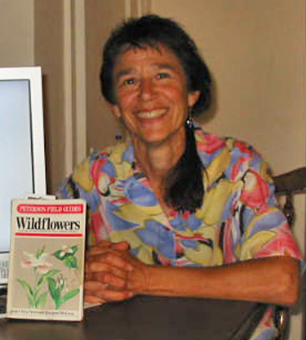
tammy spillis Harison Garden Club2-1About Tamara Spillis, Naturalist:

Tamara works part-time as Master Gardener Coordinator in Henry County (Ohio).  In addition, she is a small business owner who manages a naturalist service, working with private landowners and conservation entities to identify and document populations of wildflower and wildlife species.

She also teaches and lectures at museums and colleges on Native American bone and stone tool use.  An amateur mycologist, she has published articles on the use of mushrooms by diverse ancient and modern cultures for fire, warfare, and medicine.

Color photos that Tamara has taken in the field showed insects feeding on and pollinating wildflowers, plants in the various stages of their life cycles, easily confused plants with similar flowers — one edible and the other deadly, mutually supportive plant and insect relationships, common wild plants that are edible and others that are toxic, plants that we live alongside of but rarely see in our everyday lives, and many other insights into the natural world of the fields and woods around us.

welcoming Spring

IMG_9128

It’s Monday and snow is falling outside the window. The temperature is low enough that the white stuff of winter is sticking in clumps on trees and on what new grass there is. Two days ago it wasn’t much warmer, but it was still the first full day of spring. And even though the morning blew in on a cold northwest wind, Spring is great cause for celebration after a polar cold winter that began prematurely with snow on October 31.

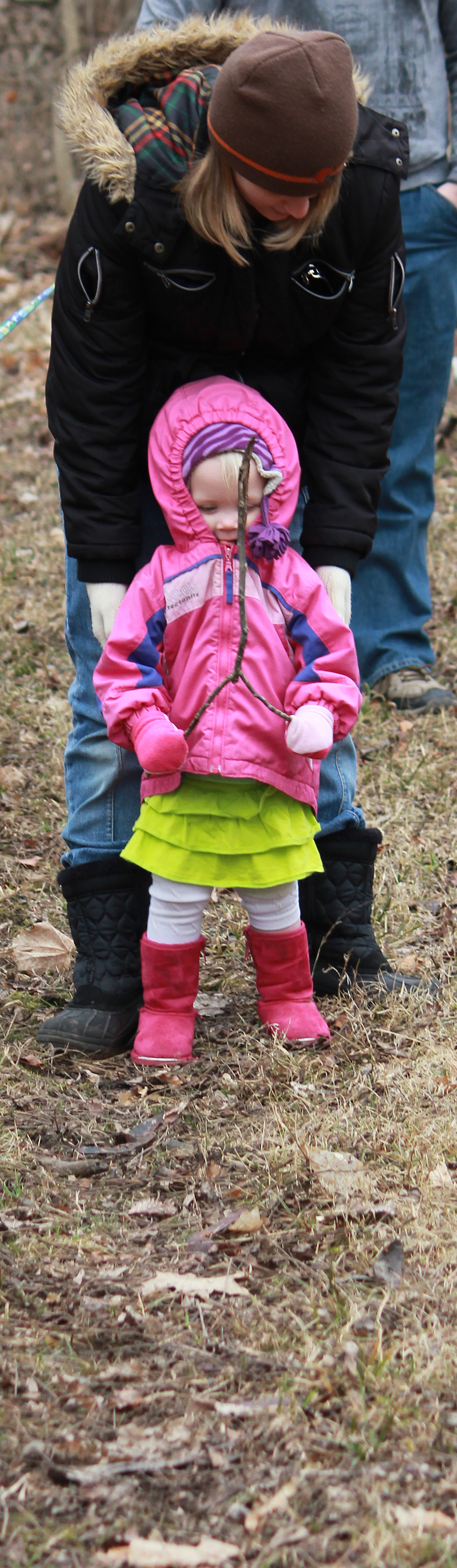
IMG_9108We planned a March 21 ‘Welcome Spring’ Family Day three months ago by placing the event announcement in our winter newsletter. It was an optimistic move, one which dreamed big of turning over logs to find salamanders and the first bloodroot leaves curling up from the ground around the old homestead well north of the 10-acre grassland.

The forecast looked promising for Saturday, with sun and predicted temps in the high 50s. As noted two paragraphs ago, what we got was cold wind and gray. Laura switched the refreshment menu from cookies and lemonade to doughnut holes, cookies and a selection of hot beverages which we thought would consumed by those of us who live close by.

Instead, we were joined by three families, all hat-and-coated and ready to hit the trails. Most were return visitors, so they knew that the wind chill would drop once we entered the nature preserve with its tree lines of defense.

Two Canada geese stayed put on the melted quarry surface, at least long enough for us to watch them lift off. We saw plenty of signs of movement, from a variety of tracks to wild turkey feathers. And since this walk was one to greet Spring, this group inaugurated the vernal pool trail for all future guests.

Steve gathered two water samples from the largest pool, an oxbow that was once part of Cranberry Run prior to a brutal 1950s attempt to ditch the natural, wild creek. The oxbow is home to frogs, dragonflies, woods ducks and a variety of turtles. Saturday, most burrowed deep and our enthusiasm sent anything with wings away, but the net did yield scuds, a tiny crustacean akin to shrimp.

We pondered scat in the upland grassland, talked about the sharp hawthorn that sometimes stores a shrike’s lunch and made maple leaf angels on the main hardwoods trail.

Up and out again, and several donuts and hot chocolate cups later, the south Cranberry Run trail led us to the farm animal sanctuary where Buddy, Beatrice, Johnny, Marsh and Mister Bill led the pack in a high-five. Turkeys Inigo and Humperdink paraded their splendid selves about, puffing and drumming as their heads mottled from pink to blue to purple and back again.

IMG_9146It was the first visit with guests for Mister Bill, a very, very, very large Boer goat, and he was tolerant until he’d had enough and wandered away to chew on a spruce. We took the hint at high noon, the scheduled departure time anyway, and were escorted to the gate by turkeys, goats, Buddy and Beatrice.

A warmer spring walk, one fit for wildflowers and light sweaters, is in the works for April.

Stay tuned.

In the footsteps of Fizz

Lolly There’s a man we admire who lives near the Forest of Dean. We are genuinely fond of him, though I don’t even know his name. I simply know him as The Tramp. He walks about the Forest, taking pictures of whatever catches his eye, turns his feet home and then cracks open his head and spills an absolute treasure trove of knowledge about the world around him into the ether (if you’ve not yet met him, haven’t found him through social media or some obscure search or simply missed him through sheer bad luck, here he is: https://atrampinthewoods.wordpress.com/). We do, however, know the name of his companion, his Sancho Panza. I think it’s probably safe to say that The Tramp would find his wanderings considerably less in so very many ways without her. Her name is Fizz and she’s every bit as curious about the world around her as any tramp.

But, why, you ask, are we bothering to discuss these someones that are half a world away? Well, first and foremost, The Tramp’s musings and observations are all of that and so much more. Read. Look. You’ll thank me for it. Thank me and The Tramp. And Fizz? Fizz is…well…Fizz. Second, it’s been said that imitation is the sincerest form of flattery and while I’m not above stealing an idea or three if I think it will help move everything along a bit more smoothly, I do draw the line at failing to give credit where credit is due. Having said that…

Here’s Lolly.Lolly crossing

For those of you not near the here we’re at, it’s been cold; so cold that walks to retrieve the mail are arduous undertakings requiring planning, oversight and at least five layers of clothing. Today, however, (and likely tomorrow, if the forecasters read their scattered bones correctly, scried sincerely their battered leaves of tea), it’s been comparatively balmy; nearly 30° F. On Tuesday, though, we’re back into the basement, temperature-wise. So, given that we’ve been cooped up for the better part of a week, we threw open this window of opportunity and bounded back into the woods, Lolly, Anne and I.

DriftsFirst observation of the day: snow is ever so much whiter under the crust. The winds that have battered this area have stripped the topsoil from all of the surrounding fields and tossed it until it couldn’t be tossed any further. Where it falls it lays in blankets, ribbons and bands of varying shades of brown. Sometimes you don’t even notice it until you’ve taken a step or two, all that dirt being evenly distributed so that there’s just no way of knowing. Other times, you just can’t help but see.

That same wind, though, did interesting things to what little snow has fallen, pushing what must have been little more than two inches of overall snow into two- and three-foot deep frozen waves caught in the process of cascading over the lip and down into the stream bed. Cranberry Run itself is frozen along most its sinuous length, with water breaking through the ice only along the most turbulent runs.Creek sculpture

Tracks on QuarryOn the paths we’ve carved through the woods, down on the frozen stream and across the quarry itself were sign after sign after sign of the many and varied creatures that live here. Tracks of rabbit, squirrel and raccoon crisscrossed those of turkey and deer and a host of songbirds. There were even what we suspect were fox tracks and signs that at least one fox was successful at the hunt. Though we’ve not yet managed to photograph any of the foxes that we know live here (we know of two active dens), we hear them at night, interacting with one another in eerie, high-pitched yowls and sharp, barking yips and growls. We’re researching trail cams, at the moment to help us capture visuals and have acquired some sound equipment with which we hope to record the voices of The Quarry, once I’ve figured out how to effectively use it.

Fox SquirrelIn a tree on the spit of land separating Cranberry Run from the old quarry, a fox squirrel sat on a branch and watched us walk on by. He was fat and sassy and at least one of the reasons for Osage scrapshis good health soon became apparent. Scattered here and there were the remnants of osage oranges, the seed fruit of osage trees. The osage tree (Maclura pomifera), also known as the hedge or hedge-apple tree, is one of the most commonly planted trees in the United States and is used as a field hedge, wind break and to stabilize soils. Unlike apples, pears or cherries, the squirrels tear the tree’s green and yellow fruit apart to get at the seeds, not the flesh. Remnants of their feasts are scattered in oval patches here and there along the stream and back in the woods.

DownySparrowThough there’s little doubt that many simply went unobserved, there seem to be fewer birds about than in past years. We did, however, see various sparrow species, juncos, cardinals, bluejays and several downy woodpeckers flitting from and between the trees.

Tomorrow, if the prognosticators are correct in their prognostications, we’ll probably take the time to do this again.

A New Year’s Day walk below the wind

IMG_2737This new year looks bleak, with harsh, cold wind and an absence of snow. Thursday afternoon, I walked down the lane and had to fight to open the gate against bluster, feeling the cold bite of the latch’s surface through my work gloves. No one followed me to the gate in hopes of treats. I’m sure no apple slices could beat shelter on the sunny side of any outbuilding.

I made it just about 50 yards down the road before ducking down into the lowland along Cranberry Run, where the drop behind Red Fox Cabin blocked the wind. So cold were the trees that they hummed, except for Osage orange trees. These woven, thorny trees make sort of a whirring whine in frigid wind chill (truly exhilarating when one is walking on the trail at night…alone.)

IMG_2736Winter came on so suddenly that many of the Osage fruits are green and whole, their sticky white latex ooze flash-frozen to the ground. The fruit is not poisonous to us mammals, but I hear it’s not much to taste. Further on down the creek, on the east side of the footbridge, I saw something, maybe a fox squirrel, made use of an orange as a food source.

The sun is cold and farther away at the start of the year, a white sun in gray blue sky. Even the bane of the understory, bush honeysuckle, is leafless this year without a snow blanket. No green, other than the Osage fruits, was visible on Jan. 1, 2015. This is a good thing, I know; maybe this will give the maples and oak seedlings a chance to fill in the spaces left where the 2012 derecho took out so many mature trees.

IMG_2739IMG_2734The wind was so high and wild above the creek valley that I saw few birds, not even on the old stone quarry. This winter it is full of water, frozen with reflections of rich, ruddy browns, gold, and sky. There are no breaks in the still quarry’s surface, but Cranberry Run’s riffles keep a brisk pace, leaving open holes here and there, especially below the high blue clay banks at the northwest point of the nature preserve. Two birds, so in shadow that I couldn’t identify the species more than to say they are large songbirds, dipped in the water below a bare root hackberry that has held the top of the bank for as long as I can remember.

IMG_2741The camera, a treasured Rebel of my dad’s, said ‘no more’ to the cold, so I tucked it inside my blanket coat and headed back the way I came. At the top of the hill near The Quarry Farm entrance sign, I tucked my chin closer to the camera, wrapped my scarf around my head and ran for the gate.

With my eyes so adjusted to discerning the different hues of browns, the greeting party under the apple tree was a shock to the senses. Wrapped in new thermal coats, Buddy and the boys were like presents under the tree.

What a happy sight to begin a new year. Rain is promised for Saturday. Luckily, these coats of many colors are waterproof. I think I’ll stay inside and watch.

IMG_2730