Sophie’s choice

IMG_1033 (1)

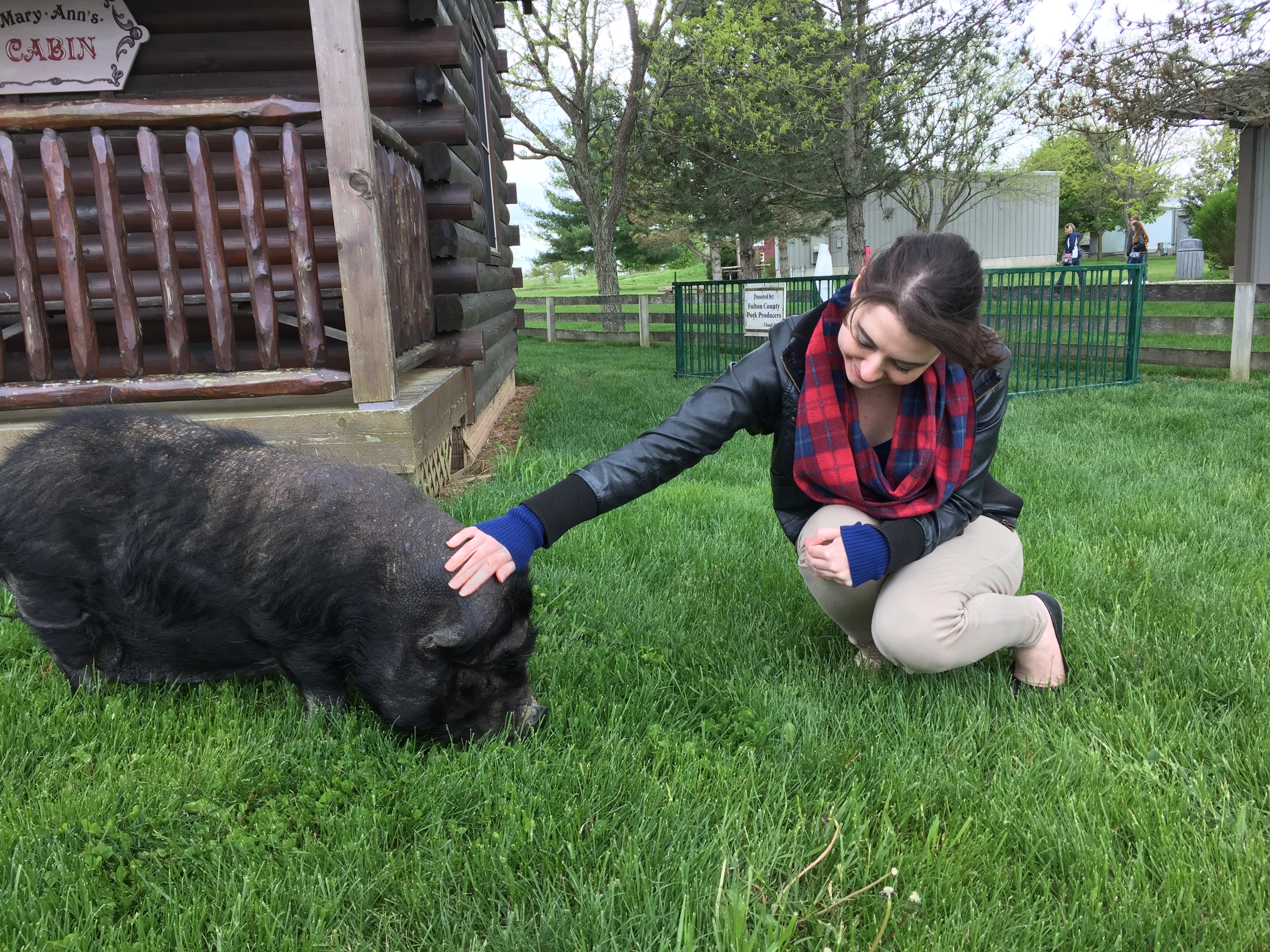
Sophie meets Jamie Napolski, Assistant Curator of Education & Special Events for Sauder Village.

Yeah, yeah, yeah…I did go there with the title of this post.

But it’s true; Sophie the pot-bellied pig had her first road trip as an educational ambassador for The Quarry Farm, and this happened as a result of a choice she made on Friday.

As testified by the previous post, “Sticky toes and hiking sticks”, an entire third grade class joined us onsite for a Friday filed trip alongside Road 7L. The students and their teachers and chaperones rotated through stations, including a visit to the farm animal sanctuary. As we always tell visitors, once inside the gate, humans will have the opportunity to meet the sanctuary residents, but only those residents who choose to walk down the path for a face-to-face encounter. While it’s almost a guarantee that the bronze turkeys will show up, as well as at least one of the donkeys and a goat, the pigs are a little more unpredictable.

For instance, if the sun is shining and the temperature moderate, Carlton may mosey on down the hill for a belly flop and scratch. Queen Beatrice may sashay through the floodplain. If she could do the royal wristwave, I have no doubt she would, stopping only long enough for a brief pat before moving on for a nap in a warm pool of light.

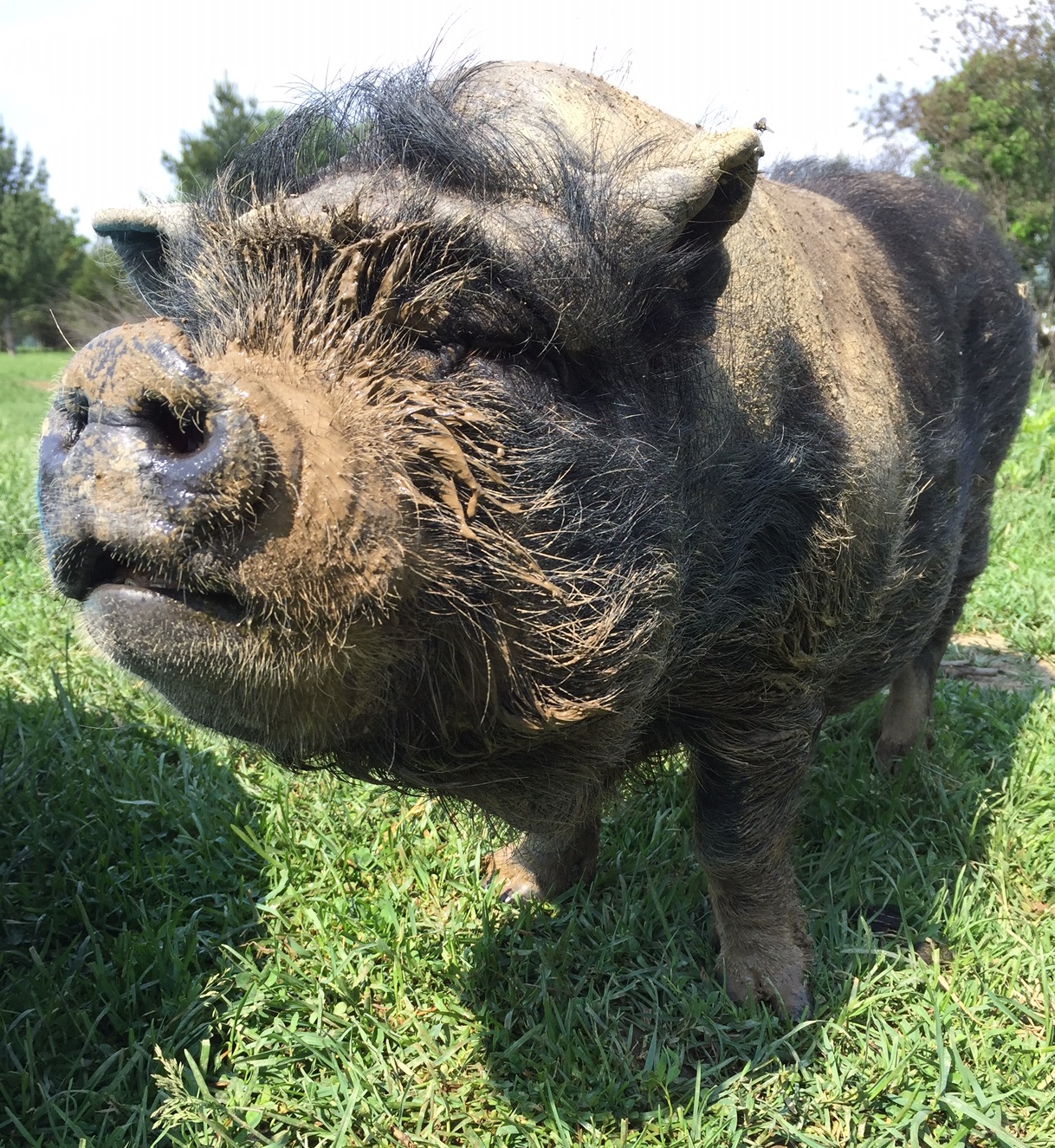
As for the others, their early years were so harsh at the hands of neglectful humanity that visitors only get a distant glimpse. In Sophie’s case, beatings, poor diet and exposure left scars that have left her much older than what we think are her actual years. So it was a wonderful surprise when she chose to join the second group of students to rotate through. She even stayed close, allowing the third rotation to pet her softly on the forehead.

Because of Sophie’s decision to trust in the kindness of strangers, we took her on an hour-long car ride north for a program at Sauder Village in Archbold. While 19th-century reenactors read “If You Give a Pig a Pancake”, Sophie charmed young visitors and their families outside a log cabin in the Little Pioneer Village. Marshmallow the Nigerian Dwarf goat went along for the ride, too, but he’s an old hand at programs and conducted himself in his usual sweetly-mellow manner.

By the way, don’t give a pig a pancake.

Big Girl

We called her as we saw her and so her name, the name we gave her, was Big Girl. And she was. Big. At least in comparison to the Prissies, the first 16 chickens to live on The Quarry Farm. Big, too, in that she eventually made this place her own.

She came to us through Nature’s Nursery, but our understanding of her life started in a depressed and battered neighborhood near downtown Toledo. A gang of kids was harassing her with sticks and stones and fists and feet until a man we never met, never heard more about than to know the part he played in Big Girl’s life, stepped out of his house and drove them off. He called the people we know, who called us and here she came.

Not surprisingly, she was suspicious of us; kept her distance. Literally. She maintained a space of roughly 30 feet between her and any human being in the yard. If you took a step toward her, she took a step away. As evenings would wear on, we’d have to wait until full dark, then go out and find where she’d perched for the night, catch her up and put her in the coop, safe from every big and little thing that goes bump in the night.

And so it went, until one day it didn’t. It wasn’t a gradual acceptance, but an all-in sort of thing. One day she was meticulously guarding her personal space and the next she was standing on my foot, looking up at me and wanting food. It took about three months, but she’d finally made up her mind.

That was in 2009. Yesterday, she crossed the water. She’d been fading for months and when we opened the coop door in the morning, we knew. She eased herself out into the sun and, after a bit, lay down. She stayed there for the remainder of the day with the three of us checking on her every little bit. Then, with afternoon slipping into evening, she simply went with it, followed the westering sun.

 I suspect I’ll always look for her, perched in the crabapple tree or up in a pine, bullying one hen or another out of her way as they all race to the coop for a treat. And in some sense, I’ll always find her.

This is home, hers and ours, in spirit or in flesh, and that much more solidly established for her having made it so.

big girl

Big Girl

Captain John Smith (2014-2015)

The overwhelming downside to establishing relationships is the inevitable loss and grief that accompanies them. Sometimes, when we’re lucky, we can Untitled-1postpone that inevitability for decades. Other times…well, we take what we can get and are simply grateful for it.

11235061_10207536043982656_4756174563500865798_o

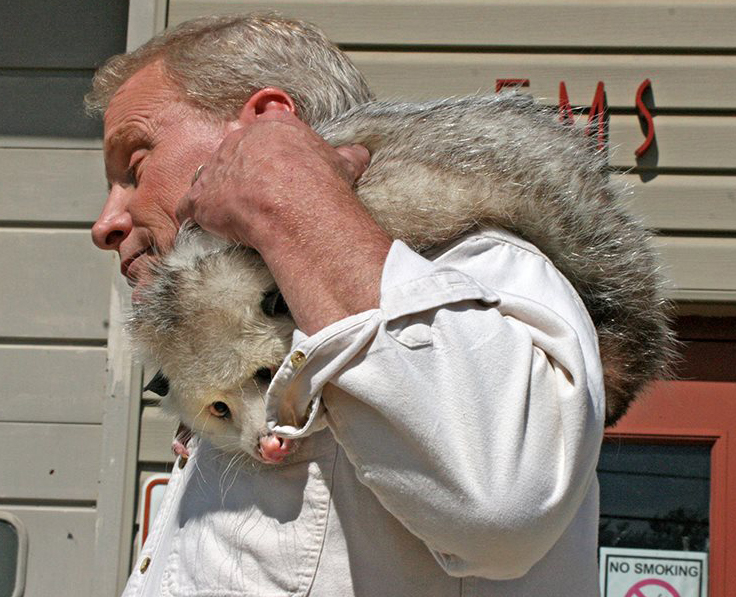
Steve and Captain John at the Columbus Grove branch of the Putnam County District Library

So it is with Captain John Smith and we are, indeed, grateful.

Our friend, Kim Starr, suggested his name, told us of the Englishman’s role in delivering the word opossum, a close approximation of the Powhatan word aposoum, to the English language. We can only hope that the human Smith served as well as Captain John in the role of ambassador. It was with a gentle nature that he turned heads, changed opinions and opened eyes to new understandings.
Captain John Smith, ambassador for Virginia opossums everywhere, made his last public appearance at the Delphos Public Library on Nov. 19.

Captain John Smith, ambassador for Virginia opossums everywhere, made his last public appearance at the Delphos Public Library on Nov. 19.

Given that it’s an extinct language, there’s just a short list of some 550 words/phrases in Powhatan with which linguists are familiar. Goodbye isn’t among them. Thank you, on the other hand, is. So…

Kenagh, Captain John.

We will miss you.

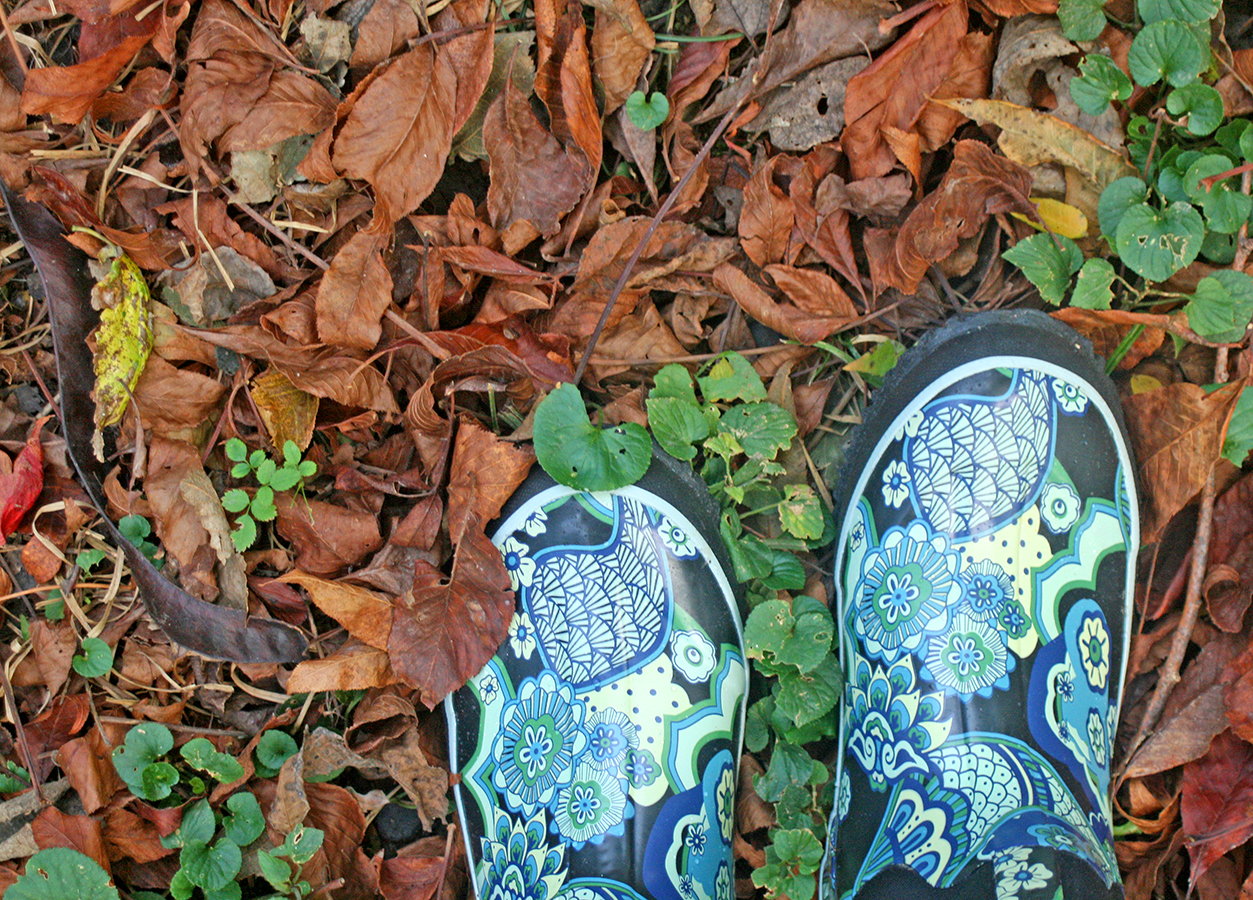
New boots

Today, as flocks of migrating birds shouted song words on the Quarry Farm, my new boots arrived in the mail. Every autumn, I order a pair of slogging boots for winter chores and trail walks. They must be big enough to allow for layers of socks and tall enough for when the days are deep with snow or icy slop.

Boots Joe

And they must be fun so that I can look at them on those icy slop mornings and laugh a little, as much as one can through a face mask and scarf.

Although last year’s pair are still slung on the front porch, they are split in spots and the liners are worn, just as each pair of work boots is by late March, April or May or whenever the ground firms enough to walk in shallow shoes without fear of mud sucking between the toes. So I started the search for a new pair.

I have always hoped to find an extra-large child sized pair during spring clearance, the kind with handles or grips to help you pull them on. But I don’t believe those are ever made extra large enough. Cousin Holly put me on the trail of a maker who design these for adults, but they were too rich for wearing to purge the hen house of chicken leavings, or droppings left by donkeys who think that particular building belongs to them.

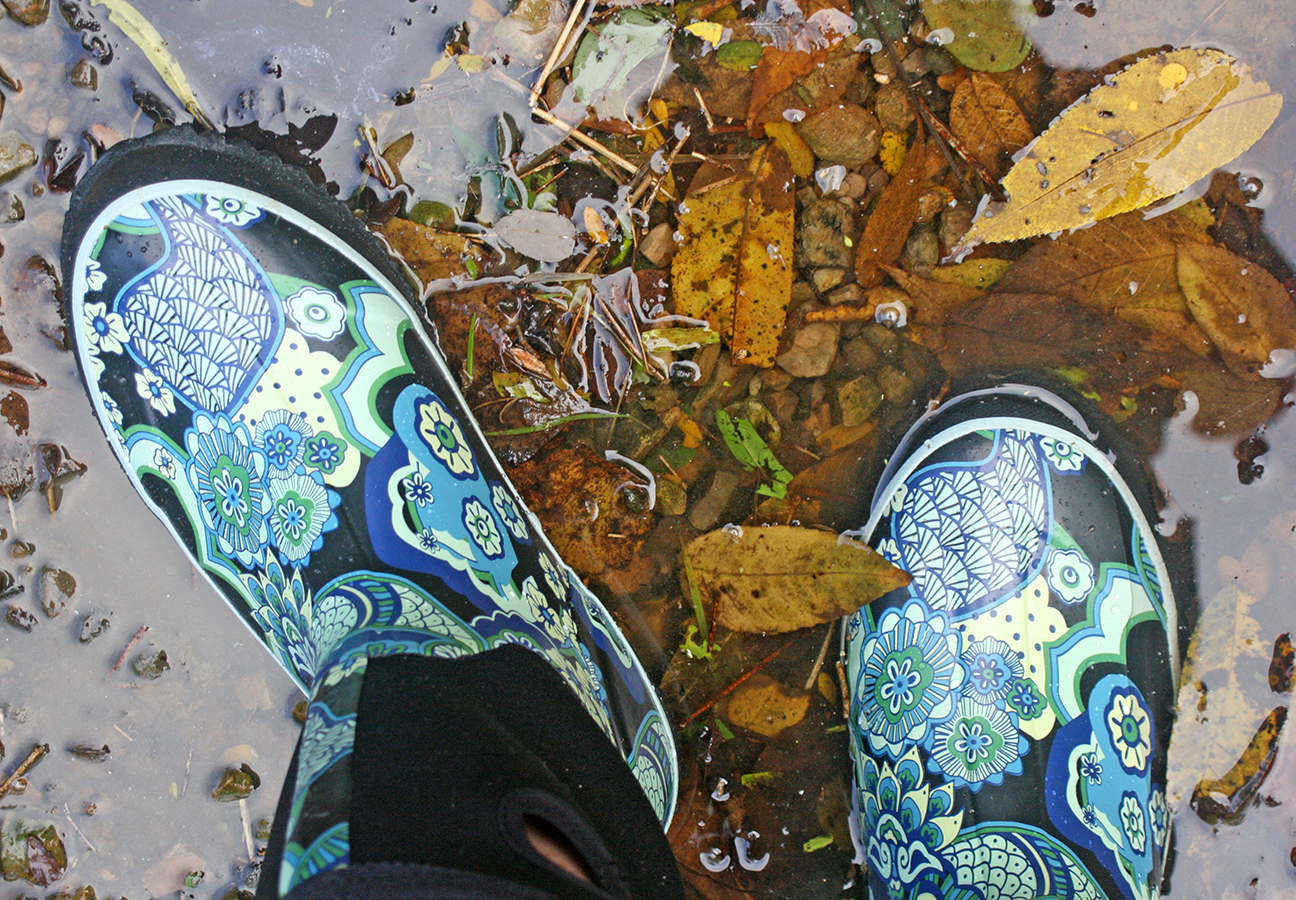
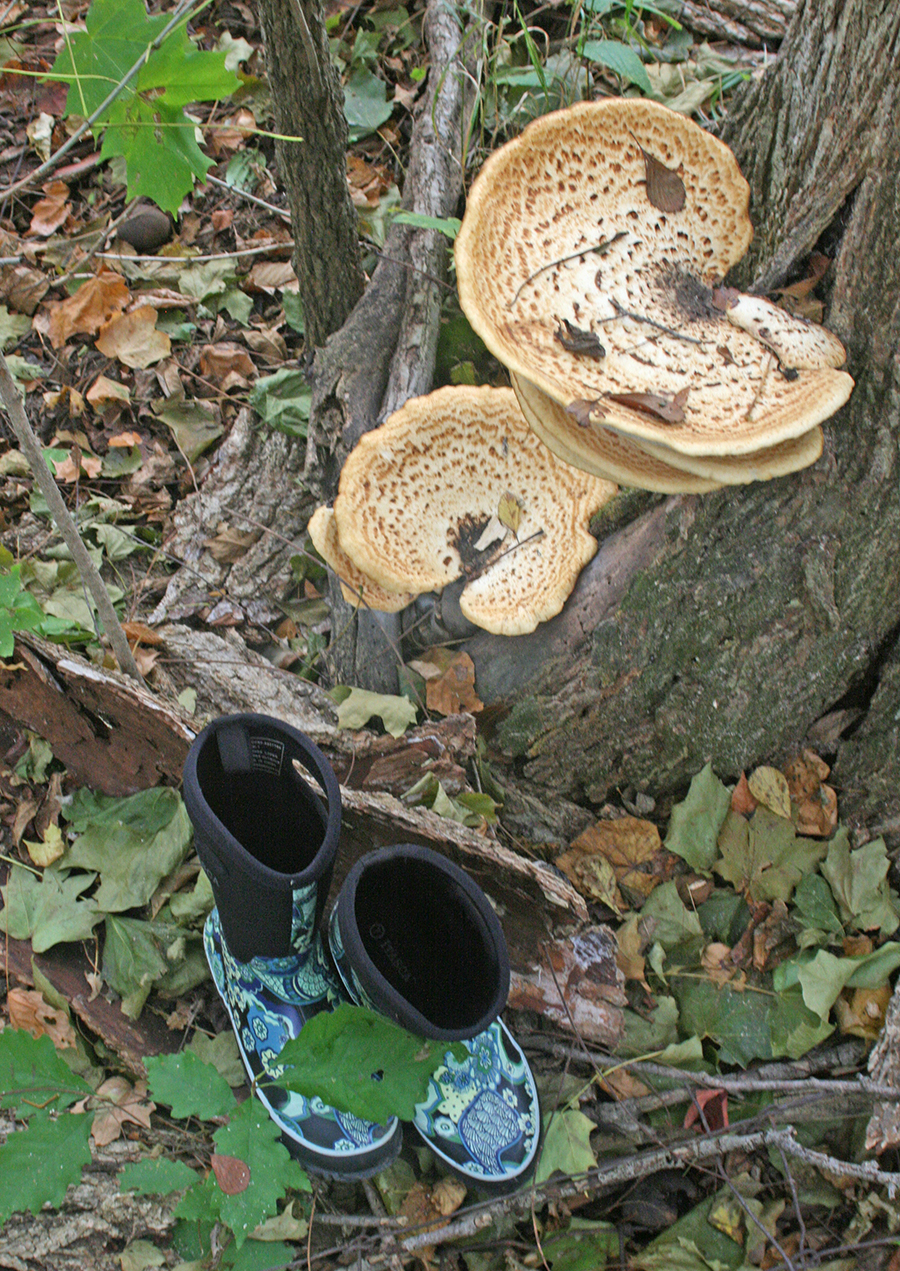
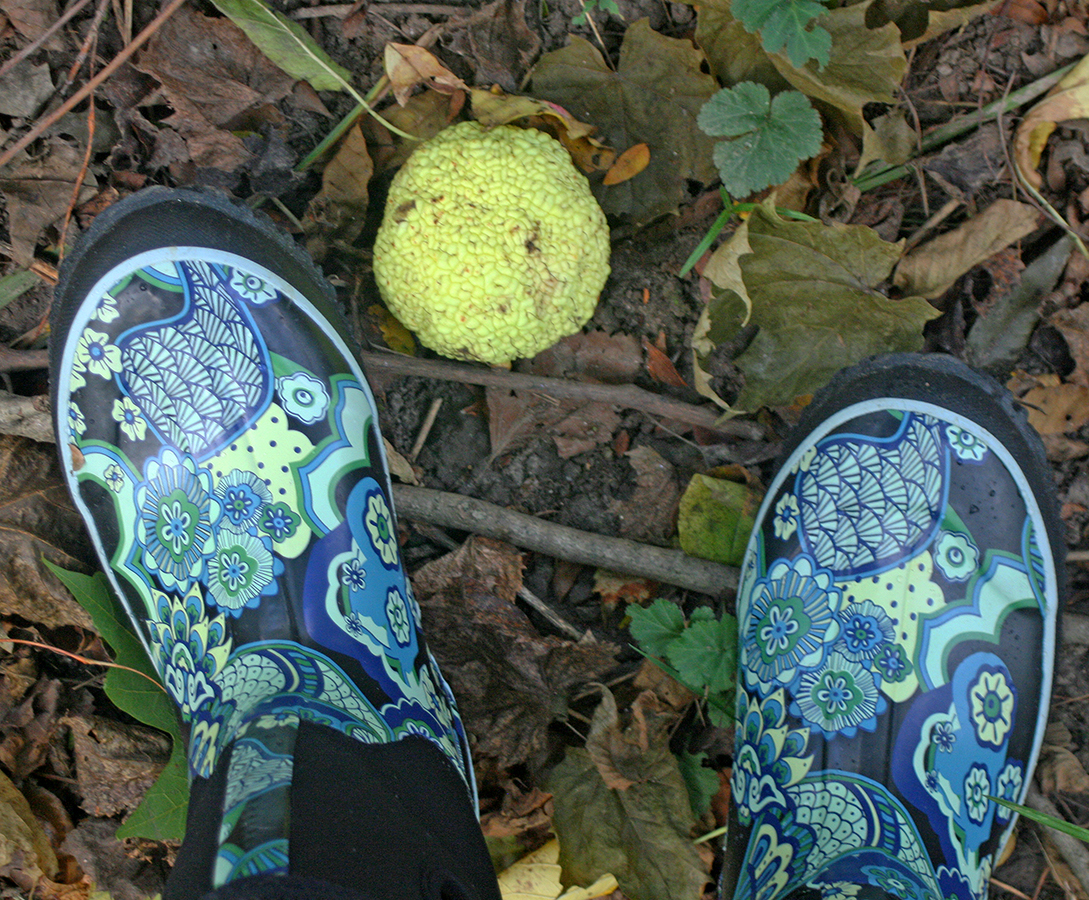
But this year, I found them — a a lovely pair with a chaotic paisley print and neoprene shanks. The hand loops are quite as fine as those mini yellow rubbers that I covet at TSC, but they aren’t likely to attract the chewing attention of goats, either.

I took them for a walk, first thing. And a rustle. And a wade.

Boots Flowers     Boots Path     Boots Creek Boots BracketsBoots Osage

Along the way, the boots led me to heralds of fall, like fallen Osage oranges, also known around here as hedge apples prized for their reputation as house spider repellents. I just think they are pretty things fresh from the tree, before the squirrels split them for food.

New brackets, as big as my boots, grow now from a tree between the old woods above the oxbow, cut off from Cranberry Run as it enters the preserve from the south. The tree, and the ornaments that signal its eventuality, ride the old Jersey cow perimeter.Boots Nemo

This tiny piglet met the boots, which were between her and the heating pad and blankets that she craves as she heals from a probable fall in Columbus from a transport truck loaded with thousands more piglets. Her name is Nemo; not for the Pixar clownfish, but from the Greek, meaning literally “nobody.” Because she was nobody, no one cared.

Now, from here on out, no one will ever hurt her again. Not if these boots, or any of those stacked hereabouts, have anything to say about it.

almost autumn

almost autumn and the sky squeezes blue
through the eye, guilt
from a moment of weeks; two days,
one leaf between a bible

of pages

black and white and velvet brown feet pad
through fallen leaves.
and still another falls to join them
and another still
and another still

Just a week, now, until fall; seven days and yesterday felt every bit the season. We ferried Captain John, the opossum, and Carlton, the potbelly, to Lima for an evening program in the amphitheater at Johnny Appleseed’s Ottawa Metropark. It was cold in the bottomland where the structure sits, the wind constant and insinuating.

But this is less about that than it is about earlier in the day. For the first time in weeks, in months, yesterday afternoon we worked our way to the back field. Certainly because we missed the woods and the field, the stream where it runs past the quarry and the quarry itself, but also as an introduction. And in keeping with this Merlin of a post, where time first marched backward from evening to afternoon, now there’s cause to relate a time two weeks back…two weeks and two days, not to put too fine a point on it.

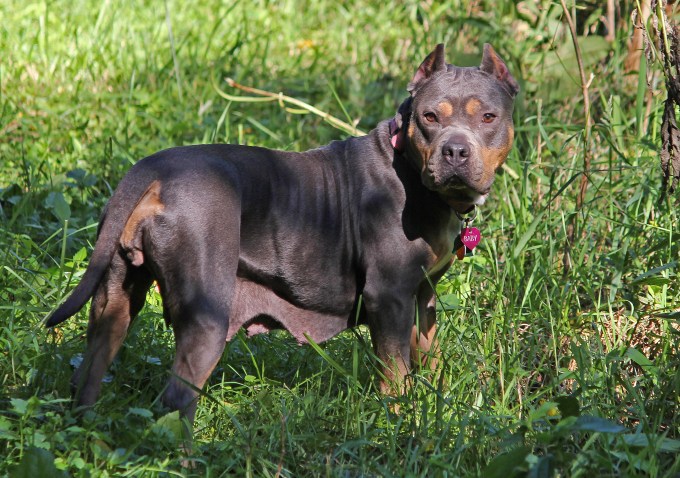
This is Cady.
Cady

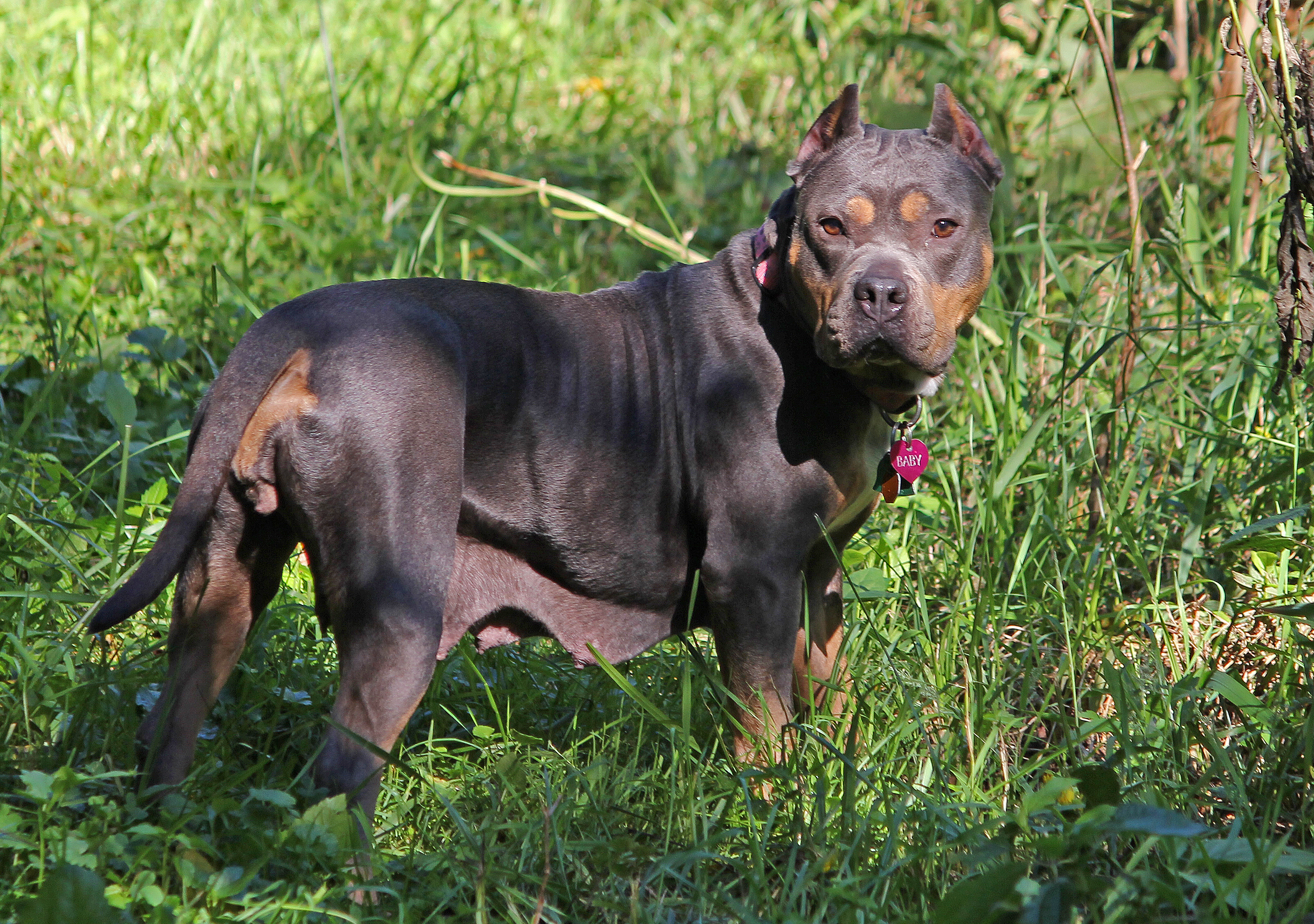
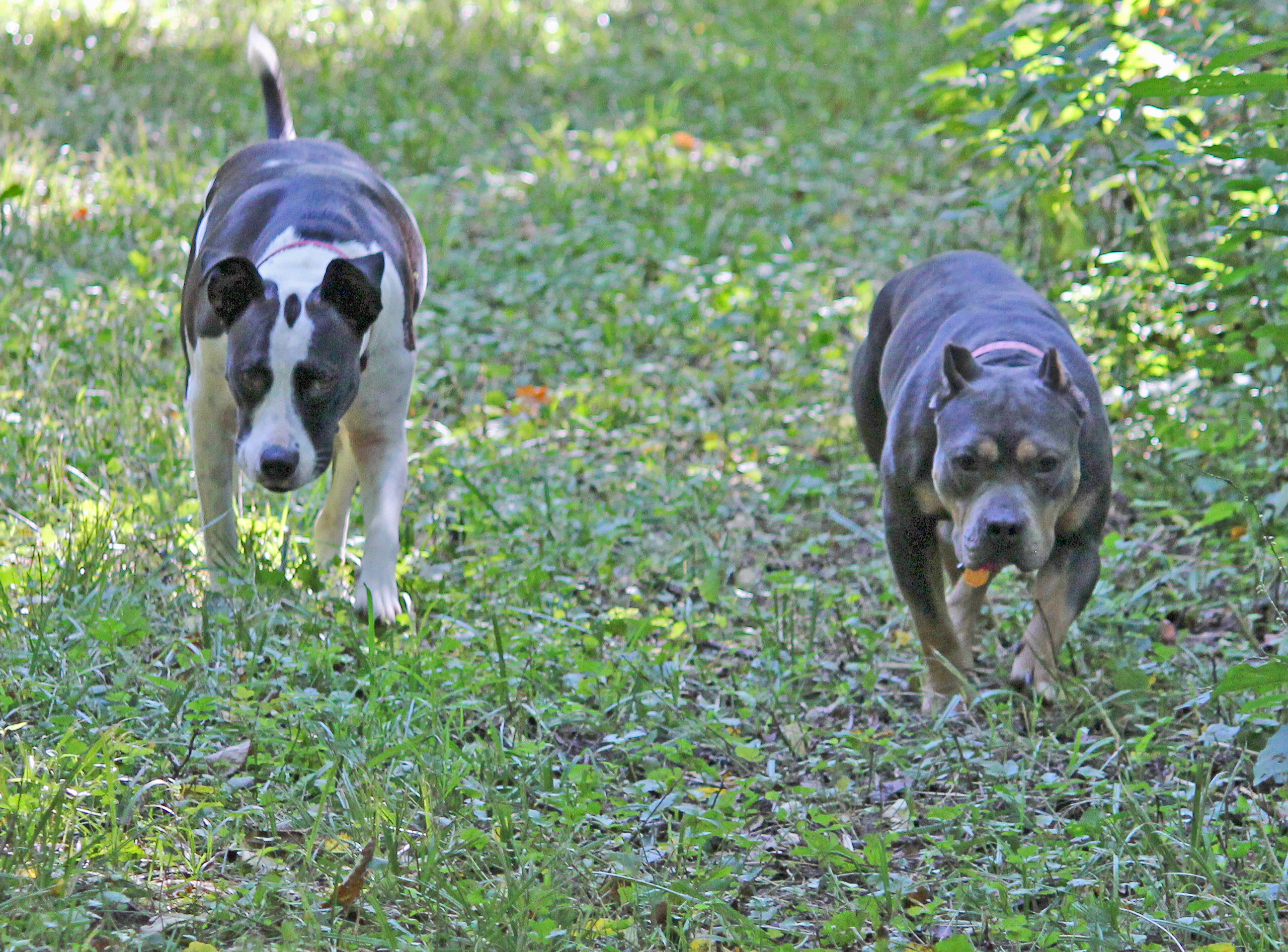
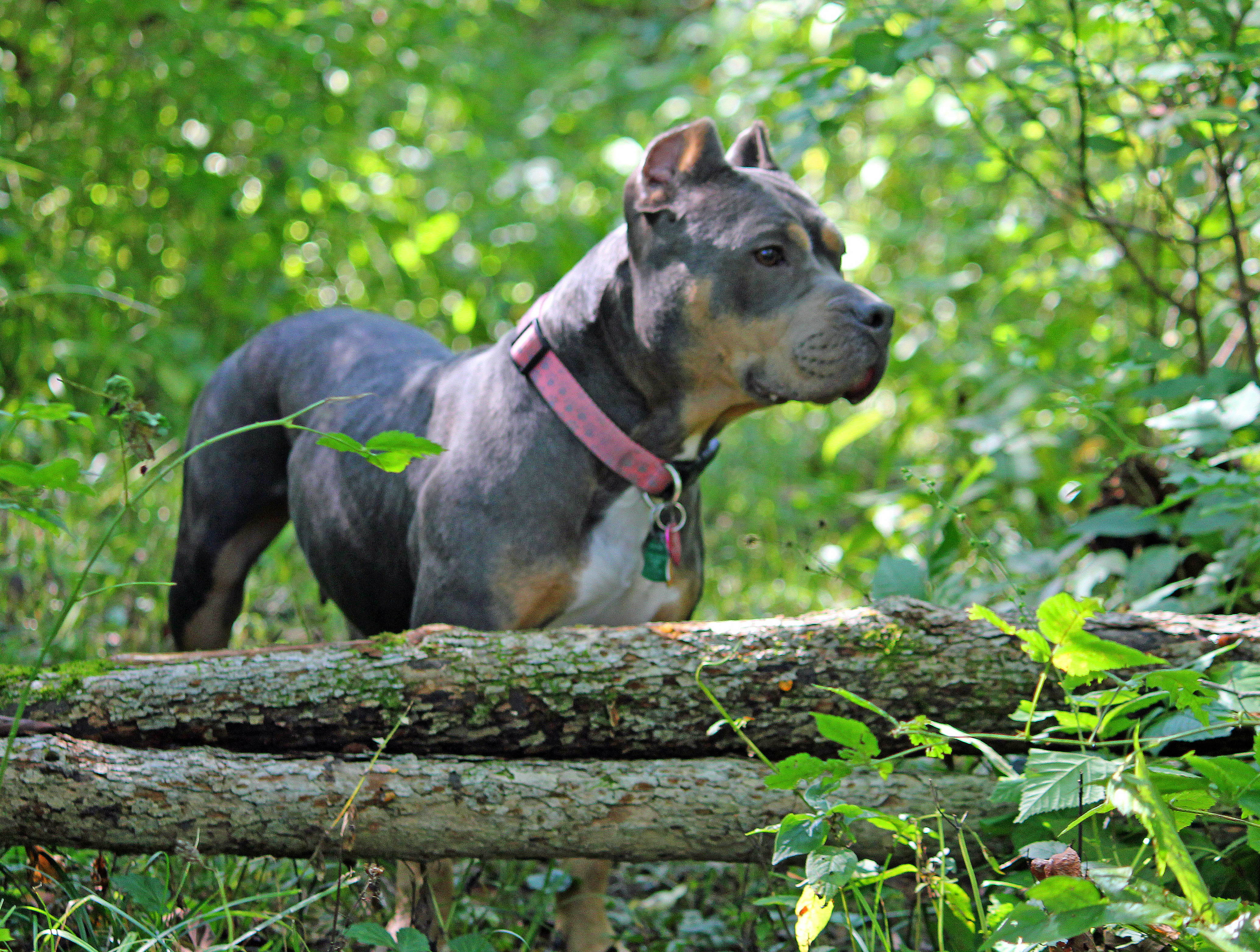
Anne named her for Elizabeth Cady Stanton, who, among other things, was an American suffragist. Cady came to us through the Putnam County Dog Shelter. She was abandoned in a Columbus Grove apartment not too very long after she’d birthed pups and almost certainly not for the first time, the birthing or the abandonment. The county’s dog warden, Mike Schroth, let us know about her situation, granted us the opportunity to invite her into our family. So, 72 hours after the county assumed responsibility for her welfare and 48 hours after we introduced her to Mister Bill (who gave her a sniff and then turned his back) and to the chickens (who paid her no heed at all) and to the turkeys (who took an immediate dislike to her and now pester her wherever she goes within the fenced-in area that is the animal sanctuary, unrelentingly reminding me of that Sandra Boynton cartoon), Cady relinquished her given name, Baby, and came to The Quarry Farm, new baptized.
Cady and LollySo, yesterday, 12 days after Baby became Cady, we introduced her to the wilder part of The Quarry Farm, the woods and fields beyond the fence. And again today, yesterday having proven a bounding success. With Lolly, Cady peered into Cranberry Run, braved the bridge, skirted the quarry, tore through the leaves on the main path to the back field, grazed her way across the field, padded along the ridge above Coburn’s Bottom and then back and back and back and back.

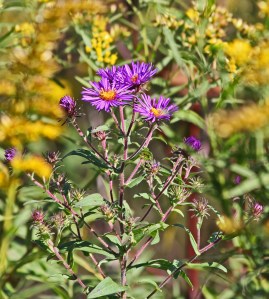
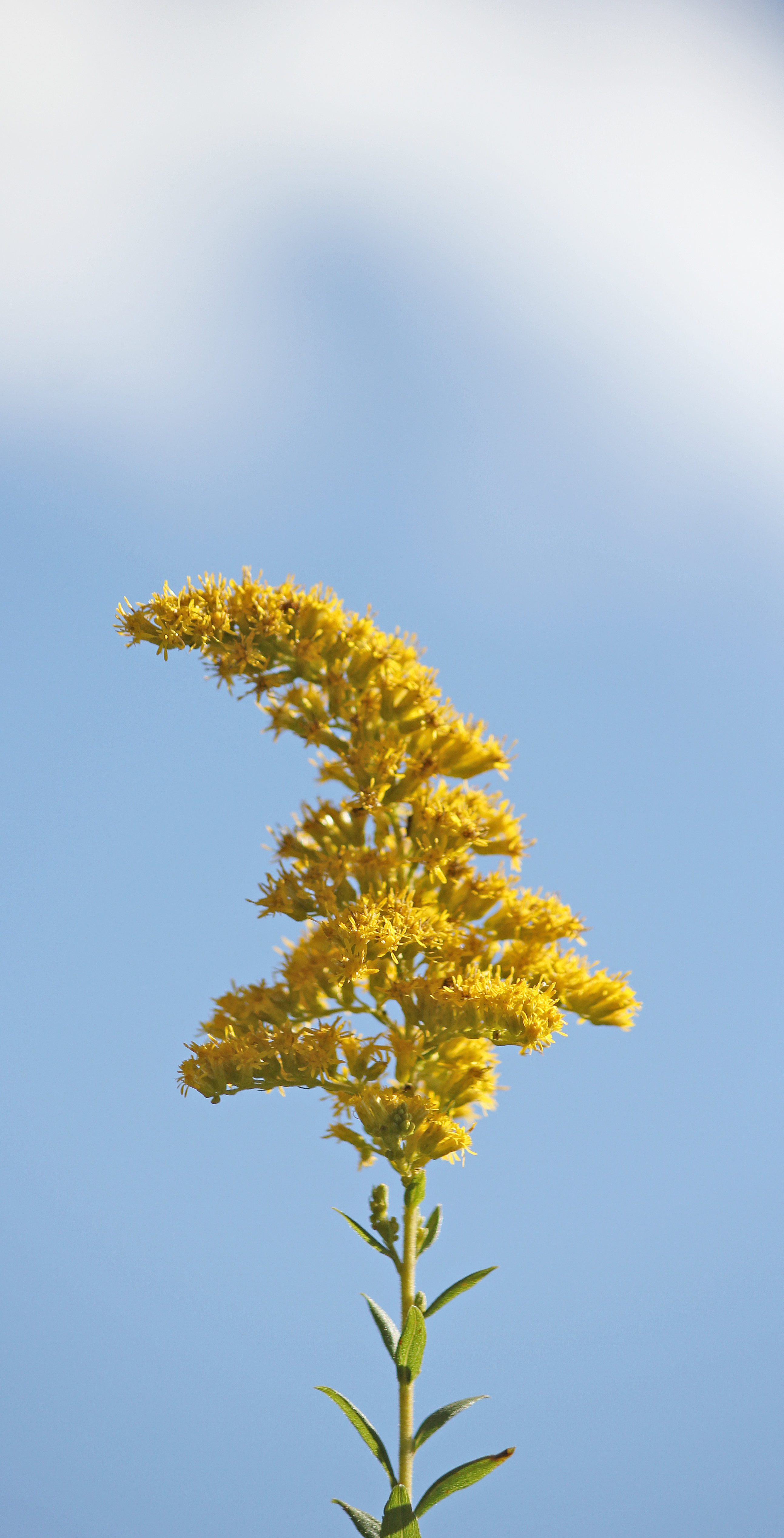
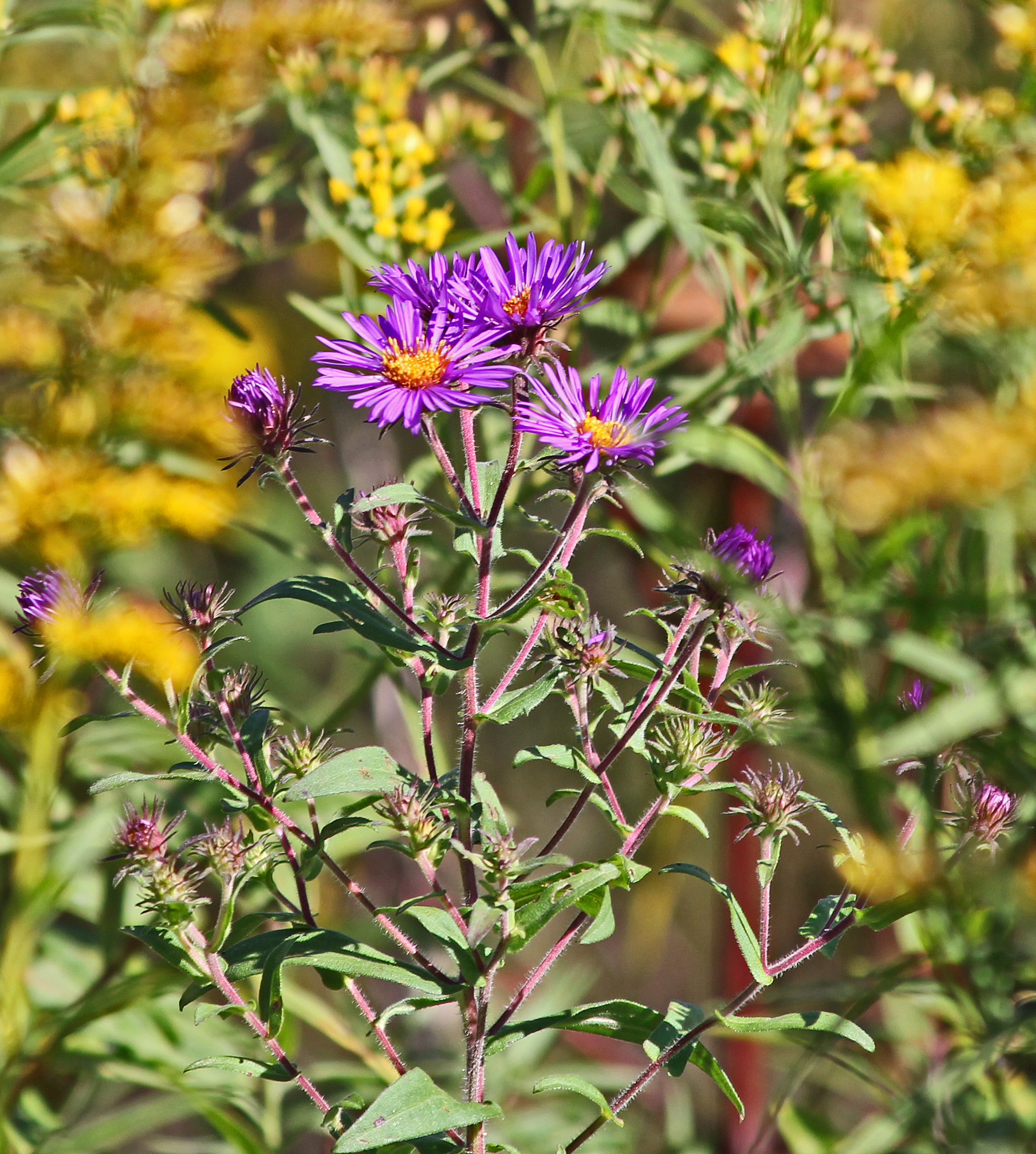
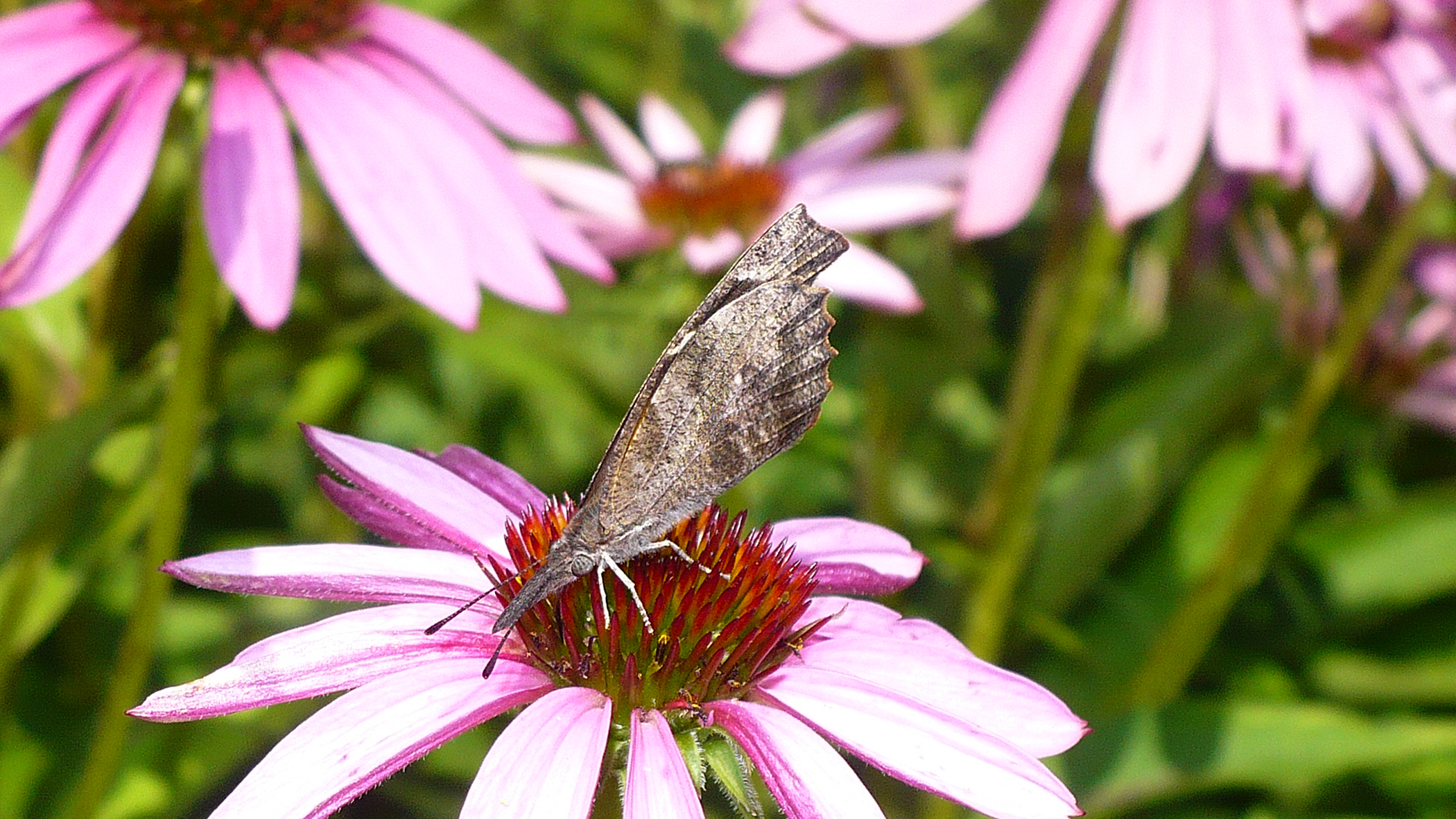
On the way, she passed, unremarked, goldenrod goldenrodironweedand ironweed

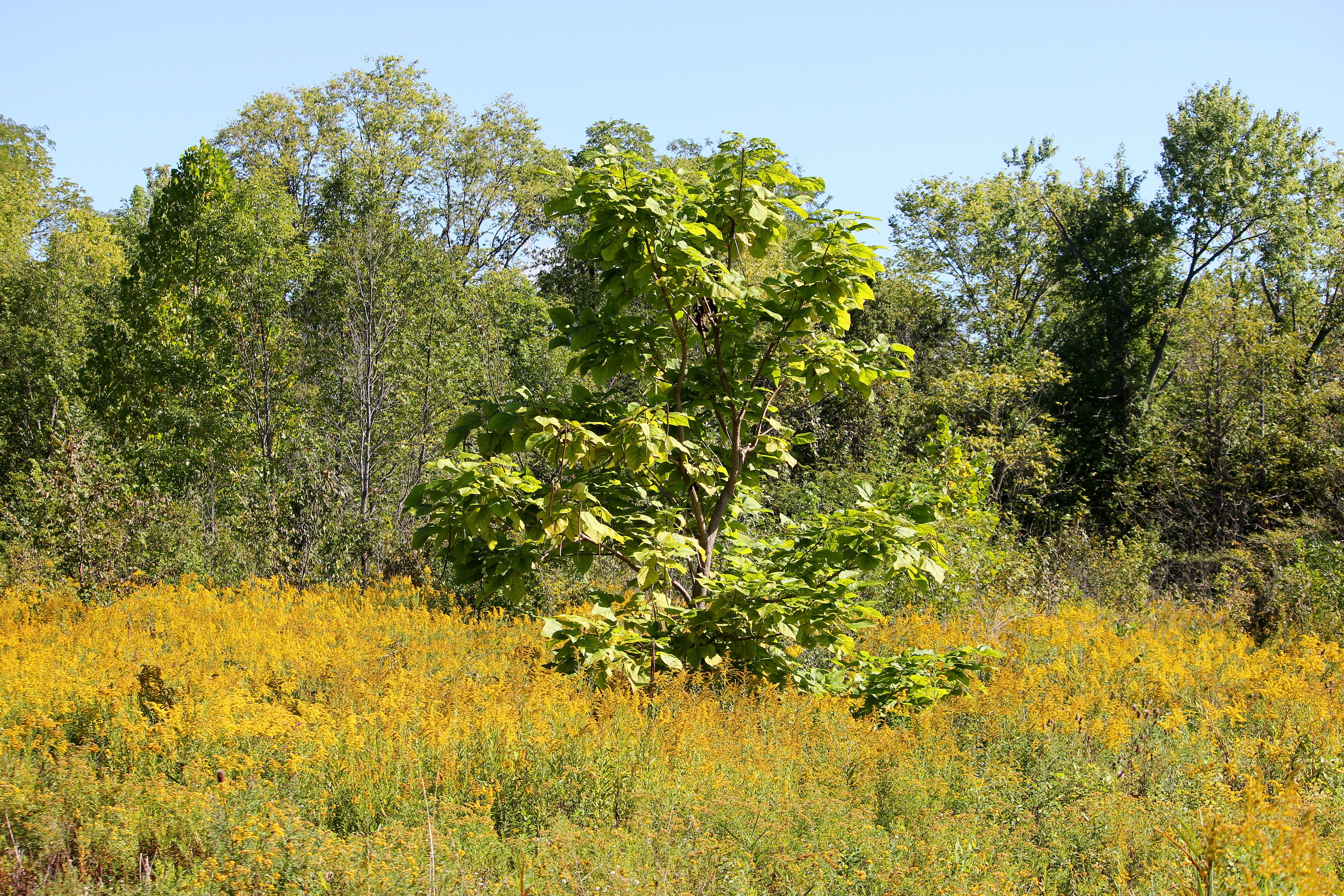
and a catalpa, alone, in the midst of the goldenrod,

catalpa in back 40

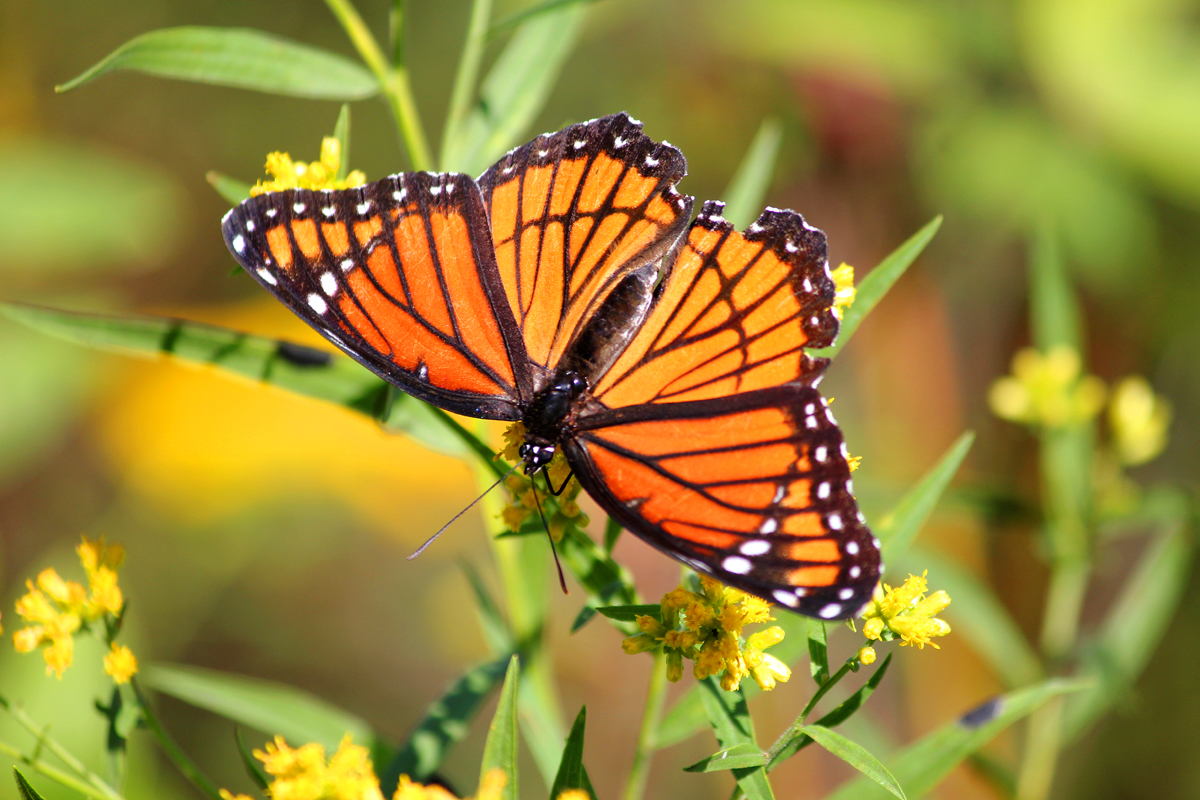
a viceroy

monarch

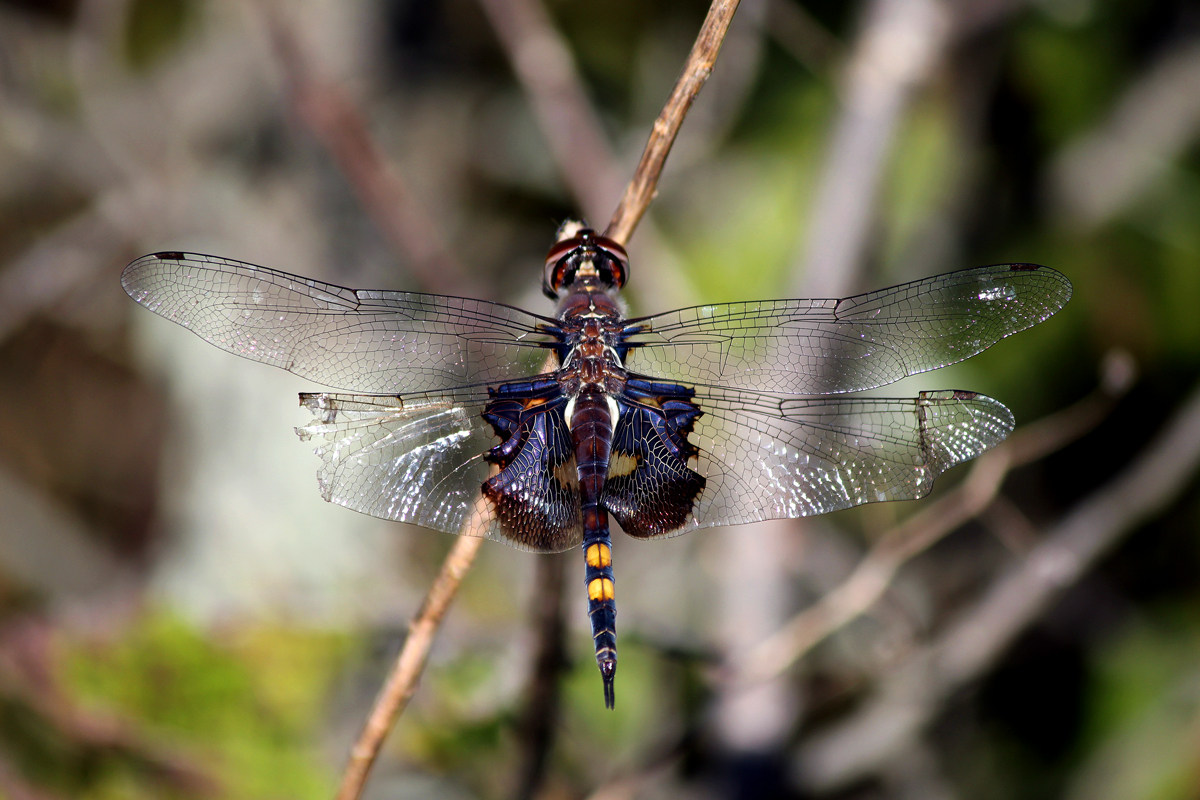
and a dragon.

saddlebag

Who knows what she’ll see next time, Cady, in the fields and along the stream? Or the time after that, for she’s not going anywhere, our Cady.

cady by deadfall_edited-1

Welcome home.
Carlton goes to college and other colorful stories

P1080221 We’re six days and counting with no rain. The morass is drying and the butterflies and other pollinators have landed, flitted, and flown in greater numbers than we have seen in these parts yet this year. Before summer’s end, I may need all 10 fingers to count monarch butterflies. The milkweed keeps sending out its rich fragrance. We can hope.

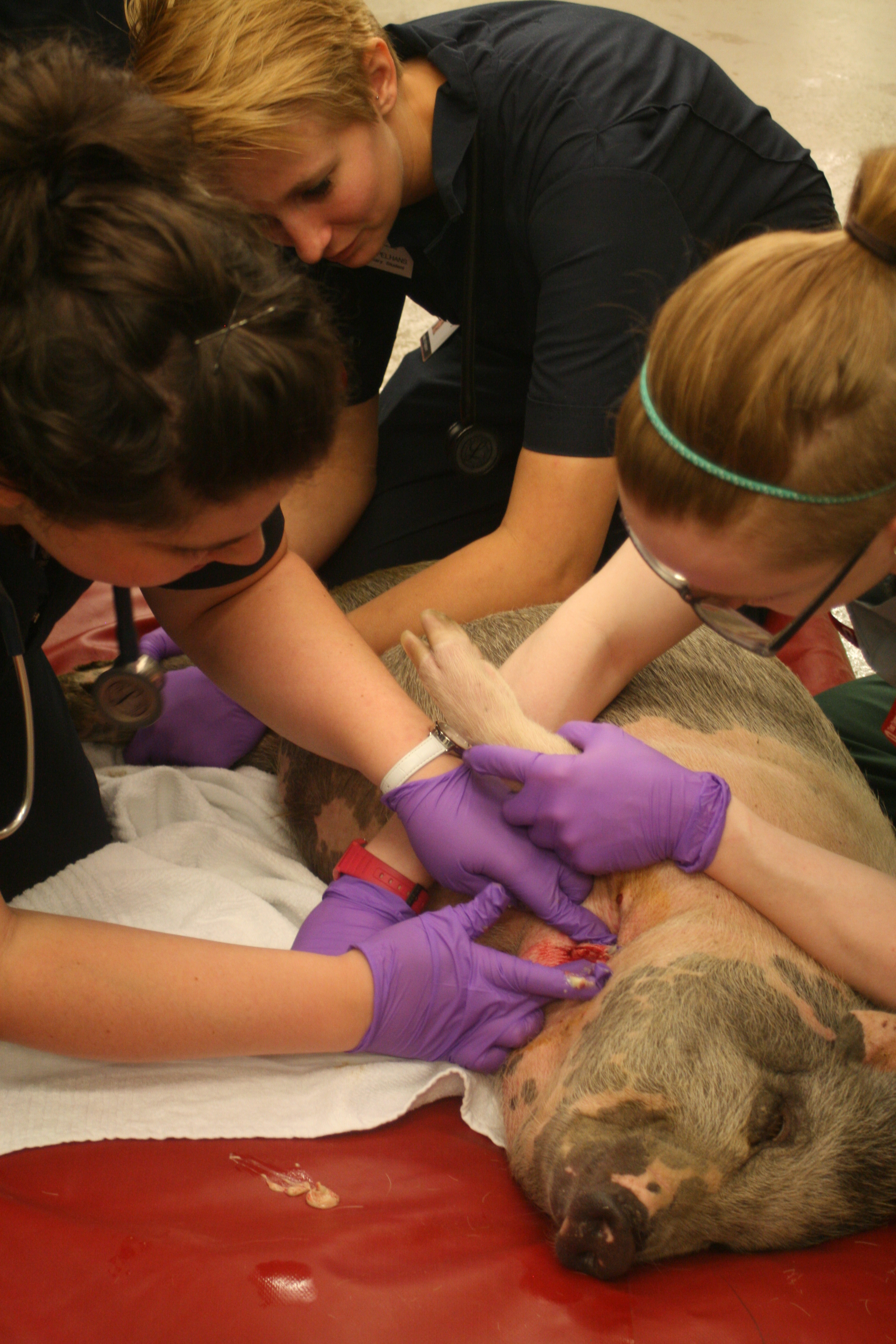
In between butterfly counts, we loaded a crated Carlton into the car and took him down to the Veterinary Medical Center at Ohio State University. What started out as a solid mass that wrapped under his right foreleg had settled into three abscesses. Fearing a pernicious parasite, we made the trip that IMG_4674we’ve made twice now with Marsh the Nigerian dwarf goat.

I love that place — if not the reason for going, but for the experience. The veterinary students and faculty and are curious, kind and thorough. On Thursday, with a dozen or so students gathered around, Erin “won” the opportunity to lance the most problematic abscess. It was truly spectacular, so productive as to elicit a burst of, “Ah-ohhhhs!” and applause. Dr. MacKay announced, “I don’t trust anyone who doesn’t appreciate a good abscess.” That right there is a bumper sticker in the making.

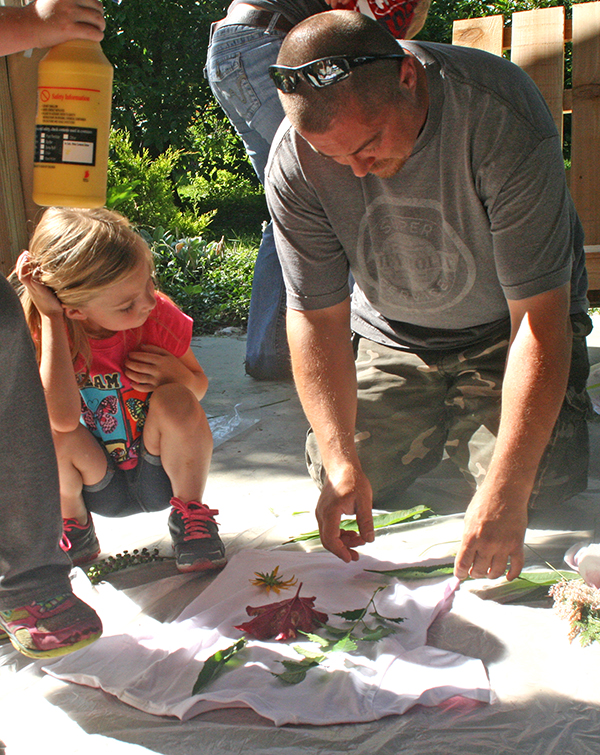
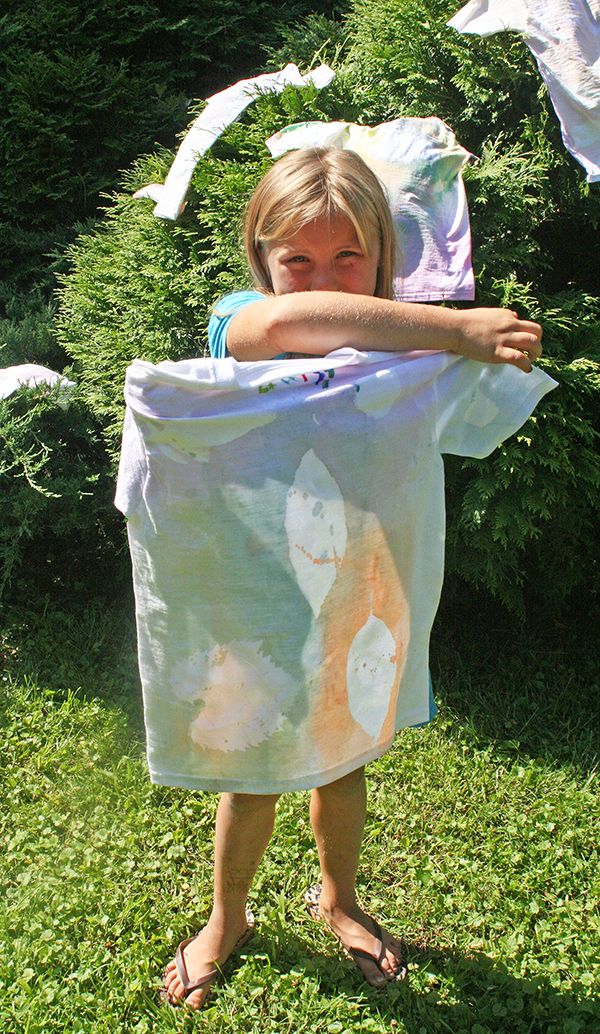
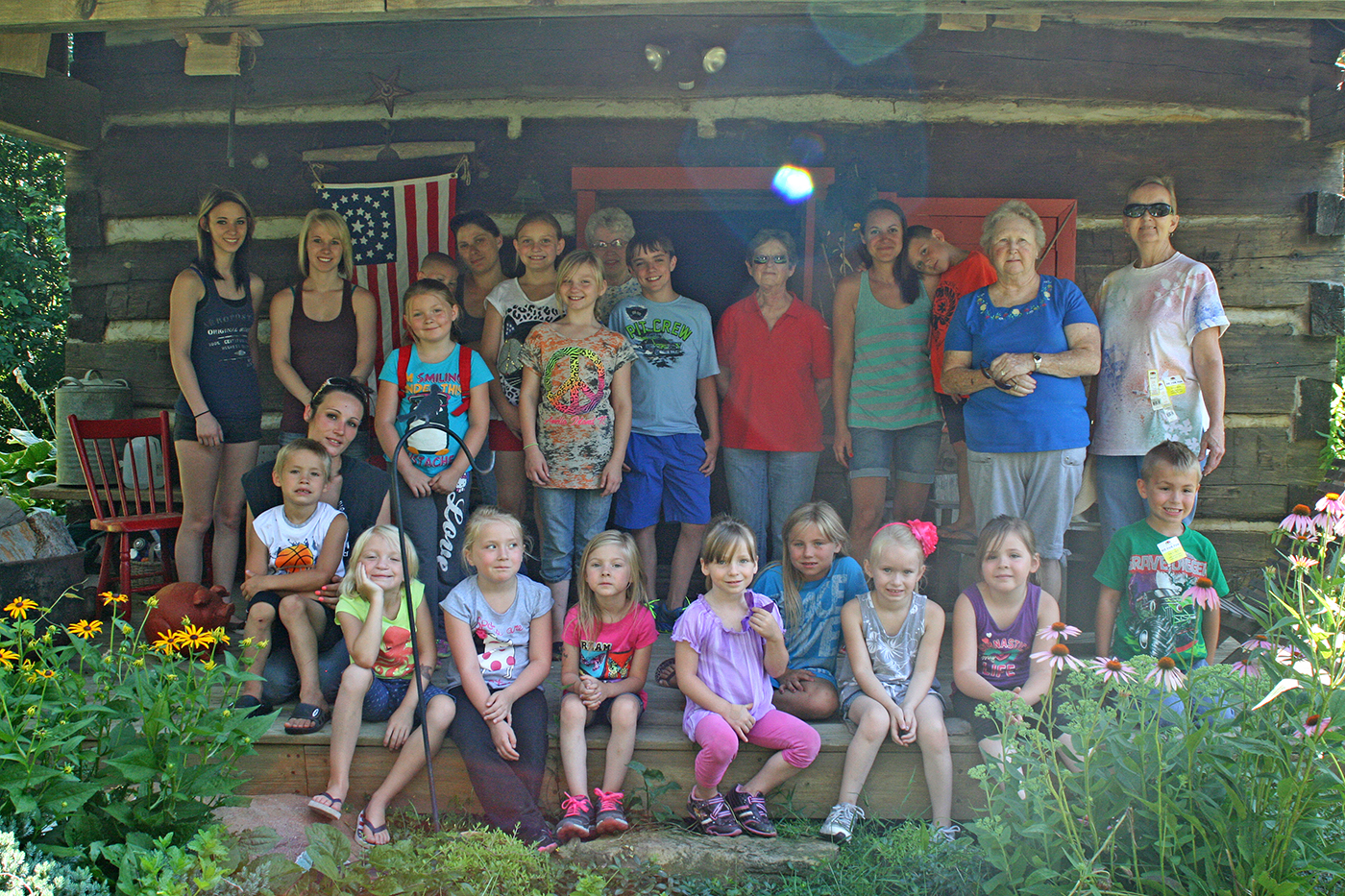
Continental 3On Friday, more color, of a very different kind, arrived here on The Quarry Farm. The Continental Junior Gardeners visited for the fourth year. There were many new faces this year, although some came into focus as we realized they were the siblings of children who visited in the past. They gathered leaves and arranged them on white t-shirts, then sprayed diluted acrylic paints on the shirts to create one-of-a-kind designs. Leader Charlene Finch said they will wear them in the Continental Fall Festival parade in September. Continental 2

After lemonade and cookies, they walked through the butterfly gardens and visited the farm animal sanctuary. The turkeys claimed the group as their own and gentle giant goat Mr. Bill smiled for several cameras. Before they left us for another year, all but one camera-shy dad posed on the red Fox Cabin front porch for their annual portrait.

ContinentalThe sun continues to shine today. Damselflies and dragonflies are on the move, lessening the hum of mosquitoes bred in the recent floods. With paint left in the spray bottles, I think a few more t-shirts will be made this afternoon. Pick up a t-shirt of your own and come on by around 3 p.m.

Can’t promise there will be any cookies left, but there are butterflies and a much happier pig next door.


A long week with not enough time

Beginning with an 11 a.m. appointment with a room full of children and a few adults at the main branch in Ottawa, we visited every Putnam County District Library location in the county. In this case, “we” is not a royal “we” but rather two humans, a middle-aged Virginia opossum and a bucket of freshwater macroinvertebrates.

Two weeks ago, we drove an hour east to Honey Creek, a Seneca County tributary to the Sandusky River. Our mission was to collect hellgramites, the impressive predatory aquatic larva of the terrestrial and flighted dobsonfly. By all rights, or if all was right with the world, we should have been able to find them in Cranberry Run as it passes through The Quarry. Underneath all the silt of the stream and Riley Creek into which it flows — even the bigger Blanchard at the end of the Riley — there is a river bottom of cobbles and boulders, prime habitat for hellgrammites. But there’s that silt, smothering everything.

Like I said, we drove to Honey Creek in between heavy rains and flood events and did net a few dobsonfly larva as well as two large dragonfly “babies”: a spidery skimmer and a froglike darner. Here at home, we collected leeches, snails, and half of a freshwater clam shell, its mother-of-pearl lining worn smooth. We set up an aquarium for their stay.

Each weekday morning, Captain John Smith was loaded into a carrier and as many macros as we could fish out of the aquarium were placed in a bucket for transport. No dragonflies made the bucket because, a few days after their arrival in Putnam County, the hellgrammites ate them.

S & J 2BoysIt was a good week. We met new people, the Captain made a favorable impression for his kind, and I got to play with leeches. One young man suggested that leeches are kind of like shape-shifters. I like that. I’m going to remember that for our next gig. Two more suggested that the Captain’s tail looks like corn on the cob. Never though about that before, and they’re right.

Today is Saturday, and we are kind of tired. It seemed like a long week, what with two speaking engagements per day on top of day jobs, slogging buckets and straw through rain and mud here on the farm and in parking lots and nursing one of the potbellies through a mysterious spate of abscesses until his appointment next week at Ohio State University Veterinary Clinic.

IMG_4408But I realized, after finishing Sy Montgomery’s The Good, Good Pig, that two speaking engagements per day for five days wasn’t nearly enough time to point out the importance of Virginia opossums and hellgrammites in our human lives. You need a lifetime of appreciation.

Nor is it enough time to admire the intricate, delicate patterns that trace the exoskeletons, especially across the backs of their heads. One glance in a bucket at the boneless athleticism of a swimming leech is just not enough, not enough for anyone.

We hope it was at least enough to leave everyone wanting to learn more. As Ms. Montgomery noted in her book, maybe a one-off was enough to lead some to a new way of thinking.