Burdock, concrete, and brown butter icing (not all in the same bowl)

Thursday, it rained. Friday, it rained. Saturday, it didn’t rain.

At 10 a.m. on July 11, the clouds were scarce enough that some blue shown through, a good thing for many reasons not the least of which was that 10 people were involved in the annual leaf-making workshop in the Seitz Family Pavilion.

IMG_4383

Tim, Alex, Bob and Marilyn create their own leaves.

Brenda stirs concrete for her leaf.

Brenda stirs concrete for her leaf.

Because they are large with strong vein definition, burdock leaves are nurtured prior to each summer leaf casting. Two buckets held the giant cut leaves. After play sand was mounded to the shape desired by each leaf maker, the sand mold was covered with plastic cling wrap. The selected leaf topped that and concrete was layered on. Some added river stone or beach glass.

IMG_4373

Brenda and Elaine arrange burdock leaves for casting.

Although everyone walks away from these events with a lasting leaf with which to feed and/or water birds and other wildlife, to use as a garden stepper or to display on a coffee table, we on The Quarry Farm love watching the creative process. And on Saturday, we were the grateful recipients of apples and huge bags of peanuts for the farm animal sanctuary residents, as well as a generous check from the Putnam County Master Gardeners.

IMG_4389

The Putnam County Master Gardeners present a check to Board President Laura.

We won’t see the final leaves for a week or so, since the rain picked up again on Sunday and Monday to slow the drying process. But we experience the results of generous support everyday. In fact, I think everyone who shared in Saturday’s experience did as butterflies flitted in and out of the open-air classroom, damselflies and dragonflies nabbed mosquitoes and a little bullfrog sounded off in the full raingarden pond.

Oh, and here’s the recipe for those cookie bars that were on the snack table.

Frosted Butter Pecan Bars
2 cups all-purpose flour
2 pkg. (3.4 oz. each) instant butterscotch pudding mix
1/2 cup sugar
1 tsp. baking powder
1/2 tsp. salt
1 egg
1/2 cup butter, melted
1/2 cup canola oil
1/4 cup water
1 tsp. vanilla extract
1/2 cup chopped pecans

FROSTING
3 oz. cream cheese, softened
1/4 cup better, softened
1 tsp. vanilla extract
1/8 tsp. salt
3 cups confectioners’ sugar
[Optional:  Use a frosting that doesn’t have to be refrigerated.  I use browned butter frosting.  See below.]

1.  Preheat oven to 350 degrees.  In a large bowl, whisk flour, pudding mix, sugar, baking powder and salt.  In another bowl, whisk egg, melted butter, oil, water and vanilla until blended; stir into flour mixture.  Stir in pecans.  (Dough will be stiff.)
2.  Press dough into a greased 13 x 9-in. baking pan.  Bake 20-25 minutes or until edges begin to brown.  Cool completely in pan on a wire rack.
3.  In a bowl, beat cream cheese, butter vanilla and salt until blended.  Gradually beat in confectioners’ sugar.  Spread over top.  Sprinkle with more chopped pecans, if desired.
Cut into bars before serving.  Store in refrigerator.

BROWNED BUTTER FROSTING
1/4 cup butter
2 and 1/2 cups confectioners’ sugar
1 tsp. vanilla
3 tablespoons milk

1.  In a small saucepan, melt butter over medium heat and cook, stirring constantly, until butter turns a caramel-brown color.  Be careful not to burn.  Allow to cool.
2.  Combine all ingredients and beat until creamy.  Add a little milk, if necessary, to reach spreading consistency.

Days of flowers and fungi, part 2

On Tuesday afternoon, I walked up the drive to find the geese swimming in the backyard, delightedly dunking themselves in the water as they swam in wide circles. After sunset, Blanchard’s cricket frog and bullfrog calls bounced off the second floor windows. Fireflies flickered over the water, their reflections doubling their numbers.

It was beautiful. The trouble is, we don’t have a pond on the farm animal sanctuary.

What does flow through the Quarry Farm, through the nature preserve, is Cranberry Run, a fairly narrow tributary to Riley Creek which in turn empties into the Blanchard River. From June 12 to June 15, the local Weather Guy reported 3.34 inches of rain, much of it all at once. Beyond that, the National Weather Service has noted 2 more inches around these parts. In a nutshell, for about a day and a half, most of the Quarry Farm became one with the old stone quarry.

Tiny mothOvernight, the waters receded into the stream banks and the quarry itself. The geese splashed in the floodplain puddles. Donkeys, goats and potbellies were a whole lot happier than the day before with their full salad bar reopened.

The creek itself is brown with runoff from open fields to the south. Given a few days, the preserve trees and grasses will do their work and filter the creek to a clear flow again. Everything is green and lush above the water line, with various mosses growing on the water-soaked deadfall and logs from the the 2012 derecho, a fungi forest in the making. Seems like a good time to play catch-up and post part two of forage expert Tammy Spillis’ spring visit.

Fungus Amongus

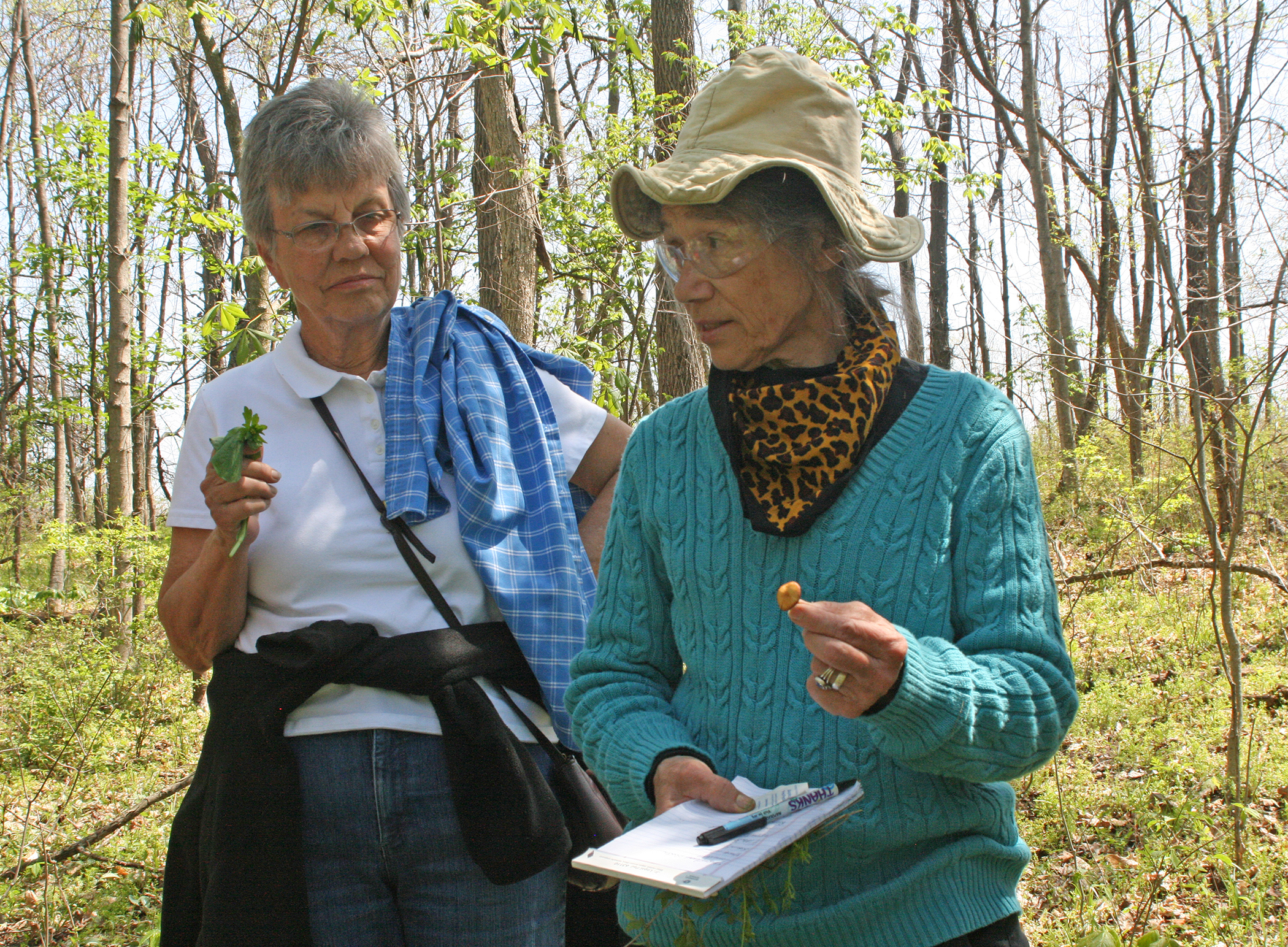
In addition to snake root, rue, wake robin, ginger and other wild flowerings of both the native and nonnative sort, the trail walkers who turned out on May 2 found several types of fungi on the Quarry Farm.

Thorny locusts line the path on the northeast rim of the quarry wetland. Their four-inch-long-and-counting barbs were used by women to hold their shawls together, said Spillis. What wasn’t their on Saturday were a shelf mushroom host-specific to the trees.

In the floodplain south of the quarry sits an oxbow of Cranberry Run. Or it once was part of the stream until it was cut-off in the 1950s in a mad dash to engineer every minor waterway in Northwest Ohio. Since that time, the “cut-off” and it the running creek have been working their way back to each other. Until the time that they do rejoin, the oxbow is a deep wetland that is home to fairy shrimp, a variety of amphibians, brooding wood ducks and fungi.

Irene and TammyThe first we found was a little brown mushroom, one that requires a thorough handwashing if held with bare hands. “Little brown mushroom — leave it alone,” made it into my journal.

Then a cluster of pheasant back mushrooms, a beautiful edible, grew alongside mosses on a decaying log. It was marked with a feathery pattern of browns, exactly as its name implies. Another brilliant-skinned namesake, a leopard frog, hopped across the path as Tammy bent to take a sample.

Whether wild or storebought, Tammy told us that we derive the most benefit from mushrooms that are cooked. “The outside persists because of the protein keratin. All the nutrients, Vitamin B and Pheasant's Tailothers are held within those cellular structures. So when you cook them, you release them. The only benefit you get from raw mushrooms is water and Vitamin C.”

Then there’s the risk that wild mushrooms, when eaten raw, can carry delightful little parasites onto the plate. Tammy said a little wild mustard or something in the horseradish family can dissolve the outside layer on the parasite, if you just have to have your fungus served raw.

She added that cooked mushrooms have tremendous power in fighting tumors. “Your body says, ‘A mushroom just went through me. This mushroom is normally hard, and it has this protein thing.’ And then your body starts attacking other things that are similar to that, stimulating an immune response.

Inky capsThe last fungus we met was a bed of little gray-brown caps held by black stems. These “inkies” were used to make ink during Thomas Jefferson’s day.

On the return route we learned that, should we run out of water in late summer, plenty of thick, tangled wild grape vine ropes fresh water through the trees and across the paths. Tammy showed us how to wrap a plastic bag around a nicked vine so that it will fill with sweet, clear water.

“Always leave a grape vine in your woods in case your well goes dry,” was her advice. Sounds like a lovely sentiment to weave into a tapestry. I see a workshop in the future.

Spring 2015 newsletter

2015 Spring Newsletter coverThree workshops await you on the The Quarry Farm this season, including a May 2 workshop that should be of great interest to science teachers and gardeners.

Click on the newsletter cover to the right to read the highlights of what has happened recently on the nature preserve, gardens and farm animal sanctuary, as well as what is to come.

Hope to see you on the trails!

May 2 workshop now open for registration

SAVE THE DATE: On Saturday, May 2, 10 a.m. – 2 p.m., rain or shine, walk The Quarry Farm Nature Preserve with naturalist Tamara Spillis and learn more about native mushrooms and wild plants.

– Registration: Open to the first 20 applicants (age 16 and over). Call 419-384-7195 or 419-234-4620 or email thequarryfarm@gmail.com before April 30 to register.

– Workshop Fee: $15 (includes lunch)

(Optional) Bring a favorite field guide, notebook, pencil, cameras, trail snacks.

-7xo5oaRukMz_q5gaOTNMGByCtLGRcBuUldJ0QIJt0nSt_MM5KSOfXCSPv3XWc6I2T4DW0bPMhJ0DngL1ZgR_pF4bcvMNPaCTCeXwLY7-348F1BfNXFmjF6GWGnuRt4FxWlVY0gIGioYtoX65Us5yZganOVg2DRIuL_zbkOrlhF6GkSkPWkcQV0R4xDONsplaCorlfT0xgWxzf_Yigelk3KFEd3• If you are allergic to penicillin, you should not eat morel mushrooms, no matter how delectable. Morels contain a substance also found in penicillin that accumulates in body tissues and can eventually cause anaphylactic shock.

• Oil lamps containing mushroom wicks may have lighted the world for ancient peoples.

• Genghis Khan made gun powder out of charred shelf mushrooms.

These are a few of the fascinating mushroom facts shared by naturalist Tamara Spillis during a recent slide presentation to The Gathering Basket Herb Society.

On Saturday, May 2, Tamara will share her extensive knowledge with 20 lucky people as we walk The Quarry Farm nature trails and prairie.  We will have the opportunity to explore with Tammy as she identifies and talks about the mushrooms, flowers, and plants along the way, and if you have brought your camera, you can get some great photos.

Some wildflowers that we know about, like wood violets, blood root, and Jack-in-the-pulpit should be blooming on May 2, but the Quarry Farm staff are excited about the prospect of discovering other species that we haven’t yet identified.  When Tamara is finished surveying plant life here, we will have a great educational resource to share with visitors of all ages in the future.

Keep an eye on the weather forecast and come prepared for conditions.  No matter what, we will have a great day on the trail.

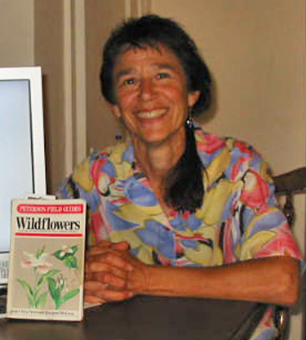
tammy spillis Harison Garden Club2-1About Tamara Spillis, Naturalist:

Tamara works part-time as Master Gardener Coordinator in Henry County (Ohio).  In addition, she is a small business owner who manages a naturalist service, working with private landowners and conservation entities to identify and document populations of wildflower and wildlife species.

She also teaches and lectures at museums and colleges on Native American bone and stone tool use.  An amateur mycologist, she has published articles on the use of mushrooms by diverse ancient and modern cultures for fire, warfare, and medicine.

Color photos that Tamara has taken in the field showed insects feeding on and pollinating wildflowers, plants in the various stages of their life cycles, easily confused plants with similar flowers — one edible and the other deadly, mutually supportive plant and insect relationships, common wild plants that are edible and others that are toxic, plants that we live alongside of but rarely see in our everyday lives, and many other insights into the natural world of the fields and woods around us.

Unplugged at The Quarry Farm, second time around

Acoustic NightAbout the time that we spent a year visiting local classrooms and introducing students to aquatic health canaries like dragonfly nymphs and hellgrammites, yet before the first goat, pig or donkey had trotted onto the farm animal sanctuary —we hadn’t even thought of attempting a farm animal sanctuary — we pipe-dreamed of what might happen here on The Quarry Farm.Acoustic Night2

There is no state or even county park system in Putnam County, nor is there a nature preserve. As family and friends have long enjoyed the woods, stream, oxbow the old quarry itself, we began to develop a trail system that is more identifiable to those of us who just know the way.

With teachers in that circle of relationships, we began to plan educational programs. Visual artists are also part of the mix, so we crafted some 2- and 3-D workshops.IMG_1081

Then Steve said wouldn’t it be something to invite musicians/nonmusicians from all over to come here and play/listen for a night? So in October of last year we sent a few emails around, made a few phone calls, put out chairs, chips and cider and waited for people to show.

IMG_1082And they did. You may have read the post about Acoustic Night 2013. If not, it’s still in the archives. I will tell you that the photos are lovely, so lovely that we have gone annual with Acoustic Night.

On September 13, 2014, the skies were full of stars and cool temperatures kept the mosquitos away. Laura lit a fire in the Red Fox Cabin fireplace and kept hot coffee, tea and hot chocolate flowing. There were volunteer-baked cookies and muffins. I’m still not sure why she sent me to the store for Cheetos, saying, “Everyone likes Cheetos, even when they’re stale,” but I have to admit that I ate quite a few of the dusty fluorescent bits myself. I guess she was right.

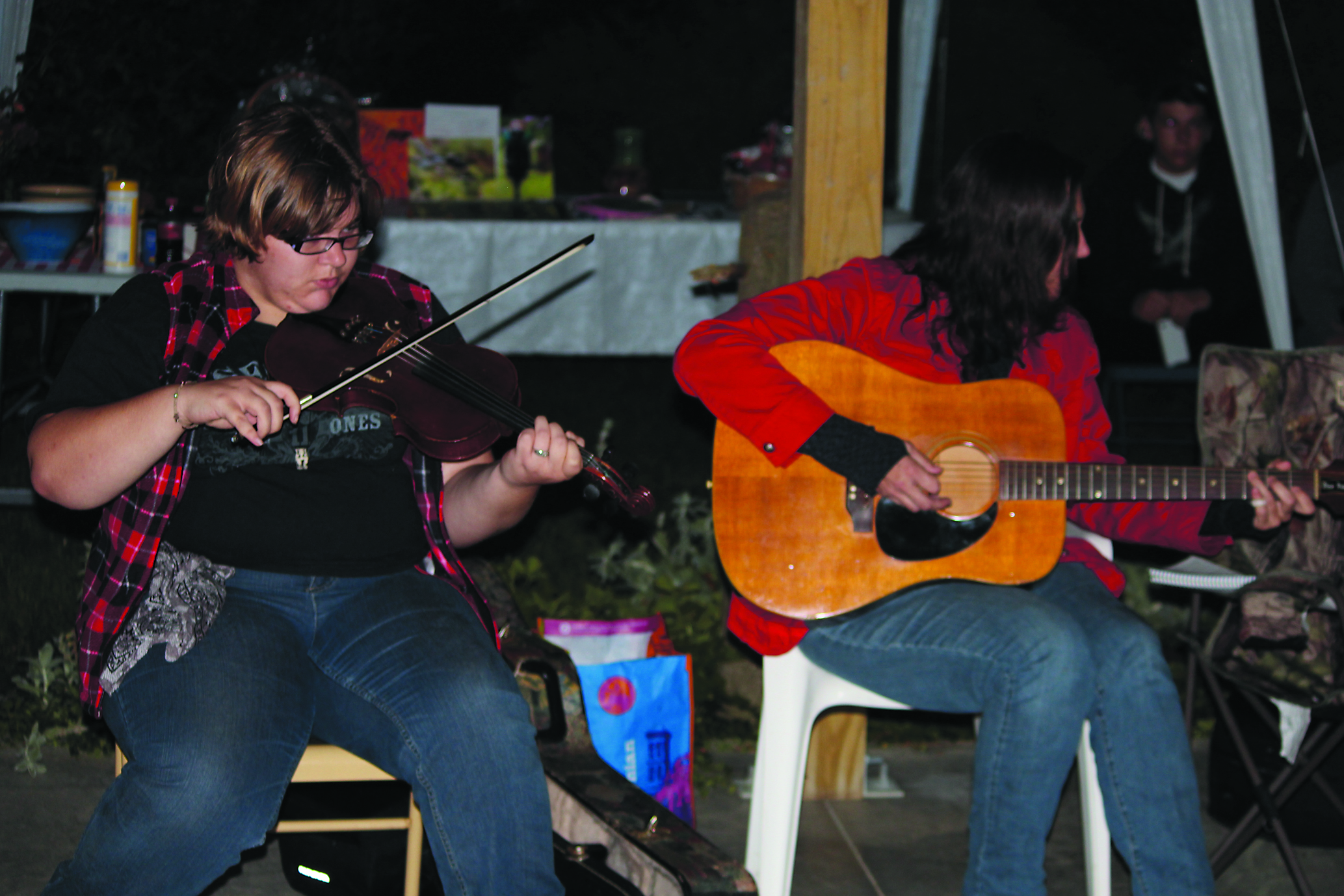
1908061_875195272492033_3010147628062901086_nAnd Steve was right about Acoustic Night. Musicians from 2013 returned, and others just kept coming. Erin Coburn (guitar and ukelele) and Mark Gallimore (guitar) were back. Bobbie Sue, Zoe (saxophone) Mike (trombone), another Mike (guitar) and Clara (violin) jammed from 6 to 10 p.m. A few other people came through carrying guitars but played off to the side. 10624884_875195359158691_4731297319852830606_n

There were kazoos for the first 25 arrivals and I heard a few of those. Little Caroline became quite proficient, as a matter of fact. She was a hit with the bronze turkeys next door at the sanctuary.

If you made it out this year, thank you. I hope the Cheeto dust came off your pant legs in the wash. If not, we’re thinking Labor Day weekend for Acoustic Night 2015. The Cheetos will be fresh.

Just add paint

117Watercolor is too real painting. As a painter who prefers this two-dimensional medium to most others, I have been in the position to argue this point. My argument accuses oil snobs of decorating their walls with off-the-rack roadside numbers that match a couch.

Boyfriends are broken-up with because of statements like this. But that was providence, it turns out, and a long time ago.

118And painting in oils is fine, if that’s what you like. But don’t tell me that a water-based work, one which requires the painter to give a measure of control over to their chosen medium, allowing light and whims of water, air and pigment to have their way, isn’t real painting.

So, with 94 percent humidity and a forecast of sun, the second “Watercolor for Beginners” workshop took place today under the earth-red roof of the Seitz Family Pavilion. Heavy fog kept a few distant registrants away, but hot black coffee, herbed shortbread and apple oatmeal cookies revived those that took up a brush.

146I love it when watercolor novices tell me, “I have no artistic talent.” These are the ones that are the first to let go; to pool water on their paper and break the surface tension of that pool with a loaded brush. It’s the ones that have painted before, using slow-to-dry, opaque, malleable mediums, that are reluctant let go of control. Because, in my opinion, that’s what you have to do with watercolor. You have to let go and see what water, paint, paper texture and weight and gravity can create when kind of, sort of left to their own devices. Once you have witnessed that, you can begin to take the reins and shape your work.

The seven people who floated through this morning’s fog, included some of the above. They chose their subjects from the Red Fox Cabin gardens, vegetables, flowers and leaves. You can see in the photos the tentative steps, the light lines of paint on cold press paper (I wouldn’t let them sketch their subjects with pencil first). Two hours later, we had a marvelous body of work, each of them showing promise and more than one worthy of exhibition at any art festival.

Of course that, along with my thoughts on how to begin painting with watercolors, is my opinion. I could be wrong.

But I don’t think so.

This slideshow requires JavaScript.

Third time’s a charm

IMG_0826The Junior Gardeners of Continental were one of the first groups to visit The Quarry Farm after we officially opened to the public three years ago. I distinctly remember the initial telephone conversation with organizer Charlene. She had picked up our newsletter and wanted to bring her charges out for a program. She didn’t sound too sure about the whole idea, but her group arrived and we had a fantastic time. Guess they did, too, because they spent two hours with us on Saturday, this time searching for butterfly host and nectar plants on a scavenger hunt.

IMG_1107Beatrice met up again with her good friend Brandon, the first person she would approach of her own accord after her arrival in 2012 as a very young pot-bellied piglet. Although Brandon had some slick new wheels this year and Beatrice was sleepy in the July humidity, she knew him well. So did Buddy.008

Megan Ramey, Program and Partnerships Manager for the Girl Scouts of Western Ohio, arrived just before the Junior Gardeners to talk with us about the possibility of scouts earning various badges here. Thanks to the joyous enthusiasm of Charlene and her crew, a star of a Virginia opossum and Laura’s coffee and sugar cookie bars, we’re in.

Here’s to more face time with the kids from Continental. Special thanks to Junior Gardener Jazlyn Bishop for sharing your photos and video with us. Keep them coming.

This slideshow requires JavaScript.

Summer is underway, and with it comes a newsletter

2014 Summer Newsletter.indd

Hot off the printer, as well as an upload, is The Quarry Farm 2014 Summer Newsletter. Lots to talk about, like the fact that The Quarry Farm Nature Preserve & Conservation Farm is a 501(c)3 public charity, and plenty of things coming up. Click on the cover at left, open and read away.

Hope you are able to jump in on the calendar and see for yourself.

Bright Sunday for a visit

Members of the Ottawa Presbyterian Church, Ottawa, Ohio, spent a couple of their Bright Sunday (the Sunday after Easter) hours on The Quarry Farm. This was yesterday, one day before heavy rain, and the during the warmest, sunniest bit of the weekend. The cold winds settled and the sun shone upon their arrival at Red Fox Cabin.

The 25 or so adults and children were the first to join us after this long, harsh winter. They were also the first to visit after the final stretch of fence was strung, just the day before, around the farm animal sanctuary. The gates held Beatrice in, although she, Buddy, and the goats were waiting at the north gate to greet each and every outstretched hand.

This slideshow requires JavaScript.

Spring 2014 newsletter

2014 Spring Newsletter-2


This latest issue is packed with information about wild spring babies (and what to do if you find one or more) resident news and announcements for upcoming events on The Quarry Farm Nature Preserve and Conservation Farm.

Click on the cover to the left and read for yourself. Hope to see you on the trails as we search for wildflowers, salamanders, constellations and photo opportunities.