Sticky toes and hiking sticks

The drive home yesterday afternoon was a race against the weather. A thunderstorm rolled in from the west, heavy with rain, wind and lightning.

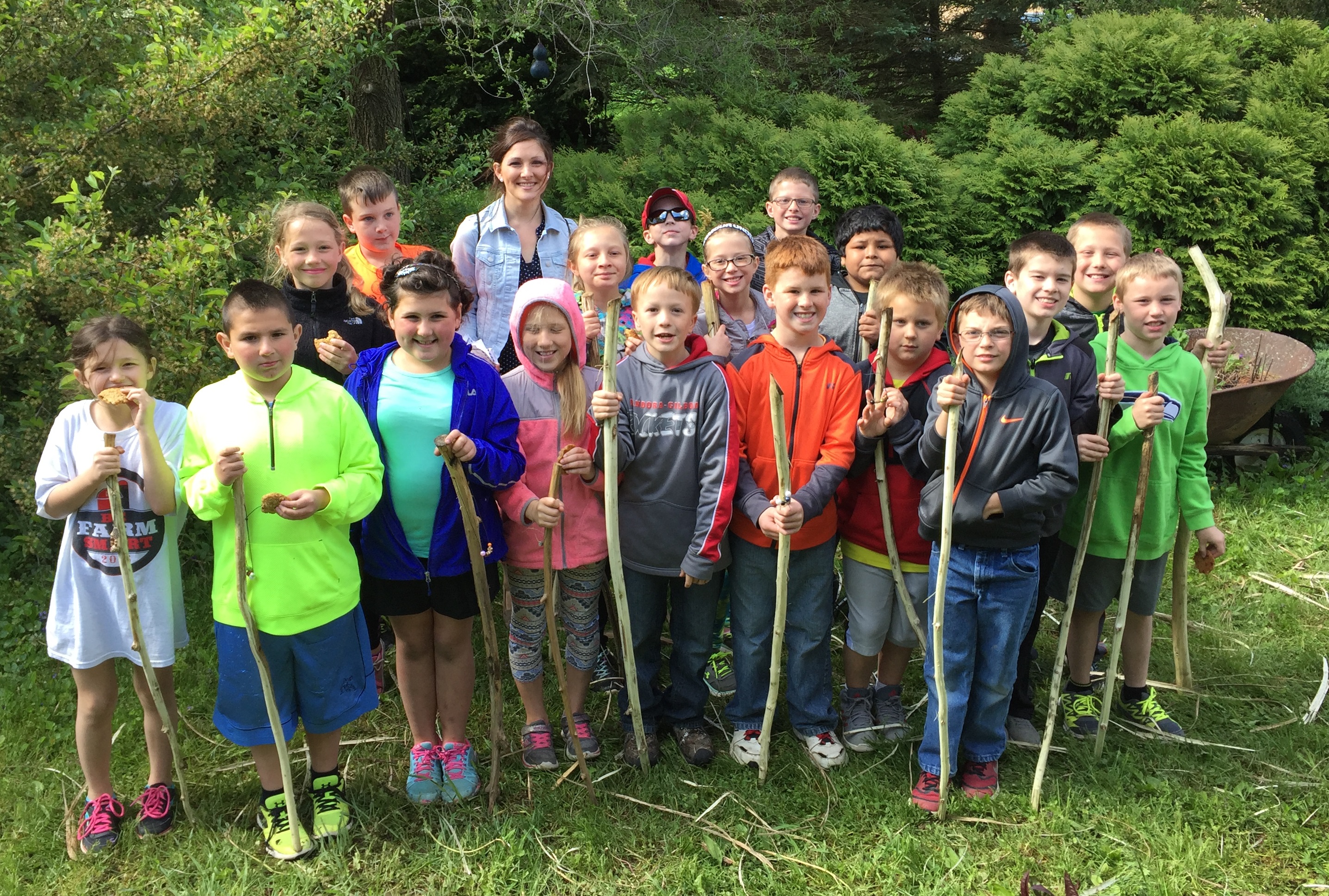
I lost the race. Anyone driving by saw two humans trimming honeysuckle trunks of branches and stems, all soaked and getting wetter by the moment. The geese weren’t bothered, but pigs, goats and donkeys watched the proceedings from under dry roofs. By 9:00 p.m., it was dark and we had 45 honeysuckle stems ready to become hiking sticks on Friday morning at the hands of the Pandora-Gilboa Elementary School’s Third Grade as taught by Mrs. Arthur and Mrs. Henry.

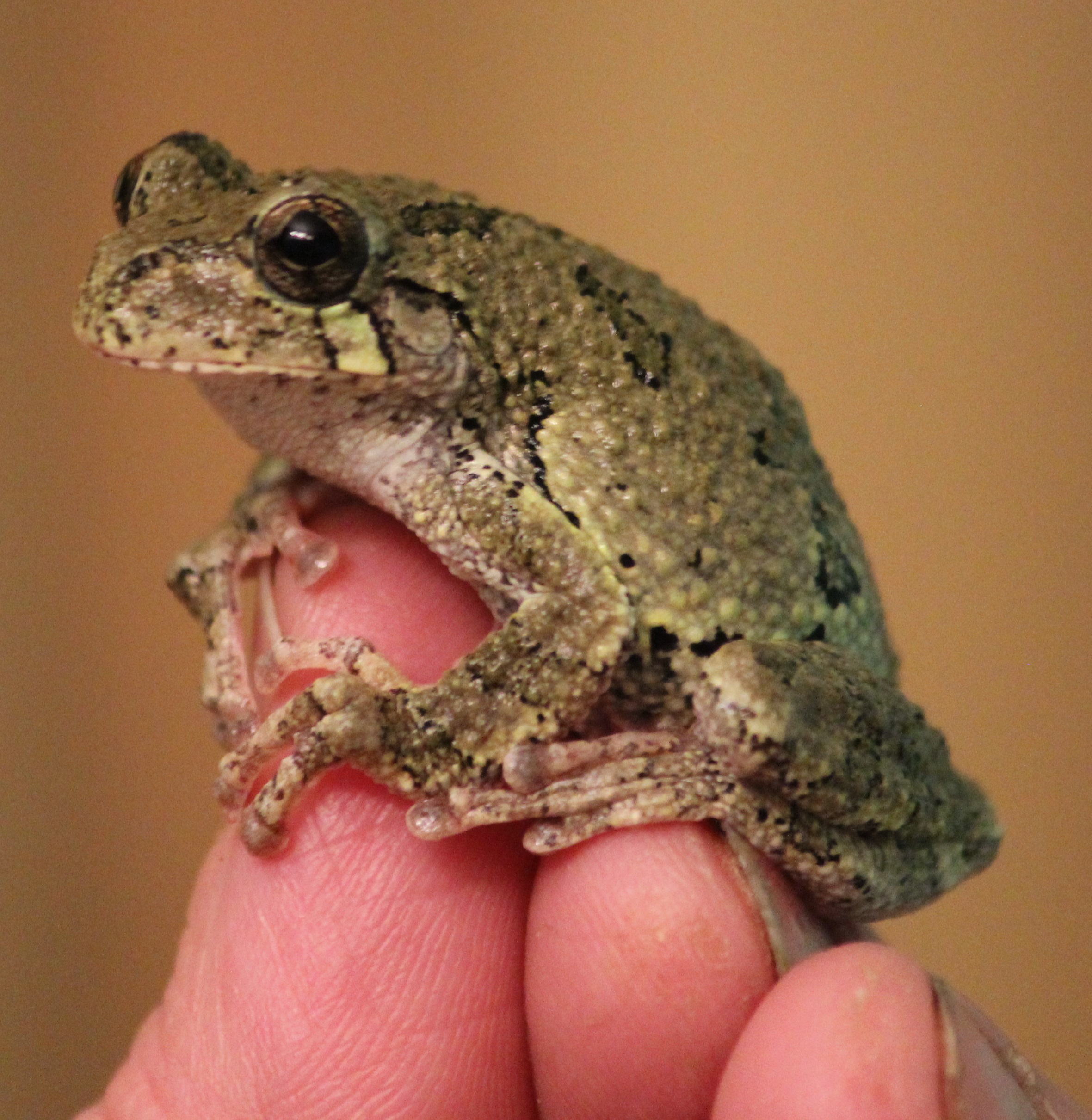
Gray tree frog, its sticky toes keeping it five feet above the ground

Gray tree frog, its sticky toes stuck five feet above the ground

IMG_4845An hour later, we were still damp but warm and ready for sleep. But a look out the kitchen window kept us up for another half hour. The steady rain had sent a ‘sticky toed’ gray tree frog climbing for higher ground. How can you not stay awake for that?

Twelve hours later, blue sky and a yellow school busload rolled in and stayed for the day. Presumably, the treefrog is back under the spring canopy.

IMG_0960

IMG_0956

IMG_0953

This slideshow requires JavaScript.

Photos by Emma, Album #3

20160503_13533120160502_143433
Last week’s rain really brought out the frogs and fungi. It also made for lovely photos, with many fauna raindrop- and puddle-jumping from path to flora.

20160505_154432IMG_6168Then the sun came out. It was like a shade was raised, drawing life toward the light.

20160505_150640

And winter undercoat from Lucy.

20160506_143740
20160505_15361220160506_133411
It’s raining again today and the clouds, wet and call-for-thunderstorms are not due to clear until Friday, just in time for a visit from the third grade students from 20160505_154702Pandora-Gilboa Elementary School. Emma is sure to take photos in between activities. We hope she shares the frames.
Photos by Emma, Album #2

Out In The QuarryRain brings out the green, doesn’t it? The heavy drops and puddles also force those creatures that live in and under the leaves out into the open.

There’s a t-shirt in it for whomever responds first (in the comments here at http://www.thequarryfarm.org) with the correct identification of the burgundy wildflower.

Take a look.


Family Day happened

Ruddy gold turned gray
Light rain muddled brown with green
Yet filled cars still came

IMG_0833Haikus aside, who needs sunshine when you can turn a garbage bag into a raincoat, there are cookies in the pavilion and a lit fireplace in Red Fox Cabin?

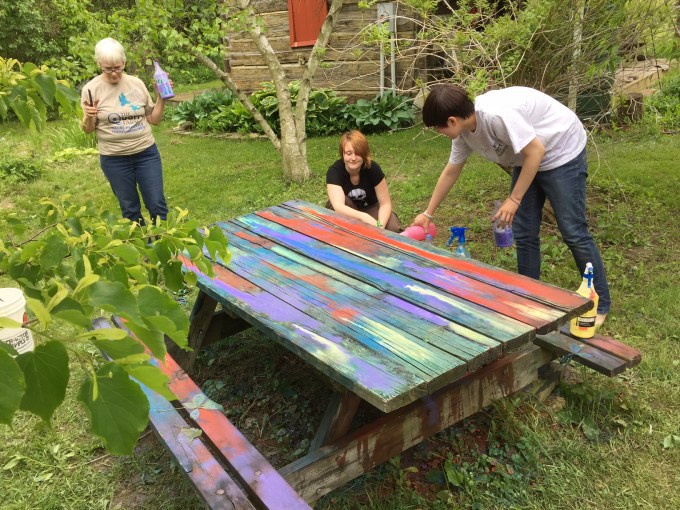
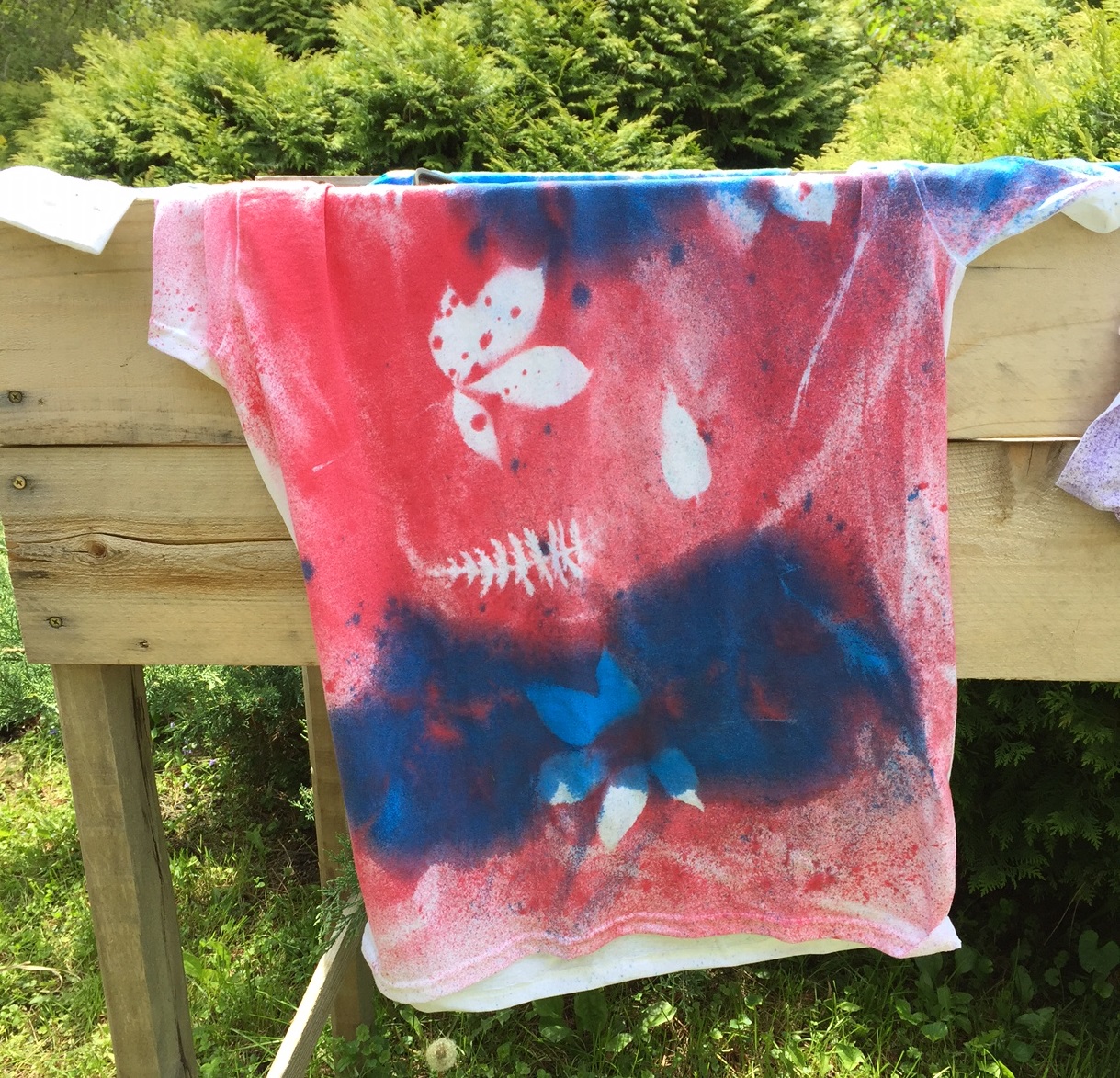
The rain meant that the raptors couldn’t stay. T-shirts weren’t painted since days-ahead of rain would keep them wet. But cars still arrived on Road 7L for today’s Family Day. Thank you to all who helped get the word out. We’ll do this again in June, while the wildflowers still bloom.

This slideshow requires JavaScript.

Green-thumbed helping hands

The outdoor temperature dropped a good 30 degrees yesterday, from steamy shorts-and-tanks weather to jacket-required. That’s OK, since it’s northwest Ohio and still April.

The cooler air made for good gardening weather. Last evening, Tim and Phyllis Macke drove out to Red Fox Cabin to dig in and get the gardens in shape. The Putnam County Master Gardeners chose to support The Quarry Farm, and as the Mackes are both part of this program, they offered their services this afternoon to help get the grounds looking good for Saturday’s Family Day.

IMG_0758

20160429_145229-1And the beat went on, with Holly Huber stopping by to dig in.

The weather forecast is continued rain–good for the green that just keep getting more and more so. Words cannot express how grateful we are for the help to clear invasives to make way for those plants that bring in the bees, butterflies and other pollinators, once the sun does shine for an extended period.

Photos by Emma, Album #1

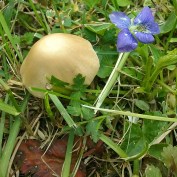
IMG_6006Can you find the cricket frog above? There’s a free Quarry Farm t-shirt in it for the person who comments here at http://www.thequarryfarm.org with what kind of cricket frog it is.

While Intern Emma has pulled invasive bush honeysuckle this week, she has also been snapping photos. Shuffle through the mosaic below to see at what she has documented in her first two weeks here.

(FYI: that’s a number sign in the title, not a hashtag, although you may see some of this on Twitter. More to come, I have no doubt.)

Spring 2016 newsletter (don’t miss Family Day on April 30)

Spring 2016 TQF Newsletter coverHot off the virtual presses–the latest issue of The Quarry Farm Newsletter. Lots of events coming up, some here, some there.

If you came to the last Family Day, or missed it and are one of the many who have stopped us on the street, in the checkout line or at a table to ask when we’re going to have another Family Day, Saturday April 30 is all for you.

Click on the cover to the left and read for details.

at the root of the problem, something wonderful

P1020028As a race, humans have found a lot of ways of saying that no matter what — somewhere, somehow — there’s a little bit of good in every bad situation: it’s an ill wind that blows no good, every dark cloud has a silver lining.

As it turns out, what we found out here at The Quarry Farm, there’s truth to be found there. But first, a little bit about bush honeysuckle.

In the early 1970s, before anybody was paying attention, it was common knowledge that planting honeysuckle was a good thing, particularly if you wanted to attract birds. And while there are honeysuckle species native to North America, more than a few that aren’t were allowed to proliferate. Morrow’s and Amur honeysuckle were particularly popular for their dense foliage and bright red berries and now particularly troublesome as two of the most invasive species of honeysuckle unadvisedly planted. Both can grow as tall as 15 feet and both are monoculture plants; they crowd out everything  around them and nothing grows beneath their spreading branches. There’s even evidence that they engage in chemical warfare, releasing toxins into the soil to kill off any competition until there’s nothing at the base of these plants but bare soil. While they typically don’t do well in shaded environments, preferring to grow at the verges of woodlands, both take advantage of any disturbance in the upper story of a woods to move in and establish a fortified foothold at the first opportunity. And while it’s true that birds love their bright red berries, they offer little in the way of nutrition. Sure, they brighten the feathers of cardinals and the burning breasts of robins, but they’re junk food, the natural equivalent of candy bars and potato chips.

In short, they’re a nightmare for any organization or agency working to develop or maintain native habitat. And they’re here on The Quarry Farm in numbers too vast to count. We’ve adopted a multifold approach to getting a handle on this problem, but the most effective method is to simply pull them up by the roots whenever and wherever it’s possible.

Recently, we accepted an application from Emma, a first-year student at Antioch College, to assist us in our many efforts. One of her primary responsibilities is to help control bush honeysuckle on The Quarry Farm. Right away, we put her to work, yanking up the pest.

And here comes the silver lining.

P1020031Emma set to work first along the Cut-Off, a man-made wetland created when the county opted to straighten the stream in the 1960s, thereby isolating what was once an oxbow in Cranberry Run. At the end of her third day, while making her way back to her temporary home, she stopped to pull one last medium-sized clump of honeysuckle…and found a salamander nestled beneath its roots.

IMG_5663

To say the least, we’re thrilled. It’s a wonderful start to what we know will be a productive 10 weeks.

Thank you, Emma, and welcome.

Hikers on the trail of bugs

e9600071-f75a-42c8-90dc-53eec3240760Girl Scouts laugh in the face of 50 mph wind gusts. At least the members of Miller City Girl Scout Troop 20197 do.

The troop earned their Bug and Hiker badges here on The Quarry Farm today. When they arrived at noon, the wind was high and cold. We gathered in Red Fox Cabin first to talk about bugs…insects altogether, because all bugs are insects, but not all insects are bugs. Most importantly, we talked about how important insects are to us all. IMG_20160402_160524 (1)

The wild bee boxes on the porch were empty, what with the larva having overwintered and left their crawl spaces in the warmer temperatures of March. But down the hill and along the bank of Cranberry Run, they saw–touched even–the light leathery outer coat of cranefly larva and an egg-laden crayfish, all caught for inspection from beneath the surface of the rain-swollen creek. They also saw a damselfly nymph and aquatic worms.

2782c623-4b66-4742-80c1-98ee237ce66fAs we hiked upstream along the Cranberry, farm animals joined us on the other side of the fence, led by turkeys Humperdink, Miracle Max and Inigo. When we entered the gate, we were greeted by donkeys, pigs and the geese. Then the wind rose, bringing a bluster of snow that sent us back to the cabin for hot chocolate and cookies.

Thanks to leader Mandy Verhoff and everyone who got our program season off to a great start (and for sharing these photos.)


Better than chocolate bunny ears

c4670934-429a-4ad5-a309-5e643be723edOn Saturday, my old frayed running shoes picked up another layer of camouflage.

Easter Eve started out chilly, with thick frost and a skim of ice on the goats’ and donkeys’ water pans.f04836dd-60e0-4c6f-904b-068631678062 On the quarry, wood duck and mallard couples made come-hither eyes at each other until we spoiled the fun. Wood ducks skittered over the east bank and a mallard duck “wank, wank, wanked” toward Riley Creek, her emerald-headed, testosterone-addled suitor in pursuit. 22a018ab-350c-442f-bdfd-262d00d61d72
The turtles were more confident, waiting until we had our cameras out before they slid below water surfaces. Steve found one crossing between Cranberry Run and the oxbow “cut-off”, a wetland left when Allen County engineers tried to tame the little creek’s meanderings half a century ago.

c61571af-e857-498b-8471-737a025bbcdeWe saw bloodroot leaves uncurling from the ground. Native Americans used the red extract from this wildflower’s roots as a natural dye, most notably for basket weaving. Above ground and growing wild in the sunlit clearing around the old homesteads well north of the tallgrass meadow, the bloodroot flowers bloom.

a50e38b0-ea6a-4d59-bcca-040f7f0940caA few spring beauties and ramps dot the southeast ridge as it rises east of the cut-off. In the warmer air and spongy soil in the U of the oxbow, three toadshade trilliums fan over moss f4cb27d4-c57e-4d8b-8dfd-5a3ef1c4e172and decaying stumps crawling with industrious crustaceans.

Steve counted four species of butterfly, including two red admirals duking it out with anglewings–commas or question marks?–a camera-shy mourning cloak and a spring azure doing some sort of strange contortions in the back field.

We also picked up several bottles and cans, one with the smaller V from an old pull tab. These are the ‘blooms’ that are best picked. Never planted is even better.