a different perspective

For the moment, let’s say you’re driving down a two-lane highway at night when, off to the side, your headlights pick up a misshapen bundle. You slow down to get a better look at whatever’s laying there, something that’s almost certainly dead, when, suddenly, part of the bundle shakes itself loose and skitters away into the dark…

Or it could be that there’s this cat that’s been hanging around and it’s pretty obvious that it’s had it more than a little rough. So, because you feel sorry for the poor wee thing, you’ve started leaving food out in a little dish by the back kitchen door. You hear it rustling around and turn on the light to give it a once over, see if there’s any improvement in its condition, only it’s not a cat, nothing like a cat, crunching down kibble. Nothing like a cat at all…

Or maybe it’s the night before garbage pick-up and you’re hauling the last bag out to the curb where you’ve already placed your recyclables and one half-full can. You reach for the lid, but it’s not in place. It’s lying, top-down, in the grass next to the can, and that’s odd because you’re more than kind of certain that you actually did put it in place before heading back to the house for that one last sack of trash. And that’s when you see it, furtive and menacing all at the same time, perched in the ripped-open Hefty bag at the bottom of the garbage can…

Whatever the scenario, what happens next is almost universal: you see those black eyes and all those sharp, glinting teeth in that gaping maw and your flight reflex kicks in. Before you’re even aware of turning, you’re burning rubber down the road, racing up the stairs, or dead-panic, brainless sprinting back to the house. And if your ears weren’t already full of the THUD, THUD, THUD of your own pounding heart, you know – I mean, you just know – that you’d hear it scrabbling along behind you, hissing and growling and keening for blood…

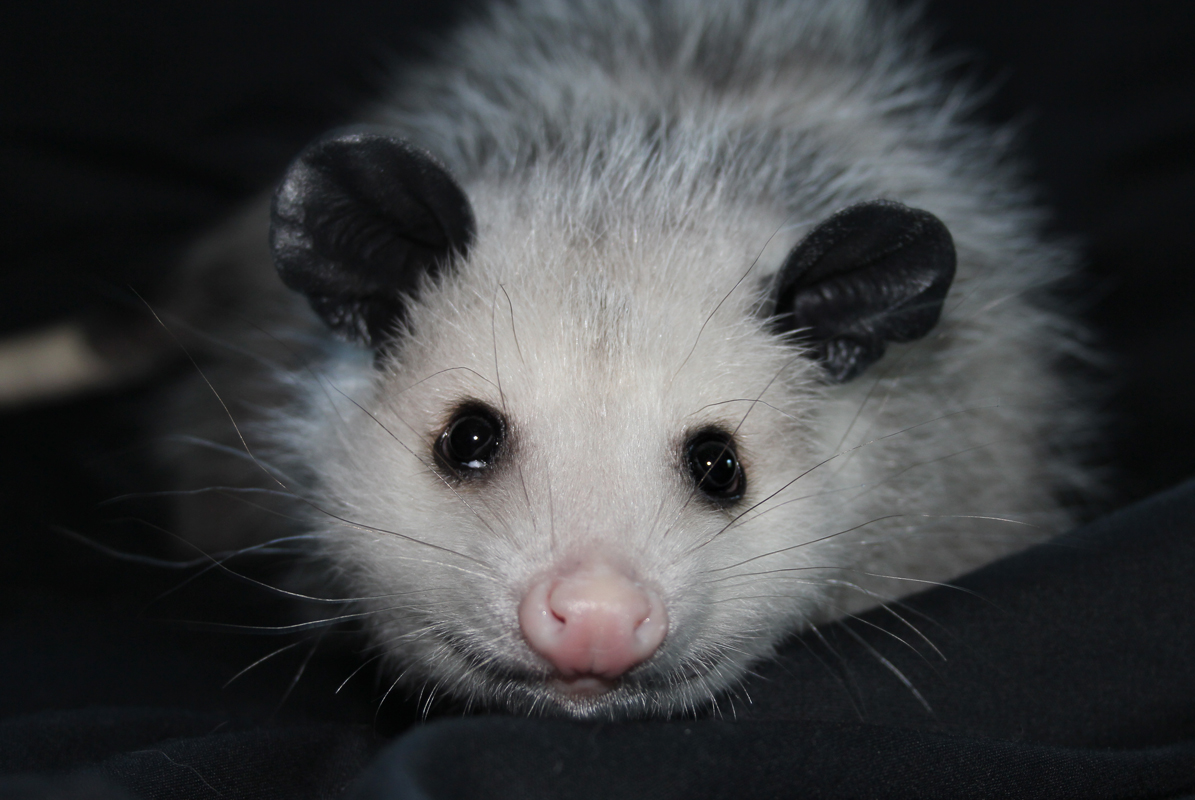
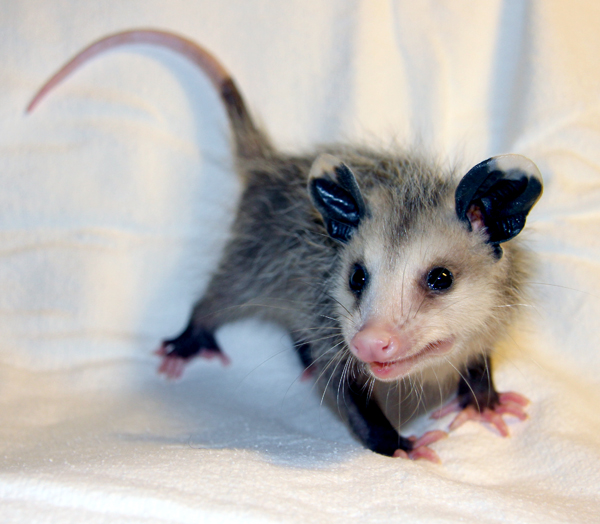
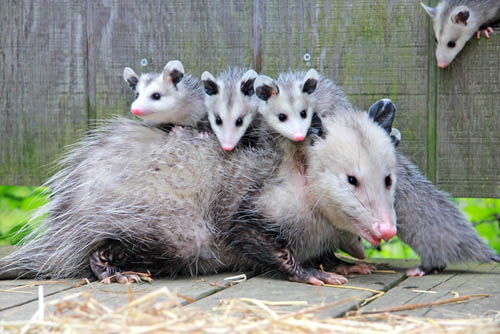
Virginia opossumExcept we’re not talking about some Jurassic Park raptor here, nor a great white shark or a freakshow hybrid of a government experiment gone awry, either. Nope. It’s an opossum – a Virginia opossum, to be precise – and it poses about as much threat to you as the neighbor’s Pomeranian. (You know, the one that they spritz with stink-pretty every other week after it’s been to the salon? The one that wears the pink Hello Kitty sweater as soon as the temperature drops below 40 degrees Fahrenheit? Yeah. That one.) So instead of chasing you down, that opossum’s busy either trying to put as much distance between the two of you as it possibly can, or making itself as small as possible, hoping against hope that you just won’t notice it.

Understand, I’m not saying that opossums can’t seem scary. They have more teeth than any other North American mammal and when their jaws are gaping wide in abject terror (yeah, mate, they’re positively terrified of you) it can be a little intimidating. But here’s the rub. Opossums aren’t predators. They’re scavengers, eaters of the dead and the overripe. See, they’re not interested in taking a bite out of you, unless, of course, you’re dead; in which case you have considerably bigger things to worry about than the chance that a wandering opossum just might stop in for a nibble.

mother and babies

So, no, opossums aren’t predatory, but they are seriously cool. They’re nomadic marsupials, have opposable thumbs on their back feet and they have prehensile tails. They’re the most primitive mammal in North America and, when threatened, “play possum.” The word “play,” though, is more than a bit misleading. It’s not a conscious act, not something that they choose to do. Nope, it’s something that happens to them when they get overexcited. Their hard drives crash and there’s absolutely nothing playful about a crashed hard drive.

Keep all this in mind the next time you scare up an opossum, because “scare,” my friends, is truly a matter of perspective.

Give Us a Hand and We’ll Give You a Shirt

If you’ve been following us for any time at all, you’ll know that, while we focus on assisting domestic animals, we also work with the occasional wild, but native, animal, as well. Most are just passing through, either on their way back to the wild or off to a rehab center. Sometimes, however, as with the two American crows and the Canada goose that live here, this is where they’ll stay from here on out. These native animals aren’t eligible for release, either because they have some physical defect that will prevent them from a successful return, or because they’ve developed a certain affinity for their most significant predator, humans. Such is the case with an opossum that recently came to us from Nature’s Nursery Center for Wildlife Rehabilitation and Conservation Education.

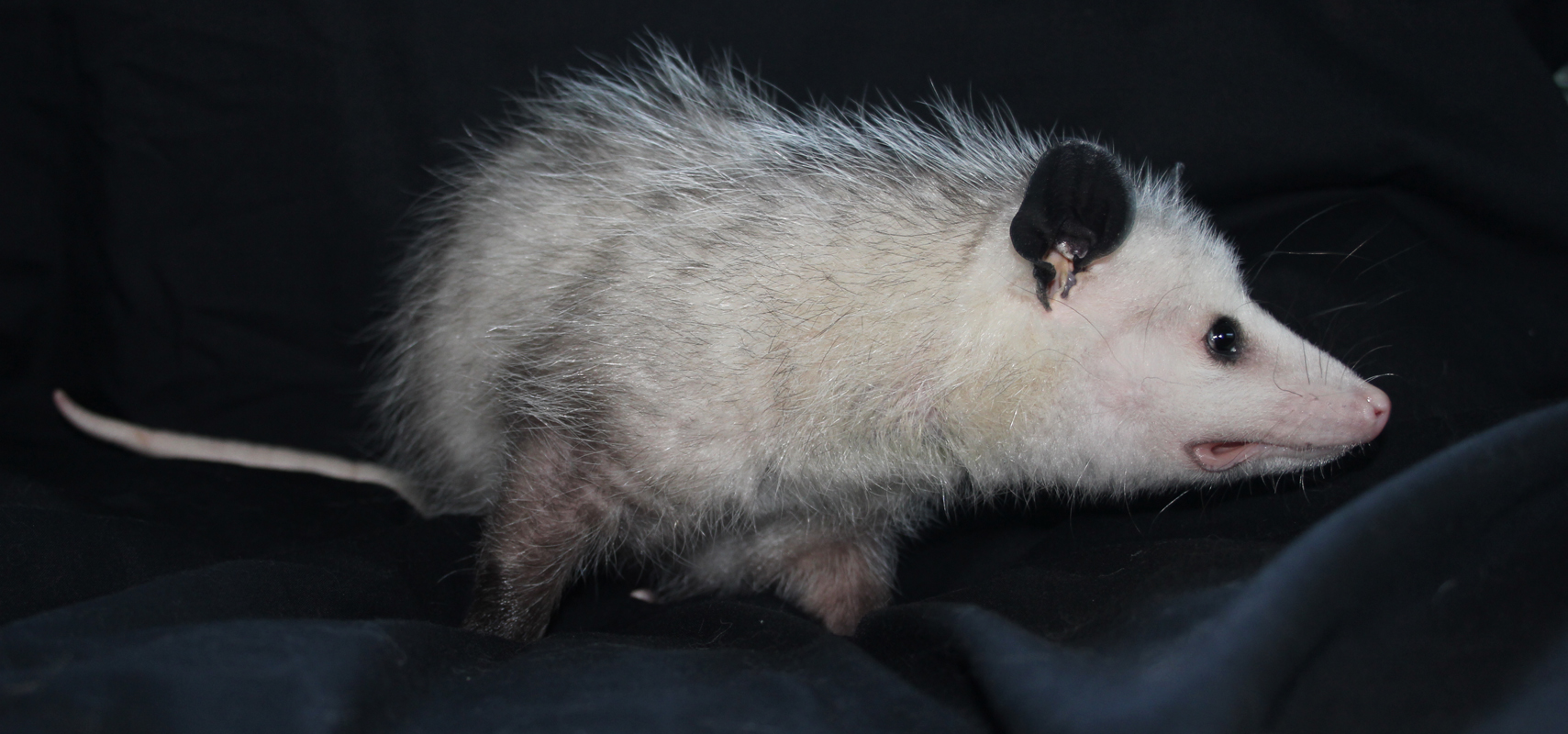
No Name OpossumThey told us right up front that he seemed a bit on the friendly side, and he was. Even so, we treated him with the same distance as we treat all such animals we’re tasked with fostering. Several days ago, after nearly six weeks here at The Quarry Farm, we decided it was time to give him the opportunity to go it on his own. Sadly, rather than march off into the woods or even just into the tall grass near the banks of Cranberry Run, he decided to follow us back to the house.

After discussing the situation with the powers that be at Nature’s Nursery, it was decided that responsibility for him should be transferred to The Quarry Farm, where he will live out his days and serve as an ambassador of his kind to the folks who visit us here, on-site, and to those whom we visit in their classrooms.

But, Houston, we have a problem. We can’t seem to come up with a suitable name for him. We’ve labeled him a host of different monikers, but none of them have stuck. So we’re throwing it open and asking for help. The person who comes up with an appropriate name (and, yes, we’re the ones who decide what’s appropriate) will get a Quarry Farm T-shirt.

So, have at it, boys and girls, men and women.

And thanks. Here’s another quick study of the little guy, should that prove inspirational.

No Name Opossum

Life lessons

One of the primary goals at The Quarry Farm is to increase understanding, to educate. Sure, we provide sanctuary to animals in need, have established a preserve for the area’s wildlife and offer folks the chance to just kick their shoes off and relax. But, during every interaction that takes place in the name of The Quarry Farm, the primary goal is to provide, and learn, new insights. Arguably, the topic that gets the most attention is water quality. We have a number of programs that we present on the subject, everything from simple, on-site discussions of the various aquatic habitats that help make up The Quarry Farm, to Small Streams, a project that allows us to set up aquatic microhabitats in schools and community centers. During any presentation on streams and rivers, the question that invariably gets asked of us, and that we in turn ask of visitors or classrooms, is this: What’s the biggest pollution problem facing the waterways in rural Ohio?

The responses to that question nearly always include garbage, oil (or some other petroleum product), manure, chemicals, litter and, inevitably, dirt. The correct answer is included in that list and it’s having a profound effect on everything, from the Great Lakes to the shortest of creeks, like roughly five-mile long Cranberry Run, a stretch of which runs through The Quarry Farm.

In the 1950s, and again in the ‘80s, Cranberry Run was channelized, engineered by officials in Putnam and Allen Counties so as to more quickly move water north and ease local flooding concerns. The stream bottom was dredged and the tops of the banks widened; a latitudinal cross-section of the resulting waterway would resemble a wide-mouthed “V”. Cranberry Run was also “straightened”: oxbows were bypassed, as were any extreme serpentine meanders. Anything that could possibly impede the free flow of water was eradicated, including trees and bushes that grew along the banks. What was once a historic waterway, a vibrant habitat for a host of aquatic animals and the myriad species of birds and mammals that depended on them, was reduced to what locals dismissively referred to as “Smith Ditch.”

stream4In the late ‘80s and early ‘90s, Gerald and Laura Coburn, after years of civil protest, negotiated an agreement with the counties that would allow Cranberry Run, or at least that portion of the stream that ran through their property, to reacquire a more natural presence. Within the first decade, the four natural stages of a waterway – riffle, run, pool, glide – reestablished themselves. Trees rooted on the bank, grew and began to provide shade, cooling the passing water and creating a more hospitable environment for all manner of aquatic insects and fish. Today, Cranberry Run snakes its way for approximately one-half of a mile through The Quarry Farm. The meanders in the stream bed slow the water flowing through here enough that sedimentation occurs and, on most days, the “Little Cranberry,” as it is affectionately known, runs so clear that visitors can’t help but comment on its clarity.

Cranberry Run as it approaches its terminus, Riley Creek.

Cranberry Run as it approaches its terminus, Riley Creek.

And that, returning to the question of “what’s the biggest contaminant,” should help provide the answer: dirt. Dirt is our greatest concern and the biggest problem facing all of the animals that live in the water, from insects to mollusks to fish. Not only does dirt, suspended in solution, absorb the sun’s rays and increase water temperatures to dangerous levels for the animals that live there, but it carries with it chemicals bonded at the molecular level and creates an environment in which aquatic organisms find it increasingly difficult to breathe. Imagine standing downwind in the smoke of a brush fire, not for a minute or for an hour or for a day, but perpetually, forever. For gilled animals living in highly turbid water, they may as well live in the smoke generated by an eternal tire fire.

Pictured above and below  is the point at which Cranberry Run enters Riley Creek. Efforts made within the boundaries of The Quarry Farm, and upstream by like-minded neighbors, have nearly erased the sediment load in the waters of Cranberry Run.

Pictured above and below is the point at which Cranberry Run enters Riley Creek. Efforts made within the boundaries of The Quarry Farm, and upstream by like-minded neighbors, have nearly erased the sediment load in the waters of Cranberry Run.

At left is Riley Creek as it flows northwest to the Blanchard River; the clear water to the right flows from Cranberry Run as it meets and enters Riley Creek.

Efforts on the part of private individuals and organizations, and through governmental programs sponsored by state and federal agriculture departments, are beginning to have an effect. Public awareness of the issues is critical in creating healthy environments in which all forms of life can prosper.

creek chubs


Pest control

Earlier today, while wandering along and through Cranberry Run, I ran into a bit of déjà vu (yeah, yeah, yeah, I know…it’s not like the phenomenon’s a fog bank or a brick wall, but there you have it; I “ran into” it). See, thirteen years ago, back when digital cameras were really just making serious inroads, I decided to give photography another go. I was working for a local paper and they’d supplied me with an Olympus C2100 — basically a no-brainer digital point-and-shoot —  and I pretty much kept that thing with me all the time. So, one day I’m walking down by the stream and I see this damselfly perched all nice and interesting-like on a broad grape leaf. So I shoot it, photographically speaking. At the time, I was ridiculously proud of this shot, arguably my first foray into anything like nature photography. And despite its obvious flaws, I still like it.

Here it is.

Ebony Jewel Wing

So, anyway, getting back to the déjà vu experience, today I see this ebony jewelwing damselfly parked in a raspberry bramble and I think, “You know, that seems awfully familiar.” So I shoot it, photographically speaking, again and again and again, obsessively trying to get it right. I mean, I’m standing there for probably ten minutes shooting this damselfly, and while I’m standing there, the mosquitoes are massing an attack.

Am I worried?

Nope. Not one bit.

The reason I’m able to stand there for ten minutes and work at getting a decent shot (not that I ever really got one) is because, every little bit, that damselfly is leaping from his perch to snatch a mosquito. After grabbing one, he (and yes, he’s a he, just like the damselfly from thirteen years ago is a she) parks himself right back where he was, dines and then waits for another shot at a mosquito.

Pest Control

Using an analogy that Steven Spielberg would understand, basically I’m the chum, the mosquito is the shark and the damselfly is either Roy Scheider or Robert Shaw, take your pick.

Only in this version of Jaws, the shark never stands a chance.

insectile Jaws


Spot the frog

Over the past few weeks, we’ve spent a fair amount of time kicking around the wilder areas of The Quarry Farm, traipsing about under an increasingly dense canopy of hardwoods and skirting the edges of the quarry where what appears to be solid ground is, more often than not, more akin to thick, black soup. At this time of the year, the one common element of every off-the-map habitat, whether it’s in the woods back by the Cut-Off or wading through Cranberry Run, are the mosquitoes. They rise in humming clouds so dense that the beating of their wings creates a perceptible breeze. Even so, the very habitats that give rise to this scourge also foster a teeming number of solutions. There are dozens of species of dragonfly and damselfly patrolling the property. During the day, acrobatic swallows and other small songbirds cut the air, while at night, bats chitter a welcome swath of destruction under the stars.

And then there are the frogs.

Northern leopard frog Lithobates pipiens

Northern leopard frog
Lithobates pipiens

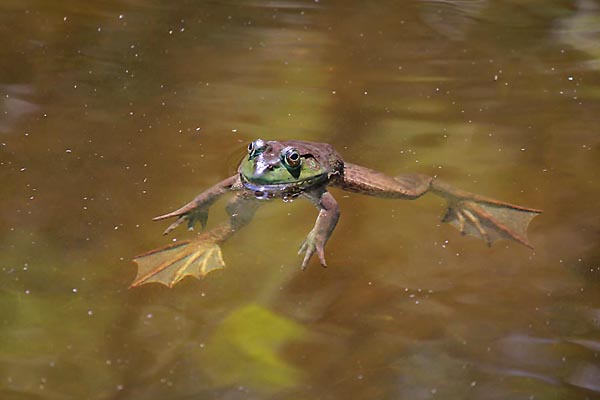
American bullfrog Lithobates catesbeianus

American bullfrog
Lithobates catesbeianus

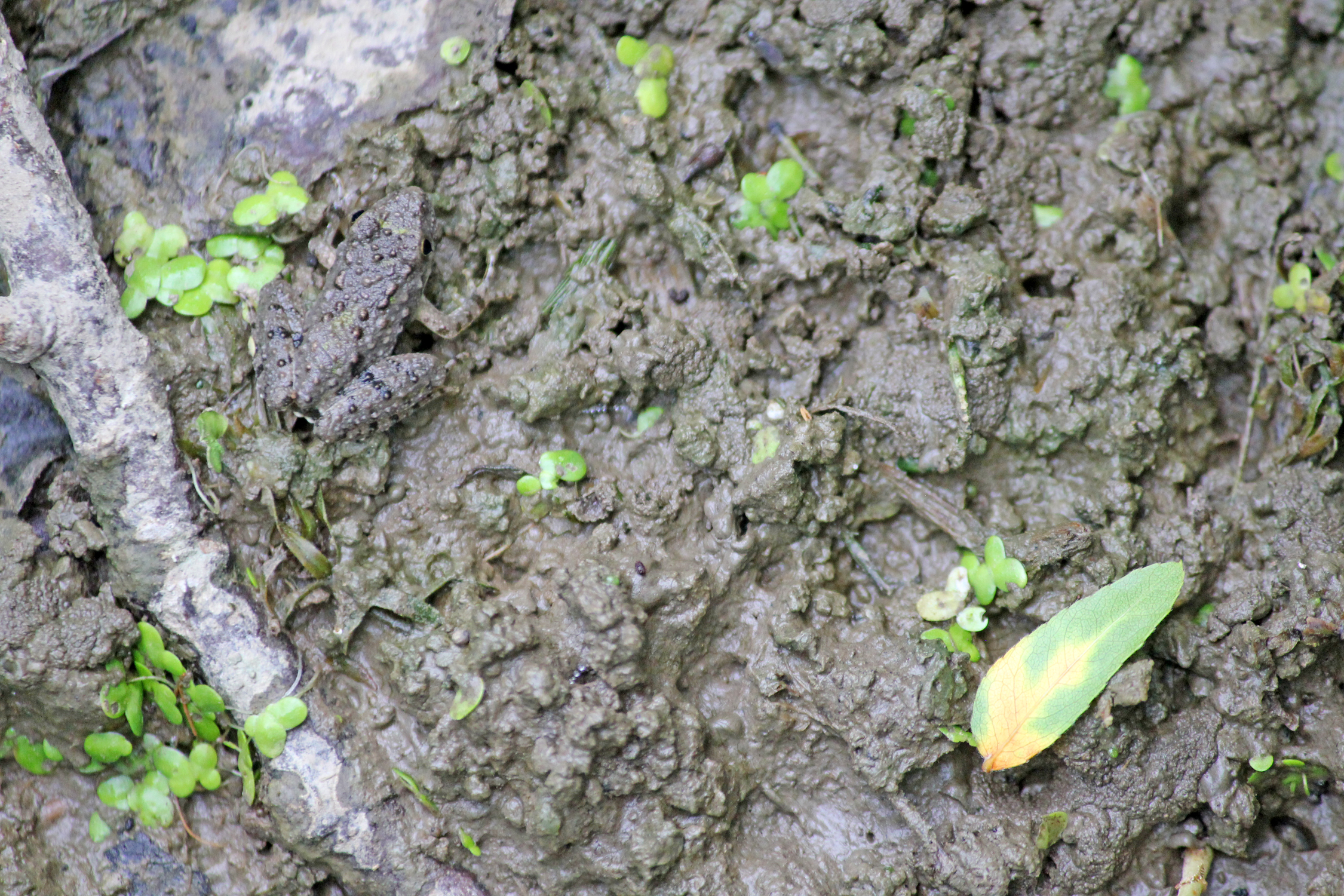
Globally, frogs and other amphibians have suffered dramatic population declines over the past three decades. Even here, on the quarry, we’ve seen specific species numbers, like the American bullfrog, dwindle. Where there were once multiple waves of small bullfrogs racing into the duckweed-covered water of the quarry, now there is a fraction of that number, their individual voices discernible as evening progresses into night. Even so, they are here, though in limited numbers, as are Northern leopard frogs, the Northern green frog, the Northern spring peeper and the gray treefrog. And one more…Blanchard’s cricket frog. Its presence is cause for celebration.

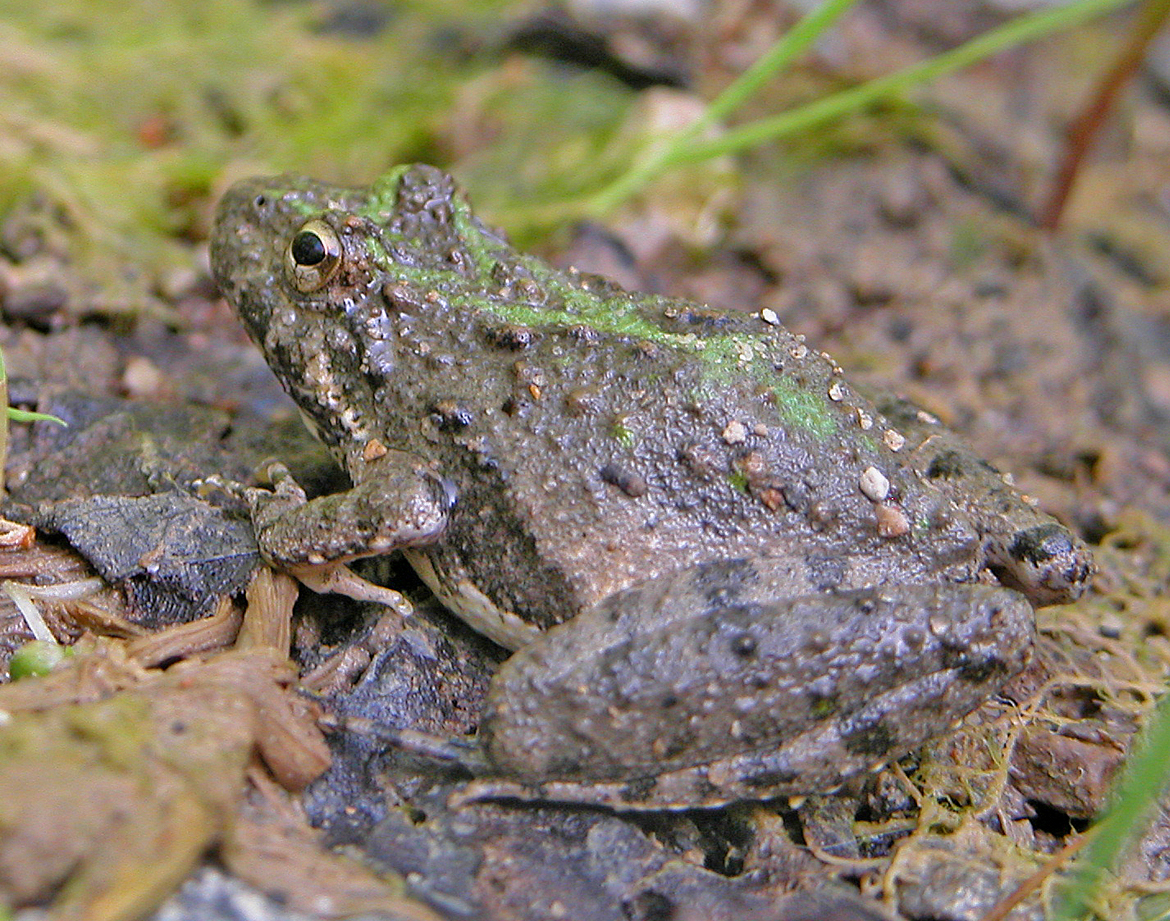
Blanchard's cricket frog Acris crepitans blanchardi

Blanchard’s cricket frog
Acris crepitans blanchardi

Twenty years ago, Blanchard’s cricket frog was so common that it was frequently referred to as “ubiquitous” in reports detailing amphibian populations in North America. Now, the species is considered endangered in Wisconsin, of special concern in Minnesota and Indiana, protected in Michigan and extinct in Canada. Universally, throughout its range, Blanchard’s cricket frog is suffering. Although it fares better in Ohio, even here, radical population declines have been reported. Thankfully, on the quarry, their numbers are not only persisting, but arguably growing. While part of the nighttime chorus for at least the past ten years, the voices of the indigenous population of cricket frogs are becoming dominant.

So, in celebration of this little frog (it’s less than an inch-and-a-half in length) and its very big impact on the mosquito population, it’s time to play Spot the Frog. It’s a simple enough game with just one basic goal. So, without further ado…

                                                                  SPOT the FROG

On the quarry

For those who aren’t already aware, we didn’t come by The Quarry Farm name through sheer chance. It wasn’t a challenge presented by an odd acquaintance – “Hey, you know the letter Q’s not used all that much…Think you can come up with a ‘Q’ name?”

No.

The Quarry Farm is what the Seitz clan all called this particular branch of their dairy operation, this specific geographical spot. It was here that the family grazed cattle and Jersey calves, ponies Cookie and Babe, and cultivated hay. And, because they’re not all completely arbitrary in their actions, they had a compelling reason for calling The Quarry Farm “The Quarry Farm.”

In the late 19th and early 20th centuries, there was a string of quarrying operations throughout the area and along Riley Creek and Cranberry Run. Flagstone and limestone, plentiful in this part of the state, were the primary objectives. One such operation was located here and, though several small springs forced its closure, here it remains.

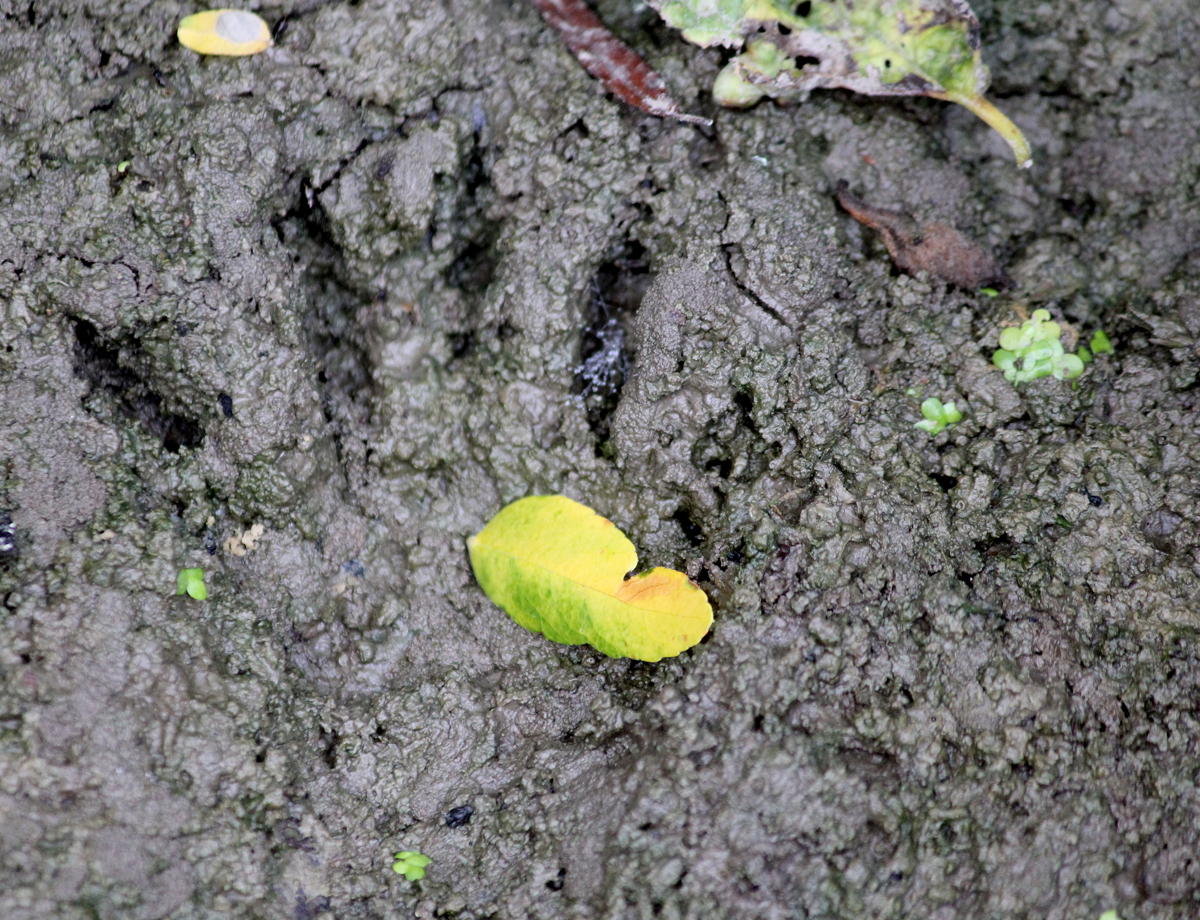
Raccoon PrintWhile at one time well known for sizable fish, the quarry underwent yet another change when, in the 1950s and again in the 1980s, local governments opted to dredge and straighten Cranberry Run in an effort to abate flooding in Putnam and Allen Counties. The spit of land separating the two bodies of water eroded to the point where the stream steadily deposited silt into the quarry until, nearly three-quarters of a century later, the quarry bears more resemblance to a wetland than to a pond or lake.

Twelve-spotted skimmerAs such, it’s home to a host of animals. There are dragonflies and damselflies in abundance. Water fowl feed and nest here and there is a treasure trove of amphibians, including a thriving community of Blanchard’s cricket frogs. Recently, we’ve discovered salamanders in the area and, this past spring, spotted what we suspect was a river otter in the one area of the quarry that still retains some degree of depth, though it’s failed to make a more recent appearance.

Here it is then, the quarry from which The Quarry Farm earned its name. And, while photos are fine, such as they are, the experience is more satisfying first-hand. So give us a call. We’ll be happy to show you around.

This slideshow requires JavaScript.

Third time’s a charm

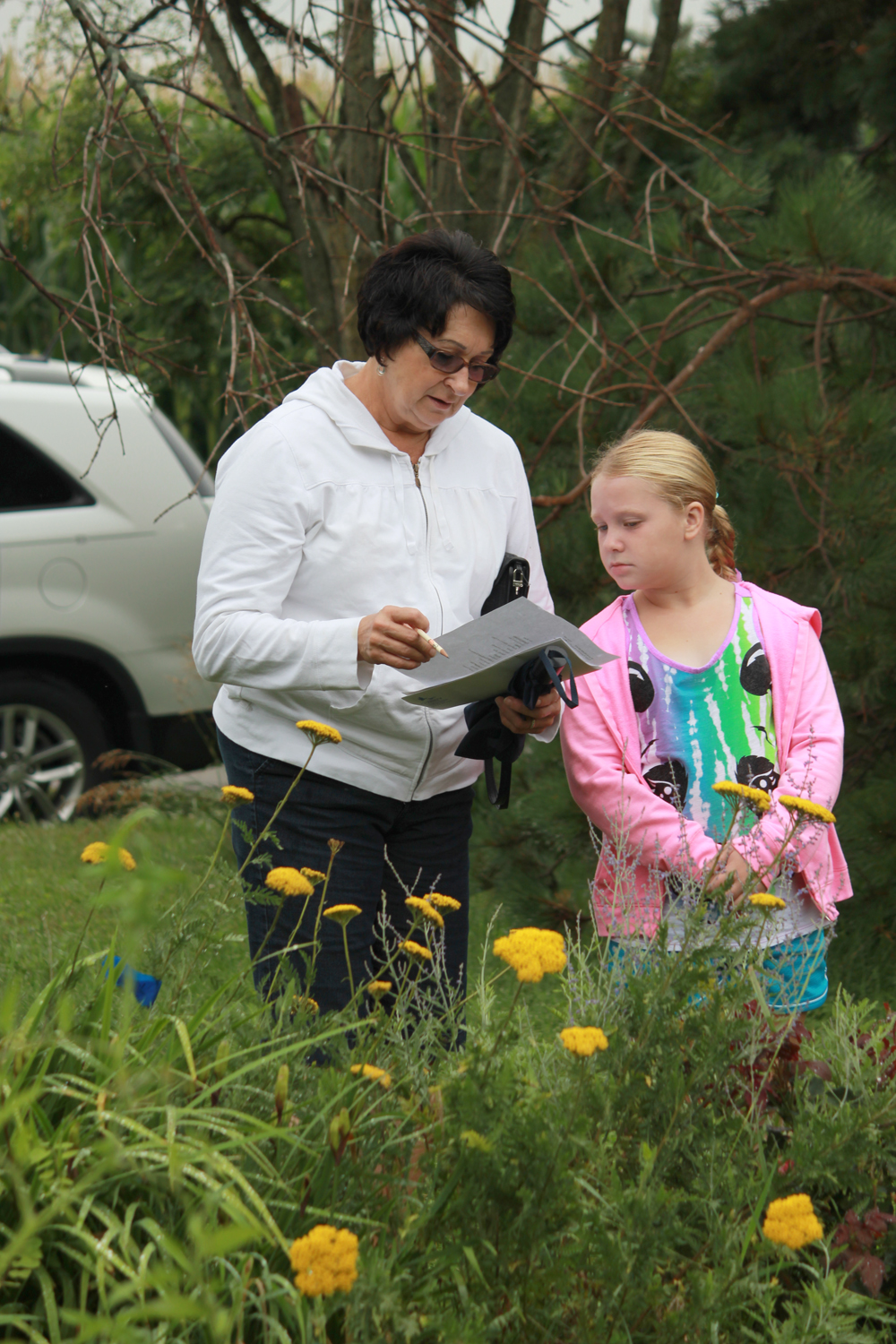
IMG_0826The Junior Gardeners of Continental were one of the first groups to visit The Quarry Farm after we officially opened to the public three years ago. I distinctly remember the initial telephone conversation with organizer Charlene. She had picked up our newsletter and wanted to bring her charges out for a program. She didn’t sound too sure about the whole idea, but her group arrived and we had a fantastic time. Guess they did, too, because they spent two hours with us on Saturday, this time searching for butterfly host and nectar plants on a scavenger hunt.

IMG_1107Beatrice met up again with her good friend Brandon, the first person she would approach of her own accord after her arrival in 2012 as a very young pot-bellied piglet. Although Brandon had some slick new wheels this year and Beatrice was sleepy in the July humidity, she knew him well. So did Buddy.008

Megan Ramey, Program and Partnerships Manager for the Girl Scouts of Western Ohio, arrived just before the Junior Gardeners to talk with us about the possibility of scouts earning various badges here. Thanks to the joyous enthusiasm of Charlene and her crew, a star of a Virginia opossum and Laura’s coffee and sugar cookie bars, we’re in.

Here’s to more face time with the kids from Continental. Special thanks to Junior Gardener Jazlyn Bishop for sharing your photos and video with us. Keep them coming.

This slideshow requires JavaScript.

Small Triumph

Sandhill Cranes, 2014 Garden, Pipevine Swallowtail Larva 023

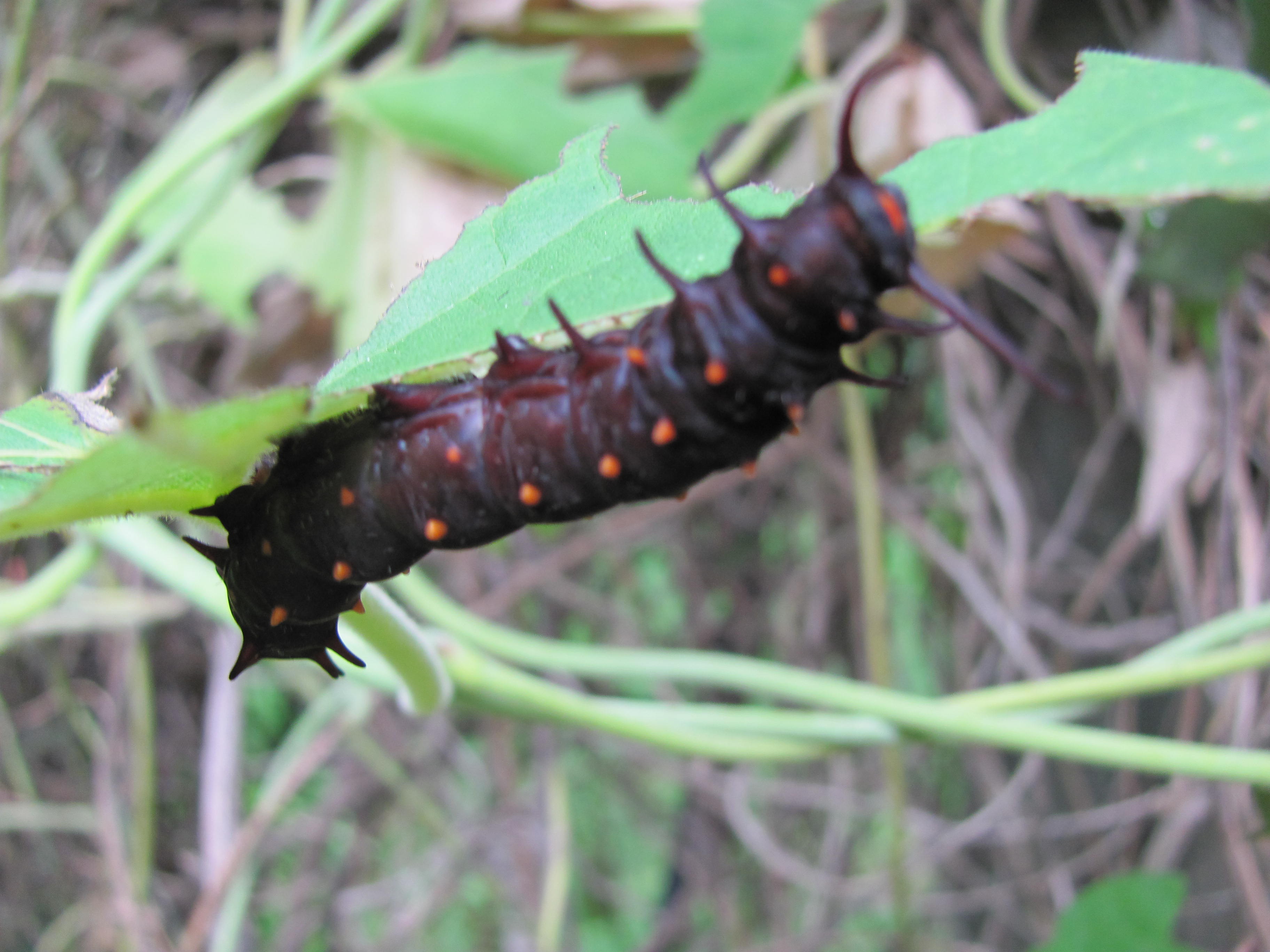
Why would a gardener be happy, overjoyed even, to discover an army of fat, black, spikey-looking caterpillars with red polka dots pillaging a prized ornamental vine?  Answer:  When the marauders are Pipevine Swallowtail butterfly larva and the vine is Dutchman’s Pipe (aristolochia macrophylla), one of their host plants.

For the ten summers and more since husband Gerald planted two pipe vines in the garden at Red Fox Cabin, we have kept watch on them.* We’ve admired the cute little Dutchman’s pipes they bear and checked the foliage for ragged holes that would give away the presence of larva. We’ve peered at black with blue swallowtails, hoping to spot the distinctive coloration of the Pipevine, inky black forewing and iridescent blue hindwing.  However, sightings have been extremely rare and none have chosen to lay eggs on the beautiful Dutchman’s Pipe. Until this July.

Sandhill Cranes, 2014 Garden, Pipevine Swallowtail Larva 016Last Saturday evening as I was walking my Jack Russel, Lefty, or rather as he was leading me where he wanted to go, he tugged me toward the rear of the log cabin, where one of the pipe vines grows luxuriantly on a porch pillar.  Lefty was intent on the rabbit or cat or whatever that he scented underneath the porch, but I was halted in my tracks by the sight of that vine, no longer luxuriant, but ragged, nearly defoliated, and crawling with the aforementioned fat black caterpillars–at least twenty.  Thrilled by the sight and the realization that our vine had finally been discovered by a passing Pipevine Swallowtail, I rushed home with a disappointed Lefty to grab my camera and my Peterson’s field guide to caterpillars, for confirmation.

Sandhill Cranes, 2014 Garden, Pipevine Swallowtail Larva 012According to the guide, predators avoid Pipevine Swallowtail caterpillars because the vine that feeds them is toxic and makes them unpalatable.  Also, when they are ready to pupate they tend to crawl away from their host plant and find other places to attach a greenish chrysalis with a silken thread.  So, the total disappearance of the caterpillars two days later was not as alarming as it might have been.  Photos and a ravaged vine prove they were there.  Quite likely, somewhere on the Quarry Farm later this summer, a Pipevine Swallowtail, or maybe twenty, will emerge from its chrysalis and sail into the butterfly garden to dine, and with luck someone will be there with a camera.  A photo of the shimmering beauty will be a fitting tribute to Gerald, who inspired us with his love of butterflies and planted the Dutchman’s Pipe so many years ago.

*[Pipe vines are native  in some parts of the Northeast but not in Putnam Co., Ohio; ornamental pipe vines were common in Victorian gardens but are less so today. Pipevine Swallowtails can complete their life cycle only if they happen to find a host pipe vine or a Virginia Snakeroot growing wild or deliberately planted.  Adults might stop to nectar in a flower garden but will move on if a host plant is not available.]

They call me Mister Bill…

Bill

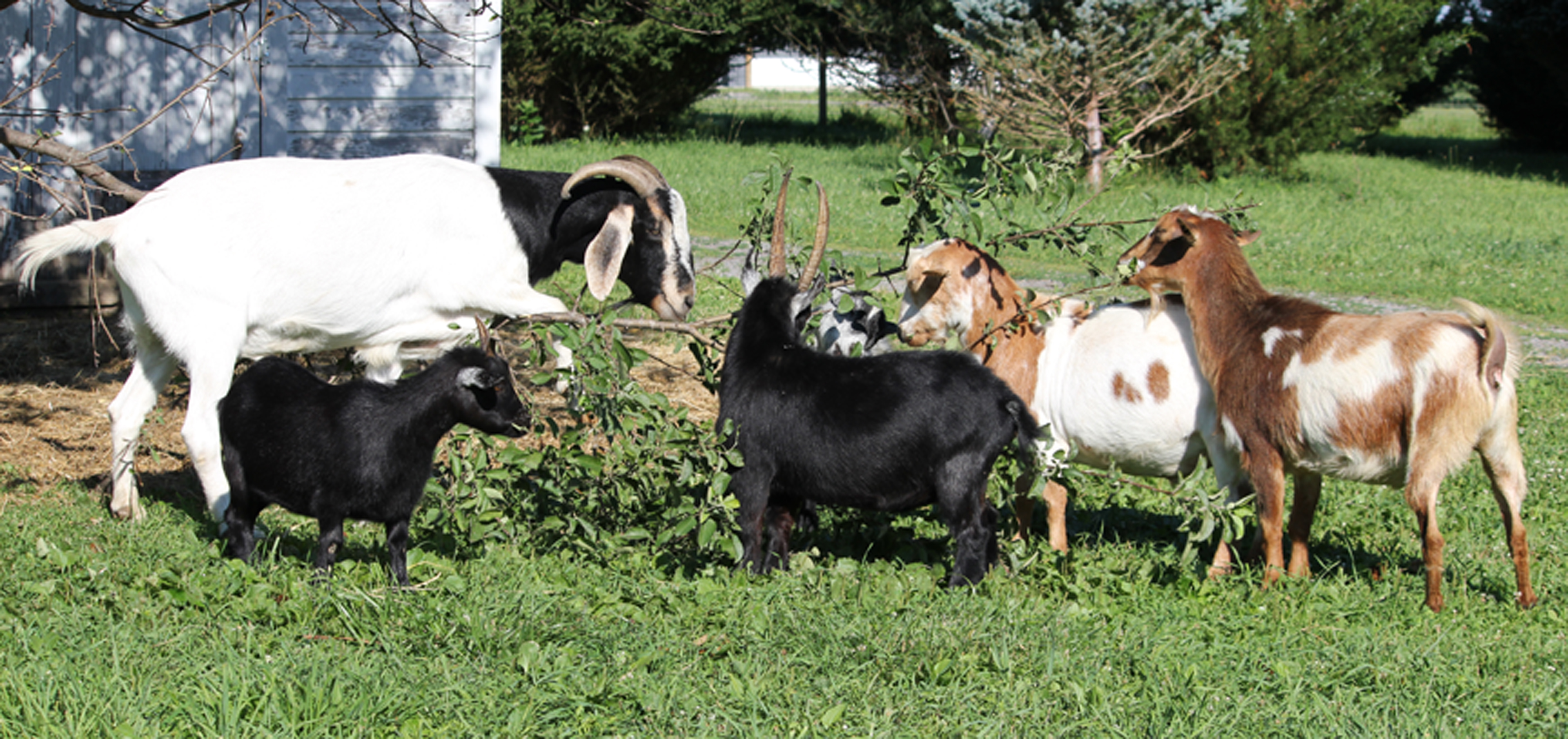
“He’s a big goat,” Sandy explained to Anne over the phone and via email. “People don’t understand how big he really is.”

Sandy was talking about Bill, a Boer goat that she and her husband, Doug, had raised from when he was smaller than a pygmy. And, trust me; she wasn’t kidding (no pun intended). Bill’s bigger than Buddy, the miniature donkey that guards The Quarry Farm: taller, anyway, and he’s the newest member of The Quarry Farm family.

Sandy and Doug drove him up from the Cincinnati area, from the farm that the couple is in the process of leaving. They were successful in placing the other animals that lived on their farm, but because of his size, Bill proved a special case. They’d raised him as a pet and they didn’t want him to go just anywhere, were anxious to see that he went someplace safe. After reviewing their options, they chose here and we’re grateful for that. Bill’s every bit as sweet as he is big.It took him a few days to work out just where he belonged in the loose-knit community of goats that already reside here, all of whom are less than half his size, but he did and the pygmies and Nigerian dwarfs are finding his arrival a real boon.

apple picki BillForget the fact that he scrapes out dust wallows for all his smaller cousins before digging up his own. Never mind that, in a pinch, the pygmies can take shelter from the sun in his shadow (and, yes, they do). What’s really important, what all the goats truly appreciate him for (and the pigs, if we’re being honest), is his reach. Standing on his back legs with his forelegs braced against the trunk of a tree and stretching for all he’s worth, Bill can pretty easily top seven feet. And when the trunk he’s braced against is that of an apple tree, well, let’s just say that Sir Isaac Newton would have received more than one lesson on the effects of gravity. Another way of putting it is to say that, rather than a windfall, the animals here are benefiting from a Billfall. Seriously…who needs a cherry picker with Bill around? Not the wee beasties of The Quarry Farm.

So, welcome home, Bill. Well come, indeed.

The gang of goats


Summer is underway, and with it comes a newsletter

2014 Summer Newsletter.indd

Hot off the printer, as well as an upload, is The Quarry Farm 2014 Summer Newsletter. Lots to talk about, like the fact that The Quarry Farm Nature Preserve & Conservation Farm is a 501(c)3 public charity, and plenty of things coming up. Click on the cover at left, open and read away.

Hope you are able to jump in on the calendar and see for yourself.

Once upon a time…

As children, most of us at one time or another have read, or have had read to us, fairy tales; the kind of story where the hero or heroine has to overcome great adversity in order to win out in the end. Generally, the moral of these stories is something along the lines of, “Be good. Be just. Work hard. Do these things and all will be well.” And just as most of us have heard or read these stories, we’ve experienced that life has a habit of teaching us a different kind of lesson, something a bit more realistic. I mean, life isn’t fair, right? Good guys regularly finish last and, all too often, what you earn from working hard is more hard work. That’s frequently been my experience, at any rate. So, I tend to think of myself as a pragmatist; I hope for the best, but expect something worse. There are those, however, who have described me as a cynic, and while it’s true that I don’t trust the motives of others, I consider that a survival trait, not a character flaw. So you’d probably guess that, from my perspective, there are no such things as fairy tale endings.

Guess again.

Greta, shortly after her rescue.

Greta, shortly after her rescue.

Last February, with the wind screaming and cutting and churning the air down to between 30 and 40 degrees below zero, members of both the Humane Society of Allen County and the Allen County Sheriff’s Office seized nearly 50 animals from a hoarding situation about 20 miles south of The Quarry Farm. And while this isn’t news to those of you who visit this site, the repercussions of the event, the sheer horror of the conditions those rescued were living in deserve telling and retelling.

The trench that Greta and Grits survived.

The trench that Greta and Grits survived.

Shelter, for those animals that had any, were wide-slatted wooden crates open to the sky or with poorly fitted roofs, rough houses slapped together from bits and pieces of waste wood and 50-gallon plastic barrels laid on their sides. Where they had run out of proper fencing, barbed wire was looped on the ground to contain two horses and three ponies. Eight chickens survived, huddled under an abandoned car, ringed by the frozen carcasses of the chickens that weren’t so lucky. The frozen remains of two dogs were found, though only one is believed to have died of exposure; the other, it is suspected, simply starved.

Of the animals that survived, that were rescued, four were potbellied pigs.  Two, Bob Barker and Alphonse, came to live here, at The Quarry Farm. The other Kentucky boundtwo, dubbed Greta and Grits, were spoken for by friends of ours down in Kentucky. This Sunday past, Anne and I picked up the two pigs from their temporary home at the HSoAC, loaded them into Anne’s Toyota Matrix and headed south. Because of the care they’d received and the socialization provided by the staff and volunteers at HSoAC, both pigs were extremely well-behaved, though understandably a bit restless. A whole grain bagel and pieces of both a cinnamon and an orange scone, picked up at a Panera in Troy, went a long way toward easing any nerves and both pigs lay down for the rest of the trip. Some twenty-odd miles over the Ohio border into Kentucky, and we’d arrived.

Greta, scratching.

Greta, scratching.

It was a long climb up a winding asphalt driveway to the top of one of the foothills of the Appalachian Mountains. At the top, along with an incredible view of the lowlands below and the Ohio River winding through the mountains, was Beth, standing between two low shelters: one labeled Greta and the other, Grits. Situated inside a newly constructed barn was a large, wood-slatted pen, but it was through the back door of the building that both pigs ran, into a

Grits greets Erin for the first time.

Grits greets Erin for the first time.

paddock that Bruce and Beth and Erin had finished fencing off just the night before. They immediately set to investigating their new digs, sampling grass, scratching themselves on posts and the wire of the fence and rooting into every depression they could find, but still making time for ear scratches and belly rubs enthusiastically administered by all three members of their new-found family.


And that’s where we left them, at the top of a hill in their forever home, surrounded by people who will not simply love them, but care and provide for them. From the horror of a trench in the snow to a hilltop house in the sky. Here is where they’ve come, where they’ll live.

Happily ever after.

Greta and Grits