Mighty eight toes has 20

If Jimmy Toskr the Eastern Fox Squirrel (EFS) had been born almost 10 years ago with 20 toes, he would have spent his life running up and down trees, doing backflips over blowing leaves, growling and squealing at people and other predators under his tree and collecting tree nuts to stash in tree cavities and underground. He would have danced rapid spirals around tree branches with female squirrels in early spring, and on warm fall and winter days. He would have done the latter for the sheer joy of sunshine and freedom.

Instead, Jimmy Toskr lived his decade bound to the indoors. He was born in or around a Northwest Ohio golf course. According to Oregon State University’s National Pesticide Information Center, golf courses regularly use pesticides to maintain the health and appearance of the turf. Pesticides include herbicides, fungicides, insecticides and rodenticides, plus a few other applications that lead to golfers being advised to minimize their risk of exposure by:

  • Wearing golf shoes and socks that cover the ankles
  • Wearing pants or longer socks to cover the lower legs
  • Consider wearing gloves and/or be sure to wash hands after golfing, before eating or smoking
  • Consider calling ahead and scheduling tee time several hours later or the following day after a pesticide application has been made

Since wildlife, including Jimmy Toskr’s mother, can’t do any of those things, Jim was born with a stunted tail, no cartilage ‘cup’ around one ear and only eight toes. He was unable to climb to escape predators. He couldn’t grip tree trunks and branches or balance properly with a full, bushy tail. Although EFSs are mostly terrestrial, Jimmy was completely ground bound, and that ground was where he was found. He was accepted by Nature’s Nursery and placed in the care of volunteer Linda Madras Gorey. When it was clear that the young squirrel was nonreleasable, Linda allowed him to be put in the care of The Quarry Farm as an education ambassador. He lived with us until the early hours of Friday, December 2, 2022.

What we learned from Jimmy Toskr:
• EFS are not very social, unless the squirrel is Jimmy Toskr and his friend is Steve. Jimmy allowed Steve to stroke his forehead and to coax him back into his cage after a run.
• EFS are very intelligent. They know approximately where they have stashed tasty tree nuts, including in the ferret hammock that swings from the ceiling, and will strongly object to it being removed for any reason.
• EFS recognize when they have the advantage of safety from a predator. Quinn the Red Fox and Chryssy the Cat are two predators that Jimmy taunted on a regular basis. He knew they couldn’t get through the cage doors and would throw things at them from high on the top level. Sometimes he would sprawl like a sunbather on the lowest level and twitch his tail, just out of reach.
• EFS run, jump and roll just for the fun of it, like this:

Although an EFS may have a steady diet of tree nuts, greens and fruits, a cozy hammock to hide in and destroy a couple of times a year, fresh water and interaction with a variety of species—even when they have never really known otherwise—they recognize the absence of a life that is rightly theirs. Jimmy often sat on the upper level of his cage, watching the cottonwood and the world outside his east window. Nothing would break his concentration, not even new walnuts in the shell.
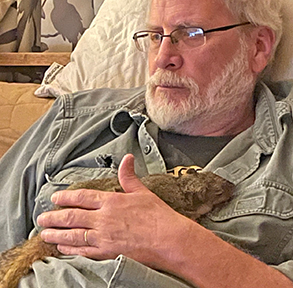
Three weeks ago, Jimmy exhibited signs of a stroke. Quinn sat outside his cage and cried. Jimmy seemed to regress; to allow and even want human contact no matter who that human was. He rode around on one’s out-stretched arm and munched apple during the ride. In the evening, he sprawled out on Steve’s chest and fell asleep. Jimmy rallied a week ago, walking on all fours to stash food under Steve’s t-shirt and licking Greek yogurt and almond butter from his favorite person’s finger. He fooled us into ordering another ferret hammock as it appeared he might actually need it for another six days, weeks or maybe months. Then he went away altogether.

In Norse mythology, Ratatoskr is a squirrel who runs up and down the world tree Yggdrasil to carry messages between the eagles perched atop Yggdrasil and the serpent Níðhöggr who dwells beneath one of the three roots of the tree. Jimmy Toskr is now whole and is running up and down the Tree of Life. He is the Toskr, hurling commentary as he connects Heaven and Earth with the support of 20 strong toes.
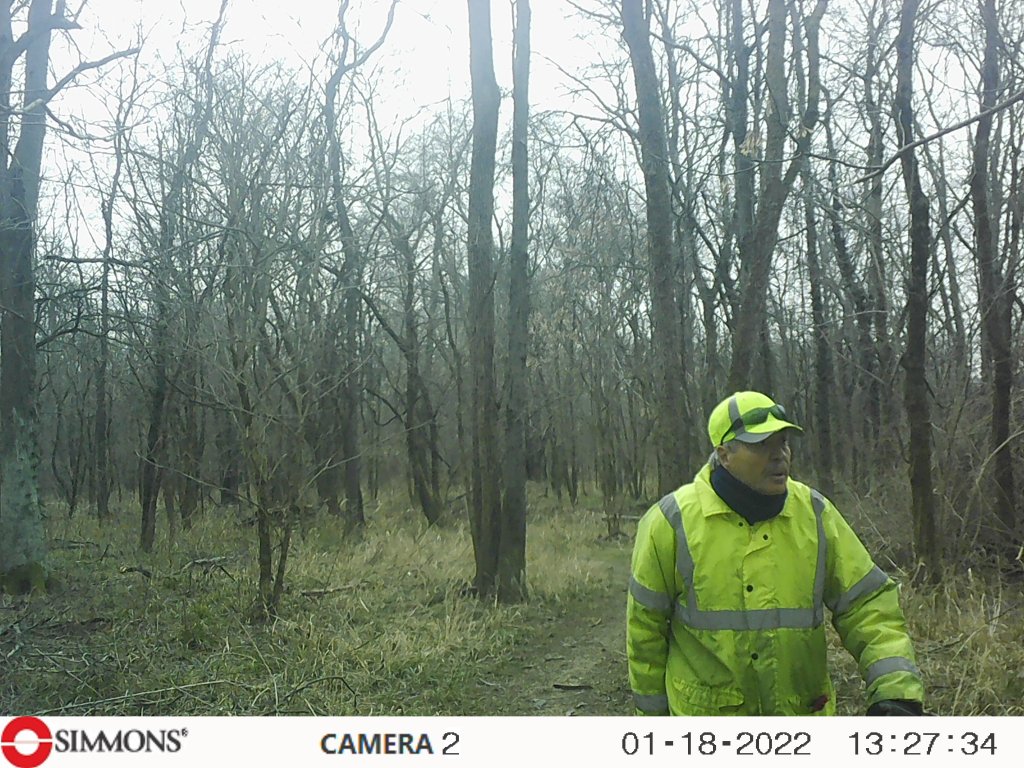
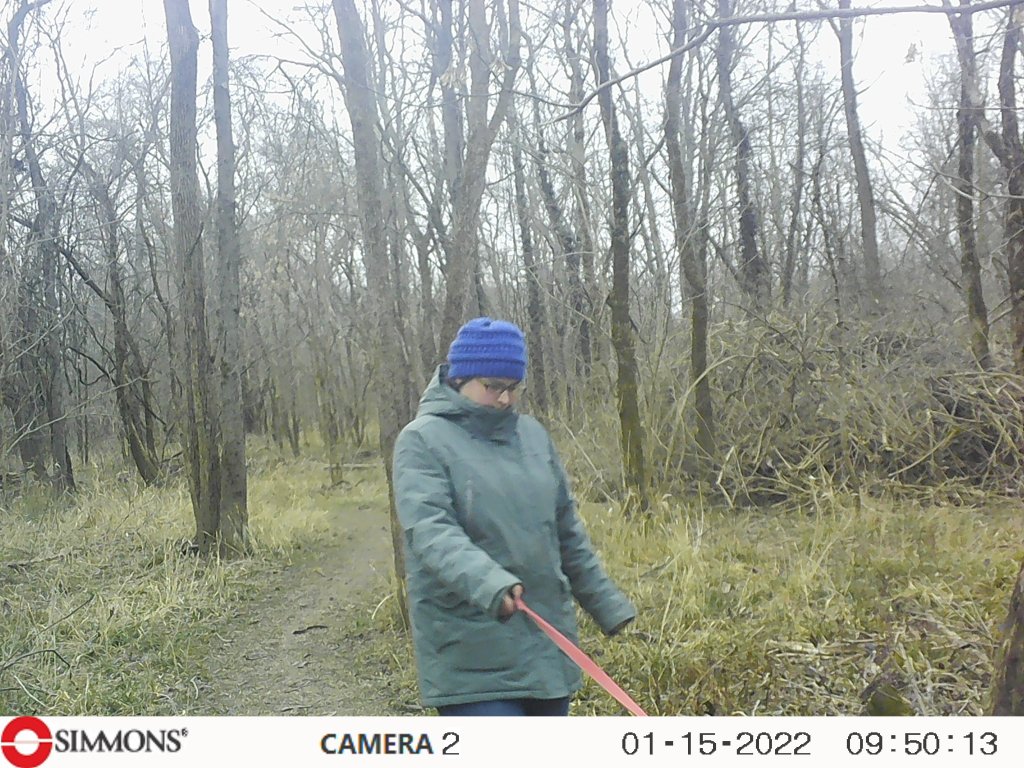
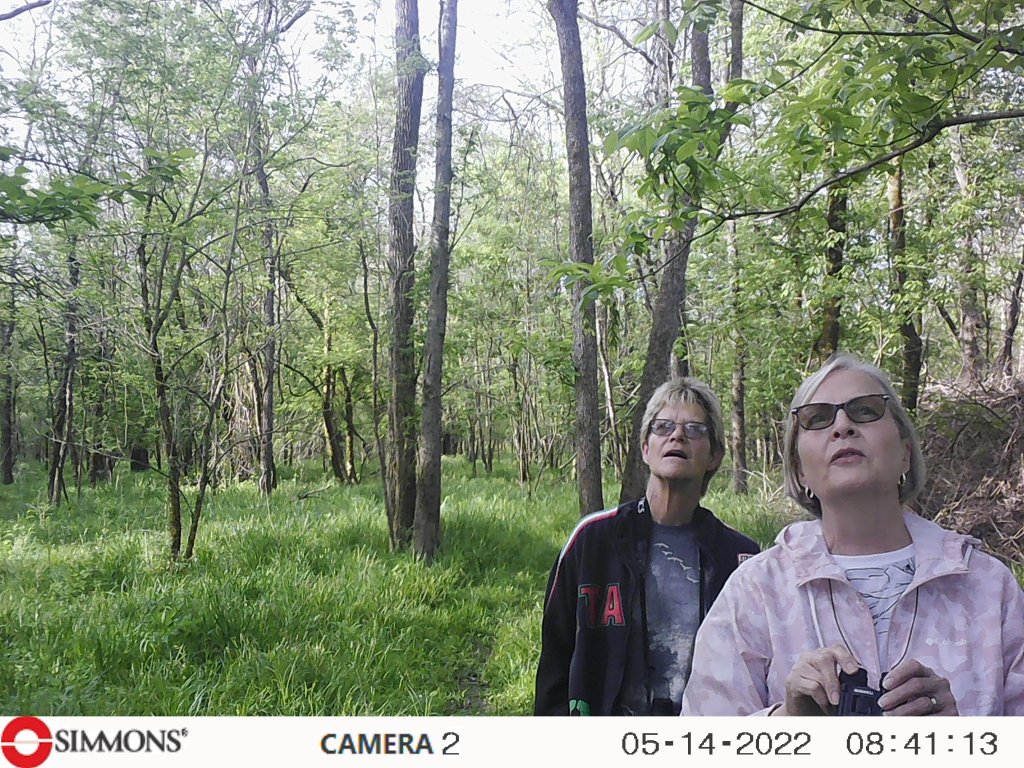
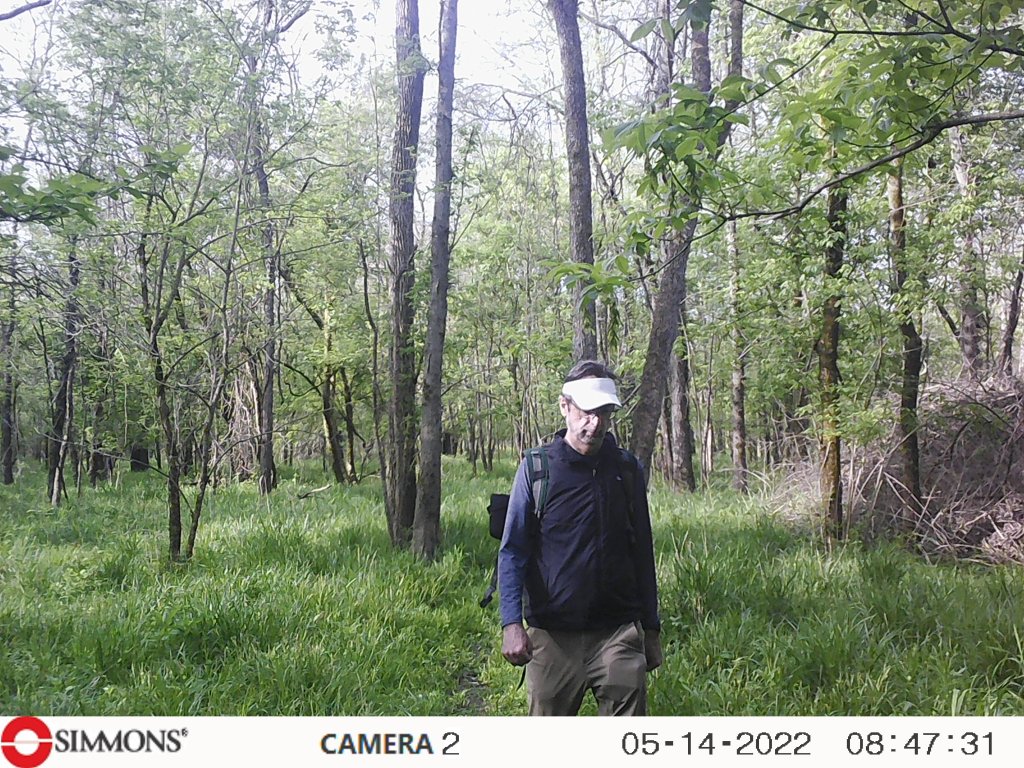
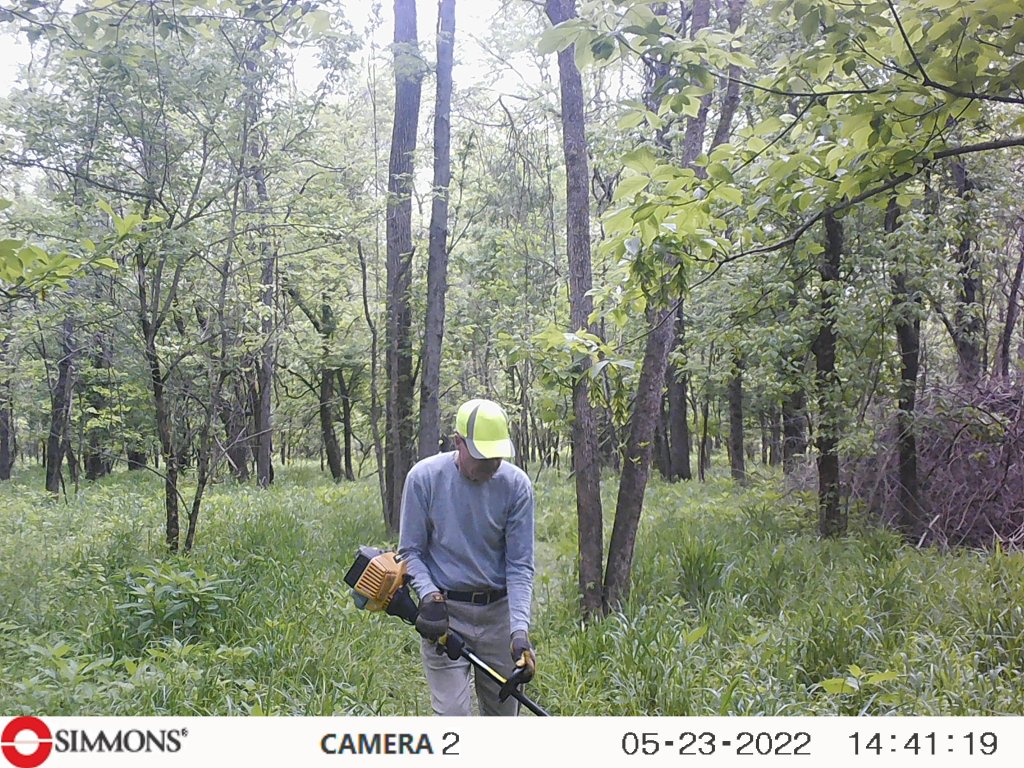
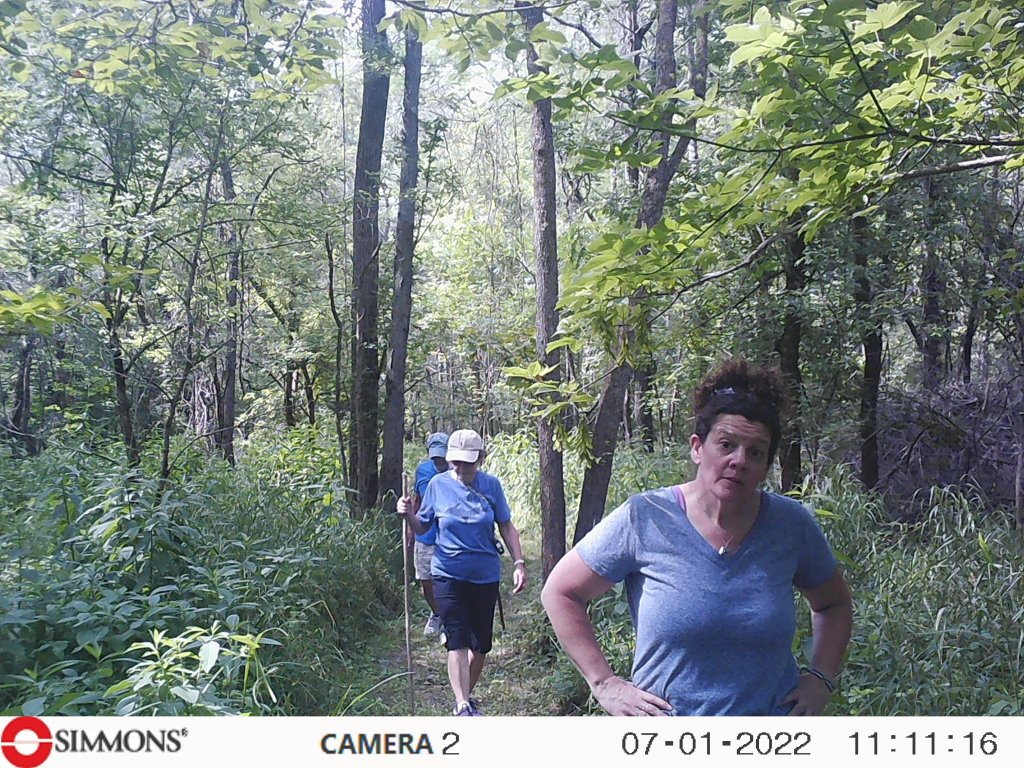
Scenes from a year of hikes in the floodplain

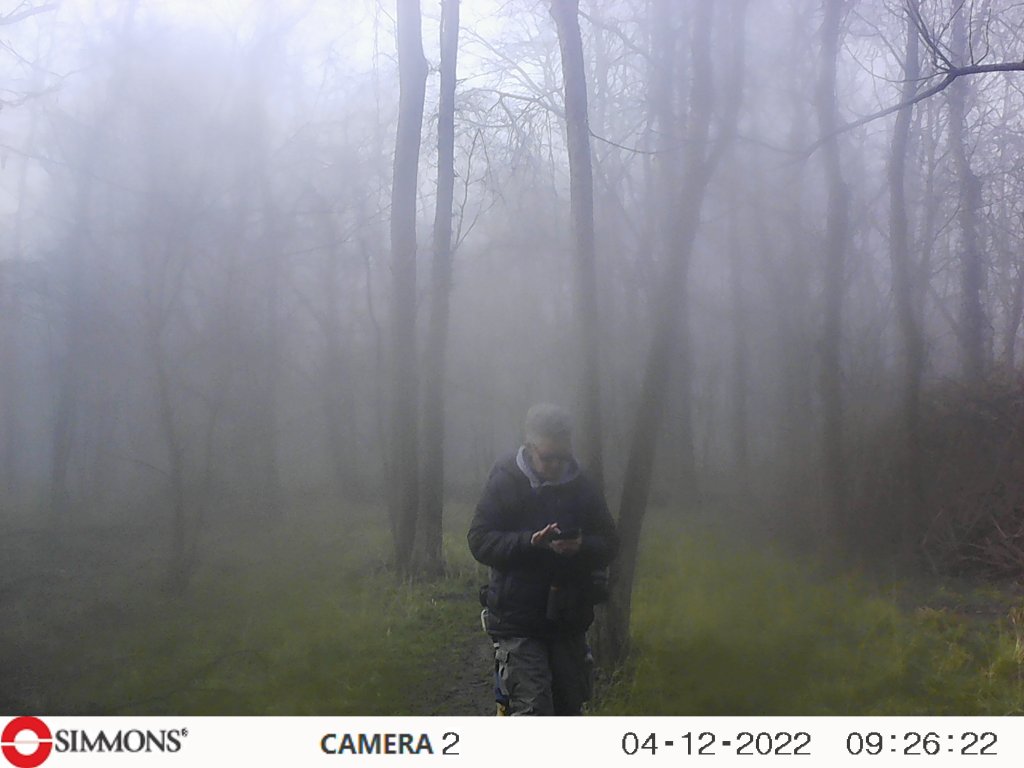
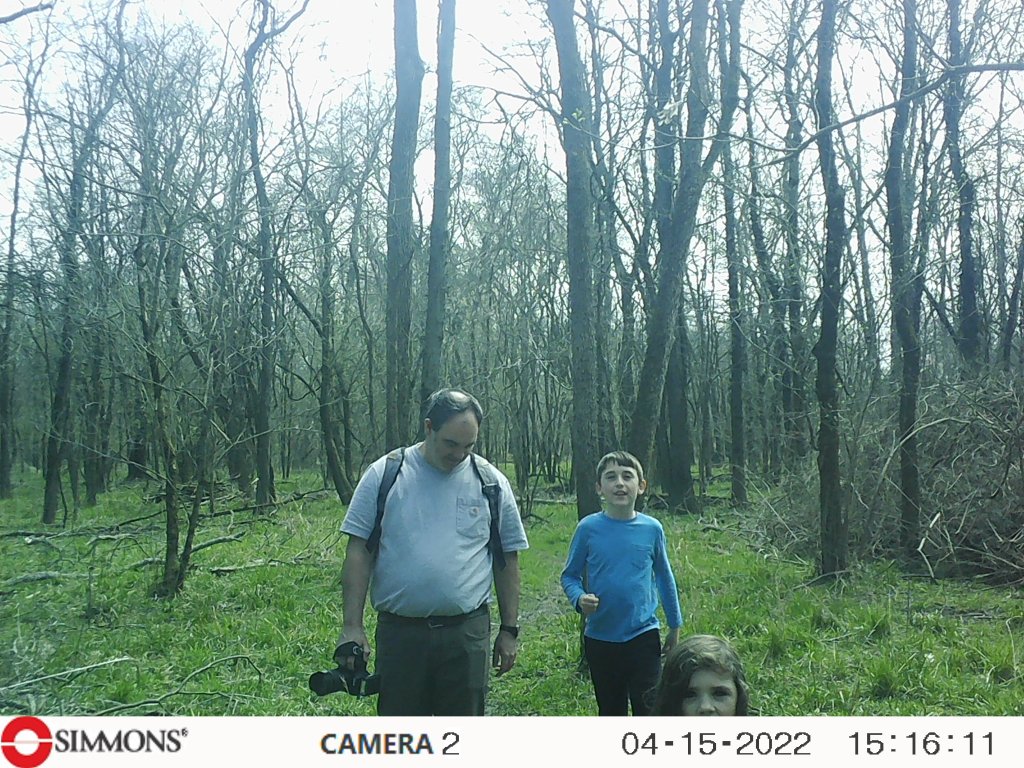
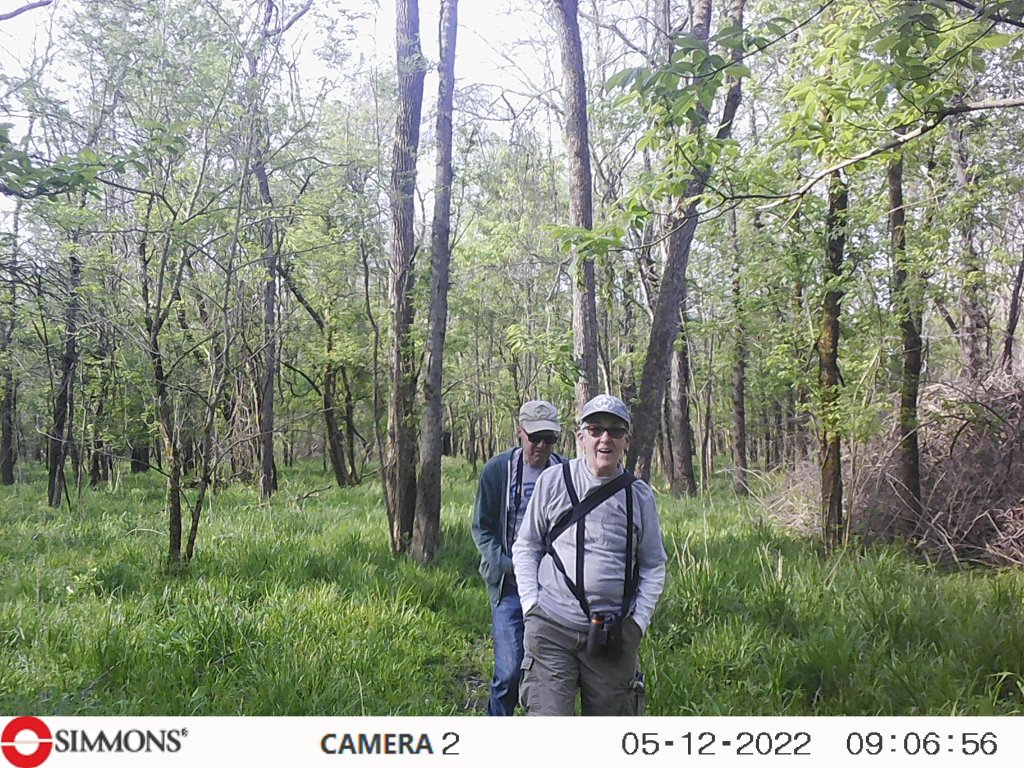
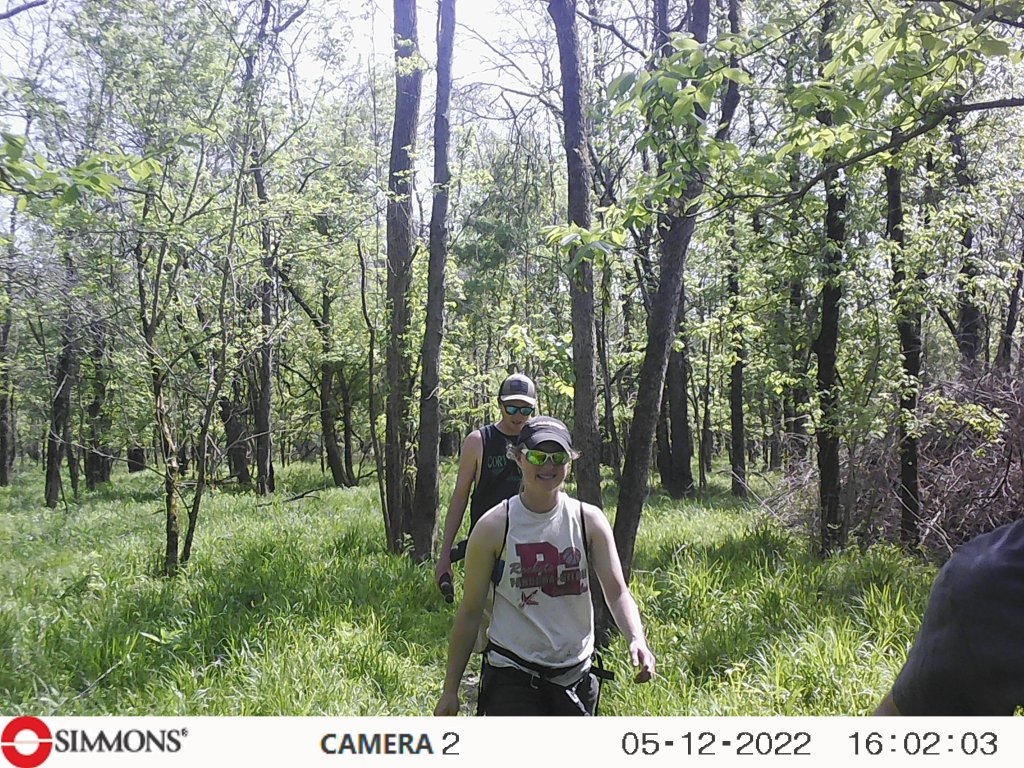
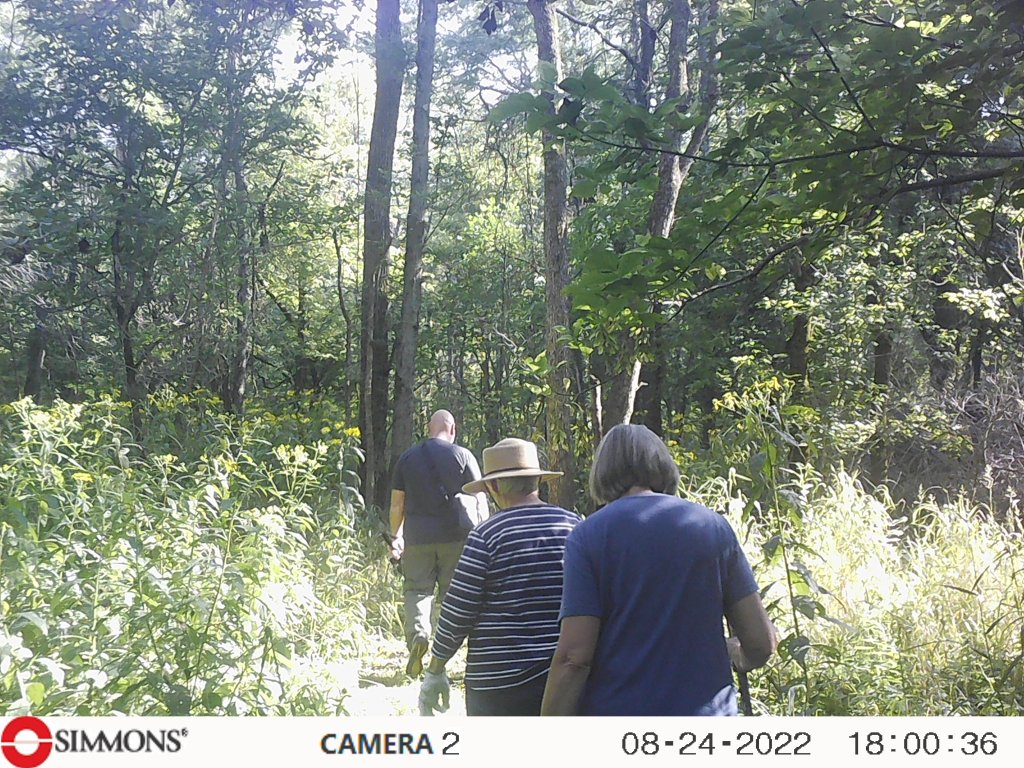
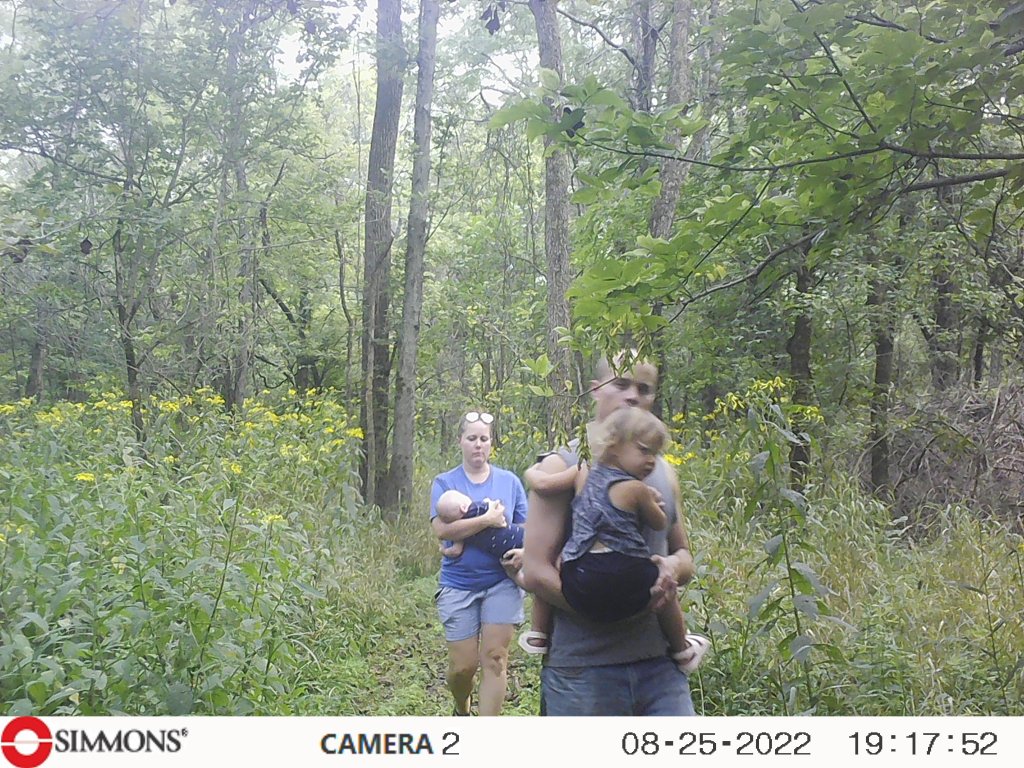
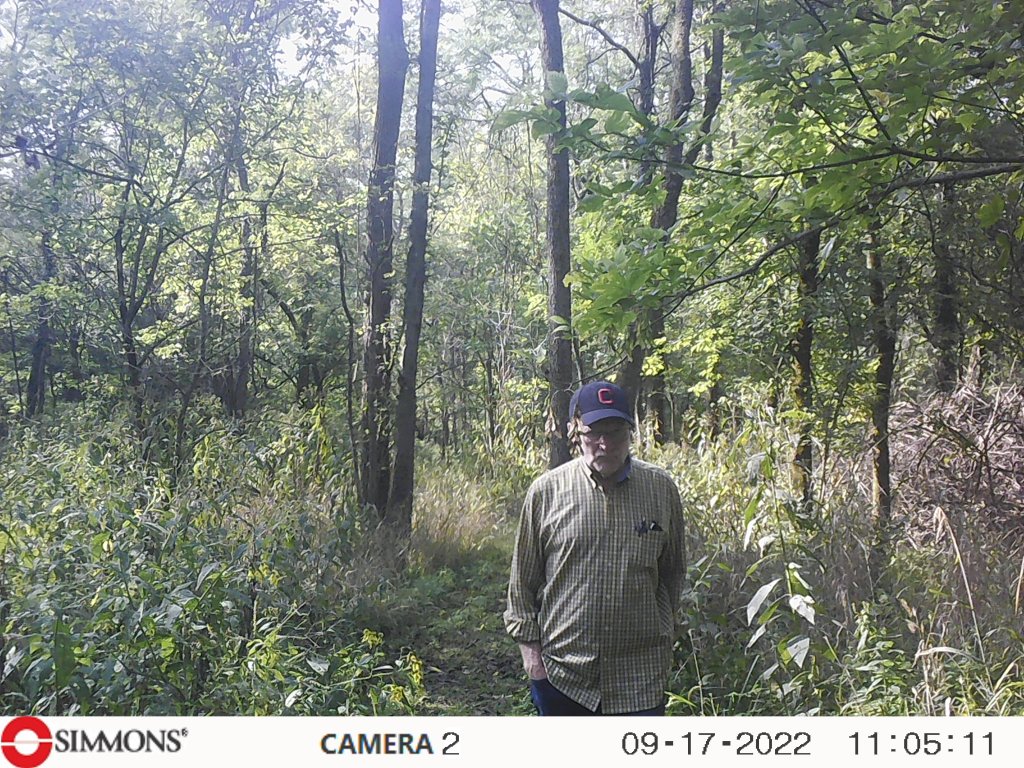
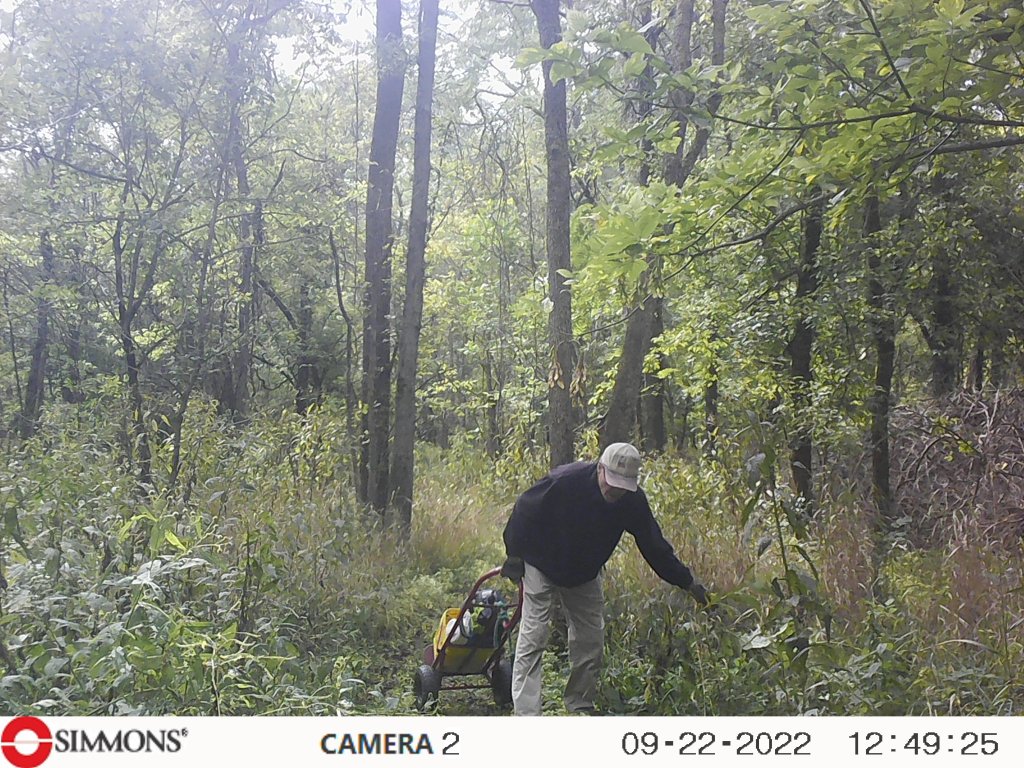
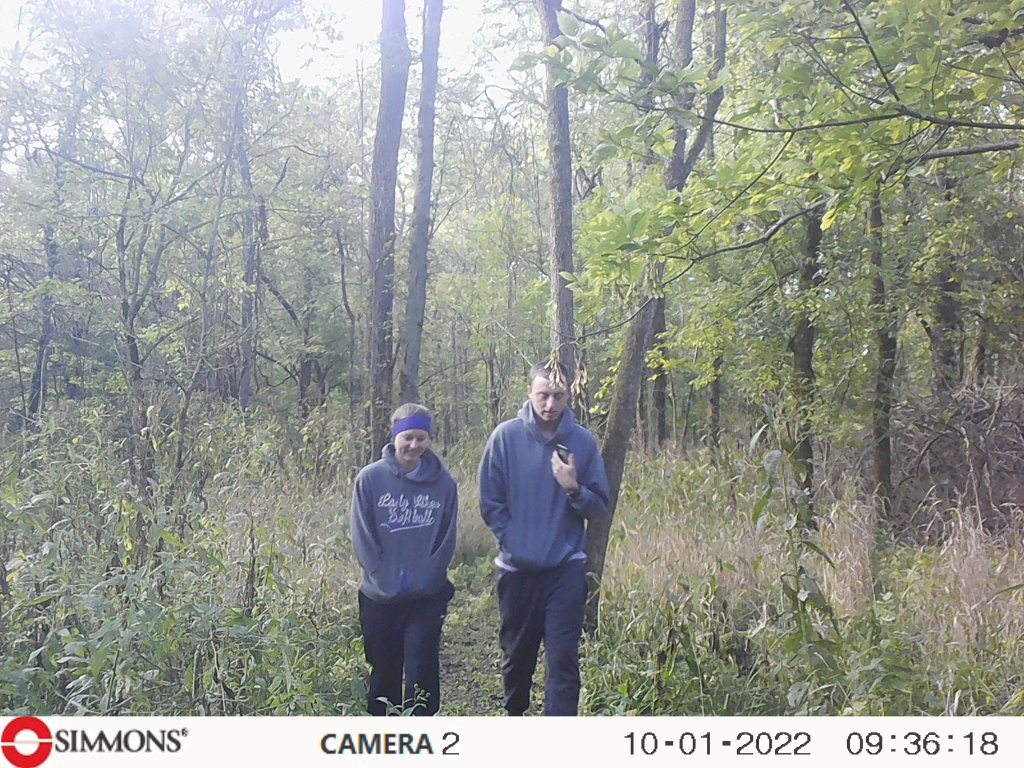
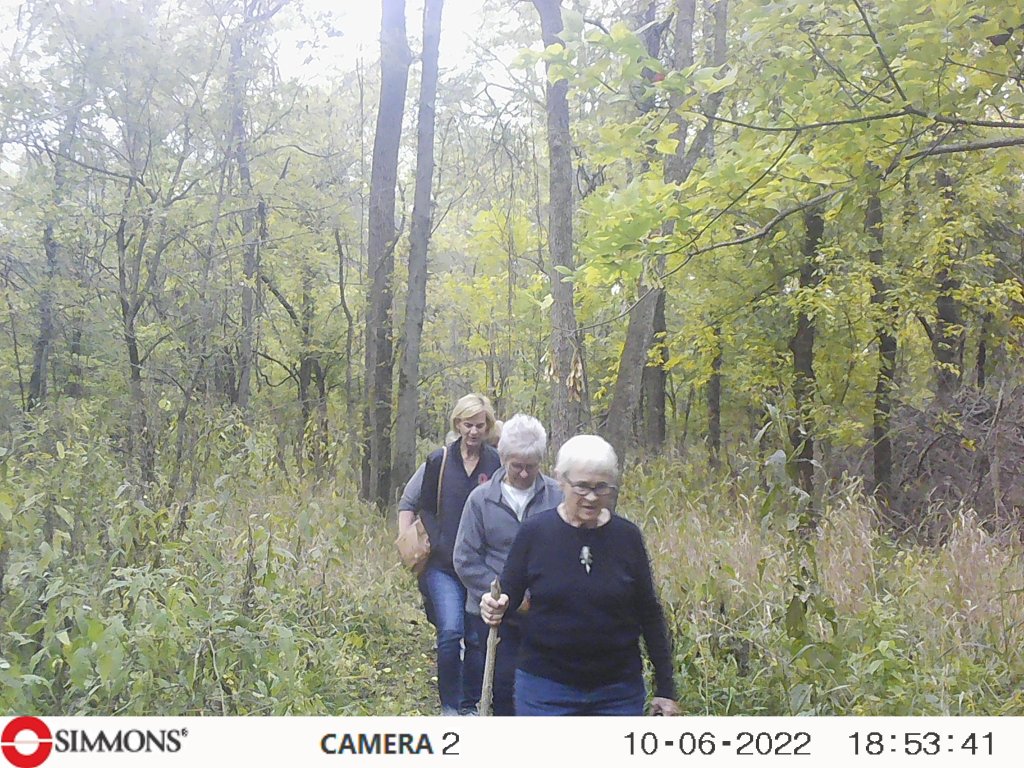
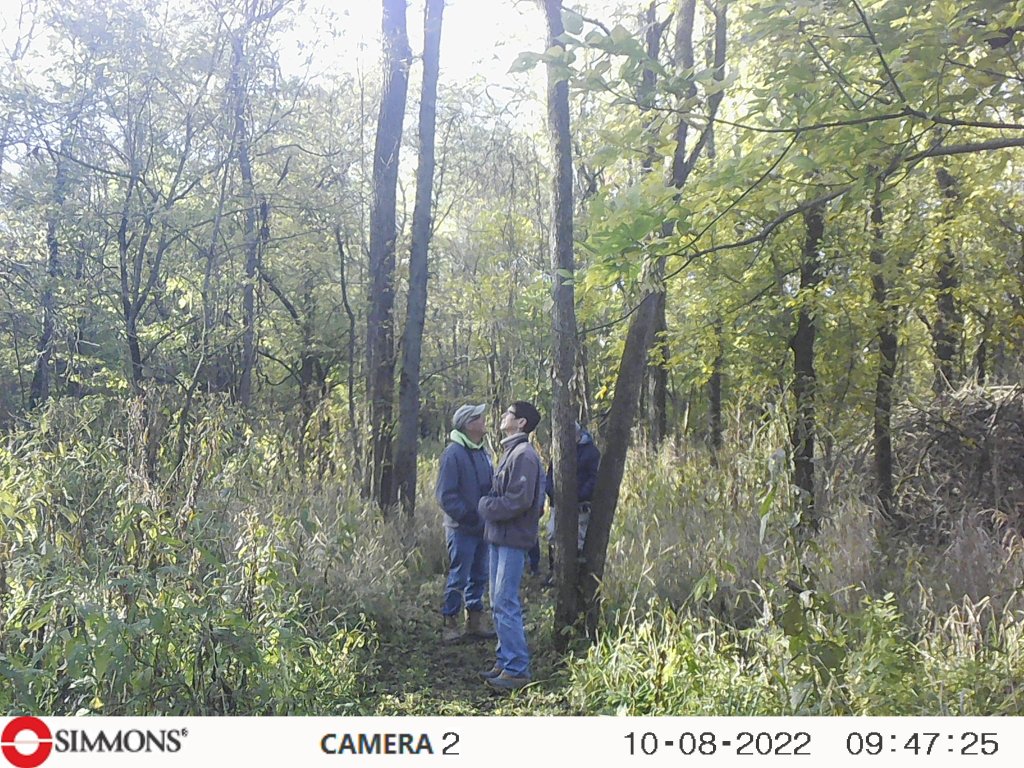
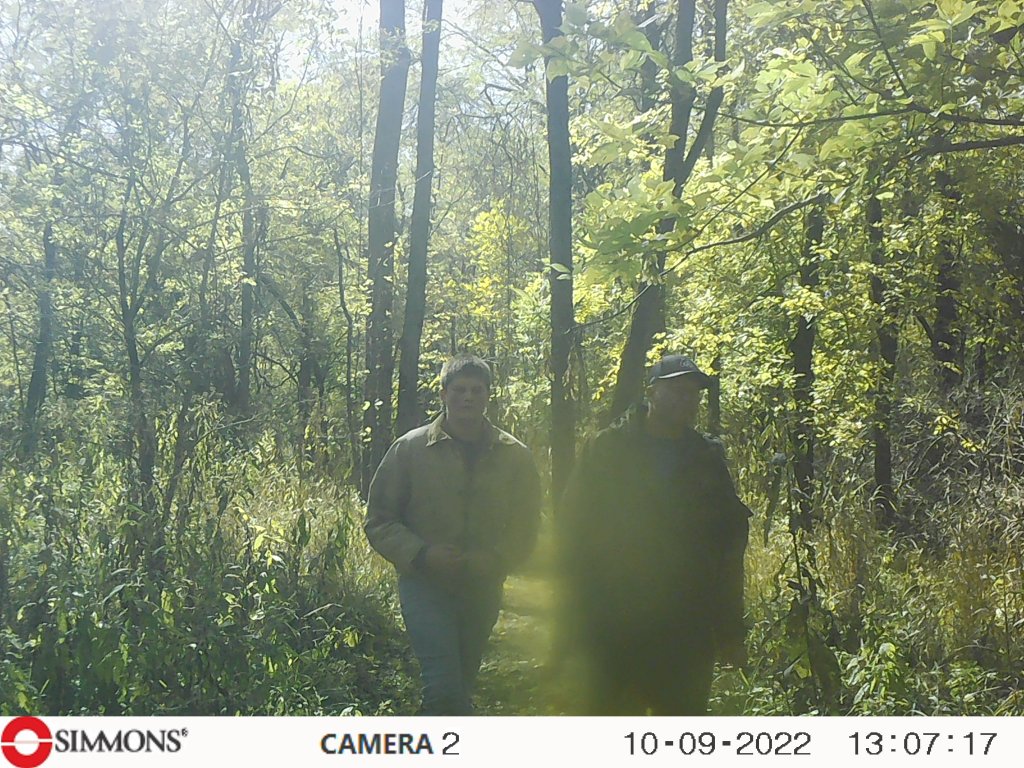
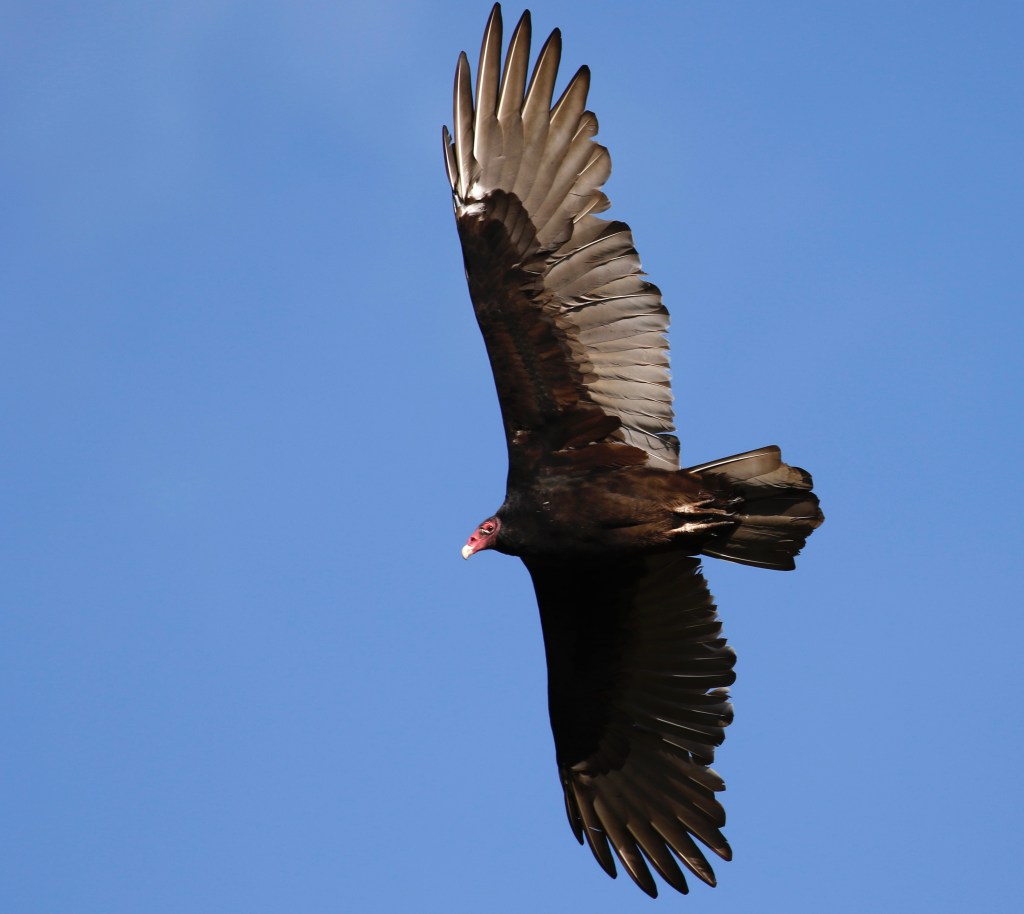
Each fall, the trail cams come down for maintenance and are rehung for the next four seasons. Paul installed the north trail through the floodplain several years ago, opening that area to bird watchers and hikers of all species. It’s a popular resting stop for migratory songbirds. Birder Deb captures beautiful photos there as they flit through.
Here are a few photos that feature the humans who passed the camera on that path. It begins with David, the master who keeps the trail cleared and curbs the further spread of invasive plants species.

The 2022 5K

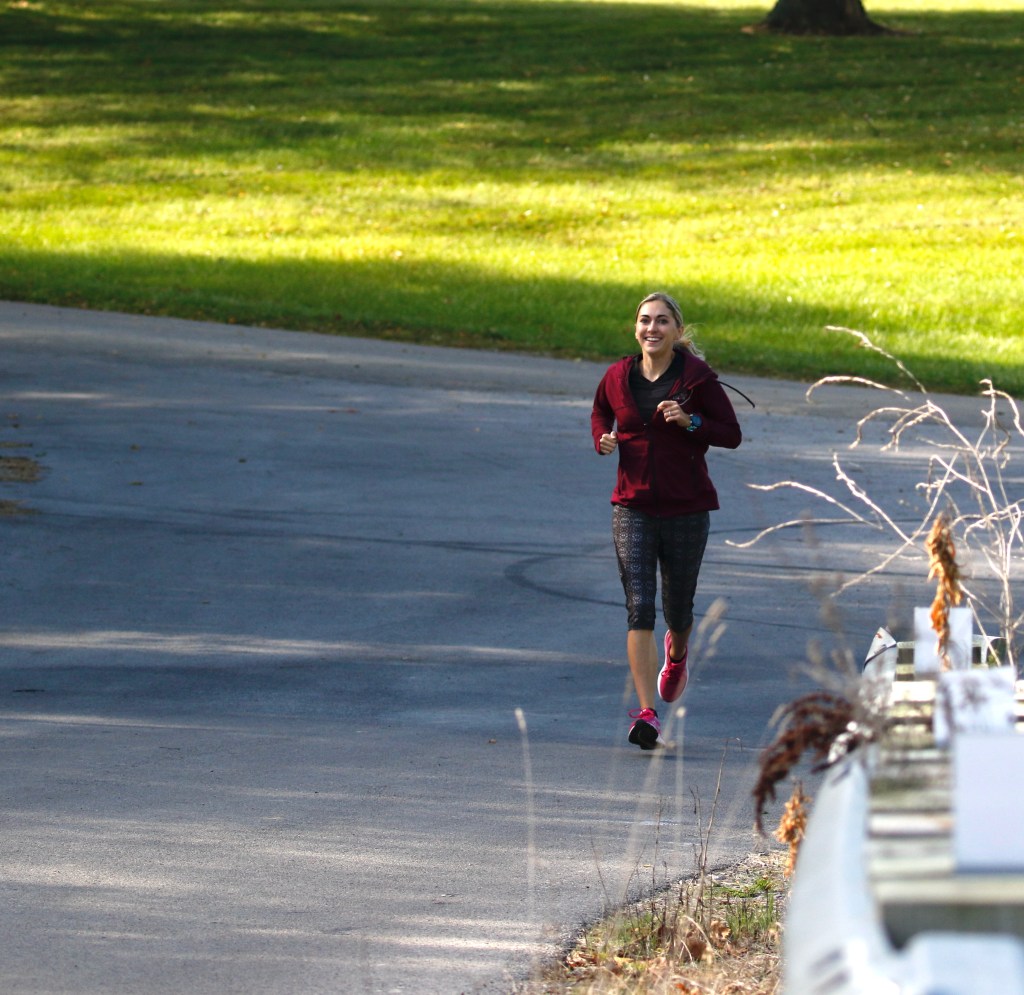
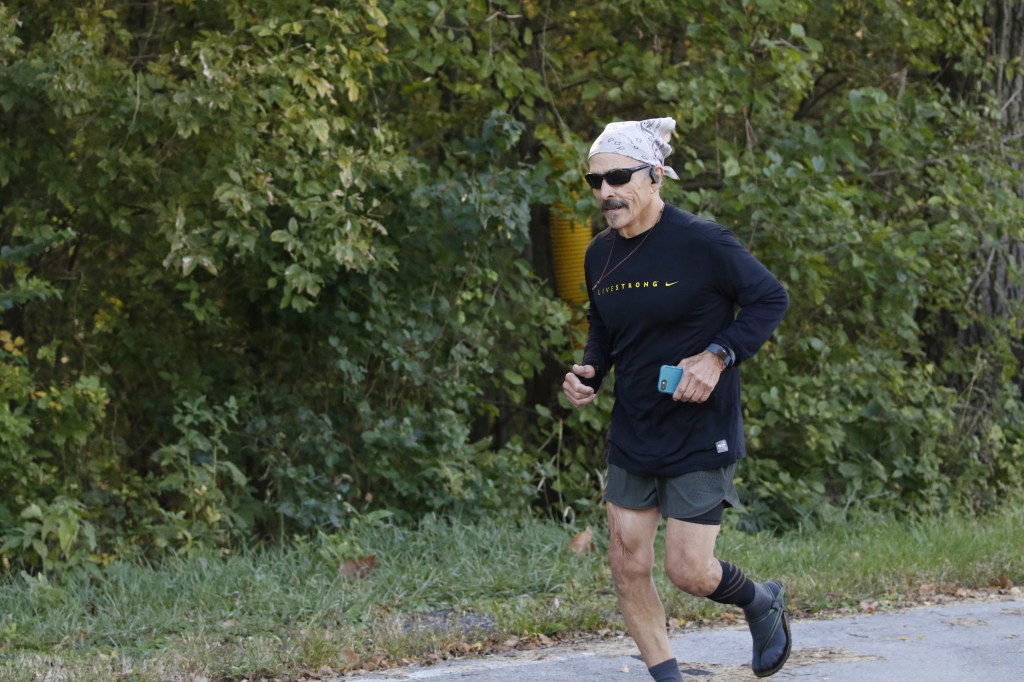
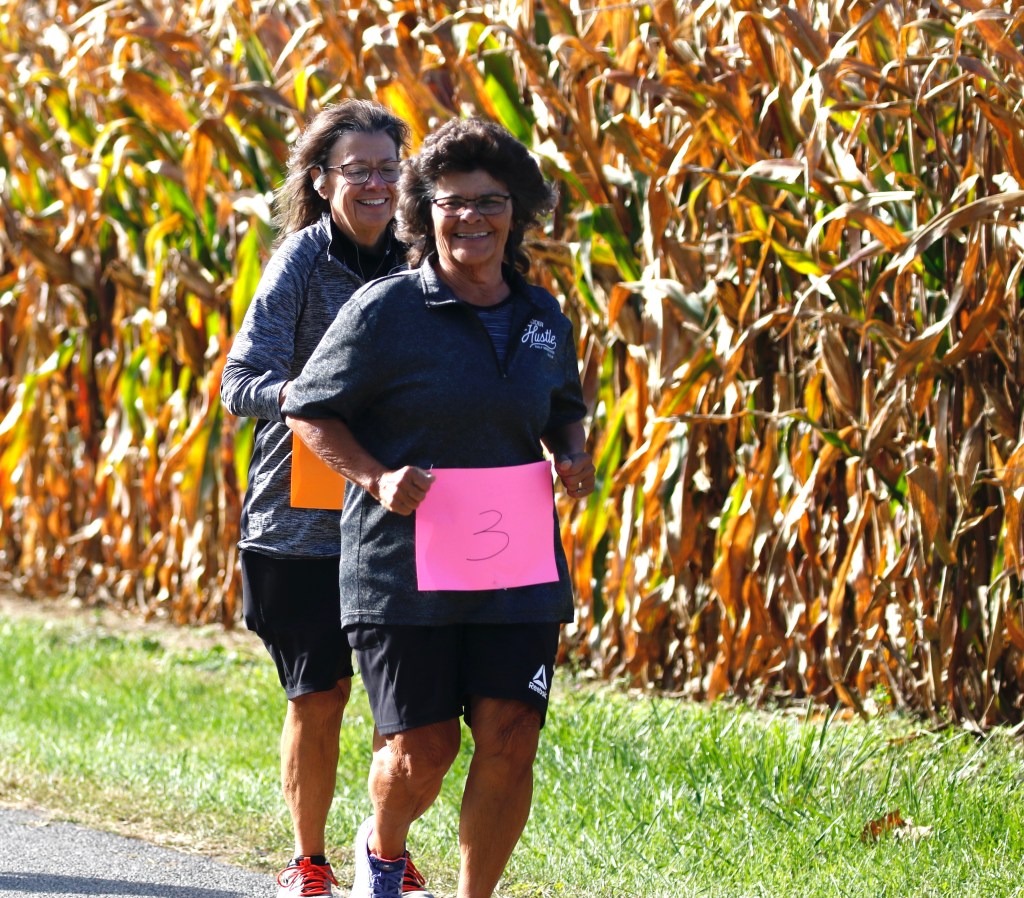
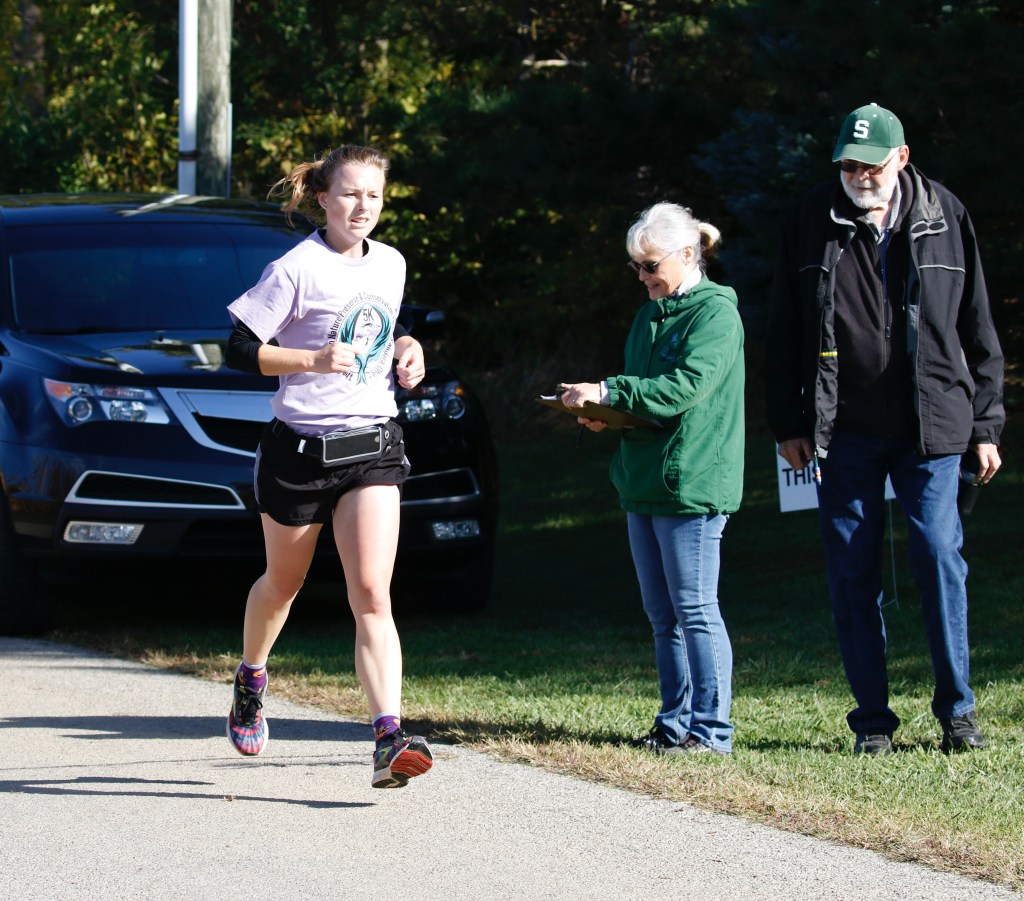
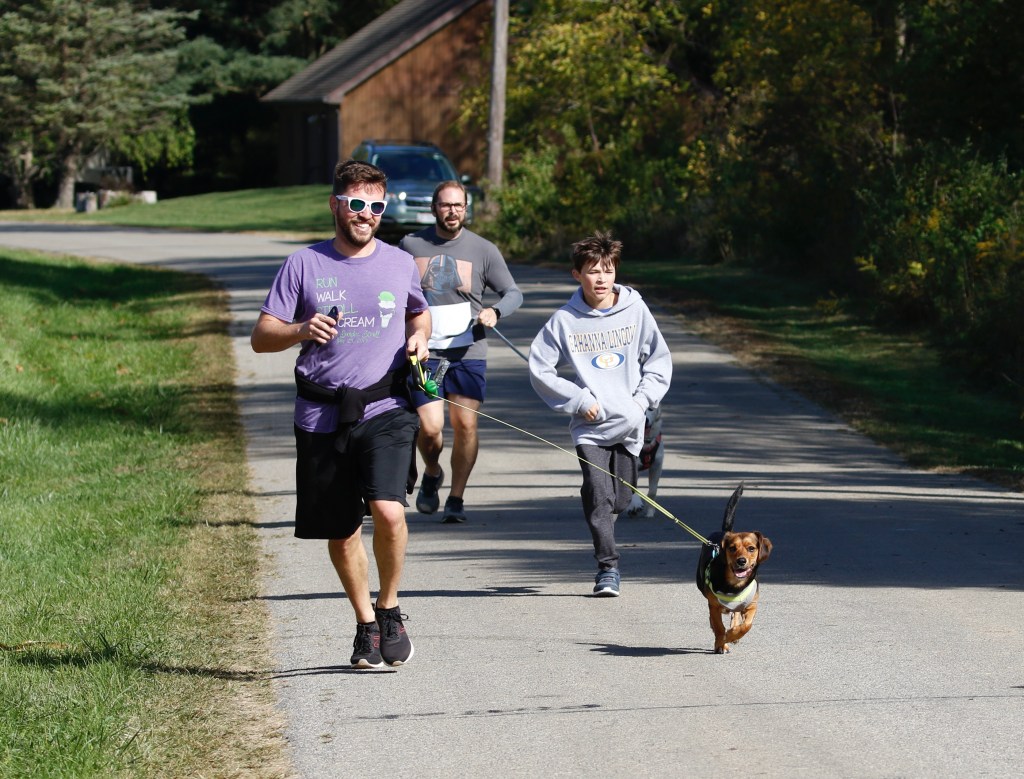
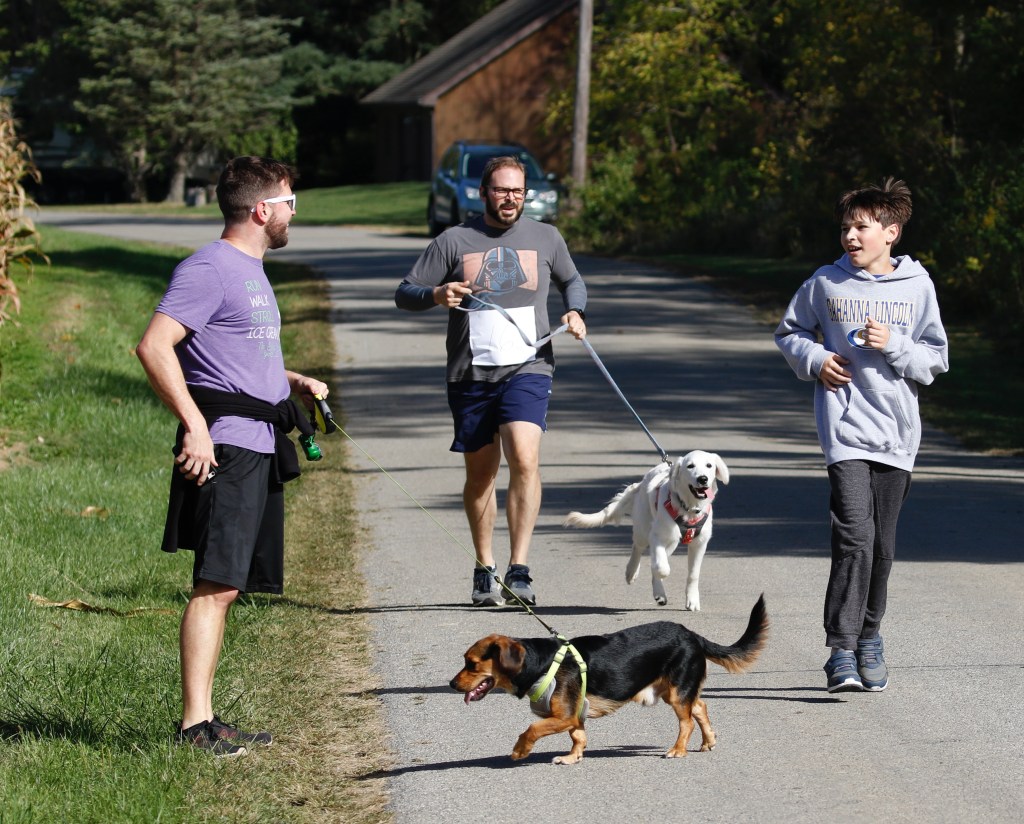
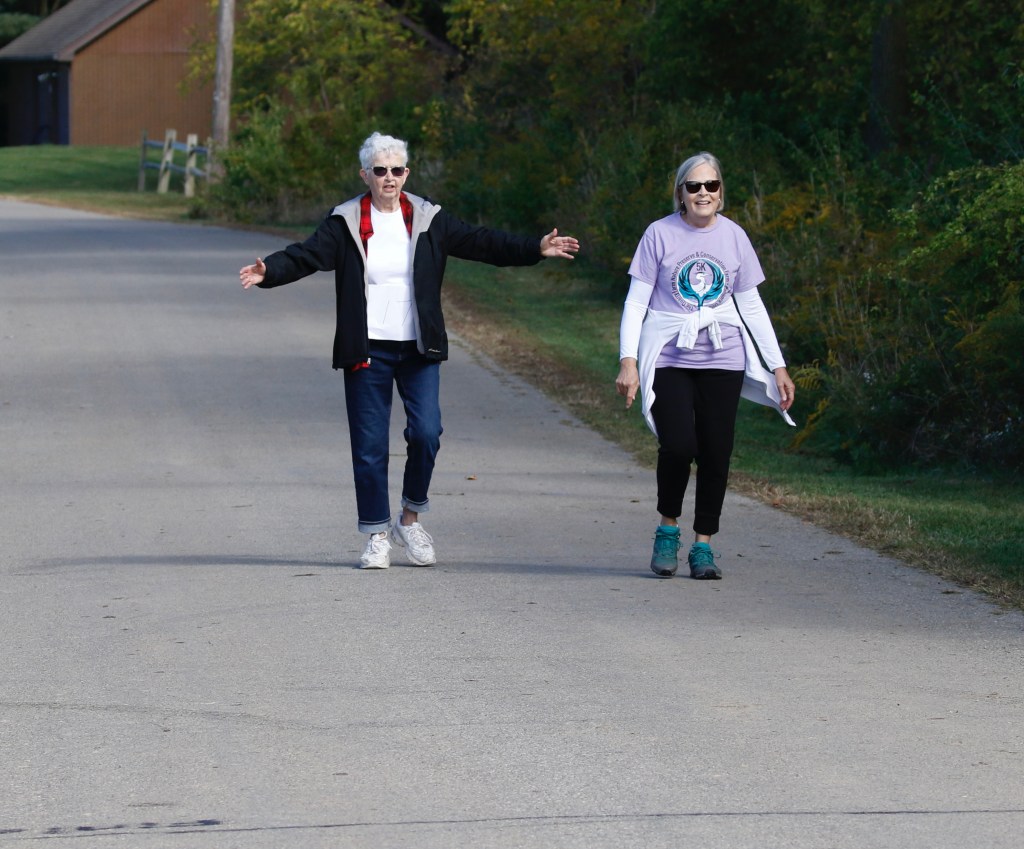
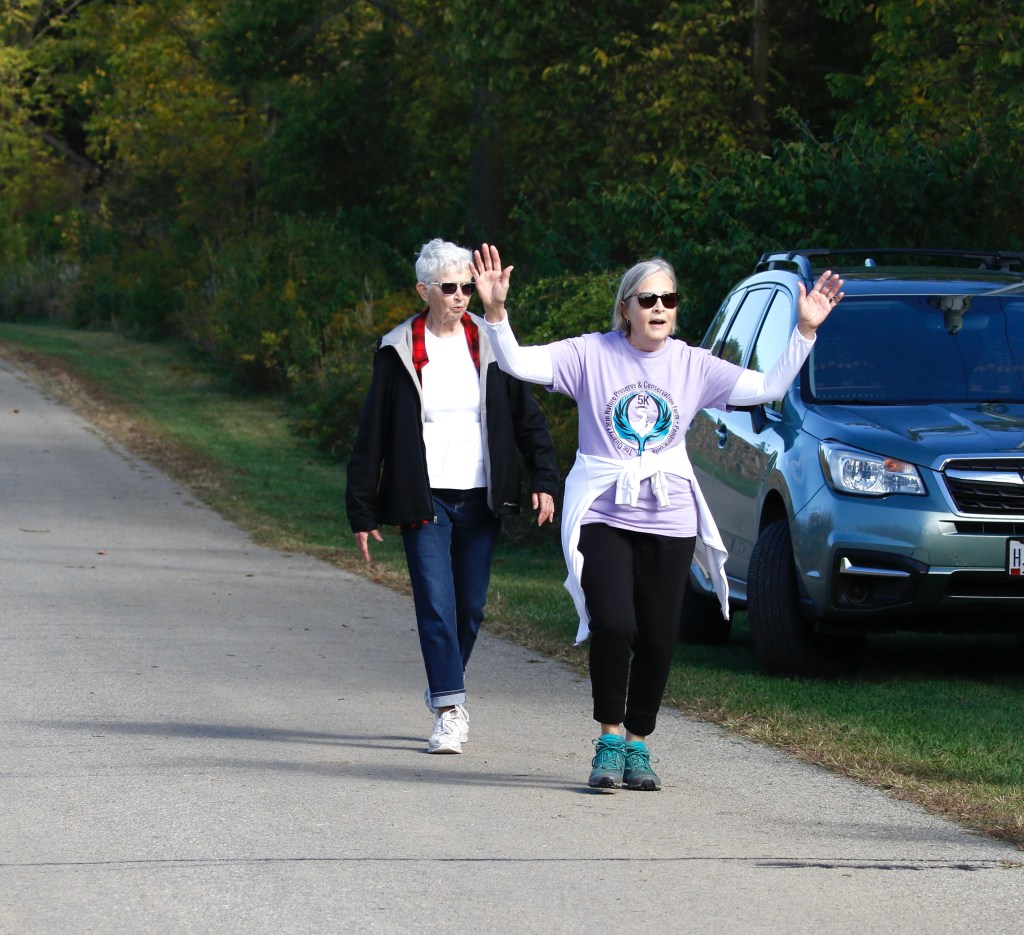
Runners and walkers lined up on the official Rustoleum-painted starting/finish line this past Saturday, all there to support The Quarry Farm by pedestrian-ning along Road 7L and M6. It was chilly in the shade and warm enough in the sun, making for ideal conditions to exercise for a good cause.

Most years, the course is an out-and-back to the Seitz homestead on Road M-7. This year’s heavy tomato truck traffic led to a reroute, with participants trekking .5 mile south on 7-L and back to continue north and east on M-6 to a turnaround at Bridenbaugh’s Schoolhouse.

Chad Carroll and Julie Klausing took home the gold (Quarry Farm mugs created by artist Brandon Knott) in the “Run” category. Jay Shapiro and Lois Seitz came in first for the “Walk” group (not the first time for either of these quick-steppers.) Deb Weston and her enviable telephoto lens provided photographic evidence of this year’s event. She even captured and shared images of avian observers and a brilliant, rare fire rainbow that flared over the farm animal sanctuary.

The Bright Lights of Early Autumn

Click to download

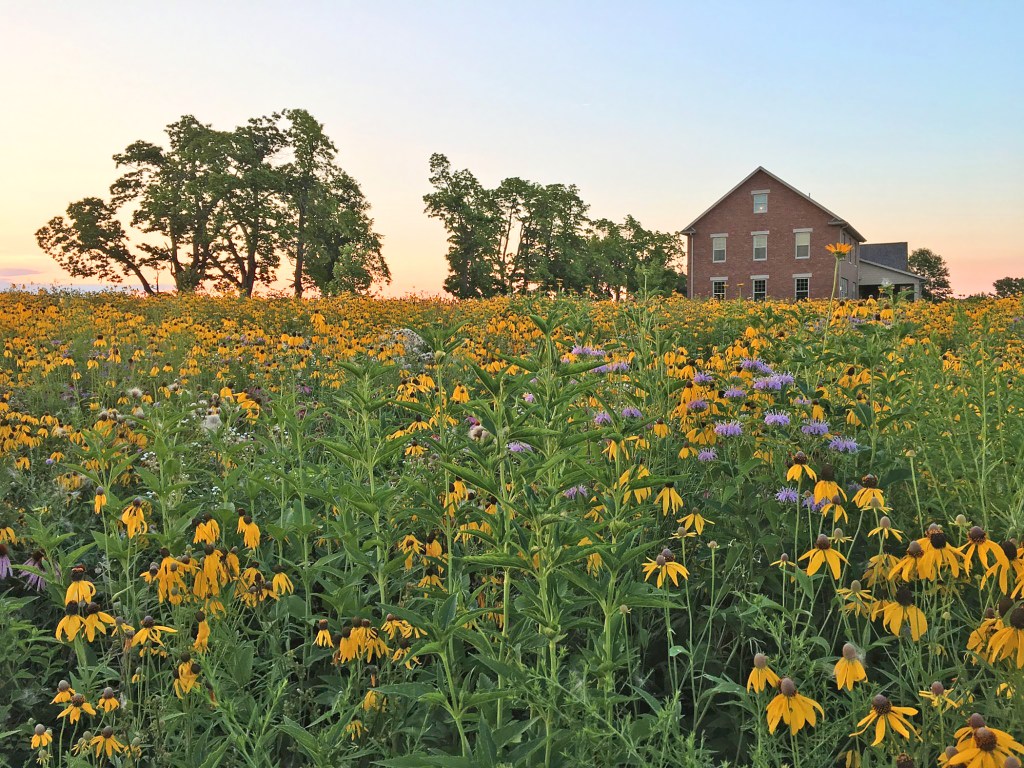
By September and October, most of the white, blue, pink and purple wildflowers have faded from the landscape, but our byways glow into early autumn with the bright yellows and golds of what we might refer to simply as “pretty yellow flowers.” Let’s give a respectful nod to four of those cheery wildflowers—Goldenrod, False Sunflower, Jerusalem Artichoke, and Sneezeweed—and get to know them personally.


The four have much in common. All four are members of the huge family Asteraceae, also Compositae; their flower petals grow daisy-like in rays around a center. The centers are typically a cluster of many tiny florets. All four attract pollinators (bees, butterflies, and hummingbirds), so they are important economically and ecologically. Deer avoid them. All are perennial, and cultivars have become popular garden flowers. While they share family traits, their differences can help us distinguish them.


Goldenrod, a common name for Solidago, may be the easiest to identify. More than 100 species grow wild in moist soil in North America, but a few have become popular in gardens. The plant heights average three to five feet. The flower heads are fluffy plumes or fans densely covered by tiny florets. Because they produce almost no pollen, they can’t be blamed for allergies. They are not poisonous to humans; in fact, parts are edible and can have medicinal uses. Because they are native, they are not termed invasive, but they can spread aggressively by seeds and roots.


False Sunflower, one common name for heliopsis helianthoides, is a native that can be mistaken for a daisy. It prefers sun and can grow in a wide range of soil, preferably on roadsides, near wooded areas and in prairies. The plants reach three to six feet and bear flowers with yellow (the common color here) to orange rays that may droop slightly around a soft brown center, earning them the nickname Ox-Eye Daisy. They are neither invasive nor toxic.


Jerusalem Artichoke, or helianthus tuberosus, is not an artichoke but rather a species of sunflower native to central North America. The plants can grow from five to nine feet tall, bearing bright yellow, daisy-like flowers with sturdier petals than False Sunflower or Sneezeweed. Its elongated tubers (fleshy underground stems) vary in color from light brown to white, red or purple and have a nutty flavor. They are highly nutritious and can be eaten, either raw or cooked. In fact, tasty-looking recipes can be found online. The plant was once a widely cultivated root vegetable crop that is regaining popularity.


Sneezeweed, or helenium autumnale, is so called because its leaves were once dried and used to make snuff. The plants prefer moist soil and are at home along streams and wetlands. They grow from two to five feet tall and bear pale yellow to orange flowers with fan-shaped drooping rays. It is sometimes called Wingstem because of the gill-like “wings” running the length of the stems. Although attractive to pollinators, it is poisonous (in large amounts) to humans and livestock.


One final note: all four of these “pretty yellow flowers” look lovely in floral arrangements.

—The Gardener at The Quarry Farm

birds and burr-d

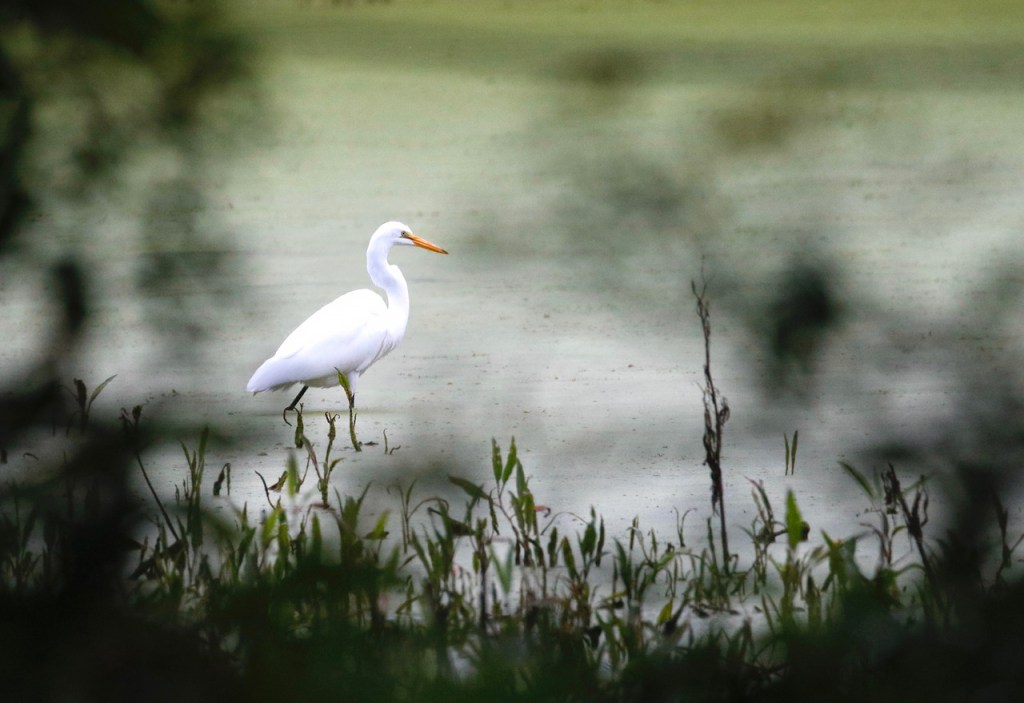
The birding team of David Smith and Deb Weston are stepping up their Quarry Farm game again in anticipation of fall migration. As we watered and fed the farm animal sanctuary residents, Deb’s car passed the front gate sometime around 7 this morning. Shortly thereafter, a large heron-ish bird flew up from the nature preserve and overhead. To say that it flapped its great wings in its journey southwest just doesn’t sound like the correct adverb for such a graceful movement.

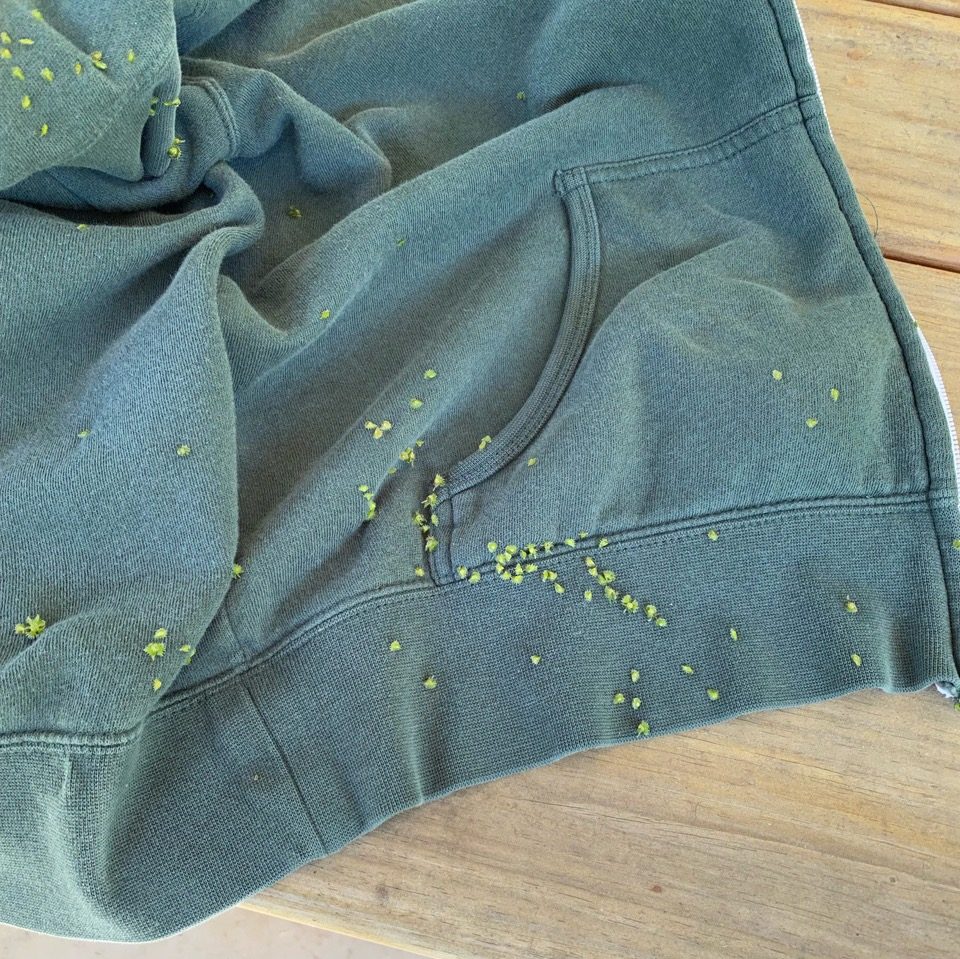
Stick-tights hitched a ride with Birder David.

“So jazzed to see the Great Egret,” texted Deb from the trails. She said that David and his wife Julie have seen them in Putnam County. “But it was super cool to see it in the quarry actively hunting—until it saw us.”

There was a Great Blue Heron stalking the quarry wetland, not far from the egret, and one lone female Wood Duck.  They heard but didn’t see the Red-breasted Nuthatch and were pretty certain that they saw an Ovenbird but neither of them felt confident enough to add it to today’s ebird list. Today’s list also included nine warblers: Black and White, Tennessee, Nashville, Common Yellowthroat, American Redstart, Northern Parula, Magnolia, Bay-breasted and Blackburnian.  

“Our record for fall from last year is 42 and that’s what we got today,” Deb added.  

The Quarry Farm tally on ebird is now at 138 species.

As Deb waits in the leafy shadows for landing birds, she trains her hefty camera on insects. Gerald O. Coburn would be thrilled. He photographed and documented most of the dragonfly and butterfly species noted here, as well as many birds. Deb told me last week that she would have really liked my dad. I told her that I think the admiration would be mutual. Dad would have seen her car pass by his own driveway, fired up his ATV and firmly directed her to grab her camera and hop on, wasting no time to see everything that sought warmth and breakfast with the sunrise.

ACE Day 2022

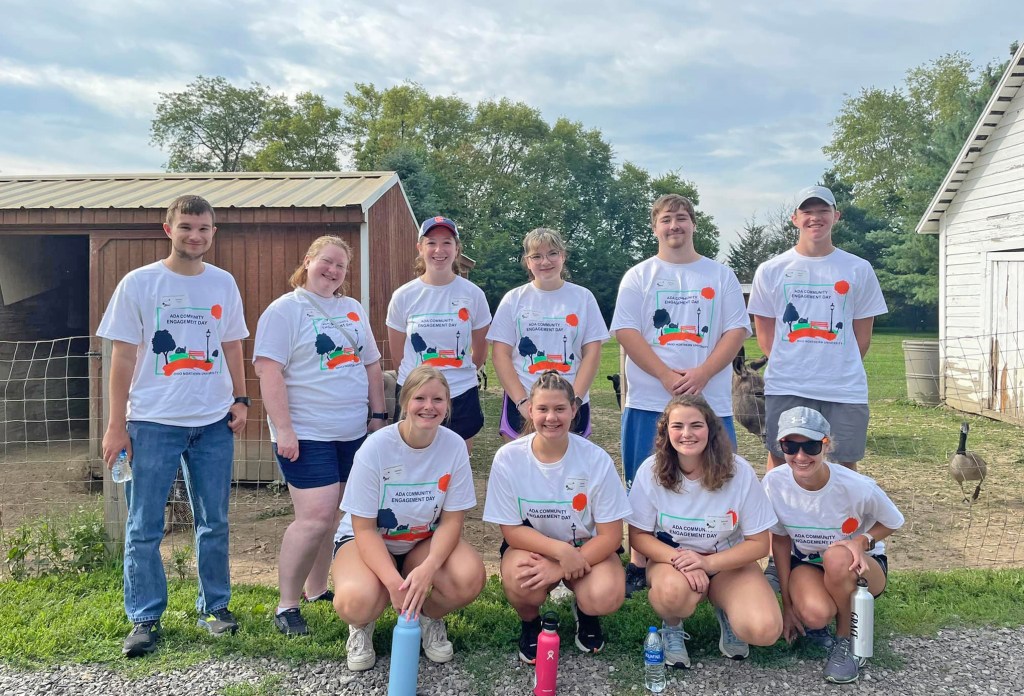
The last time students from Ohio Northern University (ONU) spent part of Ada Community Engagement Day, or ACE Day, at The Quarry Farm, COVID-19 wasn’t a household word. The word ‘pandemic’ prompted grainy images of people wearing masks and schools, theaters and businesses shuttered worldwide in 1918 because of Spanish flu. 

A stunning Red-spotted Purple butterfly sipped in the nature preserve this week. (Photo by Deb Weston)

Super Dave Seitz hadn’t yet taken on invasive bush honeysuckle in the nature preserve. The first incoming ONU freshman who volunteered here as part of the ACE Day tradition lopped and hauled honeysuckle from the western bank of Cranberry Run. Then Dave began his frequent pilgrimages from Columbus and rocketed our invasive-clearing program 10 years ahead of schedule. So when the ONU ACE Day committee asked if we had any projects for participants of their 10th school year—one with a return-to-normal beginning—we jumped at the chance to host a building-painting crew.

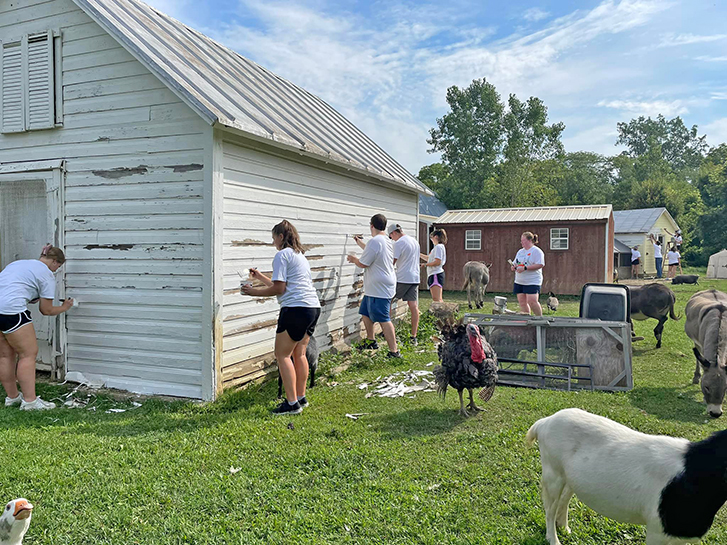
Two of the farm animal sanctuary outbuildings are over 100 years old. They are solidly framed structures that were donated to us as long as we moved them from their original sites. In their current function for storage and henhouse, they are subject to lots of perching, head-and-tail scratches, snout rubs, and general body flopping (often with a fresh splash from a mud wallowing.) They both needed a good coat of best paint to prolong their structural integrity and general all-around sightliness.

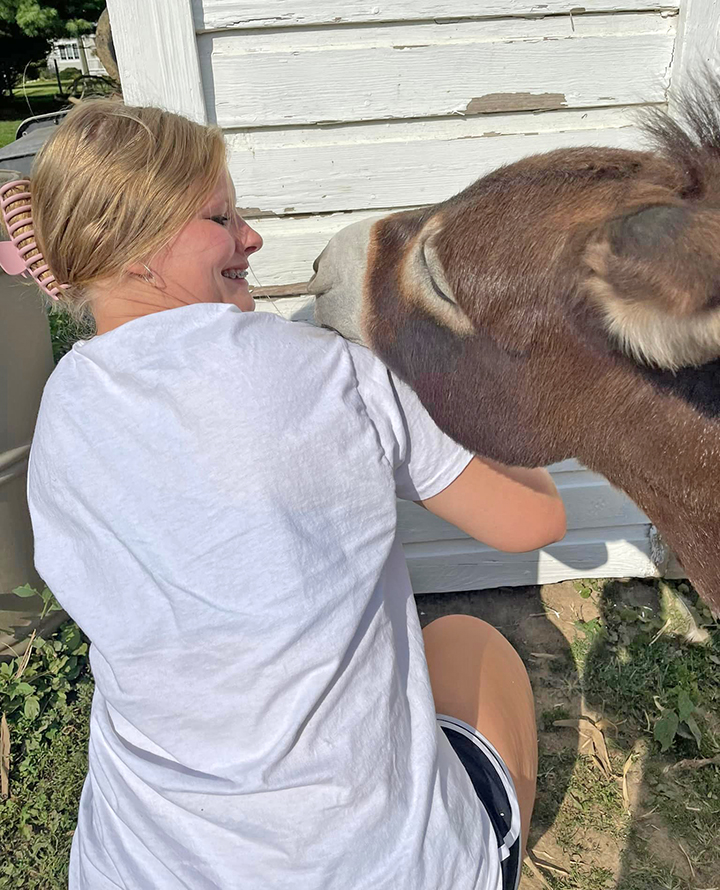
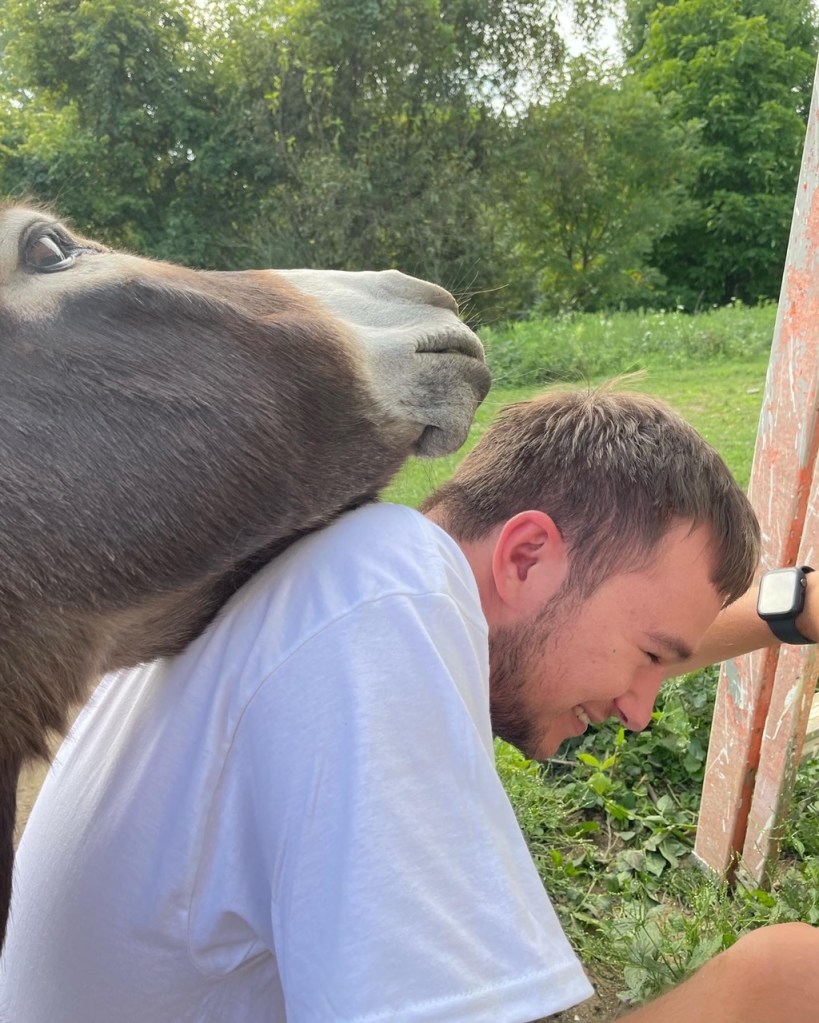
Ten people came and went to work. The morning was coolish and sunny so the animals were ever-present. Paint cans and brushes were lofted to keep curious bills, beaks and muzzles out. Silkie the Donkey insisted on being a third wheel—rather, a second head atop a shoulder—and had to be encouraged to move along. The Canada geese wrestled with paint can lids and drips. Bruce the Bronze Turkey kept one young man very close company by planting himself directly behind his knees. 

“He’s like a shadow or a ghost,” said one person. I explained that Bruce had claimed a new human friend and was making sure that turkeys Edgar and Bernard knew it.

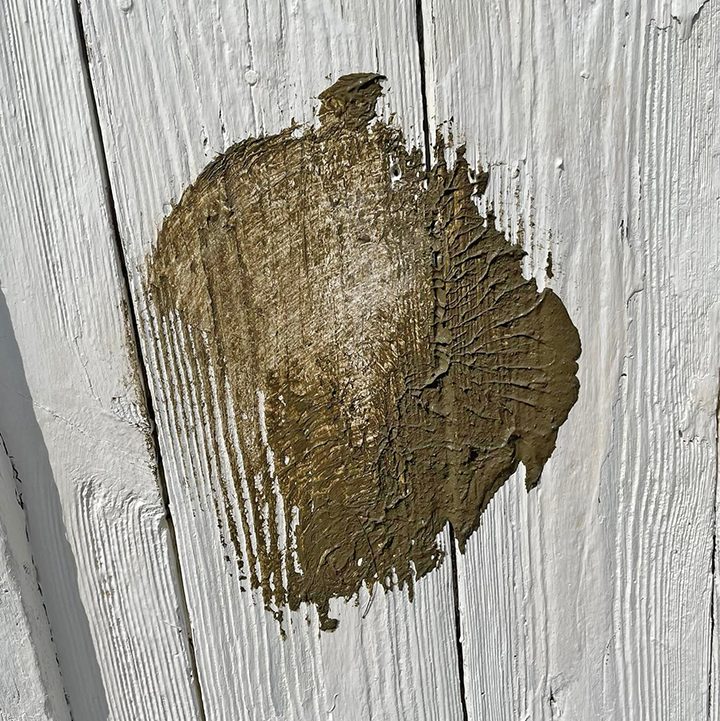
In just an hour and a half, both buildings were covered except for the highest peaks and one big pig-sized full-bodied mud rub and a snout print. One person was surprised that goats weren’t “more involved”. Other than a few shirt-sleeve nibbles, the bovids were interested but unaffected by the whole procedure.

“This was the best site,” commented the ONU faculty who worked alongside the Polar Bear undergrads. “After a long week, ‘Painting with Animals’ was very therapeutic.”

Storm clouds gathered and spilled an hour after the ONU van drove south down 7L. The rain was not quite strong enough to wash Nemo’s nose-and-thigh art from the buildings, but there’s a solid slather of paint beneath to seal the old hardwood for good long time.

A big heart that could be

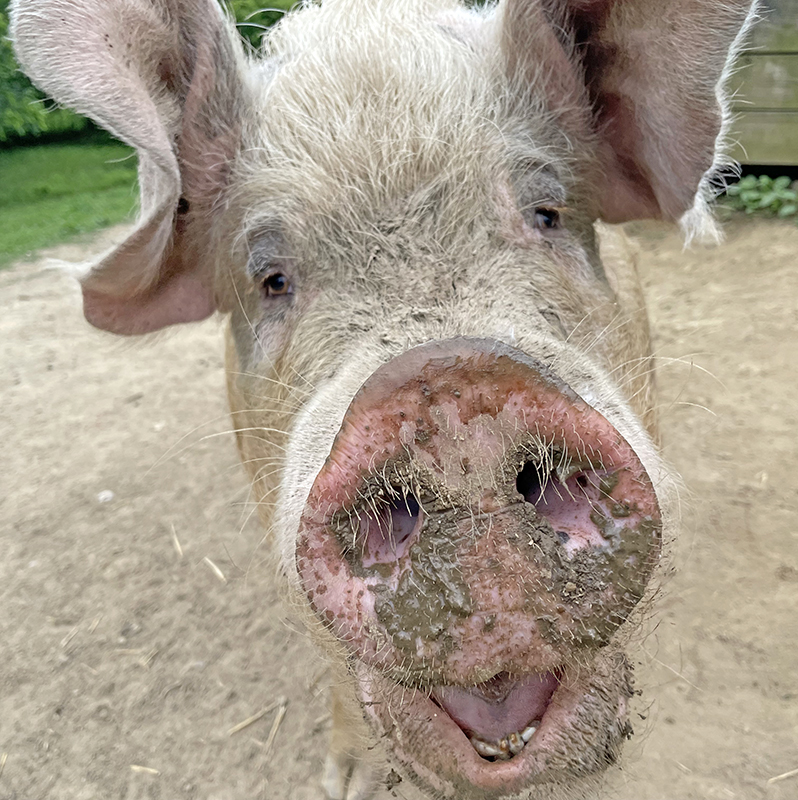
Nemo the Pig has been featured in this space before. She came to us in 2015 as a tiny shoat. She was scraped, bruised and broken from a fall onto I-270 from a transport truck in Columbus. A kind, determined person rescued her, nursed the piglet’s wounds and brought her to us. For a couple of weeks, we socialized little Nemo by carrying her around to programs in a baby sling. She housebroke easily, although she outgrew the house and was unable to turn around in hallways. At six months of age, the age that young pigs are typically “finished” and loaded into a crowded transport to be “processed,” Nemo was spayed at Ohio State University. For the first few years of her life, she was one of the first farm animal sanctuary residents to greet visitors.

Click to download your copy

“I’ve never seen a pig that big,” everyone still says when they see her for the first time. There’s a reason that they haven’t.

Nemo excavated a mud wallow that is so deep and wide that the geese and ducks swim in it when rainwater fills it to the brim. She made friends with Carlton the Pot-bellied Pig, a buddy system that continues to this day. They allow the other pot-bellied pigs, the geese, ducks and the occasional chicken to use their mud wallow.

Seven years on, visitors don’t often see Nemo, especially when the sun is high and the air is hot. Children love to see her, but she doesn’t often run to greet them, even when we mention the word “apple.” I did coax her out to see third-grade students from Ottawa Elementary in May. She walked out of her favorite building, stared across the pasture at the kids waving at the fence, then turned and walked away to her muddy spa. “Not today,” she seemed to say. I explained to the students that, while they could shed their coats and put on sunscreen, Nemo can only protect her fair skin and floppy ears with sparse, fair pig bristles, cool mud and shade.

For those lucky enough to visit on a cool day, Nemo allows a soft jowl rub. She sighs the deep, rumbling sigh that one would expect to emanate from a body such as hers, closes her blonde lashes and rolls over for a belly pat.

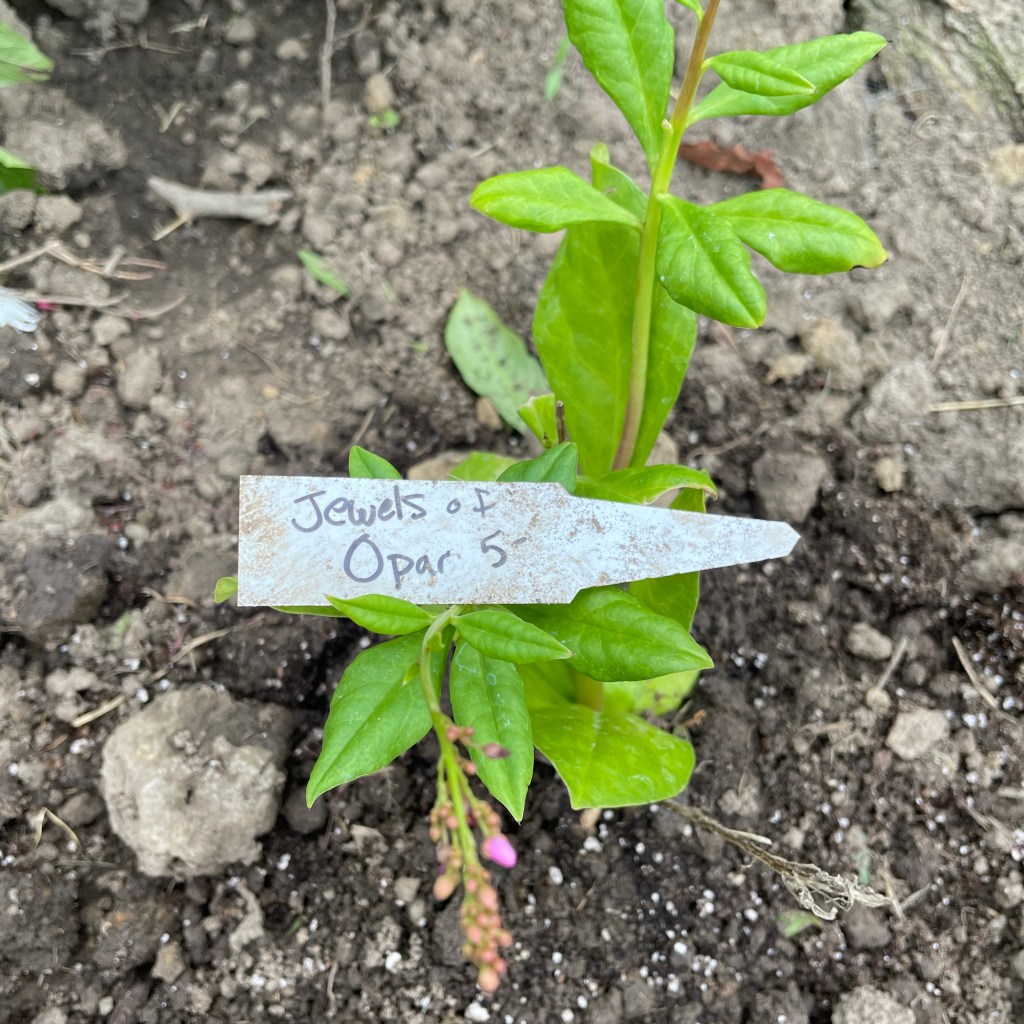
Goats ate the Jewels of Opar

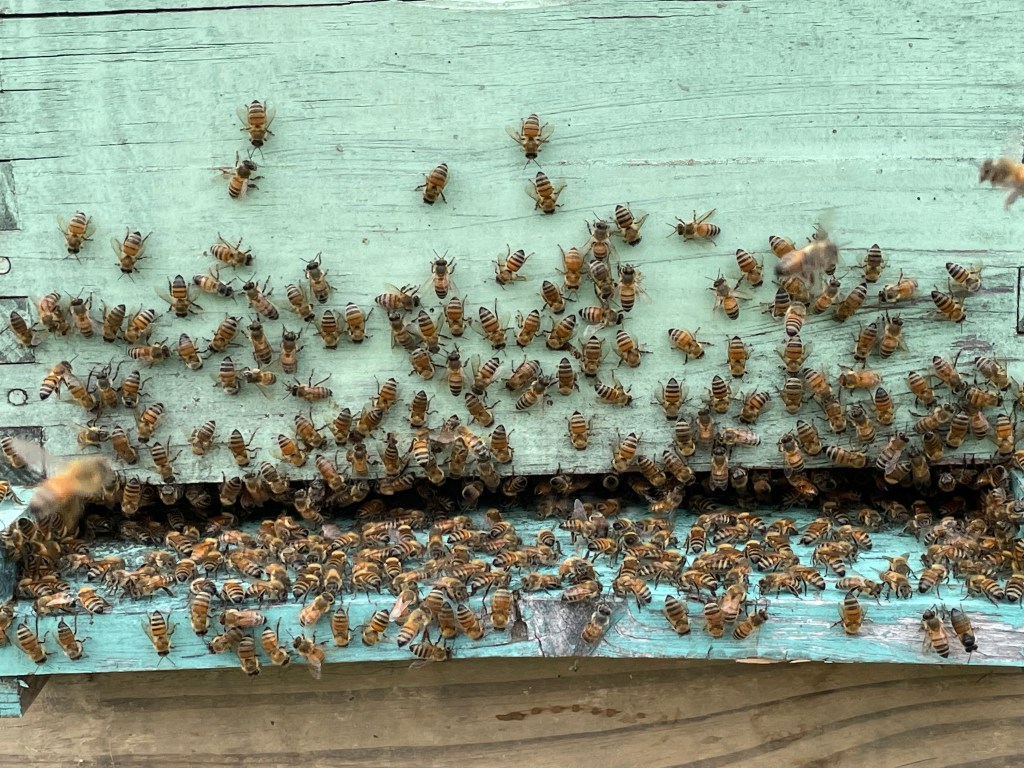
Today was Spring Family Day on The Quarry Farm. At 1 p.m., the temperature was in the 90s, sending a puddle of honeybees up the side of the north hive to cool…maybe. We are very, very new to beekeeping so I don’t know why they are washboarding backwards and forwards above the hive entrance. But I did learn this week that this inch-by-inch dance is called ”washboarding” and I would do it to cool off outside my hive if I were a honeybee.

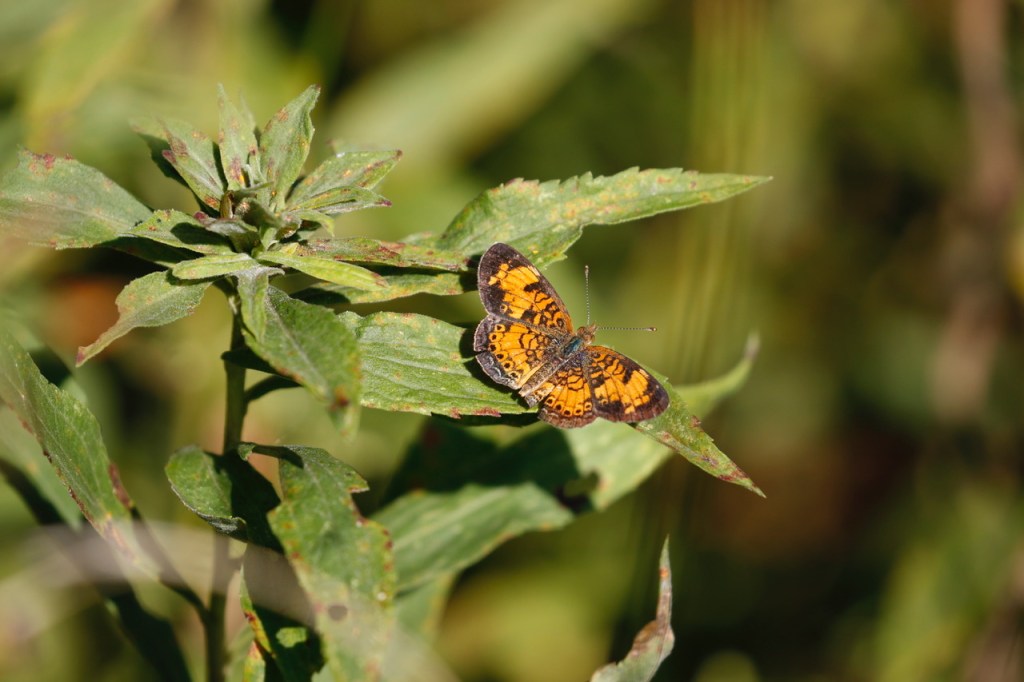
So a little before 1 p.m. the first family arrived. The Rita the Greeter’s table and umbrella was up, ice water and cookies were in the pavilion and “staff” appeared as coolly collected as anyone could be during a Midwest heatwave. Dragonflies swanned in and out of blooming Lizard’s Tongue on the quarry wetland. Pearly Crescent Butterflies flickered orange under Buckeye tree leaves. Nemo cooled in her mud bath and Beatrice emerged from her own spa to visit with her piggy admirers.

“It’s all so peaceful,” someone said.

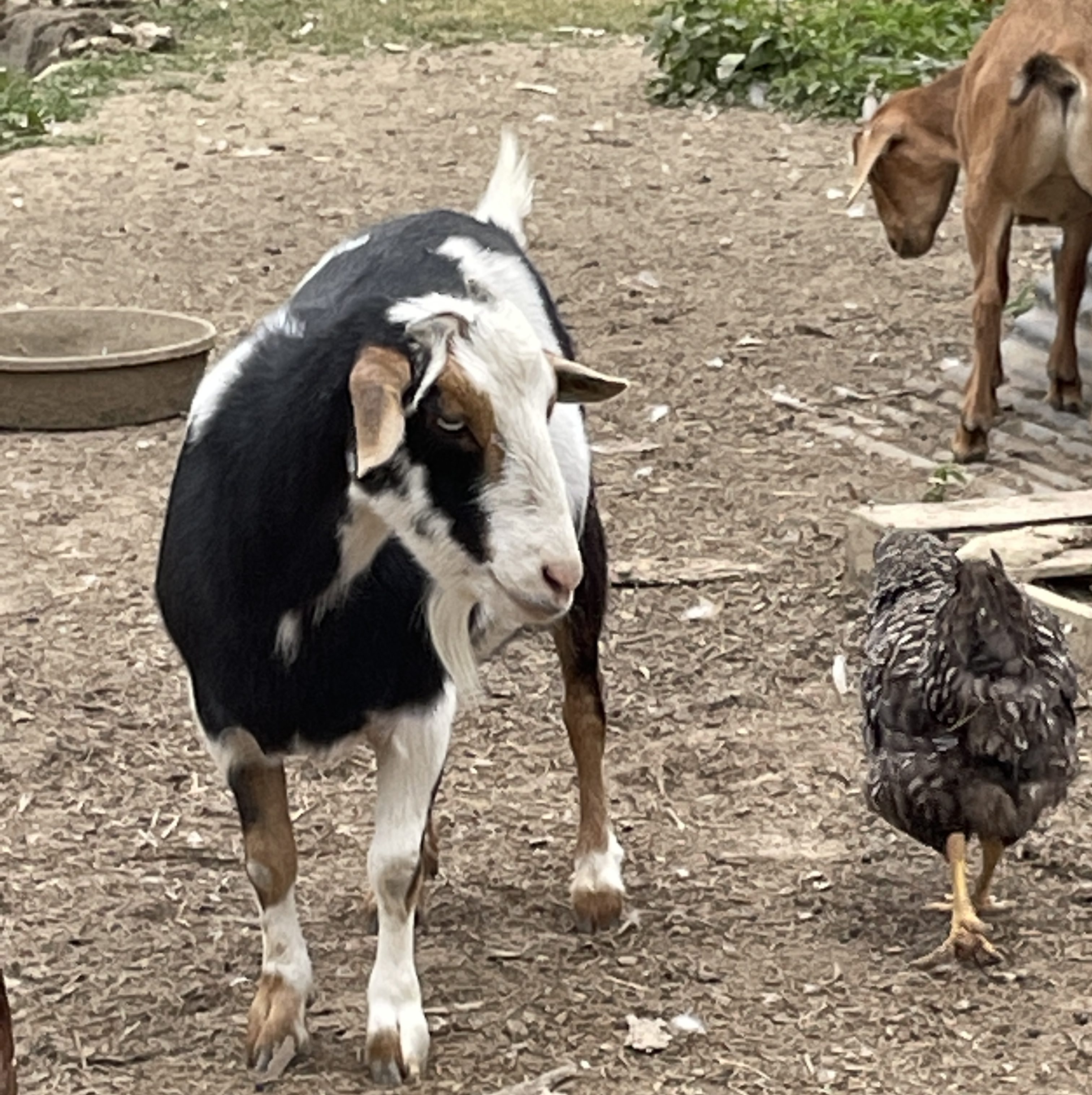
I smiled, making a mental note to take my new plants out of the truck as soon as possible. At 6 a.m. this morning, My Steven saw the donkeys at the front door, Nemo lounging in the flowering herb bed and several goats munching away at the blossoms. I forgot to latch the lower chain on the south gate last night. While Steve sold his bread at the Bluffton Farmer’s Market, I bought new herbs from Ann Boyd’s My Own Backyard.

“Yes it is,” I replied.

Making a Way for Pollinators

Over the years we’ve written in this space about the long-term focus on pollinators at The Quarry Farm and ways our related gardening practices have evolved. We’ve talked about selecting butterfly-friendly plants for our garden at Red Fox Cabin and beyond. We’ve talked about conditions that butterflies, bees, bats and hummingbirds need to survive or that threaten their existence, and we’ve shared photos of some of the beauties that have graced our garden.

Our concern for pollinators really began during the 1990s when Gerald Coburn began photographing and studying the butterflies on The Quarry Farm. As his inventory grew (eventually to around 55), we learned about preferred host and food plants and began choosing plants accordingly. Our plantings of popular annuals and “Perennials of the Year” transitioned to mixed beds of plants and flowers known to support butterflies, bees and hummingbirds. We planted pollinator-friendly native grasses like Indian Grass and Big Bluestem. We put up bee blocks where native bees could lay their eggs. When we learned of the deadly impact of pesticides on butterflies and bees, we stopped using Sevin in our large vegetable garden at the time and became organic gardeners.

Click to download

As reported in previous issues, an exciting new chapter in our history of gardening for pollinators opened five years ago when, as an educational project, the Putnam County Master Gardeners designed and planted a pollinator habitat garden next to Red Fox Cabin. The dedication and hard work of the Master Gardeners have made the site a model in miniature of what a pollinator habitat garden should be—not rigidly structured, mulched and manicured, but purposefully planned, nevertheless. It’s become a diverse riot of plants that offer food and shelter for a stopover or home for an entire life cycle. It’s fenced in and has a handsome gated entrance, decorative hardscaping and informative signage.

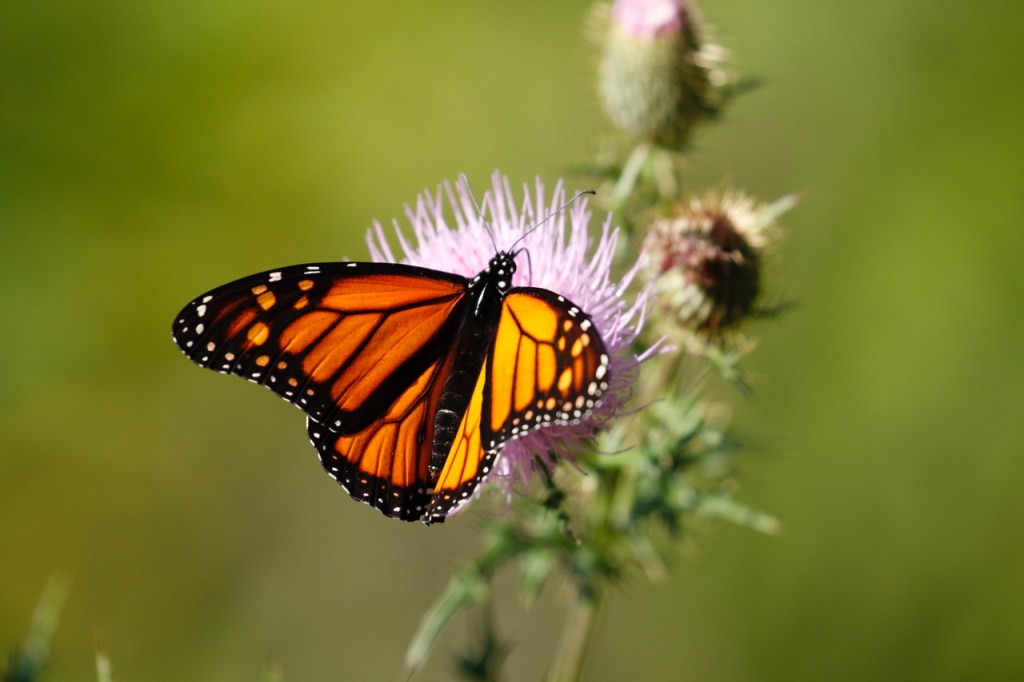
Before the Master Gardeners turned the first shovelful, they studied pollinator issues—who the pollinators are, their vital ecological importance, the features of a pollinator habitat, and devastating environmental challenges to survival, including pesticide use and habitat loss. Because land is increasingly polluted, paved over, robbed of diversity, and otherwise made unsupportive, the distances between food and rest sources may be too great for long-distance migrators—for instance, bats and Monarchs—to survive their journeys.

Some concerned environmentalists have proposed creating pollinator corridors to support migratory pollinators throughout their journeys. The idea is for people living along migratory routes to make a concerted effort to offer habitats with food, water and shelter—even if they’re only a few square feet of garden space—at intervals necessary for life-saving stopovers.

An intriguing “what if?” is this: what if people living along interstates, highways, or even country roads like the one that runs past The Quarry Farm were to join in common cause to learn about pollinator issues and then plant habitat gardens, uncontaminated, big or small, along their “corridors.” Several residents on our country road have already established pollinator gardens and larger habitats. What might happen if we organized, gave our cause a name and spread the word?

—The Gardener at Red Fox Cabin

Herman Pollinator Habitat, Road 7L and Road O, Riley Township

Seeing Sean

We have been, and continue to be, blessed to not just interact with but to actually get to know many beings here on The Quarry Farm. We meet lots of people, learning each time how many are interested in the world around them and how we all can be better stewards of that world. Just about every visit, tour and workshop results in one of us responding to a question with, ” I can’t answer that,” prompting us to find out more about something.

People are great. We can exchange ideas pretty freely. But the beings that remind us most how much we have to learn in this life are the animals. They can readily communicate with each other—even the trees and plants talk—but it’s up to them to learn how to deal with humans.

Over the years, the farm animal sanctuary residents have dealt with us. They come and they go with the end of life. Johnny the Canade Goose who taught us how inquisitive and intelligent these birds are. Audrey the red hen that taught us that even a hot wire slice through a chick’s beak and a fall from a truck along I-75 couldn’t stop her from seeking a cuddle. Smart, determined Gertie the pot-bellied pig who taught us that pigs are cleaner than dogs, cats, and most humans (no they don’t like to live in swill.) Mister Bill the giant goat who absolutely did not like to be told ‘no’ but forgave you for saying it as long as you scritched between his horns. I’m going to stop naming these names because the tears are coming.

Some of them have barely tolerated us, forging kind of a love/hate relationship with us because they haven’t had a choice, what with humans being the most ruthless predator (dang those opposable thumbs that can latch a gate and turn a key.) Two residents come immediately to mind: Bernie the Rooster that attacked me and my red windbreaker and the red lawnmower, and Jacques the Canada Goose who could run across four acres before you could put a fence between you and his bony, flightless wings and bill.

I wouldn’t trade the knowing of either of them for the world.

This morning, when Beatrice’s Belly Rub Girl offered Sean the Virginia Opossum his dried cranberries, greens plus a peanut butter sandwich for winter sustenance, Sean didn’t wake up. Just last Friday, Sean met the entire second grade class at Kalida Elementary School. Sean was always great with people. He didn’t hiss or growl or show his 50 teeth like most Virgina Opossums do to defend themselves from the two-legged predators that could very well mean to eat him. He tolerated all of us quite well, so he was one of our go-to wildlife ambassadors for offsite classroom visits.

Sean and Cousin Lily, 2021

The second graders thought Sean was “adorable.” They couldn’t understand how anyone would go out of their way to hurt his kind. They asked if they could see him walk. He was more interested in sitting, even though he was born with no eyes and had every reason to be afraid of squirrely limbs and echoes in the halls of school.

They asked how old he was. “He’s almost three,” I told them. How long would he live, they wanted to know. “Two to three years,” I said. How old is he in people years? “Very, very old.”

So it wasn’t a huge surprise that Sean fell asleep last night and didn’t wake up. He isn’t the first Virginia Opossum to have served The Quarry Farm as an ambassador of his kind to those who might wish him harm, but he was the one who immediately convinced them that Virginia Opossums have every right to live, under our porches and wherever their nomadic ways take them, in peace.