simple gifts

People never cease to amaze. As a species, well, let’s just say that I often prefer to spend my time in the company of others (chickens being the perennial favorite). As individuals, though, there are so many who shine. I met three such last Wednesday: Becki and Mustaq Ahmed and their granddaughter, Kennedy.

Not this weekend immediately past, but the weekend before, Anne and I set up at the Bluffton Farmers’ Market on behalf of The Quarry Farm. We really didn’t have anything much to sell – a basket of tomatoes, a dozen glass jars of jelly, some notecards – but farmers’ markets are great places to get the message out, to do a little self-promotion. And with the second annual Acoustic Night coming up (Saturday, September 13, from 6 pm to whenever), it seemed like a good time to make a personal appearance, be a bit more high profile. Becki and Kennedy were wandering through the market when they saw our table and picked up a copy of the latest newsletter.

On Tuesday, Becki called and asked if we’d like some of her “small and knotty” apples. She’d seen that we ask for apples in our wish list and hoped that hers would prove acceptable. From my experience, I assured her, goats and pigs and donkeys and chickens and ducks and geese and turkeys aren’t the most discriminating of gourmands; so, yes, please, apples.

The Ahmeds and their apples

She and her family came out the next afternoon with two large containers full of fruit. We off-loaded the apples, enough to fill a large, red wheelbarrow typically used to transport hay and straw. It was an excessively humid day, as many have been of late; while there was precipitation, it was more of a sky-dripping, really, than rain. The wet had most everybody under cover: the pygmy and Nigerian goats under the pines, the turkeys and chickens at the base of the crab tree and under what remains of the forsythia, the pigs in their various shelters. The ducks and geese were gamboling about, too overjoyed with the quality of the day to bother with anything as mundane as visitors.

Elora

While we waited for the sanctuary residents to recognize their windfall, Kennedy, with Becki in tow, set out to deliver the good news and meet some of those about to benefit from their gift. Mustaq tagged along behind, photographing and filming their interactions.

078

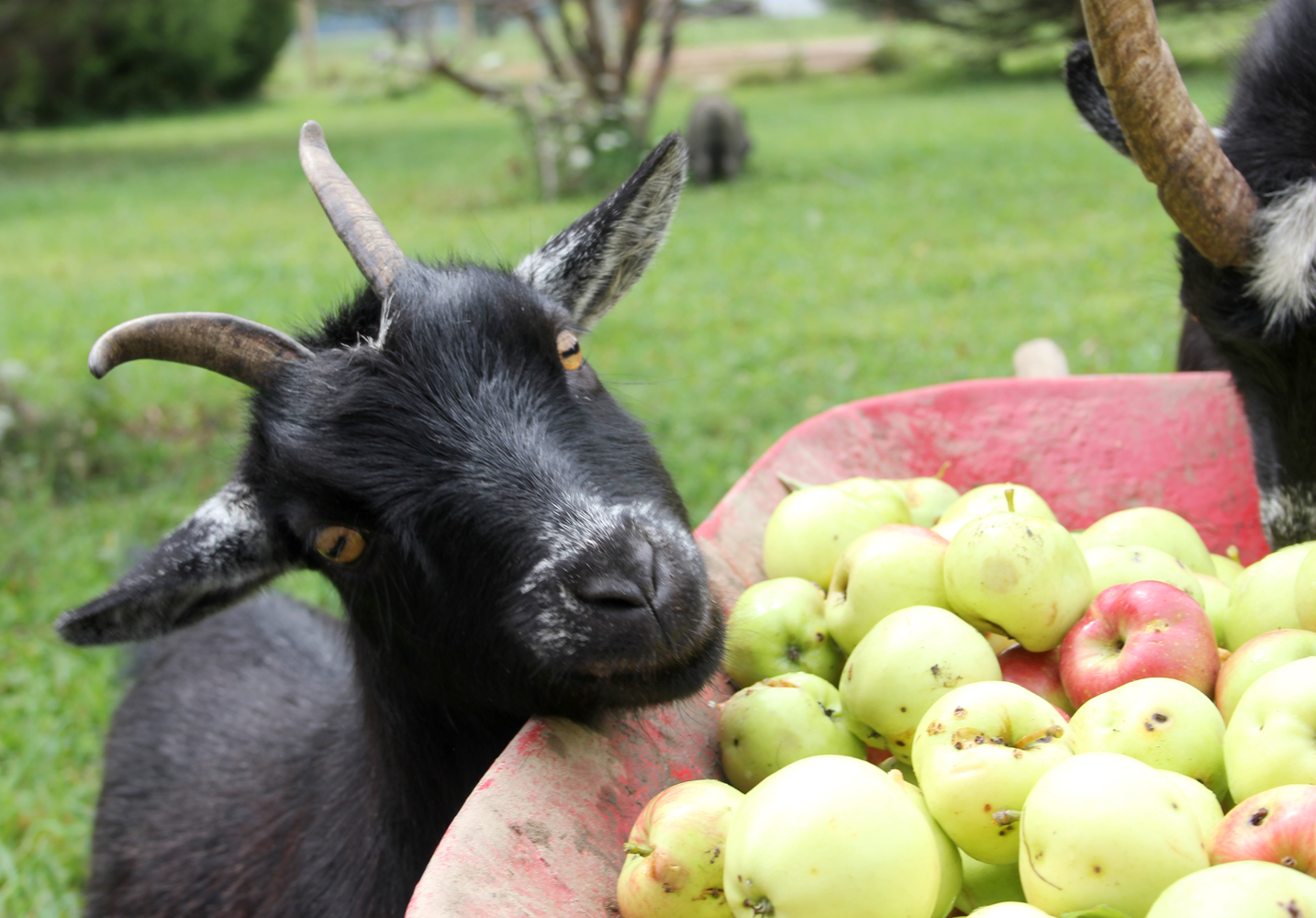
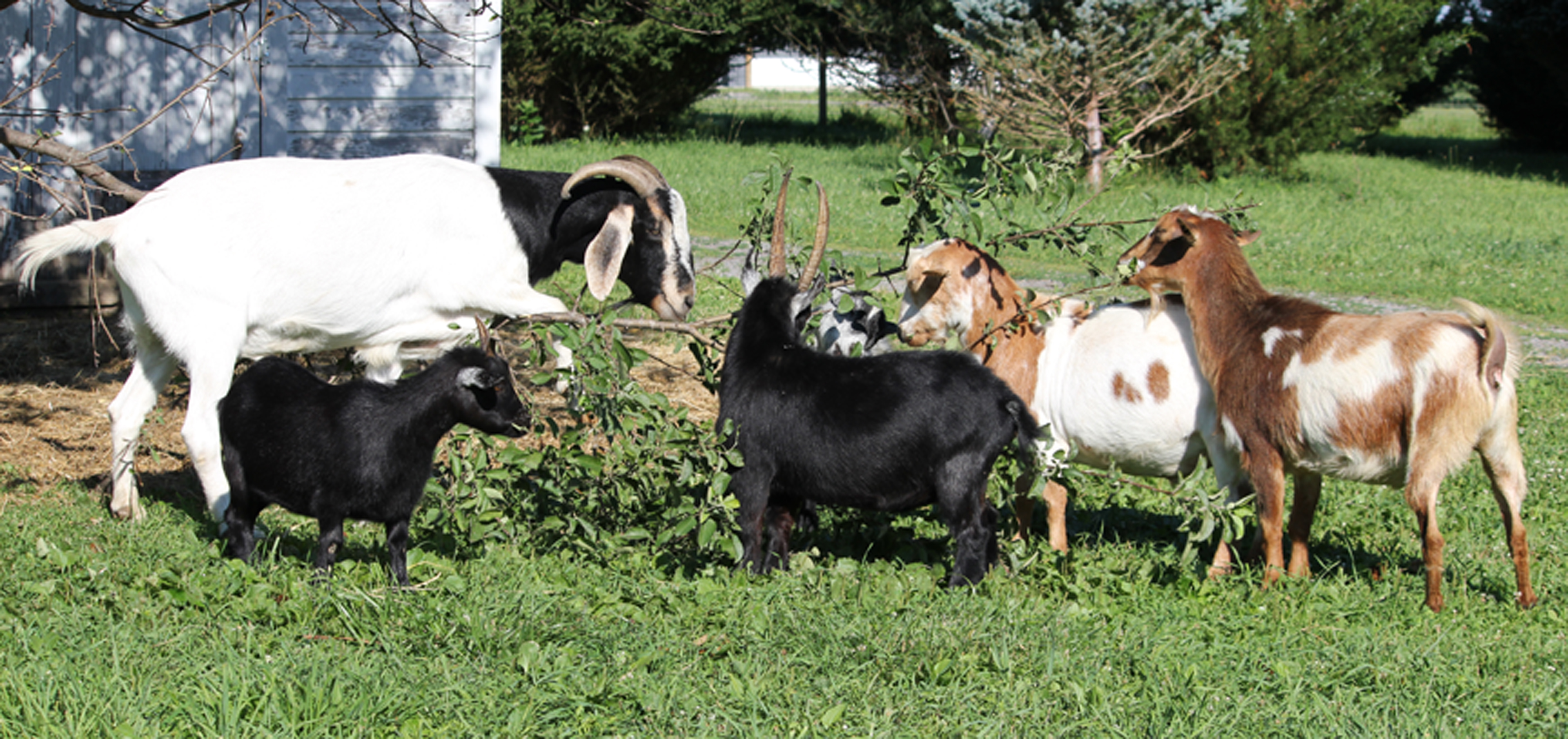
Humperdink and AndiThe giving roosterMister Bill, a recently arrived Boer goat, was the first to discover the largesse. He set to with a will, scattering bits of apple and not-so-bits of apple in a wide arc before him. The geese and the ducks discovered the bits, which alerted the chickens and the turkeys, and they tucked in. The pygmy goats followed the Ahmeds and Kennedy to the feast, where they stood on their hind legs, front feet braced on the edge of the barrow, and bobbed for apples. The three pot-bellied pigs rolled up next (three hours later, you could have almost literally rolled them away). Finally, the two Nigerian dwarf goats and the miniature donkey caught wind of the event and made their way over. It wasn’t long before the wheelbarrow was on its side, the apples spilled across the ground, allowing everybody easy access and laying waste to the old expression, “Don’t upset the apple cart.” All in all, a most wonderful day.

Buddy and company

Thank you for that, Becki and Mustaq and Kennedy. From the bottom of our hearts, thank you.


bending the rules

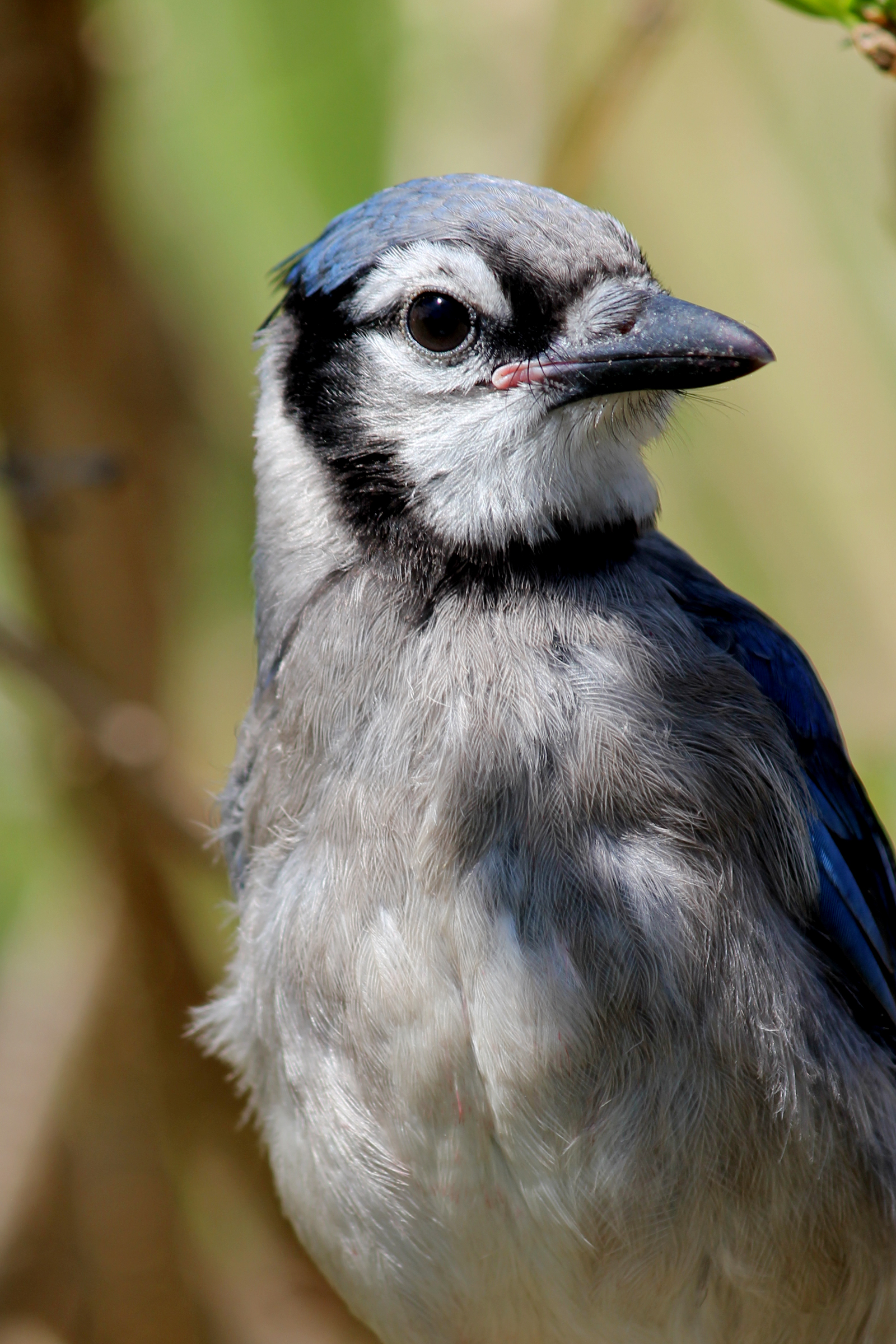
Earlier this week, we received a call from a friend of ours, Natalie, at Nature’s Nursery Center for Wildlife Rehabilitation and Conservation Education. It was, she informed us, time for a release, something that we’re always up for. So Nat came down with four Virginia opossums, a woodcock and a juvenile blue jay.

The release of the opossums went off without a hitch (though one did cling to the top of my shoe and hiss at me for all he was worth before finally scrambling off toward Cranberry Run). The woodcock’s release was equally uneventful, but exciting, even so. We regularly see and, more often, hear them here in the spring. But, to the best of my knowledge, this is the first time we’ve released one at The Quarry Farm.

The blue jay, on the other hand…

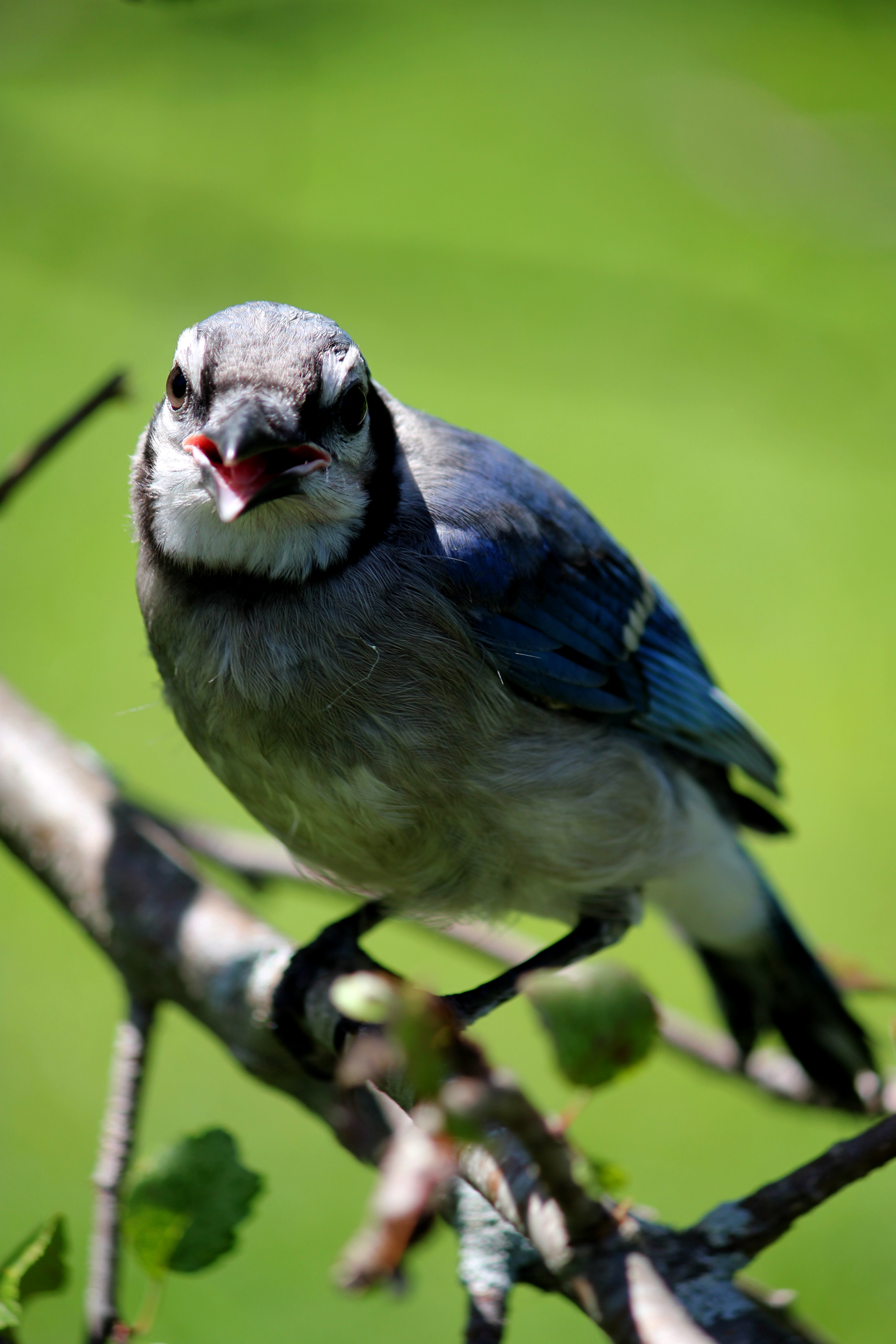
jay bird 3A release, in most cases, is a relatively simple affair: you transport the animal to a suitable location, open the door of whatever is containing the animal, the animal exits its containment and then, ideally, it has the whole of the world to explore,  or at least as much of it as it can reach. It is free, beholden to and dependent on no one and nothing. The jay nearly made it. Nearly. He was brought here, the door was opened, he flew out and…he stayed.

Blue jays are corvids, cousins to crows and ravens, and like their cousins, they’re complex, intelligent birds. They’re also communal, living in extended family groups in the wild. Both of these factors, their intelligence and their sense of community, help them to survive Out There. Both of these factors also make them easy to imprint, particularly when they’re raised alone, as this jay was. With no family to turn to for help, he stays in the only community he’s ever had, with the only company he’s ever known: people.

We had the usual concerns when we released him and began the process of moving him toward self-sufficiency, predation being at the top of the list. Blue jays are slow fliers and as such, easy pickings. Along with a number of cats that treat The Quarry Farm like their own private larder, there are the wild things that prey on jays: raccoons and Cooper’s hawks and screech owls, primarily, but weasels and even the blue jay’s cousins, the crows, as well. We’re even a little concerned about the chickens; a few of the Jersey giants have developed some unusual feeding habits…but that’s a different story for a different day.

What we didn’t see coming, though, what has proven to be this jay’s greatest challenge, are the cedar waxwings.

calling waxwing

accusing waxwingThey found him nearly right away, the waxwings, and they’ve kept an eye on him, and occasionally a beak or talon, ever since.  When one spots the jay in the open, it will call the others with short trills, glaring all the while. They harass him in groups of two or three or four. It’s startling to watch. Where jays are slow and somewhat awkward fliers, waxwings are sleek and fast and the coordination that they exhibit as a flock is nearly military in its precision. But the jay is smart and takes cover in the dense foliage of apple or coffee trees, hugging the trunk and keeping branches between him and his attackers. Which is not to say that they don’t occasionally get to him, that he doesn’t sometimes need help, protection. Three pinpoint spots of blood on his neck and face tell tales of brief melees that haven’t gone his way. So I watch, now, a little more closely and step in when the odds are too dramatically out of his favor. Either I drive them off, or he comes to me, alighting on my shoulder and hiding in my admittedly thinning hair.

hiding jay

This is where the gray area of my participation in this wild thing’s life has the potential to turn black. Because it’s beguiling, this trust he shows in me, this faith. When he sits on my shoulder, when he tucks his head behind my ear, I am, in some small way, connecting with the heroes I read about as a boy. Jean Craig Shepherd’s Sam Gribley and the peregrine falcon, Frightful. Ursula LeGuin’s Ged and his otak companion. Rudyard Kipling’s Mowgli with his family and mentors: Raksha and Bagheera and Baloo.

jay bird 2Even so, contrary to what some conventional wisdom suggests, what some rehabbers would insist on, I refuse to drive him away. And not only do I refuse to drive him off, I encourage him to stay. I call him to me and present him with food and, when necessary, I protect him. I justify my behavior with the knowledge that, if he’d been raised by other jays, the adult birds would still be a part of his life, defending him from predators and competitors and helping him find food. The fundamental truth is that he’s a young juvenile in a strange place with no other means of support. As rationalizations go, this one is exceedingly rational. Because he needs it, support. Without it, his chances for survival drop alarmingly.

Just like Cat Stevens said, “It’s a wild world.”

jay bird


so that’s what you call him…

The Quarry Farm is pleased to introduce Captain John Smith.

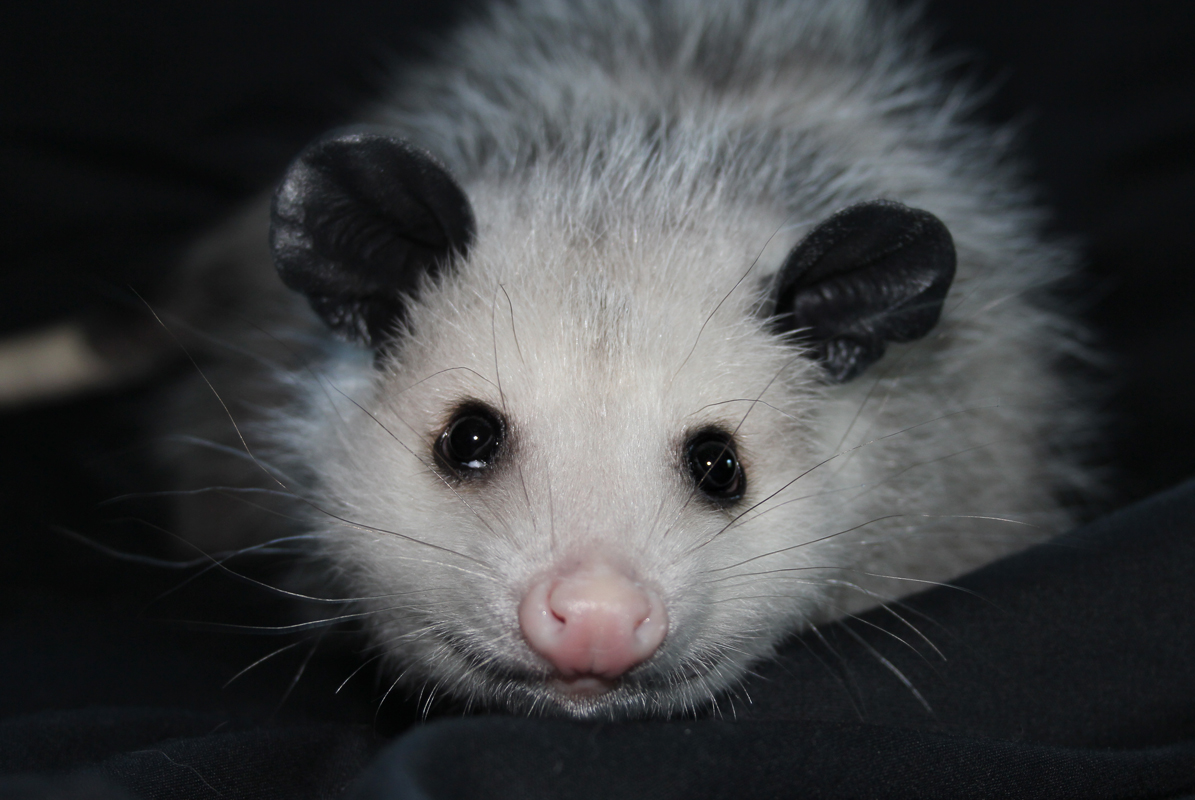
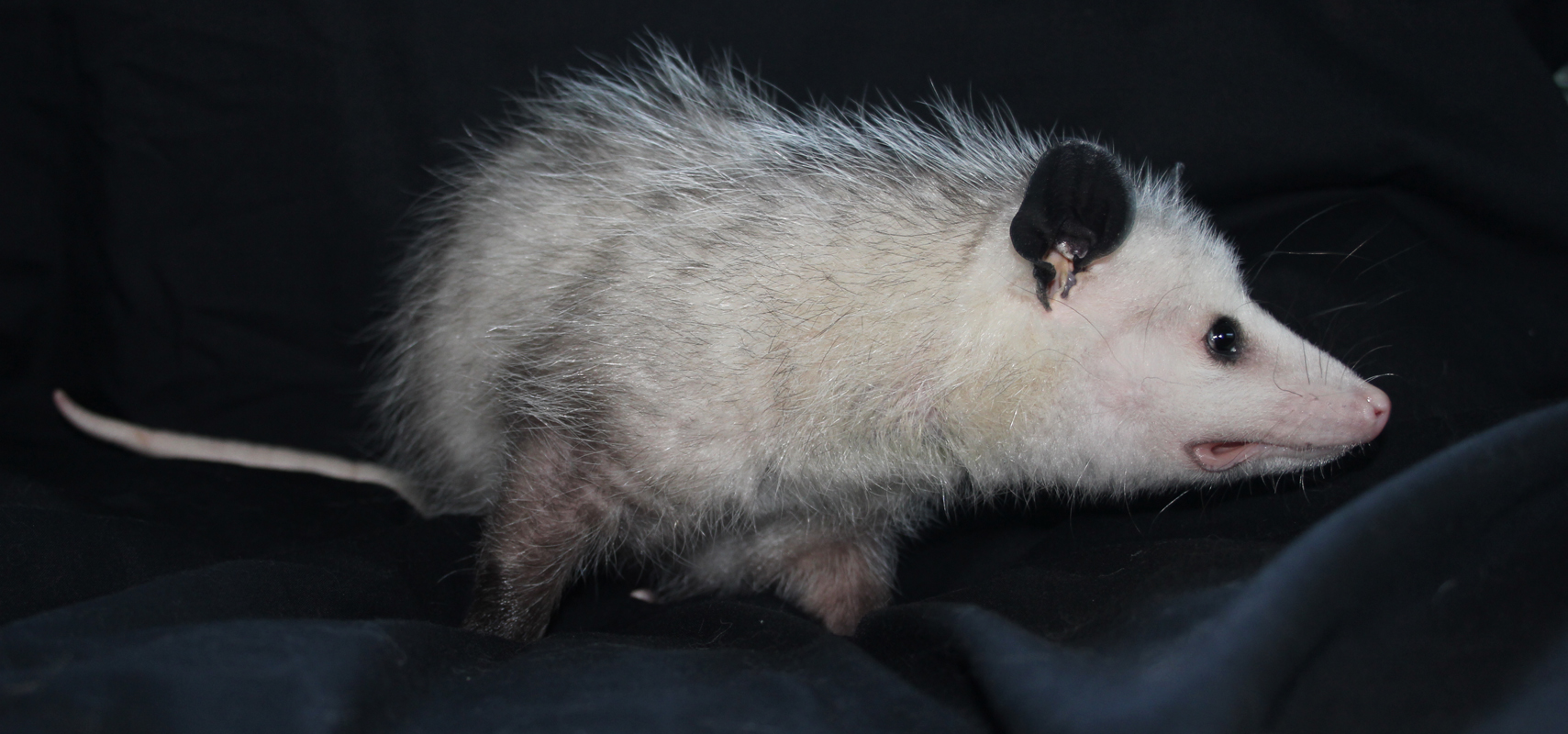
No Name Opossum

Thanks, Kim, for the suggestion, and thanks to everyone who offered up a recommendation. There were several that made the cut, but this, by far, was our favorite. Want to know why? Just follow the link: 

http://www.dnr.state.mn.us/mcvmagazine/issues/2014/jan-feb/young-naturalists.html

a different perspective

For the moment, let’s say you’re driving down a two-lane highway at night when, off to the side, your headlights pick up a misshapen bundle. You slow down to get a better look at whatever’s laying there, something that’s almost certainly dead, when, suddenly, part of the bundle shakes itself loose and skitters away into the dark…

Or it could be that there’s this cat that’s been hanging around and it’s pretty obvious that it’s had it more than a little rough. So, because you feel sorry for the poor wee thing, you’ve started leaving food out in a little dish by the back kitchen door. You hear it rustling around and turn on the light to give it a once over, see if there’s any improvement in its condition, only it’s not a cat, nothing like a cat, crunching down kibble. Nothing like a cat at all…

Or maybe it’s the night before garbage pick-up and you’re hauling the last bag out to the curb where you’ve already placed your recyclables and one half-full can. You reach for the lid, but it’s not in place. It’s lying, top-down, in the grass next to the can, and that’s odd because you’re more than kind of certain that you actually did put it in place before heading back to the house for that one last sack of trash. And that’s when you see it, furtive and menacing all at the same time, perched in the ripped-open Hefty bag at the bottom of the garbage can…

Whatever the scenario, what happens next is almost universal: you see those black eyes and all those sharp, glinting teeth in that gaping maw and your flight reflex kicks in. Before you’re even aware of turning, you’re burning rubber down the road, racing up the stairs, or dead-panic, brainless sprinting back to the house. And if your ears weren’t already full of the THUD, THUD, THUD of your own pounding heart, you know – I mean, you just know – that you’d hear it scrabbling along behind you, hissing and growling and keening for blood…

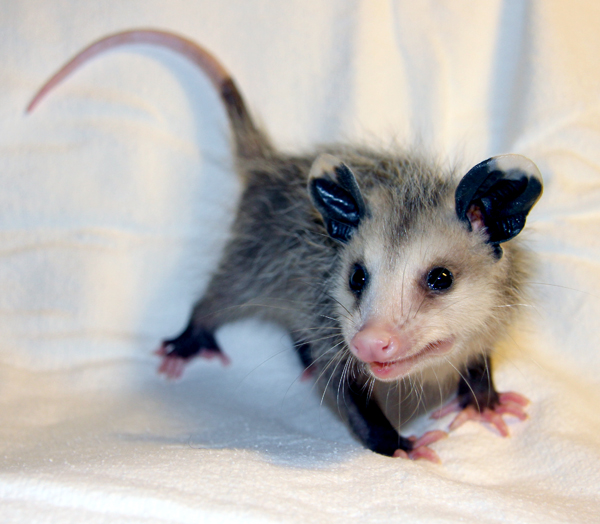
Virginia opossumExcept we’re not talking about some Jurassic Park raptor here, nor a great white shark or a freakshow hybrid of a government experiment gone awry, either. Nope. It’s an opossum – a Virginia opossum, to be precise – and it poses about as much threat to you as the neighbor’s Pomeranian. (You know, the one that they spritz with stink-pretty every other week after it’s been to the salon? The one that wears the pink Hello Kitty sweater as soon as the temperature drops below 40 degrees Fahrenheit? Yeah. That one.) So instead of chasing you down, that opossum’s busy either trying to put as much distance between the two of you as it possibly can, or making itself as small as possible, hoping against hope that you just won’t notice it.

Understand, I’m not saying that opossums can’t seem scary. They have more teeth than any other North American mammal and when their jaws are gaping wide in abject terror (yeah, mate, they’re positively terrified of you) it can be a little intimidating. But here’s the rub. Opossums aren’t predators. They’re scavengers, eaters of the dead and the overripe. See, they’re not interested in taking a bite out of you, unless, of course, you’re dead; in which case you have considerably bigger things to worry about than the chance that a wandering opossum just might stop in for a nibble.

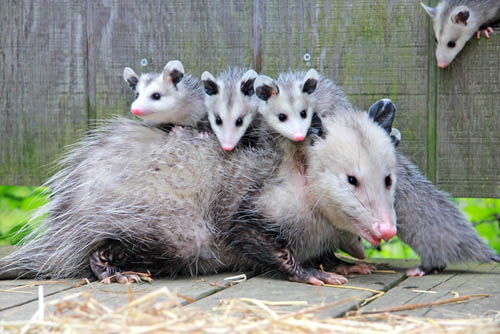
mother and babies

So, no, opossums aren’t predatory, but they are seriously cool. They’re nomadic marsupials, have opposable thumbs on their back feet and they have prehensile tails. They’re the most primitive mammal in North America and, when threatened, “play possum.” The word “play,” though, is more than a bit misleading. It’s not a conscious act, not something that they choose to do. Nope, it’s something that happens to them when they get overexcited. Their hard drives crash and there’s absolutely nothing playful about a crashed hard drive.

Keep all this in mind the next time you scare up an opossum, because “scare,” my friends, is truly a matter of perspective.

Give Us a Hand and We’ll Give You a Shirt

If you’ve been following us for any time at all, you’ll know that, while we focus on assisting domestic animals, we also work with the occasional wild, but native, animal, as well. Most are just passing through, either on their way back to the wild or off to a rehab center. Sometimes, however, as with the two American crows and the Canada goose that live here, this is where they’ll stay from here on out. These native animals aren’t eligible for release, either because they have some physical defect that will prevent them from a successful return, or because they’ve developed a certain affinity for their most significant predator, humans. Such is the case with an opossum that recently came to us from Nature’s Nursery Center for Wildlife Rehabilitation and Conservation Education.

No Name OpossumThey told us right up front that he seemed a bit on the friendly side, and he was. Even so, we treated him with the same distance as we treat all such animals we’re tasked with fostering. Several days ago, after nearly six weeks here at The Quarry Farm, we decided it was time to give him the opportunity to go it on his own. Sadly, rather than march off into the woods or even just into the tall grass near the banks of Cranberry Run, he decided to follow us back to the house.

After discussing the situation with the powers that be at Nature’s Nursery, it was decided that responsibility for him should be transferred to The Quarry Farm, where he will live out his days and serve as an ambassador of his kind to the folks who visit us here, on-site, and to those whom we visit in their classrooms.

But, Houston, we have a problem. We can’t seem to come up with a suitable name for him. We’ve labeled him a host of different monikers, but none of them have stuck. So we’re throwing it open and asking for help. The person who comes up with an appropriate name (and, yes, we’re the ones who decide what’s appropriate) will get a Quarry Farm T-shirt.

So, have at it, boys and girls, men and women.

And thanks. Here’s another quick study of the little guy, should that prove inspirational.

No Name Opossum

Spot the frog

Over the past few weeks, we’ve spent a fair amount of time kicking around the wilder areas of The Quarry Farm, traipsing about under an increasingly dense canopy of hardwoods and skirting the edges of the quarry where what appears to be solid ground is, more often than not, more akin to thick, black soup. At this time of the year, the one common element of every off-the-map habitat, whether it’s in the woods back by the Cut-Off or wading through Cranberry Run, are the mosquitoes. They rise in humming clouds so dense that the beating of their wings creates a perceptible breeze. Even so, the very habitats that give rise to this scourge also foster a teeming number of solutions. There are dozens of species of dragonfly and damselfly patrolling the property. During the day, acrobatic swallows and other small songbirds cut the air, while at night, bats chitter a welcome swath of destruction under the stars.

And then there are the frogs.

Northern leopard frog Lithobates pipiens

Northern leopard frog
Lithobates pipiens

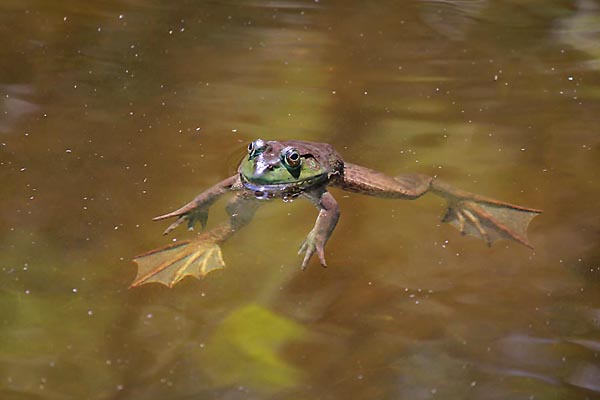
American bullfrog Lithobates catesbeianus

American bullfrog
Lithobates catesbeianus

Globally, frogs and other amphibians have suffered dramatic population declines over the past three decades. Even here, on the quarry, we’ve seen specific species numbers, like the American bullfrog, dwindle. Where there were once multiple waves of small bullfrogs racing into the duckweed-covered water of the quarry, now there is a fraction of that number, their individual voices discernible as evening progresses into night. Even so, they are here, though in limited numbers, as are Northern leopard frogs, the Northern green frog, the Northern spring peeper and the gray treefrog. And one more…Blanchard’s cricket frog. Its presence is cause for celebration.

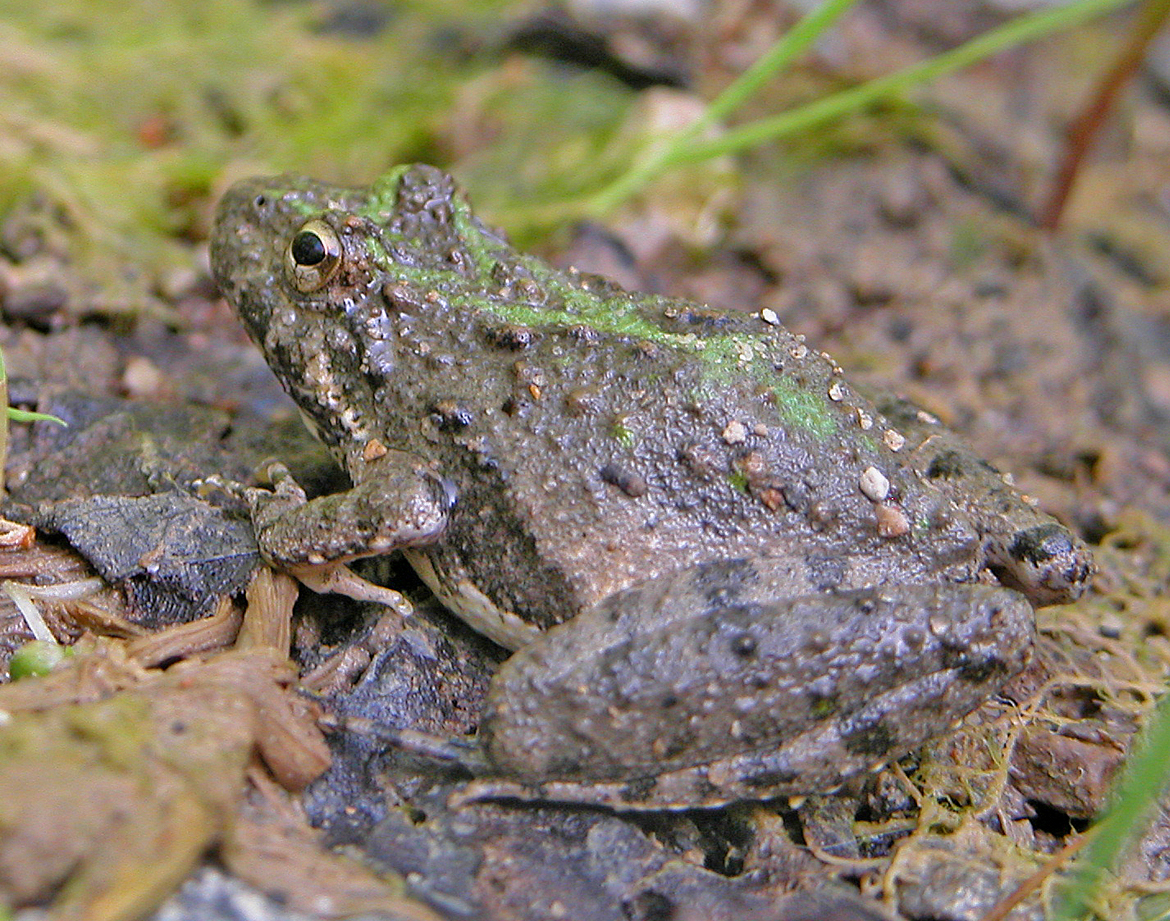
Blanchard's cricket frog Acris crepitans blanchardi

Blanchard’s cricket frog
Acris crepitans blanchardi

Twenty years ago, Blanchard’s cricket frog was so common that it was frequently referred to as “ubiquitous” in reports detailing amphibian populations in North America. Now, the species is considered endangered in Wisconsin, of special concern in Minnesota and Indiana, protected in Michigan and extinct in Canada. Universally, throughout its range, Blanchard’s cricket frog is suffering. Although it fares better in Ohio, even here, radical population declines have been reported. Thankfully, on the quarry, their numbers are not only persisting, but arguably growing. While part of the nighttime chorus for at least the past ten years, the voices of the indigenous population of cricket frogs are becoming dominant.

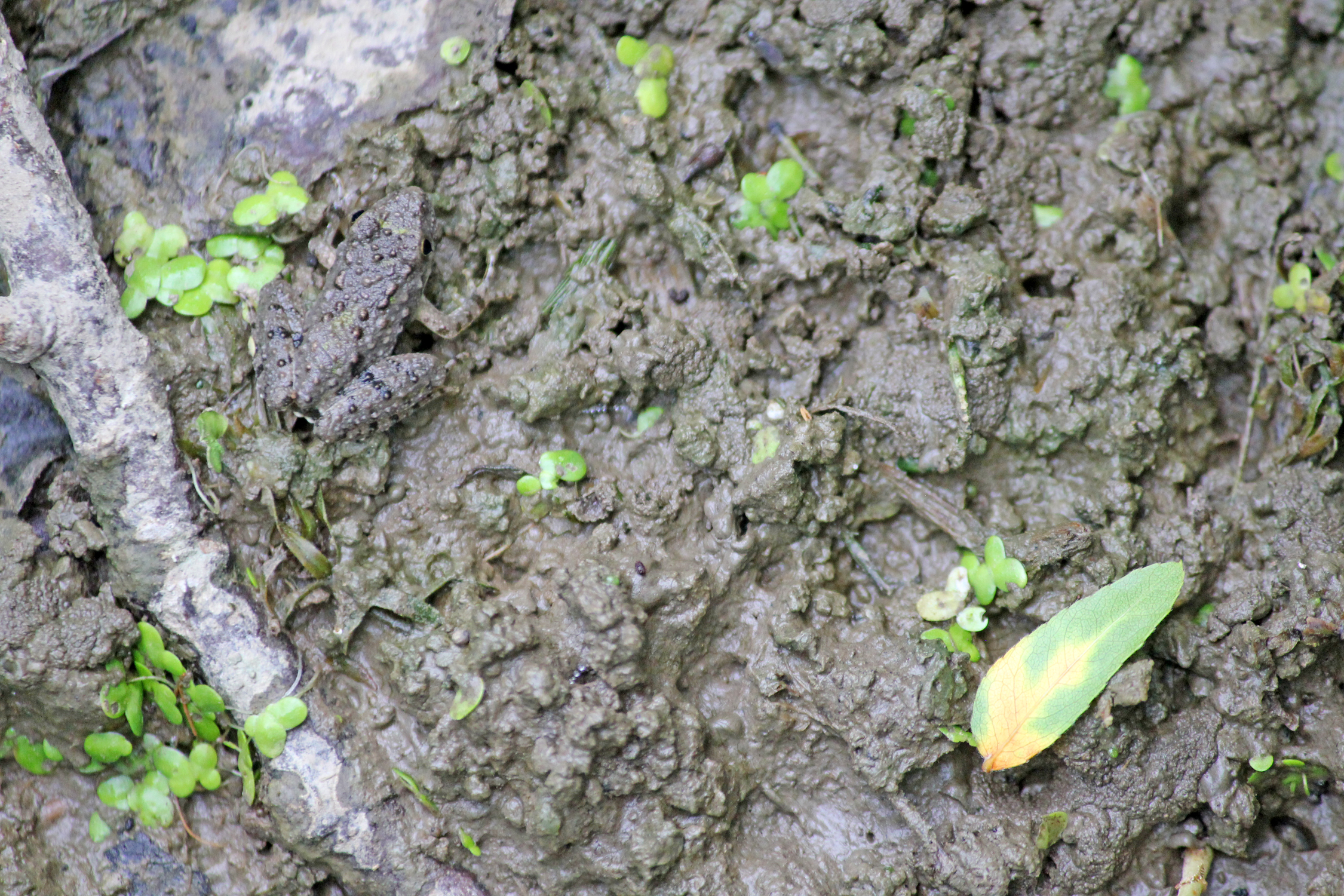
So, in celebration of this little frog (it’s less than an inch-and-a-half in length) and its very big impact on the mosquito population, it’s time to play Spot the Frog. It’s a simple enough game with just one basic goal. So, without further ado…

                                                                  SPOT the FROG

On the quarry

For those who aren’t already aware, we didn’t come by The Quarry Farm name through sheer chance. It wasn’t a challenge presented by an odd acquaintance – “Hey, you know the letter Q’s not used all that much…Think you can come up with a ‘Q’ name?”

No.

The Quarry Farm is what the Seitz clan all called this particular branch of their dairy operation, this specific geographical spot. It was here that the family grazed cattle and Jersey calves, ponies Cookie and Babe, and cultivated hay. And, because they’re not all completely arbitrary in their actions, they had a compelling reason for calling The Quarry Farm “The Quarry Farm.”
In the late 19th and early 20th centuries, there was a string of quarrying operations throughout the area and along Riley Creek and Cranberry Run. Flagstone and limestone, plentiful in this part of the state, were the primary objectives. One such operation was located here and, though several small springs forced its closure, here it remains.

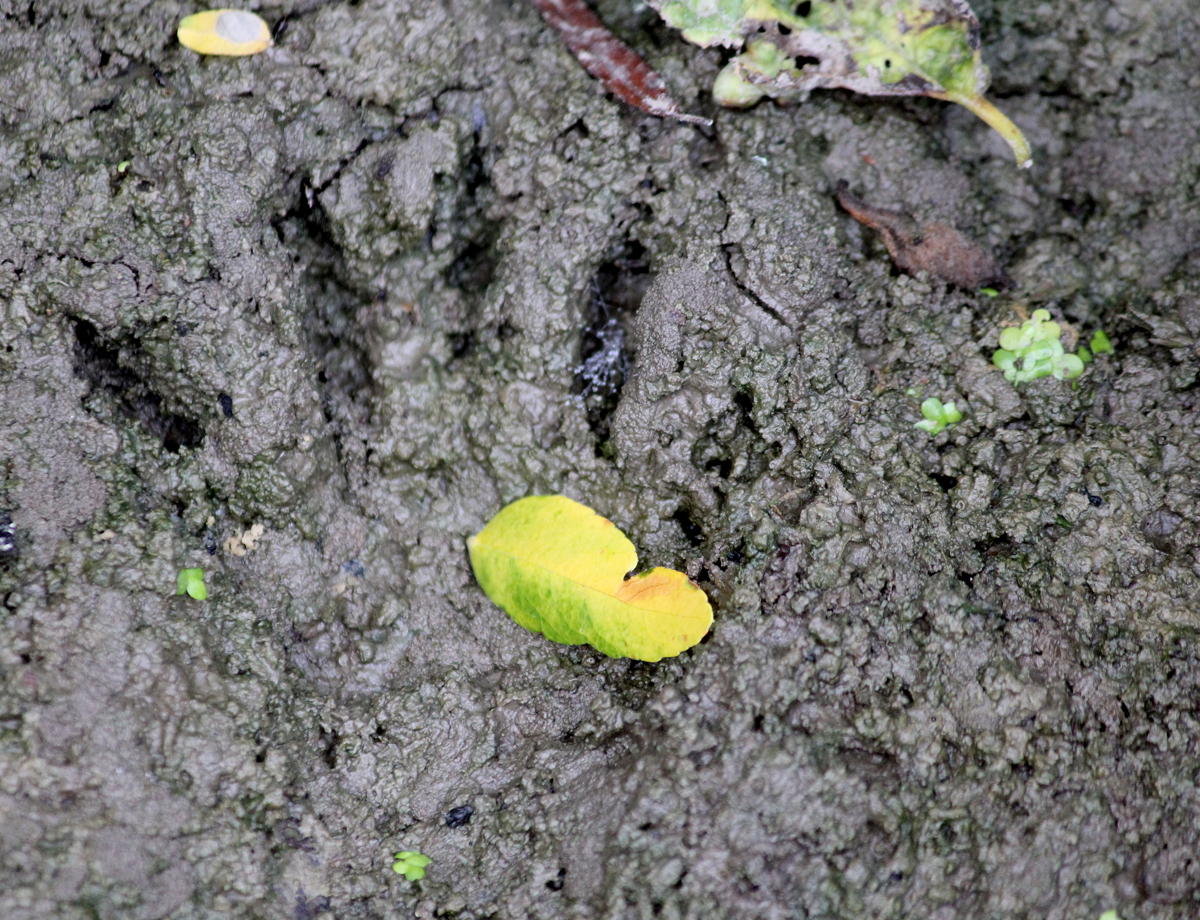
Raccoon PrintWhile at one time well known for sizable fish, the quarry underwent yet another change when, in the 1950s and again in the 1980s, local governments opted to dredge and straighten Cranberry Run in an effort to abate flooding in Putnam and Allen Counties. The spit of land separating the two bodies of water eroded to the point where the stream steadily deposited silt into the quarry until, nearly three-quarters of a century later, the quarry bears more resemblance to a wetland than to a pond or lake.

Twelve-spotted skimmerAs such, it’s home to a host of animals. There are dragonflies and damselflies in abundance. Water fowl feed and nest here and there is a treasure trove of amphibians, including a thriving community of Blanchard’s cricket frogs. Recently, we’ve discovered salamanders in the area and, this past spring, spotted what we suspect was a river otter in the one area of the quarry that still retains some degree of depth, though it’s failed to make a more recent appearance.

Here it is then, the quarry from which The Quarry Farm earned its name. And, while photos are fine, such as they are, the experience is more satisfying first-hand. So give us a call. We’ll be happy to show you around.

This slideshow requires JavaScript.

They call me Mister Bill…

Bill

“He’s a big goat,” Sandy explained to Anne over the phone and via email. “People don’t understand how big he really is.”

Sandy was talking about Bill, a Boer goat that she and her husband, Doug, had raised from when he was smaller than a pygmy. And, trust me; she wasn’t kidding (no pun intended). Bill’s bigger than Buddy, the miniature donkey that guards The Quarry Farm: taller, anyway, and he’s the newest member of The Quarry Farm family.

Sandy and Doug drove him up from the Cincinnati area, from the farm that the couple is in the process of leaving. They were successful in placing the other animals that lived on their farm, but because of his size, Bill proved a special case. They’d raised him as a pet and they didn’t want him to go just anywhere, were anxious to see that he went someplace safe. After reviewing their options, they chose here and we’re grateful for that. Bill’s every bit as sweet as he is big.It took him a few days to work out just where he belonged in the loose-knit community of goats that already reside here, all of whom are less than half his size, but he did and the pygmies and Nigerian dwarfs are finding his arrival a real boon.

apple picki BillForget the fact that he scrapes out dust wallows for all his smaller cousins before digging up his own. Never mind that, in a pinch, the pygmies can take shelter from the sun in his shadow (and, yes, they do). What’s really important, what all the goats truly appreciate him for (and the pigs, if we’re being honest), is his reach. Standing on his back legs with his forelegs braced against the trunk of a tree and stretching for all he’s worth, Bill can pretty easily top seven feet. And when the trunk he’s braced against is that of an apple tree, well, let’s just say that Sir Isaac Newton would have received more than one lesson on the effects of gravity. Another way of putting it is to say that, rather than a windfall, the animals here are benefiting from a Billfall. Seriously…who needs a cherry picker with Bill around? Not the wee beasties of The Quarry Farm.

So, welcome home, Bill. Well come, indeed.

The gang of goats


Once upon a time…

As children, most of us at one time or another have read, or have had read to us, fairy tales; the kind of story where the hero or heroine has to overcome great adversity in order to win out in the end. Generally, the moral of these stories is something along the lines of, “Be good. Be just. Work hard. Do these things and all will be well.” And just as most of us have heard or read these stories, we’ve experienced that life has a habit of teaching us a different kind of lesson, something a bit more realistic. I mean, life isn’t fair, right? Good guys regularly finish last and, all too often, what you earn from working hard is more hard work. That’s frequently been my experience, at any rate. So, I tend to think of myself as a pragmatist; I hope for the best, but expect something worse. There are those, however, who have described me as a cynic, and while it’s true that I don’t trust the motives of others, I consider that a survival trait, not a character flaw. So you’d probably guess that, from my perspective, there are no such things as fairy tale endings.

Guess again.

Greta, shortly after her rescue.

Greta, shortly after her rescue.

Last February, with the wind screaming and cutting and churning the air down to between 30 and 40 degrees below zero, members of both the Humane Society of Allen County and the Allen County Sheriff’s Office seized nearly 50 animals from a hoarding situation about 20 miles south of The Quarry Farm. And while this isn’t news to those of you who visit this site, the repercussions of the event, the sheer horror of the conditions those rescued were living in deserve telling and retelling.

The trench that Greta and Grits survived.

The trench that Greta and Grits survived.

Shelter, for those animals that had any, were wide-slatted wooden crates open to the sky or with poorly fitted roofs, rough houses slapped together from bits and pieces of waste wood and 50-gallon plastic barrels laid on their sides. Where they had run out of proper fencing, barbed wire was looped on the ground to contain two horses and three ponies. Eight chickens survived, huddled under an abandoned car, ringed by the frozen carcasses of the chickens that weren’t so lucky. The frozen remains of two dogs were found, though only one is believed to have died of exposure; the other, it is suspected, simply starved.

Of the animals that survived, that were rescued, four were potbellied pigs.  Two, Bob Barker and Alphonse, came to live here, at The Quarry Farm. The other Kentucky boundtwo, dubbed Greta and Grits, were spoken for by friends of ours down in Kentucky. This Sunday past, Anne and I picked up the two pigs from their temporary home at the HSoAC, loaded them into Anne’s Toyota Matrix and headed south. Because of the care they’d received and the socialization provided by the staff and volunteers at HSoAC, both pigs were extremely well-behaved, though understandably a bit restless. A whole grain bagel and pieces of both a cinnamon and an orange scone, picked up at a Panera in Troy, went a long way toward easing any nerves and both pigs lay down for the rest of the trip. Some twenty-odd miles over the Ohio border into Kentucky, and we’d arrived.

Greta, scratching.

Greta, scratching.

It was a long climb up a winding asphalt driveway to the top of one of the foothills of the Appalachian Mountains. At the top, along with an incredible view of the lowlands below and the Ohio River winding through the mountains, was Beth, standing between two low shelters: one labeled Greta and the other, Grits. Situated inside a newly constructed barn was a large, wood-slatted pen, but it was through the back door of the building that both pigs ran, into a

Grits greets Erin for the first time.

Grits greets Erin for the first time.

paddock that Bruce and Beth and Erin had finished fencing off just the night before. They immediately set to investigating their new digs, sampling grass, scratching themselves on posts and the wire of the fence and rooting into every depression they could find, but still making time for ear scratches and belly rubs enthusiastically administered by all three members of their new-found family.


And that’s where we left them, at the top of a hill in their forever home, surrounded by people who will not simply love them, but care and provide for them. From the horror of a trench in the snow to a hilltop house in the sky. Here is where they’ve come, where they’ll live.

Happily ever after.

Greta and Grits

violet jelly, Mother’s Day and a walk in the woods

Violets We’re always looking for a reason to celebrate, here on The Quarry Farm, teasing out any excuse to pull together with friends and family for food and song and conversation, but particularly food. Today, we didn’t need to look far; Mother’s Day is a perennial favorite. So we set up camp in the Seitz Pavilion, the shelter house on the north end of the cabin grounds, and laid out the spread ‘til the tables groaned. There were cold-cuts and salads and chips and dips and condiments, but for the Seitz family, the meal is what you have to wade through in order to get to dessert. Never was there a single family with so many talented bakers. Today’s menu included strawberry cake and rhubarb, cherry and black raspberry pies. Here, then, was one of the many faces of bliss.

When we were done, Anne and I took a short walk back on the quarry so that Anne could pick violets. For the past several years, we’ve made it a habit to make violet jelly and this year is no exception. I hobbled along behind, determined to work off some of the weight I’d just packed on. And while Anne worked, I played, taking quick photographs of anything I found myself looking at.

Painted TurtlesThe quarry itself is one of my favorite places. It rarely fails to offer up something worth watching, a moment worth recording. Painted turtles, sunning themselves on a log, sat still jFrogust long enough for a single image capture. Ranging along the shore, a solitary sandpiper picked its careful way around the quarry while a pair of wood ducks coursed nervously back and forth. A green frog, or possibly a bullfrog, just barely broke the water’s surface, .

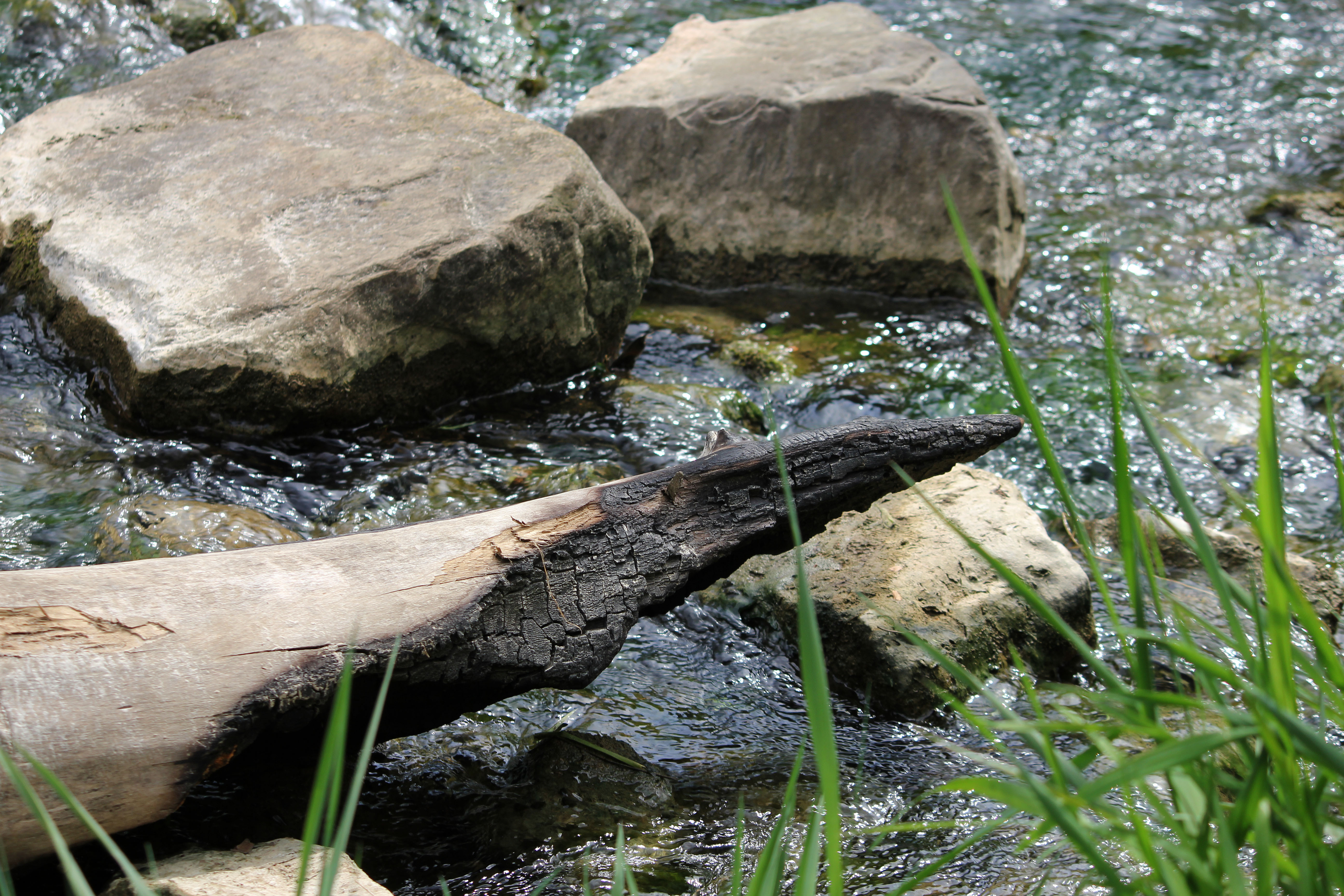
While any body of water is tantalizing, moving water is even more so. Cranberry Run, the stream that courses through the Riffleproperty that makes up The Quarry Farm, is a source of constant fascination. At what we commonly call the ford, a partially burned log was caught up in the rocks that create a riffle there. While we didn’t bother looking, there are undoubtedly any number of aquatic insects and other macroinvertebrates sheltering beneath it and the stones that the Little Cranberry swirls over.

There are paths cut through the woods that make up The Quarry Farm. What was once pasture land for dairy cows has worked Virginia creeperits way through a succession of stages that have brought it to its present state, something that is more and more resembling the temperate, hardwood rain forest it once was. Where there were once scrub trees, shrubs and bushes there are now primarily sugar maple trees and black walnuts. Virginia creeper and poison ivy climbs these trees, using the bark as a lattice and creating a curtain of green and red.

Just slightly off the beaten path is the area we call the Cut Off. Sometime in the 1950s, in an effort to move water more quickly away from agricultural land, area waterways were straightened, or “ditched,” as was more commonly said. What is now the Cut Marsh MarigoldOff was an ox bow in Cranberry Run. The county simply recoursed the stream and blocked off the oxbow, isolating it from the stream. Even so, the Cut Off is an aquatic habitat on its own. The tile from a nearby field empties into the old ox bow and keeps it hydrated for most if not all of the year. Here there are all manner of plants and animals that survive despite the damage done to Cranberry Run. Dutchman’s britches and may apples grow along side ramps. Recently, after a trip north to a nursery that offers only native species, Anne returned with a sampling of marsh marigolds that she planted near the water and in a swale that helps to feed the Cut Off. We were pleased to find them thriving.

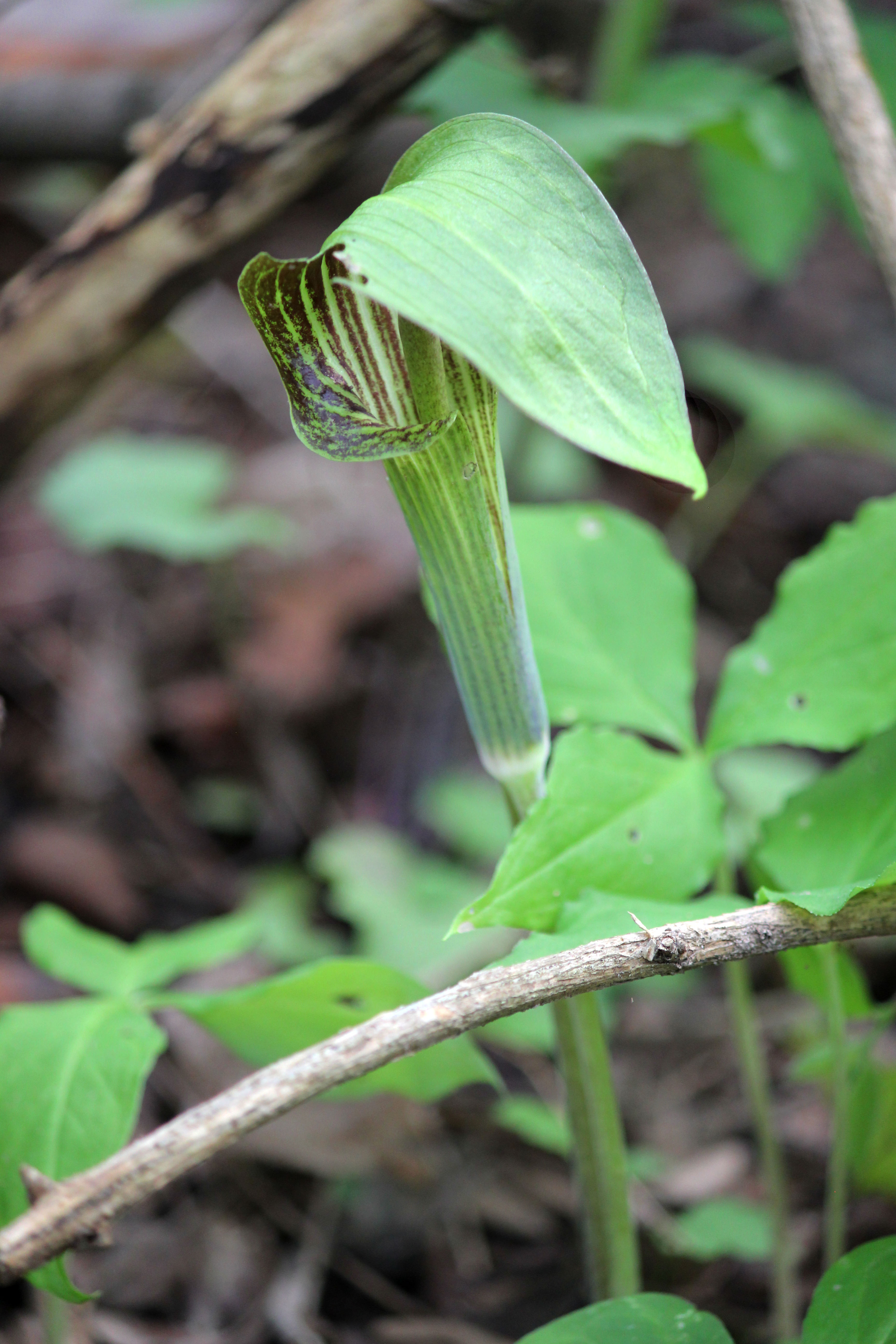
Jack In the PulpitWhat we didn’t photograph was at least as exciting: a rufus-sided towhee, a common yellow warbler and a black-throated green warbler. There were dragonflies and turtles and dozens upon dozens of plants, some flowering some not, that are only now gaining a toe-hold here on the quarry, plants that we’ve talked about transplanting here that have, instead, and thankfully, arrived on their own. Plants like wild ginger and dragon’s tongue, jack-in-the-pulpit and bloodroot. The plants and animals that make their homes here are, like the stream that runs through The Quarry Farm and the face of the land itself, constantly changing, Even so, it allows for a familiarity that breeds comfort. For that, we are forever grateful and excited by the new challenges and opportunities that every day presents.

Wood Ducks

doors and windows

Change is inevitable. It happens, sometimes precisely as we’ve designed. More often, though, it simply comes about on its own and without invitation. We’re obsessed with it, change, and have been for a very long time. Heraclitus, who died in 480 BC, said, “Nothing endures but change.” Well, what he actually would have said was, “τὰ πάντα ῥεῖ καὶ οὐδὲν μένει,” which, more accurately translated, reads, ”Everything flows and nothing remains still.” But all things change, even quotes from ancient philosophers. So, what it boils down to, then, is how we approach change. There’s an old adage that, particularly recently for us here at The Quarry Farm, defines how we cope with all of that, how we accept this inevitability: when a door closes, a window opens.

Three weeks ago tomorrow, Gertie, the first pig to come and live here, died. She had uterine cancer and, tough as she was, it was time (if you missed her eulogy, such as it is, scroll back a couple of posts and you’ll find it). Three days later, The Quarry Farm received two new admissions: potbellied pigs from the Humane Society of Allen County. And it was only fitting that Bob Barker and Alphonse should come from there, since the HSoAC brought Gertie to us, as well.

Bob and Alphonse were among nearly fifty animals seized from a single site by the HSoAC on the coldest day of this past brutal winter. The conditions in which they were living were minimal at best. The pig we have come to call Alphonse was free of any pen, but still trapped within a maze of three-foot deep gullies he had worn in the accumulated snow. Of the pigs, Bob knew the worst of it. His only shelter was a fifty-gallon blue plastic barrel that was all but drifted shut. Megan McCoy, a friend and key member of the HSoAC staff, estimated that he’d been trapped in the barrel for days without food or water and was mired in his own excrement. He was terrified and starving and rather than force him to leave what little sanctuary he had come to know, deputies of the Allen County Sheriff’s Department and HSoAC staff members pulled Bob free from the drifting snow, barrel and all. It was only later, when they’d managed to transport him back to the HSoAC building, that Megan was able to encourage Bob to leave the barrel and take up temporary residence in one of the organization’s cleaning rooms. Weeks later, once the case had worked its way through the courts and the HSoAC had acquired legal custody of the animals, Bob and Alphonse were moved here.

Alphonse, shortly after arriving.

Alphonse, shortly after arriving.

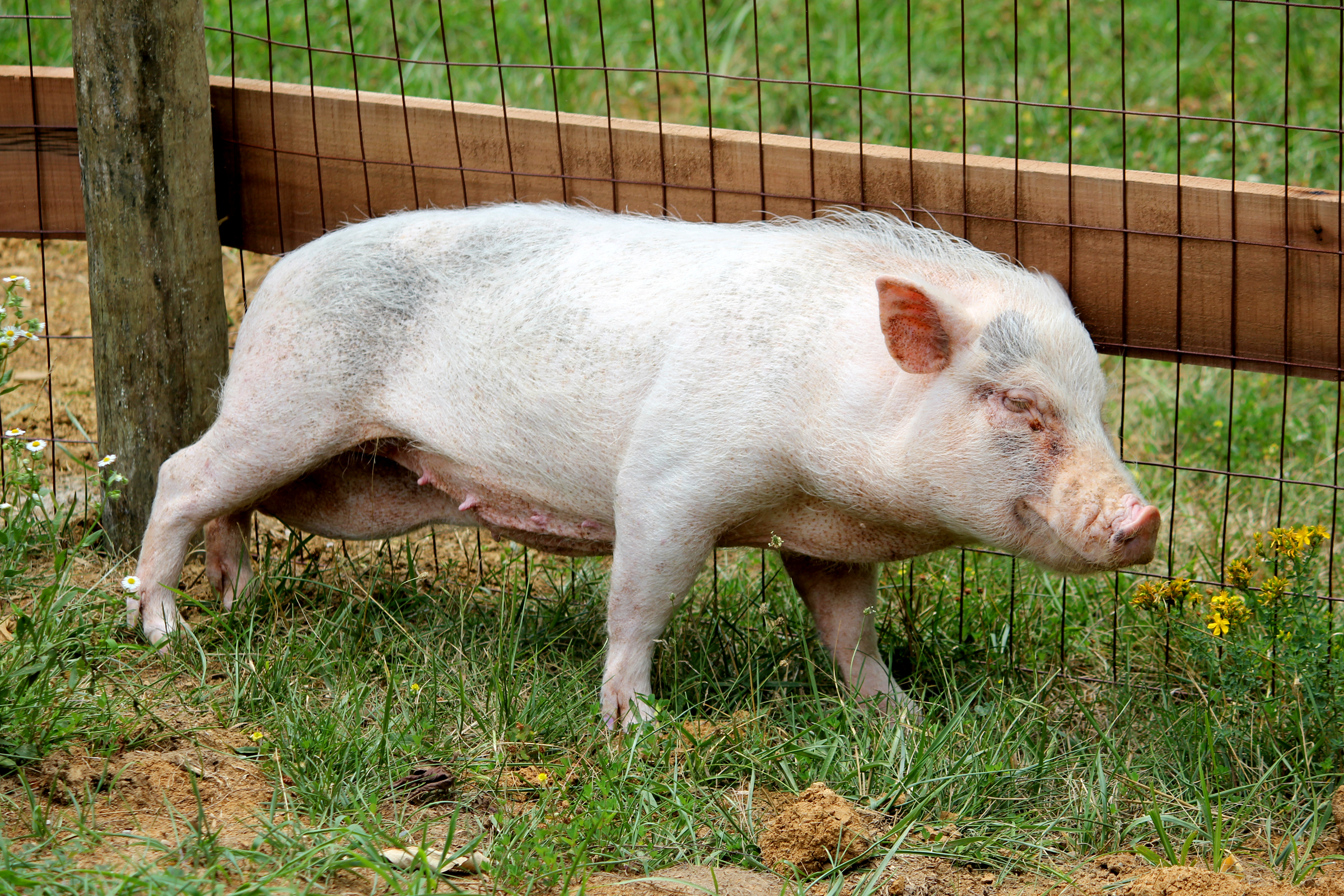
Alphonse is a bit ticklish about company, less inclined to share space. He has his own fenced-in area, along with a shelter house and an igloo, adjacent to The Quarry Farm’s goose pen. The fence is there to keep others out, not Alphonse in; pigs, we have learned, are found of a space they can call their own. In fact, insofar as Alphonse is concerned, the fence may as well not even exist. He comes and goes as he pleases, slipping through a small space in one corner when he has an itch to explore and root and generally run rampant. Then, when it’s time to eat or sleep or simply get away from the other residents here, he reverses course and slips back in.

Bob on his kitchen bed.

Bob on his kitchen bed.

Bob, on the other hand, while still somewhat gruff, prefers his digs a bit cushier. There are several mounds of blankets and pillows within our home that Bob calls his bed: in a hallway, in the sun by our kitchen door and, his favorite, in Rowan’s room. He’s also not shy about borrowing the beds of his housemates, should the mood take him. The one exception to his marauding ways is with anything that belongs to Beatrice. Though we fondly call her Little Pig, she’s anything but, and Bob made the mistake of strutting in and presenting himself as the macho male. While that worked for him initially, Little Pig quickly let him know all about women’s suffrage and the proper way to treat a lady. The two now grudgingly share space, though it’s best if there’s a fence between them.

There we have it, then. Change, best put in this case, though it is still painful to think of it, by: The King is dead, long live the King. Or kings.

Or pigs.

Postscript: The two other pigs seized at the same time as Bob and Alphonse haven’t been abandoned. Friends of The Quarry Farm (and Anne’s cousins), Bruce and Beth and their daughter Erin, have agreed to take them in. The pigs’ names are Greta and Grits and we expect to make a day trip down to their forever home sometime this month. Eight chickens were transferred  here shortly after their rescue. One, a large white rooster, died within a week of his arrival. The other seven are living large as part of the free-ranging Quarry Farm flock. The ducks all found homes on property where they had access to ponds, while the horses and ponies were welcomed in by equestrian families. As for the dogs, they’re all in residence at the HSoAC. For more information, visit their website: http://www.hsoac.org/ While you’re visiting, please consider supporting their efforts. The work they do is important, necessary and under-appreciated.