falling sounds

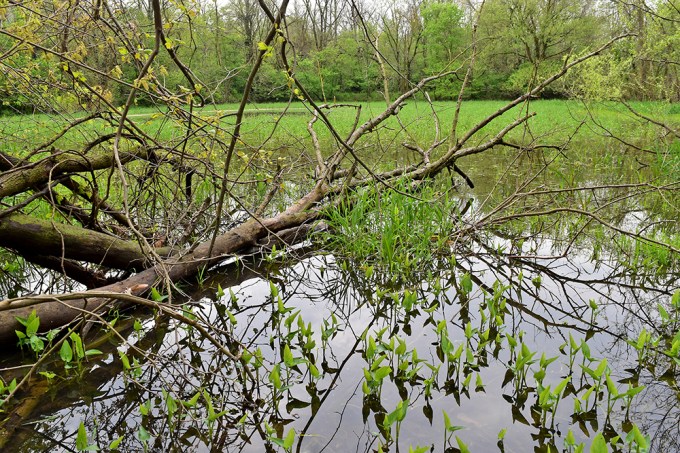
20170910_165648The old stone quarry has changed a lot over 150 years, from not being there at all to a horse-drawn limestone operation, from spring-fed fishing hole to wetland. Black willows and other water-loving trees and plants grow there now. Wood ducks, wild turkeys, owls, squirrels, tree frogs and herons roost high above the banks. They see you before you even know they are there, falling silent or bursting from the branches in a great show of chatter or feathers.

One tree leaned at the northwest shore for as long as I can remember. My Gran said she used to make a blanket nest for Uncle Keith in its roots while the family fished for bluegill. The tree lived its life, watching two- and four-leggers wear a path below.20170910_172736

20170910_170849 (1)Last weekend the dogs and I found the tree in pieces. The path is strangely open now. Stick-tights thrive in the open sunlight, laying waste to another pair of shorts and leaving the future of my t-shirt in doubt as well. Thankfully, jewelweed grows nearby to stop the burr itch. I wonder if the wild ginger will move to shade further along the bank.

The tree’s fall was a long time coming. Not long after the tree died over a decade ago, its bark weathered away. Dad parked his ATV next to the tree to take photographs of the butterflies, dragonflies and other insects that perched on the smooth trunk. Walking the path sent wildlife running in every direction. The putt-putt of the ATV didn’t. From the driver’s seat, Dad filmed an ichneumon wasp, its long ovipositor extended into a woodpecker’s drill work.

We still have the photos, as well as Dad’s drawings of the wasp. The sketch was one of several used on a poster about beneficial insects. The illustrations are a reminder how nature and art are linked. Here on these 50 acres and beyond invisible parcel lines, the native arts must be nurtured as much as the first grasses and plants that secure this watershed.
Click, look and listen.20170909_183949


bird’s eye celebration

20170827_122848 (1)A mile northwest of here as the crow flies, family and friends gathered on the Seitz homestead to remember Miriam Joyce “Gran” Seitz. We made lasting leaf t-shirts and broke (lots of) bread.

A mile southeast of there, Andrew Seitz, sent his drone aloft to capture footage of the 50 acres that his grandmother had a hand in preserving. Click on the bird’s eye view here and take flight over Red Fox Cabin grounds and gardens, the old quarry, nature preserve, then follow Uncle Mike and his car (wave at Andy on your right) south to the farm animal sanctuary.Untitled

Thanks, Cousin, for the lift.

when the trees are sobbing faintly

There was a chair in my grandparents’ house. It was a nondescript stool with a square burgundy seat mounted on four iron legs. It was the kind that you could spin in circles. You could push off with your feet or lay face down across it and turn, walking the circle with fingertips to the floor.

I spent a lot of childhood in that house. One warm summer evening, while Grandpa was in the milkhouse and Gran was making Jersey milkshakes for after chores, I sat on that stool and watched Silent Running, a 1972 environmentally-themed American post-apocalyptic science fiction film starring Bruce Dern. I sobbed as Earth’s last forest traveled out of reach.

As a teen, I sat in Gran’s kitchen and bit my nails while she talked with a caller at the back door. The visitor wanted to buy the property located a mile east of the farm, the 50 acres of woods and stream where Grandpa pastured senior calves in summer. I knew they could use the funds from a sale. I was so afraid that this last forest would be gone.

“No thank you. We don’t wish to sell it,” she said to this offer and to many others.

Carl and Joyce Seitz were my grandparents. My grandfather was a dreamer; a handsome rake who was a lover of books. He was a college graduate, but the farm fell to him while the country was dealing with depression and world war. He would drive a tractor and whistle. My grandmother, a college grad, too, was a stylish beauty who became a farmer’s wife. They raised eight children in that farmhouse. In the warm months, the family sometimes picnicked along the creek that flowed through that 50 acres to the east. In winter, they skated on the old flooded stone quarry there.

For as long as I can remember, that place has been called “The Quarry Farm.”

We lost Grandpa 25 years ago. Today, we lost Gran. Because they both valued the black walnut, maple and oak trees that grow here, the dogtooth violets, mayapples, bloodroot and spring beauties on the ridge and in the floodplain–because they were educators and dreamers–The Quarry Farm is still here.

11845208_10207924019201794_3438920111096809137_oDuring a trip home from university, one of my uncles looked out the kitchen window in time to see Gran hand-feeding a skunk. Two weeks ago, I took Sebastian the Skunk to visit her. Gran would have celebrated 101 years in November, but she was sharp as a tack and delighted in ‘Bastian as well as what we do here.

Chryssy the Cat climbs on my lap now. She shared that farmhouse, the one where we all climbed trees, made mud pies, collected fireflies in a jar, photographed migrating monarchs in the trees, and where our Gran worked art in her kitchen while teaching us to reach for the whole world outside.

http://www.lovefuneralhome.com/notices/Miriam-Seitz

Hiking with goats and lemonade

Saturday was a full Family Day. For a sunlit August 5, it was cool enough to hike from cabin to chickens without breaking a heavy sweat. Even the mosquitoes hatched from recent heavy rains were relatively scarce.

Thanks to all who joined us for the 2017 Family Day on The Quarry Farm. Much bush honeysuckle was repurposed for walking and hiking sticks, birdhouse gourds were polished, shirts were imprinted with unique leaf patterns, Red Fox Cabin was toured and the farm animals were enriched with gentle human interaction (except for Nemo who refused to break her afternoon nap routine.) As was expected, this gentle giant was up at 5 p.m., grazing on the grass so recently imprinted by visiting feet.

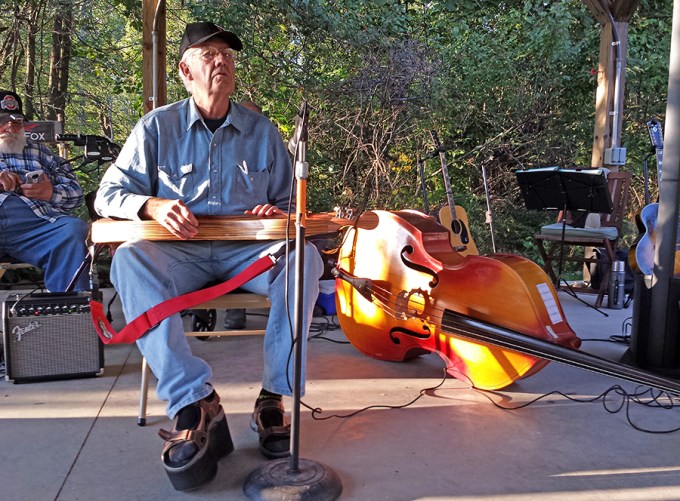
Next up: The 4th Annual Quarry Farm Jam

Really big thank you

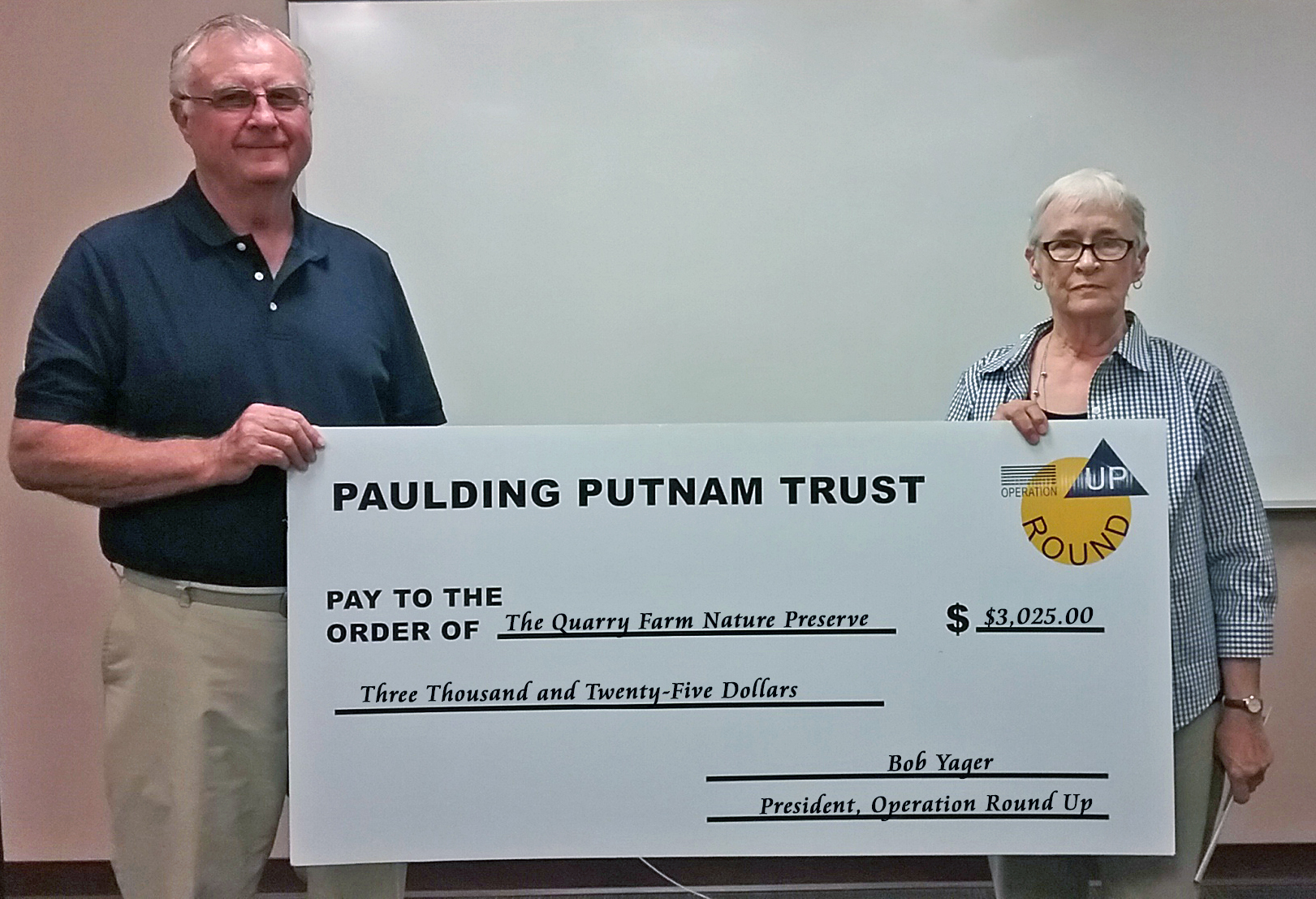
Board President Laura accepted this very big check last week from Paulding Putnam Electric Cooperative. Earlier this spring, Hancock-Wood Electric Cooperative also granted The Quarry Farm Nature Preserve & Conservation Farm with generous funding.

The funds were granted through a program called Operation Round Up. The program “rounds up” an energy cooperative member’s bill to the nearest dollar and that amount (which is completely tax deductible) is donated to local charities in their service area.

Thank you to all these wonderful cooperative members. Because of your support, we will continue to provide educational programs and experiences onsite and in educational settings in Paulding, Putnam, Hancock, Wood, Allen, and other Northwest Ohio counties in both cooperatives’ regions.

A stroll about the Red Fox

Today is promising to be a hot one, with temperatures in the 90s and a heat index climbing higher. A hawk just flew over with a blackbird in hot pursuit of the raptor’s red tail. Even the birds are feeling it.

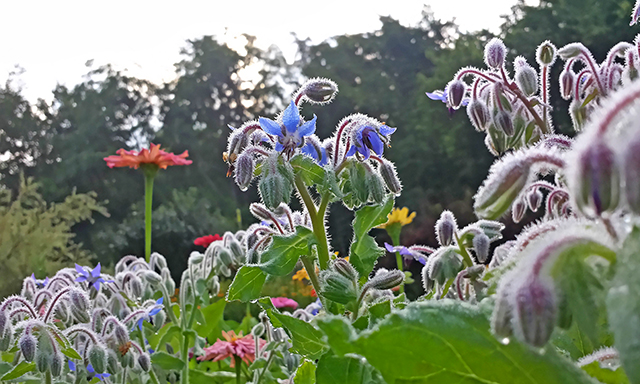
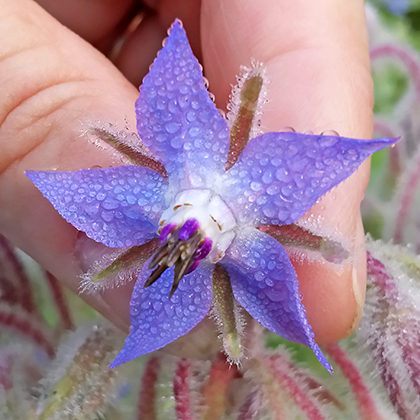
Dewy Borage

The plants, however, are loving the warmth and light after the heavy rain of last week. They’re positively dripping with joy. Humid fog sits over the soybeans to the west of The Quarry Farm, but the nature preserve is rich, deep, rainforest green, with dabs of brilliance. Seems the best kind of morning to inspect those colors more closely.

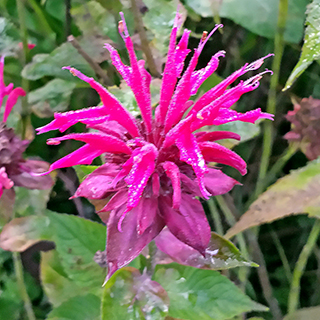
The gardens at Red Fox Cabin are blooming. The whites, pale yellows, pinks, and violets of spring are gone, replaced by a full spectrum in every shape and size. Bumblebees navigate the lavender and bee balm, hovering just long enough that I think I can get a picture. When I bring up the photo, I see they’ve led me on.

Bee Balm

The pollinators are back this year. Populations are smaller, but they are here. The big fuzzy bumblers share space with other wild bees, wasps, flies, butterflies, and moths.

And the dragonflies are glorious.

It’s a little too early in the day for them to be up and about, but Steve is seeing species that he’s not familiar with. The books and apps are out and he is getting to know new odonata in 2017. Storms are in the forecast for later this week. He will be on the front porch watching the dragonflies surge before the storm, hunting for insects ahead of the rain.

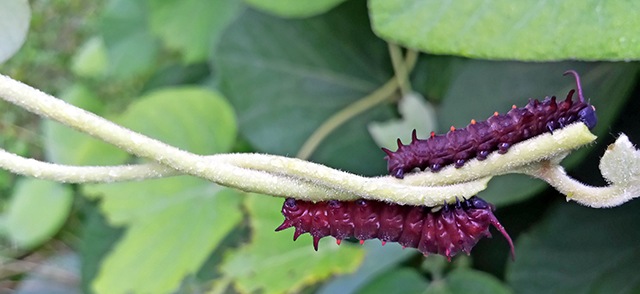
The two pipevine trellises are heavy with green. Two days ago, The Quarry Farm Gardener noticed tiny black crawlies on the southwest tower. They grew, expanding with the humidity and tasty leaves, as pipevine swallowtail caterpillars do. We missed them during the past two years. The cropduster that flies low of late is a concern. The news is that gypsy moth treatments are underway.

Pipevine Swallowtail Caterpillars

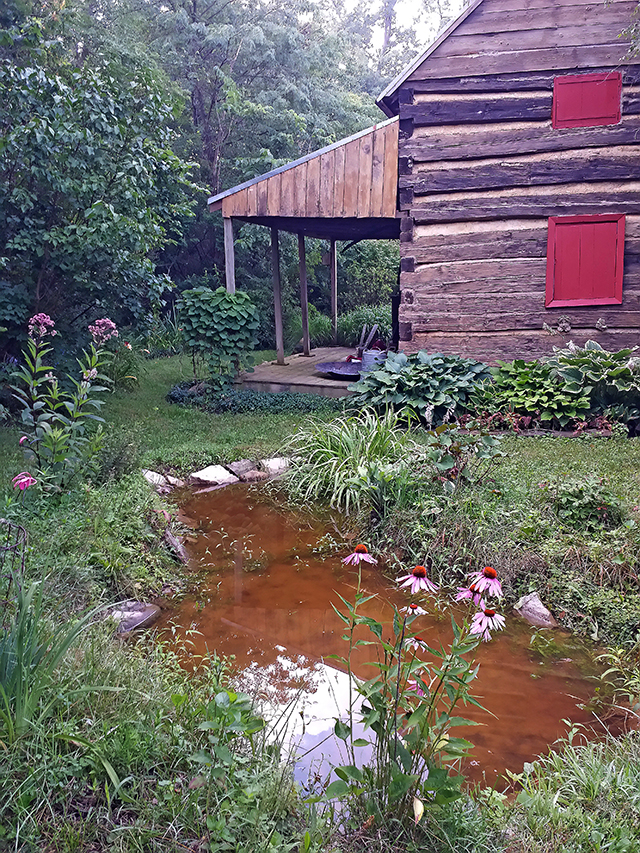
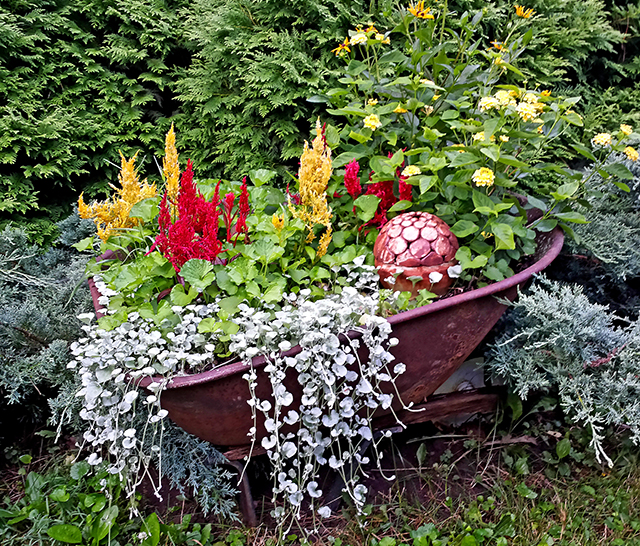
The raingarden is doing a fine job drawing water away from the cabin and housing leopard frogs.A wheelbarrow supports its own garden, spilling a fragrant shower that doesn’t quite make landfall.

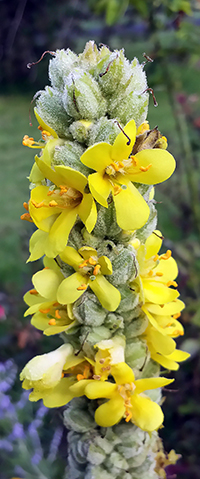
Common Mullein

Mullein reaches for the sky here and there. The flannel leaves of common mullein were used as lamp wicks–since the time of the Romans for torches–as well as toilet paper. The leaves were once placed inside of shoes to provided both warmth and softness. Mullein isn’t native to North America, but local insects are attracted by the flower’s honey-like scent.

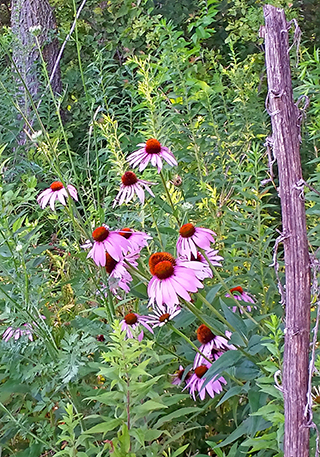
I’ve looped back to my car; my ride to pay the piper. If you balance a coffee in one hand, it’s possible to snap a photo. This last mid-week catch: coneflowers above the nature preserve, leaning toward the place I want to be.

Summer news is here

20170617_125330Summer CoverWhat’s that all about, you say?

Click on the cover to the right for your very own copy of The Quarry Farm Summer 2017 Newsletter. Read about the busy season that was Spring 2017, mark your calendar for all that’s to come this summer, and register for The Quarry Farm 2017 5K.

Hope to see you on the trails.

Water words and tiger tales

beetle larvaOver 100 years ago, there was no quarry here on these 50 acres. Cranberry Run was a meandering trickle. When the digs and blasts began, this place’s namesake was one of several in these parts. Over time, most closed or consolidated operation. Springs kept the abandoned holes filled. People and animals fished them. Picnics were eaten on the shores.

Before his body failed him, my dad spent a lot of sticky hot summer time rebuilding a stone wall between our quarry and Cranberry Run. This happened nearly 50 years after human hands and earth movers stretched, straightened, and deepened the natural engineering of the stream to push water through various townships to others downstream. The quarry was opened to heavy sediment loads forced through via the Run. Over the course of 50 years, the quarry depth went from 20 feet at its deepest point to no more than four of water and muck.The Quarry

As soil, grasses, and trees further rooted the wall, the quarry began to change again. Aquatic plants, their seeds held for generations in the floodplain, took root beneath the water’s surface. Some are rare, others not so much, but most are native and blooming to attract pollinators and migrating birds to shelter among the green.

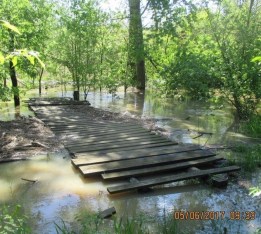
unnamed.jpgTwo weeks ago, heavy rain flooded the quarry. Kayakers paddled through the preserve, weaving through trees well above the Run’s banks. The footbridge floated, held fast by heavy chains, thanks to Engineer Dave Seitz’ design. After the flood wave crested and rolled north toward the Blanchard, I kayaked under it and on to Riley Creek, past the 20170513_141555absent M-6 bridge, Putnam Aggregates and the Riley Creek United Methodist Church. The banks were surprisingly clear of debris, with one exception on the east bank in Riley Township. There, an old car follows a wave of cans and other discards toward a detonated washing machine on the bank below.

About a month ago, the water in the quarry was crystal-clear. You could lean out over the bank and watch spring life move in and out of the sprouting aquatic plants, except for those areas that were wriggling black with toadpoles. You could reach in and pick up handfuls of the fry if you wanted to. Steve used a dip net instead, keeping several in a five-gallon bucket to show to visitors at Lima’s Faurot Park Earth Day celebration.

20170502_201309_LLSThe week before that, Steve came back to the house with a bucket of fairy shrimp in quarry water. I love to watch these tool in healthy circles, especially since their presence tells me that the wetlands are doing such fine work sponging sediment and impurities in the floodplain. The pools did such a great job that the bucket also contained a salamander larva with waving spaniel-ear-gills, and a predaceous diving beetle nymph.
My dad would have been so excited to see the contents of this bucket. His artist’s eye would note the analogous brown and gold patterns of the amphibian skins and the scarlet jaws of the young beetle. The latter is nicknamed “water tiger.” You don’t have to spend much time to understand why. Steve said he started up the path between the quarry and home with 10 toadpoles. At the door, there were seven left.

After lots of people oo-ed and ah-ed over the catch, we released them. Though many were surely washed away, we know that quite a few are still there. Grown frogs and toads sing through the nights. Great blue herons, raccoons, and ducks feast in the shallows while perched raptors wait for their one false move.


Changing of the color guard

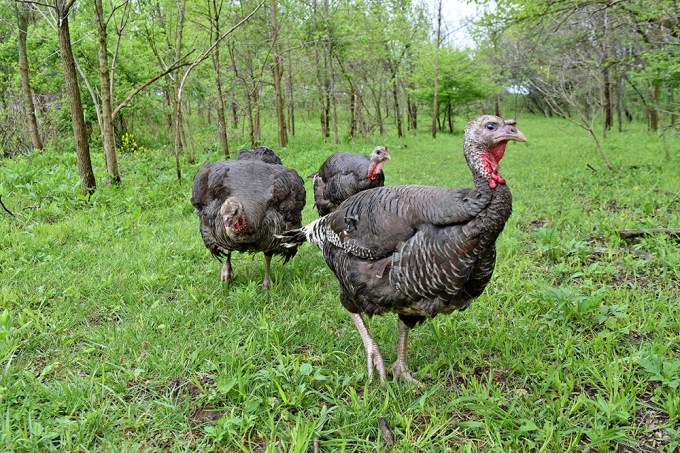
Four beautiful bronze turkeys were part of the flock here on the farm. Fezzik, Inigo Montoya, and Humperdink are now part of everything, having lived out their lives on the ridge above Cranberry Run. All three rode down I-75, from various points in Lucas County by way of Nature’s Nursery, in a hatchback.

The fourth, Miracle Max, arrived in similar fashion, and he still walks the grounds. Two weeks ago, Max was greeter as schoolchildren and scouts entered the south gate. Since Humperdink died earlier this spring, Max has been blue. Quite literally, as his skin was a pale blue: the blue of loneliness and the fear and discomfort associated with losing his band of tom-turkeys.

(About that: Turkeys’ heads change color to express their emotions. The blood vessels lying directly under the skin of the wattle (that strange unicorn appendage between their eyes) are surrounded by long bands of collagen. When the turkey gets upset, the blood vessels contract, exposing more of the collagen bands. University of California, Berkeley scientists have actually developed a synthetic toxin sensor based on the turkey’s color-changing technique.)

When the April visitors walked onto his acreage, Max flushed a deep red, puffed his feathers, and thrummed the balloon of his chest. Instead of two-stepping away from anyone who came within arm’s length, as is his habit, he allowed a few of the kids to touch him briefly. And when his guests closed the gate behind them at the west gate, Max glided beside them from the other side of the fence, becoming paler as the kids moved further away. One little scout insisted on going back to console him.

On Saturday, three lovely ladies took up residence here. A family in Michigan raised three Brown Orlopp hens with the intention of serving them on a platter. “But the girls loved them,” the dad said. Indeed, his three young daughters helped load them in our carrier. The eldest skipped and told us about naming them all ‘Waddles.’ Her younger sisters weren’t quite sure of our intentions, I think, judging by their tears as we drove away toward the Ohio line.

So this one is for you three girls to the north, for entrusting the Three Waddles to us further south. It’s also for a very happy, very rosy, Max.

turkeys