almost autumn

almost autumn and the sky squeezes blue
through the eye, guilt
from a moment of weeks; two days,
one leaf between a bible

of pages

black and white and velvet brown feet pad
through fallen leaves.
and still another falls to join them
and another still
and another still

Just a week, now, until fall; seven days and yesterday felt every bit the season. We ferried Captain John, the opossum, and Carlton, the potbelly, to Lima for an evening program in the amphitheater at Johnny Appleseed’s Ottawa Metropark. It was cold in the bottomland where the structure sits, the wind constant and insinuating.

But this is less about that than it is about earlier in the day. For the first time in weeks, in months, yesterday afternoon we worked our way to the back field. Certainly because we missed the woods and the field, the stream where it runs past the quarry and the quarry itself, but also as an introduction. And in keeping with this Merlin of a post, where time first marched backward from evening to afternoon, now there’s cause to relate a time two weeks back…two weeks and two days, not to put too fine a point on it.

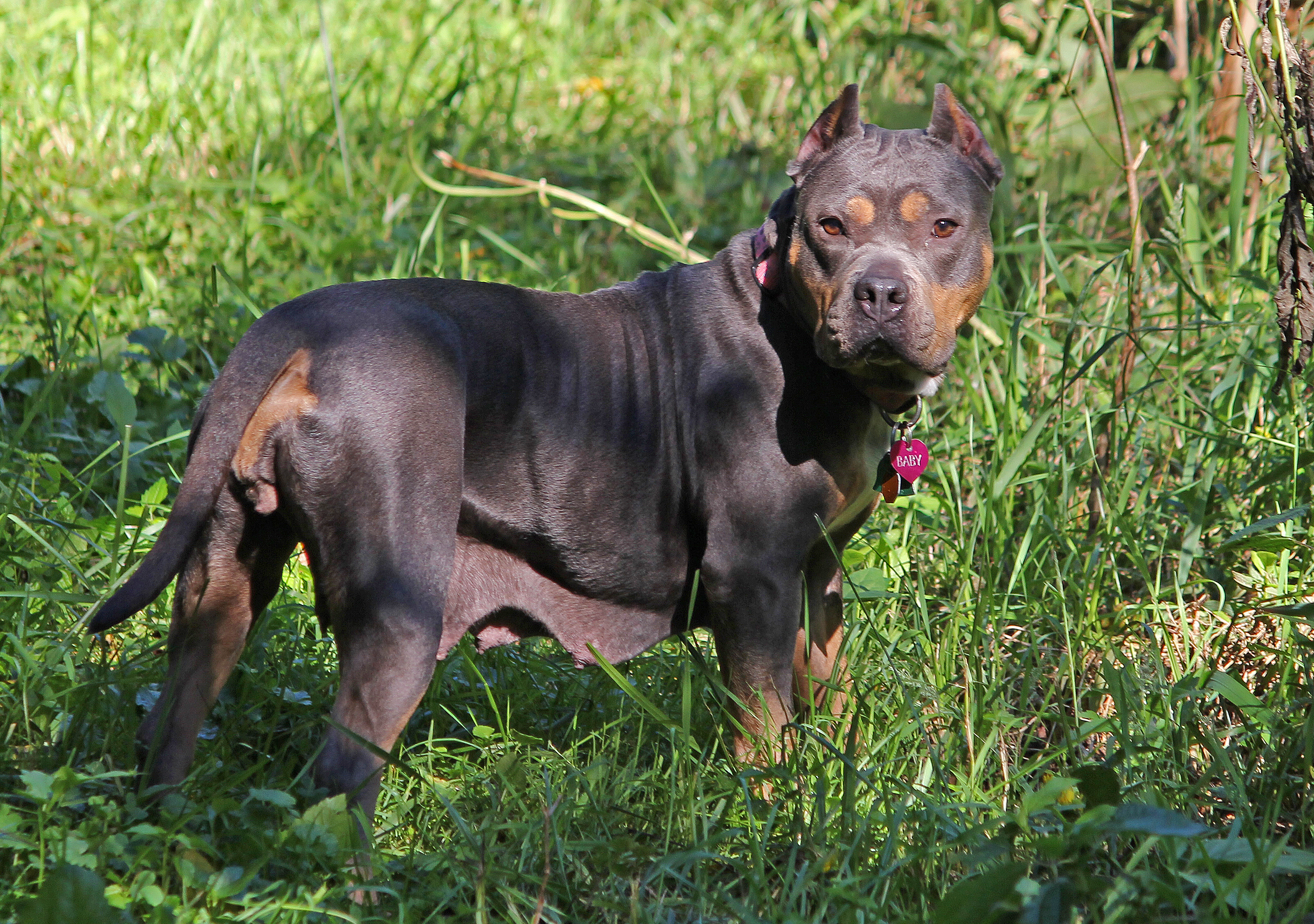
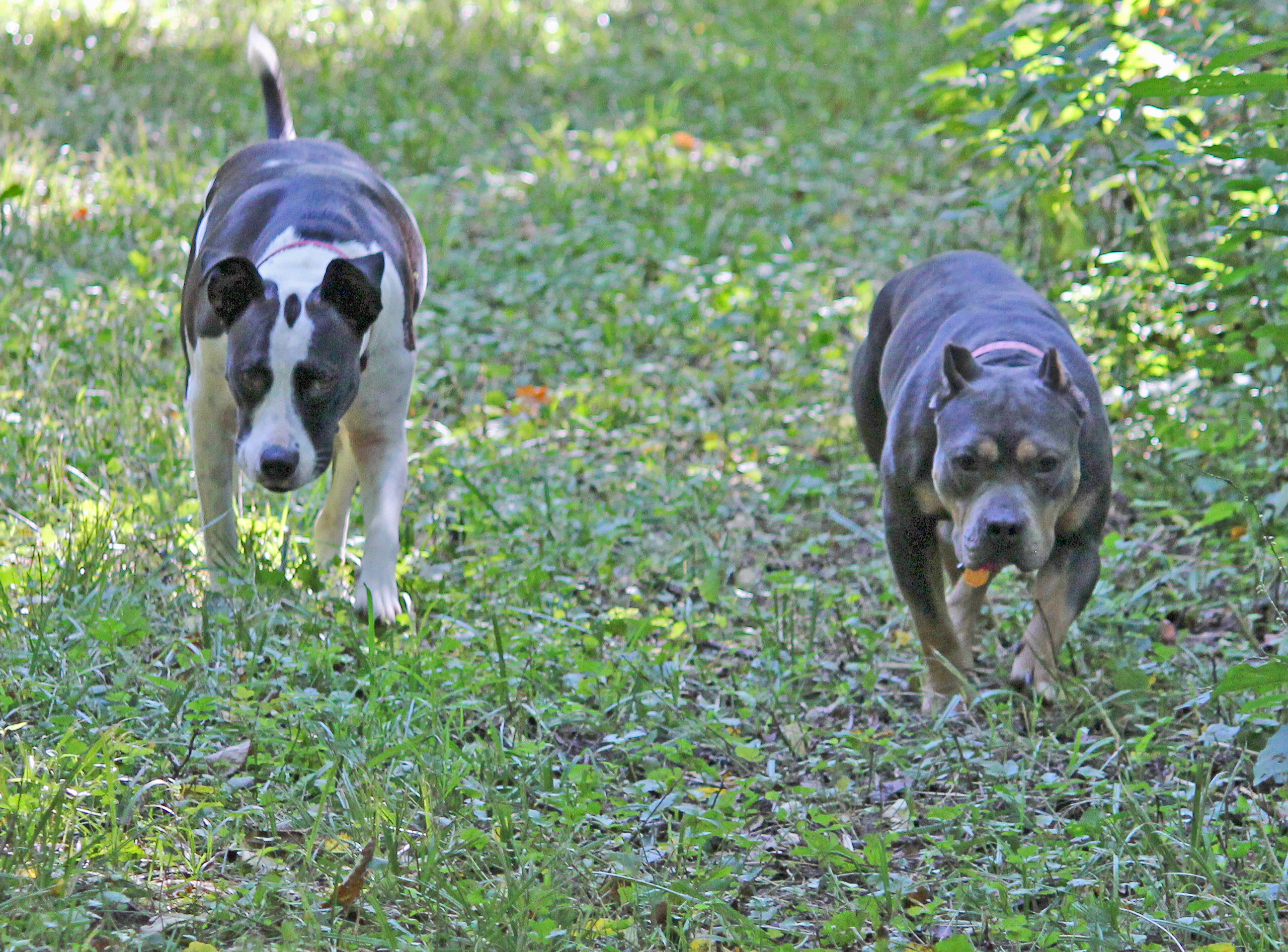
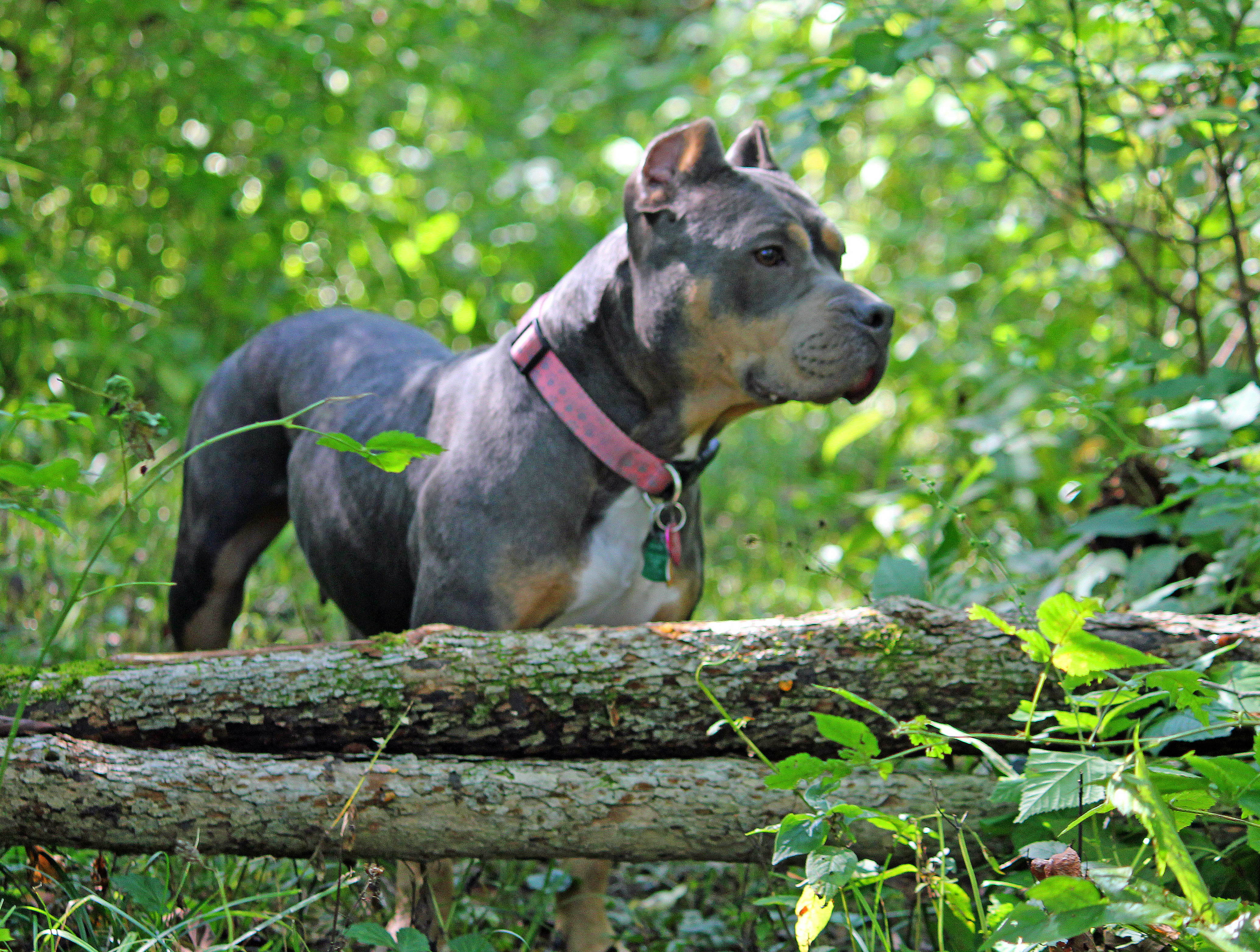
This is Cady.
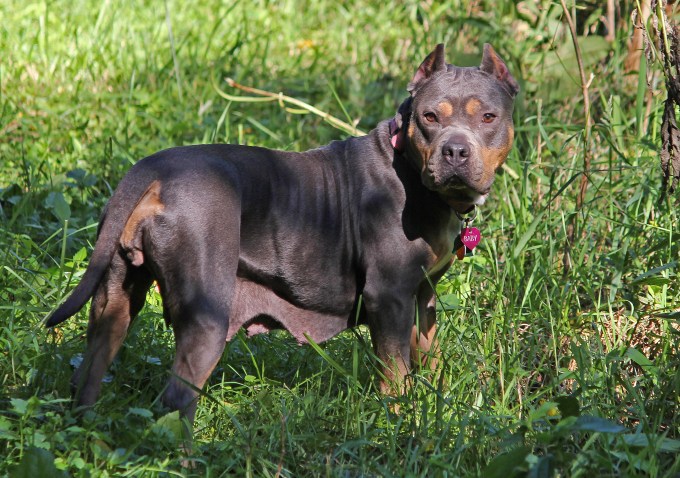
Cady

Anne named her for Elizabeth Cady Stanton, who, among other things, was an American suffragist. Cady came to us through the Putnam County Dog Shelter. She was abandoned in a Columbus Grove apartment not too very long after she’d birthed pups and almost certainly not for the first time, the birthing or the abandonment. The county’s dog warden, Mike Schroth, let us know about her situation, granted us the opportunity to invite her into our family. So, 72 hours after the county assumed responsibility for her welfare and 48 hours after we introduced her to Mister Bill (who gave her a sniff and then turned his back) and to the chickens (who paid her no heed at all) and to the turkeys (who took an immediate dislike to her and now pester her wherever she goes within the fenced-in area that is the animal sanctuary, unrelentingly reminding me of that Sandra Boynton cartoon), Cady relinquished her given name, Baby, and came to The Quarry Farm, new baptized.
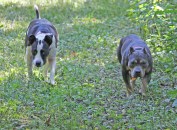
Cady and LollySo, yesterday, 12 days after Baby became Cady, we introduced her to the wilder part of The Quarry Farm, the woods and fields beyond the fence. And again today, yesterday having proven a bounding success. With Lolly, Cady peered into Cranberry Run, braved the bridge, skirted the quarry, tore through the leaves on the main path to the back field, grazed her way across the field, padded along the ridge above Coburn’s Bottom and then back and back and back and back.

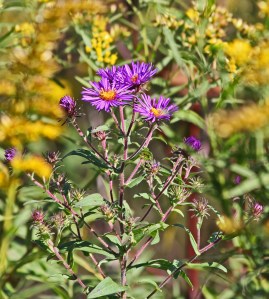
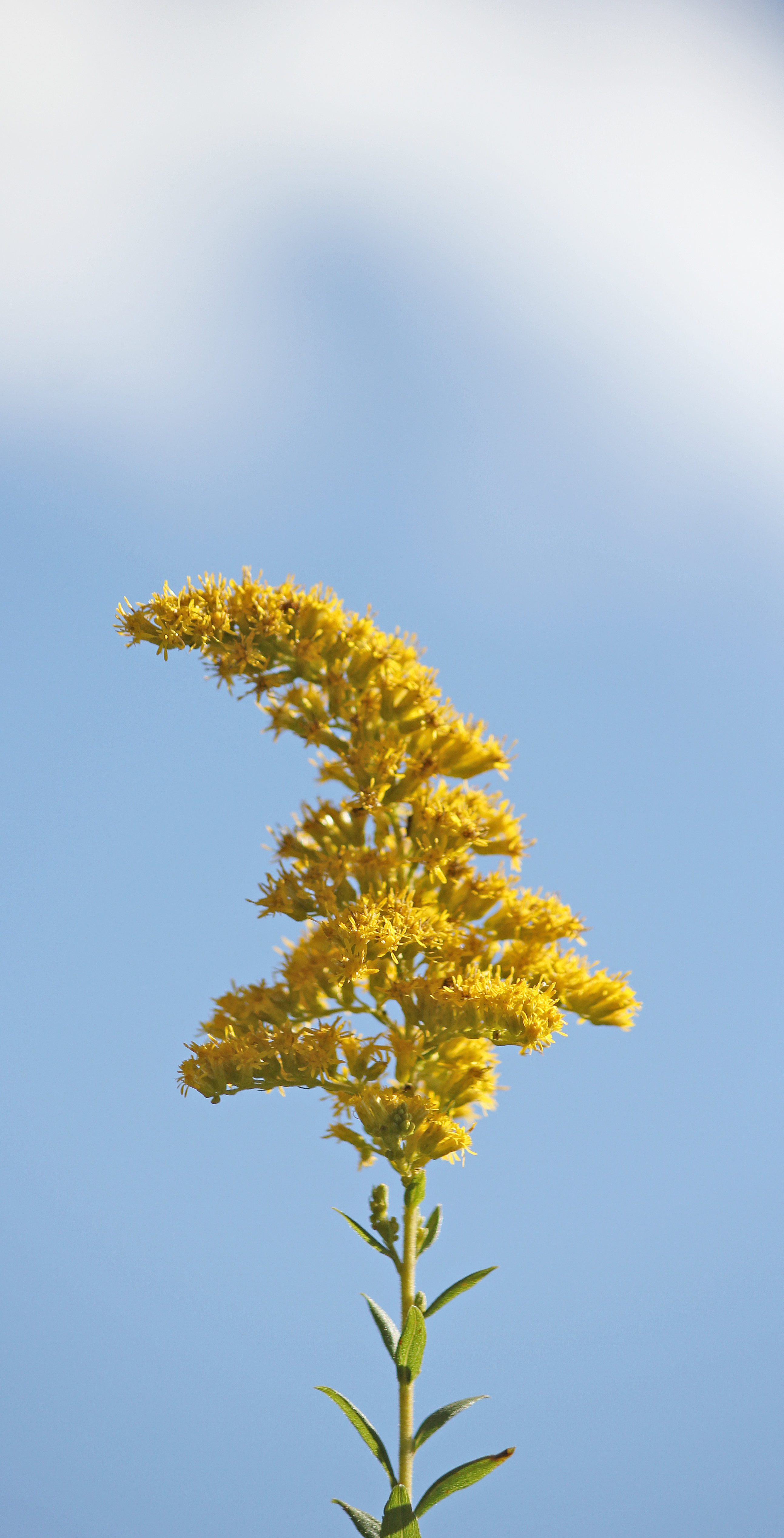
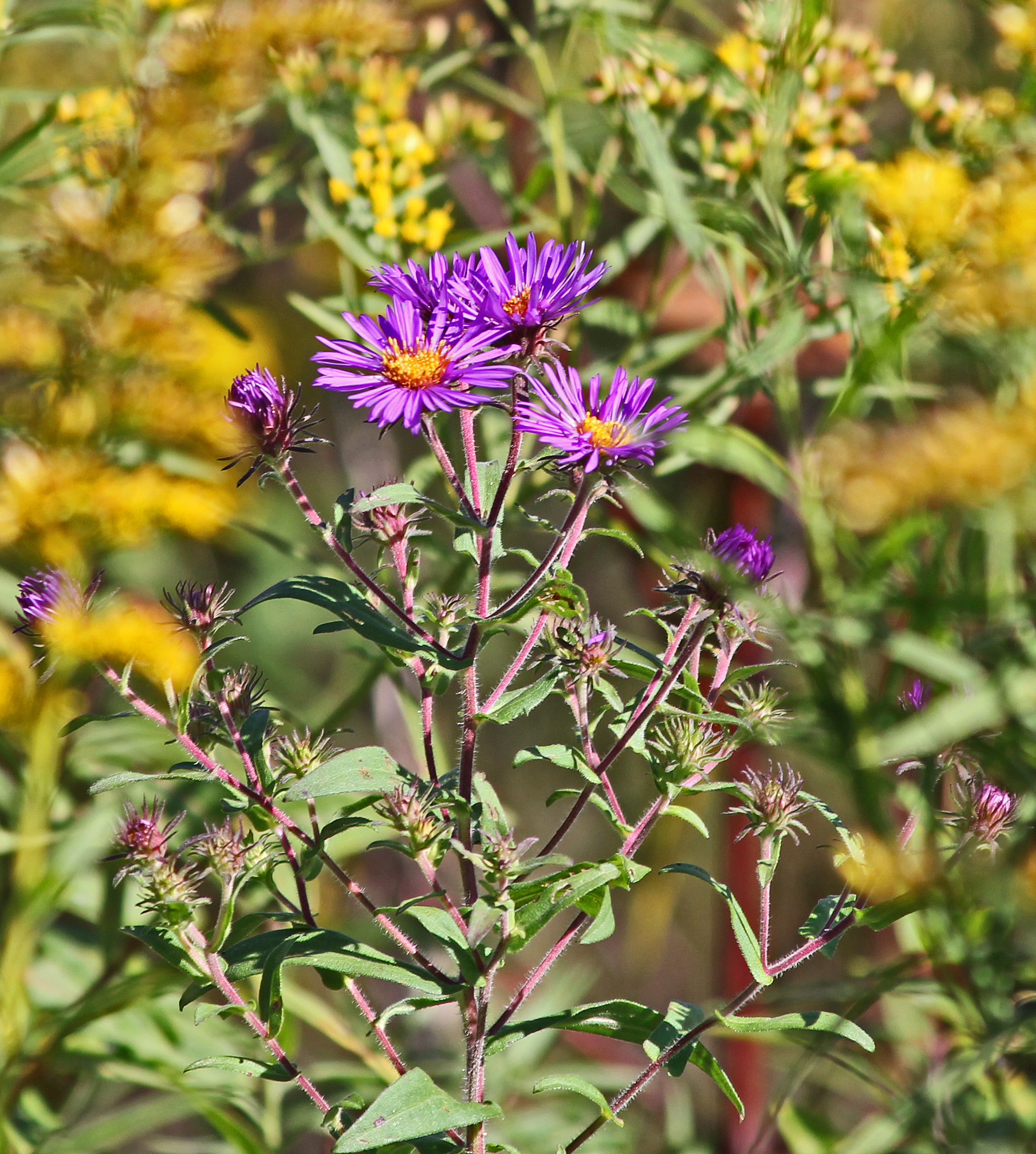
On the way, she passed, unremarked, goldenrod goldenrodironweedand ironweed

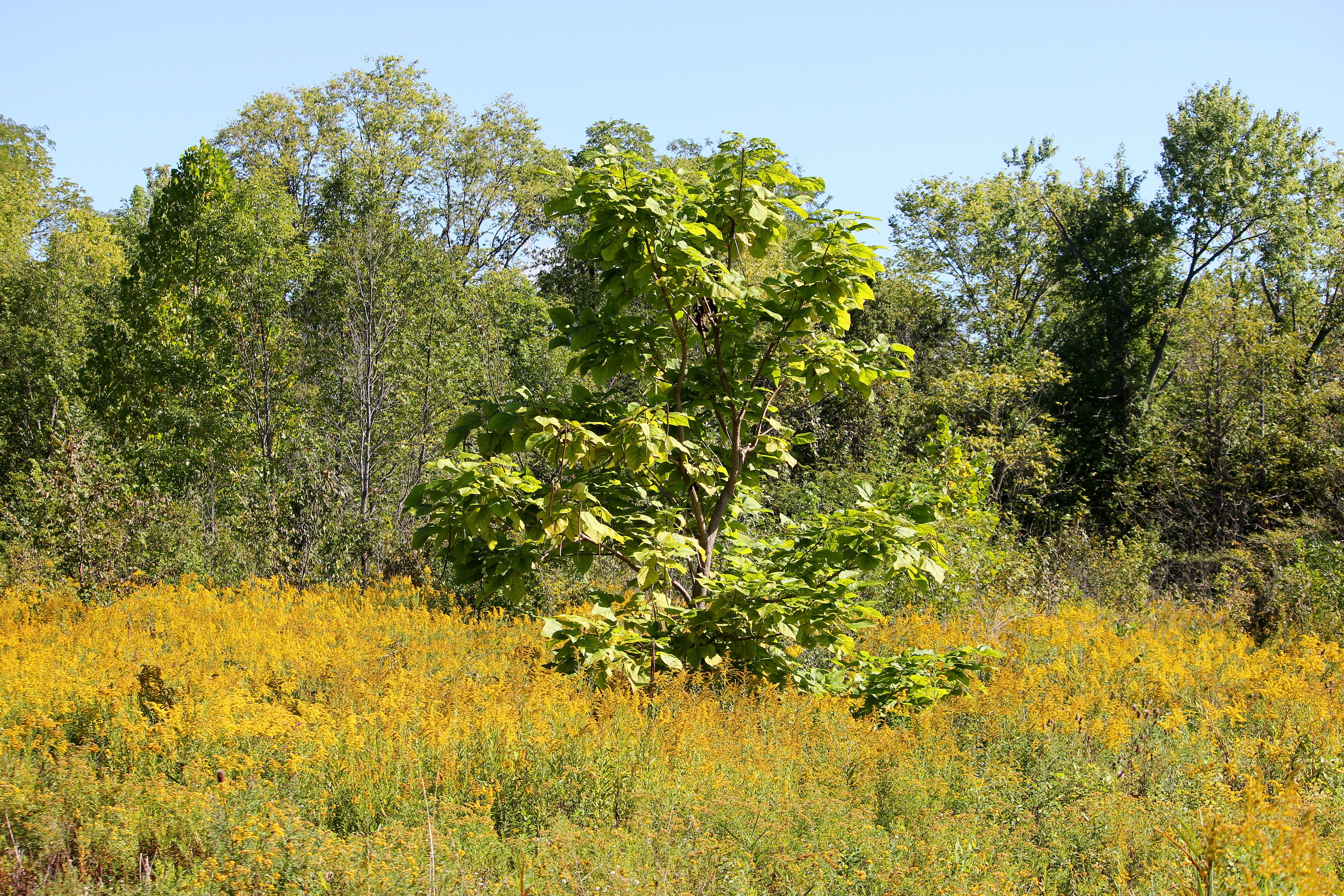
and a catalpa, alone, in the midst of the goldenrod,

catalpa in back 40

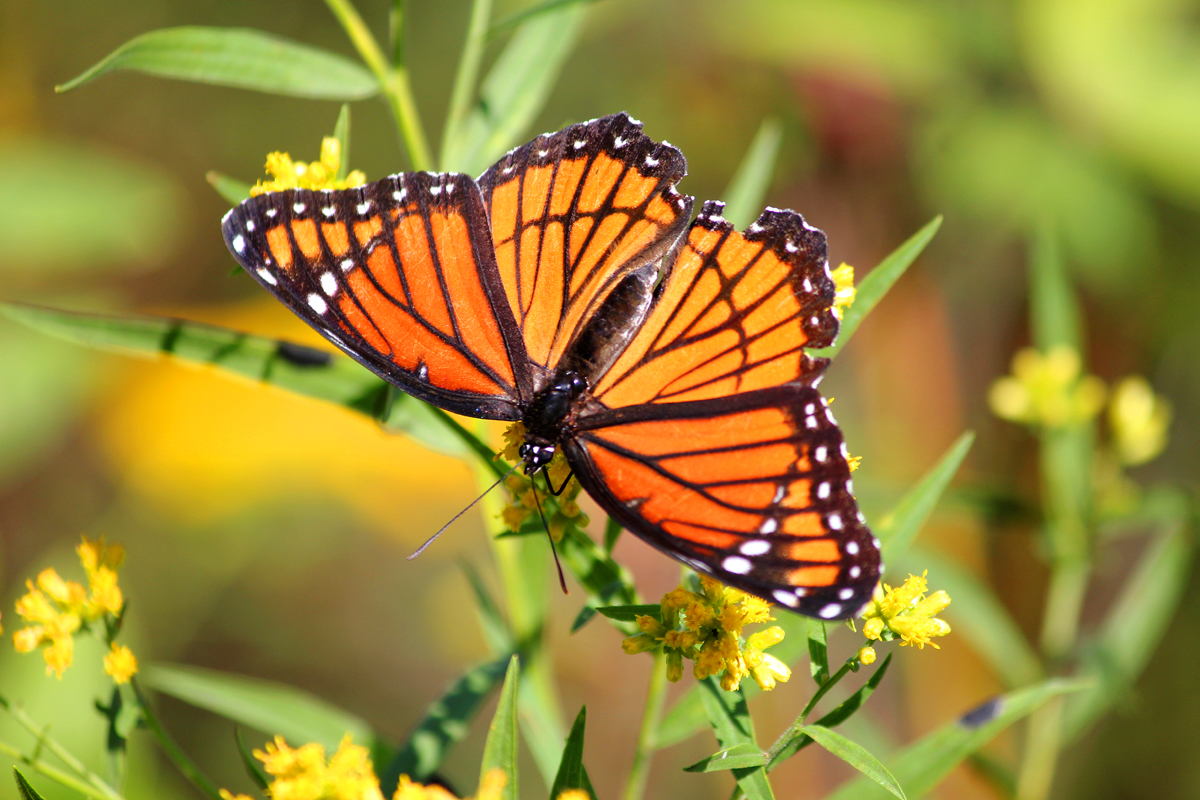
a viceroy

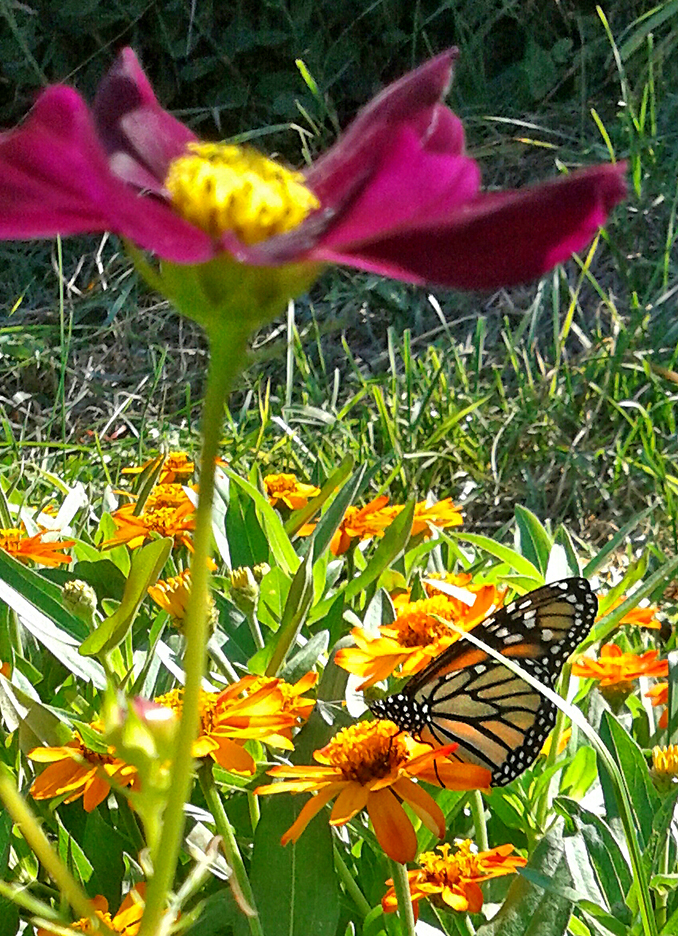
monarch

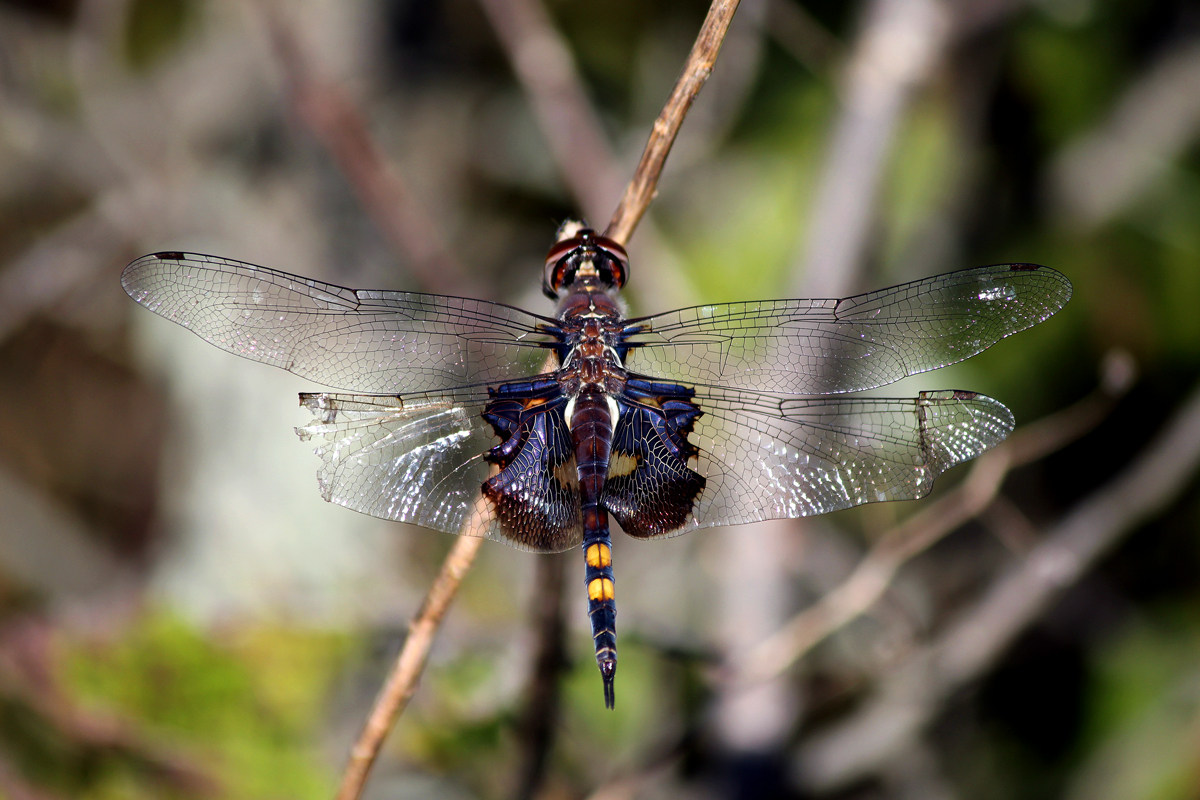
and a dragon.

saddlebag

Who knows what she’ll see next time, Cady, in the fields and along the stream? Or the time after that, for she’s not going anywhere, our Cady.

cady by deadfall_edited-1

Welcome home.

All (almost) natural

TrioSaturday morning was humid, just like the day before and Sunday, Monday, Tuesday…you get the picture. The rain of Friday night persisted into the daylight hours, cooling the air and freshening the yellows, greens and amethysts of this late summer season.

Beautiful clean-up

Beautiful clean-up

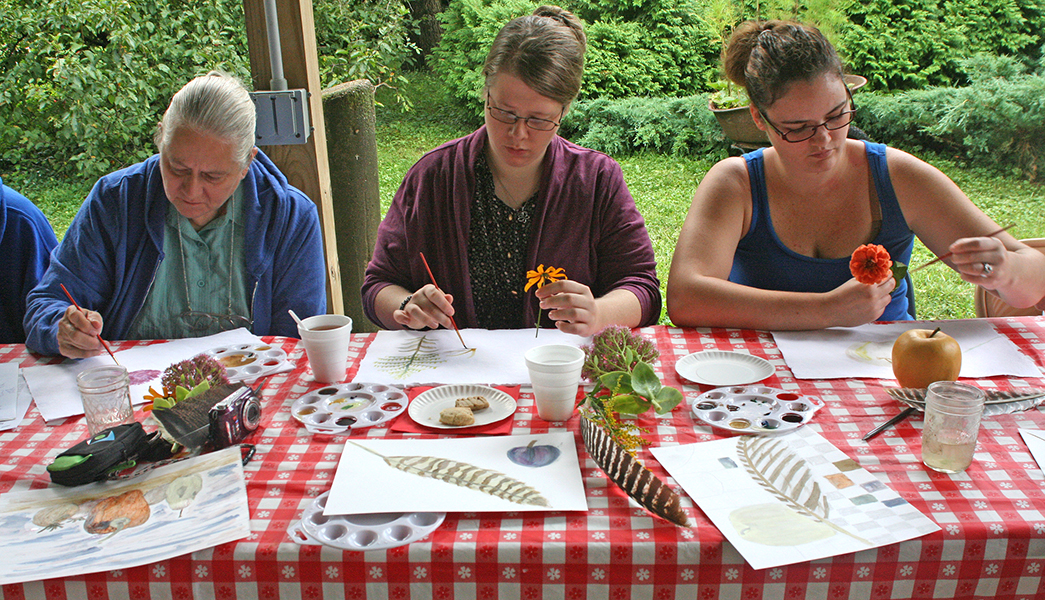
And while the raindrops fell, the paints and papers came out under the red roof of the Seitz Family Pavilion, this time for a workshop on Drawing and Painting using natural materials. The fruits of a wild Friday evening in the kitchen resulted in a Saturday palette consisting of four different “paints” stewed from goldenrod, black walnut hulls, blueberries and strawberries, powdered paprika, topsoil and subsoil.

Side note: Potbelly pigs are unimpressed by cooked goldenrod.

There was also to be charcoal grilled from wild grape vine and willow, but since the damp air would have lent more slime than smudge to the medium, solid graphite pencils were used to sketch one or two selections from a table filled with flowers from the Red Fox Cabin gardens, honey locust thorns, the world’s most realistic fake fruit, and feathers molted this summer from the bronze turkeys next door at the farm animal sanctuary.

Will Laura’s scrumptious shortbread to fortify, as well as coffee and green tea, participants created two pieces each, with everyone coming up with unique shades as they experimented with the materials. A nearby poke plant produced a rich magenta. Because I couldn’t cook up a good green, each palette was fortified with tube watercolors, but someone came up with a fresh green using goldenrod and walnut. Since there were a whole lot of brushes being dipped in coffee cups (mostly by accident, although black coffee makes a nice ink), the poke berry paint was applied straight from the berry.

I am going to try freezing goldenrod and walnut paints, so the next workshop may be yet this winter. We shall see. In the meantime, take a look at the gallery from Sept. 5’s lab work and check out Nick Neddo’s The Organic Artist for further motivation. This book just arrived in the mail and it is calling softly from the bookshelf.

This slideshow requires JavaScript.

off the lake and (hopefully) out of the bush

A chalk board rendering on the Lake Erie food chain, discovered in a lab at OSU's Stone Lab

A chalk board rendering of the Lake Erie food chain, discovered in a lab at OSU’s Stone Lab

On approach to Stone Lab

On approach to Stone Lab

During what I recalled at the time as a third trip to Stone Laboratory on Lake Erie’s Gibraltar Island (although I think a fourth stop snuck in there somewhere), I was struck by several things:

-Although Lake Erie is the shallowest of the Great Lakes, it is a force to be reckoned with when the wind is high and the waves are rolling (in fact, I believe it’s one of those rare occasions when it is appropriate to use the word ‘awesome’ as a descriptor).

-Lake Erie water snakes are gorgeous creatures, especially when tangled up in a ball on a sunny dock’

Water snakes in the sun on an old Gibraltar Island dock

Water snakes in the sun on an old Gibraltar Island dock

-The bottom of your sleeping bag, with the top curled securely over your head, can pass as a safe place when you wake up in the middle of the night and realize you are on an island roughly the size of a football field without a boat and no way off until morning.

-Gulls perched on an outcrop at the bottom of a cliff overlooking Lake Erie at sunrise are ever so much more beautiful in real life than in a Pixar film.

-Bush honeysuckle invades even the small freshwater islands off Ohio’s shores.

HAB art: algal samples of all types were collaged and framed in one of the labs on shore at South Bass Island

HAB art: algal samples of all types were collaged and framed in one of the labs on shore at South Bass Island

I was there to learn more about harmful algal bloom and the current state of what humans know about the how and why of the overabundance of cyanobacteria. I came away with 10 lectures and a research vessel outing’s worth of that, as well as a greater determination to help develop a plan to control bush honeysuckle on The Quarry Farm.

Why do we want to control bush honeysuckle? Yes, birds and small mammals eat the berries, but these red edibles are wildlife junk food: cardinal potato chips. The goats of the farm animal sanctuary have helped get a handle on Russian and autumn olives, multiflora rose and even garlic mustard, but bush honeysuckle wreaks havoc on their digestive systems so we must keep it out of their reach.

Silt plumes from a lake bottom sample off Put-in-Bay

Silt plumes from a lake bottom sample grabbed off Put-in-Bay

And the spreading shrub is a monoculture of sorts, growing quickly and shading out all native species as it spreads like wildfire. The 2012 derecho felled some of the preserve’s tallest trees and the invasive jumped right in to fill the void. Without intervention to control bush honeysuckle, which humans introduced to North America in the first place, there will be little left to hold the soil in place and out of waterways, and there will be few nutritional foods for native wildlife.

We are writing a grant proposal for Great Lakes Restoration Initiative funds to get a major push underway. Thanks to support from Jim Hoorman of Ohio State University Extension, Dr. Ken Krieger of Heidelberg University’s National Center for Water Quality Research , Tim Brugeman of the Blanchard River Watershed Partnership, Dr. Jan Osborn of the Putnam County Educational Resource Center and Brad Brooks of Tawa Tree Service, we’ve got some major stamps of approval for a project that we believe can be implemented well beyond the tree lines here.

Stay tuned.

As another bus rolls by

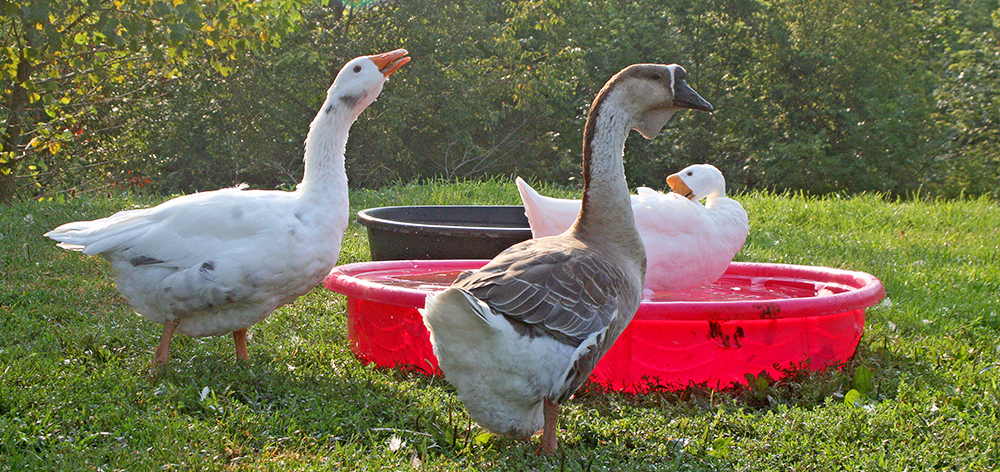
3 GeeseThis is the week when, beyond the preserve perimeter and the latch of the gate, the yellow buses begin to roll with the new school year. In the heavy, humid morning air — doesn’t seem to matter if the temperature is high or low — there are 1/2 mile shouts of “Bus!” from siblings who are already out the front door to another sibling who is in the throes of mid-adolescent groom.

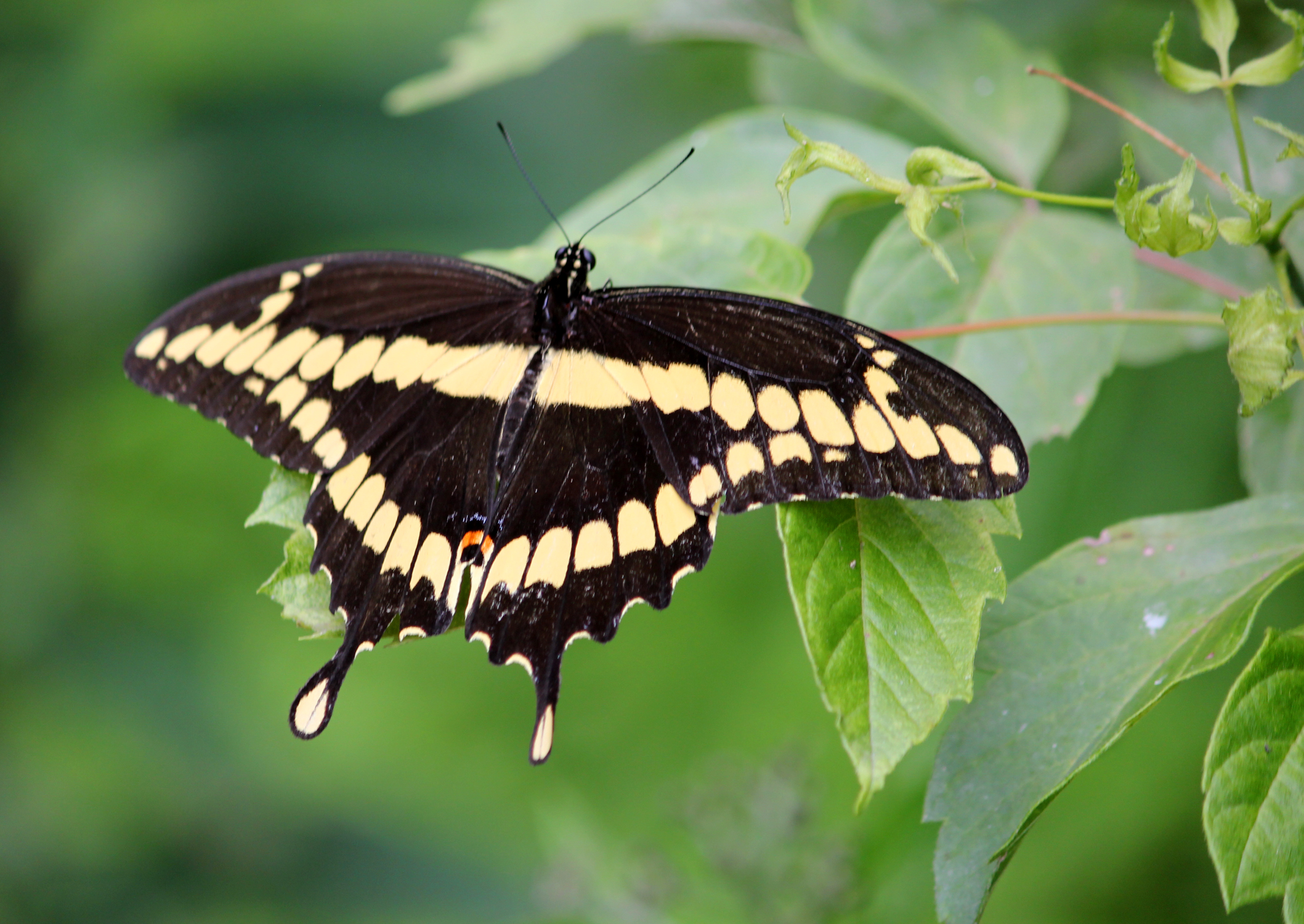
Giant SwallowtailThis week isn’t just an adjustment for school-age children and their families, or drivers who must adjust their drive to work because of reactivated bus traffic. The grasses and lone trees at roads side rustles this time of year with ground birds, pre-teen fox kits, raccoon, shrews, voles and heat-seeking butterflies who, up to Sunday night, had to contend with one schedule of human activity and now must adjust to another noise and traffic level as they ready for colder weather or a move to warmer climate.

What I’m trying to say is, it’s back-to-school for all creatures great and small.

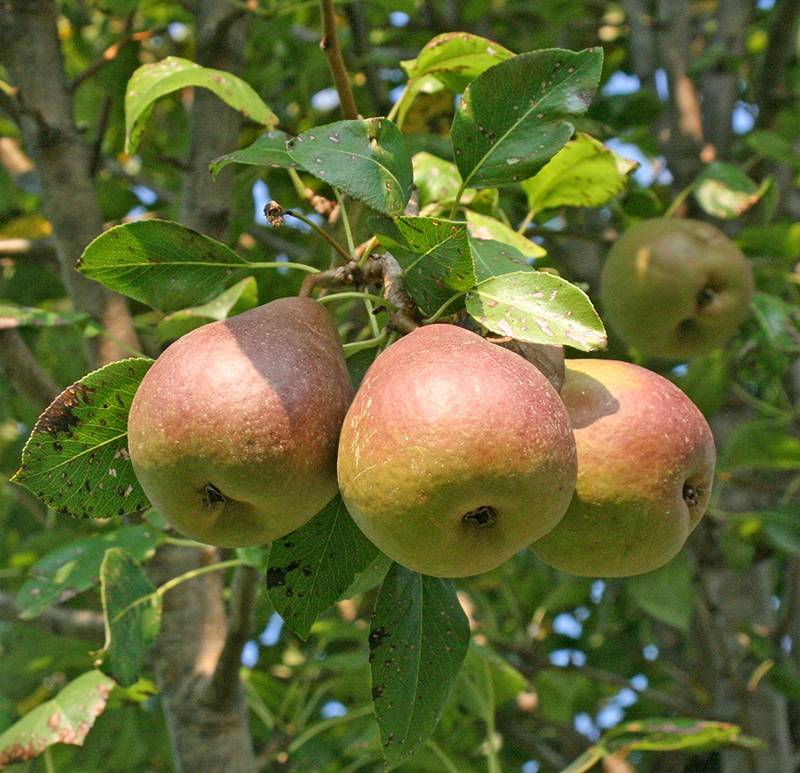
PearsIn the cool of the morning, all are active, seeking warm pools of breaking sun in the lee of open doors and east faces. Pears and volunteer apples glow amongst leaves made more green by contrast with the blue a.m. sky.Antonio

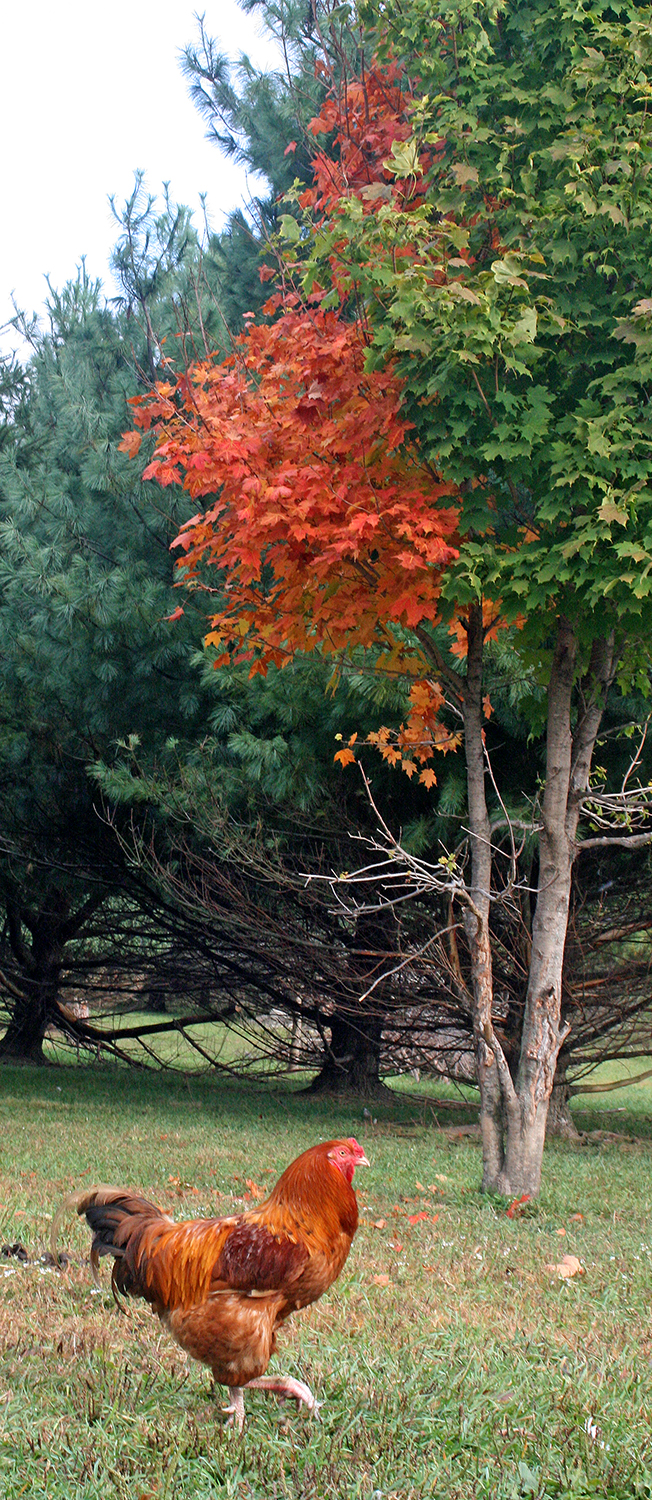
Inside the fence and tree line, new rooster Antonio and established cock-of-the-walk Freckles seem to have established a hierarchy, at least as far as the flock is concerned, although, based on past experience, they will always try to outcrow each other.

No one messes with the will of Bob, except for one white rabbit.

Waldo BobMardiganLucyAs the late summer days heat, the chickens bury themselves in dust bowls or sprawl on the decks with the goats. All the goats, that is except for Mister Bill, who digs deeper and deeper pits in the driveway gravel to escape the heat/cold/rain/wind/gnats, or just because.

Luckily, there’s field stone to fill and an active stone quarry two miles north, and pleasant company to make the effort all the more worthwhile.

Please, as you yield for the school bus, have a care for the the roadside as well.


Creativity in the garden

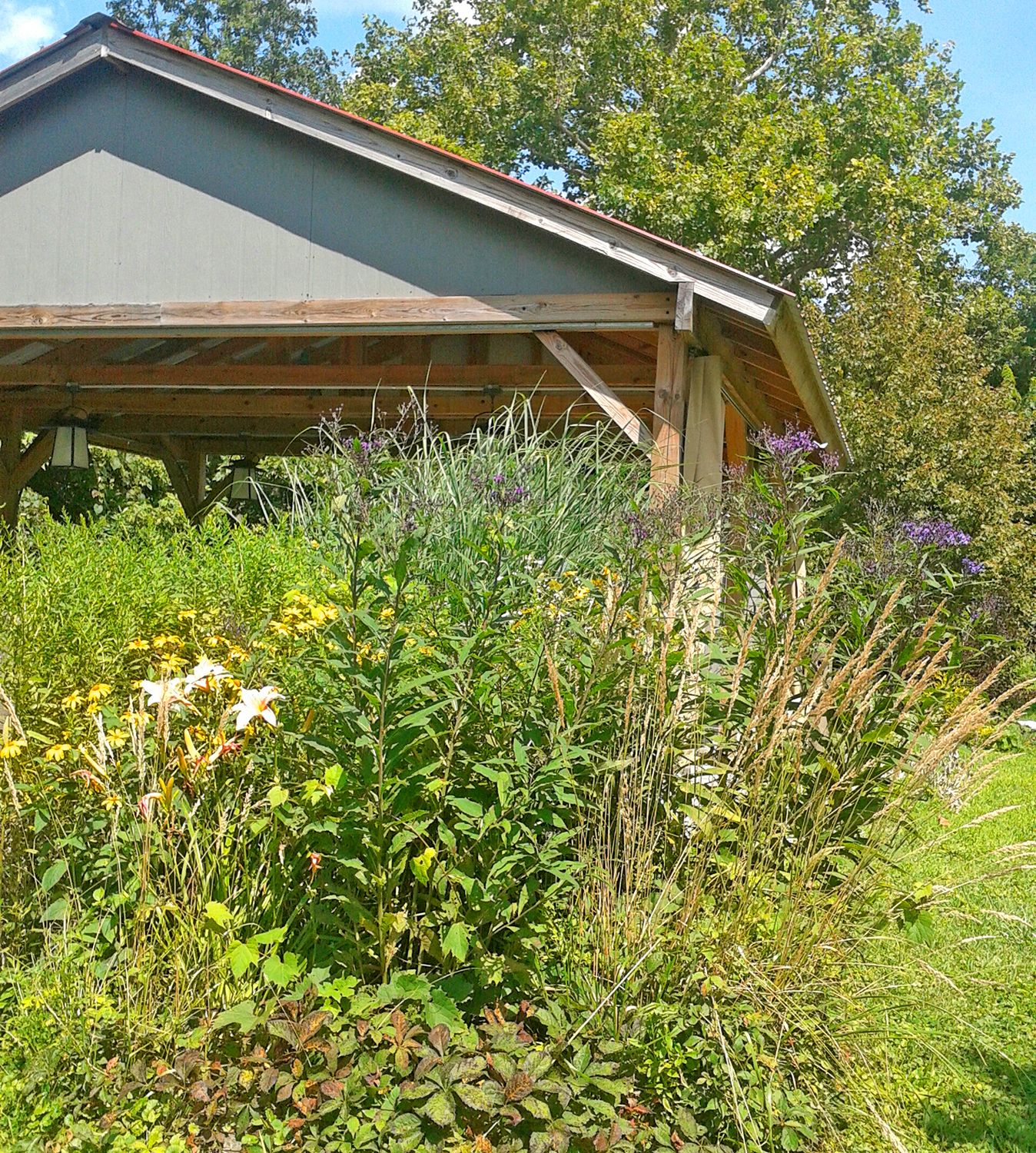
The Seitz Family Pavilion resembled a construction site this morning as bags of concrete, vermiculite, and vinyl patch were piled under its roof in preparation for a make-it-take-it workshop at The Quarry Farm.

Under the tutelage of Board President Laura, the Gardening Basket Herb Society, with members from Putnam, Hancock, and Hardin counties, made a variety of containers and stepping stones for use in their gardens.

IMG_4989

There were the makings for hypertufa pots, that mysterious stuff that resembles wet kitty litter when mixed but dries with a unique surface that, to me, makes a plant look as though it is thriving in an earthen sculpture.

IMG_4992Plastic buckets and pails of concrete were stirred with great big spoons and paddles to make steppers and then decorated with everything from glass beads to shells and aquarium stone. More concrete was pressed over leaves arranged on sand mounds to create leaf bowls.

Slurries —concrete ‘gravy’ — were dabbed and poured over draped towels and other cloths to make fabric pots.

IMG_4985There were also marbles, glass pebbles, press letters and crockery bits with which to ornament the finished containers, if the students so chose. Unbeknownst to the group, these sparklies had been perused on Wednesday night by a couple of juvenile raccoons. I heard them chattering from next door as I was putting the chickens to bed.
I think the masked marauders were unimpressed. Although one bag of marbles was on the grass off the concrete pad, all the shiny bits were contained.

Butterflies beyond the heat islands

20150806_181856-120150805_151615-1There is no better cure for a bad case of the Mondays than a brisk walk in the open air. If your feet take you beyond the water cooler and out of doors to a concrete sidewalk, perhaps this virtual walk in The Quarry Farm butterfly gardens will transport you beyond your August Ohio heat island.

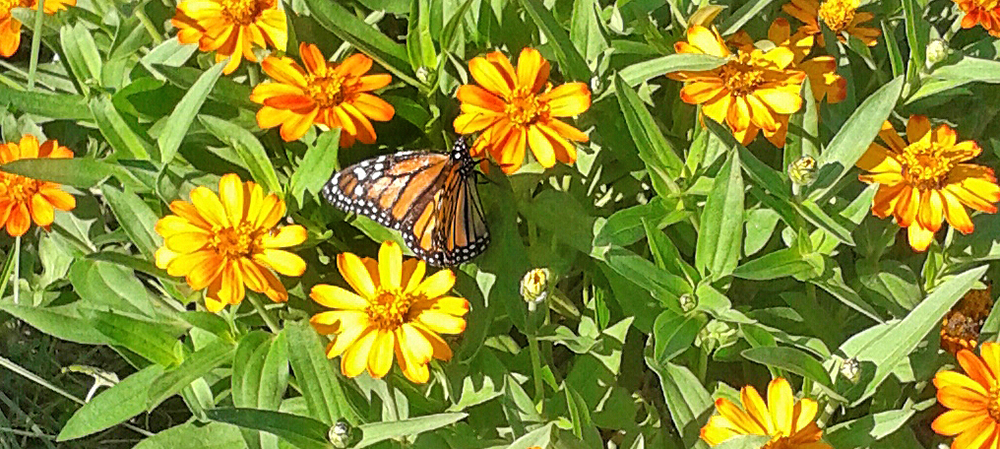
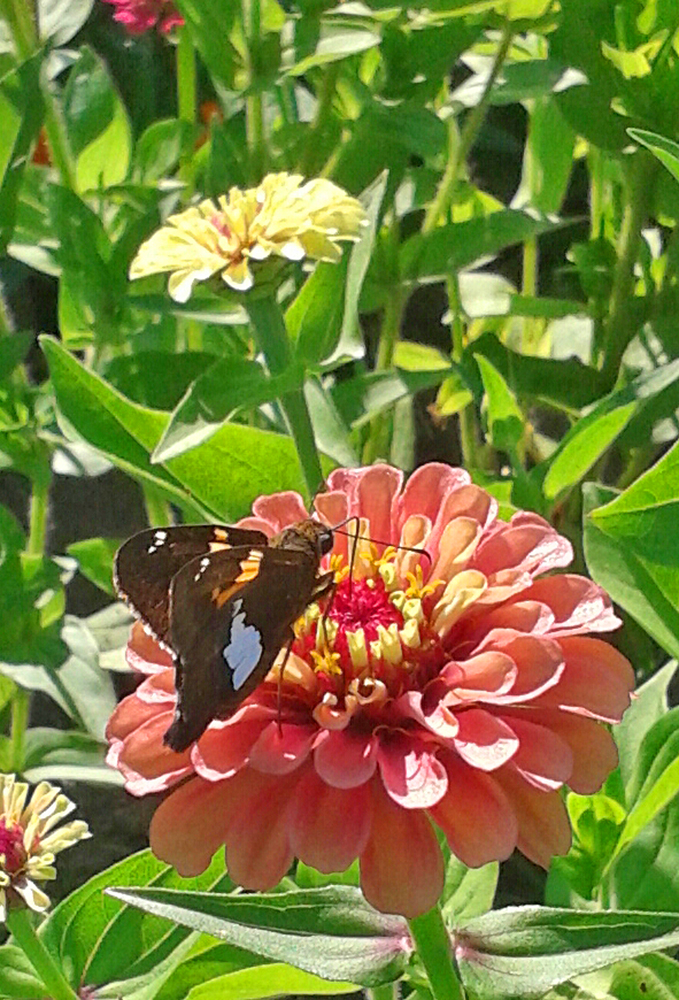
Late summer in Northwest Ohio means sweat that never dries, elephant-eye-high corn, even this year after months of heavy June and July rain, and the golden greens of mature plant leaves, the rich amethysts of ironweed and Joe Pye and the hot reds, oranges and burgundies of lilies, cosmos, Susans, zinnia and echinacea. The Gardener would likely list many more flora, but since she’s otherwise occupied in the gardens themselves, you are stuck with those plants that I can identify around the Seitz Family Pavilion.

Skipper

Silver-spotted skipper butterfly

Monarch under cover

Monarch under cover

Lucky for all of us, she always carries her phone. And because she does, she took photographs of the better-late-than-never butterflies that are moving from flower to flower.

Better still, she took video. So, find a park bench or an open window and take a virtual butterfly walk in the warm August sunshine. There is breeze today to keep the virtual mosquitoes at bay.


Our first number is, “The Dance of the Tiger Swallowtails.”


Tiger swalltowtail

Tiger swalltowtail

And what better image to leave you with, for today, than a giant swallowtail doing its level Lepidopteran best to pollinate every plant in the north bed?

Now go back to work, full in the knowledge that there are still butterflies in the world.

Carlton goes to college and other colorful stories

P1080221 We’re six days and counting with no rain. The morass is drying and the butterflies and other pollinators have landed, flitted, and flown in greater numbers than we have seen in these parts yet this year. Before summer’s end, I may need all 10 fingers to count monarch butterflies. The milkweed keeps sending out its rich fragrance. We can hope.

In between butterfly counts, we loaded a crated Carlton into the car and took him down to the Veterinary Medical Center at Ohio State University. What started out as a solid mass that wrapped under his right foreleg had settled into three abscesses. Fearing a pernicious parasite, we made the trip that IMG_4674we’ve made twice now with Marsh the Nigerian dwarf goat.

I love that place — if not the reason for going, but for the experience. The veterinary students and faculty and are curious, kind and thorough. On Thursday, with a dozen or so students gathered around, Erin “won” the opportunity to lance the most problematic abscess. It was truly spectacular, so productive as to elicit a burst of, “Ah-ohhhhs!” and applause. Dr. MacKay announced, “I don’t trust anyone who doesn’t appreciate a good abscess.” That right there is a bumper sticker in the making.

Continental 3On Friday, more color, of a very different kind, arrived here on The Quarry Farm. The Continental Junior Gardeners visited for the fourth year. There were many new faces this year, although some came into focus as we realized they were the siblings of children who visited in the past. They gathered leaves and arranged them on white t-shirts, then sprayed diluted acrylic paints on the shirts to create one-of-a-kind designs. Leader Charlene Finch said they will wear them in the Continental Fall Festival parade in September. Continental 2

After lemonade and cookies, they walked through the butterfly gardens and visited the farm animal sanctuary. The turkeys claimed the group as their own and gentle giant goat Mr. Bill smiled for several cameras. Before they left us for another year, all but one camera-shy dad posed on the red Fox Cabin front porch for their annual portrait.

ContinentalThe sun continues to shine today. Damselflies and dragonflies are on the move, lessening the hum of mosquitoes bred in the recent floods. With paint left in the spray bottles, I think a few more t-shirts will be made this afternoon. Pick up a t-shirt of your own and come on by around 3 p.m.

Can’t promise there will be any cookies left, but there are butterflies and a much happier pig next door.


A long week with not enough time

Beginning with an 11 a.m. appointment with a room full of children and a few adults at the main branch in Ottawa, we visited every Putnam County District Library location in the county. In this case, “we” is not a royal “we” but rather two humans, a middle-aged Virginia opossum and a bucket of freshwater macroinvertebrates.

Two weeks ago, we drove an hour east to Honey Creek, a Seneca County tributary to the Sandusky River. Our mission was to collect hellgramites, the impressive predatory aquatic larva of the terrestrial and flighted dobsonfly. By all rights, or if all was right with the world, we should have been able to find them in Cranberry Run as it passes through The Quarry. Underneath all the silt of the stream and Riley Creek into which it flows — even the bigger Blanchard at the end of the Riley — there is a river bottom of cobbles and boulders, prime habitat for hellgrammites. But there’s that silt, smothering everything.

Like I said, we drove to Honey Creek in between heavy rains and flood events and did net a few dobsonfly larva as well as two large dragonfly “babies”: a spidery skimmer and a froglike darner. Here at home, we collected leeches, snails, and half of a freshwater clam shell, its mother-of-pearl lining worn smooth. We set up an aquarium for their stay.

Each weekday morning, Captain John Smith was loaded into a carrier and as many macros as we could fish out of the aquarium were placed in a bucket for transport. No dragonflies made the bucket because, a few days after their arrival in Putnam County, the hellgrammites ate them.

S & J 2BoysIt was a good week. We met new people, the Captain made a favorable impression for his kind, and I got to play with leeches. One young man suggested that leeches are kind of like shape-shifters. I like that. I’m going to remember that for our next gig. Two more suggested that the Captain’s tail looks like corn on the cob. Never though about that before, and they’re right.

Today is Saturday, and we are kind of tired. It seemed like a long week, what with two speaking engagements per day on top of day jobs, slogging buckets and straw through rain and mud here on the farm and in parking lots and nursing one of the potbellies through a mysterious spate of abscesses until his appointment next week at Ohio State University Veterinary Clinic.

IMG_4408But I realized, after finishing Sy Montgomery’s The Good, Good Pig, that two speaking engagements per day for five days wasn’t nearly enough time to point out the importance of Virginia opossums and hellgrammites in our human lives. You need a lifetime of appreciation.

Nor is it enough time to admire the intricate, delicate patterns that trace the exoskeletons, especially across the backs of their heads. One glance in a bucket at the boneless athleticism of a swimming leech is just not enough, not enough for anyone.

We hope it was at least enough to leave everyone wanting to learn more. As Ms. Montgomery noted in her book, maybe a one-off was enough to lead some to a new way of thinking.