Passing Through

Orphans. The word conjures a host of images, mostly Victorian, of wide-eyed children dressed in rags begging on streets or, empty bowl in hand,  pleading for more; of row on row of narrow beds, each filled with a child praying for a good family. These are Hollywood images, as unrealistic in their portrayal of real orphans as television is in its presentation of detectives or living in New York City. They’re the only ones I know, though. The human kind, anyway.

But there are other kinds of orphans.

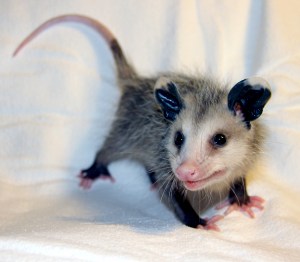
This year we’ve handled the usual: squirrels, opossums, vultures, swifts, starlings, sparrows and more, all either passing through our hands up to Nature’s Nursery or down to us from there for release or fostering. At present, we’re hosting two: a black squirrel and a Virginia opossum.

The opossum was one of six found on their dead mother (she was hit by a car). While we’re not certain how long the little ones were out there clinging to her corpse, it’s likely that it was quite a while. All six were slow and skinny and dotted with fly eggs. The worst part of such a case is that the young continue to feed from their mother and after she has died, the milk that sustained becomes corrupted, poisoned. Five of the six died. On the up side, the one that survived is strong and growing and shows no sign of becoming attached to the people fostering him. Just the opposite, in fact. He hisses and growls when we approach, bites when we lift him out to clean his temporary digs. He’s been here about a month and we expect that he’ll need to stay another before moving on and out there, on the Quarry.

The black squirrel is a new arrival, an intake from a Lima man who found him outside his apartment. After doing everything he could to reunite the little squirrel with his mother, James called us. This squirrel, like the opossum, is strong and a good eater. We’re providing a temporary safe haven for him. Tomorrow he’ll make the trip north to Nature’s Nursery where they have several other juvenile black squirrels.

Looking for White Cat

We’ve been busy here. You’ve been busy there, wherever your ‘there’ may be. So much going on that, like me, you are in danger of missing the gold-tinged greens and amethysts of ebbing August, at least as it is here on the Quarry Farm.

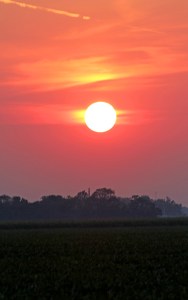
I did almost miss it. We have caught a smattering of the sunsets, the kind that include that frosted-animal-cookie pink. But any noticing has been as we walked past a window or distributed hay to Buddy, Marsh and S’more or put the hens to bed. Then one of us left a door unhinged enough that Beatrice opened the front door and let the cat out.

Although we do have several cats, it was White Cat that slipped out. White Cat is deaf as are many white male cats. While there are plenty of dashing, flying and sparkly sorts of things in the outside to entertain a house cat, there are even more along Cranberry Run and in a 50-acre woods that will feast on feline. One that can’t hear a predator approach is especially vulnerable. So we looked high and low for White Cat. And as we did, we caught late summer.

Wild plums ripen

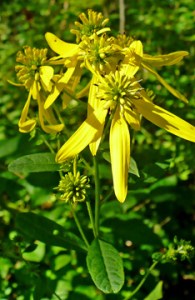
The wild plums are ripening on the nature preserve. Some hang at eye level beside the rich yellow Jerusalem artichokes and purple ironweed on the stream bank. Most plums are rose gold, but some are beginning to flush to mauve. For the first time, Steve will be able to make wild plum preserves to sell at the Quarry Farm table at the Farmer’s Market. (Warning: shameless plug for funding ahead.) Reserve your jar now through the Gift Shop!

Jewelweed, nature’s cure for the maddening itch imposed by poison ivy, is in bloom in the floodplain. The algae growth that plagues Cranberry Run, as well as most of Northwest Ohio’s waterways, is camouflaged by shimmers of sunlight that ignite the riffles. Higher up, the sun itself glows through the tired summer leaves, although the sunlight is cooling from the white hot of June and July. Better and better.

Bushel gourd on the vine

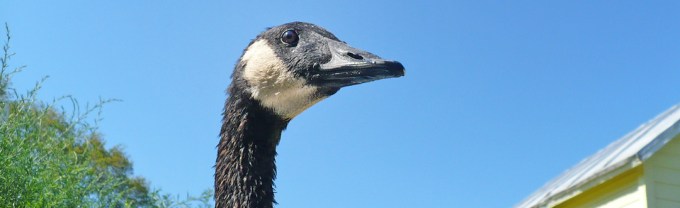
Down low, bushel gourds swell under huge vine leaves. Recent rains have brought on a good crop. The leaves have already been used this summer in a stepping stone workshop. More will be made before the vines wither in frost. The chickens and Johnny the Canada goose find this ground-level search fascinating, especially since disturbed vines yield fat, juicy crickets.

Wounded White Cat and Birdy nose

Even lower, under Buddy’s barn, White Cat is found. The roosters knew he was there; it just took the obtuse humans two days to figure it out. He has earned himself a gash under one eye and a limp, injuries probably inflicted by Buddy. Back in the house, White Cat is thoroughly sniffed before he settles himself in for a good grooming. Outside, the finches and field mice can peacefully ready themselves for the cold months. We will remember to notice.

It’s the little things (that show you care)

Here on the farm sanctuary of the Quarry Farm, you all know by now that we have chickens. Of those chickens, four are roosters. One rooster, Sid, doesn’t count because he is fancy and that keeps him docile and slow-moving. Bernie, Jeff and Ralph are birds of a different feather altogether.

These three probable Rhode Island Reds have three different origins that shall remain a mystery to us. But all three will live their lives together in the paddock with Buddy the miniature donkey and Nigerian dwarf goats S’more and Marsh. Sid has the roam of the rest of the place where he is tolerated by the hens who can easily out-manuever  him. The three other roosters have an easy truce between themselves as long as the hens keep out of the paddock. And when no one is in there with Mr. Shovel.

Unfortunately Mr. Shovel must make an appearance every morning in order to remove the donkey, goat and rooster leavings from the previous day. Bernie, the original rooster, does not care for Mr. Shovel. Nor does he particularly care for the person who is wielding Mr. Shovel.

If you have ever been spurred by a full-grown rooster, you know it results in white-hot searing pain that bleeds like nobody’s business. The kick that accompanies the spur usually leaves bruises. I myself actually suffered my first severe ankle sprain after a confrontation with Bernie. Since chicken dinner is not on the menu here on the farm sanctuary (so don’t even go there) I have learned: A) not to wear bright red around Bernie; B) keep Mr. Shovel between myself and Bernie; C) make sure Ralph is keeping an eye on Bernie.

At first Bernie was very friendly, but sometime during the course of the second year he became aggressive, mostly with me. Steven claims it is because I wore a bright red rain jacket around him. The jacket went to Goodwill, but Bernie still came after me every time my back was turned. So Bernie was banished to the paddock so he wouldn’t go after anyone else. That helped until he took a dislike to Mr. Shovel. Enter Ralph.

Ralph came to live with us about two years after Bernie did. He was adopted with a group of hens, all unwanted by an Allen County landowner. So as to give the hens here a relatively stress-free existence, we put Ralph in the paddock, too. Ralph and Bernie duked it out for a while and Ralph came out on top. Jeff joined the fray some time later the same summer. Ralph remained the dominant rooster, so much so that Bernie’s comb diminished and he became quite tame. For about a season.

This spring, Bernie again decided that I am not to be trusted and indeed am to be chucked out of the paddock at every opportunity. But Ralph doesn’t feel that way. My little red-combed savior will keep himself between Bernie and me, even driving Bernie off to the far corner of the paddock. Ralph will also break up private trysts between Jeff and a hen named Barbara, but that’s a different story.

Just a few minutes ago, Ralph came to my rescue again. After posting this, I am going to take him a slice of yellow squash.

By the way, the photo of the horned worm has nothing to do with this story. Steve took this last week as these voracious creatures were being hand-eradicated from the tomato patch at Red Fox Cabin. I just thought it was a cool shot.

A Swift Release

Sunset from The Quarry Farm.

This has been a strange year, a difficult year, in some respects. An overabundance of spring rain gave way to summer drought and a flurry of fierce storms. The storms, in particular, have proven hard on the living and arguably hardest on the birds. Strong winds shredded trees and the nests to which they offered insufficient protection. For many wildlife rehabbers in the area, the storms brought a rain of orphaned and abandoned birds. This past weekend, Natalie Miller, education and rehabilitation specialist with Nature’s Nursery, brought two of these foundlings to The Quarry Farm. The birds were chimney swifts and they are a welcome addition to the fauna here.

One of two chimney swifts brought to Red Fox Cabin for release.

Chimney swifts (http://www.chimneyswifts.org/) are insectivores. Incredibly fast flyers, hence their name, they wheel about as sunset approaches, snatching meals of flying insects. And, again as their name suggests, they nest in chimneys, such as the one at Red Fox Cabin. Finding established populations of chimney swifts is becoming increasingly difficult. Abandoned or rarely used chimneys, the kinds of places where swifts can set up house unmolested, are rare. So it was worth the hour-long trip south to release these birds here, where others of their kind can help them learn the skills they’ll need to survive.

Red Fox Cabin

We took both birds out to the cabin just about mid-evening. Although there was no immediate sign of the resident swifts, they’re a common sight here. As it turns out, we only released one of the birds (the video of that release accompanies this post; don’t blink or you’ll miss it). As the released bird swept up and over the tree line along the road, five of the Red Fox Cabin swifts flew in from over the quarry and herded the newest member of their flock away from the soy bean field and back to The Quarry Farm. As for the second swift, it still needs a little more care, a bit more time to grow, before it’s ready for release. For now, it’s in the capable hands of Rita Seitz, and probably will be for at least another week. When the time comes for it to join the others, we’ll be sure to let you know.

Raptor Rehabilitation and Release

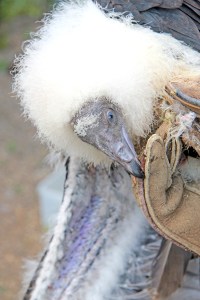
One of two pre-fledgling turkey vultures surrendered to Black Swamp Raptor Rehab.

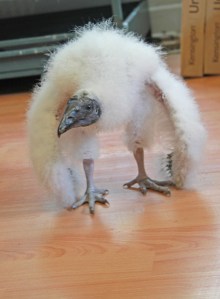
This past weekend, we were offered the opportunity to do something a little bit different. As part of our function at The Quarry Farm, we often serve as transporters for several area wildlife rehabilitation centers. Laura Zitzelberger, director of operations at Nature’s Nursery Center for Wildlife Rehabilitation and Conservation Education, contacted us and asked if we’d serve as courier and chaperone for two pre-fledgling turkey vultures. The barn the two birds were nesting in was destroyed by the storm that tore this area apart in late June. Since then, the birds had been under the care of Diane Myers at Black Swamp Raptor Rehab. Nature’s Nursery had taken in a nestling turkey vulture and were excited at the chance to properly socialize their charge by introducing it to the two birds from Black Swamp.

Despite some rather unsavory habits, turkey vultures are social, intelligent animals (http://www.allaboutbirds.org/guide/turkey_vulture/id).

The nestling turkey vulture surrendered to Nature’s Nursery.

Sadly, these positive attributes create a challenge for rehabilitators. Imprinting becomes an even more serious concern as their social nature makes them more prone to identifying with their caregivers. This can prove disastrous for any animal and can even prevent their successful release back into the wild. In an effort to offset their natural inclination to bond with their caregivers, the three birds were brought together in the hope that they would bond with each other. Although they can’t be housed together because of a significant difference in age and size, the three birds will be kept adjacent to each other and share a common wall; two on one side, one on the other. It’s hoped that all three birds will benefit from this situation, improving their chances for a successful release.

And speaking of releases, not only did we transport two raptors up, but we also brought one back with us.

Early last autumn, we were called on to pick up a red-tailed hawk in nearby Miller City, Ohio. The bird had been on the ground for a couple of days and the homeowner in whose yard the hawk was sitting had called Nature’s Nursery. We’re not entirely sure what was wrong with the bird, but it was in sorry shape when we arrived. Emaciated and dehydrated, the hawk had no energy to defend itself and we simply walked up to it, wrapped it in a blanket, put it in a carrier and transported it north. After months of exceptional care, the bird’s appearance and attitude had changed drastically and the rehabbers at Nature’s Nursery asked if we’d return her to the county of her birth.

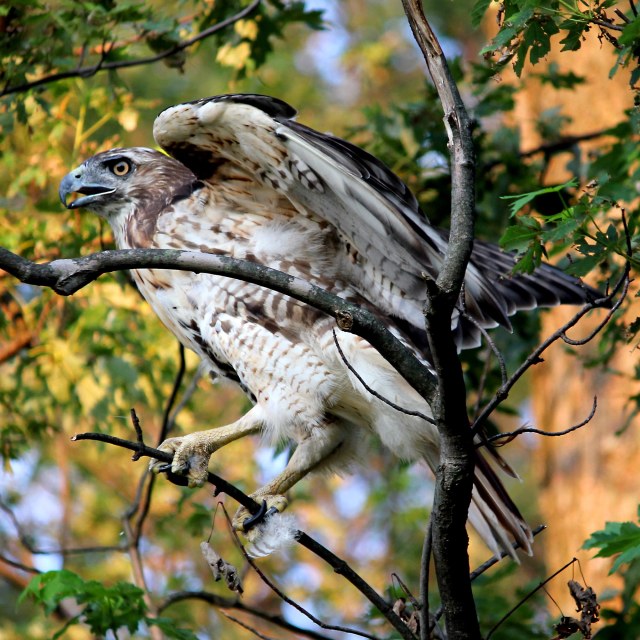
The red-tailed hawk perches shortly after release.

The hawk was slow to realize its situation and initially only flew far enough to perch in the nearest tree. But after a bit and the pestering of several camera-wielding humans, it finally took to wing and flew away and out of sight. I won’t say it was a picture-perfect release, but it certainly was a success.

We hope for the same results for the turkey vultures. When it happens, you’ll be the first to know.

The start of something big

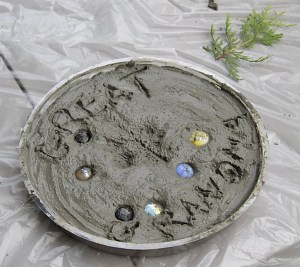
Memorial stepping stone

Last April we received an email from Julia “Julie” Mason, Medical Social Service and Bereavement Coordinator for Putnam County HomeCare & Hospice. Julie asked if The Quarry Farm would be open and ready for a visit from attendees of the annual Good Grief Fun Camp. The date was set for July 24, and we set about planning activities with the main event to be the creation of memorial stepping stones.

At the time of the calendar pencilling-in, we figured come rain we would be able to set up some tables on the porches of Red Fox Cabin and round up enough tents and awnings to keep the campers and their artwork dry.

It did rain for a bit, but we had no need of tents, tarps, or other such leak-worthy devices. Instead we had a roof over our heads, the warm red roof of the beautiful new Seitz Family Pavilion, so christened in honor of the clever, generous relatives that devised and constructed it on the site of the former compass garden (see http://thequarryfarm.com/2012/06/14/an-eighth-direction/.)

Just before the gable ends were finished

In fact, the construction crew finished the west gable end just half an hour before the Good Grief Fun Camp bus pulled up in front of the gardens. In honor of their being the very first visitors to use the new shelter house, the 28 kids plus their adult counselors were presented with gold medal sticker badges emlazoned with #1.

Inspecting a false map turtle

The campers learned about aquatic ecology and the life that populates and cycles through Cranberry Run as it passes through the nature preserve. They toured Red Fox Cabin and heard of its 1853 construction in West Virginia and its transport to Ohio in the 1990s. Since the cabin is too small to comfortably fit a tour group of 28+, some stepped out to meet Buddy.

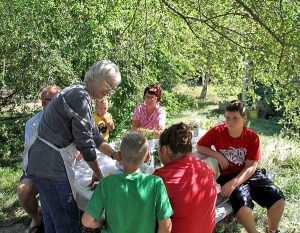
Camp counselors and Quarry Farmers put their backs and arms into mixing concrete so that the visitors could make their stepping stones. Leaves, berries and bright baubles and stones were used to illuminate the words that they inscribed. Lemonade and cookies were shared, the aquatic creatures were released and the big yellow bus was on its way.

So many choices

Architect Keith Seitz and his wife and partner Lois left for North Carolina this morning. His crew of brothers, sisters, nephews and nieces are off to their corners of the country as well. The sun is going under now and the chickens and geese must be put to bed so I will close this with my most heartfelt ‘thanks.’ You have opened the door, several doors, to new Quarry Farm possibilities. Rita and Martha, you take great photos. See you soon.

This slideshow requires JavaScript.

The gloves are off

Peter Noyes and his camera lead the way down the hill from the upland trail

The rains finally came and the trees, grasses, birds and animals with every number of feet collectively sighed with relief. Most joyously, the rains fell throughout the day of July 19 and stopped just long enough for the Allen County Ohio Certified Volunteer Naturalists (OCVN) to hold a meeting at Red Fox Cabin and walk the floodplain and upland forest trails. As the group emerged from the nature preserve and reassembled on the cabin porch for cookies and lemonade, the sky opened up for another dousing. Photographer Peter M. Noyes recorded the OCVN visit. Check out his website at http://www.naturebypete.com/ for that album as well as more from his portfolio. Good stuff all around.

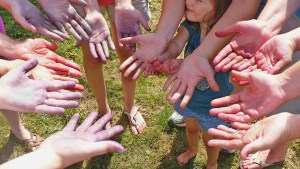
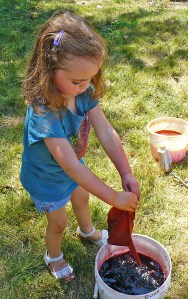
Today was quite literally of a different color. Many colors. A major tie-dye event produced a gallery of hats, shirts, cloths and even a few onesies that are now drying on tree branches and chairs at the neighboring Seitz farmhouse. A few hands were dyed in the process, as pictured above.

 Meanwhile back on the Quarry Farm, the shelter house is rising as a Seitz family crew is now in its third day of adding timber to the pad poured last month. Chief architect and foreman Keith Seitz designed the shelter house to blend aesthetically with the natural environment. The facility will be the site for many future gatherings, workshops and meetings, open to all by reservation appointment.

Buddy’s Big Day

Tiger in the garden

The Junior Master Gardeners of Continental (Ohio) graced The Quarry Farm with their presence on July 11, the first group to visit since the big wind blew through. Although there are still a couple of downed trees here and there, the paths were clear and mowed in time for the travelers to arrive.

Led by Charlene Finch, the group of 20 adults and children of varying ages drove in around 10 a.m. to beat the afternoon heat. They divided into three groups to rotate through three different learning and activity stations.

Mints and other herbs and flowers are bundled

Group #1 met under the shady zelkova in front of Red Fox Cabin. From Board President Laura they discovered the history of the cabin and the grounds, the gardens and made herb bundles from cuttings gathered there.

Group #2 circled next to the ash stumps, recent victims of the invasive emerald ash borer. This was the perfect spot to hear Steve the Insect Guy talk about stream ecology, perfect because his roundtable included a meet-and-greet with riverine beneficial insects that grow up to combat harmful insects.

Meeting a dragonfly nymph

Group #3 walked to the farm animal sanctuary where they were heartily welcomed by Buddy the miniature donkey. Despite the white-hot rising sun, Buddy held his post at the southwest corner of the paddock and brayed greetings to each group, keeping up the conversation throughout their stay at the station. One volunteer in each group was assigned to pet Buddy so that he would keep quiet long enough for Beatrice the pygmy pot-bellied pig to come out and meet the kids. This event was the first educational outing for Beatrice. She took a special shine to a gentle boy named Brandon, allowing him to feed her a piece of apple. Geese and chickens checked out the group from a distance, as did the goats.

Buddy greets a gardener

After all groups had rotated through the stations, everyone met at the cabin for cookies, lemonade, ice water and a group photo on the front porch. Some strolled through the gardens to see the blooms of drought-tolerant flowers and to scout for butterflies and dragonflies. Many thanks to Board Secretary Rita for photographically recording the event and for sharing them for this post.

When life gives you apples

On the morning of June 29, the apple trees here were loaded with a promising crop. That afternoon, the derecho left most scattered across the grounds of the farm sanctuary.

So as to keep a fair share of the windfall for human consumption (and to keep Beatrice the pygmy pot-bellied pig from gaining more than the 15 pounds she quickly added from chowing on little green apples) we put up a batch of green apple jelly.

If you happen to be at the Bluffton Farmer’s Market tomorrow morning, stop by and pick up a jar of this tangy goodness. We’ll also have other items and jellies of the season, including wood violet, chocolate mint and dandelion. All proceeds benefit the work we do here on the Quarry Farm.

Belle’s Goodbye

Four weeks ago, Belle, a shih tzu who came to live with us on The Quarry Farm some five years ago, was diagnosed with a particularly aggressive form of cancer. The word “inoperable” was used more than once as her condition was explained to us, though whether or not that was a consequence of her assumed age and the belief that she wouldn’t survive the surgery is a question I never asked.

I was once told that cancer is the embodiment of chaos. I’m not sure who said it or if it was even remotely accurate, but it stuck with me. In this particular case, it was about as true a statement as was ever made. The cancer attacked her lymph nodes and grossly distorted the lower half of her face. As the disease rapidly progressed, tumors swelled the glands on either side of her jaw and ripened until they began to intrude into her mouth, pressing her tongue to the side and interfering with her ability to eat (mark that I said, “interfering”; her appetite was huge and she ate well and as often as she wished, though with a bit more difficulty than she had before her cancer). Her doctor assured us that she wasn’t in any particular discomfort and that she would enjoy life for a little while longer, possibly as long as a couple of months.

 When she stops eating, he told us, it’s time.

 Last Thursday, she stopped eating.

 On Friday, we took her in.

 We brought what was left of her, her biomass, home and buried it at the base of a Kentucky coffee tree that graces the area just outside our front door. Heat and drought had turned the ground into something much harder than simple earth and it took an old railroad pickaxe to loosen the dirt enough to shovel it aside. Eventually we placed her in a hole that seemed much too small for her. Tiny as she was physically, she was possessed of a huge personality and could, when she chose, fill a room. We further marked the spot with a slab of dolomite and placed pieces of granite and quartz and red shale on and about the stone in celebration of a life that was our great good fortune to share. We then went inside and wondered at how much smaller our house seemed to be.

 Less than an hour later, as a headline in our local newspaper so colorfully put it, the area was “blown to pieces.”

 The storm that swept through was deemed a derecho (http://www.weather.com/news/weather-severe/derecho-explainer-20120612). Straight-line winds in excess of ninety miles per hour tore through the region, uprooting and snapping trees, tearing roofs from buildings and, in some cases, leveling the buildings themselves. Power and telephone lines were cut by flying debris and the poles to which they were attached were battered to the ground. While there were reports of multiple tornadoes in neighboring counties to the west, none touched down here. Even so, the area suffered some of the most significant widespread damage in its history. Nearly every homestead was affected, including ours.

The Quarry Farm fared better than some, worse than others. In the domestic areas of the farm we lost about a dozen trees, mostly evergreens, and several shrubs. Shingles were blown from the roof of one outbuilding and the door to the chicken coop was ripped from its hinges and beaten to splinters. A big, wooden outdoor storage cupboard was teased out from under the eaves of our house and torn apart. A window was blown loose in the big shed and smashed. The bee hive was reduced to its component parts and scattered across the yard and even though the hive was already failing, it was a hard sight to witness. In the woods and along Cranberry Run, dozens of trees were left bent and broken. The largest and oldest of the trees, the ones that reached above the common canopy, bore the greatest insult. Limbs as large as some of the less mature trees on the property were rent free and fell, dragging smaller limbs and even some smaller trees with them. Honey locust, sycamore and black walnut trees were affected the most and their limbs and trunks fell and blocked many of the paths that we have so arduously cut through the woods.

 Even so, we were lucky. Our homes came through the storm unscathed and, more importantly, no one was hurt. Buddy and the boys, S’more and Marsh, seemed nonplussed. The chickens made a last second mad dash to the coop and, despite the flying debris, beat the odds. Even the duck and geese came through it without a scratch, all of whom weathered the storm out in the open despite immediate access to shelter. They simply faced into the storm and made themselves as small as possible, holding their wings tightly to their sides and pressing themselves into the earth, riding the storm out as best they could. As did we all.

 The biggest part of me recognizes that this was strictly an atmospheric event, an accumulation of physical conditions that culminated in a significant release of energy. I know that, should I choose to, I can go online and research this until I know each and every factor – heat, humidity, air pressure, ocean currents, whatever – that played a role in the creation of this storm. I know that this was a cause and effect scenario.

I know this.

 Even so, there’s a part of me that thinks that maybe there was something more to it than just pressure systems and cold fronts. That maybe this was a release of energy of a completely different Nature. That maybe, just maybe, this was more personal than that. Maybe this was Belle’s exuberant release, her nod to us as she went wherever it was that she wanted to go.

 That’s how I’ll remember it, anyway, despite logic and Carl Sagan. After the shingles are replaced and the chicken coop door is repaired. After the debris is raked up and put aside and the paths are cleared. After all of the electrical and telephone lines are restrung and the grid is whole and fully functional once again. After the fallen trees are reduced to neatly trimmed and stacked piles of drying wood and even after that wood has eventually dried and is burned in some future fire, that is how I’ll remember last Friday.

 It was the day that Belle said, “Goodbye.”


POSTSCRIPT

I was going to leave this for another day, but I find that I can’t. I have a couple of final thoughts I’d like to express. First, my soapbox. When Belle came to us, she was broken. Literally broken. Both eyes were severly scarred, particularly the right, which was all but entirely closed with scar tissue. At some point, she had broken her jaw and it had never healed properly. I never understood the mechanics of it, but her veterinarian explained that there was a gap in her lower jaw that had never closed. She was constantly on edge. Vague movements sent her scrambling, and with her eyesight, all movements were vague. She lived in constant fear, her bladder emptying in uncontrollable spasms of fright. Worst of all, I think, was the tattoo in her left ear: the number 25 writ in large block numerals. Again, her veterinarian explained that the number was a means of identification. Not to assure her safe return should she come up missing, but as a simple means of differentiating her from any other shih tzus that the person (and I use that term conditionally) who had her before us may have, must have, kept.

She was Bitch Number 25 and that may well have been the only name she had before coming here. She had been bred and bred and bred and bred until there was almost nothing left. Just that tattoo in her ear.

And now my plea. Should you have to live with a specific breed of dog, if a pure breed is what you must have, please check first with the rescues. There is one for every breed. If that’s not enough, not something you want to pursue, please go to great lengths to assure that the breeder with whom you are working is responsible. And please do go to a breeder. Don’t buy from a store. You just never know. http://www.humanesociety.org/issues/puppy_mills/

And now, as we so very often hear on Monty Python’s Flying Circus, for something completely different. As a consequence of the storm, power was out for most of the region for varying amounts of time (and there may still be those whose power has yet to be restored). We lost ours for four days. Four days without power meant four days without water. Thankfully, we have good neighbors. Casey and Dan Walker, realizing our predicament, offered us the use of an old well on their property that has a manual pump. Without that, tending to the hydration needs of the ducks, geese, goats and donkey that live here would have been extremely difficult, at the very best. So to the Walkers, our most heart -felt thanks. You exemplify the best in good neighbors.