Captain John Smith (2014-2015)

The overwhelming downside to establishing relationships is the inevitable loss and grief that accompanies them. Sometimes, when we’re lucky, we can Untitled-1postpone that inevitability for decades. Other times…well, we take what we can get and are simply grateful for it.

11235061_10207536043982656_4756174563500865798_o

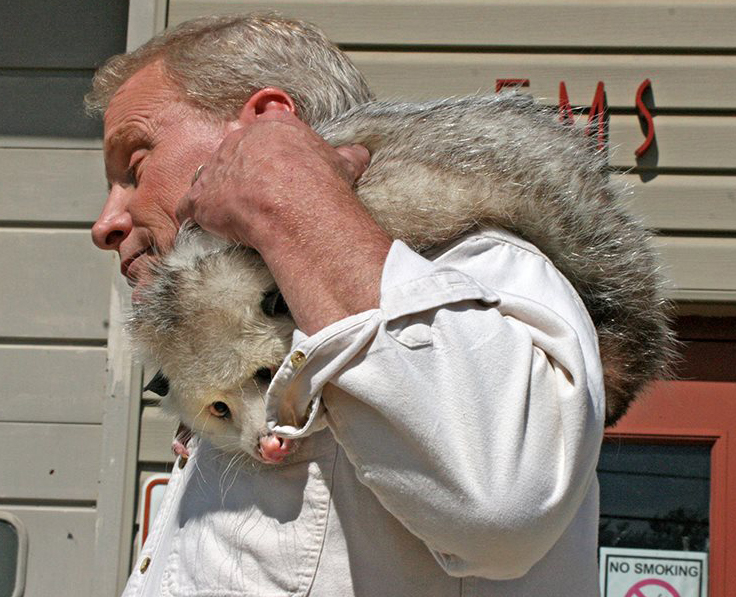
Steve and Captain John at the Columbus Grove branch of the Putnam County District Library

So it is with Captain John Smith and we are, indeed, grateful.

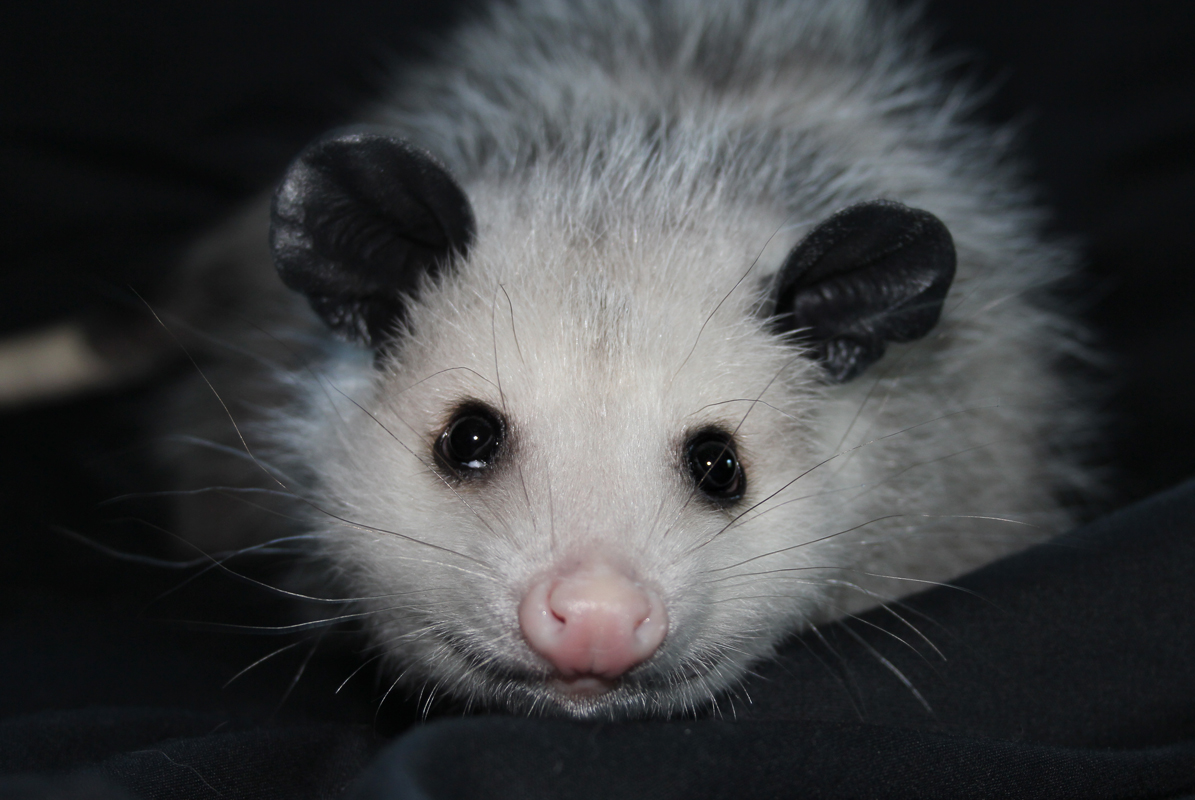
Our friend, Kim Starr, suggested his name, told us of the Englishman’s role in delivering the word opossum, a close approximation of the Powhatan word aposoum, to the English language. We can only hope that the human Smith served as well as Captain John in the role of ambassador. It was with a gentle nature that he turned heads, changed opinions and opened eyes to new understandings.
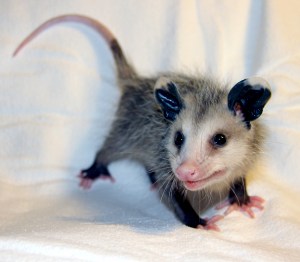
Captain John Smith, ambassador for Virginia opossums everywhere, made his last public appearance at the Delphos Public Library on Nov. 19.

Captain John Smith, ambassador for Virginia opossums everywhere, made his last public appearance at the Delphos Public Library on Nov. 19.

Given that it’s an extinct language, there’s just a short list of some 550 words/phrases in Powhatan with which linguists are familiar. Goodbye isn’t among them. Thank you, on the other hand, is. So…

Kenagh, Captain John.

We will miss you.

A long week with not enough time

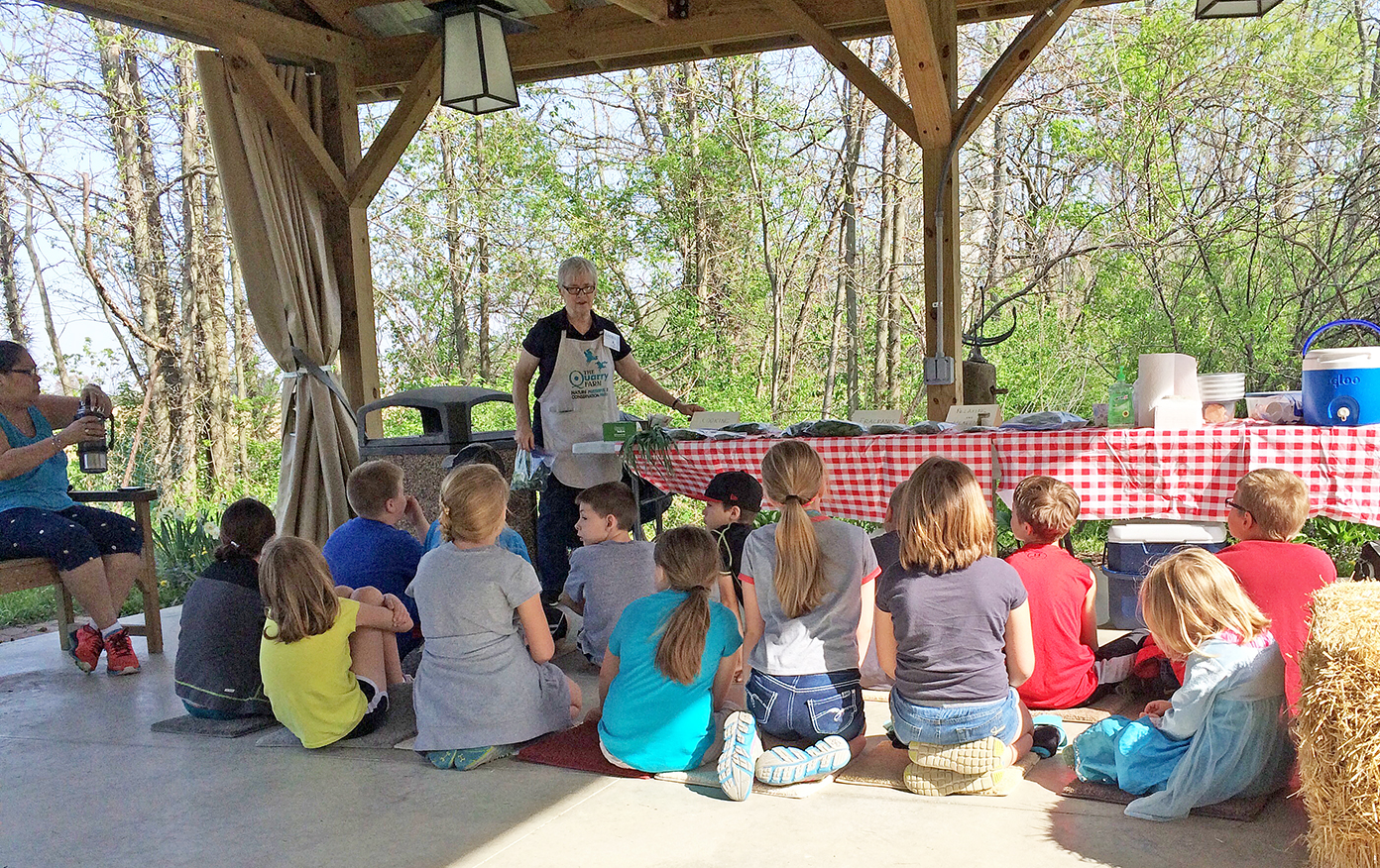
Beginning with an 11 a.m. appointment with a room full of children and a few adults at the main branch in Ottawa, we visited every Putnam County District Library location in the county. In this case, “we” is not a royal “we” but rather two humans, a middle-aged Virginia opossum and a bucket of freshwater macroinvertebrates.

Two weeks ago, we drove an hour east to Honey Creek, a Seneca County tributary to the Sandusky River. Our mission was to collect hellgramites, the impressive predatory aquatic larva of the terrestrial and flighted dobsonfly. By all rights, or if all was right with the world, we should have been able to find them in Cranberry Run as it passes through The Quarry. Underneath all the silt of the stream and Riley Creek into which it flows — even the bigger Blanchard at the end of the Riley — there is a river bottom of cobbles and boulders, prime habitat for hellgrammites. But there’s that silt, smothering everything.

Like I said, we drove to Honey Creek in between heavy rains and flood events and did net a few dobsonfly larva as well as two large dragonfly “babies”: a spidery skimmer and a froglike darner. Here at home, we collected leeches, snails, and half of a freshwater clam shell, its mother-of-pearl lining worn smooth. We set up an aquarium for their stay.

Each weekday morning, Captain John Smith was loaded into a carrier and as many macros as we could fish out of the aquarium were placed in a bucket for transport. No dragonflies made the bucket because, a few days after their arrival in Putnam County, the hellgrammites ate them.

S & J 2BoysIt was a good week. We met new people, the Captain made a favorable impression for his kind, and I got to play with leeches. One young man suggested that leeches are kind of like shape-shifters. I like that. I’m going to remember that for our next gig. Two more suggested that the Captain’s tail looks like corn on the cob. Never though about that before, and they’re right.

Today is Saturday, and we are kind of tired. It seemed like a long week, what with two speaking engagements per day on top of day jobs, slogging buckets and straw through rain and mud here on the farm and in parking lots and nursing one of the potbellies through a mysterious spate of abscesses until his appointment next week at Ohio State University Veterinary Clinic.

IMG_4408But I realized, after finishing Sy Montgomery’s The Good, Good Pig, that two speaking engagements per day for five days wasn’t nearly enough time to point out the importance of Virginia opossums and hellgrammites in our human lives. You need a lifetime of appreciation.

Nor is it enough time to admire the intricate, delicate patterns that trace the exoskeletons, especially across the backs of their heads. One glance in a bucket at the boneless athleticism of a swimming leech is just not enough, not enough for anyone.

We hope it was at least enough to leave everyone wanting to learn more. As Ms. Montgomery noted in her book, maybe a one-off was enough to lead some to a new way of thinking.

Pause here for P-G

P-G Third Grade 2015Before we continue along the trail in a search of wildflowers and wild mushrooms, let’s take a moment to highlight a Friday adventure that we shared with the third grade class from Pandora-Gilboa Elementary School.

Although the school is just around a few corners from The Quarry Farm, this is the first time a class has been able to pay us visit in a while. This morning, the sun rose in a clear blue sky, the tortuous winds that we’ve had of late held their breath for the most part, and 41 students descending the bus steps to join us for the morning.

At three different stations, these curious kids learned about herbs alongside the butterfly garden, beneficial insects that spend much of their life in and along Cranberry Run and Riley Creek, and met some of the animals of the sanctuary.Herbs

At Station 1, Laura talked about past and present uses for herbs, and the pollinators that live amongst them in the Red Fox Cabin gardens. The students chose snipped samples of their favorites from a selection of culinary and/or fragrant herbs, zip-lock bagged the cuttings and labeled the bags for the journey home.

Steve brought on the dragonfly nymphs, or at least a bucket of them, at Station 2. He talked about the life cycles and habits of these predators, Macrosas well as others like damselflies and water scorpions. He pulled the old arm-covered-with-leeches trick, asking, “How long will it be before these leeches suck all the blood from my arm?” The answer? Never. The leeches he displayed were fish leeches.

Bronze turkeys Humperdink, Inigo, and Miracle Max were the greeting party at Station 3, the farm animal sanctuary. Johnny the Canada goose joined in, too. Most of the residents were lying low — in outbuildings and under trees — due to warm, sweaty temperatures, but Buddy the donkey came out. Potbelly Carlton and Lucy the donkey made their large group debut as well. Carlton rolled over for a belly scratch and Lucy leaned in for ear whispers.Lucy

Captain John Smith the Virginia opossum was the special guest “speaker” during the lunch hour. Half of the class met the Captain at Christmas time during a classroom reading of Jan Brett’s The Mitten. We thought it only fair he should meet the whole class on his own turf.

Here are a few more images from the day. Thank you to Nikki Beckman for sharing photos, Jessica Arthur and Jill Henry for sharing your class time, and top Paulding Putnam Electric Cooperative and First National Bank of Pandora for supporting this educational program. If anymore photos arrive in the email box, we’ll add them to the show.

This slideshow requires JavaScript.

Christmas readings with Captain John

One animal stayed outside in the winter snow to clean up after everyone else who snuggled inside the mitten. That’s what third grade students in Mrs. Arthur’s class at Pandora-Gilboa Elementary School found out this week when one class member invited Steve to read a story to his class.

PG visit3As a holiday treat, with language arts side effects, students were allowed to bring sleeping bags and pillows to class. They read favorite books in comfort and listened to visiting friends and family read out loud.

Quarry Farm friend Jaren asked Steve to be his reading guest. Steve chose to read Jan Brett’s The Mitten, a tale of woodland inhabitants who all find cold-weather shelter inside a mitten that was left alongside a trail.

If you’ve ever read The Mitten, you’ll know that quite a few animals, big and small, fit inside. But the Virginia opossum didn’t make the cut. We figure it’s because Nature’s garbage collector wandered on, cleaning up everything else that the bipedal trail walkers left behind.

PG visit2This being said, Captain John Smith*, The Quarry Farm educationalPG visit animal ambassador for Virginia opossums everywhere, accompanied Steve on the classroom visit. The Captain’s beautiful self was a hit, so much so that he was invited to visit Mrs. Henry’s class across the hall. But, since Captain John hadn’t had his breakfast yet, nor had he used the loo, Steve thought it best that the two of them return home.

There will be other visits. Like his namesake, Captain John Smith is up for the adventure. As he is nonreleasable due to his lack of fear, especially when it comes to humans like those that dropped that mitten, he benefits from the outing and is a wonderful guest.

* The opossum received its name in the early 1600s from Captain John Smith of the Jamestown colony in Virginia. Smith was trying to pronounce, for his mates across the pond, the word aposoum, a Virginia Algonquian word meaning “white beast.”

so that’s what you call him…

The Quarry Farm is pleased to introduce Captain John Smith.

No Name Opossum

Thanks, Kim, for the suggestion, and thanks to everyone who offered up a recommendation. There were several that made the cut, but this, by far, was our favorite. Want to know why? Just follow the link: 

http://www.dnr.state.mn.us/mcvmagazine/issues/2014/jan-feb/young-naturalists.html

Third time’s a charm

IMG_0826The Junior Gardeners of Continental were one of the first groups to visit The Quarry Farm after we officially opened to the public three years ago. I distinctly remember the initial telephone conversation with organizer Charlene. She had picked up our newsletter and wanted to bring her charges out for a program. She didn’t sound too sure about the whole idea, but her group arrived and we had a fantastic time. Guess they did, too, because they spent two hours with us on Saturday, this time searching for butterfly host and nectar plants on a scavenger hunt.

IMG_1107Beatrice met up again with her good friend Brandon, the first person she would approach of her own accord after her arrival in 2012 as a very young pot-bellied piglet. Although Brandon had some slick new wheels this year and Beatrice was sleepy in the July humidity, she knew him well. So did Buddy.008

Megan Ramey, Program and Partnerships Manager for the Girl Scouts of Western Ohio, arrived just before the Junior Gardeners to talk with us about the possibility of scouts earning various badges here. Thanks to the joyous enthusiasm of Charlene and her crew, a star of a Virginia opossum and Laura’s coffee and sugar cookie bars, we’re in.

Here’s to more face time with the kids from Continental. Special thanks to Junior Gardener Jazlyn Bishop for sharing your photos and video with us. Keep them coming.

This slideshow requires JavaScript.

This One’s for the Dogs (and the Opossum)

Rowan and OpossumIt’s been a bit longer than we like between posts. But since spring is finally here (knock on wood) you will forgive us since you, like us, are probably running around in today’s sunshine before tonight’s predicted rain.

Silence on the web does not mean it’s been quiet for The Quarry Farm. The new chicks are growing, as is the grass for Buddy and the goats. Fezzik and Inigo are displaying for every female fowl that could conceivably give them the time of day. Inconceivable? Not so for the little red hen that follows Fezzik around. The wild turkey hens on the nature preserve could care less, however.

Eventwise, The Quarry Farm has been on the road for the last couple of weekends. Saturday, April 20 took us up I-75 into Michigan for the Monroe Conservation District Tree Sale. Tim Kwiatkowski, good friend and conservationist for Michigan Agriculture Environmental Assurance Program (MAEAP), invited us, and an assortment of aquatic macroinvertebrates from Cranberry Run as well as an opossum that matured overwinter here, to be part of the Monroe County Earth Day celebration that was held alongside the tree sale pickup.

It was cold and the wind blew. Despite the weather thousands of trees were sold and the buyers learned a little about biological indicators and that Virginia opossums are fantastic garbage collectors. Some even decided the little guy was cute.

He was cute. And we assume he still is, wherever his nomadic opossum ways take him. Once the evenings warmed toward the middle of the week he finally ventured out of his open hutch and into the wild.

Cassie

Cassie poses

Today, we had a short drive to the 6th Annual Mutt Strut and Craft Market sponsored by Putnam Pet Pals to benefit the homeless and neglected dogs of Putnam County and Northwest Ohio. They do good work and put on a great, loud show every year at the Putnam County Fairgrounds. Last year we set up a table at the Strut; it turned out to be one of the best offsite events that The Quarry Farm has ever been part of as we handed out packs of newsletters, talked to some amazing, compassionate people, and produced more canine caricatures than we could track. Although this year’s weather was sunny and warm, a day for breeding garage sales and other such competitions for public attention, the fairground was still hopping.

Better make that barking.

Good times.

Passing Through

Orphans. The word conjures a host of images, mostly Victorian, of wide-eyed children dressed in rags begging on streets or, empty bowl in hand,  pleading for more; of row on row of narrow beds, each filled with a child praying for a good family. These are Hollywood images, as unrealistic in their portrayal of real orphans as television is in its presentation of detectives or living in New York City. They’re the only ones I know, though. The human kind, anyway.

But there are other kinds of orphans.

This year we’ve handled the usual: squirrels, opossums, vultures, swifts, starlings, sparrows and more, all either passing through our hands up to Nature’s Nursery or down to us from there for release or fostering. At present, we’re hosting two: a black squirrel and a Virginia opossum.

The opossum was one of six found on their dead mother (she was hit by a car). While we’re not certain how long the little ones were out there clinging to her corpse, it’s likely that it was quite a while. All six were slow and skinny and dotted with fly eggs. The worst part of such a case is that the young continue to feed from their mother and after she has died, the milk that sustained becomes corrupted, poisoned. Five of the six died. On the up side, the one that survived is strong and growing and shows no sign of becoming attached to the people fostering him. Just the opposite, in fact. He hisses and growls when we approach, bites when we lift him out to clean his temporary digs. He’s been here about a month and we expect that he’ll need to stay another before moving on and out there, on the Quarry.

The black squirrel is a new arrival, an intake from a Lima man who found him outside his apartment. After doing everything he could to reunite the little squirrel with his mother, James called us. This squirrel, like the opossum, is strong and a good eater. We’re providing a temporary safe haven for him. Tomorrow he’ll make the trip north to Nature’s Nursery where they have several other juvenile black squirrels.