The Skinny on the Thick of It

“You’ve got to try Facebook,” they said. “It’s fun. Everyone shares pictures.” I did and lots of people did, too. Then we shared ideas. Then we shared opinions as well as other people’s opinions like they were our own. We made “friends” and we lost actual friends because it is so very easy to click without weighing the pros and cons of clicks. I did all of the above, forgetting that social media is a really handy tool and should not be a pastime, even on cold, windy, rainy days like we weathered this week. Yesterday, I found myself getting depressed over the negative back-and-forth in one private group that, over time, has devolved (in my opinion) into an airing of us vs. them and why anywhere is better than here.

I left the group yesterday and went outside to talk with the geese under the clearing sky.

The geese are indeed talking. Nine wild Canada geese landed outside the fence yesterday. The eight geese on this side of the fence noticed. There was about 15 minutes of boisterous conversation. One goose from this side of the fence flew over to join the wild flock, which is exactly what we hope for. The Canada geese here are flighted and banded with identification so their movements can be studied once they become the wild birds that they are meant to be—IF they can shake loose the strong bonds of imprinting on people.
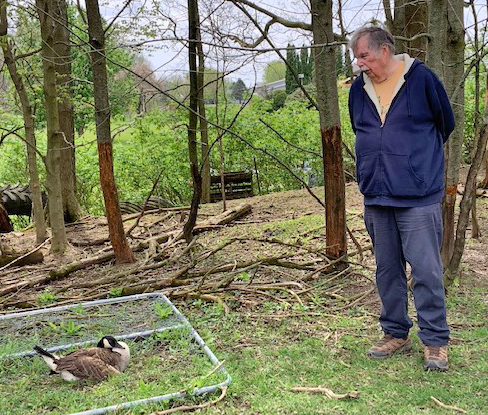
Buddies Tim and Scott

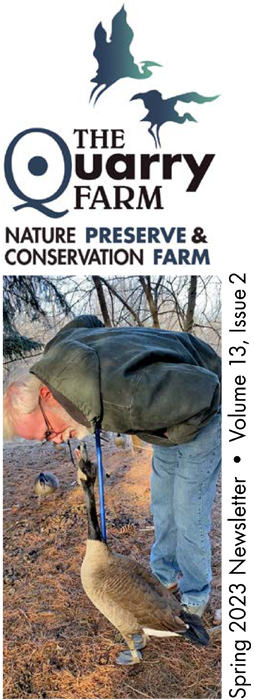
One Canada goose that will not be flying is Tim. He’s been spotlighted in The Quarry Farm newsletter. Last Saturday, he had visitors from his hometown of Parma, Ohio. Scott cared for Tim when the goose’s mate died. He made sure that his “Buddy” had feed and open water when the flock thinned in winter. According to another visitor to the Parma pond, Tim had been hit not once but twice by the same car. And survived. And thrived, thanks to Scott.

Scott and Margaret drove from Parma to say hello to Tim. Another banded Canada goose rode along, a very large bird that is fully flighted but very imprinted on people. Spring being what it is—a season of great twitterpation among all species—the new goose came out of his crate loaded for bear. He rushed Lucy the Donkey. The goose that keeps close to Lucy took umbrage. The new goose took off and visited the neighbors about 1/2-mile south for 24 hours before returning with his feathered tail between his legs. This goose, who is identified as “K”, is minding his Ps and Qs and treating “T”, “U”, “X” and the other geese (and Lucy) with more respect.

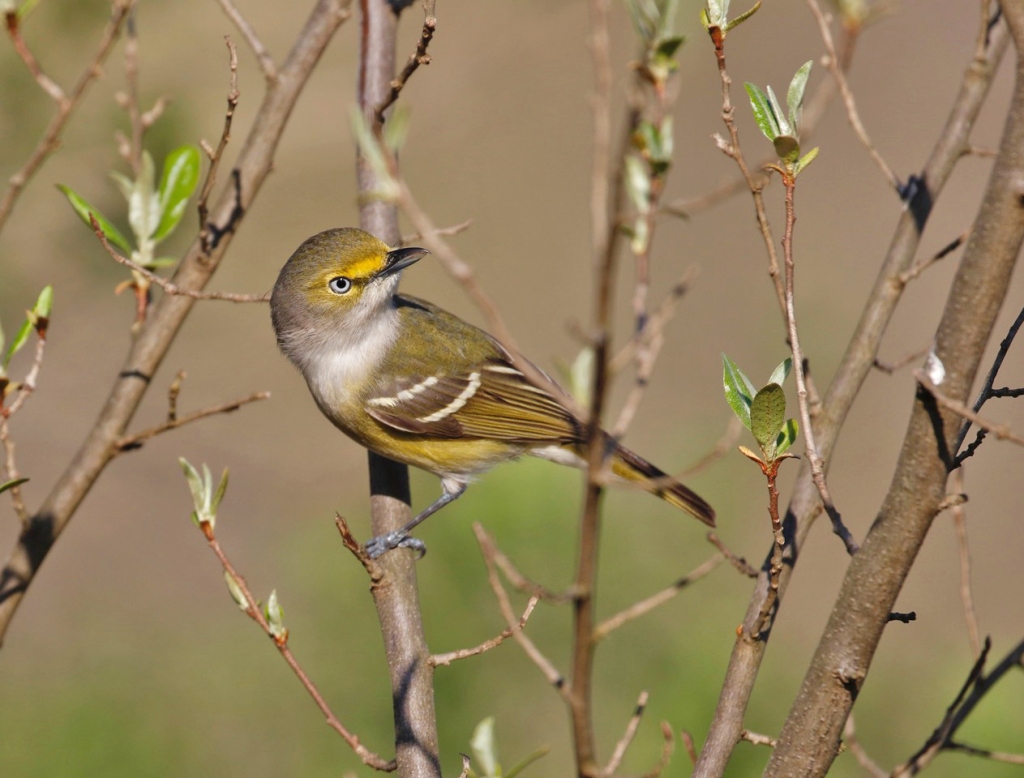
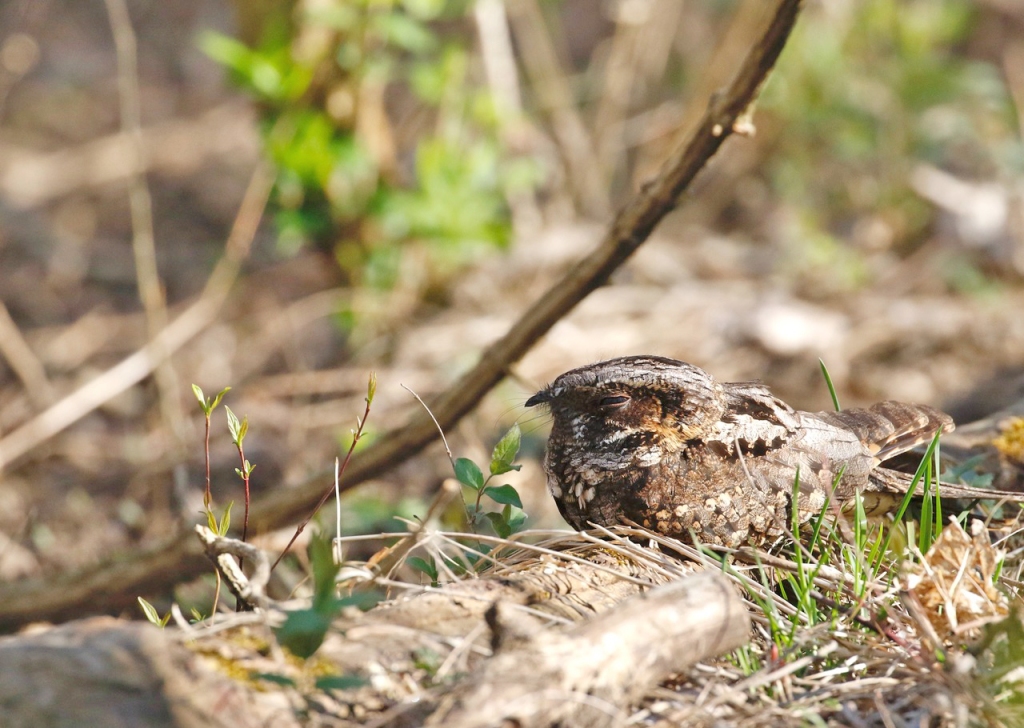
In addition to new tall goose tales, there are stories of new bird sightings this Spring. Deb Weston and David Smith have been monitoring migration. Deb added Eastern Whippoorwill to the Hotspot list of 140 avian species documented on these 50 acres. Last week she saw a Blue-headed Vireo and is trying to catch a photo of the cheeky bird. She did get a photo of a White-eyed Vireo (above).

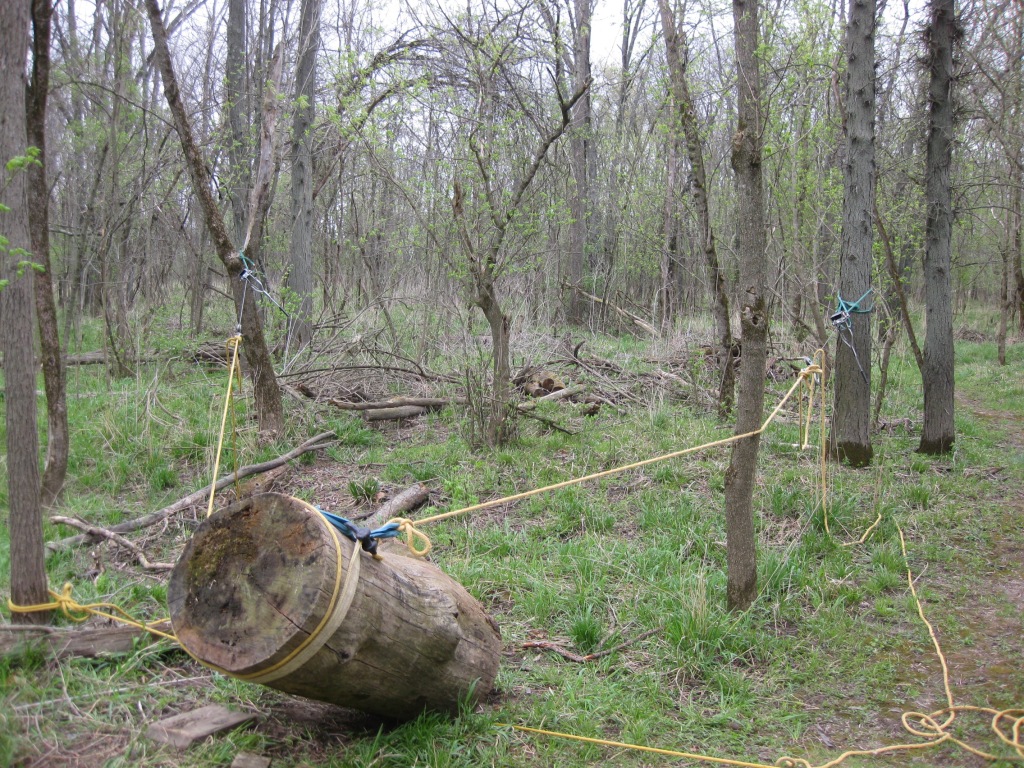
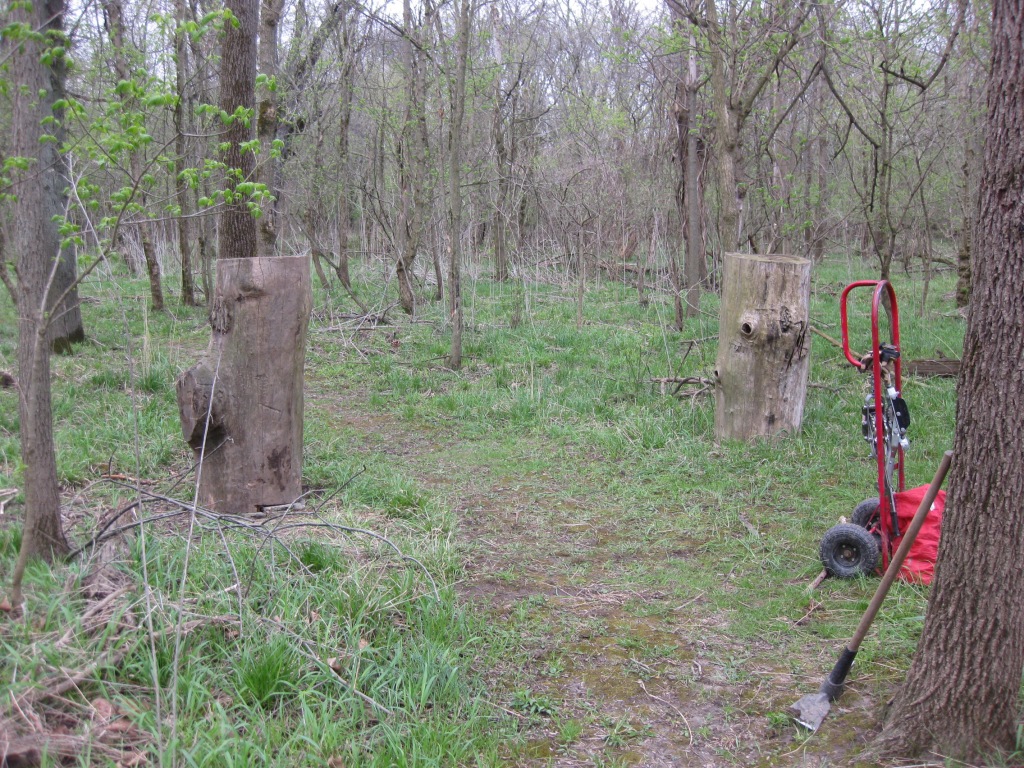
David Seitz continues to trek from Columbus 2-3 times per week to battle invasive shrubs, adding more bush honeysuckle limbs and trunks to the shelter piles. Last month’s flooding floated one of the pillars—two substantial tree trunks that mark the start of the floodplain trail—into the 19th-century quarrying overflow channel. David’s mind-boggling engineering engineered it back into place. By the way, that same mind engineered the whole, ancient and water-logged tree trunk from the bottom of the quarry a few years ago.
Paul and Joyce Bonifas constructed the Cadillac of composting systems in the Red Fox Cabin garden area. Paul designed it and all of the Putnam County Master Gardeners and other volunteers will add to the bins. So will whichever one of us cleans the henhouse next.

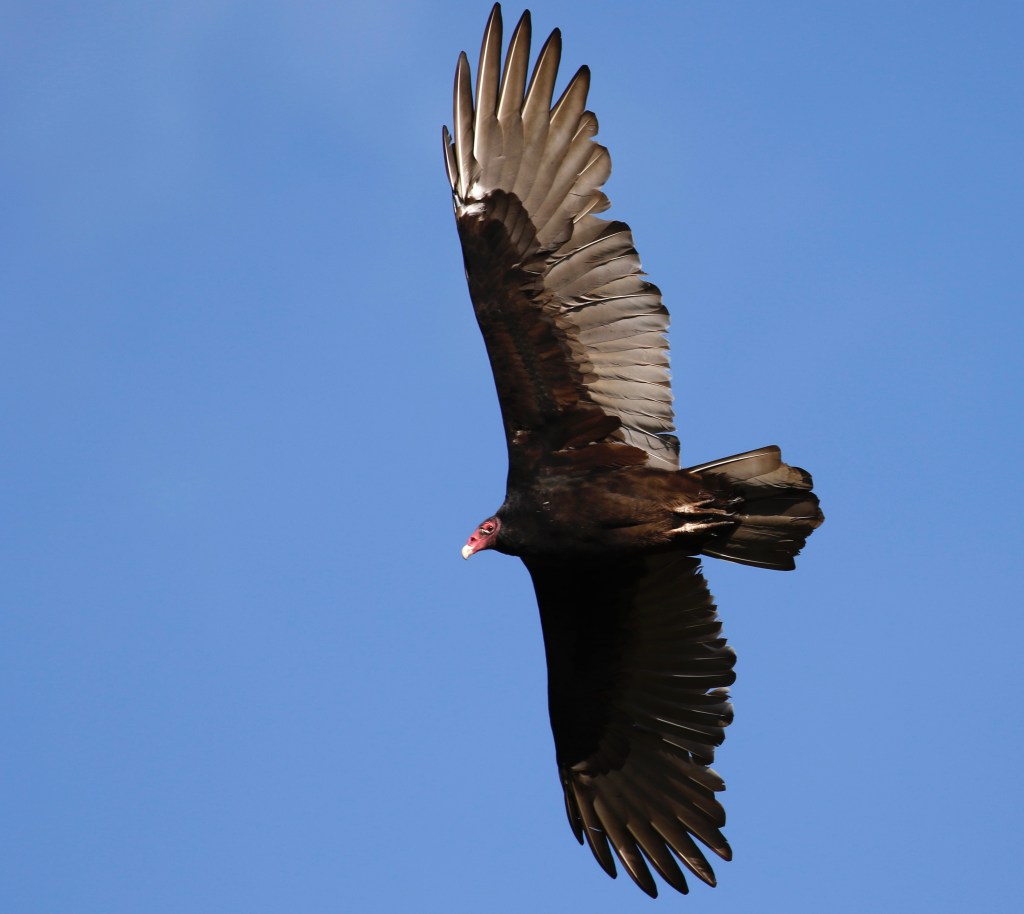
Glandorf Cub Scouts were the first group to walk the trails this season. They heard owls, spotted shrews that had been displaced during the flood and watched a bald eagle follow Riley Creek. May, June and July days are packed with school field trips, summer camps, the Summer Tea Tasting in the Gardens (June 17) and the Spring Migration Bird Hike (May 20).

Two weeks ago, a carload of loud music and shouting teens stopped along the Northwest perimeter. My hackles went up, expecting a can to go flying over the fence. Instead, someone shouted, “It’s just beautiful!” This place, the lives that depend on it, the volunteers who care for it and them and the people who want to know more about it and them are why here is a place to be.
Speaking up for moles (again)

Overheard: “The moles are tearing up my yard/bulbs/flowers/stones/!”

This article appeared in the Winter 2017-2018 issue of The Quarry Farm newsletter. It bears repeating. Your, and our, yard is better for the presence of moles.

Not long ago after autumn rains had softened the baked lawn around Red Fox Cabin, little volcano-shaped mounds erupted here and there, heralding the arrival of moles. Moles don’t alarm me because their burrowing hasn’t seemed to cause lasting damage in the garden. However, convinced that the humans on a nature preserve should be knowledgeable about their fellow inhabitants, I went online to learn more about moles.

Members of the family Talpidae, moles are found in most parts of North America, Europe and Asia. Seven species live in the U.S., the Eastern Mole being common in our region. They are 5 to 7 inches long, larger than shrews and voles. Males are called boars; females are sows; and the young are pups. A group is a labor (perhaps because they are so industrious?). They are carnivores, not herbivores. Their diet is primarily earthworms, grubs, and the occasional mouse, but not our garden plants. Once they have eaten the food in one area, they move on.

Moles are amazingly adapted to a subterranean life. They can distinguish light from dark but not colors. Although their eyesight is dim, their hearing and sense of smell are so acute that they can detect prey through many inches of soil. They have large, powerful, outward-pointing front legs and claws for pushing dirt aside as they “swim” through soft, moist earth. They are able to disappear from rare ventures to the surface in 10 seconds flat, to tunnel 1 foot in 3 minutes and to run through established tunnels at about 80 feet per minute. Their short, velvety fur is non-directional, causing little resistance as they move rapidly through tunnels. (Their soft, dense pelts once supported a thriving moleskin industry.) Moles can survive in their low-oxygen environment underground because they can tolerate the high carbon dioxide levels in the exhaled air they reuse. Their saliva paralyzes prey, which they store, still alive, in underground “larders” for future consumption. Moles can detect, capture, and eat their prey faster than the human eye can follow.
Moles make 2 types of tunnels: feeding runways close to the surface where the molehills pop up and permanent tunnels about a foot or more underground, leading to a nest about 2 feet deep. What might look like the work of many moles can be the product of one busy tunneler.

Moles are solitary and highly territorial, coming together only to mate. Breeding season runs from February to May. From 2 to 5 pups are born after a 1-month gestation, and leave the nest 30 to 45 days later in search of their own territories. Although tunnels may overlap, moles avoid each other and will attack and even fight to the death when they meet.

Many online gardening experts write about moles in terms of their being destructive pests that must be eradicated. They suggest many methods of doing so: poisons; traps that choke, spear, slice or confine for removal; buried repellants like broken glass, razor blades, or thorny branches; or natural, more humane repellants like plantings that smell bad to moles (daffodils, alliums, marigolds, castor beans, etc.), castor oil drenches; and reducing lawn watering that could force moles close to the surface.

However, I lean toward a smaller set of gardening experts represented online who believe that moles are more beneficial than destructive. Rather than taking offense at molehills, they point out that moles improve soil by loosening, aerating and fertilizing, and the cones subside quickly. Any soil that has been lifted off roots can be pressed down again with a foot. Moles receive the blame for plant damage caused by chipmunks, mice and voles, and generally receive little credit for destroying lawn grubs. I myself would rather let moles eat pesky soil-dwelling larvae than chase moles out by spreading harmful poisons to kill the grubs. In the view of one expert, Roger Mercer, “Moles aren’t all bad. In fact they’re 99% good.” As a 15th century saying goes: “Do not make a mountain out of a mole hill.”

—The Gardener at The Quarry Farm

They come

Little Lady was buried last week. She was at least 23 years of age. Her pale gray calico-ness showed up about the same time that Steve secured the last piece of lumber on the front deck. She didn’t leave the deck so we opened the door. After that, she never left the house except for vet visits and to step out and turn right back around to inside. She was ridiculously healthy, opinionated and acrobatic. We figured that she would scramble up the stairway banister or doorframe one day and check out in mid-journey one day. And that’s almost exactly what she did.

But this writing isn’t about Little Lady. Other than living in the house that sits apart from the farm animal sanctuary here, she wasn’t of The Quarry Farm. This is about what happened after she died.

We cried, grabbed a pick axe and shovel and took her body outside to bury her in the frozen ground under the white pine needles in the north corner of the pasture. She didn’t particularly like other animal company so we didn’t bury her near anyone else. We joke that someday someone will excavate this property and shudder, wondering, “Who WERE these people?” But the remains of a little cat will be there, all by themselves. The excavators may attribute some sort of deification to her.

The donkeys came first, stepping slowly up the slight incline from the lowland. Then the goats. Then Willy the three-legged sheep. And for the first time, in all the physical goodbyes that one has to make on a sanctuary, the geese came. Not Gigi and Henry the domestic Emden and China White, but the Canada Geese. They were delightful, deep flood pools in the north lowland to race-fly across. But the seven geese placed her for soft-release walked slowly up the hill, murmuring to each other with their long necks snaking out in front of them. T, the largest of the little flock, stood on Steve’s feet while I replaced the soil.

I don’t know why they always come. It’s more than out of curiosity and strange odor, of that we’re sure. When Mister Bill the Giant Goat died, everyone—every single one—gathered around his grave. One of the goats knocked the shovel and the first load of dirt out of Steve’s hand.

We bury as deep as we can in order to prevent the unsettling sight of a corpse being predated. In 20 years though, it hasn’t happened. The pine needles were scattered and smoothed over this most recent grave. I looked at it today and you would never know that the spot had been disturbed. The pigs root constantly in spring for green shoots. The chickens follow up for worms and grubs. But they have yet to touch a burial spot.

Maybe it’s the disruption in energy, neither created nor destroyed. I don’t know. I don’t know that any of us humans will ever know, because we seem to think we know it all already. But they do, simply and beautifully.

Keep making more connections. Download your copy of the Spring 2023 newsletter by clicking on the cover.

Name the Newbie

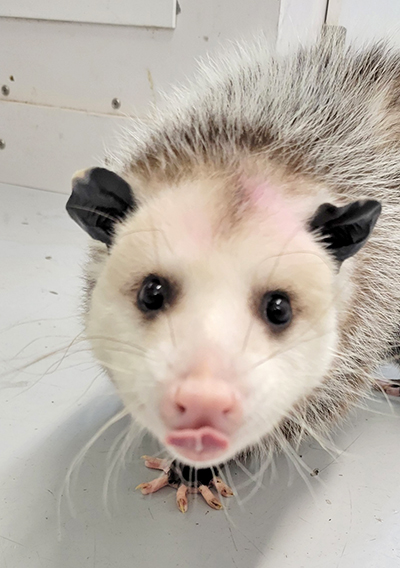
A young female Virginia Opossum will be joining The Quarry Farm in January as an educational ambassador. She was surrendered to Lake Erie Nature & Science Center after she had spent the first months of her life in illegal captivity. She is not afraid of humans and has no experience of the wild world so will live here, helping us teach people about North America’s only native marsupial.

Years ago, we asked people to help us give a name to a male Virginia Opossum. The winning name was Captain John Smith. The name and the history behind it was so intriguing that we ask you to help us again. Please send possible names and the reason behind the suggestion to thequarryfarm@gmail.com by January 21.

Read more about what happened this fall by downloading the Winter 2023 Newsletter and add our calendar of events to your calendar this season.

All bluster and puff

Neighbor Casey shared this quite serious and effective (if you’re a peahen) show displayed in spring by Mavis and Gert. It was for the benefit of the bluejays that were invading the corn and bird seed feeders and bowls outside Casey’s front door. Nevermind that Mavis and Gert were invading from across the road. We lost Mavis last year when she challenged the fox to a duel. Happily, Casey saved this video.

After Mavis was lost, Gert mourned for a time. Mavis was the blustery dominant hen. She used to stomp down the driveway, across the road and up to “her” feeders. Nearly a year later Gert has taken up the charge and found her stomping feet, although she is much wiser about predators than her sister. She adopted three chickens and protects them from everyone and everything, but she does know that her puffy display has its limits.

Mighty eight toes has 20

If Jimmy Toskr the Eastern Fox Squirrel (EFS) had been born almost 10 years ago with 20 toes, he would have spent his life running up and down trees, doing backflips over blowing leaves, growling and squealing at people and other predators under his tree and collecting tree nuts to stash in tree cavities and underground. He would have danced rapid spirals around tree branches with female squirrels in early spring, and on warm fall and winter days. He would have done the latter for the sheer joy of sunshine and freedom.

Instead, Jimmy Toskr lived his decade bound to the indoors. He was born in or around a Northwest Ohio golf course. According to Oregon State University’s National Pesticide Information Center, golf courses regularly use pesticides to maintain the health and appearance of the turf. Pesticides include herbicides, fungicides, insecticides and rodenticides, plus a few other applications that lead to golfers being advised to minimize their risk of exposure by:

  • Wearing golf shoes and socks that cover the ankles
  • Wearing pants or longer socks to cover the lower legs
  • Consider wearing gloves and/or be sure to wash hands after golfing, before eating or smoking
  • Consider calling ahead and scheduling tee time several hours later or the following day after a pesticide application has been made

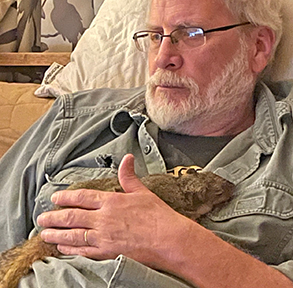
Since wildlife, including Jimmy Toskr’s mother, can’t do any of those things, Jim was born with a stunted tail, no cartilage ‘cup’ around one ear and only eight toes. He was unable to climb to escape predators. He couldn’t grip tree trunks and branches or balance properly with a full, bushy tail. Although EFSs are mostly terrestrial, Jimmy was completely ground bound, and that ground was where he was found. He was accepted by Nature’s Nursery and placed in the care of volunteer Linda Madras Gorey. When it was clear that the young squirrel was nonreleasable, Linda allowed him to be put in the care of The Quarry Farm as an education ambassador. He lived with us until the early hours of Friday, December 2, 2022.

What we learned from Jimmy Toskr:
• EFS are not very social, unless the squirrel is Jimmy Toskr and his friend is Steve. Jimmy allowed Steve to stroke his forehead and to coax him back into his cage after a run.
• EFS are very intelligent. They know approximately where they have stashed tasty tree nuts, including in the ferret hammock that swings from the ceiling, and will strongly object to it being removed for any reason.
• EFS recognize when they have the advantage of safety from a predator. Quinn the Red Fox and Chryssy the Cat are two predators that Jimmy taunted on a regular basis. He knew they couldn’t get through the cage doors and would throw things at them from high on the top level. Sometimes he would sprawl like a sunbather on the lowest level and twitch his tail, just out of reach.
• EFS run, jump and roll just for the fun of it, like this:

Although an EFS may have a steady diet of tree nuts, greens and fruits, a cozy hammock to hide in and destroy a couple of times a year, fresh water and interaction with a variety of species—even when they have never really known otherwise—they recognize the absence of a life that is rightly theirs. Jimmy often sat on the upper level of his cage, watching the cottonwood and the world outside his east window. Nothing would break his concentration, not even new walnuts in the shell.

Three weeks ago, Jimmy exhibited signs of a stroke. Quinn sat outside his cage and cried. Jimmy seemed to regress; to allow and even want human contact no matter who that human was. He rode around on one’s out-stretched arm and munched apple during the ride. In the evening, he sprawled out on Steve’s chest and fell asleep. Jimmy rallied a week ago, walking on all fours to stash food under Steve’s t-shirt and licking Greek yogurt and almond butter from his favorite person’s finger. He fooled us into ordering another ferret hammock as it appeared he might actually need it for another six days, weeks or maybe months. Then he went away altogether.

In Norse mythology, Ratatoskr is a squirrel who runs up and down the world tree Yggdrasil to carry messages between the eagles perched atop Yggdrasil and the serpent Níðhöggr who dwells beneath one of the three roots of the tree. Jimmy Toskr is now whole and is running up and down the Tree of Life. He is the Toskr, hurling commentary as he connects Heaven and Earth with the support of 20 strong toes.

Scenes from a year of hikes in the floodplain

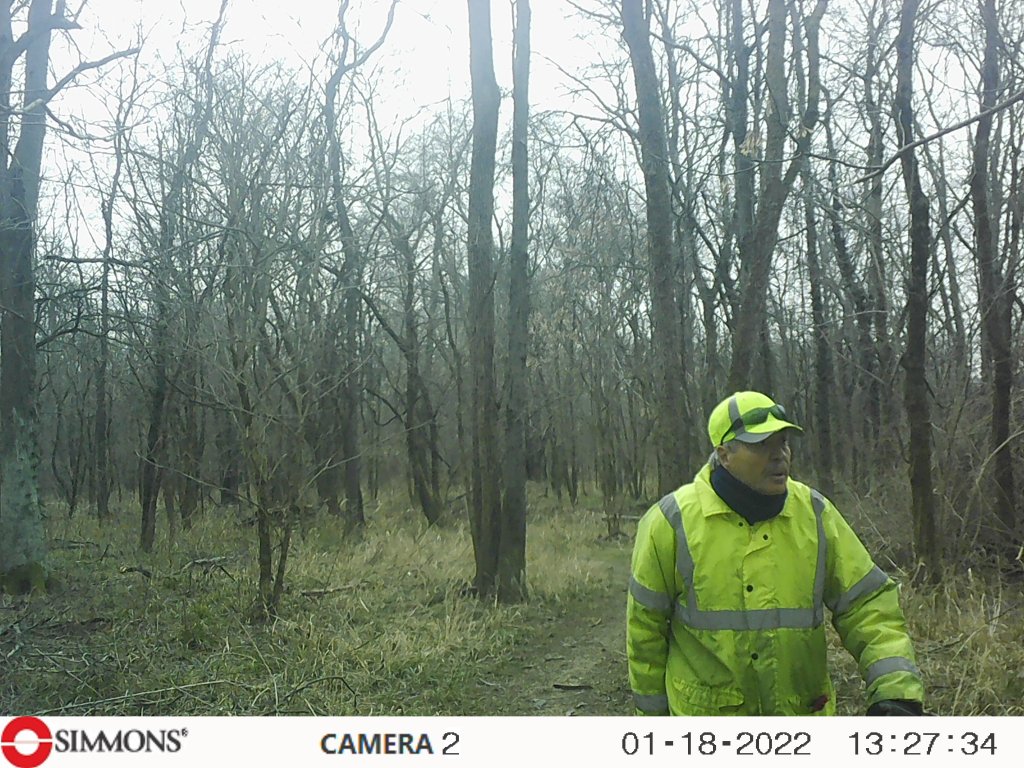
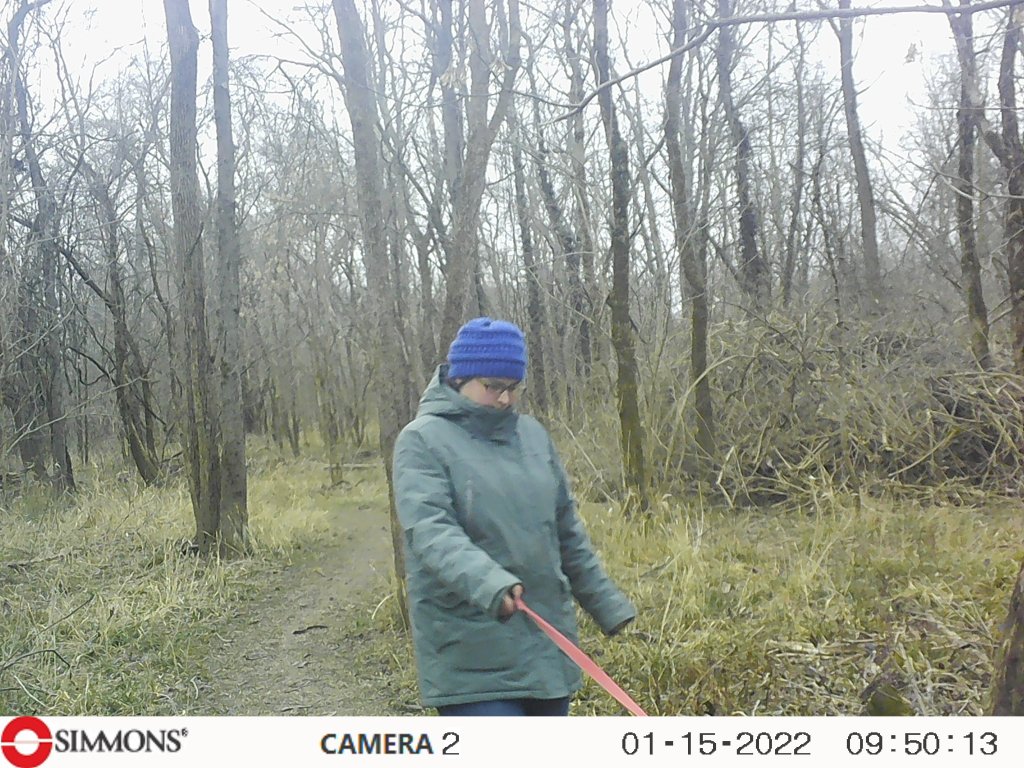
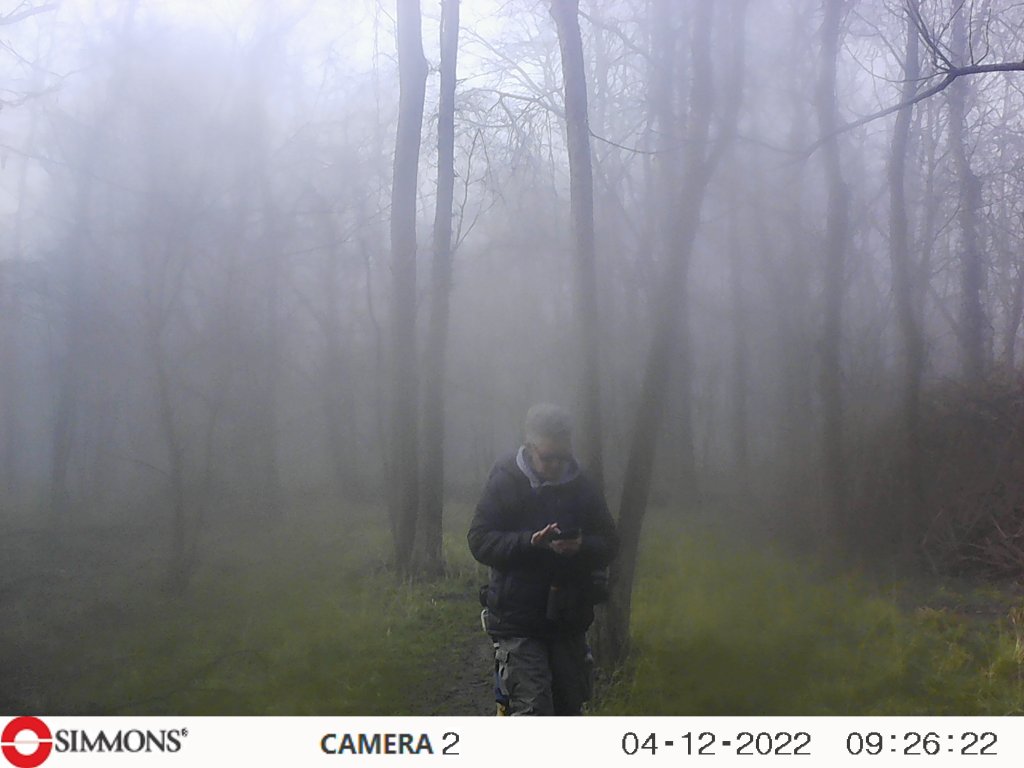
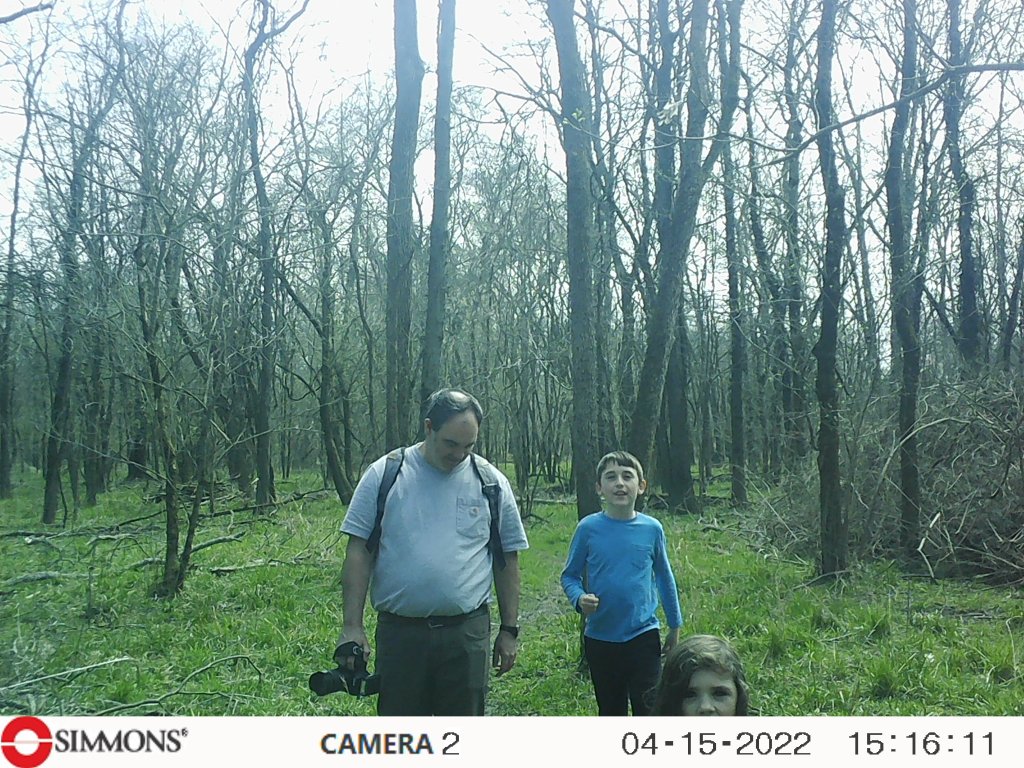
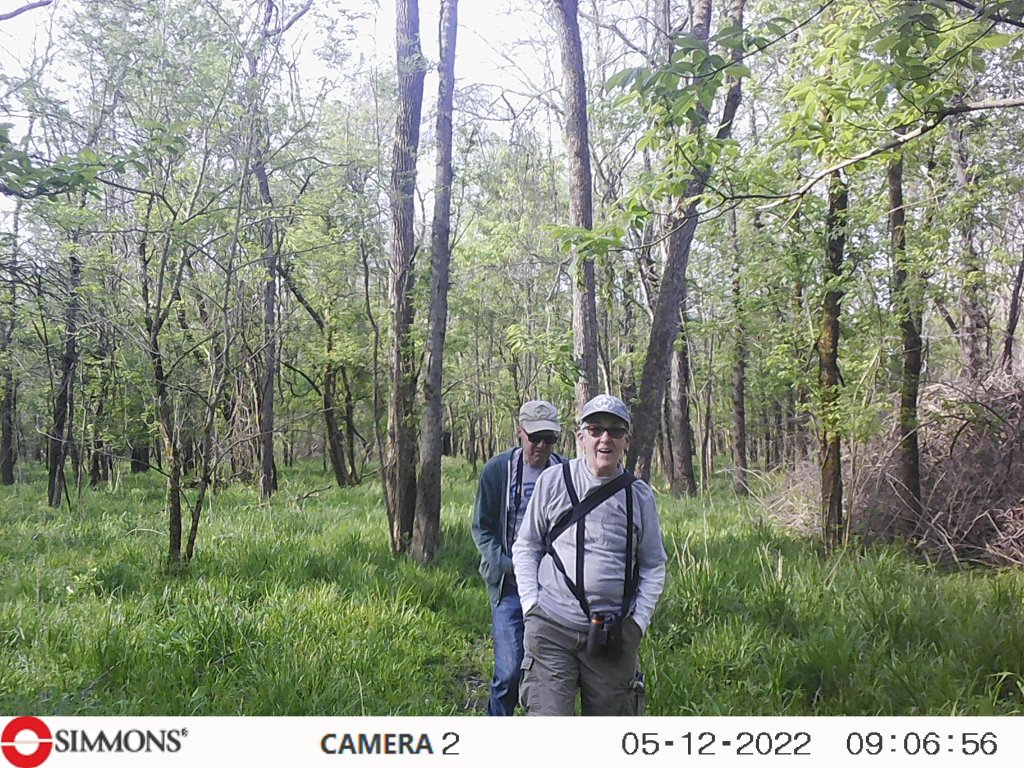
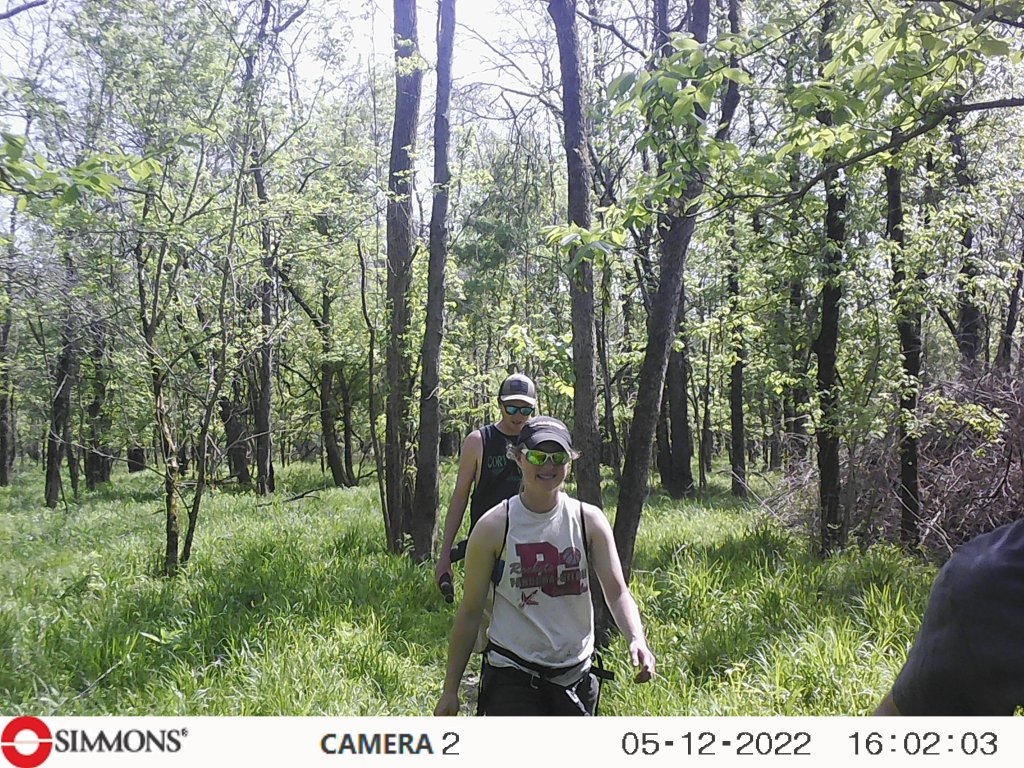
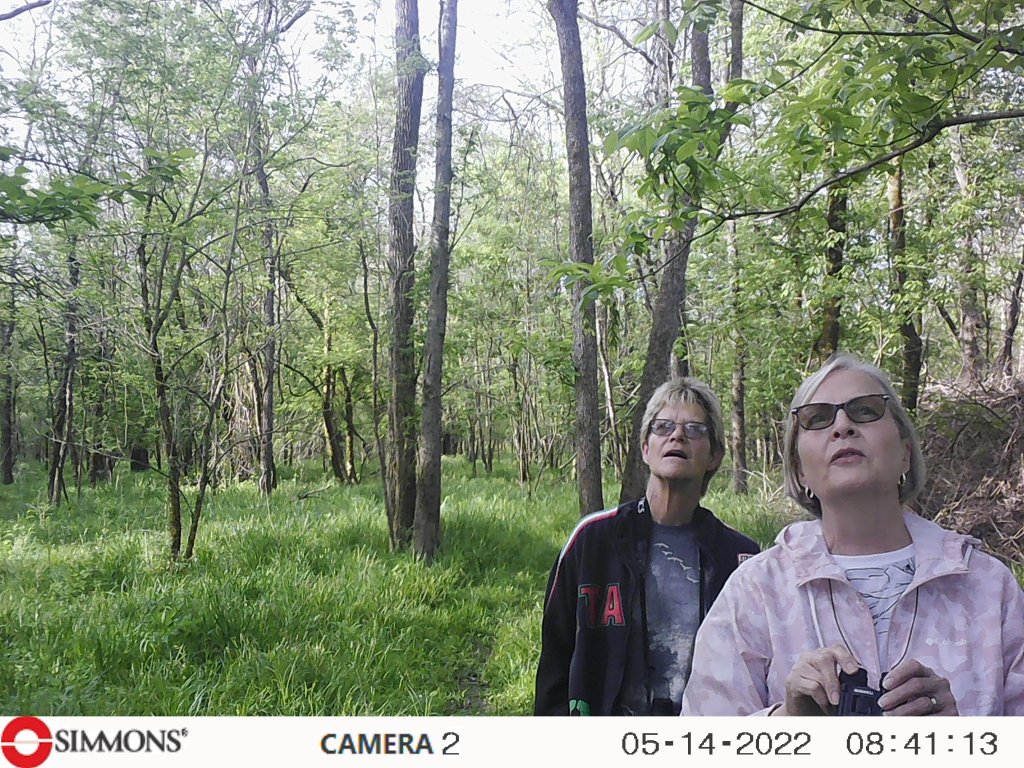
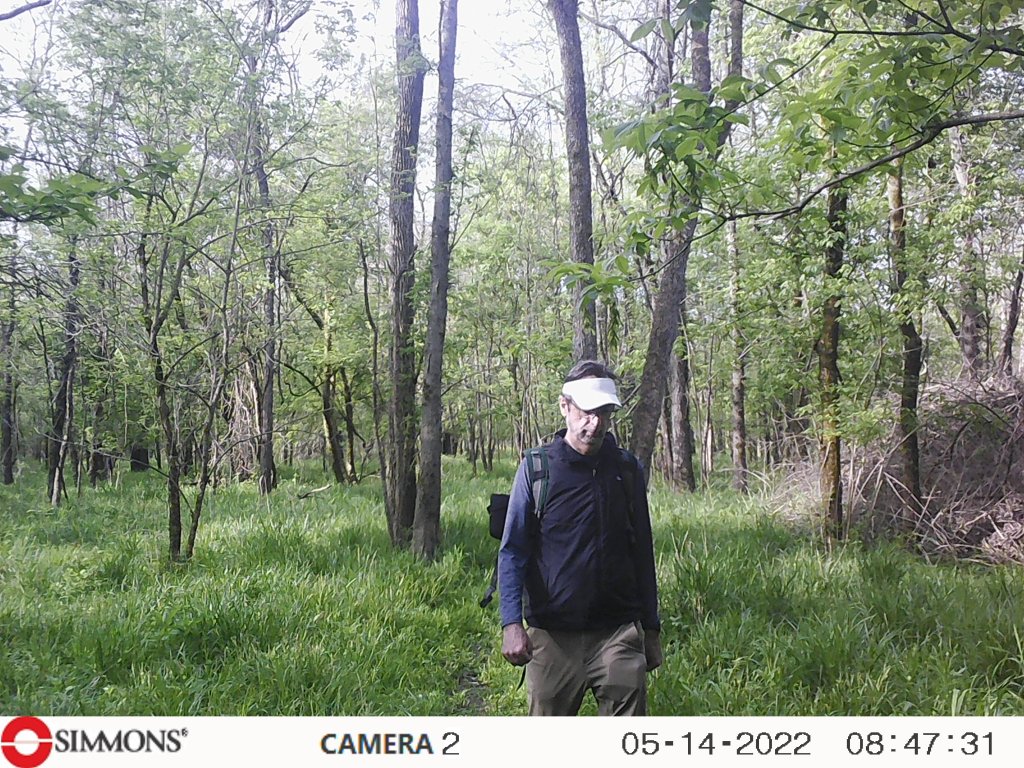
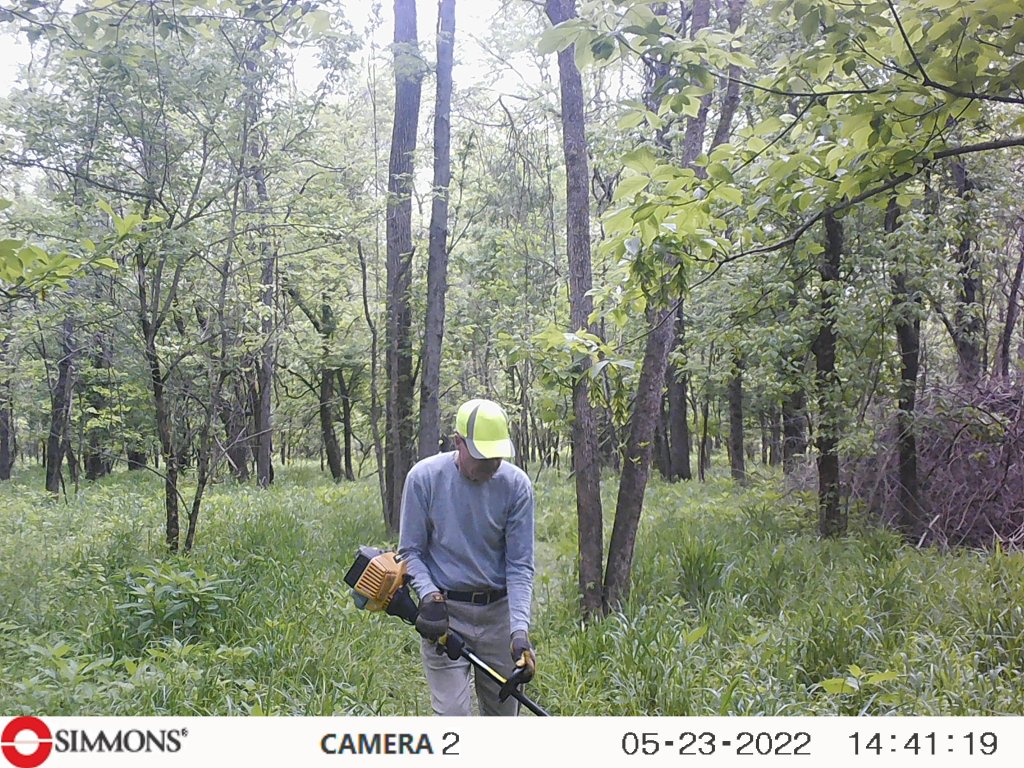
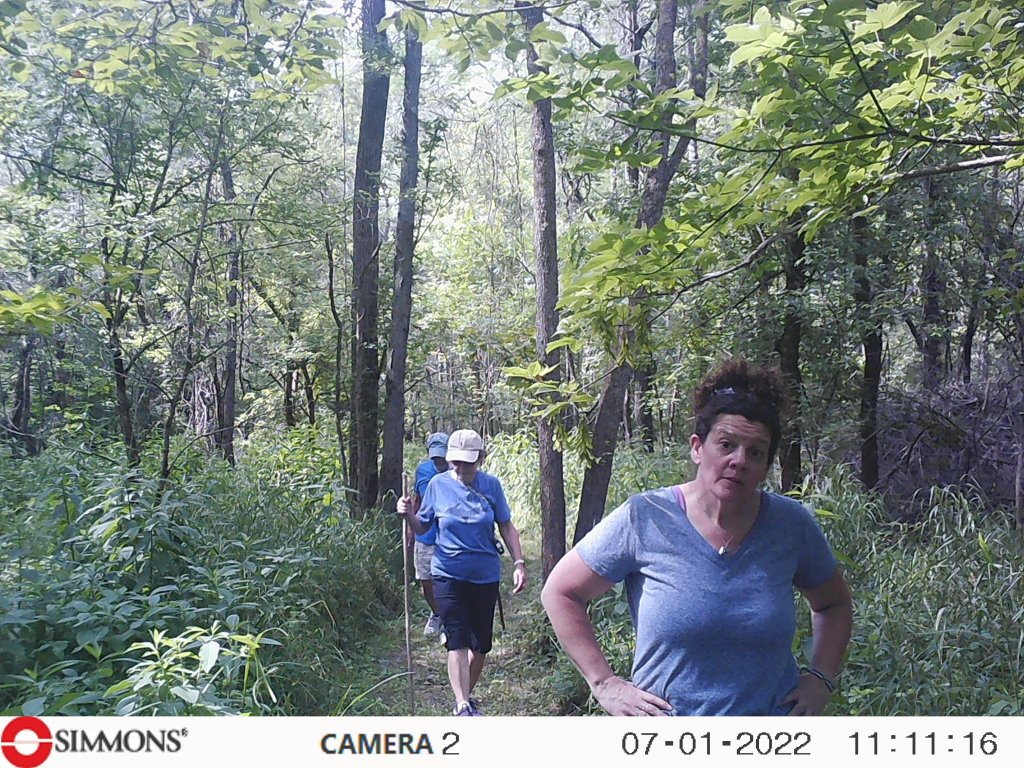
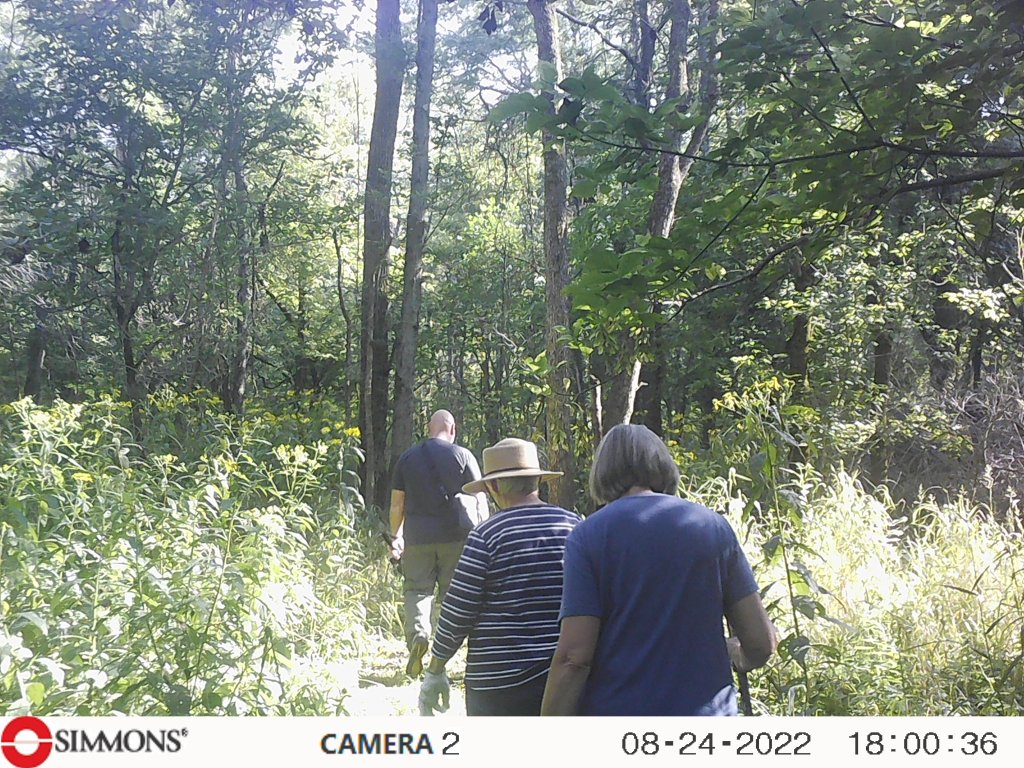
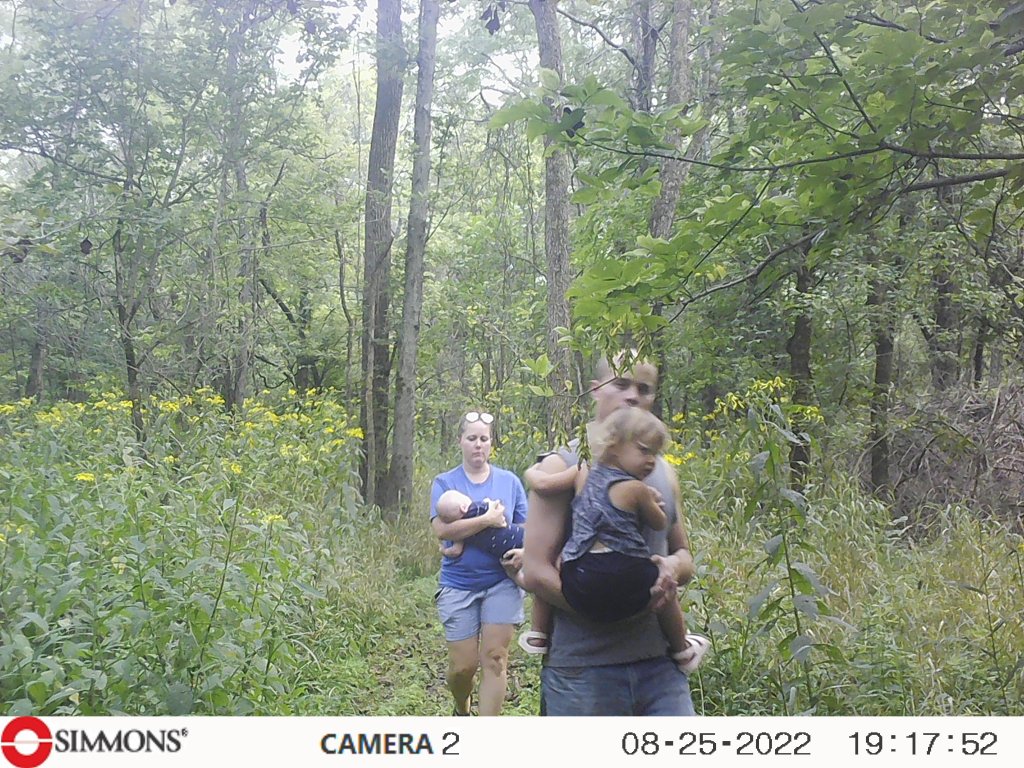
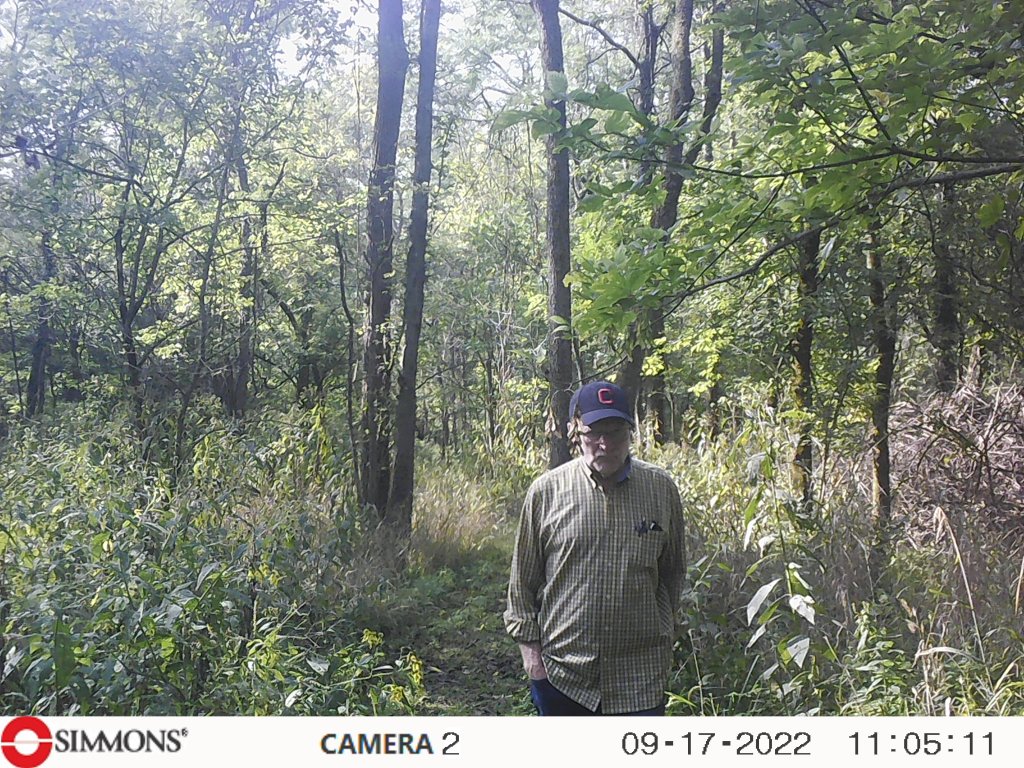
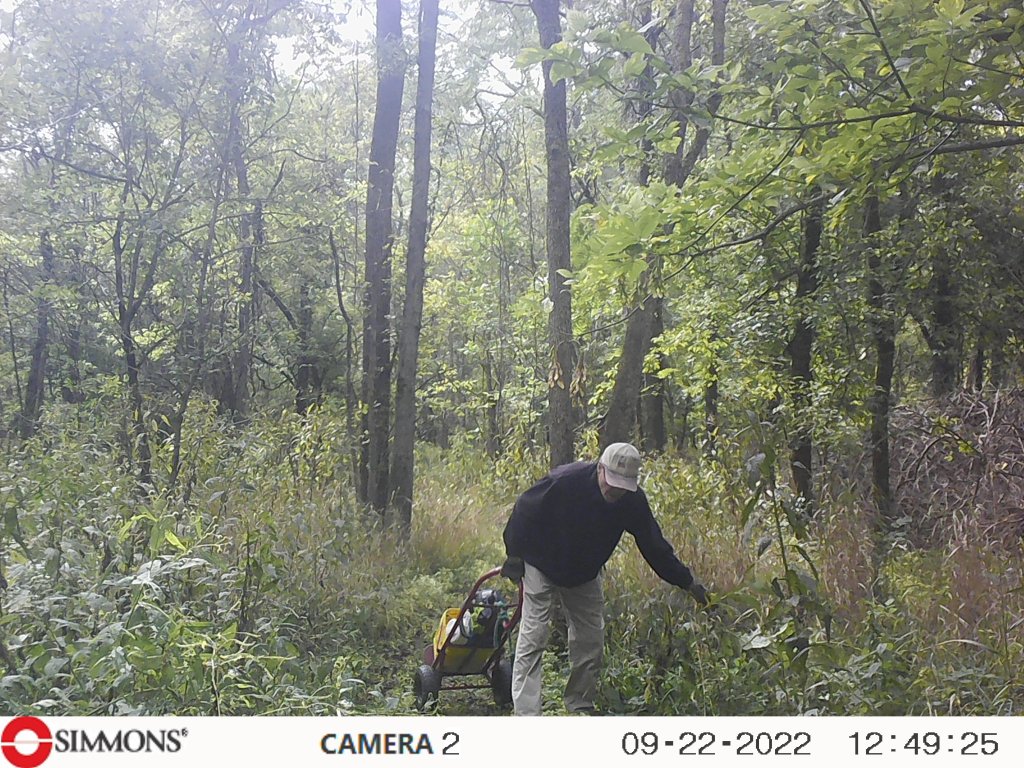
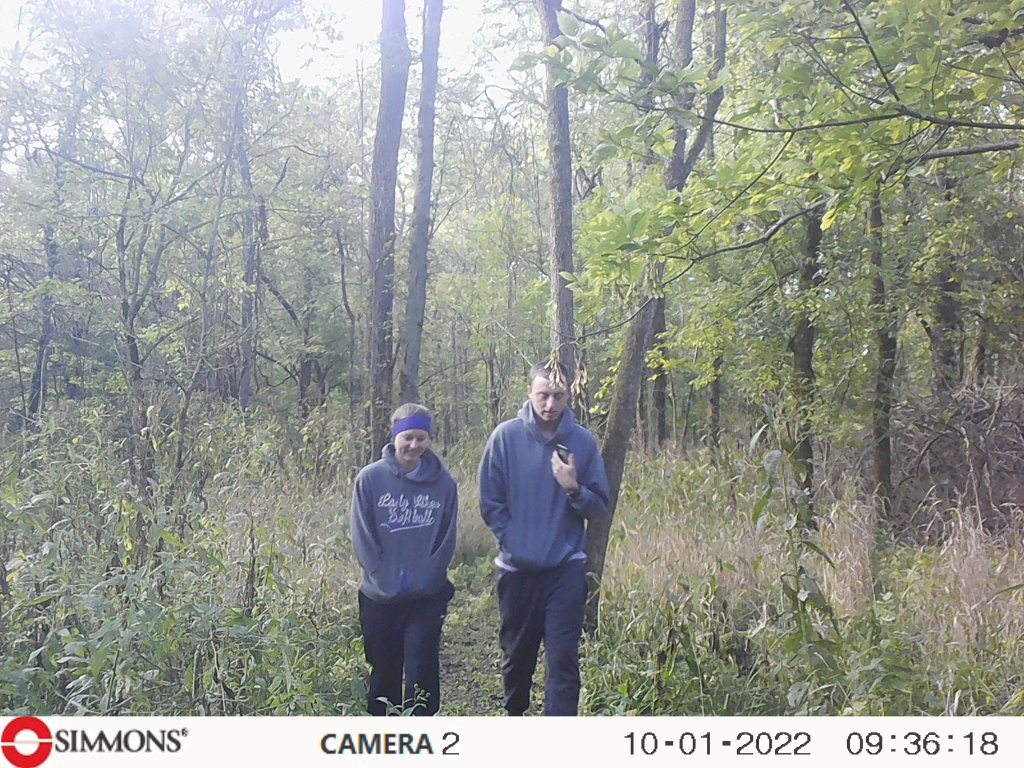
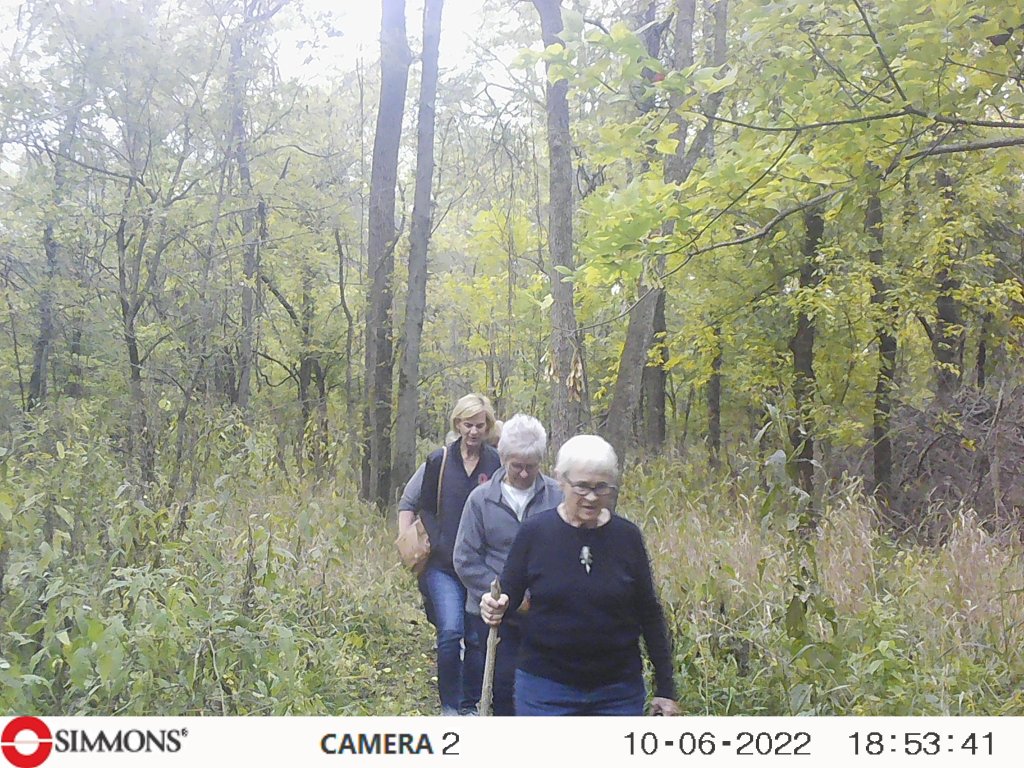
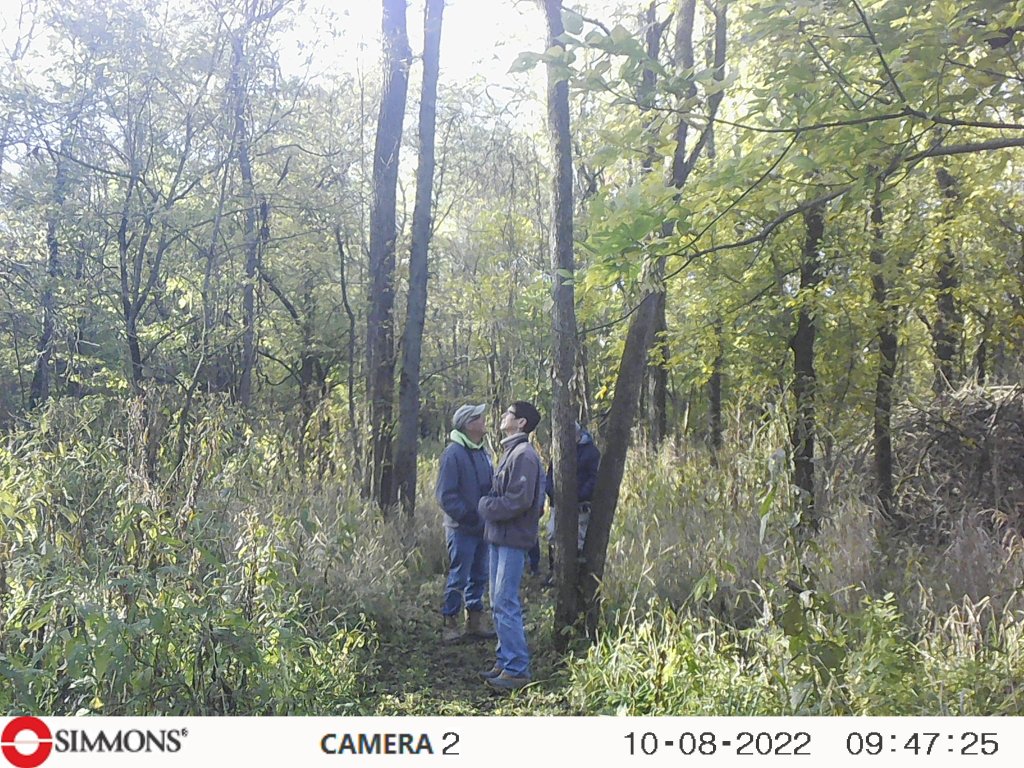
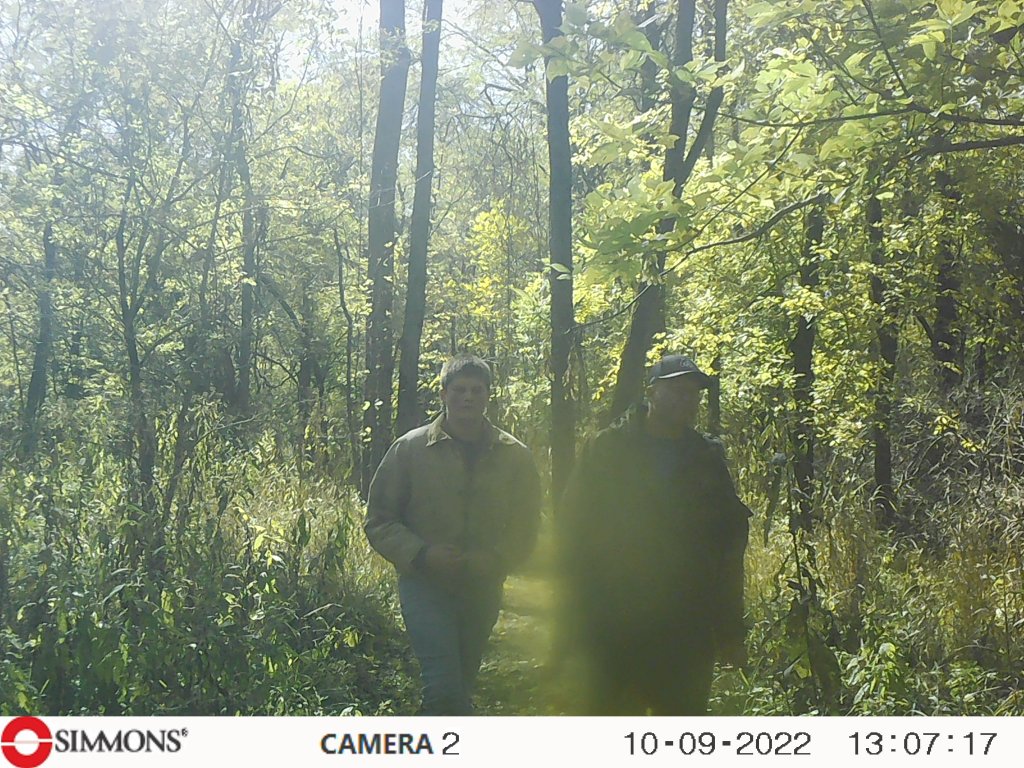
Each fall, the trail cams come down for maintenance and are rehung for the next four seasons. Paul installed the north trail through the floodplain several years ago, opening that area to bird watchers and hikers of all species. It’s a popular resting stop for migratory songbirds. Birder Deb captures beautiful photos there as they flit through.

Here are a few photos that feature the humans who passed the camera on that path. It begins with David, the master who keeps the trail cleared and curbs the further spread of invasive plants species.

The 2022 5K

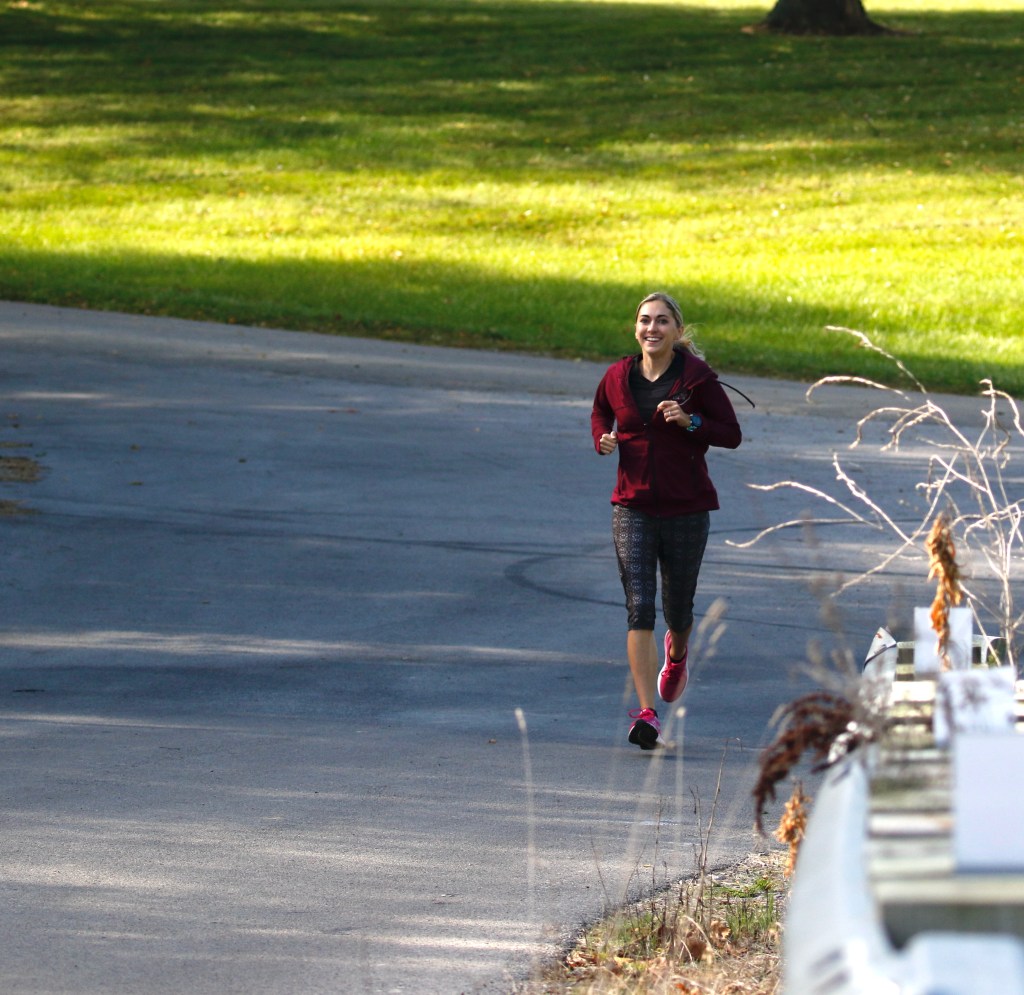
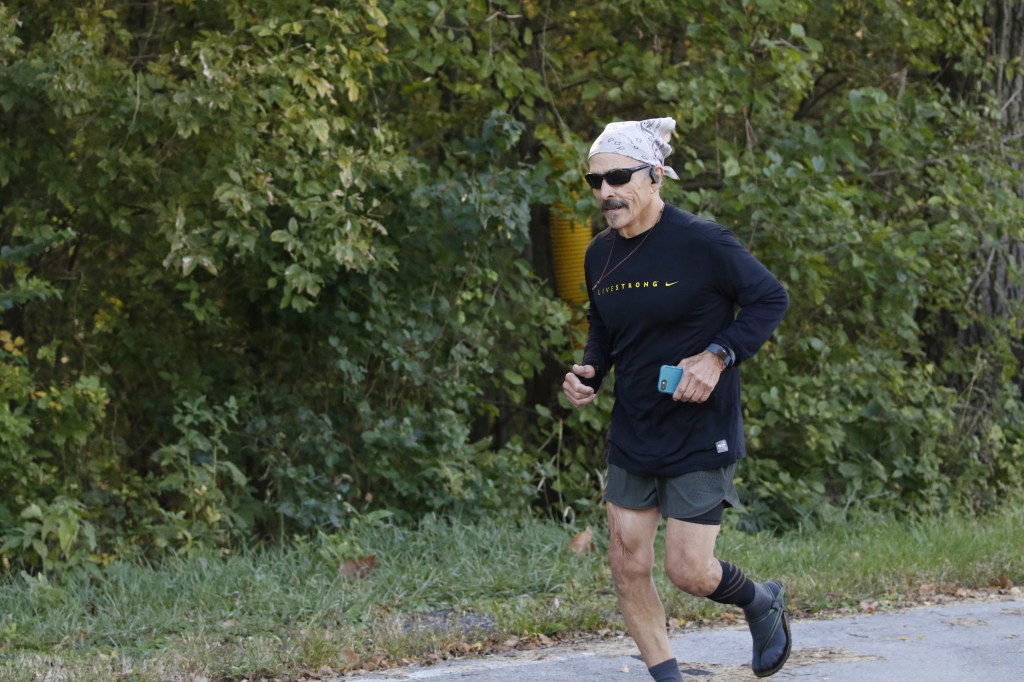
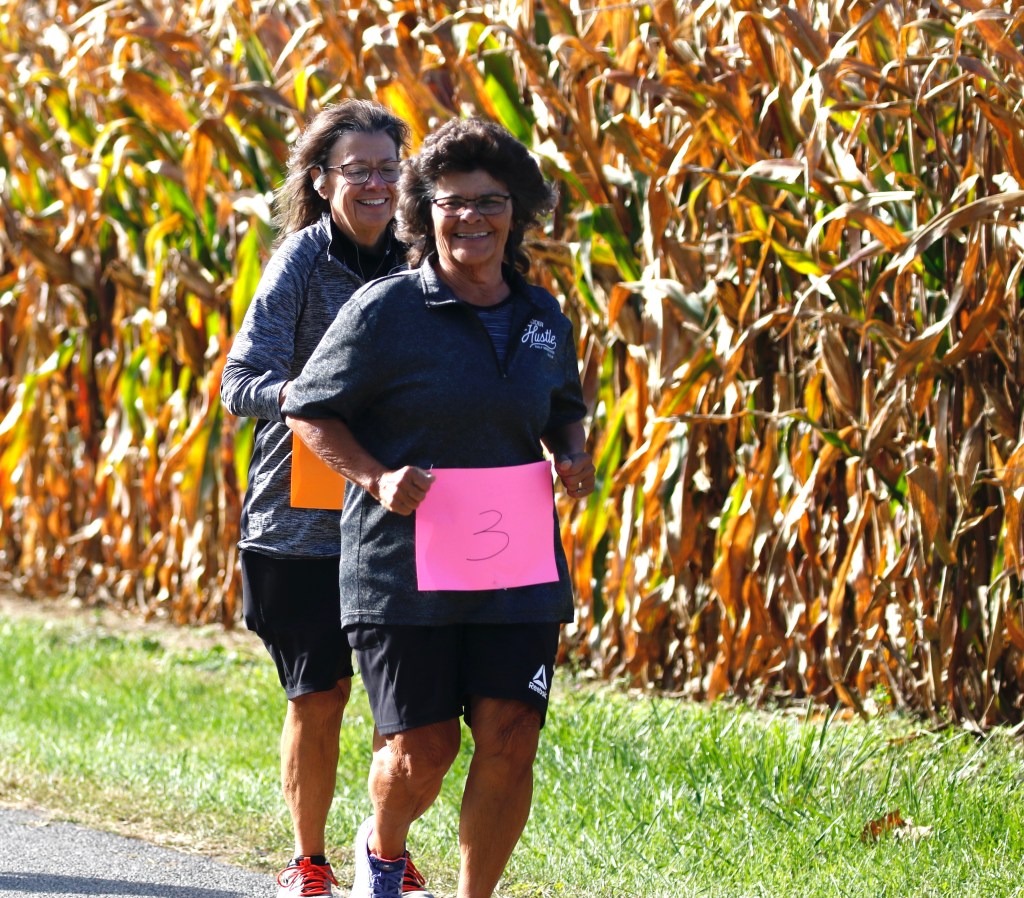
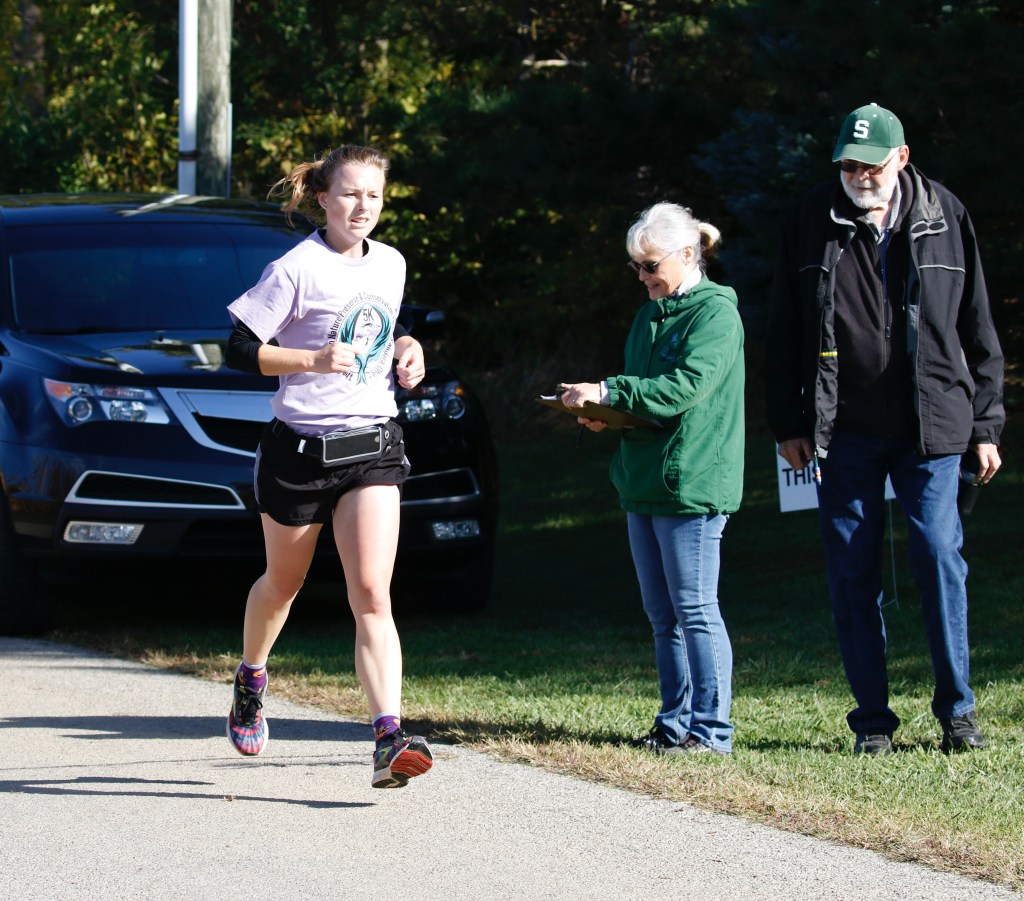
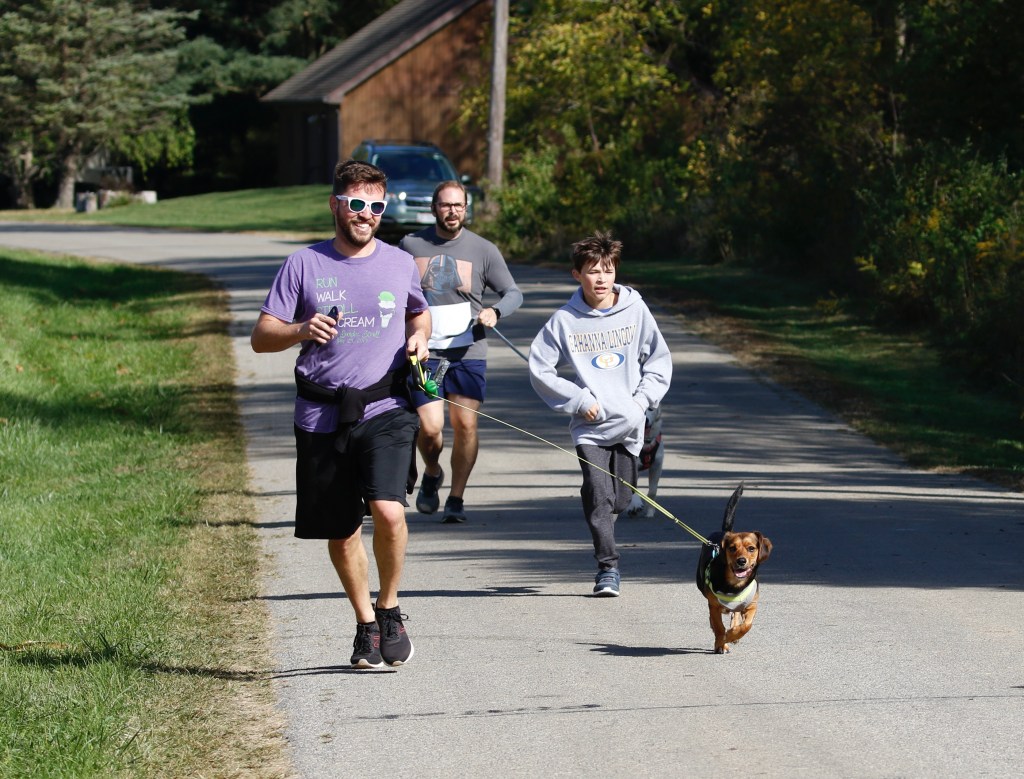
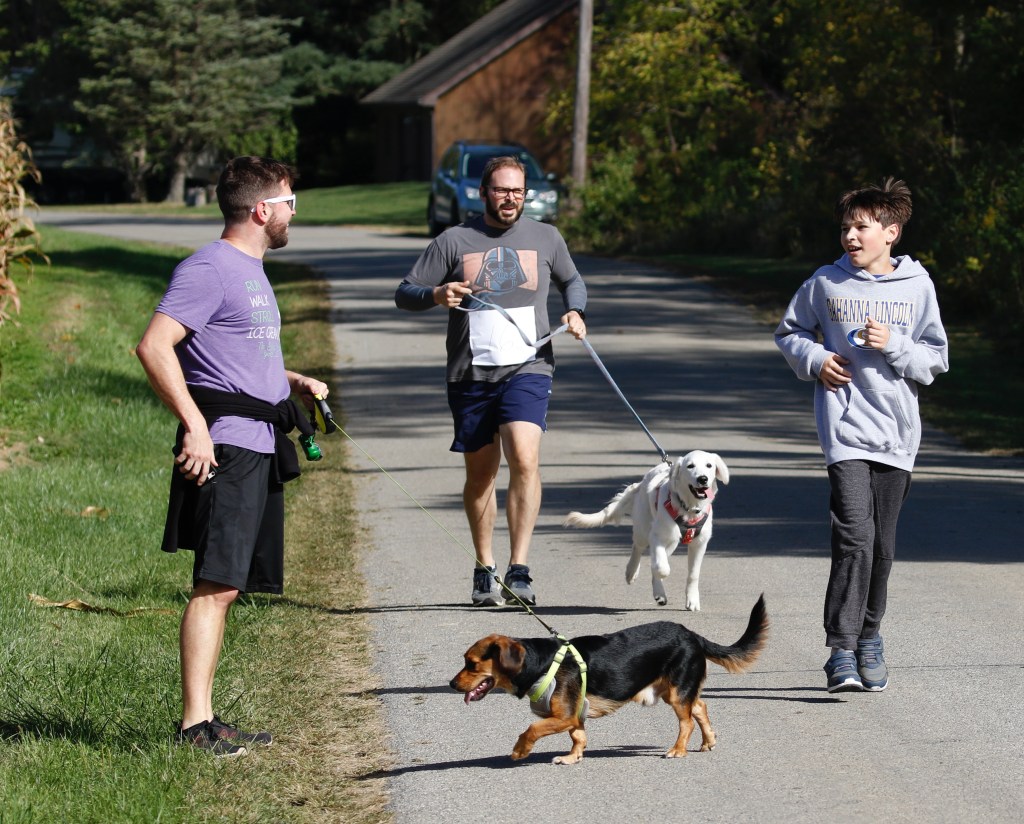
Runners and walkers lined up on the official Rustoleum-painted starting/finish line this past Saturday, all there to support The Quarry Farm by pedestrian-ning along Road 7L and M6. It was chilly in the shade and warm enough in the sun, making for ideal conditions to exercise for a good cause.

Most years, the course is an out-and-back to the Seitz homestead on Road M-7. This year’s heavy tomato truck traffic led to a reroute, with participants trekking .5 mile south on 7-L and back to continue north and east on M-6 to a turnaround at Bridenbaugh’s Schoolhouse.

Chad Carroll and Julie Klausing took home the gold (Quarry Farm mugs created by artist Brandon Knott) in the “Run” category. Jay Shapiro and Lois Seitz came in first for the “Walk” group (not the first time for either of these quick-steppers.) Deb Weston and her enviable telephoto lens provided photographic evidence of this year’s event. She even captured and shared images of avian observers and a brilliant, rare fire rainbow that flared over the farm animal sanctuary.

The Bright Lights of Early Autumn

Click to download

By September and October, most of the white, blue, pink and purple wildflowers have faded from the landscape, but our byways glow into early autumn with the bright yellows and golds of what we might refer to simply as “pretty yellow flowers.” Let’s give a respectful nod to four of those cheery wildflowers—Goldenrod, False Sunflower, Jerusalem Artichoke, and Sneezeweed—and get to know them personally.


The four have much in common. All four are members of the huge family Asteraceae, also Compositae; their flower petals grow daisy-like in rays around a center. The centers are typically a cluster of many tiny florets. All four attract pollinators (bees, butterflies, and hummingbirds), so they are important economically and ecologically. Deer avoid them. All are perennial, and cultivars have become popular garden flowers. While they share family traits, their differences can help us distinguish them.


Goldenrod, a common name for Solidago, may be the easiest to identify. More than 100 species grow wild in moist soil in North America, but a few have become popular in gardens. The plant heights average three to five feet. The flower heads are fluffy plumes or fans densely covered by tiny florets. Because they produce almost no pollen, they can’t be blamed for allergies. They are not poisonous to humans; in fact, parts are edible and can have medicinal uses. Because they are native, they are not termed invasive, but they can spread aggressively by seeds and roots.


False Sunflower, one common name for heliopsis helianthoides, is a native that can be mistaken for a daisy. It prefers sun and can grow in a wide range of soil, preferably on roadsides, near wooded areas and in prairies. The plants reach three to six feet and bear flowers with yellow (the common color here) to orange rays that may droop slightly around a soft brown center, earning them the nickname Ox-Eye Daisy. They are neither invasive nor toxic.


Jerusalem Artichoke, or helianthus tuberosus, is not an artichoke but rather a species of sunflower native to central North America. The plants can grow from five to nine feet tall, bearing bright yellow, daisy-like flowers with sturdier petals than False Sunflower or Sneezeweed. Its elongated tubers (fleshy underground stems) vary in color from light brown to white, red or purple and have a nutty flavor. They are highly nutritious and can be eaten, either raw or cooked. In fact, tasty-looking recipes can be found online. The plant was once a widely cultivated root vegetable crop that is regaining popularity.


Sneezeweed, or helenium autumnale, is so called because its leaves were once dried and used to make snuff. The plants prefer moist soil and are at home along streams and wetlands. They grow from two to five feet tall and bear pale yellow to orange flowers with fan-shaped drooping rays. It is sometimes called Wingstem because of the gill-like “wings” running the length of the stems. Although attractive to pollinators, it is poisonous (in large amounts) to humans and livestock.


One final note: all four of these “pretty yellow flowers” look lovely in floral arrangements.

—The Gardener at The Quarry Farm

birds and burr-d

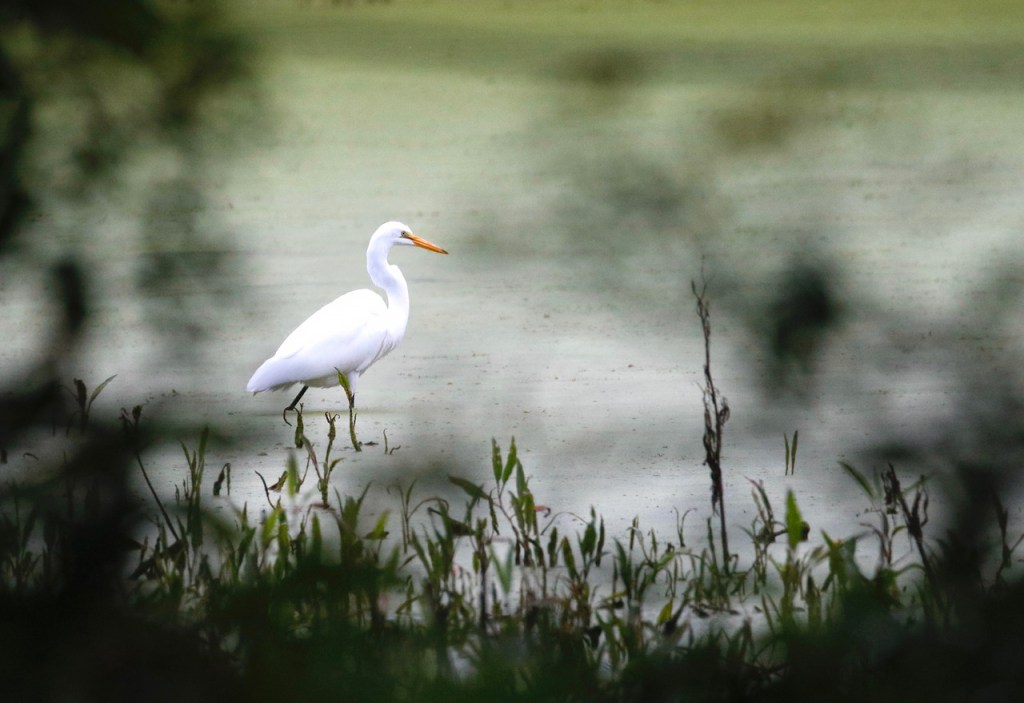
The birding team of David Smith and Deb Weston are stepping up their Quarry Farm game again in anticipation of fall migration. As we watered and fed the farm animal sanctuary residents, Deb’s car passed the front gate sometime around 7 this morning. Shortly thereafter, a large heron-ish bird flew up from the nature preserve and overhead. To say that it flapped its great wings in its journey southwest just doesn’t sound like the correct adverb for such a graceful movement.

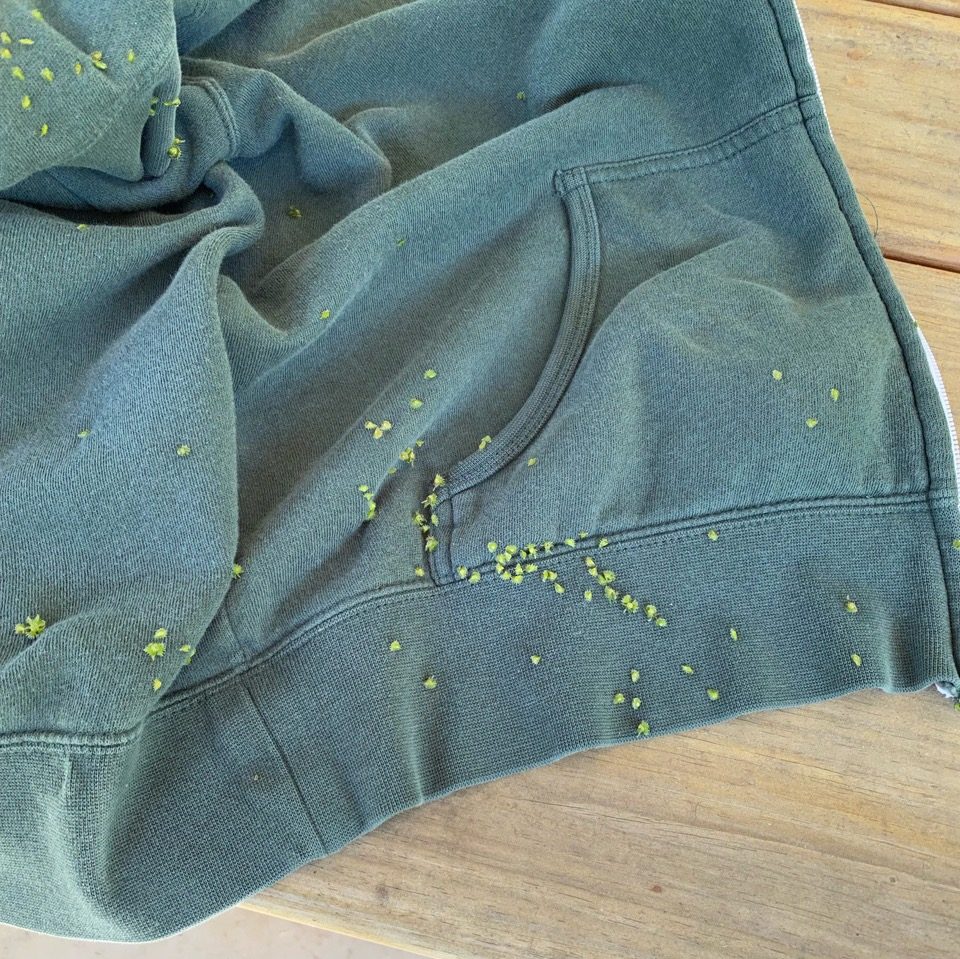
Stick-tights hitched a ride with Birder David.

“So jazzed to see the Great Egret,” texted Deb from the trails. She said that David and his wife Julie have seen them in Putnam County. “But it was super cool to see it in the quarry actively hunting—until it saw us.”

There was a Great Blue Heron stalking the quarry wetland, not far from the egret, and one lone female Wood Duck.  They heard but didn’t see the Red-breasted Nuthatch and were pretty certain that they saw an Ovenbird but neither of them felt confident enough to add it to today’s ebird list. Today’s list also included nine warblers: Black and White, Tennessee, Nashville, Common Yellowthroat, American Redstart, Northern Parula, Magnolia, Bay-breasted and Blackburnian.  

“Our record for fall from last year is 42 and that’s what we got today,” Deb added.  

The Quarry Farm tally on ebird is now at 138 species.

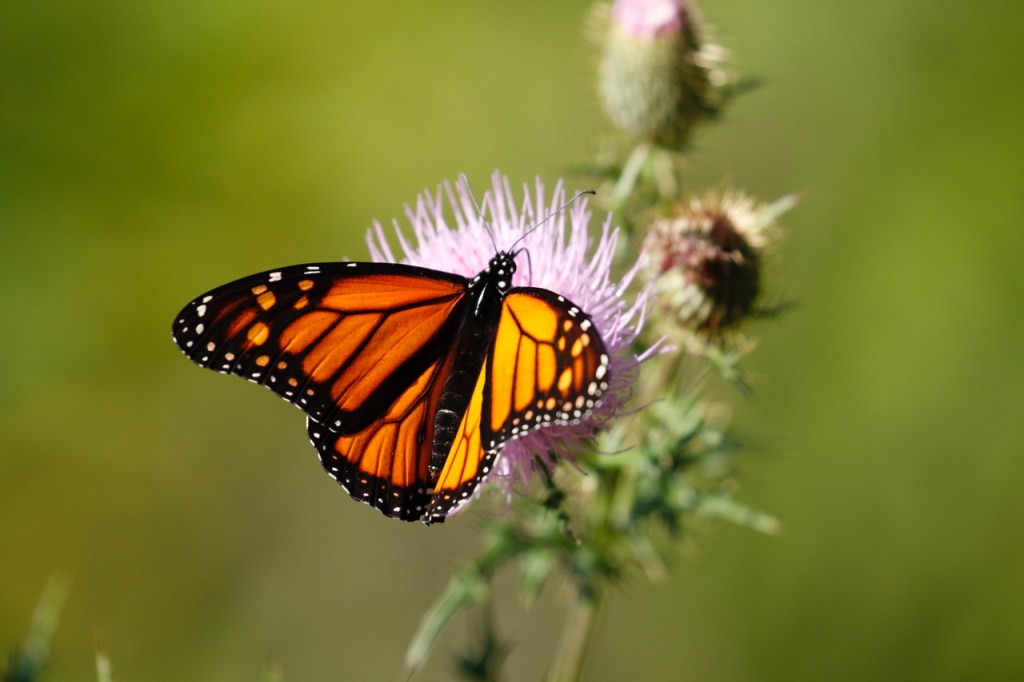
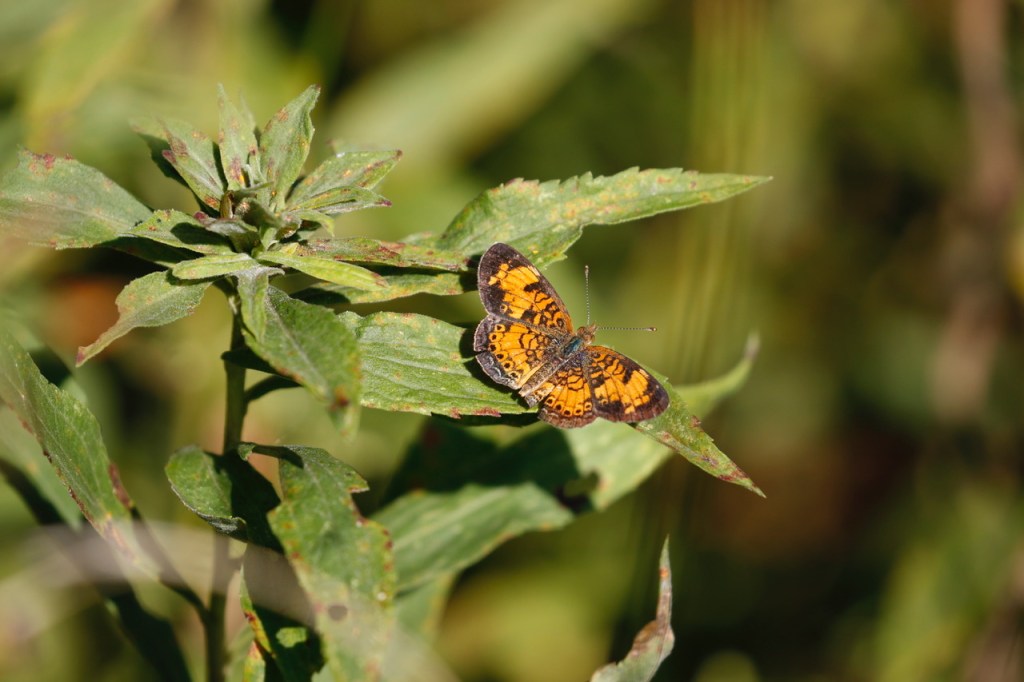
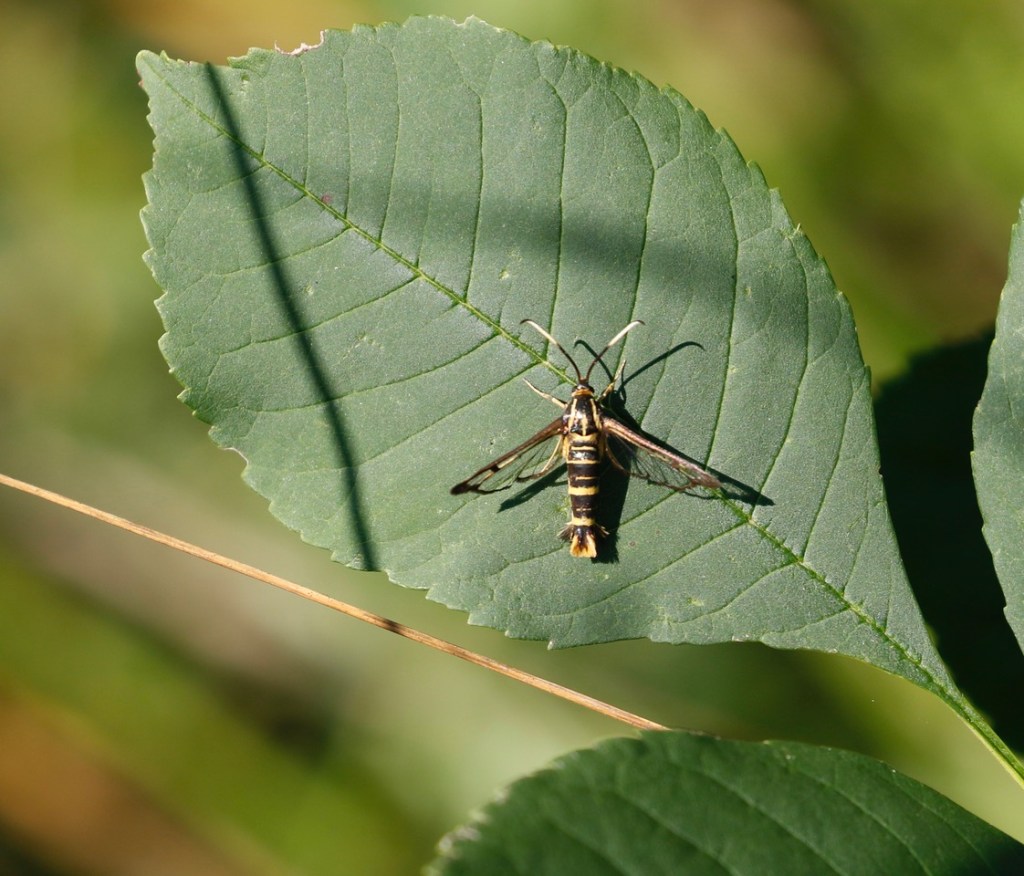
As Deb waits in the leafy shadows for landing birds, she trains her hefty camera on insects. Gerald O. Coburn would be thrilled. He photographed and documented most of the dragonfly and butterfly species noted here, as well as many birds. Deb told me last week that she would have really liked my dad. I told her that I think the admiration would be mutual. Dad would have seen her car pass by his own driveway, fired up his ATV and firmly directed her to grab her camera and hop on, wasting no time to see everything that sought warmth and breakfast with the sunrise.