At long last, the pie

PieDo you remember this pie, made with wild black raspberries picked right here on the Quarry Farm? A photo of one production of this pie was posted on July 1. What followed were requests for the recipe.

Summer is still with us. The black raspberry picking time may have passed, the last nodules picked clean by hungry birds, but just in case you have some put up in the freezer, here’s that recipe. If you are fresh out, other late summer fruits may suit your taste buds.

BERRY STREUSEL PIE

Crust for single crust pie

  • 5 cups black raspberries or mixed berries such as blackberries, blueberries, and black raspberries
  • ¾ cup sugar
  • 1/3 cup all-purpose flour
  • 2 teaspoons finely shredded lemon peel, 1 tablespoon lemon juice, or ½ teaspoon ground cinnamon

1. Line a 9-inch pie plate with pastry for single-crust pie.

2. In a large bowl combine the sugar and flour. Stir in berries and lemon peel (or lemon juice or cinnamon). Gently toss berries until coated. (If using frozen berries, let mixture stand for 45 minutes or until fruit is partially thawed but still icy.)

3. Transfer berry mixture to the pastry-lined pie plate. Crimp edge of pastry as desired.

Sprinkle with Streusel Topping (below).

4. To prevent overbrowning, cover edge of pie with foil. Bake in a 375 degree oven for 25 minutes (or 50 minutes for frozen fruit). Remove foil. Bake pie for 25 to 30 minutes more or until filling is bubbly and topping is golden. Cool on a wire rack.

Streusel Topping: Stir together ½ cup all-purpose flour and ½ cup packed brown sugar. Using a pastry blender, cut in 3 tablespoons butter until mixture resembles coarse crumbs.

“Best field trip ever”

racg041193 031

One young boy shouted this as he was on his way back from the farm animal sanctuary this morning. How could it not be the headline today?

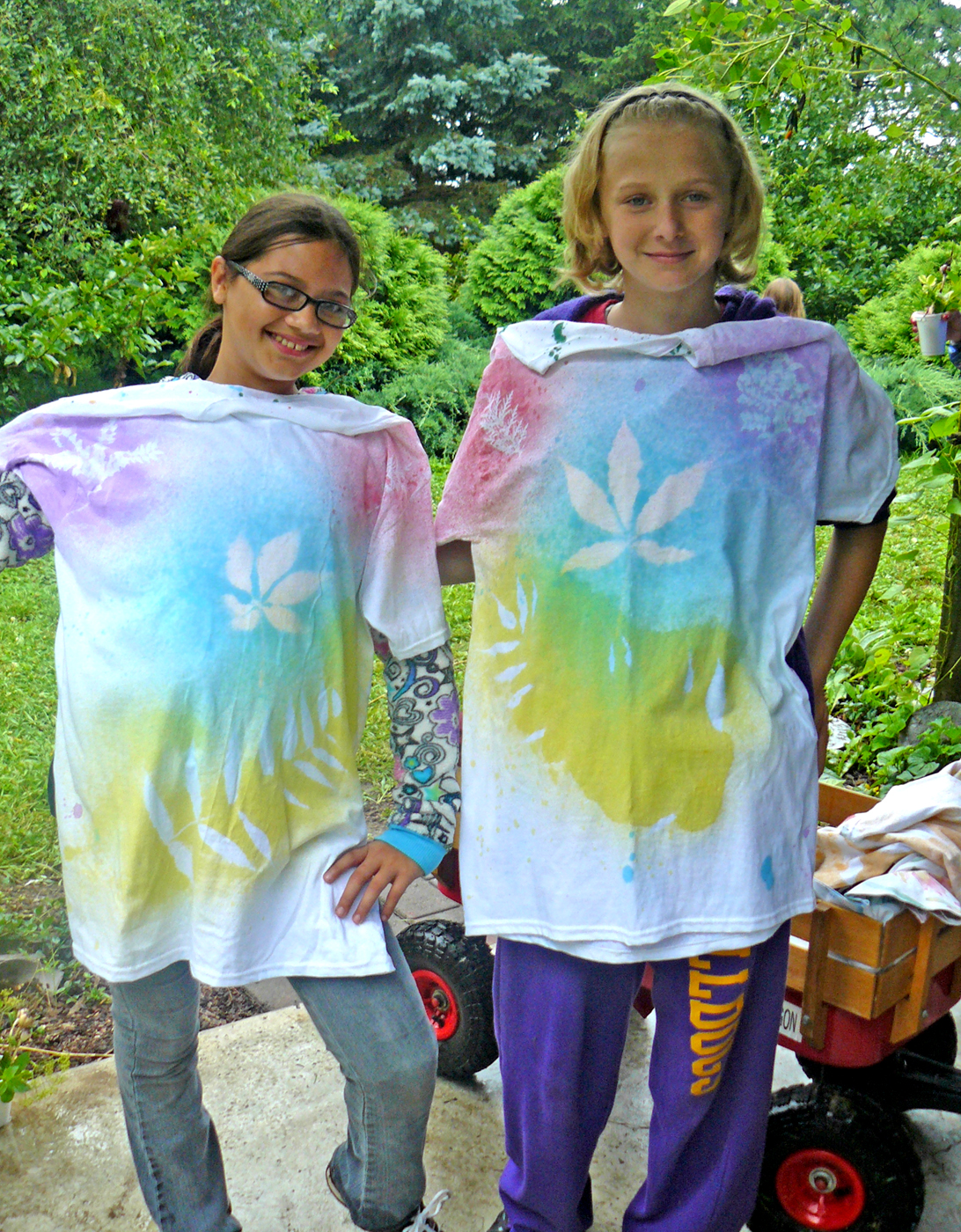
Modeling leaf resist t-shirts

Modeling leaf resist t-shirts

That young man was here with Charlene Finch and her Junior Gardeners from Continental. This was the second year that the group visited the Quarry Farm. They are one of best bunch of people we’ve ever met. Enthusiastic about everything, which is good since their day started here with rain. But since the shelter house went up last summer, the roof was ready and overhead. The new tent curtains were draw to the west and south, so the rain was hampered enough that kids and parents could make leaf shirts and select herbs for culinary, scent and healing bundles.

Charlene and her gardeners make herb bundles

Charlene and her gardeners make herb bundles

Charlene Finch started the Junior Gardeners group four years ago as part of her Defiance County Master Gardeners project. She liked it and the participants so much that she kept at it. Her own pocket paid for materials and seeds at

Costmary, an herb

Costmary, an herb

first. Now the group receives donations, holds 50/50 raffles and sells food at the Continental fall festival to fund summer gardening projects.

During the 2012 visit, Beatrice was just a piglet, a very shy one. Her encounter with Continental Junior Gardener Brandon was a positive turning point for us and Little Pig. Prior to the first trip, she wouldn’t let anyone close. But she liked Brandon. This morning as we all walked up the path to see the animals, Beatrice came at a trot, full grown and not a bit shy. Buddy and the goats were especially happy to see the 50-pound bag of peanuts that the group donated today.

You’ve got mail

2013 Summer Newsletter.inddThe 2013 summer edition of The Quarry Farm Newsletter is done.

Click on the cover to the left and see for yourself what’s coming up.

There are three events planned, so get registered while the getting’s good. Not all require preregistration, but still. Take a look.

Black raspberries and more

Back FieldIt’s been summer for a little over a week now. On the quarry, and elsewhere in the region, I suppose, that means raspberries. Here they’re mostly wild and black, though there are a few domestic red raspberry brambles planted in the big back field nearly two decades ago. Now the picking of raspberries, dependent on where it is that they’re being picked, can involve some little bit of a blood-letting. Here, along the wildest areas of The Quarry Farm, that is certainly the case.

RaspberriesThere are the brambles, of course, with their little thorns that snag cloth and skin. And then there are also the multiflora rose bushes, the thorns of which are a bit more than little and, consequently, do a bit more damage. Hawthorne and honey locust trees have thorns that, for the unwary, can prove literally life-threatening: honey locust thorns can grow to as long as five or six inches, come in clusters of ten or twelve at a time and are as sharp as needles. But botany is only one aspect of the blood bath. Mosquitos range in clouds of hundreds, along with midges, horseflies, deerflies and a host of other little biting beasts.

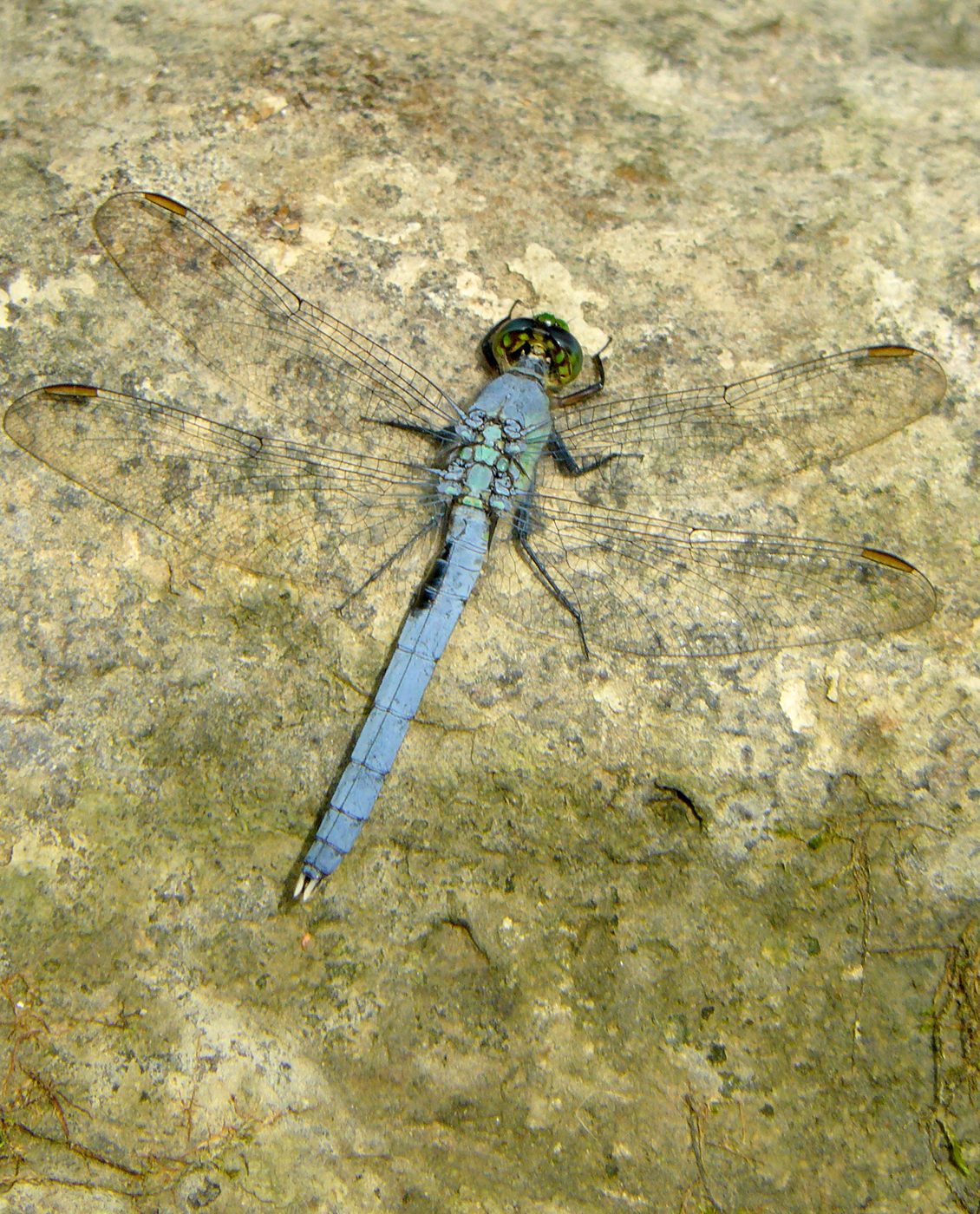
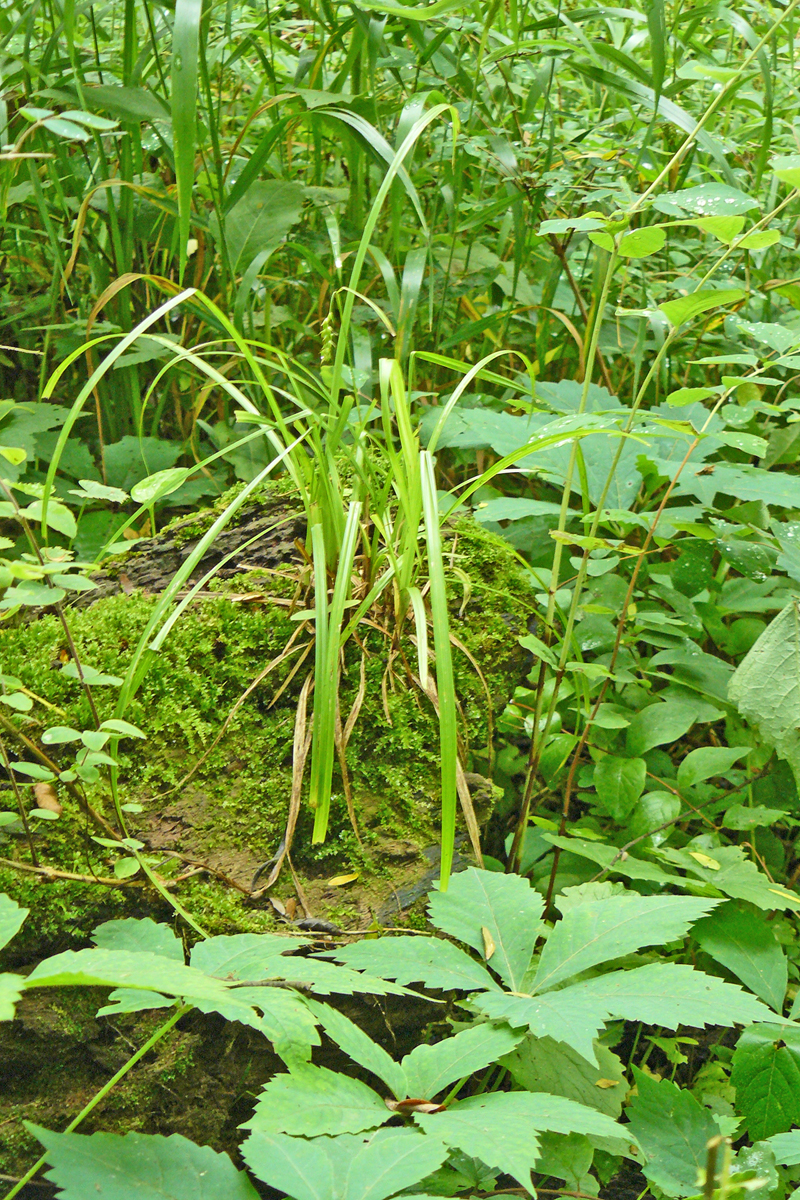
Damselfly            White Tail           Sedge with Moss           Ivy

Turkey VultureBut the berries themselves make the challenges worthwile, not to mention the sights that come along with the raspberries. Things like dragonflies and damselflies seesawing back and forth as they chase their meals, those same pesky insects that are intent on syphoning blood; little black toads that scurry from spot to spot; robberflies pursuing the same kinds of prey as the dragons and damsels, but in a much more “point A to point B” kind of way; turkey vultures soaring across skies of blue and grey, catching thermals and various drafts that send them scooting to the horizon; and ropes of grapevine and poison ivy.

The berries, though, are the goal, and this year’s crop is bountiful. Speaking of which, the telephone just rang and it seems there’s a pie cooling on a counter not too terribly far from here.

Time to go.

If you’re lucky, we’ll save you a piece.

Pie

This One’s for the Dogs (and the Opossum)

Rowan and OpossumIt’s been a bit longer than we like between posts. But since spring is finally here (knock on wood) you will forgive us since you, like us, are probably running around in today’s sunshine before tonight’s predicted rain.

Silence on the web does not mean it’s been quiet for The Quarry Farm. The new chicks are growing, as is the grass for Buddy and the goats. Fezzik and Inigo are displaying for every female fowl that could conceivably give them the time of day. Inconceivable? Not so for the little red hen that follows Fezzik around. The wild turkey hens on the nature preserve could care less, however.

Eventwise, The Quarry Farm has been on the road for the last couple of weekends. Saturday, April 20 took us up I-75 into Michigan for the Monroe Conservation District Tree Sale. Tim Kwiatkowski, good friend and conservationist for Michigan Agriculture Environmental Assurance Program (MAEAP), invited us, and an assortment of aquatic macroinvertebrates from Cranberry Run as well as an opossum that matured overwinter here, to be part of the Monroe County Earth Day celebration that was held alongside the tree sale pickup.

It was cold and the wind blew. Despite the weather thousands of trees were sold and the buyers learned a little about biological indicators and that Virginia opossums are fantastic garbage collectors. Some even decided the little guy was cute.

He was cute. And we assume he still is, wherever his nomadic opossum ways take him. Once the evenings warmed toward the middle of the week he finally ventured out of his open hutch and into the wild.

Cassie

Cassie poses

Today, we had a short drive to the 6th Annual Mutt Strut and Craft Market sponsored by Putnam Pet Pals to benefit the homeless and neglected dogs of Putnam County and Northwest Ohio. They do good work and put on a great, loud show every year at the Putnam County Fairgrounds. Last year we set up a table at the Strut; it turned out to be one of the best offsite events that The Quarry Farm has ever been part of as we handed out packs of newsletters, talked to some amazing, compassionate people, and produced more canine caricatures than we could track. Although this year’s weather was sunny and warm, a day for breeding garage sales and other such competitions for public attention, the fairground was still hopping.

Better make that barking.

Good times.

Sixteen Chicks and a Kit

It’s only Tuesday and it’s already a busy week.

On Monday, we received a call from the Pandora branch of the United States Postal Service.

“There is,” a woman explained, ” a package for you.” Long pause. “And it’s talking.”

Chicks TiredThe chicks we’d ordered late last winter had arrived: five Black Australorps, five Black Giants and, as it turns out, six (though we only ordered five) Buff Orpingtons. Now ordinarily we don’t buy the animals that live here. There are more than enough domestics out there in need of a different situation that we don’t have to. But chickens? Well, they hold a special place in my heart and, frankly, they feed us. Not with their bodies; we’re vegetarians. But we have absolutely no issue with eating the eggs they produce, Chicksparticularly since the eggs they lay are infertile. This is not to say that we don’t take in wayward chickens. We do and have: Barbara the Australorp, Karen the Rhode Island Red and Big Girl, the Ameraucana,  just to name a few. But there’s something about raising a chicken from virtually her first breath. At least, there is for me.

Then, on Tuesday, today, we received a call from Nature’s Nursery Center for Wildlife Rehabilitation and Conservation Education. A couple in our county had found an orphaned red fox kit and were looking for assistance. I met Rachel and Andy in Ottawa in the parking lot of the local Rite Aid. They explained that they’d found him huddled next to a dead sibling and kept a watch out for the mother. 003When nearly two days had passed without an appearance, they took the kit in and contacted NN, which in turn called us. We provided him with a little watered down formula, which he gladly drank, and, since he was severely dehydrated, gave him a subcutaneous injection of sterile saline solution. So he’s here for the interim. Tomorrow, we’ll try him on a slurry of soft cat food and formula.

From there, thanks to Rachel and Andy, the sky’s the limit.

Talking Turkey

Ready For Love

Ready For Love

It’s spring, the time of year when love is in the air, or, as Walt Disney put it, when all the animals are twitterpated. Insofar as The Quarry Farm is concerned, noboby shows their love quite so dramatically as the two bronze turkeys we recently took in. The fact that both birds are male hasn’t dampened their ardor. Not one bit. They strut about the property, feathers fluffed and tails fanned, gobbling for all they’re worth. But it’s their heads that provide the real entertainment.

Not in the mood

Not in the mood

Turkeys, both wild and domestic, have two prominent features on and about their heads: wattles and snoods. The wattle hangs below the beak while the snood sprouts from the cere just above the bony part of the beak. During peak periods of romantic interest, both the snood and the wattle fill up with blood and turn bright red. Contrarily, when they’re scared, tired or simply don’t find you attractive, both features turn a grayish blue.

Signs

I woke up this morning with this in my head:

[In Just-]
by e.e. cummings

in Just-
spring when the world is mud-
luscious the little
lame balloonman

whistles far and wee

and eddieandbill come
running from marbles and
piracies and it’s
spring

when the world is puddle-wonderful

the queer
old balloonman whistles
far and wee
and bettyandisbel come dancing

from hop-scotch and jump-rope and

it’s
spring
and
the

goat-footed

balloonMan whistles
far
and
wee

I have a passion for poetry and cummings is one of my favorite artists. Inevitably, this particular piece of work comes to mind at some point in March. While not the first sign of Spring, it is a significant one for me. Still, you needn’t look to the page, or even delve into the convolutions of my sleep-addled mind to find the artistry of onrushing Spring.

Fox Squirrel Geese CabinOf late I’ve seen the return of turkey vultures and red-winged blackbirds and American robins in arguing masses so large that they’ve painted an acre of the big back field nearly white with their droppings. I’ve heard the buzz of a woodcock and the whickering of its wings as it flew toward the moon to prove its worth to a potential mate. Skunks and ‘coons and squirrels quarrel and fight in the woods and Canada geese and mallard ducks, in flocks and individual pairs, holler from the quarry.

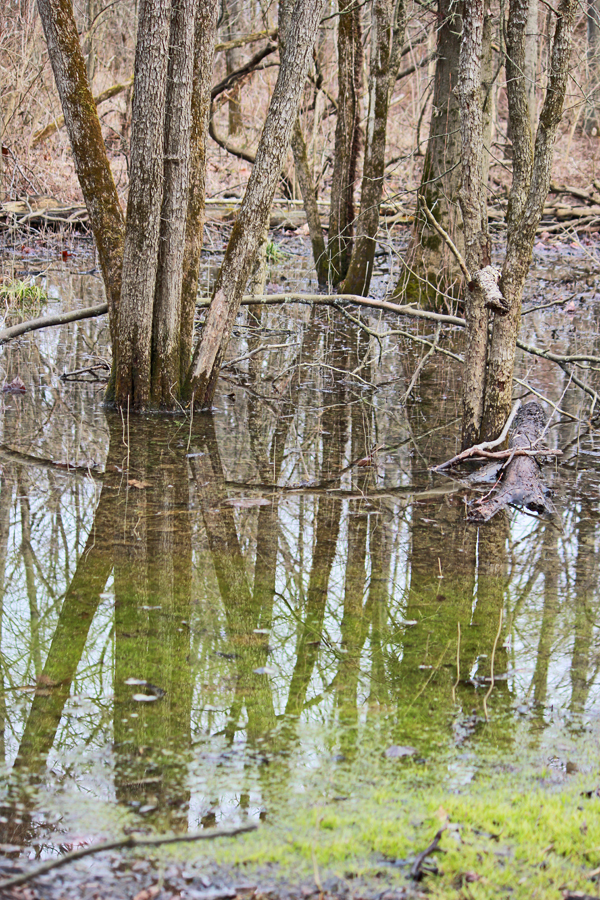
Fairy Shrimp CircleTracksIn the lowest lying areas of The Quarry Farm, back in the woods and well below the quarry itself, on the ground referred to by locals as Coburn’s Bottom, vernal pools have already formed. These temporary ponds serve as habitat for a host of ephemeral animals: fairy shrimp and salamanders and mayfly nymphs and dragonflies. Within a few months, the pools will have evaporated, but their inhabitants remain in burrows underground or as eggs, tiny packets of a potential future.

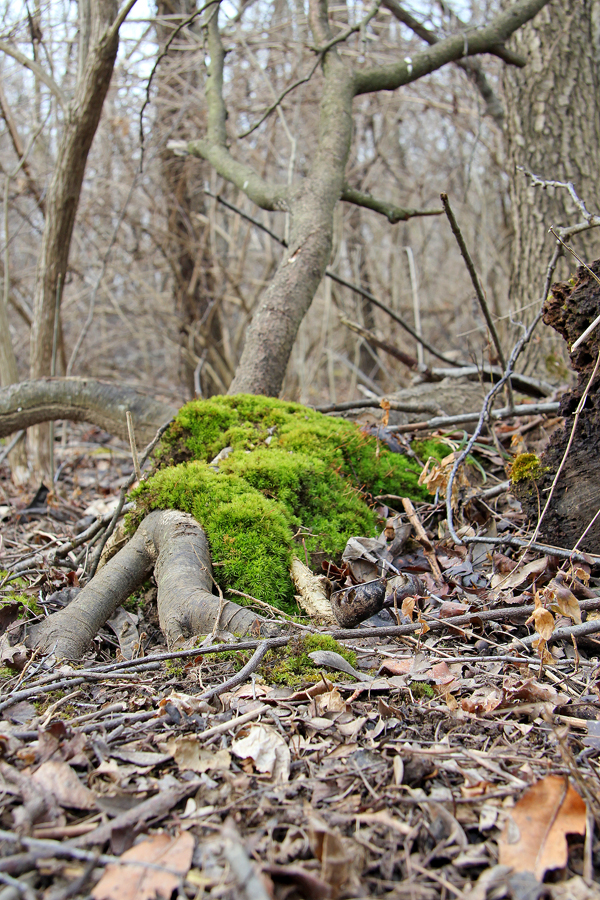
MossAnd then there’s the greening of the woods, with mosses already climbing up the trees and laying soft blankets on the ground. It’s easy to forget that this whole area was once rainforest. It’s easy to forget, that is, until you take the time to walk into an Ohio woods and take an honest look around. And if it’s not a matter of forgetting – if, in fact, you didn’t know – then the realization of where you are is an epiphany and you’ll never look at a stand of trees in Northwest Ohio in quite the same way again.

(e.e. cumming’s [in Just-] was originally published in The Dial, Volume LXVIII, Number 5: May, 1920)

Three Goats, Two Humans and the Very Small Car

Goat CarFive years ago, while bringing Anne home from a stint on the EPA  vessel Lake Guardian, her car, a seven year old Toyota we bought used to begin with, gave up the ghost in dramatic fashion. As we came into Findlay from the east, the car gave a thump and a shudder and began belching thick, black smoke.

We limped into town and into the first car dealership we came to, then walked the roughly half-of-a-mile down to a second, having seen nothing we were interested in at the first. There Anne spotted a Scion xA and almost immediately fell in love. We had her old Toyota towed to the dealership and used it as a downpayment on what she now fondly refers to as her “little rollerskate.” If you’re unfamiliar with the xAs, they’re a smaller version of the current xD and similar in shape to the Honda Fit. In short, they’re microSUVs.

We’ve hauled just about everything in that little car: hawks, falcons, vultures, pigs, dogs, cats, ducks, geese, foxes, opossums, crows, owls over a dozen species of songbird, 55 gallon aquariums, bales of hay and straw and the list goes on. Most recently, Anne’s Little Rollerskate faced what we thought would be its greatest challenge: three pygmy goats.

Willow

Willow

We’ve talked for years about maintaining a small herd of dairy goats, but the closest we’ve come are Marsh and S’more, the two Nigerian Dwarf wethers that have lived on The Quarry Farm for nearly three years now. So, when we were told about these three goats, an intact buck and two does, we contacted the woman with whom they lived. As with so many others, the recession had hit her hard. Having been without work for months and still recovering from a necessary surgery nearly a year ago, she found herself without the means to care for her herd of goats. Most went to a local farm (she lives in Rootstown, south of Ravenna in eastern Ohio), but she was left with these three until she contacted The Quarry Farm.

Alaura

Elora

It was a miserable day for a drive when we left Putnam County. There was just enough snow to make the roads treacherous and it took nearly four hours to make a trip that should have taken only three. Add to that some skepticism on my part that we’d be able to fit three adult goats and ourselves in Anne’s little subcompact and it made for a tense trip.

As it turns out, I should have left my doubts at home.

Martigan

Once we arrived at our destination, we were delighted to discover that the goats were even smaller than we’d imagined. The older doe and the buck, Willow and Madmartigan respectively, stand no taller than eighteen inches at the shoulder, while Elora, the younger doe, is even smaller. Even with a full set of horns, horns that we initially padded turban-like with a towel, Madmartigan could easily stand up straight in the car, and all three were able to move freely around the cargo compartment.

Martigan Home

Martigan

The ride home was uneventful and we introduced all three to their new living quarters. Now they’re permanent members of The Quarry Farm family. And you’re all welcome to come and visit them and the rest of the facility. Just give us a call. We’ll be happy to show you around.

NOTE: Before anyone tells us that we have the wrong kind of goats for milking, we know. The animals that live here on the conservation farm of The Quarry Farm are here because, in almost all cases, they had nowhere else to go and we could offer them a home. Most do carry their weight: goats eat invasive plants, chickens give us eggs, Buddy and the geese guard the property, etc. The pygmies will make it possible for school groups and other visitors to see goats being milked. And we’ll have goat milk.

A Long Overdue (but brief) Introduction

If you have ever had an affinity for writing, someone at sometime has said to you, “Write what you know.” It’s good advice. But what they don’t tell you is that sometimes what you know is what you love and, on occasion, you are so close to what you love that writing about it becomes more than simply difficult. Your love becomes a chasm that words can’t bridge. I’m going to type a word now that, to me, embodies this whole concept.

Crows.

It’s a little word and they are a common bird, but even so, I have been enamoured and fascinated by crows for decades. By those who study animal intelligence, they are widely considered the most intelligent of birds. They aren’t simply tool users, but meta-tool users, designing tools by which they can get a tool to accomplish a task. They raise their young in multigenerational family groups, teach specific lessons to their young who, in turn, teach their own offspring these self-same lessons, communally avoid areas of known danger and may even use the same insecticide (formic acid deliberately obtained from the crushed bodies of ants) they use to rid themselves of lice and other pests to attain a state of inebriation.

That’s right. Crows may get loopy on ant juice.

And here’s the rub: I live with two of them. Literally live with them. In my house. And have done so for over a year. Their names are Blackie and Jo. Both came to us through Nature’s Nursery Center for Wildlife Rehabilitation and Conservation Education. Blackie first and then Jo. Over that time, a day hasn’t passed that one or the other of the two hasn’t done something noteworthy, engaged in behavior that wasn’t worthy of mention. Even so, getting the concept of them down, the enormity of their impact on my life, has proven overwhelmingly difficult. So, although I’ve tried, and there are literally dozens of drafts on this site that support my claim, I haven’t passed along a single anecdote.

Until now.

To get to the meat of it, though, I have to seemingly stray away from the subject. Be patient.

Recently, we took in an additional fourteen hens. We acquired them locally from a pair of farmers who found themselves swimming in chickens. As I understand it, they were told by their supplier that their order of 150 chickens couldn’t be mailed, that they would have to drive to the hatchery and pick them up. Which they did, only to receive, a few days later, a shipment by mail of another 150. They were completely unprepared for so many birds, didn’t have the facility to house them all, although it appeared that they had tried. When we picked up our fourteen, the most the farmers were willing to part with, there were easily 200 hens and several roosters housed in a building no more than ten foot by fourteen. The birds had pecked each other raw, stripping the feathers from one another until many were half-plucked. To make a long story short, two of the chickens we took in have died, the (hopefully) last of them either late last night or early this morning. And now we get back to the crows.

Jo in WindowOf the two crows that live with us, Jo is my girl. We bonded immediately. She greets me each morning, and I, her. It’s a complex thing involving specific crooning vocalizations. We visit with each other and preen one another. And when I’m outside where she can see me, she caws loudly and sits on the windowsill, watching me as I go about whatever task is at hand. Today, the one she watched me perform was the disposal of the body of the chicken that had died sometime during the night. As I was coming back up to the house, in the window of the room where the crows stay, I saw a small blob of brown bobbing in the window. It was obvious that Jo was in the window waving something around, but it took me a moment to figure out what it was.

As I mentioned earlier, crows are highly intelligent and they need a variety of stimulations to keep themselves occupied. We give them puzzles to solve and simple objects that they find interesting. One of Jo’s favorite toys is one of those tiny little plastic ducks, and by little I mean just a couple of inches long and maybe an inch and a half high, that you find all over the place. I’m sure you’ve seen them: little plastic ducks dressed like firemen or doctors or executives or sports figures. At the very least, you get the picture.

Jo's ChickenIn this case, the little plastic duck looks like a little, brown, lifeless chicken.

And she was waving it in the window after watching me walk down the path behind our house with my own little, brown, lifeless chicken.

Think of it what you will. Maybe Jo was just showing off one of her favorite toys, trying to entice me back into the room for a little play time (which, by the way, she succeeded in doing). Maybe it was simply coincidence. It’s possible.

But I don’t think so.