Summer is underway, and with it comes a newsletter

2014 Summer Newsletter.indd

Hot off the printer, as well as an upload, is The Quarry Farm 2014 Summer Newsletter. Lots to talk about, like the fact that The Quarry Farm Nature Preserve & Conservation Farm is a 501(c)3 public charity, and plenty of things coming up. Click on the cover at left, open and read away.

Hope you are able to jump in on the calendar and see for yourself.

Once upon a time…

As children, most of us at one time or another have read, or have had read to us, fairy tales; the kind of story where the hero or heroine has to overcome great adversity in order to win out in the end. Generally, the moral of these stories is something along the lines of, “Be good. Be just. Work hard. Do these things and all will be well.” And just as most of us have heard or read these stories, we’ve experienced that life has a habit of teaching us a different kind of lesson, something a bit more realistic. I mean, life isn’t fair, right? Good guys regularly finish last and, all too often, what you earn from working hard is more hard work. That’s frequently been my experience, at any rate. So, I tend to think of myself as a pragmatist; I hope for the best, but expect something worse. There are those, however, who have described me as a cynic, and while it’s true that I don’t trust the motives of others, I consider that a survival trait, not a character flaw. So you’d probably guess that, from my perspective, there are no such things as fairy tale endings.

Guess again.

Greta, shortly after her rescue.

Greta, shortly after her rescue.

Last February, with the wind screaming and cutting and churning the air down to between 30 and 40 degrees below zero, members of both the Humane Society of Allen County and the Allen County Sheriff’s Office seized nearly 50 animals from a hoarding situation about 20 miles south of The Quarry Farm. And while this isn’t news to those of you who visit this site, the repercussions of the event, the sheer horror of the conditions those rescued were living in deserve telling and retelling.

The trench that Greta and Grits survived.

The trench that Greta and Grits survived.

Shelter, for those animals that had any, were wide-slatted wooden crates open to the sky or with poorly fitted roofs, rough houses slapped together from bits and pieces of waste wood and 50-gallon plastic barrels laid on their sides. Where they had run out of proper fencing, barbed wire was looped on the ground to contain two horses and three ponies. Eight chickens survived, huddled under an abandoned car, ringed by the frozen carcasses of the chickens that weren’t so lucky. The frozen remains of two dogs were found, though only one is believed to have died of exposure; the other, it is suspected, simply starved.

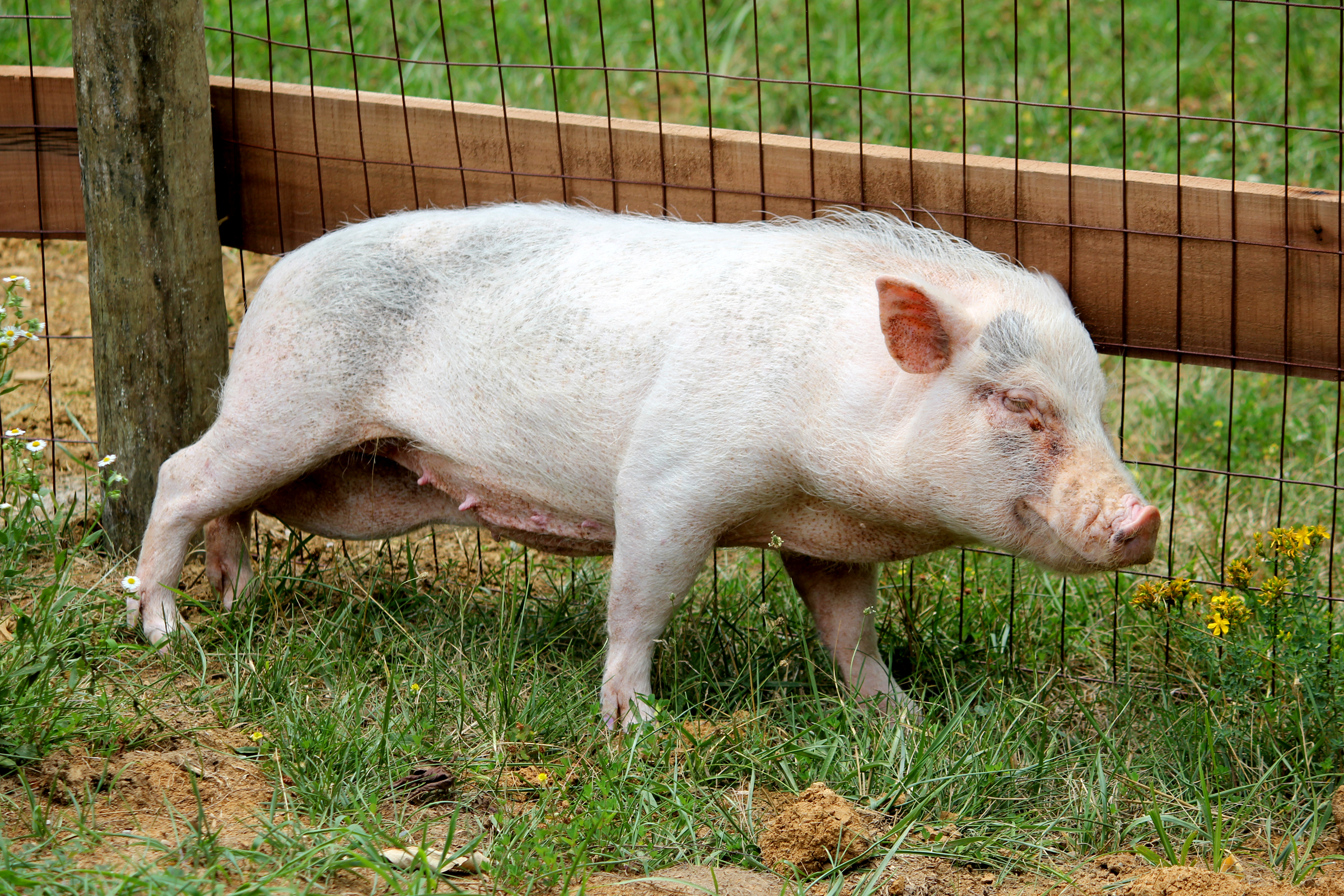
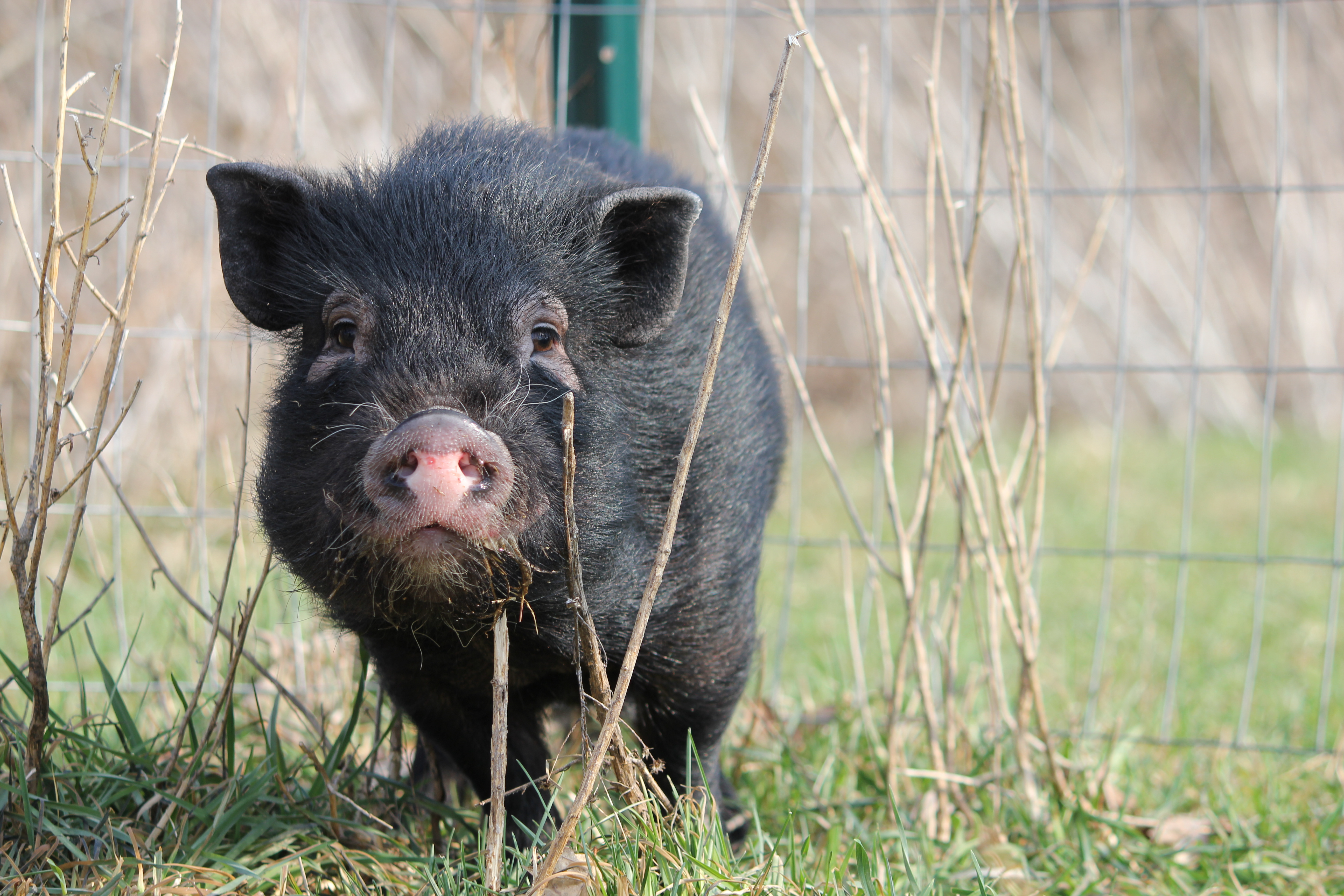
Of the animals that survived, that were rescued, four were potbellied pigs.  Two, Bob Barker and Alphonse, came to live here, at The Quarry Farm. The other Kentucky boundtwo, dubbed Greta and Grits, were spoken for by friends of ours down in Kentucky. This Sunday past, Anne and I picked up the two pigs from their temporary home at the HSoAC, loaded them into Anne’s Toyota Matrix and headed south. Because of the care they’d received and the socialization provided by the staff and volunteers at HSoAC, both pigs were extremely well-behaved, though understandably a bit restless. A whole grain bagel and pieces of both a cinnamon and an orange scone, picked up at a Panera in Troy, went a long way toward easing any nerves and both pigs lay down for the rest of the trip. Some twenty-odd miles over the Ohio border into Kentucky, and we’d arrived.

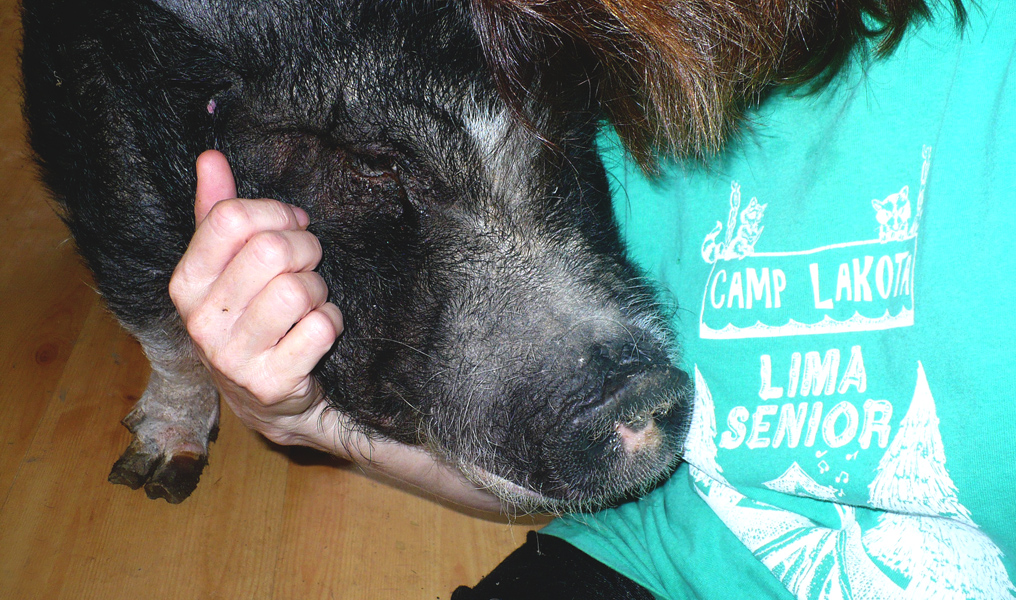
Greta, scratching.

Greta, scratching.

It was a long climb up a winding asphalt driveway to the top of one of the foothills of the Appalachian Mountains. At the top, along with an incredible view of the lowlands below and the Ohio River winding through the mountains, was Beth, standing between two low shelters: one labeled Greta and the other, Grits. Situated inside a newly constructed barn was a large, wood-slatted pen, but it was through the back door of the building that both pigs ran, into a

Grits greets Erin for the first time.

Grits greets Erin for the first time.

paddock that Bruce and Beth and Erin had finished fencing off just the night before. They immediately set to investigating their new digs, sampling grass, scratching themselves on posts and the wire of the fence and rooting into every depression they could find, but still making time for ear scratches and belly rubs enthusiastically administered by all three members of their new-found family.


And that’s where we left them, at the top of a hill in their forever home, surrounded by people who will not simply love them, but care and provide for them. From the horror of a trench in the snow to a hilltop house in the sky. Here is where they’ve come, where they’ll live.

Happily ever after.

Greta and Grits

violet jelly, Mother’s Day and a walk in the woods

Violets We’re always looking for a reason to celebrate, here on The Quarry Farm, teasing out any excuse to pull together with friends and family for food and song and conversation, but particularly food. Today, we didn’t need to look far; Mother’s Day is a perennial favorite. So we set up camp in the Seitz Pavilion, the shelter house on the north end of the cabin grounds, and laid out the spread ‘til the tables groaned. There were cold-cuts and salads and chips and dips and condiments, but for the Seitz family, the meal is what you have to wade through in order to get to dessert. Never was there a single family with so many talented bakers. Today’s menu included strawberry cake and rhubarb, cherry and black raspberry pies. Here, then, was one of the many faces of bliss.

When we were done, Anne and I took a short walk back on the quarry so that Anne could pick violets. For the past several years, we’ve made it a habit to make violet jelly and this year is no exception. I hobbled along behind, determined to work off some of the weight I’d just packed on. And while Anne worked, I played, taking quick photographs of anything I found myself looking at.

Painted TurtlesThe quarry itself is one of my favorite places. It rarely fails to offer up something worth watching, a moment worth recording. Painted turtles, sunning themselves on a log, sat still jFrogust long enough for a single image capture. Ranging along the shore, a solitary sandpiper picked its careful way around the quarry while a pair of wood ducks coursed nervously back and forth. A green frog, or possibly a bullfrog, just barely broke the water’s surface, .

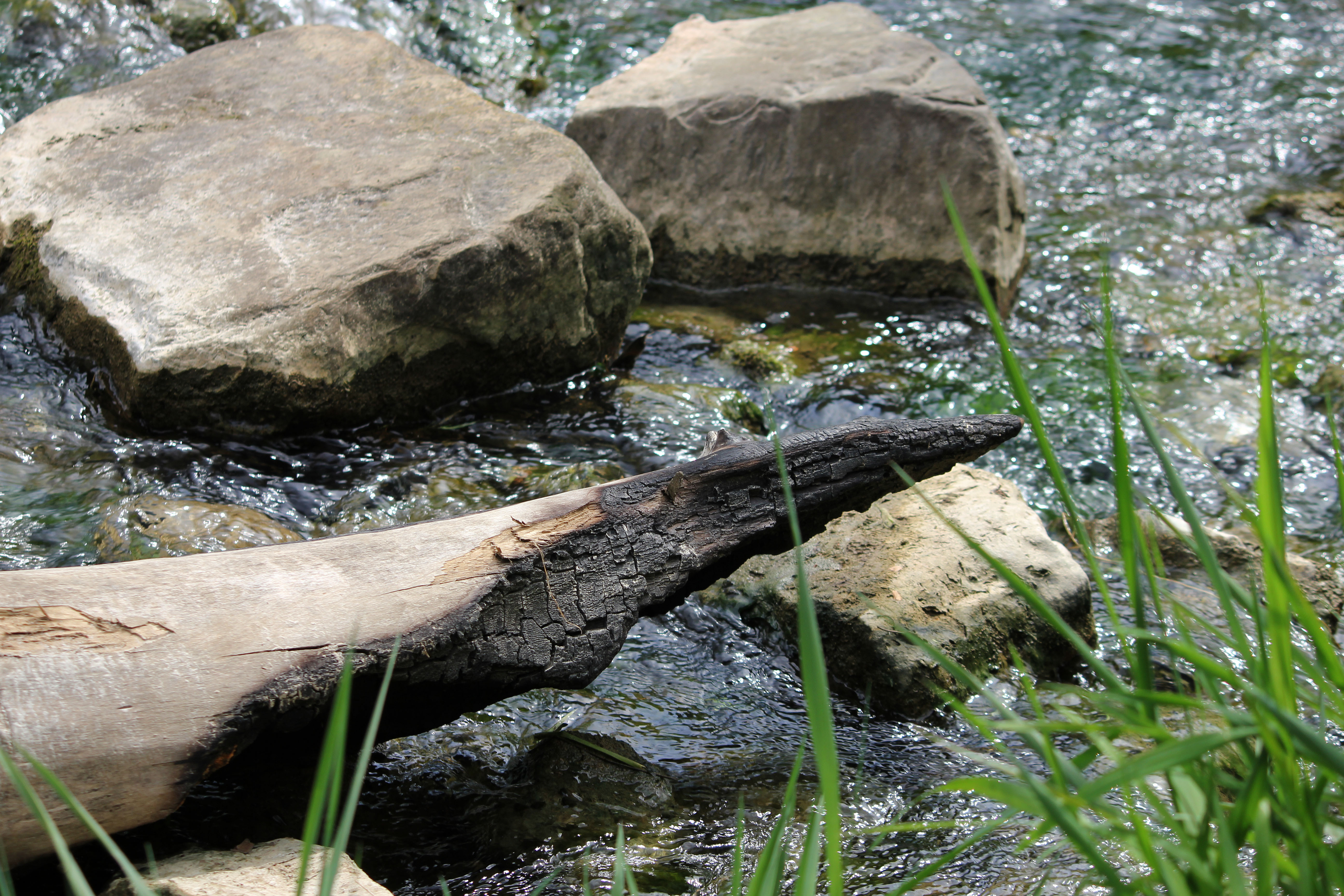
While any body of water is tantalizing, moving water is even more so. Cranberry Run, the stream that courses through the Riffleproperty that makes up The Quarry Farm, is a source of constant fascination. At what we commonly call the ford, a partially burned log was caught up in the rocks that create a riffle there. While we didn’t bother looking, there are undoubtedly any number of aquatic insects and other macroinvertebrates sheltering beneath it and the stones that the Little Cranberry swirls over.

There are paths cut through the woods that make up The Quarry Farm. What was once pasture land for dairy cows has worked Virginia creeperits way through a succession of stages that have brought it to its present state, something that is more and more resembling the temperate, hardwood rain forest it once was. Where there were once scrub trees, shrubs and bushes there are now primarily sugar maple trees and black walnuts. Virginia creeper and poison ivy climbs these trees, using the bark as a lattice and creating a curtain of green and red.

Just slightly off the beaten path is the area we call the Cut Off. Sometime in the 1950s, in an effort to move water more quickly away from agricultural land, area waterways were straightened, or “ditched,” as was more commonly said. What is now the Cut Marsh MarigoldOff was an ox bow in Cranberry Run. The county simply recoursed the stream and blocked off the oxbow, isolating it from the stream. Even so, the Cut Off is an aquatic habitat on its own. The tile from a nearby field empties into the old ox bow and keeps it hydrated for most if not all of the year. Here there are all manner of plants and animals that survive despite the damage done to Cranberry Run. Dutchman’s britches and may apples grow along side ramps. Recently, after a trip north to a nursery that offers only native species, Anne returned with a sampling of marsh marigolds that she planted near the water and in a swale that helps to feed the Cut Off. We were pleased to find them thriving.

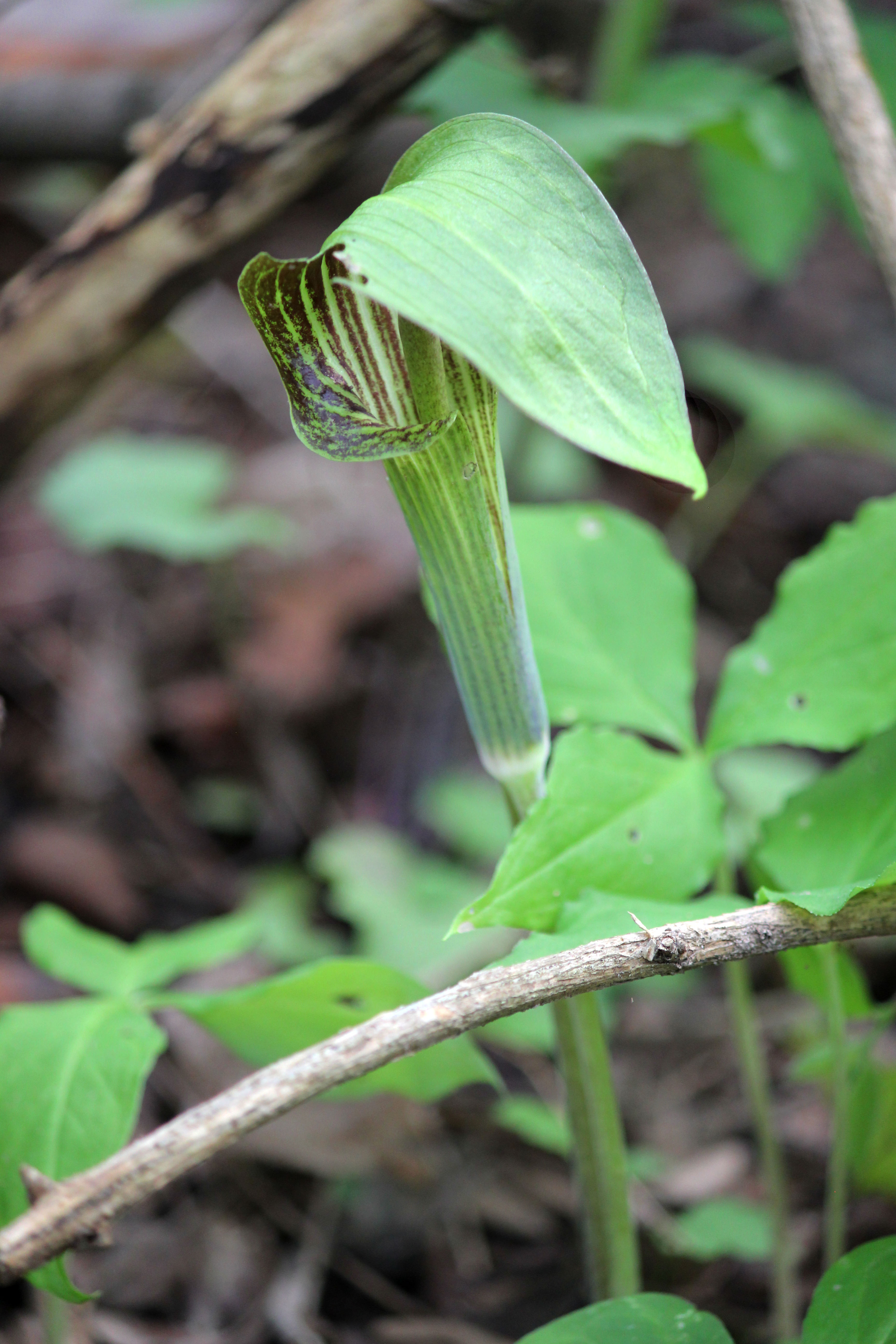
Jack In the PulpitWhat we didn’t photograph was at least as exciting: a rufus-sided towhee, a common yellow warbler and a black-throated green warbler. There were dragonflies and turtles and dozens upon dozens of plants, some flowering some not, that are only now gaining a toe-hold here on the quarry, plants that we’ve talked about transplanting here that have, instead, and thankfully, arrived on their own. Plants like wild ginger and dragon’s tongue, jack-in-the-pulpit and bloodroot. The plants and animals that make their homes here are, like the stream that runs through The Quarry Farm and the face of the land itself, constantly changing, Even so, it allows for a familiarity that breeds comfort. For that, we are forever grateful and excited by the new challenges and opportunities that every day presents.

Wood Ducks

doors and windows

Change is inevitable. It happens, sometimes precisely as we’ve designed. More often, though, it simply comes about on its own and without invitation. We’re obsessed with it, change, and have been for a very long time. Heraclitus, who died in 480 BC, said, “Nothing endures but change.” Well, what he actually would have said was, “τὰ πάντα ῥεῖ καὶ οὐδὲν μένει,” which, more accurately translated, reads, ”Everything flows and nothing remains still.” But all things change, even quotes from ancient philosophers. So, what it boils down to, then, is how we approach change. There’s an old adage that, particularly recently for us here at The Quarry Farm, defines how we cope with all of that, how we accept this inevitability: when a door closes, a window opens.

Three weeks ago tomorrow, Gertie, the first pig to come and live here, died. She had uterine cancer and, tough as she was, it was time (if you missed her eulogy, such as it is, scroll back a couple of posts and you’ll find it). Three days later, The Quarry Farm received two new admissions: potbellied pigs from the Humane Society of Allen County. And it was only fitting that Bob Barker and Alphonse should come from there, since the HSoAC brought Gertie to us, as well.

Bob and Alphonse were among nearly fifty animals seized from a single site by the HSoAC on the coldest day of this past brutal winter. The conditions in which they were living were minimal at best. The pig we have come to call Alphonse was free of any pen, but still trapped within a maze of three-foot deep gullies he had worn in the accumulated snow. Of the pigs, Bob knew the worst of it. His only shelter was a fifty-gallon blue plastic barrel that was all but drifted shut. Megan McCoy, a friend and key member of the HSoAC staff, estimated that he’d been trapped in the barrel for days without food or water and was mired in his own excrement. He was terrified and starving and rather than force him to leave what little sanctuary he had come to know, deputies of the Allen County Sheriff’s Department and HSoAC staff members pulled Bob free from the drifting snow, barrel and all. It was only later, when they’d managed to transport him back to the HSoAC building, that Megan was able to encourage Bob to leave the barrel and take up temporary residence in one of the organization’s cleaning rooms. Weeks later, once the case had worked its way through the courts and the HSoAC had acquired legal custody of the animals, Bob and Alphonse were moved here.

Alphonse, shortly after arriving.

Alphonse, shortly after arriving.

Alphonse is a bit ticklish about company, less inclined to share space. He has his own fenced-in area, along with a shelter house and an igloo, adjacent to The Quarry Farm’s goose pen. The fence is there to keep others out, not Alphonse in; pigs, we have learned, are found of a space they can call their own. In fact, insofar as Alphonse is concerned, the fence may as well not even exist. He comes and goes as he pleases, slipping through a small space in one corner when he has an itch to explore and root and generally run rampant. Then, when it’s time to eat or sleep or simply get away from the other residents here, he reverses course and slips back in.

Bob on his kitchen bed.

Bob on his kitchen bed.

Bob, on the other hand, while still somewhat gruff, prefers his digs a bit cushier. There are several mounds of blankets and pillows within our home that Bob calls his bed: in a hallway, in the sun by our kitchen door and, his favorite, in Rowan’s room. He’s also not shy about borrowing the beds of his housemates, should the mood take him. The one exception to his marauding ways is with anything that belongs to Beatrice. Though we fondly call her Little Pig, she’s anything but, and Bob made the mistake of strutting in and presenting himself as the macho male. While that worked for him initially, Little Pig quickly let him know all about women’s suffrage and the proper way to treat a lady. The two now grudgingly share space, though it’s best if there’s a fence between them.

There we have it, then. Change, best put in this case, though it is still painful to think of it, by: The King is dead, long live the King. Or kings.

Or pigs.

Postscript: The two other pigs seized at the same time as Bob and Alphonse haven’t been abandoned. Friends of The Quarry Farm (and Anne’s cousins), Bruce and Beth and their daughter Erin, have agreed to take them in. The pigs’ names are Greta and Grits and we expect to make a day trip down to their forever home sometime this month. Eight chickens were transferred  here shortly after their rescue. One, a large white rooster, died within a week of his arrival. The other seven are living large as part of the free-ranging Quarry Farm flock. The ducks all found homes on property where they had access to ponds, while the horses and ponies were welcomed in by equestrian families. As for the dogs, they’re all in residence at the HSoAC. For more information, visit their website: http://www.hsoac.org/ While you’re visiting, please consider supporting their efforts. The work they do is important, necessary and under-appreciated.


Bright Sunday for a visit

Members of the Ottawa Presbyterian Church, Ottawa, Ohio, spent a couple of their Bright Sunday (the Sunday after Easter) hours on The Quarry Farm. This was yesterday, one day before heavy rain, and the during the warmest, sunniest bit of the weekend. The cold winds settled and the sun shone upon their arrival at Red Fox Cabin.

The 25 or so adults and children were the first to join us after this long, harsh winter. They were also the first to visit after the final stretch of fence was strung, just the day before, around the farm animal sanctuary. The gates held Beatrice in, although she, Buddy, and the goats were waiting at the north gate to greet each and every outstretched hand.

This slideshow requires JavaScript.

Thank you, Whale Eyes

Gertie, shortly after arriving at The Quarry Farm.

Gertie, shortly after arriving at The Quarry Farm.

In February of 2012, shortly after Anne and I came to the conclusion that we shouldn’t take on pot-bellied pigs at The Quarry Farm, we took on our first pot-bellied pig. Such is the way of things. “No, never,” has a way of morphing into, “Absolutely. Today? Bring her on over.”

She came to us by way of the Humane Society of Allen County. They, in their turn, came to have her by way of the Lima Police Department, who called the good people at HSoAC when they found Gertie and a number of other animals huddled around the body of the woman with whom they had lived for all of their lives. There was nothing nefarious about her death; she was simply an elderly woman whose passing left a host of animals bereft and homeless.

When she arrived here, Gertie was understandably morose. The only home she had ever known was gone, as were all of her companions, and she was in the company of strangers. We built her a shelter, her own pen, under the stairs that lead between the first and second floors of our home. We lined it with blankets and that is where she insisted on staying, pushing her head out of a cocoon of fabric just long enough to eat and drink. She slept 22 out of 24 hours, ranging out only when we forced her out, hauling her kicking and screaming from her sanctuary, out the front door and down a ramp we had constructed just for her, using a blanket as an improvised sling. While she was housebroken, this was no house she recognized. So, three times a day, this was our routine. Until, that is, the day she stood at the gate to her pen, waiting. She walked out on her own that day, out and through the front door and down the ramp, grumbling the whole way. Pigs are intelligent animals, intelligent and sensitive, and Gertie was a pig’s pig. It took her all of three days to work out her new situation, despite having had her world turned upside down.

001Gertie’s state of mind was only the first in a litany of issues that threatened her well-being. Though it was apparent that Gertie was loved in her first home, there were fundamental areas of care that had long been neglected. She was grossly overweight, weighing in at nearly 200 pounds when she first stepped through our door. And that was the least of her physical problems. Despite their infamous cloven hooves, pigs move about much like horses or donkeys or goats: that is to say, on their toes. Gertie’s toenails, her hooves, had never been trimmed, not once in the estimated seven years she’d been alive. Instead of walking on the tips of her toes, her hooves, extending out over a foot from each toe, forced her to move about on the pads of her feet. It took nearly two years to whittle her hooves back to the point where she could even approximate a normal posture.

001Anne and Gertie made friends fairly quickly, though even Anne had trouble at first; Gertie charged her the first time they met. She was much slower with the rest of us. It took her the better part of six months to accept me and even then usually only when I was in the kitchen, and it was nearly a full year before she came to accept her new place as home. I have no doubt that the introduction of Beatrice, better known as Little Pig, played a role in Gertie’s recovery. A new companion with whom she could see eye to eye finally gave us all the opportunity to meet the being with whom Anne was already familiar.

Gertie and Beatrice

Gertie and Beatrice

I’m stymied now. There are a million anecdotes that I want to share, but the details are gone. What I do remember is her expression. She went from guarded and flat to completely open, no matter her mood. Mostly, she was amused — at us, at what she had just done, at the antics of the other animals in the house — and it showed up in her eyes. Anne referred to them as whales’ eyes: expressive and deep. Though already thin, a few months ago Gertie started losing weight. Ulcers began to bloom on her sides and on the ridges of her spine. Dr. Kathleen Babbitt, Gertie’s doctor, diagnosed uterine cancer. On Tuesday, we took her in for one last visit, then brought her shell home and laid it in her favorite sunning spot.

I’m confident that the stories will come back, but even without them, I’m blessed. I’ll always have her expressions.

Gertie's happy face

Gertie’s happy face


Spring 2014 newsletter

2014 Spring Newsletter-2


This latest issue is packed with information about wild spring babies (and what to do if you find one or more) resident news and announcements for upcoming events on The Quarry Farm Nature Preserve and Conservation Farm.

Click on the cover to the left and read for yourself. Hope to see you on the trails as we search for wildflowers, salamanders, constellations and photo opportunities.

Beatrice gets a hoof trim

There are two pot-bellied pigs that live with us here on The Quarry Farm Nature Preserve and Conservation Farm. Neither began their lives here, but this is where they will stay. Soon Beatrice and Gertie will be joined by Alphonse, Bob Barker, Grits and Greta, four pot-bellies that found themselves without a home after a cruelty and neglect seizure by a nearby humane organization.

While this video may make you laugh a little, we hope it also makes you think long and hard about the care that smart, inquisitive, stubborn and vocal pot-bellied pigs require in order to live in harmony. Indeed, keep that in mind whenever you adopt. Anything.

On the other hand, piggies are a joy when you are prepared to welcome them into your life.

when the bough breaks…

Somewhere between two and three weeks ago, we went out and brought back our first squirrels of the season: fox squirrel pups, three of them. They were tiny, nearly hairless and had yet to open their eyes.

IMG_6526The call about them came from a friend in the Village of Continental. One of her neighbors was felling a tree damaged at some point over the winter. What came down with the tree, sadly, was an unnoticed squirrel’s nest and the three little beings inside it. Efforts were made to reunite the pups with their mother, but, again sadly, that didn’t work out. So now they’re here in Rowan’s very capable hands, getting the best that we can offer.

Ideally, though, infants will grow up with their own parents. So, without meaning to sound preachy, if you’re going to do tree work, particularly at this time of year, give a thought to the animals living in the tree in question. If you can, wait until the little ones, whether mammal or bird, have grown and left the nest.

On a different, but related, topic, if you happen to find an infant on the ground, do your best to reunite the little one and its parents. If it’s a mammal, keep an eye on it for up to 24 hours before making the choice to take it in. More often than not, one of the infant’s parents will rescue the little one. With birds, try to work out from which tree the nestling might have fallen. If you do, build another nest out of an old butter tub or some other suitable container and line it with paper towels. Drill holes in the bottom of the container to allow rain water to pass through and tack it to the tree as high as you can safely place it. Then, as with the mammal babies, keep an eye out for the bird’s parents. If you don’t see a parent caring for the nestling bird, then take it in, keep it warm and dry, but do not feed it, and contact a licensed wildlife rehabilitation center to make arrangements for transport.

*A special thanks to Fox Valley Animal Nutrition, Inc., for all their efforts in creating the most effective milk replacement formulas for orphaned and injured wildlife.

Zen and the Art of Chicken Dancing

For those of you who’ve been paying any kind of attention, the fact that I have a singular fascination for one particular type of bird should come as no surprise. Chickens. I’m talking about chickens. For those of you who thought, “crows”, fair enough, but no. While all corvids caught my heart long ago, they’re a different chapter in the work-in-progress that is The Quarry Farm.

So, chickens. And, more to the point, my fascination with them. And, to grind out an even finer point, how that fascination manifests. I’ve spent more than a fair amount of time wandering with the birds that share this piece of ground with us. I’ve fed them, held them, chatted with them, sung to them and simply sat and pondered the meaning of life with them. And they do, in my opinion. Ponder the meaning of life. I assume, anyway, that that’s what they’re doing when they grow still and quiet, their eyes unfocused and staring. They’re trying to make sense of the nonsensical, resolve order out of the chaos that surrounds them. Or so I choose to believe in more contemplative moments.

Chickens. They’ve proven fine companions, a wellspring of calm and the source of a flurry of creativity. They have, and here we get right down to the point, served collectively as a literary muse, even going so far as to inspire a unique style of poetry. It has Asian roots, but its own voice and a distinctive East meets Midwest vibe.

We call it Chaiku.

Chaiku, in its most basic form is nonsense, but nonsense with a direction. Take this piece, entitled surprise and the very first chaiku originating at The Quarry Farm:

buck buck buck buck buck
buck buck breeawwk-uck buck buck
buck buckGAWWWK buck buck

There are, of course, other pieces that fit a more traditional mold. They range from the absurd

unconventional wisdomPriscilla
Angry chickens dance,
feet drumming their dark fury.
A wise earth trembles.

to the comical

a matter of perspective
What is now a hen
was, times past, a dinosaur.
Respect your breakfast.

to the truly zen

scratch
Hungry red chicken
stalks the yard in fits and starts.
Too late, cricket jumps.Big Girl

and

evening
red and purple sky
horned owls stir in cottonwoods
in the coop, silence

and

morning
little yellow house
staccato taps on white door
chickens are restless

Audrey, Too and Anne

Audrey, Too and Anne

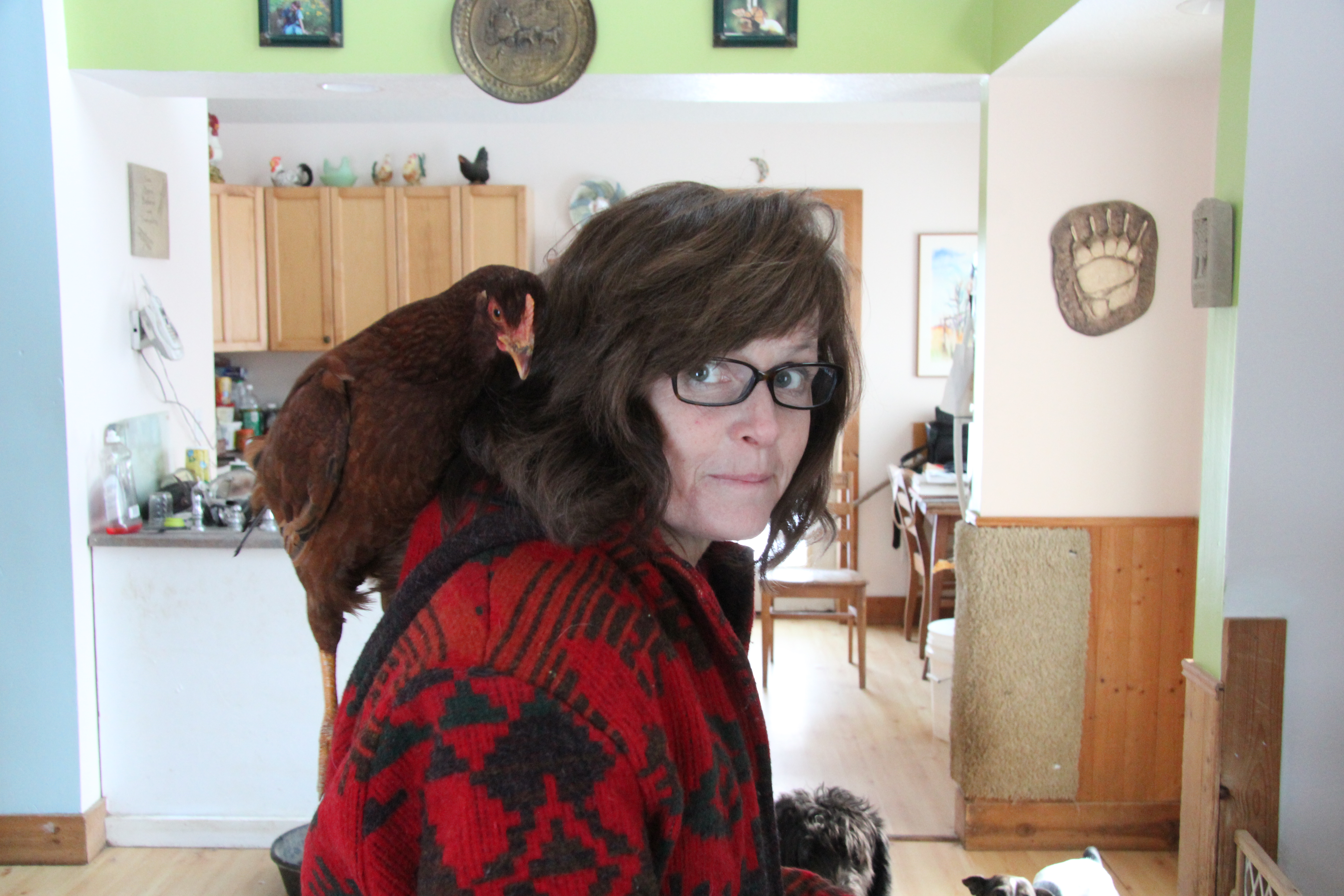
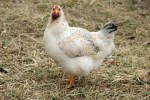
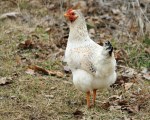
Postscript This winter, eight new chickens, four roosters and four hens, joined the flock that calls The Quarry Farm home. They were part of a larger seizure of dogs, ponies, horses, pigs and fowl carried out by the Allen County Humane Society in the middle of what climatologists called the Polar Vortex and that I simply thought of as The Damned Cold Days. Suffice it to say that the conditions all of the animals were in were inadequate. The chickens came here skinny and dehydrated and while all bore signs of frostbite, some were missing toes and pieces of toes. One, a big white congenial rooster, didn’t survive the winter: a consequence, we believe, of both age and injury. So now there are seven: Wesley, who we suspect to be a bantam rooster cross; Audrey, Too, a red hen who has developed the habit of leaping to our shoulders or onto our arms; and two white roosters and three spotted white hens who have yet to reveal their names. At present, the individuals in the flock total 31, though with Easter on the horizon, that number is likely to rise.